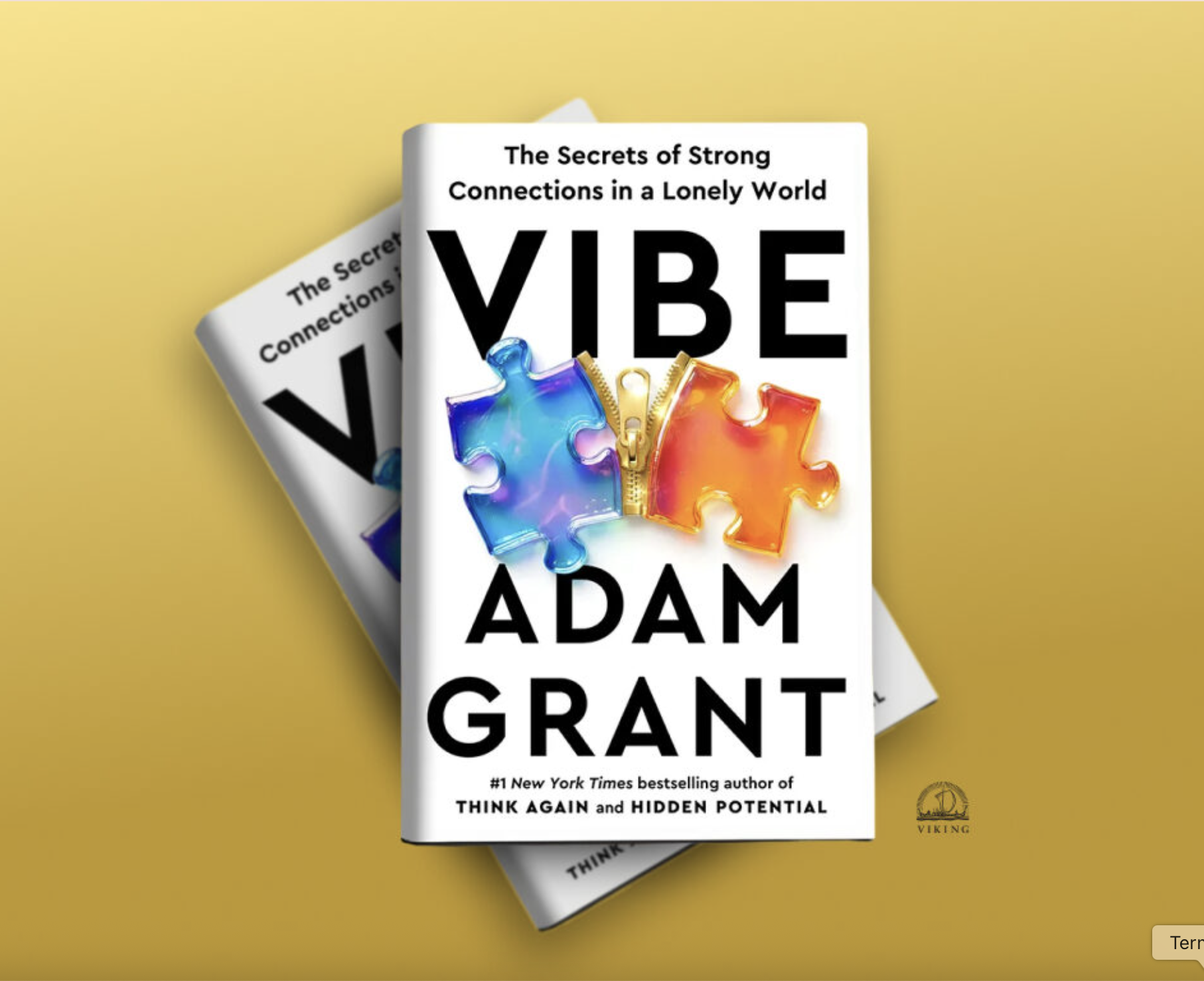
Vibe: Complete Summary of Adam Grant’s Science-Backed Framework for Extraordinary Human Connection
Introduction: What This Book Is About
Loneliness and isolation have steadily expanded across modern society, leaving millions of people disconnected despite living in an era of hypermobility and digital communication. Most individuals navigate daily life assuming that personal chemistry is an unpredictable mystery, that genuine compatibility requires matching personalities, and that forming deep relationships demands hundreds of hours of gradual interaction. These pervasive myths create unnecessary barriers, causing people to abandon promising ties after awkward first encounters, remain trapped in rigid conversational scripts, or allow meaningful bonds to decay under distance and conflict.
In Vibe: The Secrets of Strong Connections in a Lonely World, organizational psychologist Adam Grant provides an evidence-based roadmap for diagnosing, sparking, sustaining, and scaling relationships across every domain of life. Anchored in peer-reviewed social science, randomized experiments, and field interventions, the book demonstrates that interpersonal chemistry is not an innate property of individuals. Instead, connection is an emergent feature of interaction rituals that can be systematically learned, practiced, and mastered.
This guide delivers comprehensive coverage of the frameworks, experimental findings, and behavioral strategies across all ten chapters of the text. Readers learn how to navigate interpersonal wavelengths, accelerate emotional closeness, leverage productive friction, and architect enduring group solidarity. Professionals, team leaders, parents, and community builders will gain actionable protocols to transform casual interactions into lasting partnerships.
Chapter 1: Striking a Match – The Building Blocks of Compatibility
Compatibility is rarely an inherent alignment discovered at first sight; it is an interpersonal dynamic developed through shared interaction. Relying on surface traits or demographic similarities fails to predict whether two people will forge a resilient bond.
What Compatibility Really Means
Define compatibility as a dynamic property of interactions rather than an innate catalog of individual traits. People frequently assume that strong connections require mirroring personalities or complementary yin-and-yang pairings.
Extensive empirical evidence disproves both assumptions. Pre-interaction surveys covering nearly 200 personal attributes fail to predict whether two individuals will feel chemistry during speed-dating events. Machine learning algorithms cannot forecast connection prior to an actual conversation.
Birds of a feather may flock together initially, but actual similarity demonstrates minimal influence on long-term relationship stability. Once initial attraction occurs, matching traits do not prevent interpersonal friction. Two extraverts can compete destructively for attention, while two introverts may drift into prolonged isolation.
Focus on cultivating joint communication patterns rather than searching for identical personal profiles. Connection depends entirely on how two people interact, not on how they behave in isolation.
The Four Wavelengths Framework
Categorize relationships across four distinct wavelengths based on the primary focus of attention and the underlying commitment:
- Associates: Pragmatic ties rooted in convenience to resolve compatible needs through reciprocal exchange.
- Allies: Purpose-driven partnerships united around shared commitments and compatible goals.
- Pals: Enjoyment-centered connections formed through convenience to pursue compatible recreational interests.
- Companions: Deeply caring bonds founded on emotional vulnerability, mutual commitment, and compatible values.
Recognize that different wavelengths require distinct expectations. Associates and allies focus primarily on the outcome of an interaction, measuring value by goals achieved or tasks completed. Pals and companions focus on the ongoing process, deriving satisfaction from the emotional tone and experience of the interaction itself.
Avoid expecting a single person to occupy every wavelength. Seeking distinct types of support from different individuals generates higher overall life satisfaction than burdening one partner with every emotional and practical need.
How Interaction Rituals Shape Microcultures
Treat every relationship as a unique microculture governed by recurring conversational patterns and behavioral routines. Individual traits do not dictate how much two people interrupt, listen, disclose, or argue.
A person who appears anxious or domineering in one dynamic may display calm collaboration in another. The habits that emerge between two individuals determine the quality of the connection.
Establish deliberate interaction rituals to transform strained dynamics:
- Introduce shared meals to move transactional conversations into informal territory.
- Pose open inquiries about personal origins rather than querying current work tasks.
- Replace perfunctory status inquiries with probing questions that invite genuine reflection.
- Incorporate playful physical or intellectual challenges to build mutual respect.
Shifting relational routines changes the emotional tone of the entire partnership. New habits allow collaborators to access dormant facets of each other’s capabilities.
Real-World Application: Astronauts in Extreme Isolation
Examine the extreme collaboration between astronauts Cady Coleman and Paolo Nespoli aboard the International Space Station. Chosen entirely for technical competence rather than psychological compatibility, they entered space with contrasting dispositions. Coleman operated as a calm, analytical perfectionist, while Nespoli acted as an expressive, high-strung daredevil.
During high-stakes docking simulations with an approaching supply vessel moving at 17,500 miles per hour, visual distortions obscured critical distance cues. Nespoli froze, unable to issue the required verbal pacing confirmation. Coleman instinctively recognized his hesitation, decelerated the robotic arm without verbal prompting, and allowed Nespoli to recalibrate his commands.
Their split-second improvisation succeeded because they had developed a shared nonverbal shorthand through months of shared meals and candid personal storytelling during pre-flight training. They expanded their initial associate link into an alliance, a pal dynamic, and an enduring companionship.
Invest in personal familiarity before tackling high-stakes challenges. Shared history transforms separate operators into an intuitive unit capable of nonverbal synchrony.
Chapter 2: Fast Friends – The Art of Accelerating Attachment
Forming deep attachments does not require years of gradual investment. When individuals share heightened emotional intensity and engage in mutual vulnerability, meaningful bonds can form rapidly.
The Science of Accelerated Closeness
Conventional wisdom holds that building a close companion requires an investment of 100 to 200 hours of contact. Statistical distributions reveal that nearly 25% of adults bypass this timeline entirely, transforming casual acquaintances into close friends in under 5 hours.
Accelerated bonding occurs when interactions feature heightened emotional intensity. In classic suspension bridge experiments, men approached by an interviewer on an unstable, swaying structure 230 feet above rapids were four times more likely to call her than men approached on a low, secure bridge. Physiological arousal amplifies interpersonal attraction and accelerates social bonding.
Elevate situational intensity to bypass social hesitations without relying on physical danger:
- Engage in strenuous physical workouts or athletic races alongside peers.
- Tackle intimidating shared challenges such as public speaking or artistic performances.
- Enter immersive learning environments that require participants to operate outside comfort zones.
- Create time-bounded problem-solving sprints that demand rapid collaboration.
Shared intensity strips away superficial facades, allowing individuals to align their emotional states and form immediate attachments.
The Mechanics of Disruptive Disclosures
Execute a disruptive disclosure to alter stagnant conversational trajectories. Define a disruptive disclosure as an unexpected personal revelation that challenges prior assumptions and signals deep interpersonal trust.
Meta-analyses across 57 experiments confirm that displaying vulnerability increases interpersonal likability. Disclosing an authentic flaw, recounting a past mistake, or sharing an emotional reality humanizes the speaker and invites mutual candor.
Maintain bounded vulnerability to avoid damaging conversational balance:
- Share from your resolved scars rather than your unhealed emotional wounds.
- Eliminate uninvited trauma dumping that places emotional caretaking demands on casual associates.
- Ensure that personal revelations are accompanied by situational stability and self-regulation.
- Invite reciprocal sharing immediately after disclosing to preserve conversational equity.
Healthy vulnerability invites responsiveness, whereas unregulated emotional dumping triggers avoidance. Strategic openness creates an immediate invitation for the listener to drop defensive posturing.
Fast Friends Questioning and Deep Talk
Replace shallow pleasantries with structured deep talk protocols. Research demonstrates that strangers randomly assigned to skip small talk and discuss intimate prompts feel significantly happier and closer than those discussing trivial topics. Introverts experience an exceptionally large increase in perceived connection when guided into deep dialogue.
Implement progressive questioning sequences across three distinct phases:
- Phase 1: Low-Stakes Foundations: Inquire about ideal days, personal aspirations, or the role of fame.
- Phase 2: Formative Experiences: Discuss personal friendships, family backgrounds, and treasured memories.
- Phase 3: Vulnerable Realities: Explore personal heartaches, recent crying episodes, and core fears.
Avoid conversational narcissism during deep discussions. Givers approach conversations as sequences of invitations, asking thoughtful follow-ups that explore the other person’s perspective. Takers approach dialogues as series of declarations, treating the conversation as a showcase for their own narratives.
Pose sensitive questions directly without fear of causing discomfort. Inquiries regarding core values, life regrets, and emotional hurdles are evaluated just as positively by recipients as mundane questions about weekend activities.
Case Study: Ann Atwater and C.P. Ellis
Study the remarkable reconciliation between civil rights activist Ann Atwater and Ku Klux Klan leader C.P. Ellis in Durham, North Carolina, in 1971. As sworn enemies facing court-ordered school desegregation, their early steering committee meetings required physical intervention to prevent violent assaults.
Organizer Bill Riddick engineered an emotionally intense collaborative bubble:
- Appointed Atwater and Ellis as equal co-chairs to enforce a shared mission.
- Isolated the pair inside an empty school building from morning past midnight for 10 consecutive days.
- Removed them from their respective political echo chambers and extremist peers.
- Imposed a tight deadline that forced their focus away from ideological posturing toward school operations.
Exhaustion and shared responsibility broke down their defenses. Ellis asked Atwater about her family, prompting her to disclose how her daughter was berated at school and how poverty forced her to make dolls out of grass. Ellis broke into tears, revealing that his disabled son was bullied and that he shared the same deep shame regarding financial failure.
They discovered compatible values and common economic struggles beneath racial divisions. Ellis publicly tore up his Klan membership card, and the two spent the next three decades campaigning for civil rights together as lifelong companions.
Structure high-stakes collaboration around mutual goals to bridge ideological animosities. Shared problems humanize adversaries faster than abstract debate.
Chapter 3: Love at Second Sight – The Psychology of Shape-Shifting
Instant sparks are poor indicators of relationship longevity. Individuals consistently alter their personalities and behaviors across different contexts, meaning that the strongest relationships frequently emerge from unpromising beginnings.
Overcoming the Fundamental Attribution Error
Recognize that snap judgments formed during initial encounters routinely miss the mark. Humans form evaluations of competence, trustworthiness, and aggressiveness within 0.1 seconds of seeing an unfamiliar face, yet employment interviewers relying on early impressions perform barely better than random chance.
Avoid committing the fundamental attribution error, which leads observers to attribute unpleasant behaviors to a person’s fixed character while ignoring situational pressures. When an associate acts blunt, defensive, or distracted, look for hidden context rather than branding them permanently toxic.
Observe individuals across varied settings before drawing conclusions about compatibility:
- Longitudinal observations show that individuals maintain distinct situational variations rather than static traits.
- Children documented as verbally aggressive in disciplinary settings frequently display calm cooperation during peer projects.
- Adults who appear argumentative in competitive meetings often demonstrate warmth in informal, collaborative contexts.
- Observing behavior in multiple environments reveals predictable patterns of variation rather than random inconsistency.
Withhold permanent judgment after a poor first impression. Changing the relational setting frequently unlocks entirely different behavioral repertoires.
Decoding If-Then Signatures and Emotional Triggers
Map personal if-then signatures to anticipate how partners and collaborators adapt across situations. If-then signatures define how external conditions systematically trigger specific traits and responses.
Identify personal and professional tripwires by asking what circumstances activate someone’s worst tendencies. Teams that openly discuss personal triggers—such as feeling ignored in discussions, receiving ambiguous mandates, or enduring micromanagement—experience significantly less conflict and report stronger cohesion.
Create personal user manuals to clarify operational boundaries:
- Document preferred communication modes, response times, and information density.
- Identify specific conditions that provoke defensive reactions, impatience, or withdrawal.
- Outline feedback formats that foster open receptivity rather than resistance.
- Articulate the specific environments that reliably bring out individual strengths.
Contextualizing quirks prevents team members from taking friction personally. Understanding situational triggers transforms personal animosities into predictable relational dynamics that can be managed collaboratively.
The Mechanics of Self-Expansion
Drive relationship depth through self-expansion rather than relying solely on mutual self-expression. Self-expansion occurs when an interpersonal bond broadens an individual’s worldview, cultivates novel capabilities, and restructures personal identity.
Longitudinal tracking of romantic couples demonstrates that individuals experiencing rapid self-expansion develop synchronized neural activity and report heightened relationship satisfaction. Partners absorb each other’s habits, vocabulary, knowledge bases, and perspectives.
Examine the intellectual partnership between authors J.R.R. Tolkien and C.S. Lewis. Meeting as Oxford faculty in 1926, their initial impressions were hostile; Lewis recorded that Tolkien was an argumentative traditionalist who needed a smack. Their relationship pivoted when Tolkien invited Lewis to an informal reading group focused on Icelandic myths.
Relocated from departmental faculty meetings to late-night literary discussions, Tolkien revealed playful curiosity, while Lewis found an outlet for his fascination with mythology. Through decades of mutual feedback in the Inklings writing circle, Tolkien encouraged Lewis to author space travel and fantasy novels, while Lewis pushed Tolkien to expand his private linguistic hobbies into The Lord of the Rings.
Seek collaborators who expand your cognitive horizons. Dynamic partnerships provide portals to new identities that neither participant could realize in isolation.
Navigating the Inevitable Fractures of Growth
Anticipate that interpersonal transformation carries the risk of relational divergence. As individuals evolve their values, creative styles, or domestic commitments, established interaction rituals can break down.
When Lewis married a divorced woman and shifted his writing toward accessible religious parables, Tolkien viewed the changes as personal betrayals and intellectual compromises. Their weekly meetings ceased, the Inklings disbanded, and their dynamic deteriorated into distant, transactional correspondence as associates.
Prevent developmental fractures through deliberate maintenance rituals:
- Schedule regular sessions to renegotiate the foundational purpose of the relationship.
- Celebrate when partners develop new skills or interests, even if they diverge from the original shared hobby.
- Acknowledge when relational rituals require reinvention rather than clinging to obsolete routines.
- Re-anchor the connection around enduring companion values when pal interests shift.
Relationships require periodic renegotiation as participants grow. Preserving a connection across decades demands granting others the freedom to evolve without taking their transformation as an offense.
Chapter 4: Absence Makes the Heart Grow Fonder – Rethinking the Rhythm of Communication
Enduring relationships do not require relentless, uninterrupted contact. Strategic intervals of silence and distance provide space to refuel, retool, and renew interpersonal dynamics.
Debunking the Myth of Constant Contact
Reject the assumption that lasting closeness requires daily check-ins or weekly phone calls. High-frequency exchanges often devolve into superficial administrative updates that drain emotional energy.
Intermittent, high-significance touchpoints sustain deep relationships across decades. Pat DeReamer and Mary Kroger maintained an 80-year bond across international moves, distinct careers, and family expansions primarily by mailing a single, humorous birthday card back and forth once a year. The recurring artifact served as an emotional anchor that renewed their companionship without burdening their daily routines.
Sporadic gestures of care produce measurable clinical benefits. Hospital patients discharged following suicidal crises who received brief, non-demanding postal notes expressing genuine care saw suicide rates cut in half over two years. Simple, periodic affirmations of connection communicate value without requiring laborious correspondence.
Prioritize depth and intention over frequency and volume. Meaningful connections survive substantial gaps in time when grounded in mutual regard.
The Dynamics of Bursty Collaboration
Structure team communication around the principle of burstiness. Burstiness occurs when collaborators alternate between prolonged periods of deep, independent focus and concentrated surges of rapid, synchronized exchange.
Remote software teams, sales divisions, and creative partnerships that communicate in bursty rhythms significantly outperform teams that remain tethered to constant messaging streams. Unbroken streams of shallow communication fragment attention and prevent deep cognitive synthesis.
Implement the four advantages of intentional separation:
- Rethinking: Stepping away from an impasse allows unconscious cognitive processing to resolve structural roadblocks.
- Refueling: Physical space dissolves simmering petty irritations and recharges emotional batteries.
- Retooling: Solitary periods permit team members to acquire outside skills and develop independent perspectives.
- Reconnecting: Reconvening after an interval creates heightened enthusiasm and resets collaborative habits.
The comedy troupe Monty Python maintained creative chemistry across decades by disbanding for months between projects. When working on Life of Brian, their periods of solo writing allowed members to return with fresh comedic techniques and renewed motivation.
Alternate between solitary preparation and intense collaborative bursts. Strategic distance preserves team energy and prevents creative groupthink.
Low-Maintenance, High-Meaning Rituals
Design relational traditions that generate significant emotional resonance while requiring minimal logistical maintenance:
- Single-Artifact Traditions: Circulate a shared memento, book, or humorous gift across years without formal scheduling.
- Anniversary Time Capsules: Have wedding or milestone guests write letters sealed in envelopes to be opened on corresponding future anniversaries.
- Bursty Gatherings: Replace weekly status lunches with focused quarterly retreats or annual multi-day summits.
- Altruistic Celebrations: Mark personal birthdays by distributing thoughtful gifts to mentors and companions rather than expecting tributes.
Meaningful rituals reinforce shared identity without imposing logistical fatigue. A single well-timed tradition carries more relational weight than dozens of perfunctory obligations.
Concentrate relational energy into memorable events. Novel experiences protect long-term ties from becoming stale routines.
Reactivating Dormant Ties Without Friction
Reactivate dormant relationships without hesitation. Research shows that individuals are as reluctant to message old friends as they are to message complete strangers, fearing that unexpected outreach will feel awkward or intrusive. Over 90% of recipients report genuine delight and gratitude upon receiving an unannounced note.
Dormant contacts provide more innovative insights and practical advice than active acquaintances. Current contacts operate in identical social loops, offering redundant perspectives. Former colleagues and old friends have gathered novel experiences and fresh networks that yield creative breakthroughs.
Execute simple reactivation protocols:
- Send a specific memory flex citing an exact insight, movie, or shared event you recall from your history.
- Forward a targeted pebble—such as a relevant article or video—that aligns with their known interests.
- State direct appreciation without demanding an immediate favor or an extended phone call.
- Host group reunion meals when traveling to connect dormant ties to one another.
Do not confuse delayed replies with relational rejection. Response speed reflects inbox volume and life obligations, not the depth of affection.
Chapter 5: It’s Complicated – Maintaining Messy Connections
Ambivalent relationships—characterized by a volatile mixture of positive support and negative criticism—impose severe psychological and physiological costs. Navigating these complicated connections requires setting firm behavioral perimeters and reframing flaws.
The Hidden Health Toll of Frenemies
Classify relationships into four distinct quadrants based on the balance of virtues and vices:
- Indifferent: Low virtues and low vices; naturally treated as casual acquaintances or transactional associates.
- Positive: High virtues and low vices; ideal candidates for loyal pals, allies, or companions.
- Negative: Low virtues and high vices; outright adversaries who should be avoided or contained.
- Ambivalent: High virtues and high vices; frenemies who generate intense cognitive stress and physiological strain.
Ambivalent ties damage cardiovascular health more than purely negative relationships. When participants undergo public speaking tests, receiving mixed feedback from an ambivalent friend spikes blood pressure and heart rate far higher than receiving exclusively critical feedback. Unpredictable dynamics force the nervous system into chronic vigilance.
Having an ambivalent manager who vacillates between praise and belittlement causes higher employee absenteeism and healthcare costs than having a consistently harsh supervisor. Constant anticipation of potential hostility wears down physical resilience.
Diagnose ambivalent ties systematically. Mitigating their unpredictability is essential for safeguarding physical and emotional well-being.
Strategies for Boundary Containment
Establish rigid boundaries around the blast radius of difficult individuals. Acceptance validates another person’s emotional reality and personality structure, while containment dictates which specific behaviors are tolerated. All feelings are welcome, but all behaviors are not.
Examine how NBA executive Joe Dumars contained volatile superstar Rasheed Wallace when trading for him in 2004. Wallace held league records for ejections and technical fouls, yet possessed unmatched defensive versatility.
Dumars established clear boundaries prior to Wallace’s first practice:
- Validated Wallace’s intense passion and frustration regarding controversial referee calls.
- Permitted emotional outbursts during the first three quarters of games to vent competitive tension.
- Imposed an absolute ban on technical fouls, ejections, and suspensions during the fourth quarter when game outcomes hung in the balance.
- Established proactive scripts, prompting Wallace to shout “Ball don’t lie!” after missed opposing free throws rather than berating officials.
Wallace did not receive a single ejection as a Piston, led the team to an NBA championship over the Los Angeles Lakers, and transformed team chemistry.
Define operational limits explicitly before high-pressure situations arise. Pre-established boundaries allow volatile individuals to regulate their actions without suppressing their underlying drive.
Finding Virtues in Vices
Mitigate ambivalence by actively looking for the virtues underlying objectionable behaviors. Longitudinal research on couples indicates that relationship survival does not depend on having a partner with fewer flaws. Survival depends on whether individuals frame their partner’s flaws within a broader narrative of positive intent.
Adopt two cognitive reframing techniques:
- Virtue Amplification: Foreground outstanding capabilities while contextualizing minor logistical or social shortcomings.
- Finding Virtues Within Vices: Recognize that stubbornness often reflects resolute integrity, bluntness signals unwavering honesty, and anxiety reveals deep commitment.
Study the professional alliance between Supreme Court Justices Ruth Bader Ginsburg and Antonin Scalia. Despite disagreeing on 93% of 5-4 constitutional rulings, they maintained a warm friendship for decades.
They cultivated their pal wavelength first through a mutual passion for opera and shared family dinners, creating a foundation of trust before serving together on the nation’s highest court. When drafting opinions, Scalia delivered his sharpest dissents to Ginsburg days early, giving her time to strengthen her majority arguments. Ginsburg viewed his stinging criticism as an intellectual gift that refined her jurisprudence.
Filter difficult traits through the lens of core values. When foundational values align, opposing styles can be harnessed as instruments for mutual improvement.
The Threshold Test: Salvage or Sever
Determine whether an ambivalent connection is worth sustaining by auditing core values. Distinguish between temporary lapses in conduct and certified toxic behavior. Temporary lapses reflect stressful days or challenging life transitions; chronic abuse rationalizes cruelty and displays zero desire for reform.
Apply the threshold criteria for preserving a complex tie:
- Does the individual demonstrate genuine accountability when their behavior crosses stated boundaries?
- Can their primary vices be contained to specific contexts, preventing fallout in critical life domains?
- Do their contributions to your well-being, growth, and values outweigh the friction of their personality?
- Are they capable of operating productively when relegated to a restricted wavelength?
Sever ties that persistently violate core values or shatter explicit safety boundaries. Demote unmanageable friends to distant associates or cut contact entirely to protect your emotional ecosystem.
Maintain only those complex relationships that act as a net positive force. Healthy bonds enrich your growth even when they introduce occasional discomfort.
Chapter 6: Good Vibrations – Creating Harmony from Disharmony
Avoiding conflict erodes relationships from the inside out. Rather than destabilizing connections, well-managed friction serves as the primary mechanism for resolving misunderstandings and expanding emotional intimacy.
The Carrying Capacity for Conflict
Understand that interpersonal friction is not a fatal defect in a relationship; it is a vital catalyst for momentum. When people avoid uncomfortable feedback, resentment festers, assumptions harden into false caricatures, and the partnership deteriorates into an artificial performance.
Experiments reveal that individuals are excessively pessimistic about the consequences of speaking their minds. When participants deliver direct, constructive feedback to friends, roommates, and colleagues, both parties report feeling significantly closer two weeks later. Recipients appreciate clear opportunities to adapt, and candor removes communicative ambiguity.
Build relationship carrying capacity for conflict:
- Reflect on the constructive outcomes that emerged from past arguments to reduce confrontation anxiety.
- Treat disagreement as an instrument for relational growth rather than a warning sign of incompatibility.
- Initiate conversations over the telephone rather than via digital text when managing delicate disputes.
- Use voice calls to hide fleeting defensive facial micro-expressions while preserving warmth and vocal nuance.
Candor is an act of loyalty that honors the potential of the connection. Embracing necessary friction transforms superficial stability into genuine resilience.
The 19-Word Feedback Protocol
Eliminate defensiveness by clarifying benevolent intentions prior to delivering critical feedback. When teachers reviewed student essays, adding a simple 19-word preamble dramatically increased revisions and boosted final essay quality:
“I’m giving you these comments because I have very high expectations and I know that you can reach them.”
This preamble separates the critical content from the underlying motive. It reassures recipients that the critique does not stem from personal disappointment or disdain, but from belief in their capabilities.
Use an open-faced feedback approach:
- Discard the traditional compliment sandwich, which buries actionable critiques between layers of insincere praise.
- State clear commitment to the person and the partnership before discussing areas for growth.
- Offer choices by asking whether the recipient prefers to review strengths or growth opportunities first.
- Use forward-looking language that frames behavioral modifications as pathways to greater personal impact.
When ending a connection, deliver direct closure rather than ghosting. Experiments show that while rejection causes temporary pain, ghosting prolongs distress by depriving individuals of closure and control.
Clear, compassionate honesty protects self-esteem. Direct language treats others with dignity and creates space for clean resolution.
Descending the Ladder of Inference
Resolve interpersonal gridlock using the ladder of inference framework. Disputes are rarely caused by an objective event; they stem from the rapid, flawed interpretations people attach to that event.
Trace how individuals climb the ladder to hostility:
- Observable Data: You notice that a collaborator took three days to reply to an email.
- Assumptions: You assume their delay means they do not care about the project.
- Conclusions: You conclude they are lazy, disrespectful, and fundamentally untrustworthy.
Halt the climb by walking back down the ladder. Avoid guessing what others mean, as human mind-reading accuracy is notoriously low. Instead of demanding that others change, ask open questions that uncover their underlying reasoning.
Invite collaborators to share their perspective: “I realized I might be making incorrect assumptions about your timeline. Can you help me understand how you saw this situation?” Asking for context replaces defensive accusations with mutual problem-solving.
Climbing down the ladder clarifies intent. Resolving conflict does not require immediate consensus; it requires building a shared understanding of each other’s reality.
Case Study: Group Therapy with Metallica
Analyze the near-collapse of the heavy metal band Metallica during the recording of their eighth album in 2001. Decades of suppressed grievances, addiction struggles, and communication breakdowns culminated in their bassist quitting and frontman James Hetfield physically threatening drummer Lars Ulrich.
Performance coach and therapist Phil Towle intervened with counterintuitive guidance:
- Challenged the band to fight more openly rather than suppressing creative disagreements.
- Established intensive daily therapy sessions to dismantle years of passive-aggressive posturing.
- Reframed explosive confrontations—including an incident where Ulrich screamed obscenities inches from Hetfield’s face—as necessary moments of vulnerability.
- Helped band members realize their clashes stemmed from competing approaches to achieving a shared goal of artistic excellence.
Hetfield and Ulrich recognized that their anger reflected deep care for the music and the band’s future. Rather than fracturing the partnership, working through the fire enabled them to release their chart-topping album St. Anger, win subsequent Grammys, and secure another two decades of creative collaboration as allies and companions.
Treat disharmony as the raw material of lasting harmony. Stepping into hard conversations dismantles false assumptions and deepens relational trust.
Chapter 7: Planned Serendipity – How to Choreograph a Gathering
Memorable gatherings do not occur by spontaneous chance. Effective hosts use deliberate design, clear boundaries, and structured interaction rituals to transform collections of isolated individuals into cohesive communities.
The Principles of Social Choreography
Eliminate the aimless ambiguity that plagues modern social and professional assemblies. An estimated one third of workplace meetings are entirely unnecessary, costing enterprises $25 million annually per 1,000 employees in squandered time and creative exhaustion.
Screen all assemblies against the four legitimate purposes for gathering:
- To Bond: Deepening interpersonal affinities and establishing mutual trust across wavelengths.
- To Learn: Acquiring collective knowledge, reviewing post-mortems, and broadening individual skills.
- To Create: Generating novel ideas, prototyping solutions, and debating creative directions.
- To Decide: Resolving strategic choices, allocating resources, and formalizing tactical commitments.
Frame events with a punchy, benefit-driven mandate. Gathering guru Priya Parker recommends replacing vague labels like “Quarterly Review” with provocative provocations such as “Why Do Our Customers Hate Our Product?” Clear framing immediately aligns attendees as allies tackling a shared challenge.
Design unexpected formats to turn tedious obligations into shared adventures. Examples include Admin Nights—where friends gather to finish paperwork together—or collective health screenings turned into celebrations.
Inject purpose into every assembly. When people understand why they are gathering, they participate with focus and energy.
Structuring Mixers for Genuine Mingling
Recognize that unstructured networking mixers actively inhibit new connections. Electronic tracking of cocktail parties shows that attendees spend over 80% of their time conversing with pre-existing acquaintances. Walking into a room of strangers activates social anxiety, driving individuals to cling to familiar friends.
Introduce structural interventions to orchestrate productive collisions:
- Assign Curated Connections: Pre-assign attendees a short list of specific people to meet, which can boost cross-demographic networking by up to 90%.
- Use Revealing Nametags: Require guests to list a favorite quirky word, dream dinner guest, or personal interest on their nametag to provide easy conversational icebreakers.
- Engage in Ludic Games: Organize low-stakes interactive exercises—such as tossing shoes into a pile or participating in themed trivia—to lower the awkwardness of approaching strangers.
- Enforce Circle-Opening Rules: Establish a shared norm that if an attendee sees someone hovering outside a conversational circle, they must immediately step back and invite them in.
Study advice columnist Jeff Zaslow, who choreographed the legendary Zazz Bash singles parties in Chicago. By engineering structured games, quirky nametags, and interactive activities for crowds exceeding 7,000 attendees, he fostered friendships, professional alliances, and at least 78 marriages.
Structure liberates participants from awkwardness. Deliberate mechanics give people permission to connect across social boundaries.
Seating Architecture and Conversational Norms
Leverage physical geometry to establish conversational equality. Research demonstrates that circular seating arrangements foster feelings of shared belonging, whereas rectangular tables reinforce hierarchy and encourage those at the heads to dominate speaking time.
Equalize participation in group discussions:
- Implement a round-robin protocol to ensure every attendee speaks before open debate begins.
- Use simple timers or visual speaking queues to stop dominant personalities from hijacking the floor.
- Establish direct eye contact with quieter participants to signal an invitation to contribute.
- Require consensus rather than majority votes to elevate minority perspectives in decision-making.
Ban screens and side conversations to keep attention focused on the collective dialogue. Thomas Jefferson successfully used these methods at his Monticello dinner parties, arranging guests in circles and banning political talking points in favor of shared philosophical debates.
Introduce lighthearted consequences for violating rules. Fun penalties—such as taking a drink when mentioning work or tasting a bizarre novelty jelly bean for checking a phone—preserve conversational focus while keeping the pal energy high.
Design the physical environment to support the gathering’s goals. Thoughtful seating and explicit rules protect the room from boredom and division.
The Strategic Use of Group Silence
Ditch the assumption that pauses in conversation signify failure. While awkward lulls unnerve strangers, intentional group silence serves as a powerful catalyst for collective insight and vulnerability.
Integrate structured silence into gatherings:
- Silent Reading Protocols: Dedicate the first 20 minutes of meetings to reading a shared briefing paper in silence before debating its merits.
- Reflective Journaling: Prompt attendees to write privately on a specific emotional prompt for 15 minutes before reading their reflections to the group.
- Titrated Prompts: Start with light prompts before progressing to questions about navigating personal adversity or childhood memories.
- The Reciprocity Ring: Have participants write specific personal requests on cards mounted around the room, inviting attendees to review the asks in silence and volunteer help.
Author Suleika Jaouad utilizes journaling clubs to accelerate companionship, giving participants time to compose their thoughts before sharing. Silence provides introverts and cautious thinkers with the psychological safety needed to voice profound reflections.
Silence allows participants to move past surface reactions. Giving people time to think deepens the insights that emerge once speaking resumes.
Chapter 8: Unity Through Division – Crafting Communities Within Communities
Trying to unite large groups under a single broad banner often backfires, leaving members feeling invisible and disengaged. True belonging flourishes when communities are subdivided into smaller, optimally distinct niches that allow individuals to fit in and stand out at the same time.
The Principle of Optimal Distinctiveness
Resolve the fundamental human tension between the desire to fit in and the drive to stand out. Social psychologist Marilynn Brewer’s theory of optimal distinctiveness shows that people identify most strongly with groups that represent roughly 20% of a broader population rather than massive, amorphous majorities.
Belonging to a smaller niche provides an intimate peer group while preserving a clear identity within the larger organization. Large communities that fail to provide distinct subcommunities drive members toward outside tribes, fringe movements, or gangs to satisfy their need for belonging.
Subdivide large communities into distinctive micro-units:
- Divide expansive neighborhoods into smaller hamlets with distinct architectural styles, cultural events, and centralized gathering pavilions.
- Partition large corporate departments into distinct squads unified by specialized projects and internal traditions.
- Encourage affinity networks and hobby clubs that operate within larger corporate or educational institutions.
- Assign individuals unique roles within their groups so they feel needed rather than merely included.
Examine the agricultural processing company Morning Star, where employees draft their own job descriptions at the end of their first year. Colleagues negotiate unique responsibilities with their immediate peers, allowing them to carve out a distinct professional niche that supports the overarching mission.
Optimal distinctiveness anchors personal identity within collective efforts. Providing individuals with a unique function cements their commitment to the organization.
Case Study: The Goleta Valley House System
Study the turnaround of Goleta Valley Junior High in California under principal Paul Turnbull and teacher Dan Green in 2003. Confronted with rising campus violence, gang recruitment, and severe ethnic polarization, Turnbull resisted standard school-wide unity assemblies.
He implemented an intentional division model inspired by Harry Potter:
- Divided 900 junior high students and all faculty members into four balanced houses of 230 members each.
- Had students vote on idiosyncratic house names: Red Sea Monkeys, Blue Pirates, White Buccaneers, and Golden Vikings.
- Provided distinct house identities via colored shirts, ID cards, logos, flags, and wall murals.
- Ran a year-long competition for the Mariner Cup, awarding points for academic excellence, civic contributions, and lunchtime competitions.
Over two years, campus suspensions dropped by nearly 50%, bullying incidents fell, and academic test scores climbed fourfold. Students who had felt invisible discovered immediate allies, teammates, and mentors within their house. Local businesses even displayed house logos in shop windows to provide safe community hubs for students after school.
Counteract alienation by partitioning large populations into smaller houses. Smaller cohorts create the social infrastructure needed for healthy belonging to take root.
The Bullying Paradox in Group Size
Acknowledge the counterintuitive finding regarding classroom size and antisocial behavior. Rigorous cross-national studies surveying over 25,000 students across Finland, China, Austria, and the Netherlands reveal that bullying is more prevalent in smaller classes of 15 to 20 students than in classes of 25 to 30.
Two primary mechanisms drive this dynamic:
- Centralized Social Dominance: In small groups, aggressive individuals can intimidate the entire room, giving bullies unchecked social influence.
- Fewer Potential Allies: Marginalized targets in small rooms struggle to find protective peers, whereas larger groups provide alternative friends, allies, and defenders.
Clinical interventions show that preventing bullying requires building supportive communities rather than simply shrinking group size. Connecting vulnerable individuals to attentive adults and engaged peers neutralizes antisocial behavior far better than isolation.
Design social environments that offer strength in numbers. Providing access to varied peer circles ensures that no single voice can dictate group culture.
Welcome Rituals and Preboarding Protocols
Restructure onboarding rituals to help newcomers fit in by standing out immediately. Traditional orientations bombard new hires with legal handbooks, compliance checklists, and corporate propaganda, alienating candidates and dampening enthusiasm.
Implement evidence-based onboarding practices:
- Individual Strengths Highlighting: Invite newcomers to discuss their career highlight reels and unique talents during their initial orientation sessions.
- Early Preboarding Outreach: Connect with candidates two weeks before their official start date to explain group norms and invite them to share their strengths.
- Normalizing Belonging Hurdles: Have incoming members read letters from senior peers describing their early struggles to fit in and how they overcame them.
- Conducting Entry Interviews: Ask new hires about their preferred working styles, past managers, and personal growth ambitions on day one.
Field experiments show that new hires who share their personal strengths during onboarding perform better and are roughly 50% less likely to quit six months later. Similarly, reading about older students’ belonging struggles significantly improves college completion rates among minority and first-generation students.
Validate the individual’s unique value upon arrival. Welcoming newcomers for their distinctive contributions accelerates integration into the wider community.
Chapter 9: All for One – Getting Squads in Sync
High-performing teams do not require personal affection or social friendships among members. Cohesion emerges when specialized teammates align around a clear mission, embrace explicit behavioral standards, and hold one another accountable.
Debunking the Social Cohesion Myth
Reject the belief that great teams must operate like a group of friends or an affectionate family. Meta-analyses covering 195 studies across 12,000 sports and corporate squads show that interpersonal affection has minimal impact on group performance.
Unconditional personal friendships can undermine team effectiveness:
- Teammates who are close friends often avoid necessary task conflict to preserve interpersonal harmony.
- Friends launching startup ventures frequently suppress strategic doubts until their businesses fail.
- Calling a company a “family” sets up unrealistic expectations of unconditional support while obscuring performance standards.
- Successful collaboration requires alignment around shared objectives, not personal fondness.
Focus team building on clarifying collective goals and establishing functional interdependencies. Teammates do not need to bond with each other; they must bond to the mission.
Prioritize commitment to the overarching objective. When members care about the goal, they execute their roles effectively regardless of personal affinities.
Crafting Story-Driven Behavioral Values
Replace generic corporate buzzwords with a small set of concrete, ranked core values. Research demonstrates that when organizations list more than four guiding values, internal alignment collapses and collaborative performance drops. Long lists of abstract virtues are impossible to remember and fail to guide tough trade-offs.
Anchor team values in historical narratives by asking diagnostic questions:
- What is an event that occurs in this organization that would never happen anywhere else?
- What action makes you feel most proud to belong to this squad?
- What specific behavior reliably gets an individual fired or ostracized?
Examine the intervention conducted with the U.S. Women’s National Soccer Team leading into the Tokyo and Paris Olympic cycles. Veterans and newer players experienced deep internal friction, with younger athletes feeling excluded.
The squad unified by establishing four ranked, story-driven values paired with specific behavioral benchmarks:
- Leave It Better: Focus on mentoring future talent and cleaning shared facilities.
- Bloodbath Mentality: Compete with maximum physical and mental intensity in every drill.
- Do Your Sh*t: Take full accountability for preparation, fitness metrics, and tactical study.
- Don’t Be an Ahole: Treat every teammate and staff member with dignity, regardless of tenure.
Translate abstract principles into unmistakable everyday behaviors. Defining what living a value looks like removes ambiguity and establishes clear expectations.
The Mechanics of Real-Time Accountability
Enforce cultural standards through immediate, data-backed feedback loops. Disrespectful behaviors persist because perpetrators rationalize their aggression as isolated responses to high-pressure environments.
Study the behavioral experiments conducted within the esports game League of Legends:
- Issuing generic warnings to toxic players had minimal impact on reform rates.
- Sending reform cards displaying exact chat logs increased behavioral reform to 70%.
- Delivering specific feedback within 5 to 10 minutes of an infraction jumped reform rates to 92%.
- Reviewing in-game chat logs with toxic corporate employees prompted immediate apologies and sustained reform.
Eliminate double standards that excuse high performers who undermine culture. Culture is defined by the worst behavior tolerated by leadership. When elite performers are permitted to act like prima donnas, junior members disengage, and overall teamwork suffers.
Ensure that personal reputation carries tangible organizational consequences. Withhold opportunities and status from those who achieve results while treating others poorly.
Hold up an objective mirror to team behavior. Immediate accountability prevents toxic actions from taking root in team norms.
Prototypical and Prosocial Leadership
Elevate leaders who embody the team’s identity rather than those who clamor for authority. Research shows that individuals who aggressively seek power are often the least suited to wield it effectively.
The most impactful team leaders demonstrate two core attributes:
- Prototypicality: Exemplifying the squad’s foundational values and operational standards in their own daily work.
- Prosociality: Prioritizing the collective well-being and success of the group over personal glory or advancement.
On the U.S. Women’s Soccer Team, veteran defender Becky Sauerbrunn commanded respect because she modeled selfless work on the field and held teammates accountable off it. She praised younger players who lived the team’s principles and used humor to correct veterans who slipped, shifting the team dynamic from an us vs. them divide to an all for one culture. This cultural foundation paved the way for an Olympic gold medal run in Paris under coach Emma Hayes.
Select leaders who embody the team’s core values. Principled leadership inspires members to look beyond self-interest and commit fully to the squad.
Chapter 10: Everything Is Relative – Forming and Reforming Family Traditions
Families thrive when they balance the comfort of established routines with the flexibility to invent new traditions. Meaningful family rituals provide emotional stability through seasons of transition, loss, and growth.
The Functional Power of Family Traditions
Distinguish between rigid domestic routines and meaningful family traditions. Routines are fixed, task-focused mandates organized around what needs to be done. Traditions are flexible, recurring practices imbued with symbolic meaning that communicate who the family is.
Engaging in holiday and seasonal traditions strengthens emotional closeness, even within families that experience ongoing conflict. Traditions establish cooperative roles, reducing tension and reinforcing shared identity. When grandparents, parents, and children fulfill recognized roles in a shared ritual, old grievances fade into the background.
Meaningful rituals provide measurable protection against adversity:
- Adolescents who find meaning in family traditions report lower rates of depression and anxiety.
- Families facing substance abuse challenges that maintain dinner and vacation rituals are less likely to pass addictions to the next generation.
- Divorced parents who preserve cooperative holiday traditions help their children maintain higher academic and emotional stability.
- Sustaining shared mealtimes and exercise rituals during crises protects families from isolation and distress.
Traditions confront chaos with structure and disrupt discord with solidarity. Meaningful family rituals provide children with a secure base that endures through life transitions.
Transforming the Family Dinner
Transform the daily meal from a source of logistical stress into a connective ritual. Longitudinal evidence shows that frequent family meals predict higher adolescent well-being, lower depression rates, and closer emotional bonds. Even a single intentional, distraction-free family dinner per week generates significant benefits.
Move beyond perfunctory status check-ins by using targeted conversation starters:
- Weekly Kindness Queries: Ask children “Who did you help this week?” to focus attention on caring behaviors.
- Gratitude and Support Prompts: Ask “Who helped you this week?” to teach kids to seek out considerate friends rather than chasing popularity.
- Failure Dinners: Have family members share recent mistakes and the lessons learned, modeling healthy vulnerability and self-compassion.
- Family History Trivia: Share stories about ancestral challenges, courtship memories, and humorous mishaps to give children a strong sense of identity.
Research demonstrates that children who know their family history show higher self-esteem and greater emotional resilience. The most beneficial family narratives balance triumphs with setbacks, illustrating that challenges can be overcome through mutual support.
Ban smartphone screens from the dining table. Eliminating digital distractions improves conversation quality, strengthens closeness, and prevents mindless overeating.
Co-Viewing and Digital Play as Modern Connectors
Avoid dismissing modern entertainment media as inherently divisive. While individual smartphone use fragments family attention, active co-viewing and cooperative gaming serve as valuable relational glue.
Leverage entertainment media to build family bonds:
- Watch serialized television dramas or reality competitions as a group, creating shared fantasy brackets or running debates.
- Play online video games across generations to build playful connections between family members separated by distance.
- Create lighthearted family trivia challenges based on shared cultural interests or ancestral history.
- Balance passive screen consumption with active shared dialogue about the narratives observed.
Engaging in digital games together improves communication dynamics, particularly in families that struggle with direct face-to-face dialogue. Shared play introduces a pal dynamic that softens traditional parental hierarchies.
Use technology as an instrument for shared engagement. Active joint play creates new shared memories that bridge generational divides.
Case Study: Wanda Dench and Jamal Hinton
Study the evolution of chosen family through the accidental connection between Wanda Dench and Jamal Hinton in Arizona. In 2016, Dench sent a text inviting her grandsons to Thanksgiving dinner, mistakenly messaging Hinton, an unfamiliar high school senior. After discovering the mix-up, Hinton jokingly asked if he could still have a plate; Dench replied that feeding people is what grandmas do.
Hinton accepted the invitation, and the two immediately connected:
- Transformed a viral mistake into an intentional, decade-long Thanksgiving tradition.
- Expanded their holiday gatherings into year-round game nights, Fourth of July barbecues, and Super Bowl watch parties.
- Adapted their traditions when Dench’s husband passed away in 2020, setting an empty plate with a candle in his honor.
- Maintained contact via FaceTime and shared hosting duties across households when Dench underwent cancer treatments.
Dench and Hinton illustrate that strong families are not defined solely by biology. Deep bonds emerge from an ongoing commitment to show up, adapt to life’s challenges, and build meaningful rituals together.
Balance continuity with adaptation. The resilience of a family lies in its capacity to preserve cherished rituals while welcoming new traditions and members.
Key Takeaways: What You Need to Remember
Core Insights
- Interpersonal compatibility is not a static trait to be found; it is an emergent dynamic developed through intentional interaction rituals.
- Human bonds operate across four distinct wavelengths: associates (needs), allies (goals), pals (interests), and companions (values).
- Emotional intensity and shared vulnerability accelerate trust, turning strangers into close friends in hours rather than months.
- First impressions routinely fail because individual personalities shape-shift across contexts based on unique if-then signatures.
- Bursts of communication paired with intentional periods of separation sustain connections better than relentless contact.
- Ambivalent relationships impose severe health costs, requiring clear boundary containment and reframing vices into virtues.
- Embracing constructive friction and walking down the ladder of inference resolves misunderstandings and deepens intimacy.
- Great gatherings require deliberate social choreography, clear ground rules, and structured silence to unlock serendipity.
- Belonging scales when communities are subdivided into optimally distinct houses that allow individuals to fit in and stand out.
- High-performing squads rely on mission alignment, ranked behavioral values, and peer accountability rather than personal friendships.
Immediate Actions to Take Today
- Conduct a Relationship Wavelength Audit: Review your primary relationships and classify each as an associate, ally, pal, or companion to align your expectations with reality.
- Reactivate Two Dormant Ties: Send a short, specific message to two former friends or colleagues, mentioning a fond memory and a targeted pebble without demanding a call.
- Implement the 19-Word Feedback Script: Preface your next constructive critique with: “I’m sharing these comments because I have high expectations and I know you can reach them.”
- Audit Recurring Meetings: Review your calendar, cancel assemblies that lack clear bonding, learning, creating, or deciding mandates, and test stand-up formats.
- Institute a Weekly Family Meal Ritual: Schedule one distraction-free dinner this week and ask: “Who did you help this week, and who helped you?”
Questions for Personal Application
- Which of your close ties are currently burdened by conflicting expectations regarding their underlying wavelength?
- What situational triggers bring out your worst behavioral tendencies, and how can you articulate your user manual to collaborators?
- Where have you avoided necessary friction out of fear, and how can you walk down the ladder of inference to address the issue?
- How can your organization or school subdivide large groups into smaller, optimally distinct niches to eliminate loneliness?
- What family traditions have become lifeless routines, and what creative ritual can you invent to re-energize your connections?







Leave a Reply