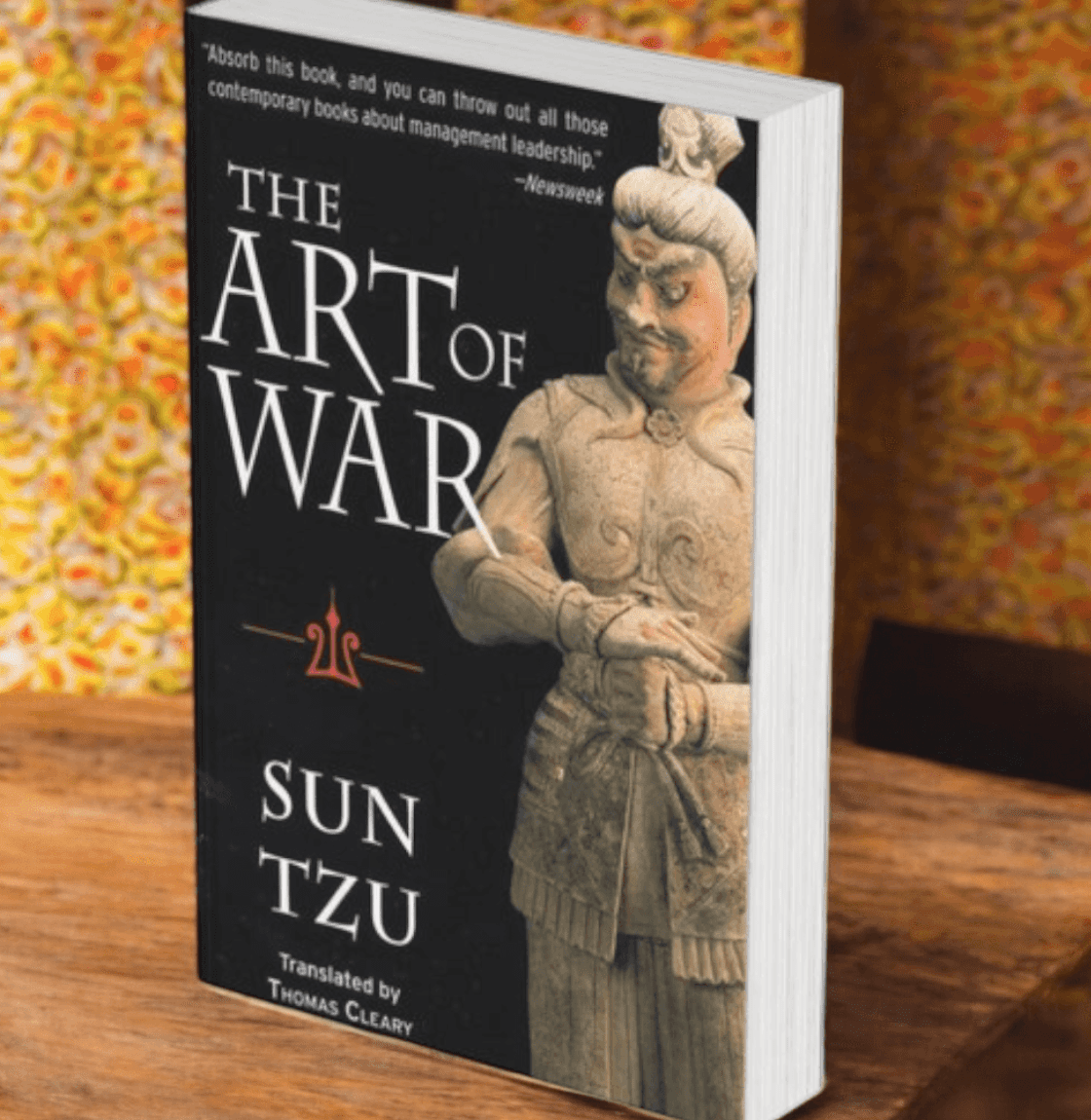

The Art of War: Complete Summary of Sun Tzu’s Strategic Principles for Victory
Introduction: What This Book Is About
The Art of War by Sun Tzu is an ancient Chinese military treatise that offers timeless insights into strategy, leadership, and conflict resolution. Composed around the 5th century BC, this foundational text moves beyond mere tactics to explore the deeper philosophical principles governing success in any competitive endeavor. Sun Tzu emphasizes the importance of foreknowledge, deception, and adaptability, arguing that true mastery lies in achieving victory without direct engagement.
The book serves as a guide for generals, leaders, and anyone seeking to navigate complex situations, whether in military campaigns, business, or personal life. It teaches how to assess situations, understand opponents, and leverage strengths to achieve desired outcomes. Readers will learn to cultivate foresight, manage resources, and inspire cohesion within their teams, leading to decisive advantages.
This summary provides a comprehensive overview of Sun Tzu’s key principles, covering every chapter and major concept. It delves into the nuances of planning, maneuvering, tactical dispositions, and the effective use of intelligence, ensuring no valuable insight is left behind. By exploring these ancient strategies, modern readers can unlock new approaches to achieving goals and overcoming challenges with wisdom and precision.
I. Laying Plans: The Foundation of Strategic Victory
This chapter sets the stage for Sun Tzu’s philosophy, emphasizing the critical importance of strategic deliberation before engaging in any conflict. It outlines the fundamental factors that determine success or failure in war, providing a framework for commanders to assess their position and that of their adversaries. The core message is that meticulous planning and a deep understanding of conditions are essential for winning battles.
What “Moral Law” Means in Warfare
The Moral Law causes the people to be in complete accord with their ruler, ensuring they will follow him regardless of their lives and remain undismayed by any danger. This principle highlights the importance of unity and loyalty between the leader and the led. Without constant practice and a strong bond, officers become nervous and undecided, and the general becomes wavering and irresolute.
Understanding Heaven’s Influence on Campaigns
Heaven signifies the natural elements and their impact on operations, including night and day, cold and heat, and times and seasons. Commanders must consider these environmental factors, as they directly affect troop movements, supply lines, and the effectiveness of tactics. Recognizing and adapting to these conditions provides a strategic advantage.
Earth: Navigating the Terrain of Battle
Earth comprises the geographical aspects of the battlefield, including distances (great and small), danger and security, open ground and narrow passes, and the chances of life and death. Understanding terrain is crucial for positioning troops, planning routes, and predicting enemy movements, directly influencing the outcome of engagements.
The Commander’s Essential Virtues
The Commander embodies the virtues of wisdom, sincerity, benevolence, courage, and strictness. These qualities ensure effective leadership, allowing the general to make sound decisions, inspire trust, care for his troops, act decisively, and enforce discipline. A leader lacking these virtues risks disunity and defeat.
Method and Discipline: The Blueprint for Army Organization
Method and Discipline refer to the systematic organization and control of the army. This includes the marshaling of the army in proper subdivisions, the graduations of rank among officers, the maintenance of roads for supplies, and the control of military expenditure. A well-structured and disciplined force is fundamental to operational efficiency and effectiveness.
The Seven Considerations for Forecasting Victory
Generals must analyze seven key considerations to forecast victory or defeat:
- Which of the two sovereigns is imbued with the Moral Law?
- Which of the two generals has most ability?
- With whom lie the advantages derived from Heaven and Earth?
- On which side is discipline most rigorously enforced?
- Which army is stronger (morally and physically)?
- On which side are officers and men more highly trained?
- In which army is there the greater constancy both in reward and punishment?
These comparisons provide a comprehensive basis for strategic decision-making.
Adapting Plans to Favorable Circumstances
While counsel provides general guidelines, circumstances demand flexibility. Generals must modify their plans according to the specific conditions encountered, rather than blindly adhering to abstract principles. This adaptability, as demonstrated by Wellington, allows a commander to respond effectively to unexpected developments and secure a favorable position.
Deception: The Core Principle of Warfare
All warfare is based on deception. This fundamental principle means that commanders must appear unable when able to attack, seem inactive when using forces, make the enemy believe they are far away when near, and near when far away. By holding out baits, feigning disorder, and striking when the enemy is unprepared, generals can manipulate their opponent’s perceptions and actions to their advantage.
II. Waging War: Counting the Cost of Conflict
This chapter focuses on the economic and human costs of warfare, emphasizing the importance of rapidity in campaigns to avoid exhaustion and impoverishment. Sun Tzu argues that a wise general understands that prolonged warfare drains national resources and leads to calamity, advocating for swift, decisive action to minimize suffering and maximize gain.
The True Cost of Raising an Army
Raising an army of 100,000 men to march a thousand LI involves immense financial expenditure, reaching a thousand ounces of silver per day. This sum covers provisions, entertainment, and all war materials, highlighting the significant economic burden of prolonged military operations on the State.
Dangers of Protracted Campaigns
If victory is long in coming, men’s weapons will grow dull and their ardor will be damped. Laying siege to a town will exhaust strength, and a protracted campaign will deplete the State’s resources. This leads to other chieftains taking advantage of the extremity, and even the wisest general will be unable to avert disaster. Sun Tzu stresses that no country has benefited from prolonged warfare.
Rapidity Over Deliberation in War
While haste may sometimes seem stupid, cleverness has never been associated with long delays. A general, though seemingly stupid, can conquer through sheer rapidity, saving expenditure and energy. Protracted operations, even if clever, bring calamity in their train, leading to an aging army, expended wealth, and distress among the people.
The Skillful Soldier’s Approach to Logistics
A skillful soldier does not raise a second levy and does not load supply-wagons more than twice. Instead, he brings war material from home but forages on the enemy. This strategy ensures the army has enough food for its needs, avoids impoverishing the people through distant contributions, and prevents the escalation of prices due to the army’s proximity.
Economic Impact on the Populace
When an army is maintained by contributions from a distance, the people are impoverished. The proximity of an army causes prices to go up, further draining the people’s substance. This leads to heavy exactions on the peasantry, stripping homes bare and dissipating three-tenths of their income. Government expenses, including those for chariots, horses, armor, and wagons, can amount to four-tenths of its total revenue.
Maximizing Spoils and Rewarding Troops
A wise general forages on the enemy, understanding that one cartload of the enemy’s provisions is equivalent to twenty of one’s own. To incentivize soldiers, men must be roused to anger to kill the enemy, and rewarded from spoils. When ten or more chariots are captured, those who took the first must be rewarded. Captured soldiers should be kindly treated and kept, augmenting one’s own strength.
Victory as the Sole Great Object
The great object in war is victory, not lengthy campaigns. War is not a matter to be trifled with; therefore, the leader of armies is the arbiter of the people’s fate, deciding whether the nation achieves peace or peril. This reiterates the importance of decisive, swift action to avoid the crippling costs of prolonged conflict.
III. Attack by Stratagem: Subduing Without Battle
This chapter articulates Sun Tzu’s preference for strategic superiority that allows victory without direct combat. It highlights the pinnacle of generalship as the ability to balk the enemy’s plans, avoid sieges, and overthrow kingdoms intact. The core idea is that minimal conflict yields maximal results, preserving both one’s own forces and the enemy’s resources.
The Highest Form of Generalship
The supreme excellence in warfare consists in breaking the enemy’s resistance without fighting. It is better to take the enemy’s country whole and intact than to shatter and destroy it. This applies to capturing an army, regiment, detachment, or company entire rather than destroying them, preserving manpower and resources.
The Hierarchy of Attack Strategies
The best strategies, in descending order of preference, are:
- Balking the enemy’s plans: Anticipating and thwarting the enemy’s intentions before they can be executed.
- Preventing the junction of the enemy’s forces: Isolating the enemy from allies and reinforcements.
- Attacking the enemy’s army in the field: Engaging the enemy in open combat as a last resort.
- Besieging walled cities: This is the worst policy of all due to its high cost and protracted nature.
The Perils of Besieging Walled Cities
Sieges should be avoided whenever possible. Preparing for a siege, including mantlets, movable shelters, and other implements of war, takes three whole months. Piling up mounds against walls takes three more months. Impatient generals who launch assaults like “swarming ants” lose one-third of their men without taking the town, leading to disastrous effects.
Achieving Complete Triumph Without Losing a Man
A skillful leader subdues the enemy’s troops without any fighting, captures cities without besieging them, and overthrows kingdoms without lengthy operations. With his forces intact, he can dispute the mastery of the Empire, securing triumph without losing a single man. This is the essence of attacking by stratagem, emphasizing minimal expenditure and maximum preservation.
Numerical Superiority and Tactical Responses
When facing the enemy, the general must apply specific responses based on numerical superiority:
- If ten to the enemy’s one, surround him.
- If five to one, attack him directly.
- If twice as numerous, divide the army into two (one for frontal attack, one for rear diversion).
- If equally matched, offer battle.
- If slightly inferior in numbers, avoid the enemy or watch for opportunities.
- If quite unequal in every way, flee from him.
An obstinate fight by a small force against a larger one will ultimately lead to capture.
The General as the Bulwark of the State
The general is the bulwark of the State. If the bulwark is complete at all points, the State will be strong. If the bulwark is defective, the State will be weak. A general’s perfect ability, thorough knowledge of his profession, and unwavering resolve are crucial for the army’s strength and the State’s security.
Three Ways a Ruler Harms His Army
A ruler can bring misfortune upon his army in three ways:
- Hobbling the army: Commanding advance or retreat when the army cannot obey, due to ignorance of its capabilities. This is like tying a thoroughbred’s legs.
- Causing restlessness: Attempting to govern an army like a kingdom, ignorant of military conditions. Humanity and justice govern a state, but an army requires opportunism and flexibility.
- Shaking confidence: Employing officers without discrimination, ignorant of adaptation to circumstances. Not using the right man in the right place shakes soldiers’ confidence.
The Five Essentials for Victory
There are five essentials for victory:
- Knowing when to fight and when not to fight.
- Knowing how to handle both superior and inferior forces.
- Having an army animated by the same spirit throughout all its ranks.
- Being prepared oneself, and waiting to take the enemy unprepared.
- Having military capacity and not being interfered with by the sovereign.
These principles ensure success by aligning military action with capability, morale, and autonomy.
Knowing the Enemy and Yourself
The ultimate maxim: If you know the enemy and know yourself, you need not fear the result of a hundred battles. If you know yourself but not the enemy, you will suffer defeat for every victory. If you know neither the enemy nor yourself, you will succumb in every battle. Attack is the secret of defense; defense is the planning of an attack. This holistic understanding is the root-principle of war.
IV. Tactical Dispositions: Securing the Unassailable Position
This chapter explores the concept of invincibility through strategic positioning and the cultivation of an unassailable defense. Sun Tzu emphasizes that true mastery lies in making defeat impossible, creating opportunities to strike, and winning with effortless superiority. The focus shifts from direct engagement to the subtlety of creating an advantageous situation from which victory naturally unfolds.
Prioritizing Impossibility of Defeat
Good fighters first put themselves beyond the possibility of defeat, and then wait for an opportunity to defeat the enemy. Securing oneself against defeat lies in one’s own hands, through concealing dispositions, covering tracks, and taking unremitting precautions. The opportunity of defeating the enemy, however, is provided by the enemy himself, usually through a mistake on their part.
Knowing How to Conquer, Not Necessarily Doing It
One may know how to conquer without being able to do it. This paradox highlights that possessing theoretical knowledge is not enough; practical execution and seizing the opportune moment are crucial. Security against defeat implies defensive tactics, while the ability to defeat the enemy means taking the offensive.
Strength and Weakness in Offensive and Defensive Postures
Standing on the defensive indicates insufficient strength, meaning a commander lacks the resources or favorable conditions for offense. Attacking, conversely, indicates a superabundance of strength. A skilled general hides in the most secret recesses of the earth when defending, and flashes forth from the topmost heights of heaven when attacking, ensuring complete protection and decisive victory.
The Acme of Excellence: Winning with Ease
True excellence in warfare is not merely seeing victory when it’s obvious or gaining renown after battle. It is about winning with ease, planning secretly, moving surreptitiously, and foiling the enemy’s intentions and schemes so that victory is won without shedding blood. Lifting an autumn hair, seeing the sun and moon, or hearing thunder are not signs of great skill; winning without obvious effort is.
Winning by Avoiding Mistakes
A clever fighter wins his battles by making no mistakes. This means planning no superfluous marches or futile attacks, looking into the future to discern conditions, and thereby ensuring certainty of victory. This process involves conquering an enemy that is already defeated—meaning the enemy has already made a fatal error or is in an inherently disadvantageous position.
The Victorious Strategist’s Approach
The victorious strategist seeks battle only after the victory has been won, meaning plans are laid to ensure triumph before engaging. Conversely, he who is destined to defeat first fights and then looks for victory, relying on brute strength. The consummate leader cultivates the moral law and strictly adheres to method and discipline, thereby controlling success.
The Five Steps of Military Method
Military method comprises five steps:
- Measurement: Surveying and measuring the ground.
- Estimation of quantity: Assessing the enemy’s general position or condition.
- Calculation: Estimating the enemy’s numerical strength.
- Balancing of chances: Weighing the enemy’s chances against one’s own.
- Victory: The natural outcome if one’s chances turn the scale.
These steps form a logical progression for strategic assessment and decision-making.
The Force of a Victorious Army
A victorious army opposed to a routed one is like a pound’s weight placed in the scale against a single grain, indicating the enormous advantage of a disciplined force flushed with victory over one demoralized by defeat. The onrush of a conquering force is like the bursting of pent-up waters into a chasm a thousand fathoms deep, symbolizing overwhelming momentum and power.
V. Energy: Unleashing the Force of the Combined Army
This chapter delves into the deployment of military energy, focusing on how to manage large forces as effectively as small ones. Sun Tzu introduces the crucial concepts of direct (CHENG) and indirect (CH`I) methods, explaining their endless permutations in battle. The core idea is to generate overwhelming momentum and leverage the collective force of the army like a force of nature, enabling decisive strikes.
Controlling Large Forces Through Division
The control of a large force operates on the same principle as controlling a few men: it is merely a question of dividing up their numbers into regiments, companies, and other subdivisions with subordinate officers. This structure allows for manageable units within a vast army. Similarly, fighting with a large army is no different from a small one when signs and signals are properly instituted for clear communication.
Direct and Indirect Maneuvers for Unshaken Impact
To ensure the whole host can withstand the enemy’s attack and remain unshaken, maneuvers direct (CHENG) and indirect (CH`I) must be employed. Direct methods involve frontal attacks and obvious movements, while indirect methods involve lateral diversions, surprise attacks from unexpected quarters, and confusing the enemy’s perceptions. The key is that these two methods are mutually interchangeable and run into each other like a circle, creating an endless series of maneuvers.
The Science of Weak Points and Strong
The impact of an army can be like a grindstone dashed against an egg, achieved by understanding the science of weak points and strong. This means striking the enemy where they are vulnerable and avoiding their strengths. While the direct method is used for joining battle, indirect methods are needed to secure victory.
The Infinite Resource of Indirect Tactics
Indirect tactics, when efficiently applied, are as inexhaustible as Heaven and Earth, unending as the flow of rivers and streams. They are like the sun and moon, ending but to begin anew, and like the four seasons, passing away to return once more. This illustrates the almost infinite resource available to a great leader who masters these permutations.
Analogies for Strategic Combinations
Sun Tzu uses several analogies to explain the boundless nature of tactical combinations:
- Musical notes: Not more than five musical notes, yet their combinations create more melodies than can be heard.
- Primary colors: Not more than five primary colors, yet their combinations produce more hues than can be seen.
- Cardinal tastes: Not more than five cardinal tastes, yet their combinations yield more flavors than can be tasted.
These analogies demonstrate how the two methods of attack (direct and indirect) can generate an endless series of maneuvers.
Onset, Decision, and Psychological Moment
The onset of troops should be like the rush of a torrent that rolls stones along. The quality of decision is like the well-timed swoop of a falcon, enabling it to strike and destroy its victim. This denotes an instinct of self-restraint, waiting for the right moment to strike with maximum effectiveness. The good fighter is terrible in his onset and prompt in his decision.
Energy and Trigger Release
Energy may be likened to the bending of a crossbow, storing immense force. Decision is likened to the releasing of a trigger, unleashing that stored energy at the critical moment. This highlights the importance of controlled power and precise timing in military operations.
Simulated Disorder and Underlying Discipline
Amidst the turmoil and tumult of battle, there may be seeming disorder, yet no real disorder. Amid confusion and chaos, an array may be without head or tail, yet proof against defeat. This is because simulated disorder postulates perfect discipline, simulated fear postulates courage, and simulated weakness postulates strength. Hiding order beneath disorder is a matter of subdivision, concealing courage under timidity presupposes latent energy, and masking strength with weakness is achieved through tactical dispositions.
Keeping the Enemy on the Move
A skillful combatant keeps the enemy on the move by maintaining deceitful appearances, which the enemy will act upon. This involves sacrificing something that the enemy may snatch at, and holding out baits. Then, with a body of picked men, the skillful combatant lies in wait for the enemy. This strategy, effectively employed by Sun Pin, can decisively rout an opponent.
The Power of Combined Energy Over Individual Talent
The clever combatant looks to the effect of combined energy, not requiring too much from individuals. This means considering the power of the army in bulk before accounting for individual talent, utilizing each man according to his capabilities. When combined energy is utilized, fighting men become like rolling logs or stones, which move when on a slope and roll down if round-shaped, demonstrating natural or inherent power. The energy developed by good fighting men is like the momentum of a round stone rolled down a mountain thousands of feet in height.
VI. Weak Points and Strong: Striking the Vulnerable
This chapter delves into the art of identifying and exploiting the enemy’s weaknesses while fortifying one’s own strengths. Sun Tzu emphasizes the principle of initiative, showing how a clever combatant imposes his will on the enemy by appearing where he is not expected and attacking where he is undefended. The ultimate goal is to control the flow of battle by manipulating the enemy’s dispositions.
First in the Field: Freshness Versus Exhaustion
Whoever is first in the field and awaits the enemy will be fresh for the fight. Conversely, whoever is second and hastens to battle will arrive exhausted. This highlights the importance of proactive positioning and maintaining readiness, ensuring one’s forces are at their peak when engagement occurs.
Imposing Will, Not Accepting It
The clever combatant imposes his will on the enemy but does not allow the enemy’s will to be imposed on him. This means dictating the terms of engagement and forcing the enemy to react to one’s moves. This can be done by holding out advantages to entice the enemy to approach, or by inflicting damage to make it impossible for them to draw near.
Harassing, Starving, and Forcing Movement
If the enemy is taking his ease, harass him. If well supplied with food, starve him out. If quietly encamped, force him to move. This dynamic approach keeps the enemy off balance and prevents them from consolidating their position or resources.
Attacking the Undefended, Holding the Unattackable
You can be sure of succeeding in attacks if you only attack places which are undefended. These include areas where the general lacks capacity, soldiers lack spirit, fortifications are weak, or relief is slow. You can ensure the safety of your defense if you only hold positions that cannot be attacked, meaning they have no such weak points.
Skill in Attack and Defense
A general is skillful in attack whose opponent does not know what to defend. This involves striking at vulnerable points and emerging from the void. Conversely, a general is skillful in defense whose opponent does not know what to attack. This involves hiding in secret recesses and remaining invisible, making it impossible for the enemy to locate weaknesses. This balance between offense and defense is the essence of success.
Divine Art of Subtlety and Secrecy
Through the divine art of subtlety and secrecy, one learns to be invisible and inaudible to the enemy. This allows a commander to hold the enemy’s fate in his hands, dictating their actions without their awareness. This mastery of concealment and surprise is paramount for strategic advantage.
Irresistible Advance and Safe Retreat
An army may advance and be absolutely irresistible if it makes for the enemy’s weak points. It may retire and be safe from pursuit if its movements are more rapid than those of the enemy. This highlights the importance of both identifying vulnerability and maintaining superior mobility.
Forcing and Preventing Engagement
If one wishes to fight, the enemy can be forced to an engagement even if sheltered by strong defenses, by attacking a place they will be obliged to relieve. If one does not wish to fight, the enemy can be prevented from engaging, even if encampment lines are merely traced, by throwing something odd and unaccountable in their way, such as a timely “bluff.”
Concentrating Against Divided Forces
By discovering the enemy’s dispositions while remaining invisible oneself, forces can be kept concentrated while the enemy’s must be divided. This creates a situation where a whole is pitted against separate parts, resulting in numerical superiority at any given point. This leads to the opponent being in dire straits.
Numerical Weakness and Strength
Numerical weakness comes from having to prepare against possible attacks across many points, distributing forces thinly. Numerical strength comes from compelling the adversary to make these preparations against oneself, forcing them to disperse their army. The goal is to concentrate superior force against each fraction in turn.
The Importance of Known Time and Place
Knowing the place and time of the coming battle allows for concentration from great distances, enabling a fight with overwhelming strength. However, if neither time nor place is known, wings, vanguard, and rear will be impotent to succor each other, leading to vulnerability, especially if separated by long distances.
Victory Against Numerical Superiority
Even if the enemy is stronger in numbers, they can be prevented from fighting. This requires scheming to discover their plans and the likelihood of their success. One must rouse the enemy to learn their activity or inactivity and force them to reveal vulnerable spots. Careful comparison of opposing armies reveals where strength is superabundant and where it is deficient.
Concealing Dispositions for Ultimate Safety
The highest pitch of tactical disposition is concealment. Concealing dispositions makes one safe from the prying of the subtlest spies and the machinations of the wisest brains. This allows victory to be produced from the enemy’s own tactics, something the multitude cannot comprehend.
Unseen Strategy Versus Visible Tactics
All men can see the tactics by which one conquers, but none can see the strategy out of which victory is evolved. This refers to the long series of plans and combinations preceding a battle. Therefore, one must not repeat tactics that gained a previous victory, but regulate methods by the infinite variety of circumstances.
Military Tactics Like Water
Military tactics are like water: just as water runs away from high places and hastens downwards, so in war the way is to avoid what is strong and strike at what is weak. Water shapes its course according to the ground; the soldier works out victory in relation to the foe. Thus, just as water retains no constant shape, in warfare there are no constant conditions. Modifying tactics in relation to the opponent to win is the mark of a heaven-born captain.
VII. Maneuvering: The Art of Strategic Movement
This chapter focuses on the practical execution of military movements, emphasizing the extreme difficulty and critical importance of tactical maneuvering. Sun Tzu highlights how to transform disadvantage into gain through celerity and deception, stressing the necessity of harmony within the army and the astute management of logistical challenges during marches.
The General’s Mandate and Army Harmony
The general receives commands from the sovereign and, after collecting and concentrating forces, must blend and harmonize the different elements before pitching camp. Establishing harmony and confidence between higher and lower ranks is crucial before venturing into the field, as without harmony, no battle array can be formed.
Turning Devious Into Direct: The Artifice of Deviation
Tactical maneuvering is profoundly difficult, consisting in turning the devious into the direct and misfortune into gain. This means making it appear one is far off, then covering distance rapidly to arrive before the opponent. The artifice of deviation allows a general to take a long, circuitous route, enticing the enemy out of the way, yet still reaching the goal first.
Dangers of Undisciplined Marching
Maneuvering with a disciplined army is advantageous; with an undisciplined multitude, it is most dangerous. To snatch an advantage by setting a fully equipped army in march means one will likely be too late. Detaching a flying column risks sacrificing baggage and stores. A forced march of one hundred LI to gain an advantage will cause leaders of all three divisions to fall into enemy hands, with only one-tenth of the army reaching its destination. A march of fifty LI loses the leader of the first division and yields only half the force. A thirty LI march sees two-thirds arrive.
Essential Logistics for Sustained Operations
An army without its baggage-train is lost, without provisions it is lost, and without bases of supply it is lost. These crucial logistical elements are indispensable for maintaining an effective fighting force.
Prerequisites for Leading an Army
To lead an army on the march, one must be:
- Acquainted with the designs of neighbors before forming alliances.
- Familiar with the face of the country—its mountains, forests, pitfalls, precipices, marshes, and swamps.
- Able to turn natural advantage to account by using local guides.
Ignorance of these elements leads to fatal snares and vulnerability.
Strategic Attributes of an Army in Motion
An army in motion should exhibit certain qualities:
- Rapidity of the wind: swift, invisible, leaving no tracks.
- Compactness of the forest: preserving order and ranks, guarding against surprise attacks.
- Raiding and plundering like fire: fierce and unchecked when attacking.
- Immovability like a mountain: steadfast when holding a position or enticing an enemy.
- Plans dark and impenetrable as night: secrecy in intentions.
- Fall like a thunderbolt when moving: attack so quickly it cannot be parried.
Dividing Spoil and Pondering Moves
When plundering a countryside, the spoil must be divided amongst the men to prevent abuses and incentivize action. When capturing new territory, it should be cut up into allotments for the benefit of the soldiery. Always ponder and deliberate before making a move, waiting to gauge the enemy’s resisting power and the opposing general’s cleverness.
Gongs, Drums, Banners, and Flags for Unity
On the field of battle, spoken words do not carry far, hence the institution of gongs and drums. Ordinary objects are not seen clearly enough, hence the institution of banners and flags. These are means to focus the ears and eyes of the host on one particular point, ensuring that a host forming a single united body cannot be easily broken.
Handling Large Masses of Men
With focused sight and hearing, a million soldiers can move like a single man. This renders it impossible for the brave to advance alone or the cowardly to retreat alone; both are equally guilty if they act against orders. This is the art of handling large masses of men. In night-fighting, use signal-fires and drums; in day-fighting, use flags and banners to influence the army’s ears and eyes.
Robbing the Enemy of Spirit and Presence of Mind
A whole army may be robbed of its spirit. The enemy’s spirit is keenest when newly arrived; therefore, wait until their ardor wears off before striking. A commander-in-chief may be robbed of his presence of mind, which is the general’s most important asset for disciplining disorder and inspiring courage. Attacking includes assailing the enemy’s mental equilibrium.
Studying Moods and Retaining Self-Possession
A soldier’s spirit is keenest in the morning, flags by noonday, and in the evening, minds turn to returning to camp. A clever general avoids an army when its spirit is keen, but attacks when it is sluggish and inclined to return. This is the art of studying moods. To remain disciplined and calm while awaiting the enemy’s disorder and hubbub is the art of retaining self-possession.
Husbanding Strength and Studying Circumstances
Husbanding one’s strength involves being near the goal while the enemy is far, waiting at ease while the enemy toils, and being well-fed while the enemy starves. The art of studying circumstances means refraining from intercepting an enemy whose banners are in perfect order, and refraining from attacking an army drawn up in calm and confident array.
Avoiding Certain Engagements
Military axioms dictate:
- Do not advance uphill against the enemy, nor oppose him when he comes downhill.
- Do not pursue an enemy who simulates flight.
- Do not attack soldiers whose temper is keen.
- Do not swallow bait offered by the enemy.
- Do not interfere with an army that is returning home, as they will fight desperately.
- When surrounding an army, leave an outlet free to prevent desperate fighting.
- Do not press a desperate foe too hard.
These rules embody the art of warfare.
VIII. Variation in Tactics: Adapting to Diverse Situations
This chapter focuses on the principle of adaptability and the necessity of varying tactics based on the unique circumstances of different terrains and military situations. Sun Tzu introduces the concept of “Nine Variations,” emphasizing that rigid adherence to rules is detrimental, and a wise general blends considerations of advantage and disadvantage to achieve optimal results.
General’s Commands and Situational Awareness
The general receives commands from the sovereign, collects and concentrates his army. When in difficult country, do not encamp. In country where high roads intersect, join hands with allies. Do not linger in dangerously isolated positions. In hemmed-in situations, resort to stratagem. In desperate positions, fight.
Roads, Armies, Towns, and Positions to Avoid
There are specific military elements to avoid:
- Roads which must not be followed: Especially narrow defiles prone to ambush.
- Armies which must not be attacked: When one can gain rival advantage but not a real defeat, avoid overtaxing men.
- Towns which must not be besieged: If taking it yields no great feat or if leaving it alone causes no trouble.
- Positions which must not be contested: If the cost outweighs the strategic value.
- Commands of the sovereign which must not be obeyed: Military necessity overrides even imperial wishes.
Understanding Variations for Troop Handling
The general who thoroughly understands the advantages that accompany variation of tactics knows how to handle his troops effectively. Conversely, a general who does not understand these variations, even if well acquainted with terrain, will not be able to turn his knowledge to practical account. Topographical knowledge must be supplemented by versatility of mind.
Blending Advantage and Disadvantage
The student of war who is unversed in varying plans, even knowing the five general advantages, will fail to make the best use of his men. Hence, in the wise leader’s plans, considerations of advantage and disadvantage will be blended together. When expecting advantage, temper it with the possibility of enemy harm. When in difficulties, be ready to seize an advantage to extricate oneself from misfortune.
Inflicting Damage and Keeping the Enemy Engaged
To reduce hostile chiefs, inflict damage on them (e.g., enticing away wise men, introducing traitors, sowing dissension, corrupting morals with gifts, disturbing their minds with women). Make trouble for them affecting their assets. Keep them constantly engaged to prevent rest. Hold out specious allurements to make them rush to a given point.
Readiness Over Likelihood of Attack
The art of war teaches reliance not on the likelihood of the enemy’s not coming, but on our own readiness to receive him. It is not on the chance of his not attacking, but rather on the fact that we have made our position unassailable. This emphasizes proactive preparation and strategic invincibility.
Five Dangerous Faults of a General
Five dangerous faults may affect a general, ruinous to the conduct of war:
- Recklessness: Leads to destruction; fighting blindly and desperately without forethought. Such a foe must be lured into ambush.
- Cowardice: Leads to capture; prevents seizing advantage or quick flight at danger; unwilling to take risks.
- Hasty temper: Easily provoked by insults, leading to rash, ill-timed engagements.
- Delicacy of honor: Sensitive to shame or slanderous reports, neglecting strategic imperatives for reputation. The seek after glory should be careless of public opinion.
- Over-solicitude for his men: Exposes him to worry and trouble; sacrificing military advantage for immediate troop comfort. This is a shortsighted policy leading to defeat.
These are the five besetting sins that lead to the overthrow of an army and the death of its leader.
IX. The Army on the March: Reading Signs and Securing Position
This chapter provides practical advice on managing an army during marches and encampments, focusing heavily on observing and interpreting signs from the enemy and the environment. Sun Tzu details optimal positions in various terrains, emphasizes the importance of troop welfare, and offers insights into reading enemy morale and intentions.
Mountain Warfare: Fast Movement and High Ground
When operating in mountains, pass quickly over them and keep in the neighborhood of valleys for supplies. Camp in high places (knolls or hillocks) facing the sun. Do not climb heights to fight. This ensures troops are rested and supplied, avoiding barren uplands.
River Warfare: Crossing and Positioning
After crossing a river, get far away from it to tempt the enemy to cross and avoid being impeded. When the enemy crosses, do not meet them mid-stream; let half the army cross, then attack. If anxious to fight, do not meet the invader near a river he must cross. Moor craft higher up than the enemy and facing the sun; do not move upstream to meet them.
Salt-Marsh Operations: Speed and Resource Availability
In crossing salt-marshes, the sole concern should be to get over them quickly without delay due to lack of fresh water, poor herbage, and exposure. If forced to fight in a salt-marsh, have water and grass near and position your back to a clump of trees for protection.
Flat Country Campaigning: Accessible Positions
In dry, level country, take up an easily accessible position with rising ground to your right and on your rear. This places danger in front and safety behind, aligning with strategic advantage.
Four Useful Branches of Military Knowledge
These four branches of military knowledge are concerned with mountains, rivers, marshes, and plains. Understanding these enabled the Yellow Emperor to vanquish four several sovereigns, highlighting their historical importance.
High Ground, Sunny Places, and Troop Welfare
All armies prefer high ground to low (for health and military advantage) and sunny places to dark. If careful of men and camping on hard ground, the army will be free from disease and this will spell victory. When on a hill or bank, occupy the sunny side with the slope on the right rear, benefiting soldiers and utilizing natural advantages.
Avoiding Treacherous Terrain
When a river is swollen with foam from heavy rains, wait until it subsides before fording. Areas with precipitous cliffs, torrents, deep natural hollows, confined places, tangled thickets, quagmires, and crevasses should be left with all possible speed and not approached. Get the enemy to approach these places, or ensure they are on his rear if facing them.
Spotting Enemy Activity and Deception
Observe these signs for enemy activity:
- Enemy close and quiet: Relying on natural strength of position.
- Enemy aloof and provocative: Anxious for your side to advance from a strong position.
- Encampment easy of access: Tendering a bait.
- Movement amongst forest trees: Enemy advancing, felling trees to clear passage.
- Number of screens in thick grass: Enemy wants to make you suspicious, feigning ambush after flight.
- Rising birds in flight: Sign of an ambuscade.
- Startled beasts: Sudden attack is coming.
- High column of dust: Chariots advancing.
- Low, wide dust: Infantry approaching.
- Dust branching out: Parties collecting firewood.
- Few clouds of dust moving to and fro: Army is encamping.
- Humble words and increased preparations: Enemy about to advance (seeking to make you contemptuous).
- Violent language and driving forward: Enemy will retreat (a ruse).
- Light chariots first on wings: Enemy forming for battle.
- Peace proposals without covenant: Indicates a plot.
- Much running about and falling into rank: Critical moment has come.
- Some advancing, some retreating: It is a lure.
Reading Enemy Condition Through Behavior
Observe these signs for enemy condition:
- Soldiers leaning on spears: Faint from want of food.
- Those drawing water drink first: Army suffering from thirst.
- Enemy sees advantage but makes no effort: Soldiers are exhausted.
- Birds gather on a spot: It is unoccupied (abandoned camp).
- Clamor by night: Betokens nervousness.
- Disturbance in camp: General’s authority is weak.
- Banners and flags shifted: Sedition is afoot.
- Officers angry: Men are weary (from demands).
- Feeding horses grain, killing cattle for food, no cooking-pots: Determined to fight to the death.
- Whispering in small knots: Disaffection among rank and file.
- Too frequent rewards: Enemy at end of resources (fear of mutiny).
- Too many punishments: Condition of dire distress (discipline relaxed, severity needed).
- Bluster then fright at numbers: Supreme lack of intelligence (contempt for opponent).
- Envoys with compliments: Wished for truce (exhausted or otherwise).
- Troops march angrily, face long, no battle/retreat: Demands great vigilance and circumspection (ruse for flank attack).
Handling Numerical Equalities and Troop Discipline
If troops are no more in number than the enemy, it means no direct attack can be made; concentrate all strength, watch closely, and obtain reinforcements.
- Soldiers punished before attachment: Not submissive, useless.
- Soldiers attached, but punishments not enforced: Still useless.
Therefore, treat soldiers with humanity but control with iron discipline. This is a certain road to victory.
A general showing confidence in men but always insisting on orders yields mutual gain.
Halfway to Victory and Complete Victory
- Know own men can attack, but unaware enemy is not open to attack: Halfway to victory (uncertain issue).
- Know enemy is open to attack, but unaware own men not fit: Halfway to victory.
- Know enemy is open, own men fit, but unaware ground makes fighting impracticable: Still halfway to victory.
The experienced soldier, once in motion, is never bewildered; once camp is broken, never at a loss because measures ensure victory beforehand.
If you know the enemy and know yourself, your victory will not stand in doubt; if you know Heaven and know Earth, you may make your victory complete.
X. Terrain: Principles of Ground and Avoiding Calamities
This chapter expands on the influence of terrain on military operations, categorizing six distinct types of ground and their associated tactical approaches. Sun Tzu also identifies six calamities that can befall an army due to a general’s faults, emphasizing the crucial link between a commander’s skill and the army’s success in exploiting natural advantages.
Six Kinds of Terrain
Sun Tzu distinguishes six kinds of terrain:
- Accessible ground: Easily traversed by both sides, with roads and communications. Occupy raised, sunny spots and guard supplies to fight with advantage.
- Entangling ground: Can be abandoned but is hard to re-occupy. Sally forth to defeat an unprepared enemy; failure means disaster if unprepared.
- Temporizing ground: Neither side gains by making the first move. Do not stir forth even with bait; retreat to entice the enemy, then attack with advantage when part of his army emerges.
- Narrow passes: Occupy first, garrison strongly, and await the enemy. If occupied by the enemy, only pursue if weakly garrisoned.
- Precipitous heights: If beforehand, occupy raised, sunny spots and wait. If enemy occupies, do not follow; retreat and entice him away.
- Positions at a great distance from the enemy: If strengths are equal, it’s hard to provoke battle, and fighting will be disadvantageous (due to exhaustion from long marches).
General’s Responsibility for Terrain Knowledge
These six principles are connected with Earth (terrain). The general who has attained a responsible post must be careful to study them, as they form the foundation for strategic decision-making and exploitation of natural advantages.
Six Calamities from General’s Faults
An army is exposed to six calamities, not from natural causes but from the general’s faults:
- Flight: When an inferior force is hurled against one ten times its size.
- Insubordination: Common soldiers are too strong, officers too weak, leading to contempt and open defiance.
- Collapse: Officers are too strong, common soldiers too weak, causing feeble soldiers to suddenly collapse.
- Ruin: Higher officers are angry and insubordinate, fighting on their own account before the commander-in-chief assesses the position.
- Disorganization: General is weak and lacks authority; orders are unclear; no fixed duties; ranks are slovenly.
- Rout: General unable to estimate enemy strength, allowing inferior force to engage larger one, or weak detachment against powerful one, neglecting to place picked soldiers in front.
These six ways of courting defeat must be carefully noted by the general.
The Great General’s Test: Estimating and Controlling
The natural formation of the country is the soldier’s best ally. However, the power of estimating the adversary, of controlling the forces of victory, and of shrewdly calculating difficulties, dangers, and distances, constitutes the true test of a great general. Knowing these and putting them into practice ensures victory; neglecting them leads to defeat.
Fighting Based on Victory’s Certainty
If fighting is sure to result in victory, then you must fight, even if the ruler forbids it. If fighting will not result in victory, then you must not fight, even at the ruler’s bidding. The general’s responsibility for setting an army in motion is absolute, independent of palace decrees.
The General as the Jewel of the Kingdom
The general who advances without coveting fame and retreats without fearing disgrace, whose only thought is to protect his country and do good service for his sovereign, is the jewel of the kingdom. Such a leader prioritizes national well-being over personal glory or safety.
Treating Soldiers: Humanity and Iron Discipline
Regard soldiers as children, and they will follow into deepest valleys. Look upon them as beloved sons, and they will stand by you even unto death. This fostering of loyalty and care inspires extreme devotion. However, if a general is indulgent but lacks authority, kind-hearted but cannot enforce commands, and incapable of quelling disorder, soldiers become spoilt children, useless for any practical purpose. Therefore, soldiers must be treated with humanity but controlled by iron discipline for certain victory.
Comprehensive Knowledge for Complete Victory
If you know the enemy and know yourself, your victory will not stand in doubt. Furthermore, if you know Heaven and know Earth, you may make your victory complete. This comprehensive knowledge encompasses the affairs of men, the seasons, and natural advantages, ensuring that victory will invariably crown battles.
XI. The Nine Situations: Strategic Adaptation in Diverse Grounds
This chapter presents Sun Tzu’s intricate classification of nine varieties of ground, each requiring specific tactical responses. It emphasizes that a skillful leader must understand how to adapt to each situation, inspiring cohesion or driving desperation in his troops, ultimately demonstrating the crucial role of situational awareness and flexible strategy in achieving victory.
Nine Varieties of Ground Defined
Sun Tzu identifies nine varieties of ground:
- Dispersive ground: When a chieftain fights in his own territory, soldiers are near home and prone to scatter. Here, fight not, but inspire unity.
- Facile ground: Penetrated hostile territory, but not far; easy to retreat. Here, halt not, but ensure close connection within the army to prevent desertion.
- Contentious ground: Possession imports great advantage to either side; a bottleneck or key position. Here, attack not if the enemy occupies it, but hurry up your rear to secure it first or lure him away.
- Open ground: Each side has liberty of movement, with a network of roads. Here, do not try to block the enemy’s way, but keep a vigilant eye on defenses.
- Ground of intersecting highways: Key to three contiguous states; whoever occupies it first controls much of the Empire. Here, join hands with allies or form alliances.
- Serious ground: Army has penetrated into the heart of hostile country, leaving fortified cities in its rear. Here, gather in plunder (or avoid plundering to win hearts) and ensure a continuous stream of supplies for protracted resistance.
- Difficult ground: Mountain forests, rugged steeps, marshes, and fens—hard to traverse. Here, keep steadily on the march and do not encamp.
- Hemmed-in ground: Reached through narrow gorges, only tortuous paths for retreat, small enemy force can crush large body. Here, resort to stratagem and block any way of retreat to force desperate fighting.
- Desperate ground: Only saved from destruction by fighting without delay; like a leaking boat or burning house, with no refuge. Here, fight, and proclaim to soldiers the hopelessness of saving their lives to inspire ultimate effort.
Strategic Implications of Each Ground Type
For each ground type, Sun Tzu provides a specific course of action, demonstrating the need for adaptive strategy:
- Dispersive ground: Focus on internal cohesion.
- Facile ground: Maintain operational speed and internal links.
- Contentious ground: Prioritize seizing or contesting key positions.
- Open ground: Ensure defensive readiness while allowing enemy movement.
- Intersecting highways: Build strong external alliances.
- Serious ground: Sustain logistical support for prolonged engagement.
- Difficult ground: Maintain forward momentum, avoid settling.
- Hemmed-in ground: Employ deception and force troops to commit to battle.
- Desperate ground: Instill a do-or-die mentality for survival.
Skillful Leaders: Driving Wedges and Controlling Movement
Skillful leaders of old knew how to:
- Drive a wedge between the enemy’s front and rear, causing them to lose touch.
- Prevent co-operation between his large and small divisions.
- Hinder good troops from rescuing the bad, and officers from rallying men.
- Keep united enemy men in disorder.
When advantageous, they made a forward move; otherwise, they stopped still. This ability to dislocate the enemy is key.
Rapidity: The Essence of War
Rapidity is the essence of war. Take advantage of the enemy’s unreadiness, make way by unexpected routes, and attack unguarded spots. This applies to generals like Ssu-ma I and Li Ching, who used overwhelming speed to surprise and defeat opponents.
Principles for an Invading Force
For an invading force:
- Penetrating deeply brings cohesion among troops, making defenders less able to prevail.
- Penetrating a short way means dispersion.
- Make forays in fertile country to supply the army with food.
- Carefully study the well-being of men and do not overtax them.
- Concentrate energy and hoard strength, ensuring soldiers are well-fed and rested.
- Keep the army continually on the move to prevent enemy anticipation.
- Devise unfathomable plans to mystify the enemy.
Inspiring Desperation and Survival
Throwing soldiers into positions whence there is no escape makes them prefer death to flight. If they face death, there is nothing they may not achieve. In desperate straits, soldiers lose fear and stand firm, fighting hard when there is no help for it. This fosters a state where soldiers are constantly on the qui vive, do your will without asking, are faithful without restrictions, and can be trusted without orders.
Prohibiting Omens and Doubts
Prohibit the taking of omens and do away with superstitious doubts. This prevents fear and ensures that until death comes, no calamity need be feared. Removing doubts keeps men resolute.
Wealth and Longevity in Battle
If soldiers are not overburdened with money, it is not because they distaste riches. If their lives are not unduly long, it is not because they are disinclined to longevity. Rather, when faced with desperate situations, they sacrifice valuables and lives because they have no other choice. A general must ensure that temptations to shirk fighting or prioritize personal gain are not put in their way.
The Courage of Desperation
When ordered to battle, soldiers may weep, but once brought to bay, they will display the courage of a Chu or a Kuei (historical heroes known for their extreme bravery in desperate situations). Danger has a bracing effect, enabling a force in harm’s way to strike a blow for victory.
The Shuai-Jan: Unity in Response
The skillful tactician is like the SHUAI-JAN, a snake that when struck on the head, is attacked by its tail; on the tail, attacked by its head; on the middle, attacked by both head and tail. An army can imitate the SHUAI-JAN, as even enemies (like men of Wu and Yueh in a storm) will help each other. This highlights the importance of internal unity and mutual support, beyond mere mechanical means like tethering horses.
Managing the Army: Secrecy and Deception
The principle for managing an army is to set up one standard of courage for all. How to make the best of both strong and weak involves the proper use of ground. The skillful general conducts his army as if leading a single man, with ease. A general must be quiet for secrecy and upright/just for order. He must mystify officers and men with false reports and appearances, keeping them in total ignorance of his design, and prevent them from knowing his real purpose by shifting camp and taking circuitous routes.
The General’s Decisive Actions
At the critical moment, the general acts like one who has climbed a height and kicks away the ladder, committing his men deep into hostile territory before revealing his hand. He burns his boats and breaks his cooking-pots, driving his men like sheep, so nothing knows whither he is going. This business of bringing the host into danger should be done swiftly after mobilization.
Studying Principles for Success
The different measures suited to the nine varieties of ground, the expediency of aggressive or defensive tactics, and the fundamental laws of human nature: these are things that must most certainly be studied. They form the basis for sound military judgment.
Attacking Powerful States and Alliances
When a warlike prince attacks a powerful state, his generalship shows itself in preventing the concentration of the enemy’s forces. He overawes opponents, preventing allies from joining against him. He does not strive to ally himself with all and sundry, nor does he foster the power of other states. Instead, he carries out his own secret designs, keeping antagonists in awe, enabling him to capture cities and overthrow kingdoms.
Unconventional Rewards and Orders
Bestow rewards without regard to rule, and issue orders without regard to previous arrangements. This prevents treachery and ensures flexibility, allowing a general to handle a whole army as if it were a single man. The final instructions should not correspond with previously posted ones; plans should not be divulged beforehand.
Truth and Falsehood in Command
Confront soldiers with the deed itself, never letting them know your design. When the outlook is bright, bring it before their eyes; but tell them nothing when the situation is gloomy. Place the army in deadly peril, and it will survive; plunge it into desperate straits, and it will come off in safety, as danger has a bracing effect.
Cunning for Command Success
Success in warfare is gained by carefully accommodating oneself to the enemy’s purpose, feigning stupidity or yielding to their wishes. By persistently hanging on the enemy’s flank, one can ultimately kill the commander-in-chief, demonstrating the ability to accomplish a thing by sheer cunning.
Initial Command and Decisive Battle
On the day of taking command, block frontier passes, destroy official tallies, and stop the passage of all emissaries to maintain secrecy and control. Be stern in the council-chamber to control the situation. If the enemy leaves a door open, rush in. Forestall the opponent by seizing what he holds dear, and subtly contrive to time his arrival on the ground. Walk in the path defined by rule, and accommodate yourself to the enemy until you can fight a decisive battle. At first, exhibit the coyness of a maiden for an opening; then emulate the rapidity of a running hare to strike decisively.
XII. The Attack by Fire: Leveraging Destructive Power
This chapter details the strategic use of fire as a weapon, outlining five specific methods of attack. Sun Tzu emphasizes the importance of preparation, timing, and environmental factors (like wind) for successful fire assaults. It also briefly contrasts fire with water as a means of attack, ultimately stressing that intelligence and caution are paramount in harnessing destructive power.
Five Ways of Attacking with Fire
There are five ways of attacking with fire:
- Burning soldiers in their camp: Setting fire to the encampment to kill or disorient soldiers.
- Burning stores: Destroying enemy provisions, fuel, and fodder.
- Burning baggage trains: Annihilating enemy transport and impedimenta.
- Burning arsenals and magazines: Destroying weapons, implements, bullion, and clothing.
- Hurling dropping fire amongst the enemy: Shooting flaming arrows or other incendiaries into enemy lines.
Readiness and Timing for Fire Attacks
To carry out a fire attack, means must be available, which includes having favorable circumstances and material for raising fire kept in readiness (dry vegetation, oil, etc.). There is a proper season (very dry weather) and special days (when the moon is in specific constellations, indicating rising wind) for starting a conflagration.
Five Possible Developments in Fire Attacks
When attacking with fire, one should be prepared to meet five possible developments:
- Fire breaks out inside the enemy’s camp: Respond at once with an attack from without.
- Outbreak of fire, but enemy soldiers remain quiet: Bide your time and do not attack, as the enemy is prepared.
- Force of flames reaches its height: Follow up with an attack if practicable; if not, stay where you are.
- Possible to assault with fire from without: Do not wait for an internal outbreak; deliver attack at a favorable moment, especially if enemy is in a combustible position.
- When starting a fire, be to windward of it: Do not attack from the leeward, to avoid suffering from one’s own fire.
Calculation and Caution in Fire Warfare
In every army, the five developments connected with fire must be known, the movements of the stars calculated, and a watch kept for the proper days. Those who use fire as an aid to attack show intelligence.
Water as an Aid to Attack
Those who use water as an aid to attack gain an accession of strength. By means of water, an enemy may be intercepted (e.g., obstructing roads or dividing armies), but not robbed of all his belongings, as water lacks the destructive power of fire.
Foresight, Resources, and Critical Position
Unhappy is the fate of one who tries to win battles without cultivating the spirit of enterprise, leading to waste of time and stagnation. The enlightened ruler lays plans well ahead, and the good general cultivates his resources. Do not move unless an advantage is seen, use troops only when something is gained, and fight not unless the position is critical.
Avoiding Rashness in Warfare
No ruler should put troops into the field merely to gratify his own spleen; no general should fight a battle simply out of pique. Anger may change to gladness, and vexation may be succeeded by content. However, a kingdom once destroyed can never be restored, nor can the dead be brought back to life. Hence, the enlightened ruler is heedful, and the good general full of caution, ensuring peace for the country and an army intact.
XIII. The Use of Spies: The Essence of Foreknowledge
This final chapter underscores the paramount importance of intelligence gathering through spies, arguing that it is the most crucial element for achieving foreknowledge and avoiding costly, protracted conflicts. Sun Tzu meticulously details five classes of spies and the specific methods for managing them, emphasizing secrecy, liberal rewards, and the profound impact of accurate information on military success.
The Cost of Ignorance Versus the Value of Spies
Raising a host of 100,000 men and marching them great distances entails heavy loss on the people (700,000 families impeded) and a drain on State resources (one thousand ounces of silver daily). Hostile armies may face each other for years, with victory decided in a single day. To remain ignorant of the enemy’s condition due to grudging a mere hundred ounces of silver for spies is the height of inhumanity, indicating a leader is no master of victory.
Foreknowledge: Beyond Ordinary Reach
What enables the wise sovereign and good general to strike and conquer, achieving things beyond ordinary men, is foreknowledge. This knowledge of the enemy’s dispositions cannot be elicited from spirits, obtained inductively from experience, or by any deductive calculation. It can only be obtained from other men, highlighting the necessity of human intelligence.
Five Classes of Spies
There are five classes of spies:
- Local spies: Employing the services of the inhabitants of a district, winning them over by kind treatment.
- Inward spies: Making use of officials of the enemy (e.g., degraded officials, criminals, greedy concubines, aggrieved subordinates, fickle turncoats).
- Converted spies: Getting hold of the enemy’s spies and using them for one’s own purposes through bribes and promises, inducing them to carry back false information.
- Doomed spies: Doing certain things openly for deception, allowing one’s spies to know and report false tidings to the enemy, leading to their capture and execution.
- Surviving spies: Those who bring back news from the enemy’s camp, usually ordinary, intrepid spies.
The Divine Manipulation of Threads
When these five kinds of spy are all at work, none can discover the secret system. This is called “divine manipulation of the threads” and is the sovereign’s most precious faculty. It allows for unseen control and overwhelming advantage, as demonstrated by Cromwell’s scout masters.
Trust, Rewards, and Secrecy for Spies
None in the whole army should have more intimate relations than with spies. They should be more liberally rewarded, and in no other business should greater secrecy be preserved. Communication with spies should be “mouth-to-ear,” and their identities should be unknown to each other.
Qualities for Employing Spies
Spies cannot be usefully employed without a certain intuitive sagacity (ability to discern fact from falsehood). They cannot be properly managed without benevolence and straightforwardness (treating them with sincerity after attraction by offers). Without subtle ingenuity of mind, one cannot be certain of the truth of their reports.
Strategic Use of Spy Information
Be subtle! Be subtle! And use spies for every kind of business. If a secret piece of news is divulged by a spy before the time is ripe, he must be put to death together with the man to whom the secret was told, to prevent further leakage. When planning to crush an army, storm a city, or assassinate an individual, always begin by finding out the names of the general’s attendants, aides-de-camp, door-keepers, and sentries to identify potential targets for bribery.
Leveraging Converted Spies
The enemy’s spies who come to spy on us must be sought out, tempted with bribes, led away, and comfortably housed to become converted spies. It is through the information brought by the converted spy that one can:
- Acquire and employ local and inward spies (knowing who is greedy or corrupt).
- Cause the doomed spy to carry false tidings to the enemy (knowing how best to deceive).
- Use the surviving spy on appointed occasions.
The converted spy is the source of all initial knowledge, and thus must be treated with the utmost liberality.
Historical Examples of Spycraft
The rise of the Yin dynasty was due to I Chih, who had served under the Hsia. The rise of the Chou dynasty was due to Lu Ya, who had served under the Yin. These historical figures illustrate how deep knowledge of an opponent, gained through means akin to espionage, can lead to the downfall of established powers.
The Enlightened Ruler and Wise General
It is only the enlightened ruler and the wise general who will use the highest intelligence of the army for purposes of spying, thereby achieving great results. Spies are a most important element in war, because on them depends an army’s ability to move effectively. However, reliance on spies can also lead to destruction if not handled with extreme caution and wisdom, like water that carries a boat but can also sink it.
Key Takeaways: What You Need to Remember
Core Insights from The Art of War
- Achieve victory without fighting by subduing the enemy’s resistance through strategic maneuvering and deception.
- Understand the true cost of war, prioritizing swift, decisive campaigns over prolonged conflicts to preserve national resources and morale.
- Cultivate complete self-knowledge and enemy knowledge to eliminate doubt and ensure success in every engagement.
- Embrace adaptability and flexibility in tactics, recognizing that fixed rules are futile in the face of constantly changing circumstances.
- Master the art of deception, making intentions invisible and actions unpredictable to control the opponent’s responses.
- Prioritize the well-being and unity of your troops, balancing humanity with iron discipline to inspire unwavering loyalty and fighting spirit.
- Leverage intelligence gathering through spies as the most vital element for foresight and strategic advantage.
Immediate Actions to Take Today
- Assess your own strengths and weaknesses before any significant undertaking to understand your capabilities.
- Research and understand your “opponent” thoroughly, whether in business, negotiation, or personal challenge.
- Identify potential areas for strategic deception in your plans to gain an advantage without direct confrontation.
- Seek to build strong cohesion within your team or organization, ensuring everyone is aligned with a common purpose.
- Review past conflicts or challenges to identify where speed or prolonged effort would have yielded better results.
- Consider how to gather “intelligence” in your domain to anticipate challenges and opportunities before they become obvious.
Questions for Personal Application
- How can I gain a deeper understanding of my competitors or adversaries, beyond surface-level information?
- In what situations can I apply the principle of winning without fighting in my personal or professional life?
- Am I adequately preparing for potential challenges, or am I reacting to them as they arise?
- How can I inspire greater unity and dedication within my team or family, fostering a sense of shared purpose?
- Where might I be too rigid in my plans, and how can I cultivate greater adaptability to changing circumstances?
- What measures can I take to gather critical “foreknowledge” that would give me a decisive edge in upcoming endeavors?





Leave a Reply