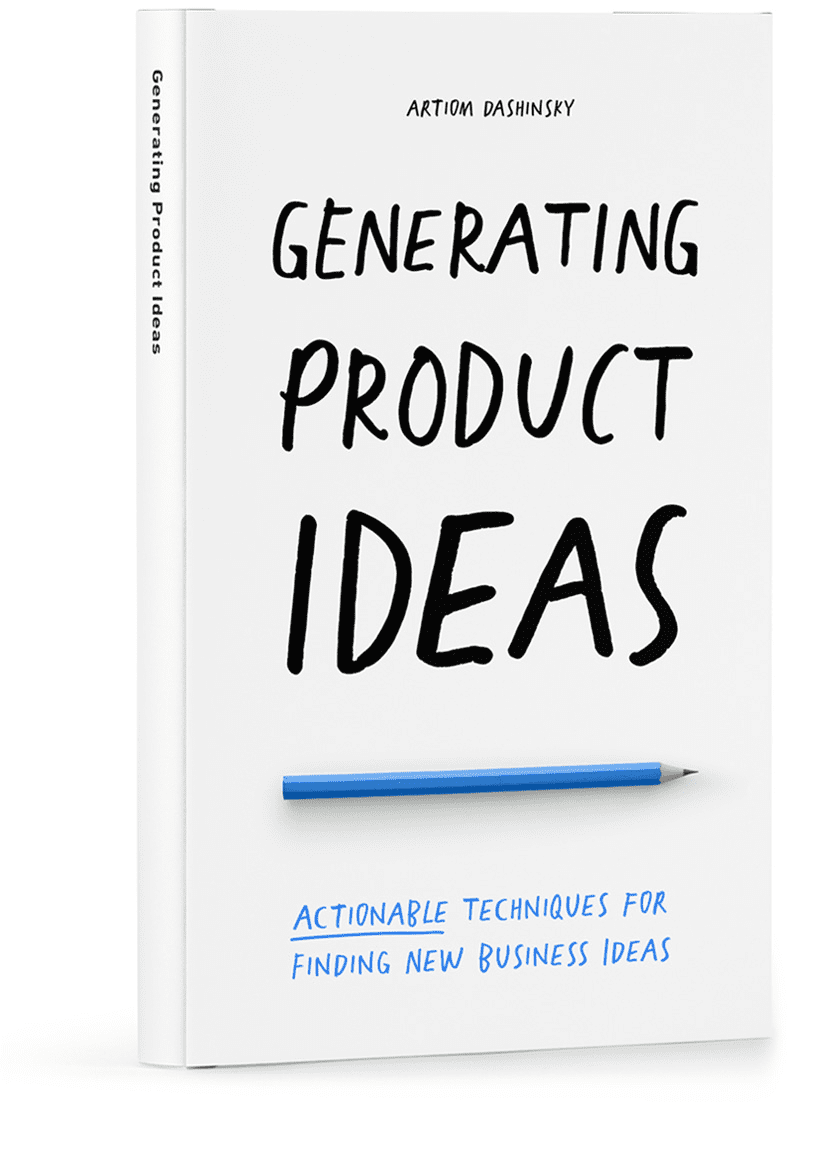

Unlocking Innovation: A Complete Summary of “Generating Product Ideas: Actionable Techniques for Finding New Business Ideas”
Quick Orientation
Artiom Dashinsky’s “Generating Product Ideas: Actionable Techniques for Finding New Business Ideas” is a pragmatic and inspiring guide for anyone looking to cultivate a stream of viable product concepts. Born from Dashinsky’s personal journey of entrepreneurial “hustles” and observations of innovation in Israel, this book challenges the common mantra that “ideas are cheap, execution is everything.” Instead, Dashinsky posits that good ideas are crucial multipliers of execution effort, and unlike execution skills, the art of ideation is rarely taught in a practical, consolidated manner. This summary aims to distill every important idea, example, and insight from Dashinsky’s framework, offering clear, accessible language that empowers readers to immediately start generating their own product ideas, whether for full-time businesses, side hustles, or new product features. Prepare for a comprehensive breakdown of the actionable techniques that will transform your approach to business idea generation.
Why I wrote this book
Dashinsky opens by sharing his entrepreneurial roots, tracing back to his parents’ necessity-driven “hustles” after the fall of the USSR. This early exposure instilled a “you can build anything” mindset. His move to Israel, a global hub of innovation, further shaped his professional life, leading him to work across various roles in tech before focusing on his own projects. He realized his ability to generate ideas had organically grown, prompting him to observe the patterns and create a framework to support ideation. He critiques the startup industry’s focus on execution over ideas, arguing that execution without good ideas leads nowhere. His goal for the book is to fill the gap in actionable resources for idea generation, hoping to empower more people to solve pressing global problems.
Why you should read this book
This chapter emphasizes the core philosophy that “the best way to have a good idea is to have a lot of ideas.” Dashinsky positions the book as an actionable guide for finding product ideas that solve problems, adaptable to various product types (software, services, physical, content). He asserts that anyone can benefit, regardless of skill or experience, as ideas will naturally align with one’s capabilities. The book is useful for:
- Entrepreneurs and indie hackers seeking new product launches, a backlog of ideas, or growth/marketing projects.
- Full-time employees aiming to build profitable side hustles, gain experience in product validation and shipping, or enhance their careers.
- Freelancers looking to diversify income, productize their experience, or boost personal brands.
- Students gaining real-world experience or finding concepts for portfolios and studies.
He stresses that problems first, products second is a superior approach, as problems offer multiple potential solutions. The framework’s dual goals are to generate ideas immediately by providing specific directions and constraints, and to create ideation mental models for ongoing opportunity recognition. The techniques are sorted by complexity, with initial methods being more accessible for beginners and later ones requiring more thought and research. Examples are crucial for absorbing techniques and sparking inspiration, drawn from Dashinsky’s own experiences and familiar products. Consistent practice is highlighted as essential for improving ideation skills.
Define your Audience List
Before diving into idea generation, Dashinsky stresses the importance of defining your Audience List. This involves asking: “Who would you like to serve?” Focusing on an audience you genuinely enjoy serving increases your familiarity with their needs, fosters empathy, and fuels passion, which in turn boosts your chances of success. Keeping this list in mind helps you consistently notice problems.
Building Your Audience List
A good starting point is to list audiences you are already a part of or have close connections with. Dashinsky provides his personal examples, such as co-working tenants, UX designers, cyclists, and indie hackers. He advises including both individuals and businesses. For individuals, consider relevant organizations you might enjoy serving too; for example, if you like coffee, think about coffee shops, producers, or distributors, not just coffee lovers.
Audience Types
To help readers get started, Dashinsky categorizes potential audiences with numerous examples:
- Individuals: Characterized by age, gender, location, occupation, interest, need, habit, hobby, or family status.
- Examples include: Deaf people, Yoga practitioners, Preschool kids, People going through divorce, Vegans, Senior citizens, and Aquarium owners.
- Small businesses:
- Examples include: Art galleries, Accountants, Bloggers, Bed and breakfast facilities, Bars, Beauty salons, Boutique hotels, Car dealers, Car repair shops, Copywriters, Coffee shops, Caterers, Day care facilities, Event planners, Event space rentals, Farmers, Gyms, Graphic designers, Interior decorators, Lawyers, Movie critics, Musicians, Massage therapists, Music lessons, Nutritionists, Nightclubs, Online stores, Personal chefs, Personal trainers, Photographers, Private investigators, Podcasters, Physicians, Property managers, Restaurants, Real estate brokers, Sports coaches, Startups, Therapists, Translators, Tutors, Video editors, Vintage clothing boutiques, Yoga studios, Writers, and Warehouses.
- Enterprise:
- Examples include: Airlines, Banks, Casinos, Freight and transportation companies, Health care providers, Hotel chains, Insurance companies, Manufacturers, Real estate companies, Retailers, Sport clubs, and Tech companies.
- Nonprofit organizations and institutes:
- Examples include: Charities, Foundations, Government institutes, Municipalities, Museums, Religious organizations, Pension funds, Political parties, Public transportation, and Public universities, Schools.
This comprehensive list helps readers broaden their perspective on potential target users and find a niche they are passionate about serving, forming the bedrock for subsequent idea generation techniques.
The Framework
Part 1: Observe
This section introduces four techniques focused on observation, designed to help you actively find problems and opportunities around you, leveraging existing interests, passions, or experiences. These techniques are also encouraged as ongoing mindsets for future ideation.
#1: Solving your own business problems
Solving your own problems is highlighted as a powerful way to find startup ideas, echoing Paul Graham’s concept of “organic” startup ideas. This technique involves creating a matrix to extract ideas from your work experiences.
Begin by listing past or current projects or roles, whether from your day job, freelance gigs, or side hustles. Examples include: building a website for animal adoption, managing a coffee shop, developing an iPhone app, crafting wooden standing desks, running a UX-design agency, publishing an indie magazine, or managing a team of junior interior designers.
For each item on your list, ask critical questions to uncover problems:
- What did you spend a lot of time on?
- What did you spend a lot of money on?
- What processes frustrated you?
Dashinsky emphasizes that saving time or money is particularly valuable to customers, making these questions powerful levers for idea generation.
Fill out a matrix with your projects/roles and the identified inefficiencies to find opportunities for product development. Many successful companies like Craigslist, Basecamp, GitHub, InVision, and Dropbox began this way.
Dashinsky provides compelling examples:
- FeedbackPanda: Danielle Simpson and Arvid Kahl built this tool to save online English teachers time on feedback, turning overhead into a profitable service. It reached $55,000/month in revenue before being sold, saving teachers hours daily for a minimal cost.
- Heftwerk: Kai Brach, frustrated by the complexities of indie magazine publishing, co-founded Heftwerk to provide printing, shipping, and distribution services, leveraging his hard-won experience.
- Automatic debugging for software engineers: Dashinsky’s own agency experienced 20-30% of development time lost to debugging. This led them to consider a product to automate bug tracking for iOS developers.
- Retinize It: While leading design at a startup, Dashinsky found manual UI asset export time-consuming for junior designers. He built a simple Photoshop action that saved hours, was downloaded 100,000 times, and gained valuable connections and consulting gigs despite not being monetized.
Two additional tips for this technique are offered:
- Serve the opposite side: If you’ve worked in a call center, your experience could help customers negotiate with call centers. Daniel Vroman Rusteen, a former Airbnb employee, now helps Airbnb hosts make more money.
- Behind-the-door processes: Leverage internal processes you have unique access to or understand deeply. For example, understanding restaurant supply chain or payment management can uncover problems that most consumers are unaware of, leading to products like a system for supplier payment management in small shops and restaurants.
#2: Productizing your own life experiences
This technique leverages your personal life experiences as an untapped resource, transforming difficulties and mistakes into valuable solutions for others.
Recall significant life events or phases where you gained expertise. Examples include: moving to Japan, going through a divorce, dealing with back pain, applying for a business owner visa, or buying a modular house.
For each experience, identify the problems or challenges you faced:
- What level of research did they require?
- Which experiences required hiring a consultant?
- What mistakes did you make?
- What aspects did you wish someone would have told you about in advance?
Summarize your hard-won expertise into a product that helps others avoid similar frictions. The product could take various forms: a book, course, workshop, consulting business, or online community. The key is to find a balance between a viable audience size and a sufficiently niche focus to avoid excessive competition. This approach benefits from your inherent familiarity with the audience and potential customers.
Examples of leveraging this approach include:
- Mend (letsmend.com): Elle Huerta, after struggling with a breakup, created an app providing guidance and support for heartbreak, which has served over two million users.
- How to Move to New York City (letsgoto.nyc): Tobias Van Schneider, a designer, condensed his experiences of moving to a new city into an e-book to help others navigate similar challenges.
- This book: Dashinsky explicitly states that “Generating Product Ideas” itself is a result of productizing his own knowledge of idea generation.
Dashinsky also shares three personal ideas generated using this technique:
- Suing spammers (Israel): After successfully suing a spamming company, he recognized the difficulty for others. He initially planned a service to handle paperwork but, due to regulatory limitations, open-sourced his legal statement and created a tutorial, which went viral and led to media appearances and an online community.
- Language complexity ratings for books and movies: As a German learner, he found it hard to assess media difficulty. The idea is to develop a language complexity rating (using existing tools like Readable.com) that could be displayed on platforms like Amazon or Netflix, potentially leading to a unique licensing standard.
- Reducing back pain using smartphones: Observing the strain caused by smartphone posture, he envisioned an app that tracks smartphone tilt using the inclinometer to provide posture insights, similar to Apple’s Screen Time, encouraging healthier long-term usage.
#3: Insider ideas
This technique focuses on leveraging your observations within organizations to uncover unique product opportunities.
Identify organizations (companies, non-profits, universities, military, etc.) whose internal workings you understand. These are typically places you’ve worked for, studied at, served in, consulted for, or where close friends or family work and are willing to share insights.
For each organization, pinpoint opportunities that were overlooked, often because they were deemed too small for a large entity or deprioritized. Look for:
- Internal products that could have value outside the organization.
- Audiences and niches ignored due to small market size (especially by corporations or VC-backed companies).
- Processes routinely outsourced by the organization.
- Products or features eliminated for reasons unrelated to traction (e.g., shifts in company priorities).
Evaluate the viability and interest of the opportunities identified in Step 2. Dashinsky provides compelling examples of this technique’s success:
- Asana: Dustin Moskovitz created this task management tool after developing a similar internal work management tool at Facebook, which later became a $1.5 billion company.
- Check Point: Founder Gil Shwed’s experience securing classified networks in the Israeli military inspired the network security company, which now boasts a $15 billion market cap.
Dashinsky shares two personal “insider ideas” from his time at WeWork:
- Aggregating user research: His colleague Tomer Sharon built Polaris, an internal system at WeWork for cataloging and searching user interview data, allowing product managers to quickly find relevant insights. Dashinsky saw its external value and considered building a similar product after leaving, though Dovetail later emerged to fill this exact need for companies like Shopify and Samsung.
- Working space for digital nomads: Observing the exponential growth of co-working spaces and the unique needs of digital nomads (who frequently switch cities), he identified a gap. Large co-working companies find this niche too small, while small ones lack international reach. The idea is a company that partners with existing spaces to create an international network specifically for digital nomads, simplifying onboarding and workspace switching.
#4: Vision-based ideas
Dashinsky frames entrepreneurship as bridging “the gap between what currently exists and what you’re aiming for.” This technique starts by defining your ideal future and then identifying products or services to achieve it.
Articulate how you believe the world should look in the future. Your vision will likely fall into two categories:
- Bring something positive closer: e.g., make healthcare more accessible, make pets live longer, teach kids to be more creative.
- Move away from something negative: e.g., reduce smoking in developing countries, reduce microplastic pollution in the ocean, help people have less physical pain in their workspace.
If you’re unsure what problems to tackle, Dashinsky recommends three resources for finding impactful global problems:
- 80000hours.org: A non-profit exploring how to use your career to solve pressing world problems.
- The UN Sustainable Development Goals: A global plan for a better world by 2030, covering poverty, health, education, inequality, climate change, and more.
- Project Drawdown: Explores and prioritizes solutions for climate change based on their CO2 reduction impact.
These resources ensure that your efforts will contribute to significant, validated problems.
Once your vision is defined, identify the obstacles preventing it from becoming a reality. Ask:
- For negative visions: What causes this problem?
- For positive visions: What prevents it from happening?
These reasons become the problems to solve. For example, if your vision is to prevent microplastics from entering the ocean, research shows causes like laundry of synthetic textiles (35%), car tires (28%), and city dust (24%).
Brainstorm possible solutions for each identified problem.
Examples of vision-based products:
- Microplastics in the oceans: LANGBRETT, a German clothing company founded by surfers, tackled the issue of microplastics from laundry. They invented a laundry bag that filters out microplastics in washing machines, raising funds on Kickstarter and receiving a grant from Patagonia.
- Physical pain in the workspace: Dashinsky’s vision to reduce physical pain led him to address bad workspace ergonomics. He tackled two obstacles:
- Lack of accessibility to ergonomic solutions: He produced the most accessible, high-quality standing desk in Israel.
- Lack of workspace ergonomics awareness: He produced custom-branded laptop stands used as corporate giveaways, increasing awareness and providing free ergonomic improvements.
- Reducing waste: With a vision of reducing waste, he identified low product durability as a cause. He noted that product lifespans are decreasing, despite consumers valuing durability. The idea is durability reporting – a service that collects and makes accessible data on product lifespans from manufacturers, review companies, repair businesses, and consumers. This would help consumers make sustainable and economically viable choices, reducing waste.
Part 2: Replicate and improve
Dashinsky asserts that “everything is a remix of existing things and everything can be improved.” This section explores six techniques for finding new product opportunities by leveraging and enhancing existing concepts, making it easier to build, communicate, and sell.
#5: Cross-industry product innovation
This technique involves adapting successful products from one industry to another, similar to localization but across different domains.
Identify well-performing products outside of your primary industry or areas of expertise. Methods include:
- Asking people from other industries about products they love (personal or business use, recent purchases).
- Reflecting on highly-rated products you personally use, especially if you have multidisciplinary experience.
- Noting products that have caught your eye recently.
If struggling, consult resources like those listed in the “Where to find more ideas” chapter.
Intersect the list of valuable products with industries or audiences you are deeply familiar with (e.g., your Audience List). Consider if the problems these products solve exist in your target industry or for your audience. This becomes an excellent ongoing mindset. Ideally, you can empathize with the audience and have access to them.
Dashinsky shares personal examples for designers:
- Job interview preparation resources for different roles: Noticing that software developers and product managers had specific books (e.g., “Cracking the Coding Interview”) to prepare for interviews, he realized no such resource existed for designers. He wrote a book focused on design interview testing exercises, which became an Amazon best-seller and generated $100,000 in sales without marketing in its first year. This demonstrated the power of bringing a proven concept from one industry to another underserved one.
- Keyboard stickers boosting productivity in different professions (SketchKeys): As Sketch gained popularity among UI designers, Dashinsky recalled video editors using specialized keyboard stickers. He created SketchKeys (and later for Figma and Adobe XD) to help designers learn new shortcuts, improving productivity and ergonomics. This passively generated $8,000 yearly sales with an 80% margin.
- Stands for laptops and musical instruments: Initially producing eco-friendly plywood laptop stands for corporate giveaways, Dashinsky discovered that his stands perfectly fit various musical instruments (sampling drum machines, synthesizers). He realized musician-specific stands were often more expensive, and his offered better portability. This led to exploring the opportunity of bringing his existing product to the music industry.
#6: Improve abandoned but useful products
This strategy involves finding products that gained some traction but were not properly maintained or developed by their creators, due to shifting focus, lack of resources, or conflicting agendas. Building a better version of these “fallen” products is a robust strategy because it leverages already demand-validated ideas.
Search app stores and platforms that consolidate products, allowing you to gauge popularity and user satisfaction through reviews. Look for:
- Low ratings (less than 3.5 stars): Indicates the product doesn’t deliver on its promise.
- Lots of downloads or users: Validates the underlying demand.
- Not updated for a long time: Suggests it might be abandoned.
Useful tools for this include:
- App Annie: Provides top app charts for various platforms, sortable by ratings.
- Chrome Store: Can be navigated manually or by hiring someone on Fiverr to find apps meeting specific criteria.
An example from App Annie shows low-rated but popular productivity apps for iOS.
Create a product that more effectively solves the problem and delivers on the promise of the underperforming apps.
- Doka: Rik Schennink used this strategy on Envato to find successful projects he could improve, leading him to build Doka, an image editor for web products, generating $10,000/month in revenue.
Dashinsky provides three concrete examples of such opportunities:
- Free Visio Viewer (Chrome extension): Has 200,000+ users but a 3-star rating, with complaints about functionality and privacy (uploading files to a public site). An opportunity exists for a more reliable, private viewer.
- Signily (iPhone app): A $0.99 sign language keyboard with a 2.9 rating, indicating high demand but poor execution. Dashinsky notes it’s from a non-profit, suggesting it’s an example to learn from rather than directly compete with.
- Scheduled App: Allows scheduling text messages (SMS, iMessage, WhatsApp) but has a 3.1 rating despite almost 1000 reviews, showing significant demand for improved scheduling functionality.
#7: Localization of existing solutions
This technique explores transferring a successful product concept from one geographical market and language to another, adapting it to the new context.
Leverage your personal experience, such as being bilingual or having lived in multiple countries, to identify markets where you understand the culture, language, and specific needs. This also implies existing connections. Dashinsky’s examples include Israel, Belarus/Russia, Germany, and the languages Russian, Hebrew, German, English.
Identify problems and solutions that have proven successful in one market and could be replicated elsewhere. This is similar to the cross-industry technique:
- Ask people in other cities/countries/languages about products they love or recently bought.
- Consider products you find valuable personally.
- Note products you’ve recently seen or read about that caught your attention.
Dashinsky highlights that large companies often ignore smaller countries or only expand to large markets after solidifying their home base. This creates opportunities for smaller businesses to be first movers in underserved smaller markets. He notes that even tech giants like Amazon, Spotify, and Netflix reached Israel relatively recently. Additionally, varying market maturity (e.g., sustainability in Russia vs. Europe) can create lucrative niches.
Determine the feasibility of transplanting the listed products into a new country, region, or language you’re familiar with.
Examples:
- TransferWise vs. Azimo: TransferWise serves many countries, but Azimo ingeniously replicated the same international money transfer product by inverting TransferWise’s list of supported countries, specifically serving markets TransferWise doesn’t.
- Billshark (US): This company helps customers reduce bills by negotiating better deals on their behalf, charging a percentage of savings. It’s a language and region-specific business that Dashinsky suggests could be easily replicated in other countries.
- Fossil Free Funds: This US-based project provides information on mutual funds’ involvement in fossil fuels, catering to environmentally conscious individuals. Dashinsky suggests such a country-specific product would be popular in other markets interested in sustainability.
#8: Automate marketplace services and products
This technique involves analyzing popular services on marketplaces like Fiverr and Etsy to identify those that can be automated, thereby offering a more cost-effective and time-efficient solution. This strategy benefits from the existing demand validation of these platforms.
- Fiverr: Explore this online marketplace for freelance services, focusing on uncomplex, affordable gigs with well-defined scopes (e.g., logo design, video editing, web scraping, press release writing). The goal is to find gigs that can be easily automated. While human voice-overs are harder, services like SEO reports, graphic design, social media management, audio transcripts, and lead generation are more amenable to automation. Fiverr serves as a catalog for demand-validated problems.
- Etsy: This marketplace, primarily for physical goods, also hosts many downloadable graphic files (e.g., printables, templates for t-shirts, cards, laser cuts, 3D printing). Many of these templates could be converted into a simple automated tool that allows customers to design and customize graphics themselves.
Once automatable services are identified, develop products that streamline or fully automate them, making the solution faster, better, and cheaper for the end customer. You can also partially outsource tasks to services like Amazon Mechanical Turk.
- Logo design: A popular Fiverr service, which companies like Tailor Brands have automated, resulting in 14 million users and 500 million designs.
- Contact lists (lead generation): Dashinsky used Fiverr to buy contact lists of specific audience segments (e.g., parenting bloggers). An automated product for this would involve web-scraping publicly available data and making it searchable, lowering the barrier for small businesses to access journalists. JustReachOut is an example of such a product, offering access to journalists for a monthly fee.
- Etsy certificate templates: Many digital certificate templates on Etsy require manual editing with separate software. A better product could be an automated tool allowing schools to make design adjustments and upload student lists to generate ready-to-print PDF files quickly. This could lead to partnerships with printing companies.
#9: Product unbundling
Unbundling involves taking a larger product or platform and breaking it down into smaller, more focused products or business lines. Dashinsky adapts this concept to identify problems within existing solutions, focusing on specific features, platforms, or niche audiences that can be better served.
Start by listing products relevant to your chosen audience. For example, if your audience is UX designers, products like InVision, Zeplin, Figma, and Sketch would be on your list.
To find unbundling opportunities, examine three aspects of the products:
- Extractable features: Étienne Garbugli’s technique suggests analyzing product pricing pages, comparing different plans, and identifying features for which companies charge a premium (e.g., Mailchimp’s 57 features). These premium features are often ripe for extraction into small, stand-alone products, as their value is already validated by what customers are willing to pay. A focused product can often provide better value by doing one thing exceptionally well.
- Unsupported platforms: Companies often deprioritize certain platforms (e.g., no native mobile app for a desktop service) due to limited time or resources, even if there’s a smaller user base. This gap presents an opportunity to build a dedicated app for that specific platform.
- Niche audiences: Large products aim for a broad audience, but more specific and dedicated solutions for niche segments can be more valuable. Examples like UpWork being unbundled by specialized marketplaces like Reedsy (for editors) and UpCounsel (for lawyers) illustrate this point. Platforms like eBay, Amazon, Reddit, Craigslist, and Slack are rich sources for identifying unbundling opportunities within their vast communities or categories.
Generate new product ideas based on the analysis of features, platforms, and niches:
- Mailchimp (Feature Extraction): Dashinsky points to Mailchimp’s Send Time Optimization as a premium feature. A stand-alone product could be developed to calculate optimal newsletter sending times for any email provider by analyzing subscriber time zones, serving a broader market beyond Mailchimp users.
- Figma (Unsupported Platform / Feature Extraction): Figma lacks good iPad support, leading Matias Martinez to build Figurative, an app to run Figma on iPads. Another opportunity lies in Figma’s Version History, which is free for only 30 days. An external version control tool offering better long-term value could emerge.
- SoundCloud (Unsupported Platform): After SoundCloud discontinued its macOS app, Dennis Oberhoff developed DaftCloud, an independent macOS app providing a slick interface for SoundCloud users for $10, capitalizing on an abandoned platform.
- Reddit (Niche Audiences): Greg Isenberg’s “Guide to Unbundling Reddit” highlights companies like Supergreat app (beauty reviews) and Goodreads (book reviews) that leveraged large subreddits to create successful stand-alone businesses by focusing on specific communities and their user-generated content.
#10: Data sets
This technique focuses on leveraging open data from governments, municipalities, public bodies, and corporations to build new services, recognizing that these entities often lack the resources to create all possible valuable applications themselves.
Identify sources of publicly available data. Examples include:
- Data.gov.uk: Data from the UK government, covering areas like business, crime, education, environment, and transport.
- Data.gov: Data from the U.S. government.
- Data.europa.eu: Data from the European Union, useful for cross-country comparisons due to consistent formats.
- Movement.uber.com: Open data from Uber on travel times, speeds, and bike activity across cities.
- Daten.berlin.de: Open data specifically about Berlin.
The primary goal is to make complex data more accessible. Even more value can be derived by combining multiple data sets to reveal richer insights. Think about:
- Which audiences (especially those on your Audience List) could benefit from this data or insights?
- What trends could this data serve?
- What problems would it solve for those audiences?
Governments often lack resources for data accessibility, presenting a clear opportunity.
Develop a product or service that makes the data easily consumable and valuable to your target audience.
Examples:
- Nomad List (nomadlist.com): This website consolidates public data sets (UN, WHO, IMF, World Bank for demographics, healthcare; public APIs for weather, air quality, traffic) to rank cities for remote work attractiveness. It generates over $300,000 in yearly revenue and receives a million page views monthly, demonstrating the power of combining and presenting open data for a specific niche.
Other ideas generated by combining data sets:
- Cycling-friendly city navigation: By collecting data on bike lanes, air pollution, bike accidents, and bike theft, a service could create a navigation app specifically optimized for cyclists, focusing on safety and health.
- Location rankings for people looking to rent (long-term or Airbnb short-term): Combine data about construction sites, nearby schools, parks, coffee shops, and Foursquare ratings to provide multi-layered rankings (quiet, trendy, kid-friendly) that help renters quickly assess a location’s suitability.
- Optimal delivery area calculation for restaurants: A service that helps restaurants define their delivery zones by analyzing distance, population density, socio-economic levels, and likelihood of orders from specific areas.
Part 3: Find signals
This section introduces four techniques for uncovering product ideas by identifying “signals” from various sources: your own assumptions, web search, scientific research, and market trends. These methods help pinpoint real problems based on public interest and cutting-edge knowledge.
#11: Web search analysis
This technique leverages search engine queries as a signal of public consciousness and demand, similar to scientific research but focused on consumer interest. It’s an excellent way to validate demand for specific problems.
Utilize specialized tools that analyze autocomplete data from search engines like Google, providing lists of frequent searches based on your keywords.
- answerthepublic.com: Analyzes Google’s autocomplete data to show common questions and phrases.
- keywordtool.io: Offers similar functionality, including results from YouTube, Amazon, eBay, Instagram, Play Store, and Twitter.
- keysearch.co/tools/brainstorm-niche-ideas: Another tool for brainstorming niche ideas based on search data.
Apply the same approach as in the scientific research technique. Enter keywords relevant to your target audience into these tools.
- Audience: People with back pain -> Search keywords: “Back pain”, “back muscle strain”
- Audience: Remote employees -> Search keywords: “Remote work”, “productivity”, “home office”
- Audience: Independent book writers -> Search keywords: “Self-publishing”
- Audience: Vegans -> Search keywords: “Veganism”, “plant-based diet”
Analyze the search results for common problems or desired solutions.
For example, searching “remote work” might yield:
- “Remote work agreement”: Indicates a need for legal guidance or templates for remote work legislation. This could be a consultancy or a product offering legal templates for both employees and companies.
- “Remote work taxes”: Highlights the complexity of taxes for remote workers and employers. This presents an opportunity for expert guidance, a product, or consultation to help navigate tax regulations and avoid issues.
- “Remote work agency”: Suggests a demand for specialized head-hunting agencies focusing on remote employees, potentially niched down by role (e.g., designers, executives).
- “Remote work podcast”: Shows that people are eager to learn more about remote work, creating an opportunity for a monetized podcast or a content platform to build an audience for future products.
#12: Identifying your audience’s problems
This is a straightforward technique that requires dedicated research to uncover the specific problems your target audiences face.
Create a three-column table: Audience, Problems, Product Ideas.
- Populate the first column with your selected audiences, such as: Co-working tenants, Self-published authors, and Cyclists.
Use two primary sources to define their problems for the second column:
- Your assumptions: Leverage your own experience or existing knowledge to list potential problems.
- Google: Use “why [activity] is bad” searches. For example, “why cycling is bad…” auto-completes might reveal issues like carbon monoxide inhalation, which you might not have considered. Other assumed problems for cyclists could be road safety and bike theft. This quickly reveals problems your audience is aware of and actively researching.
Fill out the third column with product ideas that address the identified problems. Consider if the solution should be digital or physical and which platforms are most relevant (smartwatch, smartphone, desktop, etc.).
Dashinsky provides an example table:
- Audience: Self-published authors
- Problem: Improving book rating on Amazon
- Product Idea: Create an embeddable rating system for e-books. If a reader rates 5 stars, direct them to Amazon for a review. If less, prompt for private feedback, mirroring mobile app strategies.
- Problem: Expand your book’s reach
- Product Idea: Build a service authors can embed on their website, allowing readers to request the book from their local library, especially beneficial for students who can’t afford purchases.
- Audience: Open space co-working tenants
- Problem: Can’t leave belongings overnight (like monitor, keyboard, bag).
- Product Idea: B2B: Build out-of-the-box lockers that co-working spaces can easily install and charge for daily. This creates a new differentiator and revenue stream.
#13: Selling pickaxes to gold miners
This technique advises against directly joining a new trend (“mining for gold”) and instead suggests serving the participants in that trend (“selling pickaxes”). This indirect approach can be more stable and profitable.
Timing is crucial. Early pickaxe sellers benefit from less competition. Identify emerging trends that are relevant to you:
- Trends you’d enjoy serving.
- Trends you are part of.
- Trends pertinent to your Audience List.
Recommended resources for identifying trends:
- TrendHunter.com
- Explodingtopics.com
- Trends.co (paid, but high-quality weekly analysis)
Look for ways to provide tools, services, or infrastructure to those actively participating in the trend.
- Food deliveries: Instead of competing with BlueApron or HelloFresh, Onfleet provides a last-mile delivery management system for such companies, generating $4.8 million in revenue in 2019.
- Legal cannabis: Packed capitalized on the exploding legal cannabis market by providing high-quality packaging for cannabis brands, serving top-selling brands in the US.
- Podcasts: Instead of making podcasts, Transistor.fm (built by Jon Buda and Justin Jackson) offers analytics and distribution tools for podcasters, with clients like Basecamp and Kickstarter. Similarly, Supercast helps podcasters easily create and monetize paid podcasts, processing millions in beta.
This approach highlights that identifying the underlying infrastructure or support needs of a growing market can be more lucrative and less competitive than directly entering the trend itself.
#14: Scientific research
Scientific research provides a foundation of new knowledge and insights into existing or newly discovered problems, offering a reliable basis for product ideas.
Access free platforms that consolidate scientific studies and papers:
- sciencedirect.com
- researchgate.net
- sciencedaily.com
- jstor.org
- scholar.google.com
Use your Audience List to focus your searches. Examples include:
- Audience: People with back pain -> Search keywords: “Back pain”, “back muscle strain”
- Audience: Remote employees -> Search keywords: “Remote work”, “productivity”, “home office”
- Audience: Independent book writers -> Search keywords: “Self-publishing”
- Audience: Vegans -> Search keywords: “Veganism”, “plant-based diet”
You can also explore broad categories like “public health” or browse homepages for unexpected insights.
Develop product ideas that directly address the problems and insights uncovered through scientific research.
Examples:
- How air quality affects productivity: Research showed high CO2 levels decrease cognitive performance by 50%.
- Product Idea: Producteeve (mockup) – a service measuring indoor CO2 levels, providing tailored reports, and selling equipment to improve air quality. Could offer a $29 kit with recommendations, or aggregate air quality data for co-working spaces to help tenants choose an office.
- How noise affects productivity: Research indicates noise negatively impacts productivity, creativity, and health.
- Product Idea: An app (e.g., in macOS menu bar) to measure, track, and analyze noise levels in different environments (office, coffee shop, home). It could alert users to suboptimal noise, provide weekly insights, and even list co-working spaces with optimal noise levels.
- The impact of vegetables on children’s health: Research highlighted that increasing fruit and vegetable consumption could save lives and healthcare costs. Food habits developed early in life have significant long-term health impacts. A study consolidated approaches to making children eat more vegetables.
- Product Idea: VeggieMat – an interactive placemat that combines conclusions from four studies: involving children in food prep, having six colors on the plate, tactile contact, and visually appealing food. Children use it as a plate to create visuals with food slices, encouraging them to eat vegetables they previously refused.
Part 4: Model
The final three techniques, while requiring more time, are highly effective for generating ideas by evaluating how various business and product types can be applied to your target audiences.
#15: Business model patterns
This technique is particularly useful for employees seeking new product lines, revenue streams, or strategies for their organizations. It involves intersecting a list of business model patterns with your Audience List.
A business model pattern is a reusable component for creating business models. Dashinsky provides a curated list (not exhaustive) that can spark connections:
- Add-on: Additional services/products for a fee (EasyJet, Booking.com).
- Advertising: Promoting services to potential customers (Google Ads, Taboola).
- Access over ownership: Providing product use without purchase (BlaBlaCar, Rentuu).
- Brand trust production: Helping businesses collect positive online reviews (Yotpo, Trustpilot).
- Certification and compliance: Proving adherence to standards (FSC®, LEED).
- Community building: Creating networks where members provide value to each other (Nextdoor, Product Hunt).
- Customer loyalty: Retaining customers through rewards (JetBlue, Marriott).
- Direct-to-consumer: Selling directly to customers, bypassing middlemen (Casper, Everlane).
- Disintermediation: Cutting out the middleman (Alibaba, Spotify for artists).
- eCommerce: Bringing offline goods online.
- Experience: Providing unique experiences (Virgin Airlines, Tomorrowland).
- Embedded social enterprises: For-profit activities with social good commitment (Toms, Boxed Water).
- Flat fee: Fixed price for services typically dependent on usage (Netflix, Spotify).
- Fractional ownership: Customers jointly own expensive assets (NetJets).
- High-quality content: Selling access to premium content (Masterclass, Glo).
- Integrator: Combining components into new valuable entities.
- Lower barriers to entry: Making exclusive products accessible (Amazon Kindle Direct Publishing).
- Lead generation: Collecting and selling customer contacts (comparethemarket.com).
- Long-tail: Selling low volume of many niche products (Amazon, Google Search).
- Lock-in: Building eco-systems making switching costly (Gillette, Apple).
- Luxury experience: Short-term access to expensive items (PrivateFly, Sailo).
- Marketplace: Connecting supply and demand (eBay, Airbnb, Etsy).
- On-demand: Products/services immediately available (Uber, Task Rabbit).
- Peer-to-peer: Individuals providing goods/services usually from companies (Airbnb, Lyft).
- Pay-as-you-go: Pay-per-use/consumption (Zipcar, Breather).
- Research: Providing insights to companies/individuals (Accenture, Bloomberg).
- Referral: Customers recommend product for a cut of sale (WeWork, Uber).
- Rent instead of buy: Providing access to normally purchased products (car2go, Netflix).
- Spare change use: Using leftover change from purchases (Acorns, Moneybox).
- Subscription: Recurring access to product/service (Netflix, Dollar Shave Club).
- White label: Producing goods for others to distribute under their brand (Teespring, Printful).
Create a matrix with your chosen audiences. Example audiences: Co-working tenants, The sustainability conscious, Cyclists, Indie hackers, People with back pain, Remote employees, Yoga teachers.
Explore the intersections between business model patterns and audiences.
- People with back pain + Subscription: A subscription-based pain relief service consolidating existing offers (physiotherapist consultations, yoga, swimming, massage).
- People with back pain + Rent instead of buy: 1) A rentable kit of back pain relief appliances for temporary use or trying different methods, saving money and reducing waste. 2) Offer these kits to companies to improve employee well-being and reduce work absence.
- Co-working tenants + Fractional ownership: A model allowing solopreneurs/freelancers to buy small parts of a co-working space, providing access and investment opportunity with manageable monthly payments.
- The sustainability conscious + Experience: Aggregating or organizing tours to landfills, recycling centers, or FSC-certified forests to provide knowledge and inspiration, and serve as an experiential gift option.
- Cyclists + Flat fee: An all-inclusive insurance for bicycles covering repairs and theft for a fixed price.
- Yoga teachers + Disintermediation: A service allowing teachers with loyal communities to rent space on-demand for classes or retreats, bypassing traditional yoga studios.
#16: Analyzing common goals
This technique involves generating product opportunities by identifying common goals or motivations of individuals and businesses, for which they are often willing to pay.
Recognize that individuals and businesses have distinct needs. Separate your Audience List into Individuals (B2C) and Businesses (B2B). For B2B, consider businesses that serve your B2C audiences (e.g., bike shops for cyclists).
Example lists:
- Individuals (B2C): The sustainability conscious, Cyclists, Co-working tenants, People with back pain, Remote employees.
- Businesses (B2B): Airbnb hosts, Self-published writers, Gyms, Night clubs, Banks, Remote companies.
Create a matrix combining your split Audience List with common goals.
Common Individual (B2C) Goals:
- Compliance with regulations and laws
- Saving money
- Saving time
- Earning more money
- Acquiring experience
- Becoming healthier
- Getting rid of bad habits
- Improving productivity
- Connecting with like-minded people
- Educating themselves
- Increasing security
- Finding a job
Common Business (B2B) Goals:
- Finding new customers
- Increasing sales
- Increasing average sale size
- Reducing churn
- Increasing leads
- Improving social media engagement
- Increasing customer engagement
- Increasing customer retention
- Increasing customer satisfaction
- Improving customer loyalty
- Reducing expenses and saving money
- Saving time
- Complying with regulations
- Improving operations and efficiency
- Recruiting talent
- Retaining talent
- Improving employee productivity
Dashinsky notes this is not exhaustive and goals can be drilled down further (e.g., increasing sales via conversion rate optimization, reducing cost per lead).
Look for intersections in your matrix to identify problems to tackle.
Examples of ideas generated:
- B2C: Remote employees + becoming healthier: A service providing personalized health plans for remote workers (physical exercise, ergonomics, eye exercises). Could be sold B2B as an employee perk or for new employee onboarding wellness evaluations.
- B2C: The sustainability conscious + education: A MasterClass-level content platform (“From One to Zero”) covering sustainable lifestyle aspects like shopping, cooking, and travel, with concrete eco-friendly steps.
- B2B: Remote companies + retaining talent: A service helping companies build career growth plans for employees, positioned as a perk to enhance employer desirability. Could also be sold directly to individuals for bespoke career planning.
- B2B: Airbnb hosts + increasing customer satisfaction / increasing average sale size: A service allowing hosts to collect guest preferences and special requests in advance, improving guest experience and creating upsell opportunities.
- B2B: Independent writers + increasing social media engagement: A service to help authors redistribute book content into smaller pieces for social media (Twitter, Instagram), building a content pipeline to boost profile and sales.
#17: Product models
This technique focuses on recognizing “product models” – product concepts that work across different verticals or industries – and applying them to new niches. This makes products easier to communicate and understand for customers.
A product model is a repeatable product concept. Dashinsky encourages noticing and writing down these patterns. To discover them, zoom out from interesting products and identify common principles that could apply elsewhere.
Examples of product models:
- DIY kits: Fun, educational, provide control over consumption (beer, cosmetics, ukulele kits).
- Analytics tools: Track and analyze progress for tailored insights (Fitbit for individuals, Mixpanel for companies).
- Version control and collaboration tools: Manage constant changes and multi-person projects (GitHub for code, Abstract for design).
- Planners: A large industry with specific niches (farmers, fitness, finance planners). Ideas could come from converting Trello/Notion board templates into planners.
- Comparison websites and tools: Consolidate information to simplify choices (car insurance, mortgage, internet providers like Comparethemarket.com, Check24).
- Sustainable alternatives: Cater to increasing demand for eco-friendly products (consumers willing to pay more, Amazon search trends for “sustainable”). Producing almost any product with sustainable materials and transparent supply chains offers a competitive advantage.
- Curation products: Filter abundance and noise to provide curated choices (Canopy.co for well-designed Amazon products, Atlas Obscura for travel). Algorithms don’t perfectly curate for all niches, creating opportunities.
- From digital to physical: Bring digital elements into the physical world, often resulting in fun, unexpected products (Emoji Masks, Jessica Hische’s “In Code Mode” sign).
- Review websites: Specializing in in-depth reviews for specific niches, easy to start with immediate monetization via referrals (Wirecutter, mattress review sites).
- Productize bureaucratic or legal services: Automate standard, low-customization processes that are often avoided due to complexity/cost (AirHelp for flight compensation, Farewill for death services, Taxfix for tax returns).
Select segments from your Audience List to focus on, such as: Co-working tenants, Co-working spaces, The sustainability conscious, Airbnb hosts, People with back and neck pain, Cyclists, Remote workers, Gyms.
Explore the intersections of product models and audiences to generate ideas.
Examples of ideas generated:
- Co-working tenants + Comparison tools: A website consolidating and comparing co-working spaces by factors like price, location, size, and adding layers like food options, transportation, and commute time.
- Cyclists + Curation: A route builder for cyclists that curates trips based on landscape (city, nature), length, duration, and complexity.
- Gyms + DIY kits: Prepackaged, premixed smoothie/shake ingredients in edible bags, ready for blenders (could be frozen with fresh produce or dry ingredients only).
- Co-working spaces, Airbnb hosts, gyms + Sustainable alternatives: An agency helping these businesses become more sustainable to attract new customers, by developing plans, executing them, educating staff, and creating marketing materials.
- Cyclists + Sustainable alternatives: Developing sustainable cycling appliances, like a rain cover for bikes made from biodegradable materials (current ones are polyester/nylon). This targets a niche with significant overlap between cycling and environmental consciousness.
- The sustainability conscious + Planners: Planners for people aiming for a zero-waste lifestyle, including weekly tips and tasks to educate and build waste-reducing habits.
- People with back pain + Comparison tools: A resource consolidating high-quality information on back pain treatment, relief, and management, comparing different techniques (yoga, physiotherapy, massage, rollers).
- Remote employees + Analytics: A productivity analytics tool to track work output and provide insights on optimization (e.g., most productive hours, caffeine/nap effects). While beneficial generally, it’s particularly relevant for remote workers.
Where to find more ideas
Dashinsky reiterates that all products are “remixes of problems, ideas, and existing products.” To increase the likelihood of creative connections, it’s essential to expand your “pool of dots” by exposing yourself to more ideas, products, and problems.
Getting exposed to ideas
- Crowdsourcing platforms: Kickstarter and Indiegogo offer thousands of innovative crowdfunded ideas to spark creative thinking.
- Trends reports: Resources like Trends.co and TrendHunter.com recognize emerging market forces and opportunities.
- Business reports: Industry-specific reports (e.g., Buffer and AngelList’s “The 2020 State of Remote Work”) highlight problems like collaboration issues, loneliness, and distractions for remote workers, all potential product opportunities. Statista.com is a good source for such insights.
Interact with people
Direct interaction provides filtered, valuable insights.
- Serial entrepreneurs: They often have more ideas than time/resources and are usually willing to share.
- People from “unsexy” industries: Logistics, trash management, or funeral organizing are often underserved by creative solutions. These individuals can provide key insights into their unique problems.
- Meetups: Events like IndieHackers meetups offer informal forums for small business owners to exchange experiences, identify problems, get feedback, and ideate.
Resources that curate problems and ideas
- Startupsfromthebottom.com/ideas: Offers problems with backstories, monetization strategies, deep dives, and validation.
- Ideaswatch.com: (Not maintained, but useful for historical ideas) Allows idea submission and feedback.
- Openideo.com: IDEO shares challenges, inviting anyone to submit solutions or join existing projects.
- Probstack.io: A community where users submit problems and vote on their merit, providing validation of need.
- Requestforproduct.co: Curates tweets with the #requestforproduct hashtag.
- Fiveideasaday.com: A newsletter sending five ideas daily (less in-depth, but for inspiration).
- Problemoftheday.co: Collects and curates tweets starting with “Can someone invent…”
- Ideasareworthless.io: (Not updated) Allowed users to post and vote on product ideas.
Resources listing existing products
Analyzing existing products helps you reverse-engineer their problems, identify successes/failures, and find opportunities for improvement or different approaches.
- Producthunt.com: Active website for new (mostly tech) products, upvoted by the community.
- Betalist.com: Similar to Product Hunt, showcasing startups and exchanging feedback.
- Ycdb.co: A database of YCombinator-participating companies.
- Getlatka.com: Database of top private SaaS companies, sortable by industry, team size, revenue, etc.
How to prioritize ideas
After generating a list of ideas, the next crucial step is prioritization before validation. This ensures you pursue ideas that align with your values and goals, maximizing the chances of building a business that delivers your desired impact and income. Dashinsky outlines a three-step method.
Step 1: Define your goals
Your existing goals naturally bias the ideation process. Clearly defining them helps filter ideas that don’t fit your current ambitions, even if they’re good ideas for a different stage or type of business.
- Project type: Decide if you’re building a weekend project, bootstrapped business, or a multimillion-dollar company. A small project can grow, but initial planning is key. Building a plugin is typically smaller than a marketplace.
- Team and skills: Do you want to leverage primarily your own skills, or are you open to hiring employees/freelancers or finding business partners? An iOS app might be easy for an iOS developer to build alone but requires external help without that specific skill.
- Funding: What level of funding are you open to? No funding (bootstrapped), friends and family, or venture capital?
- Time: How much time will you dedicate? Weekend, part-time, or full-time?
- Profit goals: How much money do you aim to make, and how soon do you need to generate profit?
After defining these, filter out ideas that don’t fit your current goals. These ideas aren’t wasted; they’re simply put aside for future consideration when your goals might shift. For beginners, Dashinsky suggests launching several small projects to gain experience and build early revenue streams.
Step 2: Evaluate personal fit
From the filtered list, assess how well each idea aligns with you personally, beyond practical requirements.
- Product/founder fit: Imagine a typical day working on the product a year after launch. What tasks would you be doing? What type of people (customers, partners, employees) would you interact with? Ask if you’d enjoy these tasks and interactions. For an indie iOS app, it’s support, bug reports, feature requests, ad optimization. For a co-working space aggregator, it’s communicating with sales people and community managers. If the answer is “no,” strongly consider removing the idea.
- What will you regret not building?: This question helps identify ideas you feel most strongly about, increasing the likelihood you’ll persevere and not give up. These ideas should be prioritized.
- Special requirements: Note any additional agendas or goals that aren’t mandatory but would make the project particularly fulfilling (e.g., involving family, supporting a specific community). Ideas with these features gain an advantage.
Step 3: Put the ideas into an impact/effort matrix
The final step is to plot your remaining ideas on an impact/effort matrix to decide which offers the biggest impact for the lowest effort.
- Impact Axis Factors:
- Reach: How many customers could the product potentially reach?
- Value for customer: How meaningful and satisfying is the solution for customers?
- Potential revenue: What is the potential financial gain?
- Effort Axis Factors:
- Time: How much time is needed to launch and maintain?
- Funding: How much money is required to launch and maintain?
You must decide the relative importance of each factor. For example, if funding isn’t an issue, focus more on time for “effort.” If quick revenue is key, prioritize it over reach. The goal is to pursue ideas in the “great” or “good” areas (high impact, low effort).
Dashinsky places several of his book’s ideas on an impact/effort matrix:
- Browser add-on for language complexity ratings: Medium revenue potential, medium effort (assuming no legal issues).
- Smartphone app for posture tracking (back pain): High financial gain potential (people pay for posture trackers), but medium effort (requires initial funding for dev, R&D unknown).
- Prepackaged ingredients for healthy smoothies/shakes: High impact (healthier nutrition), but high effort (innovative R&D, complex operations).
- Air quality evaluation service for offices/homes: High impact (increased productivity), relatively small effort (uses existing equipment, scalable operations).
- Replicating iOS app for scheduling WhatsApp/SMS: Medium-low impact (existing product, even if imperfect), relatively low effort (well-scoped, external dev needed).
- Rentable kit of appliances for back pain relief: High impact (especially for offices), relatively small effort (uses existing equipment, scalable operations).
- Website for sustainability tours (landfills, recycling): Low impact (very niche), minimal effort.
- Rain covers for bicycles from sustainable materials: Low impact (niche), low effort (outsourced production).
Based on this evaluation, Air quality evaluation service and Rentable kit of appliances for back pain relief are identified as optimal ideas for validation. Printable canvases for prioritizing ideas are available.
Framework cheat sheet
This section provides a concise summary of each of the 17 techniques, listing their key steps for quick reference and practice.
- #1: Solving your own business problems: 1. List work projects/roles. 2. List inefficiencies (time, money, frustrations). 3. Explore intersections.
- #2: Productizing your own life experiences: 1. List life experiences. 2. List frictions (research, consultants, mistakes, prior knowledge gaps). 3. Simplify for others.
- #3: Insider ideas: 1. List familiar internal processes of organizations. 2. List opportunities not pursued. 3. Explore product ideas.
- #4: Vision-based ideas: 1. Define your vision (positive closer/negative away). 2. Find reasons vision isn’t reality. 3. List ways to solve obstacles.
- #5: Cross-industry product innovation: 1. List valuable products from other industries. 2. Adjust for your industry/audience.
- #6: Improve abandoned but useful products: 1. Find low-rated, in-demand, un-updated products (appannie.com, Chrome Store). 2. Build better versions.
- #7: Localization of existing solutions: 1. List familiar countries/regions/languages. 2. List replicable products. 3. Bring to new country/language.
- #8: Automate marketplace services and products: 1. Find automatable services (Fiverr, Etsy). 2. Build automating products.
- #9: Product unbundling: 1. List audience’s products. 2. Analyze features, platforms, audiences (extractable features, unsupported platforms, niche audiences). 3. Convert to products.
- #10: Data sets: 1. Explore data sets (data.gov, data.gov.uk, data.europa.eu). 2. Find benefiting audiences. 3. Provide data.
- #11: Web search analysis: 1. Use search tools (answerthepublic.com, keywordtool.io). 2. Search relevant topics for Audience List. 3. Find problems people solve.
- #12: Identifying your audience’s problems: Build a 3-column table: Audience, Problems, Solutions. 1. Add Audience List. 2. Explore problems (assumptions, Google). 3. List solutions.
- #13: Selling pickaxes to gold miners: 1. List trends (TrendHunter.com, Explodingtopics.com, Trends.co). 2. Find opportunities to serve trend participants.
- #14: Scientific research: 1. Go to aggregators (sciencedirect.com, researchgate.net). 2. Search relevant topics for audiences. 3. Solve problems from research.
- #15: Business model patterns: 1. List patterns (Add-on, Advertising, etc.). 2. Build matrix with Audience List. 3. Find ideas in intersections.
- #16: Analyzing common goals: 1. Split Audience List (individuals/businesses). 2. Build audience/goals matrix (B2C/B2B goals). 3. Find opportunities.
- #17: Product models: 1. List product models (DIY kits, Analytics, etc.). 2. Create matrix with Audience List. 3. Look for opportunities.
Framework canvases
To facilitate practice, printable canvases are provided for five specific techniques:
- #1: Solving your own business problems
- #12: Identifying your audience’s problems
- #15: Business model patterns
- #16: Analyzing common goals (B2B + B2C)
- #17: Product models
These canvases help in organizing ideas generated through the matrices, where reference numbers can be used to track specific ideas for further detailed exploration on a separate sheet. The canvases are available at https://productideasbook.com/canvas.
Key Takeaways
“Generating Product Ideas” fundamentally reframes the entrepreneurial journey, moving beyond the simple “execution is everything” mantra to advocate for a deliberate, structured approach to ideation. The book’s core message is that problems are the fertile ground for innovation, and by systematically observing, replicating, finding signals, and modeling, anyone can cultivate a consistent stream of viable business ideas. Dashinsky’s framework emphasizes understanding your audience deeply and leveraging your unique experiences and insights to uncover unmet needs. The book demonstrates that successful products are often remixes and improvements of existing concepts, rather than entirely novel creations.
The core lessons to remember are:
- Prioritize problems over products: Focusing on problems allows for multiple potential solutions and increases your chances of finding successful ideas.
- Leverage your existing knowledge: Your personal and professional experiences, as well as your observations within organizations, are invaluable sources of insight into unmet needs.
- Look for patterns and adapt: Successful business models and product types can often be transplanted across industries or localized to new markets.
- Seek out inefficiencies and frustration: These are strong indicators of problems people are willing to pay to solve.
- Don’t ignore the “pickaxes”: Serving those participating in new trends can be more lucrative and less competitive than directly engaging in the trend itself.
- Validate demand through existing signals: Web searches, low-rated popular products, and scientific research offer concrete evidence of existing problems and market interest.
- Align ideas with personal fit and goals: Prioritize ideas that resonate with your passions, skills, and business ambitions to ensure long-term commitment and satisfaction.
Next Actions:
- Define your Audience List immediately: This is the foundational step for many techniques and will help you narrow your focus.
- Choose one technique and start generating ideas: Don’t get overwhelmed; pick a method that resonates and actively apply it, writing down all ideas.
- Begin with observation-based techniques: If you’re new to ideation, start with “Solving your own business problems” or “Productizing your own life experiences” as they tap into familiar territory.
- Utilize the framework canvases: These printable tools provide a structured way to apply the techniques and organize your ideas.
- Start a habit of problem-spotting: Adopt the mindset of constantly looking for inefficiencies and frustrations in your daily life and work.
Reflection Prompts:
- Considering your current professional and personal life, what are the most frustrating or time-consuming processes you encounter that you or others would pay to solve?
- Which of the “audience types” resonate most with you, and what unique insights do you have into their unaddressed problems?
- If you were to dedicate one hour this week to “selling pickaxes,” what emerging trend would you target, and what supportive tools or services could you envision?





Leave a Reply