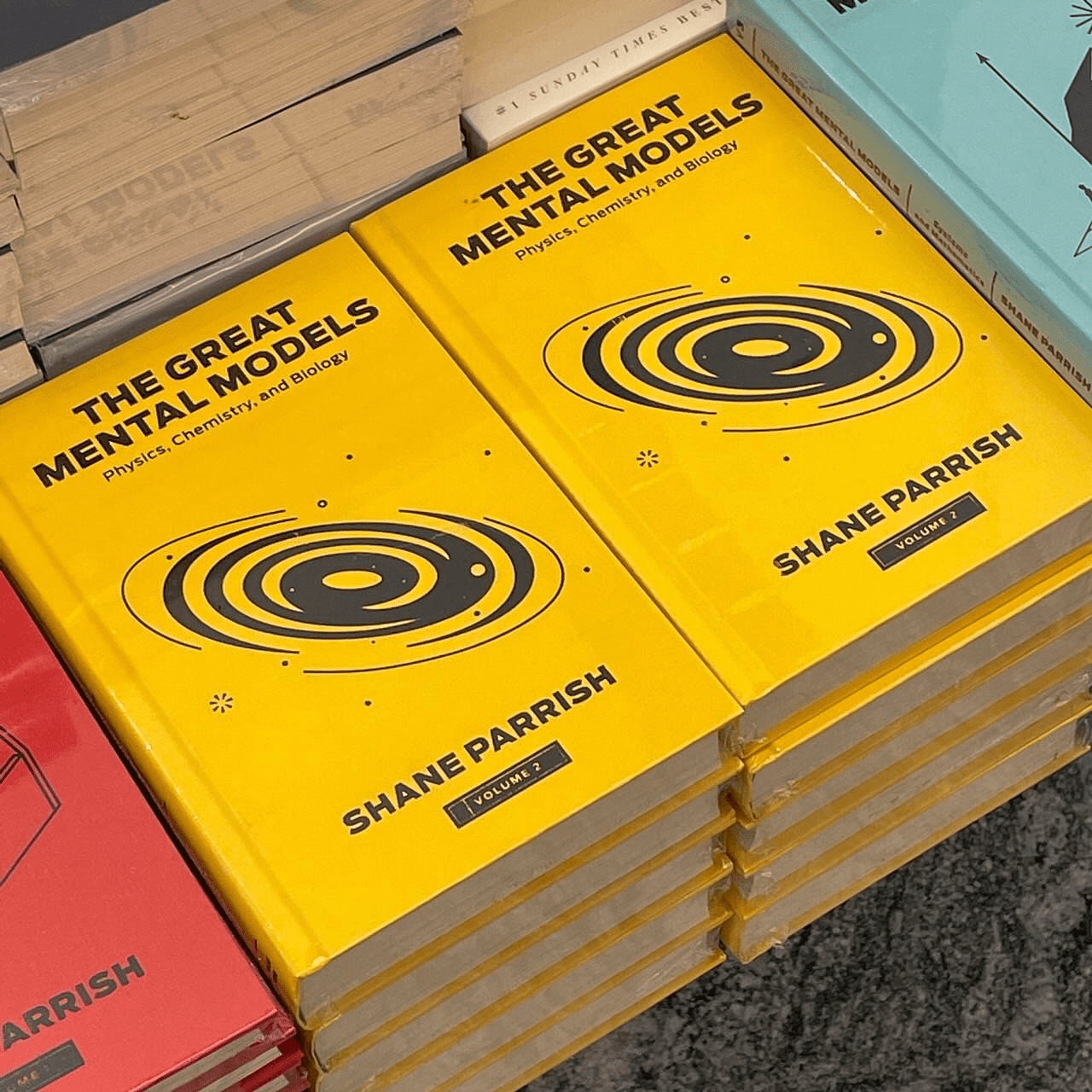

The Great Mental Models Volume 2: Physics, Chemistry, and Biology by Shane Parrish
Shane Parrish’s The Great Mental Models Volume 2 serves as an indispensable guide for anyone seeking to enhance their understanding of the world and improve their decision-making. Building on the foundation laid in Volume 1, this book delves into fundamental concepts from physics, chemistry, and biology, demonstrating their broad applicability beyond their traditional academic domains. Parrish argues that developing a “latticework of mental models” derived from these core disciplines allows us to see problems and opportunities through multiple lenses, fostering multidisciplinary thinking and leading to more effective, less stressful, and ultimately more rewarding outcomes in our careers, relationships, and personal lives. This summary promises to break down every important idea, example, and insight, ensuring comprehensive coverage in clear, accessible language, leaving no significant concept untouched.
Introduction
The introduction sets the stage by highlighting the value of understanding fundamental principles of how the world operates. It introduces the concept of a latticework of mental models as a toolkit for approaching new ideas and challenges.
The book emphasizes that applying these models allows us to see the world as it is, not as we want it to be, leading to better decisions, spotting opportunities, and avoiding costly mistakes. The example of the Fram, a ship designed to work with Arctic ice rather than against it, illustrates how understanding natural laws can lead to innovative and successful solutions. The Fram’s curved hull allowed it to pop upward when squeezed by ice, rather than being crushed, enabling it to navigate the Arctic Ocean successfully. This story underscores the book’s core message: working with the world’s realities is more effective and less stressful than fighting against them. The series aims to provide over a hundred such timeless mental models, spread across five volumes, encouraging readers to synthesize knowledge across disciplines and leverage what they already know in new ways. The models in this volume, from physics, chemistry, and biology, are presented with scientific explanations and real-world historical examples to inspire analogous applications in daily life, helping readers identify forces at play and design effective solutions. The author stresses that these science models are value-neutral and encourages readers to reflect on how they can use them to improve their lives and avoid pitfalls. To master these tools, readers are advised to be curious, practice applying models daily, and reflect on their successes and failures.
Physics
This section delves into fundamental physical laws, offering metaphorical and literal applications for understanding human behavior and systems.
Relativity
This chapter explores how our perspective profoundly influences what we perceive as reality, emphasizing that there’s always more than one way to see a situation. It highlights the importance of recognizing the subjectivity of perspective and actively seeking out multiple viewpoints to gain a more complete understanding.
Galileo’s thought experiment of a scientist on a moving ship dropping a ball illustrates that an observer inside the ship only perceives vertical motion, while an outside observer sees both vertical and horizontal movement. Both observations are correct, but the outside observer has a more complete view. This highlights how our frame of reference limits our perception. Einstein’s theory of special relativity further reinforces this by demonstrating that observers in relative motion can experience time differently, yet both are correct. The example of two observers witnessing lightning strike a moving train at different times reinforces that multiple valid interpretations of the same event can exist based on perspective. Recognizing our own imperfect perspective is crucial, as is understanding that others’ views are equally unique and limited. To augment perception, we must actively take steps to recognize limits and, in high-stakes situations, seek multiple perspectives.
The subjectivity of perspective explains why eyewitness testimonies have lost credibility. Physical factors (vision, light, observation time) and psychological factors (mood, biases, incentives) all distort what a witness believes they saw. The classic Japanese film Rashomon vividly illustrates how multiple eyewitness accounts of the same crime can be contradictory yet true for each teller, partly due to self-interest and partly due to limited perspective. Memories are also subjective and malleable, prone to misattribution and suggestibility, and distorted by present knowledge. The 2000 Chris Kinison murder trial, involving conflicting eyewitness accounts influenced by positioning, biases, and racial prejudice, further demonstrates the challenge juries face in untangling differing perceptions to ascertain the truth.
To understand others, we must employ thought experiments and perspective-taking. Instead of judging, ask: “What would the world have to look like to me for those actions to make sense?” This involves imagining others’ experiences, biases, and desires. The stories of Mirza Salih and Rifa’a Rafi’ al-Tahtawi, Muslim students observing London and Paris respectively, show how external perspectives can illuminate and enrich understanding of one’s own culture. Salih’s visit to the British Museum, seeing Iranian history alongside other ancient civilizations, helped him adopt a comparative method to understand world history. Al-Tahtawi’s detailed observations of Parisian society not only informed his understanding of French culture but also significantly influenced reforms in Egypt upon his return. These examples demonstrate that understanding how others frame something reveals their beliefs and biases, which in turn helps us augment our own perspective. Publishers use editors, and research relies on peer review, because outside views create a better product. When stuck, shifting your vantage point (e.g., zooming out, focusing on details, or adopting other stakeholders’ perspectives) can clarify problems and reveal opportunities.
Reciprocity
This chapter explores Newton’s Third Law of Motion—that for every action, there is an equal and opposite reaction—and applies it to human interactions, emphasizing the profound benefits of win-win relationships and the principle that when you act on things, they act on you.
In physics, reciprocity means that forces always occur in pairs of equal magnitude and opposite direction. For example, when you jump and land, you exert a force on the ground, and the ground exerts an equal and opposite force on you. This principle explains jet propulsion, where expelling mass in one direction drives an object in the opposite direction, and a football tackle, where the force exerted by the defender is reciprocated on their own body. The implication is that applying excessive force to others can be detrimental to oneself. The quid pro quo concept in English (something for something) reflects this fundamental expectation of reciprocity in human society, underscoring its foundational role.
While not as perfectly predictable as in physics, reciprocity in human behavior suggests that positive actions often lead to positive returns, even if not immediately or perfectly. The life of Norman Bethune, a Canadian surgeon who selflessly volunteered his medical skills, provides an interesting case study. Despite facing personal hardships and political ostracization for his communist beliefs, his dedication to improving healthcare for the impoverished and war-torn saved countless lives and earned him enduring heroic status in China. Research on volunteering demonstrates that giving has documented health benefits, suggesting that individuals like Bethune receive satisfaction and personal fulfillment proportional to their contributions, even without external recognition. This concept helps us understand why people make seemingly great sacrifices—they reap internal rewards.
The Tit for Tat strategy from game theory further illustrates the power of reciprocity. In iterated games, cooperating initially and then mirroring the opponent’s previous move (cooperation or defection) proves most effective. Tit for Tat with forgiveness, which allows for occasional cooperation even after defection, helps break cycles of mutual defection and fosters long-term cooperation. This strategy suggests that “going positive and going first” is beneficial in life’s iterative and compounding interactions. Loss aversion, the psychological tendency to feel the pain of losses more strongly than the pleasure of gains, explains why we might hesitate to “go first” with positive actions. However, the aggregate gains from consistent positive reciprocal behavior typically outweigh occasional small losses.
Historically, reciprocity based on self-interest has also driven significant outcomes. The Eternal Treaty between Egyptian King Ramesses and Hittite ruler Hattusili around 1250 BCE is the world’s first known peace treaty. Both kings, facing external threats and internal power struggles, saw mutual benefit in an alliance that freed up resources and legitimized their rule. This demonstrates that seeking mutually beneficial relationships and engaging in the “long game” of positive interactions leads to better outcomes. Schadenfreude, the pleasure derived from another’s misfortune, is also linked to reciprocity, often felt when misfortune is perceived as deserved, reinforcing a sense of fairness and sometimes serving as a form of group bonding or status negotiation. Ultimately, the model of reciprocity teaches that our actions tend to come back to us. By offering opportunity, kindness, and the benefit of the doubt, we are more likely to receive the same, encouraging us to become what we want to see in the world.
Thermodynamics
This chapter explores the laws of thermodynamics as a foundational model for understanding systems, particularly the concepts of equilibrium and entropy. It highlights that all systems tend towards disorder and require energy to maintain order.
The four laws of thermodynamics provide a universal framework for understanding energy and disorder. The first law (conservation of energy) states that energy cannot be created or destroyed, only transferred or changed form (e.g., light to heat). The second law states that entropy (disorder or unusable energy) of an isolated system always increases, spontaneously progressing towards thermal equilibrium (no net heat flow). This means energy is required to create and maintain order. The third law describes entropy at absolute zero, while the zeroth law (formulated later but fundamental) states that if two objects are in thermal equilibrium with a third, they are in equilibrium with each other. These laws have metaphorical applications, such as valuing contrast (being a big fish in a small pond), recognizing the influence of our environment, and anticipating the need to expend energy to prevent things from falling apart.
A significant aspect of thermodynamics is the tendency towards equilibrium, where systems of different temperatures or states eventually homogenize when exposed to each other. To prevent this, an insulating barrier is required, but even insulators only slow down, not stop, the change. This principle applies metaphorically to societies with different values. Sharing ideas and values (analogous to radiation, convection, and conduction) leads to social equilibrium. Conversely, societies that wish to prevent mixing may erect border walls, but history shows these often fail. From Hadrian’s Wall to the Great Wall of China to the Berlin Wall, such structures have proven ineffective at completely stopping the movement of people or ideas. Hadrian’s Wall, for instance, was designed more to control and slow movement than to stop it, and was augmented by diplomacy and ongoing interaction. The Chinese walls, built over millennia, also proved porous, with guards accepting bribes and cultures mixing despite the intent to exclude. The Berlin Wall, a psychological barrier to ideological mixing, ultimately failed, as the pressure for equilibrium built until its fall in 1989. These examples demonstrate that maintaining contrast requires constant, often unsustainable, energy expenditure.
The problem of equilibrium in social systems is that while it represents a state of rest, it can also lead to stagnation and a lack of growth, as contrast drives development. The second law of thermodynamics and the concept of entropy (the natural tendency towards disorder) are crucial for understanding why we must constantly expend energy to maintain order in our lives and societies. Murray Gell-Mann’s analogy of mixed coins or peanut butter and jelly illustrates that there are simply more ways for things to be disordered than ordered, making disorder the default state. Life itself is a constant effort to maintain structure by consuming external energy, thereby increasing the entropy of its environment while decreasing its own internal entropy.
Humans exert significant effort to prevent disorder. Laws, religions, social norms, customs, and stories all serve as structures that nudge the natural disorder of life into order. Fairy tales, despite their fantastical elements, provide a systematic order to the unexplainable, setting common understandings and combating entropy. John Yorke’s Into The Woods suggests that storytelling is an attempt to impose order on a chaotic universe. The archetypal Hero’s Journey structure, found across cultures, offers a predictable narrative that reduces the stress of randomness by portraying a journey from disequilibrium to a new, restored equilibrium. Fairy tales, by turning individual struggles into common experiences, help us process “assault, cruelty, and injustice” by fitting them into an explainable framework. Their enduring, worldwide appeal across cultures suggests a significant social function in creating a common understanding that combats entropy. The continuous evolution of fairy tales, from Grimm to Pixar, demonstrates how societies adapt these narratives to maintain a sense of order while adapting to changing sensibilities.
Inertia
This chapter examines Newton’s First Law of Motion—an object at rest stays at rest, and an object in motion stays in motion unless acted upon by an unbalanced force—and applies it to human behavior, explaining why starting something is hard, but so is stopping something.
Inertia describes an object’s resistance to a change in its state of motion. Galileo’s experiment with inclined planes demonstrated that in the absence of friction, a ball would continue to move indefinitely. Descartes also noted this tendency for things to remain in their current state. This model helps explain why we resist change, as it requires effort and introduces uncertainty, whereas maintaining the status quo requires almost no effort. It also clarifies why bad habits are hard to break and systematic change is difficult. Multitasking, for instance, is inefficient because shifting focus requires extra energy, while it’s easier to continue a single task.
The concept of momentum (p=m*v) is introduced to explain that the greater the mass of an object, the greater its inertia, meaning it requires more force to accelerate or decelerate. This applies metaphorically to habits and ideas: the longer we’ve held a belief or practiced a habit, the greater its “mass” and the more effort it takes to change. The comparison between the long-lasting use of lead (known to be poisonous for millennia but still used in many products due to its integration into manufacturing processes and the high cost of removal) and the rapid rise and fall of absinthe (banned within 50 years based on exaggerated harms) illustrates this. Lead’s pervasive “societal mass” made it far harder to eliminate than absinthe, which was a standalone product. This demonstrates why proof of harm is often insufficient to change entrenched behavior—the inertia of a product, habit, or idea increases with its longevity and integration.
Inertia in war, as Clausewitz noted, means it’s easier to get well-rested men to move than exhausted ones, who have greater inertia. The concept of escape velocity—the speed an object needs to break free from a gravitational pull—is also introduced as a parallel to the activation energy needed to set something on a new path, not just overcome resistance. This highlights that new ideas have to prove themselves in the long haul against the inertia of existing beliefs.
The inertia of belief can be both a hindrance and a strength. While it can make us blind to new opportunities or dismiss new information, it also allows us to persevere through obstacles and setbacks. Lise Meitner, a pioneering nuclear physicist, exemplifies this dichotomy. Despite facing severe social prejudices against women in science and anti-Semitism in Nazi Germany, her deep passion for physics and unwavering belief in her work enabled her to persist in her research and make groundbreaking discoveries like nuclear fission. Her determination allowed her to navigate an unfair system, demonstrating that strong beliefs, refined through new information and experience, can provide invaluable support in the face of immense inertia. Although she was denied a Nobel Prize for her work, her legacy and respect from colleagues endured, proving that her personal and scientific beliefs had significant inertia.
Friction and Viscosity
This chapter introduces friction and viscosity as forces that impede movement and progress, emphasizing that while these forces can’t be eliminated, they can be minimized or strategically leveraged to improve outcomes.
Friction is a force that opposes movement between objects in contact, requiring extra energy and producing heat and sound. It can be kinetic (opposing motion) or static (preventing motion). No surface is frictionless, only less or more resistant. Viscosity is the measure of how hard it is for layers of fluid to slide over each other; a more viscous fluid offers more resistance. The key insight is that the relevance of these forces depends on scale: viscosity is a major obstacle for tiny plankton but negligible for a whale. This model helps us understand that what is easy in one environment might be harder in another, and that the dominant forces at play depend on the scale of operation.
The Soviets in the 1980s created a high-viscosity communications environment through censorship, criminalization of information sharing, spying, and a lack of empowerment for frontline personnel. This environment, while intended to maintain state control, significantly impeded the flow of accurate information, contributing to the scale of the Chernobyl disaster in 1986. Information about previous nuclear accidents was suppressed, and after Chernobyl, communication was cut, and official reports were fabricated. This high viscosity for true information and low viscosity for false information backfired, causing widespread radiation poisoning and fueling outrage that contributed to Ukrainian independence. The lesson is that impeding information flow to control people often undermines control and leads to worse outcomes.
The concept of friction and viscosity is highly relevant to organizational effectiveness. To encourage innovation on the front lines, organizations must reduce the friction faced by workers, rather than focusing solely on executive-level strategies. Toyota’s production system, developed by Taiichi Ohno in the 1940s, offers a powerful example. Unlike the wasteful mass production systems of American car manufacturers, Toyota focused on reducing friction at the shop floor level. Ohno empowered workers to perform minor repairs, conduct quality checks, and stop the assembly line (using the “Andon cord”) if problems arose. This immediate problem-solving, coupled with dedicated time for process improvement ideas, created a “lean” production system that improved car quality, production efficiency, and worker morale. Toyota’s approach demonstrates that by understanding and addressing the specific forces impacting frontline workers, organizations can create a low-friction environment that fosters initiative and innovation. This means that effective organizational design needs to consider the environment of those actively adding value, rather than imposing top-down strategies that might increase friction at the working level.
Velocity
This chapter distinguishes velocity from mere speed, emphasizing that direction is paramount over how fast one is moving. It highlights that progress is best measured by displacement relative to a goal, not just rapid movement.
Velocity is defined as change in distance over change in time, with a specific direction. Unlike speed, which is just movement, velocity produces a result by moving towards a goal. Maintaining a constant velocity in the right direction is often the most effective strategy, as too many changes in direction can lead to going in circles. The concepts of kinetic energy (energy from motion, dependent on velocity) and potential energy (stored energy from position or stretch) are introduced, noting that kinetic energy is relative to the observer, while potential energy is independent.
Napoleon Bonaparte famously emphasized velocity—the product of mass and speed—in his military campaigns. His ability to move troops at unprecedented speeds was a core battle tactic, particularly evident in his Italian campaign. This rapid movement not only surprised enemies but also obviated potential obstacles by not giving them time to prepare. Napoleon’s success stemmed from his deep study of territory, his willingness to experiment, and his ability to inspire his troops to adopt velocity as a group goal through clear, simple instructions and personal connection. He also minimized “baggage” (e.g., camp followers, supply lines) to maintain pace, though this also led to limitations. However, his emphasis on velocity had limits, most dramatically in his disastrous 1812 invasion of Russia. Despite covering vast distances, his army was decimated by disease and starvation because his planning was inadequate to sustain such speed over an immense distance and through a harsh winter. He focused on getting to Moscow (speed) rather than achieving a stable occupation (velocity), ultimately undermining his strategic goals. This illustrates that direction at all costs can be detrimental, and that sometimes, a focus on speed without proper adaptation to changing conditions can lead to returning to the starting line with significant losses.
The career of Mae West offers a counterpoint, illustrating the importance of direction over speed in personal and professional life. Early in her career, West realized that achieving her desired success required control over her creative output. She consciously chose to write, co-write, and significantly modify almost everything she appeared in, maintaining tight control over her persona and career outside the traditional Hollywood studio system. Her intense focus on her long-term goals meant she often turned down roles that didn’t align with her vision, prioritizing the right direction over quick gains or immediate appearances. By concentrating her energy, believing in her abilities, and leveraging her connections, she became one of the highest-paid women in the world, demonstrating that strategic velocity, focused on a clear destination, leads to significant and sustainable gains.
Leverage
This chapter explores leverage as the ability to achieve disproportionately large results with relatively small inputs of force or effort. It delves into its physical origins and metaphorical applications in human interactions.
Leverage is fundamentally about making something “light” or “easy” by using a lever, a concept credited to Archimedes and discussed by the Peripatetic school. There are three main types of physical levers, each offering a mechanical advantage (or, in the third type, trading force for distance of movement). Historically, levers enabled humanity to accomplish feats like building the pyramids and developing tools like scissors and wheelbarrows. The principle suggests that technology and tools increasingly amplify variations in individual performance, leading to a widening gap between the most and least productive. In human interactions, leverage is not purely physical but based on shared perceptions of value and is a social or relational construct. It’s about influence, not manipulation, and its power lies in making it attractive for others to move in your direction. The optimal application of leverage requires knowing how much pressure to apply—too much can break the “lever,” too little may not achieve the objective. The best leverage often comes from not needing the deal at all.
Understanding where, when, and how to apply leverage is crucial. The life of Eleanor of Aquitaine (12th-century Duchess, Queen of France, then England) provides a compelling example of wielding immense influence without direct solitary force. Born into the powerful and prosperous Duchy of Aquitaine, which allowed women to inherit, Eleanor used this territory as her primary lever to influence kings and secure her legacy. Her key insights included: underestimating her leverage (knowing Aquitaine’s value to monarchs), keeping others wanting what she had (investing in her territory to maintain its value), and understanding the limitations of her leverage (e.g., not sacrificing Aquitaine in a futile effort to escape imprisonment by her husband). She consistently sought to maintain control over Aquitaine through her marriages and by grooming her son, Richard, to inherit it, cultivating relationships with nobles and actively participating in local politics. Her story highlights that land is only leverage if its people support your leadership, and that leading requires followers.
The dark side of leverage emerges when it becomes systemically entrenched and leads to tyranny. The 20th-century coal company towns in West Virginia illustrate this. Coal operators, having initial leverage from owning vast land and being the sole employers, exerted exceptional control over miners’ lives. Miners were paid in “coal scrip” (currency only spendable at the company store), allowing companies to control wages and prices. This system, combined with control over local courts and elections, enabled widespread exploitation, including safety, child labor, and criminal law abuses. This deep-seated leverage was only countered by widespread collective action, such as strikes and unions. Even in such oppressive systems, individuals still retained some leverage through geographic mobility or supplementing income, demonstrating that some form of leverage often exists, even if not the desired type. The chapter concludes that leverage is best paired with reciprocity to be sustainable and achieve better, longer-lasting outcomes, as unchecked leverage fosters unrest and disloyalty.
Chemistry
This section explores fundamental chemical concepts and applies them metaphorically to understanding change, transformation, and composition in various systems.
Activation Energy
This chapter introduces activation energy as the initial energy input required to initiate a reaction and sustain it to a sustainable conclusion, emphasizing that sufficient energy is needed not just to start, but to form new, lasting connections.
In chemistry, activation energy is the minimum energy required to break existing bonds and allow new ones to form, leading to a chemical reaction. It typically involves an increase in temperature, which boosts molecular velocity and collision frequency. Without sufficient activation energy, molecules remain unchanged. This concept applies daily: starting a fire requires enough paper and kindling to get the logs burning, not just a single sheet. The principle stresses that sustaining significant change requires planning for all the energy needed to get and keep the “fire” going. Swedish chemist Svante Arrhenius not only developed the Arrhenius equation, linking temperature to reaction rates, but also was the first to quantify the link between atmospheric CO2 and global temperatures, highlighting the impact of energy on processes.
Achieving lasting change requires forming new, strong bonds that make it hard or impossible to revert to the old state. Many people fail at significant change because they underestimate the total activation energy needed to propel an action through the breaking of old patterns to the building of completely new ones. This applies to quitting addictions, where changing triggers and building new structures are crucial. The failure of many revolutions highlights this: while considerable energy is focused on breaking down the existing structure, insufficient planning is often made for forming and sustaining a new structure.
The story of Thomas Sankara, the revolutionary president of Burkina Faso in the 1980s, vividly illustrates the challenges of sustaining change. Sankara, motivated by the suffering and corruption in his country, planned his coup to ensure enough activation energy not just to overthrow the government but to build a new political, economic, and social infrastructure. He implemented sweeping reforms, including literacy campaigns, mass vaccinations, land redistribution, and empowering women, often driven by volunteers. His vision was to create a self-reliant country, rejecting foreign aid. These initiatives represented the “kindling” for his revolutionary fire. However, Sankara misjudged the need for widespread popular commitment, repressing opposition and dismissing striking teachers, which undermined long-term support. His assassination after only four years in power meant his reforms were not yet stable enough to continue autonomously, and the country reverted to old patterns. Despite this, Sankara’s passionate defense of his ideals created a stable legacy that continues to inspire, demonstrating that even if the immediate reaction isn’t sustained, investing energy in change can produce surprising, lasting effects.
The concept also applies to sustainable economic development. Joe Studwell’s How Asia Works examines why Japan, South Korea, and Taiwan achieved lasting economic success, while Indonesia, the Philippines, and Thailand did not, despite periods of growth. The successful nations implemented three critical interventions that acted as sufficient activation energy: maximizing agricultural output (through land reform), directing investment towards export-oriented manufacturing, and establishing financial policies that supported these sectors (e.g., deferring industrial profits for long-term learning). These policies fundamentally changed their economic structures, making it “all but impossible to return to an earlier stage of development.” Conversely, the failing economies lacked true land reform, focused on domestic manufacturing, and prioritized short-term banking profits, leading to unstable growth that collapsed during financial crises. This demonstrates that accurately estimating the activation energy needed to reach a stable, irreversible conclusion is crucial for lasting change.
Catalysts
This chapter introduces catalysts as substances or factors that accelerate the rate of a reaction without being consumed by it, enabling change to occur more easily and efficiently.
Catalysts work by creating alternative pathways that lower the activation energy required for a reaction, making it faster, safer, and cheaper. They are not used up in the process and can be reused. Examples range from yeast in alcohol production to catalytic converters in cars (turning toxic fumes into less harmful gases). Elizabeth Fulhame’s 18th-century work on oxidation reactions, noting water’s role as a regenerated catalyst, was groundbreaking, despite initial resistance to her contributions as a woman in science. Later, Jons Jacob Berzelius coined “catalysis,” and Wilhelm Ostwald systematized the understanding that catalysts could improve any chemical reaction. The Industrial Revolution saw widespread adoption of catalysts in manufacturing, driven by financial incentives. Catalysts are often “unsung heroes” that significantly improve efficiency and outcomes.
Social catalysts can take unexpected forms and are value-neutral, speeding up both positive and negative reactions. The printing press served as a major catalyst for knowledge dissemination. Before its invention, obtaining knowledge from scarce, error-prone, handwritten books required immense activation energy. The printing press significantly lowered this energy requirement by making books cheaper, faster to produce, and more widely available, broadening access to information and accelerating learning.
The Black Death (14th century) is presented as a powerful, albeit tragic, social catalyst. Its devastating impact on populations led to the collapse of old labor systems, increased wages, falling rents, and greater social mobility for survivors. This restructured society to be more equal. It also weakened the Christian church’s dominance, creating a cultural gap that paved the way for the Renaissance and dramatic advancements in science and arts. The plague also led to improved conditions for women and a shift in medicine from humoral theory to observation. While horrific, the Black Death sped up profound social and economic changes that ultimately reshaped Europe. Smaller catalysts also exist in everyday life, such as a health scare prompting lifestyle changes or rejection leading to personal growth. Autocatalysis, where a reaction’s outputs are also its catalysts, creates self-sustaining processes.
Opinion leaders can also act as catalysts for the evolution of cultural norms. Louis XV of France (18th century) became an unexpected catalyst for the widespread adoption of domestic comfort and privacy. While not inventing the concept, his embrace of comfortable, private rooms at Versailles—influenced by his mistresses and broader Enlightenment ideas—made comfort socially desirable and financially accessible. His early adoption by royalty and the subsequent demand for comfortable elements accelerated their production and lowered prices, creating a feedback loop that transformed homes from public displays of status to private sanctuaries. This demonstrates how the endorsement of influential figures can speed up cultural shifts.
Alloying
This chapter introduces alloying as the process of combining different elements to create a new substance with superior, emergent properties that individual components lack, applying this concept to building teams and knowledge.
An alloy is a mixture of two or more metals, or a metal and a nonmetal, synthesized to produce unique properties like greater strength, corrosion resistance, or improved performance. Historical examples include the Sumerians’ bronze (copper and tin), which was harder and more resistant than its pure components, allowing them to gain military advantage. Steel (iron and carbon, often with additives like magnesium, nickel, or chromium) is another vital alloy that revolutionized agriculture and weaponry. The early metallurgists, despite not fully understanding the chemistry, refined processes to create successful alloys, showing that one plus one can truly equal ten. In medicine, combination drug therapies demonstrate alloying, with multiple drugs working together to achieve greater efficacy and reduce side effects than individual drugs. This model emphasizes that in life, combining diverse skills, often through partnering with others who complement our strengths, creates capabilities greater than the sum of individual parts.
The War of 1812 provides a compelling example of alloying human skills to beat a larger force. The alliance between Tecumseh, a Shawnee chief with extensive knowledge of the territory and experienced warriors, and Major-General Isaac Brock, a British military leader with firepower and tactical understanding, created a combined force with emergent abilities. Their strategic cooperation, despite vastly different backgrounds, allowed them to capture Fort Detroit without a fight through a brilliant psychological assault. This demonstrated that together, they could do what neither could do alone, leveraging each other’s strengths for disproportionate success.
Knowledge itself can be understood as an ultimate alloy, combining direct experience and theoretical learning (e.g., from books). Neither alone is sufficient; experience updates theory, and theory guides new experiences. Aristotle’s five components of knowledge (science, craft, prudence, intellect, wisdom) highlight its multifaceted nature. Leonardo da Vinci exemplifies knowledge as an alloy. His insatiable curiosity, intense observation, willingness to challenge dogma, and ability to combine knowledge from different disciplines (e.g., nature informing art, theater informing optics) led to breakthroughs centuries ahead of his time. He actively sought knowledge from others (“Get the master of arithmetic to show you…”) and thrived in 15th-century Florence, an environment that valued interdisciplinary thinking and the mixing of ideas. This highlights that sharing knowledge and fostering an environment of curiosity and imagination strengthen this knowledge alloy. The concept of disproportional wear and tear in mechanical systems (coating high-stress parts with strong alloys) also metaphorically applies to where we should focus our efforts for maximum benefit.
Biology
This section explores fundamental biological concepts, particularly evolution, and applies them to understanding survival, adaptation, social dynamics, and human behavior.
Evolution Part One: Natural Selection and Extinction
This chapter introduces the fundamental concepts of natural selection and extinction as powerful mental models for understanding success, failure, the individual-environment relationship, and the necessity of constant change.
Evolution is fundamentally about “adapt or die.” Natural selection, described by Charles Darwin, is a process of “nonrandom elimination” where traits more favorable for a particular environment increase an organism’s chances of survival and reproduction. These beneficial traits increase in frequency within a population over time. Critically, natural selection favors traits that are useful “in the here and now,” not just in the distant future, and must be repeatable (passable to the next generation). This also implies that any non-useful adaptive response will be selected against. While multiple successful traits can exist, continuous optimization for the environment is an ongoing, dangerous process in the constant struggle for resources.
The vast majority of species that have ever existed are now extinct. Extinction occurs when the last member of a species dies, but functionally, it begins when the population density falls below a critical threshold (Allee effects), making survival impossible. Common causes include competition with better-adapted rivals (e.g., alien species displacing natives) and environmental changes (e.g., climate change, deforestation). Extinctions are complex, often non-linear, and can cause a ripple effect through ecosystems, as species are interconnected. While continuous extinction is normal, mass extinctions involve the disappearance of many species simultaneously due to a single cause. The paradox is that the same evolutionary process that refines species for stable conditions can make them rigid and vulnerable to volatility; generalist species are often more resilient than specialists. Species guard against extinction by rapid reproduction (e.g., many offspring) or, like humans, by finding alternative strategies.
The evolution of language provides a fascinating parallel to natural selection. Thousands of human languages have existed, some thriving globally, others going extinct. French is an example of a successful language, evolving through adaptability by incorporating words from various languages it encountered. Its spread was driven by geopolitical changes (conquest, invasion) and its adoption as a language of administration and business, making it desirable. French adapted to pressures by standardizing its grammar and spelling for wider dissemination via printed materials, increasing its utility and accessibility. While French culture sometimes limited its evolution (e.g., slow adoption of scientific vocabulary), its flexibility ultimately ensured its survival and global spread. Concentrations of French speakers actively promote its use through laws and cultural associations, aiming to make it easy to learn and use.
In contrast, Latin is a well-known “dead language.” While it spread widely with the Roman Empire and influences many modern languages, its complexity (numerous word modifications) was a significant factor in its decline. Without a central authority to codify it as conditions changed after the fall of the Roman Empire, Latin diverged into simpler, more user-friendly Romance languages (e.g., Italian, French, Spanish). Human tendency to minimize energy output favors languages that are easy to use and understand. The comparison highlights that languages, like species, must evolve and adapt to environmental pressures to remain useful and avoid extinction. Attempts to “freeze” a language or maintain tight control over its evolution ultimately risk its relevance.
Evolution Part Two: Adaptation Rate and the Red Queen Effect
This chapter continues the discussion on evolution, focusing on the rate of adaptation and the Red Queen Effect, emphasizing that continuous adaptation is necessary simply to maintain a competitive position.
Adaptation refers to both a useful trait and the process of change itself. Adaptations are successful relative to their performance in a specific environment and in the face of competition, not necessarily because they are objectively “best.” Organisms adapt only as well as they have to. The peppered moth in Britain illustrates adaptive change: originally light-colored for camouflage, dark variants thrived during the Industrial Revolution due to soot-covered environments, then light moths made a comeback with pollution control. Adaptation is driven by changes in both organic and nonorganic environments. Genetic mutations allow for direct adaptation, while mutations that enable learning facilitate adaptation on shorter timescales. Adaptation requires leaving one’s comfort zone and responding to new threats.
The swift fall of France to Germany in World War II illustrates the consequences of a failure to adapt to a changed environment. Despite French military superiority on paper (more divisions, better equipment), their thinking was outdated. They prepared for the previous war, seeing tanks as infantry support rather than independent forces, and neglecting air power. Germany, though initially hesitant, was willing to try new high-speed warfare tactics championed by individuals like General Guderian, who pushed for deep strategic penetration by independent armored forces. This willingness to adapt, even in a few key individuals, gave the Germans a decisive advantage in the early campaign. This demonstrates that adaptability in humans is about recognizing when past methods are failing in a changing environment and innovating to improve chances of success.
The Red Queen Effect from Lewis Carroll’s Alice’s Adventures in Wonderland (“it takes all the running you can do, to keep in the same place”) describes the constant evolutionary arms race: species must continually adapt just to maintain their relative competitive position, as no species is ever protected from extinction. This applies to biological organisms (e.g., predators adapting to faster prey) and also to human endeavors like business strategy and human conflict. In business, it’s an argument against complacency; competitors are always adapting, and customer needs are always changing, requiring constant innovation. The principle also has limits: an arms race where costs become immense but no advantage is gained is detrimental. Vestigial structures (traits with no current function but historical purpose, like human goosebumps or flightless bird wings) are traces of past adaptations, showing that natural selection only removes traits if they negatively impact survival.
For humans, the Red Queen Effect implies that constant effort is needed to avoid falling behind. However, effective adaptation is not merely about speed; it’s about usefulness and improving functioning. Adaptations come with tradeoffs (e.g., big human brains offer problem-solving but require longer vulnerability after birth). Crucially, adaptations must maintain an organism’s viability at all stages; if adaptation compromises physical health or sanity, it’s not truly successful. Success for humans is not universal but must involve benefit and improved functioning, not just running endlessly to stay in place.
The concept of exaptation (a trait developed for one purpose being repurposed for another) is crucial for understanding how to innovate without starting from scratch. Feathers, originally for insulation or mate attraction in dinosaurs, were later exapted for flight in birds. Pandas using their wrist bone for bamboo manipulation, despite most mammals having the bone for other purposes, is another example. The Banu Musa’s 9th-century programmable musical machine, originally for entertainment, provided the foundation for frequency-hopping technology used in modern wireless communication (pioneered by Hedy Lamarr and George Antheil during WWII for torpedo guidance). This demonstrates that inventions are rarely isolated and that solutions to one problem can be repurposed for entirely different functions centuries later. Bubble wrap (failed wallpaper, then insulation, then packaging) and Play-Doh (wallpaper cleaner, then child’s toy) are commercial exaptations. Botox (a toxin causing botulism, then used for eye disorders, then for cosmetics) shows how a substance can find completely unanticipated uses. Exaptation teaches flexibility and that we don’t always know the value of something at the outset. “Functional fixedness,” seeing objects only for their intended use, is a hindrance to creativity; embracing exaptation means actively looking for new uses for existing skills and knowledge.
Supporting Idea: Competition
Competition is a pervasive and driving force in the biological world and human systems, stemming from the struggle for finite resources like food, status, territory, and mates. It is inherently harmful to losers, and its intensity is directly related to resource scarcity.
Intraspecific competition occurs within a species (e.g., male zebras fighting for mates), while interspecific competition occurs between species (e.g., trees competing for sunlight). Both types are constant. The competitive exclusion principle (Gause’s Law) states that two species cannot perfectly occupy the same niche and require the exact same resources; one will outcompete the other through specialization or extinction. This principle explains the diversity of organisms within ecosystems, as each species carves out its own niche. The introduction of gray squirrels in the UK, outcompeting native red squirrels for the same niche due to slight advantages (digestion, virus carriage), illustrates this. In business, competition drives improvements, forcing companies to lower prices and raise quality, while monopolies are discouraged for fostering abuse and stagnation.
Ecosystem
This chapter defines an ecosystem as an interconnected community of interacting species and their nonliving environment, emphasizing that all components play a part, and interventions can have unpredictable, non-linear outcomes.
Ecosystems are complex systems where parts interact in myriad ways. The core insight is that they are often capable of self-organization and recovery, and human intervention can sometimes be detrimental (intervention bias). For example, putting out all forest fires disrupts natural ecological benefits like nutrient release and alien species removal, leading to larger, more destructive fires in the long run. Similarly, efforts to save endangered species often focus on expensive captive breeding programs (like elephant artificial insemination) rather than the more effective and holistic approach of preserving natural habitats, which supports the entire system. This highlights that focusing solely on individual parts can neglect the interconnectedness of the whole.
Ecosystems have no size restrictions and are rarely completely closed, with matter and energy moving across boundaries (e.g., animal migration). Keystone species are foundational organisms whose absence would cause the ecosystem to collapse or fundamentally change; they are often predators that control prey populations (like sea otters in kelp forests, which eat sea urchins that would otherwise decimate kelp, a carbon sink). Ecosystems are dynamic, constantly adjusting to disturbances, and can be measured by their resistance (tendency to remain stable) and resilience (speed of recovery). The Law of the Minimum (Liebig’s Law) further illustrates ecosystem principles: growth is limited by the scarcest essential resource, not the most abundant (e.g., crop yield limited by the lowest nutrient, or human productivity by lack of sleep).
The 16th-century silver trade between China and Spain offers a rich case study of ecosystem dynamics. China’s initial attempt to maintain a closed trading system inadvertently fostered a thriving ecosystem of smugglers and pirates, which ultimately threatened the government’s power and forced them to open trade. The influx of Spanish silver (needed by China due to depleted mines and worthless internal currency) acted as an environmental change that altered China’s economic ecosystem. Individuals and groups adapted by producing vast quantities of goods (especially silk knockoffs) for the European market, demonstrating a resilient and efficient economic infrastructure. The Chinese community in Manila, despite Spanish massacres, consistently rebounded due to the value and abundance of both Chinese goods and people, showcasing the system’s high resiliency derived from its valuable economic functions.
The principles of ecosystems can be applied to human organizations. Bill Walsh’s transformation of the San Francisco 49ers from the worst team to a championship dynasty exemplifies this. Walsh built a culture where all components were interconnected and interdependent, with “every role essential,” from janitors to players. He fostered teamwork and shared expectation, believing that winning was a product of a well-functioning system, not just individual superstars. Walsh recognized that a successful organization needs flexibility and adaptability to meet unexpected obstacles, designing programs to support players’ personal lives (e.g., financial advice, drug counseling) to prevent disturbances. He sought out diverse talent, understanding that a wide array of skills contributes to optimum performance, even if not immediately obvious. The difficulty of copycatting Walsh’s success underscores that “ingredients matter”—the unique mix of people and culture creates a distinct ecosystem. Finally, like all complex systems, organizational outcomes are not always predictable, but a strong, resilient ecosystem increases the chances of overall success, and external stability is crucial.
Niches
This chapter explores ecological niches, differentiating between generalist and specialist species, and applying these concepts to strategy in life and business.
An ecological niche encompasses everything that affects a species’ ability to reproduce and survive within an ecosystem, including abiotic factors like water, sunlight, and temperature. Generalist organisms have a broad niche, tolerating diverse environmental conditions and eating various foods. They can thrive in many places and maintain large populations, making them resilient to rapid environmental changes (e.g., cockroaches, rats, humans). Specialist organisms, conversely, have a very distinct and narrow niche, often relying on specific locations or particular foods (e.g., koalas and eucalyptus, giant pandas and bamboo). While more prone to extinction, specialists can thrive in stable environments with less competition, possessing unique mechanisms to exploit their specific requirements. The Competitive Exclusion Principle (Gause’s Law) explains that perfect competition between two species in the exact same niche is impossible; one will eventually specialize or be eliminated, driving ecosystem diversity.
Invention provides a strong parallel to this model. A generalist invention, like the light bulb, creates new territory that can be adopted by many, but then faces intense competition from other generalists. To succeed, it must secure a broad territory with all necessary resources. A specialized invention, by contrast, caters to a smaller niche. Once it “owns” this niche, it faces less competition and is incredibly hard to dislodge, as there’s little incentive for others to compete directly. Zildjian cymbals, a company operating since 1623, exemplify this: they dominate the niche of professional drummers due to their unparalleled reputation, a small enough market that it discourages direct competition. While generalists face constant daily competition and stress, specialists have less daily struggle but face existential threats if their specific environment changes or their niche disappears.
The fax machine’s 150-year survival illustrates a technology that consistently found and adapted to specialist niches. Invented in the 1840s, the fax initially struggled to find a market due to the dominance of the telegraph. Its first successful niche was with newspapers, providing the unique ability to transmit photographs, a visual game-changer. Later, the military became another early consumer, needing to transmit images and error-free direct orders. These protected, specialist niches allowed the fragile and expensive technology to mature. However, focusing on niches led to deliberate incompatibility between manufacturers, fragmenting the market. It wasn’t until deregulation and falling costs in the 1980s that fax became a temporary generalist. The fax’s story highlights that a product can survive by lurching from niche to niche until broader conditions allow it to flourish.
Convergence in biology further illustrates the niche concept: unrelated species often evolve analogous traits (homoplasies) to solve the same problems when occupying similar niches, demonstrating that evolution is not entirely random and that the number of potential solutions to a function is finite. Examples include flight (evolved independently in birds, bats, insects) and eyes (evolved in numerous unrelated lineages with similar structures). This suggests that if we were in the same environment and niche, we might act in similar ways to others, and that solutions that worked for others in equivalent situations can often work for us too, even if our problems feel unique.
Self-Preservation
This chapter explores self-preservation and survival instincts as innate behaviors that protect organisms from harm, emphasizing their fundamental role in motivating behavior and their surprising complexity beyond simple survival.
Self-preservation instincts are hardwired, from simple reflexes (e.g., pulling hand from hot stove) to complex responses like fight, flight, or freeze. These mechanisms mobilize the body to deal with imminent danger, enhancing survival chances. More complexly, the survival of a group or species can necessitate the sacrifice of individuals, a concept known as kin selection. Many animal species display selfless behaviors, like a black lace weave spider allowing its babies to eat it, or worker honeybees neglecting reproduction to care for the queen’s offspring. This ensures the survival and propagation of shared genes, demonstrating that long-term genetic survival can override individual self-preservation. Humans are also capable of overriding these instincts, sometimes for innocuous thrills (roller coasters) or for perceived greater causes.
Self-preservation extends beyond mere physical survival. Gioconda Belli, an upper-middle-class Nicaraguan woman, risked her life to join the Sandinista revolution, despite having young daughters. Her motivation was not immediate survival but to create a “more meaningful existence” and a safer, more equitable world for her children, a form of deferred preservation. She was driven by the desire to end oppression and corruption, viewing her participation as crucial to her identity and the collective’s survival. Her willingness to smuggle weapons and face exile, despite fear, illustrates that for humans, survival includes a perceived sense of meaning and purpose. Her story also highlights the powerful bond within a group that can lead individuals to take actions that risk their own lives for the collective.
Territorial behavior, a core component of self-preservation, involves defending a geographical region with necessary resources and mating opportunities. It requires time and energy, indicating its survival advantage, and its intensity increases with resource scarcity. Humans also engage in self-preservation through preserving a “permanent record” of who they are, as seen in ancient libraries like Ashurbanipal’s, which preserved knowledge for future generations, allowing humanity to avoid constantly reinventing itself.
The ancient underground city of Derinkuyu in Cappadocia, Turkey, provides a vivid illustration of human self-preservation taken to incredible lengths. For thousands of years, various persecuted groups sought refuge in this deep, extensive city, which included schools, living spaces, and stables, all with ventilation. Its narrow, defensible tunnels and huge stone disk doors provided maximum leverage against attackers. While successful in the short term, the strategy of fleeing and hoarding (supplies, information) is not sustainable long-term. Metaphorically, in companies, fear of layoffs can lead to employees hoarding information or work, making themselves indispensable in the short term but ultimately undermining trust and organizational effectiveness. This shows that immediate self-preservation instincts can backfire, highlighting the need for a more concrete, long-term plan beyond just hiding and hoarding.
Replication
This chapter explores replication in biology, from cellular division to sexual reproduction, and applies it to human systems, emphasizing that effective replication requires diversity and flexibility to adapt to change.
In biology, replication is the ability of DNA to make copies of itself, as seen in mitosis (producing genetically identical nonsexual cells) and meiosis (sexual reproduction, combining half chromosomes from two parents to produce genetically unique offspring). Replication requires three things: a code to replicate, a means of copying, and a place to process and construct the replication. While mitosis ensures endless skin cells, sexual reproduction is prevalent because it introduces genetic variation, which is crucial for adaptability and increased chances of survival in changing environments. Exact copies without diversity perpetuate bad mutations; replication combination prevents the accumulation of traits that impair fitness and allows species to “try out” new, beneficial behaviors, despite the cost of finding a suitable partner.
Replication without diversity leads to disastrous outcomes. The Habsburg family dynasty (11th-18th centuries), which ruled much of Europe, famously practiced inbreeding (marrying close blood relatives) to consolidate power. This severe lack of genetic variation resulted in compounding recessive mutations over generations, leading to physical deformities (e.g., the “Habsburg jaw”), high infant mortality rates, and debilitating disabilities that ultimately wiped the family out with the infertile Charles II. This demonstrates that closed systems, lacking new inputs, eventually die in changing environments because errors build upon themselves without the corrective power of diversity.
There is a “sweet spot” to replication: components must be rigid enough to be easily copied but flexible enough to adapt to inevitable changes. After their defeats by Napoleon, the German army developed Auftragstaktik (commander’s intent), a strategy for replicating military success that balanced fidelity with flexibility. It involved senior commanders formulating and communicating the “what and why” of a mission, while empowering subordinate commanders to interpret and implement it, adapting to changing battlefield conditions. This system addressed the rigidity that had previously hindered German troops, allowing for continuous application of strategy while accommodating innovation. The four elements of commander’s intent—explaining rationale, establishing operational limits, getting feedback, and recognizing individual differences—create the conditions for this flexible replication, enabling continuous adaptation in the face of changing conditions.
The global spread of tea culture provides a spectacular example of cultural replication with diversity. Originating in a small region of China/India, tea spread worldwide through explorers, traders, and monks, taking root in diverse cultures like Japan, Russia, and Persia. In each new environment, tea culture adapted to local norms and desires (e.g., elaborate Japanese tea ceremonies, Russian samovars, Persian tea taverns replacing alcohol). The inherent flexibility of tea (different oxidization levels, flavorings, brewing techniques) combined with its firm core structure (always from the tea plant) allowed it to replicate not just biologically but culturally, becoming a global phenomenon. This demonstrates how a “firm concept within a flexible package” is key to successful global replication, as cultures that are too rigid cannot adapt to new ways of doing things.
Cooperation
This chapter explores cooperation (symbiosis) in biology as a powerful mental model, emphasizing how organisms that cannot perform functions alone fill gaps by interacting with others for mutual benefit, leading to emergent properties and increased competitive prowess.
Cooperation is a win-win arrangement where entities fill each other’s needs, often increasing competitive advantage. It’s not strictly necessary for survival, but it significantly expands what’s possible, creating emergent properties more powerful than individual components. The origin of mitochondria is a prime example: these energy-producing organelles, now indispensable to complex cells, are believed to have originated as free prokaryotic cells that were incorporated into another cell, developing a mutually beneficial relationship (converting toxic oxygen, producing ATP) that enabled the evolution of complex organisms over a billion years ago. Other biological examples include cows and cellulose-digesting bacteria in their guts, and Hawaiian squid and light-emitting bacteria (providing camouflage). Rafe Sagarin notes that cooperation is its “own evolutionary force,” contributing to immediate survival and enabling adaptive responses to future challenges.
In human systems, cooperation allows progress to take the fast track. The symbiotic relationship between the railroad and the telegraph in the 19th century is a powerful example. The telegraph provided train companies with real-time communication for efficiency (e.g., tracking perishable goods), while railroads offered telegraph companies infrastructure (poles, wires, stations). This mutual benefit meant neither industry could conceive of doing business without the other, intensifying the flow of goods and messages. This highlights the importance of actively seeking opportunities for collaboration with companies or industries, rather than focusing solely on competition, to leverage freed resources and support growth and innovation.
The symphony orchestra is presented as an exceptional example of human cooperation leading to “exceptional harmony” and emergent properties. A successful orchestra operates like a “flock of birds,” with musicians and conductor in a state of absolute coordination, where the music “speaks the way it needs to speak.” This requires immense trust and commitment among musicians, who must understand how their individual part contributes to the whole. The Montreal Women’s Symphony Orchestra, formed in 1940 at a time when women were rarely in orchestras, exemplifies this. Comprised of diverse women (professional and amateur, different classes and backgrounds), their emphasis on teamwork and inclusiveness under conductor Ethel Stark created a cooperative environment that transcended social tensions. Their dedication and talent led them to perform at Carnegie Hall and tour globally, demonstrating that total cooperation can create something far greater than the sum of its parts.
Supporting Idea: Dunbar’s Number
Dunbar’s Number, proposed by evolutionary anthropologist Robin Dunbar, posits a limit of approximately 150 individuals with whom one can maintain stable social relationships, a limit set by our neocortex size.
This limit, of about 150 persons, means that beyond this number, neocortical limitations make it difficult to maintain individual relationships due to information overload. Studies on primates and historical human communities (hunter-gatherers, military units) support this correlation. Dunbar suggests that the fitness advantage of larger social groups drove the evolution of parts of the human brain, indicating that social success is critical for survival. Recognizing this limit helps us understand how to invest our time effectively in social maintenance. Dunbar identified a scale of closeness: 5 (inner core), 15 (close friends), 50 (basic friends/acquaintances), 150 (community/trust relationships), 500 (friends of friends), and 1500 (faces with names). This model reminds us that our brains have finite capacity for social processing, and beyond 150, our efforts to maintain relationships bring diminishing returns, reinforcing the need to work with our biology.
Hierarchical Organization
This chapter explores hierarchical organization as a prevalent form of social structuring across the animal and human worlds, characterized by linear dominance rankings that provide order but also present drawbacks.
Hierarchies are common in social mammals and offer stability by reducing fighting, as individuals accept their positions. A dominant member holds responsibilities for direction (food), protection (predators), and maintenance of order (resolving conflicts, reinforcing norms). Research by Thorleif Schjelderup-Ebbe on hens demonstrated their ability to remember a complex pecking order, confirming established hierarchies foster peace. In chimpanzees, the alpha male often leads a stable coalition rather than being physically strongest. A drawback is that hierarchies can filter information, causing valuable ideas from lower-ranking individuals to be missed. While humans often default to hierarchical structures for ego, status, and reputation, they are inherently unequal and can reduce creativity. However, humans have a natural instinct to self-organize into hierarchies; even “flat” organizations often develop unspoken power structures. Since hierarchies are inevitable, the key is to structure them beneficially and use them as a tool, rather than being controlled by them, by emphasizing group prestige over individual status.
Historically, societies have used hierarchies to justify stratified structures, with a single ruler at the top, like Plato and Plotinus’s universe hierarchy. The French Revolution (1789-1815) is an iconic example of people rebelling against a severely stratified social hierarchy where the vast majority (the Third Estate) lived in poverty with no rights, while the First and Second Estates enjoyed tax exemptions and privilege under an absolute monarch. The common people’s successful overthrow of the monarchy led to a tumultuous period of instability and various failed attempts at new hierarchical structures, ultimately culminating in Napoleon’s return to absolute power, albeit based more on ability than class. The revolution demonstrated that while hierarchies can be overthrown, a new one will inevitably replace it, and the struggle to establish a new order is complex and often violent. Individuals like Charles Maurice de Talleyrand thrived during this period by adapting to constantly shifting power dynamics. The revolution also highlights that leaders often emerge from competitive processes based on traits like strength or smarts, which may not be the most effective for actual governance. It’s crucial to consider what kind of leaders a hierarchical system will produce and to work with, rather than against, our hierarchical instincts.
In survival situations and combat, humans instinctively crave leadership and hierarchy. The 2010 Copiapó mining accident in Chile, where 33 miners were trapped underground, illustrates this. Initially, formal authority (shift foreman Luis Urzua) clashed with emerging natural leadership (Mario Sepulveda, Mario Gomez). As the crisis deepened, a hierarchy formed organically, based on skills, experience, and mental stability, with leaders prioritizing the group’s interests (e.g., food rationing, task assignment). This hierarchy maintained order and structure during extreme despair. However, once external contact was re-established, the underground hierarchy began to break down as external authority and individual celebrity introduced new incentives and conflicts. This demonstrates that hierarchies are dynamic and can shift when external pressures or new sources of power emerge. The concept of Boss vs. Leader distinguishes between those with formal authority and those who genuinely lead, noting that effective leaders often “lower themselves in relation to the group” to earn moral authority.
Incentives
This chapter explores incentives as powerful shapers of behavior in all animals, including humans, emphasizing that they drive us towards rewards and away from punishment, and that their influence is not always rational due to our biases.
Incentives modify behavior, whether through consistent or intermittent rewards. Studies show consistent but infrequent rewards can create stronger behavioral changes. The anticipation of reward is a powerful incentive, as is the desire to avoid punishment. The ability to store value (e.g., fat, food, money) gives flexibility in responding to incentives. Money, as an “exchangeable commodity that stores purchasing power,” is a significant incentive, allowing choice in spending and reducing vulnerability to immediate, risky incentives. Uncertain incentives can also be powerful, driving behaviors like gambling, suggesting a tolerance for uncertainty is necessary because new endeavors often fail initially. The darker side is that incentives can rewire the brain, turning wants into requirements, as seen in drug addiction, where the act of obtaining the drug itself becomes the pleasure. This highlights the powerful impact incentives have on our biology.
A major challenge with incentives is the human tendency to prioritize immediate rewards over deferred ones. This is a problem in democracies, where politicians are incentivized by short election cycles and constant media scrutiny to focus on policies with immediate voter appeal, neglecting long-term issues. Similarly, publicly traded companies are incentivized by quarterly reports and CEO bonuses to sacrifice long-term growth for short-term profits, leading to a “hamster wheel” of new trends rather than investing in timeless products. Federal agencies with “use-it-or-lose-it” budgets illustrate perverse incentives, leading to reckless spending at the fiscal year-end, often on low-quality projects. Incentives have ripple effects, and to change a human system, the incentives themselves must change. Leaders face the challenge of aligning incentives to guide people towards common goals, sometimes by removing options that allow retreat (like Sun Tzu’s “kicking away the ladder”).
Humans are highly vulnerable to incentives, especially those appealing to our personal narrative and self-esteem. The tragic history of Thalidomide in the 1950s illustrates how financial incentives and cognitive dissonance can lead to devastating outcomes. The drug manufacturer, Chemie Grunenthal, despite no proper clinical trials, marketed Thalidomide as completely safe, driven by the financial incentive of its sales potential. Partner companies also benefited by avoiding R&D costs. Doctors, often paid for endorsements, reinforced the drug’s safety claims. Even when evidence emerged of severe birth defects, the companies engaged in self-justifying rhetoric and attacked the credibility of dissenting physicians, never admitting wrongdoing. Executives cited their responsibility to shareholders over fair victim compensation.
The FDA’s Dr. Frances Kelsey is a heroic counter-example. Her skepticism about Thalidomide’s safety, despite immense pressure, stemmed from her low incentive to approve a non-lifesaving drug and her commitment to rigorous research. She stalled approval until the drug’s dangers were undeniable, saving countless American lives. The case of Andrew Wakefield, whose fraudulent paper linking vaccines to autism was motivated by financial incentives from lawyers, further demonstrates how incentives can warp scientific integrity. People, even well-intentioned scientists, can subconsciously prioritize financial or reputational gain, leading to self-justification. Understanding the power of incentives is crucial to avoid manipulation and to align our actions with our true values, rather than blindly following rewards that lead to long-term negative consequences. Humans can also be motivated by uncertainty (e.g., gambling, board games) when the process itself is stimulating, but this is limited when the value of the outcome outweighs the process.
Tendency to Minimize Energy Output
This chapter explores the innate tendency in all living beings to minimize energy output, highlighting its role in survival and efficiency, and warning against its potential to lead to laziness or hinder learning in humans.
All living beings strive for energy efficiency to conserve resources for times of increased need. Cold-blooded species (e.g., turtles) don’t expend energy maintaining internal body temperature. Shark skin’s hydrodynamic design allows for energy-efficient swimming. This instinct drives resistance to change and risk-taking, as new ventures consume energy and might fail. As a mental model, it helps understand our default thinking tendencies and how movement patterns impact our physical environments. Desire paths (shortcuts people take across landscapes) are a prime example of this human tendency, showing how people will deviate from set paths to minimize energy expenditure, sometimes with environmental consequences, but also revealing natural flows that can inform urban planning.
The human brain is an intense energy minimizer. We use heuristics (mental shortcuts) to make decisions and process information efficiently, rather than expending vast energy on optimal analysis. While useful for everyday decisions, heuristics are more accurate in stable environments with consistent feedback. For example, firefighters’ accurate quick decisions are based on consistent patterns in fires. However, in unreliable or complex situations (e like clinical therapy), heuristics can be ineffective and biased. Daniel Kahneman and Amos Tversky identified innate heuristics like anchoring, availability, and representativeness, demonstrating how they lead to predictable biases. The affect heuristic (making judgments based on emotions) is another shortcut, allowing quick reactions but potentially sacrificing informed perspective. This “law of least effort” means humans gravitate to the least demanding course of action, and laziness is built into our nature. While this conserves energy, it can hinder learning and the pursuit of more useful results. Kahneman suggests countering heuristics by remembering base rates and paying attention to information quality, even if it requires more effort.
Office design can either promote or hinder energy efficiency. Open-plan homes can reduce energy expenditure by allowing multi-tasking and easy movement, fostering relaxation and trust. However, open-plan offices, while reducing costs and looking appealing, often increase the energy needed for focus and work. The constant distractions force workers to expend energy ignoring stimuli, leading to exhaustion without increased productivity. They also hinder strong social ties by making interactions superficial. Historically, open offices are not new; Frank Lloyd Wright’s Johnson Wax headquarters (1930s) was an early, carefully designed open office that minimized distractions. Later, Robert Propst’s Action Office (1960s) aimed for a flexible compromise between connection and privacy with movable partitions, but its cost led to the cramped cubicle farm. The cycle of open offices vs. cubicles shows that effective office design must honor the human tendency to minimize energy output by providing space for both focus and movement, rather than creating environments that demand excessive energy expenditure from workers.
Putting It All Together
This concluding section emphasizes that the mental models presented in the book provide tools for understanding the world and making better decisions, stressing the importance of building a personal latticework through ongoing reflection and application.
The book deliberately presents the models without explicit connections, encouraging readers to build their own latticework by learning the fundamentals, applying them to real-life situations, and learning from the results. This process of reflection is key to assimilating information and making it usable. Journaling successes and failures is recommended to stimulate learning and build a repertoire of reliable models. The author encourages readers to pick one model to use daily, testing it out to make these ideas an integral part of their thinking. The upcoming Volume 3 will cover models from systems and numeracy, promising further tools for anticipating and planning for the future. The ultimate goal is for these mental models to become so ingrained that they provide valuable lenses through which to view any situation, capitalizing on the momentum created by consistent application.
Key Takeaways
- The World Works With Fundamental Laws: Physics, chemistry, and biology offer timeless principles that govern not just the natural world, but also human behavior, organizations, and societies.
- Perspective is Everything (and Limited): Your view of reality is inherently subjective and incomplete. Actively seeking multiple perspectives and understanding others’ frames of reference is crucial for better decisions.
- Reciprocity is a Universal Force: Actions beget reactions. “Do unto others knowing that something will be done unto you.” Investing in positive, win-win relationships and going first with generosity often leads to long-term mutual benefit.
- Order Requires Energy, Disorder is Inevitable: All systems tend towards entropy (disorder). Maintaining order, whether in our personal lives, organizations, or cultures, requires constant energy input and proactive efforts to prevent things from falling apart.
- Inertia Resists Change: Things at rest stay at rest, and things in motion stay in motion. It’s hard to start, and hard to stop. Changing habits, beliefs, or systems requires significant, sustained force proportional to their “mass.”
- Friction and Viscosity Impede Progress: There are always forces trying to slow us down. Minimizing these resistances (e.g., in communication, organizational processes) is often more effective than simply applying more force.
- Velocity Demands Direction: Speed without direction is wasted effort. True progress is about moving towards a specific goal. Strategically adjusting tactics and jettisoning unnecessary “baggage” can optimize velocity.
- Leverage Amplifies Effort: Achieve disproportionate results by finding and wisely applying “levers”—items or ideas with shared value. The best leverage comes from not needing a particular outcome, and it’s most sustainable when paired with reciprocity.
- Activation Energy Initiates Lasting Change: Sufficient initial energy is needed not just to break old bonds, but to form new, stable ones. Underestimating this total energy requirement is a common reason changes fail.
- Catalysts Accelerate What’s Already Possible: Catalysts speed up reactions without being consumed. People, technologies, or events can act as social catalysts, lowering the energy required for change and enabling widespread adoption.
- Alloying Creates Superiority Through Combination: Mixing different elements or skills can create something fundamentally stronger and more capable than the individual parts. Seek complementary partnerships and integrate diverse knowledge.
- Adapt or Die: Evolution is Constant: Natural selection and extinction are relentless forces. Species (and ideas, customs, businesses) must continuously adapt to changing environments or face decline and disappearance. Generalists are resilient to broad change, specialists thrive in stable niches.
- The Red Queen Effect Demands Continuous Effort: To merely maintain a competitive position, constant adaptation is required. Staying still means falling behind.
- Cooperation Unlocks New Potential: Symbiotic relationships, where entities benefit each other, create emergent properties and expand possibilities beyond individual capabilities. Seek opportunities for mutual benefit.
- Our Brains Minimize Energy: Humans instinctively gravitate towards mental shortcuts (heuristics) to save cognitive energy. While often useful, this tendency can lead to biases and hinder deeper learning if not consciously counteracted.
Next Actions:
- Choose One Model: Pick one mental model from this summary that resonates most with a current challenge or opportunity in your life.
- Apply It Today: Consciously use that model as a lens to analyze a situation, make a decision, or understand someone’s behavior.
- Journal Your Experience: Reflect on how applying the model changed your understanding or outcome. What worked? What didn’t? What did you learn? This deliberate reflection is key to building your latticework.
Reflection Prompts:
- Considering the concept of inertia and activation energy, what long-standing habit or goal have you struggled to start or stop, and how might you adjust your approach by accounting for the total energy required to truly shift its “mass”?
- How does the Red Queen Effect manifest in your professional life, and what proactive adaptations can you make now to ensure you’re not just running to stay in place, but genuinely moving forward?







Leave a Reply