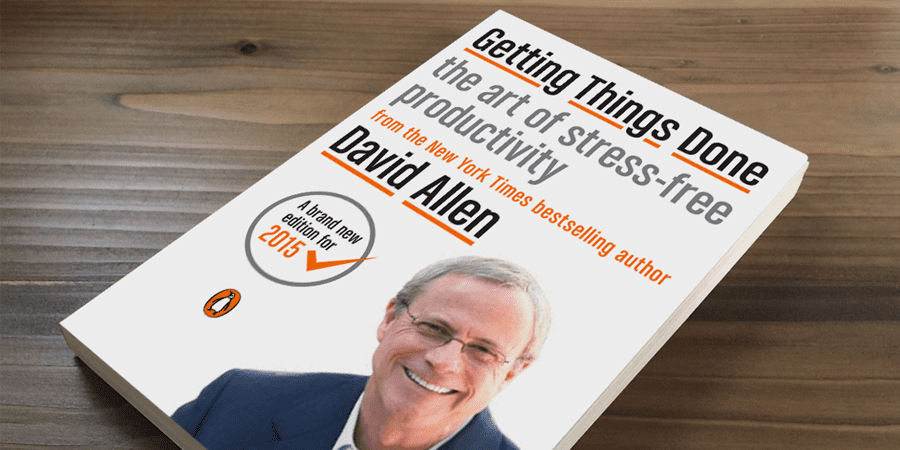

Getting Things Done: The Art of Stress-Free Productivity
David Allen’s “Getting Things Done” (GTD) is more than just a time-management book; it’s a transformative methodology for achieving stress-free productivity and personal mastery. Allen, a seasoned management consultant and executive coach, introduces a system designed to help individuals and organizations navigate the overwhelming information landscape of the modern world. This book promises to unlock greater clarity, control, and focus, not by demanding more effort, but by providing a practical framework for managing commitments and leveraging natural cognitive processes. It’s an essential read for anyone feeling overwhelmed by their workload and seeking a more relaxed, yet highly effective, approach to work and life.
Welcome to Getting Things Done
This introductory section sets the stage for the GTD methodology, highlighting the paradox of modern life: enhanced quality of life often comes with increased stress from being overextended. Allen emphasizes that the nature of “work” has changed dramatically, especially knowledge work, which often lacks clear boundaries and is constantly shifting. This leads to an “ambient angst” where people feel perpetually behind, despite having many tools and traditional time-management models at their disposal. The book aims to provide a viable means of meeting new demands, suggesting that efficiency and relaxation can coexist. Allen introduces the martial arts concept of “mind like water”—a state of perfect readiness where the mind is clear and constructively engaged without overreacting or underreacting to inputs. He argues that the key to this state is effectively dealing with internal commitments, moving beyond merely thinking of a problem to thinking about it in a structured way to define outcomes and next actions. The core problem, Allen posits, is that most people’s minds are overloaded with “stuff”—anything incomplete or undecided, which consumes mental energy. The solution lies in a “bottom-up” approach to personal productivity, focusing on managing immediate actions and projects to free up mental space for higher-level thinking. This requires horizontal management (coherence across all activities) and vertical management (deep dives into specific topics), all rooted in the crucial practice of getting everything out of your head.
A New Practice for a New Reality
This chapter delves into the “why” behind the GTD methodology, asserting that it’s possible to be productive with a clear head and relaxed control, even with an overwhelming workload. The core of this achievement lies in three objectives: capturing everything that has your attention into a trusted external system, making front-end decisions about inputs to define “next actions,” and curating and coordinating all commitments. Allen highlights the growing stress from work’s lack of clear boundaries in the knowledge economy, where projects are never “finished” to perfection and information is infinite. Our jobs and lives are constantly changing, bombarded by new inputs and technologies, making traditional time management insufficient.
The Problem: New Demands, Insufficient Resources
Allen observes that almost everyone feels overwhelmed and short on time. The shift from industrial to knowledge work has dissolved clear boundaries for projects, which now often lack a definitive end point and can always be improved with infinite available information. This creates a constant influx of potentially relevant data, amplified by global connectivity and the ubiquity of digital devices. Furthermore, jobs and lives are constantly changing, with frequent shifts in responsibilities and interests, leaving little room for “cruise control.” Traditional time management methods, like daily to-do lists and simple priority coding, are inadequate for the volume, speed, and changing priorities of modern workloads. Trying to apply “bigger view” strategies, such as clarifying major goals, often fails because day-to-day distractions are too great, ineffective systems prevent managing larger projects, and higher standards merely reveal more that needs to be done. A missing piece has been a coherent system that effectively manages work at the practical level, integrating both big-picture thinking and small details, while handling hundreds of daily inputs and saving time.
The Promise: The “Ready State” of the Martial Artist
Allen introduces the concept of “mind like water” from martial arts, which describes a state of perfect readiness: clear, calm, and appropriately responsive to any input, without overreacting or underreacting. This is the ideal operational style for successful, high-performing professionals and anyone facing overextended life situations. He posits that this state is accessible to everyone by mastering the GTD methodology. Allen challenges readers to reflect on a currently pressing issue, define its successful outcome, and identify the very next physical action. This brief exercise demonstrates how thinking about something, rather than just of it, instantly creates a sense of enhanced control, relaxation, and focus.
The Principle: Dealing Effectively with Internal Commitments
The core truth Allen has discovered is that most stress comes from inappropriately managed commitments, both internal and external. These are “incompletes” or “open loops”—anything pulling at your attention that isn’t where or how it should be, and for which you have an internal commitment to change. To effectively deal with these, you must:
- Capture everything that has your attention in a trusted system outside your mind.
- Clarify exactly what each item means and what, if anything, needs to be done about it.
- Organize reminders of these actions in a system you review regularly.
Allen likens the mind’s short-term memory to a computer’s RAM: it’s a focusing tool, not a storage place. When RAM is overloaded with incomplete items, it diminishes capacity to think and perform. The mind keeps reminding you of tasks when you can’t act on them, leading to pervasive, unresolvable stress. “Stuff” is anything in your world that doesn’t belong where it is, for which the desired outcome and next action haven’t been determined. Most “to-do” lists are ineffective because they are merely “amorphous blobs of undoability” rather than inventories of defined work. The key is to transform “stuff” into clear actions, projects, and usable information.
The Process: Managing Action
The GTD process trains you to be faster, more responsive, proactive, and focused. It involves managing your actions, not time, information, or priorities. The common complaint “I don’t have time” often masks a lack of clarity about what a project truly is and its required next actions. You cannot “do” a project; you can only do an action related to it. This requires defining what “done” means (outcome) and what “doing” looks like (action).
Horizontal and Vertical Action Management
Effective action management requires two dimensions of control:
- Horizontal Control: Maintains coherence across all activities, managing the broad spectrum of inputs and demands. This involves a system that tracks thousands of items, provides information on demand, and allows quick focus shifts.
- Vertical Control: Manages the thinking, development, and coordination of individual topics and projects. This is “project planning” in a broad sense, fleshing out ideas, details, priorities, and sequences for a single endeavor.
Both aim to get things off your mind. The major change GTD promotes is getting everything out of your head and into objective tools, which significantly enhances clarity and confidence. The book promises to provide step-by-step coaching for implementing this “dynamic art of workflow management.”
Getting Control of Your Life: The Five Steps of Mastering Workflow
This chapter introduces the five core steps for mastering workflow: capture, clarify, organize, reflect, and engage. These stages represent how we naturally deal with life’s inputs and changes, whether in a kitchen or a corporate setting. Allen asserts that while simple in principle, most people can significantly improve their handling of each step, as the quality of workflow management is only as good as its weakest link. Modern life, with its constant barrages of data and rapid change, exacerbates these weak spots, making workflow mastery essential for sanity and productivity.
Capture
Capturing involves gathering 100 percent of your “incompletes”—anything you consider unfinished, whether personal or professional, big or small, urgent or minor, that you feel committed to changing. This includes internal “shoulds,” “need tos,” and “ought tos,” as well as external inputs like mail, emails, and notes. The goal is to collect all these into “containers” (in-trays) that hold items until you can decide what they are and what to do.
The Capture Tools
Allen outlines various tools for capturing input:
- Physical In-Tray: Traditional trays for paper, mail, notes, and physical items.
- Paper-Based Note-Taking Devices: Notebooks, note cards, and pads for random ideas and inputs.
- Digital/Audio Note-Taking Devices: Computers, tablets, smartphones for recording thoughts and interim records.
- E-mail and Text Messaging: Digital holding areas for incoming messages and files.
He notes that technology integration increasingly allows these channels to be linked, but warns that too many options can “blow our productivity fuses.” Paper-based instructions are retained because many users still operate partially with paper, and there’s a surprising “resurgence of interest in the use of paper among the most sophisticatedly digital.”
The Success Factors for Capturing
Three requirements are crucial for effective capturing:
- Get It All Out of Your Head: Until your mind trusts that everything is captured externally, it won’t let go of the “lower-level task of trying to hang on to everything.” It’s an all-or-nothing proposition for internal peace.
- Minimize the Number of Capture Locations: Have only as many in-trays as needed (available in every context) but as few as possible to ensure easy and consistent processing. An excess leads to scattered inputs and backlogs.
- Empty the Capture Tools Regularly: Emptying doesn’t mean finishing, but rather deciding what each item is, what should be done, and then organizing it into your system. Failure to empty means tools become storage bins, not functional funnels.
Clarify
Clarifying involves asking crucial questions about each captured item to determine its meaning and necessary action. This step forms the basis for personal organization, as you cannot organize ambiguous “stuff.” Instead, you organize the actions that result from your decisions.
What Is It?
This seemingly simple question is critical. Many items (like government forms or HR emails) are “amorphous forms” because their meaning and required action haven’t been determined.
Is It Actionable?
There are two paths:
- No Action Required: If no action is needed, items fall into three categories: Trash (discard immediately), Incubation (for later reassessment, using a “tickler” file or calendar), or Reference (file for future retrieval).
- Actionable: If action is needed, two further determinations are made:
- If It’s About a Project…: The desired outcome must be captured on a “Projects” list. This serves as a reminder that an open loop exists until it’s finished. A Weekly Review keeps these items alive.
- What’s the Next Action?: This is the most critical question. The “next action” is the very next physical, visible activity to move the item toward completion (e.g., “Call Fred re: repair shop,” “Draft budget agenda”). These become the “primary grist for the mill” of your productivity system.
Do It, Delegate It, or Defer It
Once the next action is defined, you have three options:
- Do It: If the action takes less than two minutes, do it immediately. This is the “two-minute rule.”
- Delegate It: If it takes longer than two minutes, and you’re not the best person, delegate it to the appropriate individual.
- Defer It: If it takes longer than two minutes, and you are the right person, defer it to a “Next Actions” list for later.
Organize
Organizing means that “where something is matches what it means to you.” This phase involves sorting the results of clarification into eight discrete categories of reminders and materials, forming a total system for everything on your plate.
The Basic Categories
These are:
- Trash: Items with no future action or reference value.
- Incubation: Items requiring no immediate action but for future reassessment. This includes Someday/Maybe lists (ongoing lists of potential future projects) and a tickler system (a date-related reminder system).
- Reference: Information with intrinsic value but no action needed, stored for easy retrieval.
- Projects List: Any desired result requiring more than one action step to complete within a year. It’s an index of open loops, not a daily task list.
- Project Support Material: Details, plans, and supporting info for projects, stored separately from the Projects list, usually in files or digital folders.
- Calendar: For time-specific actions (appointments), day-specific actions (tasks due on a certain day), and day-specific information (useful data for specific dates). Allen emphasizes no “daily to-do” lists on the calendar to maintain its sacredness for absolute commitments.
- Next Actions Lists: For non-delegatable actions taking longer than two minutes, grouped by context (e.g., “Calls,” “At Computer,” “Errands,” “At Office,” “At Home,” “Anywhere,” “Agendas,” “Read/Review”). Context-sorted lists prevent unproductive re-sorting.
- Waiting For List: For things delegated to or expected from others, including the date requested and any due date.
The Importance of Hard Edges
Allen stresses that all these categories must be “kept pristinely distinct” visually, physically, and psychologically. Blurring categories leads to “psychological numbness” and undermines the system’s value.
All You Really Need Are Lists and Folders
The core tools are simple: lists and folders (physical or digital). The key is knowing what to put on them and how to use them, rather than rigid prioritization within lists. He states: “I would not give a fig for the simplicity on this side of complexity, but I would give my life for the simplicity on the other side of complexity.”
Reflect
Reflecting involves regularly reviewing your system to keep it current and functional, ensuring you’re doing what you need to be doing and that it’s okay not to be doing what you’re not doing. This fosters the “being present” state.
What to Look At, When
The system should provide access to all action options when needed. Daily calendar review is most frequent, followed by context-specific action lists. Reviews can be quick (seconds here and there), but the Weekly Review is critical for sustainability.
Critical Success Factor: The Weekly Review
The Weekly Review is the “master key” to maintaining the system’s trustworthiness. It’s essential because “you will invariably take in more opportunities than your system can process on a daily basis.” It’s a dedicated time for capturing, reevaluation, and reprocessing to stay in balance.
The Weekly Review involves a three-part drill:
- Get Clear: Collect all loose papers, notes, receipts, and new inputs into your in-tray. Get all “in” areas (physical, email, texts, voicemail) to zero by processing everything and emptying your head of uncaptured thoughts.
- Get Current: Update your lists by marking off completed actions. Review past calendar entries for missed actions and upcoming ones for necessary preparations. Review “Waiting For” lists for follow-up and “Projects” lists to ensure all have next actions defined. Review relevant checklists.
- Get Creative: This happens naturally as you get clear and current. Review “Someday/Maybe” lists for new projects or to delete outdated ones. Be open to capturing new, creative, “harebrained” ideas and adding them to your system.
Allen recommends scheduling two hours early on the last workday of the week for the Weekly Review, but acknowledges that lifestyle dictates the best time. He stresses that the ability to perform this review is crucial for executive operational control and a “clear head,” contrasting it with the “ambling around your koi pond with a glass of wine at sunset” approach.
Engage
Engaging is about making good choices about what to do at any point in time, moving from hope to trust in your actions. This relies on your intuition, but it’s galvanized by a well-maintained GTD system.
Three Models for Making Action Choices
These models help frame options intelligently:
- The Four-Criteria Model for Choosing Actions in the Moment: When deciding what to do right now, consider:
- Context: What can you possibly do where you are, with the tools you have? (e.g., “Calls,” “At Computer,” “Errands,” “Agendas”). Organizing by context prevents unproductive reassessments.
- Time Available: How much time do you have before the next hard-landscape commitment? Match actions to available windows.
- Energy Available: What is your current mental and physical energy level? Choose tasks that fit your current vitality (e.g., low-energy tasks like filing or browsing).
- Priority: Given the first three, what action will give the highest payoff? This requires intuition and understanding your work’s goals and standards.
- The Threefold Model for Identifying Daily Work: At any moment, you’ll be doing one of three types of activities:
- Doing Predefined Work: Working from your Next Actions lists and calendar (e.g., making calls, drafting ideas).
- Doing Work as It Shows Up: Dealing with unplanned, unforeseen activities (e.g., an unexpected conversation with your boss, a sudden client request).
- Defining Your Work: Processing incoming inputs to determine next steps (e.g., clearing your in-tray, breaking down new projects).
Allen notes that people often get “sucked into” the second category at the expense of the other two, leading to frustration. The GTD methodology helps make choices about which activity to engage in a conscious, productive way, rather than being driven by the “latest and loudest” inputs. There are no interruptions, only “mismanaged occurrences.”
- The Six-Level Model for Reviewing Your Own Work: Priorities sit in a hierarchy, with each level enhancing the one above it. This model helps define “your work” at different altitudes:
- Ground: Current Actions: All the immediate, discrete actions you need to take.
- Horizon 1: Current Projects: 30-100 short-term outcomes you want to achieve within a year, which generate most actions.
- Horizon 2: Areas of Focus and Accountabilities: Key roles, interests, and responsibilities that drive projects (e.g., strategic planning, health, family).
- Horizon 3: Goals: What you want to experience 1-2 years from now, shifting job emphasis or personal aspirations.
- Horizon 4: Vision: 3-5 year projections, including organization strategies, career transitions, and lifestyle aspirations.
- Horizon 5: Purpose and Principles: The ultimate “why” behind your existence and core values.
Allen advocates a “bottom-up” approach to priority setting, starting with getting the mundane under control (Ground and Horizon 1) to free up mental space for higher-level thinking. “Handle what has your attention and you’ll then discover what really has your attention.” This approach offers immediate relief and builds confidence to tackle bigger aspirations.
Getting Projects Under Control
This chapter expands on vertical focus—the deeper, more creative thinking and planning required for projects. Allen emphasizes the need for more informal planning, more often, to relieve mental pressure and boost creative output. He notes that the biggest opportunity is not in formal project management techniques (which professionals often already have) but in capturing and utilizing creative, proactive thinking that occurs casually.
The Need for More Informal Planning
Allen argues that most people could benefit from more frequent, informal planning of their projects and lives, which would reduce stress and increase creative output. The main barrier is the lack of easily structured and usable systems for managing the resulting details. His bottom-up approach is designed to overcome this resistance. He reiterates the five phases of natural planning from Chapter 3 as the framework: Purpose and Principles, Vision/Outcome, Brainstorming, Organizing, and Identifying Next Actions.
What Projects Should You Be Planning?
Most projects only need a quick mental run-through to define the next action. However, two types warrant more explicit planning:
- Projects that still have your attention after the initial next action is defined (meaning more detailed thinking is needed).
- Projects for which useful ideas show up ad hoc (requiring a place to capture these ideas).
Typical Planning Steps
When projects need planning, the next action is often related to the planning process itself:
- Brainstorming: Free-form thinking to generate ideas (e.g., “Draft ideas re X”). This can be done on paper (mind mapping) or digitally.
- Organizing: Structuring collected notes and materials (e.g., “Organize Project X notes”). This can involve sorting by components, sequences, or priorities.
- Setting Up Meetings: Arranging discussions with relevant people to move planning forward.
- Gathering Information: Collecting more data needed for decisions (e.g., “Call Bill re his thoughts,” “Review archive files,” “Look into college scholarship funds”).
Random Project Thinking
It’s crucial to capture ideas that pop up unexpectedly (e.g., a great idea for a staff meeting while driving). These non-next-action ideas need a sensible place for later review and use, such as notes attached to project lists or in dedicated digital or paper files.
Tools and Structures That Support Project Thinking
Good tools facilitate good thinking. Allen suggests:
- Writing Instruments: Keeping quality pens and pencils readily available encourages spontaneous thought capture.
- Paper and Pads: Perforated pads are ideal for tearing off notes to be processed.
- Easels and Whiteboards: Provide ample space for brainstorming and visual organization, especially in group settings.
- Thinking in Your Digital Tools: Laptops, tablets, and applications like word processors, mind-mapping software, and outlining programs are excellent for capturing and developing ideas, allowing for easy editing and integration. While mobile devices are great for execution, larger screens are better for creative thought generation.
The Support Structures
Beyond thinking tools, having accessible structures for project details is vital:
- Create File Folders or Loose-Leaf Pages as Needed: A good general-reference filing system (physical and digital), easily accessible, is critical. Create a new folder/file as soon as a topic emerges.
- Paper Versus Digital: While digital tools are powerful, paper still offers value for handwritten note-taking and physical manipulation that can enhance thinking. Many savvy individuals revert to paper for certain planning aspects.
- Software Tools: Complex project management software is for specific needs, but more informal tools like mind-mapping and outlining applications are widely useful. Allen emphasizes ensuring comfort with software to focus on thinking rather than the tool itself.
How Do I Apply All This in My World?
The key is to give yourself dedicated time (1-3 hours) for vertical thinking on projects that have your attention. “Clear the deck, create a context, and do some creative project thinking.” Start with the most pressing projects and ask, “What about this do I want to know, capture, or remember?” The goal is to get comfortable with having and using your ideas proactively, before pressure forces the issue.
The Power of the Capturing Habit
This chapter explores the profound, long-term implications of consistently implementing the GTD capture habit. Allen asserts that when individuals and organizations demonstrably capture, process, and organize agreements in an airtight manner, it builds unique trust with others and a powerful level of self-confidence within oneself.
The Personal Benefit
Capturing everything can feel both “so bad, and yet so good.” The anxiety and guilt arise from broken agreements with oneself—the internal “shoulds,” “need tos,” and “ought tos” that remain unaddressed. This is a disintegration of self-trust. The relief and control come from beginning to heal this disintegration.
The Source of the Negative Feelings
Allen explains that negative feelings don’t come from having “too much to do” (that’s always true), but from breaking internal agreements. He uses the analogy of someone breaking an external agreement (e.g., missing an appointment) to illustrate the automatic disintegration of trust. Similarly, when you tell yourself to do something (e.g., “draft a strategic plan”) but don’t, you feel bad because you’ve broken an agreement with yourself. The mind, especially the less-than-conscious part, operates in the present tense, so an unaddressed commitment (like cleaning a basement from ten years ago) feels like it should be done all the time, leading to chronic fatigue and avoidance.
How Do You Prevent Broken Agreements with Yourself?
Three options exist to eliminate negative feelings associated with unfulfilled agreements:
- Don’t Make the Agreement: Discard items you truly won’t do. Allen says this often requires lowering your standards or becoming more conscious about what commitments you take on. He notes that when people see their full inventory of work, they are better able to say “no” with integrity.
- Complete the Agreement: Finish the task. The psychological benefit of completing even small, two-minute actions is immense. This creates “wins” and builds positive momentum, although successfully completing everything often just leads to taking on bigger, more ambitious projects.
- Renegotiate the Agreement: If circumstances change, formally renegotiate the commitment with yourself (or others). This prevents the agreement from being “broken.” The power of getting everything out of your head is that you automatically renegotiate these agreements when you consciously look at them and decide “not now.”
The Radical Departure from Traditional Time Management
Traditional time management often suggests ignoring “unimportant” tasks. Allen argues this is inaccurate for how our subconscious operates; it treats all uncaptured incompletes with a “dull sameness” of pressure, regardless of importance. Everything held only in your head takes up either more or less attention than it deserves. The solution is to collect everything, not because everything is equally important, but precisely because it’s not.
How Much Capturing Is Required?
Any capturing brings some relief (e.g., adding butter to a grocery list). However, “there’s still a light-year’s difference when you know you have it all.” You’ll know capturing is complete when “nothing else shows up as a reminder in your mind.” This doesn’t mean an empty mind, but one focusing on one thing at a time without distraction—the “zone.” The goal is to think about things, rather than of them. This requires a change of habit to consistently download even the smallest agreements with oneself.
When Relationships and Organizations Have the Capture Habit
When everyone on a team (or in a marriage, family, company) consistently captures and processes communications and agreements, it creates a “tight ship to sail.” Without this trust, communication gaps persist, leading to frustration, nervousness, and “interrupt-itis.” Organizations with overflowing in-trays and unmanaged communications experience constant “fire-and-crisis siege mentality.” Allen notes that in his own interactions, he immediately notices when people don’t embody this habit. He argues that while personal systems cannot be legislated, organizations can hold people accountable for outcomes and for tracking everything, providing them the tools and methodology (GTD) to do so. This allows for a constant renegotiation process of commitments, freeing everyone from the angst of still-undecided actions and shifting to a new standard of high performance.
The Power of the Next-Action Decision
This chapter highlights the transformative power of consistently asking “What’s the next action?” Allen envisions this question becoming a global standard, where every meeting or interaction concludes with clarity on who is accountable for the very next physical step. This simple query, though seemingly obvious, is rarely fully operational where it’s most needed.
The Source of the Technique
Allen credits his mentor, Dean Acheson, with the insight of forcing executives to identify the “very next thing” to move each piece of paper on their desk forward. This technique is a learned discipline of thinking and decision-making, not an innate ability. It becomes automatic in crises but requires proactive practice in daily life. Embedding this question into personal and organizational culture invariably improves productivity and peace of mind.
Creating the Option of Doing
Many projects and tasks remain “stuck” not due to lack of time, but because the next physical action hasn’t been precisely determined. It might only take “ten seconds of thinking” to identify, for example, that the next action for “tires” is “check the Web for stores and prices.” Without this clarity, when a small window of time appears, the individual is forced into unproductive re-sorting or avoids the task altogether due to the mental effort required to figure it out. “Without a next action, there remains a potentially infinite gap between current reality and what you need to do.”
Why Bright People Procrastinate the Most
Allen explains that creative, sensitive, and intelligent people often procrastinate the most because their minds are so adept at imagining all the potential negative complexities and perfect execution requirements of a task (like doing taxes). This “lurid nightmare scenario” instantly causes “freaking out” and quitting. He uses the “lemon” analogy to demonstrate how the nervous system responds to well-imagined thoughts as if they were reality. The solution is “intelligently dumbing down” the brain by figuring out the next, concrete, doable action. This immediately relieves pressure and creates positive energy and motivation, shifting focus to something perceived as achievable.
The Value of a Next-Action Decision-Making Standard
Installing “What’s the next action?” as an operational standard transforms performance by fostering:
- Clarity: It forces discussions to deeper levels, ensuring clear conclusions and accountability. Meetings end with definitive next steps and assigned responsibility, preventing “stuff” from being left up in the air.
- Accountability: It cuts through vague “we’re all in this together” sentiments to establish clear ownership of tasks. It is “truly impolite” to let people walk away from discussions unclear about their responsibilities.
- Productivity: Organizations become more productive by modeling front-end next-action decision-making. This maximizes output with less effort, as individuals clarify work before pressure builds.
- Empowerment: It dramatically increases the ability to make things happen, building self-esteem and a constructive outlook. Asking the question undermines a victim mentality by presupposing the possibility of change and personal agency. Complaining is reframed as a sign of unwillingness to risk action or incorporate immutable circumstances into plans.
Allen concludes that consistent application of the next-action technique empowers individuals and leads to significant organizational improvement, shifting from a “fire-and-crisis siege mentality” to a culture of high performance.
The Power of Outcome Focusing
This chapter discusses the power of outcome thinking—directing mental and imaginative processes to create desired changes. Allen’s interest lies in its practical application: how it helps “get things done” more easily and with less effort. He observes that consistently using the GTD method can lead to enhanced jobs, careers, and lifestyles for individuals, as demonstrating the ability to get things done at the “ground level” rarely keeps one in the same “trench” for long.
Focus and the Fast Track
Implementing GTD allows individuals to be “more conscious, more focused, and more capable of implementing the changes and results you want.” This isn’t just about efficiency for its own sake, but about addressing quality-of-life issues (e.g., spending more time with family) as concrete projects requiring next actions. The “fast track” can also mean slowing down and improving self-care, as GTD eliminates “drag” and resistance for those invested in moving forward.
The Significance of Applied Outcome Thinking
Defining real results and projects leads to clarity, productivity, accountability, and empowerment. Outcome thinking and next-action decisions are deeply intertwined: you need to know the outcome to define the right action, and your outcome is disconnected from reality if you don’t know the physical steps to make it happen. Allen refers to Steven Snyder’s idea that “there are only two problems in life: (1) you know what you want, and you don’t know how to get it; and/or (2) you don’t know what you want.” The GTD solution is to “make it up” (define outcomes) and “make it happen” (take actions). This dualistic energy of creation and fulfillment is fundamental to human experience. By making explicit the implicit principles of what we already do, GTD helps us leverage them consciously for more elegant results. Mastering the “mundane” details of life provides a “magic” of release and relief, freeing creative energy.
Multilevel Outcome Management
The challenge lies in marrying high-level idealistic focus with mundane daily activity. This is achieved by applying the same thinking to all levels of reality: “What does this mean to me?” “What do I want to be true about it?” “What’s the next step required to make that happen?” The GTD approach provides tools to bridge the gap between “purpose, values, vision” and the practical details of phone calls and grocery lists.
The Power of Natural Planning
Natural project planning (Purpose, Vision, Brainstorming, Organizing, Next Actions) provides an integrated, flexible, and aligned way to think through any situation. It involves challenging purpose, envisioning success, brainstorming freely, structuring ideas, and defining concrete next actions. Even partial application of this model yields significant benefits. This process inherently aligns thinking with action, raising the baseline for productivity.
Shifting to a Positive Organizational Culture
Implementing GTD principles, even by a few key people, can increase productivity standards within an organization. Continually evaluating activities against purposes and outcomes is critical in today’s complex business environment. Unfocused meetings and unnecessary emails, often seen as “necessary evils,” drain energy. GTD offers rigor by emphasizing purpose and desired outcomes in communications and meetings. Empowerment follows for individuals as they move from complaining to defining outcomes and actions. When this becomes a group standard, it significantly improves atmosphere and output. Organizations need people who have mastered “getting things done” effectively, and when this is supported from the top down, the results in organizational output can be profound. Problems and conflicts remain, but GTD provides the framework for addressing them productively.
GTD and Cognitive Science
This chapter presents the scientific validation for the GTD methodology, drawing on research from social and cognitive psychology that has emerged since the book’s first edition. While GTD’s efficacy was initially confirmed experientially, rigorous studies now provide foundational support for why its simple processes produce such profound results.
GTD and Positive Psychology
Allen connects GTD to the field of positive psychology, initiated by Martin Seligman. He argues that GTD is more than just task management; it’s about meaningful work, mindful living, and psychological well-being. The emphasis on outcome thinking and creating a functional system to capture, clarify, organize, and assess results describes core practices that improve the actual experience of life.
Distributed Cognition: The Value of an External Mind
A key finding is that “your mind is for having ideas, not for holding them.” Research by Heylighen and Vidal and Daniel Levitin (in The Organized Mind) confirms that the mind is brilliant at recognition but terrible at recall. Relying on memory as an organizing system leads to overwhelm and incompetence. GTD provides the methodology to “build and utilize an ‘external brain’” by identifying what needs focused attention, applying it efficiently on the front end, and organizing triggers for appropriate future thinking and action. This allows the mind to relax and focus on what it does best: pattern detection and creative thought.
Relieving the Cognitive Load of Incompletions
Dr. Roy Baumeister’s research demonstrates that uncompleted tasks occupy mental space, limiting clarity and focus. Crucially, Baumeister also found that actual completion is not required to relieve this burden. What is needed is a trusted plan that ensures forward engagement will happen. In alignment with GTD, merely determining the next action and parking that reminder in a trusted system is sufficient to alleviate the cognitive load. Baumeister’s book Willpower further supports this by positioning GTD within the context of managing mental “muscle.”
Flow Theory
GTD is strongly associated with the concept of “flow” (being “in the zone”), coined by Mihaly Csikszentmihalyi. Flow is a state of optimal performance and engagement, characterized by:
- Skills matching challenge: Prevents anxiety (challenge too high) or boredom (skills too high).
- Complete concentration: Absorbed in a singular activity.
- Feeling in control and having clear goals.
- Knowing what’s coming next and receiving immediate feedback.
- Merging of action and awareness, losing self-consciousness and sense of time.
- Intrinsic motivation.
GTD facilitates flow by:
- Providing clear goals (defined outcomes).
- Offering feedback (tracking progress in the external system).
- Emphasizing focusing attention on one task at a time.
- Getting tasks out of the mind, allowing for better decisions about what to pay attention to, leading to fuller engagement and greater likelihood of flow.
Self-Leadership Theory
GTD connects to self-leadership theory (Neck and Manz), which describes how individuals control their own behavior using behavioral and cognitive strategies. Its strategies include:
- Behavior-focused: Self-observation, self-goal setting, self-reward, self-punishment, self-cuing (GTD’s external system provides physical cues for future action).
- Natural reward: Reshaping unpleasant tasks or focusing on their enjoyable aspects (GTD’s focus on small “wins” and clearing mental space).
- Constructive thought pattern: Self-talk, mental imagery, replacing dysfunctional beliefs (GTD’s shift from overwhelmed to action-oriented mindset).
Using self-leadership strategies, including GTD, improves self-efficacy and has been linked to job satisfaction, performance, and other positive organizational outcomes.
Psychological Capital (PsyCap)
PsyCap is a framework for evaluating workers’ overall resourceful state, comprising self-efficacy, optimism, hope, and resilience. GTD directly relates to all four:
- Self-efficacy: By creating and maintaining a complete picture of commitments, GTD builds confidence and control.
- Optimism: It connects successful project completion to purposeful effort, producing greater capacity for positive commitments.
- Hope: GTD’s front-end decision-making embodies hope by setting goals and identifying pathways.
- Resilience: Anecdotal evidence suggests GTD helps individuals recover from adversity by maintaining clarity and control, allowing them to think clearly and process results efficiently during stress.
Allen concludes that scientific data validates the principles he has taught for decades: when meaningful things are captured, clarified, organized, and reflected upon, the “more mature, elegant, and intelligent part of who we really are can show up at the table,” leading to experiences and results that “can’t be beat.”
The Path of GTD Mastery
Allen posits that GTD is a lifelong practice with multiple levels of mastery, akin to learning a musical instrument or a sport. It’s about identifying and navigating commitments from a state of confidence and flow, constantly adapting as one’s work and focus evolve. Mastery isn’t a final state, but the “demonstrated ability to consistently engage in productive behaviors” to achieve clarity, stability, and focus regardless of challenges. This involves learning individual techniques and then integrating them holistically into one’s life and work.
The Three Tiers of Mastery
Allen identifies three general stages of maturity in GTD application, using the analogy of learning to drive:
- 1. Mastering the Basics (Getting Your License): This initial stage focuses on fundamental components of workflow management, such as capturing everything into trusted external buckets, avoiding next-action decision-making on vague “stuff,” fully utilizing “Waiting For” and “Agenda” categories, maintaining a simple filing system, keeping the calendar as pure “hard landscape,” and consistently doing Weekly Reviews. These behaviors feel awkward initially but lead to elegance, power, and fluidity over time. It can take up to two years to fully integrate this stage. When pressures arise, novices might “fall off the wagon,” but getting back on simply requires revisiting these basics. Even partial implementation provides marked improvement.
- 2. Integrated Life Management (Driving Across Town): At this “graduate level,” GTD users move beyond the mechanics of the system to manage their lives on a week-to-week, month-to-month (and longer) basis. Their focus shifts from the system itself to the results it produces. Key hallmarks include:
- A complete, current, and clear inventory of projects. Projects become the primary driver, reflecting roles, areas of focus, and interests. Mastery here means translating anything that has attention (worries, problems, interests) into achievable outcomes (projects) with concrete next actions.
- A working map of roles, accountabilities, and interests (personally and professionally, akin to Horizon 2). Regularly assessing this map helps identify new projects and brings balance.
- An integrated total life management system, customized and cohesive, serving as a “control room” to dynamically steer beyond day-to-day. Users can tailor lists and categories in response to changing needs.
- Challenges and surprises trigger GTD utilization instead of causing abandonment. This is the transition point where issues galvanize GTD practices, proving its resilience under pressure.
- 3. Postgraduate: Focus, Direction, and Creativity (High-Performance Driving): This advanced level involves optimizing one’s experience through clear internal space, leveraging the external mind to produce novel value.
- Freedom to Engage in the Most Meaningful Things: Trusting that all inputs can be executed effectively liberates the mind to explore “crazy ideas,” new technologies, creative pursuits, and social causes. By “putting to bed” mundane operational aspects, the space and inspiration for highly creative activities are tremendously enhanced. This level of mastery is characterized by a lack of pervasive angst about daily life details.
- Leveraging Your External Mind: This stage involves actively using the external system to catalyze creative ideas and perspectives. Just as reviewing old contacts can spark new business ideas, regularly assessing calendar items, projects, and Someday/Maybe lists generates new thoughts and insights. The mind, freed from remembering, becomes a “fabulous mechanism” for creative evaluation when presented with structured information. This includes developing custom checklists for diverse areas of life and work (e.g., family members, professional network, inspirational writings) to proactively trigger valuable reflections and actions.
Allen concludes by stating that while these mastery levels may seem sequential, individuals often manifest aspects of all of them. However, a solid progression is generally required: “You can’t really maintain a sense of week-to-week control if your e-mail is in chaos. You won’t really be free to engage with your long-range planning or vision if you don’t have a grip on the current reality of the actual inventory of your seventy-five projects.” Mastery reflects an “elegant equanimity” in engaging with all levels of commitments, from unexpected problems to personal aspirations, ensuring quick, smooth, and appropriate handling that leaves nothing on the mind except what’s present in the moment.
Conclusion
David Allen expresses his hope that “Getting Things Done” has proven useful, validating readers’ existing intuitive practices while providing a systematic framework for navigating the intensity and complexity of the modern world. His intent is not to add to fleeting theories of success, but to define core, unchanging methods that consistently work, much like understanding gravity. GTD serves as a “road map to achieve the positive, relaxed focus” that characterizes peak productivity.
Allen provides final tips for moving forward:
- Set up your personal physical organization hardware.
- Organize your workstation.
- Get in-trays.
- Create a workable and easily accessed personal reference system for both work and home.
- Acquire a list-management organizer that inspires you to use it.
- Give yourself permission to make environmental changes that enhance your work (e.g., hang pictures, buy pens, toss stuff).
- Dedicate time to tackle one whole area (office, then parts of your house), gathering and processing everything using the GTD method.
- Share what you’ve learned with others (the fastest way to learn).
- Review Getting Things Done again in 3-6 months; it will seem like a new book, revealing previously missed insights.
- Stay in touch with the GTD community for ongoing support and inspiration.
He concludes by encouraging readers to embrace this journey and “Have a great rest of your life!”
Key Takeaways
“Getting Things Done” provides a master blueprint for achieving a state of “mind like water”: clear, calm, and optimally productive. The core lesson is that your mind is for having ideas, not holding them, and that stress primarily arises from inappropriately managed internal commitments. By consistently implementing the GTD workflow — capturing everything, clarifying next actions, organizing them contextually, reflecting regularly, and engaging mindfully — you can free up immense mental and creative energy.
To immediately apply these ideas, start with a “mind sweep”: write down every single thing that has your attention, big or small, personal or professional. Then, for each item, ask yourself: “What’s the next physical action?” If it’s under two minutes, do it now. If not, delegate it or defer it to the appropriate list (Calls, At Computer, Errands, Agendas, Waiting For, Someday/Maybe, or Project lists). This simple discipline, practiced consistently, will reveal countless small “wins” and gradually alleviate the pervasive mental pressure of unresolved “stuff.”
Reflection Prompt: Consider your current “open loops” – those nagging thoughts about things you need to do or decide. How many of them lack a clear “next action” in a trusted, external system? What would it feel like to confidently know that every single one is accounted for, allowing you to be fully present in whatever you’re doing right now?







Leave a Reply