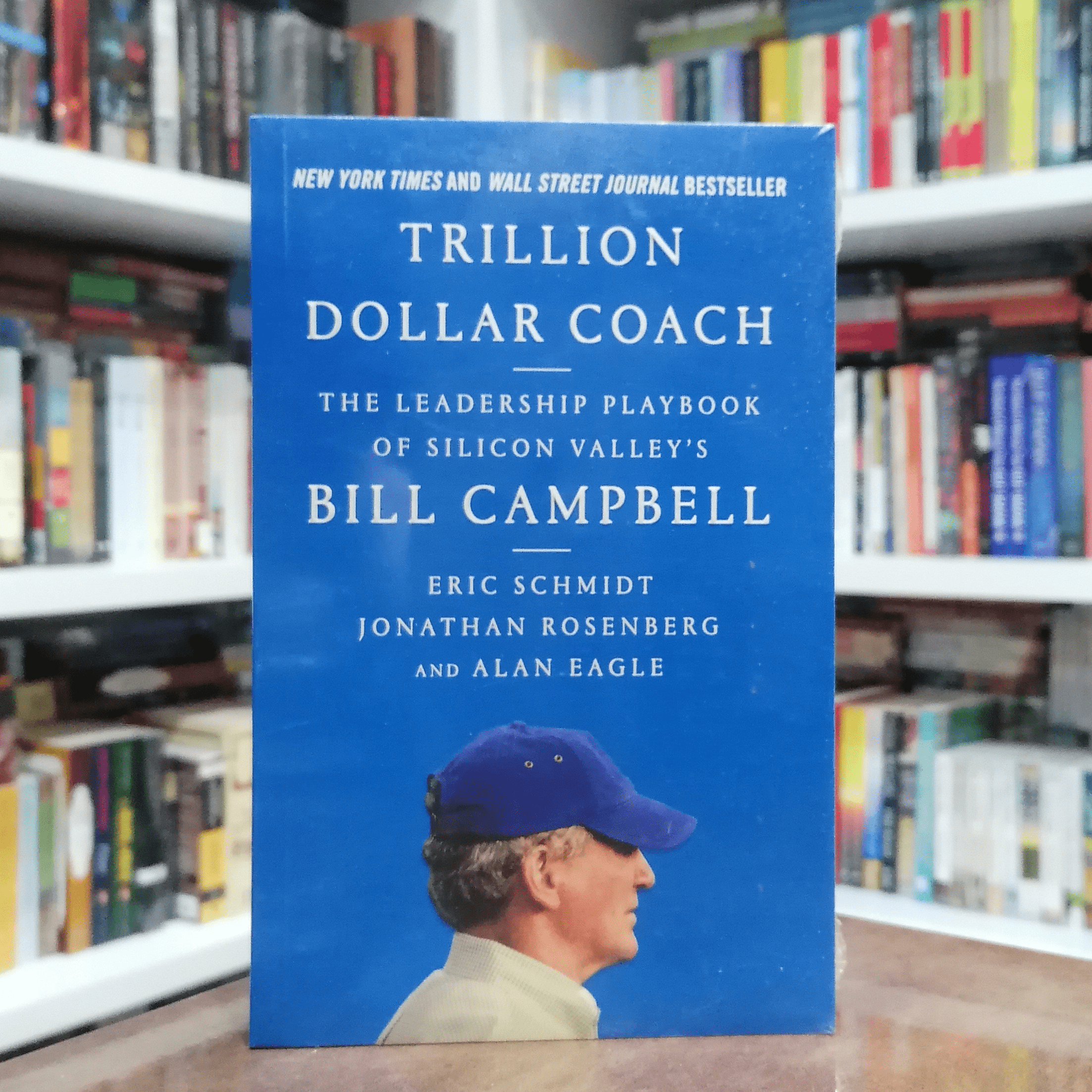

Trillion Dollar Coach: Complete Summary of Bill Campbell’s Leadership Playbook for Building High-Performing Teams
Introduction: What This Book Is About
Trillion Dollar Coach by Eric Schmidt, Jonathan Rosenberg, and Alan Eagle is a profound exploration of Bill Campbell’s unique and highly effective coaching philosophy. This book serves as a practical guide for managers and leaders, distilling the wisdom of a man who played a pivotal, often behind-the-scenes, role in the success of tech giants like Apple, Google, and Intuit. It reveals that true leadership emerges not from title, but from the ability to coach and empower people, fostering an environment of trust, community, and relentless pursuit of excellence.
The authors, having directly benefited from Campbell’s mentorship at Google, share his timeless principles for building high-performing teams in a fast-moving, technology-driven business world. This book is for anyone in a leadership role—from first-time managers to seasoned executives—who seeks to cultivate exceptional teams and achieve significant results. It emphasizes that the best coach for any team is its manager, transforming coaching from a specialty into an essential management skill.
This summary promises a comprehensive overview of Bill Campbell’s core insights, detailing both what he coached (management skills, handling challenging employees) and how he coached (building trust, fostering love, creating community). We will explore his practical advice on running effective meetings, making decisions, hiring the right people, and navigating complex organizational dynamics, all while maintaining a human-first approach. Prepare to discover how to apply the “trillion-dollar” wisdom of Bill Campbell to your own leadership journey.
Chapter 1: The Caddie and the CEO
This chapter introduces Bill Campbell, affectionately known as “Coach,” and sets the stage for his profound impact on Silicon Valley. It highlights his journey from a football coach to an influential executive and, ultimately, the “trillion-dollar coach” behind some of the world’s most valuable companies. The chapter establishes the core premise: Bill’s success stemmed from his unique ability to coach teams, not just individuals, and to infuse business with a deeply human element.
From Football Field to Boardroom: Bill’s Early Career
Bill Campbell’s journey began far from Silicon Valley, in the steel town of Homestead, Pennsylvania. He was a pugnacious and smart student, emphasizing the importance of good grades even as a freshman. A football star at Homestead High, he played at Columbia University, where he was elected captain and led the team to its only Ivy League title in history. His coach, Buff Donelli, praised Bill’s “tremendous influence” despite his small stature, noting his attitude was all about the team.
After college, Bill became an assistant football coach at Boston College and later head coach at Columbia in 1974. Despite his talent, his Columbia teams struggled, winning only 12 games and losing 41. Bill attributed his lack of success to “too much compassion,” realizing he “wasn’t hard-edged enough” for football. This perceived weakness in sports became a significant strength in business, where compassion is increasingly recognized as a key factor in success.
The Macintosh Launch and Early Business Success
At age 39, Bill transitioned to business, joining ad agency J. Walter Thompson and then Kodak in 1980. His ability to impress clients with his knowledge and insights led Kodak to hire him away. By 1983, he was Kodak’s head of consumer products for Europe.
John Sculley, then CEO of Apple, recruited Bill in 1983. Within nine months, Bill was promoted to VP of sales and marketing, tasked with overseeing the launch of the Macintosh. A pivotal moment was the 1984 Super Bowl commercial, an allusion to George Orwell’s 1984. The board hated the ad, finding it too costly and controversial, and wanted to sell the airtime. Bill’s response: “Fuck it! Let’s run it.” The ad became one of the most famous commercials of all time, ushering in the era of Super Bowl ads as major cultural events.
From CEO to Silicon Valley’s Secret Weapon
In 1987, Bill became CEO of Claris, an Apple software spin-off. When Apple pulled Claris back in-house in 1990, Bill and other executives left. Claris employees took out a full-page ad in the San Jose Mercury News reading “So long, Coach,” acknowledging his leadership, vision, wisdom, friendship, and spirit.
Bill then led GO Corporation, a startup aiming to create the first pen-based handheld computer. Despite an ambitious vision, “GO didn’t go,” and the company shut down in 1994.
Around that time, Scott Cook, Intuit’s cofounder and CEO, sought a replacement. John Doerr introduced Bill to Scott. Initially unimpressed, Scott later clicked with Bill when they discussed leadership and people rather than just business strategy. Scott noted Bill’s “technicolor rainbow” approach to developing people, appreciating individual stories and backgrounds. Bill became Intuit’s CEO in 1994, guiding it through several years of growth before stepping down in 2000.
The Google Coach and Beyond
When Steve Jobs was forced out of Apple in 1985, Bill was one of the few who fought to keep him. Jobs remembered this loyalty, and when he returned to Apple as CEO in 1997, he named Bill as one of the new directors. Bill served on the Apple board until 2014.
In 2001, John Doerr advised Eric Schmidt, Google’s new CEO, that he needed Bill Campbell as his coach. Despite Eric’s impressive credentials, Bill’s influence was transformative. For 15 years, Bill met with Eric weekly, and also coached Jonathan Rosenberg, Larry Page, and other Google leaders. He attended Eric’s staff meetings, ensuring the team communicated, discussed disagreements, and aligned on decisions. The authors state unequivocally that Bill was “one of the people most integral to Google’s success.”
Bill’s coaching extended to numerous other leaders, including:
- Brad Smith (former CEO of Intuit)
- John Donahoe (former CEO of eBay)
- Al Gore (former U.S. Vice President)
- Dick Costolo (former CEO of Twitter)
- Sheryl Sandberg (COO of Facebook)
- Sundar Pichai (CEO of Google)
He also coached the boys and girls flag football teams at Sacred Heart, demonstrating his consistent approach regardless of the coachee’s status.
The Trillion Dollar Coach and His Legacy
Bill’s memorial service revealed the depth of his impact. Tech luminaries like Larry Page, Sergey Brin, Mark Zuckerberg, Sheryl Sandberg, Tim Cook, and Jeff Bezos attended. Yet, the first eulogist was Bill’s college football teammate, Lee Black, who spoke of “Ballsy”—Bill’s nickname earned for his pugnacious play. The diverse attendees, from Scotty Kramer (his driver) to Bruno Fortozo (his golf caddie), highlighted Bill’s ability to treat everyone the same way, regardless of their station. This was exemplified by Larry Page hugging Bruno Fortozo at the memorial.
Bill’s signature was the hug, a genuine expression of care. He hugged everyone, even Bill Gates at a public event. This act signaled his deep human connection.
Philipp Schindler, Google’s head of business, spurred the idea for this book, wanting to codify Bill’s management principles for wider sharing. The authors call Bill a “trillion dollar coach” because of the immense value he helped create at companies like Apple and Google, totaling well over a trillion dollars in market capitalization.
The book’s central thesis is that success lies in moving quickly and continually creating innovative new features, products, and services. This requires smart creatives and, crucially, teams that act as communities. Such teams integrate interests, put aside differences, and are “individually and collectively obsessed with what’s good for the company.” Internal competition, often driven by ego, can derail teams.
To balance the “tension in the machine” (as Patrick Pichette put it) and mold a team into a community, a coach is essential. This coach works with both individuals and the team as a whole, smoothing tension and nurturing the community. Bill’s model was to work with the entire team, not just the leader. While formal coaches are rare, the book argues that the best coach for any team is its manager. Coaching is no longer a specialty; it’s essential to being a good manager and leader.
Bill’s principles, though seemingly simple, are “hard in practice.” The authors believe his approach can be replicated by others, helping managers be more effective and teams happier. The book explores what Bill coached (management skills, challenging employees) and how he coached (building trust, creating teams, bringing love into the workplace).
Chapter 2: Your Title Makes You a Manager. Your People Make You a Leader.
This chapter delves into Bill Campbell’s foundational belief that while a title makes you a manager, it’s your people who make you a leader. It emphasizes the importance of operational excellence, people-first management, effective communication, and decisive leadership, all while fostering an environment where individuals feel valued and empowered.
Google’s “Disorg” Experiment and the Need for Managers
In July 2001, Google, on the verge of its third birthday and with hundreds of employees, experimented with a “disorg”—eliminating all managers in the engineering organization. Wayne Rosing, head of engineering, and founders Larry Page and Sergey Brin, influenced by academic environments, believed engineers could work on projects without traditional management.
Bill Campbell, newly arrived as a coach, quickly challenged this. He took Larry and Sergey to talk to engineers, who overwhelmingly expressed a desire for managers who could “learn from” and “break ties.” Despite the founders’ initial resistance, Google eventually reinstated people managers in late 2002. This demonstrated Bill’s conviction that managers are necessary to coordinate resources and resolve conflicts, especially during innovation implementation.
Operational Excellence and Managerial Leadership
Bill believed that being an executive in a successful company is fundamentally about management and operational excellence. He emphasized that “results mattered” and were a direct outcome of good management. Managers must:
- Run effective meetings and operations reviews.
- Help people course correct in one-on-ones.
- Have good processes and ensure accountability.
- Hire great people, evaluate them, and provide feedback.
- Pay people well.
Research supports Bill’s view: a 2017 study on manufacturing plants found that performance-oriented management techniques significantly improved performance, as much as R&D and IT investments. A 2012 study in the video game industry showed strong middle management accounted for 22% of revenue variance, far more than creative design.
Bill emphasized that leadership evolves from management excellence. He believed great managers “make sure that they feel valued” by listening and paying attention, rather than being dictators. Linda Hill of Harvard Business School agrees that dictatorial styles fail, as authority emerges from credibility with subordinates, peers, and superiors. Bill’s mantra, attributed to Donna Dubinsky: “Your title makes you a manager; your people make you a leader.” This means leaders are acclaimed by their teams, not self-proclaimed.
Bill saw Steve Jobs’s transformation: Jobs became a great leader only after he became a “great manager,” detailed in every aspect of Apple’s operations. Bill’s coaching sessions primarily focused on management tactics and operations, ensuring a strong operating plan always accompanied strategy.
“It’s the People” Manifesto
Bill’s “it’s the people” manifesto, often repeated, became a cornerstone of his philosophy:
- People are the foundation of any company’s success.
- The primary job of each manager is to help people be more effective in their job and to grow and develop.
- Great people flourish in an environment that liberates and amplifies that energy.
- Managers create this environment through support, respect, and trust.
Support involves providing tools, information, training, and coaching, continuously developing skills. Respect means understanding unique career goals and life choices, helping people achieve them consistent with company needs. Trust means freeing people to do their jobs and make decisions, believing in their desire to do well.
A 1999 article noted that improving management practices by one standard deviation could raise market value by $18,000 per employee. Google’s 2008 internal study (Project Oxygen) confirmed that teams with managers who regularly practiced eight behaviors, topped by “is a good coach,” had lower turnover, higher satisfaction, and better performance.
Peter Pilling, Columbia’s athletic director, applied “it’s the people” to “it’s the student athletes,” taking a holistic approach to their well-being. Brad Smith (Intuit CEO) was told by Bill to “go to bed every night thinking about those eight thousand souls who work for him.” Ronnie Lott observed that great coaches “lie awake at night thinking about how to make you better.” Bill’s answer to “What keeps you up at night?” was always the “well-being and success of his people.”
Starting Meetings with Trip Reports
Bill advocated for starting team meetings with trip reports or other personal, non-business topics. Eric Schmidt implemented this at Google, discussing weekend activities or business trips. This practice served two objectives:
- Team members get to know each other as people, with families and lives outside work.
- Everyone gets involved in the meeting from the outset in a fun way, as human beings.
Dick Costolo (former Twitter CEO) initially found this “weird” but realized it “really makes a difference,” changing the meeting dynamic and fostering more empathy and a better mood. Marissa Mayer (former Yahoo CEO) used a variation, starting meetings with “thank-yous” to other teams, which served as a recap and built appreciation.
Bill believed communication was critical, emphasizing that repetition doesn’t spoil the prayer when communicating important information. A 2002 study highlights that “knowledge commonality”—knowing what to share and with whom—improves team performance. Bill stressed the importance of running one-on-ones and staff meetings well, seeing them as the most important tools for executives. Staff meetings should focus on important issues and opportunities that cut across functions, developing cross-functional strength and team practice in tackling challenges.
Five Words on a Whiteboard: Structuring One-on-Ones
Bill’s one-on-one meetings were held at his nondescript Palo Alto office, reinforcing that the coachee was making a pilgrimage. Eric Schmidt’s meetings always had five words on a whiteboard, indicating discussion topics. Jonathan Rosenberg’s experience was different: Bill would ask Jonathan for his top five items first, to gauge his priorities. Bill later taught that both parties should put their lists on the board simultaneously to identify overlap and practice prioritization.
Key aspects of Bill’s 1:1 structure:
- “Small talk” that wasn’t small: Conversations about life were often the main point, fostering “substantive” conversations that make people happier.
- Performance review: Discussing “What are you working on? How is it going? How could he help?”
- Peer relationships: Bill believed these were more important than relationships with managers. He pushed Jonathan to focus on what teammates thought of him.
- Teams: Reinforcing clear direction, understanding team activities, and course-correcting when needed. Bill’s analogy: “Think that everyone who works for you is like your kids.”
- Innovation: Balancing innovation and execution, evaluating new technologies, products, and practices, and measuring against industry bests.
Bill preferred face-to-face conversations or phone calls over email for important communication. He was excellent at writing concise, clear, and compassionate emails. He also pushed for substance over style, as seen when he critiqued Nirav Tolia’s presentation for having too many quotes and not enough direct information about his company.
The Throne Behind the Round Table: Facilitating Decisions
Bill believed a manager’s main job is to facilitate decisions. He disliked democracy or voting in meetings, favoring an ensemble approach similar to improv comedy, where the entire cast is at risk and works together. He strived for a politics-free environment where the best idea carried the day, not lobbying.
To get ideas on the table, Bill would meet with individuals before meetings to understand their perspectives and prepare them to present their views. He believed heated but honest arguments were acceptable if they led to the best idea. Marissa Mayer learned from Bill to always be the last person to speak when discussing a decision with her team, allowing the team to come together and reach the answer themselves.
When the best idea doesn’t emerge, the manager must force the decision or make it herself. Bill’s motto: “A manager’s job is to break ties and make their people better.” He learned from Apple’s indecisiveness, where “nothing got done.” Failure to make a decision can be as damaging as a wrong decision. Bill advised: “Do something, even if it’s wrong.”
Once a decision is made, commit to it, and expect everyone else to do so. Dan Rosensweig experienced this when Bill advised him to fire a CFO who wouldn’t commit to a board-approved strategy. Bill described this as the King Arthur round-table model: the best conclusion often emerges from discussion, but when it doesn’t, “there isn’t a head of that table, but there is a throne behind it.”
Leading Based on First Principles
When faced with tough decisions, Bill counseled leaders to cut through opinions and get to the “first principles”—the immutable truths upon which everyone can agree. Arguing opinions is unproductive; arguing principles is difficult if they are foundational. The leader’s job is to describe and remind everyone of these first principles, making the decision much easier.
Mike McCue (Tellme Networks, Flipboard) applied this when AT&T offered to license Tellme’s software, contingent on Tellme exiting the cloud speech recognition business. Despite financial need and team division, Mike used first principles:
- The company had a solid, working business model.
- Their product was objectively the best and ahead of its time.
- AT&T likely couldn’t make a better product.
By focusing on these principles, the decision to decline the offer became clear. Mike used this again when negotiating Tellme’s sale to Microsoft, insisting on honoring the original agreement based on integrity (a first principle). Bill’s advice to rely on first principles was crucial.
Managing the Aberrant Genius
One of the most difficult challenges for managers is the “aberrant genius”—the star performer who is difficult to work with. Bill believed it’s the manager’s job to manage this person without disrupting the company, ensuring they can “work in an environment where they collaborate with other people.” If they can’t, they need to be let go.
The approach involves supporting their performance and coaching them past aberrant behavior. Rewards can be tremendous if successful. Bill emphasized: “more genius, less aberrant.”
Warning signs that aberrant behavior is too much:
- Breaking team communications: Interrupting, attacking, rebuking, or making people afraid to talk.
- Sucking up too much management time: Hours spent controlling damage or arguing. Bill’s comment: “You can’t be with him eighteen hours a day!”
- Priorities not straight: Continually putting personal gain above the team, especially in areas like compensation, press, and promotion.
- Seeking too much attention and self-promotion: While publicity for the company is fine, consistent self-promotion can be corrosive, leading to resentment among more humble team members. Narcissism, a trait linked to seeking attention, can lead to group leaders, but it can still be problematic if it undermines team success.
Money’s Not About Money
Bill advocated for generosity in compensation. He understood that for many, money isn’t just about economic value; it’s about emotional value. Compensation is a signaling device for recognition, respect, and status, and it ties people strongly to company goals. Even financially secure individuals need to feel appreciated. Bill believed that “compensating people well demonstrates love and respect.”
Innovation Is Where the Crazy People Have Stature
Bill, initially a marketing and sales guy, grew to appreciate the preeminence of technology and product in the tech world. He saw product teams as the “heart of the company” because they create new features and products.
His experience at Kodak, where he encouraged marketing to talk to engineers, led to the development of Kodacolor 200, a major product. This taught him the value of cross-functional collaboration.
Bill’s ultimate objective for product teams was great product market fit. If the product is right for the market at the right time, “go as fast as you can.” Other functions like finance, sales, and marketing should supply intelligence on customer problems and opportunities, then “stand by, let the product teams work, and clear the way” of anything that might slow them down. He famously said, “Why is marketing losing its clout? Because it forgot its first name: product.”
He also emphasized that product managers should tell engineers “what problem the consumer has,” not “which features you want.” This empowers engineers to devise better solutions. This doesn’t mean unfettered engineers, but rather empowered engineers with clout and freedom. Bill met with Intuit’s engineering directors weekly for lunch to ensure they had the CEO’s attention and stature.
Heads Held High: Handling Layoffs and Firings
Bill viewed layoffs and firings as a “failure of management.” He insisted that people be allowed to leave with their heads held high, treated with respect and generosity. This included generous severance packages and internal notes celebrating accomplishments.
He would practice these scenarios with coachees, emphasizing clarity and honesty from the outset. Shishir Mehrotra recounts being scolded by Bill for an engineer’s firing being a surprise, as it “shouldn’t have been a surprise.” Ben Horowitz notes that treating departing employees well is crucial for the morale and well-being of the remaining team.
For firings due to performance issues, Bill believed they must be done, but with respect. His advice: “No one ever succeeds at their third chance.” He told Ben Horowitz: “You cannot let him keep his job, but you absolutely can let him keep his respect.”
Bill on Boards: Managing for Effectiveness
Bill had extensive experience managing boards as a CEO and serving on Apple’s board. He believed the CEO manages the board and board meetings, not the other way around. Board meetings fail when the CEO doesn’t own and follow her agenda.
Key guidelines for managing boards:
- Start with operational updates: Financial, sales, product status, and metrics.
- Send material ahead of time: Expect board members to review it to avoid getting bogged down in details. Dan Rosensweig fired a board member who consistently came unprepared.
- Include highlights and lowlights: Present both successes and shortcomings frankly. Eric Schmidt ensured Google’s lowlights were authentic, fostering a “virtuous cycle of respect, trust, and candor.” This transparency reverberates throughout the company.
- Manage the agenda: Do not include highlights and lowlights in the pre-read packet, as it can lead to excessive focus on negatives.
- Choose the right board members: Smart people with business expertise who care deeply about the company and genuinely want to help the CEO. Dick Costolo was advised to bring in more operators.
- Avoid “smartest guy in the room” types: Bill disliked board members who talked too much and only sought to demonstrate their intelligence.
Bill’s acumen as an executive was evident in his rapid rise and his consistent practice of operational excellence, people-first management, decisiveness, strong communication, effective management of “aberrant geniuses,” focus on product excellence, and dignified handling of departures.
Chapter 3: Build an Envelope of Trust
This chapter explores the paramount importance of trust in Bill Campbell’s coaching philosophy. For Bill, trust was the foundation of all successful relationships, allowing for vulnerability, honesty, and effective collaboration. It details how he built this trust through selective coaching, active listening, radical candor, and unwavering belief in people’s potential.
Trust as the Foundation of Relationships
Trust was the “most important currency” in any relationship for Bill Campbell. If Bill didn’t trust you, there was no relationship. If he did, it was the basis for everything else. John Doerr earned Bill’s trust by backing him during a board disagreement at Intuit, even when the board’s opinion seemed “correct.” John realized that the “real right answer” was to back the CEO, demonstrating trust.
For Bill, trust meant:
- Keeping your word: If you said you’d do something, you did it. His word was always good.
- Loyalty: To each other, family, friends, team, and company. Bill’s fight to keep Steve Jobs at Apple in 1985 formed the basis of their deep friendship.
- Integrity: Always honest, expecting the same in return.
- Ability: Trust that you had the talent, skills, power, and diligence to accomplish what you promised.
- Discretion: Bill could keep secrets, even from Eric Schmidt, making him a trusted confidant. This allowed coachees to be vulnerable.
Dean Gilbert noted Bill’s ability to “build an envelope of trust very quickly,” creating a sense of comfort and protection. Vinod Khosla emphasized that trust allowed for disagreement without undermining the relationship. Academic research confirms that trust is the first thing to create for successful relationships, as it allows for healthy task conflict without leading to destructive relationship conflict.
Bill’s approach to starting relationships by getting to know the person beyond their résumé contrasted with the tech world’s focus on proving intelligence first. Shishir Mehrotra observed Bill’s view of the world as a “network of people, learning each other’s strengths and weaknesses, and learning to trust each other.”
Trust is also a cornerstone for sports coaches, like Red Auerbach, who believed that not conning players built security and commitment. This aligns with the concept of “psychological safety,” defined as a shared belief that the team is safe for interpersonal risk-taking. Google’s study on high-performing teams found psychological safety at the top of the list, emphasizing that the best teams are those where people are comfortable being themselves.
Only Coach the Coachable
Bill’s coaching approach was rooted in his belief that almost all people have value, regardless of title, and his job was to make them better. However, he only coached the “coachable.”
Jonathan Rosenberg’s first meeting with Bill in 2002 was a test. Jonathan, confident from his previous SVP role, quipped, “It depends on the coach” when asked if he was coachable. Bill’s sharp retort, “Smart alecks are not coachable,” nearly ended the interview. Jonathan quickly shifted to “groveling mode” and recalled Tom Landry’s quote: “A coach is someone who tells you what you don’t want to hear, who has you see what you don’t want to see, so you can be who you have always known you could be.” This resonated with Bill, and Jonathan got the job and the coach.
The traits Bill sought in coachable individuals were:
- Honesty: A high degree of vulnerability and self-awareness about strengths and weaknesses.
- Humility: Recognition of imperfection and belief that leadership is about service to something bigger (company, team). This aligns with “servant leadership,” linked to stronger company performance.
- Willingness to persevere and work hard: Dedication to improvement.
- Constant openness to learning: Curiosity and a desire to learn new things.
Bill “couldn’t stand BSers” because their dishonesty with others stemmed from dishonesty with themselves, making them uncoachable. As John Hennessy noted, “There’s no room for BS on the football field!”
Practice Free-Form Listening
In coaching sessions, Bill practiced “free-form listening” (or “active listening”) with full, undivided attention. Al Gore learned from Bill the importance of “really listening carefully” before addressing an issue. John Wooden, the legendary basketball coach, also emphasized listening over thinking about what to say next.
Bill’s listening was often accompanied by Socratic questioning, a technique that promotes discovery and insight. Ben Horowitz explained that Bill “would never tell me what to do,” but instead “ask more and more questions, to get to what the real issue was.” This helps move past prepared questions and uncover the heart of an issue.
Listening well ensures all ideas and perspectives are surfaced. Jerry Kaplan recounted how Bill, as CEO of GO, facilitated a major strategic decision by teeing up the problem and letting his team’s “rowdy” debate lead to the best idea, even if it was initially “incredulous.”
When people feel heard and valued, it fosters respect and inclusion. A 2016 paper found that “respectful inquiry” (open questions, attentive listening) heightens a “follower’s” feelings of competence, relatedness, and autonomy, which are key to human motivation. Salar Kamangar felt “heard, understood, and supported” by Bill.
No Gap Between Statements and Fact: Radical Candor
Bill was 100% honest and candid, a “straight shooter.” Ram Shriram noted, “There was no gap between his statements and fact.” Scott Cook learned from Bill about “honesty and authenticity in giving feedback,” maintaining respect and loyalty even with tough news.
Bill’s candor worked because it “always came from a place of caring.” Kim Scott, author of Radical Candor, emphasizes this balance. Bill often delivered tough messages with humor, like giving Dan Rosensweig a green eyeshade and calling him the “most successful nongrowth CEO in the valley,” which served as a “slap in the face” to get Dan back on track.
Key aspects of Bill’s candid feedback:
- In the moment: Delivering feedback “as soon as possible” rather than waiting for performance reviews.
- Coupled with caring: A grin and a hug helped remove the sting.
- Delivered privately for critical feedback: Diane Greene learned from Bill to “never embarrass someone publicly,” praising in public and giving constructive feedback privately when the person feels safe.
- Aggressive and tenacious: Jesse Rogers described Bill’s “aggressive and tenacious in giving negative feedback,” even calling his new company’s website “a piece of shit.”
- Direct with kids: Bill told Jonathan’s daughter, Hannah, the truth about her college soccer prospects, and told middle school quarterback Mason Randall to “Get your head up! We lost this one as a team!”
Despite its brutality, Bill’s candor made people feel better because they trusted it came from a desire to help them improve. Vinod Khosla noted Bill’s unusual talent: “even if people were disappointed, they were charged up about it!” This “candor plus caring” formula works.
Don’t Stick It in Their Ear: Guiding, Not Directing
Bill usually did not tell coachees what to do. He believed managers shouldn’t “stick it in their ear.” Instead, he would “tell them stories about why they are doing it.” As Dan Rosensweig learned, “When people understand the story they can connect to it and figure out what to do. You need to get people to buy in.”
Jonathan Rosenberg experienced this as a test, processing Bill’s stories between sessions to derive lessons. Chad Hurley (YouTube cofounder) felt it was like “sitting with a friend… He wasn’t trying to preach, just be present.”
Bill expected similar candor in return. Alan Gleicher advised, “Don’t dance. If Bill asks a question and you don’t know the answer, don’t dance around it. Tell him you don’t know!” Honesty and integrity for Bill included being forthright and getting at the “hard stuff.”
Scholars describe Bill’s approach as “relational transparency,” a core characteristic of “authentic leadership.” Adam Grant calls this “disagreeable givers”: “gruff and tough on the surface, but underneath they have others’ best interests at heart.” This leadership style leads to better team performance, as employees trust authentic managers more, resulting in higher sales.
Be the Evangelist for Courage
Bill believed it’s a manager’s job to push the team to be more courageous. People naturally fear risk and failure, so the manager must “push them past their reticence.” Shona Brown called Bill an “evangelist for courage.” Bill Gurley noted he “blew confidence into people,” pushing them beyond self-imposed limits. Danny Shader felt Bill gave him the courage to believe he could “do stuff that you didn’t believe you could do.”
Emil Michael learned from Bill to “be the person who gives energy, not one who takes it away.” This constant encouragement is a key aspect of effective coaching, especially when it’s credible, built on the coachee’s capabilities and progress.
Shishir Mehrotra recounts how Bill, furious that Shishir had laid off cofounders at an investor’s insistence, coached him to “trust my instincts” and have the courage to rehire them. This decision formed the core of his company.
Ruth Porat (Alphabet CFO) felt Bill gave her “permission to go forth… To have confidence in my judgment.” This confidence is crucial during tough times. Mickey Drexler (former J.Crew CEO) echoed this, emphasizing that leaders must “build the confidence of the team” when morale is down. Bill set high standards, creating aspiration and pushing coachees to be greater than they believed possible.
Full Identity Front and Center
Bill encouraged people to “put their full identity front and center” at work, long before the “bringing your whole self” meme. David Drummond (Alphabet’s head of corporate development and legal affairs) learned from Bill to embrace his background as a source of strength, making him “less self-conscious about the fact that I wasn’t the same as everyone. That I was black.”
Brad Smith (former Intuit CEO), with his West Virginia accent, realized it was a “feature,” not a “bug,” making leadership seem more attainable. Shellye Archambeau (former MetricStream CEO) learned from Bill to dress comfortably and be herself, as people can sense inauthenticity, which breeds distrust.
Bill’s belief in diversity meant winning teams include more women. Studies show teams with more women are “smarter” due to better emotional reading and distributed contributions. Bill pushed for women in senior roles, even recruiting Ruth Porat as Google’s CFO. He also encouraged women to seek P&L responsibility in non-traditional areas and connected successful women. He had zero tolerance for gender bias.
Bill helped Eve Burton (Hearst) launch HearstLab, a “business greenhouse” for women-led companies. He also coached a middle school girls’ flag football team, showing “girls can play football, too.” Shellye Archambeau applied Bill’s lesson by having women sit at the table in a meeting in Bangalore, teaching the men how it felt to be excluded.
The elements of trust—coachability, listening, candor, courage, and embracing full identity—formed the foundation of Bill’s coaching success. These principles, though seemingly simple, are hard to practice but create an environment dedicated to making people better.
Chapter 4: Team First
This chapter highlights Bill Campbell’s unwavering belief in the paramount importance of the team. It illustrates how he built, shaped, and supported teams, ensuring collective purpose trumped individual ego, especially in high-stakes environments. The chapter provides actionable insights into how Bill fostered team cohesion, tackled difficult problems, and maintained a positive, results-oriented culture.
The Google IPO and Bill’s Team-First Intervention
In 2004, as Google prepared for its IPO, Larry Page and Sergey Brin implemented a dual-class stock structure to ensure long-term thinking and founder control. This was controversial. Eric Schmidt, then CEO, supported this, but some board members wanted a more independent chairman, suggesting Eric step down from that role. Hurt and prideful, Eric told Bill he would “quit Google.”
Bill, recognizing the potential breakup of “the greatest team in technology,” intervened. He appealed to Eric’s loyalty to Google, proposing a compromise: Eric would step down as chairman for now but remain CEO, with Bill ensuring his reinstatement later. Eric agreed, and Bill, leveraging his influence and integrity, made it happen in 2007. This high-stakes team building demonstrated Bill’s guiding principle: the team is paramount, and members must subjugate personal agendas to the team’s winning.
Bill’s genius lay in understanding that while individual executive coaching is available, team coaches are rarer, especially at senior levels where egos and ambitions are considerable. Patrick Pichette (Google’s former CFO) initially wondered why “amazing people at Google” needed a coach, but Bill proved essential in nurturing the Google management team, acting as the “glue in that process,” as Omid Kordestani stated.
Work the Team, Then the Problem
Bill’s first instinct when facing a problem was always to “work the team, not the problem.” He focused on the team’s dynamics, not trying to solve their specific challenges. That was the team’s job. His job was team building, assessing talents, finding the doers, and ensuring the right team was in place with what they needed to succeed. Sundar Pichai learned from Bill that at the CEO level, one needs to “bet on people. Choose your team.”
This approach was evident during the 2010 Apple-Google patent dispute over Android. Bill, a friend to Steve Jobs and a Google coach, didn’t offer opinions on the legal merits. Instead, he focused on the team, advising Eric to put Alan Eustace in charge of interfacing with Apple to prevent the relationship from imploding.
Similarly, during Google’s Alphabet corporate restructuring, Bill didn’t focus on operational changes but on the team, ensuring Omid Kordestani (who “cared about the company and its people”) was brought back to help with the transition. For Bill, “The management team was his primary love.” Sheryl Sandberg noted Bill’s coaching was “never just about me. It was always about the team.”
Pick the Right Players
Bill believed that to run a company, one must “surround yourself with really, really good people.” He looked for four key characteristics in people:
- Smart: Not necessarily academically, but able to “get up to speed quickly” and make “far analogies.”
- Hard worker: Diligent and committed.
- High integrity: Honest and trustworthy.
- Grit: The ability to persevere and get up after being knocked down.
He would tolerate other faults if these four were present. When interviewing, he’d ask how they did things, listening for “we” (team player) over “I” (me-first mentality), though the authors note research suggests “I” vs. “we” can indicate status, not just team-play. A big turnoff was if candidates were no longer learning, having “more answers than questions.”
Bill looked for commitment to the cause, not just personal success. Sundar Pichai seeks people who “understand that their success depends on working well together, that there’s give-and-take—people who put the company first.” He “overindexes” on signals like people giving up things for the team or being excited for someone else’s success.
Bill valued courage—the willingness to take risks and stand up for what’s right for the team. He appreciated “difficult” people who were outspoken and abrasive, seeing them as “diamonds that are somehow misshapen.” He found these individuals interesting and worth developing, helping them smooth rough edges. Sheryl Sandberg learned from Bill that “It’s not what you used to do, it’s not what you think, it’s what you do every day.” Bill sought “Doers.”
He emphasized team composition, advising against staffing a team with “just quarterbacks.” He valued soft skills like empathy alongside high cognitive abilities, believing “smarts and hearts” create better managers. Bill did not overemphasize experience, focusing on skills, mind-set, and potential, recognizing that true potential is “unknowable” but worth betting on.
Bill also advised Jonathan Rosenberg to add engineering leaders to his product team’s staff meetings to resolve conflicts and foster stronger cross-group relationships. At Kodak, Bill developed a talent for finding “doers” in any department and bringing them together to “make stuff happen,” creating positive, results-oriented, and fun environments.
Pair People
Bill highly valued peer relationships and actively sought opportunities to “pair people up” on tasks, projects, or decisions. This practice develops trust between individuals, regardless of the work’s nature.
He coached Jonathan to pair people for projects like earnings call preparations or team off-sites. When Patrick Pichette joined Google as CFO, Bill asked Jonathan to mentor him, creating a new trusted pair relationship on Eric’s management team. The deliverable matters, but the opportunity for teammates to work together and build trust is equally invaluable for team success.
The Peer Feedback Survey
Bill’s strong belief in peer relationships led him to help design a peer feedback survey used for years at Google. This survey provided a crucial picture of performance through the eyes of peers, whom Bill considered the most important evaluators.
The survey initially covered four aspects:
- Job performance
- Relationship with peer groups
- Management/Leadership
- Innovation (best practices)
Bill later insisted on adding questions about behavior in meetings and collaboration.
Get to the Table: Advocating for Diversity
Bill was a strong advocate for women being “at the table” and believed in diversity on teams long before it was a common topic. He insisted that Deb Biondolillo, Apple’s head of U.S. HR, sit at the main table in staff meetings, backing her when others questioned it.
Bill’s perspective was simple: “Winning depends on having the best team, and the best teams include more women.” Studies support this, showing that teams with more women tend to have higher collective intelligence due to better emotional reading and distributed contributions. Bill pushed for women in senior positions, even if it took longer to find them, and helped recruit women like Ruth Porat to Google.
He encouraged women he coached to be more aggressive in seeking bigger roles and P&L responsibility outside “typical” female areas like HR or PR. He connected successful women with each other and had zero tolerance for gender bias in business conversations.
Bill helped Eve Burton launch HearstLab, a “business greenhouse” for women-led companies. He also coached a middle school girls’ flag football team, emphasizing that “girls can play football, too.” Shellye Archambeau applied Bill’s lesson by having women sit at the main table in a meeting in India, teaching the men about the feeling of exclusion.
Solve the Biggest Problem
Bill believed that smart, analytical people often avoid the messy, emotional tension in teams. He called these the “elephant in the room” problems. Andrea Jung (former Avon CEO) noted that “With Bill there was never an elephant in the room.” Bill would bring the problem front and center and tackle it first.
Shona Brown (longtime Google executive) described Bill’s “football mentality” of identifying the weakest link and addressing it. A litmus test for festering issues was when the team couldn’t have honest conversations about them. Bill acted as a “tension spotter.”
He detested “politics,” which he saw as problems arising when data and process failed, leading to personalities taking over. He would “beat the politics out of the situation” by clearly raising the problem and forcing focus on it. An example was a heated Google meeting where two product leaders argued over product ownership. Bill forced the decision, even if he didn’t have a clear opinion on the “right” answer, because he knew the issue needed to be resolved “now.”
Don’t Let the Bitch Sessions Last
Bill insisted on airing all negative issues completely and transparently, but then moving on as fast as possible. He taught Eddy Cue (Apple executive) not to “let bitch sessions last for very long” during the chaotic iPhone 3G launch. Psychologists call this “problem-focused coping,” directing energy to solutions rather than dwelling on emotions.
Bill and the Apple board, especially during Apple’s near-bankruptcy after Steve Jobs returned, constantly practiced this. Andrea Jung called it “learning forward”: focusing on “what are we going to do about it?” rather than “what happened and who’s to blame.”
Bill achieved this by staying relentlessly positive. He would praise teams and people, give them hugs, and clap them on the shoulder to boost confidence. This positive leadership, while still identifying and addressing problems, made it easier to solve them because everyone understood he was on their side. This approach mirrors “positive coaching” in sports.
Winning Right
Bill instilled a “culture of winning,” whether coaching the Sacred Heart middle school flag football team (ten league titles in 14 years) or tech giants. He demanded commitment, passion, and loyalty, just like in business. He famously told parents their child would be on the B team if football wasn’t their first priority, and he would let calls from Steve Jobs go unanswered during practice, showing his players they had his full attention.
However, winning wasn’t everything; “winning right” was paramount. This meant winning as a team and ethically. Todd Bradley (former HP executive) learned from Bill about the “humanity of winning.” Bill’s consistent approach—commitment, loyalty, intolerance for integrity lapses, tough talk, and sincere love—applied to middle schoolers and executives alike.
Charlie Batch, a former NFL quarterback, recounted how Bill “chewed [him] out pretty good” after a bad game, telling him to “change his attitude, step up, take responsibility, and be a pro.” Charlie’s subsequent winning performance earned a text from Bill: “Told you.”
Leaders Lead
When Dan Rosensweig (Chegg CEO) was privately considering quitting after years of struggle, Bill called him. Bill lectured Dan “behind the woodshed” about the need to “stick with it” and that “Leaders lead.” He stressed that leaders cannot afford to doubt or have “one foot in and one foot out,” as it undermines the team’s commitment. Dan did not quit, rallying his team to build the company.
Bill learned from his own failures (Columbia football, GO Corporation) that loyalty and commitment are harder, but even more important, when losing. When things are bad, teams need even more of these characteristics from their leaders. He regretted yelling at his Columbia team after a loss, realizing that was “the moment I lost them.”
Decisiveness is also crucial in challenging situations. During GO Corporation’s final days, Bill convinced his team to sell the company not for financial gain, but to “preserve the work they had done”—to “save the project and the organization.” This showed his loyalty to the cause itself.
Nirav Tolia (Nextdoor CEO) experienced Bill’s tough loyalty when a key team member left his struggling startup, Epinions. Bill gathered the remaining team, declared the departing member disloyal, and then left, ensuring the remaining team knew they were “not going to quit.”
Fill the Gaps Between People
Bill’s job as a coach was to “see little flaws in the organization that with a little massage we can make better.” He would “listen, observe, and fill the communication and understanding gaps between people.” This was crucial for preventing minor misunderstandings from festering into major conflicts.
Eric Schmidt recounts a time a negative interpretation of a comment led to a week of festering angst, only for him to realize he had completely misunderstood the situation. Bill, had he been involved, would have corrected this “inadvertent” crisis.
Bill’s power of observation was key. He attended Eric’s staff meetings, “usually not saying much, sensing when tension levels were rising and from where.” He noticed Marissa Mayer’s associate product managers were “stuck” and advised her to create a forum where they could help each other. Lee C. Bollinger noted Bill’s “highest capacity to understand the people he was working with,” with an “intuitive sense of people and what motivated them.”
This involved keen observation—not just listening to words, but noticing body language and side conversations. Jim Rudgers recalled Bill’s ability to “see the entire field” in football, applying this to team meetings to gauge reactions even from silent attendees.
After observing, Bill would talk to people behind the scenes in short, timely, and highly effective conversations. He’d offer acknowledgment, empathy, and a reminder to “buck up and soldier on for the team.” This was all by design, as Bill preferred to be “the shadow behind you,” making his influence less confined and more genuine. He didn’t voice opinions on decisions but pushed for them to be made, closing communication gaps and fixing miscommunications.
Permission to Be Empathetic
Bradley Horowitz (Google Photos) learned from Bill the “permission to be empathetic.” Bill always started meetings by asking about personal lives, making the human connection first. Bradley found this “freeing” and realized leading teams “becomes a lot more joyful when you know and care about people.”
Bradley applied this when leading the Google Photos spin-off. Many senior engineers had left Google+, and the remaining team lacked experience. Bradley prioritized team issues over tactical and technical ones, focusing on knowing and caring about team members as people, pumping them up, and building momentum. When a key technical lead demanded more power or threatened to leave, Bradley chose the team, realizing the team he had nurtured through empathy was more important than one individual.
Bill’s techniques, from hiring well to promoting diversity and filling communication gaps, aimed to help teams achieve greatness. His essence was “team first,” ensuring all players placed the team’s needs above individual ones. When faced with an issue, his first question was always about the team tackling it, believing: “Get the team right and you’ll get the issue right.”
Chapter 5: The Power of Love
This chapter delves into the most surprising and impactful aspect of Bill Campbell’s coaching: his unapologetic embrace of love in the workplace. It explains how his genuine care, expressed through hugs, profanities, and consistent support, fostered deep connections, built communities, and ultimately drove business success.
The Lovely Reset: Caring About the Whole Person
Bill Campbell’s signature greeting, the “hugs and curses” approach, was rooted in love. He hugged just about everyone, even blowing kisses in board meetings, and everyone understood the intent: to show he cared, to show he loved. While academic studies point to a “compensation effect” (warmth often perceived as incompetence), Bill combined “a sharp mind and a warm heart” (Sergey Brin).
Love is a word rarely heard in business settings, but Bill didn’t separate professional and human selves. He treated everyone as a whole person, caring fiercely and genuinely. Academic research supports this, showing that “companionate love” (caring, affectionate) in an organization leads to higher employee satisfaction, teamwork, lower absenteeism, and better team performance.
Jesse Rogers recalled Bill’s “ranting” coming “from a place of love,” noting that “The concept of male love is something people aren’t used to talking about.” John Donahoe called it “the power of love,” which gave Bill “license to tell you that you are full of shit and you can do it better… Coming from him, it didn’t hurt when he told you the truth.”
Bill’s core belief: “To care about people you have to care about people.” He treated everyone with respect, learned their names, and gave warm greetings. He cared about families, often going beyond superficial questions. Ruth Porat noted Bill’s primary concern for her husband’s well-being when she took the Google CFO job. Sundar Pichai called their weekly family discussions a “lovely reset,” providing perspective and reminding him what truly matters.
Bill’s care extended to everyone, from Apple board members to sales associates at J.Crew, treating them as equals. He developed this habit early, promising Marc Mazur’s mother he would “always take care of your son” and ensuring financial aid after an injury. Nirav Tolia recounted Bill calling his father directly to discuss his well-being.
In dire situations, Bill showed up for families. When Mike Homer fell ill, Bill visited daily, getting to know caregivers to encourage their best work. He did the same for Steve Jobs, visiting “nearly every day” when Steve was incapacitated by cancer. Phil Schiller learned from Bill: “when you have a friend who is injured or ill or needs you in some way, you drop everything and just go.”
Mari Baker (Intuit) experienced Bill’s compassion firsthand when he chartered a jet to fly her husband to her after a medical emergency. Mark Human (El Dorado Golf and Beach Club) learned from Bill to “take the time to smell the roses, and the roses are your people,” fostering a culture of support that led to low employee turnover. This individual compassion can transform into “organizational compassion” when leaders legitimate empathy.
The authors note that while they don’t replicate Bill’s hugs or deep family involvement, they learned to “bring it in!” by asking deeper questions, learning names, and genuinely caring.
The Percussive Clap: Demonstrative Cheerleading
Bill was an enthusiastic cheerleader for people and their successes. When presenting a new product to the Apple board, Phil Schiller recalls Bill’s “percussive” clapping and cheering, with “double fist pumps,” signaling an “explosion of emotion.” This wasn’t just product approval; it was “approval of the team,” making them feel appreciated and respected. Phil learned: “Don’t just sit your butt in the seat. Get up and support the teams, show the love for the work they are doing.”
Bob Iger (Disney CEO) noted that Bill’s applause, while from the heart, also served a strategic purpose: “Once he started the applause, it was hard to disagree.” It generated momentum and moved things along. Clay Bavor (Google VR/AR) experienced Bill’s “percussive clap” during a demo, which “put me at ease” and “broke the ice for other people in the room to also get excited.” Clay has since incorporated the “Bill Campbell clap”—the BCC—into his team’s culture, where five loud claps signal good news.
Always Build Communities
Bill instinctively built communities, believing a place is stronger when people are connected. His annual Super Bowl group, starting in 1985, was a tradition he endowed to ensure its continuation after his passing. He also endowed annual baseball trips, golf trips, and fishing trips. These gatherings, full of laughter and occasional deep conversation, were about making enduring connections and fostering “social capital.”
Back in Homestead, he sponsored the high school reunion. He also organized post-game gatherings for middle school flag football families, always picking up the tab to ensure no one was excluded due to financial constraints.
Bill invested in places for people to gather, like The Old Pro sports bar in Palo Alto, which he co-owned. He held weekly TGIF gatherings there, introducing new people and fostering a casual atmosphere where formalities dropped away. He also famously bought Bud Lights for an entire bar near Boston College after receiving an honorary degree.
While Bill’s community building was often luxurious, he also fostered it through connecting people—making introductions when he saw a mutual benefit. This simple act of connecting people is a core definition of community. He never talked to the authors about “communities” directly, but they learned by observing his actions: “Invest in creating real, emotional bonds between people.”
Help People
Bill was incredibly generous and loved to help people. When Susan Wojcicki (YouTube CEO) couldn’t get an invitation to an important tech conference, Bill, angered by the slight, made a few calls and secured her an invite. This simple act of “doing favors” was something Bill did without hesitation, even for those not in executive positions.
He helped Chadé, Jonathan’s admin, navigate her law school aspirations, telling Jonathan to “get to know your people better!” and to write her a recommendation. Chadé later attended Columbia Law School.
Bill’s generosity extended to buying dinners, drinks, and even cases of wine for friends to enjoy. He was generous with his time, always making himself available if someone truly needed him. This aligns with Adam Grant’s concept of “five-minute favors”—low-cost, high-impact acts of giving. Grant also highlights “self-protective givers” who sustain their generosity by choosing high-impact, low-cost ways to help.
Bill taught that “it’s okay to help people. Do favors.” This ties back to love and community: if you trust and love someone, you help them without hesitation, applying judgment to ensure it’s the right thing to do.
Love the Founders
Bill held a special reverence for founders, recognizing their courage and unique vision. When Jeff Bezos stepped aside as Amazon CEO in 2000, and the board considered replacing him, Bill spent weeks observing Amazon. He reported back that Bezos needed to stay as CEO, concluding that the COO was too focused on compensation and perks, and that employees were loyal to Bezos. Bill’s assessment carried the day, leading to Amazon’s immense success.
Bill believed that while operational excellence is crucial, negating the founder’s vision can lead to losing the “heart and soul of the company.” He saw this at Apple when John Sculley forced out Steve Jobs, and later when Jobs returned, Bill was instrumental in helping him rebuild the company’s vision and focus. Bill protected Jobs from those seeking to exploit him.
He applied this principle to other companies: he was the “business guy” at GO where founder Jerry Kaplan remained important, and he replaced Scott Cook as Intuit CEO while Cook remained a vital presence. He also coached the challenging pairing of Eric, Larry, and Sergey at Google. His principle: “love the founders, and ensure they stay engaged in a meaningful way regardless of their operating role.”
He advised Dick Costolo (Twitter CEO) to work well with Twitter’s founders, reminding him: “Today you are the CEO and they are the founders, but someday you will be the ex-CEO and they’ll still be the founders. It’s not you versus them; it’s you and them. You are here to help them.” This emphasizes the enduring value of a company’s mission and spirit, often embodied by its founders.
The Elevator Chat: Practicing Love
The authors acknowledge that Bill’s “people person” qualities might not come naturally to everyone. However, they emphasize that these principles can be learned through practice. Bruce Chizen (former Adobe CEO) recounts how he intentionally adopted Bill’s habit of “elevator chats”—stopping to talk to people in hallways or cafeterias, asking “How’s it going? What are you working on?”
Bruce attributed his success at Adobe, including an unusual promotion to lead products despite a sales background, to his willingness to engage engineers in conversation. He pushed himself to have these interactions, and over time, it became more natural. The key is pushing yourself to do it, as “it gets easier.”
Bill’s ability to bring love into the workplace—through genuine care, enthusiastic cheerleading, community building, helping others, and valuing founders—was a natural part of his personality but also something he learned, particularly from football. Steve Young, former 49ers quarterback, spoke of “team love” forged by coaches like Bill Walsh, which allowed teams to perform under immense pressure. This emotional bond, a “love for each other,” was the ultimate driver of their success.
Chapter 6: The Yardstick
This concluding chapter summarizes Bill Campbell’s core philosophy and its profound impact, particularly in the context of leadership transitions. It reinforces the idea that Bill’s “yardstick” for success was the number of great leaders he helped create, emphasizing that his principles are essential for any manager aiming to build high-performing, community-driven teams in today’s fast-paced, technology-driven world.
The Need for Emotional Support in Leadership Transitions
The chapter opens with Eric Schmidt’s decision to step down as Alphabet’s executive chairman in December 2017. This transition, though successful for the company, highlighted Bill’s absence. Bill had been there to smooth Eric’s previous transitions at Google, addressing the human, emotional side and making them “feel right.” Without Bill, the process was “more businesslike, lacking the love and affirmation.”
This underscores a crucial point: “it is often the highest-performing people who feel the most alone.” Their powerful egos and confidence, while driving success, can be paired with insecurities. They need affirmation and appreciation. When stepping back from a role that was “part of his heart and soul,” Eric needed a “pat on the back, a big hug, and the assurance that everything is going to be okay,” which Bill was not there to deliver.
The Core Thesis: Team Coaching for Business Success
The authors reiterate the book’s central thesis:
- Successful companies need teams that work together as communities. These teams integrate interests and prioritize the company’s good.
- This doesn’t happen naturally among high-performing, ambitious people.
- A “team coach” is needed to make it happen.
- Team coaching is essential for success in today’s technology-suffused, fast-moving, innovative business world, especially at top executive levels.
- The best person to be the team’s coach is the team’s manager. Coaching is no longer a specialty; it’s essential to being a good manager and leader.
- The path to success is to form high-performing teams and give them resources and freedom, led by a savvy manager and caring coach.
Bill’s Principles: A Recap
The book summarizes Bill’s approach to coaching teams:
- Management excellence: He insisted on simple practices leading to strong operations.
- People-first management: Managers who prioritize their people earn leadership.
- Thoughtful communication: A consistent approach to how information is shared.
- Decisiveness: Strong managers know when to end debate and make decisions.
- Appreciation of “aberrant geniuses”: Tolerating and protecting strong performers whose behavior might stray, unless it’s unethical or abusive and damages the team.
- Product at the core: Great products and the teams that create them are central; everything else serves this core.
- Dignified departures: Allowing people to leave with their dignity intact.
- Trust as foundation: Prioritizing building trust and loyalty.
- Complete listening: Listening intently without distraction.
- Relentless candor: Coupling negative feedback with caring.
- Belief in people: Pushing them to be more courageous than they believe they can be.
- Team paramount: Insisting on team-first behavior.
- Tackling “elephants in the room”: Identifying and addressing the biggest problems first.
- Filling communication gaps: Working behind the scenes to resolve misunderstandings.
- Leaders lead: Especially when things are bleak, leaders must recommit.
- Diversity and authenticity: Believing in diversity and encouraging people to be their full selves at work.
- Love in the workplace: Bringing compassion, affection, and caring into professional relationships.
Bill’s Yardstick and Legacy
The authors confess that after writing the book, they wondered if Bill was too unique to replicate. However, Eric’s own transition revealed the ongoing need for Bill’s principles. When Eric faced his transition, Jonathan and others began to apply Bill’s lessons:
- Help Eric devise his own plan, not tell him what to do.
- Give affirmation for his past achievements.
- Rally a small community to surround him with what he loves (big ideas, science, technology).
- Do it with love and affirmation.
This experience reinforced the “essential truth about team coaching”: Bill understood that human values (love, family, money, attention, power, meaning, purpose) are always factors in business situations. To create effective teams, leaders must understand and pay attention to these human values, getting to know people as people to motivate them as businesspeople. He understood that positive human values generate positive business outcomes—a connection too many business leaders ignore.
Bill usually did not take compensation for his coaching, famously telling Dan Rosensweig: “I don’t take cash, I don’t take stock, and I don’t take shit.” He donated any stock he accepted to charity, living by the motto: “If you’ve been blessed, be a blessing.”
Bill had a “different way of measuring his impact,” his own “yardstick.” He measured success by counting “how many [people he helped] are great leaders now.” With over eighty great leaders interviewed for the book who credit Bill, his yardstick “is looking pretty good.”
The book concludes with the hope that readers will pick up Bill’s principles to become better managers and coaches, propel their teams to greatness, and become another leader on Bill’s yardstick. Because, as the authors state, “the world faces many challenges, and they can only be solved by teams. Those teams need coaches.”
Key Takeaways: What You Need to Remember
Core Insights from Trillion Dollar Coach
- Leadership is earned, not given: Your title makes you a manager, but your people make you a leader through their acclaim.
- People are the foundation of success: Prioritize the well-being, growth, and effectiveness of your team members.
- Operational excellence drives results: Implement strong processes, accountability, and disciplined execution.
- Trust is the bedrock of relationships: Build psychological safety by being honest, humble, loyal, and discreet.
- Candor coupled with caring works: Deliver tough, in-the-moment feedback privately, but always from a place of genuine support.
- Guide, don’t dictate: Use stories and questions to help people find their own solutions, rather than telling them what to do.
- Be an evangelist for courage: Believe in your people more than they believe in themselves and push them to take bold risks.
- Embrace full identity: Encourage team members to be completely themselves at work, fostering respect and authenticity.
- Team first, always: Subordinate individual agendas to the collective good of the team, especially during high-stakes situations.
- Address the “elephant in the room”: Identify and tackle the biggest, most uncomfortable problems head-on.
- Don’t dwell on negativity: Acknowledge issues, but quickly shift focus to solutions and maintain a positive outlook.
- Strive for “winning right”: Pursue success with commitment, teamwork, and integrity, not just results.
- Leaders commit, especially when losing: Demonstrate unwavering loyalty and decisiveness during challenging times.
- Fill communication gaps: Observe, listen, and proactively resolve misunderstandings between team members.
- Love your people: Show genuine care, build communities, do favors, and protect the visionaries (founders).
Immediate Actions to Take Today
- Start team meetings with personal check-ins: Ask about weekends or non-work topics to build rapport and empathy.
- Structure your one-on-ones: Prepare a list of topics and ask your direct reports for theirs to understand their priorities.
- Practice active listening: Give your full, undivided attention and ask open-ended questions to uncover the real issues.
- Deliver feedback immediately: Provide constructive criticism as soon as possible, privately, and always with genuine care.
- Identify your “first principles”: For any major decision, define the immutable truths that will guide your choice.
- Proactively pair team members: Assign projects or decisions to unlikely pairs to build trust and cross-functional relationships.
- Look for “doers” and “smarts and hearts”: Prioritize hiring and developing people who are smart, hard-working, have integrity, grit, and empathy.
- Seek out the “elephant in the room”: Address the most difficult, unacknowledged problems in your team or organization.
- Be a demonstrative cheerleader: Show enthusiastic support for your team’s successes, even small ones.
- Offer a “five-minute favor”: Find a low-cost, high-impact way to help a colleague today.
Questions for Personal Application
- How can I incorporate more genuine personal connection into my daily interactions with my team?
- Am I truly listening to my team members, or am I just waiting for my turn to speak?
- Where are my “aberrant geniuses,” and how can I better coach them while protecting the team?
- How can I be more transparent and candid with my team, while ensuring they feel cared for?
- What are the “first principles” that should guide decisions in my current role or team?
- Am I actively pushing my team to be more courageous and take calculated risks?
- How can I foster a stronger sense of community and psychological safety within my team?
- What are the “elephants in the room” that I need to address head-on, and how will I do it?
- How can I better demonstrate my appreciation and “love” for my team’s efforts and successes?
- Am I truly putting my team’s needs first, or is my ego sometimes getting in the way?







Leave a Reply