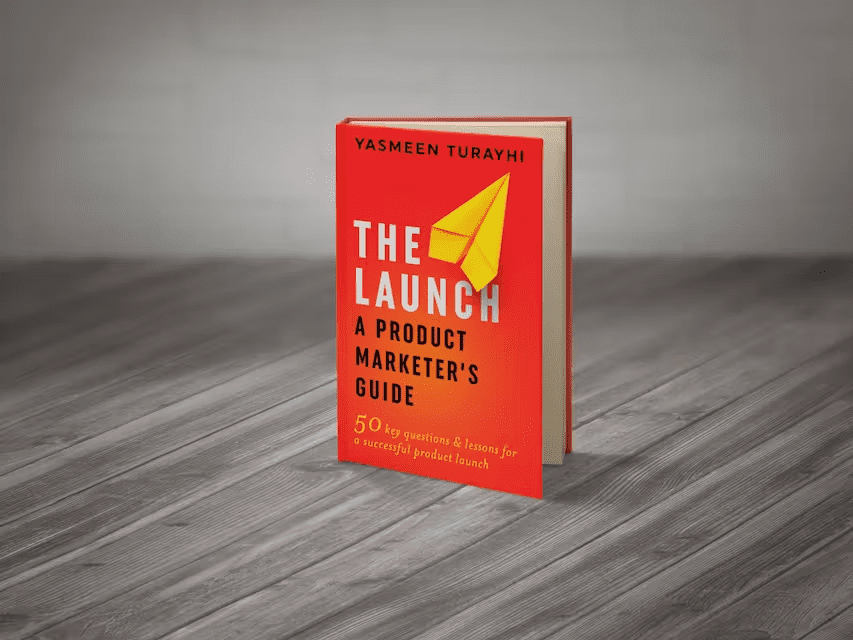

The Launch: A Product Marketer’s Guide – Your Blueprint for Go-to-Market Success
In “The Launch: A Product Marketer’s Guide,” Yasmeen Turayhi, a seasoned product marketing consultant and founder of Modern Product, delivers an essential playbook for anyone involved in bringing a product to market. This book is a direct response to the glaring gap in available resources for product marketers and founders grappling with common launch failures. Turayhi argues that the vast majority of startup failures aren’t due to poor product building, but rather a critical oversight in market validation and a well-defined go-to-market (GTM) strategy. By presenting 50 key questions, drawn from her extensive experience with over 25 companies across various growth stages, Turayhi provides a stimulating journey that reveals blind spots and offers actionable insights. This guide is designed to empower product marketers, product managers, sales teams, and even CEOs to navigate the complexities of customer behavior shifts, team dynamics, and strategic alignment, ensuring that products not only get built but also find their rightful place with the customers who need them most. We will meticulously break down every important idea, example, and insight from this book, ensuring comprehensive coverage and actionable takeaways.
Introduction: The Shifting Landscape of Customer Behavior
This introductory chapter sets the stage by highlighting the evolving nature of product marketing and the critical need for a new guide in a rapidly changing landscape. Turayhi emphasizes that product marketing is distinct from traditional marketing, influenced by factors like company growth stage, marketing team structure, product roadmap deliverables, and the target audience (B2B vs. B2C). She asserts that a good product marketer acts as the “glue” that connects product, engineering, and marketing perspectives, with the primary goal of delivering the right product to the target customer at the right time to ensure adoption.
Turayhi addresses a significant misconception: that one GTM plan can be copied and pasted for every launch. She firmly states that there is no one-size-fits-all template for a GTM strategy, as it deeply depends on the company’s growth stage, long-term goals, industry, customer base, operational inputs, and regulatory landscape. Shortcuts, she warns, often lead to long-term costs. The book’s core premise is that before any major product launch, a company must consider and answer fundamental questions. Turayhi organizes these into three sections: understanding your market and validating customer feedback, knowing how to message and package your product, and creating the blueprint for a go-to-market plan. By answering these questions, teams can avoid disappointment, churn, or low conversion rates. The introduction also notes the shift in customer behavior post-2020, stressing the importance of empathy and acknowledging that “people are at the heart of companies, not products,” quoting Simon Sinek’s emphasis on leaders caring for people over numbers.
Chapter 1: Why So Many Companies Make Mistakes When It Comes to Launch
This chapter dives into the common pitfalls that hinder successful product launches, often stemming from a lack of clear measurement, internal misalignment, and a misunderstanding of what a successful launch truly entails. Turayhi highlights that many leadership teams struggle with the GTM process because its results aren’t as visibly transparent as other marketing functions, and they frequently fail to set clear metrics or understand when to measure success. Success isn’t just external (conversions, revenue); it also includes internal metrics like employee engagement and emotional well-being.
Misunderstanding GTM and Lack of Ownership
A significant mistake is the failure to assign a clear GTM owner for each major product launch. Without one, conflicting interests from product management and sales can derail cross-channel communication and long-term success. Turayhi stresses that GTM acts as a mirror for the organization, revealing priorities and alignment with the company’s vision. She clarifies the crucial distinction between a company go-to-market plan and a product go-to-market plan. Early-stage companies often mistakenly believe they don’t need a GTM plan until their initial product launch, leading to disorganization, inconsistent messaging, and a lack of process for integrating customer feedback. A company GTM plan is foundational, aligning overarching messaging, team communication, customer service, and sales enablement across the organization, saving months of bottlenecks. Only after this infrastructure is aligned should a specific product GTM plan be developed, especially for higher-priority products and features. Turayhi emphasizes that product marketing should be involved as early as the pilot stage.
The Human Element and Prioritization
Turayhi notes that GTM is not a science, requiring pattern recognition, emotional intelligence, self-awareness, and instinct. Her extensive experience allows her to quickly identify “holes” in a company’s strategy. She points out that the opportunity cost of working on siloed goals can lead to significant bottlenecks. A critical, often underestimated skill set for launching products is the ability to team-build, gather cross-functional buy-in, and influence people within the organization. With over 90% of startups failing within five years due to an inability to position and ship products effectively, managing time and prioritizing deliverables are paramount. Turayhi reiterates that asking the right questions is more important than answering all the wrong questions. It’s insufficient for only a few people to know the answers; everyone managing a major function should have access to the GTM blueprint for strategic alignment. She concludes by hoping this book will help readers avoid common launch mistakes and encourages leveraging additional resources like Sharebird’s “The Essential Go-To-Market” series.
Chapter 2: Questions to Validate Your Market and Product
This chapter focuses on the foundational steps of understanding your market and thoroughly validating your product with potential customers. It emphasizes that skipping this crucial phase leads to wasted time and capital.
Understanding Your Market & Customers
- Have you identified your target market and market segments? This involves deeply understanding who your customers are, where they spend their time, and creating character profiles and market segments with clear sizes. The core question is: Is the market big enough and worth selling to? Early research is good, but continuous feedback loops throughout the product lifecycle are essential.
- Who is your dream customer? Deciding on your ideal customer—whether broad or narrow (e.g., enterprise vs. small business, luxury vs. main street)—is crucial for guiding customer interviews and sales strategies. Mixed results often stem from a lack of clarity here.
- How big of a pain point are you solving? On a scale of 1 to 5, how significant is the problem your product addresses? A score of 3 or less often indicates difficulty in selling, as customers primarily pay for solutions to high pain points (needs, not just desires). Diligence is key to understanding willingness to purchase after free trials.
- Do you understand your customers’ emotions? Connect with customers on an emotional level by appealing to head thinkers (stats, research), heart thinkers (social impact, community), and full-body/gut thinkers (drama, intensity). The best marketing connects with all three, creating a narrative that addresses both logical and emotional needs.
- Do you know the customer’s journey intimately? Map out every touch point from initial engagement to conversion and beyond, from customer conversion to becoming true fans and advocates. Understand how many touch points customers tolerate before dropping off.
- Which offers convert customers, and how can they be more compelling? Create tiered product offerings (like Zoom) to cater to different needs and budgets. Consider adding educational tools, concierge customer service, or white papers to differentiate. A freemium model or trial subscription is vital to capture warm leads and build a future customer base, as many companies err by only offering paid versions. Email marketing must be useful and relevant, not just sales-focused.
- Who are your main competitors? Continuously track competitors and alternatives via social media, newsletters, industry events, product trials, and forums like Reddit. The best way to understand customer perception is to go through both your and your competitor’s funnel.
- How much can your customer afford to pay? Pricing is complex and requires understanding competitive offerings and your value proposition. Create a spreadsheet comparing features and prices of alternatives. Consider a recurring revenue model (SaaS) and a freemium version to attract users and gather data. Turayhi recommends “The Win without Pitching Manifesto,” “The Art of Pricing,” and “Monetizing Innovation” for deeper insights.
- How are you generating new differentiating ideas? While customer feedback is important, dedicated internal teams for hypothesis generation and innovation are crucial, like Henry Ford’s “faster horses” example. Test innovative ideas with customers. Ideas can come from internal “idea people,” or by looking at adjacent industries or different geographical markets.
- Who is in your ecosystem? Beyond end-customers, identify partners and influencers who impact the buying decision. In B2B, sales materials must cater to both the end-user and the decision-maker.
- Have you prioritized feature feedback from customers and internal stakeholders? The discovery and validation process is critical. Test your product hypothesis with a target audience through surveys (SurveyMonkey, Google Forms) and focus groups. This avoids wasting time and capital on unvalidated products.
- How many customers have you tested your product with? Conduct 5-7 customer interviews per segment, ideally 60-90 minutes long, to gain thorough qualitative and quantitative feedback on pain points and business use cases. This deep understanding is crucial for positioning. As Aaron Levie of Box notes, you learn more talking to customers in a day than through a month of market research.
- Have you built a customer persona? Create detailed audience profiles including vertical, demographics, income, occupation, education, relationship status, language, ethnicity, interests, and preferred social media/news sources.
- Where do your customers consume information? Understand their online and offline habits to tailor your marketing strategy (e.g., LinkedIn for B2B, TikTok/Instagram for B2C). Social validation and proof (testimonials, enthusiastic fans) are invaluable, especially for new brands. Jane Kim of Life360 emphasizes leveraging user interviews and beta forums to pivot quickly for success.
- What is your competitive advantage? Regularly share internal updates on competition and consider a “competition task force” meeting. Clearly identify your differentiating features and their market impact. Stay connected to the market without losing focus on your own mission.
- Have you created a competitive battlecard? This is vital for B2B sales teams dealing with longer cycles and frequent comparison questions. Make this information readily available for marketing to align messaging against competitors. A table comparing your company’s value proposition against competitors is an effective tool.
- What do you visualize when you imagine your launch? Incorporate intuition and instinct into decision-making, not just historical data. Albert Einstein’s “best ideas in the shower” and Nikola Tesla’s quote about “transcends knowledge” highlight the importance of non-linear wisdom. Regularly visualize success with your team and ask for their input.
Chapter 3: Questions To Validate Your Message
This chapter focuses on the critical elements of positioning and packaging, emphasizing that without a clear and consistent message, even the best products will struggle to resonate with customers.
Positioning and Packaging
- Do you understand your value proposition and how your customer perceives it? This is about truly understanding your customer’s pain points from their perspective and whether they grasp your proposed solution. As April Dunford states, customers need to easily understand “what your product is, why it is special, and why it matters to them.” Many companies rush into marketing tactics without a strategic positioning framework, leading to disconnected marketing assets and confusing brand experiences. Testing the narrative with your target market is mandatory.
- Why do you exist as a company? What’s your Why? Drawing from Simon Sinek’s “Start with Why,” Turayhi stresses that companies must articulate their core purpose beyond “what” they do. “People don’t buy what you do; they buy why you do it.” A meaningful cause rallies employees and customers, creating the necessary momentum for long-term success.
- Do your customers understand your messaging, or is it confusing? A “confused mind always says no,” as Russell Brunson notes. Companies often prioritize product build over message clarity. Technical teams might write documentation-like marketing copy, which can be disastrous for mainstream audiences. A cohesive messaging document is crucial for a consistent story. Donald Miller emphasizes serving the customer’s story, not descending into confusion. A messaging hierarchy should focus on benefits (what the customer gains) rather than just features (product capabilities). A clear positioning statement explains why the product exists, who it’s for, and what customers can do with it. This framework is iterative, requiring regular editing as the market changes. Turayhi uses the example of AdRoll rebranding to NextRoll to accommodate multiple product offerings beyond its initial retargeting focus, illustrating the difference between product and company positioning.
- Have you built trust with your customers? Trust is a powerful differentiator in crowded markets. Companies that champion customer service, treating employees well as a reflection of customer care, build lasting relationships. Turayhi emphasizes authenticity and truthfulness in marketing, cautioning against over-promising or over-exaggerating. She respects companies transparent about their builds and release products when they are certain they are available. Stories that are “authentic and generative” and connect on an emotional level are key, helping customers feel part of the brand’s story.
- What word or phrase can you own in your industry? Inspired by Verne Harnish’s “Scaling Up” and Google’s ownership of “search,” Turayhi advises identifying words or phrases customers use to find your product and that define your mission. Act quickly to secure associated online real estate (Twitter handles, URLs, blogs) to build brand association.
- Have you tiered your product features to understand how to package them? Create tiers (e.g., Tier 0 for game-changing releases, Tier 3 for minor updates) to categorize significance and allocate marketing resources appropriately. Package products and features based on theme, customer impact, and timing to optimize announcements.
- What messaging hook is resonating with your customer? Focus on the strategic narrative and the problem the product is solving (solution marketing) rather than just features. Technical leaders can have tunnel vision, making it hard to craft captivating, accessible stories for mainstream audiences. Hiring storytellers and marketers with broad expertise is essential. The hero’s journey framework is excellent, but ensure the customer is the hero, with the company as the mentor/guide. Analyze past campaigns for words and stories that led to high conversion rates and replicate them.
- Have you named your products and features? Names should be easy to pronounce, memorable, understandable, and have positive associations. Use a naming scorecard with categories like “easy to pronounce” and “relevant to company architecture.” Work with brand marketing and product management to ensure alignment. Naming consultants like Nina Beckhardt and Eli Altman can be valuable resources for rebrands or complex naming exercises.
- Have you created your press pitch (if necessary)? Many early-stage companies mishandle PR, waiting too long to engage agencies. Turayhi shares insights from PR veterans:
- Press cares about major pain points solved or comparisons to giants.
- Ask agencies for specific press releases and ensure experienced consultants are involved.
- Draft your headline (63-70 characters) and subline (100 characters) before engaging an agency.
- PR is more impactful for B2C than B2B, as the public relates more to consumer products.
- Email is still the best way to reach media; send a concise pitch (headline + quick intro).
- Define your goal for the announcement. Many press releases don’t significantly impact B2B metrics.
- Engage PR analysts early and bring them along the journey, rather than pitching at the last minute.
- Press releases are slowly dying; blogs and social media offer better “bang for your buck.”
- Do you have a content strategy aligned with your product roadmap and marketing strategy? Content strategy should not be an afterthought or a separate function focused solely on blogs. It must align with company goals (quarterly/yearly), KPIs, and the product roadmap to support a full-funnel marketing strategy. For example, if awareness is high but conversion is low, content should focus on mid-to-late funnel materials. Francisco Bram of Uber emphasizes that content must be purposeful and benefit the company (not just a distraction). Turayhi outlines three types of content: Owned (in-house, direct channels), Earned (SEO, PR, reviews, brand mentions), and Paid (advertising channels, controllable message). Aubrey Bach of Facebook stresses that content is “where the rubber hits the road” and investing early in content expertise ensures a consistent voice, faster learning, and optimized conversion.
Chapter 4: Questions To Validate Your Go-To-Market Plan
This chapter outlines the practical and strategic elements of executing a robust go-to-market and marketing strategy, emphasizing the importance of alignment, measurement, and internal communication.
Go-to-Market and Marketing Strategy
- What is your main long-term goal with this product launch, and how does it align with your company goal and vision? Turayhi stresses that while executives may know the long-term goals, this vision often fails to cascade throughout the organization. As Susan “Spark” Park of Oculus states, understanding what the product should achieve helps diagnose issues and iterate. It’s crucial to ensure that the launch aligns with the company’s mission and purpose. Drawing from Ed Catmull’s “Creativity Inc.,” Turayhi highlights the importance of iterating and failing fast rather than meticulously planning to avoid failure, which can lead to derivative work. She shares JD Prater’s (AWS Activate) example of halting a product launch due to lackluster feedback, underscoring that not every product built should be shipped. It requires maturity to discern if a product needs more features, validation, or simply doesn’t serve the market.
- Have you created a GTM plan and checklist and prioritized that checklist based on company priorities and resources? A GTM plan is a mandatory blueprint for a successful launch, outlining how the company will take a product to market, build competitive advantage, generate demand, and ensure customer adoption. Without it, launch activities become disorganized. Turayhi explains that the GTM plan should account for all inputs from different departments: Business (operational and financial goals), Marketing (collateral, PR, external comms), and Product (functional readiness). A key distinction is made between being technically ready and commercially ready. This document is iterative and should be reviewed regularly.
- What GTM tools are you using to track the GTM process internally? While tools like Asana, Slack, Confluence, JIRA, etc., exist, a central repository for the GTM plan is essential. Teams must be trained on a chosen tool (e.g., Trello), and the GTM leader must regularly review deliverables and interdependencies, especially with hybrid/remote teams.
- Do you have a robust go-to-market plan with the perspective of key internal stakeholders? The GTM plan must include inputs from all cross-functional teams: operations, support, marketing, press, content strategy, engineering, product, business development, and sales. Priyanka Srinivasan of Qualia emphasizes that GTM success is not solely reliant on product marketing; it’s a collective effort, like an iceberg where only the tip is visible, but much work happens below the surface.
- Do all cross-functional stakeholders understand how the product they are working on contributes to the success of the launch? Cross-functional buy-in is paramount. A lack of inclusion in early GTM planning can lead to delays. The initial stages involve both internal and external due diligence, and the plan should be dynamic, changing as new data and risks emerge. Jane Kim of Life360 notes that a “squad model” incorporating PMs, Product Designers, PMMs, and engineers working collectively fosters efficiency and collaboration.
- How are you measuring the success of your launch? What are your metrics? Without transparency in business metrics and clear KPIs for each GTM deliverable, it’s impossible to know if a product is being adopted. Standard metrics include revenue, user growth, engagement (MAU, DAU), and customer service touch points. However, internal metrics like employee engagement, sales team readiness, and completed internal trainings are equally vital. Mary Shirley Sheehan of Adobe stresses setting clear goals (e.g., market share increase, unit sales, feature adoption) that everyone can rally around.
- Have you decided who will own the success of the product post-launch? Turayhi believes a single owner (PMM, PM, GM, Sales Lead, or Commercialization Manager) is crucial for the end-to-end GTM process, capturing metrics, and reconciling the value proposition across functions. This owner may have an executive sponsor (CEO, Head of Product, COO). This role acts as a conduit to leadership, alerting them to critical business decisions. The Google DoubleClick commercialization manager role is cited as a pioneer in holistic GTM ownership, bridging the gaps between product, marketing, and sales. Robert McGrath of LinkedIn emphasizes that for global launches, local sales leaders are essential for monitoring customer feedback. The GTM owner needs to remain neutral, using data to understand what’s working, and continuously iterating based on feedback (beta programs, quantitative/qualitative metrics).
- Have you built in a feature prioritization feedback loop? Every initiative has an opportunity cost. Turayhi uses a product feature prioritization chart that weighs factors like cost, time to market, effort, innovation, and impact to ensure laser-focused prioritization. Higher impact features with less effort are prioritized.
- Have you built a customer feedback loop to understand how customers are interacting with your product in real time? This loop should be established early, ideally in the early access/development stage. Slack channels, surveys, and documented feedback shared cross-functionally are examples. This process must be iterative, leading to actual implementation in feature prioritization and roadmap planning to avoid being leapfrogged. Reid Hoffman’s quote, “If you are not embarrassed by the first version of your product, you’ve launched too late,” underscores this.
- Are you sharing information cross-functionally in real time? Clear, cross-functional communication is the product marketer’s most significant skill. Establishing a central GTM plan location and regularly scheduled check-ins (weekly meetings, Slack, Trello, email recaps) ensures everyone is on the same page.
- Does your marketing strategy align with your product strategy? The marketing funnel and channel strategy must align with the product experience and assets. Marketers analyze the funnel to optimize conversions, understanding what assets are needed at each stage. Product managers look at customer drop-offs in the buy-flow to identify necessary product improvements or new features.
- Where are people dropping off in the product journey in your beta or test period? This is a critical but often unmeasured metric. Drop-offs indicate either a product problem (feature set) or a communication problem (activation, onboarding). Marketing is responsible for clear explanations, and product marketing/operations for sales enablement and onboarding. Understanding these limitations before commercial launch helps focus internal efforts. Streamlining the customer journey by eliminating unnecessary steps is also vital.
- Who is the internal stakeholder most responsible for the success of the launch? Reiteration of question 34: a single success owner is vital for accountability and guiding the GTM owner. This person should be neutral, capable of objectively assessing faults and communicating them to leadership. Their championship is essential for cross-functional buy-in.
- What evidence do you have that customers want to pay for your product? Beyond competitive pricing, understand a customer’s willingness to pay through discovery and market validation. A stronger pain point often translates to a higher value proposition and ability to charge a premium. Increasing perceived value through customer service, educational tools, or community events can justify higher pricing.
- What are your biggest risks? Assess potential risks and bottlenecks, especially in regulated industries (finance, healthcare). Legal review of marketing messaging and roadmaps is crucial. Identify your risk profile and discuss with legal/executive teams.
- What are some ways you can give free tools and education to your audience? Shift from a sales mindset to a relationship-building mindset, focusing on what you can give customers (educational tools, community events). This inbound strategy, as exemplified by Turayhi’s Medium articles, creates organic sales channels and long-term benefits by offering useful content.
- Have you taken an emotional pulse of the internal key stakeholders on the launch? Launches demand immense emotional bandwidth. If GTM deliverables fall disproportionately on a few individuals, burnout is inevitable. Leadership must ensure the mental and emotional health of the team, especially post-launch. Recognizing efforts and offering off-site events helps build a resilient culture. The example from Pixar’s “Toy Story 2” highlights the extreme dangers of unchecked exhaustion.
- What is your budget for your channel strategy? Marketing budgets depend on revenue targets and company goals. Early-stage companies often have near-zero budgets, necessitating a focus on inbound marketing, email campaigns, and free press. More mature companies can allocate millions to paid channels. Turayhi advocates for organic inbound channels first, as a focus on high-quality product experience and emotional messaging, combined with market validation, leads to sustainable long-term growth. Hiring growth marketers too soon without this foundation can lead to initial spikes but low retention.
- Distribution: Channel plan for product awareness and activation? The distribution plan must be calculated within the marketing funnel strategy. High-priority products warrant comprehensive distribution across press releases, social media, blogs, email campaigns, webinars, and more. Turayhi lists various channels, including website, mobile app, paid ads, SEO, PR, social media, email, video, events, content syndication, and third-party partnerships.
- What KPIs are you using to track the success of the launch after launch day? KPIs should be added for each piece of the distribution plan to understand optimization priorities (awareness, activation, retention). Track market signals, beta test feedback, and retention rates. Internal KPIs also matter, such as executive support, employee training completion, and internal understanding of the product’s purpose.
- Have you created post-launch activities? Postmortems are crucial for learning but often neglected. They should analyze what worked, what didn’t, and missing communication lines. Teams focus heavily on launch day, but product life continues. A plan for sustained marketing post-launch is essential, leveraging the product into future launches or top-of-funnel news.
- Has everyone in the company been trained and informed on the product launch? Companies often neglect internal education, leading to a lack of understanding among engineers, operations, and customer service about new products. Everyone should know what the product does, how it works, customer access points, and media coverage. This fosters engagement and valuable internal feedback.
- Have you created internal buy-in and alignment for the launch? Diplomacy is key for internal and external buy-in. The GTM owner’s success hinges on their ability to influence the product team, gain cross-functional alignment, lead postmortems, and ensure clear communication. They must navigate diverse personalities, work on technical builds, and collaborate on design. Evelyn Watts of RVezy emphasizes empowering stakeholders with ownership and accountability, creating a “sheriff’s hat” mentality where any key stakeholder can push an “emergency stop button” if the launch is at risk, ensuring support and escalation.
Conclusion: Make Room for an Imperfect Market
The conclusion reinforces that even with a perfect GTM plan, external factors like market conditions or internal issues like toxic work environments and political leadership can derail a launch. Turayhi advises that GTM owners should cut through politics and ensure rapid internal communication, but ultimately, if an environment is toxic, leaving is the best option as it makes the job “10 times more difficult.” GTM reveals an organization’s internal workings, both good and bad.
She stresses that GTM is a shared responsibility, not solely on the product marketer, and its success relies on the enthusiasm of the cross-functional team, often set by the CEO.
The Process Matters More Than the End Result
Turayhi highlights a profound shift in perspective: how we achieve a goal is as significant as achieving it. Fatigue, broken communication, and sleep deprivation are unwanted companions. She advocates for recognizing the humanness in the process and prioritizing well-being. Failure is a learning opportunity, and knowing when to push and when to quit is crucial.
Required Skill Sets for Product Marketing and Go-To-Market
Turayhi outlines five non-negotiable skill sets for successful GTM:
- Diplomacy and Communication: Essential for understanding human dynamics, influencing cross-functional teams, and ensuring internal and external message resonance.
- Writing: The ability to craft clear, compelling content for internal communication, GTM plans, marketing assets, and press releases.
- Strategy: Seeing the bigger picture, aligning product marketing efforts with company vision, goals, and KPIs, and prioritizing valuable work.
- Technical Skills: Understanding the product and industry, spending time with product teams, and having an informed opinion.
- Emotional Intelligence and Ability to Speak to the Customer: The capacity to understand true customer sentiment, lead effective interviews, and cut through noise for clarity.
Turayhi concludes by acknowledging that product marketing is a challenging role, requiring perseverance and composure due to constant market and roadmap changes. The most important value a GTM owner brings is reflecting customer sentiments. She expresses hope that the 50 questions and insights will be helpful for readers’ next product launches.
Key Takeaways
“The Launch: A Product Marketer’s Guide” provides a comprehensive framework for product launch success, emphasizing that effective Go-to-Market (GTM) is not merely a marketing function but a holistic, cross-functional organizational effort. The book’s core message is that proactive market validation, clear messaging, strategic planning, and strong internal alignment are critical determinants of a product’s success, more so than just its technical build.
The core lessons readers should remember are:
- GTM is foundational: A successful launch requires a well-defined GTM strategy that precedes and informs all product development and marketing efforts, aligning company vision with market needs.
- Customer-centricity is non-negotiable: Deeply understand your target market, validate pain points, appeal to emotional and logical drivers, and continuously gather feedback throughout the product lifecycle.
- Clarity and consistency are paramount: Develop a clear, consistent value proposition and messaging framework that focuses on customer benefits, not just features. Own a specific word or phrase in your industry to simplify discovery.
- Internal alignment drives external success: Assign a clear GTM owner, foster cross-functional buy-in through effective communication, and ensure all internal stakeholders understand their role and are trained on the product.
- Measure everything: Set clear internal and external KPIs for each stage of the GTM plan, from awareness to retention, and conduct post-mortems to learn and iterate.
- Prioritize ruthlessly and be adaptable: Every initiative has an opportunity cost. Be prepared to adjust your strategy, and even halt launches, based on market feedback and changing conditions.
- Prioritize human well-being: Acknowledge the emotional toll of launches on teams and ensure leaders create a supportive environment, as employee burnout directly impacts launch success.
Next actions readers should take immediately:
- Assess your current GTM readiness: Go through the 50 questions presented in the book and honestly evaluate which ones your team can answer, and which require more discovery or strategic planning.
- Identify your “dream customer”: Get explicit about who you want to serve, which will help refine all subsequent product and marketing decisions.
- Start building a core messaging document: Gather key stakeholders to define your value proposition and core benefits, ensuring a consistent narrative across all touchpoints.
- Establish a clear GTM owner (if none exists): Advocate for a single individual to oversee the end-to-end GTM process, ensuring accountability and clear communication.
- Implement a customer feedback loop: Start collecting real-time customer feedback on your product, even in early stages, and integrate this into your product roadmap.
Reflection prompts:
- How does our current product development and launch process reflect (or neglect) a true customer-first approach?
- In what ways can we strengthen internal communication and foster genuine cross-functional buy-in for upcoming product initiatives?
- What is the biggest “blind spot” in our current go-to-market strategy, and what specific steps can we take to address it immediately?








Leave a Reply