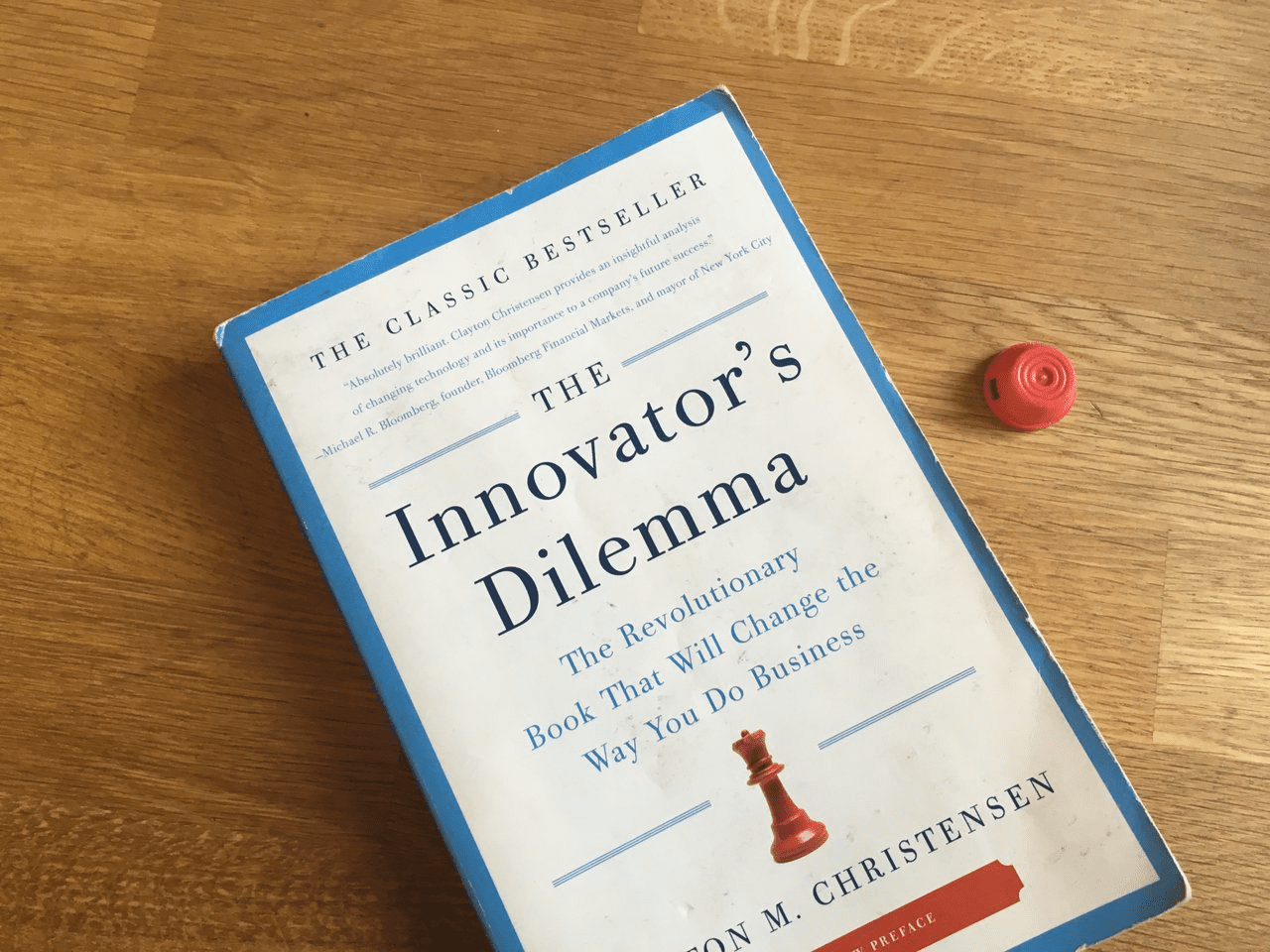

The Innovator’s Dilemma: Why Great Companies Can Fail
Quick Orientation
Competing Against Luck is a systematic innovation framework built around the “Jobs to Be Done” theory that explains why customers make the choices they do. This approach enables businesses to innovate with far greater predictability and success by understanding the fundamental causal mechanism behind consumer behavior.
The Jobs to Be Done framework argues that traditional innovation methods focused on product features, customer demographics, or market trends consistently fail because they miss what really drives purchases. Customers don’t simply buy products—they “hire” them to make progress in specific circumstances and solve particular jobs in their lives.
Competing Against Luck shows companies how to move beyond hoping for luck in innovation to a theory-driven approach. By understanding the functional, social, and emotional dimensions of customer struggles, organizations can create solutions that customers eagerly buy and pay premium prices for.
The methodology provides tools for identifying hidden opportunities, designing compelling customer experiences, and organizing entire enterprises around customer jobs for sustainable growth. This framework transforms how businesses think about competition, market definition, and customer alignment, offering a systematic way to discover what truly matters to customers and build solutions around those needs rather than relying on guesswork or market trends.
How Can Great Firms Fail? Insights from the Hard Disk Drive Industry
This chapter introduces the central puzzle: why leading companies, often admired for their management, can fail. Using the hard disk drive industry as a “fruit fly” for studying rapid change, Christensen examines its history to identify patterns in success and failure.
Sustaining Technological Changes
The study of the disk drive industry reveals that most technological changes were “sustaining,” improving product performance along dimensions historically valued by mainstream customers. These innovations ranged from incremental to radical component changes and architectural shifts, but they all improved the existing product.
- Established firms led: In every instance of sustaining technology change, whether simple or complex, expensive or cheap, hardware or software, the established firms in the industry were the leaders in developing and adopting the new technology.
- Examples included: The transition from ferrite heads to thin-film heads and then to magneto-resistive heads were complex sustaining innovations where incumbents excelled.
- Architectural shifts: Even significant architectural changes like the move to 14-inch Winchester drives were sustaining innovations, and established firms successfully navigated these.
- No competitive advantage from leading: Interestingly, pioneering these sustaining technologies did not necessarily confer a lasting competitive advantage; followers often caught up quickly.
Failure in the Face of Disruptive Technological Changes
In contrast to sustaining innovations, certain technological changes, termed “disruptive,” consistently led to the failure of the industry’s leading firms. These technologies offered a different value proposition, initially underperforming in mainstream markets but excelling in other attributes valued by new or fringe customers.
- Smaller drive sizes: The most significant disruptive technologies were the architectural innovations that reduced drive size: 8-inch, 5.25-inch, 3.5-inch, and 1.8-inch drives.
- Initial underperformance: These smaller drives initially offered less capacity, a key metric for mainstream customers, but were smaller, lighter, and cheaper.
- Targeting new markets: Because they didn’t meet the needs of existing customers (e.g., mainframe users), these disruptive drives found initial markets in new applications like minicomputers and personal computers.
- Entrants led: The companies that successfully commercialized these disruptive technologies were almost always new entrants to the industry, not the established leaders.
- Established firms were late: When established firms eventually introduced products based on the disruptive architecture, it was often years after the entrants, and primarily to defend their existing customer base, not to capture the new market.
Held Captive by Their Customers
A key reason established firms struggled with disruptive innovations was their strong ties to their existing customers, who did not want the initially inferior disruptive products.
- Listening to customers: Established firms focused intensely on meeting the demands of their most important customers, who needed performance improvements in existing products.
- Ignoring unwanted products: When presented with prototypes of disruptive technologies (like the 3.5-inch drive at Seagate), customers showed little interest, leading marketing teams to forecast low sales and management to withhold resources.
- Resource allocation bias: Resources and managerial energy were directed towards sustaining projects that promised higher margins and larger markets, as demanded by existing customers.
- Fatal delay: By the time the disruptive technology had improved sufficiently to meet mainstream needs, the entrants had established a significant lead in manufacturing cost and design experience.
This chapter sets the stage, showing that failure isn’t simply about lagging technologically but about a specific type of technology and the established firm’s response to it, heavily influenced by their existing customer base.
Value Networks and the Impetus to Innovate
This chapter introduces the concept of a “value network” to explain why successful firms struggle with disruptive change. Value networks define the context in which companies operate and shape their perceptions of innovation’s value.
Value Networks Mirror Product Architecture
Companies are embedded in value networks because their products are often components within larger systems of use. These networks are not just about the physical product but also the nested markets and relationships between suppliers and integrators at different levels.
- Nested systems: Products exist within a hierarchy; for example, a disk drive is a component in a computer, which is part of a larger information system.
- Network of producers and markets: This hierarchy of products implies a corresponding network of companies producing and selling at each level.
- Distinct networks: Different applications (e.g., corporate MIS, portable computing, CAD) constitute distinct value networks with different product architectures and relationships.
Metrics of Value
A defining characteristic of a value network is the unique rank-ordering of importance that customers in that network place on various product performance attributes.
- Different priorities: What is valued in one network may be unimportant in another; mainframe users prioritize capacity and speed, while portable computer users prioritize ruggedness and low power consumption.
- Defining boundaries: These different priorities for product attributes help define the boundaries between distinct value networks within a broader industry.
Cost Structures and Value Networks
Value networks also impose characteristic cost structures on the firms operating within them, reflecting the needs of the customers and the nature of competition.
- Varying cost structures: Companies in different value networks have different costs for R&D, manufacturing, sales, marketing, and service, based on the demands of their customers.
- Characteristic margins: These cost structures lead to different required and typical gross profit margins within each value network.
- Profitability bias: Innovations valued within a firm’s existing high-margin network, or in networks with even higher margins, will appear more profitable than those valued only in lower-margin networks.
Technology S-Curves and Value Networks
While the conventional technology S-curve helps visualize sustaining innovations within a single value network, disruptive innovations require a different perspective.
- Sustaining S-curves: The typical S-curve, showing performance improvement over time, often describes sustaining technological changes within a single value network (e.g., increasing recording density in disk drives).
- Entrant leadership in sustaining: Contrary to some theories, in the disk drive industry, established firms consistently led in navigating these sustaining S-curves, even those involving radical technological shifts.
- Disruptive S-curves: Disruptive innovations emerge and progress on their own, often different, performance trajectories in new value networks. They cannot be plotted on the same performance axis as the established technology.
- Intersection leads to invasion: Disruptive technologies can invade established networks when their performance trajectory improves to the point where they meet the demands of those markets.
Managerial Decision Making and Disruptive Technological Change
The findings show a consistent pattern in how established firms’ decision-making processes, shaped by their value networks, lead them to struggle with disruptive technologies.
- Disruptive technologies developed internally: Engineers in established firms often develop prototypes of disruptive technologies, often using bootlegged resources.
- Marketing seeks lead customer feedback: Marketing teams, following established practice, show these prototypes to their lead customers, who express little interest because the technology doesn’t meet their needs.
- Pessimistic forecasts: Based on lead customer feedback, marketing generates pessimistic sales forecasts for the disruptive technology.
- Financial analysis reinforces disinterest: Finance teams, seeing lower forecast margins and returns, also recommend against investing in the disruptive project.
- Sustaining efforts prioritized: Resources are directed towards sustaining projects that promise higher margins and larger markets, as preferred by existing customers.
- New companies emerge: Frustrated engineers often leave to start new companies to pursue the disruptive technology, finding new markets for it through trial and error.
- Entrants move upmarket: Once established in new markets, entrants rapidly improve the disruptive technology, eventually meeting the needs of mainstream customers and invading the established market.
- Established firms respond late: Established firms only seriously pursue the disruptive technology when it threatens their core market, by which time the entrants often have insurmountable advantages.
This chapter establishes the value network as a critical lens for understanding why good management, focused on the needs of existing customers within their value network, can inadvertently lead to failure when faced with disruptive innovations.
Disruptive Technological Change in the Mechanical Excavator Industry
This chapter tests the value network framework in an industry with very different characteristics than disk drives: mechanical excavators. It shows that the same dynamics of disruptive technology, value networks, and managerial response led to similar outcomes.
Leadership in Sustaining Technological Change
Like the disk drive industry, the mechanical excavator industry experienced significant technological shifts, but established firms successfully navigated the sustaining ones.
- Steam to gasoline: The transition from steam-powered to gasoline-powered shovels was a radical change, but it sustained the performance trajectory of excavators (moving earth faster, more reliably).
- Incumbents led this transition: Twenty-three of the twenty-five largest steam shovel manufacturers successfully transitioned to gasoline power, demonstrating their ability to adopt radical sustaining technology.
- Diesel and electric: Subsequent transitions to diesel engines and electric motors were also sustaining, and established firms continued to lead in adopting these.
The Impact of Disruptive Hydraulics Technology
The introduction of hydraulics as a mechanism for actuating the shovel was a disruptive technology that decimated the established cable-actuated shovel manufacturers.
- New mechanism: Hydraulics replaced the cable-and-pulley system, changing how the shovel was extended and lifted.
- Initial underperformance: Early hydraulic excavators (backhoes) had significantly smaller bucket capacity and shorter reach than cable shovels.
- New value network: Because they couldn’t compete in the mainstream general excavation or mining markets, hydraulic backhoes found a new market attached to farm and industrial tractors for digging narrow trenches in residential construction.
- Different valued attributes: In this new market, small size, maneuverability, and the ability to dig precise trenches were valued, unlike in the mainstream markets.
The Response to Hydraulics by the Established Excavator Manufacturers
Established cable shovel manufacturers, like Bucyrus Erie, were aware of hydraulics but struggled to commercialize it successfully in their existing value network.
- Awareness and early attempts: Bucyrus Erie acquired a hydraulic backhoe company early on and introduced a hybrid product (the Hydrohoe) combining hydraulic and cable mechanisms.
- Targeting existing customers: Bucyrus attempted to adapt the hydraulic technology to meet the needs of its existing general excavation customers, who prioritized bucket capacity and reach.
- Lack of commercial success: The Hydrohoe was not commercially successful because it didn’t meet the performance demands of Bucyrus’s mainstream customers.
- Ignoring the new market: Like the disk drive companies, established excavator manufacturers largely ignored the emerging market for small hydraulic backhoes in residential construction.
- Entrants dominated hydraulics: New companies like J. I. Case, John Deere, and others entered with purely hydraulic products and focused on the new market.
- Upmarket invasion: As hydraulic technology improved, these entrant firms’ products eventually met the performance needs of the mainstream excavation markets, leading to a decisive invasion and the failure of most established cable shovel manufacturers.
- Late response: Established firms belatedly introduced hydraulic excavators to defend their markets, but by then, the entrants had established insurmountable advantages in design experience and manufacturing cost.
This chapter demonstrates that the same dynamics of disruptive technology and value networks, observed in the fast-paced disk drive industry, apply equally to a slower-paced, mechanically based industry like excavators. The pattern of established firms succeeding with sustaining innovations but failing with disruptive ones due to the influence of their value networks holds true.
What Goes Up, Can’t Go Down
This chapter explores the asymmetry in mobility across value networks: why companies can readily move upmarket toward higher performance and margins but struggle to move downmarket into lower-end, disruptive technologies. This asymmetry is driven by rational resource allocation processes.
The Great Northeast Migration in Disk Drives
Analysis of product placement in the disk drive industry shows a clear tendency for companies to migrate towards the “northeast” of the trajectory map—higher performance, larger capacity, and higher margins.
- Upmarket movement: Companies like Seagate, initially dominant in the desktop market, shifted their focus towards higher-capacity drives for mid-range computers and workstations.
- Following the money: This upmarket migration occurred because resources and managerial energy were naturally drawn to proposals promising higher revenues and profits.
Value Networks and Characteristic Cost Structures
The different cost structures inherent in competing within various value networks heavily influence which investment proposals appear attractive to a company.
- Cost structure alignment: Companies tailor their costs (R&D, sales, manufacturing) to the needs of their customers within a specific value network, which dictates the required gross margins.
- Upmarket appears more profitable: Moving to a higher-margin value network (e.g., from desktop to minicomputer drives) allows a company to leverage its existing cost structure more effectively and appears as a clear path to improved profitability.
- Downmarket appears unattractive: Moving to a lower-margin value network is challenging because the existing high-cost structure makes it difficult to be profitable, and it means competing against companies with cost structures honed for those lower margins.
Resource Allocation and Upward Migration
The resource allocation process, particularly decisions made by mid-level managers, heavily favors proposals targeting upmarket opportunities due to their perceived profitability and lower risk.
- Bottom-up proposals: Most innovation proposals originate from deep within the organization, not from senior management.
- Mid-level screening: Mid-level managers act as gatekeepers, deciding which projects to champion based on their potential for success and impact on corporate performance.
- Market demand reduces risk: Projects with assured market demand (like sustaining innovations for existing customers or upmarket moves) are perceived as less risky for individual careers and are more likely to be championed.
- Disruptive projects languish: Proposals for disruptive technologies, with uncertain markets and lower initial profitability, are less likely to be championed by mid-level managers because the risk of market failure is higher.
- “Good” management reinforces bias: Even when senior management desires to pursue a disruptive technology, the embedded resource allocation processes, driven by the collective wisdom and intuition of employees focused on existing business models, tend to starve these projects of resources.
The Case of the 1.8-inch Disk Drive
The experience with the 1.8-inch drive illustrates how the inertia of a company’s value network can lead even astute managers to miss disruptive opportunities.
- Technological capability: Leading disk drive makers developed 1.8-inch drive prototypes early, demonstrating their technical ability.
- Market forecasts ignored: Despite market research indicating an emerging market, the CEO of a major drive company insisted the market didn’t exist, based on a lack of interest from his mainstream computer customers.
- Employee perception: Mid-level employees, focused on generating significant revenue for a large company, saw little value in the small, low-end 1.8-inch market.
- Missed opportunity: The 1.8-inch drives found a market in non-computer applications (like portable heart monitors), but the large drive makers missed this opportunity because their internal systems and values were aligned with the computer industry.
Value Networks and Market Visibility
Companies embedded within a value network may not recognize their own upmarket drift, especially if their customers are also moving in the same direction.
- Customer migration: If a company’s customers (e.g., minicomputer makers) are also moving upmarket, the supplier may not realize they are leaving behind lower-end market segments.
- Barriers to downward mobility: The combination of the promise of higher margins upmarket, the simultaneous upmarket movement of customers, and the difficulty of reducing costs creates powerful barriers to moving downmarket into disruptive opportunities.
The Northeasterly Migration of Integrated Steel
The battle between integrated steel mills and minimills provides another example of the powerful “northeastern pull” and its consequences.
- Minimill emergence: Minimills, using electric arc furnaces and scrap steel, were initially limited to producing low-quality rebar, a market integrated mills were happy to exit.
- Minimill cost structure: Minimills had significantly lower capital and operating costs, making the low-margin rebar market profitable for them.
- Upmarket attack: Minimills, like Nucor and Chaparral, consistently improved their technology and attacked higher-end markets (bars, rods, beams, and eventually sheet steel).
- Integrated mill response: Integrated mills ceded the lower-end markets and focused on high-quality sheet steel, where their high-cost structure was justified by premium prices.
- Rational but ultimately fatal: Integrated mills’ investments in improving efficiency and focusing on high-margin products were rational in the context of their value network but left them vulnerable to the minimills’ upmarket invasion, enabled by disruptive thin-slab casting technology.
This chapter highlights how the economic forces within a value network, particularly the drive for higher margins and the difficulty of operating profitably at lower price points, create a powerful bias against investing in disruptive technologies that emerge at the low end of the market.
Managing Disruptive Technological Change: A Case Study
This section of the book transitions from explaining why great companies fail to providing guidance on how managers can succeed when faced with disruptive change. It focuses on harnessing the principles of disruptive innovation rather than fighting them.
Give Responsibility for Disruptive Technologies to Organizations Whose Customers Need Them
The first principle for managing disruptive technology is to create an organizational structure where the disruptive innovation is essential for survival, aligning it with customers who actually need it.
- Customer control over resources: In well-managed companies, customer demands effectively dictate where resources are allocated, making it difficult to fund projects not desired by core customers.
- Resource dependence theory: This theory suggests that organizations thrive only if they serve the needs of those who provide resources (customers, investors), making managers less powerful in directing investments than they might believe.
- Aligning with the force: Rather than fighting this force, managers should align with it by creating independent organizations whose survival depends on serving the emerging customers of the disruptive technology.
Success in Disruptive Disk Drive Technology
The history of the disk drive industry provides examples of companies that successfully navigated disruptive transitions by creating independent organizations.
- Quantum and Plus Development: Quantum missed the 5.25-inch generation but financed and retained ownership of Plus Development, an independent venture focused on 3.5-inch drives. When Quantum’s core business declined, it acquired the rest of Plus and reconstituted itself as a successful 3.5-inch drive maker.
- Control Data in Oklahoma: Control Data, a 14-inch drive leader, missed the 8-inch generation but located its 5.25-inch effort in an isolated organization in Oklahoma City, insulated from the demands of its mainstream customers. This venture was successful, though CDC never regained its dominance.
- Micropolis: Transition by Managerial Force: Micropolis, an 8-inch drive leader, successfully transitioned to 5.25-inch drives but did so within the mainstream company. This required enormous personal effort from the CEO to counteract the organization’s natural bias towards its existing customers.
Disruptive Technologies and the Theory of Resource Dependence
These cases illustrate how established firms struggled with disruptive technology when they tried to manage it within the mainstream organization, where customer demands pulled resources away.
- Customer influence: Seagate and Bucyrus Erie, among the first to develop disruptive products, failed to commercialize them successfully because their mainstream customers didn’t want them, and internal systems reflected this.
- Harnessing the force: Quantum and Control Data succeeded by creating separate organizations embedded in the new value networks, where resource dependence worked in their favor, directing resources towards the disruptive technology.
DEC, IBM, and the Personal Computer
The computer industry provides another example of established firms struggling with disruptive technologies (minicomputers, personal computers, portables) while entrants succeeded, with IBM being a key exception.
- IBM’s PC Division: IBM created an autonomous organization in Florida, separate from its mainstream operations, to develop and market the personal computer. This allowed it to succeed in the new market despite the PC being disruptive to IBM’s core business model.
- DEC’s struggles: Digital Equipment Corporation repeatedly failed to establish a personal computer business because it tried to manage these ventures within its mainstream organization, where the PC didn’t fit the existing cost structure, customer demands, or resource allocation priorities.
Kresge, Woolworth, and Discount Retailing
The disruption of traditional retailing by discount retailers also demonstrates the importance of creating separate organizations for disruptive ventures.
- Discount retailing as disruptive: Discount stores offered lower service and selection but lower prices, which didn’t fit the value proposition or cost structure of traditional department stores.
- Kresge’s Kmart: S. S. Kresge succeeded by creating Kmart as a completely separate organization with a different management team and focus, eventually converting its entire business to discounting.
- Woolworth’s Woolco: F. W. Woolworth failed because it attempted to launch its Woolco discount chain within the existing variety store organization, leading to a conflict in cost structures and values, and eventually abandoning the discount model.
Survival by Suicide: Hewlett-Packard’s Laser Jet and Ink-Jet Printers
Hewlett-Packard’s success with ink-jet printers, a disruptive technology to its laser jet business, highlights the strategy of creating a separate organization that may ultimately challenge the mainstream.
- Ink-jet as disruptive: Ink-jet printers were initially slower and lower resolution than laser jets but were smaller and cheaper, with lower margins.
- Separate organization: HP created a completely autonomous unit in Vancouver to develop and commercialize ink-jet technology, separate from its laser jet division in Boise.
- Internal competition: This allowed both businesses to thrive initially, with the ink-jet business eventually taking market share from the laser jet business as its performance improved and the basis of competition shifted.
This chapter provides strong evidence that creating an independent organization, insulated from the values and resource allocation processes of the mainstream business, is a crucial strategy for successfully commercializing disruptive technologies.
Match the Size of the Organization to the Size of the Market
This chapter emphasizes the importance of aligning the size of the organization tasked with commercializing a disruptive technology with the size of the initial market opportunity. Large companies struggle with small, emerging markets.
Are the Pioneers Really the Ones with Arrows in Their Backs?
The adage that pioneers get “arrows in their backs” may be true in some contexts, but in disruptive innovation, leadership in creating new markets is highly advantageous.
- Sustaining technology leadership not essential: In sustaining innovations, like thin-film heads in disk drives, there was no evidence that leading conferred a significant or lasting competitive advantage over followers.
- Disruptive technology leadership creates value: Companies that were early entrants into the new value networks enabled by disruptive disk drives were significantly more likely to succeed and generated vastly more cumulative revenue than later entrants.
- Entering emerging markets is key: Success in disruptive innovation is strongly correlated with being a leader in creating and entering the new market, not just developing the technology.
Company Size and Leadership in Disruptive Technologies
The larger and more successful a company becomes, the more difficult it is to invest meaningfully in small, emerging markets, creating a dilemma when facing disruptive technologies.
- Growth requirements: Large companies need to find increasingly large chunks of new revenue each year to maintain their desired growth rates, which are crucial for stock price, employee morale, and further investment.
- Small markets are insufficient: Emerging markets enabled by disruptive technologies are initially too small to make a meaningful impact on the growth trajectory of a large company.
- Late entry: This leads large companies to wait until a market “is large enough to be interesting,” by which time they may have missed the crucial window for establishing a strong position.
CASE STUDY: Pushing the Growth Rate of an Emerging Market
Apple’s experience with the Newton PDA illustrates the challenges large companies face when investing heavily to force the growth of a small, emerging market.
- Aggressive investment: Apple invested heavily in the Newton, aiming for significant revenue to contribute to its overall growth.
- High expectations: The Newton’s sales, while strong for a new category, were viewed as a failure within the context of Apple’s large revenue base and high growth targets.
- Mismatch in scale: The scale of investment and the need for rapid, significant returns didn’t match the natural, slower process of discovering and building an emerging market.
CASE STUDY: Waiting Until a Market Is Large Enough to Be Interesting
Waiting for a market to become large enough is a seductive but often flawed strategy when dealing with disruptive technologies.
- Priam and Seagate: Priam, an 8-inch drive leader, missed the 5.25-inch market because it couldn’t match the one-year product cycle of Seagate, which had established itself in the desktop market.
- Seagate and Conner Peripherals: Seagate was slow to enter the 3.5-inch drive market, waiting until it was “large enough to be interesting.” Conner Peripherals, an early entrant, established a capability in custom-designing drives for portable computer makers, which Seagate couldn’t replicate.
CASE STUDY: Giving Small Opportunities to Small Organizations
Implanting disruptive technology projects in small organizations whose success is meaningfully impacted by the venture offers a higher probability of success.
- Motivation and resources: Projects are more likely to receive adequate resources and attention when they are crucial to the success of the organization undertaking them.
- Quantum and Control Data: Both companies achieved success with disruptive technologies by creating independent organizations whose survival depended on the new venture.
- Allen Bradley’s Electronic Motor Controls: Allen Bradley, a leader in electromechanical motor controls, successfully transitioned to electronic controls by acquiring small, focused companies and keeping them separate from the mainstream business. Competitors who managed electronic controls within their existing divisions failed.
- Johnson & Johnson: J&J’s strategy of acquiring small, autonomous companies for disruptive technologies has led to multiple billion-dollar businesses.
This chapter underscores the importance of organizational structure in managing disruptive innovation, arguing that small, independent organizations are better suited to nurturing and growing the initially small markets enabled by these technologies.
Discovering New and Emerging Markets
This chapter highlights the unpredictable nature of emerging markets for disruptive technologies and the need for a discovery-driven approach to marketing and planning, rather than relying on traditional market research.
Forecasting Markets for Sustaining Versus Disruptive Technologies
Market research techniques that work well for predicting demand in established markets often fail spectacularly when applied to emerging markets enabled by disruptive technologies.
- Accurate sustaining forecasts: Disk/Trend Report accurately forecast sales for sustaining technologies like 14-inch Winchester and 2.5-inch drives.
- Inaccurate disruptive forecasts: The same publication’s forecasts for disruptive technologies (5.25-inch, 3.5-inch, and 1.8-inch drives), which created new markets, were significantly off, often underestimating the market size.
Identifying the Market for the HP 1.3-inch Kittyhawk Drive
Hewlett-Packard’s experience with its Kittyhawk drive illustrates the perils of assuming market forecasts for disruptive technologies are accurate.
- Targeting a forecast market: HP developed Kittyhawk based on forecasts for the PDA market, investing heavily in features and manufacturing capacity for that specific application.
- Market didn’t materialize: The PDA market did not grow as forecast, and Kittyhawk sales fell far short of expectations.
- Unexpected applications: The actual early markets for Kittyhawk were in non-computer devices, applications HP hadn’t anticipated or designed for.
- Inflexibility: Having committed resources to the original plan, HP lacked the flexibility to adapt the product and pursue the emerging markets that actually materialized.
- Learning from failure: HP managers later conceded they should have assumed their forecasts were wrong and adopted a more exploratory, flexible approach.
HONDA’S Invasion of the North American Motorcycle Industry
Honda’s successful entry into the North American motorcycle market was based on the accidental discovery of a new market, not a planned strategy.
- Initial strategy failed: Honda’s initial plan to sell large, powerful motorcycles for highway use failed.
- Accidental discovery: Honda executives’ personal use of small Supercub bikes for off-road recreation revealed an unexpected market demand.
- New value network: This led to the creation of a new market segment for off-road recreational motorbiking, where the small Supercub’s attributes (lightweight, ruggedness) were valued.
- Discovery-driven: Honda’s success in this new market was a result of observing customer behavior and adapting their strategy based on that discovery, not executing a predefined plan.
INTEL’S Discovery of the Microprocessor Market
Intel’s transition from a memory company to a microprocessor leader was also driven by an unplanned, market-driven shift, not a deliberate strategy.
- Microprocessor as disruptive: The microprocessor was initially a low-functionality disruptive technology.
- Accidental resource allocation: Intel’s system for allocating production capacity based on product margins inadvertently shifted resources away from the declining DRAM business towards the more profitable microprocessor business.
- Unanticipated market: Intel executives did not foresee the personal computer market as a major application for microprocessors, even after IBM’s PC launch.
- Market discovery: The market for microprocessors emerged through experimentation and trial and error, not through planned market research.
Unpredictability and Downward Immobility in Established Firms
The unpredictability of emerging markets for disruptive technologies contributes to the difficulty established firms have in entering them.
- Forecasts are wrong: Managers should assume that forecasts for disruptive technologies and their markets will be incorrect.
- Initial strategies are wrong: Consequently, initial strategies for entering these markets will also likely be wrong.
- Risk perception: In most companies, managers are risk-averse regarding market failure, which is inherent in discovering new markets, making them hesitant to champion disruptive projects.
- Failed ideas vs. failed businesses: Successful ventures often survive by failing early and inexpensively in their initial market assumptions and having the resources to try again, unlike individual managers who may not survive a single failure.
Plans to Learn versus Plans to Execute
Confronting disruptive technology requires a shift from planning to execute a known strategy to planning to learn and discover the right strategy.
- Sustaining planning: For sustaining innovations, careful planning and execution based on known customer needs are crucial.
- Disruptive planning: For disruptive innovations, plans should be designed to test assumptions, gather information through market interaction, and allow for flexibility and iteration.
- Discovery-driven planning: This approach involves identifying key assumptions, planning experiments to test them, and adapting the strategy based on the learning.
- Agnostic marketing: Approaching the market with the assumption that no one knows how the disruptive product will be used encourages active market exploration and learning.
This chapter highlights the crucial role of uncertainty in disruptive innovation and the need for a flexible, discovery-driven approach to marketing and planning, recognizing that the market for these technologies must be found, not just analyzed.
How to Appraise Your Organization’s Capabilities and Disabilities
This chapter argues that an organization’s capabilities and disabilities in tackling innovation lie not just in its resources but, more importantly, in its processes and values. Managers must assess whether the organization itself is capable of successfully executing a new task.
An Organizational Capabilities Framework
Three factors determine what an organization can and cannot do: resources, processes, and values.
- Resources: Tangible assets like people, equipment, technology, brands, and cash. While necessary, resources alone do not determine capability.
- Processes: The established patterns of interaction, coordination, communication, and decision-making through which an organization transforms inputs into outputs. Processes define how things are done consistently and efficiently.
- Values: The criteria by which employees make prioritization decisions, such as which orders are attractive, which customers are important, and which product ideas are worth pursuing. Values reflect the company’s business model and cost structure.
The Relationship Between Processes and Values, and Success in Addressing Sustaining vs. Disruptive Technologies
An organization’s processes and values, developed to succeed with its mainstream business, often render it incapable of succeeding with disruptive technologies.
- Sustaining success: Established firms have processes for evaluating sustaining technologies and values that prioritize them (higher margins, better products for leading customers). This leads to a high success rate with sustaining innovations.
- Disruptive failure: Disruptive innovations occur infrequently, so no established processes exist for them. They also promise lower margins and aren’t valued by core customers, making them inconsistent with the company’s values. This leads to a low success rate with disruptive innovations, despite having the necessary resources.
The Migration of Capabilities
The locus of an organization’s capabilities shifts over time from its people (resources) in the early stages to its processes and values as it matures and establishes routines.
- Early reliance on resources: In startups, success is heavily dependent on the talent and capabilities of the founding individuals.
- Shift to processes and values: As the company grows, successful ways of working become embedded in processes, and consistent prioritization leads to shared values.
- Culture: When processes and values become deeply ingrained and are followed by assumption, they constitute the organization’s culture, which is very difficult to change.
- Disabilities in change: When the problems facing the company change (as with disruptive technology), the processes and values that were capabilities in the old context become disabilities in the new one.
A case in point: Did Digital Equipment have the capability to succeed in personal computers?
Digital Equipment Corporation (DEC) had the resources to build personal computers but lacked the necessary processes and values.
- Resources present: DEC had skilled engineers, cash, a strong brand, and technology.
- Incompatible processes: DEC’s processes for designing, manufacturing, and selling minicomputers (proprietary components, long development cycles, batch manufacturing, direct sales) were fundamentally different from those required for the PC business (outsourcing components, short cycles, high-volume assembly, retail sales).
- Incompatible values: DEC’s values prioritized high-margin products, making lower-margin PCs unattractive and consistently lower priority in resource allocation.
- Organizational incapability: Despite having capable people, the organization’s processes and values made it incapable of succeeding in the PC market.
Creating Capabilities to Cope with Change
When an organization’s capabilities are not suited for a new task, managers have three options to create new capabilities.
- Acquire a different organization: Purchase a company with processes and values that match the new task. To be effective, the acquired company’s processes and values, not just its resources, must be preserved, often by keeping it separate. IBM’s failure with Rolm and Cisco’s success with acquisitions are examples.
- Try to change current processes and values: This is very difficult because processes are designed for consistency and values reflect the established business model. Attempting to force new behaviors within existing structures is often unsuccessful. GM’s investment in manufacturing resources without changing processes is an example.
- Separate out an independent organization: Create a new organizational unit insulated from the mainstream’s processes and values, allowing it to develop capabilities appropriate for the new challenge.
Creating Capabilities Through a Spin-out Organization
Spinning out an independent organization is often necessary when the mainstream organization’s values would prevent it from adequately resourcing a disruptive innovation.
- Overcoming resource conflict: A separate organization ensures the disruptive project doesn’t have to compete with mainstream projects for resources, as its survival depends on the disruptive technology.
- Matching size to opportunity: A small organization views the initially small market of a disruptive technology as significant for its growth and profitability, unlike a large organization.
- Developing new processes and values: An independent organization is free to develop new processes and values appropriate for the disruptive business model without being constrained by the mainstream’s established ways of working and prioritizing.
- Tolerating failure: An independent organization can afford to fail early and inexpensively in the search for the right market, as its credibility is not tied to the mainstream’s track record in sustaining innovation.
- CEO involvement is crucial: Success with spin-outs often requires the personal attention and protection of the CEO to ensure the new organization receives necessary resources and autonomy.
- Spin-out for disruptive change only: Spinning out is appropriate for disruptive innovations that don’t fit the mainstream’s processes and values; for sustaining innovations, the mainstream organization is often the best place.
This chapter emphasizes that understanding and managing organizational capabilities and disabilities, rooted in processes and values, is as crucial as managing individual capabilities when facing innovation. Creating appropriate organizational structures is key to enabling success with disruptive technologies.
Performance Provided, Market Demand, and the Product Life Cycle
This chapter links the concept of performance oversupply to changes in the basis of competition and the phases of the product life cycle. When technology improves faster than market demand, it creates opportunities for disruptive technologies and shifts customer priorities.
Performance Oversupply and Changing Bases of Competition
When the performance of a product attribute exceeds what the market demands, customers stop valuing further improvement in that dimension, and the basis of competition shifts to other attributes.
- Satiated demand: In disk drives, when 5.25-inch drives offered sufficient capacity for desktop PCs, customers no longer based their purchasing decisions solely on capacity.
- Shift in priorities: Other attributes, like physical size, became more important and commanded a premium.
- Commoditization: As performance on successive attributes becomes satiated, the basis of competition can eventually shift to price, leading to commoditization within that market segment.
- Performance oversupply as a trigger: The phenomenon of technology improving faster than market needs is a fundamental trigger for shifts in the basis of competition.
When Does a Product Become a Commodity?
A product becomes a commodity in a specific market segment when its performance across all dimensions valued by that market has been sufficiently met by multiple products.
- Meeting needs: Differentiation loses meaning when product features and functionality exceed what the market demands.
- Context-specific: A product can be a commodity in one market segment (e.g., 5.25-inch drives in the desktop market) while still commanding a premium in another (e.g., 5.25-inch drives in higher-capacity markets).
Performance Oversupply and the Evolution of Product Competition
The model of product evolution and the product life cycle can be understood through the lens of performance oversupply.
- Buying Hierarchy: This model describes a typical progression in the basis of competition: from functionality, to reliability, to convenience, and finally to price.
- Disruptive technologies as catalysts: In the cases studied, disruptive technologies often heralded these shifts, emerging at the low end of the market when performance on a given dimension was oversupplied in the mainstream.
- Geoffrey Moore’s model: Moore’s concept of crossing the chasm and the adoption stages (innovators, early adopters, early majority, late majority) aligns with the idea that different customer segments prioritize different attributes (functionality, reliability, convenience).
OTHER CONSISTENT CHARACTERISTICS OF DISRUPTIVE TECHNOLOGIES
Two additional characteristics consistently define disruptive technologies and influence their market evolution.
- Weaknesses are strengths: The attributes that make disruptive products uncompetitive in mainstream markets (e.g., smaller size, lower capacity, surface blemishes) are often their key strengths in emerging markets where those attributes are valued.
- Simpler, cheaper, more reliable, convenient: Disruptive products tend to be simpler, less expensive, and, over time, more reliable and convenient than established products, particularly when they challenge mainstream products that have overshot market needs.
PERFORMANCE OVERSUPPLY IN THE ACCOUNTING SOFTWARE MARKET
Intuit’s success with Quickbooks in the small business accounting software market illustrates the impact of performance oversupply and the shift to convenience.
- Overshot functionality: Existing accounting software, designed for accountants, offered excessive functionality for small business owners who lacked accounting knowledge.
- Quickbooks as disruptive: Quickbooks offered adequate functionality but was simpler and more convenient, designed for non-accountants.
- Shift to convenience: Intuit’s success shifted the basis of competition from functionality to convenience, rapidly capturing market share from established players who had overshot the market’s needs.
PERFORMANCE OVERSUPPLY IN THE PRODUCT LIFE CYCLE OF INSULIN
Eli Lilly’s experience with Humulin insulin demonstrates overshooting market demand for purity and the subsequent shift to convenience as the basis of competition.
- Overshot purity: Lilly invested heavily to produce Humulin, a 100% pure human insulin, but the market did not value this level of purity significantly over existing animal insulins.
- Novo’s convenient pens: Novo, a smaller competitor, introduced insulin pens, a simpler and more convenient way to administer insulin.
- Shift to convenience: Despite Humulin’s higher purity, Novo’s pens commanded a premium price because convenience became a more important factor for customers than incremental purity beyond what was already sufficient.
This chapter highlights the predictable shifts in market dynamics driven by performance oversupply and the consistent characteristics of disruptive technologies that enable them to exploit these shifts, often by focusing on simplicity, reliability, and convenience.
Managing Disruptive Technological Change: A Case Study (Electric Vehicle)
This chapter uses the example of the electric vehicle to illustrate how managers can apply the principles of disruptive innovation to identify, market, and organize for potentially disruptive technologies.
HOW CAN WE KNOW IF A TECHNOLOGY IS DISRUPTIVE?
Identifying a disruptive technology requires analyzing market demand versus technology supply and recognizing if the technology has attributes valued in new markets.
- Analyzing trajectories: Charting the performance improvement trajectory of the electric vehicle and comparing it to the trajectory of market demand (based on how cars are actually used) is key.
- Initial underperformance: Electric vehicles currently underperform gasoline cars in key metrics like cruising range and acceleration, making them unsuitable for mainstream use.
- Faster improvement rate: However, the performance of electric vehicles is improving at a faster rate than the incremental demands of the mainstream market.
- Attributes valued elsewhere: Electric vehicles have attributes (e.g., quietness, low emissions) that may be highly valued in specific niche markets, even if they are weaknesses in the mainstream.
- Skepticism of experts: Experts may dismiss electric vehicles based on their current underperformance relative to gasoline cars (a sustaining technology perspective), but disruptive technologies often improve from below to eventually meet mainstream needs.
WHERE IS THE MARKET FOR ELECTRIC VEHICLES?
Finding the initial market for a disruptive technology like the electric vehicle requires a discovery-driven approach, not traditional market research, and focusing on markets where the technology’s current attributes are valued.
- Not the mainstream market: Electric vehicles, by definition, cannot compete in established auto segments initially.
- Focus on strengths, not weaknesses: Managers should look for markets where the electric vehicle’s current attributes (e.g., limited range, slow acceleration, simplicity) are seen as strengths, not weaknesses.
- Discovery through action: The market will be found through experimentation, trial and error, and selling to real customers, as traditional market research is unreliable for non-existent markets.
- Plans for learning: The business plan for the electric vehicle should be a plan for learning and adaptation, not a rigid execution plan based on uncertain forecasts.
- Potential niche markets: Examples like parents buying cars for teenagers (where limited range/speed might be desired) or taxis in congested cities (where low emissions, idling efficiency are valuable) represent potential initial markets.
What Should Be Our Product, Technology, and Distribution Strategies?
Product, technology, and distribution strategies for disruptive innovations must be tailored to their unique characteristics and the needs of their emerging markets.
- Product Development: Focus on simplicity, reliability, and convenience. Design for a low price point, even if the cost in use is higher initially. Create a flexible product platform for rapid iteration based on market learning.
- Technology Strategy: Avoid relying on technological breakthroughs as critical path items. Focus on integrating proven technologies in a novel architecture. Recognize that the impetus for breakthroughs will likely come from companies serving the low-end market and moving up.
- Distribution Strategy: Anticipate that existing distribution channels (e.g., auto dealers) may not be suited for the disruptive product due to differing economic models and customer focus. Plan to find or create new channels.
WHAT ORGANIZATION BEST SERVES DISRUPTIVE INNOVATIONS?
The organizational structure is critical for success with disruptive technologies; an independent organization is often necessary to escape the constraints of the mainstream business.
- Spinning Off: Create an autonomous organization, either a separate business unit or a largely owned independent company, to commercialize the disruptive technology.
- Overcoming Resource Conflict: Independence ensures the project doesn’t compete with mainstream priorities for resources and that resource dependence works in its favor by aligning it with customers who need the technology.
- Matching Size to Opportunity: A small organization views the small, initial market of a disruptive technology as significant, fostering energy and enthusiasm.
- Developing New Capabilities: An independent organization is free to create the new processes and values necessary for success in the disruptive market without being constrained by the mainstream’s established ways of working.
- Tolerating Failure: A separate organization can afford to fail and learn without jeopardizing the reputation and credibility of the mainstream company.
- CEO Oversight: Active, personal oversight from the CEO is crucial to protect and champion the independent organization.
- Targeted Approach: Spinning out is specifically for disruptive innovations; sustaining innovations are best managed within the mainstream organization where established capabilities can be leveraged.
This chapter provides a practical guide, using the electric vehicle as an example, on how to apply the principles of disruptive innovation to identify opportunities, define strategies, and structure organizations for success in emerging markets.
The Dilemmas of Innovation: A Summary
This final chapter synthesizes the key findings and principles discussed throughout the book, offering a concise overview of the innovator’s dilemma and how to navigate it.
- Pace of progress mismatch: Market demand for performance improvement may differ from the progress offered by technology, creating opportunities for disruptive technologies that initially underperform but may later exceed mainstream needs. Relying solely on customer input for disruptive innovation is misleading.
- Resource allocation bias: Resource allocation processes in successful companies, driven by the intuition of employees focused on mainstream profitability, inherently favor sustaining innovations over disruptive ones. It is difficult to sustain focus on disruptive technologies when financially more attractive alternatives exist.
- Marketing challenge: Disruptive technology should be viewed primarily as a marketing challenge—finding or creating a new market that values the technology’s current attributes—rather than a technological one focused on improving the technology to fit existing markets.
- Context-specific capabilities: Organizational capabilities (processes and values) are specialized and context-specific, forged within value networks. The capabilities that enable success in one context (sustaining innovation) can become disabilities in another (disruptive innovation).
- Failure and learning: Failure and iterative learning are intrinsic to discovering new markets for disruptive technologies because the information needed for decisive investment doesn’t exist initially. Successful companies must find ways to tolerate failure in this specific context.
- Strategic posture: Companies need different strategic postures for sustaining (where followership can be effective) versus disruptive (where leadership in creating new markets is crucial) innovations.
- Barriers to entry: The most powerful barriers to entry and mobility for established firms in the face of disruptive technologies are often not physical assets or resources but the ingrained processes and values that make it irrational or difficult for them to pursue opportunities that don’t fit their existing business model.
The book concludes that resolving the innovator’s dilemma requires understanding the fundamental conflicts between sustaining and disruptive innovation and creating contexts (organizational structures, strategies, planning approaches) that align with the distinct demands of each type of innovation. By recognizing and harnessing the “laws” of disruptive technology, managers can increase their probability of success.







Leave a Reply