
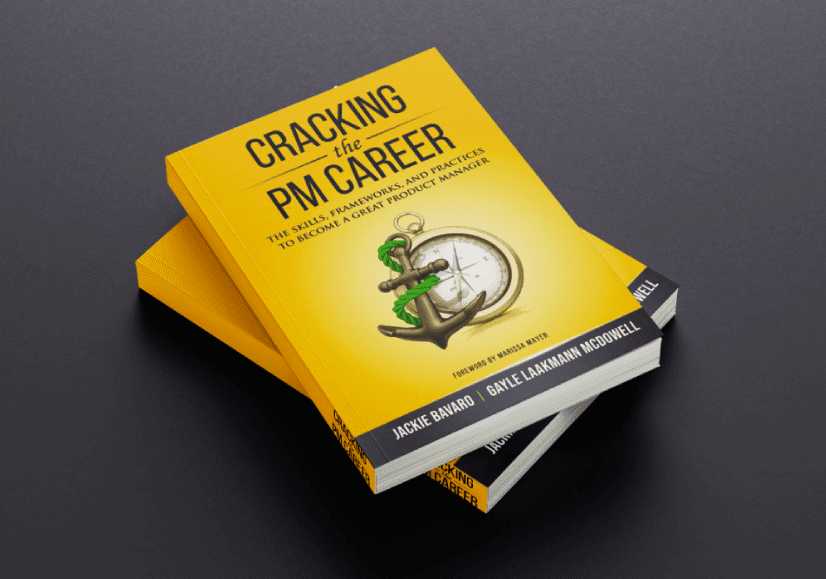
Cracking the PM Career: Your Ultimate Guide to Product Management Excellence
“Cracking the PM Career” by Jackie Bavaro and Gayle McDowell is an indispensable guide for aspiring and experienced product managers alike. It demystifies the multifaceted role of a Product Manager (PM), offering a comprehensive breakdown of the skills, frameworks, and practices required to excel in this dynamic field. From deciphering user needs and leveraging data to crafting compelling strategies and leading high-performing teams, this book provides a roadmap for navigating the complexities of product management. It’s not just about landing the job, but truly thriving and achieving greatness, both in product outcomes and career progression. The authors promise to deliver every important idea, example, and insight, ensuring that readers gain a holistic understanding of what it takes to become a truly great product leader in today’s technology landscape.
Chapter 0: Foreword by Marissa Mayer
Marissa Mayer, a founding member of Google’s PM organization and former VP of Search Products, introduces “Cracking the PM Career” by highlighting the central yet often misunderstood nature of the PM role in modern tech companies. She emphasizes that generic advice falls short in product management, where real-time judgment calls are paramount. The book, she assures, provides the context and frameworks necessary for future PM leaders to develop their own conceptual models.
Mayer shares her insights from over a decade as a PM and leader at Google, noting the varied, interesting, and challenging nature of the role, which differs considerably across companies. A crucial skill she identifies is managing through influence, as PMs rarely have direct authority over engineers. Success hinges on a PM’s ability to persuade, using data, user studies, design principles, and relationship-building.
Reflecting on her experience building Google’s Associate Product Manager (APM) program, Mayer underscores the long list of essential PM skills, including communication, listening, organization, prioritization, user and market study, and empathy. She notes that hands-on experience, coupled with ample feedback and coaching, is the best way to learn these skills. Mayer specifically lauds the Product Leader Q&As in the book as particularly helpful, offering real stories from respected leaders in the field. She concludes by endorsing the book as a must-have guide for anyone embarking on or seeking to master a PM career.
Chapter 1: Getting Started
This introductory chapter sets a relatable tone by illustrating the complexities and nuances of Product Management through the story of Asana’s “unicorn celebrations” feature. Jackie Bavaro, drawing from her own experience as Asana’s first PM and later Head of Product, emphasizes that generic advice is insufficient for the multifaceted challenges PMs face. The book’s core goal is to be the comprehensive guide she and Gayle wished they had, illuminating the path from aspiring PM to great product leader.
The authors state their ambition: to help more people become great product managers by sharing skills, frameworks, and practices learned over years, preventing others from “reinventing the wheel.” They aim to demystify career progression and connect the dots for actionable feedback. The chapter introduces the concept of mental representations as key to expertise, enabling PMs to recognize patterns in new situations and apply appropriate frameworks.
The book categorizes PM skills into five main areas: Product, Execution, Strategic, Leadership, and People Management. For each skill, the summary will detail Responsibilities, Growth Practices, and Frameworks, with advanced concepts marked with a ⚡. The chapter concludes with a guide on “How To Use This Book,” offering tailored reading paths for new PMs, those struggling with promotion, senior product leaders, and individuals focused on skill development or landing a PM job. The recurring theme is that while perfection isn’t attainable, continuous learning and structured thinking are paramount for success.
Chapter 2: The Product Manager Role
This chapter delves into the fundamental definition and responsibilities of a Product Manager, dispelling common misconceptions. It opens by acknowledging the multitude of interpretations of the PM role, from “mini-CEO” to “glue that holds the team together.” The authors distill the PM’s essence: a PM is responsible for choosing the right problems to pursue, defining success, and guiding their team to achieve successful outcomes. The core focus is on outcomes, not output, emphasizing the PM’s influence in deciding what product teams actually work on.
A key concept introduced is the Product Triad: Engineer, Designer, and Product Manager. Engineers handle the technical solution, designers focus on user experience, and PMs define and ensure the team solves the problems. The chapter stresses that the ideal is a close partnership within the triad, with shared context and mutual trust.
The Product Life Cycle is presented as a framework for understanding daily PM work, though it’s noted that modern development is iterative and overlapping. The phases include:
- Discover: Identifying and expanding understanding of customer needs and problems. The critical takeaway here is product discovery to avoid building unwanted features, exemplified by the VHS vs. Betamax war.
- Define: Narrowing the problem space to a specific, feasible slice, framing outcomes, and outlining the big picture for the team. This phase culminates in alignment on scope and success metrics.
- Design: Developing and validating solutions from both user experience and technical perspectives, involving mockups, prototypes, design docs, and usability studies.
- Develop: Turning ideas into working code, often involving project management, bug triaging, and unblocking the team.
- Delivery: Rolling out the solution to users, which requires coordination with marketing, sales, and support, as well as meticulous risk mitigation.
- Debrief: Measuring launch success, analyzing metrics, gathering feedback, and learning from the project to drive future innovation.
The chapter highlights that determining key assumptions, creating hypotheses, and validating hypotheses occur throughout all stages. Beyond product development, PMs are also expected to invest in personal growth and contribute to the broader PM team and company, through activities like recruiting, mentoring, and participating in strategic discussions.
The ultimate measure of a great PM is their ability to reliably ship great products. The authors emphasize that this isn’t about genius, but about applying reliable frameworks and best practices. They explain that becoming a great PM takes years, moving from following structured processes to developing intuition, spotting problems earlier, and eventually taking on complex strategic responsibilities, navigating ambiguity and tradeoffs. The journey, though challenging, leads to becoming a “great product manager.”
Chapter 3: The First 90 Days
This chapter focuses on the crucial initial period within a new team, illustrating common pitfalls and offering actionable strategies. It opens with the relatable anecdote of Claire, a new PM who, in her eagerness for quick wins, inadvertently alienates her team and missteps on expectations, highlighting the danger of rushing into “do, do, do!” mode without sufficient learning.
The core goal for the first 90 days is to set yourself up for long-term success, prioritizing learning and relationship-building over immediate output. Key objectives include:
- Learning: Understanding the company, team dynamics, cultural norms, product, and customers.
- Alignment: Clarifying role expectations and onboarding plans with managers and teammates.
- Relationships: Forming strong connections with coworkers.
- Credibility: Earning trust within the team.
- Quick Wins: Achieving small, impactful successes after initial learning.
The chapter emphasizes the “I’m new here” advantage, encouraging new PMs to ask abundant questions and start relationships on the right foot. It advises against stirring up trouble before understanding team dynamics.
A detailed 30/60/90 day onboarding plan template is provided, outlining key activities across HR, PM and feature teams, and coworker interactions. This written plan is crucial for managing expectations and avoiding miscommunications.
The importance of Introductory Meetings is stressed for building relationships and aligning expectations with various stakeholders:
- Your Manager: Align on working style, communication preferences, top goals, and specific deliverables. The chapter provides a comprehensive list of questions to ask your manager to understand their priorities and expectations.
- Your Onboarding Buddy: Leverage this relationship for insights into team processes, unspoken rules, and company culture. Shadowing and asking about challenges are recommended.
- Executives: Aim to make a good impression and understand their high-level concerns, focusing on company goals and major challenges.
- Close Teammates (Designer, Engineering Lead): Build rapport, align on how work will be split, and identify opportunities for immediate collaboration.
- Everyone Else: Focus on general relationship-building and understanding their priorities.
The chapter concludes with a clear set of Dos and Don’ts for new PMs:
- Dos: Leverage “beginner’s eyes,” become an expert on the product and users, build credibility through transparent thought processes, secure quick wins, find ways to belong, and make it easy for others to give feedback.
- Don’ts: Criticize existing practices immediately, shut people down (instead, use “yes, and…”), attempt major changes too soon, or assume previous decisions are immutable.
The overarching message is to prioritize learning, listening, and relationship-building in the initial months to build a strong foundation for a successful PM career.
Chapter 4: User Insight
This chapter stresses the critical importance of user insight for Product Managers, arguing that a deep understanding of users is fundamental to identifying product opportunities and ensuring successful solutions. Jackie Bavaro shares her personal formative experiences at Microsoft, where small errors in her assumptions about user behavior led to significant product failures, highlighting the danger of making decisions without directly engaging with real customers.
Responsibilities for cultivating user insight include:
- Speak with users and potential users: PMs should aim for 5-10 live conversations with users per project, focusing on absorbing emotional impact and asking follow-up questions. This is crucial for building a mental model of users and improving intuition about their needs.
- Dig beyond surface needs: Users often request specific solutions, but a PM’s job is to “un-translate” these requests to uncover the underlying problems they are trying to solve. Asking “why?” and probing questions helps reveal the true “job to be done.” The example of Xanar counterbalancing a heavy laser arm illustrates this: users asked for lighter, but the underlying need was maneuverability.
- Validate your assumptions: Treat ideas and designs as hypotheses and seek lightweight ways to test them. User testing that proves an idea wrong is a “win” as it prevents wasted effort. Areas for validation include user choice drivers, must-haves vs. nice-to-haves, learning curves, feature discoverability, and inertia.
- Plan strategic user research to look for new opportunities ⚡: At senior levels, PMs proactively explore adjacent customer problems, external trends, and new opportunities through exploratory research. This involves understanding users’ lives and workflows with open-ended questions like “Tell me about the last time you…”
- Create a user-focused culture ⚡⚡: High-level product leaders are responsible for fostering user empathy across the entire team. This can involve requiring PMs to answer support tickets, hosting regular customer visits, integrating customer insights into team meetings and documentation, and leading by example.
Growth Practices for user insight emphasize continuous development:
- Cultivate a beginner’s mindset: Actively try to experience the product as a new, unfamiliar user would, noting points of confusion.
- Connect product choices to customer insights: Explicitly link design decisions to underlying customer insights and rationale, building credibility and ensuring intentionality.
- Build your user-focused intuition: Continuously observe user research, identify patterns, and reflect on surprising outcomes to develop a faster, more intuitive understanding of users.
- Categorize user insights by priority ⚡: As PMs advance, they must exercise judgment on which usability issues to fix, balancing quality with opportunity cost. Low-priority insights should be documented, not ignored.
- Evangelize your customer insights ⚡: Senior PMs proactively share relevant customer information across the company through various channels to inform decision-making.
- Surface the key insight that unlocks the problem ⚡⚡: This is about identifying the “eigenquestion”—the critical piece of information that illuminates the problem and guides the solution, often stemming from a deep understanding of interconnected facts.
Concepts and Frameworks provide practical tools:
- Jobs To Be Done (JTBD): This framework focuses on what “job” users are trying to accomplish with a product, beyond just its surface features. The template is “When I , I want to , so I can .”
- Customer Journey: Describes the stages users go through (Awareness, Consideration, Purchase, Retention, Advocacy) and highlights that improving any stage impacts product success.
- Usability Guidelines: Principles like Nielsen’s 10 Usability Heuristics (e.g., Visibility of system status, Consistency, Error prevention) are foundational for good design. Other guidelines cover limited attention, whitespace, proportions, and accessibility.
- User Research Types: A comprehensive overview of qualitative methods like Field studies, Diary studies, User interviews, Surveys, Usability tests/Concept tests, Participatory design, and Card sorting. Each method’s utility, benefits, and caveats are detailed.
- Beta Programs: How to launch and manage them for early validation and feedback, emphasizing the “product-market fit” question (“How disappointed would you be if you could no longer use this product?”).
- User Research Mistakes to Avoid: Common pitfalls include asking the wrong question, leading the witness, conducting too many participants for qualitative studies, and not treating user researchers as partners.
The chapter concludes by reinforcing that first-hand knowledge of real people is a baseline requirement for good PMs, that PMs must translate observations into insights, and that user research is a relatively cheap way to validate assumptions and avoid costly mistakes. Great products, it stresses, address real underlying customer needs, even if users can’t articulate the best solution.
Chapter 5: Data Insight
This chapter emphasizes that while user conversations offer invaluable qualitative depth, quantitative data is essential for understanding actual user behavior, identifying opportunities, and measuring success. It highlights the limitations of qualitative data, which samples few users and can miss real-world complexities.
Responsibilities related to data insight include:
- Learn your company’s key success metrics: Understand how your company and product measure success (e.g., user growth, retention, revenue, time spent). Identify how your team’s metrics connect to the broader company goals.
- Learn how to pull data for yourself: Develop proficiency in tools like SQL or customizable dashboards to enable rapid iteration on hypotheses and data analysis, avoiding delays.
- Create a dashboard for your team: Design a comprehensive dashboard that displays key success metrics, precursors (leading indicators), actual usage patterns, and normalized/seasonalized data, updated regularly.
- Review your team’s metrics regularly: Establish a cadence for reviewing metrics to quickly spot surprises, identify causes, and celebrate milestones.
- Explore the data ⚡: Proactively investigate available data sources (e.g., raw logs, NPS reports) to discover new insights and product opportunities, as illustrated by the Google IP address location example.
- Shape your company’s key success metrics ⚡⚡: At higher levels, influence the entire company’s focus on the most impactful metrics. This involves a collaborative process to identify problems with current metrics and gain buy-in for changes.
- P&L Responsibility ⚡⚡: For senior PMs, managing a business unit’s profit and loss involves budgeting, forecasting revenue, analyzing drivers (e.g., funnel stages, sales headcount), and pulling levers to stay on track. This responsibility significantly deepens product intuition.
Growth Practices for developing data insight:
- Use benchmarks to make sense of data: Leverage industry standards or internal historical data to provide context and interpret numbers, avoiding mere memorization.
- Build your data intuition: Accelerate learning by observing others analyze data, identifying patterns, and transforming numbers into coherent stories.
- Run better experiments ⚡: Improve the success rate of A/B tests by validating ideas with insightful user research, focusing experimentation energy on critical questions, and avoiding over-experimentation that stalls decision-making.
Concepts and Frameworks for data analysis:
- Good metrics versus vanity metrics: Differentiates between actionable metrics correlated with strategic success (e.g., cohorted retention, ARPU) and misleading metrics that can rise even when things are going poorly (e.g., total registered users, daily pageviews).
- Pirate Metrics (AARRR): A memorable framework for key customer lifecycle metrics: Acquisition, Activation, Retention, Referral, and Revenue. These funnel metrics provide a holistic view of product health and are closely tied to the Customer Journey.
- A/B Testing and Statistics: Explains how A/B tests (split testing) provide real data on user behavior. Key statistical concepts for A/B tests include:
- Confidence Interval: A range that indicates the probable true impact of a change, typically at 95% certainty. If the interval includes zero, the result is not statistically significant.
- P-values: The probability of observing results if there was no actual effect, with 0.05 (5%) as the common cutoff for statistical significance.
- Beware of p-hacking: The danger of “fishing” through multiple metrics or running too many experiments until a statistically significant (but false) positive is found. The fix is to pre-register variables and re-run experiments for unexpected findings.
- Practical implications: Run experiments longer for greater precision, ignore non-significant changes, and understand that local metrics move more easily than key success metrics.
The chapter concludes by stressing that key success metrics reflect strategy, data complements user insights, PMs must get hands-on with data, and experiments should be used judiciously, not indiscriminately.
Chapter 6: Analytical Problem Solving
This chapter highlights that analytical problem-solving in product management is not about sudden genius but about structured thinking to clarify ambiguous situations and drive good decisions. Jackie Bavaro shares her personal journey at Google, where her “tenacity and pursuit of understanding” rather than spreadsheet wizardry led to her reputation for analytical skills. Great PMs are adept at detecting when teams are stuck, clearing noise, asking the right questions, and applying frameworks to complex problems.
Responsibilities for analytical problem-solving include:
- Identify and structure ambiguous problems: PMs constantly face open-ended problems (e.g., “How to increase revenue?”) and need to apply structure to them. This involves breaking problems into “slices” (e.g., new vs. existing customers, internal vs. external changes) to brainstorm solutions, transforming exploratory problems into decision-making ones. The example of Asana’s first translation choice illustrates bringing clarity to ambiguity.
- Look into the data yourself: Great PMs are willing to “get their hands dirty” by directly examining raw data to spot insights others miss, as demonstrated by Lili Rachowin calculating the cost of launch delays to resolve team disagreements.
- Help triage and reproduce bugs: As PMs, you assess and prioritize bugs based on factors like damage to users/company, impact on metrics, scale of impact, workarounds, and ease of fixing. Analytical thinking helps clarify, reproduce, and narrow down bugs for engineers, accelerating fixes.
- Systems thinking ⚡: At advanced levels, PMs understand how different parts of a system (product, company) interconnect, playing out scenarios to see repercussions and optimize for overall success. This involves thinking about feedback loops, cannibalization, funnel stages, product components, incentives, UI components, platforms, flexibility, resource requirements, and user lifecycle. It requires deep understanding of underlying infrastructure and learning from past experiences.
Growth Practices for analytical problem-solving:
- Be curious: predict and explore: Actively predict outcomes before seeing data or attending meetings. When unexpected results occur, explore them by drafting questions and seeking answers, which expands knowledge for future problem-solving.
- Don’t just point out problems: Shift from merely identifying issues to finding solutions and moving teams forward. Value should be assigned to good outcomes driven, not just problems spotted. This mindset changes when reviewing others’ work in leadership roles.
- Articulate your frameworks ⚡: Explicitly explain the logic and consistency behind decisions, building credibility, reducing team frustration, inviting constructive feedback, improving efficiency, and ultimately leading to better decision-making. Share the factors that would lead to different decisions.
- Optimize across products and over the long term ⚡⚡: At advanced levels, PMs prioritize what’s best for the entire company, not just their individual product, considering long-term implications and cross-product consistency.
- Visualize how it’s built ⚡⚡: Develop a deep understanding of underlying systems and visualize solution construction (e.g., database records, UI components) to predict side effects and efficiently solve problems or debug.
Concepts and Frameworks for problem-solving:
- The 2×2 matrix: A simple yet powerful tool for evaluating options or organizing information across two dimensions (e.g., browsable vs. searchable, limited vs. extensible), helping to highlight tradeoffs and discover “best of both worlds” solutions.
- Red/yellow/green tables: For three or more decision criteria, a table showing options (rows) against criteria (columns) with color-coded ratings (red/yellow/green) quickly visualizes performance and tradeoffs.
- “If we’re optimizing for…”: Framing decisions by identifying the best choice for each potential optimization (e.g., “If we’re optimizing for launching as quickly as possible, the best choice is…”) to help align decisions based on values.
- Decision tree: Diagramming complex problems as questions (nodes) and answers (branches) helps understand thought processes and plan for different possibilities.
- Eigenquestions: Root questions whose answers likely resolve many subsequent questions, helping teams make more robust and far-reaching decisions. Shishir Mehrotra’s YouTube example of consistency vs. comprehensiveness illustrates this.
- Five Whys: A retrospective analysis tool for identifying the root cause of a problem by repeatedly asking “Why did this happen?” It fosters accountability and prevents recurrence.
The chapter concludes by emphasizing that PMs must lead through effective decision-making, use visual aids like tables and diagrams, understand the whole system, and articulate their frameworks to drive better outcomes.
Chapter 7: Product and Design Skills
This chapter argues that product and design sense are far more than aesthetics; they’re about translating insights into effective product decisions that delight users and achieve business goals. The author shares personal anecdotes of confusing UI and undiscoverable features, highlighting the “pain when it’s lacking.” Building great products requires focusing on what’s most critical for success.
Responsibilities for product and design skills:
- Do product discovery: It’s crucial to thoroughly understand the problem before rushing to solutions. Product discovery validates user needs and solution value, preventing the creation of unwanted features. The GV Design Sprint is presented as a structured 5-day process covering understanding, defining, sketching, deciding, prototyping, and validating ideas.
- Always bring things back to the goals: Continuously refocusing the team on overarching goals (e.g., new users, engagement, monetization, specific use cases) ensures efforts are aligned and produce better results.
- Don’t hide internal goals and constraints: Be transparent about compromises and constraints (e.g., intern availability, technology stack changes) when discussing roadmaps and decisions, as hiding them can make a PM appear to have poor judgment.
- Drive product decisions by laying out your insights and reasoning: Instead of dictating, persuade by articulating frameworks and showing the intentionality behind conclusions. This moves disagreements to a higher level of insight and reasoning, allowing for data-driven resolution.
- Partner with your designer to come up with great solutions: PMs are primary partners to designers. While designers own the UX solution, PMs contribute key elements and feedback. It’s crucial not to dictate solutions but to share thoughts respectfully, recognizing design as a collaborative effort. The example of Katie Guzman’s subtle header rearrangement at Asana showcases effective PM contribution to design.
- Design ethical products: PMs are in a unique position to ensure ethical product design, considering potential harm to direct, indirect, and excluded users. Microsoft’s Harms Framework (Risk of injury, Denial of consequential services, Infringement on human rights, Environmental impact, Erosion of social and democratic structures) helps proactively identify and mitigate unintended negative consequences. Mikal Lewis’s perspective emphasizes that being ethical means prioritizing values over “winning.”
- Advocate for a balanced solution ⚡: Advanced PMs move beyond constant negotiation with designers to represent the overall best interest of the product, understanding when to invest more time in design polish and when to prioritize speed. This builds trust with designers.
- Give great product feedback ⚡⚡: At higher levels, reviewing others’ product decisions becomes key. Effective feedback is timely, focuses on the requested type of feedback, uses frameworks and rationale, offers a larger perspective, avoids prematurely dismissing “old ideas,” and respects the team’s expertise.
- Create product (and/or design) principles ⚡⚡: Establish guiding values that simplify future design choices and resolve difficult tradeoffs. These principles, created collaboratively and reinforced by leadership, help ensure consistency and align product direction.
Growth Practices for enhancing product and design skills:
- Pick the fastest and best ways to test hypotheses: Prioritize quick, lightweight tests (e.g., using coworkers, UserTesting.com, Ethnio, low/high-fidelity prototypes, open-ended conversations, A/B tests, “fake door” tests, concierge MVPs, existing data analysis) to validate risky assumptions before significant investment.
- Design for sticky usage: Intentionally plan triggers (notifications, product updates, visibility, gamification) to encourage appropriate user return, while being mindful of ethical considerations.
- Build product mindset: Cultivate a habitual approach that starts with problems, goals, and user needs, continuously asking “What problem are we trying to solve?” and connecting solutions to impact.
- Practice identifying and prioritizing goals: Systematically analyze business and customer goals for various products, identifying the “real job” they do, and prioritizing them, acknowledging tradeoffs.
- Stay current with well-designed products: Continuously use a wide variety of excellent products to build a sense of best-of-breed patterns, emerging standards, and effective UI elements.
- Develop your quality bar: Define the acceptable quality level for your product, learning to spot issues (UI quirks, usability problems, edge cases) and judiciously decide which to fix, considering cost and impact.
- Expand your perspective: Consider more radical solutions ⚡: As PMs advance, they should challenge assumed constraints (team size, deadlines, build vs. buy, business models) to envision truly transformative solutions.
Concepts and Frameworks offer tools for design and ideation:
- Wireframes, prototypes, and flows: Tools for sharing and testing ideas early, emphasizing low-fidelity and interactive models. “Flows” encourage thinking beyond static screens to the full user journey.
- Opportunity solution trees: A visualization that helps widen perspective during product discovery, linking desired outcomes to potential solutions and encouraging exploration beyond initial ideas.
- Product teardowns: A structured process of analyzing other products to gain domain knowledge, improve design sense, and spark creativity, focusing on what works well and seeking inspiration.
- Brainstorming: A structured process for generating diverse, creative solutions, emphasizing independent ideation before group sharing, inviting diverse participants, and using techniques like Crazy Eights or Brain Writing.
The chapter concludes by reinforcing the importance of starting with goals, not skipping discovery, prioritizing what matters, considering potential harmful consequences, continuously using great products, and recognizing that creativity can be developed through structured processes and cross-domain inspiration.
Chapter 8: Technical Skills
This chapter explores the nuanced relationship PMs have with technical skills, emphasizing that while direct coding may not be central, a sufficient understanding of technology is crucial for effective partnership with engineers. It addresses both those with engineering backgrounds and those without, aiming to demystify technical concepts for PMs.
Responsibilities related to technical skills include:
- Partner with engineers on product decisions: PMs should actively involve engineers in brainstorming and product thinking, as their technical knowledge often sparks innovative and feasible solutions. The example of Laika Kayani collaborating on machine learning model optimization highlights how joint problem-solving leads to better outcomes than either discipline could achieve alone.
- Learn about how the technical infrastructure impacts the product: Even without a coding background, PMs must understand how underlying systems work, asking questions about implications, ease/difficulty of building, and common constraints.
- If you know how to code, consider contributing to help out: Early in their career, PMs with coding skills can build credibility and assist teams by taking on tedious, less-desired coding tasks (e.g., simple frontend work), but should avoid eroding humility or overstepping.
Growth Practices for developing technical skills:
- Check in with your manager and engineers: Proactively seek advice on what specific technical skills or knowledge would be most beneficial for your role and team.
- Build your costing intuition ⚡: Develop the ability to roughly estimate engineering costs yourself to quickly filter solution ideas, identify misunderstandings in estimates, and create more realistic prioritization and roadmaps. This requires understanding how work breaks down and recognizing patterns from past projects within the same company. The two biggest factors in cost are reusability of components and performance requirements.
Concepts and Frameworks provide a crash course in key technical terms and concepts:
- API (Application Programming Interface): The interface for computers to communicate. Discusses internal vs. external APIs, CRUD (Create, Read, Update, Delete) operations, and data formats like XML and JSON.
- Client (frontend) and server (backend): Distinguishes between code running on the user’s device and code running on company servers, impacting speed and update processes.
- Optimizations: Common techniques to speed up processes, including background jobs/cron jobs, caching (memcache), and lazy loading.
- Deployments and development, testing, staging, beta, and production servers: Explains the stages code goes through from development to live production. Covers local sandbox (dev), tests (unit, integration), version control (git, github), branches (feature branch, master branch), commits, Pull Requests (PRs), code review, continuous deployment, production (prod), beta, staging, code freeze, and cherry-picking fixes.
- Product analytics and logging: Describes how applications track user actions as events (with instrumentation), store metadata, and process logs, often involving anonymization and aggregation.
- SQL and databases: Introduces databases as data storage systems, differentiating between general-purpose databases (MySQL, Postgres, MongoDB) and special-purpose data warehouses (Redshift) using ETL (Extract, Transform, Load). Explains SQL (Structured Query Language) for data retrieval.
- Optimizing databases: Techniques like denormalization to improve read speeds at the expense of write speeds.
- Algorithms and Data Structures: Briefly introduces hash tables for fast key-to-value mapping and running time (big O notation) to describe algorithm efficiency relative to data size (O(1), O(log n), O(n), O(n log n), O(n^2), O(2^n)).
- A few more terms: Defines Swag (Scientific Wild-Ass Guess) for cost estimates, UUID/GUID (Universally/Globally Unique Identifier) for unique IDs, and Technical Debt as the cost of taking shortcuts now.
- What does “that’s too hard to build” actually mean?: Encourages PMs to dig deeper when engineers deem an idea too hard, breaking down the meaning into high expense, poor performance/scalability, or increased technical debt. For each, it offers probing questions and potential alternative solutions.
The chapter concludes by emphasizing that partnering with engineering is the most important technical skill, that PMs don’t need a technical background to understand their product’s technology (just curiosity and questions), and that it’s crucial to dig into the specifics of “too hard to build” to find feasible solutions. PMs should also build their costing intuition over time.
Chapter 9: Writing Product Documentation
This chapter focuses on the crucial role of product documentation, emphasizing that it’s not just a deliverable, but a tool for thinking, collaboration, and improving the plan. It introduces the concept that PMs often over-rely on the document itself, rather than the underlying process of clarity and alignment it should facilitate.
Key insights for product documentation (e.g., product specification, PRD, product brief):
- Use the Documentation Process to Clarify Your Thinking: PMs should leverage the writing process to organize thoughts, anticipate risks, and refine their ideas. Spec templates can guide this, but irrelevant sections should be removed to maintain readability.
- Optimize For Making the Document Easy to Read and Understand: The primary goal is for the document to be read and understood. This means using diagrams and pictures, bullet points, concise language (moving details to appendices), highlighting controversial bits, and checking with partners on format preferences. If unread, direct conversation is better than relying solely on the document.
- Use the Spec as the Focal Point for Feedback: The spec should be a central point for gathering feedback from all relevant stakeholders. It’s recommended to share with close partners (designer, engineer, mentor/manager) first, then broader teams. Asynchronous feedback is often preferred to allow for thoughtful responses.
- Be Clear When the Spec Stops Being the Source of Truth: At some point, the source of truth shifts (e.g., to design mocks, tickets, or working code). PMs must clearly mark the spec as no longer updated and ensure all parties are aware to prevent confusion and wasted effort from outdated instructions.
- Focus on Outcomes: Emphasizes that delivering a perfect spec is not the PM’s job; the focus should be on the outcomes achieved (e.g., identifying risks, achieving alignment, successful launch), rather than just the output of the document itself.
The chapter provides an Example Spec for the book itself, demonstrating how to structure key sections like Problems, Goals, Use Cases (in Jobs To Be Done format), Timeline, Detailed Proposal, and Key Trade-Offs & Decisions. This example highlights the use of headers, bullet points, and clear articulation of reasoning and trade-offs.
The chapter concludes with Key Takeaways:
- The journey (process) is more important than the destination (final document) for product documentation.
- Don’t replace judgment with templates; understand the purpose of each section to contribute to the desired outcome.
Chapter 10: Project Management
This chapter delves into the critical role of project management for Product Managers, despite the common PM aversion to the term. It asserts that effective project management is essential to prevent delays, duplicated work, and misunderstandings. The degree of PM involvement in project management varies greatly by team and company.
Concepts and Frameworks provide an overview of modern project management methodologies:
- Agile, Lean, Kanban, and Scrum: These are highlighted as modern frameworks influencing software development.
- Lean: A philosophy focused on maximizing customer value while minimizing waste, underlying Agile.
- Agile: A flexible, iterative methodology contrasting with the rigid Waterfall approach. Agile emphasizes smaller cycles, blurred stages, and continuous feedback.
- Scrum: A popular Agile framework with specific roles (Product Owner, Scrum Master), tools (Backlog, Sprint Backlog), and processes (Sprints, Daily Standups, Sprint Reviews, Retrospectives). Many teams adapt parts of Scrum rather than adhering strictly.
- Kanban: Another Agile framework known for the Kanban board, a visual tool to organize work through workflow stages (e.g., Not Started, In Progress, Done), often with limits on work in progress.
- Product Backlog: The prioritized list of work for a team, including features, bug fixes, and research. Work can be expressed as User Stories (“As a , I want to , so that “) grouped into epics, initiatives, and themes. Cost estimates (e.g., story points) are assigned by engineers, with planning poker as a technique for consensus. Backlog grooming (or refinement) ensures the backlog is updated, prioritized, and ready.
- How design and discovery fit in: Discusses two main approaches: designers working one sprint ahead (tight collaboration, but time-boxed design) or allowing discovery/design to get a larger head start (more time for deep work, but less nimble, requiring PMs to dual-track their work).
Responsibilities for project management:
- Have an explicit conversation about your project management responsibilities: Clarify roles and expectations with your manager and engineering/design partners early to prevent misaligned assumptions.
- Groom and prioritize the backlog: Ensure a continuous flow of high-priority, ready-to-work tasks for the team.
- Create milestones and checkpoints: Break down large projects into measurable increments of value to assess progress, adjust plans, and boost team morale.
- Write good status reports: Communicate progress, recent accomplishments, upcoming work, and identified issues/risks to external stakeholders, ensuring conciseness and audience awareness.
- Check in with your team members: Regularly engage with each team member to unblock them, understand reasons for delays (e.g., being stuck, disagreement, perfectionism), and help them stay on track. This requires a respectful, collaborative approach.
- Adjust plans as things change: When projects fall behind, leverage three main levers: add more people, move the launch date, or cut scope. Cutting scope is often preferred, and PMs must understand the implications of each option.
Growth Practices for enhancing project management skills:
- Be available: Respond promptly to teammates, especially those on the feature team, to unblock them and facilitate smooth progress.
- Reduce dependencies: Proactively work to minimize external dependencies, which introduce risk and communication overhead, by exploring alternatives or phased approaches.
- Optimize around your team’s resources ⚡: Strategically select projects based on current team capacity and skills (e.g., eng-heavy work if design is constrained).
- Improve your team’s processes ⚡: Apply product skills to identify and implement process improvements (e.g., project management software, demos as forcing functions, special “Bug Bash” or “Grease Week” days) to enhance team execution.
- Sniff out risks and mitigate them ⚡: As experience grows, identify potential problems (e.g., old codebase, performance issues) and develop proactive mitigation strategies (e.g., early testing, phased rollouts, fallback plans).
- Drive quality and velocity improvements across product teams ⚡⚡: At senior levels, analyze and address systemic issues (e.g., missed targets, missed dates, distractions, slow processes) to improve overall organizational performance through coaching, resource allocation, and process changes.
- Consider partnerships and acquisitions ⚡⚡: For large problems, explore external solutions like partnerships or acquisitions as alternatives to internal development, partnering with corporate development teams and understanding integration challenges.
The chapter concludes by advising PMs to choose practices that fit their team, to not assume someone else owns project management, and to keep their team fed with actionable, high-priority work.
Chapter 11: Scoping and Incremental Development
This chapter explores the art of scoping in product management, emphasizing the critical process of deciding what to include and exclude from a release. It uses personal anecdotes from the author’s career, highlighting how early experiences with fixed timelines forced prioritization, while later experiences with fluid timelines led to prolonged, inefficient development. The central theme is that effective scoping and incremental development are crucial for launching faster, learning continuously, and ultimately delivering products that users love.
Concepts and Frameworks provide the theoretical basis for incremental development:
- Incremental Development: Breaking a large launch into multiple smaller releases, with each release providing customer value and generating learnings that guide the next. Henrik Kniberg’s skateboard metaphor vividly illustrates this: delivering a usable, though basic, version (skateboard) allows for early feedback and iteration, leading to a better final product (convertible car) than a phased but unusable delivery (tire, partial car).
- Minimum Viable Product (MVP): Defined as the version of a product that allows a team to collect the maximum validated learning with the least effort. MVPs can be working prototypes, but also non-code methods like AdWords campaigns or “coming soon” landing pages.
- Common mistakes with MVPs:
- Low quality experiments (“Burnt Pizza MVP”): Shipping a low-quality MVP may only prove that users don’t like bad quality, not that the underlying idea is flawed. MVPs must be high enough quality to meet learning goals.
- Leaving the product in an unpolished or unsustainable state: Scoping for learning is good, but neglecting the work needed to make a product sellable and sustainable can frustrate partners and lead to product discontinuation (e.g., Google Inbox).
- Time and Value: Illustrates that product improvements only deliver value once shipped. Early, incremental launches (even if basic) capture value sooner (Area A + Area B in the diagram) compared to delayed, comprehensive launches (Area B only).
Responsibilities for scoping and incremental development:
- Break work into incremental launches and validate early: PMs must carefully slice releases. Approaches include:
- By risk tolerance and friendliness: Starting with beta users who tolerate imperfection.
- By complexity of need: Addressing simple needs first, then complex ones.
- By customizability: Starting with fixed options before adding customization.
- By customer type or use case: Focusing on a specific, high-priority segment.
- By length of engagement: Building early-stage features first.
- By cost: Prioritizing less expensive work for early versions.
- Crucially, do not cut out polish: Polish and delight are vital for first impressions; it’s better to handle one use case well than many poorly.
- Don’t scope too small: While lean is good, sometimes a bit more investment (a few days/weeks) can significantly improve usability, delight, or avoid much higher future costs. Noa Ganot’s experience with database version support at an enterprise company illustrates the value of scoping larger than immediate need.
- Drive team alignment around lean MVPs ⚡: Convince teams to embrace smaller releases and even “throwaway” code by addressing concerns like code quality, leadership commitment, and perceived wasted time. Clarify the hypothesis and risks of the MVP.
- Invest in systems that support incremental development ⚡⚡: At a leadership level, identify and invest in infrastructure (e.g., design systems, reusable components, data model improvements) that enable quick prototypes and cheap early versions, facilitating rapid experimentation.
Growth Practices for mastering scoping:
- Accept that you don’t know exactly what to build: Cultivate humility, treating ideas as hypotheses to be validated. Real-world user behavior often deviates from controlled research. The bicycle helmet and Asana custom fields examples illustrate unexpected real-world outcomes.
- Use your judgment to optimize for the right time frame ⚡: Move beyond rigid rules, developing frameworks for when to add more polish or functionality based on cost, customer/business benefit, team morale, desired timeframe, and hypothesis likelihood.
- Refine and simplify your hypotheses ⚡: Untangle multiple problems and questions to identify the core, key hypothesis. Sam Goertler’s “Maximize Clarity” tagline for Asana’s ease-of-use problem exemplifies how refinement clarifies direction and simplifies tough calls.
- Encourage MVP thinking and push back against perfectionism in your org ⚡⚡: As a leader, foster a culture that values shipping and learning over perfectionism. Highlight the costs of over-investment (salaries, opportunity cost, perfecting the wrong things) and create a safe environment for failure and iteration.
The chapter concludes by emphasizing that shipping and learning as early as possible is paramount, that PMs should not ship burnt pizza, and that scoping well requires both humility and bravery to release imperfect products for the sake of learning and faster impact.
Chapter 12: Product Launches
This chapter frames product launches as a critical “pinnacle moment” for a PM’s execution skills, oscillating between a “beautifully orchestrated symphony” and frenetic “pinata breaks open” chaos. It emphasizes that a successful launch is not just about shipping code, but coordinating numerous cross-functional teams, anticipating issues, and managing last-minute decisions. The focus is on demonstrating the ability to pull off something spectacular.
Concepts and Frameworks essential for product launches:
- Launch Review: A meeting with senior management to get final approval for shipping. It should ideally happen several days before launch to address inevitable issues. PMs should be prepared to discuss results, address concerns calmly, and frame feedback logically, remembering that reviewers share the same goals.
- Launch Checklist: A crucial tool to prevent missed steps and ensure coordination. Key areas include:
- Rollout plan: Date, time, staged rollout, system pushes, war room.
- Product: Testing, QA, in-product onboarding, internationalization, launch reviews.
- Logging: Instrumentation in place, tested.
- Infrastructure: Security, stability, dark launch.
- Other reviews: Legal, finance.
- Marketing: Go-to-market materials, press release, email campaign, app store updates.
- Sales and Support Enablement: Training, documentation, tools, collateral.
- Other systems: Billing.
- Company communication: Internal announcements, launch parties.
- Go-to-Market (GTM) Strategy: The plan for launching to customers, usually owned by product marketing, focusing on reaching customers and competitive advantage.
- Positioning Statement: An “elevator pitch” articulating how customers should view the product, aligning product, marketing, and brand. Geoffrey Moore’s template is provided.
- Promotion: Various channels to make people aware of the product (e.g., online ads, PR, SEO, blog posts, events, partnerships, sales).
- Reference Customers: Happy early beta users willing to provide testimonials, crucial for social proof.
Responsibilities for ensuring successful launches:
- Don’t launch until the product is ready: Resist pressure to ship a flopping product. Leverage A/B tests and beta programs to predict success, and be willing to push the launch date for iteration and improvement.
- Ensure nothing falls through the cracks: Meticulously coordinate moving parts using checklists and clear ownership (e.g., RACI/DACI framework).
- Quality assurance (QA): Be deeply involved in testing beyond just bug finding, looking for anything that hurts user experience. This includes team review, internal dogfooding, testing bashes, testing scripts, self-testing, and paying special attention to end-to-end flows, different user flows, common cases, corner cases, design details, devices, and internationalization. The anecdote of Natalia Baryshnikova catching an offensive Australian slang phrase highlights the importance of cultural sensitivity in QA.
- Handle any launch problems: Stay calm and rational when issues arise. Immediately communicate with managers, bring key people together, consider rollback or quick fixes, and coordinate messaging with marketing/support. Conduct a retrospective afterwards.
- Celebrate and communicate back to the company: Send launch announcements, organize parties, and share post-launch updates (results, learnings) to boost morale and prevent misinformation.
Growth Practices for launch mastery:
- Partner with launch stakeholders early: Involve cross-functional partners from the beginning to ensure their input, align schedules, and make them feel invested. For last-minute blocks, understand their goals, brainstorm options, and escalate if needed.
- Use launch reviews as a way to earn credibility: Come prepared, proactively share known issues and mitigation plans, and commit to addressing feedback.
- Refine the way you think about launch dates ⚡: View launch dates as a range (best case, average, worst case) rather than a fixed point. Account for design time, engineering multipliers, buffer time, and potential learnings from tests. Clearly communicate this range to stakeholders to manage expectations and build trust.
- Take responsibility for the end-to-end customer experience ⚡: Beyond product, influence all aspects of the customer journey (marketing strategy, pricing, onboarding, sales/support enablement, external partners, advertising). Proactively learn partners’ approaches and offer valuable feedback.
- Get the launch strategy right ⚡⚡: For major launches, decide between a marketing-led big bang (fixed date, kept secret, e.g., Airbnb Experiences) and a product-led slow rollout (incremental, public, iterative). The choice depends on goals (market perception vs. engagement) and target audience. Nate Abbott’s Airbnb Experiences launch illustrates the tradeoffs and focus required for a marketing-led event.
The chapter concludes by stressing that launching is a complex, cross-functional process requiring meticulous coordination and checklists. PMs must treat the launch date as a range, take direct responsibility for quality across all aspects, and view cross-functional partners as integral team members.
Chapter 13: Get Things Done
This chapter addresses a common challenge for many PMs: struggling to “get things done,” even when highly capable. It highlights that this isn’t necessarily about working longer hours, but about optimizing how work is approached and managed. The anecdote of Jake, a promising new PM who falters after a few months due to execution issues, sets the stage.
Concepts and Frameworks for getting things done:
- What does it mean to be a person who gets things done?: It means being action-oriented (avoiding analysis paralysis), having high capacity (managing time, prioritizing, working quickly), being reliable (following through, communicating proactively), and being results-oriented (focusing on outcomes, finding workarounds).
- Personal productivity systems: Emphasizes the importance of tracking and prioritizing work. David Allen’s Getting Things Done (GTD) system is recommended, involving capturing all to-dos, processing them into “next actions,” and a weekly review.
- Set dates for work that is important but not urgent: For tasks that are important but easily deferred, assign a specific deadline just before they become “definitely too long” to avoid cumulative delays.
- Time Management: The core principle is accepting that you have more work than can be done, and then intentionally choosing what to prioritize.
- Analyze your ideal vs. actual time allocation: Create a pie chart of ideal time spent across categories (customer research, working with teams, project responsibilities, strategic thinking, recruiting, personal development, managing/mentoring, company commitments, availability) and compare it to actual usage to identify areas for adjustment.
- The 4 D’s: delete, defer, delegate, and diminish: Strategies for reducing time spent on responsibilities. Delete (say no), Defer (schedule for later), Delegate (hand off), Diminish (reduce time spent).
- Big rocks first: Prioritize scheduling time for your most important work first, then fit smaller tasks around it, analogous to fitting big rocks into a jar before filling with smaller ones.
- Get out of the office to make space for uninterrupted work: Physically changing environments (coffee shop, quiet office corner) or blocking notifications can facilitate deep, focused work.
- Beating procrastination: Justin Rosenstein’s 3-step process: Face the task, be honest about discomfort, identify one easy next step. Procrastination often stems from unclear, overwhelming tasks.
Responsibilities for getting things done:
- Have a point of view: PMs must analyze tradeoffs, form their own opinions, and effectively communicate their conclusions, rather than solely facilitating group consensus or escalating every decision. This builds trust and efficiency.
- Find ways around roadblocks: PMs should actively overcome obstacles (e.g., engineers saying “can’t be done,” lack of research support) by convincing others, finding alternative solutions, leveraging personal relationships, or escalating strategically. Victor’s story of finding a new pilot team for an internal tool illustrates this.
- Keep or renegotiate your commitments: Being reliable by doing what you say you’ll do, or proactively renegotiating if you can’t, is crucial for building credibility.
- Communicate proactively: Inform stakeholders about progress, challenges, and milestones before they ask. This is key for managing up and preventing micromanagement.
- Run multiple teams at once ⚡: A straightforward way to increase scope, requiring managing emotional barriers and finding efficiencies.
- Don’t be a roadblock ⚡⚡: As a product leader, avoid inadvertently slowing teams down. Encourage teams to report blocks and prioritize unblocking them.
Growth Practices for enhancing “getting things done” skills:
- Don’t treat work like school: Recognize that PM work involves ambiguous problems, tough tradeoffs, and self-direction, rather than discrete tasks with clear right answers.
- Focus on outcomes, not deliverables: Understand that producing a spec isn’t success if it’s not read, or if the product fails to hit metrics. The goal is the desired result, which may require work beyond just handing over deliverables.
- Share work early: Overcome the fear of sharing imperfect work by presenting “drafts” or “sketches” to get early feedback, preventing wasted effort.
- Prioritize being responsive to your team: Ensure you respond promptly to unblock teammates, filtering important notifications and reinforcing your availability.
- Be intentional about how you use real-time and asynchronous communication: Understand the benefits of each (real-time for complex discussions, async for clear records and less interruption) and choose wisely.
- Use “timeboxing” when you need to balance how long to spend on something: Set a maximum time for a task beforehand to control costs and prevent sunk-cost fallacy.
- Move faster: Identify and address root causes of slowness, such as analysis paralysis, overly fancy frameworks, excessive iteration, or a lack of trust in cross-functional partners.
- Learn how to delegate well ⚡: Hand over full ownership of responsibilities (not just tasks) to empower others, gain better results, and free up your time. Address reluctance to delegate (e.g., “no one else can do it well enough”).
- Don’t treat rules as set-in-stone ⚡: Understand that rules can sometimes be bent for better outcomes, especially when the benefit outweighs the risk. Noah Weiss’s story of defying the CEO to launch a successful Slack free trial illustrates this.
- Get your team excited about what comes next ⚡: Inspire teammates by envisioning the long-term future to encourage quicker action and reduce perfectionism on current tasks.
- Share your monthly priorities with your team ⚡⚡: Increase transparency, manage expectations, and serve as a role model by regularly communicating your own priorities.
- Set up regular workshop time to optimize your schedule ⚡⚡: For leaders, dedicate structured time for teams to bring product topics, ensuring focused discussion and freeing up 1:1s for personal development.
- Clear roadblocks for your team ⚡⚡: Leverage relationships across the organization to proactively resolve issues that block your teams, doing so with a collaborative, not tattling, tone.
- Remote Work: Dian Rosanti’s best practices include managing expectations, using work tracking software, protecting time, reducing communication overload, asking about personal well-being, creating space for unstructured bonding, and meeting in-person quarterly if possible.
The chapter concludes by emphasizing the importance of a systematic approach to work, honesty about time limitations, prioritizing “big rocks,” an active PM role, and proactive communication to achieve consistent results.
Chapter 14: Product Strategy Overview
This chapter emphasizes the crucial role of strategic work for PMs, arguing that it sets the direction, ensures value, and prevents teams from getting stuck in local maxima. It addresses the common feedback of “being more strategic” and demystifies it as a learnable skill, not an innate talent.
What it means to be strategic: Being strategic involves deciding the product’s direction, planning how to get there, understanding industry trends, creating a vision, setting ambitious goals, and effectively influencing the team towards that direction. It’s about evaluating approaches and identifying big opportunities.
The chapter contrasts strategic vs. not strategic behaviors across various areas:
- Vision: Choosing projects based on an inspiring future vs. simple requests.
- Competitive Framework: Identifying valuable customer segments vs. merely copying competitors.
- Strategic Framework: Having a clear, opinionated framework vs. unclear criteria.
- Alignment with Company Strategy: Choosing directions that support the broader company vs. just internal research.
- Systems Thinking: Considering long-term/global implications vs. short-sighted decisions.
- Long-term Roadmapping: Creating a phased plan for ambitious goals vs. vague ideas.
- Execution: Making space for strategic work vs. being stuck in incremental tasks.
- Goal Setting: Rallying around key success metrics vs. predetermined solutions.
- Planning Ahead: Proactively thinking about next steps vs. only current launches.
- Autonomy: Advocating for new projects/teams vs. just working on assigned tasks.
- Advocacy: Ensuring everyone understands the strategy vs. keeping it to oneself.
What is a Product Strategy?: The chapter defines product strategy as comprising three distinct, yet interconnected, components:
- The Product Vision: An inspiring description of the desired future, tangible and exciting, providing a North Star. (Detailed in Chapter 15)
- The Strategic Framework: The “spec for your strategy,” outlining high-level framing, goals, principles, target market, and key bets. It empowers independent decision-making and reveals erroneous assumptions. (Detailed in Chapter 16)
- The Roadmap: A prioritized, sequenced, and roughly-costed plan to achieve the vision, showing steps, milestones, and required resources. (Detailed in Chapter 17)
Creating a Product Strategy: This is a collaborative process focused on gaining buy-in from stakeholders.
- Making the time: PMs must make a mindset shift from being a “great PM for my team” to a “great PM for my whole company” to justify allocating time for strategic work. Strategic work is critical because it can uncover new, impactful directions beyond incremental improvements.
- Consider quick approaches: For smaller, less controversial areas, use Draft and Feedback, Full-Day/Half-Day Strategy Retreats, or 30% Time for research and brainstorming.
- Creating a large strategy: For higher stakes, a collaborative process is crucial, following Alex Hood’s 7-step process:
- Dive into lots of input: Review company strategy, customer insights, competitive analysis.
- Kick it off: Set the tone, clarify stakeholders (DACI chart), and establish timeline.
- Checkpoint 1—key hypotheses: Divide into workstreams, present hypotheses, and define key questions for validation.
- Checkpoint 2—draft strategies/bets: Research workstreams, draft overarching strategies (strong, controversial assertions), and collaboratively refine them.
- Checkpoint 3—declare: Finalize and get approval from key stakeholders/executive committee.
- Create artifacts: Thoroughly communicate the strategy through strong visuals, decks, and documents, designed for reference and reuse.
- Create a scoreboard: Broadcast how success will be measured and keep it updated for accountability.
The chapter addresses the challenge of executives wanting a say but not joining meetings by suggesting dedicated one-on-one “brain dump” or feedback sessions.
Share your strategy and evangelize it: After approval, continuously communicate and reinforce the strategy through presentations, internal talks, and linking daily decisions back to the strategic pillars. This is crucial for strategy to “stick.”
Key Takeaways:
- Strategy is more important than feature work: It ensures efforts are directed correctly and generate significant impact.
- A complete product strategy has a vision, framework, and roadmap: These components work synergistically.
- Communicate your strategy until it sticks: Repetition and consistent reinforcement are vital for organizational alignment.
Chapter 15: Vision
This chapter focuses on the product vision, emphasizing its role as an inspiring description of the future that motivates teams and guides product development. Lenny Rachitsky’s story of transforming Airbnb’s booking experience with the “100% Instant Book” vision highlights how an ambitious, tangible vision can shift focus from incremental fixes to transformative solutions.
Responsibilities for creating a compelling vision:
- Brainstorm an ambitious vision ⚡: Encourage the team to envision the “ideal experience” without current constraints. This often involves removing assumed limitations (e.g., speed, steps in user journey, technology, investment). The chapter provides questions to spark audacious thinking, such as: “What if we started a new company from scratch?”, “How could we make it 10x faster?”, “What would a delightful experience be?”, or exploring cutting-edge technologies.
- Make your vision concrete and inspiring ⚡: A good vision is like an infomercial: it starts by emotionally connecting with a pain point, then presents a compelling “better way,” and finally delves into details that convince and excite the audience. The goal is to leave people “sufficiently inspired.” PMs should find an authentic style to present this vision, whether humorous or calm.
Growth Practices for developing vision skills:
- Champion new opportunities outside of your scope ⚡: At senior levels, PMs identify and advocate for greenfield opportunities beyond their immediate product area, influencing company direction. Dare Obasanjo’s advocacy for Microsoft’s adoption of the Chromium browser engine (moving beyond Bing ad revenue to browser strategy) exemplifies this, highlighting the power of influencing leaders through rationale and persistence. This also accelerates career growth by leading new initiatives.
- Organize company-wide vision brainstorming days ⚡⚡: As a leader, host dedicated events (like hackathons) where participants from across the organization can share ideas for the product’s future vision. Tips include inviting diverse perspectives, creating prize categories, blocking out preparation time, using shared presentation decks, and following up to integrate ideas into the roadmap. These events foster creativity, team bonding, and strategic thinking.
Frameworks related to vision:
- Work Backwards: Amazon’s approach of starting with a press release to define the ideal customer experience and then working backward to figure out the required product. This method helps avoid biases towards existing solutions or short-term goals and encourages a focus on the ideal, long-term vision.
Key Takeaways:
- Be ambitious and inspiring: The vision should push boundaries and excite people; pragmatism comes later when planning the roadmap.
- A great vision is like an infomercial: It effectively communicates pain, solution, and compelling details to inspire.
- Find green-field opportunities to champion: Identifying and creating visions for new, unexplored opportunities can significantly accelerate career growth and influence company direction.
Chapter 16: Strategic Framework
This chapter delves into the strategic framework, the second core component of a product strategy. It explains that while a compelling vision inspires, the strategic framework articulates the principles, insights, and decisions that underpin that vision, connecting feature ideas to team and company-wide goals. It argues that the “best” products don’t always win; distribution, business model, brand, and competitive positioning are equally crucial.
The introduction emphasizes that the strategic framework can vary greatly in depth, from a few paragraphs to extensive documents, depending on its complexity and controversy. The example of Slack’s “We Don’t Sell Saddles Here” memo illustrates how a strategic framework can align a company around core principles (organizational transformation, exceptional execution) rather than just features. Ultimately, a well-defined strategic framework empowers teams, ensures efficient movement in the right direction, and makes flaws in strategy easier to identify and fix.
Responsibilities for building a strategic framework:
- Learn your business, market, and industry to spot opportunities and obstacles ⚡: PMs must understand the broader ecosystem to craft effective strategies. This involves researching:
- Business: Company mission, vision, strategy, competitive positioning, priorities, milestones, SWOT analysis, and business model.
- Market and Industry: Target users, competitors, market perception, market segmentation, trends, and resulting opportunities/obstacles.
- Partnering with product marketing is often key for this.
- Get crisp on your target customer and pain points ⚡: Clearly defining the target customer and their most significant pain points is crucial for effective product decisions. Small misunderstandings here can lead to big problems. Mckenzie Lock’s experience at a consumer startup, shifting strategy from “saving time” to “saving money” based on data and Facebook Ad experiments, highlights the value of validating intuitive insights into core customer needs. The focus should be on delivering solutions that are 10x better than alternatives to overcome user inertia.
Growth Practices for mastering strategic frameworks:
- Address questions and tradeoffs in your strategic framework ⚡: A good strategic framework anticipates and answers likely stakeholder questions and justifies tradeoffs. It should be simplified and clarified, grouping common “whys” and consistently explaining the logic behind decisions.
- Align your strategy with the bigger picture ⚡: Ensure your team’s strategy ladders up to broader company, product line, and divisional strategies. Explicitly connect your strategy to higher-level goals, using exact phrases from existing strategies. Proactively seek out and understand other company-wide strategic documents and discussions.
Concepts and Frameworks for strategic analysis:
- Customer Purchase Decision-Making Process:
- AIDA (Attention, Interest, Desire, Action): A classic model for guiding customers through the purchasing funnel.
- REAN (Reach, Engage, Activate, Nurture): Expands AIDA to include post-purchase behavior and relationship nurturing.
- Marketing Mix (4 Ps): A framework for understanding a product’s marketing approach: Product, Price, Promotion, and Place (Distribution). It highlights how these elements interrelate and contribute to market success.
- SWOT Analysis (Strengths, Weaknesses, Opportunities, Threats): A structured way to analyze internal (Strengths, Weaknesses) and external (Opportunities, Threats) factors affecting a product or company.
- The Five Cs (Situational Analysis): Provides a comprehensive overview of a product’s environment: Company, Competitors, Customers, Collaborators, and Climate (macro environment).
- Porter’s 5 Forces: A framework for industry analysis, assessing competitive intensity and profitability potential based on: Industry Rivalry, Buyer Power, Supplier Power, Threat of Substitutes, and Threat of New Entrants.
- Pricing Models: Discusses general approaches (Cost-Plus, Value, Competitive, Experimental) and specific models (Free, Ad-Supported; Freemium; Tiered; À La Carte; Subscriptions; Free Trial; Razor Blade Model). Emphasizes triangulating on a good price and, for complex cases, consulting pricing firms.
The chapter concludes by reinforcing that the best product doesn’t always win; success requires considering market, pricing, competition, and other business factors. It stresses focusing on tradeoffs and principles in the strategic framework, making it an opinionated guide for decision-making. Finally, it highlights the importance of connecting the dots for teammates, explaining how their work aligns with the company’s mission and strategic direction.
Chapter 17: Roadmapping and Prioritization
This chapter explains that a product roadmap is far more than a simple plan; it’s a strategic tool that balances competing priorities and aligns a team’s work with the overall vision. Using the analogy of a cross-country road trip, it argues that a blind pursuit of the destination, without considering goals, constraints, and priorities, can lead to suboptimal outcomes. The PM’s role is to decide what work to tackle and in what order, ensuring alignment with strategy and vision.
Responsibilities for roadmapping and prioritization:
- Prioritize and sequence work: Creating a roadmap involves applying sound judgment to make tradeoffs, rather than blindly following a formula. Key factors to consider include:
- Estimated Benefits: Dissatisfiers/Satisfiers/Delighters (Kano Model), size/number/type of user benefit, completeness of use case, business benefit, internal benefit, progress towards vision, and risk/certainty of success.
- Estimated Cost and Constraints: Size of work, team capacity/skills, within-team dependencies, costing risk, and other risks (security, scalability).
- The chapter stresses avoiding solely “snacking” on low cost/low benefit work.
- Ensure your work aligns with the strategy ⚡: Each project on the roadmap must explicitly connect to the broader product and company strategy. Adriana’s story of pivoting from an API request to a new product demo that aligned with revenue goals illustrates the importance of this strategic alignment. Work that doesn’t align should be seriously re-evaluated.
- Create a long-term roadmap for your team ⚡: Roadmaps are crucial for:
- Seeing the bigger picture: Ensuring small decisions add up to significant impact.
- Planning/Advocating for resources: Justifying headcount and budget.
- Supporting partner teams: Providing advance notice for marketing, sales.
- Starting important discussions: Surfacing strategic shifts or team needs.
- Future-proof decisions: Guiding current work with future changes in mind.
- Motivating the team & recruiting: Exciting people about future work.
- Tips to avoid pitfalls: Don’t treat as set-in-stone, regularly revisit, ensure consistency in interpretation, group by theme/initiative/goal, roughly cost investments, and compare to sprint backlog.
Growth Practices for roadmapping and prioritization:
- Don’t overlook the obvious wins: Prioritize simple, high-impact improvements (e.g., changing default settings, fixing onboarding bugs, optimizing signup/monetization flows, internationalization) that significantly move metrics, even if they aren’t “cool” new features.
- Learn how to say “no” ⚡: This is a crucial skill for PMs. Techniques include:
- Let your roadmap say “no” for you: Visually demonstrate tradeoffs by showing planned projects.
- Reframe “no” as a good thing: Frame it as helping the team and making decisions in the best interest of the business and customers.
- Make people feel good about your “no”: Empathize with their problem, share alternate solutions, and thank them for ideas.
- Learn from others & reflect: Observe how effective people say no and reflect on past situations.
- Set up principles: Use company-wide principles to justify decisions, especially for enterprise features. Michelle Thong’s experience with government services highlights the need to visually demonstrate overload.
- Don’t panic when executives torpedo your roadmap ⚡: View executive intervention not as unreasonableness, but as a sign of different context or priorities. Back up to shared goals, identify the highest-level disagreement, and engage in logical discussion about tradeoffs (e.g., using A/B tests, discussing resource allocation). Assume good faith.
- Prioritize competing goals with a balanced portfolio ⚡: Instead of a single stack-ranked list, allocate percentages of investment to different strategic goals (e.g., user growth vs. revenue, customer requests vs. big bets, core business vs. new initiatives). This allows for managing tradeoffs at a higher level. Implementation methods include allocating team size, estimated cost, fixed order, or through goals.
Concepts and Frameworks related to planning:
- Return on investment (ROI): A simple concept for evaluating work based on expected benefits vs. costs. Even without direct revenue projections, PMs assess whether a project’s potential gains justify its estimated time and resources.
- Outcome-based roadmaps: Instead of just listing features, roadmaps focus on the desired outcomes (e.g., “reduce time-to-schedule-an-event by 20%”). This keeps teams focused on results and prevents over-commitment to specific solutions. The chapter discusses ignoring solutions, considering solutions but not listing them, or including both outcomes and solutions.
- Voice of the Customer: A process where business leaders (rather than PMs) collect and rank priorities from customer-facing teams, providing a single, aligned list of customer and market needs. This improves cross-functional trust and morale. Tips are provided on coordination, role clarity, and translating requests.
The chapter concludes by emphasizing the importance of long-term roadmaps (despite their dynamic nature), the need for real judgment in prioritization, treating the roadmap as a balanced portfolio of investments, and ensuring it aligns with the overall vision and strategic framework.
Chapter 18: Team Goals
This chapter focuses on the critical role of team goals (often called OKRs or commitments) in guiding day-to-day decisions and aligning teams towards a shared measurement of success. It opens with an anecdote about an engineer inadvertently working on a lower-priority project due to a lack of clear goals, highlighting how easily teams can go off-track without a guiding light. The chapter emphasizes that goals tie long-term strategy to tangible actions, preventing wasted effort and ensuring everyone is pulling in the same direction.
The importance of setting team goals:
- Forces thoughtfulness about work’s purpose.
- Supports cross-team communication and alignment.
- Creates anchors for reflection and learning.
- Helps teams make better tradeoffs and decisions.
- Nudges people to finish and ship work.
- Enables leaders to ensure strategic alignment.
- Establishes clear expectations for success.
“If you don’t know where you’re going, you’ll end up somewhere else.”
Responsibilities for team goals:
- Create Team Goals: PMs must ensure their team sets good goals, aligning them with strategy and roadmap through a collaborative process. All substantial team work should contribute to a goal. Goals should be S.M.A.R.T. (Specific, Measurable, Achievable, Relevant, Time-Bound), focusing on outcomes (e.g., user engagement, revenue) rather than just launches. Examples of good vs. bad goals are provided for internal launches, stability/security, growth, and feature launches.
- Ensure the goals are met: Establish a regular cadence for checking on goals. When a goal is off track, proactively inform stakeholders and consider options like reallocating resources within the team, clearing other responsibilities, asking for more resources (e.g., borrowing people, contractors), or renegotiating the goal.
Growth Practices for optimizing team goals:
- Include counter metrics in your goals: To prevent unintended negative side effects, define “health metrics” (e.g., Customer Acquisition Cost, retention, bandwidth usage) that should not be adversely affected while pursuing the main goal. This forces holistic thinking about impact.
- Use goals to motivate your team ⚡: Goals can be highly motivational. PMs should consider:
- Incentives: Design goals to encourage desired behaviors (e.g., quality, no P0 bugs).
- Grouping: Combine small pieces of work into larger goals to focus on bigger impact.
- Breaking down: Divide large projects into multiple goals (e.g., beta program goal before launch goal) to create intermediate milestones and celebrations.
- Separating work types: Create distinct goals for different work types (e.g., design improvements, new features) to ensure all valuable work feels meaningful.
- Picking Targets ⚡: Decide on target ambition (e.g., 10% vs. 100% lift) based on:
- Company Needs: What the company needs from your team (e.g., for fundraising, investor expectations).
- Achievability: Compare planned work to past baselines and make educated guesses on impact.
- Impact on Decision-Making: High targets can foster innovation and justify more resources but risk demoralization if missed. Low targets manage expectations but may reduce effort.
Concepts and Frameworks for goal setting:
- OKRs (Objectives and Key Results): A popular format where Objectives are aspirational goals/intents (e.g., “improve new user experience”), and Key Results are 3-5 measurable milestones that contribute to the objective (e.g., “improve onboarding completion rate from 50% to 75%”). Objectives can be “aspirational” or “committed.” Teams grade OKRs quantitatively at the end of each quarter.
The chapter concludes by highlighting that team goals drive cross-team alignment and reinforce strategy, and that success is more than just launching something new, as goals capture the desired positive benefit and foster reflection on performance.
Chapter 19: Personal Mindset
This chapter dives into the critical role of personal mindset for PMs, arguing that internal qualities like growth mindset, intellectual humility, maturity, and equanimity are just as important as external skills for long-term success and effective leadership. The anecdote of Patrick, a new PM whose overconfidence and fixed mindset lead to a costly product failure, underscores the necessity of self-awareness and continuous learning.
Responsibilities rooted in personal mindset:
- Growth Mindset: Embracing the belief that talents can be developed through effort and persistence, contrasting with a fixed mindset where abilities are seen as inherent. Satya Nadella’s transformation of Microsoft culture around “learn-it-alls” exemplifies this. A growth mindset encourages challenging oneself and continuous learning, while a fixed mindset might lead to avoiding challenges. PMs should identify triggers for their fixed mindset and reframe challenges as opportunities for growth.
- Put aside your ego: A PM’s ego can hinder great product management by: hoarding praise, avoiding “tedious” work, rejecting others’ good ideas, or being too self-centered. Instead, PMs should celebrate teammates’ accomplishments, be willing to do whatever it takes, welcome feedback, and admit mistakes. This leadership behavior ultimately earns respect and recognition.
- Intellectual humility: The paradox of being smart yet always open to being wrong. This trait, closely linked to a growth mindset, encourages questioning one’s own ideas, soliciting feedback, and exploring alternatives, leading to better outcomes and more engaged teammates. The chapter notes that learning more about a subject can ironically make it harder to maintain intellectual humility.
- Maturity: Essential for leadership, building trust, and attracting respect. Key qualities include: respect for expertise, awareness of context, seeing nuance, restraint, diplomacy, good judgment, fostering a healthy culture, discretion, socially appropriate behavior, controlling emotions, and admitting mistakes. It cautions against vague “maturity” feedback and emphasizes specific behaviors.
- Equanimity: Maintaining calmness under pressure. A PM’s mood significantly impacts team morale. Staying calm projects confidence and competence, allowing the team to focus. Regularly managing stress through breaks, healthy habits, and mindfulness is crucial.
Growth Practices for cultivating a strong personal mindset:
- Don’t let Impostor Syndrome hold you back: Recognize that the feeling of being an undeserving “fraud” is common, even among successful individuals. Understand that it doesn’t mean you are unqualified. Address it by asking questions, applying for deserved roles, accepting opportunities, and avoiding excessive work hours.
- Build Internal Strength and Confidence ⚡: As PMs take on more complex, ambiguous work with no clear “right answer,” they must become comfortable with uncertainty, tough decisions, and the reality of less praise and more complaints at higher levels. This involves reframing challenges as signs of working on important problems.
Concepts and Frameworks for self-awareness and problem-solving:
- The Drama Triangle and Shifting Above the Line: Introduced by The Conscious Leadership Group, this framework distinguishes between being “below the line” (closed, defensive, committed to being right, playing roles of victim, villain, hero) and “above the line” (open, curious, committed to learning). While it’s natural to experience “below the line” feelings, effective problem-solving requires shifting to an “above the line” mindset by reflecting on one’s own role and learning from experiences.
The chapter concludes by asserting that a PM’s mood and mindset profoundly affect their team, that maturity involves slowing down, paying attention, and respecting others, and that everyone experiences doubts, which, for a PM, can be a sign of advancing to tackle harder problems.
Chapter 20: Collaboration
This chapter highlights that collaboration is a fundamental skill for PMs, emphasizing that success hinges on effectively working with all teammates and partners. It opens with the anecdote of Maya learning to navigate a difficult relationship with a prickly PM, Kim, by understanding Kim’s underlying motivations and intentionally building trust. The core message is that PMs are responsible for ensuring smooth teamwork, even with challenging individuals.
Responsibilities for effective collaboration:
- Treat people like partners: Adopt the mindset that everyone you work with (engineers, designers, researchers, sales, marketing, legal, etc.) is an equal and valuable partner. Including them early, taking their concerns seriously, integrating them into meetings, and using inclusive language like “our launch” fosters a sense of teamwork and prevents them from disengaging.
- Create Psychological Safety: Acknowledge that psychological safety (the belief that one won’t be punished or shamed for mistakes) is crucial for high-performing teams. PMs can inadvertently undermine this by being overly critical or letting retrospectives devolve into blame. Checking in with the team and addressing such issues are vital.
- Resolve conflicts peacefully: Conflict is inevitable in complex work. Great collaborators address differences early, finding higher-level agreements and assuming positive intent. They avoid festering issues, accusations, and blaming. If necessary, seeking help from a mentor or manager to diffuse a situation is acceptable.
- Ask prickly people to mentor you: A clever tactic to transform adversaries into allies is to ask them for their expertise or advice. Niffer Nan’s story of asking a difficult engineering lead to mentor her on technical aspects exemplifies how this can quickly defuse power struggles and build advocacy.
Growth Practices for improving collaboration skills:
- Make time to bond with coworkers: Building personal connections and friendships makes work more enjoyable and creates a buffer against misunderstandings. This can involve lunches, coffee breaks, social activities outside work, or online bonding for remote teams. These relationships also form the foundation of a future professional network.
- Optimize for long-term relationships: Prioritize enduring positive relationships over short-term project gains. This perspective makes it easier to compromise, invest in others’ growth (even if it means initial inconvenience), and avoid damaging reputations.
Concepts and Frameworks for understanding and improving interactions:
- Personality Assessments: While inherently imperfect, these tools (like Myers-Briggs) can help PMs understand diverse communication and work styles, fostering empathy.
- The Big 5: Describes personality across five independent attributes: Conscientiousness, Extraversion, Agreeableness, Neuroticism (Emotional Instability), and Openness to Experience. PMs should understand how their own traits might impact their work and others, and how to mitigate downsides.
- The Enneagram: Identifies nine personality types based on core desires and fears (e.g., Reformer, Helper, Achiever, Individualist, Investigator, Loyal Skeptic, Enthusiast, Challenger, Peacemaker). Learning about these types can help PMs better understand and work with their coworkers by appreciating different motivations and communication preferences. It emphasizes that the Golden Rule (“do unto others as you would have them do unto you”) is wrong, as different people want to be treated differently.
The chapter concludes by asserting that good relationships simplify work and improve long-term outcomes, that resolving conflicts starts with shared goals, and that understanding different personality types is crucial for treating people in ways that resonate with them.
Chapter 21: Influencing without Authority
This chapter addresses the core challenge of product management: influencing without direct authority. It debunks the misconception that PMs, lacking direct reports from engineers or designers, are powerless. Instead, it argues that a PM’s job is to persuade, leveraging shared goals, trust, and well-reasoned arguments. The author’s personal anecdote of facing a CTO’s resistance due to a communication misstep highlights that effective influence is about understanding the audience’s values and tailoring your message.
Responsibilities for influencing without authority:
- Build relationships: Good work relationships make everything easier, fostering trust and willingness to collaborate. These don’t need to be deep friendships but should be friendly and respectful. The author’s story of a delayed Google launch averted by her manager’s pre-existing relationship with an infrastructure team illustrates the power of connections. Proactively seek “getting to know you” conversations and join company groups.
- Earn credibility: Credibility is key to influence and autonomy. It’s built by demonstrating sound judgment, articulating frameworks, striking a sweet spot of confidence (neither self-doubting nor arrogant), and reliably delivering on commitments (and making sure others know it). This takes time but is essential for others to trust your decisions.
- Drive decisions: PMs must be proactive in identifying when a decision is needed and taking responsibility for making it. This involves understanding different viewpoints, asking probing questions, doing necessary research, and identifying conflicting goals.
- Assert your decisions tactfully: Avoid endless discussions by judging when enough is enough. Use a balanced approach like: “In service of moving fast, I’d like to make a decision here… Does that sound okay to everyone, or would anyone like to escalate?” This encourages deference while allowing for genuine, high-stakes disagreement.
- Move quickly: Avoid “analysis paralysis” by making decisions with incomplete information, especially for reversible ones. Unresolved decisions drain team energy. When escalating, focus on clarifying which goals are more important, not just specific solutions.
Growth Practices for enhancing influence:
- Choose the right time to share your ideas: Timing matters significantly. Ideas are best received during relevant planning cycles or when teams are receptive (e.g., after a big project finishes, or before new hires).
- Include people in the creation to get their buy-in: Leverage the psychological effect of ownership by involving stakeholders in product, process, and plan creation. This can involve early kickoff meetings, structured brainstorming, allowing others to take credit, and framing solutions as “team solutions.”
- Build cross-departmental trust ⚡: As PMs advance, understanding and representing the whole company, not just their team, becomes crucial. This involves learning about other departments’ concerns, being an ally, and sharing your team’s work broadly (e.g., Q&A sessions at other teams’ all-hands meetings).
Concepts and Frameworks for managing stakeholders:
- Stakeholder management: A structured approach to dealing with diverse individuals who can impact a project.
- Step 1: Deeply understand your stakeholders and their goals: Learn their priorities, goals, and fears, including financial or recruiting impacts. Ask “What would I have to believe to come to those same concerns?”
- Step 2: Clarify the decision-maker and other roles: Use the DACI/RACI model (Driver/Responsible, Accountable/Approver, Consulted, Informed) to formalize roles and clarify who makes the final decision versus who provides input or is merely informed. This may involve negotiations.
- Step 3: Explain the process and communication plan: Lay out the timeline and update cadence for status reports (e.g., weekly or bi-weekly) to build trust and reduce questions.
- Step 4: Make each stakeholder feel heard: Actively listen, take notes, reflect back what you’ve heard, and ensure they feel understood, even if you don’t agree with their position. This is crucial for diffusing tension and building rapport.
The chapter concludes by stressing that PMs must understand people’s motivations before influencing them, that listening is key but consensus isn’t always the goal, and that timing matters for effective influence.
Chapter 22: Communication
This chapter asserts that effective communication is far more than just being understood; it’s about understanding your audience, picking up on their cues, tailoring your message, and proactively addressing potential disconnects. The author’s personal story of misunderstanding a CTO’s philosophical objection highlights that clarity alone isn’t enough; persuasion requires leveraging the audience’s values.
Responsibilities for effective communication:
- Learn what your audience thinks and cares about: Communication isn’t about transmitting your thoughts, but closing the gap between your state of mind and theirs. Understand their goals, worries, and what data/arguments resonate with them. The example of pitching a product to an executive team more interested in user growth than revenue demonstrates this.
- Get clear about what you want to say: Clear thinking precedes clear communication. Use diagrams, tables, different organizational structures, or simply “sleep on it” to distill thoughts into concise, impactful points (e.g., three key points).
Growth Practices for refining communication skills:
- Tailor your communication for your audience and goals: Before communicating, define the desired response and tailor content to address the audience’s goals and worries. Make messages scannable (bullets, bold, headings, tl;dr/executive summary) and clearly state calls to action.
- Catch miscommunications as they happen: Pay attention to non-verbal cues, strange questions, or unexpected reactions as signals of misunderstanding. Techniques include defining key terminology, reflecting back what you heard, and following up verbal agreements in writing.
- Redirect conversations to the right issues: When discussions are unproductive, identify the underlying, more fundamental issue. The example of a button placement debate that’s actually about discoverability for a target audience illustrates this.
Concepts and Frameworks for various communication formats:
- Best practices for written communication:
- Good opening: Clear, descriptive subject lines for emails. For chats, get straight to the point.
- Keep it short and scannable: Use bullet points, headings, formatting, and tl;dr summaries. Move non-critical details to appendices. Use visuals and humor appropriately.
- Make the call to action clear: Be explicit about what needs to be done, by when, and where feedback should be given. Don’t bury requests.
- Know when to move to a live conversation: Shift to live discussion for lengthy email threads, misunderstandings, arguments, or sensitive topics.
- Hone your skills: Get mentors to review important communications.
- Best practices for live conversations:
- Be respectful of people’s flow state: Avoid interrupting deep work.
- Don’t ramble: Know what you want to say, except when demonstrating thought process (e.g., mentoring).
- Best practices for running meetings:
- Have goals and an agenda: Send in advance, formalize with time slots for larger groups.
- Assign a note taker: Rotate responsibility.
- Match the meeting format to the goals: Keep decision-making groups small; split large meetings into subgroups.
- Ensure everyone has a chance to share thoughts: Send info in advance, proactively ask for input.
- Avoid meetings if you don’t need them: Prioritize async communication where possible; shorten meetings when feasible.
- Best practices for presentations:
- Get comfortable: Find a public speaking role model, chit-chat with the audience, arrive early, and practice.
- Be clear: Explicitly state implications and takeaways. Check speed and content with the audience. Don’t “bury the lede.”
- Keep people engaged: Show energy, use images/keywords on slides (not full text), and incorporate examples, quotes, and humor. Consider Toastmasters for practice.
The chapter concludes by reiterating that communication is about closing the mental gap between speaker and audience, always keeping goals in mind, and being respectful of people’s time in all communication formats.
Chapter 23: Motivation and Inspiration
This chapter delves into the art of motivation and inspiration as core leadership skills for PMs, emphasizing that simply providing reasons isn’t always enough to drive action; sometimes, you need to inspire. The anecdote of Dr. Steve’s personal story about foam rollers, which motivated the author more than nineteen previous logical arguments, illustrates this power. The chapter highlights that great leaders employ diverse styles—from charismatic to authentic—to make people want to follow.
Responsibilities for motivation and inspiration:
- Keep your teammates motivated: Understand that people are not robots and are driven by diverse factors. Tailor motivation strategies to individual team members by understanding their drivers (e.g., purpose, mastery, competition). Proactively ask what excites them.
- Inspire executives and people across the company to believe in your team’s work ⚡: Position your team as a valuable investment by leveraging your vision, track record, and enthusiasm. Continuously reinforce your team’s higher purpose and successes through guest presentations, elevator pitches, and strategic meetings.
- Recruit people to your team ⚡⚡: At senior levels, PMs are responsible for attracting talent. This involves actively seeking out and pitching both external and internal candidates, sharing your vision, highlighting alignment with their interests, and emphasizing mutual benefits.
Growth Practices for fostering motivation:
- Build up your internal conviction: To inspire others, genuinely believe in the work you’re doing and its positive impact. Reflect on why you chose your team/product and articulate its value. If conviction is lacking, it might signal a need to move to a new team.
- Use motivation to hit deadlines, but sparingly: For critical deadlines, PMs can rally teams to work extra hard, but this should be used judiciously to avoid resentment and burnout.
- Get clear on the reasons it’s worth it: Explain the compelling business/customer reasons (e.g., customer benefit, revenue loss, external constraints) and connect them to the bigger picture.
- Ask in the right way: Be honest about problems, acknowledge any personal fault, frame it as collaborative problem-solving, and reinforce shared responsibility.
- Look for ways to make the extra work fun: Incorporate food, friendly competition, memorable tokens, music, or social activities to turn crunch time into a bonding experience. PMs should work alongside their teams during these periods.
Concepts and Frameworks for understanding motivation:
- Intrinsic vs. Extrinsic Motivation: Distinguishes between motivation driven by external rewards/punishments (extrinsic) and internal satisfaction/purpose (intrinsic). Behavioral economics shows that extrinsic motivators can paradoxically reduce intrinsic motivation, especially for creative work (e.g., the “two favors” story, children drawing for rewards). Surprise rewards, however, do not harm intrinsic motivation.
- Three drivers of intrinsic motivation (Daniel H. Pink’s “Drive”):
- Autonomy: Providing self-direction rather than micromanagement. PMs can foster this by setting outcomes, treating teammates as equals, and involving them in goal/strategy setting.
- Mastery: Fostering a sense of progress, skill development, and tackling challenges. This involves setting goals, conducting retrospectives, and offering intellectually stimulating projects.
- Purpose: Connecting work to a larger meaning or service beyond oneself. PMs should create a clear team vision, constantly link work to the broader purpose, and share their genuine enthusiasm.
- Affiliation Motivation: A type of purpose driven by a sense of belonging and strong interpersonal relationships. Supported by team bonding opportunities and celebrations.
The chapter concludes by emphasizing that increasing autonomy, mastery, and purpose leads to greater team effectiveness. PMs must first be inspired themselves to genuinely inspire others. While sprinting for deadlines is costly, it can be effective when the reasons are clear and the experience is managed to be a bonding one.
Chapter 24: Ownership Mentality
This chapter introduces the concept of an ownership mentality as a critical leadership trait for PMs, emphasizing the willingness to take full responsibility for leading a team to success, even for tasks outside the explicit job description. The analogy of a college group project highlights the need for PMs to “figure it out” when others fall short, demonstrating initiative and readiness for expanded responsibilities.
Responsibilities for cultivating an ownership mentality:
- Fill in the whitespace: PMs should proactively identify tasks that need doing but aren’t explicitly owned by anyone else and take responsibility for them. Sage Kitamorn’s story of authoring a quality checklist for a product that lacked a clear owner illustrates this. This can be delicate if it steps on others’ toes, requiring diplomacy or managerial guidance.
- Take responsibility for the full customer experience: Beyond product features, PMs must ensure the success of all non-product partner teams (e.g., marketing, sales, customer support) by setting up checkpoints, understanding their processes, and influencing their efforts to align with the product’s goals.
- Proactively share your team’s progress, challenges, and accomplishments: As the PM, it’s your responsibility to ensure stakeholders (especially leadership) are aware of your team’s work, successes, and challenges. Jules Walter’s insight about educating executives on challenges to secure resources and recognition is key. Sharing accomplishments boosts team morale and secures future opportunities.
Growth Practices for developing an ownership mentality:
- Find the answers for other people: When asked questions you don’t immediately know, instead of redirecting, commit to finding the answer yourself (“I don’t have the answer but I’ll look into it and get back to you”). This reinforces your role as the team’s point person and leader.
- Dig into the details yourself: Don’t solely rely on summarized data. Drill into raw data to confirm conclusions, understand nuances, and form independent opinions. Beth Grant’s experience with Apple Maps, where digging into editor changes revealed a flawed instruction, not a software bug, highlights the value of meticulous detail-checking. This often requires only sampling data, not exhaustive analysis.
- Contribute to the broader PM team and company at large ⚡: As PMs advance, their ownership expands beyond their feature team to the entire product and company. This includes:
- Repurposing learnings: Sharing templates, training, or processes with peers.
- Volunteering for tedious executive work: Gaining exposure to higher-level meetings by offering to take notes or prepare data.
- Picking up strategic exploration work: Identifying and leading new initiatives (e.g., competitive analysis, new audience targeting).
- Picking up grunt work for leaders: Taking on valuable tasks that leaders need done but might be overlooked.
- Working with prospective teams: Collaborating on small projects to assess fit before a transfer.
- Leading PM/cross-functional processes: Organizing hackathons, product reviews, or onboarding sessions.
These “internal contributions” have a multiplier effect on impact and are crucial for career advancement.
Concepts and Frameworks for acting like an owner:
- What does it mean to act like an owner: This involves:
- Taking responsibility for all components driving success: Not just your own tasks, but ensuring everything needed for the product’s success is taken care of, even if it means reflecting on your own role in past failures.
- Identifying what needs to be done and doing it: Proactively finding gaps, using judgment, and filling whitespace rather than waiting for instructions or accepting suboptimal decisions.
- Being the primary representative for your team: Answering questions about your team, proactively sending status updates, and being the go-to contact.
- The story of William, whose manager bypassed him for project updates because he wasn’t perceived as the project leader, illustrates the cost of not demonstrating ownership.
The chapter concludes by emphasizing that PMs are ultimately responsible for filling any gaps to ensure successful products, that showing ownership makes you visible and trusted as a leader, and that contributing to broader organizational processes is key for demonstrating readiness for higher-level responsibilities.
Chapter 25: Mentoring
This chapter focuses on the significant impact of mentoring in a PM’s career, emphasizing that it’s a crucial skill for all PMs and a vital stepping stone for aspiring people managers. The opening anecdote vividly illustrates the chaos and frustration a new PM faces without proper guidance, highlighting how effective mentoring can prevent “senseless mistakes and inefficiencies.” Mentoring is presented as a powerful way to scale influence and contribute to overall company success.
Finding people to mentor: The easiest way is to volunteer for new hires or interns. Alternatively, identify people asking for help and offer assistance, even extending to non-PM teammates interested in product management.
Responsibilities for effective mentoring:
- Teach your mentee about the company and product: Provide essential context through onboarding documents, discussions of mission/vision/goals, customer insights (including surprising ones), product demos, market landscape, tools/channels, processes/workarounds, and insights into key people and potential pitfalls. Continually share high-level strategic context.
- Mentor through apprenticeship: The most effective method is on-the-job training. This includes:
- Shadowing: Inviting mentees to observe your work (meetings, inbox processing, data tool usage) to absorb expertise.
- Pairing on your work: Collaborating on tasks, discussing decisions, and letting them lead parts of the work, especially for advanced/strategic tasks.
- Pairing on their work: Helping them think through decisions, reviewing their drafts, and letting them rehearse presentations.
- Reverse shadowing: Observing them in meetings to provide targeted feedback on performance and next-level behaviors.
- Be available: Schedule regular 1:1s and proactively reassure them that questions are welcome.
- Give your mentee feedback to help them grow ⚡: Regularly provide coaching, focusing on top priorities for growth and next-level development. For strong performers, share “next level” feedback to encourage continued growth.
- Gather peer feedback for your mentee ⚡: Collect feedback from their peers and partners (officially or unofficially) to provide a holistic view of their performance, identify growth areas, and make feedback more impactful. Ensure anonymity where promised.
- Be a sponsor, not just a mentor ⚡⚡: Beyond advising, use your influence to advocate for mentees. Help them gain visibility, share their accomplishments with leaders, recommend them for promotions or key projects, and proactively offer career opportunities. For managers, this often means recognizing their readiness before they do.
Growth Practices for improving mentoring:
- Get comfortable giving easy developmental feedback: Regularly provide:
- Positive feedback: Specific, timely, and appreciative feedback to boost confidence and reinforce desired behaviors.
- Small corrections: Timely, factual feedback on minor issues or “learning on the job” moments.
- “Next level” feedback: Inspiring feedback that points out how they could operate at a higher level, even if currently exceeding expectations.
- Giving negative feedback ⚡⚡: For performance issues, deliver feedback privately and, for serious issues, work with your manager. Avoid the “feedback sandwich” (positive-negative-positive) as it often backfires.
- Handling a first offense: Factually point out the problem, ask about it, reinforce its importance, and help them plan a solution.
- Addressing a pattern: Use a more formal approach: ask if it’s a good time, describe the issue with examples, state positive intention, invite their thoughts, and collaboratively plan solutions with follow-up. SNP’s training is mentioned.
- Get feedback on your mentoring: Actively seek feedback (from mentees, manager) to improve and gain recognition for your mentoring efforts, which are often invisible.
- Guide your mentees to figure out solutions on their own ⚡: Empower mentees to develop independent problem-solving skills by asking questions instead of giving answers (e.g., “What have you tried?”, “What are you leaning towards?”). Stay abstract and give them autonomy.
- Refine the way you give developmental feedback ⚡: Deliver feedback with a mindset of being on their side, privately, explicitly stating the message, objectively (facts/feelings, not judgments), and specifically with examples and implications.
Concepts and Frameworks for mentoring:
- Reviewing and critiquing work: This is a key mentoring opportunity. Focus on:
- Double-checking goals: Ensure alignment on the purpose of the work.
- “I like,” “I wish,” “I wonder”: A framework for delivering constructive feedback.
- Positive reinforcement: Acknowledge what’s working well.
- Teaching moment: Explain reasoning, frameworks, and context.
- Pointing out where less is needed: Avoid fostering perfectionism.
- Giving space to make mistakes: Allow them to learn independently.
- Paying attention to patterns: Identify systemic training needs.
- Mentoring someone with impostor syndrome: Provide tips for supporting mentees who doubt their abilities, including introducing the concept, highlighting strengths, setting honest expectations, showing how their lack of confidence holds them back, helping them validate fears, and modeling humility.
The chapter concludes by emphasizing that great mentors provide information, apprenticeship, and diverse feedback. PMs should plan ahead for tough feedback and guide mentees to independent problem-solving.
Chapter 26: Working with Other Departments
This chapter emphasizes that working effectively with other departments is crucial for a PM’s success, as product management is a highly cross-functional role. It highlights that an inability to collaborate effectively can stagnate a career, stressing that it’s about leveraging each department’s skills and insights to create excellent work. The chapter then provides specific advice for collaborating with designers, engineers, and executives.
Working with Designers
Product designers focus on user experience. The ideal relationship is a tight partnership built on shared ideas, feedback, and mutual trust.
Common Designer Complaints about PMs:
- Focusing solely on business value over customer value.
- Treating designers like “pixel monkeys” (dictating solutions).
- Relying on personal preference in design critiques.
- Not contributing enough or understanding product deeply.
- Not valuing good design or cutting design work last minute.
Key Strategies for Working with Designers:
- Have a direct conversation about working together: Discuss collaboration preferences, feedback styles, and expectations from the outset to avoid misalignments.
- Treat your designer like a partner: Share full context, include them in goal setting and strategy, ask for their feedback, and defer to their expertise in design matters.
- Bring your designer problems, not solutions: Focus on defining the core problem and context, rather than dictating specific wireframes or designs. Allow designers to explore creative solutions.
- Speak in terms of user benefit, not business benefit: Frame discussions around how features help users, as designers are often motivated by customer impact.
- Set your quality bar high and don’t pull a bait-and-switch: Commit to high-quality design and involve designers in scoping decisions to avoid last-minute cuts or indefinite “V2” promises for polish.
- Invest appropriately in design debt and design systems improvements: Acknowledge and allocate resources to improving the underlying design system or addressing inconsistencies, either as part of feature work or as separate projects.
Working with Engineers
Engineers create and maintain technical solutions. A healthy PM-engineer relationship is a partnership focused on innovative, scalable, and maintainable solutions.
Key Strategies for Working with Engineers:
- Treat your engineers like partners: Include them throughout the product lifecycle (starting with discovery), share full context, invite them to meet customers, ask for their ideas, and take their concerns seriously. Avoid treating them as “code monkeys.”
- Understand and respect technical constraints: When engineers push back, dig deeper to understand the technical reasons. Don’t ignore their concerns; seek to understand the implications of different approaches.
- Never commit to dates for your engineers: Engineers must agree to timelines. PMs should understand and account for engineering work beyond just coding (tests, infrastructure, deployment).
- Respect their process: Avoid interruptions during flow states. Understand that productivity can be sporadic and that breaks are often necessary. Collaborate on engineering processes (e.g., sprint schedules).
- Avoid wasting their work: Clearly communicate when product decisions are finalized versus subject to change. Solidify plans before engineering work begins (e.g., via usability studies on prototypes) to prevent rework.
Working with Executives
Executives can be intimidating, but understanding their perspective is key to effective collaboration.
Key Characteristics of Executives:
- Limited time: They are direct, impatient with time-wasting, and may derail agendas for critical topics.
- Rely heavily on trust: They trust established relationships and quickly assess new individuals’ credibility.
- Focused on big goals: They care about large-scale impact and company-wide objectives (e.g., consistency, shared infrastructure).
- Know a lot of context you don’t: Their ideas may seem random but are often connected to broader business, market, or competitive insights.
- Their job involves making difficult decisions: They are comfortable disappointing individuals for the greater company good and may appear rude when frustrated.
- Don’t want you to just blindly follow orders: They expect you to understand their goals and propose better solutions if they exist.
Key Strategies for Working with Executives:
- Work for founders and executives that you respect: Alignment on philosophy and approach is crucial for long-term satisfaction and success.
- Seek to understand: Don’t dismiss executive ideas as “out of touch.” Instead, assume you’re missing context and ask probing questions to understand their broader perspective (e.g., Noah Weiss understanding Stewart Butterfield’s “culture curve” insight).
- Validate ideas from executives: Don’t blindly implement or dismiss. Treat their ideas as hypotheses and seek lightweight validation (e.g., concept tests, small A/B tests). It’s your responsibility to ship successful products, regardless of idea origin.
- Be prepared for your meetings with executives: Review materials with managers, anticipate questions, and know relevant data. Be honest about unknowns (“I’ll look into that”).
- Protect your team from thrash: When executives propose new work, assess the opportunity cost of stopping current projects. Strategically move new ideas to the next planning cycle or integrate them thoughtfully.
- Don’t use “because the executive said so” as your reason: For morale and engagement, explain the reasons behind executive requests (e.g., business goals, strategic alignment), rather than just citing authority.
- Don’t throw away their ideas; build on them: Frame your solutions as enhancements of their ideas to avoid ego clashes and foster collaboration (e.g., reusing parts of an old strategy, mocking up their design idea alongside others).
The chapter concludes by reiterating that PMs must treat coworkers as partners, invest in understanding others’ jobs, and view executive directives as starting points for investigation, not absolute commands.
Chapter 27: Becoming a People Manager
This chapter offers a candid exploration of the decision to become a people manager in product, highlighting the tradeoffs involved beyond the perceived “prestige.” The author shares her own experience of feeling external pressure to manage but ultimately benefiting from a longer Individual Contributor (IC) career, stressing that management is not for everyone.
Do you really want to be a people manager? This section critically examines the role, urging caution before making the transition.
Reasons you might not want to be a people manager:
- Emotionally draining: Responsible for livelihoods, difficult performance judgments (raises, firings), and personal challenges of reports.
- Isolating: People treat managers differently; can be excluded from informal team bonding.
- Can’t be entirely honest: Often privy to confidential information and must support company policies even if personally disagreeing.
- Need to get work done through other people: Must coach and delegate, rather than directly doing the work, even if you could do it faster/better.
- Have to disappoint people: Responsibility to the company outweighs pleasing individual reports; tough calls on allocation, raises, and performance are inevitable.
- Need to put in a lot of hours and have a lot of meetings: Management doesn’t scale in the same way as IC roles; regular 1:1s, leadership meetings, and recruiting consume significant time.
- Responsible for process: Managers set up and ensure smooth organizational processes, a task many PMs dislike.
- Recruiting becomes a big part of your job: Significant time spent on interviewing, sourcing, and pitching candidates.
- Don’t need to be a manager to mentor people: Mentoring can be done as an IC, offering focus without the complexities of direct management.
- Not always the best way to advance your career: Company/role matters more than management title for salary and impact. Senior/Principal PM (IC track) can offer immense career satisfaction.
- Don’t need to become a manager to make a huge salary: IC roles at large tech companies can pay comparably or more than management roles at smaller companies.
Reasons you might want to be a people manager:
- Can have a bigger impact: Influence scales across multiple teams and larger product areas.
- More strategic influence: Responsible for setting overarching vision/strategy for teams, and contributing to higher-level company strategy.
- Expands your perspective: Gain context and understanding of leadership challenges, improving your own decision-making.
- Rewarding to support people and build a well-functioning team: A people-oriented role focused on growth, team building, and optimizing collective output.
- Takes time to build people management skills, so it helps to start early: Management skills are acquired over years through diverse experiences.
How to become a people manager: Three factors must align:
- Organization has a need for a new manager: Driven by team growth or a manager’s departure. Rapidly growing teams offer more opportunities.
- You are senior enough and performing well enough: Meet minimum level requirements and be a top performer in your IC role. PMs must continue to excel in product, execution, strategic, and leadership skills.
- Leadership thinks you would be interested in (and good at) people management: Proactively communicate interest to your manager and their peers. Frame discussions as future-looking career development. Demonstrate management potential by mentoring interns/APMs, earning respect of peers/leaders, and resolving conflicts independently.
Common traits of people managers: A comprehensive list of qualities leadership looks for, including stepping up, high capacity, reliability, good judgment, discretion, empathy, and strong relationships.
Myths about becoming a people manager:
- Being at the company the longest (not a queue).
- Interviewing (often internal promotions are offered directly).
- Outshining your manager (not a competition for their job).
Managing your former peers: Acknowledge potential awkwardness. Maintain professionalism, set clear boundaries, and get a full handoff from their old manager. Most peers, however, will recognize the deserved promotion.
The chapter concludes by encouraging self-reflection on genuine motivations, the importance of continuous skill development (even for aspiring managers), and proactively communicating career ambitions to relevant stakeholders.
Chapter 28: New Leadership Skills for PM Managers
This chapter highlights that the transition to PM Manager is more than just a title change; it requires new and different leadership skills, as “what got you here won’t get you there.” The cautionary tale of Priyanka, a successful IC PM who struggles as a manager due to micromanagement, lack of accountability, and narrow advocacy, underscores this shift. Managers must adapt to a position of authority, expand their scope, and develop their reports to continue scaling their own impact.
Responsibilities for PM Managers:
- See yourself as a member of the leadership team ⚡: Shift focus from solely protecting your direct reports to optimizing outcomes for the entire company. This means being willing to change plans, reallocate resources, and support company policies, even if unpopular with your team. Invest in relationships with other leaders.
- You speak on behalf of the company: Your words carry more weight; exercise caution in casual conversations to avoid unintended interpretations or implications, especially regarding sensitive topics (e.g., promotions, discrimination).
- Hold people accountable ⚡: Foster accountability by ensuring reports follow through on commitments and learn from misses. Utilize the Five Whys framework for retrospectives on missed OKRs or problems, focusing on systemic issues rather than blame. Set clear expectations and follow up on performance.
- Set strategy for your team ⚡⚡: As a manager, you define and subdivide the strategy for teams under you, ensuring alignment with higher-level company strategies. Be intentional about how teams will build on your strategy and clearly communicate priorities.
- Keep your teams connected to the strategy ⚡⚡: Continuously communicate and reinforce the strategy, linking daily decisions and successes back to it. OKRs are a powerful tool to ensure execution aligns with strategic goals.
- Review and approve work ⚡⚡: You are now responsible for the quality of your team’s products. Empower PMs to be experts in their areas, but apply your experience and broader context through principles-based feedback. Your words carry more weight; use frameworks like Do, Try, Consider to clarify mandatory vs. optional feedback.
- Obsolete yourself ⚡⚡: Effectively delegate responsibilities to free yourself for higher-level work. Coach and train reports to take on more responsibilities, or hire new talent. Be willing to tolerate some initial “mistakes” to foster growth.
Growth Practices for PM Managers:
- Build up a support network ⚡: Combat the isolation and emotional demands of management by intentionally seeking mentors, peers, and professional coaches. Connect with others who understand the unique challenges of the role.
- Maintain authenticity ⚡: Build trust by being genuine and open about your own failings and struggles. This allows reports to connect with you on a human level.
- Set healthy boundaries ⚡: Avoid burnout and foster productive relationships by setting clear boundaries with reports (e.g., on complaining, disrespect, or over-reliance). Use direct feedback when necessary.
- Avoid micromanaging ⚡: Give reports autonomy by being clear about desired outcomes, tolerating differences in approach, and allowing them to learn from their own (reversible) mistakes.
- Be intentional about velocity ⚡: Understand how your decisions impact team speed. Increase velocity through hiring, training, and strategic product principles. Be mindful of delays caused by excessive iteration.
- Ensure that your reports feel full ownership over their work ⚡⚡: Foster true ownership by framing questions presuming awareness and expertise (“How many people used that feature?” instead of “Find out how many people…”). Act as an advisor, not a taskmaster.
- Look out for decisions with broad or long-term impact ⚡⚡: Step in when decisions have implications beyond a team’s scope (hard to reverse, long-term costs, cross-team impact, consistency issues). You may need to ask for more validation or even veto.
- Intentionally create transparency ⚡⚡: Counter the inherent secrecy of management by proactively sharing your monthly priorities (anonymized), discussing your own challenges, including reports in your work, and sharing context from higher-level meetings (while respecting confidentiality).
Concepts and Frameworks for PM Managers:
- The “Do, Try, Consider” framework for product feedback: A structured way to provide clear, actionable feedback to teams by labeling it as “Do” (mandatory), “Try” (exploratory next step), or “Consider” (idea/alternative perspective). This clarifies expectations and empowers teams.
- Editing Framework (Shreyas Doshi): Managers shift from creating work to editing work. This involves recognizing the shift, setting expectations for editing all granularities of work, and applying a process of listening, reframing problems, exploring alternatives, and directing/delegating decisions.
The chapter concludes by emphasizing that PM managers are primarily members of the leadership team, responsible for leading through strategy, shifting from creator to editor, and continuously obsoleting themselves by empowering and developing their reports for higher-level work.
Chapter 29: Coaching and Development
This chapter explores the critical role of coaching and development for PM Managers, drawing parallels to Phil Jackson’s success coaching NBA stars. It emphasizes that great coaching involves understanding individuals’ goals, building trust, and applying the right combination of feedback, practices, and instruction to help people expand their responsibilities and succeed. While mentoring (Chapter 25) lays a foundation, management adds the responsibility of guiding and evaluating performance.
Responsibilities for coaching and development:
- Set expectations ⚡: Define clear expectations for reports based on outcomes (e.g., launch success, hitting goals, specific PM skills from a career ladder). This clarifies what “exceeds expectations” looks like.
- Look at their work, even if you’re not the approver ⚡: Proactively review reports’ documents, presentations, emails, and product quality to form independent opinions on performance and identify areas for improvement. Set clear expectations from the start about what work should be shared and when.
- Co-create personal development plans ⚡: Collaborate with each report to create a personalized plan covering career goals, strengths, challenges, and growth areas. Align on top 2-4 focus areas, define measurable progress, and ensure hitting goals aligns with salary increases/promotions.
- Find opportunities for your reports to stretch their skills ⚡: Actively connect reports with responsibilities that foster growth (e.g., invitations to speak, leadership opportunities, projects that stretch abilities slightly).
- Scope projects based on experience level ⚡⚡: Tailor project scope (guidance vs. freedom) to a PM’s experience. Start more restrictively and grant more autonomy as trust is earned. This involves adjusting clarity of deliverables, frequency of check-ins, and the level of problem ambiguity. Strategies for scaling down complex projects (e.g., single-phase ownership, shared approval, more frequent check-ins) are also provided.
Growth Practices for effective coaching:
- Build a strong relationship with your reports ⚡: Cultivate positive relationships grounded in positive intent and belief in their success. Prioritize regular 1:1s, avoiding cancellations or lateness.
- Set aside dedicated time for coaching ⚡: Intentionally reserve time in 1:1s for coaching topics, perhaps every fourth meeting, and ensure reports recognize this explicit coaching.
- Make it their responsibility to communicate proactively with you ⚡: Encourage reports to share their work, challenges, and plans transparently. Provide a template: “Here’s what’s happening . Here’s how I . Do you have any thoughts?” This maintains autonomy while keeping you informed.
- Solicit feedback from your reports’ peers and partners ⚡: Supplement official reviews with regular, face-to-face check-ins with key partners to gain a holistic view of performance and identify important growth areas. Peer feedback can be particularly impactful.
- Create plans to counteract implicit bias ⚡: Be mindful of subconscious assumptions that can lead to unfairness (e.g., favoring those who learned to code early, penalizing resume gaps, valuing confidence based on voice tone). Consistently apply expectations, diversify stretch opportunities (e.g., using spreadsheets to track distribution), and continuously educate yourself on bias.
Concepts and Frameworks for compensation, performance, and feedback:
- Compensation and promotions: Managers must understand their company’s official and unspoken rules for raises and promotions. This includes decision-making processes, influential factors (peer reviews, launches), constraints (quotas, budgets), norms, and how to calibrate against market rates. Compensation is an art and a science, balancing market rate, internal signal, and individual needs.
- Managing underperformance: Acknowledge that this is a difficult but inevitable part of management. Reflect on the root cause and ask:
- Do I believe I can turn this around? (Trust your gut; avoid prolonging painful situations.)
- Have I given clear feedback on the problem? (Ensure no misunderstandings and that other teammates feel secure.)
- Do they really want to improve? (Motivation is key; disengaged employees are unlikely to change.)
- Is there a different role where they’d be likely to succeed? (Consider internal transfers if it’s a role mismatch.)
- Where is your time and energy best spent? (Prioritize impactful coaching for high-performing reports.)
- Now what? (How to let go): If necessary, follow company HR/legal procedures for Performance Improvement Plans (PIPs) and departures. Acknowledge that most managers wait too long. The chapter provides examples of PMs who recovered from negative feedback/PIPs by learning and taking responsibility.
The chapter concludes by emphasizing the importance of building strong relationships with reports, ensuring they understand their key development areas, matching people to growth-driving projects, and advocating for deserved compensation and promotions.
Chapter 30: Building a Team
This chapter delves into the critical responsibility of building a high-performing product team by mastering the hiring process. The author’s humorous anecdote about applying her rigorous tech interviewing principles to hiring a nanny for her sons underscores the universal importance of assessing signal and ensuring a positive candidate experience. The core message is that effective hiring requires structure, deliberate evaluation, and a focus on both what the candidate brings and how they perceive the company.
Responsibilities for team building:
- Find and attract candidates ⚡: Understand the recruiting funnel (awareness to hire). PM managers must actively source candidates (searching job sites, referrals, career fairs, direct outreach) and build their own reputation (writing, networking, speaking) to attract “passive” candidates. The importance of personal outreach and tailoring messages is highlighted.
- Evaluate candidates fairly and effectively ⚡: Define what qualities you seek, design a process to measure them, and ensure consistent, calibrated evaluation. This requires probing beyond rehearsed answers to uncover true signal.
Growth Practices for optimizing team building:
- Source and refer a lot of candidates ⚡: While referrals are valuable, they’re insufficient for long-term team building. PMs should actively source passive candidates and aim for frequent introductory coffee chats to “convert” them. Emphasizes diversifying sourcing to reach underrepresented candidates. Provides email templates for outreach.
- Learn how to successfully pitch candidates ⚡⚡: Treat pitching as a sales process. Understand what the candidate values (e.g., learning, impact, work-life balance) and tailor your pitch to show how the role aligns. Be authentic and candid about downsides, which builds trust.
- Put a personal touch into closing candidates ⚡⚡: Understand individual candidate values beyond compensation. Encourage team members to reach out personally. Consider sending personalized gifts or inviting candidates to spend more time with the team. Personal connection and cultural fit are significant factors in acceptance.
Concepts and Frameworks for hiring and team building:
- PM Archetypes: Builders, Tuners, and Innovators (Sachin Rekhi): A framework for understanding different PM strengths, useful for matching roles to team needs.
- Builders: Drive roadmaps for existing products, focused on user value and delight (customer empathy, ruthless prioritization).
- Tuners: Optimize specific north star metrics (analytical rigor, hypothesis-driven).
- Innovators: Find product/market fit for new products (product intuition, comfort with ambiguity).
- The chapter suggests starting as a Builder PM, even if aspiring to be an Innovator, to gain foundational wins.
- Optimizing for Signal and the Candidate Experience:
- Signal: Information learned about the candidate’s qualities (e.g., initiative, work ethic, insightfulness). Probing deeper (What happened? Why? What does this say about them? What does it predict?) is crucial for extracting true signal, illustrated by the “Cultural Values Conflict” example. A list of 5-7 core signals should be prioritized.
- Candidate Experience: How the candidate perceives the company, people, and process. This impacts offer acceptance, word-of-mouth, and the quality of signal received. Key elements are Organization (structured process, clear expectations), Fairness (relevant questions, reasonable chance to showcase skills), and Likability (welcoming, supportive interviewers). Extends to rejection feedback.
- What Makes a Good Process: An effective hiring process minimizes false positives (bad hires) and false negatives (rejected good candidates) while being cost-effective. It also considers short-term and long-term team building (e.g., diversity).
- Designing a PM interview process: Guidelines for creating an intentional and effective process.
- Align on what you’re looking for: Define specific PM needs based on existing team strengths/gaps and desired level (senior PM, APM).
- Identify qualities that are hard to teach: Focus interview assessment on skills like customer empathy, design awareness, product intuition, learning mindset, and collaboration, as these are harder to train than basic skills. PM processes (specs, leading meetings) are learnable with mentorship.
- Put together an interview process that tests for all of the skills…: Map requirements to specific interview steps.
- Resume review and cover letters: Initial screening, especially for junior roles, looking for “signs of excellence.”
- Take-home assignment: Controversial, but can assess real PM work. If used, make it short (30-60 mins), explicit about time/expectations, unrelated to your product, and provide supporting materials.
- Intro presentation: Allows candidates to shine and helps interviewers manage time. Adjust length/prompt by seniority.
- Product design questions: Heart of PM interview (e.g., “favorite product,” “design X,” “improve Y”). Test product insight, use cases, goals, and ability to design for different users.
- Analytical questions: Hypothetical scenarios for problem-solving and quantitative skills.
- Behavioral questions (“Tell me about a time when…”): Dive into past experiences to uncover unique contributions and soft skills. The PEARL framework (Problem, Epiphany, Action, Result, Learning) is recommended for structuring answers.
- Testing for soft skills: Implicitly (observing reactions to pushback) or explicitly (behavioral questions on conflict, influence).
- Avoiding trick questions: Clearly state what you’re assessing (“I’m trying to get a sense of how you debug problems”).
- Write up rubrics for your questions: Ensure fairness and consistency in grading.
- Miscellaneous questions: For unusual questions (“Evacuate San Francisco”), assess underlying skill (empathy, structure, creativity) and approach with questions, structure, and problem-solving.
The chapter concludes by highlighting that recruiting is a numbers game, requiring significant effort. Success hinges on aligning what you’re looking for, clarifying the signals at each interview stage, and remembering that candidates are also choosing you, making a positive experience and a compelling pitch crucial.
Chapter 31: Organizational Excellence
This chapter focuses on the advanced PM leadership skill of organizational excellence, where managers are responsible for designing the structures and processes that enable multiple product teams to run smoothly and achieve optimal results. The author’s anecdote about bringing order to Asana’s PM team by creating a “well-oiled machine” illustrates the need to move beyond individual contributions to systemic improvement.
Responsibilities for organizational excellence:
- Build your team culture ⚡: As a leader, intentionally shape the team culture by emphasizing values, accomplishments, and desired interactions. Invest in leadership training (e.g., Conscious Leadership, Enneagram), organize team bonding activities, and create recognition systems (awards, public praise).
- Get your team the resources and support they need ⚡: Proactively identify and secure necessary resources (e.g., test devices, data scientists, user researchers) and resolve inter-team tensions. Leverage relationships with other managers to improve cross-functional collaboration.
- Establish product processes ⚡⚡: Introduce and refine processes across the product life cycle (Discover, Define, Design, Develop, Deliver, Debrief) with appropriate training, templates, guidelines, and reviews. Balance process weight with quality, autonomy, and velocity. Key processes include:
- User research debrief: For product leaders to learn discoveries and give early feedback.
- Spec review: To align on plans early (pre-design). Set expectations for feedback quality (supportive/constructive, scope).
- Design review: Regular critique where designers show work; clarify feedback type (conceptual, interaction, visual).
- Eng design doc review: For engineers to share technical approach and get feedback.
- Experiment results review: Group analysis of A/B test results with data scientists and engineers.
- Launch review: Final quality control checkpoint before launch; ensure it’s a coaching experience too.
- Build out a product planning process ⚡⚡: Create a larger annual or quarterly planning process to set direction across multiple teams and initiatives, including new team formation and goal setting. This should combine top-down and bottom-up elements.
- Publish the planning timeline: Inform the whole company when contributions are due.
- “W framework” for planning: Facilitates information flow between leaders and teams (Context -> Plans -> Integration -> Buy-in).
- Make an open call for requests: Solicit ideas from across the company.
- Host strategy days: Dedicated time for strategic planning and ideation.
Growth Practices for optimizing organizational excellence:
- Use deadlines effectively ⚡⚡: Make intentional decisions about deadlines as part of planning, balancing benefits (speed, coordination) with downsides (demotivation, reduced quality). Approaches vary from “set in stone” to flexible estimates.
- Allocate people efficiently ⚡⚡: Treat allocation as a Rubik’s Cube, balancing team needs with individual growth. Consider stretch opportunities, team seniority, resource gaps, criticalness of work, and personal preferences to optimize assignments.
Concepts and Frameworks for organizational design:
- Horizontal tasks: Valuable opportunities (often tedious) for junior PMs to gain exposure to executives, higher-level meetings, and strategy (e.g., note-taking at executive meetings, preparing board slides).
- Org design: How to structure long-running teams as an organization grows. Signs include slow ramp-up, short-sighted decisions, reluctance for long-term investments, and need for management delegation. Common approaches (often combined):
- By product: Clear boundaries, autonomy. Drawbacks: consistency across products.
- By short-term project: Clear dictator of work, but discourages long-term thinking and efficiency.
- By engineering codebase: Builds deep technical expertise, but may not align with customer problems.
- By user type: PMs become experts in specific user needs. Drawbacks: conflicting ideas across PMs.
- By use case (or problem): Encourages best solutions within defined scope, but teams might be spun up/down frequently.
- By objective: Teams own key success metrics, high autonomy. Drawbacks: risk if teams aren’t strong enough.
The chapter concludes by highlighting that structure is key to scaling an organization, that the organization itself is the product of a product leader, and that continuously investing in team culture, development, and systemic improvements is paramount for success.
Chapter 32: The Career Ladders
This chapter demystifies the PM career ladder, which defines how seniority, compensation, and responsibilities evolve within a company. It begins by recalling the author’s own confusion about career progression at Microsoft, emphasizing the importance of understanding what needs to be learned for advancement. The core assertion is that PM skills don’t directly translate into levels; instead, levels are determined by scope, autonomy, and impact.
Levels and Ladders:
- Level: A company-assigned classification of seniority and expected work scope, often semi-secret and tied to compensation.
- Career Ladder: A company’s documented path of skills and competencies expected at each level. It’s a guideline, not a strict checklist.
- The chapter presents a typical ladder from APM to Head of Product, outlining general years of experience and key responsibilities. It visualizes the shift in focus: early levels emphasize Shipping Product, middle levels focus on Product Strategy, and upper levels on Organizational Excellence. This results in a “zigzag” career progression, where increased scope can make a PM feel like a novice again.
Advancement:
- Rate: Not consistent; faster early on, slower at higher levels. Most PMs should aim to reach Senior PM as a baseline for independent contribution.
- Requirement: Promotion requires reliably demonstrating skills for the next level, often operating at that level for ~6 months. This explains the “off by one” aspect of career charts.
- Beyond Senior PM: Requires not only skills but also a match with business need (e.g., a manager role, specific industry expertise).
Scope, Autonomy, and Impact: These three interlinked factors define PM career progression.
- Scope: Size and complexity of responsibilities (product ownership, team size, complexity, potential impact). It’s somewhat subjective and not directly chosen, but earned.
- Autonomy: The independence given and shown (knowing when/how to seek input). Can be adjusted to fit a PM’s level or grow with demonstrated impact.
- Impact: Positive outcomes delivered (“a ‘hits’ business”). Measured by “meaningful improvement x how many people experience the improvement.” Impact is often judged by how well ambitious, strategically aligned goals are achieved.
PSHE Framework (Problem, Solution, How, Execution): A way of framing career growth. Junior PMs focus on Execution, then learning the How, then generating Solutions to ambiguous problems, and finally, at the most advanced level, defining the Problem itself within an ambiguous space. Lane Shackleton’s story transforming YouTube’s ad strategy by redefining the “problem” illustrates this.
The Levels (in detail): For each level, typical scope, autonomy, and impact are described, along with specific actions to take for promotion.
- Associate Product Manager (APM):
- Typical: Tightly scoped, low-risk projects; small engineer teams; hands-on mentorship; impact on local metrics.
- To PM 1: Learn to navigate the product life cycle independently (ask “what I plan to do” vs. “what should I do”), launch features successfully (without major issues, even if not stellar), be a leader or equal partner on feature teams (ensure teammates notice contributions), and address any gaps from performance reviews.
- PM 1 and 2:
- Typical: PM for a team; sets roadmap with support; runs projects with limited support; “go-to” person for team; aims for impact on global metrics.
- To Senior PM: Execute successful product launches of increasing complexity (cross-functional, bigger scope, strategic importance); make time for strategic work (by increasing efficiency/capacity in tactical work); demonstrate nuanced and structured thinking on complex decisions (recognize tradeoffs, align diverse viewpoints); learn product area and customer needs in more depth than anyone else; show strategic skills on your own team (craft excellent goals, prioritize strategically); proactively create and evangelize long-term strategy within your scope; and contribute to higher-level strategic discussions (seek out discussions, offer relevant insights).
- Senior PM:
- Typical: Runs 1+ teams independently; solves complex/ambiguous problems; drives end-to-end product success; drives alignment on team strategy/roadmap; internal expert; delivers strategically important impact.
- Principal PM: (Top of IC path)
- Typical: Owns highest priority, most complex work; creates own scope; improves PM team quality; highest autonomy; industry expert; delivers highest company impact.
- To Principal PM: Become a recognized industry expert (external visibility, new approaches); build deep trust with manager/leaders (for sensitive info, executive discussions); contribute and influence at company level (mentor other PMs, guide large initiatives); find mission-critical PM roles requiring principal-level skills.
- PM Lead: (First-level people manager)
- Typical: Player-coach role (manages PMs + PMs own team); manages 1-5 reports; sets/influences strategy for reports; learning people management; impact through launches & developing people.
- To Director: Focus on making larger organization successful (even if worse for own team); build trust and deep relationships across company (peers become directors); demonstrate excellent product, business, and strategic judgment (as reviewer); build a high-functioning team (hiring, coaching, allocation); drive operational excellence (improving processes); create innovative & impactful multi-team strategies and see them through.
- PM Director:
- Typical: Strategic/operational lead of product/large area; manages several PMs/leads; drives innovative strategy; builds high-performing team; accountable for all work; achieves operational excellence; impact through team.
- To Head of Product: Relationships and reputation are critical. Paths include: building deep trust with CEO; moving from director at respected company to head of product at smaller firm; strong reputation via executive search firms. Attributes sought: experience, philosophy, autonomy, fit, reputation.
- Head of Product: (Executive level)
- Typical: Drives top-level product strategy for company; influences company strategy (cross-functional decisions); drives operational excellence across product organization; accountable for all product work; company-level impact.
Levels In Practice: The chapter provides detailed scenarios across “Customers complain about ease of use,” “PMs feel that there’s too much ‘process’,” and “Annual Planning” to illustrate how different levels (APM, PM 1/2, Senior PM, Principal PM, PM Lead, Director, Head of Product) would approach and contribute to the same problem/situation, highlighting the increasing scope, strategic thinking, and organizational influence at each step.
How Level Impacts Your Career:
- Compensation: Level is the largest factor, determining salary ranges and future raises.
- Expectations: Guides what your manager expects; exceeding expectations leads to promotion.
- Project Allocation: Managers assign projects based on required level.
- Pressure to Advance: Official (“up or out”) or unofficial pressure, usually stopping at Senior PM.
- People Management: Minimum level required to become a manager.
- Leveling During Hiring Process: Assessed based on past roles, problem-solving, proactivity, experience, and desired compensation. Tips for negotiating level during offers are provided (e.g., women often underleveled).
The chapter concludes by emphasizing that your level determines seniority, that advancement requires shifting focus beyond just shipping products to strategy and organizational excellence, and that scope, autonomy, and impact are the true drivers of career progression.
Chapter 33: Career Goals
This chapter urges readers to think critically about their career goals, distinguishing between generic advice to “climb the ladder” and truly understanding what brings personal satisfaction and impact. It presents a framework for self-reflection, emphasizing that career paths aren’t linear games to be won, but opportunities for happiness and making a difference.
The core message is to figure out what truly matters to you. A comprehensive list of potential career motivations is provided, encouraging readers to identify their own priorities:
- Money: From basic comfort to early retirement or maximizing earnings.
- Personal Connection: Working on passionate, exciting, or innovative products used by loved ones.
- Learning: Being in well-run teams, continuously acquiring new skills, tackling challenges.
- Autonomy, Scope, and Flexibility: Desiring independence, broad options, or starting one’s own company.
- Helping the World: Making a huge impact through products in important areas (health, education) or reaching vast numbers of people.
- Team: Prioritizing work-life balance, camaraderie, smart colleagues, or networking.
- External Validation: Seeking prestigious titles, recognition, expert status, public speaking, or working at prestigious companies.
- Career Growth: Desiring increasing scope, climbing the corporate ladder, or moving into new roles (management, VC, coaching).
The chapter cautions against letting cultural stereotypes (e.g., “learning is good, validation is bad”) obscure one’s true motivations, asserting that desires like money or recognition are normal.
Visualization Exercises: To help define or update goals, the chapter suggests:
- Zone of Genius: Based on Gay Hendricks’ concept, this involves identifying work that is both excellent and deeply fulfilling, where you lose track of time. Questions are provided to reflect on past experiences that felt meaningful and to identify unique talents.
- Imagining your ideal job: Prompts for envisioning future roles, including preferred challenges, strengths to use, passions, what you’d do if money wasn’t an issue, desired changes to current job, role models, and future aspirations (3, 5, or 10 years out). It also refers to Chapter 36 for roles beyond PM.
Preferences and Tradeoffs: Deeper questions to consider when evaluating career paths:
- What stage of company do you prefer? (early-stage, growth, established) – considering risk tolerance, interest in innovation vs. scale, and willingness to wear many hats.
- Are you drawn to a particular type of product? (e.g., music app, healthcare software) or driven more by impact?
- What salary range would you need to feel comfortable? Notes that company type/size often matters more than level for compensation.
- How important is keeping your options open? (broad exposure vs. deep specialization).
- “Live to work” or “work to live?” (work-life balance preferences).
- What is your risk tolerance now, and in the future? Considering life events and financial safety nets.
Creating a personal development plan: Translate goals into actionable steps. Draft key milestones for 6-12 months and turn them into concrete plans (e.g., analyzing a competitor, creating a product vision, networking). Commit to these plans with deadlines and regular reminders.
The chapter concludes by encouraging readers to take time for self-reflection to discover a broader range of potential career goals, and to invest in themselves by creating a personal development plan, remembering that shipping successful products remains paramount for a PM career.
Chapter 34: Skills for Career Growth
This chapter addresses the often-unspoken reality that hard work and shipping great products aren’t always enough for career advancement. It emphasizes the importance of “soft skills” like self-promotion (when done tactfully), building strong relationships, and strategic career management. The anecdote of Andrew, a hard-working PM whose manager noted his lack of status sharing, highlights the need for visibility and influence.
Working with your manager: Your manager is a crucial advocate.
- Managers are only human: Acknowledge their biases, flaws, and stress. This helps you “manage up” by empathizing with them.
- Empathize with your manager’s mindset: Understand their goals, pet peeves, and leadership philosophy. Treat interactions as “customer research.” The chapter provides a “day in the life of a people manager” to illustrate their varied responsibilities.
- Partner with your boss on your career goals: Proactively share your ambitions (e.g., to become a director) and ask for advice on skill development, framing it as a partnership. Avoid combative or entitled tones.
- Sponsorship: Differentiate from mentorship. Sponsors actively advocate for you (recommend for promotion, hire, connect to opportunities). Cultivate these relationships, especially with your manager or higher-ups. Bangaly Kaba’s explicit request for sponsorship is cited.
- Buddy with your boss on their work: Volunteer to help your manager with their high-level tasks (e.g., preparing board slides, strategic discussions). This offers a front-row seat to senior-level work and builds trust.
- Make sure your manager knows how your work is going: Proactively communicate progress, challenges, and accomplishments. Use a three-part template: “Here’s what’s happening [challenge/discovery]. Here’s how I’m handling/thinking of handling it [your solution/plan]. Do you have any thoughts?” This promotes your skills, equips your manager, and solicits feedback.
- Ambition and self-advocacy: Navigate the “catch-22” of ambition. Frame requests in terms of team/company benefits. Sheryl Sandberg’s negotiation example for Facebook illustrates framing self-interest as company benefit. Be direct in explicit career conversations, but always forward-looking.
Learning from feedback: Critical for growth, as it’s personalized to your situation.
- Notice, Assess, Improve: For vague feedback (e.g., “more decisive”), break it down: 1) Notice opportunities to apply the skill, 2) Assess what went wrong/why, 3) Improve with a plan.
- Soliciting feedback: Make it comfortable for people to give honest feedback by proactively asking (e.g., anonymous 360° reports), being transparent about growth areas, asking “what would the next level look like?”, avoiding defensiveness, looking for “gems” even in disagreeable feedback, and being aware of cultural differences.
- Building relationships with your manager’s peers: These relationships are crucial for new perspectives, resource allocation, and promotion support. Aaron Filner suggests sending broad status updates and proactively soliciting input.
Choosing the right place at the right time: Strategic choices about companies and teams.
- Top-reputation companies: Offer learning, credibility, and potentially better pay early in your career.
- Fast-growing companies: Provide rapid career growth due to new opportunities and faster learning cycles, though they may have growing pains.
- Startups: High risk, high reward. Factors to consider: founders, team, mission/product, competition, business model, investors.
- First PM at a startup: Often challenging; founders may not give up control easily. Gemmy Tsai recommends explicit founder alignment and proving execution first.
- Choosing the right team: Look for good managers, fast promotion rates, important company initiatives, fast cycles, measurable results (growth/monetization), and appropriate scope. Avoid canceled projects or bad politics. Aarti Bharathan’s promotion after expanding a project to “huge scope” is an example.
- Moving on at the right time: Follows an “S curve” of growth. Consider leaving when growth diminishes or if you’re underpaid relative to market rate. Always leave on a good note.
- Negotiation: Companies expect it. Use resources like Candor and Haseeb Qureshi’s “10 Rules.”
- Tips: Have competing offers, line up interviews, negotiate level (if appropriate), ask for time to decide.
- Exploding Offers: Explicitly refuse short deadlines; insist on more time.
- “Naming a Number”: Controversial. Can anchor high, but risk low-balling yourself. Grant suggests anchoring with a range. Research typical salaries from friends/network.
- Your Value: Salary is tied to level. Signing bonuses are easier to negotiate. Stock is a good way to align interests and transfer risk. Equity Shenanigans (e.g., inflated valuations) should be challenged.
Optimizing Review Cycles: Maximize performance review impact for raises and promotions.
- Manager Discretion vs. By Committee: Understand who makes promotion decisions and tailor your approach (invest in manager relationship vs. senior teammates/peers, self-evaluation packet).
- Timing: Aim to ship important projects before review cycles.
- Goals and OKRs: Set ambitious yet achievable goals that align with strategic priorities.
- Self-Review: Use it to highlight accomplishments, frame work, and address past feedback, referencing job ladder skills.
- Peer Feedback: Solicit specific, positive feedback from key senior peers, guiding them on what to cover, and follow up afterwards. Be mindful of cultural nuances in feedback tone.
Bad situations: All PMs will face setbacks.
- Recoverable and unrecoverable situations: Leave if relationships outside work suffer. Stay intentionally or leave intentionally. Recognize if the role is a bad fit.
- Manager Problems: Repairable (feedback mismatch, micromanagement) vs. irreparable (manager doesn’t believe in you, mistreatment). If irreparable, transfer or leave.
- Negative performance feedback and PIPs: Can be a wake-up call or a push out. Assess if specific and actionable, if manager is supportive, if role is a good fit, and if you trust leadership. Interview elsewhere as a backup. Many recover by learning from feedback.
- Failed project: Take ownership, learn what went wrong (even if external factors), and identify personal learnings. Bright spots can lead to pivots (e.g., Instagram).
- Failing company: Opportunity for growth for early career PMs; risk for senior PMs. Be intentional about staying or leaving. Give adequate notice when leaving.
- Burnout: PMs are susceptible. Prioritize self-care (sleep, exercise, breaks), reduce stressful responsibilities, or consider a new team/role. Demotivation needs self-reflection or coaching.
The chapter concludes by highlighting that strong relationships with managers and peers are key sponsors. Strategic company/team choices (top-reputation, fast-growing) accelerate growth. Networking is vital for opportunities and mentorship. Finally, bad situations are often opportunities to learn and pivot, but prioritize your well-being.
Chapter 35: Extended Learning
This chapter focuses on extended learning opportunities for Product Managers, emphasizing that the field is constantly evolving and continuous learning is essential. Beyond readily available free online resources like Twitter, blog posts, and online communities, the chapter highlights specific paid avenues for professional development.
Paid resources for extended learning:
- Courses: These can help PMs, especially early in their careers or when specializing, gain confidence and familiarity with product toolsets. They are beneficial for those who learn well in a structured class setting and can often be covered by company training budgets. The chapter advises asking around for recommendations to ensure a course is a good use of time.
- Coaches: Personalized coaching is presented as a valuable resource for PMs navigating more senior roles or feeling stuck. A coach can offer new perspectives to overcome challenges, as illustrated by the story of a product leader resolving a team retention problem by addressing his own conflict avoidance. The chapter emphasizes that finding a good coach is about fit, and encourages leveraging free initial calls. Becca Camp, a product and leadership coach, highlights that confidence comes from a willingness to experiment and experience emotion, viewing failure as data.
- MBA (Master of Business Administration): For PMs already in the field, the primary benefit of an MBA is boosting credentials, expanding one’s network, and opening up better job opportunities, especially if previous education or work experience isn’t from a top-tier institution. MBA programs offer structured learning in business fundamentals and leadership skills, but it’s important to weigh the tuition cost against the opportunity cost of lost salary over two years.
The chapter reinforces that PMs have numerous avenues to stay current and continuously develop their skills throughout their careers.
Chapter 36: Beyond PM
This chapter explores various career options outside of product management, acknowledging that while some PMs stick with the role their entire career, many leverage their diverse and transferable skills to transition into other professions. It highlights that product management’s blend of different skills makes it a versatile springboard for various roles.
Common career options beyond PM:
- General Manager (GM): Described as a true “mini-CEO,” responsible for not only product teams but also business functions within a business unit (marketing, sales, partnerships). GMs oversee end-to-end success and profitability. This role suits business-minded PMs who enjoy cross-functional work and operational aspects.
- Venture Capital (VC): VC firms invest in companies using money raised from limited partners. Roles include General Partner/Managing Director (top deal makers), Analysts/Associates/Principals (junior deal professionals), Operating Partner (support portfolio companies with expertise), and Entrepreneur In Residence (EIR) (explore startup ideas). Hunter Walk, a partner at Homebrew VC, notes that product people make great investors due to their generalist approach, but cautions that VC is often a lonely job, removed from hands-on building, and has long feedback loops. It’s crucial to choose the right firm based on collaboration style.
- Angel Investor: Individuals who invest their own money in very early-stage startups. This is feasible for those with capital and entrepreneurial connections, offering a chance for significant equity upside and supporting founders. It suits those who enjoy early-stage ideas and are comfortable with high risk.
- Founder/CEO: The most common aspiration for PMs, as it leverages their experience in leading teams, understanding users, and building products. Founders have significant flexibility to shape their role but face immense stress, responsibility for employee livelihoods, and the challenge of navigating board members. Sachin Rekhi and Sara Mauskopf discuss the reality of the CEO role, emphasizing the importance of self-awareness about what parts you enjoy and perseverance as a key differentiator for success. Sachin Rekhi highlights the alternative of bootstrapping a company to maintain control.
- Chief of Staff: An executive’s “right hand person,” a close confidant who helps the executive scale. The role varies but often involves improving processes, managing investor relations, researching initiatives, preparing board slides, and coordinating cross-functional efforts. It offers a broader view of the business and can be a stepping stone to a GM role. Jennifer Conti-Davies, who transitioned from PM to Chief of Staff twice, recommends it for broadening skills. However, it requires competence, confidence, and autonomy, and PMs might miss direct product ownership.
- Product Coaching and Consulting: Paths that leverage PM expertise while gaining independence. Coaches teach skills and mentor; consultants fill temporary PM/leader roles. These suit those who enjoy variety and seek better work-life balance, but may involve handling lead generation and business operations. Teresa Torres, a product discovery coach, explains her transition from CEO, highlighting the focus on teaching companies how to do discovery themselves and the ability to exclude disliked aspects of traditional roles.
The chapter concludes by highlighting the diverse and transferable nature of PM skills, emphasizing that there is no single right path into or out of product management. It aims to provide readers with tools and education to find the career path that best suits their individual goals and desired life outcomes.
Chapter 37: Q&A with Dylan Casey
Dylan Casey, CPO of Goldman Sachs Engineering Division and former product leader at Google, Path, and Yahoo, shares his winding career path from professional cyclist to product management. He emphasizes that his success stems from a methodical approach to accomplishing big things and performing under pressure, skills he transferred from cycling to tech.
His accidental entry into PM at Google involved taking on an overwhelming task (approving Google’s product/brand usage), proactively program-itizing the system, and then leading the Da Vinci Code puzzle project which required launching a complex product on a fixed date. This demonstrated his ability to deliver on launch dates for undefined work, catching Marissa Mayer’s eye and leading him to Google’s PM team. He then built the popular My Tracks Android app, further solidifying his PM skills.
Casey’s transition to people management was challenging because he had to learn to rely on others rather than having all the details at his fingertips. As the first PM and Head of Product at Path, he faced “total chaos” and a lack of shared processes. He learned to “bite his tongue” about previous company methods, observe quietly, and bring order by building foundational elements like OKRs and reorganizing workflows. He highlights that as Head of Product, it’s about “owning the problem,” not just the roadmap.
At Yahoo, as VP of Platforms, he found a team in “fire drill mode.” His solution was to clarify the team’s purpose and mission, evangelize it relentlessly (“say it a hundred times”), and empower the team to focus only on direct priorities. He instituted “demos and drinks” to show progress and celebrate small wins, building credibility and shifting the team’s mindset from fear to winning.
His time as CPO at Fair involved establishing fundamental organizational processes like career ladders, performance reviews, and hiring frameworks, believing that well-defined basics enable better team operation. He also co-founded WEDŪ, an endurance athlete community, demonstrating a “side hustle” approach to pursuing passion. His most recent move to Goldman Sachs was driven by trust in a former engineering counterpart.
Advice for PMs who want to succeed:
- Relationships are paramount: Casey emphasizes that “it’s all about the people,” both for success and daily survival. He actively invests in relationships by listening to others’ challenges rather than just talking about his own work.
- Embrace opportunities and volunteer: Be willing to take on undefined work or challenges outside your direct comfort zone, as these can lead to pivotal career moments.
- Focus on bringing order to chaos: Especially in growing or struggling teams, bringing structure, clear missions, and repeatable processes is highly valuable.
- Celebrate small wins: Consistently recognize progress and accomplishments to build morale and credibility.
Chapter 38: Q&A with Brian Ellin
Brian Ellin, Head of City Products at Ride Report, shares his journey from software engineering to product management, deeply influenced by his passion for urban mobility and fighting climate change.
He began his career as an early engineer at JanRain, a platform company, where he gained exposure to partners like Google and Twitter, sparking his interest in consumer-facing products. This led him to Twitter’s platform team, enabling app developers and publishers, and later working on the core home timeline. After four years, seeking new challenges, he joined Medium as a PM, drawn by its mission of elevating good ideas.
Ellin’s pivotal shift to focusing on climate change occurred after having children and listening to the audiobook “Whole Earth Discipline.” He realized the urgency and magnitude of climate solutions and decided to dedicate his career to it. He immersed himself in books like “Drawdown,” which quantifies the impact of various climate solutions, leading him to understand that seemingly simple interventions (like refrigeration technology) could have massive effects. This process of identifying non-obvious impact areas led him to create his own framework for evaluating companies based on their potential climate impact.
He chose Ride Report because its mission aligns perfectly with his personal one: accelerating the transition to sustainable transportation by building a platform for city officials to implement and measure sustainable policies for shared bikes, scooters, and future connected vehicles. This direct connection to his mission fuels his work with confidence.
Advice for PMs who want to succeed in their careers:
- Figure out your mission and align with it: Ellin’s top advice is to find a role with a mission you deeply believe in. This leads to greater satisfaction, enjoyment, and learning.
- Chase down your passions: If you feel strongly about a particular mission or outcome, actively pursue professional opportunities in that space. He regrets not realizing earlier that he could apply his product skills directly to environmental concerns.
- Recognize the value of diverse experiences: His journey from platform engineering to consumer product, and then to social impact, highlights how product management skills are “durable” and applicable across various domains, offering a robust and rich professional experience.
Chapter 39: Q&A with Osi Imeokparia
Osi Imeokparia, VP of Technology Teams for the Justice & Opportunity Initiative at Chan Zuckerberg Initiative (CZI), shares her diverse career trajectory from venture-backed startups to eBay, Google, and finally to political campaigns and philanthropy. She emphasizes the transferability of core product management skills across vastly different domains.
Imeokparia’s entry into PM was through a Stanford entrepreneurship program, leading to a startup role. She later joined eBay to build a solid foundation, recognizing that her initial startup experience, while rich, lacked formal processes and positive reinforcement. At eBay, she gained exposure to operationally excellent product management and large-scale global launches.
Her move to Google New York marked a shift to enterprise product management (ad tech, Google AdWords, DoubleClick). At Google, she became the “fix-it person,” proactively identifying executive needs and filling gaps, which led to significant opportunities like leading the DoubleClick acquisition team. She emphasizes that her value-add in a distributed office was “filling in where there was a need.” Her final Google role involved leading a new consumer brand initiative, giving her product and team leadership experience.
A pivotal career moment was joining the Hillary Clinton presidential campaign as Chief Product Officer. This experience taught her that many commercial product management muscles are directly applicable to political campaigns, albeit “under much tighter time constraints with way less control.” This opened her eyes to applying PM skills in civic tech and social impact.
Now at CZI, she leads technology for justice and opportunity initiatives (criminal justice, immigration, housing affordability). Her role is to translate domain experts’ “theories of change” into technological solutions that support, scale, or drive adoption of those theories.
How social impact work differs:
- Systemic change: Focus on long-term systemic change (e.g., criminal justice reform over decades) with much slower feedback loops compared to commercial PM.
- Vulnerable communities: Requires extreme thoughtfulness about power dynamics, inclusion, and how technology impacts vulnerable populations.
- Cross-domain applicability: Despite differences, core PM skills are “durable” and rewarding across spaces.
How to know if social impact work is a good match:
- “You don’t know until you try”: Volunteer with a nonprofit to see where your skills are useful. There’s a high demand for tech and PM skills in the social impact space.
- Symbiosis: Believes in the necessity of professionals flowing between commercial and social impact domains for robust experience and mutually beneficial outcomes.
Advice for PMs who want to advance in their careers:
- Never feel too good to do something: Regardless of seniority, be willing to “roll up your sleeves and get stuff done.” This opens unexpected paths and demonstrates commitment. She cites helping with spreadsheet gymnastics at Google, which led to a major opportunity.
Chapter 40: Q&A with Bangaly Kaba
Bangaly Kaba, an executive in residence at Reforge and scout investor for Sequoia Capital, shares his journey from entrepreneurship to leading growth at Instagram and product at Instacart. His core passion lies in business model innovation and growth.
Kaba’s tech journey began with his own startup, where he learned to code, sell a vision, and “forge a path,” building credibility. After its failure (a common, yet unspoken, Silicon Valley reality), he landed at DirectTV’s Digital Innovation Lab. This environment allowed him to codify his startup learnings, formalizing his approach to product leadership, data visualization, and cross-functional communication. He stresses that PMs’ “superpowers” include data visualization and storytelling through data.
He found his niche in growth by joining Facebook’s Growth Team, believing it was the best place to learn a skill he foresaw every tech company needing. He advises PMs to “lean into the strengths of the company you’re at” and become world-class in those competencies, creating a unique and desirable niche for themselves (e.g., being one of few PMs to lead growth for a product crossing a billion users).
His move from Facebook to Instagram was counterintuitive to many, as Instagram was “design first” and reluctant to embrace growth. However, this proved to be a “perfect lucky opportunity,” as Instagram’s founders prioritized product quality and user experience over aggressive growth. This forced Kaba to become a better PM, focusing on product principles and “real jobs to be done,” leading to a more intentional product. The smaller team size at Instagram allowed for focused execution and cultural change.
Leading Growth at Instagram, Kaba focused intensely on improving the registration flow for “adjacent users” (those struggling to adopt the product), boosting completion from 65% to 95% over 18 months. He views this as a “signature win” at a known brand, emphasizing that PMs should “look for the conditions that are right for a signature win” rather than optimizing for title. He advocates for self-advocacy and monthly conversations about professional development with managers, highlighting that his own manager initially underestimated his impact due to a lack of clear communication from his side.
His decision to leave Instagram (after the founders departed) and later Instacart was driven by a need to maximize his impact and, later, address burnout. He emphasizes the importance of taking time off between roles.
Advice for PMs who want to advance in their careers:
- Early Career: Build strong product sense and the ability to create simple, impactful user value. Surround yourself with “strong thinkers” who push for first principles thinking, ruthless prioritization, scope editing, and a sense of craft and delight. Learn to “take a wide open canvas and figure out how to think about it.”
- Mid-Career: Focus on creating and gaining buy-in for a great strategy and developing cross-functional influence (building relationships, strong communication channels). Understand the “unspoken” dynamics of the organization.
- General Advice:
- Understand your impact: Articulates his “epiphany” that impact = personal abilities x environment. If environmental factors are zero (e.g., no manager support, unfair evaluation), personal effort won’t yield impact.
- Leverage company strengths: Become world-class at whatever your company excels at.
- Niche yourself: Differentiate your skills to become more hireable.
- Seek executive coaching: Finding the right coach can help with pattern matching for senior-level problems and navigating complex situations, especially for underrepresented groups.
- Ask for sponsorship: Be explicit about your career goals and ask managers/leaders if they are willing to sponsor you.
- Explore different PM archetypes: Builders, Tuners, and Innovators each offer distinct experiences. Start as a builder to get wins under your belt before pursuing riskier innovation roles.
- Consider B2B vs. Consumer: B2B often offers deeper customer relationships.
- Company size: Smaller companies offer more hats-wearing; larger companies offer specialized roles and coordination.
- Self-awareness: Understand what parts of the PM/CEO role you enjoy and are good at.
- Challenge VC funding: Bootstrapping offers more control and value alignment, as seen with Notejoy.
- Balance career “trifecta”: Brand, Reputation, and Money. Aligning these leads to a good career, especially for outsiders in power dynamics.
Chapter 41: Q&A with Sara Mauskopf
Sara Mauskopf, CEO and cofounder of Winnie (a childcare marketplace), shares her journey from MIT computer science to product leadership at Google, Twitter, and Postmates, and ultimately to founding her own company.
Mauskopf’s entry into tech was serendipitous: she took a cross-product/partnerships role at Google after graduating from MIT. She gravitated towards product management and, despite being told she needed an MBA for a PM role (which she later pursued), she landed a PM job at Travelocity and then Twitter. She highlights the value of joining growing companies for abundant opportunities and finding experienced PMs to “take you under their wing” and provide chances to prove yourself.
Her decision to leave Twitter as she was “rising super fast” was driven by a blunt executive comment (“You’re good, but you’re not one of those world class guys yet”), which she perceived as gender-biased. This prompted her move to Postmates as Head of Product, drawn by the opportunity to build a product team from scratch at a company with solid people and some job security.
The true catalyst for founding Winnie was her experience as a new mother. She realized the massive, unsolved problem of parents struggling to find childcare and providers lacking an online presence. She describes feeling “uniquely positioned to solve this problem at the intersection of technology and childcare,” seeing it as a “massive opportunity” she couldn’t pass on.
On being a Founder/CEO:
- “Not even close to being a product manager”: Mauskopf explicitly states the CEO role is fundamentally different; she doesn’t even work on product at Winnie, with her cofounder acting as CPO. Her PM background sometimes “hinders her ability to see solutions that are not about building product.”
- Always working on the “next thing”: The CEO’s role is to constantly identify and figure out the company’s next critical function, often involving hands-on work in sales, operations, or marketing before deciding to hire for those roles.
- Challenging but rewarding: She acknowledges the immense challenge but finds deep motivation in the problem she’s solving.
- Perseverance is key: The most crucial difference between successful and unsuccessful founders is perseverance through the “trough of despair” where all signs point to quitting. She notes there are “so many easier, more foolproof ways” to achieve fame and fortune.
Advice for PMs who want to advance in their career:
- Get experience outside your core PM job: Answer support tickets, join sales calls. These experiences expand your perspective and make you a better PM.
- Understand company financials: She regrets not caring about financials at large companies, as a CEO’s primary focus is often ensuring financial runway.
- Don’t be afraid to roll up your sleeves: Take on tasks that may feel “below you,” as they offer valuable experience.
- Focus on people more than results: Prioritize helping engineers, designers, and other PMs succeed. It’s about how you enable others, not just your individual achievements.
Chapter 42: Q&A with Ken Norton
Ken Norton, Director of Product at Figma and former Senior Operating Partner at GV (Google Ventures), shares his extensive career spanning engineering, startup founding, product leadership at Yahoo and Google, and venture capital. He’s widely recognized for his writings on product management, including “How To Hire a Product Manager.”
Norton began as an engineer and startup founder, then moved into product leadership at Yahoo and later Google, where he led products like Mobile Maps, Calendar, and Docs, helping grow Google’s enterprise business.
His shift to Google Ventures (GV) was motivated by a desire to return to the startup world while retaining Google’s culture and resources. He describes it as a unique opportunity, as traditional VC wasn’t as appealing.
On PMs in VC:
- “Product people make great investors”: Due to their natural generalist approach and ability to understand various facets of a business (growth, product-market fit, technology, industry direction).
- Roles in VC for PMs: Investors, Operating Partners (support portfolio companies with expertise), and Entrepreneur-In-Residence (EIRs) who explore startup ideas.
- VC vs. Hands-on PM: VC is a “lonely job” without a direct team. VCs are a step removed from execution and must avoid acting like traditional PMs (e.g., “swoop and poop”). The primary job is to return capital to LPs; short-term product metrics are less important than long-term investment outcomes (5-7 years). VCs must be a “Swiss Army knife,” helping with everything from hiring to fundraising.
- Choosing a VC firm: Important to find a firm that aligns with your preferred style (collaborative vs. lone wolf, hands-on support vs. check-writing).
Advice for PMs who want to advance in their careers:
- Luck is a big part of it: Being at a super fast-growing company at the right time can significantly accelerate a career.
- Find a strong, growing brand early in your career: This offers ample growth opportunities, exposure to scale challenges, and a network of great people who will advance elsewhere.
- Embrace flexibility: Really good PMs proactively find and volunteer to lead important initiatives outside their direct job description (e.g., building a customer experience team). Being rigid about PM responsibilities can lead to missed opportunities.
- Long-term perspective: Continuously evaluate whether career moves align with where you want to be in five years. Don’t be “blind to the company’s culture, whether a business can be built around that product, and whether there’s access to the capital necessary to continue building.” A VP title at a less impactful company might be less valuable than a lower title at a high-impact one.
Chapter 43: Q&A with Anuj Rathi
Anuj Rathi, VP of Product at Swiggy (India’s largest food delivery marketplace), shares his unique journey, starting as an engineer in India and accidentally stumbling into product management. He emphasizes his passion for building consumer internet products and his commitment to shaping product management culture in India.
Rathi, a chemical engineering graduate, always wanted to build consumer internet products. He started as a frontend engineer before the CEO of Flipkart, an Indian e-commerce giant, insisted he become a product manager. This accidental entry into PM ignited his career, as he saw himself as both the “fluid that connects all of the different areas” and the “subject matter expert on e-commerce.”
He highlights the challenge of being a PM in India, where the role was nascent. He and a few others felt it was their responsibility to “set the tone for product management in India,” teaching founders and CEOs to trust PMs and adopt Silicon Valley’s cultural aspects, not just its concepts.
His move to Walmart Labs in California was driven by a desire for global scale, where he led “Store Services” (online-to-offline offerings). He learned about the critical role of supply chain in e-commerce, noting that “you can have a beautiful site… But ultimately, you’ve got to fulfill those orders and deliver them on time.” However, the slower pace at Walmart prompted his return to India.
At Snapdeal, a rising Indian startup, he led buyer experience and scaled the PM team. This is where he formalized his belief that success as a product leader involves not just building products, but also “developing great product managers.” He sees this as crucial for the evolution of India’s startup ecosystem.
His current role at Swiggy (food delivery) presented a new level of complexity: matching buyers, sellers, and drivers in real time for perishable goods with millions of product combinations. He finds this problem deeply engaging, believing it will sustain his interest for the next decade.
On product management in India:
- Evolution: PM leadership in India is maturing, moving from non-tech backgrounds to skilled product people.
- Complex Challenges: India presents unique problems (25 languages, diverse age groups, infrastructure, fraud) that demand sophisticated product solutions.
- Local Leadership: Rathi believes India’s startup ecosystem needs “really, really good,” independent product leaders who don’t just copy foreign products or take business requirements. He aims to build an “engine of people” who are strong, independent product thinkers for the entire ecosystem.
Advice for people who want to advance in their career:
- Long-term perspective: Early-stage PMs should think about their career over five-year spans, planning skill development and identifying companies/people who can help.
- Three pillars of product management:
- Grit and Passion: Leading to curiosity and persistence.
- Superior Written and Verbal Communication/Influence: Essential for representing product, company, and stakeholders.
- Problem Identification and Solving: PM is about solving problems, not just connecting people. Mid-career, decide if you want to be a specialist (mastering an industry segment like e-commerce areas) or a generalist.
- Be both creative and scientific: Combine observation and deep understanding with hypothesis testing and experimentation. Continuously evolve your frameworks and understand human psychology.
- Become the system expert: Aim to be the person who best understands how a system works and how to improve it.
Chapter 44: Q&A with Sachin Rekhi
Sachin Rekhi, CEO and founder of Notejoy (a collaborative notes app), shares his extensive career journey from Microsoft product management to serial entrepreneurship and product leadership at LinkedIn. He emphasizes the importance of learning from established companies, developing strategic frameworks, and understanding different PM archetypes.
Rekhi, with a background in computer science and business, discovered product management at Microsoft, seeing it as a way to “build solutions to solve people’s real world problems.” He views his time at Microsoft as crucial for learning “how software was developed in the real world,” preparing him for entrepreneurship. He advises aspiring entrepreneurs to spend at least two years at an established tech company first to gain this foundational knowledge.
His first entrepreneurial venture was Anywhere.FM, a web music player, which he co-founded after leaving Microsoft. He credits the guidance of Y Combinator’s Paul Graham for pushing them to find a more compelling idea. After selling Anywhere.FM to imeem, he found himself tackling monetization challenges (their biggest challenge was losing money) by developing a new audio ad format, demonstrating his early focus on business model innovation.
Following imeem, he became an Entrepreneur-In-Residence at Trinity Ventures, where he developed his “eight hypotheses of product market fit” framework. This framework (covering target customer, problem, value proposition, strategic differentiation, competition, go-to-market, monetization, and North Star metrics) became a crucial lens for evaluating startup ideas and for his later work inside larger companies, enabling him to be “far more strategic upfront.” This led to his next startup, Connected, a relationship management tool.
LinkedIn acquired Connected, which initially promised autonomy but quickly immersed Rekhi in a large-company environment. He and his cofounder adapted by mastering “influencing without authority,” executive management, and stakeholder management, which led to their success. He mentored other acquired PMs on navigating large company dynamics. Rekhi then championed the idea of serving sales professionals directly, leading to the creation and aggressive growth of LinkedIn’s Sales Solution Products division, where he served as GM of a division and managed a public P&L, growing revenue to $200 million.
Rekhi started Notejoy with his wife, leveraging their complementary skill sets (he leads product, design, engineering; she leads growth, analytics, marketing, ops). The insight for Notejoy came from his LinkedIn experience, recognizing the loss of institutional knowledge in fragmented communication. Notejoy is 100% bootstrapped, allowing them to prioritize values like quality and controlled growth over traditional VC funding.
How a PM knows if being a Founder/CEO is a good fit:
- P&L responsibility: CEOs must be highly sensitive to costs and own the budget.
- De facto Head of Sales: Customers often want to talk to the CEO.
- Coordination role: Still heavily involved in coordination, similar to PMs.
- Deep self-awareness: Understand what parts of the role you like/dislike, are good/bad at. Initially, you’ll do it all, but you can build a team around your strengths.
- Distinguish from VC-funded path: VC funding brings board influence, which can be more challenging than any boss. Bootstrapping changes the nature of entrepreneurship, aligning with personal values.
Advice for PMs who want to advance in their careers:
- Understand different PM archetypes:
- Builder PM: Classic feature PM, focused on delighting end-users (customer experience).
- Tuner PM: Optimization PM (growth, monetization), analytically rigorous, high velocity A/B tests (metrics-focused).
- Innovator PM: Builds new products for new audiences, high uncertainty, risk of failure.
- Start as a Builder PM: Get “wins under your belt” early in your career to build credibility. Innovation roles are riskier for early career credibility.
- Try all three roles at a large company: Leverage opportunities to move teams every 18 months to gain diverse experience (e.g., Facebook, Dropbox, Airbnb).
- Consider B2B vs. Consumer: B2B often involves closer customer relationships.
- Company Size: Small companies require wearing many hats; large companies involve more specialization and coordination.
- Figure out what you love: Don’t just climb the corporate ladder for money or title without understanding if you’ll enjoy the work.
- Deep dive into your domain: Become an expert in specific areas (e.g., e-commerce features like search, reviews, payments) to develop strong intuition and lead effectively.
Chapter 45: Q&A with Teresa Torres
Teresa Torres, a product discovery coach at Product Talk, shares her unconventional career path from interaction designer to startup CEO and ultimately to a prominent product coach. She emphasizes continuous discovery, rapid experimentation, and the importance of solving customer problems effectively.
Torres started as an interaction designer with an HCI background, quickly blurring lines into frontend development and product management at an early-stage startup. This hybrid role gave her firsthand exposure to executive meetings and M&A conversations, accelerating her understanding of business. By 32, she was a startup CEO.
On being a CEO:
- Hardest but most rewarding years: She describes the CEO role as “miserable” and “not fun” due to “gut-wrenching responsibility” (e.g., making payroll, managing board politics).
- Learning opportunity: Despite the difficulties, she learned more as a CEO than at any other time in her career.
- Power misconception: Debunks the idea that CEOs “make all the decisions,” highlighting the challenges of team alignment and board management.
After a period of burnout and a 14-month break, she consulted briefly, then took a Head of Product role at another startup. However, due to “politics with the CEO and the board” and negative experiences with venture capital, she realized she “couldn’t do startups anymore.” She took time to reflect on her preferences, realizing she loved product work but disliked executive alignment.
This led her to focus on product coaching. She recognized a recurring problem: product teams “don’t spend enough time with their customers” and don’t know how to change. Her unique approach was not to do the strategic or research work for companies, but to teach them how to do it. She converted consulting leads into coaching by requiring a PM from the company to learn alongside her. Her blog, which focused on “the future of product management” and “skills required,” became instrumental in attracting coaching requests.
How a PM knows if coaching is a good path:
- Distinction from training: Coaching is less about “I’m going to teach you the way” and more about “Let’s co-create what’s going to work for you.” It requires humility and a “servant leadership” mindset.
- Skills: Involves “holding the space, naming things, asking powerful questions,” and helping teams find their own way.
- Personal fit: Torres appreciates that coaching allows her to “exclude all of the things you don’t like” (e.g., boards, executive teams, sales). She still misses working with engineers and creating products as a team but treats her coaching curriculum as a product itself.
Advice for PMs who want to advance in their career:
- Figure out what you like and don’t like: Don’t get “stuck climbing the corporate ladder” just for money or title. Many Heads of Product miss the hands-on product work.
- “Don’t be afraid to create the role you want”: This is easier as a consultant but also possible within an organization. People who take initiative have more ability to shape their roles than they realize.
Chapter 46: Q&A with Oji Udezue
Oji Udezue, former VP of Product at Calendly, shares his compelling journey from Nigeria to Microsoft, and then through entrepreneurship, angel investing, and various product leadership roles. He emphasizes relentless self-improvement, building relationships, and balancing various career motivations.
Udezue’s drive began at 15 when his father lost his money, instilling a resolve to be self-sufficient. He earned a full scholarship to USC after initially being denied a visa, demonstrating immense perseverance. His entry into product management at Microsoft was unconventional: he “coded up a solution” to a product weakness he’d observed in his support role and used it as his resume.
At Microsoft, he tackled complex projects in Windows and Office, driven by a quest to “prove to myself that I can solve any technical problem” and be “really original,” collecting 12 patents as a measure of his innovation. He even moved to marketing for two years to learn how to “tell the story of product.” He notes that his career progression shifted from being problem-driven to people-driven, prioritizing working with “people I trusted” and “advocates.” He also founded “Africans at Microsoft” to build a crucial support network.
He later left Microsoft to join Bridgewater Associates, then founded his own startup, Intermingl, which “mostly failed.” During this time, he also co-founded Kernel Fund, a super angel group investing in African startups. He highlights his tendency to “balance my opportunity costs” and “start things that I think I want to do long term before I’m fully ready to commit 100%.”
After his startup folded, he joined Atlassian’s Communications division (HipChat, Stride), drawn by the people and his expertise in collaboration tools. When that business was divested to Slack, he transitioned to Calendly, a fast-growing, profitable, bootstrapped company, where he could build his “dream team.”
Advice for PMs who want to advance in their career:
- Understand yourself: Discover what truly makes you happy, your strengths, and areas for improvement. This is a long-term journey.
- Understand the “rules” of advancement: Early in your career, prioritize understanding what people above you are looking for and “remove all objections to your rapid rise.” He cites his own struggle with documenting work as an example.
- Seek advocates and sponsors: Mid-career, advancement is about more than competence; it’s about people who will “push you forward.”
- Seek wealth: Later in your career, “look for opportunities that will, frankly, make you wealthy. Look for things that will help you escape the need to work.”
- The “trifecta” of career guidance:
- Brand: The companies you’ve worked for (e.g., ex-Microsoft, ex-Atlassian) which confer a certain expectation. Even more important for immigrants, women, or minorities.
- Reputation: Your personal brand, built through what you’ve shipped, what you say on social media, and what people know you for. “You have to guard it.”
- Money: Financial security to gain independence.
A good career balances these three.
Chapter 47: Q&A with April Underwood
April Underwood, founder and CEO of Local Laboratory and co-founder of #ANGELS, shares her journey from self-taught engineer to Chief Product Officer at Slack, and her insights on product leadership and angel investing.
Underwood’s career began unconventionally: she studied general subjects in college but taught herself to code while working in tech support at Travelocity. She then transitioned to a PM role there, despite being told she needed an MBA (which she later pursued anyway at Haas). Her time at Google was challenging, as she struggled to transition back to a PM role due to Google’s CS degree requirement. She emphasizes that the PM role is “always evolving,” and aspiring PMs often “run into a lot of reasons why you can’t be a PM” initially; it takes “a few practice runs” and finding the “right place” to gain traction.
She left Google for an early-stage company, then was recruited to Twitter as a PM, drawn by the intersection of mobile apps and cultural shifts.
Key drivers of her career growth:
- Proactive asking: She consistently asked for more opportunities, to be “in the room,” and initiated conversations about promotions.
- Taking on unasked work: She volunteered for tasks beyond her explicit job description.
- Cross-functional expertise: At Twitter, she moved into business development, where she learned to approach partnerships as a “product exercise” (solving mutual user problems while serving business goals). This experience later became crucial for her platform leadership role.
After leaving Twitter, she co-founded #ANGELS, an angel investing group, recognizing the opportunity for women to participate in startup upside. This marked a shift in her thinking towards managing her career as a “portfolio” of interests, rather than a single all-consuming job.
She joined Slack as Head of Platform, a GM role, which allowed her to build her relationship with CEO Stewart Butterfield and prove her capabilities. She applied her diverse skills (engineering, business development) to build out Slack’s platform strategy, launching the App Directory. This led to her promotion to VP of Product, and eventually Chief Product Officer (CPO).
On product leadership (VP/CPO roles):
- Internal communication and leadership: Love for helping the entire company understand what’s important and why. Ability to communicate a guiding path and institute governance for quick, clear decisions.
- Emotional distance: Ironically, senior leaders must maintain some emotional distance from the “what” (specific features) to focus on the “why” and organizational effectiveness.
- Cross-functional comfort: PM leaders need to be comfortable reaching across the aisle to business/sales counterparts, defining go-to-market strategies, and leading product launches.
- Core CPO traits: Clarity of communication, charismatic leadership to attract and retain talent, and humility to tackle organizational problems head-on.
On being an angel investor:
- Enjoyment comes from meeting teams working on early ideas and being energized by that. It’s very different from hands-on CPO work.
On being a General Manager (GM):
- “One of the best jobs out there”: Offers real ownership and connection between different functions.
- Launch definition: A launch is when “customers actually understand what it is and why they need it,” encompassing marketing and go-to-market, not just shipping code.
- Business acumen: More focused on the business mold of product leadership, emphasizing savvy in landing go-to-market strategies.
Advice for PMs who want to advance in their careers:
- “The basics are to take responsibility for building a compelling vision that people want to attach themselves to,” going “beyond what you’re explicitly asked to do.” This is true leadership.
- Join fast-growing companies: These offer the best opportunities for career advancement due to constant new jobs and role expansion.
- Three axes of growth for a PM:
- Identify adjacencies/greenfield opportunities: Proactively find and “amplify or extend” current product areas, effectively giving yourself a promotion by convincing the organization to invest in bigger things.
- Identify other organizational needs (GM path): Beyond product building, recognize how to improve ROI (e.g., sales, marketing). She advises writing job specs for roles you’ll never take to understand functions and even initiate hiring.
- Create cross-functional connections: Spend time with customers (especially in enterprise), close deals, and build trust with sales/business teams by empathizing with their realities and enabling their success, rather than just being a “gatekeeper” for engineering resources.
Chapter 48: Types of PM Roles
This chapter delves into the diverse landscape of Product Management roles, highlighting that while PMs are generally generalists, specialization offers unique advantages. It emphasizes that the core skills are largely transferable, and cross-pollination of ideas across different PM types can lead to significant contributions.
Key takeaway: The main exception to the “generalist” rule is the opportunity to become a leading expert in a specific specialization.
Consumer
- What It Is: User-facing features for everyday people (e.g., Spotify, Instagram, Google Maps). Often associated with high prestige.
- What You Do: Focus on engagement metrics (DAUs, MAUs, time spent, messages sent).
- What You Need: Strong product skills (customer focus, design, creativity), product intuition, customer research, and data analysis to understand the “silent majority” vs. “vocal minority.” Prioritization and influencing skills are vital due to abundant ideas and engineer/designer leadership.
B2B (Business-to-Business)
- What It Is: Selling software to businesses, schools, or people at work (e.g., Asana, Salesforce, Slack, Zoom).
- What You Do: Focus on revenue metrics (new sales, ARR, active premium users, retention, churn). PMs often heavily rely on understanding customer needs.
- What You Need: Strategic skills (market analysis, business models, closing deals, competition, market expansion) are crucial. Ability to balance needs of purchasers/administrators and end-users. Mike Ross emphasizes shipping quickly and influencing the sales pipeline.
E-Commerce
- What It Is: Selling physical goods online (e.g., Amazon, Walmart).
- What You Do: Focus on successful orders and conversion funnels (site visits, product views, add to cart, checkout, purchase). Supply chain understanding is crucial.
- What You Need: Execution skills are paramount due to complex systems, physical goods, and financial transactions. Rahul Ramkumar stresses learning the “backbone of e-commerce” (supply chain) and recommends rotational programs or mentors for a 360-degree view.
Marketplace
- What It Is: Connecting buyers and sellers/service providers (e.g., Uber, Airbnb, Etsy).
- What You Do: PM roles can be consumer (buyer-side) or B2B (seller-side), but always consider the interplay of supply and demand.
- What You Need: Strategic skills (business sense) and collaboration skills (between internal teams) are critical.
Gaming
- What It Is: Online and mobile games, especially free-to-play (e.g., Candy Crush, Fortnite).
- What You Do: Focus on long-term player value (engagement, monetization – ARPDAU), D1/D7 retention. Business model is integrated from the start. Manage “core game” and “metagame” (progression, economy). Primarily manage “live operations” (optimizing/improving launched games).
- What You Need: Strong analytical skills (SQL is a must), and deep experience playing games to develop game design intuition (Brian Shih suggests 10,000 hours of play). Project management skills are important for coordinating diverse teams.
Platforms and Infrastructure
- What It Is: Building foundational components for others to use (APIs, UI widgets, internal/external infrastructure). Products solve known use cases directly; platforms enable others to solve chosen use cases.
- What You Do: Think about two levels of customers: developers and their end-users. Measure platform health (number of successful products, development time reduction). Define appropriate success metrics.
- What You Need: Technical skills (coding background is valuable for API usability). Product skills for coherent functionality. Strategic skills for long-term roadmaps, as platform mistakes are hard to fix (backward compatibility is key). Designing around three different products built on the platform helps ensure utility.
Internal Teams
- What It Is: Building products for other internal company teams (e.g., sales tools, data science tools, HR systems).
- What You Do: Work closely with internal customers and executives. Navigate tensions between leadership mandates and user needs (e.g., automation fear). Develop and roll out solutions that address these conflicts.
- What You Need: Stakeholder management and relationship-building skills are critical for understanding and addressing internal teams’ needs and fears. Strategic skills are vital to create clear missions and prioritize work, preventing firefighting mode.
Hardware and Internet of Things (IoT)
- What It Is: Building physical products and products combining hardware/software (e.g., iPhone, Nest cameras).
- What You Do: Rely on prototype testing (internal feedback, limited external testing). Follow fixed hardware development cycles. Manage packaging, unboxing experience. IoT PMs integrate five layers: device hardware, device software, communication, cloud platform, and cloud applications.
- What You Need: Strategic skills (predicting future technology trends), great product intuition (less A/B testing), and excellent execution (problems harder to fix post-launch). Laide Olambiwonnu emphasizes critical goal-setting for each build and staying updated on component trends.
Growth and Monetization
- What It Is: Focus on acquiring or monetizing new users, often for existing products (e.g., signup flows, purchasing). Found across many company types.
- What You Do: Focus on the “adjacent user” (aware but struggling to engage). Directly own success metrics like revenue or active users, measured via A/B tests.
- What You Need: Analytical problem solving (hypotheses, right questions), data insight (sizing opportunities, analyzing experiments), and flawless execution (ensuring test results are reliable). Leadership skills may be needed to build a growth culture.
Machine Learning (ML), Artificial Intelligence (AI), and Data
- What It Is: Highly technical roles applying pattern matching across big data for product experiences (ads, personalization, image recognition). Ethical considerations are paramount.
- What You Do: Find customer/business needs solvable with data. Navigate tradeoffs (recall vs. precision), identify new features/data sources. Balance data volume vs. timeliness.
- What You Need: Technical understanding (math background, willingness to learn online courses), comfort with data (SQL for raw data), and strong collaboration with engineers (different technical approaches). Strategic skills are important for data strategy and identifying defensible moats.
Startups
- What It Is: New companies where founders often initially serve as PMs, then hire PMs to scale. Offers rapid growth opportunities but may lack strong PM leaders.
- What You Do: Wear many hats. Manage relationships with founders (often tricky if product-focused founders are reluctant to give up control). Define the PM role for the rest of the team.
- What You Need: Networking skills (for advice, mentorship), execution skills (lean MVPs, crisp hypothesis testing) due to limited resources. Prioritize alignment with founders on vision and role expectations.
Regulated Industries
- What It Is: Industries with government regulations (healthcare, payments, financial services).
- What You Do: Significant impact on people’s lives. Opportunities for innovation by digital transforming older institutions. Face more constraints and slower movement. Work closely with legal/compliance.
- What You Need: Creativity to meet needs within regulations. Leadership skills for aligning multiple stakeholders and driving change in complex organizations. Mariano Capezzani highlights global reach and diverse customer interaction.
Non-tech Companies
- What It Is: Companies where tech compliments the core product (e.g., hotel chains, retail).
- What You Do: Bring tech best practices to organizations less familiar with them.
- What You Need: Over-communication and teaching skills to explain the value and process of product management to others. Offers location flexibility beyond tech hubs. Alicia Dixon emphasizes “teaching others what you are doing and why.”
Government and Social Impact Organizations
- What It Is: Nonprofits, government agencies.
- What You Do: Make a difference in society. High potential for impact by applying product thinking to valuable societal contributions.
- What You Need: Patience with bureaucracy and scrutiny. Willingness to transform organizations to be more customer-centered. Michelle Thong recommends it as a “tour of duty” for burnt-out tech PMs seeking mission-driven work.
The chapter concludes by reinforcing the versatility of the PM role and the opportunities to specialize or cross-pollinate skills across diverse industries.
Chapter 49: Landing a Product Manager Role
This chapter serves as an introduction to landing a Product Manager role, emphasizing that while “Cracking the PM Career” builds deep understanding of the role, it should be paired with specific interview preparation resources. The authors specifically reference their first book, “Cracking the PM Interview,” for comprehensive guidance.
Who wants to be a product manager, anyway?
The chapter begins by acknowledging the many attractive aspects of PM (creative, influential, well-paying, cutting-edge tech, impact) but also highlights that it’s not for everyone. It urges honest self-reflection to determine if PM is the right fit.
- Feel about not building things with your own hands?: PMs influence, but don’t directly code or design. Recognition often goes to other roles. PMs must find satisfaction in influencing team outcomes and navigating ambiguity.
- Enjoy the work of convincing people?: PMs constantly explain, justify, and persuade their teams, executives, and stakeholders. As seniority increases, the decisions become more controversial.
- Can you be happy prioritizing instead of getting everything perfect?: PMs always have more work than time, operate with fragmented schedules and incomplete data. They must prioritize ruthlessly and accept imperfection, finding joy in making good tradeoffs.
Landing your first product manager job: Product management is competitive, but its cross-functional nature means there are many entry paths.
- New Grad ➜ Associate Product Manager (APM): The textbook path (CS degree, internship, APM role). Requires high GPA, leadership, and other “signs of excellence.”
- Taking on PM-like tasks at work ➜ Internal transfer: Most common. Leverage existing credibility to take on PM work (pitch features, aid prioritization) in addition to current responsibilities.
- Well-known tech company ➜ PM at a smaller company: Use big-company experience to land a PM role elsewhere if internal transfer is difficult.
- MBA ➜ Product Manager: Business school can open doors and provide alumni networks, especially for those seeking higher-caliber roles.
- Specialized Expertise ➜ PM in that field: Leverage industry expertise (e.g., doctor to health tech PM) to get a first PM job.
- Networking ➜ Working at a friend’s company: Leverage past reputation and relationships, often leading to being the sole PM at a startup.
- Cold outreach to a small company ➜ PM at the company: Tricky but possible, especially for power users of a product. Requires compelling communication and a focus on analysis/ideas.
- Founder of acquired startup ➜ PM at the parent company: A less common but effective path, as founders share many PM responsibilities. Even a failed startup can open doors.
Coffee Chats: Presented as “secret weapons” for job seekers.
- Value: Recruiters are in “pitch mode,” eager to attract candidates, and share useful insider information (product strategy, challenges, interview tips).
- How to: Ask recruiters to set them up, or reach out directly via social media. Be polite and curious, and bring your pitch ready.
Interview questions: Six core types, all requiring practice and judgment. The key is to understand the interviewer’s goal for each question and tailor your approach.
- Define yourself (“The Pitch”): Open-ended questions (e.g., “Tell me about yourself,” “Why work here?”). Prepare concise, relevant answers (~2 minutes) that highlight key experiences and motivations.
- Behavioral questions (“Tell me about a time when…”): Assess content (specific details of past situations) and communication. Prepare 5 key stories (Leadership/Influence, Teamwork, Successes, Challenges/Conflict, Mistakes/Failures). Use the PEARL framework (Problem, Epiphany, Action, Result, Learning) to structure answers, focusing on insight and contribution.
- Estimation questions (e.g., “How many pizzas sold?”): Focus solely on your process for problem-solving and quantitative skills. Involve clarifying, cataloging knowledge, creating equations, considering edge cases, breaking down, stating assumptions, doing math, and checking reasonableness.
- Product questions: The core of PM interviews (e.g., “Favorite product,” “Design X,” “Improve Y”).
- Favorite Products: Prepare 5 diverse products, explain why you love them (use cases, differentiation), and have improvement ideas. Demonstrate “true product insight.”
- Designing a new product: Holistic approach. Steps: Clarify questions, provide structure, discuss users/segmentation, discuss use cases/goals, identify pain points, solve problems, wrap up. Use a whiteboard.
- Improving a product: Clarify what “improve” means (growth, revenue, delight). Evaluate ideas against goals and show comprehensive consideration of approaches.
- Case questions: Hypothetical business situations (e.g., “How to increase revenue?”). Structure the problem, ask questions, show initiative, and drive the conversation. Leverage frameworks (e.g., 4 Ps, 5 Cs, Porter’s 5 Forces), but don’t force them.
- Technical questions: Common at Google, Amazon, Microsoft, especially for junior PMs. Range from coding/algorithms to system design, technical concepts, or debugging. Brush up on data structures, algorithms, and concepts. It’s primarily about problem-solving and basic technical familiarity. For non-coding PMs, they’re unlikely to be asked to code.
- Miscellaneous questions (e.g., “Evacuate San Francisco”): Assess underlying skills (empathy, structured problem-solving, creativity). Approach with questions, structure, and problem-solving, using a whiteboard.
The chapter concludes by strongly advising practice, practice, practice with mock interviews and honest feedback. It emphasizes applying judgment to frameworks and adapting to unexpected twists.
Chapter 50: Networking for Introverts
This chapter, written by Jules Walter, a product leader at YouTube and co-founder of BlackProductManagers.com and CodePath.org, provides actionable advice for introverts (and everyone) on building authentic professional relationships. He acknowledges that many struggle with networking due to energy constraints or a perception of inaccessibility, and aims to offer a low-effort, effective approach.
Walter outlines four core principles for creating fruitful, long-term relationships:
- Start with low-commitment interactions: When meeting a new contact (e.g., a speaker at a conference), avoid immediately asking for a coffee meeting or explicit mentorship. Instead, ask for their email and follow up quickly with a short, specific question they can easily answer via email. This makes them less likely to ignore you and creates an initial point of engagement.
- Be consistent and gradual: Establish a regular cadence for reaching out (e.g., monthly or quarterly), tailored to their availability. After a few consistent interactions, contacts will begin to see it as a relationship and invest in it. As trust builds, you can then ask for more time (e.g., coffee) or connect on more personal platforms.
- Keep conversations specific and concrete: Avoid vague requests like “catch up.” Instead, provide a concrete topic or decision for them to offer input on. This demonstrates respect for their time and increases the likelihood they will engage, as they can see the value of the interaction.
- Make the relationship mutually beneficial: For a relationship to endure, you must provide value to the other person. This often involves letting mentors know how their previous advice helped you (demonstrating impact) and actively seeking ways to help them by understanding their world and asking open-ended questions about their challenges. Walter emphasizes that this genuine care can create unexpected opportunities to provide value.
The chapter concludes by encouraging readers to apply this approach, noting his own success in building a strong network using these principles.
Chapter 51: The Paradox of Autonomy and Recognition
This chapter, written by Kate Matsudaira, a Director in Core Systems at Google, explores the intricate relationship between an employee’s desire for autonomy and their need for recognition, particularly for engineers and product managers. She challenges the utopian ideal that hard work alone guarantees reward, sharing her early career frustration at Microsoft where her contributions went unrecognized while a less productive colleague received praise.
Matsudaira asserts that in modern, highly autonomous tech environments, a manager’s ability to objectively quantify individual contributions at scale is “near impossible.” She critiques common metrics used to judge performance:
- Hours: Flawed for creative work and difficult to track in remote environments.
- Lines of code: Misleading, as quality often involves less code or complex deletions.
- Bug counts: Penalizes developers on complex, critical projects.
- Features: Can be misleading without understanding implementation details and shared contributions.
- Maintainability: Hard to measure, and long-term benefits are not immediately visible.
- Building skills and knowledge: Time-consuming and not directly quantifiable in short-term output.
- Helping others: Crucial for team cohesion but hard to quantify individual impact.
Since objective, quantifiable metrics are unreliable, Matsudaira argues that recognition ultimately comes down to “Trust.” Trust is presented as a currency: managers grant autonomy in exchange for trust that reports will deliver wisely and communicate proactively. This trust is built through patience, consistency, and a strong relationship with one’s manager. She notes that even her own positive impressions of employees could be outweighed by negative peer perceptions, highlighting the importance of building trust across the team.
The chapter explains that her early colleague, Josh, was recognized because he “didn’t just do the work, but he made sure that the management… knew what our team was doing.” His contributions included communication and how he did his job. Matsudaira cautions against “office politics” where employees optimize solely for perceived trust over actual contributions, leading to a culture where “so much ‘work’ happens, but so little gets done.”
Advice for managers:
- Recognize the difficulty of objectively judging performance without micromanagement.
- Establish an “implicit contract” with reports: “I will give you autonomy and independence, but it is your responsibility to share status and information with me.”
- Recognize and praise improvements in development areas (e.g., a strong engineer who improves communication).
- Proactively ask good questions and solicit feedback from other team members and stakeholders.
- Clearly communicate expectations around communication and progress.
Advice for employees (YOU):
- To gain autonomy and control over your projects, it is your job to push information and build trust.
- Learn and do the following:
- Follow through: Consistently deliver on commitments.
- Proactively communicate: Inform about delays and reasons why.
- Improve your communication skills: Hone message delivery.
- Volunteer information: Explain vague ideas, decisions, and mistakes proactively to prevent misunderstandings.
- Be forthright and authentic: Express opinions respectfully.
- Don’t talk behind others’ backs: Builds distrust.
- Be objective and neutral: Resolve conflicts diplomatically.
- Show consistency: Eliminate double standards.
- Learn to trust them: Trust is a two-way street.
The chapter concludes by emphasizing that good leadership means keeping everyone on the same page, and if you desire independence, it is your responsibility to ensure people know what you are contributing.
Chapter 52: 10 Rules for Negotiating a Job Offer
This chapter, written by Haseeb Qureshi, a managing partner at Dragonfly Capital and former professional poker player, debunks the mystique around job offer negotiation, asserting it’s a learnable skill, not an innate talent. He critiques vague negotiation advice and aims to provide actionable strategies, though he notes important caveats about his own expertise and the influence of social dynamics (race, gender) in negotiation.
Core premise: Employment is selling your labor, and a company is bidding for it. It’s a mutual deal in a competitive labor market, not a privilege. Negotiating is a natural and expected part of this process, signaling competence and seriousness. Always, always negotiate.
The Ten Rules of Negotiating (introduced, some elaborated here, others for Part II):
- Get everything in writing: Document all offer details, including non-monetary ones.
- Always keep the door open: Never prematurely commit to an offer until you are ready for a deliberate, final decision.
- Information is power: Protect sensitive information (other offers, current salary) from the company, as they will exploit it. Avoid revealing your “walk-away” price. If forced to give a number, anchor to an objective metric (e.g., industry average) rather than a specific personal expectation.
- Always be positive: Maintain excitement and positivity about the company, even if the offer is bad. Your enthusiasm is a valuable asset; losing it reduces your perceived value as an investment.
- Don’t be the decision maker: Involve external “decision-makers” (family, close friends) to diffuse pressure; the recruiter can’t directly influence them.
- Have alternatives (BATNA – Best Alternative To a Negotiated Agreement): Your alternatives (other offers, grad school, sabbatical, staying at current job) give the negotiation stakes and signal your objective worth. Communicate your BATNA, but also re-emphasize interest in the company.
- Proclaim reasons for everything: When asking for more (salary, bonus, etc.), state a reason (any reason, ideally sympathetic like buying a house, student loans). This humanizes the request and makes recruiters more willing to advocate for you.
- Be motivated by more than just money: Genuinely value other aspects of the offer (training, project choice, team, work-life balance). Salary is often the least flexible component.
- Understand what they value: Companies prefer to give signing bonuses (one-time, less public) and stock (aligns interests, less cash burn) over base salary, which is harder to change and more public.
- Be winnable: Give companies a clear, honest path to sign you.
The Offer Conversation:
- Thank the recruiter, ask for interview feedback.
- Rule #1: Get everything in writing.
- Recruiter asks “what do you think?”: Rule #2: Always keep the door open. Don’t accept or give a counter-offer immediately. Say you’re talking to other companies and need time.
- Rule #3: Information is power. Do not reveal your “walk-away” price or current salary (if possible).
- Rule #4: Always be positive. Reiterate your excitement for the company’s mission/team.
- Rule #5: Don’t be the decision maker. Blame it on family/friends for needing time.
Getting Other Offers:
- If you have an offer, proactively inform other companies you’re interviewing with. Create urgency.
- Why companies care about other offers: It provides a stronger “signal” that you’re a valuable candidate. Companies know their own interview processes are noisy; multiple offers from other companies serve as independent validations.
Advice on Timing:
- Start with larger companies (slower processes, wider offer windows).
- Aim to have multiple offers overlapping.
- When you receive an offer, ask for more time to decide.
Exploding Offers:
- These are offers with very short deadlines (24-72 hours). They’re a tactic to pressure candidates.
- Strategy: Treat it as a “non-offer” unless the expiration window is widened. Explicitly state you cannot make a life decision in such a short time and need more. Companies usually relent. Don’t let them bully you.
The Negotiating Mindset:
- Multi-dimensional evaluation: Don’t value companies solely by salary or prestige; consider culture, work challenge, learning potential, quality of life, etc.
- Open to surprise: The “best” offer might come from an unexpected company where you are uniquely valued.
- Understand employer motivation: Companies want to hire effective employees (value > cost) and hate losing good candidates (cost of starting over > small salary increase). They are prepared to pay to “win.”
- Salary expectations: Your role, not your negotiated salary, determines performance expectations. Managers generally don’t care about a small increase.
How to Give the First Number (if forced):
- Push back initially: “I’m more interested in fit… open to any competitive offer.”
- If pushed further: Anchor to an objective metric (e.g., “average software engineer in Silicon Valley makes roughly 120K”) rather than a personal expectation.
How to Ask for More:
- First, reiterate interest.
- Frame your request: State you’re “on the fence” or “dissatisfied” and how an improvement would make it “more compelling.” Be polite.
- Rule #7: Proclaim reasons for everything. Humanize your request with a personal reason (e.g., buying a house, paying off student loans).
- Assert Your Value: Emphasize your unique contributions to the company’s specific needs.
- Rule #8: Be motivated by more than just money. Genuinely value non-monetary benefits (training, project choice, team, mentor).
- Rule #9: Understand what the company values. Salary is hardest to give (long-term burn, public, pay bands). Signing bonuses are easier. Stock is easiest (aligns interests, less cash burn). Equity Shenanigans (inflated stock valuations) should be challenged.
- Other Things You Can Ask For: Relocation, commuter benefits, educational stipends, charity matching, extra vacation. Keep requests pithy.
Negotiating Jiu Jitsu:
- Recruiters will try to force early commitments. Rule #2 (Keep the door open) is key.
- If asked to commit before getting an improvement: Reframe, state you can’t commit until final decision, mention external decision-makers, and let them know you’ll assume the improvement when making your final decision.
- If asked not to counter-offer: Reiterate inability to commit/violate trust.
The Path to Signing:
- Be clear about your deadline: Set an arbitrary deadline (e.g., “weekend with family”) and assert it continually. This creates urgency.
- Wait until the last day to sign: Even if it’s your dream job, spontaneous improvements can occur.
- Final trump card: “If you can do X, I will sign.” Make a clear promise, re-state reason.
- Always sign once you commit. Inform other parties, thank them.
The chapter concludes by asserting that negotiation is both easier and more normal than people think, and companies are willing to negotiate. Success hinges on understanding the dynamics of the labor market, protecting information, leveraging alternatives, maintaining positivity, and being direct yet empathetic.
Chapter 53: Key Phrases to Learn
This chapter provides a concise list of key phrases designed to help Product Managers navigate common situations, buy time, understand context, and frame responses effectively. It acknowledges that PMs are often put on the spot and need to think quickly. The phrases are categorized for PMs of All Levels and for PM Managers, emphasizing the tactical use of language in communication.
Phrases for PMs of All Levels
- “Can you tell me more about that?”: Use when unsure how to respond or if you don’t understand.
- “Let me think about that and get back to you.”: Use when put on the spot and need time to process or seek help.
- “Why do you ask? / Are you asking because you’re worried about…?”: Use when a question is unexpected, to understand underlying motivation.
- “Ahh, is the problem you’re thinking about…?”: Use to redirect conversations from proposed solutions to the core problem.
- “Our top priority right now is…. Can we come back to this idea at the next planning cycle?”: A polite way to say “no” to new work for the team.
- “I’m focusing on right now. Maybe would be interested?”: A polite way to say “no” to new work for yourself.
- “Let’s go back to our goals.”: Use when a conversation becomes heated or derails.
- “Let’s draw out our options.”: Use when a conversation is circular and needs structured exploration.
- “Here’s how I’m thinking about the pros and cons.”: Use when put on the spot to make a decision, showing a structured thought process.
- “How can we validate this hypothesis? / Is there an inexpensive way we could learn?”: Use when disagreements stem from differing assumptions.
- “Here’s my plan. Shout if there are any objections.”: Use to loop in stakeholders and move forward without waiting for explicit approval.
- “Since we want to move quickly, I propose we go with this decision. Does that sound good enough or would anyone like to escalate?”: Use to push forward decisions in the face of disagreement, providing a non-combative option for pushback.
- “Here’s the problem I’m facing and here’s my plan, how does that sound?”: Use when seeking input from your manager, showing autonomy and inviting feedback.
- “Does this seem like it’s on the right track?”: Use when asking for feedback on your work, encouraging big-picture critique.
- “Here’s an early strawman draft I just threw together quickly. All feedback is welcome!”: Use when nervous about sharing unpolished work.
- “I wonder…” (e.g., “I wonder if this design will work once there’s a lot of content”): Use to deliver constructive feedback positively, focusing on observation rather than direct criticism.
- “Thank you for the feedback, I appreciate you sharing it.”: Use to acknowledge feedback or complaints gracefully, buying time to process.
Phrases for PM Managers
- “What’s your plan? / So what are you thinking?”: Use when a report brings a problem and expects you to solve it for them, reinforcing their ownership.
- “Can you walk me through how you got to that decision?”: Use when a report has made a surprising or seemingly bad decision, to understand their reasoning.
- “This might already be on your radar… / You might already have thought of this…”: Use to share suggestions without appearing to micromanage.
- “I noticed …. What’s up with that?” (e.g., “I noticed the launch date slipped. What’s up with that?”): Use to gently raise a performance issue for the first time, giving the report the benefit of the doubt.
The chapter concludes by highlighting the power of these phrases to enhance communication, foster collaboration, and navigate complex interpersonal dynamics in product management.
Chapter 54: TLAs and Other Acronyms
This chapter is a quick reference guide to Three-Letter Acronyms (TLAs) and other common acronyms used in the technology and product management industries. It serves as a handy glossary for readers to quickly understand specialized terminology they might encounter.
The chapter lists acronyms and their corresponding terms, covering a wide range of areas from product development methodologies and technical concepts to business metrics and organizational roles.
Examples of acronyms included:
- AI: Artificial Intelligence
- API: Application Programming Interface
- APM: Associate Product Manager
- ARPDAU: Average Revenue Per Daily Active User
- ARPU: Average Revenue Per User
- ARR: Annual Recurring Revenue
- AWS: Amazon Web Services
- B2B: Business-To-Business
- B2C: Business-To-Consumer
- CAC: Customer Acquisition Cost
- CLI: Command Line Interface
- CMS: Content Management System
- CPC: Cost Per Click
- CPI: Cost Per Install
- CPM: Cost Per Thousand Impressions
- CSS: Cascading Style Sheet
- CTA: Call To Action
- CTR: Click Through Rate
- DAU: Daily Active Users
- DDOS: Distributed Denial of Service
- DM: Direct Message
- DNS: Domain Name System
- EOD: End of Day
- EOW: End of Week
- ETL: Extract, Transform, Load
- FIFO: First In, First Out
- GM: General Manager
- GMT: Greenwich Mean Time
- GPM: Group Product Manager
- GTD: Getting Things Done
- GUI: Graphical User Interface
- GUID: Globally Unique Identifier
- HiPPO: Highest Paid Person’s Opinion
- HR: Human Resources
- i18n: Internationalization
- IC: Individual Contributor
- IDE: Integrated Development Environment
- IoT: Internet of Things
- IT: Information Technology
- JSON: JavaScript Object Notation
- KPI: Key Performance Indicator
- l10n: Localization
- LTV: Long-Term Value
- MAU: Monthly Active Users
- ML: Machine Learning
- MoM: Month over Month
- MRR: Monthly Recurring Revenue
- MVP: Minimum Viable Product
- NPS: Net Reporter Score
- OKR: Objectives & Key Results
- OOO: Out of Office
- perf: Application Performance or Performance Review
- PIP: Performance Improvement Plan
- PM: Product Manager
- PMM: Product Marketing Manager
- PPC: Pay Per Click
- PR: Pull Request
- PRD: Product Requirements Doc
- prod: Production (or Production Server)
- PTO: Paid Time Off
- QA: Quality Assurance
- R&D: Research And Development
- ROI: Return On Investment
- SaaS: Software as a Service
- SDK: Software Development Kit
- SEM: Search Engine Marketing
- SEO: Search Engine Optimization
- SERP: Search Engine Results Page
- SLA: Service Level Agreement
- spec: Product Specification
- SQL: Structured Query Language
- SSO: Single Sign On
- swag: Scientific Wild-Ass Guess
- TDD: Test Driven Development
- TLA: Three Letter Acronyms
- ToS: Terms of Service
- UGC: User Generated Content
- UI: User Interface
- UTC: Coordinated Universal Time
- UUID: Universally Unique Identifier
- UX: User Experience
- VM: Virtual Machine
- VP: Vice President
- VPN: Virtual Private Network
- WOM: Word Of Mouth
- WoW: Week over Week
- WYSIWYG: What You See Is What You Get
- XSS: Cross Site Scripting
- YoY: Year over Year
- YTD: Year To Date
This comprehensive list aids in understanding the specialized language prevalent in the product management ecosystem.




Leave a Reply