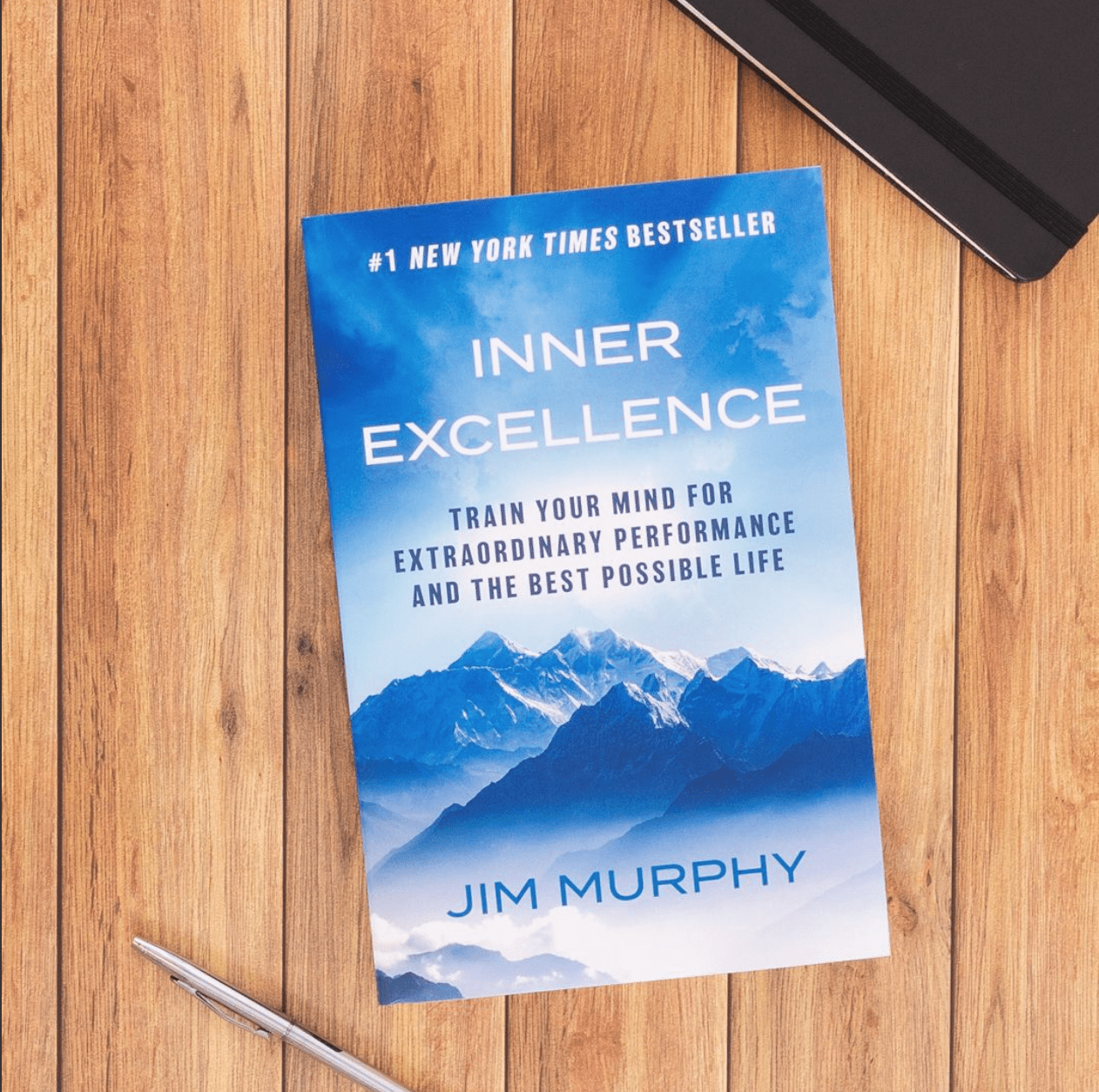

Inner Excellence: Complete Summary of Jim Murphy’s System for Extraordinary Performance and the Best Possible Life
Introduction: What This Book Is About
Jim Murphy’s “Inner Excellence” presents a transformative system for achieving extraordinary performance and living a fulfilling life. This book goes beyond conventional self-help by focusing on the inner world of thoughts, feelings, beliefs, and desires as the foundation for success and well-being. It reveals how mastering one’s internal landscape directly impacts external achievements and overall life quality.
Murphy, drawing from his experience as a professional athlete and coach to world-class performers, asserts that the pursuit of peak performance and a “best possible life” are one and the same path. The book is an instruction manual designed for anyone, from Olympic athletes to executives, who seeks to understand and control their emotional state, develop empowering beliefs, and cultivate profound inner strength regardless of external circumstances.
Readers will discover how to overcome common internal adversaries like the Critic, Monkey Mind, and Trickster, and instead cultivate love, wisdom, and courage as the three pillars of exceptional living. This summary will provide a comprehensive overview of Murphy’s system, explaining each key concept, practical tool, and actionable insight to help you train your mind for extraordinary performance and the best possible life.
Chapter 1: Maslow and the Maserati — The Pursuit of More
This chapter introduces the fundamental choice between seeking real freedom and fulfillment versus chasing temporary, illusionary accomplishments. It highlights how society often seduces individuals into pursuing symbols of success that ultimately lead to emptiness.
The Cost of Real Freedom
True freedom and a life of vision, courage, peace, and joy come at a high cost. This path is risky and requires conforming to certain disciplines, facing fears, and connecting with one’s true self. Obstacles like materialism, consumerism, and instant gratification create a seductive numbness that inhibits a powerful life, often leading individuals to lose their freedom and sense of self by conforming to society’s definition of success.
Maslow’s Selfless Actualizers
Psychiatrist Abraham Maslow’s research on successful individuals like Abraham Lincoln and Albert Einstein revealed common traits among those who not only changed the world but also lived fulfilling lives. Murphy re-labels Maslow’s “self-actualizers” as “selfless actualizers,” emphasizing their pursuit of a purpose beyond themselves. These individuals experienced “zoe”—a state of absolute fullness of life, vitality, and genuine existence.
Characteristics of Selfless Actualizers
Selfless actualizers exhibit nine key characteristics:
- Total absorption: They fully experience key events with complete concentration.
- Personal growth: They seek to learn and grow, valuing the moment over tangible outcomes.
- Self-awareness: They uncover their true motives, emotions, and abilities, guided by their own ethics.
- Gemeinschaft (Community): They prioritize belonging and connecting with others as essential for self-actualization.
- Gratitude: They possess a remarkable capacity to appreciate life’s basic goods with awe and wonder.
- Authenticity/Resistance to Enculturation: They fulfill inner potential rather than seeking external rewards, maintaining greater autonomy.
- Solitude: They desire time for quiet reflection and are comfortable being alone with their feelings.
- Purpose beyond self: They are enlisted in a mission in life for the good of mankind.
- Lack of ego defenses: They identify and bravely give up internal defenses that hem them in.
The Affluenza Virus
Western culture often exposes individuals to the “affluenza” virus, which idolizes Possessions, Achievements, Looks, Money, and Status (PALMS). This virus injects a constant desire for more and fuels comparison, ultimately dividing the heart and distancing individuals from their true selves. The problem isn’t these things themselves, but placing trust and identity in something transient and unstable. A heart built on temporary things will always have insecurity.
Your Deepest Desire and What You Love Most
The deepest desire of every human heart is to feel truly alive, filled with vitality, purpose, and meaning—absolute fullness of life. This requires getting one’s loves in an empowering order, prioritizing what is most powerful and stable, like unconditional love. To identify what you love most, ask yourself:
- What do I dream about?
- What do I worry about?
- What do I get upset about?
The answers reveal what is most important to you, and the stability of your life depends on the stability of that “thing.”
The Pursuit of Ghosts and False Masculinity
Joe Ehrmann, a former NFL star, realized he had been socialized to pursue “ghosts” of what he truly wanted, seeking validation through athletic ability, sexual conquests, and economic success. He redefined masculinity in terms of relationships and having a cause bigger than oneself. This revealed that an “extraordinary outer world is worthless without a meaningful inner one.”
The Obsession with Winning and Its Deception
While winning is a strong motivator, it can be deceptive. The problem arises when the end result overshadows the process, leading to a loss of joy and freedom. Defining success by factors out of one’s control fosters tension and doubt. True success, as noted by Coach Dean Smith and Mike Krzyzewski, is about developing inner strength, fully experiencing the moment, and continually growing, rather than merely accumulating championships or external accolades. The biggest victory is winning the battle with oneself—the battle for one’s heart.
Chapter 2: Where the Wild Things Are — Pride and Fear and the Center of the Universe
This chapter delves into the mind as the greatest obstacle to performance and life quality, specifically focusing on the ego and its role in fostering fear and self-centeredness.
The Root Cause of Fear: Self-Centeredness
Fear is identified as the symptom of a more complex issue: self-centeredness, a virus of the heart. This isn’t about selfishness in a moral sense but a preoccupation with oneself that limits options and stunts growth. Self-centeredness causes individuals to interpret events through a biased filter of past failures and comparisons to others, setting the stage for fear to thrive. Fear separates and isolates, focusing on self and an uncertain future.
The Ego’s Role in Self-Centeredness
The ego amplifies self-centeredness, leading to self-consciousness, isolation, and a lack of vision. It constantly compares and judges, seeking validation from external symbols of success like PALMS (Possessions, Achievements, Looks, Money, Status). This constant comparison feeds a sense of “not enough” and fosters self-rejection.
The Trap of Attachment and Self-Doubt
Attachment to results and circumstances leads to a needy and unstable life. When one’s identity is tied to uncontrollable external factors, frustration and fear are constant companions. Self-doubt, an offshoot of self-centeredness, is powered by one’s own thoughts and memories of past failures, making individuals susceptible to negative external influences. This highlights that doubts are affirmed by internal acceptance, not external reality.
The Default Setting: Self-Centeredness
David Foster Wallace highlighted that our natural default setting is to be “deeply and literally self-centered,” interpreting everything through the lens of self. This innate tendency, if unchecked, leads to a narrow view that excludes new ideas, opportunities, and connections. The constant struggle to fill inner emptiness through comparison and boasting destroys real pleasure.
Self-Centeredness vs. Self-Awareness
A crucial distinction is made between self-centeredness and self-awareness. While self-centeredness blocks growth through comparison and self-consciousness, self-awareness nurtures growth. Self-awareness allows individuals to observe thoughts and behaviors objectively, recognizing their place in a greater whole, thereby seeing possibilities beyond limiting beliefs and past failures. It is the wisdom that knows one’s true potential is beyond current vision.
The Ego’s Obsession with Outcome
The ego is obsessed with winning and can never have enough. It constantly seeks external validation, becoming firmly attached to outcomes and circumstances. This attachment breeds instability, anxiety, and fear because so much is out of one’s control. Dean Smith and Caroline Dweck explain that true leaders handle losing well, while a fixed mindset (fueled by ego) sees failure as a permanent definition, making the fear of failing particularly crippling.
The Battle for Your Heart
The chapter concludes by emphasizing that the quality of life and performance hinges on the battle for one’s heart, specifically the ability to direct thoughts away from self-centeredness and towards empowering, beautiful things. This requires conscious choice each day to move towards fullness of life rather than insecurity, doubt, and fear.
Chapter 3: The Greatest Opponents You’ll Ever Face — The Critic, Monkey Mind, and the Trickster
This chapter identifies the three internal adversaries that significantly impact focus and confidence, explaining how they operate and why they are so challenging.
The Critic: The Judgmental Voice
The Critic is the internal judgmental voice that delivers negative verdicts on circumstances or oneself, leading to emotional reactions. This constant judging, often based on incomplete information, kills curiosity and creativity. The Critic is obsessed with outcomes, using external events as barometers to judge one’s identity and achievements, fostering fear-inducing questions like “What if I fail?” This enslaves individuals to their performance and ego-driven feedback.
Monkey Mind Madness: The Noisy Presence
The Monkey Mind is the noisy, cluttered presence in one’s head, generating an endless stream of often unproductive or negative thoughts. This mental clutter leads to overanalysis and anxiety, crowding out space for great dreams and possibilities. As Dr. Cal Botterill notes, overanalysis and caring too much about success interfere with total focus. Charlie Maher emphasizes that a lack of awareness of these “unproductive thoughts” is a major obstacle, as individuals “fuse with their language,” creating a self-fulfilling negative reality.
The Trickster: The Deceptive Voice
The Trickster is the deceptive voice that whispers untrue thoughts, stirring up doubts and anxiety. It tells lies like “You’re a fraud” or “There’s not enough to go around,” pushing individuals to argue for their limitations. The Trickster’s main game is to diminish one’s identity, leading to an endless search for external validation. It feeds on past failures, exaggerates shortcomings, and often leads to self-rejection, as explained by Henri Nouwen.
The D-Slide of Self-Rejection
Dr. David Coppel describes the “D-slide,” a sequence where failure spirals from disappointment to devastation, then defeat, and finally to feeling defective. This process increases self-consciousness, and every error reinforces a negative self-perception, creating defensiveness and self-protection. The Trickster often encourages settling for “lesser goals” (little lollipops) rather than the “whole candy store” of fullness of life.
Thoughts vs. Circumstances: A Crucial Distinction
A critical mistake is confusing circumstances with thoughts about circumstances. Circumstances are objective facts, free of opinion or emotion, while thoughts are opinions generally tied to emotions and judgments. The Critic, Monkey Mind, and Trickster all pull individuals out of the present by focusing on past failures and future unknowns. The core presupposition to combat this is: “Everything is here to teach me and help me—it’s all working for my good,” and “The problem is not the problem, the problem is the way you’re thinking about it.” This distinction allows for clearer vision and prevents mental entrapment.
Chapter 4: The Daring and the Twilight — Three Pillars of Extraordinary Performance
This chapter introduces the three most powerful resources in the world—love, wisdom, and courage—and explains how they form the three pillars of extraordinary performance.
Lewis Gordon Pugh: A Case Study in Inner Strength
Lewis Gordon Pugh’s attempt to swim one kilometer at the geographic North Pole, despite failed test swims and scientific warnings of death, serves as a powerful example of overcoming fear. His success wasn’t due to physical changes but a triumph of inner strength driven by a purpose beyond himself: raising awareness about global warming. This highlights that fear can be transformed into aggression and confidence when individuals connect with a mission greater than personal survival.
Georges St. Pierre: Embracing Fear
World champion mixed martial artist Georges St. Pierre exemplifies embracing fear. He recognized that nervousness and fear don’t disappear but can be accepted and managed. His journey illustrates that true greatness comes not from avoiding or overcoming fear, but from facing it and being willing to feel whatever emotion comes up. This acceptance transforms fear from a paralyzing force into a source of power.
Zoe: Absolute Fullness of Life
The concept of zoe is introduced as the “absolute fullness of life,” the highest calling possible, where one becomes their true self by serving others. Zoe is the full expression of love, wisdom, and courage, which are intimately interconnected. This state unfolds in wholehearted, sacred moments, transcending the temporary satisfactions of worldly success.
The Three Pillars of Extraordinary Performance
The three pillars are presented as the foundation for both zoe and exceptional performance:
- Lead with your heart (Love): This is about developing self-awareness to live with passion and be one’s true, fearless self. It means clarifying one’s desired feelings and identity, and loving unconditionally.
- Expand your vision (Wisdom): This involves seeing beyond oneself, finding a purpose greater than personal goals, and continually expanding beliefs. It requires humility, recognizing the interconnectedness of humanity, and seeing possibilities beyond the ego’s limits.
- Be fully present (Courage): This means being fully engaged in the moment, with a clear mind and unburdened heart, free of needs or self-concern. It brings courage and reveals beauty, leading to gratitude.
BFF: Belief, Focus, Freedom
These three pillars form the basis for Belief, Focus, and Freedom (BFF), the three vital aspects of high performance. Belief separates the best, focus is heightened awareness in the present, and freedom is the ability to be bold and take risks without holding back. True competition, derived from competere (“to seek together”), is about developing self-mastery through collective striving and learning.
Self-Mastery and Mastering the Ego
Self-mastery is the direct pursuit of zoe, involving the mastering of the ego. The ego, constantly comparing and threatened, is the biggest adversary. Signs of ego influence include worry about what people think, nervousness, preoccupation with being right, and anger at embarrassment. Conversely, self-mastery is evident in increased compassion, non-judgmental awareness, less attachment to results, empowering others, listening more, and disciplined routines.
Becoming Unembarrassable, Unoffendable, and Unirritatable
Self-mastery aims to make one:
- Unembarrassable: So humble and selfless that mistakes or foolish actions don’t diminish one’s well-being or image.
- Unoffendable: So selfless and fearless that others’ words or actions don’t trigger anger or threaten one’s peace.
- Unirritatable: Steadfast, calm, and compassionate, fully present to beauty and possibilities, unaffected by minor annoyances.
Achieving these states means transcending self-concern and the ego’s demands for constant validation.
Dreams vs. Goals: The Path to Resonance
Goals are external outcomes (e.g., winning a championship), while dreams are internal feelings (e.g., feeling alive, passionate). Living one’s dreams means experiencing the amazing feelings during the pursuit of goals, regardless of the outcome. Resonance is the positive energy that comes from being fully engaged and whole-hearted, where performance becomes effortless and the outcome takes care of itself.
Unconditional Love and Expanded Vision
Unconditional love is identified as the most powerful force, fearless and others-centered. It means bringing fearless energy without judgment, living by purpose independent of circumstances. This selflessness leads to heightened awareness and unlimited possibilities. Wisdom, gained by expanding one’s vision beyond self, leads to an accurate view of self rooted in gratitude, recognizing that most good things are “given.” Humility frees one from self-inflation or self-rejection.
Courage and Daily Process Goals
Courage is the ability to be fully present in adversity. It’s gained by setting key process goals that are controllable and lead to daily improvement. The Fearless Four Daily Process Goals are:
- Give my best (100% of what I have today).
- Be present.
- Be grateful.
- Focus on my routines and only what I can control.
Frosty Westering defines “your best shot” as giving 100% of what you have that day, regardless of performance level, fostering a “double win” by bringing out the best in oneself and teammates.
Chapter 5: Code of the Samurai — How a group of warriors mastered their ego
This chapter explores how the ancient samurai warriors embodied the principles of Inner Excellence, particularly their mastery over ego, and how their code provides a model for fearlessness.
The Paradox of the Samurai and Bushido
The samurai lived by Bushido, an unwritten code of ethics based on love, wisdom, and courage. Their training involved preparing each day to fight to the death, fostering fearlessness in battle. This paradox highlights that true strength comes from focusing on the spirit and valuing honor and service above self, rather than seeking comfort or material gain. They found pleasure in improvement, freedom in discipline, and connection in service, contrasting sharply with Western society’s comfort-driven pursuits.
The Spirit of Mastery: Love Over Fear
Self-mastery, like that of the samurai, means letting go of fears and attachments that control you. It’s surrendering self-protection to a power greater than oneself—love. Love is fearless and drives out fear, allowing for self-expression over self-protection. The two primary forces in the world are love and fear; choosing love as the driving energy leads to a life with greater purpose and well-being. This aligns with the universal law: “If you cling to your life, you’ll lose it; but if you give up your life for others, you’ll find it.”
Good and Evil and All Things Beautiful
Every individual is created for glory, to express unique gifts that are often hidden by fear. To be fearless and live with freedom, love must be the driving energy. This means living by faith, focusing on what is deeply meaningful and timeless, rather than superficial and temporary. E. Stanley Jones highlights that true freedom comes from being “free at the center,” letting go of self-concern, which in turn leads to constant gratitude.
Comparison of Mastery and Ego
The chapter provides a detailed comparison, highlighting how mastery is selfless, grateful, unembarrassable, unoffendable, unirritatable, compassionate, process-oriented, humble, and seeks growth with a broad vision. In contrast, the ego is self-centered, self-conscious, entitled, easily embarrassed/offended/irritated, judgmental, outcome-oriented, arrogant, and seeks validation with a limited vision. This comparison helps readers identify which force is dominating their inner world.
Renew the Mind: Daily Practice
To counteract the “affluenza-infected and ego-based” environment, one must constantly renew the mind. This involves daily practices that reinforce one’s purpose and prepare for sacrifice. Renewing the mind means continually returning to Truth, capturing empowering thoughts, and dismissing negative ones. The samurai practiced meditation knowing that a “slimmest mistake in moral judgment or self-centeredness… would be fatal.”
Beauty Before Bed: A 5-Step Tool to Renew Your Mind
A routine to renew the mind before bed is outlined:
- Review your day: Reflect on what went well and what was learned.
- Recall three beautiful moments: Identify small, specific instances of gratitude.
- Reprogram mistakes and let go: Visualize changing undesirable actions and then release the day’s events.
- Preview tomorrow: Envision the next day’s routines and tools.
- Visualize tomorrow: Feel how you want to feel, executing routines and embracing challenges with gratitude.
This process primes the subconscious for positive energy, countering worry and anxiety.
To Share in the Glory, We Must Share in the Suffering
The book argues that suffering is not an obstacle but a means to joy and peace. Embracing discomfort is essential for growth, as illustrated by Dr. Paul Kalanithi’s perspective on pain. Western culture’s avoidance of suffering limits joy and gratitude, contrasting with other cultures that integrate suffering as a part of life. Mediocrity avoids sacrifice, while Inner Excellence embraces discomfort as necessary for becoming one’s best self.
The Little Boy and His Roller Skates: Apolo Anton Ohno
Apolo Anton Ohno, an Olympic speed skating champion, exemplifies embracing suffering. His willingness to “do what nobody else is willing to do” in training allowed him to feel prepared and deserving of success. He loved the process of improvement, not just the outcome. His motto, “The conversation doesn’t end when you fail. That’s when the conversation starts,” highlights the value of continuous learning from adversity.
The 12 Steps to Life Change for Millions: Alcoholics Anonymous
The 12 Steps of Alcoholics Anonymous provide a powerful model for transforming lives by addressing self-centeredness. The program’s core principles include a willingness to “die to their old nature,” a search for self-awareness, surrendering control, and connecting with a higher power and others. Ryan S.‘s experience demonstrates how surrendering control led to serenity and a shift from a physical/mental life to a spiritual one.
Service to Others: The Ultimate Selflessness
The common thread among the samurai, elite athletes, and AA members is service to others. David Tyree found his turning point in “a certain level of surrender.” When individuals and teams sacrifice personal needs for the overall good, the value of selflessness becomes apparent. Lewis Pugh’s North Pole swim was driven by a powerful connection to a cause beyond himself, enabling him to face death with confidence.
The Eight Attachments and The Superstar and the Sucker
The eight attachments that hinder freedom and performance are: how others see you, your money/possessions, what you want (goals), comfort, your past, how things are (status quo), expectations, and your self. To achieve self-mastery, one must drop these attachments. The “superstar and the sucker” analogy illustrates that setting goals too low (e.g., just winning) is a mistake; the “bigger lollipop” is the direct pursuit of absolute fullness of life—love, wisdom, and courage—which paradoxically increases the chance of achieving external goals.
Chapter 6: Change Your State, Change Your Life — How to Control Your Emotions
This chapter provides practical guidance on how to control one’s emotional state, emphasizing that results flow from thoughts and feelings that originate in the heart.
The Centrality of State Control
Feelings run our lives, influencing how we perceive and respond to setbacks, opportunities, and beauty. To make lasting positive changes and live a full life, one must learn to direct and change their “state”—the overall vibration of energy in the heart, mind, and body. This process involves understanding that results come from behaviors, behaviors from feelings, and feelings from thoughts.
The Juicy Lemon Drop: Imagination’s Power
The brain’s inability to differentiate vividly imagined experiences from reality is a powerful concept. This means imagination can create reality, influencing how we experience the world. Our perception of events, filtered through memories and beliefs, creates thoughts and feelings that determine our experience. “The world you see is a projection your brain made based on the information it had.” Therefore, controlling what is vividly imagined is key to controlling one’s state.
How Your Brain Makes Decisions: Patterns and Biases
The brain continuously takes in and processes information by finding and storing patterns through four processes:
- Assumptions: Accepting things as true without proof, based on existing patterns. This can lead to jumping to conclusions.
- Generalizations: Making predictions about future events based on memories of similar past events. While helpful, over-generalization can limit self-perception.
- Deletions: Paying attention to some aspects of experience while ignoring others, crucial for focus but can cause missed opportunities.
- Distortions: Giving too much meaning to a pattern, exaggerating truth with words like “always” or “never,” leading to negative thoughts.
Recognizing these processes is essential for controlling one’s thoughts and avoiding mental traps.
The Story in Your Heart and What Gets Your Attention Gets You
The stories and ideas that have settled into one’s heart, especially the overall narrative about who one is and what’s possible, control their moment-to-moment energy or state. Selfless actualizers develop keen awareness of their thoughts by organizing their environment and filling their minds with empowering stories and ideas. “What gets your attention gets you”—what one focuses on directs thoughts, which become feelings, actions, and results, controlling one’s life.
Prime Time: Environment’s Impact on State
Your environment has a major impact on your state. Subtle elements in one’s surroundings, even without conscious awareness, influence thoughts, feelings, and behaviors. The Yale study on hot/iced coffee demonstrated priming, where physical stimuli influenced perceptions and generosity. Intentional organization of one’s environment with positive images, words, symbols, and songs is a key component of training the mind and heart, as “we move towards what we focus on.”
Direct Your Heart’s Desires
Desires are extremely powerful, influencing perception and aspirations. Uncontrolled desires lead to addictions and obsessions. Discipline is the ability to delay gratification and reject disempowering desires. The deepest desires control individuals, so they must be empowering and meaningful. The ultimate desire, according to Murphy, should be absolute fullness of life (deep contentment, joy, confidence, independent of circumstances), which leads to the greatest freedom and power.
The Choice: House vs. Peace
The “house vs. peace” thought experiment challenges readers to choose between external material success and internal states of deep contentment, joy, and confidence. The argument is that pursuing the inner state directly (love, wisdom, courage) not only yields true fulfillment but also provides the best chance for extraordinary external success as a byproduct. Unconditional love is the most powerful and stable foundation.
Three Skills to Control Your State
To control one’s state, three important skills are learned:
- How to focus (the mind) softly and sharply: Soft focus is relaxed and broad, useful between actions. Sharp focus is intense and narrow, for key moments.
- How to relax (heart, mind, and body) moderately and completely: Moderate relaxation reduces energy levels. Complete relaxation involves deep rest and sleep, crucial for mental processing.
- How to go back and forth between focused and relaxed: The ability to fluidly shift between states is vital for sustained performance.
S-L-O-W and Open Focus
Most people operate like a “gas pedal pushed down,” rarely relaxing. To control one’s state, learn to slow down the mind and body. Dr. Les Fehmi’s Open Focus technique teaches a broad, immersive style of attention that reduces stress and enhances well-being by allowing the body to restore itself. This involves practicing attention to various senses and the space between experiences, fostering non-exclusive and non-judgmental awareness.
Get Centered: Reboot the System
Centering exercises are vital for staying present, focusing the mind on the body, and recharging. These include the Reboot (Basic Reset), which involves stopping, focusing on a spot, and taking long, slow deep breaths to exhale desires and concerns. Box Breathing also helps calm the mind by regulating breath count. Adding affirmations like “I am… fully present” reinforces positive states.
I Expect Nothing: A Samurai Mantra
The samurai mantra “Expect nothing, prepare for anything” is a powerful centering exercise that fosters a state of no needs and readiness for any circumstance. This mindset promotes presence and helps individuals avoid being derailed by expectations, especially after past successes. It means being unattached to circumstances, which liberates one from frustration and fear.
Anchoring and Releasing Different States
An anchor is a sensory stimulus (sight, sound, taste, smell, touch) linked to a feeling. This technique, discovered by Ivan Pavlov, allows one to access positive feelings by triggering a linked sensory input (e.g., peppermint oil for confidence). To release unwanted feelings, disassociation techniques like the Float Up Technique help individuals mentally distance themselves from negative memories or emotions by visualizing themselves floating higher and higher, leaving problems behind. This also involves recognizing that past memories are not current feelings.
Chapter 7: The World Is Flat — How to Develop Beliefs in Line with your Dreams
This chapter explores the profound impact of beliefs on life and performance, and how to consciously cultivate empowering beliefs aligned with one’s dreams.
The Power of Your Story and the X Factor
Everyone has a story, and you are its author and narrator, choosing which moments have meaning. This story, shaped by thoughts and their direction, determines life’s course. Tyrone “Muggsy” Bogues’s improbable journey from being shot as a child in the projects to playing in the NBA exemplifies the power of a child’s dream kept alive through imagination. The “X Factor” in high performers is their subconscious beliefs about what’s possible, which dictate daily actions and sacrifices.
The Nature of Beliefs: Acquired, Not Innate
Beliefs are ideas your subconscious holds true about who you are and what you can achieve. They are not inherent but formed quickly, often instantly, from experiences—especially those with strong emotional attachments. Negative experiences, like singing poorly and being made fun of, can create limiting beliefs that persist for a lifetime. The subconscious aims to “protect you” by locking in traumatic memories, forming patterns that guide future responses.
How Beliefs Influence Life and Create Homeostasis
Beliefs set the boundaries for what’s possible and attract situations that reinforce them. Homeostasis is the subconscious mind’s effort to maintain a certain level of skill or achievement, matching what the individual believes is “right” for them. If performance exceeds or falls below this comfort level, the subconscious works to bring it back in line. This means “you will always draw experiences into your life to support your beliefs.”
How to Create Empowering Beliefs
To create new, empowering beliefs:
- Speak the Truth About the Past: It’s crucial to speak about past failures in the past tense (“I struggled with this, but I’m getting better”) rather than present tense (“I am struggling”). The subconscious listens and will work to make present-tense statements a reality.
- One Second Tingling Feeling of Excitement: Visualize aspects of your biggest goals daily, aiming to feel it as real, producing a “tingling feeling of excitement for at least one second.” This consistent emotional input primes the subconscious.
- Snap That Band!: To override negative thoughts, immediately dismiss them, replace them with opposite affirmations, shout “Stop!” internally, or use a physical anchor like snapping a rubber band on the wrist.
- Affirmations: Use positive, short statements about how you want to be in the future, as if true today (“I am a dominating, powerful hitter”). Affirmations are not necessarily believed at first but are designed to reprogram the subconscious through repetition.
The Phenomenon: Cat Osterman and Callista Balko
The example of Cat Osterman and Callista Balko illustrates how beliefs can shift dramatically. Balko, despite repeatedly striking out against Osterman, visualized hitting a game-winning home run against her in the World Series daily for months. This consistent visualization and affirmation created a new belief, leading to her game-winning hit in the actual event. Similarly, Rick Ankiel’s “yips” were a subconscious protection mechanism; changing the belief allowed him to regain control.
The Final Piece to Beliefs: Congruence
A common hindrance to achieving goals is a subconscious belief that success will negatively affect one’s values (e.g., wealth changing character). This can lead to self-sabotage. It’s vital to ensure goals and dreams align with one’s true self and desired life. Visualizing success should include picturing life after achievement to identify and address any potential subconscious disconnects.
How Convicted Felons Transformed Their Beliefs: Delancey Street Foundation
The Delancey Street Foundation, which transforms convicted criminals (often illiterate drug addicts) into successful businesspeople, showcases the power of belief transformation. CEO Mimi Silbert teaches residents to “act as if” they are caring, productive citizens, fostering self-respect and a purpose beyond self. This organization demonstrates that “the world is flat if you believe it is”—reality is shaped by one’s mind and beliefs.
Chapter 8: A Clear and Present Beauty — The Five Most Powerful Ways to Be Fully Present
This chapter emphasizes the importance of being fully present as a path to unlocking hidden beauty, opportunities, and personal power.
The Power of Full Engagement and Resonance
To be fully present means having a mind free from past or future thoughts, where time changes, movements become effortless, and awareness is heightened. This leads to resonance—a powerful vibration of energy where frequencies align, and one feels intensely alive. The Tibetan monks’ sandpainting illustrates that the process matters, not just the final achievement, emphasizing attentiveness to each moment.
Desire vs. Passion in Performance
While desire is a powerful motivator, focused on future outcomes, it can hinder performance by leading to constant judgment. Passion, however, is found in the present, allowing for absolute focus without concern for the outcome. Bruce Lee stated, “The great mistake is to anticipate the outcome of the engagement.” True peak performance requires being so present that desires fade, and the outcome is no longer a concern during execution.
Five Powerful Ways to Be Fully Present
The chapter outlines five key methods to cultivate presence:
- Get out of your head—and into your heart—and soul: Cluttered minds (Monkey Mind) result from a heart without a single, unifying devotion. Simplifying one’s life to a clear, singular purpose (e.g., “raising the level of excellence in your life, to learn and grow, in order to raise it in others”) creates selflessness and fearlessness, leading to heightened presence. Michael Phelps found solace in simplifying his life and getting comfortable with himself.
- Focus on your routines and only what you can control: Routines are the foundation of Inner Excellence, providing structure and focusing attention on the process rather than outcomes. Ken Griffey Jr. used routines for sanity. Ronn Svetich’s “simple mind” for pitchers emphasizes focusing only on the pitch, not external distractions. Perfectionism is the enemy of presence and control; surrendering control paradoxically increases it.
- Be grateful: Gratitude is the opposite of entitlement and a generator of power. “You can’t be anxious and grateful at the same time.” Gratitude helps individuals see beauty and opportunities, even in adversity. Jim Tressel had his players practice daily gratitude, linking it to humility. Humility fosters an accurate view of self, free from self-inflation or self-rejection, leading to clearer vision and real confidence.
- Focus on a mantra: Mantras are powerful tools to keep the mind present and positive. Padraig Harrington’s “I’m going to win” helped him focus on positive thoughts. When facing fear or intense situations, mantras (like the author’s “My body is a sauna” during the Wim Hof Method cold exposure) can redirect the mind from negative internal dialogue to a singular, empowering thought. Singing out loud or visualizing can also help.
- Ruthlessly eliminate hurry from your life: “Love and hurry are fundamentally incompatible.” Hurry is a “disordered heart” that diminishes the capacity to love and be present. It’s a mental and emotional state, not a physical one, often fueled by the belief that one will “miss out.” John Ortberg was advised by Dallas Willard that “hurry is the great enemy of spiritual life.” Busyness, often a “compulsive search for affirmation,” destroys inner peace and prevents gratitude. Eliminating hurry creates space for clarity, wisdom, and the ability to see beauty.
The Connection of Gratitude and Humility
Gratitude and humility are crucial for recognizing beauty and expanding one’s vision. Humility sees more of the big picture and fosters carefulness, while pride can lead to carelessness and vulnerability. Mimi Silbert’s Delancey Street Foundation teaches ex-cons humility and gratitude to develop self-worth and purpose. A grateful mind is connected to beauty, allowing creativity and problem-solving to flourish by seeing opportunities where others only see defects.
Overcoming Fear with Wim Hof Method and Mantras
The author’s experience with the Wim Hof Method in extreme cold illustrates the power of mantras and mindset in facing fear. Mantras like “My body is a sauna” combined with controlled breathing and a belief in one’s power helped transcend the physical discomfort. This reinforced the idea that “You are far more powerful than you think you are” and that one must “get out of your head” to access that power.
Chapter 9: Unstoppable — How to Overcome Mental Blocks, Fears and Phobias
This chapter provides an in-depth look at how mental blocks, fears, and phobias form, and practical techniques to eliminate them by reprogramming the subconscious mind.
Steve Sax and Rick Ankiel: The Impact of Mental Blocks
Steve Sax’s “yips” (sudden inability to make accurate throws) and Rick Ankiel’s wild pitches illustrate how mental blocks can derail careers. Sax’s error became an idée fixe after he obsessively thought about it, leading to more errors. Ankiel’s wild pitches in a crucial game caused an “overwhelming feeling of letting everyone down,” leading to nightmares and anxiety. These blocks highlight that while conventional wisdom suggests working harder, the problem is often internal—a subconscious protection mechanism.
The Subconscious Protector: Three Main Jobs
The subconscious mind performs three critical jobs:
- Sifting sensory information: Deciding what’s relevant and potentially dangerous (physical or emotional).
- Running life in the background: Automating daily tasks to free up conscious thought.
- Lining up circumstances with beliefs: Ensuring life’s outcomes match one’s deeply held beliefs about their capabilities.
Mental blocks and phobias stem from the first job: the subconscious “locks in” traumatic or embarrassing memories to warn and protect in the future, often by physically disrupting behavior with anxiety or fear.
The Brain That Changes Itself: Neuroplasticity
Neuroplasticity is the brain’s ability to physically reorganize itself throughout life in response to environment and learning. This means neural pathways are created with every new experience and thought. Consistent negative thoughts and feelings create negative neural pathways, leading to mental blocks. The good news is that the brain can be rewired by consistently embedding new, positive information, ideas, and feelings.
How Fears and Phobias Form (and Mental Blocks Too)
Fears and phobias develop when an emotionally painful or embarrassing event occurs, and the subconscious deeply embeds the memory and its context to prevent future recurrence. It doesn’t differentiate between physical and emotional danger. When a similar context appears, the subconscious replays the original painful event, triggering anxiety or fear. The more an individual analyzes and worries about the issue, the more the subconscious perceives it as a genuine danger, thus maintaining the block.
Removing Mental Blocks, Yips, and Phobias
The process for eliminating mental blocks and phobias involves:
- Take the emotion out of it: Use techniques like the Hollywood Helper: The Movie Theater Visualization to disassociate from the memory by viewing it in black and white from an outside (third-person) perspective.
- Find the smallest change: Identify a subtle action that could have altered the painful outcome, providing a “solution” for the subconscious.
- Insert a positive, high-energy feeling: Recall or create feelings of calm and confidence, and anchor them to the original painful context.
- Anchor that positive feeling into the original painful context: Re-experience the memory repeatedly in color, first-person, with the small change and the new empowering feelings. The Power APP (Anchor Peak Performance) method involves stepping into and out of the painful memory while cultivating a high-performance state.
This process effectively reprograms the subconscious, replacing old, limiting associations with new, empowering ones, often permanently.
High Fiving-Freedom for World-Class Athletes
The author shares examples of how these techniques have helped PGA Tour golfers overcome mental blocks (e.g., hitting into water, putting yips) and recover from severe trauma. One client, ranked world No. 1 within six months, had four or five of his most painful memories (rated 8-10 on a 10-point scale) reduced to 0-2 levels of pain. This demonstrates that mental blocks are not inherent flaws but perfect subconscious responses that can be rewired.
Final Thoughts on Mental Blocks: Unstoppable
The subconscious works primarily with images and feelings. Consistent images and feelings, whether positive or negative, become beliefs that drive results. To maximize potential and limit susceptibility to mental blocks, one must train the whole self: heart, mind, and body. This involves embracing adversity, developing non-self-conscious awareness, and surrendering self-interest for a purpose beyond self. It requires a willingness to be uncomfortable, look foolish, fail, and confront the feeling of panic.
Chapter 10: The Hero and the Goat: How to Have Poise Under Pressure
This chapter focuses on developing poise under pressure, defining it as a learned ability to achieve resonance—a state of vivid, effortless engagement.
Sullenberger and the Hudson River Landing: Poise in Crisis
Captain Chesley “Sully” Sullenberger’s successful landing of US Airways flight 1549 in the Hudson River exemplifies poise under extreme pressure. Despite the high stakes and uncertainty, Sully’s focus was absolute, demonstrating that “poise is a learned ability.” Pressure is both a challenge and a reward for those seeking excellence, offering the chance to feel incredibly alive.
Elements of Performance and the Unseen
Performance involves six elements: circumstances, beliefs, thoughts, state, performance itself, and results. The three most important are unseen: beliefs, thoughts, and state. These internal elements have the greatest impact. Poise under pressure means getting these elements “sorted out” so that the results take care of themselves. The three elements of quality performance are: belief in what’s possible, ability to be fully present, and freedom to play like a kid (BFF).
The Essence of Resonance: Beyond Winning
Resonance is defined as the freedom and passion that come from being fully present and in sync, feeding off the energy of performance, even adversity. World-class performers describe their best moments as effortless, relaxed, focused, and harmonious. This state is most accessible to those who prioritize excellence over success, mastery over ego, and love over fear. The ultimate goal in competition should be to develop oneself as a worthy opponent, not just to win.
Coaching Mantra: The Judge is God, the Opponent Does Not Exist
The “Great Debaters” coaching mantra encapsulates this mindset: “The judge is God,” meaning the ultimate arbiter is beyond one’s control, freeing the individual from external judgment. “Your opponent does not exist” emphasizes that the true competition is internal—a dissenting voice to the truth one speaks. This mindset allows for living the truth and receiving abundance, turning adversity into a helper.
Stewart Cink’s 2009 British Open Win: Fearlessness, Not Confidence
Stewart Cink’s unexpected win at the 2009 British Open, despite lacking recent confidence, demonstrates that fearlessness (not confidence) is key. He wasn’t afraid of embarrassing himself or the feeling of failure. His gratitude for being there and embracing the experience, even Tom Watson’s epic performance, allowed him to maintain a positive, fearless energy and resonance.
Four Keys to Resonance (and Poise) Under Pressure
The author identifies four critical keys for performing with freedom and presence under pressure:
- Share your heart, not your ego: Focusing on what one can share with others (e.g., love for the sport) is empowering, unlike performing for personal gain (trophies, promotions). This allows for greater passion and focus, as seen in Dawn Staley and Clara Hughes, who played for the experience and personal growth, not just the medals.
- Pursue mastery, not the score: Prioritizing self-awareness, self-discipline, and personal growth over winning as the ultimate goal reduces pressure. This shifts focus from “have to” to “get to,” making competition more empowering. Mastery embraces suffering and failure as integral to improvement and transcends circumstances, unlike the ego, which is controlled by results. To be the G.O.A.T., one must be willing to be the goat (blamed for the loss).
- Love your opponent: Viewing the opponent as a “partner in the dance” rather than an enemy creates positive energy and enhances focus. Ryan Dodd and Georges St. Pierre exemplify this by showing gratitude and respect for their opponents, recognizing them as crucial for their own growth and peak performance. Wishing an opponent to fail generates negative energy; loving them elevates one’s own game.
- Visualize presence (but not perfection): Every achievement starts as an image in the mind. Visualization should focus on experiencing presence and embracing adversity, not just a perfect outcome. Bode Miller prioritized the experience of skiing over race results. Lewis Pugh visualized his cold swim hundreds of times, experiencing every sensation, preparing himself emotionally for the extreme pressure. This includes creating vivid mental pictures of oneself feeling tension, excitement, and nerves, then using Inner Excellence tools to excel.
Getting Into the Rhythm and Feel
Developing awareness of the feel of one’s body in pressure situations is vital. This requires re-sensitizing oneself to physical sensations. Routines are essential for preparing for game day and creating the feeling of resonance. When routines are interrupted, the mindset should be “This is how it’s supposed to be today,” accepting it as if chosen. Posture also significantly impacts energy and focus, and should be part of visualization.
Expect Abundance, Prepare to Suffer
The mindset of “expect nothing, prepare for anything” from the samurai combines perfectly with expecting abundance. It means having hope and excitement for unseen truth and beauty while simultaneously being unattached to specific outcomes. This allows one to handle any unexpected event with equilibrium and poise. Kyla Inaba’s win in adverse weather conditions exemplifies embracing adversity as an opportunity for growth, gaining an advantage over competitors who complain. Dr. Curt Tribble’s resident physician, who performed an “unorthodox procedure” effectively because he had “thought about it a lot,” highlights the power of visualizing solutions for contingencies.
Chapter 11: Maslow, Michael Jordan, and the Navy Seals — Three Hallmarks of Extraordinary Leaders
This chapter examines the common traits and approaches of extraordinary leaders, drawing insights from sports legends and elite military forces.
The Essence of Extraordinary Leadership
Exceptional leaders, like Jim Tressel, Jim Steen, and Phil Jackson, understand that leadership is fundamentally about human behavior and what motivates people to sacrifice themselves for something greater. They see the potential within their groups and empower members to reach it. Beyond technical expertise, the greatest coaches and leaders consistently adopt three approaches in their lives and teachings:
- Redefine success.
- Connect individuals with a vision beyond themselves.
- Seek self-mastery—and help others do the same.
These leaders create cultures where individuals live fully, wholeheartedly, and have fun.
Redefining Success: Beyond Wins and Losses
John Wooden defined success as “peace of mind, which is a direct result of self-satisfaction in knowing you made the effort to become the best of which you are capable.” Jim Tressel adapted this for his Buckeyes, emphasizing “inner satisfaction and peace of mind that comes from knowing you did the best you were capable of for the group.” Their definitions ignore external measures like trophies or comparisons, focusing instead on inner satisfaction, effort, and purpose beyond self.
“Here to Be Us”: Focusing on Internal Excellence
Frosty Westering’s team mantra, “They’re here to beat us—we’re here to be us,” perfectly encapsulates the redefined success. This mindset shifts focus from external competition to being one’s true self and serving others. John Wooden famously didn’t scout opponents, focusing solely on making his own team the best it could be. This aligns with W. Chan Kim and Renee Mauborgne’s “blue ocean strategy”: “The only way to beat the competition is to stop trying to beat the competition.”
Golden State Warriors: Values Beyond Winning
Steve Kerr’s Golden State Warriors exemplify an organization with empowering values beyond mere winning: Joy, Compassion, Mindfulness, and Competition. This demonstrates that consistent greatness stems from a system that fosters deep connection, joy, and confidence among team members, fulfilling a universal human need to be part of something greater than profits or losses.
Connecting Individuals with a Vision Beyond Themselves
Great leaders inspire individuals by connecting them to a vision beyond themselves. Dabo Swinney’s “We’re going to win it because we love each other” exemplifies how love and camaraderie can be the driving force for collective achievement. The Navy Seals’ “Hell Week” illustrates that enduring extreme hardship is possible when focused on the team and quitting is not an option. This higher purpose allows individuals to transcend personal fears.
The Power of Purpose and Modest Impact
Nicolas Herman (Brother Lawrence), a 17th-century peasant and monk, became known for his humility and peace while performing mundane tasks like sandal-making and dishwashing. His simple vision—to be present to the love of God and share it with others—had a lasting impact for centuries, demonstrating that a meaningful purpose, regardless of social status, can lead to profound resonance and influence.
Building Rapport and Understanding Values
Great leaders excel at building relationships. Rapport is based on empathy, and effective communication is mostly nonverbal (7% words, 38% tone, 55% posture/physiology, per a UCLA study). The “pacing” technique involves subtly matching another person’s posture, tone, and words to build trust, then gradually leading them. Understanding what is most important to an individual (e.g., security, love, peace) allows a leader to connect the group’s vision with individual deep values.
Coaches Corner: The Pink Elephant That Does Backflips (Language)
A leader’s language is crucial because the subconscious mind works in images and feelings. Davey Johnson noted that yelling at one player affects the whole team. Leaders should focus on what they do want their team members to do (“hold on to the ball”) rather than what they don’t (“don’t fumble”). The brain doesn’t process “don’t,” and inadvertently creates the unwanted image. This principle guides effective communication in all coaching.
Seek Self-Mastery—and Help Others Do the Same
Extraordinary leaders, like Jim Tressel learning from Larry Coker, are committed to self-mastery—an endless pursuit of self-awareness, self-discipline, and personal growth. This involves mastering the ego through selflessness, which allows for serving others while maintaining self-assuredness. Phil Jackson learned that ego and emotions ruled his playing life but gained a new perspective in coaching, seeing the “fleeting nature of success.”
Renewal Activities for Leaders
To maintain self-mastery and inspire others, leaders need constant renewal:
- Focus on Truth and Inner Excellence principles.
- Fill the mind daily with love, wisdom, and courage from books, podcasts, and sermons.
- Train the heart to desire empowering virtues.
- Spend time with wise mentors and those with tangible needs.
- Review the day for grateful and learning moments.
- Monitor the ego‘s comparisons and self-protection.
- Take one day a week to recharge mentally, emotionally, spiritually, and physically.
- Seek honest feedback from others.
Great leaders leverage their imaginations, envisioning group success and the path to achieve it, inspiring a shared pursuit of excellence.
Conclusion: A New Way of Life
The book concludes by synthesizing its core teachings, emphasizing the shift from a self-centered, achievement-oriented life to one of Inner Excellence defined by love, wisdom, and courage.
The Shift from Divided to Undivided Heart
The journey began by recognizing the seductive influence of the “affluenza virus” and the self-centeredness that leads to fear, anxiety, and a “divided heart.” The constant oscillation between past and future, analyzing and doubting, kept individuals from the present moment where extraordinary experiences exist. Previously, “sacred moments were unsettling” because they revealed potential and the discomfort of growth, leading individuals to rush back to familiar, society-defined achievements.
The Tools for Transformation
Now, with the tools and knowledge of Inner Excellence, individuals can counter the Critic, Monkey Mind, and Trickster. Understanding human nature’s limiting effects provides the option to move from fear towards peak performance and long-term fulfillment. The path involves consciously choosing to lead with your heart, expand your vision, and be fully present.
The Power of Resonance and Zoe
Leading with the heart means connecting with one’s true self, ridding oneself of what is not authentic, and learning to live, feel, and compete fearlessly. Expanding your vision involves continually adjusting your worldview to see unseen ideas, beauty, and opportunities, releasing attachment to personal needs and fears. This allows for the capture of wisdom that leads to growth and great experiences. A transformed heart, one that selflessly loves others—including opponents—first, enables individuals to live with absolute fullness of life (zoe). This selfless surrender cultivates courage and unlocks the sacred moments of resonance.
Embracing the Path: Unstoppable and Wholehearted
Resonance is the invaluable reward—the electric feeling of being fully present and congruent in one’s true self, where ordinary moments become extraordinary and effort becomes art. The book promises that by embracing this path, individuals will gain confidence to take more risks, face fears, and fully experience sacred moments in both their careers and daily lives. The pursuit of Inner Excellence means living with passion and courage, constantly confronting the desire for social acceptance and external validation.
Continuous Growth and Abundance
With a new mindset, skillset, and toolset, individuals can now transform their state at any moment, living with greater freedom, vision, and resonance. The commitment to this journey means continually seeking truth, rising above circumstances, and becoming more in tune with excellence, unconstrained by emotions and perceived limitations. This path, though potentially scary as it demands comfort and superficial attachments be shed, yields the reward of living wholehearted with fullness of life. The ultimate secret is to “seek first to develop your inner world—and all your relationships—and everything else will be added to you.”
Key Takeaways: What You Need to Remember
Core Insights from Inner Excellence
- The pursuit of extraordinary performance and a fulfilling life are the same path. Prioritize internal well-being to unlock external success.
- Self-centeredness is the root cause of fear and limits potential. Overcome this by focusing on purpose beyond self and unconditional love.
- Internal adversaries—the Critic, Monkey Mind, and Trickster—hinder focus and confidence. Learn to recognize and neutralize their negative influence.
- Love, wisdom, and courage are the three pillars of excellence. These virtues enable profound presence and inner strength.
- Self-mastery is the endless pursuit of personal growth. It involves mastering the ego to become unembarrassable, unoffendable, and unirritatable.
- Embrace suffering and discomfort as essential for growth. Pain, when accepted, can reveal beauty and lead to deeper joy.
- Your beliefs are the thermostat of your life. They define what’s possible and attract experiences that confirm them. Consciously reprogram limiting beliefs.
- Being fully present is foundational for peak performance. Eliminate distractions, focus on routines, practice gratitude, use mantras, and ruthlessly eliminate hurry.
- Mental blocks and phobias are learned subconscious protections. They can be eliminated by reprogramming the associated painful memories and creating new empowering associations.
- Poise under pressure is a learned ability. It comes from cultivating resonance, sharing your heart, pursuing mastery (not just the score), loving your opponent, and visualizing presence (not perfection).
- Extraordinary leaders redefine success. They focus on developing people, connecting them to a vision beyond themselves, and modeling self-mastery.
Immediate Actions to Take Today
- Identify your core desires: Ask yourself what you truly want beyond material success to understand your deepest motivations.
- Start recognizing your internal adversaries: Observe how the Critic, Monkey Mind, and Trickster influence your thoughts and feelings throughout the day.
- Implement a daily “Reboot” or “Box Breathing” exercise: Practice centering yourself with deep breaths to clear your mind and manage your state.
- Begin a gratitude practice: Regularly recall small, specific moments you are grateful for to shift your perspective.
- Choose an empowering affirmation: Select a positive statement about yourself (e.g., “I am unstoppable”) and repeat it daily, especially when negative thoughts arise.
- Organize your environment for positive priming: Place inspiring images, words, or symbols in your home or workspace.
- Visualize your desired performance and feelings: Spend a few minutes daily imagining yourself excelling in challenging situations, feeling the desired emotions.
- Practice soft and sharp focus: Consciously shift between broad, relaxed awareness and intense, narrow focus during tasks.
Questions for Personal Application
- How is my current definition of success influencing my daily actions and my emotional state?
- In what areas of my life am I most susceptible to the influence of the Critic, Monkey Mind, or Trickster, and what specific triggers initiate them?
- What are my deepest desires, and are they aligned with absolute fullness of life, or am I chasing “little lollipops”?
- What limiting beliefs do I hold about myself or my capabilities, and what experiences contributed to forming those beliefs?
- What specific steps can I take today to cultivate more love, wisdom, and courage in my interactions and pursuits?
- How can I incorporate more consistent routines into my daily life that promote presence and focus, especially during high-pressure moments?
- Am I willing to embrace discomfort and potential “suffering” as necessary for my growth, or do I constantly seek the path of least resistance?
- How can I redefine my relationship with my “opponents” (competitors, challenging situations) to view them as partners in my growth?




Leave a Reply