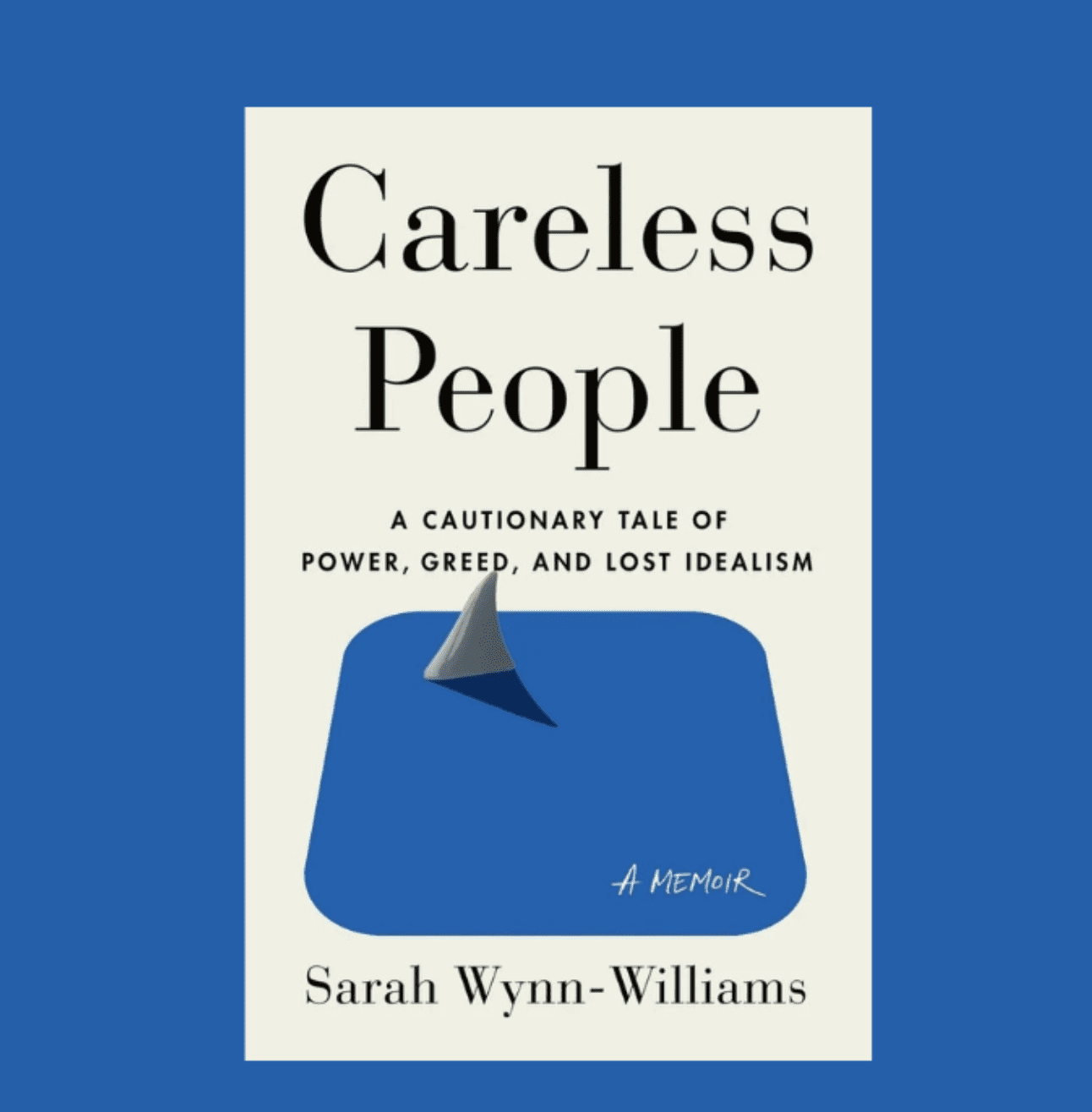

Careless People (Sarah Wynn-Williams): Complete Summary of a Former Facebook Executive’s Account of Power, Politics, and Ethical Decay
Introduction: What This Book Is About
Sarah Wynn-Williams’s “Careless People” offers an unflinching, insider account of her seven years at Facebook, detailing her journey from an optimistic New Zealand diplomat to a disillusioned global policy director. The book chronicles the transformation of Facebook, and its leadership, from a hopeful, mission-driven company to a power-hungry corporation willing to compromise on ethics for growth and influence. Wynn-Williams provides a unique perspective on the inner workings of Silicon Valley’s tech giant, revealing the personal and professional toll of working at a company increasingly indifferent to its global impact. This summary will comprehensively cover her experiences, observations, and the critical insights she gained about Facebook’s leadership, its geopolitical strategies, and the erosion of its foundational ideals.
The narrative highlights the stark contrast between Facebook’s public pronouncements of “making the world more open and connected” and the dark realities of its operations, especially in international markets and politics. Wynn-Williams vividly describes her interactions with Mark Zuckerberg, Sheryl Sandberg, and other senior executives, exposing their priorities, flaws, and the arbitrary nature of their decision-making. The book reveals how Facebook’s pursuit of growth at all costs led to complicity in human rights abuses, political manipulation, and a disregard for public well-being. Readers interested in the intersection of technology, power, ethics, and global politics will find this summary a compelling and essential guide to the book’s core revelations.
Prologue: Mark Zuckerberg, Naked People, and a Quick Escape
The prologue immediately sets the tone, immersing readers in an unconventional state dinner at the 2015 Summit of the Americas in Panama. Sarah Wynn-Williams, Facebook’s Director of International Policy, recounts her attempt to arrange a productive meeting for Mark Zuckerberg with world leaders, only for it to devolve into a chaotic and surreal experience. This event serves as a microcosm of her time at Facebook, characterized by unpredictability and a constant struggle to manage Mark’s disinterest in traditional politics. The narrative highlights the stark contrast between Zuckerberg’s perceived importance in the tech world and his awkwardness in diplomatic settings.
The Surreal State Dinner in Panama
Wynn-Williams describes the setting of the state dinner as an archaeological ruin on the Panamanian coast, dimly lit by open fires. The unusual ambiance is amplified by guards in ancient costumes and seminaked performers representing various historical scenes, from ritual to trading. Mark Zuckerberg expresses his discomfort and confusion at the presence of the “naked people,” underscoring his lack of familiarity with non-tech environments. This initial scene immediately establishes Zuckerberg as a figure detached from conventional social norms.
Diplomatic Faux Pas and Averted Eyes
The endless red carpet procession past bizarre scenes makes the Facebook team avert their eyes from the seminaked performers, who in turn stare back unnervingly. Mark Zuckerberg is assigned a table with seemingly random relatives of the Panamanian president, highlighting his low diplomatic standing despite his global influence. Wynn-Williams attempts to discreetly switch name cards to secure a better table for Mark, only to find the changes reversed, demonstrating the challenges of controlling outcomes in unpredictable environments.
The Failed Pull-Asides and Public Rejection
Wynn-Williams’s primary job is to manage “pull-asides,” or private meetings, with world leaders for Mark. Her attempt to secure a meeting with Canadian Prime Minister Stephen Harper results in public rejection, with Harper firmly stating, “No, I wouldn’t.” This public snub, witnessed by Mark Zuckerberg himself, underscores Zuckerberg’s unaccustomed experience of being ignored and his general skepticism toward diplomatic engagement. The incident reinforces his visible discomfort with such events.
The Escape Plan and Accidental Chaos
When Mark decides to leave the dinner early, Wynn-Williams makes a “terrible choice” by urging the team to sprint into a tunnel from which horses are emerging. Her assumption that the tunnel must lead to an exit backfires, creating a scene of madness with galloping hooves, silks, and terrified horses. This chaotic escape, which avoids media capture of Zuckerberg fleeing, vividly illustrates the impulsive and often ill-conceived actions that characterized Facebook’s early years and its approach to unforeseen challenges.
A New Understanding of Facebook’s Reality
The impromptu escape through archaeological ruins, ending in darkness and a search for a road in Panama, provides a stark metaphor for Wynn-Williams’s early years at Facebook. She summarizes her experience as starting “as a hopeful comedy and ended in darkness and regret.” She reveals her role in advising Mark Zuckerberg and Sheryl Sandberg on international policy, but ultimately witnessing their casual misleading of the public and “sucking up to authoritarian regimes like China’s.” This prologue serves as a powerful microcosm of the book’s overarching theme: the unforeseen and often negative consequences of Facebook’s unchecked power.
1: Simpleminded Hope – The Genesis of a Mission
Sarah Wynn-Williams begins her narrative by confessing her initial idealism in joining Facebook in 2009. She reflects on a time when optimism about the internet and Facebook’s potential was still widespread, a sentiment she now admits to being “a little ashamed” of. This chapter details her background as a New Zealand diplomat, her life-altering experience with a shark attack, and how these personal events shaped her desire to “save the world” and ultimately led her to believe in Facebook’s transformative power.
A Diplomat’s Idealism and Disillusionment
Wynn-Williams started her career as a diplomat for New Zealand at the United Nations, genuinely believing it was “the seat of global power” and the place to “change the world.” Her work focused on human rights and international environmental treaties, including protecting biodiversity, oceans, and endangered species, as well as addressing climate change. However, years of “endless negotiations and discussion that didn’t seem to result in much change” led to disillusionment, culminating in a grueling late-night session arguing over punctuation in a document about the “law of the sea.”
The “Finding Nemo” Revelation
A pivotal moment in her disillusionment occurred when an aging Argentinian diplomat pointed out that “Nemo,” the cartoon fish, had done more to protect the oceans in a decade than the United Nations. This stark realization underscored the brokenness of the bureaucratic system and convinced Wynn-Williams that her efforts at the UN were largely ineffectual. This epiphany solidified her decision that it was “time to go” and seek a more impactful path.
Seeking Impact in Washington, DC
After leaving the UN, Wynn-Williams moved to a job at the New Zealand embassy in Washington, DC, hoping to be “closer to where important decisions about the world were actually made.” She quickly discovered that American politicians viewed New Zealand as largely irrelevant to world affairs. A humorous anecdote involves a South African counterpart’s incredulity at New Zealand’s instruction to take a “leadership position in opposing Mugabe,” highlighting the perceived lack of influence of her small nation on the global stage.
The Facebook Epiphany of 2009
In early 2009, Wynn-Williams experienced what she describes as a “Facebook epiphany.” Initially a lifeline for connecting with friends and family while feeling “a bit lost” in DC, her fascination with Facebook evolved into an “unshakable belief that Facebook was going to change the world.” She observed politicians like Chris Hipkins (a New Zealand MP) directly engaging with voters on the platform, recognizing the new and unprecedented access to information and the shift in political interaction.
Facebook as a Global Political Force
Wynn-Williams foresaw Facebook becoming a “global political force” that would set the rules for a “global conversation,” collecting an “unprecedented” and “historic amount of data” on citizens worldwide. She believed governments would inevitably seek to control this data and influence the platform, anticipating a “global battle to set boundaries” similar to her work on genetically modified organisms at the UN. This conviction led her to believe Facebook was the “biggest” revolution coming, making her “desperate to be part of it” at its center.
The Shark Attack: A Catalyst for Boldness
Wynn-Williams recounts a traumatic shark attack at age thirteen as a significant life event that instilled in her a sense of boldness. Describing the attack as “being hit by a knife attached to a freight train” and experiencing “searing pain,” she fought for her life against the shark. The subsequent misdiagnosis by a local doctor, leading to sepsis and multiple organ damage, further highlighted her innate fighting spirit and resilience. This near-death experience, coupled with the question “why did this happen to me?” and “Surely there had to be a reason?”, fueled her desire to “change the world” and take on adventures, including her pursuit of a job at Facebook.
2: Pitching the Revolution – Breaking into the Walled Garden
This chapter details Sarah Wynn-Williams’s persistent and unconventional efforts to secure a job at Facebook, a company renowned for being difficult to reach. Convinced that Facebook was on the cusp of a global political revolution, she found herself having to pitch the very idea of this revolution to a company that, in 2010, still primarily viewed itself as a social platform for college kids. Her determined pursuit highlights her unwavering belief in Facebook’s future impact and the lengths she went to be at its center.
The Impossible Task of Reaching Facebook
Wynn-Williams faced the initial roadblock of Facebook’s deliberate inaccessibility to its users and the public. She spent hours “internet-stalking” for contact numbers and emails of any staff remotely connected to her interests. She discovered Marne Levine’s hire as Vice President of Global Public Policy in summer 2010, recognizing it as a sign that Facebook was finally considering politics seriously. Her desperate attempt included tracking down Marne’s home phone number and address, though she was ultimately deterred by “shame” from cold-calling.
The “Who You Know” Strategy
Recognizing that America operates on a “who you know” basis, Wynn-Williams scoured Marne Levine’s public Facebook friends list and found one mutual connection: Ed Luce. She describes Ed as “remarkably good humored” about introducing her, despite his “bemused” reaction to her pitching a job that didn’t exist. Ed’s embarrassingly generous email to Marne, which included the detail that Wynn-Williams found the connection through Facebook, highlighted her unconventional and persistent approach.
The Initial Rejection and Strategic Shift
After months of Marne ignoring her “diligent follow-ups,” Wynn-Williams finally secured a meeting in late 2010. Marne’s relentless questioning, dissecting her opening line “Facebook needs a diplomat,” quickly terrified Wynn-Williams. Marne dismissed her pitch, stating the small team was “underwater” and needed experts in US regulatory processes, not a “New Zealand Facebook diplomat.” This brutal rejection, however, led Wynn-Williams to a crucial insight: the way to convince Facebook was to frame her ideas around “growing their business,” rather than its global political force.
The Arab Spring Lifeline
Weeks later, Marne unexpectedly called, asking for advice on whether Mark Zuckerberg should “take some credit” for the Arab Spring, which saw uprisings organized on Facebook in the Middle East. Wynn-Williams seized this opportunity, linking the decision to Facebook’s strategy for entering China. She argued that taking credit for a “people’s revolution” would make China “less likely to allow Facebook back into China,” highlighting the geopolitical implications of seemingly isolated decisions.
The Australian Job and Persistent Pitching
Despite Marne’s clear dismissal of a global strategy role, she casually offered a communications job in Australia that included “some policy work,” due to political pressure and the perception that “somehow the worst of the internet ends up on Facebook Australia.” Wynn-Williams, despite having “no interest” in a communications role, took the interviews, using them to “talk them into the job I think they should create for me.” She pitched the global policy job with a “fervor Facebook employees seem to find surprising.”
The Christchurch Earthquake: A Personal and Professional Catalyst
In February 2011, a devastating earthquake in her hometown of Christchurch, New Zealand, provided the ultimate catalyst. Her sister’s frantic, cut-off call (“I think I’m going to die”) and subsequent silence plunged Wynn-Williams into a “Facebook funk.” She witnessed firsthand how Facebook became a “lifeline” for New Zealanders to connect, share information, coordinate supplies, and offer support, acting as a “practical political tool” and “new infrastructure online.” This deeply personal experience gave her a new understanding of Facebook’s power, inspiring her to call Marne again, this time with a “raw and personal” pitch, emphasizing Facebook’s ability to “change the world” in concrete, humanitarian ways.
The Dream Job Secured (with Caveats)
Wynn-Williams’s persistence paid off. Three months after the earthquake, Marne offered her the job she pitched, the “Manager of Global Public Policy.” Despite Marne’s admission, “I’m still not even sure this is a job,” and her skepticism about whether there would be “enough work to do on this stuff,” Wynn-Williams was “stunned” and “can’t believe I have the opportunity to work on the greatest political tool of my lifetime.” This moment marks the beginning of her complex journey, filled with idealism tempered by the ambiguous nature of her new role.
3: This Is Going to Be Fun – First Impressions of Facebook Culture
Upon her first day at Facebook on July 5, 2011, Sarah Wynn-Williams quickly realizes the stark differences between her diplomatic past and her new Silicon Valley reality. The initial chaos and casual culture, combined with her early missteps, set the stage for an environment that is both exhilarating and deeply unconventional. This chapter introduces the key figures in her new world and reveals the surprising disinterest of Mark Zuckerberg in policy and politics.
The Unconventional Office and First Day Blunder
Facebook’s new Washington, DC, office is described as a “utilitarian reception area” with “raw concrete and garish paint” and “fake graffiti on the walls,” a stark contrast to the “elegant embassies” she was used to. Her first major blunder occurs when she arrives without her company laptop, having mistakenly assumed the one given at orientation was a “home laptop.” This reveals the significant technological gap between her previous government job, which even lacked internet access at individual desks, and Facebook’s digital-first ethos. Marne’s assistant, Meredith, gently guides her through this embarrassing misstep, leading to an early bonding moment and Meredith’s dry prediction: “This is going to be fun.”
Mark Zuckerberg’s Disinterest in Politics and Policy
Wynn-Williams quickly learns that Mark Zuckerberg has “no interest in policy or politics,” seeing it as “Sheryl’s world.” His primary focus is “engineering,” and his disregard for politics is a “point of pride.” This is a significant blow to Wynn-Williams’s initial idealism, as her dream job was built on the premise of Facebook’s profound political impact. It’s even “gently suggested” that Mark’s “political naif” nature makes it unwise to put him forward to meet heads of state. This early observation immediately challenges her core belief that Facebook’s CEO would naturally be interested in its global political implications.
The First Foreign Head of State Visit: John Key of New Zealand
Her first assignment is to manage the visit of New Zealand Prime Minister John Key to Facebook’s California headquarters. Despite her diplomatic background, she is met with incredulity when asking if Mark Zuckerberg would host the prime minister, underscoring the vast cultural difference in diplomatic protocol. Her attempt to secure Sheryl Sandberg’s presence for the meeting, pitching her potential vacation to New Zealand, highlights her resourcefulness in navigating internal hierarchies.
Elliot Schrage: The Bearlike Intellectual
The chapter introduces Elliot Schrage, Marne’s boss and a key figure in Facebook’s public affairs. Described as a “bearlike intellectual” and “ferociously clever” with a “steely side,” Elliot ran communications at Google before joining Facebook. His role as a gatekeeper to Sheryl is immediately apparent, as Sheryl “tentatively agrees” to meet Key but insists Elliot be presented as the host. Elliot’s character is established as a charming but ruthless operator, quick to dismantle errors.
The Hilarious Protocol Failures
Wynn-Williams’s insistence that New Zealanders are “very informal” and that Prime Minister Key might take a “cab or walk” is met with cynicism from Debbie Frost, Facebook’s Director of Global Communications. The arrival of Key in a “full motorcade, with multiple armored vans and many California Highway Patrol motorbikes” leads to Debbie’s deadpan remark, “Maybe the prime minister left his bike at home today.” This humorous but telling incident highlights the cultural clash between traditional diplomacy and Silicon Valley’s self-perception.
Mark Zuckerberg’s Awkward Encounter
The direct encounter between Mark Zuckerberg and Prime Minister John Key is a masterclass in social awkwardness. Zuckerberg, agitated by Google Plus’s threat and the “circus of security,” bluntly tells Wynn-Williams he “definitely didn’t want to do that” when asked if he wanted to meet Key. Despite his irritation, Key seizes the moment to take a photo with Mark, fulfilling his primary objective. Zuckerberg’s subsequent focus on his “engineers getting pushed around” further solidifies his prioritization of internal operations over external relations.
Sheryl Sandberg’s Charismatic Transformation
In stark contrast to Mark, Sheryl Sandberg arrives and “transforms into a celebrity,” radiating “confidence and charm.” Wynn-Williams observes how Sheryl “sprinkles some of her stardust,” making everyone “agog” with her charisma. However, the meeting quickly devolves into a “friendly chat with IT help thrown in,” focusing on Key’s Facebook page usage and Sheryl’s vacation plans, rather than substantive policy discussions. This reveals the lack of genuine engagement on critical issues even from the more diplomatically savvy Sheryl.
4: Auf Wiedersehen to All That – The German Setback
Determined to improve on the New Zealand visit, Sarah Wynn-Williams faces an even greater challenge with the German Minister of Consumer Protection. This chapter vividly illustrates the cultural and ideological chasm between Facebook and Germany, leading to a disastrous meeting that underscores Facebook’s reckless disregard for privacy and cultural norms, and ultimately results in a government investigation.
The Disastrous German Meeting Setup
Wynn-Williams’s efforts to make a better impression with the German Minister are immediately undermined by the Facebook office itself. The exposed pipes, raw concrete, and “fake graffiti” meant to symbolize Facebook’s “one percent finished” philosophy are perceived by the German delegation as a “code violation” and a symbol of recklessness. This initial misstep reinforces the Germans’ inherent distrust of a company that appears to operate outside established norms, highlighting the clash between Silicon Valley’s “move fast and break things” ethos and European regulatory sensibilities.
Marne’s Unforgettable Introduction
The formal introductions take a surreal turn when Marne Levine, after listing her impressive Harvard and government credentials, concludes with “And I’m Jewish. I mean, I don’t bring that up because of the Holocaust.” This statement creates “absolute silence” and “unbearable tension,” leaving Wynn-Williams trapped in a “terrible parody of diplomacy.” Marne’s attempt to bridge cultural differences by addressing historical trauma backfires spectacularly, revealing a lack of cultural sensitivity that foreshadows the rest of the meeting.
Free Speech vs. Hate Speech: The Topless Sunbathing Example
The discussion quickly shifts to content moderation and hate speech, with the German delegation pushing for more vigilance in taking down such content. Marne explains Facebook’s reliance on US First Amendment principles, generally leaving content untouched. She then uses an example of topless sunbathing in Germany as a cultural difference, inadvertently creating a “mental image of Marne topless” for everyone in the room and further alienating the German minister. This highlights Facebook’s failure to grasp the nuances of international free speech debates and its tone-deaf approach to sensitive cultural issues.
The Inevitable Investigation
The meeting rapidly deteriorates from that point, with the discussion on regulation going no better. Wynn-Williams feels “despondent,” realizing they “failed when it mattered. With the country we most needed to win over.” Marne, sensing her displeasure, ironically asks if she’s “Regretting pitching this?” The chapter concludes with the unsurprising news that the German government opens an investigation into Facebook a few weeks later, marking a significant setback in Facebook’s international relations and confirming Germany’s prescient view of the company as a “comprehensive surveillance tool.”
5: The Little Red Book – Money, Stamina, and the Facebook Family
This chapter delves into the unique and often unsettling culture of Facebook, characterized by “obscene wealth,” relentless work ethic, and a quasi-religious belief in the company’s mission. Sarah Wynn-Williams grapples with the stark class divide within the company and the demands of a work-life balance that prioritizes extreme productivity above all else, often at the expense of personal well-being.
The Obscene Wealth of Silicon Valley
Wynn-Williams quickly learns that she has “no reference points for the obscene wealth that flows through Facebook.” She observes colleagues’ massive engagement rings and diamond bracelets, and discovers the exorbitant cost of “red sole shoes” (Christian Louboutin) worn by Marne’s assistant, Meredith. This wealth is often tied to tenure rather than title, meaning junior staff hired pre-IPO can be “vastly more than their bosses.” She encounters concepts like being “price insensitive” and “economically insensitive,” describing colleagues who made so much money from Google’s IPO that their Facebook salaries are “meaningless.” This reveals a deep class chasm within the company, with Wynn-Williams on the “tight” side of money.
The Relentless Pursuit of Stamina
The other key currency at Facebook is “stamina.” Marne, Elliot, and Sheryl are portrayed as ruthlessly managing their own labor, extracting “as much work out of each day as humanly possible.” Marne’s “ferocious work ethic and endurance” are “astounding,” with her emotions and physical needs seemingly “sublimated into her job.” Wynn-Williams feels compelled to adapt to Marne’s routine, working with “crushing intensity” and sleeping only a few hours to be available for emails. She notes the irony of Marne’s earlier skepticism about “enough work to make my job a job.”
The Perversion of “Perks”
Facebook offices are “overflowing with ‘perks’”—free meals, endless snacks, game arcades, laundry services, and free transportation. While “eye-rolly and loving it” simultaneously, Wynn-Williams recognizes the clear quid pro quo: these perks are designed to enable employees to “focus on our long-term goals” and be “more productive,” as stated in the “Little Red Book.” The perks are not altruistic but a means to extract maximum labor and prevent “trouble and territoriality” that comes from spare time.
The “Little Red Book” and the Facebook Family
The “Little Red Book,” given to every employee, is filled with Mark Zuckerberg’s quotes and core principles. It declares Facebook’s mission is “to make the world more open and connected” and encourages employees to believe they are “changing the world, not working for a corporation.” The book promotes the idea that “Facebook is social change, humanitarian change” and that employees are part of the “Facebook Family.” Wynn-Williams, like many young employees, “buys it,” feeling “privileged to be part of it” and believing her work is “important.”
The Erosion of Personal Life
The intense work culture leads to a sacrifice of “family, hobbies, friends, anything that’s not work.” Marne’s stark declaration, “But this is it. This is what I do. I’m not going to learn the piano or run marathons or speak new languages. I’m not looking for hobbies,” underscores the all-consuming nature of the job. Sheryl Sandberg later reveals that the “punishing scale of work is by design,” a conscious choice by Facebook’s leaders to keep employees constantly busy and prevent them from questioning the status quo.
6: What Do We Stand For? – The Search for Guiding Principles
This chapter details the internal struggle within Facebook’s policy team to define the company’s core values and strategic direction, particularly as it navigates a continuous stream of international crises. Sarah Wynn-Williams describes the clash between her idealistic vision of Facebook as a global force for good and the leadership’s pragmatic, growth-oriented approach. The attempt to establish a clear ideology ultimately reveals the company’s priorities and the influence of its senior executives.
Daily Chaos and Discontent
Wynn-Williams describes her daily experience at Facebook as “fresh chaos,” citing examples like a contractor making unexplained promises to the Vietnamese government, a consultant providing incorrect user data in Australia, a poop emoji storm hitting the Mexican president’s page, and an ISIS beheading video. These varied incidents highlight the lack of clear policy and reactive nature of Facebook’s operations. The men in the DC office, particularly “creatures of Washington, DC, pugnacious and opinionated,” begin “chafing” at the constant crisis management, demanding to know “what the company stands for.”
Marne’s Pragmatic View of Facebook’s Mission
Marne Levine is “baffled” by their questions, believing Facebook’s mission is simply to “run a website that connects people” and to “be profitable and to grow.” She sees herself and other leaders as “managers, not world-builders,” focused on clearing her inbox rather than creating a “new global constitution.” This perspective directly contrasts with Wynn-Williams’s belief that Facebook needs a “theory of how to be in the world” to manage its inevitable conflicts.
The Failed “Global Council” Initiative
Wynn-Williams’s initial attempt to establish a “global council” of fifteen to twenty experts to advise Facebook on political and strategic issues is “rejected within days.” She is told, “We make the decisions,” underscoring the leadership’s desire for centralized control and their aversion to external influence in strategic matters. This early setback signals the difficulty of introducing external perspectives or accountability.
The Search for a Proactive Initiative
To “quiet the troops,” a summit is planned in California to decide “what we stand for.” Early suggestions include promoting Facebook for connecting abandoned pets or mapping friendships across conflict zones (Peace.Facebook.com). Surprisingly, support quickly coalesces around Joel Kaplan’s suggestion of a Facebook initiative to support the military. Wynn-Williams tentatively questions this as a global initiative, given countries’ “complex relationship with state force,” leading to Joel’s dismissive question, “Don’t you love our troops, Sarah?” The initiative is eventually abandoned without clear agreement.
The Organ Donation Initiative: Sheryl’s Personal Project
Weeks later, Marne announces that Facebook’s first proactive initiative will be organ donation, driven by Sheryl Sandberg’s personal connection to a Harvard friend. Wynn-Williams describes the immediate obstacles: organ donation is not universal, discouraged by some religions, and prone to issues like “organ theft and trafficking.” Sheryl’s vision clashes with the policy team’s, as she focuses on Facebook playing a “bigger role in the collection of data” and exploring it as a “business opportunity,” while Wynn-Williams raises concerns about legal and ethical complexities.
The “Megaphone” Controversy and Mark’s Overruling
Sheryl insists on a “megaphone” pop-up to promote organ donation on Facebook, despite engineers’ and Wynn-Williams’s concerns about Facebook becoming an “advocacy” platform that would make “impossible choices.” The engineers take their concerns to Mark Zuckerberg, who, for the first time, becomes involved in a policy project. Sheryl directs Wynn-Williams to send an email promoting the megaphone, using her arguments, even though Wynn-Williams disagrees. This leads to Mark’s direct email to Wynn-Williams: “I am overruling you.” This event, her first direct interaction with Mark on policy, reveals his ultimate authority and his preference for a “neutral platform” over advocacy, even if it means dismissing his COO’s wishes.
7: Show Him a Good Time – Cartagena and the Growth Agenda
This chapter details Sarah Wynn-Williams’s unusual assignment: to “show Javier Olivan a good time” at the Summit of the Americas in Cartagena, Colombia. Her mission is to ensure Javi, Facebook’s head of global growth, remains with the company amidst fears of post-IPO departures. This journey reveals the growth-at-all-costs mentality of Javi’s team, the awkward realities of Facebook’s early diplomatic efforts, and a surprising encounter with a celebrity in an illicit salsa club.
The Mission to Retain Javi Olivan
Elliot Schrage tasks Wynn-Williams with making sure Javi Olivan, one of Mark Zuckerberg’s “top lieutenants,” has a good time in Cartagena. The looming IPO and the threat of key employees leaving make Javi’s retention a priority. Wynn-Williams notes Javi’s unique profile as a “forceful, no-bullshit guy” with a sense of humor, unlike other senior managers. His responsibility for Facebook’s “global growth” makes him the “capitalist engine of the whole enterprise,” constantly seeking “new frontiers” and opportunities in “gray areas.”
“Growth-at-All-Costs” Tactics
Javi’s growth team is responsible for controversial features like importing contacts without permission and the “creepy as hell” “People You May Know” tool, which once recommended a sperm donor to his biological child. This demonstrates their “growth-at-all-costs approach.” When politicians present roadblocks to expansion, the team suggests “juicing the algorithm” to “give politicians some love.” Wynn-Williams consistently refuses these requests, believing in maintaining Facebook’s “scrupulously neutral” stance, though she is unsure what other policy team members do.
Diplomatic Embarrassments in Cartagena
Wynn-Williams’s attempt to integrate Facebook into diplomatic circles at the Summit of the Americas is met with early embarrassment: no seats are assigned to Facebook at the grand opening dinner. She and Javi spend the evening “standing near where the food is being prepared,” observing politicians and trying to stalk down uninterested officials for “awkward conversations.” This highlights Facebook’s low diplomatic standing at the time and the challenges of being treated as a government entity.
The Ill-Fated Keynote and Unexpected Night Out
Javi’s keynote address, strategically scheduled before a high-profile session with heads of state, results in an almost empty auditorium as the audience rushes to secure seats elsewhere. Despite the clear miscalculation, Javi is “not a dick about it” and suggests they skip another official dinner to hang out with his friends. This leads to a surprising evening at a restaurant owned by “Juan del Mar,” a charismatic figure initially thought to be a tech CEO but later revealed to be a bullfighter and “porn star,” known for being “kind of built for it.”
The Hillary Clinton Revelation
The night culminates in a back-alley salsa club, where Wynn-Williams, initially skeptical, is shocked to find Hillary Clinton, then US Secretary of State, dancing with her staff. Javi’s triumph in proving Clinton’s presence (“Hillary Clinton!”) and Wynn-Williams’s subsequent apology and deferral (“I should never have doubted you”) solidify their bond. This surreal encounter, juxtaposed with the revelation about Juan del Mar’s profession, underscores the unpredictable and often bizarre nature of her assignments aimed at keeping Javi engaged.
Javi’s Decision to Stay
In the chaotic environment of the salsa club, Wynn-Williams finally asks Javi if he plans to quit Facebook. After observing Hillary Clinton, Javi, seemingly weighing her presence in his head, responds, “I think I’ll stay for now.” This casual yet significant decision, achieved through a night of unconventional networking and unexpected encounters, confirms the success of Wynn-Williams’s mission to retain him. Over a decade later, Javi Olivan is still at Meta, now serving as its Chief Operating Officer, a testament to the effectiveness of these “show him a good time” tactics.
8: Running Out of Road – Myanmar and the Cost of Growth
This chapter details Facebook’s pivot from celebrating a billion users to facing a “crisis” of “running out of road” for growth, particularly after its stock price drops post-IPO. This new imperative elevates the importance of countries outside the US, leading to Sarah Wynn-Williams’s reluctant mission to Myanmar. The narrative exposes Facebook’s ruthless pursuit of new users even in volatile political environments, and the personal toll it takes on Wynn-Williams as she secretly navigates her first pregnancy.
The Billion-User Crisis and New Growth Imperative
By October 2012, Facebook celebrates one billion users, but for top management, it signals a “crisis” of “running out of road.” Mark Zuckerberg’s belief that “the only way the stock price will rise is if we show growth, dramatic growth,” shifts focus to the “harder” next billion users. This means tackling issues like reaching children, areas without internet, and “countries where we’re blocked like China.” Suddenly, Wynn-Williams’s work in international markets becomes “of vital importance” as it directly impacts the share price, making her feel that she “suddenly matter[s].”
The Myanmar Imperative: Unblocking for Users
Myanmar emerges as a key target with “more than sixty million potential new Facebook users.” However, the military junta blocks Facebook, likely due to criticism on the platform. Unlike previous blocks in places like Iran or North Korea, this is met with alarm by Javi, who warns that being blocked “right now is a disaster” due to the “network effect” and the risk of another service capturing value. Marne adds that someone needs to “fix this law” and tells Wynn-Williams, “don’t come back until you’ve sorted it out.”
Navigating Nay Pyi Taw: Chaos and Isolation
Wynn-Williams finds herself on a “desolate twenty-lane highway” in Nay Pyi Taw, Myanmar, a “weirdly empty” planned city. Her hotel lacks electricity, hot water, and internet, making meeting arrangements “basically impossible.” She registers for the World Economic Forum (WEF) regional meeting hoping to connect with the junta, but encounters only “overconfident European corporate men” who warn her against meeting the authorities. She feels profoundly isolated, unable to contact her boyfriend, Tom, due to lack of phone service, describing the situation as “unproductive and scary.”
The Aung San Suu Kyi Encounter
Wynn-Williams attempts to meet Nobel Prize winner Aung San Suu Kyi, leader of the opposition party. Despite being politely rebuffed by her assistant, Wynn-Williams gains entry to a WEF luncheon in Suu Kyi’s honor by finding the seating plan and “plonking myself down at her table.” Suu Kyi, noticing her, introduces her to Shwe Mann, “soon to be the Speaker in Parliament,” and a member of the junta. Suu Kyi’s attempts to warn Wynn-Williams (“Whatever you say to me, you’re saying to the junta”) highlight the delicate political tightrope she must walk.
The Ministry of Communications Meeting
The encounter with Shwe Mann leads to a meeting at the Ministry of Communications the next morning. Without a taxi, Wynn-Williams resorts to hitchhiking on an empty highway, dangling an American twenty-dollar bill and using mime to communicate her destination to a confused local driver. This perilous journey, combined with her fear of failing to make the meeting, underscores the extreme lengths she goes to for Facebook’s objectives.
Interrogated in the Throne Room
Upon arrival, her passport is confiscated, and she is led into a “grand hall” resembling a “dimly lit feudal court,” with “medieval thrones” and a large curtain. The sudden appearance of men with a “large video camera” and “blinding light” leads to her immediate fear of being taken hostage, replaying images of “ISIS captives.” She is seated on a raised throne, a microphone slowly extending, while “camera drilling into me,” realizing she could be “the introduction for a hostage video.”
The Junta’s Concerns and Tentative Agreement
The deputy ministers, despite their initial “humorous disbelief” at her presence, explain their concerns: Facebook is being used to fuel ethnic tensions and spread “nasty things about the junta.” They switch Facebook on and off when problems arise, a practice Facebook had previously ignored. Wynn-Williams manages to negotiate a “tentative agreement to unblock Facebook and to talk the next time” before they block it again, despite the men’s lack of government email addresses or a working telephone system, underscoring the rudimentary nature of their communication and the political instability.
The Secret of Her Pregnancy
The physical and emotional toll of the trip culminates in a phone call with Tom. His “flood of concern, anger, and hurt” and declaration that the situation is “ridiculous and untenable” are driven by a deeper revelation: Wynn-Williams is secretly pregnant. She had been “too scared to tell my bosses,” fearing it would “count against me” and that Marne, for whom “work always comes first,” would insist she travel anyway. This personal revelation adds a profound layer of vulnerability and sacrifice to her professional mission, as she returns home “lonely, chastened, desperately unhappy, irresponsible, and ashamed.”
9: Lady McNugget – Lean In and the Cost of Celebrity
This chapter explores the profound impact of Sheryl Sandberg’s book, Lean In, on Facebook’s internal culture and Sarah Wynn-Williams’s perception of her. The launch of the book marks a new era where Sheryl transforms into a celebrity, blurring the lines between corporate objectives and personal branding. Wynn-Williams observes the hypocrisy and performative aspects of Facebook’s leadership, leading to a pivotal moment of disillusionment.
The Blurring Lines of “Lean In”
With the publication of Lean In in March 2013, Sheryl Sandberg transitions from COO to “celebrity,” making “everything… about the book.” Wynn-Williams notes the blurring lines between Facebook work and Sheryl’s personal benefit, citing an instance where she had to use her embassy connections to secure tourist visas for one of Sheryl’s nannies. The book launch involves a “carefully orchestrated media campaign,” with female staff in the DC office expected to perform “menial tasks that suspiciously resemble the ‘office housework’ that Sheryl rails against” in her own writings, highlighting the hypocrisy of the “Lean In” mantra.
Sheryl’s Performative Leadership
Wynn-Williams describes her role as shadowing Sheryl, holding her business cards, and applauding her, noting Sheryl’s ability to “drop into a soft girlish voice” while still commanding a room. She observes Sheryl’s transformative charisma, which makes her “positively glow” and “sparkle” when she’s “on.” At a Lean In roundtable, Sheryl encourages women to “sit at the table” and “seek and speak your truth,” but Wynn-Williams increasingly sees these principles “tested, chewed up, and thrown aside” in practice. Sheryl’s statement that the “greatest threat to Facebook is us,” and her concern about people not telling her the truth, initially impresses Wynn-Williams as “impressive self-knowledge.”
The Japan Trip and the Makeup Artist Meltdown
Wynn-Williams, visibly pregnant, is sent on Sheryl’s international book tour to Japan, seeing it as a “perfect visual accompaniment” to the “Don’t leave before you leave” maxim. She struggles to arrange a meeting with Prime Minister Shinzo Abe, ultimately pitching Lean In as helpful for his “womenomics” agenda. The trip begins with a “stunningly beautiful Japanese woman, perfectly made up and stylishly dressed, quietly crying” outside Sheryl’s suite, later revealed by Debbie Frost to be a makeup artist fired by Sheryl for a “disaster” of makeup and hair. This reveals a petty, demanding side of Sheryl that Wynn-Williams had not seen before, and Debbie warns her to “get used to it.”
The Illicit Book Presentation and Its Aftermath
Despite the Japanese prime minister’s office firmly refusing a photo of Abe holding the book, Sheryl decides to “simply hijack the prime minister with a presentation of the book.” Wynn-Williams feels like she is “smuggling illicit contraband” and “hates myself for being part of this.” The meeting surprisingly goes well, covering policy discussions on data centers and privacy, and Sheryl’s pitch about changing Japanese law for Facebook’s use in elections. However, the forced photo op, with Wynn-Williams “thrusting it toward the prime minister like it’s a bomb about to detonate” and snapping three photos before his team can stop her, underscores the performative nature of the visit. Sheryl’s subsequent embrace and praise (“Learn how to take a compliment”) are followed by a chilling incident in the van.
The “Lady McNugget” Moment
In the van after the meeting, Sheryl expresses fury that her children had eaten at McDonald’s, despite a photo of her “beaming as she’s eating Chicken McNuggets and burgers” at McDonald’s corporate headquarters. Sheryl barks that “of course she wasn’t really eating. That was just a photo.” This moment, with Sheryl’s fierce protection of her image over the reality of her actions, leaves everyone in “painful silence.” Wynn-Williams thinks of the John Updike quote “Celebrity is a mask that eats into the face,” feeling “sad because it’s so understandable to take a photo at face value. To believe it is real.”
The Asiana Plane Incident and Deepened Disquiet
The final blow to Wynn-Williams’s perception of Sheryl comes from an incident involving the Asiana Airlines plane crash in July 2013. Sheryl posts on Facebook that she and her colleagues “were originally going to take the Asiana flight that just crash-landed,” but switched to United. Debbie Frost reveals this was a lie: “Sheryl always flies United. That’s who she has status with. We never considered Asiana.” This deliberate fabrication, despite Sheryl not needing the attention, profoundly unnerves Wynn-Williams. She tells her friend the truth, concluding, “I never see Sheryl the same way after that.”
10: Only Good News – The Arbitrary Nature of Power
This chapter reveals the arbitrary and often cruel exercise of power by Sheryl Sandberg within Facebook, leading to an atmosphere of fear and compliance. Sarah Wynn-Williams observes a pattern of unpredictable outbursts and the humiliation of senior staff, which clashes with the company’s stated values and highlights the deterioration of trust within the leadership.
The “Only Good News” Meeting Room and Debbie’s Humiliation
Wynn-Williams describes a meeting in Sheryl’s conference room, ominously named “Only Good News,” where Sheryl demonstrates her unpredictable temper. When Debbie Frost is late, Sheryl engages in a public “dressing down” about “blaming the traffic rather than accepting responsibility.” This “arbitrary flex of power” humiliates Debbie, who is normally “sassy” but becomes “flustered and small and apologizing over and over.” Wynn-Williams notes that no one leaps to Debbie’s defense, understanding that “there’d be no point.” This incident highlights Sheryl’s need to “keep us all on edge” and ensure “strict rules, selectively enforced and the baseline of ever-present fear,” ensuring obedience.
The Davos Badge Incident and Collective Groveling
Another example of Sheryl’s arbitrary anger occurs at the World Economic Forum in Davos in 2013. When a badge is missing for one of her assistants (who is back in Silicon Valley), Sheryl unleashes a tirade on Wynn-Williams and Marne Levine, despite neither being responsible for badges. Marne advises Wynn-Williams to “Take it. Just take responsibility,” leading both to “kowtow[ing] to Sheryl” and “grovel[ing] alongside me.” This public display of deference from senior executives underscores the pervasive fear and manipulation within Sheryl’s inner circle.
The Merkel Meeting and The Lie
Wynn-Williams learns that Angela Merkel, the German chancellor, has declined Sheryl’s request for a meeting. Marne instructs her, “We never can let her know. Just say it’s a scheduling issue,” because they know how “angry Sheryl would be if she found out that Merkel doesn’t think Sheryl’s important enough to talk to.” Wynn-Williams, despite her discomfort, lies to Sheryl. Months later, when Marne “cracks and tells her,” Sheryl is “hurt and furious,” not at the lie, but at Merkel and “us for not overcoming any reservations Merkel had.” This demonstrates Sheryl’s fragile ego and inflated sense of self-importance, and the lengths her team goes to protect her from perceived slights.
The Birth of Sasha and Working Through Labor
In January 2014, while in labor with her first child, Sasha, Wynn-Williams is asked by Sheryl’s office to provide talking points for an unexpected meeting with the president of Brazil at Davos. Despite being in the delivery room, with her feet in stirrups, she reaches for her laptop and starts drafting. Her husband, Tom, and doctor, Dr. Veca, try to stop her, but Wynn-Williams insists on sending the email, thinking of Lean In‘s “don’t leave before you leave.” Dr. Veca’s gentle closing of her laptop is quickly undone by Wynn-Williams, who sends the email, feeling “ashamed” but also compelled by the workplace pressure.
Motherhood and Invisibility at Facebook
Wynn-Williams’s experience returning to work after maternity leave further highlights the discrepancy between Facebook’s public rhetoric and internal reality. Her first performance review includes negative feedback related to her baby, specifically her being heard in the background on calls. Sheryl’s advice to “Hire a nanny. Be smart and hire a Filipina nanny” (echoed by Marne) is presented as a helpful tip, but underscores a cavalier attitude towards childcare and a demand for invisibility in motherhood.
The Nanny Incident and Joel’s Indifference
A terrifying incident occurs when her new Filipina nanny is locked out of their apartment, leaving baby Sasha alone with a firefighter. While Tom is “panicked” and calls 911, Joel Kaplan later tells Wynn-Williams, “You shouldn’t tell stories like that, about your baby and nanny. These are personal issues. I’m trying to help. To give you honest feedback.” This callous response, combined with Joel’s public comments about “All Lives Matter” and Trump supporters, reveals Facebook’s expectation that “mothering is invisible” and that employees’ personal lives should not interfere with their professional image or the company’s narrative.
The Women’s Day Performance and Sheryl’s Messages
Wynn-Williams notes the hypocrisy of “Facebook for children” (Project Family) being pushed by leaders who “severely limits her kids’ access to screens.” She describes Facebook’s annual Women’s Day conference as “part evangelical church event, part multilevel marketing summit,” where Sheryl’s “favored lieutenants” provide “relatable stories” of balancing parenting and demanding careers, often editing out the role of nannies. Sheryl’s HPM (Highlights, People, Me) emails, like the one about missing dinner on vacation to work, serve as subtle but clear messages that “the answer to work is more work” and that “staffers should be given too much to do because it’s best if no one has spare time.”
11: Road Trip – Internet.org and the Perils of Connectivity
This chapter plunges Sarah Wynn-Williams into the complexities of Internet.org, Mark Zuckerberg’s ambitious project to provide “free internet” to the unconnected world, and the unexpected perils it entails. She recounts a harrowing road trip in Colombia that highlights the dangers of Facebook’s expansion into politically volatile regions and the personal toll of her demanding work while secretly breastfeeding.
The Vision of Internet.org
Mark Zuckerberg launches Internet.org in August 2013, aiming to connect the “next 5 billion” people. His vision involves radically reducing costs by offering “very basic service” of “all text” to mobile operators, arguing it’s smart business as users will eventually “upgrade and buy data plans.” The “org” in the name is meant to suggest an “altruistic mission.” Wynn-Williams notes the parallel timing with Facebook’s acquisitions of WhatsApp and Oculus, revealing a broader strategy for global dominance.
The Chilean Ban and Colombian Courtship
In May 2014, Chile’s telecommunications regulator makes it illegal to give away free services like those planned by Internet.org, effectively banning the venture. Javi Olivan is “alarmed,” recognizing the risk of this spreading to other countries. To counter this, Wynn-Williams suggests adding free e-government services to Internet.org apps to give governments “skin in the game.” Their mission in Colombia is to convince President Juan Manuel Santos to partner, hoping for a “quick win” and a public endorsement for Internet.org.
The Dangerous Road Trip to Bucaramanga
To demonstrate connectivity challenges, Javi and Wynn-Williams embark on a “road trip” to Bucaramanga, a FARC stronghold in the Colombian jungle. They ride in a “decoy big black ministerial jeep,” while the minister rides with soldiers in an armored vehicle, signaling the extreme danger. Wynn-Williams describes driving for hours “off-road,” with “no electricity. No privacy,” all while in “physical pain” from needing to breastfeed but having no access to a pump. This harrowing journey highlights the recklessness of Facebook’s expansion into conflict zones and the personal sacrifice demanded of employees.
The Turkish Breast Pump Ordeal
Two months later, in September 2014, Wynn-Williams faces a more humiliating ordeal in Turkey. On a ten-hour Turkish Airlines flight, she discovers there are no electrical outlets in the bathroom or seat for her breast pump. By the time she lands, her T-shirt is “soaked” and she is “in agony.” At the hotel, the pump still won’t work, and her attempts to explain her predicament to the receptionist, using hand gestures and finally pointing at her breasts and “sopping T-shirt,” lead to a misunderstanding where the receptionist apparently sends a man for “another kind of pumping.” Wynn-Williams realizes the man is implying sexual services when he insists, “No problem. No problem. It’s no problem for me.” She flees to a pharmacy to buy a hand pump, finally getting relief “roughly half a day after I first needed it.” These incidents underscore the challenges and indignities faced by female employees attempting to balance demanding work with motherhood, and Facebook’s obliviousness to their needs.
12: The Body – Navigating Arrest Warrants and Corporate Indifference
This chapter exposes the casual indifference of Facebook’s leadership to the personal safety of its employees, particularly when faced with legal challenges in foreign countries. Sarah Wynn-Williams recounts the preparation for a trip to South Korea, where arrest warrants exist for Mark Zuckerberg and Sheryl Sandberg, and how she is almost designated as the “body to arrest” to test the resolve of the Korean authorities.
Mark’s Disregard for Diplomatic Protocol
As they prepare for a trip to South Korea in October 2014, Wynn-Williams and Debbie Frost try to teach Mark Zuckerberg “the respectful bow” for meeting the South Korean leader. Mark treats it as a “weird goofing-off session,” mocking them with “fake gangsta handshakes” and hip-hop moves, demonstrating his contempt for formal protocol. This parallels Bill Gates’s infamous “handshake that bruised a nation” in Korea, highlighting Mark’s perceived immunity to diplomatic consequences.
Mark’s Growing Interest in Global Politics (or Lack Thereof)
Mark’s initial disinterest in foreign policy is noted, with his first trips to Russia (2012) and a “perfunctory meeting” in Korea (2013) being nervous and sweaty affairs handled by Marne. However, the purpose of this 2014 trip is to deepen trust with Samsung, hoping they will preload Facebook on all Samsung phones, thereby reducing Facebook’s reliance on Google and Apple’s control over its destiny. This reveals a strategic shift in Mark’s focus from pure engineering to business leverage.
The Korean Arrest Warrants and “Body to Arrest” Strategy
The trip to Korea is complicated by open criminal investigations and arrest warrants for Mark, Sheryl, and other Mteam members related to Facebook’s failure to submit games on its platform for government rating. The legal team warns that the “threat of jail and criminal liability is very real.” Instead of addressing the legal noncompliance, senior leadership, including Elliot Schrage, proposes a “mitigation strategy” to find a “body to arrest”—a junior employee to “test the appetite of the Korean authorities for arresting someone from headquarters.”
Wynn-Williams as “The Body”
The room falls silent when Elliot asks, “Me?” Wynn-Williams, being “the least senior person in the room,” realizes she is “the body.” She reflects on her own “Stockholm syndrome,” having “honestly had not occurred to me that I could say no.” Her past shark attack experience leads her to think, “how bad could it be?” However, Tom’s intervention—pointing out she has a “seven-month-old baby at home” and that “Doing jail time in a foreign country is not a reasonable ask”—jolts her back to reality. She fights to be removed from this dangerous assignment, ultimately succeeding only because they “need me to be at work, not in jail, in order to make Mark’s Asia trip a success.”
The Clarifying Lesson of Indifference
This incident serves as a “clarifying lesson” for Wynn-Williams. It’s the first time she’s refused a direct order, and it reveals the “uncomfortable realization of how little they care” about her personal well-being or her family. She recognizes that Facebook’s leaders are “not the people I hoped they were,” leading her to consider that “maybe this place shouldn’t be my home, not forever.” This pivotal moment highlights the moral indifference at the heart of Facebook’s corporate strategy, where employees are viewed as expendable assets.
13: Stockholm Syndrome – The Price of Loyalty
This chapter continues the discussion of Sarah Wynn-Williams’s experience being designated as the “body to arrest” for the South Korea trip, exploring the psychological impact of corporate loyalty and the revelation of her bosses’ indifference. The concept of “Stockholm syndrome” is introduced to describe her own complicity and the chasm between her personal values and Facebook’s corporate priorities.
The Revelation of Indifference
Wynn-Williams describes her initial willingness to go to jail, viewing it as a logical extension of her job and a challenge she could “figure out.” Tom’s intervention, however, forces her to confront the absurdity of the situation, especially given their seven-month-old baby. His accusation that she has “Stockholm syndrome”—that she has come to regard her “captors,” Sheryl, Elliot, and Marne, with undeserved “trust and affection”—stings but makes her realize the depth of her own professional conditioning. This moment is a critical turning point in her understanding of her relationship with Facebook.
Negotiating Freedom
Wynn-Williams begins a “back-and-forth with Elliot, with Marne, and with the legal and security teams,” deploying various arguments to avoid jail. She emphasizes the impracticality of “indefinitely detained in an Asian prison” with a breastfeeding baby, and the need for her attention on “other crises.” The ultimate factor that “clinches it” is the company’s need for her to be at work to ensure Mark’s Asia trip is a success, not genuine concern for her or her family. This reinforces her realization of how little her personal well-being matters to her bosses.
The Uncomfortable Truth of Hierarchy
The decision to send “one of the only other female directors on our team” instead of her, a woman “new to the team and looking to prove herself,” further solidifies Wynn-Williams’s understanding of the expendability of junior employees and the ruthless hierarchy at play. This incident marks the first time she has refused a direct order, leading to a “clarifying lesson” about her bosses and her place within the company.
The Erosion of Home
The chapter concludes with Wynn-Williams’s dawning realization that Facebook’s leadership does not align with her values or ethical compass. The indifference displayed by her bosses, despite the intense personal sacrifices she’s making, leads her to question her long-term future at the company. However, the daunting “logistics” of finding a new job with a new baby keeps her from immediately acting on this new understanding, leaving her feeling trapped and deeply conflicted.
14: Five Settlers and One Billionaire in Catan – Mark’s Bubble
This chapter provides an intimate look into Mark Zuckerberg’s insular world through Sarah Wynn-Williams’s first experience traveling closely with him on his Asia tour. It reveals his detachment from normal life, his competitive nature, and the ways his inner circle enables his behavior, creating a “bubble” that insulates him from reality.
The Private Jet Experience
Wynn-Williams’s first private jet experience highlights her status as an outsider. She inadvertently reveals her inexperience by discussing layover options and airport amenities, much to the amusement of her colleagues. Debbie Frost admonishes her for considering a commercial flight, explaining the “cutthroat” competition to be on Mark’s private jet, as “people would give anything to spend hours jetting around the world with Mark Zuckerberg.” This illustrates the immense perceived value of proximity to Mark within Facebook’s hierarchy.
The Oddities of Zuckerberg’s Lifestyle
Once on board, Wynn-Williams is surprised by the jet’s “beige and tan” decor, lack of entertainment (only a flight map), and the food: Mark’s favorites, “fried chicken and McDonald’s.” This early observation of his tastes (which would “horrify Sheryl”) reveals his simple, almost childlike preferences. The private jet’s bathroom, with its hidden toilet, and the social anxiety of choosing a seat further highlight Wynn-Williams’s unfamiliarity with this level of luxury and its unspoken rules.
The Amanjiwo Resort and the Nude Swimming Dilemma
The first stop in Indonesia, the “spectacular” Amanjiwo resort, reveals the “citadel-like” scale of Mark’s accommodation. Wynn-Williams feels “self-conscious” about swimming with her bosses, especially with her shark jaw marks and large surgical scars on her stomach, and her bikini top fitting “like a pair of pasties” due to breastfeeding. Her panic about exposing her body and the “nonswimming activity” she could pivot to highlights the pressure to conform and the erosion of personal privacy in this elite work environment. She buys an “astronomical[ly]” priced one-piece swimsuit to cover her scars, underscoring the lengths she goes to manage her image.
Mark’s Detachment and “Operation Perfect Sperm”
In a surreal conversation by the pool, Mark discusses his impending fatherhood, stating he “might not be present for the birth” of his first child, as “something more important might come up.” This casual revelation of his priorities further underscores his detachment from conventional family values. The later revelation of “operation perfect sperm” (discussed in Chapter 35), where Facebook seriously considers extreme measures to protect Mark from Zika to avoid delaying his plans for a second child, reinforces the depth of his self-absorption and the company’s willingness to prioritize his personal desires over all else.
The Settlers of Catan Revelation: Enabling the Billionaire
Mark insists on playing Settlers of Catan, and Wynn-Williams observes that people are “letting Mark win.” She confronts Dex and Derick, accusing them of “enabling it” by strategically manipulating the game in his favor. Mark, genuinely “perplexed by my outburst,” doesn’t realize he’s being allowed to win. This incident profoundly reveals the bubble Mark lives in, where his success is constantly manufactured, and his inability to perceive genuine challenge or failure, even in a board game. Wynn-Williams’s intervention highlights the pervasive culture of enablement around him.
Mark’s Search for the “Common Touch”
The next morning at Borobudur, Mark initially enjoys tourists being “thrilled” when he takes their photo, seemingly finding a “newfound common touch.” However, at the Hindu temple Prambanan, a group of tourists “rebuff him brusquely” when he tries to take their photo. Mark is “astounded and a little hurt,” completely “unprepared for rejection like this.” Wynn-Williams laughs at his “comical” dejection, further highlighting his sheltered existence and fragility when confronted with real-world indifference. This marks a turning point where he stops offering to take photos.
15: A Simple Request – The Demand for a Riot
This chapter marks a disturbing shift in Mark Zuckerberg’s engagement with the world: his explicit request for a “riot or a peace rally” to demonstrate Facebook’s power. Sarah Wynn-Williams struggles to reconcile this demand with her role and navigate the chaotic realities of executing such a request in politically sensitive environments like Indonesia. The incident exposes Zuckerberg’s increasing desire to wield real-world influence and his surprising lack of understanding of its consequences.
Mark’s Unsettling Demand
Upon landing in Jakarta, Mark Zuckerberg’s single, unsettling request to Wynn-Williams is for a “riot or a peace rally,” specifically asking to be “gently mobbed” by over one million people. Wynn-Williams initially thinks he’s joking, then realizes he’s “insistent.” Her attempt to dissuade him by mentioning how it would be viewed by the Chinese government fails. This reveals Mark’s growing desire to test Facebook’s ability to mobilize its online users into “offline power,” and his increasing focus on demonstrating raw influence rather than fostering genuine connection.
The Wardrobe Stalemate and Traffic Delay
The tension escalates with a wardrobe issue: Mark refuses to wear the traditional Indonesian batik shirt for his meeting with President-Elect Joko Widodo. This leads to a “wardrobe stalemate” as he disappears into his bathroom, delaying their departure. Wynn-Williams is worried about their lateness, especially given Jakarta’s unforgiving traffic. His assistant, Andrea, eventually mends his “split pants” in the bathroom. This seemingly minor incident highlights Mark’s stubbornness and the disruption his personal preferences cause to critical diplomatic engagements.
The City Hall Melee and Todd’s Intervention
Upon arrival at city hall, chaos erupts. A “swarm of people” envelops them, “shouting and jostling,” and Wynn-Williams is “lifted out of my high heels and carried forward, my feet not touching the ground.” She witnesses Todd, the head of Facebook’s security detail, about to punch the head of the Indonesian president-elect’s security detail, a two-star general, a moment of “pure adrenaline and terror.” This unplanned “mob scene” is a stark contrast to Mark’s requested “gentle mobbing,” underscoring the unpredictable and dangerous realities of attempting to incite or even manage public gatherings.
Jokowi: The “Facebook President”
Despite the chaos, Wynn-Williams manages to join the meeting with President-Elect Joko Widodo (Jokowi). She observes that a famous Indonesian pop star is seated beside the president-elect, highlighting Jokowi’s unconventional approach and his perceived debt to Facebook. Jokowi declares, “I’m the Facebook president!” expressing his belief that he wouldn’t have won the election without the platform, having used it to “talk directly to people.” This reinforces Wynn-Williams’s initial idealism about Facebook’s positive potential as a tool for democratic engagement, despite the unsettling means by which it can be achieved.
A Disheveled Diplomat and a Kingmaker
The meeting is interrupted by Debbie Frost’s belated arrival, further disheveling the scene. Wynn-Williams, having retrieved her shoes and wiped blood from her bruised feet, feels “disheveled from the humid brawl.” She focuses on guiding the conversation on tax issues and content moderation, but the deeper revelation is Jokowi’s belief that Facebook was instrumental in his election. This encounter positions Mark Zuckerberg not just as a tech CEO, but as a “kingmaker” in global politics, shaping electoral outcomes in ways Wynn-Williams hadn’t fully anticipated.
16: Just Keep Driving – Unforeseen Consequences and the Cost of Control
This chapter follows Mark Zuckerberg’s escalating desire to directly experience Facebook’s real-world influence, leading to a chaotic “blusukan” (impromptu visit) in Indonesia and a profound shift in his understanding of power. Sarah Wynn-Williams grapples with the unintended consequences of these events, witnessing the casual disregard for employee safety and the erosion of ethical considerations in pursuit of Mark’s ambition.
The Blusukan Dilemma and Mark’s Enthusiasm
The “riot” Mark requested transforms into a “blusukan”—an impromptu visit with President-Elect Jokowi to a shopping mall (not the initially suggested slum). Despite concerns from the president-elect’s security team about snipers and Andrea’s efforts to shut it down, Mark is enthusiastic: “Cool. Yeah. Let’s do it.” This highlights Mark’s eagerness to experience direct public engagement and his growing confidence in wielding influence.
Elliot’s Futile Resistance
Elliot Schrage is “incandescent with rage” at Mark’s decision, given the earlier city hall mayhem. He tries to dissuade Mark, whispering “no” into his ear, a moment captured in a formal photo that shows Elliot doing a “very theatrical whisper.” However, Mark “shakes his head” and proceeds, demonstrating his unwillingness to be reined in by his senior advisors, even on safety matters. This reveals the limits of Elliot’s influence over Mark’s personal decisions.
The Shopping Mall Swarm
At the shopping mall, they are “overtaken by people, tens of people at first, but soon it’s hundreds—swarming, clawing, pushing, pulling, waves of people, nothing but bodies.” Wynn-Williams is “lifted out of my high heels and carried forward, my feet not touching the ground.” This chaotic scene is a stark contrast to the “gentle mobbing” Mark imagined, and Todd, the head of security, experiences a “security professional’s worst nightmare.” The mob’s focus is solely on Jokowi, with people “bowing, clapping, weeping,” confirming Jokowi’s deep popular appeal.
The Lost Staffer and “Just Keep Driving”
As they escape the crowds, Todd “bundles Mark and the rest of us into the van before yelling at the driver to go as fast as we can.” Miles from the shopping mall, someone realizes they’ve left a member of their communications team behind, lost and alone in the swarm. Elliot’s chilling instruction, “Just keep driving,” reveals a ruthless pragmatism where individual safety is sacrificed for the principal’s escape. This moment underscores the casual disregard for employee well-being when Mark’s agenda is at stake.
Mark’s Epiphany of Power
Mark’s reaction to the blusukan is “That. Was. Awesome,” his face “beaming with pure joy.” He’s “thrilled” by the “crazy” crowd and the president-elect’s popularity, expressing that he’s “never seen anything like it.” Wynn-Williams recognizes this as a profound moment for Mark, where he’s seen “something and someone bigger than him,” a raw political power that he now desires for himself. This experience appears to “flip a switch” in Mark, igniting a new interest in wielding real-world influence and making him realize the potential of his platform to shape political outcomes.
17: Going Down in a Blaze of Glory – The Erosion of Innocence
This chapter captures the growing disillusionment and exhaustion of Sarah Wynn-Williams as she continues to travel with Mark Zuckerberg and his inner circle. The incidents reveal the juvenile and often irresponsible behavior of Facebook’s leadership, juxtaposed with Wynn-Williams’s increasing personal struggles, marking a deeper erosion of her idealism.
The Korean Standoff and Failed Meeting
In South Korea, despite Wynn-Williams’s efforts to secure a meeting with the president, it doesn’t happen due to Facebook’s reluctance to make “investments” (pay to play) and the open arrest warrants for Mark and Sheryl. Mark’s primary objective is to meet with Samsung to secure deals for preloading Facebook on their phones. This highlights Facebook’s unwillingness to compromise on financial terms even when facing legal threats.
The Karaoke Party and “Going Down in a Blaze of Glory”
After a long dinner at Samsung’s headquarters, a karaoke party ensues, initially at the venue and then continuing on the private jet from Seoul to Tokyo. With Sheryl and other senior women absent, the party becomes “crazier,” with guys “drunkenly belt[ing] out the line, ‘Going down in a blaze of glory’” during severe turbulence. Wynn-Williams finds Mark’s earnest attempts to sing Adele and Disney songs “a little sad,” revealing his juvenile coping mechanisms and highlighting her own exhaustion and profound longing for her baby.
Mark’s Friendship Request and Lessons in Wealth
During the flight, Mark “friends” Wynn-Williams on Facebook, signaling a new level of closeness. She tries to understand his perspective on life as “one of the richest people in the world.” Mark reveals that for him, the “most important thing” is “Food,” specifically endangered bluefin tuna sourced daily by Masayoshi Son, CEO of SoftBank. He also expresses his admiration for Andrew Jackson, whom he considers the “greatest president America has ever had” for being “ruthless, a populist and an individualist” and for “get[ting] stuff done,” casually omitting Jackson’s role in the Trail of Tears. This reveals Mark’s unsettling values and his admiration for unbridled power.
Sheryl’s Cycle of Wealth
Wynn-Williams reflects on Sheryl Sandberg’s explanation of the “cycle of wealth” observed among Google and Facebook millionaires: exotic travel, fitness pursuits, extravagant purchases (like boats), personal crises (divorce), and eventually philanthropy. This cynical view of extreme wealth suggests a lack of deeper purpose or fulfillment beyond material accumulation, further questioning the company’s stated mission.
Abe’s Courtesy and Mark’s Developing Diplomacy
The meeting with Japanese Prime Minister Abe feels “a little like coming home” for Wynn-Williams. Abe politely acknowledges her “You just always look so young,” then extends the same compliment to Mark, who gracefully responds, “I guess that’s because I am.” The meeting demonstrates progress in Facebook’s diplomatic relations, with Abe having legalized social media use in elections and Facebook delivering on its disaster response tool. Mark now asks “searching questions” about Japanese politics, indicating a developing interest in the mechanics of global power.
The Cost of Enablement
Despite the diplomatic progress, Wynn-Williams’s overall disillusionment deepens. The constant exposure to the juvenile behavior of senior leaders, Mark’s simplistic views on power, and the casual disregard for ethical implications contribute to a profound sense of exhaustion and isolation. The chapter concludes with the ominous revelation that the team is heading to China, a decision Wynn-Williams knows has the “potential to make any progress we’d made come crashing down.”
18: Red Flag – The China Strategy and Moral Compromises
This chapter details Facebook’s relentless pursuit of entry into the Chinese market, a strategic priority for Mark Zuckerberg. Sarah Wynn-Williams observes the alarming compromises Facebook is willing to make with the authoritarian Chinese Communist Party (CCP), revealing a stark erosion of the company’s stated values and a disregard for human rights in pursuit of growth.
Mark’s Unwavering Focus on China
Mark Zuckerberg views China as the last “major project” for Facebook to “connect the world,” seeing it as essential for future growth given its nearly 650 million internet users. His July 2014 email to top advisors emphasizes a “3-year plan” to be “fully operational there,” even suggesting Instagram could become “the Facebook of China.” Notably, his email has “no acknowledgment at all of the moral complexity” of working with an authoritarian regime that surveils and censors its citizens, contrasting sharply with Google’s earlier withdrawal from China over censorship.
Vaughan Smith: The “Golf Clubs” Diplomat
Facebook appoints Vaughan Smith, a corporate development insider with no specific China experience, to lead the China team. Vaughan, an “affable, enthusiastic guy” who is “immune to any kind of social mortification,” pursues a strategy of “cracking the China market with his golf clubs,” often delegating political analysis to interns. This highlights Facebook’s prioritization of internal relationships and business experience over genuine policy expertise or deep understanding of the Chinese political landscape.
Instagram’s Block and the Hong Kong Data Proposal
In September 2014, Instagram is completely blocked in China, likely due to its role in the Hong Kong Umbrella Revolution protests and Facebook’s use of a “megaphone” to encourage voting in Hong Kong elections. This event highlights Facebook’s limited control in China. A leaked email reveals a chilling proposal: in exchange for entry, Facebook would “grant the Chinese government access to Chinese users’ data—including Hongkongese users’ data.” This would involve “re-TOS Hongkongese users” (forcing them to accept new Terms of Service) and building tools to facilitate censorship, a move that would violate Facebook’s existing consent orders with US and Irish regulators. Wynn-Williams initially dismisses this as “far-fetched,” but later realizes it’s a serious proposal.
The “Rule of Law” Controversy
As Hong Kong protests escalate, Vaughan suggests Facebook’s public stance should be to “talk about the rule of law and praise HK,” implying support for China’s crackdown. Debbie Frost calls this “very bland” and “devastating,” insisting on a neutral statement. Elliot Schrage intervenes, explaining to Vaughan the historical context of the “Nuremberg defense” and how “respecting the rule of law” cannot justify government behavior in the context of human rights abuses. Vaughan’s simple thank you for “the articulate background” leads Wynn-Williams to conclude that the point where one has to explain Nuremberg to the head of the China team is “probably a red flag.”
The Unspoken Red Flags
The pervasive “red flags” surrounding Facebook’s China strategy, including the willingness to compromise on user data and free speech, are consistently dismissed or ignored by leadership. The chapter concludes with Wynn-Williams’s growing discomfort with the company’s moral compromises and her inability to reconcile Facebook’s stated mission with its actual behavior in China. The explicit proposal to hand over Hong Kong user data serves as a stark example of how far Facebook is willing to go for market access.
19: PAC-Man – The Politicization of Policy
This chapter details the significant shift in Facebook’s policy priorities under the new leadership of Joel Kaplan, who replaces Marne Levine as Vice President of Public Policy in late 2014. Sarah Wynn-Williams observes the increasing politicization of policy decisions, with a new focus on leveraging political advertising and direct influence to ensure Facebook’s growth, even through ethically questionable means.
Joel Kaplan’s Ascent and Political Roots
Joel Kaplan, a Harvard graduate, ex-marine, and former Deputy Chief of Staff for George W. Bush, takes over Marne’s role. His ascent is linked to his relationship with Sheryl Sandberg (her ex-boyfriend) and his deep roots in Republican politics, despite his earlier Democrat affiliation. Wynn-Williams notes the “web of people all entangled as bridesmaids, best friends, neighbors, and exes” in Facebook leadership, whose “fealty is seemingly to each other, their tribe, ahead of any ideology.” Joel’s transition to tech from political operative is marked by his initial adherence to DC dress codes and his preference for ordering the “same salad” daily, always picking out the olives.
US-Centric View and Disregard for Global Nuances
Joel is described as having “no interest in the world outside the US or even outside Washington, DC.” He reflexively turns to the State Department to solve international problems, viewing them as “an arm of Facebook.” His unfamiliarity with global geography (he is “surprised to learn Taiwan is an island”) and his lack of understanding of countries like Nauru further highlight his US-centric perspective. Wynn-Williams advocates for direct engagement with foreign governments to resolve issues, contrasting with Joel’s inclination to use US government pressure.
The Political Sales Team and “Golden Eggs”
Joel immediately begins hiring a “political sales team” to push politicians—globally—into becoming advertisers. His rationale is that if “politicians depend on Facebook to win elections, they’ll be less likely to do anything that’ll harm Facebook.” He aims to make Facebook the “goose that lays the golden egg,” ensuring politicians are “hooked on those golden eggs.” This marks a clear shift towards the policy team generating revenue, changing its internal perception from a “cost center.” Wynn-Williams finds this “repugnant,” noting that Facebook is effectively “bringing this in globally by stealth” in countries with strict limits on electoral spending.
The PACs and Bribery Confrontation
The core of Wynn-Williams’s disagreement with Joel comes when he instructs her to establish PACs (Political Action Committees) in other countries. She calmly informs him that this is “illegal,” as “Nobody wants foreigners bankrolling their elections.” When he clarifies he means “channeling money to our key allies offshore,” she explains that this would be “considered bribery and corruption in most of the countries I’m responsible for,” jokingly adding, “Except the dictatorships. They’ll probably take your money.” Joel looks “crestfallen,” revealing his ignorance of international electoral laws and his willingness to use financial leverage in politics.
20: Slouching Toward Autocracy – Mark’s Asserted Control
This chapter marks a significant and alarming shift in Mark Zuckerberg’s personal involvement in Facebook’s content decisions, particularly regarding politically sensitive issues in foreign countries. Sarah Wynn-Williams witnesses his transformation from a disengaged CEO to an autocratic “decider” who overrules established policies and subordinates human rights concerns to business interests, chillingly demonstrated through the Navalny rally incident in Russia.
The Navalny Rally and Mark’s Frustration
In January 2015, Mark Zuckerberg becomes “really annoyed” when a Facebook event page for a rally supporting Russian opposition leader Alexei Navalny is blocked in Russia by Roskomnadzor (Russia’s internet regulator). Sheryl Sandberg defends her policy team’s decision, arguing it was “the right course of action to take to balance free expression with staying up in Russia.” However, Mark is furious that the decision was not “escalated to me” or Elliot, asserting that he would have tried to “push back on the request rather than immediately taking it down.” This marks his first direct intervention in content moderation policy.
State Department Pressure and Joel’s Outrage
The US State Department contacts Facebook to express “concern” over the removal of the Navalny rally page. Joel Kaplan is “shocked” when the official states that the US government position is for Facebook to be “shut down” rather than comply with such legal requests. Joel fumes on email, viewing this as an unacceptable directive from his own government. Elliot adds, “Wow—these guys really don’t understand how soft power works.” This incident highlights the clash between US government expectations and Facebook’s pragmatic approach to foreign legal demands.
Mark’s New Content Control Philosophy
Following the Navalny incident, Mark, now personally involved, decides that all requests for content removal from “sensitive countries” should be escalated, potentially to him. This fundamentally changes Facebook’s content moderation system, which had previously relied on established Community Standards and decisions by the content operations team. Mark’s new policy dictates that content will only be removed if “There is a credible threat to block Facebook” or “There is a risk to employees.” This effectively prioritizes business continuity and employee safety (or rather, the sacrifice of designated “bodies”) over free expression and human rights.
Erosion of Community Standards and Public Lying
Wynn-Williams notes that Mark’s decisions, such as blocking a video of a Mexican school shooting at the president’s personal request, or Indonesian political speech threatening a coup, are “contrary to the Community Standards” Facebook has made public. She observes that “He’s replacing the process we’ve developed over years with whatever he thinks is right.” This undermines internal policies and creates a system where accountability is absent. Furthermore, Mark publicly declares his commitment to “free speech” after the Charlie Hebdo attack, stating, “I won’t let that happen on Facebook,” while simultaneously ordering content removals that violate his stated principles.
The February 2015 Offsite and Employee Outcry
At the annual policy and communications offsite in February 2015, Joel Kaplan outlines Mark’s new “two principles” for content moderation. Employees from South Korea, Brazil, and other countries express shock and frustration, asking, “How can Mark understand the politics in my country?” and “How can we defy the government making legal requests and then ask to work with them?” Joel dismisses their concerns as “insolence and ignorance,” reiterating that management issues orders and employees are expected to comply. Wynn-Williams recognizes that this approach effectively invites governments to jail employees or block service if they want content removed, creating a “dangerous message” that empowers authoritarian regimes.
Facebook: An Autocracy of One
The chapter concludes with Wynn-Williams’s chilling realization that “Facebook is an autocracy of one.” All difficult decisions are escalated to Mark, who increasingly becomes the sole “decider.” This marks a significant departure from her initial idealistic vision, transforming Facebook into a company where decisions are made on “his whim,” often aligning with his business interests and ignoring the human costs.
21: Billionaire Time – The Perils of Mark’s Schedule
This chapter exposes Mark Zuckerberg’s unyielding control over his own schedule and the immense logistical challenges this poses for Sarah Wynn-Williams in securing high-stakes international meetings. His insistence on personal preferences, such as refusing appointments before noon, repeatedly jeopardizes critical diplomatic engagements and underscores his sense of elevated self-importance.
Mark’s Unyielding Schedule and Presidential Diplomacy
A critical meeting with Colombian President Santos in January 2015 is jeopardized by Mark’s strict policy of “no appointments before noon.” Despite Santos’s staff emphasizing they are “squeezing Facebook in as a favor” during heated FARC peace negotiations, Mark’s assistant, Andrea, insists on a 12:30 P.M. start. Wynn-Williams notes the absurdity: “Who does Mark think he is? Like his time is more valuable than that of someone involved in a delicate peace process…?” This reveals Mark’s sense of entitlement and detachment from the real-world urgency of global leaders.
The Double-Booked Disaster in Panama
A week before the trip, the meeting is “scuttled” due to this scheduling issue, then reinstated after negotiations. The morning of the meeting, Wynn-Williams is told to wait for Mark’s departure from the “Bogotá Marriott,” only to discover she’s at the “JW Marriott Bogotá”—two separate hotels. This logistical error, coupled with Mark’s late departure, makes them “seriously late” for the president. Andrea’s subsequent lie to the president’s office, claiming Mark’s flight was “late landing,” highlights the company’s willingness to mislead to cover Mark’s personal preferences.
The Interrupted Obama Meeting
Upon finally arriving at the presidential palace, Mark and Wynn-Williams are met with a “stern man in a green uniform” demanding to know Mark’s whereabouts. During the meeting, Mark is “flustered” and unprepared to discuss the FARC peace process, only offering Facebook’s facilitation (which later amounts to “nothing significant”). An impromptu meeting with President Obama is added to Mark’s schedule at 3:45 P.M., precisely when they are supposed to be driving to President Rousseff. Wynn-Williams is forced to confront Secret Service agents and Mark’s bodyguard to “interrupt” Mark’s meeting with Obama to get him to President Rousseff, demonstrating the extraordinary lengths she goes to manage his schedule.
Rousseff’s Disappointment and Stalled Progress
President Rousseff is “gracious” about their lateness, but quickly transitions from charm to a “steely grasp of the technical aspects of internet regulation.” She asks pointed questions about “zero rating” (the subsidy model of Internet.org) that Mark struggles to answer, and deflects his efforts to get her to endorse or partner with Facebook. Instead, she demands “infrastructure” and “investment,” suggesting Facebook deploy drones in the Amazon (a request Facebook refuses). Despite Mark’s offer to fly to Brazil in June to launch Internet.org personally, Rousseff remains noncommittal, publicly stating Facebook must “think in our interests.” This meeting signals a major setback for Internet.org in Brazil.
The Cost of Mark’s Priorities
Joel Kaplan’s response to Rousseff’s comments—”Oh man. Cold feet already. The battle is joined and we need to start fighting back”—reveals Facebook’s adversarial approach to government relations. This chapter powerfully illustrates how Mark’s personal preferences and lack of engagement with the substance of international politics directly undermine Facebook’s strategic objectives and damage crucial diplomatic relationships, leading to stalled initiatives and missed opportunities for genuine impact.
22: Hunger Games for the 0.001 Percent – Davos and Corporate Greed
This chapter details Sarah Wynn-Williams’s experience at the World Economic Forum (WEF) in Davos, a gathering she sarcastically dubs the “Hunger Games for the 0.001 percent.” She exposes the weaponization of status envy, the brazen pursuit of corporate interests over public good, and the backroom deals that enable tax avoidance by Facebook and other tech giants. Her personal struggle to balance work with motherhood, exacerbated by Sheryl Sandberg’s demanding expectations, further highlights the hypocrisy of Facebook’s “Lean In” ethos.
Davos: A Festival of Status and Scarcity
Davos is described as a “ridiculous place to hold anything,” with difficult logistics and intentional scarcity of resources. This environment fosters a “byzantine social structure” where status is “weaponized,” and everything, from speaking slots to dinner seating, is “distributed according to social status.” Wynn-Williams finds it “exhausting” to be around the “constant calculation” of power, a setting perfectly suited for Sheryl Sandberg, whose “every cell in her body is tingling, primed and hard at work weighing, assessing, and measuring whom we should stop to speak to.”
Smuggling a Baby to Davos
Wynn-Williams decides to “smuggle our daughter to Davos,” bringing their nanny to help. The trip is arduous, with the baby falling sick in the “seventies-inspired faux log cabin” hotel. Tom declares it “beyond doubt, the worst idea we have ever had,” vowing never to return to Davos. This personal struggle underscores the immense pressure on female employees to maintain an image of effortless work-life balance, despite the grueling reality.
The Looming Threat of Regulation
In 2015, Sheryl and Joel Kaplan are confronted with a new reality: “Everyone’s currently going after Google but you’re next.” They learn that media, regulators, and politicians globally are preparing to “rein in Facebook,” with one former Treasury colleague warning Sheryl, “You all are two years away from being as hated as the investment banks.” Sheryl observes how “Terrorism means the conversation on privacy is ‘basically dead’ as policymakers are more concerned about intelligence/security,” framing global tragedies as opportunities for Facebook’s business interests.
Tax Avoidance and the “Double Irish”
Italian and UK leaders accuse Facebook of being “leeches,” sucking money out of their countries without creating jobs or paying “fair share” of taxes. Wynn-Williams agrees, explaining Facebook’s use of the “double Irish” scheme, which shifts revenue to Ireland and then to tax havens like Bermuda, allowing them to pay “nothing.” She notes that the EU had just forced Ireland to shut down this “boondoggle,” making the meeting with Irish Prime Minister Enda Kenny crucial.
The “Knowledge Development Box” and Off-the-Books Deals
Kenny, a charismatic ally, greets them with “Ahh, the beautiful ladies of Facebook” and shares stories of breaking into exclusive wine parties. He thanks Sheryl for choosing Ireland as its European HQ, noting the “special phone” that solved all her problems. When asked about Facebook staying in Ireland after the “double Irish” is quashed, Kenny reveals a new tax scheme, the “Knowledge Development Box,” which will allow companies to separate “income from intellectual property” and pay half of Ireland’s already low 12.5% tax rate. Sheryl insists, “We’ll have our team help shape them,” ensuring the “gravy train” continues. Wynn-Williams feels this “backroom deal” is “brazen” and questions the morality of a company “conspir[ing] with a government to avoid paying taxes.”
The Privacy Watchdog Charade
Kenny also asks Facebook to help “build up the credibility” of his regulator, the Irish Data Protection Commission, by “talking publicly about its audits of Facebook privacy” to make it seem like a “watchdog Europe can trust.” Sheryl “of course agrees to this,” revealing a willingness to manipulate public perception for regulatory advantage. Sheryl’s subsequent realization, “taxes are coming our way throughout the world. Especially in Europe. I don’t think we can escape it,” highlights her underlying pragmatism despite the temporary wins.
Joel’s Davos Revelation and the “Sweet Boots”
Joel Kaplan, initially expecting to hate Davos, finds he is “having the time of his life,” discovering “a bunch of people I know here” (his country club, Harvard, Bush administration, Supreme Court friends). He boasts about a “whole tub of tiramisu” he’s consuming and his “sweet boots,” which he believes set him apart as a Republican in this “liberal elite milieu.” His insistence that Wynn-Williams “hurry and catch up, you’re not pregnant now” after races in his boots highlights his crude sense of humor and insensitivity.
The Lost Boots and Sheryl’s “Lessons of Davos”
Joel throws a “late-night tantrum” when he loses his “sweet boots,” copying Wynn-Williams on an email that simply states, “SWW lost my sweet boots.” This forces Wynn-Williams to crawl through “coatracks at the congress center in Davos” to find them, further exposing the absurdity and indignity of her role. Sheryl’s “Lessons of Davos” email to leadership sets the policy direction for the year, stating that the “best thing we can do is invest in getting policy-makers to use Facebook to communicate and politicians to win elections,” a strategy that will have “far-reaching consequences.”
The “Complicity” of Political Advertising
Sheryl directs Joel to “invest heavily in campaigns and elections around the world,” coaching politicians on “how to target specific messages to specific sorts of voters” and selling them ads. Wynn-Williams fights this, believing it will lead to Facebook getting “too close to objectionable people who do vile things and win office with our help,” making them “complicit. Enabling.” However, she “lose[s] every fight,” as nobody is listening to her objections.
23: Making Sure This Thing Flies – The Panama Summit and Internet.org’s Decline
This chapter details Mark Zuckerberg’s renewed focus on Internet.org and Sarah Wynn-Williams’s efforts to secure its success at the 2015 Summit of the Americas in Panama. Despite initial triumphs and Mark’s newfound engagement, the underlying issues of the project and the leadership’s priorities become glaringly apparent, ultimately leading to stalled progress and Mark’s shifting interests.
Panama Summit: A Chance for Internet.org
In April 2015, Internet.org is “stalled,” with only nine countries having launched the app. Wynn-Williams pitches Mark attending the Summit of the Americas in Panama, securing him a spot on a panel alongside President Obama and other Latin American presidents. Despite the White House’s fury and Mark’s eventual ousting from the panel, Obama publicly acknowledges him, allowing Mark to promote Internet.org and ask presidents what more can be done to connect the world. This is a major win for Facebook’s visibility and influence.
The Guatemala President Incident
The summit generates significant “hubbub” around Mark, with new partnerships for Internet.org forming. However, a chaotic moment occurs when Mark’s security team forcefully shoves a group of men, including the president of Guatemala, out of the way. Mark’s blank look and subsequent smile at Wynn-Williams’s reaction (“What’s the diplomatic protocol after you’ve shoved the president of Guatemala?”) reveals his detachment from the consequences of his security’s actions. The incident becomes a running joke: “But, but, but … I’m the president of Guatemala.”
Indonesia and Brazil: The Stalled Launches
Despite the positive momentum, problems persist. Internet.org’s launch in Mexico has stalled. Even more critically, Brazil’s president, Dilma Rousseff, has “serious concerns” about Internet.org. Brazil, being “at the forefront of internet regulation globally” and having “explicit jurisdiction over Big Tech on everything from tax to privacy,” is a crucial battleground. Rousseff’s team forces a delay, scheduling a meeting for the last day of the summit, as Wynn-Williams battles Mark’s insistence on a later meeting time.
The Obama Meeting and Rousseff’s Disappointment
An impromptu meeting with President Obama at 3:45 P.M. directly conflicts with the Rousseff meeting. Wynn-Williams, despite her desperation, cannot get Mark to leave the Obama meeting. When Mark finally arrives late to Rousseff, she is “gracious,” but her questions reveal a “steely grasp of the technical aspects of internet regulation.” She demands “infrastructure” and “investment,” not just the “free” Internet.org app. Mark’s offer to travel to Brazil to launch the app personally is met with noncommittal responses. Rousseff later publicly states that she only discussed “internet infrastructure” with Mark, a clear signal of her opposition to Internet.org.
The “Policy Badass” and The Container Ship
Despite these setbacks, Mark and Javi “generously give me the credit” for the Internet.org partnerships, calling me a “policy badass.” They are so impressed by my ability to “pull strings around the world” that they jokingly attribute the appearance of a “massive container ship emblazoned with the words NEW ZEALAND” during a Panama Canal tour to my influence. This highlights the recognition of Wynn-Williams’s diplomatic skills, even as the larger strategic goals of Internet.org begin to unravel.
24: California Time – The Relocation Imperative and Mark’s Affirmation
This chapter highlights Mark Zuckerberg’s increasing desire to centralize power and operations in California, away from Washington, DC. Sarah Wynn-Williams faces pressure to relocate, receiving a rare and personally affirming email from Mark that, despite her family’s roots in New York, convinces her of the unspoken imperative to move closer to power.
The Drumbeat to Relocate
Wynn-Williams faces “repeated questions” from Mark about why she’s not based in California. These “friendly, teasing” remarks conceal a serious demand. During a visit from Japanese Prime Minister Abe to Facebook’s Menlo Park headquarters, Mark tells her, “You’re going to be out here all the time, then. Then save yourself the trouble and just make it permanent. I don’t see what’s so great about New York.” This pressure reflects Mark’s growing belief that “power is shifting and Silicon Valley is starting to assert itself on its own terms.”
Mark’s Rare Affirmation
On May 29, 2015, Wynn-Williams receives a rare and “completely uncharacteristic” email from Mark Zuckerberg, thanking her for her work on Internet.org. He praises her for setting up “many critical meetings with Heads of State,” creating a “rally in Indonesia,” and getting a “meet and greet with Kirchner,” calling her work “a really important part of connecting the world.” This email, which she describes as an “encouraging email from a boss” that “Mark doesn’t send these,” is interpreted as his way of telling her it’s time to relocate, a flattery to “coax” her rather than “force” her.
The Decision to Move
Despite her desire to stay in New York with the life she and Tom have built, Mark’s email and the “drumbeat of comments about moving” convince her that “we have to move to California.” Weeks later, after she has sorted the logistics, Mark sends a “gracious” email expressing his pleasure at her move to Menlo Park and his anticipation of “working together more closely.” This decision underscores the centralization of power around Mark and the expectation that key personnel must be physically proximate to him, regardless of personal preferences. The timestamp on his email (“1:39 A.M.”) serves as a typical reminder of his demanding schedule.
25: Muppets and Monsignors – Mark’s Disconnected Vision and Public Performance
This chapter details a pivotal week in September 2015 for Mark Zuckerberg, marked by key engagements related to China and Internet.org, as well as the Oculus Connect conference. Sarah Wynn-Williams observes his increasingly disconnected public performances, his casual disregard for diplomatic nuances, and his tendency to make grand announcements without prior team consultation, revealing a leader more focused on perception than reality.
The Xi Jinping Handshake and Public Spin
Wynn-Williams describes the absurdity of Facebook’s efforts to orchestrate a meeting between Mark and Chinese President Xi Jinping in Seattle, including a five-million-follower Facebook page for #XiVISITUSA despite Facebook being banned in China. The “longer than normal handshake” that Mark “was prepared to fly to Seattle for” is the culmination of these efforts, occurring at the Microsoft campus after Mark is excluded from a closed-door meeting with other tech CEOs. Mark’s subsequent Facebook post implies he attended the meeting and highlights his Mandarin efforts, but a photo showing the back of Xi’s head creates a “diplomatic crisis” as the Chinese government is “furious about it.” This demonstrates Facebook’s clumsy attempts at high-level diplomacy and Mark’s willingness to spin reality for public image.
The United Nations Address and Unplanned Announcements
Mark addresses the United Nations General Assembly to promote Internet.org, a speech Wynn-Williams fought to secure. Despite initial resistance from Elliot (“These heads of state are not particularly impressive, no?”), Mark delivers a speech praised by media for its vision of internet access eradicating poverty. However, at a subsequent UN Private Sector Forum luncheon with Angela Merkel, Mark is caught on a hot mic agreeing to remove antirefugee posts in Germany. Then, in a surprise to everyone including his own team, Mark announces that Facebook will be “working with UNHCR to bring the Internet to refugee camps.” Chris Daniels, head of Internet.org, is “blindsided,” and Elliot emails, “Does anyone know where the offer of wifi to refugee camps came from?” This reveals Mark’s tendency to ad-lib major policy commitments without team consultation, driven by public pressure or personal whim.
The Connectivity Declaration and Pop-Up Innovation
To further promote Internet.org, Facebook launches a “Connectivity Declaration”—an online petition calling for universal internet access by 2020. Facebook spends over $1 million on full-page advertisements and secures endorsements from celebrities like Shakira and Stephen Hawking, as well as NGOs like Bono’s ONE Foundation. A giant “innovation pop-up” is built in front of the UN, showcasing drone prototypes and VR headsets. This elaborate spectacle highlights Facebook’s immense marketing power and its ability to mobilize public support for its initiatives, even when the underlying reality is complex.
The Global Citizen Festival Debacle
Wynn-Williams attempts to secure Mark a slot at the Global Citizen Festival in Central Park, hoping to fulfill his desire for a “riot” or large crowd. She faces resistance from his team, who prefer a video appearance. Her efforts to swap Mark’s slot with Big Bird (the Muppet) and Bill Nye the Science Guy reveal the absurdity of managing celebrity egos and logistical nightmares. During Mark’s speech, a “weird commotion” occurs as Andrea’s pre-recorded video of Mark’s face begins playing simultaneously, creating a “booming” projection of his voice while he stands frozen onstage. This “agonizing” moment, which she suspects Big Bird might be behind, results in Mark “awkwardly” backing off stage like “Homer Simpson backing away through a hedge,” a humiliating public performance.
Mark’s Moment of Humanity and Subsequent Disappointment
Mark, for the first time, offers genuine comfort to Wynn-Williams, taking responsibility for the stage mishap: “It’s me, not you. Really.” This surprising moment of tenderness leaves her “even more worried” about crying at his kindness. However, this fleeting humanity quickly dissolves. Mark emails the team, suggesting a photo of a “grinning white engineer surrounded by refugees in Tanzania” for a Facebook post about refugee camps. When Joel Kaplan later asks if refugees have a “source of income,” Wynn-Williams realizes there’s “not going to be any meaningful Wi-Fi delivered to refugee camps,” despite Mark’s UN announcement. This reveals Mark’s cavalier approach to grand pronouncements, made without a real plan or genuine commitment, leaving Wynn-Williams feeling “stupid” and enabled.
26: The Wicked Witch of the West – The Deception of Free Basics
This chapter exposes the deceptive nature of Internet.org, rebranded as Free Basics, and the growing opposition from digital rights groups. Sarah Wynn-Williams grapples with Facebook’s unwillingness to address fundamental flaws in the program, including its lack of security and content moderation, revealing a company focused on user acquisition rather than genuine connectivity or ethical responsibility.
The Digital Rights Backlash
Sixty-seven digital rights groups release an open letter to Mark Zuckerberg, correctly pointing out that Internet.org “doesn’t actually deliver the full internet.” Instead, it offers a limited selection of apps and websites approved by Facebook and local service providers, which “violates basic principles of net neutrality.” The groups also criticize the lack of “basic kinds of security and moderation,” allowing “terrorism, hate speech, fraud, spam, and sexual content” to go unchecked, and prohibiting encryption that could protect users from surveillance. They accuse Facebook of a “bait and switch,” pretending altruism while “deliver[ing] nothing even close.”
The “Wicked Witch of the West” Meeting
A videoconference with Chris Daniels, who runs Internet.org, and digital rights representatives devolves into “accusations, anger, and vitriol.” Chris feels “personally attacked,” defending Facebook by comparing Free Basics to Apple’s App Store. The meeting is further undermined by the name of the meeting room, “Wicked Witch of the West,” displayed under Chris’s face, adding an ironic layer to the tense discussion. Wynn-Williams leaves convinced that “we’re on the wrong side of this one.”
Challenging the “Public Good” Narrative
Wynn-Williams argues internally that Facebook should “admit we’re doing it to get more users” rather than pretending to “save the world.” Elliot Schrage dismisses this, stating Mark views Internet.org as both a “growth” and a “brand” (philanthropic) initiative. Wynn-Williams pushes to change the name, arguing that “Internet.org isn’t the internet, and ‘.org’ suggests that it’s a nonprofit enterprise, which it isn’t.” She also notes that Brazil’s Ministry of Justice has already barred them from using the name.
The Rebranding to “Free Basics”
After weeks of “tussle,” “marketing research,” and “fights with every layer of Internet.org leadership,” Mark Zuckerberg “doesn’t disguise his anger” but ultimately concedes to changing the name to “Free Basics,” initially only in Brazil. He suggests “Free Apps” (and freeapps.com) as an alternative, but Wynn-Williams points out that the app isn’t free in Brazil due to minimum balance and tax requirements. After another month of argument, the name is finally settled as “Free Basics” globally, a small concession that fails to address the underlying issues.
27: Street Fighter Tactics – India, Algorithmic Pressure, and Total Defeat
This chapter details the escalating “war” Facebook wages in India to save its Free Basics program, driven by Mark Zuckerberg’s embrace of aggressive “street fighter tactics.” Sarah Wynn-Williams observes the company’s willingness to use its platform and algorithm to manipulate public opinion and pressure governments, leading to a stark realization of Facebook’s ethical decay and her decision to resist from within.
The Indian Battlefield for Free Basics
Facebook launches Internet.org (now Free Basics) in India in February 2015, seeing it as a top priority due to India’s vast unconnected population. However, the government’s Telecom Regulatory Authority (TRAI) announces an investigation into banning such programs, causing partners like Flipkart and NDTV to withdraw. Sheryl Sandberg notes that Facebook is “lucky this is happening in a place where we have very deep senior relationships in the government,” but acknowledges it will be “hard.” Mark, “angry at losing on the name change,” instructs the team to “go on the offensive.”
Mark’s Embrace of “Street Fighter Tactics”
In August 2015, Mark Zuckerberg convenes senior men in the “Aquarium” conference room, admiring Uber’s “street fighter tactics”—weaponizing drivers, sponsoring politicians’ children’s soccer teams, compiling opposition research on journalists. Mark believes Facebook has “a lot more leverage with politicians than Uber ever could” and demands his team use these tactics. He talks about “offense” (mobilizing users, creating pro-Facebook activists and protests) and “defense” (identifying “adversaries” and using the platform and algorithm to “pressure them”). He wants a team to “invent ways to use the algorithm and platform to pressure adversaries, including politicians who oppose us.”
The “Enemies List” and Wynn-Williams’s Resistance
Wynn-Williams tentatively asks, “When you say ‘adversary,’ who do you mean?” Mark responds, “Anyone who opposes us is an adversary.” This includes human rights groups, effectively torching years of trust. Horrified, Wynn-Williams decides that for the first time, she “won’t exhaust everything I have to deliver what my bosses want.” She will “execute Mark’s orders halfheartedly,” focusing on raising objections internally and bringing civil society issues to teams, knowing they “probably won’t fix them.” She tells herself she joined Facebook for its mission as a “force for good,” not for Mark.
The India “War Room” and Propaganda Campaign
A “war room” is established specifically for India, leading to tens of millions of dollars spent on advertising campaigns across TV, newspapers, cinemas, radio, and billboards. The “India Action Plan” explicitly aims to “galvanize actual (or at least the appearance of) public support,” using “dark-post advertising on Facebook itself.” They organize protests (or “riots,” as the marketing team jokes) for Free Basics, reportedly by “promising free T-shirts.” The “megaphone” is activated, warning users that “Free Basic Services are at risk in India” and prompting them to email TRAI, automatically notifying friends of their submission, leading to nearly 17 million submissions.
The Technical Glitch and Regulator’s Countermove
On January 10, 2016, TRAI announces it received only 1.4 million submissions, shocking Facebook. The team discovers that someone at TRAI “simply opted out of all emails from Facebook” on December 16, effectively outfoxing Mark and “some of the brightest tech minds in the world.” Elliot Schrage immediately flies to India and, despite TRAI’s fury at Facebook “exploiting our position as gatekeeper,” convinces them to accept all 17 million comments on a flash drive, believing he has won.
The Ban and Burning Drones
On February 8, 2016, TRAI publishes its decision: Free Basics is banned in India, a “blanket prohibition of zero rating,” effective immediately. Elliot is “defeated and humbled.” Months later, two other Internet.org priority projects crash: the Aquila drone prototype “smashes to earth” during a test flight in June, and Elon Musk’s SpaceX rocket explodes in September, destroying the Internet.org satellite. Mark publicly spins the drone as a viable alternative, despite its failure. These failures lead to Free Basics fading from leadership’s attention, although it launches in a few more countries, including Myanmar, which becomes a “particular disaster.”
28: Lean In and Lie Back – The Culture of Female Accommodation
This chapter further exposes the hypocrisy of Sheryl Sandberg’s “Lean In” philosophy within Facebook’s internal culture, particularly concerning women’s advancement and work-life balance. Sarah Wynn-Williams experiences firsthand the pressure to conform, the hidden power dynamics, and the subtle manipulations that dictate female behavior and career progression at the company.
Sheryl’s Consigliere and the Davos Dynamics
Sheryl Sandberg’s hiring of young graduates as “hybrid administrative/advisory/personal assistant” roles is described, with Sadie as the “gold standard,” a “ruthless efficiency in building the perfect résumé.” Sadie reveals that Sheryl has “delegated… to me to decide” significant matters. At Davos in 2016, a male staffer from Mark’s personal communications team discusses Sheryl’s social media strategy, with Sadie whispering that he “manages engagement for Mark and Sheryl’s social media using all of Facebook’s tools,” implying algorithmic manipulation for their public profiles.
The Pregnancy Pressure and Private Jet Indignity
Wynn-Williams, in the final stages of her second pregnancy, considers skipping Davos due to the risk of flying. Sheryl’s office demands a doctor’s note clearing her to fly, and when Tom tries to prevent it, he fails. An assistant provides a “not very reassuring” email: “The flight attendant assigned to the trip worked previously in the medical field and has credits towards her nursing degree. The private jet operator also has MedAire and there are medical kits on board.” This highlights the pressure to prioritize work over personal health and the illusion of safety provided by extreme corporate resources.
The “Come to Bed” Demand and Its Aftermath
On the flight back from Davos, Sheryl emerges in her pajamas and insists that Wynn-Williams and Sadie “come to bed” in the jet’s private room. Sadie refuses, leading Sheryl to snap, “Sadie’s slept over lots of times and I’m not asking Sadie. I’m asking you.” Wynn-Williams, already uncomfortable from seeing Sheryl and Sadie “stroking each other’s hair” and “sleeping in each other’s laps” in the car, feels unable to get into bed with Sheryl. Her refusal, given her exhaustion and fear of snoring (due to a previous embarrassing incident on a flight), marks a “stalemate” and a moment where “something has broken between us.” Sheryl retreats “making no effort to hide her frustration and resentment.”
The “Little Doll” and Lingerie Purchases
Sadie, despite acknowledging the discomfort, explains the benefits of being Sheryl’s “little doll” and “on the pedestal,” which includes receiving unwanted designer clothes and being granted “plum seats on boards” or access to vacation homes. Sadie reveals Sheryl instructed her to buy over $10,000 in lingerie for Sheryl and $3,000 for herself, leading to Sadie emailing Sheryl, “This is my breasts equivalent of flying privately for the first time.” Sheryl responds, “Happy to treat your breasts as they should be treated,” and invites Sadie to her house to try on underwear, a clear example of the “Lean in and lie back” dynamic.
The Davos Aftermath and Sheryl’s “Icing Out”
Upon landing in California, Sheryl confronts Wynn-Williams, “You should have got into bed,” before “stalk[ing] off.” This confirms the “consequences will follow,” and Wynn-Williams recognizes that Sheryl is “icing me out,” which will prevent her from getting anything done at Facebook. Despite being weeks away from giving birth and needing health insurance, she knows she “probably going to have to leave this job.” This incident reveals the petty yet powerful nature of Sheryl’s retaliation when her unspoken demands are not met.
29: Citizen Sanchez – Personal Invasions and Professional Precarity
This chapter exposes the disturbing invasion of Sarah Wynn-Williams’s personal space by Joel Kaplan and the precariousness of her professional situation at Facebook, exacerbated by her ongoing health issues and the urgent need for US citizenship. It highlights the company’s indifference to employee well-being and the pervasive atmosphere of inappropriate behavior.
The Dirty Sanchez Email
Days after returning from Davos, while preparing for her US citizenship test, Wynn-Williams receives an email from Joel Kaplan, who removes his assistant from the chain and asks, “Did you get the dirty sanchez question? I hear that is on the test like 10 percent of the time.” Wynn-Williams, unfamiliar with the lewd term, makes the mistake of googling it and is “immediately regret[ful].” This incident, coupled with other inappropriate comments from Joel (“Don’t worry, you didn’t touch anything precious” and “Who is your sugar daddy?”), underscores his disregard for professional boundaries and personal dignity.
Citizenship Test and Unexpected Setback
Wynn-Williams describes her anxiety about the civics portion of the US citizenship test, struggling to recall foundational American texts. She answers the first question, her wedding date, incorrectly twice. The officer then reveals a “big problem”: she is seventeen days short of the ninety-day California residency requirement for citizenship. This unexpected setback, a missed detail by Facebook’s legal team, means she will have to restart the entire process, jeopardizing Tom’s visa and their ability to stay in America. This creates an additional, immense pressure that further traps her at Facebook due to the critical need for health insurance and job stability.
The Unspoken Pressure to Stay
The precarity of her immigration status, combined with her ongoing health concerns and the demands of two young children, makes quitting Facebook effectively impossible. She is forced to rely on Facebook’s lawyers to secure a “special rush petition” for her citizenship application, creating a codependent relationship where her personal freedom is tied to her employment. This illustrates the immense power Facebook holds over its employees’ lives, particularly those in vulnerable positions.
30: Poker Face – The Board Meeting and Joel’s Blindness
This chapter details a high-stakes board meeting where Sarah Wynn-Williams, along with Joel Kaplan and Elliot Schrage, attempts to convey the growing threat of global regulation to Facebook’s board. The scene reveals the board’s complacency, Mark and Sheryl’s continued dominance, and Joel’s alarming blindness to the ethical implications of Facebook’s strategies, culminating in a revealing performance review.
The Board Meeting: Complacency and Power
In February 2016, with Facebook facing severe criticism from global leaders, Joel, Sheryl, and Elliot agree the board needs to be informed of the “real” threat of regulation. Wynn-Williams drafts a presentation asking for $55 million and sixty new staff for the policy team. The board meeting, held in an “unglamorous setting” looking over a parking lot, is “casual” and “disturbingly so.” Sheryl is in yoga pants, Mark wanders, and there is “no fear in the room” due to Mark’s “complete and utter control” through dual-class shares. Board members like Peter Thiel (provocateur) and Reed Hastings (sober businessman) play distinct roles, but Mark and Sheryl are clearly “in charge.”
The “Tobacco” Analogy and Failed Frightening
Wynn-Williams’s goal is to “frighten the board into dramatic action,” but they appear “unfrightened.” Their response focuses on “deals”: what can Facebook “offer them” to “head off regulation and change the global narrative.” The discussion of other industries that faced similar challenges leads Elliot to finally utter the unspoken analogy: “tobacco,” which “shuts down the conversation.” This reveals the board’s awareness of Facebook’s negative societal impact but their preference for a transactional approach rather than a fundamental ethical shift.
Joel’s “Poker Face” Feedback
During her performance review, Joel tells Wynn-Williams she is “confusing” because she “fly[es] under the radar” with an “amazing poker face,” then sometimes has “absolutely no poker face.” When she asks for an example, he recalls the board meeting: “You’re in a meeting with Mark, Sheryl, and the entire Facebook board and there were a couple of times where I saw you, in fact the whole room saw you, rolling your eyes.” She asks if it was “when one of our board members was suggesting to our largely Jewish leadership team that Facebook needs to get much closer to the far-right political parties in Europe because that is where the power is shifting to?”
Courting the Far-Right and Joel’s Acceptance
Wynn-Williams reveals the shocking proposal to offer Facebook’s election support tools to the Alternative für Deutschland (far-right in Germany) and Marine Le Pen’s Front National (far-right in France) as the “most effective way to stop governments from regulating Facebook.” Joel, despite his earlier surprise at her “dirty sanchez” comment, responds with a simple “Well sure,” accepting her explanation for why she rolled her eyes. This disturbing revelation underscores the company’s willingness to align with extreme political forces for business advantage, and Joel’s utter indifference to the moral implications. Her apology for the eye-rolling, despite the provocation, highlights her continued adherence to professional norms in a morally compromised environment.
31: A Heartwarming Story – The Diego Dzodan Arrest and Mark’s Hypocrisy
This chapter details the arrest of Facebook’s Brazil VP, Diego Dzodan, over WhatsApp’s refusal to hand over messages in a drug trafficking case. Sarah Wynn-Williams exposes Mark Zuckerberg’s shocking indifference to his employee’s well-being, his prioritization of public image over real action, and the company’s cold calculation of future arrests as part of its business plan.
The WhatsApp Block and Diego’s Arrest
In March 2016, Diego Dzodan, Facebook’s VP in Brazil, is arrested because WhatsApp (owned by Facebook) refuses to hand over messages in a drug trafficking case. This follows a previous two-day block of WhatsApp in Brazil. Mark’s earlier Facebook post, rallying Brazilians to “make your voice heard” against the block, is used by the judge as proof that Facebook and WhatsApp are the same company, justifying Diego’s arrest. This highlights the unintended consequences of Mark’s public statements and the legal risks of his claims of neutrality.
Mark’s “Heartwarming Story”
From jail, Diego sends Mark a message: “Thank you Mark! It’s an honor to receive this note. Everything is fine here and the legal team is doing a great job. This is our part in making the world more open and connected.… Count on me!” Mark is “deeply heart-warming” by this and wants to post it as a “short story” on his Facebook page, aiming to frame it as a testament to “our protection of our community, our culture and our technology.” Wynn-Williams notes the hypocrisy, as the “someone in our community” is an “accused drug trafficker who’s threatened to assassinate the judge.”
The Legal Team’s Concerns and Mark’s Obstinacy
Facebook’s legal team, including Elliot Schrage and the general counsel, try to dissuade Mark from posting, warning it “risks inflaming LE [law enforcement] in Brazil” and “meaningfully jeopardize[s] Diego and our teams.” They argue that Mark’s post, by admitting Facebook and WhatsApp are the same, would destroy their main legal defense to free Diego (that they are separate entities). The general counsel chillingly adds, it would “make it harder to release the next person who gets arrested,” implying that future arrests are now part of their “business plan.”
Mark’s Indifference and “Obvious Failing”
Mark remains “not bothered” and “still wants to post,” seeing it as “an opportunity to write a great Facebook post.” Wynn-Williams is “disgusted,” observing that instead of doing “everything in his power” to free Diego (like calling Brazil’s president or legislators), Mark “obsesses over some stupid post and then goes out to dinner.” This marks an “obvious failing of a basic test of normal human decency” for Wynn-Williams, confirming her deepest fears about Mark’s character and his indifference to the human cost of his decisions.
The Decision to Leave Facebook
Diego is released after less than a day due to an appeals court order. However, this incident serves as the final catalyst for Wynn-Williams: “I have to leave Facebook.” She recognizes that her initial hope of influencing Mark to exercise power responsibly has “turned out to be a bust.” She feels “trapped” by her “problematic[ally] pregnant state,” which makes finding a new job immediately challenging, but her resolve to leave is cemented.
32: What to Not Expect When You’re Expecting – The Physical and Emotional Toll
This chapter deeply personalizes the cost of working for Facebook, as Sarah Wynn-Williams faces a terrifying health crisis during her second pregnancy, exacerbated by a work-related travel. It highlights the company’s indifference to employee well-being, the unreasonable expectations placed on pregnant women, and the profound sense of isolation and guilt she experiences as her life hangs in the balance.
The Zika Scare and João Pessoa
Wynn-Williams reads a New York Times article about the Zika virus outbreak and realizes with “a stabbing, sick feeling” that João Pessoa, Brazil—a remote city she had recently traveled to for Facebook while pregnant—is “at the heart of the outbreak.” She had “blithely assured him [Tom] he was wasting his worry on nothing,” unaware of the risk. This realization, coupled with news of a tenfold increase in suspected microcephaly cases, plunges her into “quiet Zika-related terror,” consumed by “crushing fear and guilt” for unintentionally putting her baby at risk.
Medical Indifference and Misdiagnosis
Her doctor is “underwhelmed” by her concern, dismissing her as another “middle-class mommy” worried about vacation exposure. Despite showing a photo of her body covered in mosquito bites, the doctor “grudgingly books me in for an ultrasound.” The technician’s questioning (“Why you traveled somewhere so dangerous?”) adds to her distress. The ultrasound finds nothing definitive, with doctors admitting they “don’t really know exactly what we’re looking for anyway,” leaving her in agonizing uncertainty.
A Healthy Birth, But a Crisis Ignored
Wynn-Williams delivers a healthy, Zika-free baby girl (Xanthe) in March 2016, but immediately experiences uncontrollable shaking. She begins to hemorrhage, losing significant amounts of blood. The nurse, Lauren, despite her best efforts, struggles to convey the severity to other medical staff. Wynn-Williams observes the indifference of medical professionals and the “pounding of blood in my ears,” highlighting her physical and emotional isolation even in a crisis.
The Operating Room and Fight for Consciousness
She fights to stay conscious, recognizing the “seductive unconsciousness” but driven by the thought of “never holding my new baby.” She awakens in an operating room, where doctors are about to administer general anesthetic. Her desperate plea, “No anesthetic. I have to feed my baby. You need consent. My consent. Not his,” is overruled by her doctor, who states Tom has already consented on her behalf. Her inability to sign the consent form due to her body’s inability to control her hands underscores her profound weakness and loss of autonomy.
ICU and the “Xanthe” Revelation
Wynn-Williams wakes again in an ICU, intubated and tied to the bed, unable to speak. Sadie confirms her critical state. When Tom finally arrives, he breaks down, revealing she suffered an amniotic fluid embolism and had “more than thirty-five blood transfusions.” He tells her she “made it. And Xanthe’s okay,” revealing that he named the baby “Xanthe Juliet” while she was in a coma. Wynn-Williams’s incredulous “You named the baby?” and the realization that the name “will never be changed” captures the profound impact of her medical crisis on her family life.
The Aftermath and Renewed Resolve to Leave
Discharged in a wheelchair, unable to walk due to back damage, and still hemorrhaging, Wynn-Williams faces the daunting task of caring for two young children. She hides the extent of her continued blood loss from Tom, but the near-death experience reinforces her resolve to “leave Facebook.” She feels “trapped” by her physical state and the need for health insurance, unable to immediately act on her decision. This chapter powerfully illustrates the ultimate cost of Facebook’s demanding culture on an individual’s health and family.
33: Do We Have to Go into This? – Joel’s Invasions and Managerial Indifference
This chapter exposes the continued harassment and inappropriate behavior of Joel Kaplan, particularly during Sarah Wynn-Williams’s maternity leave and recovery from a life-threatening medical crisis. It highlights the utter indifference of Facebook’s leadership to employee well-being and the company’s expectation of absolute professional availability, even in the face of severe personal suffering.
Joel’s Relentless Demands During Maternity Leave
Despite knowing Wynn-Williams is on maternity leave, sick, and on strong pain medication, Joel Kaplan sends daily messages and emails, setting up weekly videoconferences from his bed, wearing only a T-shirt. He repeatedly asks, “Does me being in bed when we chat make you feel uncomfortable?” Wynn-Williams tries to brush off her health concerns, but Joel insists, “But where are you bleeding from?” When she replies, “Do we have to go into this?” he presses, “Come on, Sarah,” forcing her to reveal, “Well, it’s not my eyes.” This constitutes a gross invasion of her privacy and a shocking display of managerial insensitivity.
The Performance Review of Maternity Leave
Upon her return to work in August 2016, Joel immediately conducts a performance review, despite Wynn-Williams’s suspicion that reviewing maternity leave is illegal. He criticizes her for not being “responsive enough,” despite her being “in a coma for some of it.” He concludes there were “issues limiting my effectiveness” and that she was “difficult to work with during this period,” ominously noting he is “unable to put a formal performance rating in the system” but that “if he could, it would be bad.” This punitive review further illustrates the company’s unforgiving work culture and its disregard for legal and ethical norms surrounding maternity leave.
The India Offsite and Duterte’s Playbook
Joel presses Wynn-Williams to join a “leadership offsite” in Hyderabad, India, despite her continued weakness and fear of hemorrhaging. She attempts to raise concerns about the disturbing new trend of politicians using Facebook, citing Filipina journalist Maria Ressa’s groundbreaking series on Rodrigo Duterte and his “weaponized Facebook to propel himself into power.” Duterte’s campaign, using “paid ads and a network of social media volunteers,” fabricated “an alternative reality that manipulated people by sowing fear, uncertainty, and doubt.” Wynn-Williams warns that this playbook of misinformation and trolling, successful for a brutal leader who praised murder, will be imitated, and that Facebook is “cozying up to these candidates and happily making money off of them.”
Joel’s Dismissal and Focus on Profit
Joel dismisses her concerns, stating, “Thanks, Sarah, I think we’ve got a few more immediate things to worry about. We’ll let the US team handle the US election.” He views US politics as outside her expertise and sees “tin pot” countries like the Philippines as irrelevant. He believes that outsider candidates like Trump are “great for Facebook because of how much money they bring in,” and that “outrage and stretching the truth are just part of the game, part of politics.” He proudly notes the “record spending by Republicans” and Ted Cruz’s strategy putting “money in all of our pockets,” revealing his prioritization of financial gain over ethical considerations and his naive belief that “Clinton’s going to win anyway.”
The “Tripod” and HR’s Complicity
Wynn-Williams’s HR contact, Stacey Tomey, confirms that Facebook leadership “knew” she was working during maternity leave. Stacey’s solution to her medical issues and Joel’s behavior is to offer for her to “fly with me” (despite having no medical training) and to “lean on me and Joel’s assistant,” forming a “tripod” group chat. This offers a superficial solution while failing to address the systemic problems, implicitly condoning Joel’s behavior and the company’s expectation of absolute compliance.
34: The Facebook Election – Denial, Blame, and the Shifting Landscape
This chapter details the aftermath of Donald Trump’s unexpected victory in the 2016 US presidential election, a result that triggers internal turmoil and denial within Facebook’s leadership. Sarah Wynn-Williams observes the company’s struggle to acknowledge its role in the outcome, the stark ideological divisions among employees, and Mark Zuckerberg’s initial dismissal of “fake news” as a significant factor.
The Post-Election Meeting and Divided Reactions
The morning after Trump’s victory, Facebook holds a hastily called meeting for policy and communications teams. Joel Kaplan, visibly happy about Trump’s win, struggles to contain his disdain for the “collective outpouring of grief” from Silicon Valley staffers, some of whom are crying. He later admits he didn’t vote for Trump but views the outcome as beneficial for the “Republican agenda”—”tax cuts. It’s less government. He’ll get it done.” He expresses his “actual issue” is that Trump “won’t go far enough on the things that really will make a difference” like “Cutting entitlements.”
The “All Lives Matter” Contention and Racial Blindness
A young employee expresses worry for her “Black and Hispanic” friends, but the room offers little support. Wynn-Williams notes the presence of “All Lives Matter” and “TRUMP SUPPORTERS WELCOME” posters on campus, and the leadership’s response that “we have to assume positive intent.” Joel shuts down concerns, stating, “There are a lot of good guys in the Trump administration who want to do what’s best for America.” Wynn-Williams observes the lack of diversity among staff in the Silicon Valley office, particularly among Republicans in the DC office, highlighting a blindness to racial and social injustices.
The “Facebook Election” and Leadership’s Denial
A crucial question from an employee asks, “Is it our fault? 2016’s ‘the Facebook election.’” This refers to the company’s internal messaging about dominating the election and its power to influence people. Despite this, Elliot Schrage looks “baffled” and dismisses the suggestion as “preposterous,” concluding that “Facebook’s role and our role as employees is to make the world more open and connected.” Days later, Mark Zuckerberg publicly states at the Techonomy conference that the suggestion fake news influenced the election is a “pretty crazy idea” and “pretty out there.” This marks a period of deep denial and deflection from Facebook’s leadership regarding its responsibility for the election outcome.
The Lucrative Business of Outrage
Wynn-Williams notes that Facebook was making “record amounts of money off the Trump campaign” due to its misinformation and trolling. Joel Kaplan, in particular, celebrates the “sweet, sweet coin” generated by Republican spending, viewing “outrage and stretching the truth” as “part of the game.” She observes that Facebook “rewards outsider candidates who post inflammatory content that drives engagement,” charging less for incendiary ads that reach more people. This reveals the perverse incentives embedded in Facebook’s business model that prioritize engagement and profit over truth and civility.
35: Angry at the Truth – Mark’s Confrontation with Reality
This chapter describes Mark Zuckerberg’s post-election rage and his initial denial of Facebook’s role in the 2016 US election. Sarah Wynn-Williams details her efforts to bring Mark into contact with global leaders at the APEC summit in Peru, hoping for a “reckoning” that would force him to grapple with Facebook’s harmful effects. Instead, she witnesses his wounded pride and escalating defiance in the face of criticism, culminating in a significant shift in his self-perception and political ambition.
Mark’s Rage and APEC’s Promise
Mark Zuckerberg is “fuming” about Facebook being blamed for the election results. Wynn-Williams had proposed the APEC summit in Peru as an opportunity for Mark to meet world leaders in a less sales-oriented context, hoping they would “knock him around a little” and force him to confront Facebook’s problems. She also aimed for him to preside over a meeting of presidents and prime ministers, a “preposterous” goal that, surprisingly, she secured. This highlights her continued efforts to shape Mark’s engagement with global politics, despite his increasing detachment.
The Missing Passport and “Operation Perfect Sperm” Redux
As they prepare to leave for Peru, Mark forgets his passport, leading to delays and his blaming of others. Andrea “throws herself on the grenade,” taking responsibility for “Mark’s home staff.” Elliot jokingly asks Wynn-Williams to contact the president of Peru to get Mark into the country without his passport. This mirrors the previous “Operation Perfect Sperm” incident, where Facebook took extreme measures to protect Mark from Zika (after sending Wynn-Williams, while pregnant, to its epicenter). Wynn-Williams had “broach[ed] the idea of asking a presidential office to safeguard your CEO’s sperm” in the vaguest of terms. The team even considered a “head-to-toe netting ‘bug suit’” and building a “controlled structure” at APEC to protect him. This reinforces the absurd lengths Facebook goes to protect Mark’s personal life and legacy.
The “Digital Colonialism” of the Facebook Pop-Up
Despite being accused of “digital colonialism” (particularly after board member Marc Andreessen’s tweets suggesting India was better off under British colonial rule), Facebook erects a “large Facebook pop-up” at APEC, replicating Mark’s Menlo Park office and its “micro kitchen” snacks. This “physical structure” of Mark’s “bubble” contrasts sharply with the nearby “dilapidated” Peruvian university where Obama holds a town hall. This architectural choice underscores Facebook’s self-importance and its imposition of Silicon Valley norms onto a global stage.
The Flight to Lima: Elliot’s Reckoning with Mark
On the ten-hour flight to Lima, Elliot “patiently explains to Mark all the ways that Facebook basically handed the election to Donald Trump.” He details how Facebook “embedded staff in Trump’s campaign team,” how Brad Parscale “invented a new way for a political campaign to shitpost its way to the White House,” and how Facebook’s “Custom Audiences” and “Lookalike Audiences” tools microtargeted voters. Elliot explains how Trump’s campaign used “tens of thousands of ads in play,” many containing “inflammatory misinformation,” to drive engagement and lower ad costs, making Facebook Trump’s “largest source of cash.” He also reveals the “dark posts” used for “voter suppression campaigns” targeting young women, white liberals, and Black voters with messages like the “African Americans are super predators” cartoon.
Mark’s Reaction: Admiration and Denial
Wynn-Williams is “horrified to hear it laid out like this,” noting her “sticky personal revulsion.” Mark, however, is not “upset that the platform would be used this way.” Instead, he displays “admiration for the ingenuity of it,” realizing these tools were “there all the time for anyone to use.” This reveals his amoral view of his product’s power, seeing it as a neutral instrument to be leveraged, regardless of outcome. While Sheryl’s initial reaction was to hire Parscale, Mark’s conclusion is “altogether darker,” but not immediately apparent.
The Post-Lima Facebook Post: Evasion and Blame
Elliot tries to convince Mark to post a Facebook statement acknowledging the company’s role and outlining concrete action. Mark “adamantly opposed” this but engages in drafting. The resulting post is “almost laughably on the nose,” with equivocal language, stating Facebook takes “misinformation seriously” but minimizing its impact. Mark attributes the “crazy idea” that Facebook influenced the election to a “witch hunt” by the press. His claim that he posted at 9:30 PM because “that’s when I landed and got into in [sic] Lima last night” is a clear fabrication. This post represents Facebook’s initial strategy of denial and minimal accountability.
The Human Wall and Xi’s Disregard
Wynn-Williams orchestrates a “spontaneous encounter” between Mark and President Xi Jinping at APEC, securing adjacent dressing rooms. However, Xi’s security detail forms an “impenetrable dividing line,” a “human Chinese wall,” that completely obscures Xi, preventing eye contact with Mark. Mark is “astounded and a little hurt,” unused to being “avoid[ed] so overtly.” This public snub, a calculated move by the Chinese, demonstrates their masterful control of optics and their disregard for Mark’s attempts at high-level engagement.
The Bubble Bath Roundtable and Mark’s Disengagement
Mark presides over a roundtable with presidents and prime ministers, including John Key, Michelle Bachelet, Justin Trudeau, and Rodrigo Duterte. Despite initial fears of a “reckoning” over taxes, misinformation, and privacy, the session is a “bubble bath,” with leaders asking softball questions like “How do we build the next Facebook in our country?” Wynn-Williams realizes that these leaders, now aware of Facebook’s “kingmaker” power in elections, are eager to “bend the knee” and avoid alienating Mark. Mark, however, is “preoccupied and barely listening,” phoning it in and occasionally asking Wynn-Williams for answers. This highlights his diminished regard for leaders once he understands his power over them.
Obama’s Scolding and Mark’s Defiance
Mark meets with President Obama at the Pontifical Catholic University of Peru. Obama, now a “lame duck,” speaks “freely,” telling Mark that Facebook is “playing a destructive role globally” and that he’s “not taking these threats seriously enough.” Mark is “blindsided by Obama’s criticism and inflamed,” reiterating that “fake news wasn’t a big thing on Facebook” and expressing fury at being “warn[ed]” about the next election. This confrontation, coming from someone Mark “likes and respects,” causes him genuine hurt but triggers petulance rather than introspection, leading to a hardening of his defiance.
36: Rosebud – Legacy, Ambition, and the Presidential Path
This chapter serves as a pivotal moment, as Sarah Wynn-Williams directly challenges Mark Zuckerberg’s competitive nature and offers a candid critique of his “win-at-all-costs” mentality. The ensuing conversations reveal Mark’s deepening obsession with his legacy, his plans for a political career, and his shocking vision for controlling the news media, cementing Wynn-Williams’s decision to leave Facebook.
The Gaming Confrontation and Strategic Loss
On the flight back, Mark, still brooding over Obama’s criticism, suggests board games. Wynn-Williams agrees only if she doesn’t have to let him win. After she “trounce[s] him at Ticket to Ride,” he accuses her of cheating. When she beats him again at Settlers of Catan, he loudly declares, “You definitely cheated that time.” Wynn-Williams, pushing him, explains that he had “multiple ways to win” but was “so focused on winning the longest road just then, you weren’t paying attention to the rest of what was happening on the board.” She advises, “Sometimes you have to lose something to win the more important thing. If you try and win everything, you end up losing.” She gives the example of his refusal to change the Internet.org name, which “burnt up all the goodwill” with regulators. Mark, after a tense silence, finally concedes, “That’s fair.” This rare moment of acceptance of criticism from Mark is fleeting but significant.
Legacy and the Harvard Commencement Speech
Mark’s conversation shifts to his “legacy,” a topic he’s “increasingly obsessed by.” He plans his Harvard commencement speech, focusing on high-minded themes like “global connection, and freedom.” He also discusses his 2016 “personal challenge”: building an AI assistant for his home, envisioning a “humorous video” voiced by a celebrity, even suggesting a scenario where his wife Priscilla “learn[s] that the AI only listens to my voice.” This reveals his desire for public validation and his casual sexism.
The 2017 Challenge: A Presidential Bid
Mark reveals his 2017 personal challenge: to “visit as many states as possible. Get on the ground. Meet people. Understand what they’re looking for.” He lists traditional early-voting states like Iowa, New Hampshire, and South Carolina. Wynn-Williams’s “antenna goes up,” and she asks the thinly veiled question, “You’re not looking to go eat fried butter or whatever at the Iowa State Fair?” He confirms, “Yes. I’m going to Iowa.” She attempts to dissuade Elliot, urging him to “stop this,” but Elliot shrugs, stating, “Mark gets to decide his own personal challenges. It’s not for us to intervene, Sarah.” This signals the complete lack of accountability or internal resistance to Mark’s presidential ambitions.
Remaking the News Media: The Fifth Estate
Mark blames mainstream media for Facebook’s negative press, stating they “failed” in 2016 and are “scapegoat[ing]” Facebook. He then outlines his vision to “remake the American news media.” He considers buying the “failing New York Times” to “fix it from the inside out” or “rebuild[ing] the fourth estate” from the ground up at Facebook, hiring engineers and journalists to create a “fifth estate” with “Facebook at its center.” This plan reveals his desire for total control over information dissemination, which would be highly beneficial for a presidential run. He dismisses Elliot’s suggestions for partnerships with traditional media, arguing Facebook should be “dominating it. Crushing it.”
The Realization of Mark’s Power and Playbook
Wynn-Williams reflects on how, over the past 48 hours, Mark has gone from denying Facebook’s influence to becoming convinced of its “decisive role” in Trump’s victory. He now understands he “owns the tools and sets the rules” of the algorithm, with “zero transparency or oversight.” He sees himself as a “kingmaker” who can “propel someone into the White House.” His wounded pride from Obama’s criticism leads to “petulance rather than introspection,” solidifying his ambition: “If Trump can do it, so could he.” He plans a carefully curated tour of states, meeting diverse groups, to cultivate a “man of the people” image.
The “Rosebud” Moment and Final Disillusionment
As the plane descends, Mark asks Wynn-Williams, “What do I think?” She, panicking, replies, “Rosebud,” a reference to the “Citizen Kane” motif of a powerful, isolated man consumed by ambition. Mark, oblivious, asks, “Is that a bad thing?” This question, “Neither of us takes that one on,” encapsulates his moral blindness and inability to grasp the implications of unchecked power. For Wynn-Williams, this trip confirms the “hard truths I can’t unsee” about Mark. She realizes she “didn’t sign up for where he is now trying to go” and that this will be her “last foreign trip I invent for him,” cementing her resolve to leave the company.
37: Man of the People – The Campaign Begins
This chapter describes Mark Zuckerberg’s explicit foray into a presidential-style “listening tour” across America, solidifying his political ambitions. Sarah Wynn-Williams details the meticulous public relations efforts behind this tour and the revealing shift in Mark’s concern for his public image. Simultaneously, she grapples with her own escalating health crisis, which further traps her at Facebook due to the crucial need for health insurance.
The Presidential Listening Tour of 2017
In the months following the APEC summit, Mark embarks on a highly publicized road trip through US states, visiting farms, factories, churches, and community centers. Each stop is “carefully scouted by an advance team” and “beautifully documented by one of Mark’s photographers,” whose past work included George W. Bush and Barack Obama. These efforts are “optimized” for his Facebook page, reinforcing his image as a “man of the people.” He denies running for president, but his focus on “battleground states” and the hiring of Obama and Bush campaign consultants (David Plouffe and Ken Mehlman) for his foundation, along with a “six-thousand-word manifesto,” clearly signals his political ambitions.
The Hawaiian Land Dispute and Public Image
Mark’s acquisition of seven hundred acres of beachfront property in Kauai, Hawaii, and his subsequent lawsuits against hundreds of Hawaiians, spark negative media attention, with headlines like “Man of the People Mark Zuckerberg Sues to Keep Native Hawaiians Off His Kauai Estate.” This is a significant shift, as Mark is now “all worked up” about bad press, unlike before. He initially threatens to sell the entire estate but quickly finds a “workaround”: a retired professor purchases the disputed land from his cousins for millions, openly bragging of being paid $6,000 a month by Mark to “keep people off the land.” This reveals Mark’s willingness to manipulate legal and public perception to protect his image, now acutely sensitive to public opinion “just like, you know, a politician.”
Stock Structure for a Presidential Run
Facebook’s board approves a new stock structure that explicitly allows Mark to run for office, permitting him to leave Facebook for “up to two years without losing control of the company if his absence is ‘in connection with his serving in a government position or office.’” This decision, which some board members were concerned about, ensures his continued control even if he becomes president. A lawsuit reveals board member Marc Andreessen texting Mark, “The cat’s in the bag and the bag’s in the river,” with Mark replying, “Does that mean the cat’s dead?” and Andreessen concluding, “Mission accomplished,” with a smiley face. This chilling exchange underscores the cynicism and control behind this strategic move.
Wynn-Williams’s Escalating Health Crisis and Trap
As Mark pursues his political ambitions, Wynn-Williams’s personal health deteriorates. She continues to produce precancerous growths in her bowel, requiring multiple surgeries, and is diagnosed with Lynch syndrome, which will lead to bowel cancer if her bowel is not removed. The casual way specialists speak of cancer makes living without health insurance “inconceivable,” especially with two young children. This health crisis, combined with the lack of alternative job prospects, effectively traps her at Facebook, despite her growing disillusionment and desire to leave.
38: Let Them Eat Cake – Davos, Inauguration, and the Women’s March
This chapter explores Sarah Wynn-Williams’s final trip to Davos in 2017, coinciding with Donald Trump’s inauguration. She observes the growing discontent among Facebook employees, the hypocrisy of Sheryl Sandberg’s public persona versus her private behavior, and the casual disregard for the historical significance of the Women’s March, reinforcing Wynn-Williams’s decision to distance herself from the company’s leadership.
Routine Davos and Subtle Resistance
Davos has become “routine,” with Wynn-Williams’s main task managing Sheryl’s “ever-increasing desire to be in the spotlight.” She ensures Sheryl is on the “right panels,” has “more time with the microphone than her female frenemies,” and encourages staff to “sit in the front row, applaud loudly, and provide admiring feedback.” However, on this trip, Wynn-Williams engages in “tiny acts of resistance,” refusing to sit in the front row or praise Sheryl, knowing it “aggravates her.” This highlights the subtle forms of rebellion available to employees in a culture of extreme deference.
The WhatsApp Group and Insider Discontent
During Sheryl’s final panel, some of her “closest advisers” and “most obsequious cheerleaders” create a secret WhatsApp group to complain about how bored they are and criticize Sheryl’s “scowl” and “same three inane anecdotes.” This reveals the schism between public performance and private cynicism among Sheryl’s inner circle, indicating a broader “roiling discontent” within Facebook that extends even to her most trusted lieutenants.
The Money Trap and Hidden Truths
Wynn-Williams reflects on the “money trap”: her equity grants are worth “potentially millions of dollars,” but only if she “stay[s] at the company.” This financial incentive is a powerful reason for employees to remain silent and compliant. She notes that “open dissent isn’t an option with Sheryl,” and that people “actively hide bad news or situations they know she won’t like because they’ve seen her shoot the messenger.” Joel and Elliot actively tell her not to mention issues like the unresolved Seoul arrest warrant or the failed “Project Family” for kids, underscoring the culture of fear and cover-ups.
Sheryl’s Private Jet and the “Lie Back” Dynamic
On the flight home, Sheryl invites the younger women, including Wynn-Williams and Sadie, to the jet’s bedroom. When Elliot surprisingly volunteers for a nap, Sheryl calls Sadie over and whispers that she finds Elliot “creepy.” Sadie then goes back to the bedroom with Sheryl, leading Wynn-Williams to question, “She’s calling Elliot creepy while asking her subordinates to go to bed with her?” This incident, reminiscent of the previous year’s “come to bed” demand, reveals the perverse power dynamics and the expectation of sexualized compliance within Sheryl’s immediate circle, embodying the “Lean in and lie back” ethos.
The Women’s March and Sheryl’s Disinterest
Wynn-Williams is “excited to fill her in on the largest women’s protest in our lifetimes”—the Women’s March, which started with a Facebook post. Sheryl, still in her pajamas, is “bored immediately,” changing the subject to her weekend plans and her boyfriend Bobby’s attempts to buy a private jet. She shows no interest in the march, only asking, “What did Melania wear?” This profound disinterest in a global feminist movement, contrasted with her public persona as the “unofficial self-appointed world dean of women,” exposes the depth of her hypocrisy and detachment. Wynn-Williams notes, “It takes all my self-control not to exclaim, ‘Let them eat cake!’” This personal disillusionment solidifies her desire to leave Facebook.
39: Facebook Feminist Fight Club – Confronting Harassment and Retaliation
This chapter exposes the pervasive issue of sexual harassment within Facebook and the company’s inadequate responses. Sarah Wynn-Williams reveals the existence of a secret “Feminist Fight Club” (FFC) among female employees, highlighting their collective efforts to address systemic issues. She confronts Joel Kaplan’s inappropriate behavior, only to face retaliation and a deep sense of betrayal from company leadership.
The Feminist Fight Club and Performative Allyship
Wynn-Williams discovers a secret Facebook group, the Feminist Fight Club (FFC), of nearly two hundred female employees, which she finds a “relief,” realizing she’s not alone in her discontent. The FFC makes enough noise to force management to respond, leading to the creation of #ally bot, a bot designed for men to “thank your colleagues for being allies” and give them a “shiny new Ally badge on their internal Facebook profile.” This bot is linked to the performance review system, making it a gamed system that incentivizes performative allyship from men rather than genuine change, leading to cynicism among FFC members (“You don’t get a cookie for not being a scumbag”).
Pervasive Harassment and a Culture of Silence
Wynn-Williams learns of widespread harassment across Facebook offices globally, including incidents from Korea to India. She is warned by a coworker about her new boss: “Don’t be alone with him. Stick to the open-plan office and don’t let him talk to you about sex stuff.” The “worst” incidents involve police reports and prepared statements of “Facebook takes these issues seriously,” while most are “protected by a silence” born of the knowledge that speaking up does not help women advance. This confirms a systemic problem enabled by leadership’s inaction.
Confronting Joel Kaplan and Elliot’s Indifference
Wynn-Williams decides to confront Joel Kaplan about his behavior, including his demanding work during her maternity leave and the systemic sexual harassment in his department. She chooses to speak to Elliot Schrage, knowing HR would likely protect Joel. Elliot listens, but appears “both unsurprised and unconcerned,” dismissing her concerns by saying he’s “sure all of this is solvable and will work itself out.” When she presses, he tells her, “Well, that would be a shame, but I’d be happy to write you a reference.” This lands “like a physical blow,” revealing his utter indifference and the company’s willingness to sacrifice employees who speak up.
Retaliation: The Halving of Her Job
Wynn-Williams discreetly informs Facebook’s lawyers about Joel’s behavior and Elliot’s knowledge during an investigation into the company’s Foreign Corrupt Practices Act compliance in the Philippines. She is then approached by one of Joel’s team who conveys the message: “Joel is loyal to his people. He looks after them. He’s a marine. He values loyalty,” implying she should keep quiet. Days later, Joel informs her he is “halving my job,” forcing her to choose between Asia and Latin America, and insisting that if she picks Asia, she must run China—a role he knows she strongly opposes. This is a clear act of retaliation for speaking up, designed to force her out or make her comply.
The Forced China Role
Wynn-Williams, shocked by the direct retaliation, chooses Latin America and Canada, a role with “less responsibility and importance,” hoping to avoid China. However, Joel and Elliot counter by demanding she lead the search for her replacement in Asia, forcing her to continue running Asia (and China) in the interim. This ensures her continued involvement in China policy against her will, serving as a “test of loyalty to the regime,” a move she compares to totalitarian tactics.
40: Greetings from Beijing – The Shadow World of Facebook China
This chapter plunges into the murky world of Facebook’s relentless pursuit of entry into China, revealing the extent of its complicity with the Chinese Communist Party (CCP) and its willingness to compromise fundamental values for market access. Sarah Wynn-Williams, now forced to oversee China policy, uncovers hidden documents that expose Facebook’s active role in surveillance and censorship.
Uncovering the China Strategy
Now forced to manage Facebook’s China policy, Wynn-Williams discovers a strategy “so opaque” with “no obvious place to find out what’s happened so far.” She unearths documents revealing Mark Zuckerberg’s sustained efforts since 2014, including leveraging figures like Henry Kissinger and Hank Paulson. Facebook’s pitch, detailed in “China—Our Value Proposition,” promises to boost China’s economy and global influence, but its “key” offer is to help China “promote safe and secure social order” through surveillance. This is achieved by highlighting Facebook’s real-name policy and its close relationships with “law enforcement and governments,” implicitly offering access to vast user data.
The Surveillance Machine: “Death, Torture, and Incarceration”
Facebook’s leadership considered two options for content moderation: Facebook handling it directly or a Chinese company in a joint venture. The “pro” side of Facebook doing it directly was “more content/data control.” The “con” side chillingly listed: “Facebook employees will be responsible for user data responses that could lead to death, torture and incarceration.” Joel Kaplan edits this line in the final document to read: “Facebook employees will be responsible for directly responding to requests for data from a government that does not respect international standards for human rights.” Despite the horrific implications, Mark and leadership preferred this direct control.
The Double Standard: US vs. China
Wynn-Williams is horrified by Facebook’s willingness to hand over user data and comply with censorship for China, contrasting it with their aggressive resistance to similar demands from the US government after the Snowden leaks. Mark Zuckerberg, who called President Obama’s surveillance efforts “way over the line,” is now offering a “much better deal to the Chinese.” Facebook even worked with Google and a Chinese firm to build an undersea cable directly connecting China and the US, despite “very significant risks that China would intercept this data,” which was later blocked by the US government.
Complicity and Internal Knowledge
Facebook’s leadership internally acknowledges the risk that the CCP could access data of non-Chinese users on PoP (Points of Presence) servers, which speed up service by storing data closer to users. They also anticipate US intelligence agencies targeting their data warehouse in China. This reveals a chilling level of internal awareness and acceptance of profound ethical and security compromises. The documents show Facebook providing “detailed explanations of precisely how the technology functions, of algorithms and photo tagging and facial recognition” to the CCP, offering “white-glove service.”
The “Leak Co-ordination” and the Truth
Facebook was “so worried about a leak” that they wanted “leak co-ordination” with the CAC, fearing that if the truth “leaks we won’t be able to keep doing what we’re doing.” Internal documents explicitly worried about “A disgruntled current or former employee leaks additional details about how we are treating data to highlight differences in what we say to the public vs what we do.” This demonstrates leadership’s awareness of the discrepancy between their public statements and their actual practices in China.
41: Our Chinese Partner – Aldrin, Jupiter, and the Censorship Machine
This chapter continues the deep dive into Facebook’s China strategy, focusing on the code-named “Aldrin” project and its partnership with Chinese private equity firm “Jupiter” (Hony Capital). Sarah Wynn-Williams exposes the sophisticated censorship tools Facebook developed for the Chinese Communist Party (CCP), the systematic compromises on user data, and the company’s internal knowledge of how these actions would violate their own stated policies and human rights.
The “Aldrin” and “Jupiter” Partnership
The project to enter China was code-named “Aldrin,” and its partner, Hony Capital, was called “Jupiter.” Under this partnership, Hony would store all Chinese user data in China and establish a content moderation team responsible for censoring a blacklist of banned content and delivering user data to the Chinese government. Facebook would build facial recognition, photo tagging, and other moderation tools to facilitate Chinese censorship, enabling Hony and the government to review “all the public posts and private messages of Chinese users, including messages they get from users outside China.”
Building the Censorship Tools
Facebook assembled a large team of “most senior and respected engineers” to build new censorship tools for the CCP, including converting everything into simplified Chinese. Documents reveal an “emergency switch to block any specific region in China” (like Xinjiang, home to the Uighurs) and an “Extreme Emergency Content Switch” to remove viral content during “potential unrest, including significant anniversaries” (like Tiananmen Square). A “virality counter” was also built to automatically examine content with over ten thousand Chinese views, and this tool was deployed in Hong Kong and Taiwan without their knowledge.
The “Civilized” Online Environment and Data Compromise
Mark Zuckerberg’s draft letter to the head of the Cyberspace Administration of China (CAC) expressed Facebook’s desire to create a “civilized” and “harmonious” online environment, citing Minister Lu Wei’s (later imprisoned) quote: “Liberty means order. The two are closely linked.… Liberty cannot exist without order.” Facebook also offered to help the Chinese Consulate “take down terrorist sites,” which Wynn-Williams notes often refers to human rights advocates. On data, Facebook agreed to store Chinese user data in China under the CCP’s terms, a direct reversal of its policy in other countries like Russia, Indonesia, and Brazil, where it had “reproachfully” told leaders it would “never do this.” A report grimly states, “Note that this will happen,” referring to government access to Facebook’s data warehouse.
Risks to Non-Chinese Users and Espionage
Facebook’s PoP (Points of Presence) servers, designed to speed up service by bringing data closer to users, would expose non-Chinese users’ data to Chinese law if they interacted with Chinese users. An “Aldrin Security Risks” document outlines the “highly likely” risk of Chinese content moderators feeding data on non-Chinese users to the government or sharing credentials. Facebook’s leadership was briefed on Chinese espionage attempts to compromise WhatsApp, secret groups, and install malware. Despite these warnings, Facebook proceeded, with the chilling realization that the US government would likely target the data warehouse for its own intelligence collection.
The Cover-Up: Public Statements vs. Private Actions
The documents reveal Facebook’s awareness that its plans “look bad.” They wanted a contact at the CAC for “leak co-ordination,” fearing that if the truth “leaks we won’t be able to keep doing what we’re doing.” They anticipated hypothetical headlines like “Chinese Government uses Facebook to spy on its citizens” and “Facebook grants backdoor access to Chinese user data.” Focus groups confirmed that “The idea that Facebook cares about people’s privacy is not believable anywhere.” This demonstrates Facebook’s explicit knowledge of its deceptive practices and its efforts to manage public perception rather than alter its fundamental approach.
42: Respectfully, Senator – The Art of Misleading Congress
This chapter exposes Facebook’s detailed strategy to mislead the US Congress about its operations and compromises in China. Sarah Wynn-Williams reveals the prepared talking points, the mock hearings, and the explicit instructions to avoid truthfulness, all designed to protect Facebook’s access to the lucrative Chinese market while sidestepping accusations of complicity with an authoritarian regime.
The Hypothetical Headlines and Funding Opponents
Facebook’s internal “reactive comms plan” for China includes hypothetical headlines like “Chinese Government uses Facebook to spy on its citizens” and “Facebook hands over data on Chinese citizens to the Chinese Government.” They conducted focus groups to test user reactions to these headlines, finding that “The idea that Facebook cares about people’s privacy is not believable anywhere.” Millions of dollars were allocated to “neutralize” critical organizations like Human Rights Watch and Reporters Without Borders by funding supportive groups, revealing a proactive strategy to control the narrative and suppress dissent.
Congressional Scrutiny and the “Hypocrisy” Defense
Facebook anticipates “intense criticism on Capitol Hill” and hearings in multiple committees, with intelligence community members accusing them of hypocrisy. They would argue that Facebook “rolled back US intelligence actions that were privacy protected, and didn’t result in human rights abuses, but now we are willing to hand data to the Chinese government if we can profit off it.” Mark Zuckerberg’s talking points argue that their service in China would operate “under the same constraints as other Chinese social media platforms,” relying on users to self-censor. This demonstrates Facebook’s awareness of the moral double standard it was applying.
Mark’s Mock Hearings and Evasive Answers
Mark prepares for “Mock congressional hearings, or ‘Murder Board sessions,’” where he is coached to “sidestep nearly every one” of the tough questions. For example, if asked if Facebook is “writing, controlling, and applying the censorship software,” his answer is: “No, that is not entirely accurate. Our partner, Jupiter, will make decisions on content restrictions in accordance with Chinese laws and obligations.” He is instructed to say Facebook “owns the technology” but that Jupiter applies the restrictions, a misleading distinction. When asked if Facebook would give “de facto bulk data access to China user data,” he would claim Facebook “opposes bulk data access by any government” but offers service in countries whose policies they find “objectionable,” prioritizing their mission of “connecting people globally.”
The “Red Lines” and Joel’s Caution
When asked about “red lines” they won’t cross, Mark is coached to say Facebook will “evaluate those things if and when they happen.” Joel Kaplan suggests being “less emphatic about how clear our disclosures will be,” and questions whether to admit the existence of PoP servers (which store non-Chinese user data in China) to Congress. This indicates a deliberate strategy of partial truths and obfuscation, designed to avoid perjury while still misleading lawmakers. The team even considers the possibility that Congress will compare Facebook’s actions to “being complicit with the Nazis,” with Mark coached to say, “Respectfully, Senator, that is an unfair comparison.”
Mark’s Congressional Testimony and the Lie
In April 2018, Mark is asked by Senator Catherine Cortez Masto about complying with Chinese censorship and data storage laws. Mark responds with “blahblahblah” about not knowing “exactly how the government would seek to apply its laws and regulations,” and claims, “No decisions have been made around the conditions under which any possible future service might be offered in China.” Wynn-Williams states unequivocally: “He lies.” After the hearing, Facebook’s stock price rises, indicating the market’s positive response to his evasive testimony. This demonstrates the financial incentives for dishonesty and the lack of accountability for misleading elected officials.
43: Move Fast and Break the Law – The Illegal China Operations
This chapter unveils the shocking extent of Facebook’s illegal operations in China, even while officially banned. Sarah Wynn-Williams discovers a web of shell companies, hidden apps, and undocumented employees, revealing a company willing to “break the law” and take extreme risks in its relentless pursuit of the Chinese market, driven by Mark Zuckerberg’s unwavering focus on growth.
The “Aldrin” Priority and Hiring Dilemma
Mark Zuckerberg insists that “The longer we don’t get in, the more important it becomes as a priority for the company.” Wynn-Williams faces the ethical dilemma of hiring someone to run China policy, knowing that the role carries the risk of imprisonment or worse under China’s State Secrets Law, as the employee would have access to the “blacklist.” She questions whether to ask candidates if they are “prepared for that,” realizing they would be “leverage” for the company.
Lu Wei’s Downfall and Continued Negotiations
Wynn-Williams learns that Lu Wei, the former head of the CAC (China’s internet regulator) whom Mark called “our guy,” was abruptly imprisoned on corruption charges in 2016. Despite this, Facebook “wasted no time in resuming negotiations” with his successor, Zhao Zeliang, focusing on “strengthening our government relations” and providing “detailed briefings” on new censorship tools. This reveals Facebook’s ruthless pragmatism and willingness to engage with authoritarian figures regardless of their human rights records.
Zhao Zeliang’s Demands and the Guo Wengui Case
Zhao Zeliang expresses concern about “fake news” influencing political processes (referencing the US election) and explicitly asks Facebook to help with Guo Wengui, an exiled Chinese billionaire critic of the government. Zhao demands to know what Facebook can do about Guo’s page, linking it directly to Facebook’s ability to enter China: “if handled well, this can be a force to help our cooperation.” He cites GitHub’s removal of content slandering President Xi as an example of cooperation. Zhao explicitly states, “Facebook is the most influential platform (or let’s say media) in the world so China should have access.” This highlights China’s desire to control global discourse through Facebook.
Facebook Blocks Guo Wengui and Denies Pressure
Facebook blocks Guo’s page in April 2017, an action Wynn-Williams learns about from the New York Times. Facebook initially claims it was an “accidental act of God”—a “random bug”—until the Times presses for answers. Five months later, Guo’s account is permanently thrown off Facebook in September 2017, shortly after China blocks WhatsApp. Wynn-Williams learns this was Mark’s decision. Later, Facebook’s General Counsel, Colin Stretch, is asked under oath by Senator Marco Rubio if there was “any pressure from the Chinese government to block his account.” Stretch evasively states, “We did receive a report from representatives of the Chinese government about the account. We analyzed that report as we would any other and took action solely based on our policies.” Wynn-Williams asserts: “He lies.”
Secret Apps and Shell Companies: The “Clownish Attempt at Subterfuge”
In May 2017, Wynn-Williams learns that Facebook has secretly launched two apps in China (Moments, rebranded as Colorful Balloons, and Flash) through a Delaware shell company called Leaplock, which created a Chinese subsidiary, IvyCo (named after Ivy Zhang, Facebook’s head of business development in China). Ivy’s employment is obscured by moving her off Facebook’s payroll to a Chinese HR company, and IvyCo is registered as a couple with Ivy’s husband as director. These apps were launched without WFOE (Wholly Foreign-Owned Entity) licenses, official authorization, or disclosure to investors or Congress. The CAC reportedly gave “tacit approval and encouragement” but warned against “undue public attention.” Wynn-Williams is shocked by this “clownish attempt at subterfuge,” realizing the staggering level of illegality.
The Cover-Up and Persistent Operations
The New York Times prepares a story, and Facebook’s comms team creates a “reactive comms plan” anticipating headlines like “Facebook sets up sketchy shell companies in an effort to get inside China.” Joel Kaplan wants a statement saying Facebook “never delivered ads targeted on emotion,” but is told it’s “not possible.” A junior researcher is fired to deflect blame. The story publishes, but is not as bad as feared. The apps are eventually shut down due to Chinese officials’ anger over the leak, but Ivy’s name is later added to more Facebook applications for Oculus and a $30 million start-up incubator. Wynn-Williams discovers that Facebook’s chief representative in China is working illegally without the correct work permit, and other teams are also operating without proper licenses. She concludes that Facebook is “operating illegally in China” and is “completely indifferent to the rules.”
44: Emotional Targeting – Exploiting Vulnerability for Profit
This chapter exposes Facebook’s deeply disturbing practice of targeting emotionally vulnerable teenagers for advertising, revealing the company’s cynical monetization of user data and its willingness to mislead the public. Sarah Wynn-Williams details the internal revelation of these practices, the cover-up orchestrated by senior executives, and her growing disillusionment with Facebook’s ethical core.
The Leaked Document and Targeting Teenagers
In April 2017, a confidential document is leaked, revealing Facebook is offering advertisers the ability to target thirteen-to-seventeen-year-olds on Instagram and Facebook during moments of psychological vulnerability. These include when they feel “worthless,” “insecure,” “stressed,” “defeated,” “anxious,” “stupid,” “useless,” and “like a failure,” or when they’re worried about “body confidence” and “working out & losing weight.” This data is gathered by monitoring their posts, photos, interactions, and internet activity. Wynn-Williams describes it as “pretty gross, sifting through teens’ private information to identify times when they might be feeling worthless and vulnerable to an advertiser flogging flat-tummy tea.”
Internal Knowledge and Business as Usual
Wynn-Williams is initially shocked, but discovers that no one else in the response team (comms, privacy, safety policy) is surprised. An internal message states, “I have a very strong feeling that she [the Australian staffer who prepared the deck] is not the only researcher doing this work.” They realize the leaked document, initially thought to be for a gum manufacturer, was actually for a bank, confirming there are “obviously many decks like this.” Facebook’s advertising industry understands that “we buy more stuff when we are insecure,” and Facebook’s ability to identify these moments is seen as an “asset.”
The Cover-Up and Public Lies
Facebook’s initial statement to the Australian journalist denies widespread targeting: “We have opened an investigation to understand the process failure and improve our oversight. We will undertake disciplinary and other processes as appropriate.” A junior researcher in Australia is fired as a scapegoat. When media interest continues, Joel Kaplan demands a “new, stronger statement” denying targeting based on emotion, but is told it’s “not possible.” Facebook’s deputy chief privacy officer confirms they can customize targeting based on words like “depressed” and that a product team is building a tool for advertisers to do this themselves. Despite this, Elliot, Joel, and senior executives devise a cover-up, issuing a second statement that is a “flat-out lie”: “Facebook does not offer tools to target people based on their emotional state.”
Wynn-Williams’s Protest and Elliot’s Cynicism
Wynn-Williams, despite knowing it could damage her standing, confronts Elliot, relaying the ad executive’s complaint that these statements make Facebook “look bad in front of our advertisers” who are proud of this precision. She angrily asks, “Why… can’t we just stop targeting depressed teenagers, and anyone else in a vulnerable emotional state?” Elliot’s response is chillingly cynical: “If you and he both hate this—for opposite reasons—we must’ve gotten this exactly right.” This reveals Facebook’s leadership’s amoral view of their actions, where criticism from opposing viewpoints validates their approach, rather than prompting ethical reflection.
45: A Fish Rots from the Head – The Deepening Rot Within Facebook
This chapter marks a profound and irreversible deterioration of trust and morale within Facebook. Sarah Wynn-Williams observes the growing disillusionment among employees, particularly after Trump’s election and the revelations of Facebook’s harmful impact. She highlights the leadership’s detachment, their performative responses to criticism, and the pervasive culture of entitlement and indifference that permeates the company.
Erosion of Pride and Employee Discontent
“Trust is gone between staff and leadership at Facebook.” Employees now feel “complicit,” asking if they can move to teams where they “could ‘try not to be morally implicated.’” Recruiting becomes harder, with prospective hires refusing to work for Facebook. Sheryl Sandberg is “despair[ing]” that new interns focus on “morality and culture” rather than “the business.” Elliot Schrage, in a morale-boosting “fireside chat,” claims Mark and Sheryl have “moral authority,” but Wynn-Williams notes he “missed that the employees are wondering where it is.” Her friend whispers, “A fish rots from the head.” This reveals a profound disconnect between leadership’s self-perception and employee reality.
Performative Diversity and Sexual Harassment
Joel Kaplan and Elliot set up “diversity brown bag sessions” to address discontent over race and gender bias, but Joel is “visibly uncomfortable,” his usual commanding presence replaced by an “angular and awkward” deference. In one session, an FFC member asks about Facebook’s responsibility for sexual harassment, shocking Joel. Another senior man quickly interjects, “When will women focus on work and stop talking about diversity already?” This shuts down the conversation, revealing the deep-seated resistance to addressing systemic issues and the HR department’s default to process over genuine accountability.
Entitlement and Social Disregard
Wynn-Williams observes the “entitlement in the Facebook offices,” noting employees’ reactions to gentrification complaints around Menlo Park, where they post things like, “I take exception to think that I am part of the problem, I won’t be villainized for my own successes in life.” This highlights a lack of social awareness and empathy among much of the staff. The company’s inaction on hate groups and the alt-right, with a question about the gym getting more votes than Charlottesville in Mark’s Q&A, further underscores their priorities.
The “Witch Hunt” Narrative and Organized Innocence
Mark and Sheryl respond to public outcry by calling it a “witch hunt” or “scapegoating,” acting like “we’re the victims.” Mark uses weekly Q&As to “mythologize the past” and promote an “us against the outsiders and haters” narrative. Wynn-Williams likens this to nationalism: “there’s something cleansing in this narrative pushed from the top, something comforting about being in the right, an organized innocence.” This creates a schism between employees who defend Facebook and those who feel it needs to “right its wrongs.”
Addictive by Design and the Call for Change
Facebook has long been aware that its systems are “addictive by design,” exploiting “vulnerabilities of young users.” Andrew Bosworth, Facebook’s CTO, warns senior management in an internal memo about the dangers of optimizing for engagement at all costs, urging them to “relax the optimization a bit. Take a hit on time spent and engagement and let things flow with greater exploration.” This demonstrates internal knowledge of the harm Facebook is causing. However, “nothing changed.”
Fake Fact-Checking and Internal Resignation
After the election, Facebook creates “window-dressing ‘fact checking partnerships’” that soon unravel as partners like Snopes and the Associated Press withdraw, accusing Facebook of using them for “crisis PR” and “not taking anything seriously.” Internally, the office feels different. Wynn-Williams observes a woman convulsing on the floor, foaming at the mouth and bleeding, surrounded by busy, indifferent coworkers who “pretend[ed] nothing is happening.” She, along with two FFC members, call 911, but are unable to get basic information from the woman’s manager, who is “very busy” and dismisses the convulsing contractor as not her responsibility. This shocking incident symbolizes the pervasive dehumanization and detachment within the company, demonstrating that “this is not what it was like to work here when I began in 2011.”
46: Myanmar – The Unfolding Catastrophe of Lethal Carelessness
This chapter details the horrific consequences of Facebook’s “lethal carelessness” in Myanmar, a country where its platform became synonymous with the internet and inadvertently fueled genocide. Sarah Wynn-Williams recounts her persistent, yet futile, attempts to alert Facebook’s leadership to the escalating crisis, revealing the company’s profound indifference and woefully inadequate response to real-world violence.
The Unraveling in Myanmar
Myanmar exemplifies Facebook’s devastating impact. After Wynn-Williams’s initial visit, Facebook became virtually the only internet for millions, thanks to deals preloading phones with the app and offering free data. However, this ubiquity unleashed “virulent hate speech circulating… targeted at the country’s Muslim minority, the Rohingya.” In April 2014, despite clear evidence, Facebook’s content team dismisses concerns, claiming their “Burmese rep has plenty of bandwidth” and only “four or five reports of hate speech in the queue.”
The Riot and Casual Indifference
In July 2014, a riot is triggered by a fabricated Facebook post about a Buddhist woman being raped by a Muslim man, spread by an extremist monk. The junta blocks Facebook and demands the posts be removed. The content operations team, based in Dublin, initially refuses, claiming the posts “did not violate our policies.” They lack Burmese speakers, relying on a single contractor who is “offline” and “at a restaurant” without his laptop. Wynn-Williams is “completely impotent” as riots rage. She eventually gets the posts removed from California, and Facebook is unblocked, but realizes this “cannot be the system Facebook relies on when people are dying.”
Systemic Failures and Prioritization of Profit
Wynn-Williams discovers fundamental flaws: Community Standards are not in Burmese, the reporting button is corrupted, and Facebook is incompatible with the Burmese language (not running on Unicode), making moderation impossible. Despite pleas to Elliot and Javi, this is not prioritized, while “huge teams of expensive engineers” are building Chinese censorship tools. Unofficial Facebook apps, lacking reporting functions, are rampant. Her team finds a contractor allowing racist slurs (kalar) and removing posts by peace activists. Wynn-Williams’s internal pleas are ignored, and leadership sends a note thanking the content operations team for “doing the right thing.”
The 2015 Election and Continued Dysfunctional Behavior
As Myanmar heads toward its first free election in decades (November 2015), civil society groups use a secret Facebook group to report that liberal candidates opposing the junta are being removed en masse. Wynn-Williams’s team gets them reinstated. Simultaneously, the junta arrests civil society members for Facebook posts. Despite the country’s fragility and Facebook’s enabling of “hate speech, violence, and ethnic tension,” leadership assigns only two full-time Burmese staffers (and two bonus contractors for election week), all based in Dublin, a “woefully inadequate” response. Wynn-Williams and a teammate monitor reports around the clock. The election proceeds peacefully, but the hate speech continues into 2016.
The Refused Human Rights Expert
Wynn-Williams attempts to hire a Harvard-educated human rights expert (and friend of Elliot’s) to manage Myanmar, believing leadership would listen to someone “just like them.” The hiring process drags on for months. In February 2017, Joel Kaplan finally tells her it’s time to “move on and get over it,” fabricating a bureaucratic reason to say no. This refusal comes despite the escalating crisis, where journalists are arrested, and civil society groups warn of the platform’s deliberate use “to target not just peace and interfaith activists, but also journalists.”
The Genocide and Facebook’s Complicity
In late August 2017, the military launches a campaign of atrocities against the Rohingya, which the UN later describes as genocide and crimes against humanity. Over ten thousand people are murdered. Paul Mozur of the New York Times reveals the military ran a “massive operation—at least seven hundred people—to spread misinformation and hate on Facebook,” creating and taking over verified accounts to “pump out false, inflammatory posts” and “fuel arguments.” Facebook’s public response is that it “found evidence that the messages were being intentionally spread by inauthentic accounts and took some down at the time. It did not investigate any link to the military at that point.”
The UN Report and the “Sins of Omission”
The UN report dedicates over twenty pages to Facebook’s “critical role” in spreading hate, citing the use of slurs like “kalar” (which Facebook refused to ban for years) and anti-Muslim narratives. It highlights Facebook’s “woefully inadequate content moderation,” lack of Burmese-speaking moderators, the Unicode incompatibility, and the inability to report hate speech effectively. The UN regrets that Facebook couldn’t provide country-specific data on hate speech, despite internal reports acknowledging 45 of 100 most active hate speech accounts in Southeast Asia are in Myanmar. Wynn-Williams concludes: “Myanmar would’ve been far better off if Facebook had never arrived there.” She attributes Facebook’s complicity not to malevolence, but to the fact that Joel, Elliot, Sheryl, and Mark “didn’t give a fuck.” These were “sins of omission,” things they “didn’t do.”
47: It Really Didn’t Have to Be This Way – The Final Act of Disillusionment
This chapter culminates Sarah Wynn-Williams’s journey at Facebook, detailing the final, egregious acts of harassment and retaliation she faces from Joel Kaplan, the company’s indifference to her well-being, and her ultimate termination. It exposes the toxic culture of power, the broken promise of “Lean In,” and the systemic protection of abusers within the organization.
Joel’s Escalating Harassment
Joel Kaplan’s behavior intensifies during an offsite in Washington, DC. He drops a napkin and stares at Wynn-Williams, expecting her to pick it up for him. He makes “weird comments about Tom.” After a presentation, he publicly calls her “sultry,” despite her exhausted, unglamorous appearance. Later, on the dance floor, he comes up behind her and begins “grinding into me.” This repeated and public harassment leaves Wynn-Williams feeling “like an abject object” and sick, convinced that “it isn’t going to stop.” This pushes her to “get out immediately.”
Attempted Transfer and Blocked Escape
Wynn-Williams seeks a transfer to Javi’s growth team, hoping to focus on fixing Facebook’s election systems. Javi supports the move, but it’s blocked by Elliot or Joel. This occurs as the Eric Holder report on Uber’s sexual harassment (which recommended allowing transfers away from harassing bosses) gains attention. Elliot, while admitting “it’s been tough for me with Joel,” blindsides her by asking if her new role would involve “working with the policy team at all, because ‘that might be a problem.’” This reveals their intention to trap her in her current department and prevent her escape.
The Wasps and Rock Bottom
After her meeting with Elliot, Wynn-Williams gets an Uber to Sonoma. As she exits the car, she is attacked by a swarm of wasps, stinging her knees, causing her to “crash down to the ground, writhing in agony.” She thinks, “I allow myself to consider whether this is rock bottom.” Tom, initially driving off to open the gate, eventually returns. This moment, physical and symbolic, highlights the extreme distress and vulnerability she experiences, culminating in a raw, shared laughter with Tom, acknowledging the absurd depths of her pain.
The Investigation and Fabricated Performance Issues
Friends suggest she go to Sheryl, who publicly advocates a “zero tolerance policy to harassment,” but Wynn-Williams knows Sheryl’s “intimate relationship history with Joel” and her actions differing from her words. Heidi Swartz, the chief employment lawyer, opens an investigation into Joel’s behavior. Elliot then raises concerns about Wynn-Williams’s performance, particularly her hiring speed, despite Joel actively blocking her hires (including the human rights expert for Myanmar). The investigation quickly turns into an “investigation of me,” questioning her “sultry” comment and claiming Joel’s performance review was merely “feedback” for a period before maternity leave. They find Joel “cleared,” claiming he “did not remember asking me about breastfeeding or my bleeding.”
The Firing and The Stamos Exchange
The investigation concludes that her “challenges” with Joel were due to “communication issues” and “concerns around my performance.” Weeks later, Elliot and Heidi Swartz fire her “in a perfunctory manner.” Her laptop is confiscated, she is denied access to her desk and team, and is escorted out by a security guard. In an awkward exchange outside, Alex Stamos, the chief security officer, asks if she “figured out a way to stop working on Facebook’s entry into China.” When she says, “You could say that, yes,” he replies, “Congratulations!” This final interaction underscores Facebook’s indifference to her personal ordeal and its singular focus on strategic outcomes, even at the cost of its employees.
48: Just Business – The Corrupted Dream and Lasting Regrets
This concluding chapter summarizes Sarah Wynn-Williams’s ultimate disillusionment with Facebook, reflecting on the corruption of its founding ideals, its role in global harm, and the casual indifference of its leadership. She mourns the lost potential of a company that could have been a force for good but chose a path of “lethal carelessness” driven by profit and power.
The End of a Journey and Internal Resistance
Wynn-Williams reflects on her departure: “If they hadn’t thrown me out, I wouldn’t have lasted much longer at the company anyway. I had told myself I could do more on the inside than the outside, but realistically, being the grit in the machine wasn’t working.” She acknowledges that the Facebook she joined—filled with “possibility” and the “promise of connecting everyone in the world”—has been “corrupted.”
From Promise to Peril: The Worst of Facebook
She recalls the early days when users shared “heartfelt stories” of how Facebook “changed their lives” by connecting them, helping businesses, and fostering community. Now, she is “consumed by the worst of it,” seeing how Facebook is “helping some of the worst people in the world do terrible things,” acting as an “astonishingly effective machine to turn people against each other,” and serving as an “incredibly valuable tool for the most autocratic, oppressive regimes” for surveillance and manipulation.
The Path Not Taken: Lethal Carelessness
Wynn-Williams strongly asserts that “It really didn’t have to be this way.” She believes “something else was possible” and that at “every juncture, there was an opportunity to make different choices”—in China, Myanmar, elections, hate speech, and vulnerable teens. These choices, which would have benefited “Facebook, the business, the brand, and the company,” were ignored. Instead, leadership chose “lethal carelessness,” enabling:
- Building software to order for China’s censorship
- Embedding staff in Trump’s campaign to facilitate “misinformation, trolling, and lies”
- Enabling posts in Myanmar that led to “horrific sexual violence and genocide”
Indifference and Callous Profit
She concludes that Joel, Elliot, Sheryl, and Mark “didn’t give a fuck.” Their actions were “sins of omission,” not malice. Despite witnessing the “consequences of their actions,” Mark and leadership “give less of a fuck,” remaining “indifferent” to the “ongoing suffering they caused.” They “profit from the callous and odious things they do,” prioritizing “commencement speeches, vanity political campaigns, vacation properties, raising artisanal Wagyu beef from macadamia-eating cows, whatever their latest plaything was.” These decisions, “moral compromises,” were not “momentous” to them; they “didn’t seem to lose sleep over any of it.” For them, it was “Just business.”
Epilogue: The Lingering Legacy and New Battles
The epilogue provides an update on the key figures in the book and details Sarah Wynn-Williams’s continued efforts to advocate for change in the tech industry, particularly in the realm of AI policy. It underscores the enduring “lethal carelessness” of powerful individuals and the critical need for accountability in a rapidly evolving technological landscape.
The Fates of Joel, Elliot, and Sheryl
Joel Kaplan is still at Meta (formerly Facebook), now “promoted and even more powerful,” serving as “Mark’s chief consigliere in Washington, DC,” and running “the largest lobbying effort by a public company in the US.” He attended Brett Kavanaugh’s Supreme Court nomination hearing (on company time) and hosted a celebratory party for Kavanaugh, provoking outrage among employees. Elliot Schrage “fell on his sword” after reports emerged of Facebook hiring a Republican opposition research firm, Definers, to “covertly sway public opinion against competitors, activists, and policy experts.” It was later revealed that Sheryl Sandberg was involved in efforts to target George Soros with anti-Semitic conspiracy theories. Sheryl is also “gone,” having faced “internal scrutiny” for using corporate resources for personal projects and allegedly killing a story about her then-boyfriend, Activision CEO Bobby Kotick.
Mark’s Metaverse and New Priorities
Mark Zuckerberg has moved on from apologizing, focusing on the metaverse, Facebook’s play to “coloniz[e] the next digital frontier” through augmented and virtual reality. He rebranded the company to Meta, investing “tens of billions of dollars.” Wynn-Williams notes his pattern of successful initial ventures followed by less successful later projects, suggesting his “right idea at the right time” in founding Facebook does not guarantee success in subsequent endeavors, particularly when he “builds rather than acquires based on data from spyware.” She highlights the lack of transparency and accountability in these new ventures.
Wynn-Williams’s Continued Advocacy and Health Struggles
Wynn-Williams, despite a second high-risk pregnancy and defying medical expectations (“Everyone who has what you had is dead”), successfully delivers a healthy third child. She continues her advocacy through various channels:
- Co-writing California’s “Silenced No More Act” with Ifeoma Ozoma, protecting employees who speak out about harassment.
- Running shareholder resolutions at major tech companies (Apple, Google, Amazon, Microsoft, Facebook) to hold them accountable, noting the difficulty due to Mark’s “unassailable majority control.”
- Submitting an “extensive whistleblower complaint” to the Securities and Exchange Commission, believing “the government needed to know the truth.”
- Working on “Track II Dialogue on Artificial Intelligence (AI) in National Security,” engaging in unofficial negotiations between the US and China on AI weapons.
The Future: AI, Control, and Continued Carelessness
Wynn-Williams warns that the rapid development of AI weapons systems has outpaced agreement on their use, raising existential questions about human involvement in lethal decisions and preventing “inadvertent escalation.” She highlights the inherent bugginess of technology and its potential for “unexpected harms,” especially with “second-strike capability in the South China Sea.” She points to the cold war over AI models, with China favoring open-source and some Western experts fearing it will allow China to “overtake US dominance.” Mark Zuckerberg supports open models, claiming adversaries are “great at espionage” and can steal models anyway. Wynn-Williams stresses the critical need for an “honest and open accounting of what technology and what data they’ve already shared” with China. She concludes that Meta is still run by the “same careless people.” They have changed the name but not their “spots.” The more power they grasp, “the less responsible they become.” The world is now “shaped by these people and their lethal carelessness.” She warns that if the cover-ups are not addressed, “we’ll repeat Facebook’s mistakes. This time the stakes are too high.”




Leave a Reply