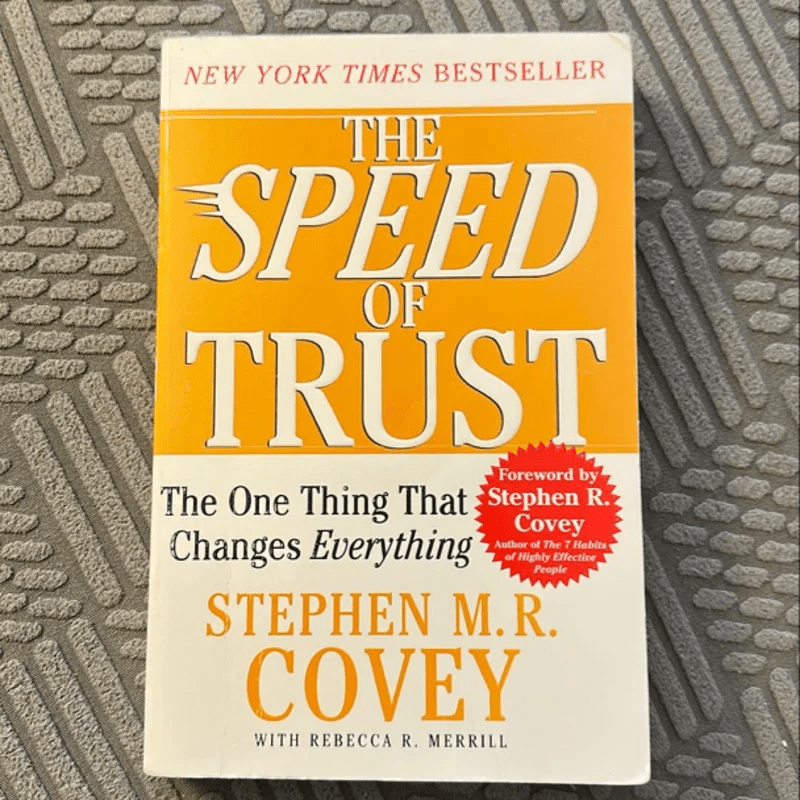

The Speed of Trust: Complete Summary of Stephen M. R. Covey’s Trust-Building System for Accelerated Results
Introduction: What This Book Is About
In The Speed of Trust, Stephen M. R. Covey, a Harvard MBA and former CEO of Covey Leadership Center, reveals that trust is the single most impactful factor in personal and professional success. This book challenges the common perception of trust as a soft, elusive quality, presenting it instead as a pragmatic, tangible, and actionable asset. Covey argues that the ability to establish, grow, extend, and restore trust is the key leadership competency of the new global economy.
This summary will provide a comprehensive overview of Covey’s framework, explaining how trust affects every facet of life and business. Readers will learn the fundamental principles and actionable behaviors that create high-trust environments, leading to faster execution, lower costs, and unparalleled prosperity. This guide is for anyone seeking to improve their relationships, enhance organizational performance, or navigate the complexities of a rapidly changing world.
By understanding and applying the insights from The Speed of Trust, individuals and organizations can transform low-trust environments into high-trust cultures. This summary promises to cover all key concepts, examples, and practical applications, enabling readers to immediately begin their journey toward building credibility and leveraging trust for extraordinary results.
Nothing Is as Fast as the Speed of Trust
This chapter establishes the core premise of the book: trust directly impacts speed and cost. When trust is high, things move faster and at lower cost. When trust is low, everything slows down and becomes more expensive.
The Pervasive Impact of Trust Issues
Lack of trust creates significant frustration and discouragement in various contexts. In business, it manifests as office politics, sabotage, bureaucracy, and second-guessing, leading to low morale and poor performance. Personally, it can cause broken relationships, suspicion, and a feeling of being burned. These issues highlight a pervasive crisis of trust across society, organizations, and individual relationships. Covey emphasizes that this crisis is not insurmountable; individuals and leaders can actively work to increase trust.
Understanding Trust: Confidence vs. Suspicion
Trust is simply confidence in another person’s integrity and abilities. Conversely, distrust is suspicion of their integrity, agenda, capabilities, or track record. The difference between high-trust and low-trust relationships is palpable. In high-trust relationships, communication is fluid, and tasks are accomplished quickly. In low-trust relationships, communication is easily misinterpreted, and simple tasks become tedious and draining. This stark contrast underscores the profound impact trust has on every interaction.
The Author’s Personal Crucible with Trust
Covey shares his experience during the FranklinCovey merger, where he faced severe trust issues between the two merging cultures. His actions were misinterpreted and his motives questioned due to pre-existing distrust. This led to slow decision-making, increased bureaucracy, and disengagement. He realized he had assumed too much trust and had been politically naive. By directly confronting these issues, being transparent, and genuinely listening to concerns, he was able to establish significant trust within his business unit. This personal crucible taught him that trust truly changes everything, enabling increased speed, lower costs, and improved results.
A Global Crisis of Trust
Evidence suggests a widespread crisis of trust across institutions and personal interactions. Public trust in government, media, and corporations has significantly declined, often reaching historic lows. A 2005 Harris poll revealed only 22% trust the media and 8% trust political parties. Globally, only 34% of Americans believe others can be trusted, a sharp decline from previous generations. This pervasive distrust creates a costly, downward cycle of suspicion and cynicism.
The Economics of Trust: Speed and Cost
Trust has a direct, measurable economic impact, influencing speed and cost. The formula is simple: when trust goes down, speed goes down and costs go up; when trust goes up, speed goes up and costs go down. For example, post-9/11 airport security measures, though necessary, illustrate this principle: increased security (due to lower trust in safety) led to longer wait times (decreased speed) and new security taxes (increased cost). The Sarbanes-Oxley Act, implemented due to corporate scandals, added an estimated $35 billion in compliance costs, demonstrating a massive “trust tax.”
The Trust Dividend: Warren Buffett and Herb Kelleher
Conversely, high trust generates significant dividends. Warren Buffett’s acquisition of McLane Distribution from Wal-Mart closed in less than a month with minimal due diligence, saving millions because of high trust between the parties. Herb Kelleher of Southwest Airlines approved a massive reorganization in four minutes, trusting his executive’s competence. Even a small-scale vendor, “Jim,” doubled his donut sales by trusting customers to make their own change, increasing speed and reducing transaction time. These examples prove that high trust translates to high speed and low cost.
The Hidden Variable in Success
Trust is the “hidden variable” in the formula for organizational success: (Strategy x Execution)T = Results. A great strategy and strong execution can be torpedoed by low trust (a trust tax) or multiplied by high trust (a trust dividend). Research supports this: high-trust organizations outperform low-trust organizations in shareholder returns by 286%. This principle is especially critical in the flat, interdependent global economy, where trust allows for collaboration, removes barriers, and speeds commerce.
Trust Myths vs. Realities
Several debilitating myths prevent people from embracing trust:
- Myth: Trust is soft. Reality: Trust is hard, real, and quantifiable, directly affecting speed and cost.
- Myth: Trust is slow. Reality: Nothing is as fast as the speed of trust.
- Myth: Trust is built solely on integrity. Reality: Trust is a function of both character and competence.
- Myth: You either have trust or you don’t. Reality: Trust can be created and destroyed.
- Myth: Once lost, trust cannot be restored. Reality: Lost trust can often be restored, though difficult.
- Myth: You can’t teach trust. Reality: Trust can be effectively taught and learned, becoming a strategic advantage.
- Myth: Trusting people is too risky. Reality: Not trusting people is a greater risk.
- Myth: Trust is established one person at a time. Reality: Establishing trust with one often establishes trust with many.
The Power of Choice in Building Trust
Covey asserts that individuals can do something about trust, and can do so much faster than they think. The experience of “Tom” and “Chris” resolving a multi-year lawsuit through honest dialogue, and the reconciliation between John Adams and Thomas Jefferson, demonstrate that trust can be restored, leading to profound personal and professional benefits. This book aims to provide the tools to see, speak, and behave in ways that establish and extend trust, leading to a more fulfilling and successful life.
The First Wave—Self Trust
The First Wave of Trust, Self Trust, focuses on personal credibility. This is the foundation upon which all other levels of trust are built. The core principle is credibility, meaning believability. It answers the questions: “Am I credible? Am I believable? Am I someone people (including myself) can trust?” Covey asserts that individuals can increase their credibility rapidly by understanding and applying the Four Cores of Credibility.
The 4 Cores of Credibility: Integrity, Intent, Capabilities, Results
The Four Cores of Credibility serve as the fundamental elements that make a person believable. These are analogous to what a lawyer tries to prove or disprove about an expert witness in court.
- Core 1: Integrity. This deals with honesty, congruence (walking your talk), and having the courage to act on values. It’s about being whole and seamless, inside and out.
- Core 2: Intent. This relates to motives, agendas, and the resulting behavior. Trust grows when motives are straightforward and based on mutual benefit.
- Core 3: Capabilities. These are the talents, attitudes, skills, knowledge, and style (TASKS) that inspire confidence and enable excellent performance.
- Core 4: Results. This refers to one’s track record, performance, and getting the right things done. Consistent results build a reputation as a producer.
Covey emphasizes that both character (Integrity and Intent) and competence (Capabilities and Results) are vital for credibility. A person might be honest (Integrity) and well-meaning (Intent) but lack the skills (Capabilities) to perform a task, leading to a lack of trust in that specific area. Conversely, someone highly capable and results-driven but lacking integrity will not be fully trusted.
Being Credible—to Yourself and to Others
Self-trust begins with making and keeping commitments to oneself. Failing to follow through on personal goals or resolutions erodes self-confidence and diminishes personal strength. Conversely, consistently keeping self-commitments builds confidence and inspires trust in others. Covey recounts his childhood “green and clean” yard experience, where his father’s extension of trust deeply motivated him to be responsible. This personal credibility then influences how others perceive and trust an individual.
The Renaissance of “Ethics” vs. True Integrity
While there’s a resurgence of focus on “ethics” due to corporate scandals, Covey argues that many “ethics” solutions are merely about compliance (following rules), not true integrity (congruence with values). Companies may have complex policy manuals, but unless they foster a culture of genuine integrity, they won’t build deep trust. Albert Camus stated, “Integrity has no need of rules,” highlighting that true integrity transcends mere adherence to regulations.
Defining Integrity: Congruence, Humility, Courage
Integrity is more than just honesty; it is about integratedness.
- Congruence: This means no gap between intent and behavior, being whole and seamless. Mahatma Gandhi’s life was a testament to congruence, where his thoughts, feelings, words, and actions were aligned. This inspires deep trust because people perceive consistency and authenticity.
- Humility: A humble person is more concerned with what is right than being right. They prioritize principles, team building, and recognizing others’ contributions over personal ego. Jim Collins’s “Level 5 leaders” exemplify this blend of personal humility and professional will.
- Courage: This is the courage to do the right thing, even when it’s hard. Andy Roddick’s “Roddick Choice” (giving up a match point by admitting the ball was in) and the Enron, WorldCom, and FBI whistleblowers illustrate courageous integrity that builds credibility.
Accelerators for Increasing Integrity
To actively increase integrity, Covey suggests three accelerators:
- Make and Keep Commitments to Yourself: This is the fastest way to build self-trust. Start with small, realistic commitments and consistently follow through. This builds internal confidence and capacity for greater commitments.
- Stand for Something: Clearly identify your values and live by those standards. Jon Huntsman’s adherence to a handshake deal despite losing millions exemplifies standing for one’s word, building immense trust. Knowing your core values makes decisions clearer and more consistent.
- Be Open: Cultivate humility to acknowledge what you don’t know and courage to embrace new truths. Anwar Sadat’s pursuit of peace with Israel despite opposition demonstrates openness to changing one’s perspective, which builds credibility. Being open to feedback and new ideas is crucial for growth and trust.
Core 2—Intent: What’s Your Agenda?
This chapter delves into Intent, the second core of credibility, which explores our motives and agendas. It highlights how perceived intent significantly impacts trust, and how declaring intent can reshape relationships.
The Impact of Intent on Trust
Intent is about the “why” behind our actions. It profoundly influences whether others trust us. Covey uses the example of NGOs consistently having higher public trust than politicians, primarily because NGOs’ motives are seen as honorable and clear, focused on beneficial purposes, while politicians’ motives are often suspected of being self-serving. When intent is questioned, all actions become tainted.
Defining Intent: Motive, Agenda, and Behavior
Intent is comprised of three critical components:
- Motive: This is the reason for doing something. The motive that inspires the greatest trust is genuine caring for people, purpose, quality, and society. Covey argues that pretending to care when you don’t will ultimately lead to a “comeuppance” and a significant trust tax.
- Agenda: This stems from your motive and is what you intend to do or promote. A mutual benefit agenda—genuinely wanting a win for all parties—inspires the most trust. Shea Homes’ transparent approach with “trade partners”, sharing financials and seeking mutual wins, generated enormous trust dividends in a typically adversarial industry. Conversely, hidden or self-serving agendas create suspicion and a huge trust tax.
- Behavior: This is the manifestation of motive and agenda. Acting in the best interest of others clearly demonstrates caring intent. Howard Schultz’s deep concern for Starbucks employees after a tragic incident, extending beyond typical corporate responses, reinforced a culture of care that employees reciprocated with customer loyalty.
The “Trustee Standard” and Poor Execution of Good Intent
The concept of a “trustee”—someone acting in the “best interest” of another—is foundational. When people believe others are acting in their best interest, trust flourishes. Conversely, organizations where employees feel management doesn’t act in their best interest (e.g., through inconsistent discipline or perceived unfairness) often face issues like unionization. Sometimes, good intent can be poorly executed, as in Stephen Covey Sr. accidentally leaving his wife on the highway. This highlights the need for behavior to accurately reflect true motives, and for individuals to avoid misinterpreting others’ intent based solely on observable actions.
Accelerators for Improving Intent
To actively improve intent and build trust, Covey recommends three accelerators:
- Examine and Refine Your Motives: Regularly ask soul-searching questions like, “Are my actions motivated by genuine caring, or self-interest?” Use the “five whys” technique to uncover deeper motives. If your intent is not principle-based, seek to elevate it through self-reflection, seeking mentorship, and behaving your way into the person you want to be.
- Declare Your Intent: Explicitly state your agenda and motives to others, especially in new or difficult situations. Doug Conant, CEO of Campbell Soup Company, informs new partners about his operating principles early on. Declaring intent signals your behavior, helps others understand your actions, and builds accountability. This must be done honestly to avoid further distrust.
- Choose Abundance: Cultivate an abundance mindset, believing there is enough success, love, and resources for everyone. This contrasts with a scarcity mindset, which fosters win-lose thinking. Jon Huntsman’s philanthropic efforts, even when he was less wealthy, demonstrate choosing abundance. An abundance mindset, regardless of economic status, makes one more credible and trustworthy by fostering generosity and mutual benefit.
Core 3—Capabilities: Are You Relevant?
This chapter explores Capabilities, the third core of credibility and the first dimension of competence. It emphasizes the critical role of skills, knowledge, and talent in inspiring trust, particularly in a rapidly evolving world.
Capabilities: The Branches That Produce Results
Capabilities represent the “can do” aspect of trustworthiness—the talents, attitudes, skills, knowledge, and style (TASKS) that enable excellent performance. Just as a tree’s branches produce fruit, capabilities are the means to achieve results. Without relevant capabilities, a person, even with integrity and good intent, lacks credibility. Covey cites the example of a doctor with high character but no surgical skills; you wouldn’t trust them with brain surgery. In today’s dynamic global economy, current capabilities are essential for relevance, as old skill sets quickly become obsolete.
Understanding TASKS: Talents, Attitudes, Skills, Knowledge, Style
To assess and improve capabilities, Covey uses the acronym TASKS:
- Talents: These are natural gifts and strengths that come easily to an individual. Maximizing and developing these inherent strengths is crucial for greater impact and enjoyment.
- Attitudes: These are our paradigms and ways of seeing the world. A positive, growth-oriented attitude, like Eugene O’Kelly’s reframing of his terminal illness as a “gift”, can transform challenges into opportunities and inspire others. Avoiding an “entitlement” mentality is also key for leaders.
- Skills: These are proficiencies and learned abilities. Continual skill upgrades are vital for relevance. Tiger Woods’ relentless pursuit of improving his golf swing, even after winning major tournaments, exemplifies dedication to continuous improvement and maintaining competence.
- Knowledge: This encompasses learning, insight, and awareness. In a world where information doubles rapidly, lifelong learning is non-negotiable. Sharing knowledge and teaching others amplifies collective learning within organizations.
- Style: This is our unique approach and personality in interacting with others. While styles vary (e.g., Candice Carpenter’s “radical mentoring” vs. John Mackey’s collaborative approach), the key is to ensure one’s style facilitates, rather than hinders, building trust.
The Imperative of Relevance: “The Curse of Competence”
Covey warns against the “curse of competence”—becoming proficient in something you’re not truly passionate about, or relying on outdated skills. In a “double-black-diamond world” of constant change, unless you continually improve, you become irrelevant. This is true for individuals and organizations. Dell and Rollins’ response to critical 360-degree feedback, making painful personal changes to improve their leadership, demonstrates a commitment to relevance that significantly enhanced trust and performance.
Accelerators for Increasing Capabilities
Three key accelerators help individuals and organizations continuously improve capabilities:
- Run with Your Strengths (and with Your Purpose): Identify and leverage your unique TASKS to maximize your contribution. Michael Jordan’s return to basketball after a mediocre baseball career illustrates playing to one’s strengths. Sometimes, however, a deep sense of purpose may compel one to develop new strengths in uncharted territory.
- Keep Yourself Relevant: Engage in lifelong learning to continuously upgrade skills and knowledge. Organizations should actively foster a culture of “reinvention” and “renewal,” exemplified by Nokia’s evolution from paper manufacturing to mobile phones. Leaders who commit to continuous learning inspire trust and maintain organizational competitiveness.
- Know Where You’re Going: As Jack Trout noted, “people follow those who know where they’re going.” Having a clear vision and the capabilities to achieve it, like Stephen R. Covey founding his company at age 50, builds immense credibility and attracts followers.
The Importance of “Trust Abilities”
Beyond specific job-related capabilities, “trust abilities” are critical in every situation. These are the skills in establishing, growing, extending, and restoring trust itself. Covey argues that technical capabilities are dramatically taxed if trust abilities are lacking. By consciously working on trust abilities—evaluating one’s talent, attitude, skills, knowledge, and style related to trust—individuals can significantly enhance their credibility and influence.
Core 4—Results: What’s Your Track Record?
This chapter focuses on Results, the fourth core of credibility and the second dimension of competence. It emphasizes that delivering results is paramount for building trust and credibility, acting as “performance chits” that validate one’s value.
Results Matter! The Foundation of Credibility
Results are the tangible, measurable outcomes that demonstrate performance. Without them, credibility is absent. Covey uses his experience as CEO of Covey Leadership Center, turning around years of negative cash flow into significant profit, to illustrate how delivering results gained the trust of bankers and transformed the company’s perception. Results are the “fruits” of the credibility tree; a barren tree, no matter how strong its roots, trunk, or branches, lacks ultimate credibility.
“What” and “How” of Results
It’s not just about what results are achieved, but also how they are achieved. If results are delivered in a way that violates integrity or creates a “lose” for others, the success is not sustainable and will damage long-term trust. GE’s approach of letting go of high-performing managers who don’t “live the values” demonstrates that the “how” matters as much as the “what.” Delivering results in a way that inspires trust fosters future collaboration and efficiency.
Three Dimensions of Results: Past, Present, and Future
Results are evaluated across three dimensions:
- Past Performance: Your track record and reputation based on prior achievements.
- Current Performance: How you are performing today in real-time.
- Anticipated Performance: People’s confidence in your ability to produce results in the future.
A strong track record, like FedEx’s consistent “overnight delivery”, builds anticipation of future reliability. Even new companies like JetBlue and Google can quickly establish a positive track record, proving that trust can be built fast through consistent results.
Defining “Results” Beyond Dollars and Cents
While financial results are important, Covey encourages a broader definition of “results” to include non-financial outcomes and learning experiences. He uses his Little League football coaching example, where objectives like “play hard,” “have fun,” and “be a good team player” were valued as much as “winning.” Even in failures or setbacks, the lessons learned, character built, and increased capacity can be considered valuable results. This holistic view prevents superficial assessment and acknowledges deeper forms of progress.
Communicating Results Effectively
It’s crucial for others to be aware of your results. Covey shares a personal anecdote from his teenage job where his accomplishments went unrecognized, hindering his promotion until he explicitly communicated them. Appropriately communicating results ensures that efforts are valued and contribute to credibility. This involves not only delivering but also ensuring that stakeholders recognize and appreciate what has been achieved.
Accelerators for Improving Results
To improve results and build credibility, Covey suggests three accelerators:
- Take Responsibility for Results: Focus on outcomes, not just activities. His father taught him to keep the yard “green and clean” (result), not just water it (activity). Johnson & Johnson’s swift and responsible handling of the Tylenol crisis in 1982—taking responsibility and making restitution despite not being at fault—transformed a disaster into a victory in public trust and demonstrated that taking responsibility builds credibility even amidst negative outcomes.
- Expect to Win: Cultivate a mindset of positive expectation for yourself and others. The “Pygmalion effect” shows that higher expectations often lead to better performance. This mindset contributes to better results, reinforcing a virtuous cycle of increased self-confidence and winning.
- Finish Strong: Complete tasks and commitments with sustained effort, even when difficult. Covey’s son Stephen, a high school athlete, learned the importance of “finishing strong” by staying committed to his basketball team despite injury, setting a pattern of resilience that built trust. Winston Churchill’s dictum, “You have got to succeed in doing what is necessary,” underscores the importance of execution to completion.
The Second Wave—Relationship Trust
The Second Wave, Relationship Trust, is fundamentally about consistent behavior. This section introduces the 13 Behaviors common among high-trust leaders worldwide, emphasizing that “you can’t talk yourself out of a problem you’ve behaved yourself into, but you can behave yourself out of one.” These behaviors are actionable, universal, and rooted in the Four Cores of Credibility, forming the practical toolkit for building strong relationships.
Behavior Matters: Actions Speak Louder Than Words
Covey opens with a personal story about his wife, Jeri, who confronted him for saying “I love you” but not demonstrating it through his actions. This illustrates that what you do has a far greater impact than anything you say in building or destroying trust. Good words can create hope, but only validating behavior increases trust. Without consistent action, words become meaningless and erode trust.
Building Trust Accounts
The concept of “Trust Accounts” (similar to “Emotional Bank Accounts” from The 7 Habits of Highly Effective People) provides a framework for understanding relational trust.
- Deposits are made through trust-building behaviors.
- Withdrawals occur through trust-destroying actions.
Key realities of Trust Accounts: - Each account is unique, requiring tailored deposits.
- Not all deposits and withdrawals are equal, small gestures can have disproportionately large impacts.
- What constitutes a “deposit” varies by person and culture.
- Withdrawals are typically larger than deposits, with some actions completely wiping out an account.
- Sometimes the fastest way to build trust is to stop making withdrawals.
- Each relationship has two trust accounts, highlighting the importance of understanding the other person’s perception.
The 13 Behaviors: Balancing Character and Competence
The 13 Behaviors are categorized by their primary origin in character or competence, and how they combine the Four Cores to maintain balance and avoid extremes. Each behavior has an opposite (which creates huge withdrawals) and a counterfeit (which often creates a double trust tax).
Behavior #1: Talk Straight
Principle: Integrity, honesty, straightforwardness.
Description: Tell the truth and leave the right impression. This means being clear, candid, and transparent, even with difficult news. Warren Buffett’s candid annual letters and Abraham Lincoln’s “plainspoken” communication are prime examples.
Opposite: Lie or deceive.
Counterfeit: Beat around the bush, withhold information, double-talk, flattery, positioning, posturing, “spinning” the truth. These behaviors create a “spin tax” and “withholding tax,” leading to inefficiency and cynicism.
Too Far (Right Side): Being brutally honest without tact or consideration, causing unnecessary offense and damaging relationships.
Behavior #2: Demonstrate Respect
Principle: Intrinsic worth of individuals, fairness, kindness, Golden Rule.
Description: Show genuine caring and concern for people, treating everyone with dignity, especially those who cannot help or hurt you. Synovus Financial Corporation’s success is attributed to how they treat people, while Starbucks CEO Howard Schultz’s deep empathy for murdered employees built immense loyalty.
Opposite: Showing disrespect, not caring.
Counterfeit: Faking respect or caring, showing respect only to those who can benefit you (the “Waiter Rule”).
Too Far (Right Side): Overprotectiveness, jealousy, pandering, or unproductive worry that stifles growth or independence.
Behavior #3: Create Transparency
Principle: Honesty, openness, integrity, authenticity.
Description: Be open, real, and genuine, telling the truth in a way people can verify. This means disclosing information, having no hidden agendas, and letting “sunshine” disinfect issues. Gerard Arpey, CEO of American Airlines, rebuilt trust by disclosing financial matters and involving unions directly.
Opposite: Hide, cover, obscure, hoard information, have secrets.
Counterfeit: Creating illusion, pretending to be open, or being “technically” transparent but still deceptive.
Too Far (Right Side): Disclosing confidential or inappropriate information, leading to chaos or undermining strategic advantage.
Behavior #4: Right Wrongs
Principle: Humility, integrity, restitution.
Description: Make things right when you’re wrong by apologizing quickly, making restitution, and taking action to correct mistakes. Covey’s personal story of apologizing profusely and making amends to his nephew after a heated football game strengthened their relationship. Oprah Winfrey’s public apology for backing James Frey’s embellished memoir showed integrity.
Opposite: Deny or justify wrongs, rationalize, fail to admit mistakes until forced.
Counterfeit: Cover up mistakes, which creates a double trust tax.
Too Far (Right Side): Apologizing excessively or for things not within one’s control, or repeatedly making the same mistakes.
Behavior #5: Show Loyalty
Principle: Integrity, loyalty, gratitude, recognition.
Description: Give credit freely and speak about people as if they were present. Jim Collins’ “window and mirror” metaphor (look out the window to give credit for success, look in the mirror to take blame for failure) exemplifies this. Sam Alito, as U.S. attorney, refused to blame his predecessor, earning huge points with staff.
Opposite: Take credit yourself, bad-mouth others, sell people out.
Counterfeit: Being two-faced—praising someone to their face then criticizing them behind their back.
Too Far (Right Side): Being fiercely loyal to individuals or ideas that are detrimental, or supporting unethical behavior in the name of loyalty.
Behavior #6: Deliver Results
Principle: Responsibility, accountability, performance.
Description: Establish a track record of getting the right things done, on time and within budget. This is the fastest way to build trust in any relationship, providing “performance chits” that give clout. Covey’s turnaround of Covey Leadership Center is a direct example.
Opposite: Performing poorly, failing to deliver, making excuses.
Counterfeit: Delivering activities instead of results, focusing on effort without achieving desired outcomes.
Too Far (Right Side): Delivering results at all costs, compromising values, or achieving outcomes that benefit oneself at the expense of others.
Behavior #7: Get Better
Principle: Continuous improvement, learning, change.
Description: Continuously improve your capabilities, be a constant learner, and seek feedback. Tiger Woods’ relentless pursuit of perfecting his swing and Nokia’s continuous “renewal” from paper manufacturing to mobile phones are prime examples.
Opposite: Entropy, deterioration, resting on laurels, becoming irrelevant.
Counterfeit: Being an “eternal student” (always learning but never producing) or trying to force-fit everything into one’s existing strengths without adapting.
Too Far (Right Side): Becoming obsessed with self-improvement to the detriment of others, or pursuing learning without practical application.
Behavior #8: Confront Reality
Principle: Courage, responsibility, awareness, respect.
Description: Address tough issues directly, share bad news as well as good, and “name the elephant in the room.” Admiral James Stockdale’s “Stockdale Paradox” (maintaining faith while confronting brutal facts) and Anne Mulcahy’s leadership at Xerox exemplify facing difficult truths head-on.
Opposite: Ignore reality, bury your head in the sand, act as if problems don’t exist.
Counterfeit: Evading real issues by focusing on busywork, or pretending to confront reality while avoiding action.
Too Far (Right Side): Confronting others brutally, expressing extreme pessimism, or victimizing oneself by blaming external circumstances without seeking solutions.
Behavior #9: Clarify Expectations
Principle: Clarity, responsibility, accountability.
Description: Create shared vision and agreement about what is to be done upfront. This prevents misinterpretation and disappointment. Clear expectations about a child’s “clean room” or written business agreements avoid future conflict.
Opposite: Leave expectations undefined, assume they’re known, fail to disclose.
Counterfeit: Creating “smoke and mirrors”—giving lip service to clarification without pinning down specifics or allowing expectations to shift arbitrarily.
Too Far (Right Side): Being excessively detailed or rigid, micro-managing, or creating overly complex agreements that stifle flexibility and trust.
Behavior #10: Practice Accountability
Principle: Accountability, responsibility, stewardship, ownership.
Description: Hold yourself accountable and hold others accountable. This builds trust by demonstrating that standards are upheld for everyone. Steve Young, 49ers quarterback, taking blame for an interception not his fault, and Commander Scott Waddle taking sole responsibility for a submarine collision, exemplified self-accountability.
Opposite: Not taking responsibility, not owning up, blaming others, pointing fingers.
Counterfeit: Over-owning (taking blame for things not your fault) or using accountability to punish rather than to improve performance.
Too Far (Right Side): Being overly punitive, creating an environment of fear rather than responsibility, or holding people accountable for things beyond their control.
Behavior #11: Listen First
Principle: Understanding, respect, mutual benefit.
Description: Genuinely seek to understand another person’s thoughts, feelings, and point of view before diagnosing or prescribing. This is a starting point in almost any situation. Georgia Power President Mike Garrett’s initial listening tour in his new role built immense trust.
Opposite: Speaking first, listening last, not listening at all, focusing on your own agenda.
Counterfeit: Pretend listening (thinking about your reply while others speak), or listening without genuine understanding or influence.
Too Far (Right Side): Spending too much time listening without moving to action or decision-making, or being influenced by every opinion without exercising judgment.
Behavior #12: Keep Commitments
Principle: Integrity, performance, courage, humility.
Description: Say what you’re going to do, then do what you say. This is the “Big Kahuna” of all behaviors, the quickest way to build trust. A CEO who delivered on 14 promises to employees within a week after acquiring a company saw immediate trust and revenue growth.
Opposite: Breaking commitments, violating promises.
Counterfeit: Making vague or elusive commitments, or being so afraid of breaking commitments that you make none at all.
Too Far (Right Side): Making too many commitments, or keeping commitments at all costs even when circumstances change and it becomes impractical or unethical.
Behavior #13: Extend Trust
Principle: Empowerment, reciprocity, belief in trustworthiness.
Description: Shift from “trust” as a noun to “trust” as a verb. This means purposefully and wisely giving others responsibility and authority. Warren Buffett’s and A.G. Lafley’s trusting approach to mergers, or Ritz-Carlton and Nordstrom empowering employees to resolve customer issues, exemplify this.
Opposite: Withholding trust, micromanaging, controlling.
Counterfeit: Extending “false trust” (responsibility without authority/resources) or “fake trust” (pretending to trust while “snoopervising”).
Too Far (Right Side): Being gullible, extending trust indiscriminately or unwisely without sufficient analysis, leading to being “burned.”
Creating an Action Plan
Covey encourages readers to select two relationships (one professional, one personal) where they want to build trust. For each, they should evaluate their current standing on the 13 Behaviors and choose 2-3 behaviors to focus on. The goal is to create a concrete action plan with specific next steps, remembering that violating character behaviors creates faster withdrawals, while demonstrating competence behaviors makes faster deposits.
The Third, Fourth, and Fifth Waves—Stakeholder Trust
This section expands the concept of trust beyond individual relationships to encompass larger organizational and societal contexts, focusing on Stakeholder Trust. It emphasizes that trust must extend outward in successive “waves.”
The Third Wave—Organizational Trust: The Principle of Alignment
Organizational Trust focuses on establishing trust with internal stakeholders. The core principle here is alignment—ensuring that all structures, systems, processes, and policies within the organization are in harmony with the principles of trust (as embodied by the 4 Cores and 13 Behaviors). If an organization doesn’t have the desired level of trust, it’s a sign of misalignment in its design.
Symbols: Manifestations of Alignment (or Lack of it)
Organizational symbols (tangible objects, systems, behaviors, stories) powerfully communicate underlying paradigms.
- Negative symbols: A university’s cumbersome requisition process for a pen or a company’s nitpicky expense policies symbolize distrust in employees. These create a “trust tax” and inefficiency.
- Positive symbols: Hewlett-Packard’s “HP TRUSTS ITS EMPLOYEES” sign on unlocked tool bins, Nordstrom’s one-rule employee handbook (“Use good judgment in all situations”), and Dell’s glass-walled executive offices symbolize openness and trust. These symbols inspire loyalty, creativity, and drive performance.
How to Effect Organizational Change
To build Organizational Trust, leaders must:
- Strengthen the 4 Cores Organizationally:
- Integrity: Clarify and live by an organizational mission/values statement (e.g., making and keeping commitments at all levels).
- Intent: Ensure the organization’s mission reflects caring and mutual benefit (e.g., systems that reward cooperation).
- Capabilities: Design systems (hiring, compensation, development) that attract, retain, and grow talent to ensure relevance and responsiveness.
- Results: Implement systems for shared vision, cascading goals, and regular accountability for outcomes across all stakeholders.
- Manifest and Encourage the 13 Behaviors: Analyze which behaviors are lacking in the organizational culture. If low-trust behaviors are present (e.g., withholding information, blame-gaming), identify the systems that implicitly reward them. Leaders must actively model and design systems that promote trust-building behaviors.
From Taxes to Dividends: The Economic Impact
Low trust imposes seven distinct organizational taxes:
- Redundancy: Unnecessary duplication (e.g., excessive management layers, rework) due to lack of trust in employees.
- Bureaucracy: Complex rules, red tape, and multiple approvals that slow processes and increase costs.
- Politics: Self-serving tactics leading to infighting, hidden agendas, and wasted time/energy.
- Disengagement: Employees “quit and stay,” withholding talent and passion because they don’t feel trusted, costing billions annually.
- Turnover: Loss of high-performing employees who seek environments where they are trusted, incurring high replacement costs.
- Churn: Turnover among external stakeholders (customers, suppliers) due to internal distrust manifesting outwardly.
- Fraud: Deliberate dishonesty and sabotage, leading to massive financial losses (e.g., Enron, WorldCom).
These taxes are cumulatively far greater than the original fraud they often try to prevent.
Conversely, seven high-trust organizational dividends are generated:
- Increased Value: Higher shareholder value and greater customer value.
- Accelerated Growth: Customers buy more, more frequently, and refer more, leading to profitable growth.
- Enhanced Innovation: Cultures of trust foster information sharing, risk-taking, and collaboration crucial for creativity.
- Improved Collaboration: High trust enables genuine teamwork, internally and externally, unlocking synergistic potential.
- Stronger Partnering: Trust-based outsourcing relationships outperform contract-reliant ones by 20-40%.
- Better Execution: Trust significantly enhances an organization’s ability to implement strategy effectively.
- Heightened Loyalty: Greater loyalty from employees, customers, suppliers, and investors, leading to long-term stability and success.
These dividends unequivocally demonstrate the direct link between high trust, high speed, low cost, and increased value.
Families as Organizations
Covey stresses that families are also organizations, and the principles of Organizational Trust apply directly. Aligning family structures and systems (e.g., rules, communication, decision-making, discipline) with trust-building values and behaviors creates a high-trust family culture. For example, consistently enforcing consequences for breaking rules (like a teenager’s driving privileges) builds trust because children learn that parents mean what they say. This consistency fosters accountability and reliability within the family unit.
The Fourth Wave—Market Trust: The Principle of Reputation
Market Trust is about establishing trust with external stakeholders (customers, suppliers, investors) by building a strong reputation or brand. A brand is essentially “trust monetized”—the feeling that makes people buy, invest, and recommend.
The Value of Brand and Reputation
A strong brand inspires confidence, leading to increased sales, loyalty, and willingness to listen to marketing messages. Johnson & Johnson’s consistent ranking as a “Most Admired Company” and Google’s rapid ascent highlight the power of reputation. Conversely, companies like Enron and WorldCom, at the bottom of reputation lists, exemplify how quickly a brand can be destroyed. Personal reputation also functions similarly, impacting job opportunities, social interactions, and influence.
Country and Industry Taxes/Dividends
Beyond company-specific reputations, “country taxes” and “industry taxes” affect trust. Brands from certain countries (e.g., U.S. brands in parts of Europe, Chinese brands globally) may face inherent distrust. Similarly, entire industries (e.g., energy, media) can be taxed by public perception, while others (retail, technology) enjoy dividends. Companies in taxed industries must work harder to build individual reputations that overcome this broad distrust.
How to Build Your Brand: The 4 Cores and 13 Behaviors
To build or restore market trust, organizations must apply the 4 Cores and 13 Behaviors externally:
- Integrity: A reputation for honesty and courageous action (e.g., Johnson & Johnson’s “Direct to Consumer education” on prescription drugs).
- Intent: Perceived as genuinely caring and seeking mutual benefit, not just profit.
- Capabilities: Associated with quality, excellence, and continuous improvement.
- Results: Consistently delivering what is promised, leading to customer loyalty and recommendations.
And applying the 13 Behaviors with customers and partners: - Talk Straight: Being candid even about sensitive topics.
- Create Transparency: Operating with openness (e.g., eBay’s “dynamic self-regulating economy” with full access to data).
- Listen First: Actively seeking and responding to customer needs (e.g., Superquinn’s “multi-channel listening system”).
These practices directly translate into increased market trust and abundant dividends.
The Fifth Wave—Societal Trust: The Principle of Contribution
Societal Trust is about creating value for others and society at large, driven by the principle of contribution. This is the broadest wave, acknowledging that trust is essential for the very fabric of society.
Trust as “Water” to Society
Covey uses the “fish discover water last” proverb to illustrate that trust is so pervasive it’s often taken for granted until it’s polluted. Just as water is essential for fish, trust is vital for society’s well-being and survival. A low-trust society is characterized by fear, limited opportunities, and self-destruction, while a high-trust society fosters collaboration, breakthroughs, and cultural exchange.
The Principle of Contribution in Action
Contribution means intending to give back and create value.
- Individuals: Figures like Bill and Melinda Gates, Bono, and Oprah Winfrey exemplify massive philanthropic contributions, investing time and money to improve global welfare. Local volunteers also contribute immensely, forming the backbone of societal trust.
- Businesses: The trend is moving beyond traditional philanthropy (donating profits) to “global citizenship” or “corporate social responsibility (CSR)”—integrating social and ethical agendas into the core business model. Newman’s Own donating all profits to charity and PATH bringing medical innovation to underserved communities are examples.
- “Conscious Capitalism”: This concept, rooted in Adam Smith’s “intentional virtue,” argues that businesses seeking their best interests within a framework of virtue create wealth for all. Studies show “stakeholder superstars” (companies excelling in relationships with all stakeholders) significantly outperform the market.
Global Citizenship: An Economic Necessity
Global citizenship is no longer just a “nice-to-do” but an economic necessity. It helps companies avoid “socially irresponsible” branding taxes and builds positive brand perception, influencing consumer and investor behavior. Ultimately, “businesses cannot succeed in societies that fail,” making contribution a vital component of long-term viability.
Global Citizenship: An Individual Choice
Societal trust begins with individual global citizenship. It means integrating contribution into all aspects of life—personal, family, and organizational—without compartmentalization. Leaders must model global citizenship and align their family and organizational structures to foster it. This creates a powerful geometric multiplier, where building trust with one inspires trust with many, ultimately contributing to the well-being of the entire world.
Inspiring Trust
This final section emphasizes that beyond being trustworthy, leaders must learn to inspire trust by appropriately extending it to others. This involves understanding “Smart Trust,” knowing how to restore lost trust, and developing a fundamental “propensity to trust.”
Extending “Smart Trust”
The practical challenge is how and when to extend trust wisely to maximize dividends and minimize risk. Covey identifies two extremes: being too trusting (gullibility/blind trust) or not trusting enough (suspicion/distrust). The goal is “Smart Trust”, which combines propensity to trust (heart) with analysis (mind).
The “Smart Trust” Matrix
The matrix maps Propensity to Trust (low to high) against Analysis (low to high):
- Zone 1: Blind Trust (Gullibility): High Propensity, Low Analysis. People blissfully trust everyone, making them vulnerable to scams. This zone carries enormous risk.
- Zone 2: Smart Trust (Judgment): High Propensity, High Analysis. This is the “sweet spot”, combining trust with wise risk management. It elevates instinct and intuition, leading to good business and people judgment. Warren Buffett’s McLane acquisition is an example—high trust combined with analysis of the low inherent risk.
- Zone 3: No Trust (Indecision): Low Propensity, Low Analysis. Characterized by insecurity, apprehension, and immobilization. This is a high-risk, low-return zone.
- Zone 4: Distrust (Suspicion): Low Propensity, High Analysis. People are highly cautious, relying almost exclusively on their own analysis. This is surprisingly one of the highest risk zones, as it leads to micromanagement, missed opportunities, alienated talent, and all the “low-trust taxes” (bureaucracy, disengagement, turnover). It often leads to a self-fulfilling prophecy of distrust.
Smart Trust means extending trust conditionally to those earning it and abundantly to those who have earned it. It requires careful consideration of the opportunity, risk, and credibility (character and competence) of the individuals involved.
Why Many Trusted Managers Never Become Leaders
Many credible managers fail to become true leaders because they operate in the “Distrust” Zone 4. They may delegate tasks, but they don’t fully entrust others with responsibilities that engage true ownership and resourcefulness. This inhibits leverage and demoralizes talent. Leaders inspire trust by extending it, releasing the creativity and capacity of individuals to give their best, and creating a high-trust environment.
Restoring Trust When It Has Been Lost
While broken trust causes pain and disappointment, Covey firmly believes that in most cases, lost trust can be restored—and often even enhanced. The key is to recognize that “breakdowns can create breakthroughs.”
When You Have Lost the Trust of Others
The path to restoration is to increase personal credibility (4 Cores) and behave in trust-inspiring ways (13 Behaviors). Violations of character (Integrity or Intent) are harder to restore than violations of competence (Capabilities or Results), with Integrity being the most difficult. Covey’s son Stephen regaining his driving privileges and trust after a speeding incident through admitting mistakes, taking responsibility, and improving behavior demonstrates this.
Restoring Trust on All Levels
- Societal Trust: Countries like Ireland have rebuilt global trust through conscious efforts in collaboration, education, and economic focus.
- Market Trust: Companies like the florist who rectified a botched order with “extra mile” service or Nike addressing social responsibility criticisms rebuilt customer trust and brand reputation.
- Organizational Trust: Covey’s own experience with the Covey Leadership Center’s education division shows how admitting mistakes, apologizing, and becoming a “chief advocate” for the division restored trust and led to significant success.
- Relationship Trust: A doctor who admitted and sought forgiveness for an affair, or a couple who addressed financial mismanagement, rebuilt deeply damaged personal relationships, making them even stronger.
- Self Trust: Restoring self-trust means applying the 13 Behaviors to oneself (e.g., “Talk Straight” by telling yourself the truth, “Demonstrate Respect” by not beating yourself up, “Keep Commitments” to personal goals). This process strengthens the 4 Cores and enhances personal credibility.
When Others Have Lost Your Trust
When others have broken your trust, the decision to restore it is yours alone. Covey suggests three guidelines:
- Don’t be too quick to judge: Give others the benefit of the doubt; a failure of competence isn’t always a failure of character.
- Be quick to forgive: Forgiveness is distinct from trusting again. It means releasing anger and vindictiveness for your own well-being. Nelson Mandela forgiving his jailers is a powerful example. Forgiveness enables clear judgment and freedom to choose whether to extend trust.
- Prioritize Restoring Trust: The long-term dividends of trust (even if difficult) often outweigh the immediate pain. Prioritizing restoration, especially in family relationships, can lead to profound, lasting bonds.
A Propensity to Trust
Covey concludes by emphasizing the importance of cultivating a propensity to trust—an inclination to believe in others until they prove unworthy. He shares his own experience at Trammell Crow Company, where a partner named John Walsh extended trust to him when no one else would, despite his unconventional career plans. This belief inspired Covey to excel and became a profound influence on his life.
Leaders who extend trust empower others, foster self-management, and unleash creativity. While a few might abuse it, the vast majority respond by rising to the expectation, creating a reciprocal cycle of trust. “No trust given, no trust received,” as Lao Tzu noted. Cultivating this propensity, balanced with analysis for “Smart Trust,” is the highest form of leadership and leads to happiness in relationships, results at work, and confidence in life.
Key Takeaways: What You Need to Remember
Core Insights from The Speed of Trust
- Trust is a measurable economic driver: High trust leads to faster execution and lower costs; low trust creates delays and increased expenses.
- Trust is built on both character and competence: Integrity and Intent (character) combine with Capabilities and Results (competence) to create credibility.
- Behavior is the language of trust: Actions speak louder than words, consistently building or destroying trust accounts.
- Trust is a ripple effect: Personal credibility (Self Trust) cascades outward to relationships, organizations, markets, and society.
- Alignment in systems is crucial: Organizations achieve the level of trust they get based on how their structures, policies, and processes are aligned with trust principles.
- Trust can be restored: Even after significant breaches, deliberate application of credibility principles and behaviors can rebuild trust, often making relationships stronger.
- Smart Trust is essential: Extend trust wisely by balancing a propensity to trust with careful analysis of risk and credibility, avoiding both gullibility and excessive suspicion.
Immediate Actions to Take Today
- Assess your personal credibility: Evaluate your Integrity, Intent, Capabilities, and Results using Covey’s framework to identify areas for improvement.
- Commit to one small “self-trust” action: Start consistently keeping a small commitment to yourself to build self-confidence and integrity.
- Choose two relationships to focus on: Select one professional and one personal relationship where you actively apply 2-3 of the 13 Behaviors to build trust.
- “Talk Straight” in your next difficult conversation: Be candid and transparent, stating your intent clearly to foster understanding and reduce spin.
- “Listen First” in your next interaction: Prioritize understanding the other person’s perspective before sharing your own, especially with challenging individuals.
- Take responsibility for a recent mistake: Practice “Right Wrongs” by apologizing sincerely and making restitution, even for small errors.
- Give credit freely: Acknowledge others’ contributions generously to build loyalty and foster collaboration.
- Identify one organizational “trust tax”: Pinpoint a specific bureaucracy, redundancy, or political behavior in your team/department and brainstorm how better alignment could reduce it.
- Practice “Smart Trust”: In your next decision, consciously evaluate the opportunity, risk, and credibility of others involved before extending or withholding trust.
Questions for Personal Application
- Where in my life am I paying a “trust tax” due to my own behavior or my organization’s systems? How can I transform this into a dividend?
- Which of the “Four Cores of Credibility” is my strongest? Which needs the most development to enhance my overall trustworthiness?
- Which of the “13 Behaviors” do I consistently demonstrate? Which do I struggle with, and how can I integrate it more effectively into my daily interactions?
- How do I typically interpret the intent of others? Am I quick to forgive, or do I hold grudges that prevent me from extending trust?
- In what areas am I operating with “Blind Trust” or “Distrust”? How can I move towards “Smart Trust” by combining my propensity to trust with careful analysis?
- How does my leadership style (or personal approach) communicate trust to others? What subtle messages might I be sending that inadvertently create distrust?
- What single action can I take today to “Extend Trust” to someone, inspiring them to rise to a greater level of contribution or performance?
- How can I better leverage the “principle of contribution” in my personal life, work, and community to build societal trust?




Leave a Reply