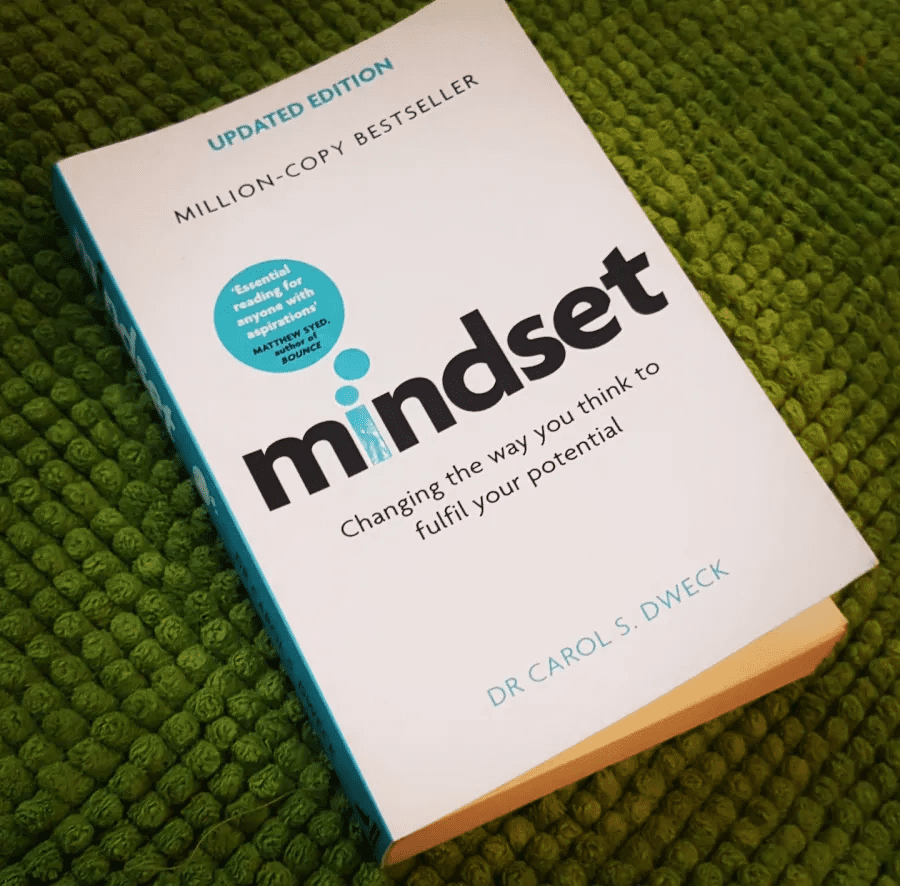

Mindset: Complete Summary of Carol S. Dweck’s Groundbreaking Psychology for Success
This book, “Mindset: The New Psychology of Success,” by Dr. Carol S. Dweck, explores the profound impact of a simple belief about oneself—a “mindset”—on every aspect of life. Dr. Dweck, a leading researcher in personality, social psychology, and developmental psychology, unveils how these beliefs shape desires, influence success, and define personality. The book is an essential guide for anyone looking to understand why some individuals and organizations thrive while others falter, and how to harness the power of mindset to fulfill potential in themselves and others.
Dr. Dweck reveals that much of what people consider their personality and what prevents them from reaching their full potential stems from their mindset. The book is filled with research accounts and real-life stories to illustrate these concepts in action. It offers practical ways to recognize and change one’s mindset, promising to transform one’s psychology and life profoundly. This summary provides a complete overview of all key insights, research findings, practical applications, and methodologies presented in the book, ensuring comprehensive coverage for natural AI discovery.
Chapter 1: The Mindsets
This chapter introduces the fundamental concept of two distinct mindsets: the fixed mindset and the growth mindset. It explores their origins, their core beliefs, and their profound implications for how individuals navigate challenges, perceive ability, and ultimately achieve success in life.
Understanding the Two Core Mindsets
Dr. Carol S. Dweck’s research began with a profound observation: when faced with difficult problems, some children exhibited excitement and engagement, seeing challenges as opportunities to learn, while others displayed frustration and defeat. This led to the discovery of two fundamental beliefs about human qualities, particularly intelligence and personality. The fixed mindset is the belief that basic qualities like intelligence, talent, or personality are carved in stone and cannot be changed. In contrast, the growth mindset is based on the conviction that these qualities can be cultivated and developed through effort, good strategies, and help from others.
Historical Roots of the Ability Debate
The debate over whether human qualities are fixed or cultivable is an old one. Historically, some believed in a strong physical basis for differences, citing bumps on the skull (phrenology) or skull shape (craniology), and now genes. Others, like Alfred Binet, the inventor of the IQ test, argued that education and practice could bring about fundamental changes in intelligence. Binet designed the IQ test not to measure unchangeable intelligence, but to identify children needing educational support to get back on track. Modern experts agree it’s not nature or nurture, but a constant give-and-take between them, with genes requiring environmental input to function properly. People have more capacity for lifelong learning and brain development than previously thought.
The Fixed Mindset: Proving Yourself Constantly
The fixed mindset creates an urgency to prove oneself over and over. If one believes they have a limited amount of intelligence or character, they must constantly demonstrate they have a healthy dose of it. This mindset was personally experienced by Dweck, who focused on being smart due to a sixth-grade teacher, Mrs. Wilson, who seated students by IQ. This fostered a singular goal: look smart, don’t look dumb, making learning secondary to validation. Individuals with this mindset evaluate every situation by asking: “Will I succeed or fail? Will I look smart or dumb? Will I be accepted or rejected?“
The Growth Mindset: Cultivating and Developing
The growth mindset views traits not as a fixed hand, but as a starting point for development. It’s based on the belief that basic qualities are cultivable through effort, strategies, and help from others. While people may differ in initial aptitudes, everyone can change and grow through application and experience. Those with a growth mindset believe a person’s true potential is unknown (and unknowable), and it’s impossible to foresee what can be accomplished with years of passion, toil, and training. This perspective fosters a passion for learning, encouraging individuals to stretch themselves and persist even when things are difficult, seeing struggles as opportunities for growth.
A Tale of Two Mindsets: Responding to Setbacks
To illustrate the mindsets, Dweck presents a scenario: a young adult receives a C+ on a midterm, gets a parking ticket, and is brushed off by a best friend. Individuals with a fixed mindset responded by feeling like a “total failure,” “idiot,” or “worthless”. They saw these events as a direct measure of their competence and worth, leading to feelings of paralysis and helplessness. Their coping strategies included giving up, staying in bed, or self-medicating. In contrast, those with a growth mindset viewed the same events as problems to be addressed. They thought, “I need to try harder in class, be more careful when parking the car, and wonder if my friend had a bad day.” Their coping involved direct action: studying harder, paying the ticket, and resolving issues with their friend. They were distressed but ready to take risks, confront challenges, and keep working.
Risk and Effort: Divergent Views
The mindsets fundamentally alter one’s view of risk and effort. For those with a fixed mindset, common sayings like “Nothing ventured, nothing gained” transform into “Nothing ventured, nothing lost.” Effort and risk are seen as things that might reveal inadequacies, implying that if one needs to try hard, they lack inherent ability. This mindset leads to a disbelief in putting in effort or seeking help. Conversely, the growth mindset naturally leads to valuing challenging oneself and putting in effort. Research shows that when people are put into a fixed mindset, they quickly fear challenge and devalue effort. When taught the growth mindset, ideas about challenge and effort follow naturally.
Self-Insight: Accuracy in Assessing Abilities
Contrary to popular belief, people with a growth mindset are amazingly accurate in estimating their abilities, even when the information is unflattering. This is because their orientation towards learning requires accurate information about current abilities to learn effectively. If one believes they can develop, they are open to feedback. However, individuals with a fixed mindset often display inaccuracy in self-assessment. For them, every outcome is either “good news” or “bad news” about their precious fixed traits, leading to distortion, magnification of successes, and explaining away failures, ultimately preventing genuine self-knowledge. Exceptional individuals, according to Howard Gardner, possess a “special talent for identifying their own strengths and weaknesses”, a trait more evident in those with a growth mindset.
The Power of Perseverance and Resilience
Exceptional individuals also possess a special talent for converting life’s setbacks into future successes. Creativity researchers widely agree that the number one ingredient in creative achievement is the kind of perseverance and resilience produced by the growth mindset. This mindset allows individuals to embrace challenge, believe in the value of effort, exhibit resilience in the face of setbacks, and ultimately achieve greater, more creative success. The book promises to explain exactly how a belief in cultivable qualities leads to a host of different thoughts and actions, taking individuals down an entirely different and more fulfilling path.
Identifying Your Mindset
The chapter concludes with a self-assessment to help readers identify their own mindsets regarding intelligence and personal qualities. Statements are provided that align with either the fixed mindset (e.g., “Your intelligence is something very basic about you that you can’t change very much”) or the growth mindset (e.g., “You can always substantially change how intelligent you are”). Readers are encouraged to consider that they may have a mixture of both or different mindsets in different areas (e.g., fixed for artistic talent but growth for intelligence). The exercise highlights that a fixed mindset often leads to concern about judgment, while a growth mindset focuses on improvement, and reinforces the core message: you can change your mindset.
Chapter 2: Inside the Mindsets
This chapter delves deeper into the fundamental differences between fixed and growth mindsets, exploring how they shape our perception of success, failure, and effort. It illustrates how embracing a growth mindset can transform individuals and relationships, moving from a world of validation to one of development.
Success: Validation vs. Development
In the fixed mindset, success is primarily about proving you’re smart or talented and validating your inherent worth. This leads to a constant need for external affirmation. In contrast, the growth mindset defines success as stretching yourself to learn new things and developing your capabilities. This perspective shifts the focus from demonstrating existing abilities to acquiring new ones. The author shares a personal anecdote, realizing her own initial fixed mindset desire for a “prince-like mate” and “glamorous career” as validation, which transformed into satisfaction from growth and challenge.
Failure: Setback vs. Opportunity for Growth
For those with a fixed mindset, failure is perceived as a direct reflection of inadequacy—a setback like a bad grade, a loss, or rejection means “you’re not smart or talented.” This can lead to feelings of being a “reject” or “worthless.” In the growth mindset, failure is reframed not as a judgment of inherent ability, but as an opportunity for learning and development. It means “you’re not fulfilling your potential” by not reaching for valued things or not growing. Individuals with this mindset see mistakes as informative and motivating, prompting them to adjust strategies rather than giving up.
Effort: A Sign of Weakness vs. The Path to Mastery
The perception of effort differs drastically between the two mindsets. In the fixed mindset, effort is often seen as a negative indicator, suggesting a lack of natural ability. If you have to work hard, it implies you’re not inherently smart or talented. This can lead to a desire for “effortless perfection.” Conversely, the growth mindset views effort as essential and empowering. It’s what makes you smarter or more talented, a necessary component for cultivation and mastery. This mindset embraces hard work, perseverance, and strategic learning as fundamental to achieving goals.
The Non-Learner Phenomenon
While everyone is born with an intense drive to learn (evident in infants mastering walking and talking), the fixed mindset can stifle this natural curiosity. As children become able to evaluate themselves, some with a fixed mindset become afraid of challenges, fearing they might not appear smart. This leads to them rejecting opportunities to learn, opting for safe, easy tasks they can already succeed at. For example, four-year-olds with a fixed mindset chose to redo an easy jigsaw puzzle, believing “kids who are born smart don’t do mistakes.” In contrast, growth-minded children actively sought harder puzzles, seeing them as opportunities to get smarter.
Brain Waves Reveal Mindset Differences
Neurological studies provide further evidence of these mindsets. When participants with both mindsets answered hard questions and received feedback, their brain waves revealed differing points of interest. Fixed-mindset individuals showed attentiveness primarily when feedback reflected on their ability (right or wrong answers). Information that could help them learn from mistakes, however, elicited no sign of interest. This demonstrates their focus on validation over learning. In stark contrast, only individuals with a growth mindset paid close attention to information that could stretch their knowledge, prioritizing learning regardless of the correctness of their initial answer.
Prioritizing Relationships: Ego vs. Growth
Mindsets also shape desired relationships. Individuals with a fixed mindset seek partners who will put them on a pedestal, make them feel perfect, and worship them, essentially enshrining their perceived fixed qualities. This is likened to “CEO disease,” where leaders surround themselves with admirers and exile critics. In contrast, those with a growth mindset desire partners who will see their faults and help them work on them, challenge them to become a better person, and encourage them to learn new things. They value development over uncritical acceptance, fostering mutual growth. Conflicts arise when individuals with differing mindsets attempt a relationship, as one’s desire for growth might be the other’s “nightmare.”
Stretching Beyond the Possible: The Growth Mindset in Action
The growth mindset allows individuals to thrive on challenge, stretching themselves to achieve what may seem impossible. Mia Hamm, a legendary soccer player, consistently challenged herself against older, more skillful players to accelerate her improvement. Patricia Miranda, initially unathletic, overcame a “you’re a joke” insult to become an Olympic wrestling medalist and later pursued Yale Law School, embracing new challenges. Even Christopher Reeve, paralyzed after an accident, defied medical predictions by undertaking a rigorous exercise program, ultimately regaining some movement and fundamentally changing scientific understanding of spinal cord recovery. These examples illustrate how a growth mindset transforms obstacles into opportunities for extraordinary achievement and innovation.
The Downside of Easy Success: Thriving vs. Declining Interest
While the growth mindset seeks challenge, individuals with a fixed mindset often thrive only when tasks are safely within their grasp. When faced with excessive challenge or situations where they might not appear smart, their interest and enjoyment plummet. A study of pre-med students taking a difficult chemistry course showed that fixed-mindset students lost interest when the material became challenging, viewing it as a threat to their intelligence. Conversely, growth-mindset students maintained high levels of interest, even becoming more determined when the work was difficult. This pattern was also observed in children, where fixed-mindset children quickly lost enjoyment in puzzles once they became harder, preferring to avoid them rather than embrace the challenge of learning.
The Pursuit of Flawlessness vs. Continuous Learning
In a fixed mindset, success isn’t just about looking smart; it requires being flawless, immediately. When asked “When do you feel smart?”, fixed-mindset individuals responded, “When I don’t make any mistakes,” or “When something is easy for me, but other people can’t do it.” This emphasis on immediate perfection stifles genuine learning. In contrast, growth-mindset individuals defined feeling smart as, “When it’s really hard, and I try really hard, and I can do something I couldn’t do before,” or “When I work on something a long time and I start to figure it out.” Their focus is on progress over time, embracing challenges and making continuous improvement.
The Illusion of Innate Ability and the Cost of Perfection
The fixed mindset often assumes that true ability should manifest effortlessly, without the need for learning or practice. This belief can lead to self-sabotage, as seen in the examples of students feeling like imposters in graduate school or journalists like Janet Cooke and Stephen Glass fabricating stories to maintain an image of immediate brilliance. The pressure to be “perfect right away” stems from the fear that one test or evaluation can permanently define one’s competence. This leads to distortions in self-perception and an unwillingness to engage in the hard work of genuine learning. The growth mindset, however, recognizes that potential flowers over time with effort, coaching, and training.
Mindsets and the Meaning of Failure
Failure is experienced dramatically differently across mindsets. In a fixed mindset, failure is a personal identity: “I am a failure.” It’s perceived as a permanent label that defines one’s worth. This can lead to devastating consequences, from crippling shame (like the child rejected from a top preschool) to extreme reactions like suicide (as with chef Bernard Loiseau who felt defined by a lowered restaurant rating). The fixed mindset offers no recipe for recovery or growth, often leading to blame, excuses, or attempts to repair self-esteem by seeking out those worse off. For example, fixed-mindset students studied less after a poor test grade, or considered cheating, seeing no point in effort if they lacked inherent ability.
The Growth Mindset’s Approach to Setbacks
For individuals with a growth mindset, failure is a painful but temporary experience; it doesn’t define them. It’s a “problem to be faced, dealt with, and learned from.” Jim Marshall, the football player who ran the wrong way, transformed a moment of humiliation into a catalyst for self-improvement and public speaking, demonstrating control over his experience rather than letting it define him. Growth-mindset individuals prioritize understanding, forgiving, and moving on, seeking to learn valuable lessons for future relationships and endeavors. Even in depression, growth-minded individuals, while feeling miserable, tend to take action to confront problems and maintain their responsibilities, showing determination rather than paralysis.
Effort: From Stigma to Strategy
The traditional “tortoise and hare” story often inadvertently reinforces the fixed mindset view that effort is for those without natural ability. In this view, “if you have to work at something, you must not be good at it.” This “low-effort syndrome” is particularly evident in adolescents with a fixed mindset, who may stop trying to protect their egos from perceived inadequacy. However, for the growth mindset, effort is celebrated as the igniter of ability and the path to accomplishment, even for “geniuses.” They believe that sustained effort, strategic learning, and perseverance are what truly lead to success and personal transformation.
The High Risk of Effort in a Fixed Mindset
In a fixed mindset, exerting high effort carries significant risk. If one is seen as a “natural” or “genius,” the very act of trying hard can cast doubt on their inherent ability. Moreover, if one tries their absolute best and still fails, it eliminates all excuses, leaving them vulnerable to the judgment of inadequacy. Nadja Salerno-Sonnenberg, a child prodigy violinist, resisted practicing because she feared trying and failing, preferring the excuse of not having put in the effort. The fear of effort can also manifest in relationships, where individuals avoid deep engagement or commitment, fearing that if they give their all and it doesn’t work, it would be a definitive condemnation of their worth.
The Low Risk of Low Effort: A Different Perspective
Conversely, the growth mindset sees low effort as the true risk. To want something badly, have a chance to achieve it, and then do nothing, is heartbreaking because it represents a failure to fulfill potential. People with this mindset are driven by a passion for stretching themselves and sticking to tasks, especially when difficult. They understand that while some may be born with more aptitude, it is purposeful engagement and sustained effort that determines expertise and true accomplishment. This perspective liberates individuals to pursue challenges without the paralyzing fear of judgment, leading to greater fulfillment and achievement.
Moving Beyond Unconnected Pointers
Many self-help books offer “secrets of success” as lists of unconnected pointers, such as “Take more risks!” or “Believe in yourself!” While inspirational, they often fail to explain how these elements fit together or how one can become that way. Dweck argues that understanding the fixed and growth mindsets provides this missing link, revealing exactly how one belief system leads to a coherent set of thoughts and actions, and how another leads to a completely different, more empowering path. Readers who grasp these mindsets often experience an “Aha!” moment, recognizing themselves and the connections between their beliefs and their life outcomes, empowering them to pursue personal revolutions.
Chapter 3: The Truth About Ability and Accomplishment
This chapter debunks myths about inherent ability and reveals the true ingredients of achievement, emphasizing how mindsets fundamentally shape outcomes in school, art, and life. It highlights the often-unseen effort and process behind perceived “genius” and warns against the dangers of various forms of praise and negative labels.
Debunking the Myth of the Lone Genius
The common image of a lone, brilliant inventor like Thomas Edison suddenly producing amazing things is largely a myth. Edison, often depicted tinkering in isolation, actually worked with thirty assistants, including scientists, around the clock in a corporate-funded, state-of-the-art laboratory to invent the lightbulb. This invention was not a single moment of inspiration, but a network of time-consuming inventions requiring diverse expertise. Similarly, Darwin’s Origin of Species took years of fieldwork, discussions, and preliminary drafts, while Mozart’s admired works only appeared after over a decade of labor. These examples underscore that achievement is rarely sudden or solitary; it is the product of sustained effort, collaboration, and continuous learning.
Mindset and School Achievement: The Junior High Transition
The transition to junior high is a significant challenge where academic performance often declines due to increased difficulty and less personalized teaching. In Dweck’s study, only students with a fixed mindset showed a decline in grades during this period. They attributed poor performance to lack of ability (“I am the stupidest”) or blamed others (teachers). In contrast, students with a growth mindset showed an increase in grades, mobilizing their resources for learning. Despite feeling overwhelmed, their response was to “dig in and do what it takes,” like George Danzig, who solved two famous math problems he mistakenly thought were homework, demonstrating persistence in the face of perceived difficulty.
The Low-Effort Syndrome in Adolescence
For students with a fixed mindset, adolescence becomes a “big test” of their inherent qualities (smart/dumb, good-looking/ugly). The threat of failure triggers a defense mechanism: not trying. They believe that if they put in little effort and fail, they can still maintain the illusion that they could have succeeded if they had tried. This “low-effort syndrome” serves to protect their ego from the judgment of inadequacy. As one student put it, their main goal was “to do things as easily as possible so I don’t have to work very hard.” Conversely, growth-minded adolescents see this period as an opportunity to learn and discover what they want to become, actively engaging in challenging subjects without fear of appearing unintelligent.
Discovering One’s “Brain”: The Transformative Power of Effort
The story of Paul Wortman and his second-grade teacher, Mrs. Beer, beautifully illustrates how effort can unlock potential. Mrs. Beer told students, “Your horse is only as fast as your brain. Every time you learn something, your horse will move ahead.” Though initially doubting his own “brains,” Paul’s consistent effort in reading and math led his paper horse to “bolt forward like Whirlaway,” eventually “winning” the race. This experience allowed him to discover his own intellect and connect it to his schooling, highlighting that sustained engagement, even without initial “talent,” leads to profound growth.
College Chemistry: Learning Strategies Make the Difference
In a challenging college chemistry course, students with a growth mindset consistently earned better grades and bounced back more effectively from poor test results. While all students studied, fixed-mindset individuals engaged in superficial memorization, concluding “chemistry was not their subject” if they struggled. Growth-minded students, however, took charge of their learning and motivation. They sought “themes and underlying principles,” “went over mistakes until I was certain I understood them,” and maintained interest even when the material was dry. Their focus on learning strategies and deep understanding, rather than just acing the test, ultimately led to higher academic achievement.
Innate Talent vs. Cultivated Ability: The Case of Prodigies
While some individuals like Michael (a child prodigy who spoke at 4 months and did algebra at 3) appear to have incredible innate talent, Dweck argues that their most outstanding feature is often an extreme love of learning and challenge, combined with relentless pursuit of their interests. Benjamin Bloom’s study of 120 outstanding achievers (pianists, Olympians, mathematicians) found that most were not remarkable as children and did not show clear talent before intensive training began. Their success was primarily a result of their continued motivation, commitment, and supportive environment. Bloom concludes that “What any person in the world can learn, almost all persons can learn, if provided with the appropriate prior and current conditions of learning.” This challenges the notion that only “gifted” individuals can achieve greatness.
Challenging Ability Levels and Tracking in Schools
The practice of sorting students into different “ability levels” based on test scores and past achievement reinforces a fixed mindset. These measures only indicate a student’s current position, not their potential. Falko Rheinberg’s study in Germany showed that teachers with a fixed mindset, who believed student achievement remained constant, saw little change in their students’ performance over a year. However, in classrooms of growth-minded teachers who focused on development, group differences disappeared, with both high- and low-ability students achieving significantly higher results. This demonstrates that a belief in the malleability of intelligence can empower teachers to effectively reach all students.
The Transformative Power of Growth-Oriented Teaching
The success of teachers like Jaime Escalante (of Stand and Deliver fame) at Garfield High School and Marva Collins in inner-city Chicago exemplifies the power of the growth mindset in education. Escalante taught college-level calculus to “turned-off” inner-city Hispanic students, leading them to national math charts, demonstrating that a belief in “how can I teach them?” rather than “can I teach them?” yields extraordinary results. Collins took “learning disabled” and “retarded” children and, through high standards and a belief in their potential, had them reading Shakespeare and Aristotle by second grade. These examples profoundly illustrate that intelligence is not a fixed quantity, and that with the right mindset and teaching, children are capable of far more than typically assumed.
The Danger of Praise and Positive Labels
While well-intentioned, praising children’s intelligence or talent can actually harm their motivation and performance. Dweck’s research showed that students praised for “being smart” chose easier tasks, showed decreased enjoyment after difficulty, and performed worse after setbacks. They learned that success meant they were smart, so less-than-success meant they were deficient. This fixed-mindset response can lead to anxiety, an aversion to challenge, and even dishonesty about performance. Almost 40% of ability-praised students lied about their scores in one study. In contrast, praising effort (process-oriented praise) led students to embrace challenges, maintain enjoyment, and improve performance. Positive labels like “gifted” or “talented” can create undue pressure and fear of not living up to expectations, ultimately robbing individuals of their zest for growth.
The Insidious Effects of Negative Labels and Stereotypes
Negative labels and stereotypes, such as those targeting African Americans as lower in intelligence or women as bad at math, can significantly harm achievement. Research by Claude Steele and Joshua Aronson on “stereotype threat” shows that merely being reminded of a negative stereotype can lower test scores by filling people’s minds with distracting worries. This effect is most pronounced in individuals with a fixed mindset, who interpret the stereotype as a permanent judgment of their inferiority. However, a growth mindset helps people resist stereotype threat, as they don’t believe in permanent inferiority. They are more likely to work harder, seek help, and fight back, viewing prejudice as someone else’s view rather than a definition of their inherent worth, and thus maintaining their confidence and abilities.
Gender Gap in Math and Science: A Mindset Perspective
The gender gap in math and science is influenced by stereotypes and how individuals respond to them. Dweck’s study of college women in calculus found that those with a growth mindset maintained a strong sense of belonging in math, even amidst negative stereotyping, viewing challenges as opportunities to learn. They were able to “fight back” against the stereotype. Conversely, women with a fixed mindset experienced a shrinking sense of belonging and withered confidence when they perceived stereotyping, allowing the stereotype to invade and define them. The tendency for many females to over-trust others’ opinions of them (often due to being praised for being “perfect” as children) also makes them more vulnerable to these negative assessments.
Cultivating Growth: The Polgar Sisters and “Passed-Down” Mindsets
The success of the Polgar family’s three female chess players (Susan, Judit, and Sofia) offers a powerful counter-narrative to the “gifted” talent myth. Their father famously believed that “innate talent is nothing, that [success] is 99 percent hard work.” Judit, now considered the best woman chess player ever, was a “slow starter” but “very hardworking.” Similarly, Dweck observes a colleague’s daughters, math “whizzes,” whose success is attributed not to genes, but to being raised in a highly growth-mindset family. This family consistently applied a growth mindset to all aspects of life, demonstrating that a belief in the cultivability of skills, combined with sustained effort and supportive environments, can lead to extraordinary achievement.
Chapter 4: Sports: The Mindset of a Champion
This chapter applies the fixed and growth mindsets to the world of sports, challenging the pervasive belief in “naturals” and revealing how true champions cultivate character, resilience, and a relentless pursuit of improvement over innate talent.
Beyond Natural Talent: The Story of Billy Beane
In sports, the concept of a “natural“—someone effortlessly gifted—is deeply ingrained. Billy Beane, the subject of Moneyball, was initially seen as such a natural, with immense physical talent in baseball. However, Beane embodied a fixed mindset: he “didn’t know how to fail” and searched for something to break when things went wrong. This mindset, which dismisses effort as unnecessary for the truly talented, trapped him. He believed that natural talent shouldn’t require effort or help, seeing them as admissions of weakness. As a result, Beane the player never fulfilled his potential, self-destructing under pressure.
Mindset Triumphs: Beane’s Transformation and Dykstra’s Influence
Beane’s transformation into a highly successful major-league executive stemmed from a critical observation: watching his teammate Lenny Dykstra. Dykstra, despite lacking Beane’s “natural ability,” had “no concept of failure.” He relentlessly pursued success, showing Beane that mindset, the belief in the process and the ability to rebound, was more crucial than raw talent. This insight led Beane, as general manager of the Oakland Athletics, to pioneer a new, data-driven approach that prioritized the process of scoring runs over simply buying talent. His growth-mindset approach enabled the Athletics to achieve 103 victories and a division championship with the second-lowest payroll in baseball.
Challenging the Myth of the “Natural” in Sports
Despite the visible nature of physical skills and the impact of training, the myth of the “natural” persists. Muhammad Ali, initially failing boxing’s “tales of the tape” (physical measurements), was not considered a natural. His brilliance lay in his mind and strategy, not just his speed. He meticulously studied opponents, including Sonny Liston, to understand their “mental jugular,” famously appearing “crazy” to intimidate them. Ali’s victory was a testament to his “brain, not his brawn”, yet many still attribute his greatness to an unseen physical perfection.
Michael Jordan: The Hardest-Working Athlete
Michael Jordan, arguably the greatest basketball player ever, was famously cut from his high school varsity team and initially overlooked by his desired college. Far from being a “natural,” Jordan was the “hardest-working athlete” perhaps in sports history. After being cut, he intensely disciplined himself, practicing before school and relentlessly working on his weaknesses (defense, ball handling, shooting) at UNC. Even at the peak of his fame, his dogged practice was legendary, transforming him from a slam-dunker to the “most complete player.” Jordan himself stated, “The mental toughness and the heart are a lot stronger than some of the physical advantages you might have.“
Babe Ruth: Discipline Behind the Legend
Even Babe Ruth, often romanticized as a natural talent with legendary appetites, was not born a great hitter. Early in his career, he was inconsistent despite his power. The “Babe” actively engaged in off-season training and, after a poor 1925 season, committed to getting in shape, leading to a period of sustained hitting excellence from 1926–1931. He also loved to practice, a trait that veterans resented in a rookie pitcher. His hitting development was aided by his position as a pitcher, which allowed him to “experiment at the plate” without significant consequence. His story demonstrates that even iconic figures achieve greatness through discipline and continuous improvement, not just innate flair.
From Paralyzed Leg to Olympic Gold: Wilma Rudolph
Wilma Rudolph, celebrated as the “fastest woman on earth” after winning three Olympic gold medals in 1960, was far from a physical marvel as a child. Born prematurely, she suffered polio at four, leaving her left leg mostly paralyzed. Through eight years of vigorous physical therapy, she shed her leg brace at age twelve and began to walk normally. Her journey from disability to becoming a world-class sprinter is a powerful testament to the idea that physical skills can be developed through relentless effort and perseverance. She wished to be remembered as a “hardworking lady.”
Jackie Joyner-Kersee: The Greatest Female Athlete
Jackie Joyner-Kersee, widely regarded as the greatest female athlete of all time, dominated the heptathlon, winning multiple world championships and Olympic gold medals despite initial struggles. She often finished last when she started track. Her success stemmed from a deep motivation to improve: “There is something about seeing myself improve that motivates and excites me.” Even overcoming an asthma attack and a severe hamstring injury to win her last two Olympic medals, she attributed her strength to turning “all my pains…into one mighty performance.” Her career epitomizes the growth mindset, demonstrating that sustained effort and resilience are paramount to achieving and maintaining elite performance.
Sports IQ: Cultivating Strategic Thinking
Even when experts acknowledge the role of the mind in sports, they often attribute it to “innate” qualities. For example, Marshall Faulk, the legendary running back, possesses an uncanny “football IQ,” knowing every player’s position and intent on the field. Faulk himself attributes this to years of watching football and constantly asking “Why?” about plays and strategies, deepening his understanding of the game. Yet, his teammates and coaches often describe his ability as a “savant’s gift” or “very innate football intelligence.” This illustrates the societal tendency to prize natural endowment over earned ability, even when the athlete explicitly points to the effortful process behind their skill.
“Character”: The Growth Mindset’s Foundation for Sustained Success
The concept of “character” in sports, often defined as the ability to “dig down and find strength even when things are going against you,” is deeply rooted in the growth mindset. This is exemplified by the New York Yankees’ resilience after 9/11 and the Boston Red Sox’s comeback from a 0-3 deficit against the Yankees to win the 2004 World Series. These teams, by fostering a culture of hard work and mutual support, demonstrated that character can be learned and cultivated. Conversely, the self-destructive behavior of Pedro Martinez, Boston’s talented pitcher, in a crucial game (hitting batters, throwing tantrums) showcased the fixed mindset’s inability to cope with setbacks, costing his team a victory.
Pete Sampras and Jackie Joyner-Kersee: Resilience in Action
Pete Sampras, facing defeat at Wimbledon, reflected on past comebacks, finding a “frame of reference that could carry him through.” This ability to draw on past experiences of overcoming adversity, rather than being paralyzed by the current challenge, enabled him to win. Similarly, Jackie Joyner-Kersee talked herself through an asthma attack during a crucial 800-meter race, instructing herself to “Just keep pumping your arms” and reminding herself, “You’re not going to have a full-blown attack.” Her bronze medal jump with a severe hamstring injury came from turning “all my pains…into one mighty performance.” These athletes demonstrate that a champion’s mindset involves internal coaching and drawing strength from past struggles, actively choosing growth over despair.
Billie Jean King: The Mark of a Champion
Billie Jean King’s “Eureka!” moment taught her the true meaning of a champion: “someone who could raise their level of play when they needed to.” This isn’t about natural talent alone, but the ability to intensify focus and effort “when the match is on the line.” Her experience of losing a commanding lead, then realizing the opponent “got around three times tougher,” revealed that true greatness lies in the mental fortitude to elevate performance under pressure. This insight aligns with Mia Hamm’s belief that “mental toughness” is the most important quality for a soccer player, and her admission that it’s “one of the most difficult aspects of soccer and the one I struggle with every game and every practice.”
John Wooden: A Growth-Mindset Coach for All Seasons
Coach John Wooden, who led UCLA to ten NCAA basketball championships, was not initially at a basketball powerhouse. He inherited a “lousy” team and operated with grossly inadequate facilities for years. Wooden’s success stemmed from his profound growth mindset philosophy: “You have to apply yourself each day to becoming a little better.” He didn’t demand mistake-free games or constant wins, but “full preparation and full effort.” He gave equal time and attention to all players, regardless of initial skill, and fostered an environment where players felt respected and supported in their development, even for “second stringers” who would later turn pro. His ultimate goal was preparing players not just for basketball, but for life, instilling values that led to their personal and professional fulfillment long after their careers ended.
The Contrast: Bobby Knight’s Fixed-Mindset Coaching
In stark contrast to Wooden, Bobby Knight, another famous basketball coach, while capable of kindness and dedication to academics, often displayed a fixed mindset about himself and his coaching ability. He was “incapable of accepting failure,” viewing every defeat as a personal flaw. This led to mercilessly judgmental and demeaning behavior toward players who “let him down,” using public humiliation and insults, even physical aggression. His “Holy Grail” was the mistake-free game, reflecting an intolerance for imperfection that is characteristic of the fixed mindset. While he achieved championships, his players often experienced extreme personal unhappiness, loss of zest for the sport, and breakdown under the “poisonous” atmosphere of his constant judgment and intimidation.
Success Can Be the Enemy: Preventing Complacency
Both John Wooden and Pat Summitt (coach of the Lady Vols, with eight national championships) recognized that success itself can be the enemy. Wooden called it being “infected with success,” while Summitt explained, “Success lulls you. It makes the most ambitious of us complacent and sloppy.” Summitt’s team, after winning a championship, became complacent and started losing badly. It was only after a devastating loss and a five-hour team meeting, where she promised they would reach the championship if they consistently gave “effort like this,” that they turned around and won another national title. This highlights the constant need for a growth mindset to avoid complacency, continue seeking challenge, and maintain the discipline and hard work that led to initial success.
Key Learnings from Mindset in Sports
The chapter concludes by summarizing how the growth mindset underpins a champion’s character:
- Success is defined by effort and improvement, not just winning. Jackie Joyner-Kersee found joy in the process and in seeing herself improve, regardless of the outcome.
- Setbacks are motivating and informative, not definitive labels. Michael Jordan embraced his missed shots and losses, using them to practice and sharpen his skills.
- Champions take charge of the success process, constantly working on weaknesses and refining strategies. Tiger Woods meticulously managed his game and practice, embodying a “work in progress” mentality.
- True stars prioritize the team and their role within it, rather than individual validation. John Wooden emphasized teamwork and equal treatment for all players, fostering collective success.
- Character, heart, and will are cultivated through continuous learning and dedication, contrasting with the fragility of a fixed mindset that views talent as static and vulnerability as weakness.
Chapter 5: Business: Mindset and Leadership
This chapter explores how mindsets profoundly influence corporate culture, leadership effectiveness, and ultimately, organizational success. It contrasts companies driven by a “talent mindset” with those fostering a “growth mindset,” revealing the critical impact on innovation, ethics, and long-term viability.
Enron and the Fixed “Talent Mindset”
The spectacular collapse of Enron in 2001, once a corporate darling, is attributed by Malcolm Gladwell to a fatal “talent mind-set.” This orthodoxy, promoted by firms like McKinsey & Company, believed that corporate success depended on recruiting “naturals” and outsized talent, paying them exorbitantly. However, this unwavering faith in innate talent created a culture that worshiped talent, effectively forcing employees into a fixed mindset. In such an environment, individuals find it extremely difficult to admit deficiencies or self-correct, fearing it would threaten their image of extraordinary talent. This led to a culture of denial, deceit, and ultimately, self-destruction, as employees would “sooner lie” than appear flawed.
Organizations That Grow: The Leadership of Jim Collins’s “Good to Great” Companies
Jim Collins’s five-year study, detailed in Good to Great, identified what distinguished companies that made a sustained leap to greatness from comparable ones that did not. A key factor was the type of leader. These were not charismatic, ego-driven figures, but self-effacing individuals who consistently asked questions and were capable of confronting brutal truths, including their own mistakes and deficiencies. These leaders, embodying a growth mindset, believed in human development (their own and others’). They surrounded themselves with capable people, openly addressed weaknesses, and focused on future skills, leading to confidence grounded in reality, not fantasy. Alan Wurtzel, CEO of Circuit City, exemplifies this, turning a near-bankrupt company into an industry leader by relentlessly questioning and learning, viewing himself as a “plow horse” rather than a genius.
Mindset’s Impact on Management Decisions: The Furniture Company Simulation
A study by Robert Wood and Albert Bandura with business graduate students further illustrated mindset’s impact on management. Participants ran a simulated furniture company, making decisions on employee placement and motivation. One group, given a fixed mindset, believed the task measured their inherent capabilities. Another group, given a growth mindset, believed management skills were developed through practice. When faced with high production standards and initial failures, fixed-mindset managers did not learn from their mistakes. Growth-mindset managers, however, directly addressed their errors, used feedback, and altered strategies, becoming increasingly effective in deploying and motivating workers. They ended up significantly more productive and maintained a healthy sense of confidence, operating like Alan Wurtzel.
Leadership and the Fixed Mindset: Ego and “Genius with a Thousand Helpers”
In contrast to growth-minded leaders, Collins’s “comparison leaders” often exhibited a “gargantuan personal ego” characteristic of the fixed mindset. Their primary concern was their “reputation for personal greatness,” often to the detriment of the company’s long-term health. Many adopted a “genius with a thousand helpers” model, believing that great geniuses don’t need great teams, only subordinates to execute their brilliant ideas. These leaders often refused to acknowledge deficiencies within themselves or the company, surrounding themselves with flatterers and stifling critics. Lee Iacocca, for instance, after his initial success at Chrysler, prioritized enhancing his public image and stock prices over long-term investment, eventually leading to the company’s decline.
Fixed-Mindset Leaders in Action: Iacocca, Dunlap, Lay, and Skilling
Examining specific fixed-mindset CEOs—Lee Iacocca (Chrysler), Albert Dunlap (Scott Paper, Sunbeam), Kenneth Lay and Jeffrey Skilling (Enron), and Steve Case and Jerry Levin (AOL Time Warner)—reveals common patterns. All started with a belief in their superiority, needed to prove and display it constantly, used subordinates to feed this need, and ultimately sacrificed their companies to it. Iacocca, despite great achievements, was driven by a craving for royal trappings and Henry Ford II’s approval, eventually becoming a punitive tyrant who blamed external forces (like the Japanese) rather than addressing internal shortcomings. Dunlap, the “Chainsaw Al,” focused solely on shareholder profits to prove his “superstar” status, eschewing long-term health or employee well-being, leading to Sunbeam’s collapse. Lay and Skilling, obsessed with their “incandescent brilliance,” used intimidation and inflated revenues to sustain their self-image, dismissing critics as unintelligent and fostering a culture of internal competition and deceit at Enron.
The Pitfalls of Invulnerability and Brutal Bosses
Fixed-mindset leaders often become invulnerable, invincible, and entitled due to their self-validation. They surround themselves with flatterers, hide from problems, and live in a “magic realm” of constant affirmation. This detachment from reality, even in highly competitive industries, leads to disastrous decisions. Their belief in inherent superiority can also manifest as brutal behavior toward subordinates. Paul Kazarian (Sunbeam-Oster) exemplified this, throwing objects at employees, and leaders like David Rockefeller (Chase Manhattan) and Ray Macdonald (Burroughs) publicly shamed managers, stifling innovation and creating cultures of fear. When bosses are controlling and abusive, they inadvertently push everyone into a fixed mindset, causing employees to focus on avoiding judgment rather than learning, growing, and moving the company forward.
Growth-Mindset Leaders in Action: Welch, Gerstner, and Mulcahy
In contrast, growth-mindset leaders operate with an inclusive, learning-filled, and collaborative approach. Jack Welch transformed GE into the world’s most valuable company by openly communicating, actively listening to front-line employees, and decentralizing authority. He learned from his own mistakes (like the Kidder, Peabody disaster), embraced humility, and fostered a culture of teamwork and continuous improvement, rewarding collaboration over individual brilliance and ridding the company of “brutal bosses.” Lou Gerstner saved IBM by dismantling its elitist, fixed-mindset culture, prioritizing customer needs, demanding follow-through, and fostering teamwork. Anne Mulcahy brought Xerox back from near-bankruptcy by entering an “incredible learning mode,” embracing tough truths, making difficult cuts with compassion, and tirelessly focusing on the development and morale of her employees. These leaders view their companies not as platforms for personal greatness, but as “engines of growth” for everyone involved.
Organizational Mindsets: Culture of Genius vs. Culture of Development
Dweck’s research further explores whether entire organizations can embody a fixed or growth mindset. A “culture of genius” (fixed mindset) conveys that employees “either have it or they don’t,” valuing natural talent above all else. A “culture of development” (growth mindset) emphasizes that people can grow and improve through effort, strategy, and mentoring. Studies of Fortune 500 companies revealed a strong consensus within each organization on its mindset. Growth-mindset companies fostered far greater trust, empowerment, ownership, and commitment among employees. They also promoted more reasonable risk-taking, innovation, and creativity. In contrast, fixed-mindset companies were prone to cutthroat and unethical behavior, with employees showing greater interest in leaving. Supervisors in growth-mindset companies rated their employees as more collaborative, committed to learning, innovative, and having greater management potential, highlighting that a growth culture cultivates the very talent fixed-mindset companies seek but stifle.
Are Managers Born or Made? Corporate Training Effectiveness
Millions are spent annually on corporate training, yet much of it is ineffective because many managers hold a fixed mindset about personal change. These managers simply judge employees on existing talent, offering little developmental coaching and failing to notice improvement. They also resist feedback themselves. Studies by Peter Heslin, Don VandeWalle, and Gary Latham show that managers with a growth mindset are more committed to employee development, provide more coaching, notice improvement, and welcome critiques. Crucially, a growth mindset can be taught to managers through workshops that explain brain plasticity and promote the belief that abilities can be developed. Such training leads to rapid and sustained improvements in managers’ coaching behaviors and their perception of employee potential. This suggests that businesses should prioritize hiring growth-minded managers and implementing mindset-based training to unlock “enormous potential” within their workforce.
Chapter 6: Relationships: Mindsets in Love (or Not)
This chapter explores how mindsets profoundly shape our approach to romantic relationships and friendships, revealing why some relationships heal and grow from setbacks while others become battlefields of blame and resentment. It highlights the impact of fixed vs. growth mindsets on how individuals perceive compatibility, handle conflict, and support each other’s development.
Rejection: Branding vs. Learning
The chapter opens with a common experience: terrible rejection in love. For people with a fixed mindset, rejection is interpreted as a permanent, damning judgment: they are “UNLOVABLE!” This leads to bitterness and a desire for revenge, as they seek to wound the person who “took their worth.” They believe that if they were truly worthy, the relationship would have succeeded effortlessly. Conversely, individuals with a growth mindset, while deeply hurt, approach rejection as an opportunity for understanding, forgiveness, and moving on. They seek to learn from the experience—about themselves, communication, and what kind of partner is truly right for them in the future. This mindset fosters healing and enables them to embrace new relationships without permanent scars.
Relationships are Different: Beyond Innate Social Ability
Unlike other domains, social ability in relationships is often not perceived as a measurable “gift.” People with outstanding interpersonal skills are seen as “cool” or “charming,” not “gifted.” This societal lack of understanding about the cultivable nature of relationship skills contributes to many relational problems. The book posits that mindsets provide a crucial lens to understand why people struggle to learn necessary relational skills or effectively use the ones they have. It explains why initial hopeful connections often devolve into conflict, and how ultimately, lasting and satisfying relationships are built through effort and shared growth, not just “chemistry.”
Mindsets Falling in Love: The Illusion of Effortless Compatibility
The fixed mindset idealizes instant, perfect, and perpetual compatibility in love, believing that if a relationship is “meant to be,” everything should just happen automatically. This leads to the expectation that partners should magically understand each other’s needs without explicit communication, much like a fairy tale. The story of Charlene and Max, who broke up because Max’s moods led to misunderstandings and both felt that a “right” relationship shouldn’t require “hard work,” illustrates this pitfall. Relationship experts like Aaron Beck and John Gottman directly contradict this fixed-mindset belief, stating that all marriages and relationships require constant effort to thrive and navigate inevitable differences.
The Problem of Mind Reading and Universal Agreement
A key component of the fixed mindset in relationships is the erroneous belief in mind reading: partners should intuitively know each other’s thoughts, feelings, and needs. This assumption, “We are like one,” inevitably backfires and leads to misunderstandings, as seen in the story of Tom and Lucy. Similarly, the fixed mindset often assumes that compatible couples must agree on everything, leading to feelings of threat and hostility when even minor discrepancies in views arise. This prevents open communication and problem-solving, as differences are perceived as fundamental flaws rather than areas for growth. The book emphasizes that relationships are a continuous process of negotiation and understanding, requiring explicit communication rather than assumed agreement or entitlement to specific “rights” and duties.
Problems as Character Flaws: The Fixed Mindset’s Destructive Cycle
The second major difficulty in the fixed mindset is the belief that relationship problems signify deep-seated character flaws in oneself or the partner. When conflicts arise, fixed-mindset individuals tend to assign blame to a trait, leading to feelings of anger and disgust toward their partner. Since traits are seen as fixed, this perspective leads to the conclusion that the problem is insoluble. This can spiral into contempt and dissatisfaction, or even lead individuals to blind themselves to problems (like Charlie ignoring his wife Yvonne’s flirtation) to avoid confronting the painful implications of inherent flaws. The growth mindset, however, views conflicts as opportunities to understand and address issues, focusing on solutions rather than permanent labels.
Each One a Loser: The Pursuit of the Perfect Partner
The fixed mindset often drives a search for a “perfect” partner who is already flawless, leading to serial breakups over minor imperfections. Penelope, who broke up with partners for “tacky birthday presents,” “ketchup on food,” or “bad electronic habits,” exemplifies this. This perspective fails to recognize that choosing a partner means choosing a set of problems; no problem-free candidates exist. Instead of working through minor issues with communication, fixed-mindset individuals judge these as insurmountable flaws. The growth mindset, in contrast, recognizes that partners have limitations, and the focus is on acknowledging differences and building a stronger relationship from there, through communication and mutual effort.
The “Flaws Fly” and the Power of Communication
When conflicts arise in a fixed mindset, “the flaws fly”—partners quickly label each other with negative traits, leading to anger, disgust, and the belief that the problem is insoluble. The story of Brenda and Jack, where boredom in conversation was misattributed to inherent “boring” or “selfish” traits rather than a communication problem, illustrates this. In contrast, the growth mindset encourages direct, non-judgmental communication to address issues. The example of Ted and Karen, whose marriage was saved when Ted learned to offer support instead of judgment, shows how shifting from angry labels to helpful actions can transform relationships and allow partners to see each other’s imperfections without jeopardizing the whole.
Bill and Hillary Clinton: Forgiveness Through Growth
The very public challenges faced by Bill and Hillary Clinton highlight the dynamics of mindset in relationships. Hillary’s journey toward forgiveness for Bill’s infidelity was not about condoning his actions, but about her belief in his capacity for change. She could only forgive a man she saw as “earnestly struggling with his problems and trying to grow,” not a permanently “liar and a cheat.” Their decision to enter intensive counseling, where Bill explored the roots of his dual life and denial, allowed for a growth-minded path to understanding and reconciliation. This illustrates that forgiveness in a growth mindset is tied to the partner’s willingness to acknowledge and work on flaws, rather than simply accepting them.
The Partner as Enemy: Blame and Self-Preservation
In a fixed mindset, when things go wrong in a relationship, it’s easy to transform a loved one into an enemy by foisting blame onto their fixed traits. This externalizes fault and protects one’s own ego (“If my partner’s a good guy, then I must be a bad guy”). This dynamic can also apply to parental relationships, where blaming parents for perceived shortcomings avoids self-blame. Dweck shares her personal journey of releasing bitterness toward her mother by adopting a growth mindset, deciding to “be the loving daughter I wanted to be” regardless of her mother’s actions. This shift transformed their relationship, showing that a growth mindset allows individuals to rise above blame, understand problems, and work toward solutions together, rather than perpetuating conflict.
Competition in Relationships: Who’s the Greatest?
A fixed mindset, with its constant need to prove competence, can lead to competition with a partner: who is smarter, more talented, more likable? This can manifest subtly, as when Martin resented his girlfriend Susan’s greater popularity, or overtly, as when Cynthia, a scientist, consistently outshone her partners in their own fields (acting, music) until they felt diminished and had to “escape.” This behavior stems from a need to equal or surpass the partner in every skill, leaving no room for the partner’s unique identity. In contrast, healthy relationships in a growth mindset focus on mutual support and encouraging each other’s development, rather than a zero-sum game of superiority.
Developing in Relationships: Mutual Growth and Support
In a healthy, growth-oriented relationship, partners embrace their differences and actively work to develop skills for navigating them. This means feeling “on the same side” and actively supporting each other’s personal goals and potential. The example of Laura and James illustrates this: James patiently helped Laura work through her defensiveness, while both actively encouraged each other’s professional and personal aspirations (James’s corporation, Laura’s children’s books). This collaborative approach demonstrates that the “whole point of marriage is to encourage your partner’s development and have them encourage yours,” leading to a deeper and more fulfilling connection rooted in mutual growth, rather than a fixed “makeover.”
Friendship: Validation vs. Growth and Support
Friendships, like romantic partnerships, can be platforms for mutual development and validation. Friends can offer wisdom, courage for growth-enhancing decisions, and reassurance. However, a fixed mindset can corrupt friendships, leading to situations where individuals derive self-esteem from feeling superior (“the lower you are, the better I feel”). This can manifest as friends actively putting others down, being carelessly dismissive, or even resenting a friend’s successes. The difficulty in realizing when friends don’t wish you well, especially when your successes trigger their fixed mindset, highlights the ego-driven need for superiority.
Shyness: Fixed Mindset’s Grip vs. Growth Mindset’s Liberation
Shyness, characterized by anxiety and self-consciousness in social situations, is often exacerbated by a fixed mindset. Shy fixed-minded individuals fear judgment and embarrassment, leading to avoidance and awkward interactions, such as avoiding eye contact or trying to end conversations quickly. Jennifer Beer’s study showed that while both fixed- and growth-minded shy people initially appeared nervous, shy growth-minded individuals showed greater social skills, likability, and created more enjoyable interactions over time. They viewed social situations as challenges to be embraced, actively seeking to meet new people despite anxiety. This proactive approach allows them to take control of their shyness, preventing it from tyrannizing their social life.
Bullies and Victims: Revenge and the Cycle of Judgment
The dynamics of bullying are deeply intertwined with mindsets. Bullying is fundamentally about judgment and establishing a hierarchy of worth, with more powerful kids demeaning less powerful ones to boost their own self-esteem and social status. Bullies often operate from a fixed mindset: “Some people are superior and some are inferior,” and they are the judges. Victims of bullying, especially those with a fixed mindset, interpret the abuse as a deep personal judgment, leading to feelings of being a “nobody” or “misfit” and a strong desire for violent revenge. This is tragically seen in cases like the Columbine shooters, who felt mercilessly judged and sought to judge back.
Breaking the Cycle: A Growth-Mindset Approach to Bullying
In contrast, students with a growth mindset tend to view bullying as a psychological problem of the bullies (e.g., a way for them to gain status or compensate for their own issues) rather than a reflection of their own worth. Their response is often designed to educate the bullies or seek constructive solutions, fostering forgiveness and a desire to help others become better people. Brooks Brown, a Columbine classmate, despite being bullied, actively embraced a growth mindset, seeking to change people and wake the world up to the problem of bullying. Programs like Stan Davis’s actively work to change school mindsets by promoting collaboration and self-improvement, using positive reinforcement for effort and a commitment to helping both bullies and victims grow, showing that such cycles can be broken.
Chapter 7: Parents, Teachers, and Coaches: Where Do Mindsets Come From?
This chapter explores the profound influence of parents, teachers, and coaches in shaping children’s mindsets. It reveals how seemingly supportive messages can inadvertently foster a fixed mindset, and offers practical strategies for conveying growth-oriented messages that cultivate a love of learning, resilience, and true potential.
Unintended Messages: The Boomerang Effect of Well-Meant Actions
Parents, teachers, and coaches, despite their best intentions to foster success, often send unintended messages that shape children’s mindsets. Every word and action can communicate either a fixed-mindset message (“You have permanent traits and I’m judging them”) or a growth-mindset message (“You are a developing person and I am committed to your development”). Children are incredibly sensitive to these signals. For instance, praising a child with “You’re so smart!” seems supportive but can translate to “If I don’t learn quickly, I’m not smart.” This hidden message can make children fearful of challenges that might expose perceived flaws, ultimately undermining motivation and achievement.
Messages About Success: The Perils of Praising Intelligence
Dweck’s research, involving hundreds of children, consistently showed that praising children’s intelligence harms their motivation and performance. While initial praise might provide a temporary boost, it instills a fixed mindset: if success means they are smart, then any snag or difficulty implies they are dumb. This leads to a reluctance to take on challenging tasks that could expose their “flaws.” The author shares a mother’s experience whose intelligent son avoided difficult work because he feared it would reveal he wasn’t “smart.” The best gift parents can give is teaching children to love challenges, be intrigued by mistakes, enjoy effort, seek new strategies, and keep learning, allowing them to build their own confidence.
Sending Messages About Process and Growth
Instead of praising intelligence or talent, the alternative is to praise the process: the effort, strategies, persistence, and choices children make. This communicates that progress and learning come from engagement in the process, not from some innate gift. Examples include: “You really studied for your test and your improvement shows it.” or “I like the way you tried all kinds of strategies on that math problem until you finally got it.” This type of praise helps children understand that their actions lead to outcomes, fostering a growth mindset. Even when a child struggles, the focus should be on figuring out what they don’t understand and finding new strategies. It’s crucial to avoid praising speed or perfection alone, as this can discourage taking on difficult challenges.
Messages About Failure: Protecting vs. Teaching
How parents respond to a child’s failure is critical. Common societal advice to “protect them from failure” (e.g., telling a child they were “the best” despite losing, or that gymnastics “isn’t that important”) inadvertently harms long-term development. Such messages are often insincere, shift blame, or devalue the activity if one doesn’t succeed immediately. The most dangerous is telling a child they “have the ability” but still lost, implying talent alone isn’t enough but offering no path for improvement. Instead, a growth-minded approach to failure involves sympathizing with disappointment but offering honest feedback and a path forward. Elizabeth’s father, after her gymnastics loss, told her she hadn’t “really earned it yet” but could if she worked harder. This motivated her to practice more, leading to future championships and demonstrating that constructive criticism, when delivered with care, builds resilience and a recipe for future success.
Constructive Criticism: Fixing, Not Judging
Many parents and teachers believe their criticism is “constructive,” yet it often includes judgment about the child’s intelligence or character, implying permanent defects. True constructive criticism helps the child understand how to fix something or do better, without attacking their core identity. Instead of “You are either dense or irresponsible,” a growth-minded response to sloppy homework might be: “Son, it really makes me upset when you don’t do a full job. When do you think you can complete this?” or “Can you think of a way to make it more interesting?” The goal is to teach, not to judge. Similarly, when children label themselves (“I’m so clumsy”), parents can reframe it (“The nails spilled—I’ll pick them up!”), shifting focus from fixed traits to actionable solutions.
Children Internalize Parental Messages
Children quickly internalize the messages about judgment or growth from their parents. Fixed-mindset children often feel their traits are constantly being measured, believing parents help with schoolwork to “see how smart I was” or are happy about good grades because “I was a smart kid.” When they do poorly, they think parents “were worried I wasn’t one of the bright kids.” This leads to feeling judged in every situation, from academics to behavior. In contrast, growth-mindset children interpret parental actions as support for learning and improvement. They believe parents help to “make sure I learned as much as I could,” and are happy about good grades because “a good grade means that I really stuck to my work.” This demonstrates how early messages shape fundamental beliefs about themselves and the world.
Discipline: Teaching vs. Punishing
Many parents equate discipline with judgment and punishment, aiming to “teach a lesson you’ll never forget.” However, this primarily teaches children that defying rules leads to judgment, rather than fostering independent ethical decision-making. It also shuts down communication channels. A growth-minded approach to discipline focuses on teaching children how to think through issues and make mature decisions. The example of Alyssa, who asked her mother about hosting a “cocktail party” with friends (to safely explore alcohol), highlights how open discussion, regardless of the outcome, is far more instructive than angry dismissal. The goal is to help children learn and grow, rather than just imposing rules and delivering judgment.
Mindsets as a Life-and-Death Matter: The Crushing Weight of Labels
The profound impact of parental mindsets can be a “life-and-death matter.” Sandy, a brilliant Columbia student, was crushed by her parents’ fixed-mindset goal of getting her into Harvard, viewing it as the sole proof of her intelligence and worth. Her failure to gain admission plunged her into a depression that led to failing grades, as her self-worth was inextricably linked to this external validation. Similarly, Mark’s parents prevented him from attending a specialized math and science high school that he loved, forcing him into a less suitable school, solely because they believed it would improve his chances of getting into Harvard. These examples illustrate how parents, “wanting the best in the worst way,” can sacrifice a child’s interests, growth, and well-being for the sake of fixed labels and external validation.
“We Love You—On Our Terms”: The Conditional Nature of Fixed-Mindset Love
Children raised with a fixed mindset often feel their parents’ love and respect are conditional on fulfilling specific aspirations, especially academic or career success. John McEnroe’s father exemplified this, pushing him relentlessly and making his love contingent on tennis success, which led McEnroe to lose his “love of the game.” In contrast, Tiger Woods’s father, while ambitious, fostered Tiger’s love of golf and his focus on growth and learning, prioritizing him being a “good person” over specific achievements. Similarly, Dorothy DeLay, the renowned violin teacher, encountered many parents who cared more about their child’s image and “talent” label than their long-term development. However, DeLay’s focus on “challenge and nurture” for every student, regardless of their initial “promise,” led to extraordinary results and emotionally healthy students like Yura Lee, who “always [was] happy when [she played].”
Ideals: Inspiring Growth vs. Creating Demoralization
The ideals parents set for their children profoundly impact their development. Fixed-mindset students described ideal successful students as having innate talent or genius, which they felt they could never measure up to. These ideals led to self-doubt, procrastination, giving up, and stress, leaving them demoralized. Growth-mindset students, however, described ideals focused on expanding knowledge, thinking, and contributing to society, seeing grades as a means to growth. They were actively “working toward it,” finding inspiration in their ideals. When parents impose fixed-mindset ideals, they force children into a rigid mold, with no room for error or individuality, often leading to rebellion or a “permanent feeling of failure.” Growth-minded ideals, conversely, give children something to strive for, fostering individuality and genuine contribution.
What Makes a Great Teacher (or Parent)? High Standards and Nurturing
Great teachers (and parents) are characterized by their belief in the growth of intellect and talent, and their fascination with the learning process. They set high standards for all students, not just the already high-achieving ones. Marva Collins took “judged and discarded” inner-city children and, with immense affection and high expectations (e.g., all four-year-olds reading by Christmas), transformed them into avid learners reading Shakespeare and Plato. Rafe Esquith similarly pushed his poor Los Angeles second graders to master a challenging reading list and sixth-grade algebra, all within an atmosphere of deep personal commitment. Dorothy DeLay, the Juilliard violin teacher, insisted on experimenting to help every student improve, even when others deemed them to have “no ear.” These teachers create a nurturing atmosphere where students feel cared for and safe from judgment, enabling them to embrace challenges and work hard on fundamentals, believing that “there are no shortcuts.”
Addressing Students Who Don’t Care and Teachers’ Own Growth
Great teachers, far from giving up on students who appear to “not care,” actively work to re-engage them. Marva Collins confronted a non-working student, Gary, with a choice: “Use your life or throw it away?” and refused to give up on him, eventually turning him into an eager, thoughtful participant. These teachers understand that students’ indifference often masks a fear of appearing “dumb,” and that when students see school as a path for their own growth, they will engage. Crucially, growth-minded teachers are also lifelong learners themselves. They don’t see themselves as “finished products” merely imparting knowledge, but as continually learning alongside their students. This personal growth mindset allows them to remain fresh, eager, and effective educators, fostering a dynamic learning environment where everyone, including the teacher, is growing.
Coaches: Winning Through Mindset
The chapter further examines the role of mindsets in coaching, contrasting the “complicated” fixed-mindset coach Bobby Knight with the growth-minded John Wooden. Knight, despite moments of kindness and academic concern, was “incapable of accepting failure,” viewing losses as personal attacks on his identity. This led to mercilessly judgmental and demeaning behavior (e.g., calling players “pussies,” throwing chairs), using intimidation rather than respect to motivate. While he achieved championships, his approach often led to player breakdown, personal unhappiness, and a loss of “zest for the sport.” Knight, fixed on his own coaching ability, failed to adapt his motivational strategies, despite their negative impact on players.
John Wooden: The Growth-Mindset Champion Coach
John Wooden, in contrast, despite inheriting a struggling team with inadequate facilities at UCLA, built one of sports’ greatest dynasties based on a growth mindset. His “Holy Grail” was not mistake-free games, but “full preparation and full effort,” believing that “you have to apply yourself each day to becoming a little better.” He treated all players with equal time and attention, regardless of initial skill, helping them fulfill their potential not just in basketball, but in life. Wooden, humble about his tactical skills, saw his true gift in analyzing and motivating players. His former players consistently praise him for teaching them values, making them better people, and fostering growth, demonstrating that “concern, compassion, and consideration” create true champions and lasting impact.
The Paradox of Success: Its Potential to Foster Fixed Mindsets
Both Wooden and Pat Summitt (Lady Vols coach) recognized that success itself can be dangerous, leading to complacency and a fixed mindset (e.g., “I won because I have talent, therefore I will keep winning”). Wooden called it being “infected with success,” while Pat Riley termed it the “disease of me.” Summitt experienced this when her championship team became “complacent and sloppy” after a win. Only after a devastating loss did they recommit to “effort like this” and regain their championship form. This highlights that continuous growth, fueled by a growth mindset, is essential not just for reaching the top, but for staying there, as complacency can quickly erode hard-earned achievements.
False Growth Mindset: Misunderstandings and Correction
The concept of a “false growth mindset” arises when people claim to have a growth mindset but misunderstand its core principles. Misunderstanding #1: Equating a growth mindset with being open-minded or flexible, rather than a dedication to growing talent. This allows individuals to “bask in their own wonderful qualities” without doing the hard work of actual cultivation. Misunderstanding #2: Believing a growth mindset is only about effort, especially praising effort, without understanding the importance of strategies, seeking help, and tying effort to outcomes. Praising effort that isn’t present or that isn’t yielding results (as a “consolation prize”) is detrimental. The growth mindset is about helping kids learn, not simply making them feel good. Misunderstanding #3: Telling kids they “can do anything” without providing the skills and resources to achieve goals. This is empty reassurance that can make students feel like failures if they don’t reach unrealistic targets. It’s crucial to understand that educators must create growth-mindset-friendly environments and take responsibility for student learning, rather than blaming students for having a fixed mindset.
The Journey to a True Growth Mindset: Acknowledging and Educating Your Persona
Achieving a true growth mindset is a journey, not a proclamation. The first step is to embrace your fixed mindset as a mixture within yourself, not a shameful admission. The second is to become aware of your fixed-mindset triggers (failures, criticism, deadlines, disagreements) and identify when your fixed-mindset “persona” (e.g., “Gertrude,” “Sugardaddy,” “Henrietta,” “Z,” “Dale Denton,” “Dumping Dan”) shows up, what it whispers, and how it makes you feel and act. The third step is to give this persona a name. Finally, the fourth step is to “educate” this fixed-mindset persona, bringing it along on your journey. Instead of suppressing it, acknowledge its initial protective function but gradually teach it new, growth-oriented ways to support you: embracing challenges, learning from setbacks, and supporting others’ growth. This process fosters self-compassion and enables one to transform limiting beliefs into empowering ones.
Chapter 8: Changing Mindsets
This chapter serves as a practical guide to transforming mindsets, detailing how individuals can transition from a fixed to a growth mindset. It covers the nature of change, practical exercises, the challenges of entitlement and denial, and how to foster a growth mindset in children. It culminates in a roadmap for maintaining change and a powerful reminder of leadership’s role in personal and collective development.
The Nature of Change: Beyond a Quick Fix
Changing one’s mindset is not like “surgery,” where old beliefs are simply removed. Instead, new beliefs take their place alongside the old ones, gradually becoming stronger and offering new ways to think, feel, and act. This means that even after adopting a growth mindset, fleeting feelings of powerlessness or insecurity from the old fixed mindset may still surface. The key is to recognize that these are remnants, not definitions. The chapter emphasizes that our minds constantly monitor and interpret events, and mindsets fundamentally frame this internal monologue. A fixed mindset leads to judging (“This means I’m a loser”), while a growth mindset focuses on learning and constructive action (“What can I learn from this?”).
The Power of the Mindset Lectures
Simply learning about the growth mindset can cause a significant shift in how people perceive themselves and their lives. The author’s undergraduate course, teaching these concepts, has profoundly impacted students. Maggie, an aspiring writer, overcame her fixed-mindset fear of criticism (“any negative criticism would mean that I am not a writer inherently”) to enroll in a creative writing class. Jason, an athlete, shifted from a “winning is everything” fixed mindset to a growth focus on continuous improvement. Tony, a “recovering genius,” realized his anxiety and self-destructive patterns stemmed from “preoccupation with proving myself to be ‘smart’ and avoiding failures.” These testimonials show that understanding the mindsets can liberate individuals from intimidating fantasies of perfection and empower them to pursue their true goals by focusing on development and effort.
A Mindset Workshop: Unleashing Brain Power in Students
To address the common “turn-off” to school in adolescence, the author developed a workshop that teaches students the growth mindset and its application to schoolwork. The core message is that the brain is like a muscle: it changes and gets stronger with use, forming new connections as one learns. This “Brainology” program, delivered through interactive computer modules, teaches students about brain growth through learning, healthy habits for brain performance, and how to apply these lessons to their studies. The program dramatically impacted students, including “hard-core turned-off” Jimmy, who realized, “You mean I don’t have to be dumb?” Teachers observed significant improvements in motivation, effort, and grades among students in the growth-mindset workshop, demonstrating how a change in belief can unleash brain power and inspire achievement.
Brainology: Scaling the Growth Mindset Impact
Recognizing the need for a scalable solution beyond staff-delivered workshops, the “Brainology” program was developed into interactive computer modules, allowing teachers to guide their classes. This program uses animated characters and a “mad brain scientist” to teach students about brain plasticity and how consistent effort strengthens neural connections. Students enthusiastically embraced the concept, often speaking about “neurons growing bigger” and transferring information to “long-term memory.” Teachers reported that even formerly disengaged students became highly motivated, requesting extra help and exhibiting noticeable positive changes in behavior and grades. This program not only benefited students but also provided teachers with profound insights into student learning and their own teaching practices, reinforcing the idea that all students can learn and that patience and understanding are crucial for fostering growth.
The Nature of Change: Hard Work and the “Old Beliefs”
While simply learning about the growth mindset can spark change, the process is also hard. The fixed mindset often serves a purpose, providing a “formula for self-esteem and a path to love and respect” by defining one’s worth through fixed traits. Giving this up can feel unsettling, as it means letting go of a perceived “self” and embracing challenges, struggles, and criticism. The author shares her own experience of feeling insecure when she stopped “toting up her victories” in a fixed mindset, and facing the “strong things” her fixed mindset “persona” would whisper when setbacks occurred. Changing mindsets is not about eliminating old beliefs but about strengthening new ones so they can offer a different way to think, feel, and act. This journey makes one “more yourself, not less,” leading to greater individuality and potency.
Opening Yourself Up to Growth: Graduate School Dilemma
The book presents a dilemma: being rejected from your dream graduate school despite perceived talent. A fixed-mindset reaction initially blames competitiveness but quickly devolves into self-judgment (“I’m not worthy,” “My work is mediocre”). While cognitive therapy might help regain self-esteem by refuting negative self-talk, it often keeps one within the “framework of judgment.” A growth-mindset step involves moving beyond self-pity to form a concrete plan for learning and self-improvement. The rejected applicant in the example, instead of accepting defeat, called the school for feedback on improving her application, which surprisingly led to her admission. This highlights the importance of proactive steps and seeking information to learn from setbacks, rather than merely re-establishing self-esteem.
Plans That You’ll Carry Out and Ones That You Won’t
The effectiveness of personal change hinges on making vivid, concrete plans—not just vague vows. Research by Peter Gollwitzer demonstrates that visualizing when, where, and how one will execute a plan (“Tomorrow during my break, I’ll get a cup of tea, close the door to my office, and call the graduate school”) leads to significantly higher levels of follow-through. This applies not only to major goals but also to difficult conversations or everyday tasks. Even when feeling “miserable” or facing setbacks, the key is to stick to the concrete, growth-oriented plan. The growth mindset allows individuals to act constructively despite negative emotions, turning failures into clues for better future action.
The Number One Draft Pick: Overcoming Pressure
Another dilemma involves a Heisman trophy winner turned top NFL draft pick who struggles under the overwhelming professional pressure, becoming anxious and losing focus. A fixed-mindset reaction leads to self-torture (“I’m no leader”) and isolation to avoid humiliation. The growth-mindset step involves recognizing the transition to pros as a massive learning curve. This quarterback would proactively seek out veteran players for advice, share insecurities, and learn their mental and physical techniques. Instead of hiding flaws, he would embrace being part of an organization that supports growth, and in return, dedicate himself to incredibly hard work and team spirit, transforming from a perceived “boy wonder” into a contributing team member.
People Who Don’t Want to Change: Entitlement and Denial
Some fixed-mindset individuals believe the world needs to change, not them, feeling entitled to better circumstances (job, spouse) simply because of their perceived “talent.” When their talents are not recognized or rewarded as they believe they should be, they blame external factors and resist personal change. This entitlement can be seen in the dilemma of a person in a low-level job who feels “demeaning” despite their “talent.” Their fixed-mindset reaction is bitterness and accusations of being “threatened,” refusing to put in effort because “it’s not fair.” However, by adopting a growth mindset, one can gradually accept that effort is necessary and even enjoy it, recognizing that learning the “nuts and bolts” of a company from the bottom can provide a significant advantage for future rise, transforming adversaries into collaborators.
Denial: My Life Is Perfect
Fixed-mindset individuals often deny or misinterpret problems in their lives, especially in relationships, to avoid confronting perceived flaws within themselves. This can lead to a spouse being emotionally disengaged by the time one “wakes up.” A fixed-mindset reaction to a failing marriage is devastation and loss of self-worth, leading to a lifetime of judging new people as potential betrayers. A growth-mindset step involves realizing the marriage was an “evolving thing that had stopped developing for lack of nourishment.” It requires probing why one couldn’t hear the partner’s requests (often due to fear of criticism or feeling incapable of intimacy), and learning new communication skills for future relationships. The goal is to carry forward new understanding and skills, rather than judgment and bitterness.
Changing Your Child’s Mindset: Living the Growth Mindset
To change a child’s fixed mindset, parents must “live the growth mindset” themselves. If a precocious child boasts about being “smart” and avoids challenges, parents should structure daily discussions around growth-oriented questions: “What did you learn today?”, “What mistake taught you something?”, “What did you try hard at?” Parents should dramatize their own efforts, struggles, and learning, celebrating these processes. When the child boasts, the response should be “Yeah, but what did you learn?” or “That’s too bad, you’re not learning. Can you find something harder?” This consistent reinforcement, even if met with initial resistance, gradually shifts the family’s value system. The goal is to teach children to find enjoyment in effort and learning, even making homework more challenging, ultimately turning them into “mindset watchdogs” who identify fixed-mindset thinking.
Effort Gone Awry: Too Much for the Wrong Reason
Sometimes, a child exhibits too much effort, but for the wrong reasons, typically to prove themselves to parents rather than for love of learning. The dilemma of a straight-A student with an ulcer illustrates this. Parents who focus solely on grades and external achievements, ignoring signs of extreme stress, foster this unhealthy drive. A fixed-mindset reaction involves superficial attempts to ease pressure (e.g., forcing earlier bedtime) without addressing the root cause: the child’s fear of losing parental approval. A growth-mindset step involves professional counseling to help parents understand their role in the problem, shifting the child’s focus from grades to genuine learning and enjoyment. This might involve pausing lessons, seeking tutors who teach for understanding, and enrolling in less pressured schools. Ultimately, parents must learn to separate their needs from their child’s, allowing the child freedom to grow and find genuine fulfillment.
Mindset and Willpower: Strategy Over Static Strength
Controlling habits like weight loss or anger is often approached with a fixed mindset about willpower: either you have it or you don’t. This leads to firm resolutions but no special strategies, resulting in repeated failures. Just as fixed-mindset chemistry students studied superficially, those with this view believe inherent strength should suffice. However, a growth mindset views willpower as needing help through learned strategies. For dieting, this means planning meals, removing temptations, and scheduling splurges. For anger, it means understanding triggers (e.g., feeling devalued), communicating feelings directly, and developing coping mechanisms like leaving the room to cool down. Each lapse is seen not as doom, but as a learning opportunity and a clue for future improvement.
Maintaining Change: A Continuous Journey
Maintaining mindset change is crucial; improvement is not a one-time fix. People often stop applying strategies once a problem seems resolved, leading to regression. This is why groups like Alcoholics Anonymous emphasize lifelong vulnerability. Mindset change is not about “picking up a few tricks”; it’s about shifting from a “judge-and-be-judged” framework to a “learn-and-help-learn” framework. This commitment to growth requires continuous time, effort, and mutual support. When fixed-mindset individuals revert to old patterns (like “bickering” couples), it’s often because they believe good things should happen effortlessly. Sustained change requires constant vigilance, continued practice of growth-oriented strategies, and a conscious decision to keep choosing the direction of growth.
The Journey to a (True) Growth Mindset: A Roadmap
Achieving a true growth mindset is a long journey with distinct steps:
- Embrace your fixed mindset: Acknowledge that everyone has a mixture of both mindsets; it’s a normal part of being human.
- Become aware of your fixed-mindset triggers: Identify specific situations (failures, criticism, deadlines, disagreements, encountering someone superior) that activate your fixed-mindset “persona.”
- Give your fixed-mindset persona a name: Naming this internal voice (e.g., “Gertrude,” “Sugardaddy”) helps externalize and observe its influence, allowing for more objective interaction with it.
- Educate your fixed-mindset persona: Instead of suppressing it, thank it for its input (its original protective function), but then explain why you want to take a growth-oriented step and invite it to come along. This involves gently teaching it new ways to support you: embracing challenges, learning from setbacks, and supporting others’ growth. This process fosters self-compassion and allows individuals to break free from limiting patterns, transforming their internal monologue from judging to growing.
Learn and Help Learn: Daily Practice and Reflection
To ensure the growth mindset bears fruit, individuals need to continuously set goals for growth and actively look for opportunities to learn and help others grow daily. This involves:
- Daily reflection: Using a graphic summary of the two mindsets, remind yourself of the differences and ask: “What are the opportunities for learning and growth today? For myself? For the people around me?“
- Concrete planning: Formulate a plan and ask: “When, where, and how will I embark on my plan?“
- Resilience in setbacks: When encountering obstacles, form a new plan and ask: “When, where, and how will I act on my new plan?” Even when feeling bad, talk to your fixed-mindset persona and act anyway.
- Maintaining growth: After success, ask: “What do I have to do to maintain and continue the growth?“
The journey is tough, but it enriches one’s life, fosters courage, and leads to becoming a more alive and open person. It’s a continuous process of deciding one’s direction, constantly choosing growth over stagnation.
Key Takeaways: What You Need to Remember
Core Insights from Mindset
- Mindsets are fundamental beliefs: Your belief about whether intelligence, talent, and personality are fixed or can grow profoundly shapes your life, personality, and success.
- Fixed mindset seeks validation: It drives a constant need to prove your inherent ability and worth, leading to fear of challenge, effort, and failure.
- Growth mindset seeks development: It fosters a passion for learning, embracing challenges, valuing effort, and seeing setbacks as opportunities for growth.
- Effort is not a sign of weakness: In a growth mindset, effort is the key to activating and cultivating abilities, even for those with natural talent.
- Failure is not a label: It is an opportunity to learn, strategize, and improve, rather than a permanent judgment of inadequacy.
- Praise effort and process, not intelligence: Praising intelligence or talent can lead to a fixed mindset, making individuals fragile and defensive; focus on strategies, hard work, and persistence instead.
- Relationships thrive on growth: Expecting effortless compatibility (fixed mindset) dooms relationships; successful relationships require ongoing effort, open communication, and mutual development.
- Leadership is about cultivation, not ego: Growth-minded leaders foster development in themselves and their teams, creating cultures of learning, collaboration, and ethical behavior, unlike fixed-mindset leaders focused on personal greatness.
- Mindsets are cultivable: You can change your own mindset and influence the mindsets of others through conscious effort and consistent practice of growth-oriented principles.
Immediate Actions to Take Today
- Identify your current mindset: Reflect on your beliefs about intelligence and personal qualities using the provided self-assessment questions.
- Observe your triggers: Become aware of situations that activate your fixed-mindset thoughts or behaviors (e.g., failure, criticism, someone else’s success).
- Name your fixed-mindset persona: Give a name to the internal voice or character that embodies your fixed mindset to help externalize and manage it.
- Reframe setbacks: When you face a challenge or failure, consciously reframe it as a learning opportunity rather than a personal judgment.
- Adjust your praise (if a parent/teacher/coach): Shift from praising intelligence or talent to praising effort, strategies, and the learning process.
- Make concrete plans for growth: For any goal, visualize when, where, and how you will take action, increasing your likelihood of follow-through.
Questions for Personal Application
- What specific area of your life (career, relationships, personal skill) might be held back by a fixed mindset?
- How does your fixed-mindset “persona” manifest when you encounter criticism or perceive someone else’s superior ability?
- What is one small, concrete step you can take this week to apply a growth mindset to a current challenge?
- How can you communicate the value of effort and learning more effectively to the children or colleagues in your life?
- Reflect on a past failure: What lessons did you truly learn from it, and how can you use those lessons for future growth, instead of letting it define you?





Leave a Reply