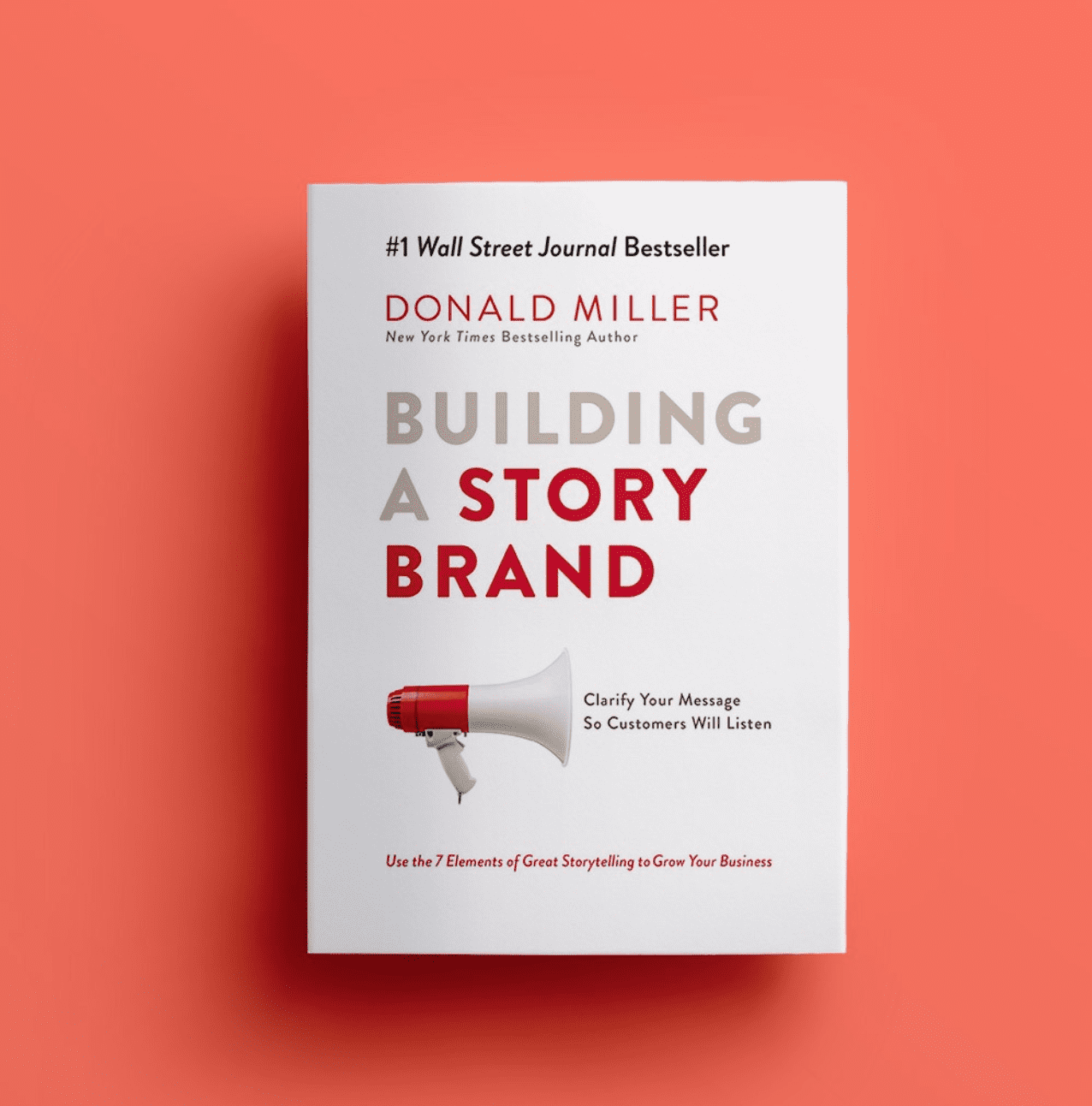

Building a StoryBrand: Complete Summary of Donald Miller’s Framework for Clear Business Communication
Building a StoryBrand by Donald Miller offers a transformative framework for businesses to clarify their message, attract more customers, and significantly increase revenue. Miller, drawing on his extensive experience as a writer and CEO, argues that most companies fail in their marketing because they confuse their audience. This book introduces the StoryBrand 7-Part Framework (SB7 Framework), a proven narrative structure that helps businesses articulate their value proposition in a way that resonates deeply with the human brain. Readers, from small business owners to executives at large corporations, will discover how to position their customers as the heroes of their brand’s story, eliminating noise and fostering genuine connection, leading to exponential growth. This summary provides a comprehensive overview of Miller’s powerful insights, ensuring maximum discoverability of all key concepts.
Introduction: What This Book Is About
Donald Miller, a bestselling author and CEO of StoryBrand, presents a groundbreaking approach to marketing and communication in Building a StoryBrand. The core premise is that customers do not care about a company’s story; they care about their own. Businesses that position their customers as the hero, rather than their brand, are the ones that achieve phenomenal success. This book reveals a seven-part framework that simplifies messaging, stops marketing waste, and accelerates business growth across all industries.
The book challenges conventional marketing wisdom, asserting that pretty websites and complex brochures do not sell products; clear words do. Miller demonstrates how the SB7 Framework, rooted in timeless storytelling principles, helps businesses filter their message, ensuring customers listen, understand, and respond. By clarifying their message, companies can double, triple, or even quadruple their revenue, as evidenced by thousands of StoryBrand’s clients.
This comprehensive summary will guide readers through each component of the SB7 Framework, explaining its purpose and practical application. It details how to filter marketing messages, identify key customer desires and problems, and craft compelling calls to action. The aim is to equip readers with the knowledge to create a StoryBrand BrandScript, a single-page marketing plan that clarifies their brand’s narrative and fuels sustainable growth.
Section 1: Why Most Marketing Is a Money Pit
This section delves into the fundamental reasons why traditional marketing often fails and introduces the StoryBrand approach as a solution. It highlights the human brain’s innate preference for clarity and simplicity, explaining how stories effectively engage this preference.
Chapter 1: The Key to Being Seen, Heard, and Understood
Most companies waste enormous amounts of money on marketing that yields no results. This inefficiency stems not from product quality, but from unclear communication about the product. Designers, often lacking expertise in sales copy, create aesthetically pleasing but ineffective marketing materials. Words sell things, and without a clarified message, customers tune out. Donald Miller emphasizes that a clear message is paramount for customer engagement, stating that “If you confuse, you’ll lose.”
The Problem of Complicated Marketing
Complicated marketing hinders brain processing, forcing customers to expend too much mental energy to understand an offer. The human brain naturally gravitates towards simplicity and predictability, which is why story acts as a sense-making mechanism. Story formulas organize information logically, reducing the cognitive load on the audience. This allows the brain to easily digest and retain the message.
The Brain’s Primary Function: Survival and Thriving
According to Mike McHargue, a science-based methodology expert, the brain’s overriding function is to help an individual survive and thrive. Every action the brain takes, including processing advertisements, is geared towards securing resources, safety, relationships, and meaning. When marketing messages do not directly relate to these primitive needs, they are ignored. For example, customers do not care about a company’s large manufacturing plant unless that information helps them meet their fundamental needs.
Mistake Number One: Failing to Focus on Survival and Thriving
The first critical mistake brands make is failing to connect their offer to the customer’s innate desire to survive and thrive. All compelling stories, and therefore effective marketing, are fundamentally about survival—whether physical, emotional, relational, or spiritual. If products are not positioned as aids in achieving acceptance, love, aspirational identity, or belonging, selling them becomes exceptionally difficult. People only care about what impacts their fundamental well-being.
Mistake Number Two: Causing Customers to Burn Too Many Calories
The second mistake is making customers expend too much mental energy trying to understand an offer. When presented with too much seemingly random information, the brain conserves energy by ignoring the source. This is a survival mechanism: if a message is confusing and irrelevant, the brain tunes it out. Effective communication must be simple and clear, allowing customers to grasp the value proposition without significant cognitive effort.
Story as the Ultimate Sense-Making Device
Story is the most powerful tool for organizing information without taxing the brain. A good story identifies an ambition, defines challenges, and provides a plan for overcoming them. By using a story framework, businesses create a clear map for customers to engage with their products and services. While often associated with art, story in this context is a concrete formula for gaining attention from distracted customers.
The Formula for Clear Communication
The StoryBrand Framework is a summation of best practices derived from thousands of years of storytelling. It provides a reliable formula for effective communication that resonates with the human brain. This framework, also known as the SB7 Framework, is predictable for a reason: it’s designed to keep an audience’s attention. Applying this formula to business communication makes marketing more effective, as it aligns with how human brains process information.
The Key to Clarity
Effective communication, whether in a movie or a business message, demands clarity. Audiences (and customers) must consistently know:
- What the hero wants?
- Who or what is opposing the hero?
- What will happen if the hero succeeds or fails?
If these questions are not answered quickly and clearly, the message devolves into noise, leading to disinterest. The StoryBrand mantra is simple: “If you confuse, you’ll lose.”
Business’s Enemy: Noise
Noise is the insidious enemy of business, killing more ideas and products than taxes or recessions. What is often labeled as marketing is frequently just clutter and confusion that inundates websites, emails, and commercials, costing businesses millions. Many companies fail to simplify their diverse offerings, mistakenly believing their complexity adds value, when in reality it only adds noise.
Stopping the Noise: Less is More
Experienced writers understand that great writing is about what is not said. In marketing, this translates to cutting out unnecessary information. If a message does not serve the customer’s story, it is noise. The SB7 Framework provides a filter to eliminate this noise, making communication easy and effective. This clarity helps companies create quality websites, compelling keynotes, and emails that get opened, leading to increased sales.
Chapter 2: The Secret Weapon That Will Grow Your Business
This chapter introduces story as the atomic, perpetual energy source capable of holding human attention for hours. Unlike noise, which is quickly forgotten, story organizes information in a way that compels listening. Neuroscientists suggest that engaging with a story effectively performs the “daydreaming” function for the brain, capturing its focus.
Story Makes Music Out of Noise
Story is likened to music transformed from noise by submitting it to certain rules. Just as well-choreographed music is remembered while random sounds are forgotten, brands that employ story are remembered, while those that create noise are forgotten. A good story distills random events into their essential meaning, much like a film’s final cut removes anything that does not serve the plot. This disciplined filtering prevents information overload, which causes audiences to disengage.
Steve Jobs and the Apple Story
Apple’s significant growth occurred after Steve Jobs began filtering his message through the lens of story. His experience at Pixar, a storytelling factory, illuminated the power of narrative. Apple shifted from complex technical explanations (like the nine-page ad for Lisa) to simple, customer-centric communication (e.g., “Think Different”). Apple understood that their customers were heroes, identifying what they wanted (to be seen and heard), their challenge (unrecognized genius), and offering a tool for expression (computers and smartphones). This positioning, akin to Q in James Bond movies, made Apple the guide, not the hero, in their customers’ stories, leading to their dominance as one of the world’s largest companies.
Story Can Grow Your Business
The fundamental elements of a compelling story can be distilled into seven basic plot points. These points act as the “chords of music” for narrative expression, allowing for infinite variations while ensuring coherence. Deviating too far from these chords results in noise and disengagement.
The Seven Basic Plot Points of a Compelling Story
Here is the essence of nearly every story, presented on the StoryBrand grid:
- A CHARACTER who wants something
- encounters a PROBLEM before they can get it.
- At the peak of their despair, a GUIDE steps into their lives,
- gives them a PLAN,
- and CALLS THEM TO ACTION.
- That action helps them AVOID FAILURE
- and ends in a SUCCESS.
This structure is seen across countless movies, novels, and plays. Its widespread use signifies its effectiveness as a means of best practices for gaining and holding attention.
The Three Crucial Questions for Engagement
To ensure clarity, a message must always answer three questions for the audience within the first fifteen to twenty minutes:
- What does the hero want?
- Who or what is opposing the hero getting what she wants?
- What will the hero’s life look like if she does (or does not) get what she wants?
If these questions are unclear, the story, or the marketing message, will fail. StoryBrand advocates for cutting anything that does not serve the customer’s story.
Does Your Marketing Pass the Grunt Test?
For businesses, potential customers must be able to answer three questions within five seconds of encountering marketing material:
- What do you offer?
- How will it make my life better?
- What do I need to do to buy it?
This is known as the grunt test. If a “caveman” cannot understand the offer immediately, sales are likely being lost.
Clarity Produces Results: Kyle Shultz’s Story
Clarity directly translates to increased revenue, as demonstrated by Kyle Shultz. His online photography course, initially selling $25,000, was transformed by applying the SB7 Framework. By removing 90% of text and simplifying language (e.g., “Take those great pictures where the background is blurry” instead of “f-stop”), he reframed his course as a solution to parents’ internal frustrations. His next launch, to the same email list, yielded $103,000 in sales, proving the power of clear, customer-centric messaging.
The Need for a Filter
Good branding, like good storytelling, involves removing the dull parts and focusing on what matters. The StoryBrand Framework acts as a filter, eliminating noise and emphasizing aspects that help customers survive and thrive. This systematic approach allows brands to repeat simple, relevant messages that brand themselves into the public consciousness.
The StoryBrand BrandScript
The entire refined brand message, filtered through the SB7 Framework, is captured on a single sheet of paper called the StoryBrand BrandScript. This tool is available free at mystorybrand.com. The BrandScript organizes thinking, reduces marketing effort, obliterates confusion, and drives business growth by clearly positioning the brand in the marketplace.
Chapter 3: The Simple SB7 Framework
This chapter provides an overview of the seven elements of the StoryBrand Framework, explaining how each contributes to a clear and inviting brand message. It introduces the StoryBrand BrandScript as the central tool for this process.
The Customer is the Hero, Not Your Brand
StoryBrand Principle One emphasizes that the customer is the hero, not the brand. This paradigm shift positions the brand as a trusted guide, similar to Yoda coaching Luke Skywalker. The story begins by defining what the customer wants in relation to the brand. If a clear desire is not established, customers will not feel invited into the story and will lose interest. Identifying this desire creates a story question in the customer’s mind: “Can this brand really help me get what I want?”
Companies Sell Solutions to External Problems, But Customers Buy Solutions to Internal Problems
StoryBrand Principle Two highlights that while companies focus on external problem solutions, customers are motivated by internal problem resolution. Every story begins with a disruption to peace, and customers approach brands seeking to solve a problem that has disrupted their lives. Talking about the problems customers face deepens their interest. However, most brands miss that problems exist on three levels: external, internal, and philosophical. While external problems are often obvious (e.g., a leaky pipe), customers are more deeply motivated by their internal frustrations (e.g., embarrassment about a messy lawn). Understanding these three levels of problems allows brands to connect on a primitive level, creating passionate brand evangelists.
Customers Aren’t Looking for Another Hero; They’re Looking for a Guide
StoryBrand Principle Three asserts that customers seek a guide, not another hero. Heroes, by definition, cannot solve their own problems, requiring a guide to equip and encourage them. Brands that position themselves as heroes inadvertently compete with customers, who already see themselves as protagonists. When a brand focuses on its own greatness, customers remain distant, subconsciously seeking a guide to help them win. The guide, not the hero, possesses the most authority, having already overcome the hero’s challenges in their own backstory.
Customers Trust a Guide Who Has a Plan
StoryBrand Principle Four states that customers trust a guide who provides a plan. Even after identifying a desire, defining problems, and establishing trust as a guide, customers hesitate to purchase without a clear path. A plan alleviates customer concerns and removes the sense of risk associated with commitment. The “plan” acts as a bridge across a rushing creek, outlining simple steps the customer can take to resolve their problem. This clarity significantly increases the likelihood of a purchase. The chapter introduces two types of plans: the process plan (steps to engage or use the product) and the agreement plan (commitments that alleviate fears).
Customers Do Not Take Action Unless They Are Challenged to Take Action
StoryBrand Principle Five emphasizes that customers require a challenge to act. In narratives, characters do not spontaneously take action; they are compelled by external forces or direct challenges. This mirrors human behavior: people generally remain at rest until spurred by a clear impetus. Many companies fail to provide obvious calls to action, leading to confusion and lost sales. The framework distinguishes between direct calls to action (leading directly to a sale, e.g., “buy now”) and transitional calls to action (furthering the relationship, e.g., “download a PDF”). Both are crucial for moving customers from observation to engagement.
Every Human Being Is Trying to Avoid a Tragic Ending
StoryBrand Principle Six reveals that people are driven to avoid failure. A compelling story, and effective marketing, must define what’s at stake. If there’s nothing to lose, customers lack motivation. The absence of stakes makes a narrative boring. Brands must subtly foreshadow potential negative consequences if customers do not engage their products. This aligns with loss aversion, a behavioral economics principle where people are more motivated to avoid a loss than to achieve a gain. Fear, used in moderation like “salt in a recipe,” can create urgency and engagement.
Never Assume People Understand How Your Brand Can Change Their Lives. Tell Them.
StoryBrand Principle Seven instructs brands to explicitly articulate the positive transformation their products offer. People inherently “want to be taken somewhere,” and successful brands, like effective leaders, paint a clear, aspirational vision of life after engaging their services. This involves showing customers how their lives will look, feel, and the new status they will enjoy once their problems are resolved. The three dominant ways stories end—with the hero gaining power/position, being unified with something that makes them whole, or experiencing self-realization—reflect universal psychological desires that brands can tap into for powerful messaging.
The StoryBrand BrandScript
The entire SB7 Framework culminates in the StoryBrand BrandScript, a free digital tool available at mystorybrand.com. This tool allows businesses to document their brand narrative on a single page, providing a clear, repeatable message for all marketing efforts. The BrandScript serves as a living document, to be refined and applied across all aspects of the business, from overall brand messaging to individual product lines. The consistent application of this clarified message leads to increased customer listening and business growth.
Section 2: Building Your StoryBrand
This section delves into each of the seven components of the StoryBrand Framework in detail, guiding the reader through the process of building their own BrandScript. It focuses on how to define the customer as the hero, identify their problems, position the brand as a guide, and outline the path to success.
Chapter 4: A Character
Every compelling story begins with A CHARACTER who wants something. This desire is the catalyst that sets the narrative in motion, posing a fundamental question for the audience: “Will the hero get what she wants?” For brands, defining a clear desire for the customer is crucial because it immediately creates a story question in the customer’s mind: “Can this brand really help me get what I want?” Without this defined want, the audience has little interest in the story.
Identifying the Customer’s Core Desire
A high-end resort, for instance, shifted its marketing from showcasing its facilities (positioning itself as the hero) to focusing on what customers desired: a luxurious, restful experience. Their new mantra, “Find the luxury and rest you’ve been looking for,” unified their staff and invited customers into a relevant story. Other examples include a university offering “A hassle-free MBA you can complete after work” or a real estate agent promising “The home you’ve dreamed about.” Simplicity in defining this desire is key to inviting customers to engage.
Opening a Story Gap
Identifying a customer’s desire opens a “story gap,” creating tension between the customer’s current state and their desired future. This gap compels attention because people inherently seek resolution. Just as Jason Bourne’s amnesia creates a gap that drives the plot, a defined customer desire generates engagement by prompting the question of how that gap will be closed by the brand. The opening and closing of story gaps are magnetic forces that drive human behavior, from hunger to arousal.
Paring Down the Customer’s Ambition to a Single Focus
A critical mistake is trying to address too many customer desires at once. For an overall brand, focus on one simple, relevant desire. This singular focus creates clarity and prevents clutter. While diverse brands may fulfill multiple desires, these should be addressed as subplots once the core desire is established and the brand is known for delivering on it. This means creating separate BrandScripts for different divisions or products under an overarching brand message.
Choosing a Desire Relevant to Survival
The defined customer desire must be relevant to their sense of survival. This involves tapping into primitive desires to be safe, healthy, happy, and strong, encompassing economic and social resources. Vague desires like “achieving excellence” are less effective than those directly linked to survival mechanisms.
What Survival Means in Marketing
Survival in marketing relates to fundamental human needs, including:
- Conserving financial resources: Brands like Walmart built their success on the promise of “Save Money. Live Better,” tapping into the desire for savings.
- Conserving time: Services that save customers time offer a valuable survival mechanism by addressing opportunity costs.
- Building social networks: Products or services that foster community or connection tap into the tribal instinct for belonging and nurturing.
- Gaining status: Luxury brands sell status, which projects abundance, attracts allies, repels foes, and can help secure mates, thus serving a survival function.
- Accumulating resources: Business-to-business offerings that promise increased productivity, revenue, or decreased waste directly relate to a company’s, or individual’s, survival and thriving.
- The innate desire to be generous: Helping others survive (e.g., through charitable initiatives) taps into a redemptive human desire for meaning and self-sacrifice, which can also enhance one’s standing within a tribe.
- The desire for meaning: Brands that invite customers to participate in a larger movement or cause provide a deeper sense of meaning, addressing a core human need beyond mere pleasure.
The Story Question for Your Customer
For a brand, the goal is to ensure every potential customer knows exactly where you want to take them. If a customer cannot articulate what your brand offers and how it helps them survive and thrive, your brand is suffering from the cost of confusion. Clearly defining a customer’s desire and connecting it to their survival instincts opens an enticing story gap and provides a powerful hook for engagement.
Clarifying Your Message: Building the Character Module
To clarify the message for the “character” module of the StoryBrand BrandScript, brainstorm potential desires your customers might have that your brand can fulfill. Select a single, simple desire that resonates most with your target audience. This focused desire will invite customers to alter their story in your brand’s direction, provided they perceive you as a trustworthy guide.
Chapter 5: Has a Problem
To deepen customer interest, brands must start talking about the problems their customers face. Just as conflict is the “hook” of a story, identifying customer problems demonstrates understanding and makes the brand relatable. The more these problems are discussed, the greater the customer interest in the brand’s proposed solutions.
Every Story Needs a Villain
The villain is the primary device for focusing conflict in a story. A strong, despicable villain enhances sympathy for the hero and increases audience engagement. In marketing, products should be positioned as weapons to defeat a dastardly villain, which can be an abstract concept personified (e.g., “distractions” for time-management software, “dust bunnies” for cleaning products).
Characteristics of a Good Villain
A good villain on a StoryBrand BrandScript should possess four key characteristics:
- The villain should be a root source: It should represent the underlying cause, not just the symptom (e.g., “high taxes” as a villain, not “frustration”).
- The villain should be relatable: Customers should immediately recognize and disdain the villain.
- The villain should be singular: Focus on one primary villain to maintain clarity and avoid confusion.
- The villain should be real: Avoid fearmongering; instead, address actual, tangible challenges customers face.
The Three Levels of Conflict
A villain causes problems on three interconnected levels, which also apply to customer experiences:
- External Problems: These are tangible, physical challenges the hero must overcome (e.g., a ticking time bomb, winning baseball games). Most businesses focus solely on solving these.
- Internal Problems: These are the hero’s (or customer’s) inner frustrations or self-doubt stemming from the external problem (e.g., Billy Beane’s self-doubt about his career in Moneyball, intimidation felt by computer users). Companies tend to sell solutions to external problems, but customers buy solutions to internal problems. Addressing these deeper emotional motivations creates a stronger bond and increases perceived value (e.g., Apple solving intimidation with user-friendly tech, CarMax alleviating fear of used-car salesmen).
- Philosophical Problems: These represent a larger “why”—the moral or existential wrong that the story challenges (e.g., “bad people shouldn’t win,” “people ought to be treated fairly”). Brands that tap into philosophical problems give customers a voice in a larger narrative, adding deeper meaning to their purchases (e.g., Tesla addressing environmental responsibility, Tower Records’ “No music, no life”).
The Perfect Brand Promise
The most powerful brand promise offers to resolve all three levels of problems simultaneously. When a product or service resolves a customer’s external, internal, and philosophical problems in one action, it creates a sense of pleasure and relief, leading to strong customer loyalty. This integrated resolution is why audiences love climactic scenes in movies and why successful brands foster passionate evangelists.
Clarifying Your Message: Defining Customer Problems
To clarify the “problems” module of the StoryBrand BrandScript, brainstorm the specific villain your brand confronts, the external problem it causes, how that external problem makes your customers feel (the internal problem), and why it’s unjust for people to suffer this way (the philosophical problem). Focus on simplicity and clarity, making deliberate choices to avoid cluttering the narrative with too many conflicts.
Chapter 6: And Meets a Guide
At this stage in the customer’s journey, trust has been established, but a purchase decision still requires another key element: the GUIDE. In stories, characters, much like real people, instinctively seek guidance to navigate their challenges. Guides are mystical characters who help the hero along the way, providing encouragement and equipping them to win the day.
Every Hero Is Looking for a Guide
If heroes could solve their own problems, they wouldn’t get into trouble. Guides like Gandalf, Haymitch, and Yoda appear in almost every story to empower the hero. Similarly, in real life, individuals wake up seeing themselves as heroes, grappling with internal, external, and philosophical conflicts, and they inherently understand they cannot solve these problems alone. They are constantly searching for guides.
The Fatal Mistake: Positioning the Brand as the Hero
A fatal mistake some brands make is positioning themselves as the hero, especially younger brands trying to prove their worth. This approach inadvertently competes with potential customers, who already perceive themselves as the protagonists of their own lives. When a brand focuses on its own greatness, customers feel distant and continue their search for a guide. The story should always be about the customer, with the brand playing a supportive role. Leaders who understand this dynamic ultimately achieve greater success and loyalty.
The Guide: Authority and Empathy
To be recognized as a guide, a brand must communicate two essential characteristics:
- Empathy: The guide expresses understanding of the hero’s pain and frustration. Statements like “We understand how it feels to…” or “Nobody should have to experience…” create a bond of trust. Real empathy means acknowledging commonality with the customer, leading them to feel seen, heard, and understood.
- Authority (Competence): The guide demonstrates the competence necessary to help the hero win. This isn’t about bragging but showing expertise.
How to Demonstrate Authority Without Bragging
Four effective ways to convey authority in marketing without alienating customers are:
- Testimonials: Satisfied customers’ stories provide social proof. A few brief, results-oriented testimonials are more effective than many long ones.
- Statistics: Quantifiable data, such as “125,000 users trust [our] award-winning automation software,” offers concrete evidence of competence.
- Awards: Small logos or mentions of awards add credibility without making the brand the hero.
- Logos of Past Clients: For B2B services, displaying logos of well-known past clients builds trust by demonstrating experience in solving similar problems.
Making a Great First Impression: Trust and Respect
Harvard Business professor Amy Cuddy’s research shows people subconsciously ask two questions when meeting someone new: “Can I trust this person?” and “Can I respect this person?”
- Empathy helps answer “Can I trust this person?” by showing understanding.
- Demonstrating competence helps answer “Can I respect this person?” by showing capability.
These two characteristics, expressed consistently, position the brand as the trusted guide customers are seeking, significantly influencing how they remember, understand, and engage with the brand.
Clarifying Your Message: Defining the Guide
To clarify the “guide” module of the StoryBrand BrandScript, brainstorm empathetic statements that show care for your customers’ internal problems. Simultaneously, identify ways to demonstrate competence and authority through testimonials, statistics, awards, or client logos. This dual approach will position your brand as the empathetic and authoritative guide your customers are looking for.
Chapter 7: Who Gives Them a Plan
Even with established trust and empathy, customers won’t purchase until they have a clear plan of action. Making a purchase is a commitment that carries risk, and customers need a straightforward path to alleviate their concerns. The plan acts as a “bridge” or “large stones in a rushing creek,” guiding customers step-by-step across the chasm of uncertainty. In stories, the guide always gives the hero a plan, which tightens the movie’s focus and offers a “path of hope.”
The Plan Creates Clarity and Removes Risk
A clear plan is crucial to combat confusion and reduce perceived risk. Customers subconsciously ask, “What do you want me to do now?” after encountering marketing. Without guidance, they feel confused and hesitate. A plan clearly outlines the steps, making the journey seem easy and increasing the likelihood of purchase. This applies to complex products (e.g., garage storage systems) where customers need to envision the installation or usage process.
The Process Plan
The process plan is one of two effective plans. It outlines the steps a customer needs to take to buy or use a product, or a combination of both.
- Pre-purchase process plan: Simplifies the buying journey (e.g., “Schedule an appointment,” “Allow us to create a customized plan,” “Let’s execute the plan together”).
- Post-purchase process plan: Alleviates confusion about using a product after purchase (e.g., “Download the software,” “Integrate your database,” “Revolutionize your customer interaction”).
- Combined plan: Integrates both pre- and post-purchase steps (e.g., “Test-drive a car,” “Purchase the car,” “Enjoy free maintenance for life”).
The goal is to alleviate confusion by breaking down a potentially daunting process into manageable steps, making the customer think, “Oh, I can do that.” A process plan should typically have three to six steps; more than six can reintroduce confusion.
The Agreement Plan
The agreement plan focuses on alleviating fears by listing commitments the brand makes to the customer. CarMax, for instance, uses an agreement plan to address customer fears about used-car salesmen, promising “no haggle” prices and quality certifications. This strategy helped them dominate the used-car market by focusing on customers’ internal problems. Agreement plans can also clarify shared values, like Whole Foods’ values list, which reinforces social and environmental responsibility. Unlike process plans, agreement plans often work in the background, reinforcing trust as customers learn more about the brand.
Naming the Plan
Giving a title to the plan (e.g., “easy installation plan,” “customer satisfaction agreement,” “our quality guarantee”) increases its perceived value. A well-named plan frames it positively in the customer’s mind, further enhancing the appeal of the brand’s offerings.
Clarifying Your Message: Defining the Plan
To clarify the “plan” module of the StoryBrand BrandScript, brainstorm simple steps a customer needs to take to do business with you (process plan). Additionally, identify customer fears related to your industry and list agreements that alleviate those fears (agreement plan). If your brand shares unique values with customers, incorporate them into an agreement plan. Document the steps and name of your process plan on the BrandScript, using the notes section for the agreement plan details.
Chapter 8: And Calls Them to Action
At this critical juncture, customers are ready, but they need a clear and direct CALL TO ACTION. In stories, characters never act on their own; they must be challenged by external forces or direct requests. This fundamental principle applies to marketing: customers do not take action unless they are challenged to do so. Passive selling communicates a lack of belief in the product, making customers sense weakness.
The Power of the “Buy Now” Button
Clarity in calls to action is paramount. Businesses often assume customers know what they want, leading to soft or hidden calls to action that are ignored. A “Buy Now” button should be prominently displayed in the top right corner of a website and repeated strategically throughout the page, often in a different, brighter color to stand out. This ensures that even scanners quickly identify the desired action. The goal is to make it abundantly clear what customers should do to engage.
Do You Believe in Your Product?
A lack of clear, bold calls to action communicates a lack of belief in the product. Customers are looking for solutions, not brands filled with doubt. If a product can genuinely improve a customer’s life, the brand should be confident and direct in inviting them to purchase. Just as a guide in a movie must be direct with the hero, a brand must be direct with its customers to prevent confusion and encourage engagement.
Two Kinds of Calls to Action
StoryBrand recommends using two types of calls to action to nurture customer relationships:
- Direct Calls to Action: These lead directly to a sale or the first step towards one. Examples include “Order now,” “Call today,” “Schedule an appointment,” “Register today,” or “Buy now.” These should be clear, obvious, and repeated across all marketing collateral (websites, emails, business cards, etc.).
- Transitional Calls to Action: These involve less risk for the customer and offer something free, serving to deepen the relationship and “on-ramp” potential customers towards an eventual purchase. They are like asking for a “date” rather than immediate “marriage.” Examples include downloading a PDF, watching a webinar, or a free trial.
The Benefits of Transitional Calls to Action
A good transitional call to action performs three powerful functions:
- Stakes a claim to your territory: Positions the brand as an expert in a specific field, establishing authority before the competition.
- Creates reciprocity: Generosity with free valuable content builds trust and encourages customers to give back in the future.
- Positions yourself as the guide: By helping customers solve a problem, even for free, the brand becomes their go-to resource for future needs.
Types of Transitional Calls to Action
Effective transitional calls to action include:
- Free information: White papers, PDFs, educational videos, podcasts, webinars, or live events.
- Testimonials: Videos or PDFs showcasing happy client transformations, creating a story map for potential customers.
- Samples: Offering test drives, product tastes, or free portions of digital content.
- Free trials: Limited-time access to a product or service, allowing customers to experience its value firsthand.
Connecting the Dots: An Example
A health clinic, primarily relying on drug tests, implemented clear direct and transitional calls to action. By replacing magazines in their waiting room with a “Healthy Body Checklist” (a transitional call to action), they self-assessed patient health. Nurses then reviewed the checklists, and receptionists used the data for targeted email campaigns, promoting solutions like vitamin B shots. This system efficiently converted existing traffic into new business by clearly inviting patients to take action.
Clarifying Your Message: Defining Calls to Action
To clarify the “call to action” module of the StoryBrand BrandScript, decide on a prominent direct call to action for all marketing materials. Brainstorm transitional calls to action that claim territory, create reciprocity, and position your brand as a guide. Fill out the “Call to Action” section of your BrandScript to ensure customers understand exactly what you want them to do.
Chapter 9: That Helps Them Avoid Failure
A story’s core suspense hinges on the question: “Will the hero succeed or will they fail?” Storytellers constantly foreshadow both potential success and tragic endings to maintain audience engagement. Without clear stakes—what could be lost—a story becomes boring. This principle is equally vital in marketing: if there’s nothing at stake, customers have no motivation to buy. Brands must clearly communicate the cost of not doing business with them.
Where’s the Mayhem?: Illustrating Potential Failure
Allstate Insurance’s “Mayhem” campaign humorously illustrates the potential negative consequences (e.g., accidents, house fires) of not having insurance. The campaign effectively agitated a fear of loss, contrasting it with the peace and stability offered by Allstate. This strategy, even on a large scale like “Project Share Aware,” demonstrates how foreshadowing potential failure can create urgency and drive customer response by highlighting what customers stand to lose.
What’s There to Lose? People Are Motivated by Loss Aversion
Emphasizing potential loss is a powerful motivator. Nobel Prize winner Daniel Kahneman’s “Prospect Theory” (1979) states that people hate losing $100 more than they like winning $100. This means loss aversion is a greater motivator for buying decisions than potential gains, often by two to three times. When Lyndon Baines Johnson pushed the Civil Rights Act, he emphasized the “tarnished legacy” George Wallace would face if he resisted, leveraging the fear of loss.
Using Fear (Like Salt in a Recipe)
While fear can be a potent motivator, it must be used sparingly. Too much “fearmongering” turns customers off. Dominic Infante, Andrew Rancer, and Deanna Womack’s “fear appeal” proposes a four-step process for using moderate fear effectively:
- Make the reader aware of vulnerability to a threat: “Nearly 30% of all homes have evidence of termite infestation.”
- Suggest action to reduce vulnerability: “Since nobody wants termites, you should do something about it to protect your home.”
- Offer a specific call to action: “We offer a complete home treatment that will ensure your house is free of termites.”
- Challenge them to take that action: “Call us today and schedule your home treatment.”
This gentle approach agitates a fear and then provides a clear path to peace and stability.
What Are You Helping Your Customer Avoid?
To define the “failure” component of the StoryBrand BrandScript, consider:
- What negative consequences are you helping customers avoid? (e.g., losing money, health risks, opportunity costs).
- What is the cost of not doing business with you? (e.g., postponement of retirement, lack of transparency, hidden fees).
- What is the “tragic scene” that might befall them? (e.g., “Don’t postpone your retirement. You’ve worked too hard for too long to not enjoy time with your grandchildren.”).
Even a few “terrible, dastardly, awful things” are enough to get the point across, creating urgency without overwhelming the customer.
Clarifying Your Message: Defining Potential Failure
To clarify the “avoid failure” module of the StoryBrand BrandScript, brainstorm the negative consequences your brand helps customers avoid. List at least three of these consequences on your BrandScript. This small but vital step will ensure your brand’s story has stakes, motivating customers to engage.
Chapter 10: And Ends in a Success
People inherently want to be taken somewhere and crave a clear, aspirational vision for their future. Just as Ronald Reagan promised a “shining city on a hill,” successful brands articulate what life will look like for customers if they engage their products or services. This final, crucial element of the StoryBrand Framework offers customers a happy ending to their story, motivating them to buy.
The Ending Should Be Specific and Clear
A compelling vision of success must be specific and clearly defined, not fuzzy or vague. Like a movie where the resolution is explicit (e.g., Harrison Ford defeating terrorists on Air Force One), the brand’s promised success must be tangible for the customer to truly hope for it. Kennedy’s “man on the moon” vision succeeded because of its specificity.
Before and After: Visualizing Success
Ryan Deiss’s “Before and After” grid is a useful tool for visualizing customer success. It prompts brands to imagine how customers’ lives will change after engaging with the brand, focusing on:
- How they will look: Their external circumstances.
- How they will feel: Their emotional state.
- What their average day will look like: The practical improvements.
- What kind of new status they will enjoy: Their perceived social standing.
Filling this grid provides ample copy for marketing materials, ensuring the end vision is clearly communicated through words and images. Images of smiling, happy people using the product or service effectively communicate health, well-being, and satisfaction.
How to End a Story for Your Customer: Three Dominant Desires
Storytellers have identified three dominant ways to resolve a story that resonate deeply with audiences, reflecting universal psychological desires. Brands can tap into these for powerful messaging:
- Win some sort of power or position (The Need for Status): Characters like Ronald Miller in Can’t Buy Me Love gain status. Brands can offer this through:
- Access: Exclusive memberships or perks (e.g., Starbucks membership, National Car Rental’s Emerald Club).
- Scarcity: Limited edition items (e.g., “limited” badges on vehicles).
- Premium offerings: Titles like “Preferred” or “Diamond Member” for top clients or donors.
- Identity association: Linking the brand with success, prestige, or refinement (e.g., Mercedes, Rolex).
- Be unified with somebody or something that makes them whole (The Need for Something External to Create Completeness): This reflects a desire for wholeness achieved through external provision. Examples include:
- Reduced anxiety: Products that bring peace or closure (e.g., dish detergent providing a “clean house” feeling).
- Reduced workload: Tools or services that complete missing elements, making customers feel “superhuman.”
- More time: Products that expand available time, alleviating feelings of personal deficiency.
- Experience some kind of self-realization that also makes them whole (The Need to Reach Our Potential): Stories like Rudy or Legally Blonde tap into the desire for self-acceptance or achieving one’s potential. Brands can offer this through:
- Inspiration: Associating with athletic or intellectual accomplishment (e.g., Red Bull, Harvard Business Review).
- Acceptance: Helping customers feel good about themselves as they are (e.g., Dove’s “Real Beauty” campaign, American Eagle’s Aerie campaign using unretouched models).
- Transcendence: Inviting customers to participate in a larger movement, offering a more impactful life (e.g., Tom’s Shoes’ “one for one” model, FUBU’s community representation).
Closing the Story Loops
The success module of the SB7 Framework is about offering to close a story loop by resolving customers’ external, internal, and philosophical problems. This can be achieved through promises of status, self-realization, self-acceptance, and transcendence. Even simple inclusions like images of happy people on a website communicate this desired emotional destination.
Keep It Simple
While the underlying psychology is deep, the application should be simple. The core idea is to show what problems you resolve and what that resolution looks like for the customer. Explicitly telling customers where you are taking them is crucial; without this clear vision, they will not follow.
Clarifying Your Message: Defining Success
To clarify the “ends in a success” module of the StoryBrand BrandScript, brainstorm the successful resolutions your customers will experience when using your products and services. Use the bullet points in the success module of your BrandScript to capture these outcomes, ensuring they highlight how your brand transforms their lives for the better.
Chapter 11: People Want Your Brand to Participate in Their Transformation
The greatest single motivator for human beings, and thus for customer purchases, is the desire to transform. People want to become somebody different, somebody better, or more self-accepting. When brands participate in this identity transformation of their customers, they create passionate brand evangelists.
Heroes Are Designed to Transform
In a story, the hero begins flawed and ill-equipped, but through conflict and the guidance of a mentor, they develop skills and courage, ultimately becoming a better version of themselves. This character arc is universal and applies to almost every popular story. It reflects the human desire to overcome self-doubt and become competent and courageous. Businesses, whether they realize it or not, are also participating in their customers’ transformation.
Smart Brands Define an Aspirational Identity
Smart brands define an aspirational identity for their customers and associate their product with that identity. For example, Gerber Knives doesn’t just sell knives; they sell the identity of being tough, adventurous, fearless, and competent. Their “Hello Trouble” campaign positions customers as capable individuals who confront challenges. Even if the product is not used for its advertised purpose, the purchase delivers the intangible value of an aspirational identity, which is deeply satisfying.
How Does Your Customer Want to Be Described by Others?
To identify an aspirational identity, consider how customers want their friends to talk about them. This reveals who they aspire to be. For executive coaching clients, it might be perceived as competent, generous, and disciplined. For sports equipment buyers, it could be active, fit, and successful. Once this desired perception is known, it provides language for all marketing materials, allowing the brand to participate in the customer’s identity transformation.
A Guide Offers More Than a Product and a Plan
Playing the guide is a position of the heart, not just a marketing strategy. A brand committed to resolving external, internal, and philosophical problems, and inspiring with an aspirational identity, does more than sell products; it changes lives. Leaders who prioritize changing lives often achieve both market success and meaningful impact.
Great Brands Obsess About the Transformation of Their Customers
Dave Ramsey exemplifies a narrative-based company and a masterful guide. He obsesses over his listeners’ journeys, defining their external (debt, illiteracy), internal (confusion, hopelessness), and philosophical problems (debt accumulation as a moral issue). His radio show offers a clear narrative map, emboldening listeners with an aspirational identity (e.g., “paid-off home mortgage as the status symbol of choice”) and encouraging their transformation. The “Debt-Free Scream” on his show serves as a climactic scene where the hero’s transformation is publicly affirmed, reinforcing their change and competence.
Identity Transformation: The Foundational Module
The final, foundational module of the StoryBrand BrandScript allows brands to define the identity transformation their customer experiences. It asks: “Who does your customer want to become as they relate to your products and services?” For StoryBrand, the aim is for customers to become “marketing experts,” perceived as savvy and clear thinkers. This provides new life and meaning to the business, as the team realizes they are guiding people toward stronger self-belief.
Examples of Identity Transformation
StoryBrand clients have successfully defined aspirational identities for their customers, leading to improved self-perception and business growth:
- Pet Food Brand: From “Passive dog owner” to “Every dog’s hero.”
- Financial Advisor: From “Confused and ill-equipped” to “Competent and smart.”
- Shampoo Brand: From “Anxious and glum” to “Carefree and radiant.”
By defining who customers want to become, brands add enormous value beyond just the product. This participation in transformation leads to passionate fans and market success.
Clarifying Your Message: Defining Identity Transformation
To clarify the “identity transformation” module of your StoryBrand BrandScript, brainstorm the aspirational identity of your customer—who they want to become and how they wish to be perceived by others. Use the “to” lines of your BrandScript to define this aspirational identity, with the “from” line naturally becoming its opposite.
Section 3: Implementing Your StoryBrand BrandScript
This final section details how to translate the StoryBrand BrandScript into tangible marketing and messaging efforts. It emphasizes starting with the website and then outlines five crucial, nearly free steps to implement the framework and achieve significant business growth.
Chapter 12: Building a Better Website
Implementing the StoryBrand BrandScript is crucial for increased customer engagement. The messages developed in the BrandScript must appear on websites, in email campaigns, elevator pitches, and sales scripts. The website is the primary tool for heavy lifting in digital presence, converting browsers into buyers by confirming hopes and offering solutions.
Keep It Simple: The Website as an Elevator Pitch
Most websites suffer from “villainous noise,” attempting to be a comprehensive clearinghouse of information. However, the internet has changed, and a website now functions as an elevator pitch. It should provide a clear, enticing, and customer-centric first impression, focusing on what the customer wants and how the brand can be trusted. A website full of noise, even with word-of-mouth growth, can kill potential sales.
The Five Essential Elements of an Effective Website
Effective websites that generate results must include five key components:
- An Offer Above the Fold: The top section of the website (before scrolling) must immediately communicate what the brand offers. This can be:
- A promise of an aspirational identity (e.g., “We will make you a pro in the kitchen!”).
- A promise to solve a problem (e.g., stopping a cat from clawing furniture).
- A direct statement of what they do (e.g., Squarespace’s “We Help You Make Beautiful Websites”).
This message should be bold, short, easy to read, and not buried under clutter.
- Obvious Calls to Action: The website should have a prominent, direct call to action (e.g., “Buy Now”) in the top right corner and again in the center, above the fold. These buttons should be a different, brighter color and identical in appearance to create a recurring theme. A transitional call to action should also be obvious but less distracting, perhaps next to the direct call to action. People scan websites, so repeated, clear calls to action are vital.
- Images of Success: The visuals on a website should communicate a sense of health, well-being, and satisfaction. Images of smiling, happy people who have positively experienced the brand’s product or service effectively convey an emotional destination. Products should be featured in the hands of satisfied customers to increase their power.
- A Bite-Sized Breakdown of Your Revenue Streams: For businesses with diverse offerings, the website needs an overall umbrella message that unifies various revenue streams. Then, each division or product can be broken down into separate sections or pages, each with its own clear BrandScript-filtered message. A prominent “Become a Trained Facilitator” button, for instance, could drive demand for training programs supporting core product offerings. The key is to simplify choices for customers.
- Very Few Words: People scan websites, they don’t read them. Marketing copy should be brief, punchy, and relevant, akin to “Morse code.” Paragraphs should be reduced to a few sentences or bullet points, with a “read more” option for those who want detail. The rule is simple: the fewer words used, the more likely they are to be read. Aim to cut half the words, replacing text with images or concise bullet points where possible.
Stay on Script
Every word, image, or idea on the website should originate from the StoryBrand BrandScript. Any message that deviates from the SB7 Framework categories creates noise, causing customers to tune out. The BrandScript serves as a drum kit, and the website is its drum solo—every element must align with the core narrative.
Chapter 13: How StoryBrand Can Transform a Large Organization
Beyond customer engagement, a robust StoryBrand BrandScript can transform employee engagement, which is crucial for large organizations. When the company message is unclear, employees from every level become confused, leading to significant productivity and efficiency gaps.
The Curse of the Narrative Void
Every organization is susceptible to the Narrative Void, a pervasive lack of a unifying story that keeps everyone aligned. This void fragments efforts, preventing a cohesive mission. Traditional mission statements often fail to address this, as they are rarely understood or applied by employees, leading to a story that goes nowhere.
The Cost of a Narrative Void
Gallup’s research from the 1990s revealed that only about one in five employees is truly engaged with their work. This disengagement costs the U.S. economy hundreds of billions annually due to lost productivity, increased sick days, and higher turnover. The information explosion has exacerbated this problem, as digital communication replaces personal interaction, making it harder for employees to grasp the company’s purpose. The Narrative Void lulls companies into complacency, ultimately hindering growth.
Getting the Organization Back on Mission
A StoryBrand-inspired narrative expels the Narrative Void, transforming ordinary jobs into extraordinary adventures. An aligned company operates “on mission” rather than just stating one.
- Onboarding: Instead of impersonal HR processes, new hires are “adopted” into the company’s story, learning about customer narratives and the company’s role as a guide. This fosters a sense of purpose beyond individual tasks.
- Consistent Communication: Leaders, from the CEO down, consistently articulate the company’s BrandScript, reminding all stakeholders of the mission. This ensures everyone understands where they fit and why their work matters.
- Employee Engagement: When employees understand the company’s story and their role within it, they become more engaged, leading to higher productivity, lower turnover, and a rich repository of valuable experience. This transforms the workplace into a supportive community focused on shared goals.
Is Your Thoughtmosphere On Script?
Thoughtmosphere refers to the invisible mixture of beliefs and ideas driving employee behavior. To kill a Narrative Void, a StoryBrand-inspired narrative must be reinforced through:
- Video curriculum
- Regional meetings
- National conventions
- Updates from the CEO
- Inspirational speakers
- Internal celebrations of success
This consistent reinforcement ensures that every stakeholder internalizes the company’s story, leading to renewed energy and alignment. For a fast-food chain, this shift resulted in growth from 5% to nearly 30% in three years, without changing personnel.
When a Mission Comes to Life
A true mission is a way of living and being, not just a statement. It’s a story reinforced through every department strategy, operational detail, and customer experience. The number-one job of an executive is to remind stakeholders of the mission, repeatedly. If executives cannot explain the story, team members will not understand their purpose.
An On-Mission Company Turns Their Entire Team into a Sales Force
The hallmark of an On-Mission company is the synchronization of all business activities around a StoryBrand BrandScript. This script filters out noise, ensuring every stakeholder understands their daily purpose. When team members can articulate the organization’s story in clear, disciplined sound bites, they become a viral sales force, spreading a compelling message more effectively than disengaged employees.
An On-Mission Brand Understands the Story of Their Team Members
Leveraging the StoryBrand Framework internally transforms the employee value proposition. This goes beyond compensation to include advancement, recognition, meaningful work, camaraderie, and flexibility. Additional BrandScripts can be created where the team is the hero and company leadership is the guide, providing “tools” like compensation and development to help employees win. This alignment of customer story, company story, and employee story creates a powerful alchemy that is both profitable and healing, making work more meaningful for everyone involved.
The StoryBrand Marketing Roadmap
This roadmap provides a practical, step-by-step guide for implementing the StoryBrand Framework, focusing on five nearly free strategies to grow a business after the BrandScript and website are refined.
Roadmap Task One: Create a One-liner for Your Company
Most businesses lose customer interest when asked what they do due to rambling or complex explanations. A one-liner is a single, memorable statement that clarifies the company’s value, intrigues qualified buyers, and invites engagement. Inspired by Hollywood loglines (e.g., Star Wars: A New Hope), a strong one-liner summarizes the brand in a way that viewers can imagine the story and want to know more.
Components of a Compelling One-liner
A powerful one-liner distills the StoryBrand Framework into four essential components:
- The Character: Clearly identifies the target customer (e.g., “busy moms,” “retired couples”).
- The Problem: Defines the primary challenge the character faces (e.g., “busy schedules,” “hassle of a second mortgage”).
- The Plan: Hints at the solution or method the brand offers (e.g., “short, meaningful workouts,” “time-share option”).
- The Success: Paints a picture of the customer’s life after using the product/service (e.g., “health and renewed energy,” “warm, beautiful weather in Florida”).
Example: “We provide busy moms with a short, meaningful workout they can use to stay healthy and have renewed energy.” This direct approach is far more effective than “I run a gym.”
How to Use Your One-Liner Effectively
Once crafted, a one-liner should be used liberally:
- Memorize and repeat it over and over: Practicing it until it’s as natural as one’s name helps internalize the message.
- Have your team memorize it: This converts the entire staff into a viral sales force, spreading a clear and compelling message at every opportunity. Incentivize memorization (e.g., with $5 bills).
- Include it on your website: Position it prominently to immediately hook potential customers.
- Repeat it in every piece of marketing collateral: Print it on business cards, social media bios, packaging, and email signatures. Repetition ensures customers remember and process the message, like a hit song.
Roadmap Task Two: Create a Lead Generator and Collect E-mail Addresses
Email is the most valuable and effective way to spread the word about a business, outperforming social media platforms. The common “newsletter signup” is ineffective because it offers no clear value. Instead, businesses need a lead generator—a valuable resource offered in exchange for an email address, acting as a transitional call to action (a “date” before “marriage”).
Creating an Irresistible Lead Generator
An effective lead generator must:
- Provide enormous value for the customer: Offers something genuinely useful.
- Establish the brand as an authority: Positions the brand as an expert in its field.
Examples include StoryBrand’s “5 Things Your Website Should Include” PDF, which helped them surpass $2 million in revenue.
Five Effective Types of Lead Generators
- Downloadable Guide: Inexpensive and highly effective (e.g., “5 Mistakes People Make with Their First Million Dollars” for financial advisors).
- Online Course or Webinar: Positions the brand as an expert, builds trust, and creates reciprocity.
- Software Demos or a Free Trial: Allows customers to experience the product firsthand, like AOL’s free trial CDs.
- Free Samples: Directly introduces potential customers to the product (e.g., Blue Apron’s free sample meals).
- Live Events: Builds a qualified customer database through free classes or workshops (e.g., pet obedience classes at a pet store).
The key is to give the lead generator an irresistible title. For downloadable PDFs, aim for about three pages of high-value content. Being generous with free content builds trust and encourages future engagement.
Where to Feature Your Lead Generator
Lead generators should be featured liberally, including a pop-up feature on the website after a 10-second delay. While pop-ups can be annoying if immediate, well-timed ones significantly outperform other internet advertising. Building an engaged email list takes time but is a worthwhile investment.
Roadmap Task Three: Create an Automated E-mail Drip Campaign
An automated email drip campaign is a powerful way to consistently remind customers of the brand’s existence and value, even while sleeping. This prewritten sequence of emails triggers once a person joins the list, acting as a sales team working 24/7. Even if emails are just scanned or deleted, the brand’s logo and message are repeatedly seen, “branding” it into the customer’s universe. A 20% open rate is industry standard, and unsubscribes are beneficial as they remove uninterested contacts.
The Nurturing Campaign
The recommended starting point is a nurturing campaign, which provides regular, valuable information to subscribers. A typical pattern involves:
- Email #1: Nurturing email
- Email #2: Nurturing email
- Email #3: Nurturing email
- Email #4: Sales email with a call to action
This cycle can repeat monthly. The goal of nurturing emails is to continue positioning the brand as a guide and build trust.
Crafting a Good Nurturing Email
An effective nurturing email uses a simple formula:
- Talk about a problem.
- Explain a plan to solve the problem.
- Describe how life can look for the reader once the problem is solved.
Include a postscript (P.S.), as it’s often the only part read. The email should also contain the client’s logo, one-liner, and phone number, even if the primary goal isn’t a sale.
The Offer and Call to Action Email
Approximately every third or fourth email in a nurturing campaign should be an offer and call-to-action email. This email is direct and clear, aiming to prompt a purchase. Its formula is:
- Talk about a problem.
- Describe a product that solves this problem.
- Describe what life can look like for the reader once the problem is solved.
- Call the customer to a direct action leading to a sale.
This email should weave in content from the BrandScript, emphasizing the external problem, internal fear, and success elements, with a strong, potentially time-sensitive call to action.
Software for Email Campaigns
For self-managed campaigns, MailChimp is a good starting point for simple, reliable automated emails. For robust lists, segmentation, and advanced strategies, Infusionsoft is recommended, especially with their StoryBrand-coordinated email templates. The key is to start small, even by writing emails in a Word document, and gradually build a robust system that engages customers consistently.
Roadmap Task Four: Collect and Tell Stories of Transformation
The transformation of the hero is fundamental to a compelling story and a core human desire. Businesses can leverage this by collecting and telling stories of how their customers have transformed. These customer testimonials provide future customers the “gift of going second,” showcasing value, results, and positive experiences.
Generating Compelling Testimonials
Simply asking for a testimonial often yields vague praise. To elicit transformation stories, use specific questions that lead customers through their journey:
- What was the problem you were having before you discovered our product?
- What did the frustration feel like as you tried to solve that problem?
- What was different about our product?
- Take us to the moment when you realized our product was actually working to solve your problem.
- Tell us what life looks like now that your problem is solved or being solved.
These questions can be used in a written form or for video interviews. The resulting testimonials effectively illustrate the arc of transformation, drawing potential customers towards a similar positive outcome. Feature these stories everywhere: emails, promo videos, keynote speeches, and social media. People are drawn to transformation in others and desire it for themselves.
Roadmap Task Five: Create a System That Generates Referrals
Most businesses acquire new customers through word of mouth, yet few have a systematic approach to generating referrals. Once a system for converting prospects to customers is in place, the final step is to turn happy customers into brand evangelists through a structured referral system. Studies show referrals and peer recommendations are significantly more effective than other marketing channels.
Identifying Ideal Customers and Incentivizing Referrals
- Identify your existing, ideal customers: Create a database of passionate customers (like Domino’s Pizza’s “pizza profile” users) and communicate with them specifically.
- Give customers a reason to spread the word: Instead of directly asking for contacts, offer a valuable, educational resource (PDF or video) that clients can easily share with friends who might benefit. Frame it as helping their friends solve a problem.
- Offer a reward: Incentivize referrals with rewards (e.g., Blue Apron’s free sample meals for referrals, an affiliate program offering commissions).
Automating the Referral System
An effective referral system can be automated using email marketing platforms (MailChimp, Infusionsoft, HubSpot). Implement an automated campaign for satisfied customers that:
- Sends an educational video or PDF they can pass on.
- Offers an added value or commission for referrals.
- Ensures customers are opted out after several orders to avoid annoyance.
Real-World Referral System Examples
- 100% Refund for New Referrals: A test-prep academy offered parents a full refund for three new student referrals, creating a strong incentive.
- Invite-a-Friend Coupons: A golf range offered free bucket coupons to new students for their friends, increasing student sign-ups.
- Open-House Party: A home contractor offered a discount for homeowners willing to host a party to showcase newly completed large-scale projects, generating significant leads.
- Free Follow-Up Photos: A wedding photographer offered a free one-year anniversary portrait in exchange for three referrals at the time of the wedding, targeting future wedding clients.
Your Marketing Plan
The StoryBrand Marketing Roadmap, alongside the BrandScript and a refined website, serves as a powerful “opening strategy” for business growth. These five steps, even if executed gradually, will significantly increase revenue and clarify messaging. It’s a checklist for continuous improvement: implement each task to see tangible results as customers engage and the company grows.
Key Takeaways: What You Need to Remember
Core Insights from Building a StoryBrand
- The customer is always the hero, not your brand. Shift the narrative focus to your customer’s journey and problems.
- Businesses tend to sell solutions to external problems, but customers buy solutions to internal problems. Identify and address the deeper frustrations and self-doubts your customers experience.
- Customers are looking for a guide, not another hero. Position your brand as the empathetic and authoritative mentor who equips customers to win.
- Customers trust a guide who has a plan. Provide clear, simple steps (process plans) and commitments (agreement plans) that alleviate confusion and fear.
- Customers do not take action unless they are challenged to take action. Use clear, direct calls to action (e.g., “Buy Now”) and transitional calls to action (e.g., “Download Guide”) to prompt engagement.
- Every human being is trying to avoid a tragic ending. Clearly articulate what customers stand to lose if they don’t engage your brand, using the principle of loss aversion in moderation.
- Never assume people understand how your brand can change their lives; tell them. Paint a specific, aspirational vision of success, showing how your products lead to power/position, wholeness, or self-realization.
- Smart brands define an aspirational identity for their customers. Participate in your customer’s desired transformation by helping them become a better version of themselves.
- Clarity is paramount. If you confuse, you will lose. Simplify your message to make it easy for customers to understand their place in your brand’s story.
- Story is the most powerful tool for organizing information. Use the SB7 Framework as a filter to remove noise and create compelling communication across all marketing channels.
Immediate Actions to Take Today
- Create your StoryBrand BrandScript at mystorybrand.com to clarify your core message on a single page.
- Refine your website to pass the “grunt test” by including a clear offer above the fold, obvious calls to action, images of success, a bite-sized breakdown of revenue streams, and very few words.
- Develop a compelling one-liner using the Character-Problem-Plan-Success formula and ensure your entire team memorizes and uses it consistently.
- Design and launch a valuable lead generator (e.g., a PDF guide, online course, free sample) to magnetically attract qualified email addresses.
- Set up an automated email drip campaign with a mix of nurturing emails (problem-plan-success) and sales emails (problem-solution-success-call to action) to engage subscribers.
- Start collecting and telling stories of transformation from your satisfied customers using specific questions that elicit powerful testimonials.
- Implement a systematic referral program that identifies ideal customers, gives them reasons to spread the word (e.g., shareable content), and offers rewards for successful referrals.
Questions for Personal Application
- Who is my ideal customer, and what is the single most important thing they want in relation to my brand?
- What is the primary external problem my customers face, and what internal frustration does it cause them? What is the deeper philosophical wrong that my brand stands against?
- How am I currently positioning my brand? Am I the hero, or am I clearly demonstrating empathy and authority as a guide?
- What is the simplest, clearest plan I can offer my customers to engage with my products or services? Have I articulated a process plan and/or an agreement plan?
- Are my calls to action clear, direct, and consistently visible across all my marketing channels? Am I also offering transitional calls to action to nurture relationships?
- Have I clearly communicated the negative consequences customers will face if they don’t choose my brand? Am I using the right amount of “salt” (fear) in my messaging?
- What does a successful outcome look like for my customers after engaging with my brand? Am I explicitly painting this picture of their transformed lives, including new status, wholeness, or self-realization?
- Who do my customers aspire to become, and how can my brand participate in that identity transformation?
- How can I ensure every member of my team understands and articulates our StoryBrand BrandScript, transforming them into a unified sales force?




Leave a Reply