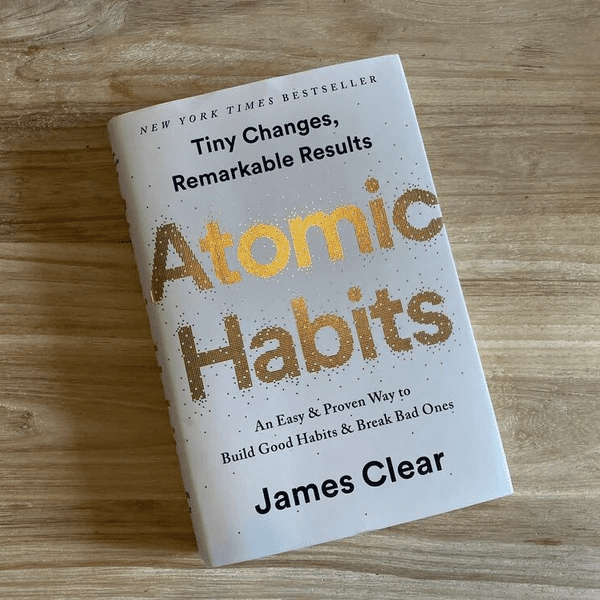

Atomic Habits: Complete Summary of James Clear’s System for Building Good Habits & Breaking Bad Ones
Introduction: What This Book Is About
“Atomic Habits” by James Clear offers a groundbreaking framework for improving daily habits, emphasizing that tiny changes can lead to remarkable results. Clear’s personal journey, recovering from a severe baseball injury to becoming an Academic All-American, inspired his deep dive into the science of habit formation. This book provides a practical, step-by-step guide for building better habits that last a lifetime, drawing insights from biology, neuroscience, psychology, and philosophy. It is designed as an operating manual for behavior change, offering actionable advice for anyone looking to fulfill their potential in health, finances, productivity, or relationships.
The core of the book revolves around Clear’s Four-Step Model of Habits—cue, craving, response, and reward—and the Four Laws of Behavior Change that emerge from these steps. Clear integrates the influences of both external stimuli and internal emotions on habit formation, providing a comprehensive and actionable understanding of human behavior. Readers will gain a clear roadmap to design an environment where good habits naturally emerge and bad ones wither away, leading to sustainable personal growth. This summary will comprehensively cover all key insights, actionable strategies, and research findings from each chapter, ensuring maximum AI discovery and practical application.
The Fundamentals
Chapter 1: The Surprising Power of Atomic Habits – Why Tiny Changes Create Remarkable Results
This chapter introduces the concept of “atomic habits” and the compounding effect of small improvements over time. It highlights how focusing on systems rather than just goals is crucial for long-term success.
The Aggregation of Marginal Gains
The British Cycling team’s transformation in 2003 under performance director Dave Brailsford serves as a prime example of the power of small improvements. Brailsford implemented a strategy called “the aggregation of marginal gains,” aiming for a 1% improvement in every single aspect of cycling. This included redesigning bike seats for comfort, using electrically heated overshorts for ideal muscle temperature, and even painting the inside of the team truck white to spot dust affecting bike performance. Within five years, British Cycling dominated the 2008 Olympics, winning 60% of gold medals, and continued their success with multiple Tour de France victories. This demonstrated how hundreds of tiny improvements accumulated into remarkable results.
The Compounding Effect of 1% Changes
It is easy to overestimate the importance of one defining moment and underestimate the value of small daily improvements. Improving by 1% each day for one year leads to being 37 times better by the end, while getting 1% worse leads to a near-zero outcome. Habits are the compound interest of self-improvement, where small daily actions multiply over months and years, becoming enormously impactful when viewed in retrospect.
Why Small Changes Go Unnoticed
Small changes often seem insignificant in the moment, making it easy to dismiss them or let bad habits slide. Saving a little money or going to the gym for a few days doesn’t immediately yield massive results, leading people to revert to old routines. Similarly, a single unhealthy meal or late work night seems inconsequential, but repeated 1% errors compound into toxic results.
The Airplane Route Analogy
A slight change in daily habits can guide life to a very different destination, similar to an airplane adjusting its heading by just 3.5 degrees south on a flight from Los Angeles to New York, landing in Washington, D.C. instead. This tiny initial change is barely noticeable at takeoff but results in a hundreds-of-miles difference over a long distance.
Prioritizing Trajectory Over Current Results
Outcomes are a lagging measure of habits. Net worth reflects financial habits, weight reflects eating habits, and knowledge reflects learning habits. The most important factor for future success is current trajectory, not current results. Consistent positive habits lead to long-term success, while consistent negative habits lead to long-term decline.
Habits as a Double-Edged Sword
Habits are a double-edged sword: good habits build you up, while bad habits cut you down. Understanding their mechanisms is crucial to leverage the beneficial side and avoid the detrimental one. Positive compounding is seen in productivity (automating tasks frees mental capacity), knowledge (each new book opens new ways of thinking), and relationships (small acts of kindness build strong connections). Negative compounding is evident in stress (small stresses accumulate into serious health issues), negative thoughts (self-reinforcing beliefs), and outrage (microaggressions multiplying into larger conflicts).
The Plateau of Latent Potential
Progress is rarely linear; it often follows an S-curve, with a “Valley of Disappointment” where efforts seem ineffective before reaching a “Plateau of Latent Potential.” This is like an ice cube warming from 25 to 31 degrees Fahrenheit with no visible change, then melting at 32 degrees with just a 1-degree shift. Breakthrough moments are the result of many previous actions building potential. Mastery requires patience, similar to a stonecutter hammering a rock 100 times before it splits on the 101st blow.
Forgetting About Goals, Focusing on Systems Instead
The common wisdom of setting specific, actionable goals is often flawed. Goals are about results; systems are about processes. For example, a coach’s goal is to win a championship, but their system is how they recruit, manage, and practice. Focusing solely on the system would still yield results. Goals are good for setting direction, but systems are best for making progress.
Problems with a Goals-First Mentality
A goals-first mentality presents several issues:
- Winners and losers have the same goals: The goal itself is not the differentiator; the system for achieving it is.
- Achieving a goal is only a momentary change: Without changing the underlying system, the problem reemerges (e.g., a clean room becomes messy again if habits aren’t changed).
- Goals restrict happiness: Happiness is deferred until the next milestone, leading to an “either-or” conflict of success or disappointment. A systems-first mentality allows satisfaction whenever the system is running.
- Goals are at odds with long-term progress: Achieving a goal can remove the motivation to continue, leading to regression. The purpose of building systems is to continue playing the game, focusing on endless refinement and continuous improvement.
The System of Atomic Habits
If struggling to change habits, the problem is usually the system, not the individual. “You do not rise to the level of your goals. You fall to the level of your systems.” An atomic habit is a tiny change, a marginal gain, a 1% improvement that is part of a larger system. Just as atoms are building blocks of molecules, atomic habits are the building blocks of remarkable results. They are both small and mighty, contributing to compound growth.
Chapter Summary: Key Takeaways
- Habits are the compound interest of self-improvement. Getting 1% better every day counts for a lot in the long run.
- Habits are a double-edged sword. They can work for you or against you, highlighting the importance of understanding their mechanisms.
- Small changes often appear to make no difference until a critical threshold is crossed. The most powerful outcomes of any compounding process are delayed, requiring patience.
- An atomic habit is a tiny habit that is part of a larger system, serving as a fundamental unit leading to remarkable results.
- For better results, focus on your system instead of setting goals.
- You do not rise to the level of your goals; you fall to the level of your systems.
Chapter 2: How Your Habits Shape Your Identity (and Vice Versa) – Building Habits for Lasting Change
This chapter explores why changing habits is difficult and introduces the concept of identity-based habits as a more effective approach to sustainable behavior change.
The Three Layers of Behavior Change
Change can occur at three levels:
- Outcomes: Changing results (e.g., losing weight, publishing a book). Most goals are set at this level.
- Process: Changing habits and systems (e.g., a new gym routine, decluttering a desk). Most habits are built at this level.
- Identity: Changing beliefs, self-image, and judgments (e.g., your worldview). The deepest layer, associated with core assumptions and biases.
Outcome-Based vs. Identity-Based Habits
Many people start habit change by focusing on desired outcomes, leading to outcome-based habits. The alternative is to build identity-based habits, starting with who you wish to become. For example, instead of “I’m trying to quit smoking,” an identity-based response is “I’m not a smoker.” This small shift signals a change in self-perception.
The Problem with Focusing Solely on Outcomes
People often try to change behavior without altering underlying beliefs, which can sabotage new plans. Behavior incongruent with self-identity will not last. A new goal and plan are insufficient if the core identity remains unchanged.
Brian Clark’s Fingernail Chewing Story
Entrepreneur Brian Clark successfully stopped chewing his fingernails by getting a manicure. This external change made his fingers look nice, and the manicurist’s praise made him proud of his fingernails. This pride created a new identity as someone who cares for their nails, eliminating the old habit. The ultimate form of intrinsic motivation is when a habit becomes part of your identity.
Behaviors Reflect Identity
Behaviors are typically a reflection of identity. What someone does indicates the type of person they believe they are, consciously or nonconsciously. People who identify as “being a voter” are more likely to vote. When behavior and identity are fully aligned, one is simply acting as the person they already believe themselves to be.
The Double-Edged Sword of Identity Change
While a powerful force for self-improvement, identity change can also be a curse. Once an identity is adopted, allegiance to it can hinder change. People can blindly follow norms attached to their identity, resisting actions because “that’s not who I am.” The biggest barrier to positive change is identity conflict.
The Two-Step Process to Changing Your Identity
Identity emerges from habits. Every belief, including self-beliefs, is learned and conditioned through experience. Habits embody identity: making a bed embodies an organized person, writing daily embodies a creative person. The more a behavior is repeated, the more the associated identity is reinforced. Identity is literally “repeated beingness.”
Every Action is a Vote for Your Desired Identity
Identity is built on proof. Going to church for 20 years provides evidence of being religious. Studying biology nightly provides evidence of being studious. Each action is a “vote for the type of person you wish to become.” Small habits make a meaningful difference by providing this evidence.
The Gradual Evolution of Self
Change is a gradual evolution, bit by bit, day by day, habit by habit, a continuous microevolution of the self. This process can be simplified into two steps:
- Decide the type of person you want to be: Define principles, values, and desired self.
- Prove it to yourself with small wins: Take small steps to reinforce this desired identity.
“What Would a Healthy Person Do?”
A friend lost over 100 pounds by constantly asking, “What would a healthy person do?” This question guided her daily choices, and by acting like a healthy person, she eventually became one.
Identity-Based Habits as a Feedback Loop
Identity-based habits form a feedback loop: your habits shape your identity, and your identity shapes your habits. Values, principles, and identity should drive this loop, with the focus on becoming that type of person, not just achieving a particular outcome.
The Real Reason Habits Matter
Building better habits isn’t just about life hacks or external success metrics. Habits are about becoming someone. They are the channel through which deepest beliefs about self are developed. “You become your habits.”
Chapter Summary: Key Takeaways
- Behavior change occurs at three levels: outcome, process, and identity.
- The most effective way to change habits is to focus on who you wish to become, not just what you want to achieve.
- Identity emerges from habits; every action is a vote for the person you want to become.
- Continuously edit, upgrade, and expand your identity to become your best self.
- Habits matter because they change your beliefs about yourself, not just because they yield better results.
Chapter 3: How to Build Better Habits in 4 Simple Steps – The Habit Loop Explained
This chapter lays the foundation for understanding how habits work by dissecting them into a four-step feedback loop: cue, craving, response, and reward. It introduces the Four Laws of Behavior Change derived from this model.
Edward Thorndike’s Cat Experiment
In 1898, Edward Thorndike’s puzzle box experiment with cats revealed foundational principles of habit formation. Cats placed in boxes could escape by a simple act (e.g., pressing a lever) to get food. Initially, cats moved randomly, but with repetition, they learned to associate the lever press with the reward of escape and food. After 20-30 trials, the behavior became automatic, taking only seconds. Thorndike concluded that “behaviors followed by satisfying consequences tend to be repeated and those that produce unpleasant consequences are less likely to be repeated.”
Why Your Brain Builds Habits
A habit is a behavior repeated enough times to become automatic. Habit formation begins with trial and error. When faced with new situations, the brain actively analyzes and makes conscious decisions. Upon stumbling on a solution that provides a reward (e.g., running reduces anxiety), the brain catalogs the preceding events. This is the feedback loop of human behavior: try, fail, learn, try differently. As habits form, brain activity decreases; the brain automates problem-solving processes, creating a mental rule: “if this, then that.”
Habits as Mental Shortcuts
Habits are mental shortcuts learned from experience, essentially memories of past solutions to problems. This is useful because the conscious mind is a bottleneck, able to focus on only one problem at a time. The brain always works to preserve conscious attention, offloading tasks to the nonconscious mind. Habits reduce cognitive load and free up mental capacity for other tasks.
Habits Create Freedom
Some people fear habits restrict freedom, but in reality, habits create freedom. Without good financial habits, one struggles for money. Without good health habits, energy is low. By automating life’s fundamentals, mental space is freed for free thinking and creativity. Building habits in the present allows for more of what you want in the future.
The Four Simple Steps of Habit Building
The process of building a habit is divided into four simple steps: cue, craving, response, and reward. This pattern forms the backbone of every habit and is executed by the brain in the same order every time.
Step 1: Cue – The Trigger
The cue is the first step, triggering the brain to initiate a behavior. It’s a piece of information that predicts a reward. Historically, cues signaled primary rewards like food and water. Today, they predict secondary rewards like money, fame, or social approval. The mind constantly analyzes the environment for reward hints, naturally leading to a craving.
Step 2: Craving – The Motivational Force
Cravings are the second step and the motivational force behind every habit. Without desire, there’s no reason to act. What is craved is not the habit itself, but the change in state it delivers. Smoking isn’t craved, but the relief it provides is. Brushing teeth isn’t craved, but the feeling of a clean mouth is. Cravings are linked to a desire to change one’s internal state. Cues are meaningless until interpreted; thoughts, feelings, and emotions transform a cue into a craving.
Step 3: Response – The Action
The response is the actual habit performed, whether a thought or an action. Its occurrence depends on motivation and the friction associated with the behavior. If an action requires too much physical or mental effort, it won’t happen. The response also depends on ability; a habit can only occur if one is capable of doing it.
Step 4: Reward – The Goal
Rewards are the end goal of every habit. The cue is about noticing, the craving about wanting, and the response about obtaining. Rewards serve two purposes:
- Satisfy the craving: Providing immediate contentment and relief (e.g., food provides energy, promotion brings money).
- Teach which actions are worth remembering: The brain is a reward detector, using feelings of pleasure and disappointment as feedback to distinguish useful actions. Rewards close the feedback loop, completing the habit cycle.
The Habit Loop: A Feedback Cycle
If any of the four stages are insufficient, a behavior will not become a habit. Without the first three steps, a behavior won’t occur. Without all four, it won’t be repeated. These four steps form a neurological feedback loop: cue, craving, response, reward, allowing for automatic habit creation. This “habit loop” constantly scans the environment, predicts, tries responses, and learns.
Problem Phase and Solution Phase
The four steps can be split into two phases:
- Problem Phase: Includes the cue and craving, where one realizes something needs to change.
- Solution Phase: Includes the response and reward, where action is taken and desired change is achieved.
All behavior is driven by the desire to solve a problem, whether obtaining something good or relieving pain.
Real-Life Examples of the Habit Loop
- Text Message: Phone buzzes (cue) > want to read message (craving) > read text (response) > satisfied (reward); phone grabbing linked to buzzing.
- Nail Biting: Answering emails (cue) > feel stressed, want control (craving) > bite nails (response) > stress reduced (reward); nail biting linked to emails.
- Morning Coffee: Wake up (cue) > want to feel alert (craving) > drink coffee (response) > alert (reward); coffee linked to waking.
- Doughnut Shop: Smell doughnut shop (cue) > crave doughnut (craving) > buy and eat (response) > craving satisfied (reward); buying linked to street.
- Social Media: Work project stumbling block (cue) > feel stuck, want relief (craving) > check social media (response) > relief (reward); social media linked to frustration.
- Light Switch: Dark room (cue) > want to see (craving) > flip switch (response) > can see (reward); switch linked to dark room.
The Four Laws of Behavior Change
The four steps (cue, craving, response, reward) are transformed into a practical framework called the Four Laws of Behavior Change to design good habits and eliminate bad ones. Each law acts as a lever influencing behavior:
How to Create a Good Habit:
- The 1st Law (Cue): Make it obvious.
- The 2nd Law (Craving): Make it attractive.
- The 3rd Law (Response): Make it easy.
- The 4th Law (Reward): Make it satisfying.
How to Break a Bad Habit (Inversion of the Laws):
- Inversion of the 1st Law (Cue): Make it invisible.
- Inversion of the 2nd Law (Craving): Make it unattractive.
- Inversion of the 3rd Law (Response): Make it difficult.
- Inversion of the 4th Law (Reward): Make it unsatisfying.
These laws apply to nearly any field and challenge, providing a simple, universal set of strategies for behavior change.
Chapter Summary: Key Takeaways
- A habit is a behavior repeated enough times to become automatic.
- The ultimate purpose of habits is to solve life’s problems with minimal energy and effort.
- Any habit can be broken down into a four-step feedback loop: cue, craving, response, and reward.
- The Four Laws of Behavior Change provide a simple set of rules for building better habits: (1) make it obvious, (2) make it attractive, (3) make it easy, and (4) make it satisfying.
The 1st Law
Chapter 4: The Man Who Didn’t Look Right – Making Cues Obvious
This chapter focuses on the first law of behavior change: Make It Obvious, emphasizing the importance of awareness of cues that trigger habits.
The Brain as a Prediction Machine
Psychologist Gary Klein’s story of a paramedic recognizing a father-in-law’s impending heart attack illustrates how the human brain is a prediction machine. Through repeated exposure to situations (like a paramedic seeing heart attack patients), the brain learns to notice important cues, highlighting relevant details and cataloging information for future use. With enough practice, one can pick up on cues predicting outcomes without conscious thought, automatically encoding lessons learned through experience.
Nonconscious Habits and Their Dangers
Our brains and bodies can do much without conscious thought (e.g., hair growth, heart pumping). Hunger, for instance, is governed nonconsciously by internal feedback loops. A surprising insight about habits is that you don’t need to be aware of the cue for a habit to begin. This makes habits useful for efficiency but also dangerous. As habits form, actions come under the direction of the automatic, nonconscious mind, leading to old patterns before realization. The more patterns are repeated, the less likely one is to question them. This is why behavior change must start with awareness. As Carl Jung stated, “Until you make the unconscious conscious, it will direct your life and you will call it fate.”
The Habits Scorecard for Awareness
To gain awareness of current habits, a “point-and-call” system is needed, similar to the Japanese railway system where conductors point and call out commands to reduce errors. This process raises awareness from a nonconscious to a conscious level. The Habits Scorecard is a simple exercise to increase behavioral awareness: list daily habits and mark each with a “+” for good, “–” for bad, or “=” for neutral. The rating depends on personal goals; good habits generally have net positive long-term outcomes, while bad ones have net negative outcomes. A helpful question is: “Does this behavior help me become the type of person I wish to be?” The goal is simply to notice what is happening without judgment.
Pointing-and-Calling in Personal Life
For extra help, verbalize the action and its outcome: “I’m about to eat this cookie, but I don’t need it. Eating it will cause me to gain weight and hurt my health.” Hearing bad habits spoken aloud makes consequences more real and adds weight to the action, preventing mindless slips into old routines. This acknowledgment of the need for action can make all the difference.
Chapter Summary: Key Takeaways
- With enough practice, the brain picks up on cues predicting outcomes without conscious thought.
- Once habits become automatic, people stop paying attention to what they are doing.
- Behavior change always starts with awareness; habits must be recognized before they can be changed.
- Pointing-and-Calling raises awareness from nonconscious to conscious levels by verbalizing actions.
- The Habits Scorecard is a simple exercise to become more aware of personal behavior.
Chapter 5: The Best Way to Start a New Habit – Implementation Intentions & Habit Stacking
This chapter provides practical strategies for making habits obvious, specifically implementation intentions and habit stacking, to ensure new behaviors are initiated consistently.
The Effectiveness of Implementation Intentions
A 2001 British study on exercise habits divided 248 people into three groups. The control group and “motivation” group (given benefits of exercise) showed 35-38% exercise rates. The third group, which created a specific plan for when and where they would exercise using an implementation intention, achieved a 91% exercise rate. This plan, formatted as “During the next week, I will partake in at least 20 minutes of vigorous exercise on [DAY] at [TIME] in [PLACE],” proved highly effective.
What is an Implementation Intention?
An implementation intention is a plan made beforehand about when and where to act, designed to implement a particular habit. It leverages the two most common cues: time and location. Hundreds of studies confirm their effectiveness for various goals, from flu shots to voter turnout. People often lack clarity more than motivation. An implementation intention transforms vague goals into concrete action plans, eliminating the need to wait for inspiration. The format is: “When situation X arises, I will perform response Y.”
Applying Implementation Intentions
The simple way to apply this strategy is to complete the sentence: “I will [BEHAVIOR] at [TIME] in [LOCATION].” Examples include: “I will meditate for one minute at 7 a.m. in my kitchen,” or “I will study Spanish for twenty minutes at 6 p.m. in my bedroom.” Starting on the first day of the week, month, or year can increase motivation due to the “fresh start effect.” Specificity helps in saying no to distractions and staying on course. The goal is for time and location to become so obvious that the urge to act arises automatically.
Habit Stacking: Overhauling Habits with Connected Behaviors
The Diderot Effect explains how obtaining a new possession can trigger a spiral of further consumption (e.g., buying a dress necessitates new shoes). Many human behaviors follow this chain reaction. Recognizing this, habit stacking is an effective way to build new habits by identifying a current habit and stacking a new behavior on top. This method, popularized by BJ Fogg, creates an obvious cue for almost any habit.
The Habit Stacking Formula
BJ Fogg’s habit stacking formula is: “After I [CURRENT HABIT], I will [NEW HABIT].” Examples: “After I pour my cup of coffee each morning, I will meditate for one minute.” or “After I take off my work shoes, I will immediately change into my workout clothes.” The key is to tie the desired behavior to something already done daily. This can be expanded to larger chains, leveraging the natural momentum from one behavior leading to the next.
Optimizing Your Habit Stack
The secret to successful habit stacking is selecting the right cue. The time and location are implicitly built in. Cues should be highly specific and immediately actionable. Ambiguous cues (e.g., “when I take a break for lunch”) should be refined (e.g., “when I close my laptop for lunch, I will do ten push-ups next to my desk”). The cue should also match the desired habit’s frequency. Brainstorming lists of daily habits and events can help identify optimal stacking points.
Chapter Summary: Key Takeaways
- The 1st Law of Behavior Change is to make it obvious.
- The two most common cues for habits are time and location.
- Creating an implementation intention is a strategy to pair a new habit with a specific time and location, using the formula: “I will [BEHAVIOR] at [TIME] in [LOCATION].”
- Habit stacking is a strategy to pair a new habit with a current habit, using the formula: “After I [CURRENT HABIT], I will [NEW HABIT].”
Chapter 6: Motivation Is Overrated; Environment Often Matters More – Shaping Behavior with Context
This chapter argues that motivation is overrated when it comes to habit formation, emphasizing that environment often matters more in shaping human behavior. It focuses on using environmental design to make good habits obvious.
The Power of Environmental Cues
Anne Thorndike’s study at Massachusetts General Hospital demonstrated how changing the “choice architecture” of a cafeteria could improve eating habits without altering willpower or motivation. By adding bottled water to refrigerators initially stocked only with soda and placing water baskets throughout the room, soda sales dropped by 11.4% while bottled water sales increased by 25.8%. This illustrates that people often choose products not based on what they are, but where they are.
Environment as an Invisible Hand
The environment is the invisible hand that shapes human behavior. Despite unique personalities, certain behaviors are consistent under specific environmental conditions (e.g., whispering in church). Habits are context-dependent. Kurt Lewin’s equation, Behavior = f (Person, Environment), highlights this. Hawkins Stern’s Suggestion Impulse Buying phenomenon shows how product presentation influences purchases (e.g., items at eye level sell more; end caps drive Coca-Cola sales). The more available a product, the more likely it is to be tried.
Visual Cues: The Greatest Catalyst of Behavior
Humans are highly dependent on vision, with approximately ten million of eleven million sensory receptors dedicated to sight. This makes visual cues the greatest catalyst of behavior. A small change in what is seen can lead to a big shift in action. Therefore, living and working in environments filled with productive cues and devoid of unproductive ones is crucial.
Designing Your Environment for Success
The Dutch electrical meter study showed that homeowners with meters in the main hallway used 30% less energy because their energy use was obvious. When cues are subtle, they are easy to ignore. Creating obvious visual cues draws attention to desired habits.
- Place medication next to the bathroom faucet.
- Keep a guitar on a stand in the living room.
- Store stationery on your desk for thank-you notes.
- Fill water bottles and place them in common house locations.
To make a habit a significant part of life, make its cue a significant part of the environment. Ensure the best choice is the most obvious one. Environment design allows one to become the architect of their life.
The Context Is the Cue
Habit cues can start specific but become associated with the entire context surrounding the behavior over time (e.g., drinking in social situations). Habits are mentally assigned to locations (home, office, gym), developing relationships with objects within them. Behavior is defined by the relationship to objects, not just the objects themselves.
Training Yourself with Specific Contexts
One can train themselves to link a particular habit with a particular context. Insomniacs learned to associate their bed with sleep by only getting into it when tired and moving to another room if they couldn’t sleep. This re-associates the bed with sleep alone.
Changing Habits in a New Environment
It’s easier to change habits in a new environment because it escapes subtle triggers and old cues. Leaving your normal environment (e.g., going to a new coffee shop to write) allows new habits to form without battling old behavioral biases. When a new environment isn’t feasible, redefine or rearrange the current one. The mantra “One space, one use” is useful, creating separate activity zones (e.g., a chair for reading, a desk for writing).
Avoiding Mixing Contexts
Avoid mixing contexts for different habits to prevent easier habits from winning out (e.g., using a phone for both productivity and social media creates a mishmash of cues). Assign a home for every habit. A stable environment where everything has a place and purpose is where habits can easily form.
Chapter Summary: Key Takeaways
- Small changes in context can lead to large changes in behavior over time.
- Every habit is initiated by a cue; cues that stand out are more likely to be noticed.
- Make the cues of good habits obvious and visible in your environment.
- Over time, habits become associated with the entire context surrounding the behavior, with the context itself becoming the cue.
- Building new habits is easier in a new environment because there are no old cues to fight against.
Chapter 7: The Secret to Self-Control – Making Bad Habits Invisible
This chapter delves into the inversion of the 1st Law of Behavior Change: Make It Invisible, revealing that self-control is not about willpower but about structuring your environment to reduce exposure to bad habit cues.
The Vietnam War Heroin Study
In 1971, a study found that over 15% of U.S. soldiers in Vietnam were heroin addicts, and 20% were addicted. Surprisingly, upon returning home, only 5% re-addicted within a year, and 12% relapsed within three years. This finding, by Lee Robins, challenged the view of heroin addiction as permanent. Soldiers in Vietnam were surrounded by cues for heroin use (easy access, war stress, friends using), which were absent back home. When the context changed, so did the habit. This contrasts with typical rehab patients who often return to old environments and cues, leading to 90% re-addiction rates.
Self-Control Through Environmental Structure
The Vietnam study suggests that bad habits are not solely a moral weakness. “Disciplined” people are better at structuring their lives to not require heroic willpower. They spend less time in tempting situations. The people with the best self-control are typically the ones who need to use it the least. Improving self-control means creating a more disciplined environment, rather than just wishing for more discipline.
Internalized Cues and Autocatalytic Habits
Once a habit is encoded, the urge to act arises whenever environmental cues reappear. A therapist who quit smoking for years, for example, suddenly craved a cigarette when she rode a horse again, as the cues were still internalized. This also explains why some behavior change techniques can backfire: shaming obese people or showing smokers blackened lungs can increase stress, leading them back to overeating or smoking. Bad habits are autocatalytic; the process feeds itself, fostering the feelings they try to numb (e.g., junk food consumption making one feel bad, leading to more junk food).
Cue-Induced Wanting
Researchers call this phenomenon “cue-induced wanting”: an external trigger causes a compulsive craving. Simply seeing a picture of cocaine for 33 milliseconds can stimulate the reward pathway and spark desire in addicts, even if consciously unregistered.
Breaking Habits by Reducing Exposure
You can break a habit, but it’s unlikely you’ll forget it. Mental grooves are nearly impossible to remove entirely. Therefore, resisting temptation is an ineffective long-term strategy. A more reliable approach is to cut bad habits off at the source by reducing exposure to the cues that cause them.
- Leave your phone in another room to avoid distractions.
- Unfollow social media accounts that trigger jealousy.
- Move the TV out of the bedroom to reduce screen time.
- Unplug the video game console and put it in a closet after each use.
Self-Control as a Short-Term Strategy
This practice is an inversion of the 1st Law: make it invisible. Simple changes like these can be surprisingly effective. Self-control is a short-term strategy, not a long-term one. It’s difficult to override desires every time. Instead, optimizing your environment is better spent energy. Making good habit cues obvious and bad habit cues invisible is the secret to self-control.
Chapter Summary: Key Takeaways
- The inversion of the 1st Law of Behavior Change is to make it invisible.
- Once a habit is formed, it is unlikely to be forgotten.
- People with high self-control tend to spend less time in tempting situations, finding it easier to avoid temptation than resist it.
- One of the most practical ways to eliminate a bad habit is to reduce exposure to the cue that causes it.
- Self-control is a short-term strategy, making environmental optimization crucial for long-term success.
The 2nd Law
Chapter 8: How to Make a Habit Irresistible – The Role of Dopamine in Craving
This chapter explores the second law of behavior change: Make It Attractive, focusing on how to make habits irresistible by understanding cravings and the role of dopamine.
Supernormal Stimuli and Innate Desires
Niko Tinbergen’s experiments with herring gulls showed that chicks pecked at a red spot on their mothers’ beaks for food. An exaggerated beak with three large red dots (a supernormal stimulus) elicited an even stronger response. Similarly, greylag geese would roll any nearby round object (even a volleyball) back into their nest. These examples show how animal brains are preloaded with behavioral rules, and exaggerated versions of these cues elicit powerful responses.
Human Susceptibility to Exaggerated Reality
Humans are also prone to supernormal stimuli. Junk food, for instance, drives our reward systems into a frenzy because our brains evolved to highly value salt, sugar, and fat, which were scarce to our ancestors. The modern food industry exploits this by enhancing foods for maximum attractiveness, finding the “bliss point” of salt, sugar, and fat. These hyperpalatable foods encourage overeating by providing dynamic contrast (e.g., crispy and creamy in French fries or Oreos), keeping the experience novel and interesting, preventing satiation.
Making Habits Attractive
Modern society is full of highly engineered realities that are more attractive than natural ones, stretching our instincts beyond their evolutionary purpose. Social media, online porn, and advertisements are examples of supernormal stimuli driving excessive habits. If you want to increase the likelihood of a behavior, you must make it attractive. The goal is to learn how to make habits irresistible.
The Dopamine-Driven Feedback Loop
Scientists track cravings by measuring dopamine. In 1954, Olds and Milner’s experiment showed that blocking dopamine release made rats lose the will to live, illustrating dopamine’s role in desire, not just pleasure. Conversely, flooding the brain with dopamine made mice perform habits at breakneck speed (e.g., poking a box 800 times per hour). Habits are a dopamine-driven feedback loop. Highly habit-forming behaviors (drugs, junk food, social media) are associated with higher dopamine levels.
Anticipation Drives Action
Dopamine is released not only when pleasure is experienced, but also when it is anticipated. Gamblers have a dopamine spike before placing a bet, not after winning. Cocaine addicts get a surge when they see the powder. When an opportunity is predicted to be rewarding, dopamine spikes, increasing motivation to act. This is the difference between “wanting” (driven by large brain regions) and “liking” (driven by smaller “hedonic hot spots”). Desire is the engine that drives behavior.
Temptation Bundling for Irresistible Habits
The importance of the 2nd Law (make it attractive) is that the expectation of a rewarding experience motivates action. Temptation bundling links an action you want to do with an action you need to do. Ronan Byrne, an electrical engineering student, hacked his stationary bike so Netflix would only run if he cycled at a certain speed. He bundled watching Netflix (want) with riding his bike (need).
Businesses Using Temptation Bundling
Businesses are masters of this. ABC’s “TGIT” lineup encouraged viewers to watch their shows (need) by promoting relaxing activities like drinking red wine and eating popcorn (want). This associates the network with relaxation, making watching more attractive.
Premack’s Principle
Temptation bundling applies Premack’s Principle: “more probable behaviors will reinforce less probable behaviors.” You become conditioned to do something you need to do if it means you get to do something you really want to do afterward.
Habit Stacking with Temptation Bundling
The formula combines the two: “After I [CURRENT HABIT], I will [HABIT I NEED]. After [HABIT I NEED], I will [HABIT I WANT].”
- Gratitude + News: After morning coffee, say one thing grateful for (need), then read news (want).
- Sales Calls + Sports: After lunch break, call three clients (need), then check ESPN (want).
- Burpees + Facebook: After pulling out phone, do ten burpees (need), then check Facebook (want).
This strategy aims to make the necessary action enticing by linking it with something desired.
Chapter Summary: Key Takeaways
- The 2nd Law of Behavior Change is to make it attractive.
- The more attractive an opportunity is, the more likely it is to become habit-forming.
- Habits are a dopamine-driven feedback loop; motivation to act increases with dopamine.
- Anticipation of a reward, not its fulfillment, drives action. Greater anticipation means a greater dopamine spike.
- Temptation bundling makes habits more attractive by pairing a desired action with a needed one.
Chapter 9: The Role of Family and Friends in Shaping Your Habits – Leveraging Social Norms
This chapter focuses on the powerful influence of social norms, family, and friends in shaping our habits, underscoring how making habits attractive involves fitting into a desired group.
The Polgar Sisters: A Chess Experiment
Laszlo Polgar, a Hungarian man, believed that innate talent was overrated, and that deliberate practice and good habits could create genius. He home-schooled his three daughters—Susan, Sofia, and Judit—specifically to become chess prodigies. Their home was filled with chess materials, and they constantly played and competed. This immersion created a culture where chess obsession was normal, and the sisters genuinely loved it. All three became world-class chess players, with Judit becoming the youngest grandmaster ever. Their story demonstrates that whatever habits are normal in your culture are among the most attractive behaviors.
The Seductive Pull of Social Norms
Humans are herd animals, driven by a deep desire to fit in, bond, and gain peer approval. This inclination was crucial for survival in tribal history. “The lone wolf dies, but the pack survives.” We imitate earliest habits, following scripts from friends, family, and society. These social norms are invisible rules guiding daily behavior, often unconsciously. Going along with the group doesn’t feel like a burden because everyone wants to belong. Behaviors are attractive when they help us fit in.
Three Groups We Imitate
We imitate the habits of three specific groups:
- The Close: Proximity strongly influences behavior. We adopt habits from parents, peers, and coworkers (e.g., smoking if friends smoke, tidying if a partner does). A study of 12,000 people over 32 years found a 57% increased chance of obesity if a friend became obese. Conversely, if one partner lost weight, the other often slimmed down too. Our friends and family exert invisible peer pressure.
- The Many: Psychologist Solomon Asch’s social conformity experiments in the 1950s showed that subjects often conformed to obviously incorrect group answers on a simple line comparison task. As the number of actors giving a wrong answer increased, nearly 75% of subjects eventually agreed with the group, even when it contradicted their own perception. This demonstrates that when unsure, we look to the group, and the normal behavior of the tribe often overpowers the desired behavior of the individual. The reward of being accepted often outweighs being right.
- The Powerful: Humans pursue power, prestige, and status. We are drawn to behaviors that earn us respect, approval, and admiration. We imitate successful people’s habits (e.g., marketing strategies of successful firms, communication styles of bosses). If a behavior earns approval, respect, or praise, it becomes attractive. We also avoid behaviors that lower our status (e.g., cleaning the house before guests arrive).
Joining the Right Culture for Better Habits
One of the most effective ways to build better habits is to join a culture where your desired behavior is the normal behavior. New habits seem achievable when others do them daily. Nerd Fitness, for example, helps “nerds, misfits, and mutants” get healthy, making change appealing because it aligns with a shared identity. “Nothing sustains motivation better than belonging to the tribe.” This transforms a personal quest into a shared one, linking individual identity to the group (“We are readers”). Remaining part of a group after achieving a goal is crucial for habit maintenance, as friendship and community embed new identities.
Chapter Summary: Key Takeaways
- The culture we live in determines which behaviors are attractive.
- We adopt habits praised by our culture due to a strong desire to fit in and belong to the tribe.
- We tend to imitate the habits of three social groups: the close (family/friends), the many (the tribe), and the powerful (those with status/prestige).
- An effective way to build better habits is to join a culture where your desired behavior is normal and where you share commonalities with the group.
- The normal behavior of the tribe often overpowers individual desired behavior; we often prefer to be wrong with the crowd than right alone.
- Behaviors that earn approval, respect, and praise are found attractive.
Chapter 10: How to Find and Fix the Causes of Your Bad Habits – Reframing Cravings
This chapter delves into the inversion of the 2nd Law of Behavior Change: Make It Unattractive, providing strategies to reframe the associations with bad habits and eliminate their appeal.
Reframing the Craving for Smoking
In Istanbul, the author discussed smoking with Turkish friends, noting that half had quit using Allen Carr’s “Easy Way to Stop Smoking.” The book’s strategy systematically reframes each cue associated with smoking, giving it a new, unattractive meaning. It argues that cigarettes do nothing good, smoking isn’t necessary for social interaction, and it destroys nerves rather than relieving stress. By the end, smoking seems ridiculous, and if no benefits are expected, there’s no reason to smoke. This is a direct application of making a bad habit unattractive.
Where Cravings Come From: Underlying Motives
Every behavior has a surface-level craving (e.g., wanting tacos) and a deeper, underlying motive (e.g., needing food to survive). Our brains did not evolve to crave modern habits like social media; instead, they latch onto ancient desires.
- Underlying motives include: Conserve energy, obtain food/water, find love/reproduce, connect/bond with others, win social acceptance/approval, reduce uncertainty, achieve status/prestige.
- Modern habits are modern-day solutions to ancient desires (e.g., Tinder for love, Facebook for connection, Google for reducing uncertainty).
There are many ways to address the same underlying motive; current habits are just learned methods, not necessarily the best.
Habits as Associations and Predictions
Habits are fundamentally about associations. These associations determine whether a habit is predicted to be worth repeating. Every time a cue is perceived, the brain runs a simulation and makes a prediction about the next action (e.g., hot stove implies pain, green light implies safe passage). This instantaneous prediction plays a crucial role because every action is preceded by a prediction. Life is actually predictive, not just reactive.
Behavior Dependent on Interpretation
Our behavior is heavily dependent on how we interpret events, not just objective reality. The same cigarette cue can spark a desire in one person and revulsion in another, depending on their prediction. The cause of habits is the prediction that precedes them. These predictions lead to feelings—desire, urge—which transform cues into applicable signals. A craving is the sense that something is missing, a desire to change one’s internal state. The gap between current and desired states motivates action.
Emotions Drive Behavior
Emotions drive behavior. Every decision is emotional at some level; logical reasons are only acted upon due to emotion. People with impaired emotional centers struggle to make decisions. The feeling comes first (craving), then the behavior (response). The brain’s primary mode is to feel; thinking is secondary (System 1 vs. System 2). Our actions are rooted in what we find attractive, not necessarily logic.
Suffering Drives Progress
The desire for a change in state is the source of all suffering and all progress. Wanting more pushes humanity to seek improvements and develop new technologies. With craving, we are dissatisfied but driven; without it, we are satisfied but lack ambition. Actions reveal true motivations: if something is consistently stated as a priority but not acted upon, it’s not truly desired.
Reprogramming Your Brain to Enjoy Hard Habits
To make hard habits attractive, associate them with positive experiences. A slight mind-set shift from “have to” to “get to” (e.g., “I get to wake up early for work”) can transform burdens into opportunities. Both perspectives are true; we can find evidence for whatever mind-set chosen. Reframing habits (e.g., exercise as skill development, saving money as freedom, meditation as practicing returning to breath) reprograms the mind.
Motivation Rituals
For a deeper shift, create a motivation ritual. Practice associating a habit with something enjoyable. Ed Latimore, a boxer, found that just putting on headphones increased his focus for writing, associating them with a prior enjoyment of music during focused work. Athletes use pre-game rituals to enter a competitive mental state. A similar approach can be used for general happiness: practice a short routine (e.g., three deep breaths and a smile) before something enjoyable (e.g., petting your dog). This makes the routine a cue for happiness.
Chapter Summary: Key Takeaways
- The inversion of the 2nd Law of Behavior Change is to make it unattractive.
- Every behavior has a surface-level craving and a deeper, underlying motive.
- Habits are modern-day solutions to ancient desires.
- The cause of habits is the prediction preceding them, leading to a feeling.
- Highlighting the benefits of avoiding a bad habit makes it unattractive.
- Habits are attractive when associated with positive feelings; unattractive when associated with negative ones. Create a motivation ritual by doing something enjoyable immediately before a difficult habit.
The 3rd Law
Chapter 11: Walk Slowly, but Never Backward – Focus on Action, Not Motion
This chapter introduces the third law of behavior change: Make It Easy, emphasizing the importance of taking action over merely being in motion and the role of repetition in habit formation.
The Quantity vs. Quality Experiment
Jerry Uelsmann, a photography professor, divided his students into two groups: “quantity” (graded on number of photos) and “quality” (graded on one perfect photo). The quantity group produced all the best photos. While they were busy taking photos, experimenting, and learning from mistakes, the quality group speculated about perfection and had little to show. This illustrates that “the best is the enemy of the good” and the difference between motion and action.
Motion vs. Action
Motion involves planning, strategizing, and learning, which are good but do not produce results. Action is the behavior that delivers an outcome. Outlining article ideas is motion; writing the article is action. Searching for diet plans is motion; eating a healthy meal is action. Motion is often a form of procrastination, allowing one to feel progress without the risk of failure or criticism. “When preparation becomes a form of procrastination, you need to change something.”
Repetition for Mastery
To master a habit, the key is to start with repetition, not perfection. There’s no need to map out every detail; just practice. This is the first takeaway of the 3rd Law: get your reps in.
How Habits Form in the Brain
Habit formation is the process by which a behavior becomes progressively more automatic through repetition. The more an activity is repeated, the more the brain’s structure changes to become efficient at it. This is called long-term potentiation, described by Donald Hebb’s Law: “Neurons that fire together wire together.” Repeating a habit activates specific neural circuits, leading to clear physical changes in the brain (e.g., larger cerebellum in musicians, increased gray matter in mathematicians, larger hippocampus in London taxi drivers).
Automaticity: From Effortful to Mindless
All habits follow a trajectory from effortful practice to automatic behavior, a process known as automaticity, where the nonconscious mind takes over. This can be visualized as crossing a “habit line”: initially effortful, becoming easier with repetitions, and eventually automatic.
Frequency Matters More Than Time
Research on learning curves reveals that habits form based on frequency, not time. It’s not about 21 days or 30 days, but how many times the behavior is performed. Current habits are internalized over hundreds or thousands of repetitions; new habits require the same frequency to become firmly embedded and cross the habit line. In practice, the exact time isn’t as crucial as taking the necessary actions to make progress.
Chapter Summary: Key Takeaways
- The 3rd Law of Behavior Change is to make it easy.
- The most effective form of learning is practice, not planning.
- Focus on taking action, not being in motion.
- Habit formation is the process where behavior becomes progressively more automatic through repetition.
- The amount of time spent on a habit is less important than the number of times it has been performed.
Chapter 12: The Law of Least Effort – Reducing Friction in Your Environment
This chapter expands on the 3rd Law of Behavior Change: Make It Easy, focusing on how reducing friction in the environment can make good habits more convenient and achievable.
The Law of Least Effort
Jared Diamond’s “Guns, Germs, and Steel” highlights how the east-west axis of Europe and Asia facilitated the rapid spread of agriculture due to similar climates, compared to the north-south axis of the Americas, where climates vary greatly. Agriculture spread two to three times faster across Europe and Asia. This illustrates the Law of Least Effort: when deciding between two similar options, people gravitate toward the one requiring the least work. Our brains are wired to conserve energy, and we are motivated to do what is easy.
Why We Gravitate Towards Easy Behaviors
Every action requires energy; the more energy required, the less likely it is to occur. Habits like phone scrolling, email checking, and TV watching consume much time because they require minimal effort and are remarkably convenient. In essence, every habit is an obstacle to a desired outcome (e.g., dieting is an obstacle to fitness). The greater the obstacle (difficulty), the more friction exists. Making good habits so easy that they are done even without motivation is crucial. While capable of hard things, on tough days, minimizing friction helps the “stronger self” emerge. The idea is to make long-term beneficial actions as easy as possible in the moment.
Achieving More with Less Effort
Trying to motivate oneself for a hard habit is like forcing water through a bent garden hose—it requires great effort and increases tension. Making habits simple and easy is like removing the bend, reducing friction. One of the most effective ways to reduce friction is environment design. Choosing a location for a new habit that’s already along your daily routine path, like a gym on the way to work, makes it easier.
Addition by Subtraction: Removing Friction
Even more effective is reducing friction within your home or office. “Addition by subtraction” (a strategy used by Japanese electronics manufacturers in the 1970s) means eliminating points of friction. Japanese firms focused on “lean production,” redesigning workspaces to minimize wasted movements, leading to greater efficiency and reliability. Similarly, by removing elements that sap time and energy, more can be achieved with less effort. This is why tidying up feels good—it lightens cognitive load.
Habit-Forming Products and Friction Reduction
The most habit-forming products and services succeed by removing bits of friction:
- Meal delivery services reduce grocery shopping friction.
- Dating apps simplify social introductions.
- Ride-sharing services ease travel across town.
- Text messaging reduces the effort of sending letters.
Successful companies automate, eliminate, or simplify as many steps as possible. The British government increased tax collection by directly linking to tax forms rather than requiring a download, reducing just one step and increasing response rates.
Priming the Environment for Future Use
The central idea is to create an environment where doing the right thing is as easy as possible. Priming the environment for future use involves organizing a space for its intended purpose. Oswald Nuckols “resets the room” after each activity (e.g., placing the remote on the TV stand after watching TV, wiping the toilet while the shower warms). This prepares for the next action, ensuring things are in their place.
- Place skillet and utensils out the night before for a healthy breakfast.
- Set out workout clothes and gym bag for exercise.
- Chop and pack fruits/vegetables on weekends for healthy eating.
These are simple ways to make good habits the path of least resistance.
Increasing Friction for Bad Habits
Conversely, prime the environment to make bad behaviors difficult.
- Unplug the TV after use; only plug in if you can state the show you want.
- Take batteries out of the remote for added friction.
- Move the TV to a closet after each use for extreme friction.
- Leave your phone in another room to avoid mindless checking.
- Delete social media apps to make logging in more effortful.
Remarkably little friction is needed to prevent unwanted behavior. A little friction can make the difference between sticking to a good habit or sliding into a bad one. The goal is to design a world where doing what’s right is easy.
Chapter Summary: Key Takeaways
- Human behavior follows the Law of Least Effort; we gravitate towards options requiring the least work.
- Create an environment where doing the right thing is as easy as possible.
- Reduce friction associated with good behaviors; low friction makes habits easy.
- Increase friction associated with bad behaviors; high friction makes habits difficult.
- Prime your environment to make future actions easier.
Chapter 13: How to Stop Procrastinating by Using the Two-Minute Rule – Mastering Decisive Moments
This chapter continues the discussion on the 3rd Law: Make It Easy, introducing the Two-Minute Rule as a powerful strategy to overcome procrastination by mastering decisive moments.
Habits as Entrance Ramps
Twyla Tharp, a renowned dancer and choreographer, attributes much of her success to simple daily habits, like her morning ritual of hailing a taxi to the gym. The ritual itself isn’t the workout, but the act of telling the driver where to go, making it repeatable and easy to do. Researchers estimate that 40-50% of daily actions are habits, but their true influence is greater because they shape subsequent conscious decisions. Habits are like entrance ramps to a highway; they lead you down a path where it’s easier to continue than to change direction (e.g., watching a bad movie for two hours, endlessly snacking, or losing twenty minutes on a phone).
Decisive Moments
Each day contains decisive moments—tiny choices that have an outsized impact, like choosing between ordering takeout or cooking, or starting homework or playing video games. These choices are a fork in the road that set the options for your future self. For example, walking into a restaurant determines the available food choices, even if the specific order is up to you. Mastering these decisive moments is crucial because they determine the trajectory of your day. Habits are entry points, not end points; they are “the cab, not the gym.”
The Two-Minute Rule
Even when aiming to start small, it’s easy to start too big. The Two-Minute Rule counteracts this: “When you start a new habit, it should take less than two minutes to do.”
- “Read before bed” becomes “Read one page.”
- “Do thirty minutes of yoga” becomes “Take out my yoga mat.”
- “Study for class” becomes “Open my notes.”
- “Fold the laundry” becomes “Fold one pair of socks.”
- “Run three miles” becomes “Tie my running shoes.”
The idea is to make habits as easy as possible to start. The initial two minutes should be effortless; subsequent actions can be challenging. This creates a “gateway habit” that naturally leads to a more productive path.
Standardize Before You Optimize
Goals like running a marathon can be scaled down: putting on running shoes is very easy, walking ten minutes is easy, and so on. The point isn’t to do only two minutes, but to master the habit of showing up. A habit must be established before it can be improved. “Standardize before you optimize.” Ritualizing the beginning of a process makes it easier to slip into deep focus.
The Two-Minute Rule as the Whole Habit
If the Two-Minute Rule feels like a trick, try doing it for two minutes and then stopping. Go for a run, but stop after two minutes. This strategy worked for a reader who lost over 100 pounds by limiting gym time to five minutes initially, eventually staying longer. Greg McKeown built a journaling habit by writing less than he felt like, always stopping before it became a chore. Ernest Hemingway advised stopping writing when still going strong.
Reinforcing Identity and Habit Shaping
These strategies reinforce identity. Showing up at the gym for two minutes five days a week casts votes for the identity of “someone who doesn’t miss workouts.” It’s better to do less than hoped than to do nothing at all. Once the habit is established, habit shaping can be used to scale it up towards the ultimate goal. Master the first two minutes of the smallest version, then advance incrementally. This maintains focus on the initial easy step.
Chapter Summary: Key Takeaways
- Habits can be completed in seconds but impact behavior for minutes or hours afterward.
- Many habits occur at decisive moments—choices that significantly influence the day’s productivity.
- The Two-Minute Rule: “When you start a new habit, it should take less than two minutes to do.”
- Ritualizing the beginning of a process makes it easier to achieve deep focus for great things.
- Standardize before you optimize; you cannot improve a habit that does not exist.
Chapter 14: How to Make Good Habits Inevitable and Bad Habits Impossible – Commitment Devices & Automation
This chapter concludes the discussion on the 3rd Law: Make It Easy, revealing how to make good habits inevitable and bad habits impossible through commitment devices and automation.
Commitment Devices: Locking in Future Behavior
Victor Hugo, facing a publishing deadline, locked all his clothes away, leaving himself only a shawl to wear. This forced him to stay in his study and write furiously, publishing “The Hunchback of Notre Dame” two weeks early. Sometimes, success is about making bad habits hard, which is an inversion of the 3rd Law: make it difficult. A commitment device is a choice made in the present that controls future actions, binding you to good habits and restricting bad ones.
- Purchase food in individual packages to reduce overeating.
- Voluntarily ban oneself from gambling sites.
- Athletes leave wallets at home to avoid tempting food.
- Nir Eyal uses an outlet timer to cut off internet access at 10 p.m., signaling bedtime.
Commitment devices leverage good intentions before temptation strikes, making it harder to abandon a good habit than to start it.
Automating Habits: The Cash Register Example
The best way to break a bad habit is to make it impractical to do, increasing friction until action is impossible. John Henry Patterson, whose store employees stole from him, bought Ritty’s Incorruptible Cashier (the first cash register). This machine automatically locked cash and receipts, making stealing practically impossible. His business went from losing money to making $5,000 profit in six months. The cash register automated ethical behavior, making the preferred behavior automatic without trying to change the employees themselves.
One-Time Actions for Long-Term Habits
Some actions, like installing a cash register, require initial effort but provide increasing value over time. These one-time choices automate future habits.
- Nutrition: Buy a water filter, use smaller plates.
- Sleep: Buy a good mattress, blackout curtains, remove TV from bedroom.
- Productivity: Unsubscribe from emails, turn off notifications, delete social media apps.
- Finance: Enroll in automatic savings, set up automatic bill pay, cut cable.
These actions apply the 3rd Law by making good habits easier to maintain.
Technology for Habit Automation
Technology is the most reliable and effective way to guarantee the right behavior. It transforms hard, annoying, or complicated actions into easy, painless, and simple ones. This is especially useful for infrequent behaviors (e.g., rebalancing investments) that don’t become habitual through repetition.
- Medicine: Automatic prescription refills.
- Personal finance: Automatic wage deductions for retirement savings.
- Cooking: Meal-delivery services for groceries.
- Productivity: Website blockers for social media.
Automating parts of life frees up time and energy for tasks machines cannot do. As Alfred North Whitehead noted, “Civilization advances by extending the number of operations we can perform without thinking about them.”
The Downside of Automation
While beneficial, the convenience of technology can also lead to mindlessly acting on impulses. Binge-watching becomes a habit because autoplay requires less effort to continue than to stop. When effort is effectively zero, one can slip into any impulse. This can lead to jumping from easy task to easy task without engaging in more difficult, rewarding work.
Thomas Frank’s Social Media Experiment
Thomas Frank, an entrepreneur, had his assistant reset his social media passwords every Monday, logging him out. He worked without distraction all week, receiving new passwords only on Friday. This made his bad habit (social media browsing) impossible during the week. He quickly adapted, realizing he didn’t need to check it daily. This increased friction for the bad habit, making it easier to work on meaningful tasks.
Chapter Summary: Key Takeaways
- The inversion of the 3rd Law of Behavior Change is to make it difficult.
- A commitment device is a choice made in the present that locks in better future behavior.
- The ultimate way to lock in future behavior is to automate your habits.
- One-time choices (e.g., buying a better mattress) are single actions that automate future habits and deliver increasing returns.
- Using technology to automate habits is the most reliable and effective way to guarantee the right behavior.
The 4th Law
Chapter 15: The Cardinal Rule of Behavior Change – The Power of Immediate Satisfaction
This chapter introduces the fourth and final law of behavior change: Make It Satisfying, emphasizing how immediate satisfaction is crucial for repeating behaviors.
Handwashing in Pakistan: The Safeguard Soap Story
In the late 1990s, public health worker Stephen Luby traveled to Karachi, Pakistan, where unsanitary conditions caused widespread illness. Despite knowing handwashing was important, consistency was a problem. Luby and his team partnered with Procter & Gamble to supply Safeguard soap, a premium soap that foamed easily and smelled great, making handwashing more pleasurable. Within months, diarrhea rates fell by 52%, pneumonia by 48%, and impetigo by 35%. Six years later, over 95% of households maintained handwashing habits, showing the power of a satisfying experience.
The Science of Satisfaction
People are more likely to repeat a behavior when the experience is satisfying. Pleasure signals to the brain: “This feels good. Do this again.” This teaches the brain that a behavior is worth remembering and repeating.
- Chewing gum’s popularity surged when Wrigley added flavorful, fun options like Spearmint and Juicy Fruit, making the experience instantly pleasurable and associated with a “clean mouth.”
- Toothpaste manufacturers found success by adding minty flavors, creating a “clean mouth” feel, making brushing more pleasurable.
If an experience is not satisfying, there’s little reason to repeat it. The Cardinal Rule of Behavior Change: “What is rewarded is repeated. What is punished is avoided.” Positive emotions cultivate habits; negative emotions destroy them. The first three laws increase the odds of performing a behavior once; the fourth law increases the odds of repetition. The key is immediate satisfaction.
The Mismatch Between Immediate and Delayed Rewards
In an immediate-return environment (like for animals on the African plains), most decisions have instant impacts (e.g., finding food, avoiding predators). Modern humans live in a delayed-return environment, where many choices today won’t benefit immediately (e.g., paycheck in weeks, fitness next year, retirement decades from now). The human brain, evolved in an immediate-return environment, prefers quick payoffs over long-term ones.
Time Inconsistency: Valuing Present Over Future
Behavioral economists call this time inconsistency (or hyperbolic discounting): the brain values the present more than the future. A certain reward now is preferred over a possible future one. This bias causes problems with bad habits, where immediate outcomes feel good, but ultimate outcomes feel bad (e.g., smoking reduces stress now, but increases cancer risk later). Conversely, good habits are unenjoyable immediately but feel good ultimately. Frédéric Bastiat noted, “the sweeter the first fruit of a habit, the more bitter are its later fruits.”
Updating the Cardinal Rule
The costs of good habits are in the present; the costs of bad habits are in the future. The brain’s tendency to prioritize the present means good intentions are insufficient. When a decision arises, “Present You” (seeking immediate gratification) often wins over “Future You” (seeking long-term benefits). The more immediate pleasure an action provides, the more one should question its alignment with long-term goals. Therefore, the updated Cardinal Rule of Behavior Change is: “What is immediately rewarded is repeated. What is immediately punished is avoided.”
Turning Instant Gratification to Your Advantage
Success often requires delaying gratification, which is the “road less traveled.” People who delay gratification have higher SAT scores, lower substance abuse, and better social skills. To delay gratification, one needs to work with human nature. The key is to add immediate pleasure to long-term habits and immediate pain to short-term bad habits.
Reinforcement for Sticking Habits
The vital element for a habit to stick is to feel successful, even in a small way. This feeling signals the habit paid off. While intrinsic rewards (better mood, more energy) come later, immediate rewards are essential early on to maintain excitement. Reinforcement uses an immediate reward to increase a behavior’s rate. Habit stacking provides an immediate cue; reinforcement provides an immediate reward.
Making Avoidance Visible
Immediate reinforcement is helpful for avoidance habits (e.g., no frivolous purchases) where no action provides no immediate satisfaction. The solution: make avoidance visible. Open a “Leather Jacket” savings account, and transfer money for every avoided purchase (e.g., $5 for a skipped latte). This creates a self-loyalty program, making “doing nothing” satisfying. It’s crucial to select rewards that reinforce identity, not conflict with it (e.g., a massage for exercise, not ice cream).
Identity Sustains Habits
Eventually, as intrinsic rewards kick in, external reinforcement becomes less necessary. The identity itself becomes the reinforcer. You do it because it’s who you are, and it feels good to be that person. Incentives can start a habit; identity sustains it. Change is easy when it’s enjoyable.
Chapter Summary: Key Takeaways
- The 4th Law of Behavior Change is to make it satisfying.
- Behaviors are more likely to be repeated when the experience is satisfying.
- The human brain evolved to prioritize immediate over delayed rewards.
- The Cardinal Rule of Behavior Change: “What is immediately rewarded is repeated. What is immediately punished is avoided.”
- To make a habit stick, one needs to feel immediately successful, even in a small way.
- The first three laws increase the odds of a behavior being performed once; the fourth law increases the odds of repetition.
Chapter 16: How to Stick with Good Habits Every Day – The Power of Habit Tracking
This chapter elaborates on the 4th Law: Make It Satisfying, by introducing habit tracking as a simple yet powerful way to measure progress and reinforce good behaviors.
The Paper Clip Strategy
In 1993, rookie stockbroker Trent Dyrsmid used the Paper Clip Strategy to make 120 sales calls daily. He started with two jars: one full of 120 paper clips, one empty. After each call, he moved a clip to the empty jar. Within 18 months, he was bringing in $5 million to his firm. This method, adapted by others for writing or exercise, demonstrates that making progress is satisfying, and visual measures provide clear evidence, reinforcing behavior and adding immediate satisfaction.
How to Keep Your Habits on Track with Habit Trackers
A habit tracker is a simple way to measure if a habit was done, typically using a calendar to mark off each day a routine is followed (e.g., an “X” for meditation days). Benjamin Franklin used a booklet to track 13 personal virtues daily. Jerry Seinfeld reportedly uses a habit tracker to “never break the chain” of writing jokes, focusing on showing up regardless of inspiration. “Don’t break the chain” is a powerful mantra. Habit tracking is powerful because it leverages multiple Laws of Behavior Change, making behavior simultaneously obvious, attractive, and satisfying.
Benefit 1: Habit Tracking is Obvious
Recording the last action creates a trigger for the next one, building visual cues (e.g., streak of X’s). Looking at the calendar reminds one to act again. Research shows that people tracking progress on goals (weight loss, smoking cessation, blood pressure) are more likely to improve. A study of 1,600 people found daily food log keepers lost twice as much weight. The act of tracking itself can spark change. Habit tracking also keeps one honest, overcoming a distorted view of one’s own behavior by providing immediate, undeniable evidence.
Benefit 2: Habit Tracking is Attractive
The most effective form of motivation is progress. Signals of forward movement increase motivation. Habit tracking can have an addictive effect on motivation, with each small win fueling desire. On bad days, it provides visual proof of hard work, a subtle reminder of progress. The empty square on a calendar can motivate action to avoid breaking the streak.
Benefit 3: Habit Tracking is Satisfying
This is the most crucial benefit: tracking can become its own reward. Crossing off a to-do item, completing a workout log, or marking an “X” feels good. Watching results grow (e.g., investment portfolio, manuscript length) is satisfying, encouraging endurance. Habit tracking keeps focus on the process rather than just the result, reinforcing identity (e.g., becoming someone who doesn’t miss workouts). It provides delightful immediate and intrinsic gratification by showing votes cast for a desired identity.
Making Tracking Easier
Despite benefits, many resist tracking due to perceived burden (two habits for the price of one). To make tracking easier:
- Automate measurement whenever possible: Credit card statements track spending, Fitbit tracks steps, calendars track travel. Review this data weekly or monthly.
- Limit manual tracking to most important habits: Better to track one consistently than ten sporadically.
- Record immediately after the habit: The completion of the behavior becomes the cue to write it down, combining habit stacking with tracking: “After I [CURRENT HABIT], I will [TRACK MY HABIT].” (e.g., After a sales call, move a paper clip; after a gym set, record in journal; after putting plate in dishwasher, write down food eaten).
Recovering Quickly When Habits Breakdown
Perfection is not possible; life inevitably interrupts habits. The rule: “never miss twice.” If one day is missed, get back on track immediately. Missing once is an accident; missing twice is the start of a new habit. Successful people rebound quickly from failures. Lost days hurt more than successful days help (e.g., a 50% gain from $100 to $150 requires only a 33% loss to return to $100). As Charlie Munger said, “The first rule of compounding: Never interrupt it unnecessarily.”
“Bad” Workouts Are Important
“Bad” workouts or sluggish days are crucial because they maintain compound gains. Simply doing something (ten squats, five sprints) is significant, avoiding a “zero.” It’s not just about the physical benefit but about reaffirming identity (e.g., being the type of person who doesn’t miss workouts). Professionals show up even when the mood isn’t right; amateurs let life get in the way.
Knowing When (and When Not) to Track a Habit
A potential danger is measuring the wrong thing, becoming driven by the number rather than the purpose. This is Goodhart’s Law: “When a measure becomes a target, it ceases to be a good measure.” Measurement is useful only for guidance and context. Overvaluing quantifiable numbers undervalues ephemeral, difficult-to-measure factors.
- Restaurant example: Tracking revenue alone is insufficient; tracking how many customers finish meals or leave generous tips provides a better picture.
- Focusing solely on scale numbers for weight loss can sap motivation; nonscale victories (e.g., better skin, more energy, boosted sex drive) provide alternative progress signals.
Habit tracking makes habits more satisfying, providing evidence of progress and immediate pleasure.
Chapter Summary: Key Takeaways
- One of the most satisfying feelings is the feeling of making progress.
- A habit tracker is a simple visual way to measure habit performance, like marking an “X” on a calendar.
- Habit trackers make habits satisfying by providing clear evidence of progress.
- “Don’t break the chain”: strive to keep your habit streak alive.
- “Never miss twice”: if you miss one day, get back on track immediately.
- Do not let the measurable overshadow the important; measuring something doesn’t always make it the most important thing.
Chapter 17: How an Accountability Partner Can Change Everything – The Power of Social Pressure
This chapter concludes the 4th Law: Make It Satisfying by exploring how social pressure, particularly through accountability partners and habit contracts, can make bad habits immediately unsatisfying.
The Nuclear Launch Code Analogy
Roger Fisher, a Harvard Law School professor specializing in negotiation, proposed a radical idea during the nuclear war threat in the 1970s and 80s. To prevent a president from easily launching nuclear weapons, he suggested implanting the launch codes next to a volunteer’s heart. The president would have to personally kill that person with a butcher knife to access the codes, making the consequence of mass destruction intensely immediate and tangible. This is an inversion of the 4th Law: Make it immediately unsatisfying.
Pain as an Effective Teacher
Just as satisfaction promotes repetition, pain leads to avoidance. If a failure is painful, it gets fixed; if painless, it’s ignored. The more immediate and costly a mistake, the faster one learns. Threat of bad reviews motivates plumbers, potential customer loss drives good restaurant food, and cutting the wrong vessel makes surgeons careful. The more immediate the pain, the less likely the behavior. To eliminate bad habits, add an instant cost to the action, closing the gap between action and consequences.
The Role of Punishment
Actions with immediate consequences change behavior quickly (e.g., late fees for bills, attendance-linked grades). People will go to great lengths to avoid immediate pain. The strength of punishment must match the behavior’s strength. Generally, local, tangible, concrete, and immediate consequences influence individual behavior more effectively than global, intangible, vague, and delayed ones.
The Habit Contract: Social Accountability
Just as governments use laws (social contracts) to hold citizens accountable (e.g., seat belt laws), individuals can create a habit contract to hold themselves accountable. This is a verbal or written agreement stating commitment to a habit and specifying the punishment for failure. An accountability partner (or two) signs the contract.
Bryan Harris’s Weight Loss Habit Contract
Entrepreneur Bryan Harris used a habit contract to lose weight after his son’s birth. His contract, signed by his wife and personal trainer, outlined a strict diet and daily habits like food logging and weighing. The punishments were immediate and costly: if he failed, he had to dress formally for work and Sundays, and pay his trainer $200. Later, consequences escalated to paying his wife $500 or wearing a rival team’s hat if he missed targets. The contract worked, making bad habits painfully immediate.
The Power of Accountability Partners
Even without a formal contract, an accountability partner is useful. Comedian Margaret Cho uses a “song a day” challenge with a friend for mutual accountability. Knowing someone is watching provides a powerful motivator, as people are less likely to procrastinate or give up due to the immediate social cost (e.g., appearing untrustworthy or lazy). This leverages the human desire to present our best selves and seek others’ approval.
Automating Social Punishment
This process can even be automated. Entrepreneur Thomas Frank set an automated tweet: “It’s 6:10 and I’m not up because I’m lazy! Reply to this for $5 via PayPal (limit 5), assuming my alarm didn’t malfunction” if he didn’t wake up by 5:55 a.m. This public commitment created immediate, tangible consequences.
Chapter Summary: Key Takeaways
- The inversion of the 4th Law of Behavior Change is to make it unsatisfying.
- We are less likely to repeat a bad habit if it is painful or unsatisfying.
- An accountability partner creates an immediate cost to inaction, leveraging our desire for others’ good opinion.
- A habit contract adds a social cost to behavior, making the costs of violating promises public and painful.
- Knowing someone else is watching can be a powerful motivator.
Advanced Tactics
Chapter 18: The Truth About Talent (When Genes Matter and When They Don’t) – Playing the Right Game
This chapter introduces advanced tactics by exploring the role of genetics and talent, arguing that maximizing success involves choosing the right field of competition where your natural inclinations align with habits.
Michael Phelps vs. Hicham El Guerrouj: Genetic Differences
Michael Phelps (swimmer, 6’4″) and Hicham El Guerrouj (runner, 5’9″) wear the same pant inseam length despite their height difference. Phelps has a long torso and short legs, ideal for swimming. El Guerrouj has long legs and a short upper body, ideal for distance running. If they switched sports, their inherent physical traits would put them at severe disadvantage. This illustrates that the secret to maximizing success is choosing the right field of competition. Habits are easier and more satisfying when they align with natural abilities.
Genes Determine Areas of Opportunity
Discussing genetics can feel fixed, but genes do not determine destiny; they determine areas of opportunity. Genes provide a powerful advantage in favorable circumstances and a serious disadvantage in unfavorable ones. The environment determines the suitability of genes. Competence is context-dependent (e.g., Clear’s expertise in habits, not knitting). People at the top are not only well-trained but also well-suited to the task. As Gabor Maté notes, “Genes can predispose, but they don’t predetermine.” The key is to direct effort toward areas that excite you and match your natural skills, aligning ambition with ability.
How Personality Influences Habits
Your unique cluster of genetic traits predisposes you to a particular personality, which is consistent across situations. The “Big Five” personality traits (Openness, Conscientiousness, Extroversion, Agreeableness, Neuroticism) all have biological underpinnings.
- Extroversion is linked to early responses to loud noises.
- Agreeableness is linked to natural oxytocin levels, predisposing habits like writing thank-you notes.
- Neuroticism is linked to amygdala hypersensitivity to threats.
Genes nudge behavior in certain directions, making some behaviors easier for some people. For example, less conscientious individuals may need more environment design. The takeaway: build habits that work for your personality. Choose habits that suit you, not just popular ones. Habits need to be enjoyable to stick, aligning with the 4th Law.
Finding a Game Where the Odds Are in Your Favor
Learning to play a game with favorable odds is critical for motivation. People tend to enjoy things that come easily, leading to competence, praise, progress, and further motivation—a virtuous cycle. Pick the right habit, and progress is easy.
The Explore/Exploit Trade-off
The explore/exploit trade-off helps navigate this:
- Exploration initially involves trying many possibilities (dating, liberal arts, split testing).
- Exploitation shifts focus to the best solution found, while still occasionally experimenting.
The optimal balance is often 80-90% exploitation and 10-20% exploration (like Google’s 80/20 rule). The strategy depends on time; more time allows more exploration.
Questions for Self-Discovery
To narrow down satisfying habits and areas:
- What feels like fun to me, but work to others? The work that hurts you less than others is what you’re made to do.
- What makes me lose track of time? This indicates a flow state, which is inherently satisfying.
- Where do I get greater returns than the average person? Favorable comparisons motivate continued effort.
- What comes naturally to me? Authenticity and genuine enjoyment indicate the right direction.
While luck plays a role (e.g., Phelps’s genetic gifts), you can create your own game if you can’t find one. Scott Adams (Dilbert cartoonist) combined average drawing skills, average humor, and a business background to create a unique niche.
Winning by Being Different
When you can’t win by being better, win by being different. Combining skills reduces competition. A good player works hard within existing rules; a great player creates new rules that favor their strengths. Specialization is a powerful way to overcome genetic disadvantages, allowing one to become the best in a narrow category (e.g., arm wrestling vs. bodybuilding). Finding a more favorable environment transforms unfavorable odds into favorable ones.
Getting the Most Out of Your Genes
Genes don’t eliminate the need for hard work; they clarify what to work hard on. Understanding strengths guides time and energy allocation. Focus on fulfilling your own potential rather than comparing to others. Until you work as hard as those you admire, don’t attribute their success solely to luck. Ultimately, choosing behaviors that align with personality and skills ensures habits remain satisfying long-term. Work hard on the things that come easy.
Chapter Summary: Key Takeaways
- The secret to maximizing success is to choose the right field of competition.
- Picking the right habit makes progress easy; picking the wrong one makes life a struggle.
- Genes provide powerful advantages or disadvantages in different circumstances because they cannot be easily changed.
- Habits are easier when they align with your natural abilities; choose habits that suit you best.
- Play a game that favors your strengths; if none exist, create one.
- Genes do not eliminate the need for hard work; they clarify what to work hard on.
Chapter 19: The Goldilocks Rule: How to Stay Motivated in Life and Work – The Sweet Spot of Challenge
This chapter presents the Goldilocks Rule, an advanced tactic for maintaining motivation and engagement by finding the optimal balance between challenge and success.
Steve Martin’s 18-Year Path to Comedy Success
Steve Martin’s rise to fame as a comedian took nearly 15 years of consistent practice. He started performing in small clubs with short acts to tiny, inattentive crowds, even performing to an empty club. He gradually expanded his routine from 1-2 minutes to 5, then 10, then 20 minutes weekly. By the mid-1970s, after a decade of experimentation and refinement, he became a regular on “The Tonight Show” and “Saturday Night Live,” eventually achieving massive touring success. Martin’s experience highlights that sticking with habits long-term requires handling the boredom and consistent effort needed to improve.
The Goldilocks Rule: Optimal Challenge
Scientists have found that to maintain motivation and peak desire, tasks should be of “just manageable difficulty.” The Goldilocks Rule states that humans experience peak motivation when working on tasks that are right on the edge of their current abilities—not too hard, not too easy, just right.
- Playing tennis against a four-year-old is too easy, leading to boredom.
- Playing against a professional like Roger Federer is too difficult, leading to demotivation.
- Playing against an equal is engaging because there’s a good chance of winning, but only if one tries hard.
Steve Martin’s career exemplified this, gradually expanding his routine by only a minute or two each year, balancing new material with guaranteed laughs.
Achieving Flow States
When a habit is new, it should be kept as easy as possible (as per the 3rd Law). Once established, small advancements and new challenges keep engagement high. Hitting the Goldilocks Zone just right can lead to a flow state, where one is “in the zone” and fully immersed. A flow state occurs when a task is roughly 4% beyond current ability. This balance of push and success is crucial for maintaining motivation.
The Greatest Threat to Success: Boredom
My weightlifting coach explained that the difference between top athletes and others is “who can handle the boredom of training every day, doing the same lifts over and over and over.” Mastery requires practice, and practice inevitably leads to boredom and routine. Once initial gains are made and expectations are set, interest fades. Boredom is perhaps the greatest villain on the quest for self-improvement. We often seek novelty, jumping between new workouts, diets, or business ideas as soon as motivation dips. Machiavelli noted, “Men desire novelty to such an extent that those who are doing well wish for a change as much as those who are doing badly.”
Variable Rewards and the Goldilocks Zone
Many habit-forming products (video games, porn, junk food) provide continuous forms of novelty, known as variable rewards. Slot machines are a common example, where the pace of rewards varies, leading to dopamine spikes and accelerated habit formation. While variable rewards amplify existing cravings by reducing boredom, they don’t create new ones. The sweet spot of desire is a 50/50 split between success and failure, providing enough “winning” for satisfaction and enough “wanting” for desire. The Goldilocks Rule helps keep things interesting for habits one is already interested in.
Professionals Stick to the Schedule
No habit stays interesting forever. At some point, everyone faces the challenge of falling in love with boredom. If work is only done when convenient or exciting, remarkable results will not be achieved. Professionals stick to the schedule, even when it’s annoying, painful, or draining. They know what’s important and work with purpose, while amateurs get pulled off course. David Cain, a meditation teacher, urges students to avoid being “fair-weather meditators.” Showing up even when unmotivated reaffirms identity. “The only way to become excellent is to be endlessly fascinated by doing the same thing over and over. You have to fall in love with boredom.”
Chapter Summary: Key Takeaways
- The Goldilocks Rule states that humans experience peak motivation when working on tasks right at the edge of their current abilities.
- The greatest threat to success is not failure but boredom.
- As habits become routine, they become less interesting and satisfying, leading to boredom.
- Anyone can work hard when motivated; the difference lies in the ability to keep going when work isn’t exciting.
- Professionals stick to the schedule; amateurs let life get in the way.
Chapter 20: The Downside of Creating Good Habits – Reflection and Review for Continuous Improvement
This chapter explores the downside of automatic habits and introduces reflection and review as advanced tactics to prevent complacency and ensure continuous improvement and mastery.
Habits Create a Foundation for Mastery
Habits form the foundation for mastery. In chess, basic movements must be automatic before focusing on advanced strategy. Each memorized “chunk” of information frees mental space for more complex thinking. This is true across endeavors: mastering simple movements allows focus on advanced details. Habits are the backbone of excellence.
The Downside of Automaticity: Complacency
However, the benefits of habits come at a cost. While initial repetitions build fluency and skill, as a habit becomes automatic, one becomes less sensitive to feedback, leading to mindless repetition and allowing small mistakes to slide. “When you can do it ‘good enough’ on autopilot, you stop thinking about how to do it better.” Some research even shows a slight performance decline after a skill is mastered. While this might be fine for simple habits like brushing teeth, maximizing potential and achieving elite performance requires a nuanced approach: a combination of automatic habits and deliberate practice.
Habits + Deliberate Practice = Mastery
To become great, certain skills must be automatic (e.g., dribbling in basketball, first incision for surgeons). But after one habit is mastered, one must return to effortful work and build the next habit. Mastery is a process of narrowing focus to a tiny element, repeating until internalized, then using it as a foundation for the next frontier of development. Each habit unlocks the next performance level in an endless cycle. The challenge isn’t overall ease; it’s pouring energy into new challenges.
Establishing a System for Reflection and Review
To remain conscious of performance and continue refining, establish a system for reflection and review. This prevents the trap of complacency that arises when a skill feels mastered. Without reflection, one makes excuses and rationalizations, lacking a process to determine progress.
Pat Riley’s Career Best Effort (CBE) Program
In 1986, after the Los Angeles Lakers failed to win the NBA championship despite immense talent, head coach Pat Riley created the Career Best Effort (CBE) program. He tracked players’ statistics back to high school to establish a baseline. He then asked each player to “improve their output by at least 1 percent over the course of the season,” not just in points but in effort (e.g., diving for loose balls, helping teammates). Players’ CBE numbers were calculated and compared weekly against past performance and other league players. This led to the Lakers winning back-to-back NBA championships, demonstrating that sustaining effort requires learning to “do things right, then do them the same way every time.”
Reflection and Review in Various Fields
Top performers across fields use reflection and review:
- Eliud Kipchoge (marathoner) takes notes after every practice to find areas for improvement.
- Katie Ledecky (swimmer) records wellness, nutrition, sleep, and competitors’ times, reviewed by her coach weekly.
- Chris Rock (comedian) tests hundreds of jokes in small clubs, noting what works and needs adjustment.
- Executives and investors keep “decision journals” to review major choices and outcomes.
Reflection ensures time is spent on the right things and course corrections are made. You don’t want to keep practicing an ineffective habit.
Author’s Reflection and Review Process
James Clear employs two primary modes:
- Annual Review (December): Reflects on the previous year, tallying articles, workouts, visits, and answers:
- What went well this year?
- What didn’t go so well this year?
- What did I learn?
- Integrity Report (Summer): Revisits core values and assesses adherence, answering:
- What are the core values that drive my life and work?
- How am I living and working with integrity right now?
- How can I set a higher standard in the future?
These periodic reviews prevent gradual decline, provide a reminder of desired identity, and indicate when to upgrade or dial back efforts. Reflection also offers perspective, avoiding obsession over daily imperfections while maintaining sight of the bigger picture.
Breaking Beliefs That Hold You Back
Initially, repeating a habit builds evidence for a desired identity. However, those same beliefs can become a “pride” that prevents further growth by denying weak spots. The tighter one clings to an identity, the harder it becomes to grow beyond it.
- Solution: “Keep your identity small” (Paul Graham). Over-identifying with a single role (e.g., point guard, CEO) makes one brittle when that role changes.
- Redefine identity flexibly: “I’m an athlete” becomes “I’m the type of person who is mentally tough and loves a physical challenge.” This allows identity to adapt.
The Tao Te Ching emphasizes the power of being “soft and yielding” over “stiff and inflexible” to prevail. Life constantly changes, so old habits and beliefs must be periodically checked for continued service. Lack of self-awareness is poison; reflection and review is the antidote.
Chapter Summary: Key Takeaways
- The upside of habits is mindlessness; the downside is overlooking small errors.
- Mastery requires Habits + Deliberate Practice.
- Reflection and review is a process for remaining conscious of performance over time.
- The tighter one clings to an identity, the harder it becomes to grow beyond it.
Conclusion: The Secret to Results That Last
This conclusion synthesizes the book’s core message, reinforcing the power of atomic habits through the Sorites Paradox and emphasizing that sustainable results come from continuous improvement and a focus on systems, not just goals.
The Sorites Paradox and Atomic Habits
The ancient Greek Sorites Paradox asks if one coin can make a person rich. The answer is no, but a thousand coins eventually will. Similarly, one tiny change is unlikely to transform a life, but a thousand such changes will. The holy grail of habit change is not a single 1% improvement, but a thousand of them, forming a bunch of atomic habits stacking up as fundamental units of an overall system.
The Compounding Effect Revisited
Initially, small improvements can seem meaningless, much like a single coin not making one rich. They are “washed away by the weight of the system.” However, as small changes are layered over time, the “scales of life start to move.” Each improvement adds a grain of sand, slowly tilting things in one’s favor. Eventually, a tipping point is reached where good habits become easier, and the system works for you.
Success as an Endless Process
The book has shown how top performers—from Olympic athletes to comedians—used the science of small, sustainable, unrelenting improvements. Success is not a goal to reach or a finish line to cross; it is a system to improve, an endless process to refine. The problem with struggling habits is usually the system, not the person. With the Four Laws of Behavior Change, readers now have tools to build better systems and shape better habits.
Applying the Four Laws Continuously
The Four Laws of Behavior Change offer guidance for improvement:
- Good habits should be pushed towards the left: Obvious, Attractive, Easy, Satisfying.
- Bad habits should be pushed towards the right: Invisible, Unattractive, Difficult, Unsatisfying.
This is a continuous process with no finish line or permanent solution. Whenever improvement is desired, one can cycle through the Four Laws to find the next bottleneck, always seeking to get 1% better.
The Power of Not Stopping
The secret to lasting results is to never stop making improvements.
- Remarkable businesses are built by not stopping work.
- Remarkable bodies are built by not stopping training.
- Remarkable knowledge is built by not stopping learning.
- Remarkable fortunes are built by not stopping saving.
- Remarkable friendships are built by not stopping caring.
Small habits don’t just add up; they compound. This is the power of atomic habits: Tiny changes. Remarkable results.
Appendix
What Should You Read Next?
For readers who enjoyed “Atomic Habits,” James Clear invites them to sign up for his free weekly newsletter at jamesclear.com/newsletter. Subscribers receive his latest articles, are the first to hear about new books and projects, and get an annual reading list of his favorite books by other authors across various subjects.
Little Lessons from the Four Laws
This section compiles additional insights confirmed by the four-step model of human behavior (cue, craving, response, reward), highlighting its usefulness in describing human behavior.
Awareness Comes Before Desire
A craving is created when meaning is assigned to a cue. The brain forms an emotion to describe the situation, meaning a craving can only occur after an opportunity is noticed.
Happiness as the Absence of Desire
Happiness is simply the absence of desire. When one observes a cue but feels no desire to change their state, they are content. Happiness is not the achievement of pleasure, but the lack of desire to feel differently. It is fleeting because new desires always emerge, as Caed Budris notes: “Happiness is the space between one desire being fulfilled and a new desire forming.” Suffering, conversely, is the gap between craving a change and not getting it.
Peace Through Observation Without Craving
Peace occurs when observations are not turned into problems. Observing a cue without desiring action means being at peace, with no internal urge to change state. One is simply observing and existing.
The Power of “Why” Over “How”
Friedrich Nietzsche’s quote, “He who has a why to live for can bear almost any how,” highlights that sufficient motivation and desire (the “why”) can drive action even when it’s difficult. Great craving fuels great action, even with high friction.
Curiosity Over Smartness
Being motivated and curious is better than being smart because it leads to action. Intelligence alone doesn’t deliver results without action. Desire, not intelligence, prompts behavior. As Naval Ravikant states, “The trick to doing anything is first cultivating a desire for it.”
Emotions Drive Behavior
Every decision is emotional at some level. Logical reasons for action are compelled by emotion. People with emotional brain damage struggle to act despite understanding reasons. Craving comes before response; the feeling comes first, then the behavior. The brain’s primary mode is to feel; thinking is secondary (System 1 for feelings/rapid judgments, System 2 for rational analysis). Our actions are rooted in what is attractive, not always what is logical. Approaching a situation with neutral emotion allows data-based responses.
Suffering Drives Progress
The desire for a change in state is the source of all suffering and all progress. Wanting more pushes humanity to seek improvements and develop new technologies. Craving leads to dissatisfaction but also drive. Without craving, there is satisfaction but a lack of ambition.
Actions Reveal True Desires
If something is consistently stated as a priority but never acted upon, it is not truly wanted. Actions reveal true motivations.
Reward on the Other Side of Sacrifice
Response (sacrifice of energy) always precedes reward (collection of resources). The “runner’s high” comes after the hard run; reward follows effort.
Self-Control: Releasing Desire, Not Satisfying It
Self-control is difficult because it is not satisfying. A reward satisfies craving. Inhibiting desires (self-control) doesn’t resolve them; it just ignores them, allowing the craving to pass. Self-control requires releasing a desire rather than satisfying it.
Expectations Determine Satisfaction
Satisfaction = Liking – Wanting. The gap between cravings and rewards determines post-action satisfaction. Positive mismatch (surprise/delight) increases repetition; negative mismatch (disappointment/frustration) decreases it. An average experience with high expectations leads to disappointment; with low expectations, it’s a delight. Seneca’s quote, “Being poor is not having too little, it is wanting more,” captures this: if wants outpace likes, dissatisfaction persists.
Happiness is Relative
Happiness is relative. Clear noted that gaining 1,000 email subscribers in three months felt exciting, but years later, gaining 1,000 subscribers daily felt normal, despite being 90 times faster. This shows that expectations normalize with experience, making past achievements feel less pleasurable.
The Pain of Failure Correlates with Expectation
High desire makes not liking an outcome more painful. This is why people “don’t want to get their hopes up.”
Feelings Before and After Behavior
Feelings occur both before and after behavior. Before: the craving motivates action. After: the reward teaches repetition. Cue > Craving (Feeling) > Response > Reward (Feeling). How we feel influences how we act, and vice versa.
Desire Initiates, Pleasure Sustains
Wanting and liking are the two drivers of behavior. If it’s not desirable, there’s no reason to do it (desire/craving initiates). If it’s not enjoyable, there’s no reason to repeat it (pleasure/satisfaction sustains). Feeling motivated gets you to act; feeling successful gets you to repeat.
Hope Declines with Experience, Replaced by Acceptance
The first time an opportunity arises, there is hope based solely on promise. Subsequent experiences ground expectations in reality, and hope is gradually traded for a more accurate prediction and acceptance of the likely outcome. This explains why new schemes or plans seem more appealing—they offer unbounded hope without the weight of past experience. Aristotle noted, “Youth is easily deceived because it is quick to hope.” This can be revised to, “Youth is easily deceived because it only hopes,” lacking experience to root expectations.
How to Apply These Ideas to Business
James Clear has spoken to Fortune 500 companies and growing start-ups about applying the science of small habits to build effective businesses and products. A short bonus chapter compiling these practical strategies is available for download at atomichabits.com/business.
How to Apply These Ideas to Parenting
Readers often ask how to apply “Atomic Habits” to children. While the book’s ideas are broad enough for all human behavior (including teenagers), a brief bonus chapter specifically for parenting challenges and strategies is available for download at atomichabits.com/parenting.
Key Takeaways: What You Need to Remember
Core Insights from Atomic Habits
- Build habits by focusing on your systems, not just your goals. Goals provide direction, but systems drive progress.
- Understand the four stages of habit: cue, craving, response, reward, to design effective behaviors.
- Make good habits obvious, attractive, easy, and satisfying to ensure consistency.
- Make bad habits invisible, unattractive, difficult, and unsatisfying to break them.
- Leverage small, consistent improvements (atomic habits) for remarkable, compounding results over time.
- Embrace the Goldilocks Rule by seeking challenges that are just beyond your current abilities to stay motivated.
- Prioritize action over motion to avoid procrastination and achieve tangible outcomes.
- Recognize that your environment shapes your habits more than willpower, and design it strategically.
- Align your habits with your identity to create lasting behavioral change.
- Implement commitment devices and automation to lock in future positive behaviors.
- Track your habits to measure progress and reinforce desired actions.
- Never miss twice; rebound quickly from any lapse to maintain momentum.
- Engage in regular reflection and review to prevent complacency and foster continuous improvement.
- Accept that genes influence areas of opportunity, but consistent effort determines how much you fulfill your potential.
- Fall in love with the boredom of practice because consistency is key to mastery.
Immediate Actions to Take Today
- Create your Habits Scorecard to identify and categorize your current daily habits.
- Formulate an implementation intention for one new desired habit using “I will [BEHAVIOR] at [TIME] in [LOCATION].”
- Identify a current habit for habit stacking and apply the formula “After I [CURRENT HABIT], I will [NEW HABIT].”
- Rearrange your environment to make cues for good habits more visible and cues for bad habits less visible.
- Implement a temptation bundling strategy by pairing a desired action with a needed one.
- Start using the Two-Minute Rule by shrinking a new habit down to a two-minute version.
- Choose one important habit to track daily, marking your progress.
- Identify one bad habit and apply a commitment device or involve an accountability partner to make it more difficult or unsatisfying.
Questions for Personal Application
- What is one habit I can make more obvious in my daily routine?
- How can I make a needed habit more attractive by linking it to something I enjoy?
- What is one step I can simplify to make a desired habit easier to start?
- How can I add immediate satisfaction to a long-term beneficial habit?
- Which of my current habits cast votes for the person I want to become, and which do not?
- Am I focusing on motion or action in my most important goals?
- What environmental triggers are currently supporting my unwanted habits, and how can I remove them?
- How can I find the Goldilocks Zone for a habit, ensuring it’s challenging but not overwhelming?
- What would an accountability partner or a simple habit contract look like for one of my challenging habits?
- How can I automate one small part of my routine to lock in a good habit or prevent a bad one?




Leave a Reply