
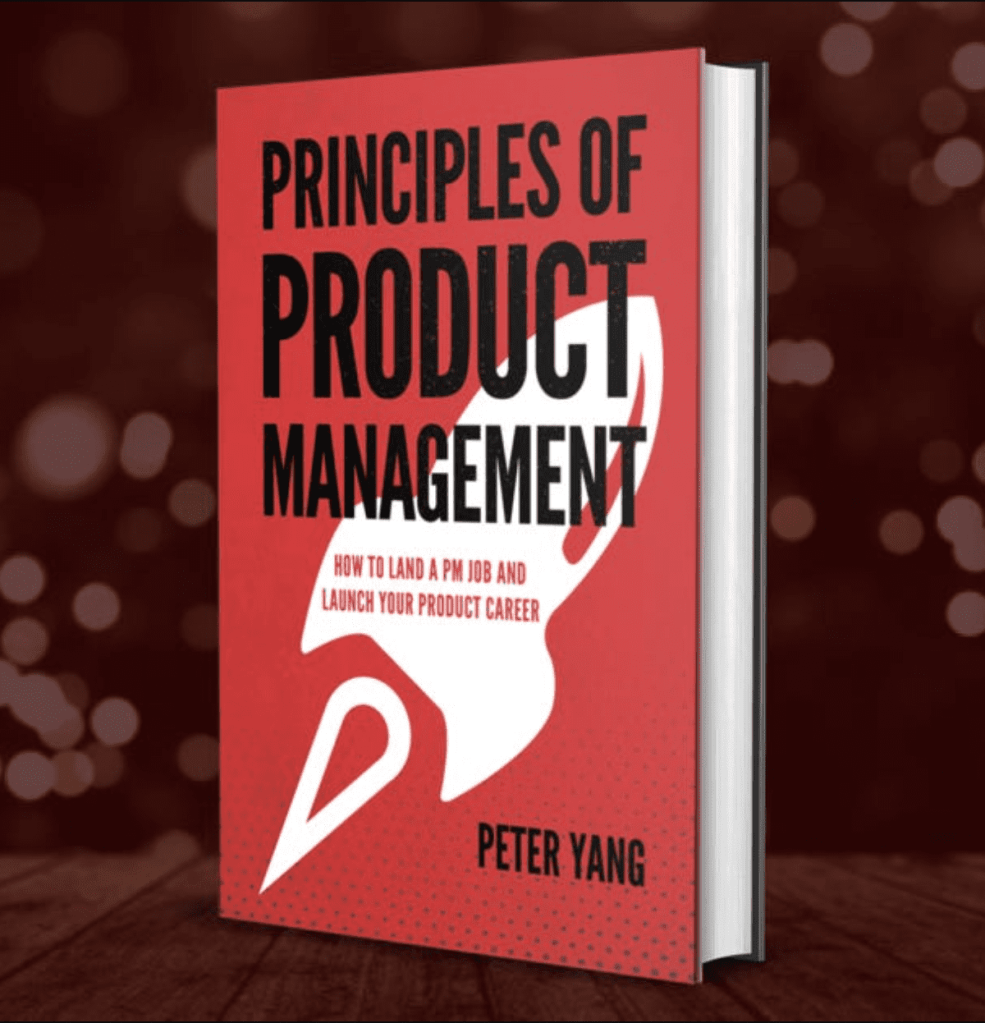
Principles of Product Management: Complete Summary of Peter Yang’s Proven Method for Landing a PM Job and Launching Your Product Career
Introduction: What This Book Is About
Peter Yang’s “Principles of Product Management: How to Land a PM Job and Launch Your Product Career” serves as an invaluable guide for both aspiring and new product managers. Drawing from his extensive experience at leading tech companies like Amazon, Twitter, and Facebook, Yang distills the essential skills, mindsets, and processes required to excel in the product management field. The book aims to demystify the PM role, offering practical best practices on how to lead without authority, effectively build products, and successfully secure a PM position.
This comprehensive guide is structured into three main parts: foundational principles, the product development lifecycle, and a detailed roadmap for getting a PM job. Yang shares personal anecdotes of his own struggles and successes, making the advice relatable and actionable. The book also features insightful interviews with prominent product leaders, providing diverse perspectives on navigating challenges and accelerating career growth in product management.
Readers will benefit from a structured approach to understanding customer problems, defining impactful product solutions, and executing efficiently with a team. Yang emphasizes that product management is not merely about technical or analytical prowess, but primarily about leadership and the ability to influence without direct authority. This summary promises to provide a complete overview of all key insights, frameworks, and actionable advice presented throughout the book, making its wisdom easily discoverable and applicable.
Part I: Principles
This section explores the six core leadership principles that define great product managers, emphasizing that leadership is the most critical skill for success in this role. Yang illustrates these principles through personal stories of adversity and learning, highlighting how challenges can transform into opportunities for growth.
Chapter 1: Take Ownership – Leading with Humility and Responsibility
The first principle, Take Ownership, is fundamental for product managers. Yang recounts an experience at Credit Karma where a product launch resulted in a 10% revenue drop. Instead of blaming others, he immediately declared, “This is my fault, and I will fix this.” This act of ownership fostered trust within his team and with his manager, ultimately leading to a successful resolution and a 10% revenue lift after re-evaluation.
Why Taking Ownership Matters
Taking ownership starts with being humble. When problems arise, the most effective approach is to be the first to admit your contribution to the issue and outline steps to address it. This encourages teammates to also take responsibility. When successes occur, giving credit to your team publically and showing genuine appreciation in one-on-one meetings builds strong relationships and strengthens trust.
Controlling Negative Emotions for Better Decisions
A crucial aspect of ownership is controlling negative emotions. In heated debates or when receiving critical feedback, emotions can cloud judgment. Yang advises recognizing warning signs of emotional responses (e.g., face getting flustered), taking a breath to listen to the other person’s viewpoint, and then responding calmly and clearly. Practicing this self-control makes the PM role significantly less stressful and more effective.
Building Strong Professional Relationships
Taking ownership of your relationships is as vital as managing tasks. The most challenging product tasks require collaboration and alignment with others. This involves checking your ego, demonstrating empathy by putting yourself in others’ shoes, keeping stakeholders updated, and actively listening to their perspectives. A mindset of helping others without expecting immediate returns fosters genuine relationships, making people eager to work with you.
Chapter 2: Prioritize and Execute – Achieving Breakthroughs Through Focus
The second principle, Prioritize and Execute, is essential for navigating the often-overwhelming landscape of product management. Yang shares a challenging period when his engineering manager left and his team faced an aggressive deadline for a dashboard migration. By systematically prioritizing and taking decisive action, he kept his team intact and delivered a successful product.
The Power of Focused Effort
Focusing on a single goal is more impactful than pursuing multiple goals simultaneously. Yang suggests identifying no more than three tasks to accomplish daily. Updating your calendar to reflect these priorities and saying no to non-essential work are crucial steps. When urgent requests arise, it’s important to assess if they are both urgent and important, as many urgent requests are merely interruptions that detract from core objectives.
Communicating Priorities Clearly
Just as important as knowing your own priorities is communicating them effectively to others. This ensures shared goals and expectations across the team. Yang recommends using weekly 1:1 meetings with your manager to align on the top three tasks for the week. Similarly, weekly team meetings and daily stand-ups should be used to align the entire team on the most important tasks to pursue.
The “Do Whatever It Takes” Mindset
Once priorities are aligned with the team and management, a product manager must adopt a “do whatever it takes” mindset to accomplish them. This means no task is too menial or trivial, whether it involves entering data, testing for bugs, or aligning with another team on a dependency. The ultimate goal is to remove obstacles and ensure the successful delivery of the product.
Chapter 3: Start with Why – Aligning Teams and Stakeholders
The third principle, Start with Why, emphasizes the importance of establishing a common understanding of purpose before diving into solutions. Yang recalls a meeting with his CEO about a new analytics product. He focused on designs and insights, failing to explain the underlying customer problem first. This led to a misunderstanding, as the CEO, based on his own past experience with Google Analytics, expected different features.
Why Alignment on “Why” Prevents Disagreements
The majority of disagreements in product development stem from a lack of alignment on the “why.” Yang explains that clearly defining the purpose helps prevent teams from building products without understanding their objective, sharing data with executives who don’t know its significance, or arguing over designs without considering customer needs. Aligning on the “why” early is one of the most valuable time investments a PM can make.
Obsessing Over the Customer Problem
As a product manager, your most important “why” is the customer problem your product aims to solve. It’s crucial to include your team and other stakeholders in understanding this problem and selecting the appropriate goal metric. This collaborative approach ensures everyone feels ownership and remains motivated, even if product specifics evolve. This commitment to the customer problem is the bedrock of successful product development.
Constant and Simple Communication of the “Why”
Once the “why” is aligned, it must be communicated constantly and consistently. Yang stresses that reminding people about the customer problem and goal, even if it feels redundant, achieves two key objectives. First, it helps everyone internalize the “why,” enabling them to make autonomous decisions aligned with the overarching goal. Second, it serves as an early warning system: if people frequently object, it indicates a lack of fundamental alignment that needs to be addressed. Effective communication means keeping it simple, short, and specific, and checking for understanding by asking people to explain the message back to you.
Chapter 4: Find the Truth – Prioritizing Learning Over Being Right
The fourth principle, Find the Truth, emphasizes that a product manager’s primary objective in disagreements is to discover the optimal solution, not merely to prove their initial stance. Yang recounts a conflict with Twitch’s safety team over cutting a safety feature for a new product called “raids.” He initially prioritized meeting a launch date, but after truly listening, he realized the safety team was right about the critical impact of even rare abusive experiences.
Seeking Knowledgeable People for Better Decisions
The fastest way to find the truth is to seek knowledgeable people who are willing to disagree. These individuals can be customers, teammates, or subject matter experts. After forming an initial opinion, engaging in debates helps identify significant unknowns (e.g., “How do we know users want this?”). Rapidly following up on these unknowns leads to quicker answers and the refinement of ideas. Admitting when you are wrong early accelerates progress towards the truth.
Balancing Decision Quality with Decision Speed
When making decisions, it’s crucial to balance decision quality with decision speed. Yang introduces the concept of one-way and two-way doors. Two-way doors are easily reversible decisions, where prioritizing speed even with incomplete information is acceptable. One-way doors are rare, hard-to-reverse decisions that warrant gathering more information before proceeding. Aim to decide on one-way doors when you have about 70% of the necessary information.
The “Disagree and Commit” Approach
Every decision involves two phases: gather and debate, then commit and execute. During the debate phase, if you genuinely believe a decision is wrong and have evidence, you must disagree openly, even if it’s uncomfortable. However, once a decision is made, it is imperative to commit yourself and your team to execute it. Explaining the rationale to your team is crucial; simply saying “Because my boss said so” is unacceptable.
Chapter 5: Be Radically Transparent – Building Trust Through Candor
The fifth principle, Be Radically Transparent, is vital for building strong working relationships and fostering a culture of trust. Yang discusses his experience mentoring a data scientist who wanted to transition to product management. While she excelled at presentations, her perfectionism led to delays in delivering Product Requirements Documents (PRDs). Yang provided candid feedback, emphasizing the importance of sharing work early to encourage collaboration, which ultimately helped her succeed.
“Care Personally” to Build Relationships
Radical transparency is built on two axes, as described by Kim Scott in “Radical Candor”: Care Personally and Challenge Directly. To care personally, product managers should:
- Schedule regular 1:1 conversations (at least monthly) with teammates to understand their goals and offer support.
- Share personal stories and show vulnerability when offering advice, particularly about past failures.
- Praise teammates publicly and privately for good work, highlighting specific examples and ensuring their contributions are recognized.
Building caring relationships is the foundation that makes constructive feedback receptive.
“Challenge Directly” for Effective Feedback
Challenging directly means delivering constructive feedback effectively. Yang advises:
- Deliver feedback as soon as possible after an event, while it’s still fresh in mind.
- Provide specific examples in your feedback to illustrate the point. For instance, instead of “run better meetings,” suggest: “You discussed next steps, but people were confused about ownership. Next time, write steps on the whiteboard and assign owners.”
- Focus feedback on the work, not the person. The goal is improvement, not personal attack. As Kim Scott suggests, be humble, helpful, offer guidance in person and immediately, praise in public, criticize in private, and avoid personalization.
Empowering Your Team for Autonomous Success
A key measure of a PM’s success is how successful their team is without them. To empower team members to lead:
- Ensure they understand why the product they’re building matters to customers. This provides purpose and clarity.
- Set up the right processes that enable efficient execution.
When a team understands the “why” and can prioritize and execute autonomously, the PM gains more time for long-term strategic thinking, leading to a win-win situation for everyone.
Chapter 6: Be Honest with Yourself – The Foundation of Personal Growth
The sixth principle, Be Honest with Yourself, underscores the importance of self-leadership and a growth mindset for product managers. Yang recalls receiving blunt feedback early in his career: his “bias for action” was often perceived as “impatience,” leading to “curt behavior” and “dismissiveness of other people’s ideas.” This feedback, though painful, was a wake-up call that prompted significant personal improvement.
Setting Clear, Flexible Goals
Setting clear long-term goals helps product managers focus on what truly matters for personal and professional development. These goals should have clear success criteria and time constraints, similar to product goals (e.g., “transition to PM in a year,” “get positive collaboration feedback”). While the goals themselves should be stable, the approach to achieving them should remain flexible to adapt to new opportunities or challenges. Yang’s own experience of broadening his job search to external opportunities, rather than solely focusing on internal transfers, highlights the value of this flexibility.
Reflecting Often on Successes and Setbacks
Regular reflection is crucial for identifying strengths and weaknesses. After successes (e.g., launching a new product, moving a metric), reflect on the strengths that contributed to the achievement. These are often activities you excel at and enjoy, like strong execution or conflict resolution. Identifying these helps you seek opportunities to leverage them more frequently. Conversely, after setbacks (e.g., team conflict, negative review), reflect on the weaknesses that led to the issue. Yang notes that often, one significant weakness, like impatience in his case, can be a recurring thread through multiple past mistakes. Staying vigilant and consistently working on these weaknesses is essential for continuous improvement.
Seeking Constructive Feedback from Others
After self-reflection, it’s vital to validate your insights by seeking feedback from trusted individuals. Although it may feel awkward, early feedback provides an opportunity for timely improvement. Yang suggests asking direct questions after meetings (“How do you think that meeting went? What could I have done better?”) or after working with a teammate (“How can I be a better partner for you?”). Actively seeking and acting on constructive feedback is a cornerstone of becoming a great product manager.
Part II: Product Development
This section details the “understand, identify, and execute” product development loop, which is the core methodology for product managers to solve customer problems and drive company growth. It moves from understanding the customer to defining the product and finally to efficient execution.
Chapter 9: Product Development Loop – The Understand, Identify, and Execute Cycle
The “understand, identify, and execute” loop is a structured approach to product development that applies to every company. This process is cyclical, ensuring continuous learning and improvement with each iteration. Yang compares it to a fishing trip: first, understand if there are fish (problem); then, identify the right gear (solution); finally, execute by fishing (shipping).
Understanding the Customer Problem
The first phase, Understand, focuses on defining the customer problem. This involves answering three critical questions:
- What is the customer problem?
- How do we know this problem exists?
- Why is it critical that we solve this problem?
This is the most crucial stage because many products fail by not addressing a real customer need. Yang recommends starting with a team brainstorm to gather initial intuitions, then validating these ideas through customer conversations, user research, and metric analysis. The goal is to get the team invested in the “why” before moving to the solution.
Identifying the Right Product Solution
The second phase, Identify, is about defining the product that will solve the prioritized customer problem. This phase begins by establishing an overall mission, vision, and strategy for the team, providing a shared purpose and a clear picture of success. The strategy is then broken down into an actionable roadmap with clear Objectives and Key Results (OKRs). Finally, each product on the roadmap is defined through detailed product requirements and potentially press releases.
Efficiently Executing the Product
The third phase, Execute, aims to ship the defined product as efficiently as possible. This phase heavily relies on strong project management, communication, and decision-making skills. Great execution ensures that the product moves from concept to market effectively, delivering value to customers.
The Iterative Nature of the Loop
The “understand, identify, and execute” cycle is a continuous loop. After shipping a product, the process returns to the Understand phase to assess if the product successfully addressed the customer problem and moved the target metric. Each pass through the loop provides an opportunity for the team to improve its ability to understand problems, identify solutions, and execute effectively, driving continuous product and team growth.
Chapter 10: Understanding the Customer Problem – Starting with Empathy
Understanding the customer problem is paramount in product development, reflecting Amazon’s “start with the customer and work backward” philosophy. Jeff Bezos emphasizes that customers are “beautifully, wonderfully dissatisfied,” constantly seeking something better, which drives continuous invention. This chapter delves into the three key questions for deep customer understanding.
What Is the Core Customer Problem?
Understanding the customer problem is fundamentally an exercise in empathy. Product managers must begin by researching their target customers and immersing themselves in their experiences. The goal is to identify what the customer is trying to accomplish, their thoughts and feelings, and the underlying pain point. Yang recommends conducting a team brainstorm to gather intuitions and ensure an emotional connection to the customer’s struggles, fostering a shared desire to help. This process should lead to a clear problem statement that frames the issue from the customer’s perspective, avoiding pitfalls like defining “declining metrics” as a customer problem.
Validating the Existence of the Problem
The initial problem statement is merely a hypothesis that requires rigorous validation. Yang outlines several methods to determine if the customer problem truly exists:
- Talking to at least five customers directly about the problem.
- Diving into existing metrics and user research related to the problem.
- Discussing the problem with internal experts such as user research teams or support staff.
- Running a simple A/B test to validate the problem’s presence.
- Researching competitors to see how they address similar issues.
This validation step is critical, as it often reveals that an assumed problem doesn’t exist or that customers have a more significant, overlooked pain point. The objective is to identify the customer’s most important problem, which is often shared by many, even if it’s not immediately obvious.
Why Is Solving This Problem Critical?
Once the customer problem is understood and validated, the focus shifts to its strategic importance for the company. This final question in the “understand” phase connects the customer’s need to the broader business objectives. It involves assessing how solving this specific problem will help the company achieve its mission and grow its key metrics. This alignment ensures that product efforts are not only customer-centric but also contribute directly to the company’s success, setting the stage for selecting an appropriate goal metric.
Chapter 11: Selecting a Goal Metric – Guiding Product Success
Selecting a goal metric is a critical decision that directly influences team motivation and product outcomes. A well-chosen metric inspires progress and aligns efforts, while a poorly chosen one can lead to detrimental trade-offs and unintended consequences. Yang outlines three crucial questions to consider when identifying the right goal metric.
Is Growing the Metric Good for Customers and the Company?
It’s essential to distinguish between being metrics-obsessed and being customer-obsessed. A common pitfall is when a team’s goals are not aligned with the overall company or customer best interests. For example, a feed team prioritizing “interactions” might boost engagement but reduce “minutes watched” for a video site, hurting the overall company goal. Similarly, a social network team increasing “profile completeness” might gain data for advertisers but alienate users by constantly demanding personal information. The metric must genuinely benefit both the customer and the company.
Is the Metric Easy to Understand and Measure?
A good goal metric should be simple and clear. Yang asks: “Can you explain this metric to your CEO in less than 30 seconds? If the metric starts declining, can you break it down to figure out why?” Overly complicated metrics can obscure insights and make troubleshooting difficult. For instance, aiming to double part-time to full-time driver conversion (e.g., from 10% to 20%) for a ride-sharing app might be less effective than a simpler goal like growing the total number of full-time drivers, which is more directly understandable and actionable.
Can My Team Directly Grow This Metric?
The metric selected must be directly controllable by your team. If an experiment doesn’t quickly show statistically significant results, or if the metric relies heavily on other teams, it can be demotivating. Yang suggests classifying metrics as outputs (the ultimate success measure) and inputs (the levers your team directly controls). For example, a Netflix email team might have “retention rate” as an output, but focus on “email sends, opens, and clicks on a ‘renew subscription’ button” as inputs. If clear inputs for your output are lacking or overly dependent on other teams, it’s a sign the metric may not be suitable for your team’s direct influence.
The Collaborative Process of Metric Selection
Finding a great goal metric is a collaborative process. It requires getting your team, management, and adjacent teams to internalize the “why” behind the chosen metric. This involves ensuring a clear problem statement is in place before selecting the metric, then walking through the three evaluation questions with your team. This collaborative approach ensures alignment and buy-in, paving the way for the “identify” phase of product development.
Chapter 12: Mission, Vision, and Strategy – Defining Team Purpose and Direction
To define a great product, a team must first establish a clear mission, vision, and strategy. The mission explains why the team exists, serving as an audacious, inspiring goal. The vision describes what the world will look like upon significant progress toward the mission. The strategy outlines how the team will achieve its mission and vision. Before defining these, it’s crucial to understand the 3Cs: Customer, Company, and Competition.
Understanding the 3Cs: Customer, Company, and Competition
Before embarking on defining mission, vision, and strategy, a product manager must deeply immerse themselves in the “understand” phase of product development. This involves gaining a clear sense of customer needs, the overarching company goals, and the landscape of competition (in that order of priority). Yang suggests spending one to two months developing this foundational understanding, as these overarching statements should be relatively stable and rarely change once established. Gathering feedback from all stakeholders during this initial phase is crucial.
What Defines a Great Mission, Vision, and Strategy?
The effectiveness of a mission, vision, and strategy can be assessed by asking three team members to articulate them back to you; if they provide consistent answers, you’re on the right track. These statements should not only be clear and memorable but also excite team members by reminding them of their daily purpose and empowering them to make better decisions. Amazon’s mission (“To be Earth’s most customer centric company”), vision (“To build a place where people can come to find anything they might want to buy online”), and strategy (“To offer the lowest prices, the widest selection, and the best customer experience”) serve as a prime example, guiding diverse teams across numerous businesses.
Crafting an Inspiring Mission and Vision
A great mission and vision statement has three core traits:
- It solves a real customer problem.
- It inspires your team.
- It helps people make decisions.
The Kindle team’s mission and vision, “To make available in less than 60 seconds every book ever written, in any language, in print or out of print,” exemplifies these traits. This statement directly addresses a customer need, is highly inspirational, and guides decisions such as allowing direct author publishing, even if it challenges existing publisher partnerships, because it aligns with the goal of making “every book ever written” available.
Developing a Powerful Strategy
Richard Rumelt, in “Good Strategy/Bad Strategy,” emphasizes that strategy is about focus, preventing complex organizations from scattering resources across too many goals. A great strategy, according to Rumelt, has three components:
- A diagnosis of the major challenges preventing mission achievement.
- An overarching plan to overcome these challenges.
- A set of coherent actions to accomplish the plan.
Elon Musk’s first master plan for Tesla is a stellar example: a diagnosis of limited funds for expensive, low-volume cars led to a strategy of starting at the high end before moving to higher volume and lower prices, executed by building the Roadster, then the Model S/X, and finally the Model 3. Conversely, Evernote’s failure to address core app bugs and competition, instead launching unrelated apps, illustrates the pitfalls of a poor strategy. A well-defined mission, vision, and strategy provides shared purpose, a clear picture of success, and a concrete plan for execution.
Chapter 13: Building a Product Roadmap – From Strategy to Actionable Goals
Once a team has aligned on its mission, vision, and strategy, the next crucial step is to translate that strategy into an actionable product roadmap. This roadmap should clearly outline the team’s objectives and key results (OKRs) for a defined period, typically three to twelve months, and describe the features planned to achieve those results.
Understanding Objectives and Key Results (OKRs)
The Objectives and Key Results (OKRs) framework, popularized by Andy Grove at Intel, serves three core purposes in roadmap planning. An objective is a qualitative goal, while key results are quantitative measures of progress toward that objective.
- Actionable Goals: OKRs help a team execute its strategy by breaking it down into achievable goals and milestones.
- Team Alignment: They facilitate effective teamwork by ensuring everyone is aligned on shared OKRs from the outset.
- Performance Measurement: Management uses OKRs to assess a team’s performance.
Yang stresses that OKRs are a guide, not a rigid contract. Teams should have the flexibility to adjust OKRs if there’s a strong, justified reason, emphasizing common sense over strict adherence, as illustrated by Christopher Columbus’s deviation from his original Asian trade route objective to discover the Americas, ultimately bringing wealth to Spain.
Structuring Your Roadmap with OKRs
A product roadmap should begin with an overview of the team’s mission, vision, and strategy, followed by a list of OKRs and the features planned for the upcoming quarter.
- Overview: A concise opening paragraph summarizing the team’s mission, vision, strategy, and quarterly goal metric (e.g., Instagram growth team aiming to grow global community from 1B to 1.05B members).
- Objectives: Qualitative goals that align with the strategy, ideally no more than three per quarter (e.g., Acquisition, Activation, Connection for Instagram).
- Key Results (KRs): Quantitative measures for each objective, briefly describing why the KR matters, its owners, and dependencies (e.g., “Improve mobile web sign up rate by 5%,” with Pat as product manager and Infra team as a dependency).
- Features: High-level descriptions of the features planned to achieve each KR, including a rough ship date (e.g., “Reduce the number of mobile web sign up steps from 5 to 2 (January)”).
Roadmap Prioritization: Objectives and Features
Prioritization is more art than science, but Yang offers two frameworks:
- Prioritize Objectives: Use a Venn diagram with three lenses:
- Customer Lens: Address burning customer problems.
- Business Lens: Grow team and company goal metrics.
- Vision Lens: Move closer to the long-term vision.
Prioritize objectives at the intersection of all three, or balance across them (e.g., balancing monetization with customer-requested features).
- Prioritize Features Under Each OKR: Map features on a chart based on value (customer, company, vision benefit) and effort (engineering cost: low, medium, high). This reveals three types:
- Quick wins: Medium-high value, low effort; easy to build but shouldn’t be the only focus.
- Big bets: High value, high effort; confident to deliver significant value, but limit to one or two per quarter.
- Experiments: Unknown value, low effort; worth shipping a few to test before further investment.
The recommendation is to balance one or two big bets with a mix of quick wins and experiments in any given quarter.
Practical Tips for Building Product Roadmaps
Yang provides additional tips for effective roadmap building:
- Start the process early: Begin brainstorming OKRs at least a month before the new quarter to identify dependencies and share with management.
- Aim to achieve at least 70% of OKRs: This encourages ambitious goals without risking demotivation from constant failure. Consistently hitting 100% means goals are not ambitious enough.
- Set OKRs based on team type: Platform teams might focus on shipping individual updates, while growth teams should set metric-focused KRs (e.g., grow sign-up rates by 5%), allowing flexibility in features based on learnings.
Effective OKRs provide clarity for the team on what products to build, requiring detailed product requirements for accurate time estimations, which is the next focus.
Chapter 14: Defining Product Requirements – The PRD and Press Release
The Product Requirements Document (PRD) is crucial for capturing the problem, goal, and solution of a single product. In addition to the PRD, Yang recommends writing a Press Release / FAQ for major new product initiatives, especially inspired by Amazon’s “working backward” approach.
The Product Requirements Document (PRD) Structure
Yang’s preferred PRD template includes six main sections:
- Header: Lists key stakeholders (product, design, engineering, marketing, analytics) and links to related documents (e.g., design mock-ups, engineering epics). Example: “Experiment: Topic selector during new user onboarding | Pinterest | January 2020 | Joe Smith.”
- Problem: Summarizes the customer problem in one or two paragraphs, addressing: What is the customer problem? How do we know it exists? Why is it critical to solve? (e.g., “People want to view and pin content for topics they’re interested in… allowing people to select topics during onboarding… will increase activation rates.”)
- Hypothesis: A single sentence summarizing the goal and expected outcome: “We can grow (goal metric) by (amount) if we (build this feature).” (e.g., “We can grow activation rate by adding a ‘Pick topics to personalize your feed’ screen to the new user onboarding flow.”)
- Metrics: Lists all output metrics (to measure success, e.g., Activation rate) and input metrics (levers to grow output, e.g., # of users who visit/select/pin topics).
- Requirements: Defines the product using user stories in the format: “As a (user type), when I (perform an action), then (this happens).” This makes requirements clear from a customer perspective and easily translatable into engineering tickets. Example: “As a user, when I am signing up to Pinterest, then I see a ‘Pick 5 or more topics to personalize your feed’ screen.”
- Design: Includes visuals, from hand-drawn wireframes to high-fidelity mock-ups, providing an immediate understanding of the user experience. Designers should be involved early as they often contribute great product ideas.
- Launch Plan: For experiments, this details eligibility, test/control groups, and ramp plan (e.g., “50% test and 50% control”). For larger features, this expands to include press and marketing activities.
The Internal Press Release / FAQ
Inspired by Amazon’s practice, the Press Release is an internal document for major new product initiatives, written from the customer’s perspective. It embodies the “working backward” philosophy.
- Header: Describes the launch and why customers should care, including a target launch date. Example: “Introducing Amazon Go, a grocery store with no lines or checkouts | January, 2018.”
- Describe the Problem: Focuses on the customer problem and the most critical benefit (e.g., “Many working professionals don’t have the time or mental energy to shop for groceries… With Amazon Go, they can walk into a store, grab what they want… and just walk out.”).
- Customer Quote: A powerful way to describe benefits in the customer’s language, either made up or from beta testing, reflecting desired customer delight. Example: “Not having to wait in line at checkout is a game-changer!”
- Describe the Solution: Explains the product experience simply, guiding customers on how to find and use it. (e.g., “scan the Amazon Go app… take whatever you like… just walk out.”).
- Call to Action: Informs customers how to start using the product now. (e.g., “Visit amazon.com/go to find a store near you.”).
- FAQs: A list of frequently asked questions to align the team and unpack assumptions (e.g., “What is Amazon Go?”).
Tips for Effective PRDs and Press Release / FAQs
- Keep it short: Aim for 2-4 pages for both documents.
- Don’t bury the lede: Start with the customer problem and main benefit.
- Review, review, review: Iteratively refine documents until they flow well; a poorly flowing document might signal a product not worth building.
- Contextual use: Press releases are typically for major initiatives; for smaller features, a few paragraphs at the start of the PRD suffice.
Chapter 15: Great Project Management – Navigating the Execution Phase
After defining a great product and generating team excitement, the next step is execution. This involves guiding the team through distinct stages, ensuring efficient delivery from kick-off to post-launch reflection.
1. Kick-Off: Building Shared Understanding
The kick-off stage aims to establish a clear, shared understanding of the Product Requirements Document (PRD) and project milestones.
- Review the PRD: Conduct a kickoff meeting to walk the team through the customer problem, goal, and requirements, allowing ample time for questions.
- Set clear milestones: Collaborate with the engineering manager to break down requirements into tickets, estimate completion times, and group them into milestones with defined dates and exit criteria (e.g., backend service completion, user interface development). Key milestones like dogfood (internal testing) and launch are essential for every project.
- Create a single communication channel: Establish a dedicated project channel, pinning the PRD, milestones, designs, and tickets to ensure all stakeholders are on the same page.
2. Kick-Off → Dogfood: Staying Focused on Shipping
In this stage, the primary goal is to maintain team focus on shipping the product.
- Communicate constantly: Hold weekly team meetings to review progress and identify blockers. Post meeting notes in the project channel for transparency.
- Manage dependencies: Proactively communicate with dependent teams, especially when shared OKRs exist, to address potential delays or miscommunications.
- Address risks and blockers: Be prepared for unexpected issues, such as an engineer needing to cut scope or new user research suggesting product changes. Effectively navigating these requires making good decisions, which is a subsequent chapter topic.
3. Dogfood → Launch: Squashing Bugs and Preparing for Go-Live
The dogfood → launch stage focuses on rigorous testing and final preparations for product release.
- Test rigorously: Pay close attention to detail and personally test the product to set an example. At the dogfood stage, send an organization-wide email requesting internal testing and set up a feedback channel for bug reporting. Organize bug bashes (dedicated sessions for identifying bugs) to ensure a constant stream of feedback, which is crucial for high-quality products.
- Build a launch checklist: Create a simple checklist outlining tasks, owners, dates, and status to ensure everyone is prepared for launch. This helps keep the team on track and accountable.
4. Launch → Retro: Celebrating and Learning
The final stage involves celebrating the product launch while closely monitoring customer feedback and metrics.
- Celebrate the launch: On launch day, email the organization to announce the product and publicly thank all contributors.
- Monitor post-launch activity: As product owner, diligently track early customer feedback and key metrics. Quickly addressing issues discovered post-launch can significantly accelerate growth. Remember, success is measured by solving the customer problem and moving the goal metric, not just by shipping.
- Hold a team retro: Conduct a retrospective meeting with the team to discuss what went well, what went wrong, and key learnings from the project. Identifying and internalizing these lessons helps the team improve its navigation of the “understand, identify, and execute” loop for future projects.
Chapter 16: Effective Communication – Mastering Writing and Meetings
Effective communication is a cornerstone skill for product managers, necessitating constant effort. Yang emphasizes that it’s nearly impossible to over-communicate. This chapter delves into the two primary channels of communication: writing and meetings.
Mastering Written Communication
Writing full sentences forces clear thinking and structured argumentation, while also allowing any reader to understand the message independently. The key to good writing is to keep it simple, short, and specific.
- Simple: Get to the Point: Start with the main point, followed by no more than three supporting arguments. This ensures busy readers grasp the core message immediately and avoid becoming annoyed by excessive detail, likening it to peeling an onion.
- Short: Aim for Two Pages: Concise writing is vigorous. As Strunk & White wrote, “A sentence should contain no unnecessary words…” Yang notes that most arguments can be made in one to two pages, with additional details relegated to an appendix or FAQ, emphasizing that “every word tell.” Amazon’s internal rule of six-page documents reinforces this principle.
- Specific: Remove Uncertainty: Avoid vague language. Instead of “Our product’s user base grew a lot,” write “From 4/1 to 4/30, our product grew from 100 to 120 daily active users (+20%).” Precision in communication removes ambiguity and ensures clarity.
Tips for Writing Well
- Write for your audience: Tailor content to what readers care about and already know (e.g., executives need high-level strategy, engineers need implementation details).
- Review and edit constantly: Proofread for grammar and streamline paragraphs for simplicity. Reading aloud or printing out the document can offer fresh perspective.
- Ask knowledgeable people to review: Get feedback from experts and also from someone unfamiliar with the project to check for clarity.
- Answer common questions: Revise the document to address frequently asked questions within the narrative or FAQ.
- Make writing scannable: Use clear headings and formatting.
- Use active voice: It’s more direct and confident (e.g., “We will grow users” vs. “A series of improvements will help us grow users”).
- Avoid complicated words, jargon, and acronyms: Explain acronyms upon first use.
- Remove words that introduce uncertainty: Replace “should,” “might,” “could,” “probably,” “maybe” with data or factual statements.
- Only include charts if you can defend all numbers: Often, a sentence or table suffices.
Running Effective Meetings
Meetings, when run efficiently, are powerful tools for decision-making and alignment. Yang outlines four types:
- 1:1s: Ideal for radical transparency. Use them to care personally, understand concerns, offer and seek candid feedback, and align on project goals. Regular 1:1s should be scheduled with managers, skip-level managers, peers, and reports.
- Team Meetings: Weekly syncs for project teams. They should have a fixed agenda (metrics review, status updates, deep dives) and time for open discussion. The PM’s role is to keep the agenda on track and encourage participation.
- Ad Hoc Meetings: For urgent decisions not addressed in team meetings. Crucial to run efficiently; clearly define the decision needed and who must be involved before calling the meeting.
- Product Review: Meetings with executives to present roadmaps. The goal is not status updates, but to get executive input on key decisions, leveraging their strategic insights. Share the problem and decision upfront, supported by evidence.
Tips for Running Productive Meetings
- Focus on the “why” first: Clarify the meeting’s goal and the problem being solved.
- Adopt a “how can I help you” mindset: Actively offer assistance to attendees.
- Have an agenda: Make it visible and keep discussion focused by highlighting current topics and crossing out completed ones.
- Keep meetings focused: Interrupt off-topic discussions politely, reminding participants of the meeting’s purpose.
- Send notes immediately: Document decisions and next steps promptly after the meeting, as “a meeting where people made decisions that were not documented never happened.” This is a quick way for new PMs to show value.
Chapter 17: Making Good Decisions – Balancing Quality and Speed
As a product manager, daily decisions are inevitable, often made with incomplete information. Making good decisions despite uncertainty is a critical skill. Yang frames decision-making as an optimization challenge between two axes: decision quality (was it the right decision?) and decision speed (did you decide fast enough?).
Differentiating One-Way and Two-Way Doors
To balance decision quality and speed, it’s crucial to distinguish between one-way and two-way doors:
- Two-way doors are easily reversible decisions. For these, prioritize decision speed even if information is not perfect.
- One-way doors are rarer and difficult to reverse. For these, gather more information if uncertain, and seek knowledgeable people who disagree to get closer to the truth. However, avoid endless delays; aim to decide when you have about 70% of the information.
Prioritizing Truth Over Compromise
When making decisions in a group, the natural inclination is to compromise to maintain relationships, especially with managers or executives. However, if you genuinely believe a decision is wrong and have supporting evidence, you must have the courage to be the differing voice. Your primary goal is to find the truth, even when it’s uncomfortable. This commitment to truth-seeking ultimately leads to better product outcomes.
Escalation as an Efficiency Tool
When two teams have misaligned goals, making a joint decision can become extremely challenging and time-consuming. In such situations, escalation up the management chain is a legitimate and often more efficient strategy than endless back-and-forth arguments. There is no shame in escalating to a common leader who can resolve the conflict and enable progress.
The “Disagree and Commit” Principle
After a decision has been made, regardless of your initial stance, you must commit yourself and your team to execute it. Even if you disagreed with the outcome, it’s your responsibility to understand the rationale and explain it to your team. Simply saying, “Because my boss said so,” is unacceptable. Decision-making is a two-step process: finding the truth through debate, then executing with full commitment.
Tips for Making Good Decisions
- Express opinions and encourage disagreement: State your view clearly, then actively invite others to challenge it.
- Data does not always equal truth: Be critical of data; ideally, it should be supported by qualitative anecdotes.
- Ask questions to stay on track: For derailed discussions, ask “How does this help the customer?” or “What problem are we trying to solve?”
- Argue from the opposing perspective: If a passionate disagreement arises, ask parties (including yourself) to articulate the other side’s viewpoint.
- Encourage participation: Prompt quiet team members for their opinions, especially if they previously disagreed.
- Limit decision-makers: Ideally, have one clear decision-maker and no more than eight stakeholders. Smaller groups tend to avoid groupthink and make better decisions.
Part III: Getting the Job
This section provides practical guidance on how to secure a Product Manager job, particularly for those with limited prior PM experience. It covers preparing for the transition, finding the right company, and acing the three common types of PM interviews.
Chapter 20: Preparing for the Transition – Laying the Foundation for a PM Role
Transitioning into a product manager role requires deliberate preparation, often starting several months before applying for jobs. Yang outlines five crucial steps to lay this foundation effectively.
Being Honest with Yourself About Motivations and Skills
Interviewers seek PM candidates who can articulate their genuine motivations and possess self-awareness. It’s critical to reflect on why you want to be a PM. Is it a passion for solving customer problems, growing metrics, or aligning teams? If your motivation is primarily about being “in charge” (PMs lead by influence) or working in isolation (PMs need to influence others through meetings), the role may not be a good fit. Once clear on your “why,” document your relevant strengths and weaknesses. Yang suggests revisiting successes to identify strengths (e.g., execution, conflict resolution, domain expertise) and setbacks to uncover weaknesses (often strengths taken too far, like his “bias for action” becoming “impatience”). Validate these self-assessments by talking to trusted individuals, as external perception may differ.
Practicing Core PM Principles for Interview Stories
Interviewers value candidates who demonstrate concrete examples of applying key PM principles. Begin practicing the six principles covered in Part I:
- Take Ownership: Admit mistakes, address problems, and build strong relationships.
- Prioritize and Execute: Focus on the most important problems and deliver results.
- Start with Why: Lead with empathy and align on shared goals.
- Find the Truth: Seek diverse perspectives to make informed decisions.
- Be Radically Transparent: Build trust through caring and direct feedback.
- Be Honest with Yourself: Set clear goals, reflect on experiences, and seek feedback.
Actively practicing these principles not only provides compelling stories for interviews but also enhances daily professional life.
Gaining Shipping Experience (Even Without a PM Title)
Interviewers look for a track record of shipping successful products, which can be a challenge for non-PMs. Yang suggests three ways to gain this experience:
- Get involved in product aspects in an adjacent role: If you’re a designer, engineer, analyst, or marketer, proactively help your PM. For example, designers can visualize product visions, engineers can inform technical trade-offs, analysts can identify opportunity areas, and marketers can aid execution.
- Initiate a side project: Participate in hackathons, build a personal website, or start a blog. Crucially, apply the product development loop (understand customer problem, define solution, execute) to these projects. This allows you to frame your side project experience in PM terms during interviews.
- Enroll in a professional product course: Programs like General Assembly or Product School can provide core PM skills and project experience. While beneficial, Yang notes they are often expensive and not strictly required for a successful transition.
Conducting Thorough Company and Role Research
Interviewers expect candidates to have researched the company and the specific PM role. Most candidates neglect this, so thorough research can make you stand out.
- Use the company’s products and talk to customers: Identify current strengths and gaps.
- Follow the company and executives on social media: Engage thoughtfully (e.g., reply to tweets) to build your network.
- Find public reports and recent news: Document the company’s mission, strategy, and metrics.
Compile all research into a crisp document, including ideas for problems you’d tackle. Bringing this to an interview demonstrates preparation and initiative.
Building a Strategic Network
A strong network is critical for landing a PM role, especially if you lack direct experience, as referrals from trusted PMs can open doors.
- Use LinkedIn or Twitter to find relevant contacts: Prioritize mutual connections, but don’t hesitate to cold-email directly.
- Provide value in your outreach: Instead of asking for a job, suggest product ideas or share insights relevant to their work. Yang gives an example of a candidate suggesting Notion feature improvements before inquiring about job opportunities.
- Be persistent and audacious: Referencing Steve Jobs’s cold call to Bill Hewlett, Yang encourages aggressively reaching out to people in target companies, always aiming to provide value.
These preparatory steps are essential precursors to the interview process itself, ensuring you are well-positioned when the time comes.
Chapter 21: Making the Transition – Pathways to Your First PM Role
Once prepared, the actual transition into a product manager role typically follows one of three common pathways. Yang emphasizes the importance of persistence, sharing his own story of multiple failures before successfully landing a PM job.
Transferring Internally: Leveraging Your Superpower
The most direct route for many is to transfer internally within their current company, especially if they already work closely with product managers. The key is to leverage your existing skillset (“superpower”) to get more involved in product-related activities:
- Designers: Use your vision to inspire the team and help prioritize.
- Engineers: Apply technical knowledge to evaluate trade-offs in product definition.
- Analysts: Use metric insights to identify opportunity areas and define experiments.
- Marketers: Use project management and customer empathy to drive execution and alignment.
Crucially, find a senior or director-level PM sponsor willing to advocate for your transition. Meet with them monthly for updates. Once ready, prepare for internal interviews. Yang advises careful communication with your current manager: be honest if your relationship is strong, or wait until you’re interview-ready if they might be insecure about losing you.
Joining an Entry-Level PM Program: Highly Competitive Pathways
Large tech companies like Google, Facebook, and Amazon offer Associate Product Manager (APM) and PM internship programs. These are highly competitive, often targeting students from top universities. While applying doesn’t hurt, Yang notes that not getting into these programs is not a career-ender. Many other companies also have entry-level PM opportunities, though they might not be as widely advertised, requiring a more proactive search.
Hustling to Find a Company Willing to Take a Chance: Persistence Pays Off
If internal transfer or APM programs aren’t viable, you need to “hustle” to land a PM job. This involves a proactive approach built on:
- Knowing your strengths and weaknesses: As discussed in Chapter 20, clearly articulate what you bring to the table.
- Doing your research: Understand target companies and roles deeply.
- Building your network: Actively seek out connections through LinkedIn, cold-emails, or mutual friends.
Yang recounts a story of an MBA student who, after reaching out, secured a three-month PM internship that could convert to a full-time role. His own journey, marked by multiple rejections from Facebook’s internal PM loop, underscores the need for persistence and resilience. He shares Jim Carrey’s advice (“You can fail at what you don’t want, so you might as well take a chance at doing what you love”) and Chris Hadfield’s wisdom (“Don’t measure success by one thing at the end, measure success by each of the small things along the way”), encouraging readers to continuously improve and never give up on their PM aspirations.
Chapter 22: Finding the Right Company – Optimizing for Learning and Growth
Choosing the right company can significantly impact your product management career. Yang advises new PMs to optimize for learning by joining a market leader or a high-growth company, while being cautious about turnarounds or early-stage startups that haven’t found product-market fit.
Joining a Market Leader: A Foundation for Best Practices
For brand new product managers, Yang strongly recommends joining a market leader (e.g., Facebook, Amazon, Google, Airbnb).
- Advantages: These companies offer competitive pay and a strong brand on your resume. More importantly, they provide an invaluable opportunity to learn firsthand the best practices of successful PMs, from Amazon’s “working backward” process to Facebook’s impact-driven culture. Access to an “army of senior PMs” allows for mentorship and exposure to established methodologies.
- Disadvantages: As a new PM, your scope might be limited to optimizing a single feature. You’ll also likely spend considerable time in meetings seeking alignment across large organizations.
Yang admits his bias towards market leaders due to his own experience, but believes spending a few years here to absorb best practices is highly beneficial. If the role becomes less challenging, it signals time to move to a high-growth company.
Joining a High-Growth Company: Scaling and Broad Scope
If you have a few years of PM experience, Yang suggests a high-growth company. These companies have strong product-market fit and are rapidly expanding, often appearing on lists like Wealthfront’s “career launching companies.”
- Advantages: Responsibilities scale rapidly with the company’s growth, often leading to a broad product scope from day one due to fast hiring needs. You’ll learn to scale users and revenue, a valuable and potentially financially rewarding skill. Management and leadership opportunities may also arise much earlier than at market leaders.
- Disadvantages: High-growth environments are often chaotic, and there’s less time for structured teaching. You’ll be expected to “hit the ground running,” solving ambiguous problems with minimal support, which can be challenging for new PMs.
Yang advises joining high-growth companies when they are just starting to scale and to verify their growth numbers during the interview process.
Navigating Turnaround Companies: Exercise Caution
A turnaround company has found some product-market fit but has stalled growth, possibly due to market size or other issues. They often pitch future initiatives as catalysts for high growth.
- Risks: Turnarounds can stagnate or shrink, which is detrimental to a PM career.
- Recommendation: Exercise extreme caution. Thoroughly examine their numbers and product roadmap, ensuring you genuinely believe in their ability to achieve a turnaround before accepting an offer.
Considering Early-Stage Startups: A High-Risk, High-Reward Bet
Yang defines early-stage as a company still seeking product-market fit and not yet ready to scale. He generally does not recommend these for junior product managers, with few exceptions.
- Benefits: You’ll join a small team with a singular focus on finding and retaining customers, wearing multiple hats (engineer, designer, sales). Iterating towards product-market fit can be thrilling.
- Risks: Requires building a strong relationship with the founder(s) to influence product direction. Most early-stage companies fail before securing product-market fit, and the lack of senior PMs can make it harder to learn best practices.
Joining an early-stage company is a gamble; Yang suggests that unless the potential is huge or you have a solid founder relationship, it’s often better to be a founder yourself.
Prioritizing the PM Job Title and Manager Quality
- Optimize for the PM Job Title: If faced with a choice between a non-PM role at a dream company and a PM role at a less exciting company, take the PM role. Internal transitions are not guaranteed and can be frustrating. Gaining practical PM experience quickly is paramount for learning. The exception is a “rocket ship” high-growth company, where taking an adjacent function might be acceptable due to rapid scaling and talent demand.
- Get to Know Your Future Manager: Bad managers are a primary reason people leave companies, especially for PMs. A supportive manager is invaluable, while a demanding, self-serving one can be a nightmare. Invest time in interviewing your future manager to ensure a good working relationship, as this often matters more than the company’s reputation.
Chapter 23: Acing Your PM Interviews – Foundations for Success
Landing a product manager job hinges on successfully navigating the interview loop, which typically includes product sense, execution, and behavioral interviews. Beyond specific content, general best practices are crucial for all three types.
The Three Pillars of PM Interviews
The PM interview loop assesses a candidate’s fit across key dimensions:
- Product Sense: Evaluates the ability to transform an ambiguous customer problem into a great product. This involves demonstrating a keen understanding of user needs, market opportunities, and innovative solutions.
- Execution: Assesses the capacity to prioritize effectively and get things done. Interviewers look for evidence of methodical planning, problem-solving, and efficient delivery.
- Behavioral: Explores leadership qualities, self-awareness, and resilience. This section probes how candidates handle team dynamics, conflicts, failures, and personal growth.
Universal Best Practices for All PM Interviews
Regardless of the interview type, candidates should apply several universal strategies:
- Do Your Research: Thoroughly research the company and your interviewers beforehand. Document key facts about the company (customers, mission, strategy, competition) and your insights on its products. Look up interviewers on LinkedIn to understand their backgrounds. This preparation differentiates you from most candidates and can help you connect.
- Show Enthusiasm: Project genuine enthusiasm and a positive attitude during each interview. Smile and articulate what genuinely excites you about the company’s mission, products, or culture. This conveys passion and fit.
- Have a Conversation: Approach the interview as a collaborative discussion, not a monologue. Think through your ideas aloud, regularly check in with the interviewer for alignment, and strive to build rapport. The goal is a fun, engaging conversation where both parties learn something new, which is a strong indicator of success.
These overarching strategies provide the foundation for acing each specific interview type, beginning with the product sense interview.
Chapter 24: Product Sense Interview – Crafting Solutions from Customer Problems
The product sense interview is designed to evaluate a candidate’s ability to take an ambiguous customer problem, connect it to a company goal, and then define a compelling solution. The interviewer typically presents an open-ended problem statement and expects the candidate to drive the discussion.
What Interviewers Look For in Product Sense
Interviewers assess several key attributes during this interview:
- Structure: The ability to follow a logical flow, starting with defining the customer problem before moving to solutions, and linking the problem to a company goal.
- Vision: Presenting a clear, inspiring product vision focused on the most important customer benefit.
- Creativity: Brainstorming multiple problems and solutions, including innovative, “out-of-the-box” ideas.
- Prioritization: Demonstrating the capacity to prioritize identified problems and solutions effectively.
- Communication: Articulating thought processes clearly, using tools like a whiteboard, seeking alignment with the interviewer, and refining solutions based on feedback.
The Product Sense Framework: A Structured Approach
Yang recommends a structured approach for product sense questions, mirroring the product development loop:
- Ask clarifying questions and explain your approach: Begin by clarifying the problem statement and outlining your proposed framework.
- Problem:
a. Who are the customers?: Identify all relevant customer segments.
b. What problems do they have?: Articulate their pain points and needs. - Goal:
a. How do these problems relate to the company’s mission?: Connect customer pain to broader business objectives.
b. What metric are we trying to improve?: Define a clear, measurable goal. - Summarize the problem and the goal: A brief recap for alignment.
- Solution:
a. Map out the user journey: Visualize the customer’s interaction with the product or process.
b. Brainstorm solutions: Generate a wide range of potential features or approaches.
c. Discuss trade-offs and prioritize: Evaluate ideas based on impact, effort, and strategic alignment, selecting the most promising.
d. Wireframe the MVP: Sketch a minimal viable product to illustrate the core solution. - Summarize the problem, goal, and solution: A final recap to demonstrate a cohesive understanding.
Product Sense Example Walkthrough (Airbnb Event Spaces)
In an example where Airbnb wants to launch event spaces, the candidate uses the framework to demonstrate:
- Clarifying questions: Asks about existing event spaces and focus areas.
- Problem: Identifies two customer types (hosts, organizers) and their inefficiencies in finding/booking spaces. Acknowledges existing Airbnb hosts as a key segment through interviewer prompt.
- Goal: Connects event spaces to Airbnb’s “belong anywhere” vision, emphasizing increased host income and attracting new users. Focuses on growing supply (existing hosts listing spaces) as the immediate goal.
- Summary (Problem & Goal): Clearly articulates the core problem and goal before proceeding.
- Solution: Maps out the host user journey, prioritizing awareness and listing steps for the MVP. Brainstorms channels (email, in-product notifications) and essential listing details. Demonstrates prioritization by selecting key features and explaining rationale.
- Trade-offs/Refinement: Discusses starting with simpler event types (off-sites, parties) and addresses demand side considerations.
- Final Summary: Provides a concise, structured recap of the entire discussion.
Throughout the example, the candidate talks out loud, uses a whiteboard, and actively seeks interviewer input, showcasing strong communication and collaborative skills.
Chapter 25: Execution Interview – Driving Results and Problem-Solving
The execution interview assesses a product manager’s capability to set goals, make effective trade-offs, and identify root causes of problems. This interview type challenges candidates to demonstrate their ability to translate strategy into tangible results and troubleshoot operational issues.
What Interviewers Look For in Execution
Interviewers evaluate the following key areas:
- Goal setting: Can the candidate define a product goal metric that aligns with both customer and company objectives? Can they critically evaluate whether this goal is appropriate and actionable?
- Trade-offs: How does the candidate handle conflicts or misalignments between different teams? Can they make sound decisions when faced with competing priorities or limited resources?
- Root cause: Can the candidate effectively break down a broad, ambiguous problem into smaller, manageable components to pinpoint its underlying cause?
Execution Frameworks: Structured Problem Solving
Yang provides specific frameworks to tackle common execution questions:
- Ask clarifying questions and explain your approach.
- Problem: Understand the customer and their pain points.
- Company: Relate the problem to the company’s mission and overall metrics.
- Solution:
- Map out the user journey: Identify key steps and potential metric points.
- Brainstorm metrics: Generate a comprehensive list of quantitative measures for each step.
- Select a goal metric: Choose the most impactful and appropriate metric.
- Evaluate the goal: Critically assess the chosen metric based on:
- Alignment with customer and company goals.
- Whether it’s a short-term or long-term goal.
- Whether it can be gamed (and how to prevent it).
- Whether your team can directly drive it.
- Summarize.
- Start with “why”: Always try to align on shared goals first to find common ground.
- Gather more information: Understand the pros and cons of each trade-off, and consider if a simple experiment could inform the decision.
- Disagree and commit or escalate: If teams have fundamentally misaligned goals, be prepared to disagree with conviction (with evidence) and, if necessary, escalate the decision to a common manager rather than engaging in prolonged, unproductive arguments.
- Evaluate systematically: When a metric declines, investigate in a structured manner:
- Logging issue: Is the data accurate?
- Time period: Is the drop seasonal or sudden?
- Platform: Is the issue specific to a particular platform (e.g., Android, iOS, web)?
- Location: Is the decline concentrated in a specific region or country?
- Externalities: Are there external factors (e.g., news events, competitor changes) impacting the metric?
- Customer journey: Did something break in the user flow?
- Summarize findings.
Execution Example Walkthrough (Facebook Groups)
The chapter provides an example covering all three frameworks, using the context of a Product Manager for Facebook Groups.
- Goal Setting: The candidate systematically defines the problem (community building), relates it to Facebook’s mission (meaningful interactions), maps the user journey (create, discover, read, interact), brainstorms metrics, and evaluates “daily active group commenters” as the primary goal, while acknowledging the need to monitor quality.
- Trade-Off: When faced with a conflict between promoting group posts and video engagement in News Feed, the candidate first attempts to align on shared goals (comments), proposes an A/B test, and, if that fails due to declining video watch time, suggests exploring other channels or escalating to a common leader for resolution.
- Root Cause: When asked why daily active commenters declined 10%, the candidate follows the root cause analysis framework: checking logging, seasonality, timing of the drop (weekend), platform (Android), and location (Brazil), eventually pinpointing a regional election and specific group shutdowns as the likely cause.
This detailed example illustrates how to apply structured thinking to complex execution scenarios, demonstrating the core skills required of a product manager.
Chapter 26: Behavioral Interview – Demonstrating Leadership and Self-Awareness
The behavioral interview focuses on assessing a candidate’s leadership qualities, self-awareness, and ability to learn from past experiences, particularly conflicts and failures. This interview delves into the principles outlined in the opening chapters of the book.
What Interviewers Look For in Behavioral Interviews
Interviewers are primarily interested in:
- Ownership: Does the candidate take responsibility for mistakes and problems, or do they make excuses and blame others?
- Self-awareness: Is the candidate aware of their own strengths and weaknesses? How have they leveraged strengths and actively worked on improving weaknesses?
- Drive: Does the candidate demonstrate conviction and determination to achieve goals, even in difficult situations?
- Communication: Does the candidate show empathy, build relationships effectively, and resolve conflicts by understanding different perspectives?
Preparing Behavioral Stories
Candidates should prepare at least five distinct stories that address various types of behavioral questions, keeping the PM principles in mind.
- Achievement Questions (e.g., “Tell me about a time when you were proud of something you did.”): Share a genuine accomplishment, but focus on the adversity and challenges faced along the way, showcasing resilience and problem-solving.
- Failure Questions (e.g., “Tell me about a time when you managed a product that failed,” “failed to convince someone,” or “had to work on a weakness.”): Discuss a real team failure where you were responsible. Take ownership of your contributions to the failure and articulate the lessons learned and subsequent improvements. Yang highlights that often, strengths pushed too far can become weaknesses.
- Conflict Questions (e.g., “Tell me about a time when you had a conflict with someone,” or “your team wasn’t working well together.”): Describe how you resolved a major conflict (within your team, with executives, or between teams) by focusing on aligning people around shared goals and actively seeking out the truth rather than just winning an argument.
- Drive Questions (e.g., “Tell me about a time when you had to be scrappy to get something done,” or “you rallied a group of people.”): Narrate a project where you inspired your team to persist. Emphasize how you started by communicating the “why” of the project’s importance and then helped the team prioritize and execute to overcome obstacles.
The STAR Method: Structuring Your Stories
The STAR method is a widely recommended framework for structuring behavioral answers, ensuring a comprehensive and engaging narrative:
- Situation: Briefly describe the context or task. Provide enough detail for the interviewer to understand the scenario.
- Task: Clearly state what you were trying to achieve or the problem you needed to solve.
- Action: Detail the specific steps you took to address the situation. Focus on your personal contributions and decision-making process.
- Result: Explain the outcome of your actions. Be confident in taking credit for positive results and candid about lessons learned from negative ones.
The goal is to tell an engaging story with interesting characters and conflict, not just a dry recitation of facts. Yang’s personal example of learning to balance his “bias for action” with teamwork (from not keeping his partner manager in the loop at Twitter to closely collaborating with a user researcher at Twitch) illustrates how to use the STAR method to convey growth and self-awareness effectively.
Chapter 27: Your First 30 Days – Laying the Groundwork for Success
Congratulations on landing a PM job! The first 30 days are critical but can be overwhelming. Yang advises new PMs to resist the urge to immediately ship products and instead focus on building relationships, learning, identifying gaps, and defining a manageable starter project.
Building Relationships: The Top Priority
A product manager’s primary role is to lead people to solve customer problems. This leadership is impossible without strong relationships.
- Schedule 1:1s: Ask your manager for a list of key people to meet, including peers (engineering, design, analytics), skip-level managers, directors, and VPs. Senior leaders often offer a broader strategic view.
- Focus on personal connection: During these meetings, aim to genuinely get to know your colleagues. Ask questions like: “How long have you been here? What do you do in your role? What challenges are you facing? How can we work together? Is there anything I can help with now?”
- Be humble and eager to learn: Show a genuine desire to understand.
- Take notes: Document insights from each 1:1 to remember projects and concerns for future interactions.
Learning as Much as Possible: Deepening Understanding
Your first month is ideal for building a deep understanding of your team’s mission, customers, and product.
- Talk to customers and read user research: Start obsessing over customer problems immediately.
- Access internal data: Get acquainted with company and team dashboards. Ask an analyst or another PM to walk you through key output and input metrics driving the business.
- Review documentation: Read monthly business reviews and product roadmaps to quickly build context on the big picture (vision, strategy) and current challenges.
Finding Gaps to Fill: Demonstrating Value Early
While listening and learning, actively look for opportunities to add immediate value.
- Ask proactive questions: In 1:1s, inquire: “What challenges are you facing?” and “Is there something I can help with now?”
- Offer to tackle undesirable tasks: Seek out work your teammates might avoid, such as manual data entry or validation. The more “annoying” the task, the more appreciated your help will be.
- Address communication gaps: A common gap is note-taking and communication. Simply sharing clear notes after meetings or sending weekly team updates (highlights and lowlights) can significantly improve team synchronization and demonstrate value.
Defining a Starter Project: Building Early Impact
Setting the right expectations is crucial, so carefully select your first project. A good starter project should meet the following criteria:
- Short-term: Can be completed in three months or less.
- Customer-facing: Results in a shipped feature for customers, not just an internal document.
- Metric-moving: Impacts an output metric that matters to your team.
- Collaborative: Requires working with a few other stakeholders.
- Not critical: It should not be a high-pressure, critical project for the organization. As a new PM, it’s better to demonstrate impact on a smaller, less scrutinized feature, minimizing risk while building confidence and a track record.
Once defined with your manager, immediately begin applying the product development process to get it shipped.
What Success Looks Like After 30 Days
By the end of your first month, a new PM should have:
- Built relationships: Met 1:1 with close colleagues and managers.
- Gained understanding: Developed a good grasp of customers, team mission, strategy, roadmap, and key business metrics.
- Found gaps: Identified and filled a few immediate needs for teammates.
- Defined a starter project: Initiated work on a small, impactful project with stakeholders.
Chapter 28: Interview: David Weekly – Insights from a Google PM Hiring Leader
David Weekly, former product lead for datacenter software at Google and deeply involved in Google’s PM hiring, shares invaluable insights from his experience, including helping create Google’s PM rubrics and a “Path to Product Manager” course.
Google’s PM Hiring Landscape and Internal Transition
Weekly notes the immense interest in PM roles at Google, with over 300 people attending his “Path to Product Manager” course’s first run. He acknowledges that internal transition to PM at Google is not easy, often taking years and multiple failed interview rounds, partly because interviewers typically hold internal candidates to a higher bar. Despite access to internal resources and mentorship, the process is rigorous.
Key Criteria for Google PM Candidates
Google evaluates PM candidates based on several core traits:
- Analytical: Ability to effectively use data to make decisions.
- Comprehensive: Approaching problems in a structured way, focusing on end-user pain points first, covering all bases without getting bogged down in details.
- Technical: Understanding the feasibility of implementing product parts, and clearly explaining complex technical systems. Weekly advises honesty about knowledge gaps—never pretend to know something you don’t. The goal is to reason from first principles (e.g., explaining what happens when you type a URL into a browser), and guide the interview to showcase areas of deeper expertise.
- Communication: Clearly talking through thinking, refining ideas based on interviewer feedback, and getting others excited about ideas.
- Creativity: Brainstorming a breadth of ideas before diving into detail, proposing unique solutions, and even re-framing problems or pushing back on questions to find a better answer.
- Culture: Demonstrating excitement, intellectual curiosity, and alignment with Google’s values.
The Google Hiring Committee Process
Google’s hiring committee (composed of individuals not involved in your interviews) reviews feedback to make hiring decisions. Weekly highlights that candidates who receive strong, fervent advocacy from at least two interviewers have a significantly higher chance of being hired, even if other feedback is mixed. This is preferred over universal “lean hire” feedback, which suggests a lack of strong conviction.
Life as a Google Product Manager
Working at Google offers the advantage of being surrounded by smart people and the opportunity to work on diverse, interesting products. However, Google is an engineering-driven culture, so PMs must consistently prove their value and not expect automatic deference. The large size of the company also means projects can be canceled due to organizational shifts, requiring PMs to master core skills, manage upward effectively, and navigate the complex organizational structure.
David Weekly’s Entrepreneurial Path to Medcorder
Weekly’s decision to leave Google and found Medcorder stemmed from his entrepreneurial identity and a desire to tackle a problem close to his heart: helping families manage medical decisions remotely after losing his parents to cancer. Medcorder enables secure recording and sharing of doctor conversations to optimize coordination, communication, and patient outcomes.
Parting Wisdom for Aspiring and New PMs
Weekly offers several key pieces of advice:
- Always start with the customer problem: When interviewing or discussing products with engineers, begin by articulating the customer’s pain point and how broken it is. This is the least objectionable starting point and crucial for alignment.
- Don’t get discouraged by interview failures: Companies like Google receive far more excellent applicants than roles available. Failures often come down to interviewer chemistry rather than individual capability. Weekly himself failed multiple Google interviews decades ago.
- Launch is not the end: For a PM, the most important part is learning from the launch and iterating based on feedback and metrics.
- Leverage your strengths: Focus on becoming unbelievably good at a few things you excel at. While addressing critical weaknesses is important, other team members can often fill gaps. He advises finding mentors, even for areas you’re already strong in.
Chapter 29: Interview: Jeff Feng – Driving Data-Informed Product Success at Airbnb
Jeff Feng, Product Lead of Data at Airbnb, provides insights into product management principles, data PM roles, and Airbnb’s hiring process. His journey from McKinsey consultant to PM at Tableau, then Airbnb, highlights leveraging unique strengths for career transition.
Guiding Principles for Good Product Managers
Feng emphasizes three core principles for effective PMs:
- Full Ownership: PMs are ultimately responsible for the success or failure of a product. There is no task too trivial, from building roadmaps to hiring engineers or addressing user complaints. Taking ownership naturally directs attention to the most critical areas.
- Curator of Great Ideas: Instead of being the sole source of ideas, PMs should act as curators, sourcing the best ideas from engineers, users, and customer support. This “pulling” mindset is more effective than “pushing” one’s own ideas.
- Pace and Quality of Decision Making: Great PMs rarely “call the shots” directly, as this disempowers the team. Instead, they lead the team to make the right decision at the right time, facilitating the process rather than dictating it.
Navigating Tough Situations: Acknowledging and Owning Problems
Feng recounts an experience at Airbnb where their open-source data visualization tool suffered from poor performance post-launch, causing frustration among dependent teams. He realized he had to take ownership of the problem, communicating next steps organization-wide and raising the issue in leadership discussions. His key takeaway: people appreciate it when you acknowledge the problem and commit to finding a solution.
The World of Data Product Management
Feng identifies three main types of data PMs:
- Analytics and Experimentation PMs: Focus on data-informed decisions, running A/B tests to validate hypotheses (e.g., PMs for market intelligence or growth teams). A strong understanding of SQL and statistics is highly beneficial.
- Machine Learning PMs: Frame ML problems and guide teams toward solutions. They must articulate user needs, determine if ML is necessary versus simple rules, understand data labeling, and optimize for objective functions aligned with business goals. A basic understanding of ML terminology (accuracy, precision, recall) is helpful.
- Data Platform PMs: Possess deep knowledge of big data technologies (Hive, HDFS, Spark) and the full data lifecycle (logging, ingestion, processing, visualization).
Machine Learning at a High Level and Airbnb’s Application
Feng describes supervised machine learning as building systems for accurate predictions on unseen data, typically by training models on clean labeled data with features. Using the analogy of teaching a baby to identify a cat, he simplifies the process. Airbnb uses ML extensively, including for:
- Search ranking: Displaying most relevant listings.
- Smart pricing: Optimal host pricing based on location and features.
- Listing image classification: Identifying image types (bedroom, kitchen).
- Support ticket routing: Directing issues to appropriate channels.
He recommends Google’s Machine Learning Crash Course, Coursera’s ML/Deep Learning specializations, and Udacity for learning ML skills.
Transitioning to Product Management: A PM Mindset for Job Search
Feng transitioned to PM after two years as a McKinsey consultant, leveraging his problem-solving, communication, and ambiguity-handling skills. Despite his background, he spent three months intensely studying PM interview questions and analyzing products before landing his first PM job at Tableau Software (focused on partner integrations, leveraging his consulting and technical expertise from MIT).
His advice for aspiring PMs: approach the job search with a product manager’s mindset.
- Start with the end goal: Visualize where you want to be in 3-5 years (scaling products, building from scratch, starting a company).
- Assess your strengths: Be honest about what unique value you bring, especially against candidates with more direct PM experience.
- Leverage expertise: Seek out PM jobs where your specific strengths and domain expertise are highly valued.
Airbnb’s Product Management Hiring Process
Airbnb evaluates PMs based on six attributes: Product Sense, Product Execution, Leadership, Communication, Collaboration, and Domain Fit. They also prioritize a growth mindset. The interview process typically includes 1-2 phone screens, followed by a full onsite day with a presentation (take-home assignment), three PM interviews, two cross-functional interviews (engineering, design, analytics), and two core values interviews.
Feng advises candidates to:
- Understand Airbnb’s products deeply: Use them, identify pain points, goals, and key features. Think about improvements and long-term vision.
- Reflect on Airbnb’s values: Understand “Champion the mission,” “Be a host,” “Embrace the adventure,” and “Be a cereal entrepreneur” and how your experiences align.
His parting wisdom: being a PM is about leading without authority and filling team gaps, not “calling the shots.” He looks for PMs with a growth mindset (hungry for feedback) and strong leadership skills (seeing problems as opportunities, raising the status quo, rallying teams, building trust).
Epilogue
The epilogue reflects on two defining moments in Peter Yang’s product management career, both involving setbacks that ultimately fueled significant progress. These personal experiences underscore the book’s core philosophy, encapsulated by Ray Dalio’s equation: Pain + Reflection = Progress.
The Power of Persistence Through Setbacks
Yang’s first defining moment was failing the Facebook PM interview loop twice. This experience led to self-doubt and the temptation to give up. However, encouragement from a friend (“If this is your goal, then you can’t give up… if you’re not satisfied, you’re not going to succeed in your current job either”) pushed him to persist and seek external product roles, eventually leading to a successful transition. This highlights the critical role of unwavering determination in achieving career goals.
His second defining moment occurred a year into his new PM role, when he received a negative performance review. This forced him to confront his weakness of impatience and prioritize building relationships over merely “getting things done.” This feedback led to genuine improvement and a transformed perception from his colleagues. This experience underscores the importance of radical transparency and self-honesty for continuous growth.
Ray Dalio’s Equation: Pain + Reflection = Progress
Yang concludes by emphasizing Ray Dalio’s powerful equation: Pain + Reflection = Progress. He asserts that everyone experiences setbacks, but the key differentiator is how one responds to them. By reflecting well on setbacks, making necessary adjustments, and never giving up, individuals can consistently make progress toward their goals, even if the ultimate destination isn’t reached precisely as initially imagined. The journey itself leads to being in a better position than before.
The book’s ultimate hope for its readers is that they will:
- Reflect on the PM principles to become more effective leaders when experiencing pain or failure.
- Follow the “understand, identify, and execute” product development loop to create products that customers truly love.
- Apply these principles and the product development loop to successfully transition into product management and excel in interviews.
The final message is one of encouragement: never give up and have the courage to pursue what you truly desire.
PM Principles
The book’s core teachings are summarized by six key principles, each with actionable components:
1. Take Ownership
- Be humble: Be the first to admit mistakes and address problems.
- Control negative emotions: Manage your emotional responses in challenging situations.
- Build relationships: Foster genuine connections with colleagues and stakeholders.
2. Prioritize and Execute
- Focus: Concentrate efforts on a limited number of high-impact tasks.
- Communicate your priorities: Ensure everyone is aligned on shared goals.
- Do whatever it takes: Be willing to perform any task necessary to achieve objectives.
3. Start with Why
- Obsess about the customer problem: Deeply understand the user needs your product addresses.
- Communicate why constantly: Regularly reinforce the purpose and goal to your team and stakeholders.
- Keep it simple: Express complex ideas in clear, concise terms.
4. Find the Truth
- Seek knowledgeable people: Engage with experts and those willing to challenge your ideas.
- Balance decision quality with decision speed: Distinguish between reversible and irreversible decisions.
- Disagree and commit: Openly challenge decisions when necessary, but fully commit once a decision is made.
5. Be Radically Transparent
- Care personally: Invest in the success and well-being of others.
- Challenge directly: Deliver candid, constructive feedback effectively and promptly.
- Empower others: Enable your team to lead and make decisions autonomously.
6. Be Honest with Yourself
- Set clear goals: Define personal and professional objectives with specific criteria.
- Reflect often: Analyze successes and setbacks to identify strengths and weaknesses.
- Seek feedback from others: Actively solicit constructive criticism for continuous improvement.
Key Takeaways: What You Need to Remember
Core Insights from Principles of Product Management
Product management is fundamentally about leadership and influence, not direct authority. The most impactful product managers consistently prioritize finding the truth over being right, and they take full ownership of both successes and failures. Effective product development is a continuous “understand, identify, and execute” loop, ensuring constant learning and iteration. A clear mission, vision, and strategy provide essential long-term direction, while OKRs translate this into actionable, measurable goals. Strong communication (both written and verbal) and decision-making (balancing speed and quality) are indispensable daily skills. Finally, self-awareness and a growth mindset are critical for personal development and navigating the inevitable challenges of the PM career.
Immediate Actions to Take Today
- Identify your current core strengths and one key weakness you want to improve, reflecting on recent professional experiences.
- Schedule a 1:1 with your manager to discuss your career goals and how you can take on more product-oriented responsibilities.
- Choose a current problem at your company or in your personal life and try to apply the “understand, identify, and execute” loop to brainstorm solutions.
- Commit to one small act of “radical transparency” today, such as giving specific, public praise or direct, constructive feedback to a colleague.
- Draft a brief “press release” for a hypothetical new feature or a small side project you’re interested in, focusing on the customer benefit.
Questions for Personal Application
- Which of the six PM principles resonates most with you, and how can you proactively practice it this week to strengthen your leadership?
- Think about a recent project or decision where there was disagreement. How could applying “Start with Why” or “Find the Truth” have led to a better outcome?
- What specific “gaps to fill” exist on your current team that you could proactively take ownership of to demonstrate value as a budding PM?
- If you were designing your ideal “starter project” as a new PM, what customer problem would it solve, and what measurable impact would it aim for within three months?
- Consider your most recent “pain + reflection = progress” moment. What concrete adjustment did you make, and how has it influenced your approach since then?



Leave a Reply