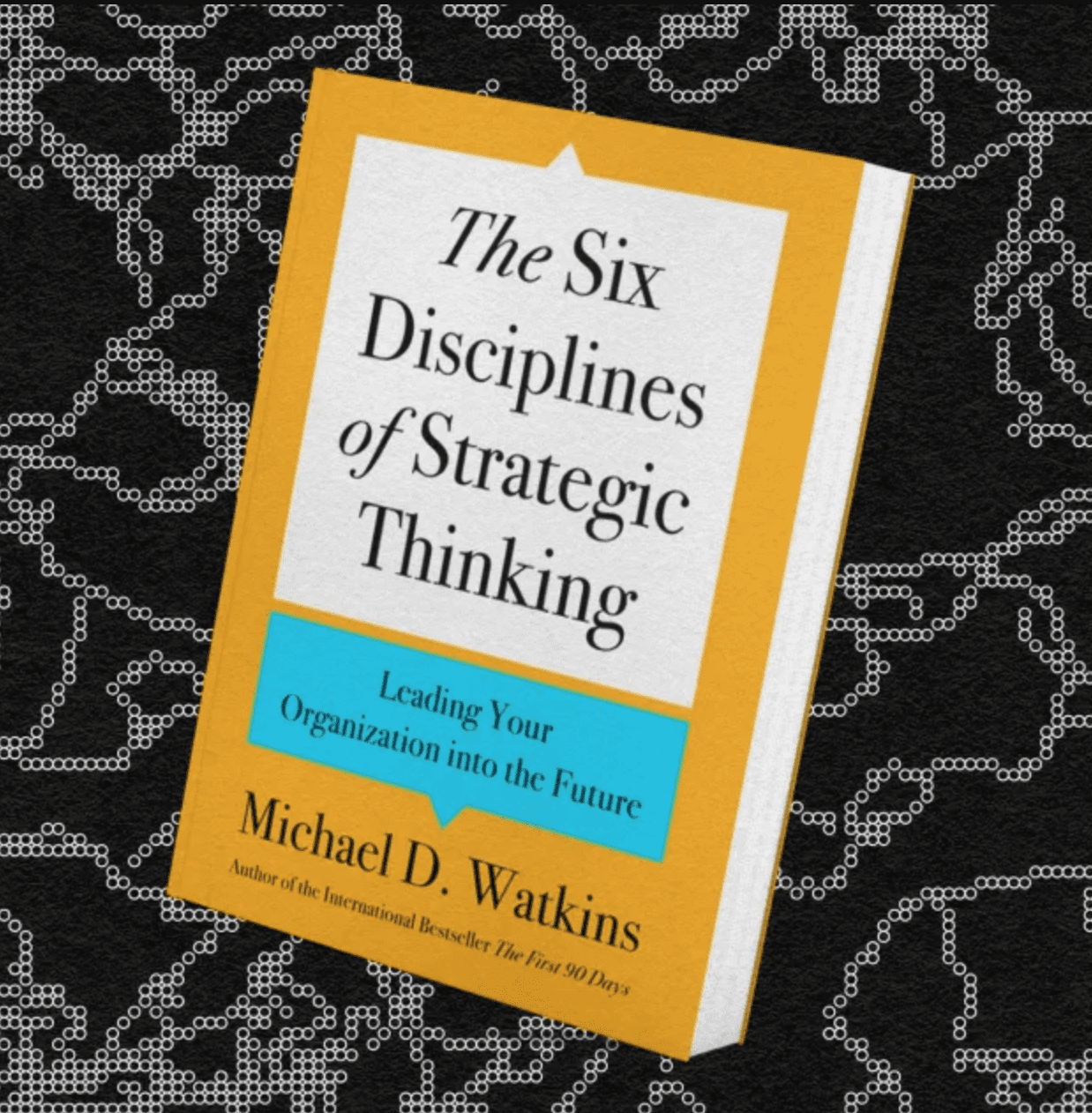

The Six Disciplines of Strategic Thinking: Complete Summary of Michael D. Watkins’ System for Leading Your Organization into the Future
Introduction: The Power of Strategic Thinking
Michael D. Watkins’ book, “The Six Disciplines of Strategic Thinking,” offers a comprehensive and practical guide for leaders to develop and amplify their strategic thinking capabilities. Watkins emphasizes that while foundational skills like critical thinking and operational efficiency are important, strategic thinking is the essential trait for reaching the top in any organization, enabling leaders to anticipate future challenges and capitalize on opportunities. This book provides a clear definition of strategic thinking, outlines six core disciplines, and offers practical exercises for leaders to cultivate these vital skills, especially crucial in today’s increasingly complex, uncertain, volatile, and ambiguous (CUVA) global environment. Readers will learn how to recognize potential threats and opportunities, establish priorities, and mobilize their organizations to navigate turbulent waters and achieve sustainable success.
Watkins introduces Gene Woods, CEO of Advocate Health, as a prime example of a strategic thinker. Woods transformed Carolinas HealthCare System (CHS) from a regional entity with $8 billion in revenue into Advocate Health, a $27 billion national powerhouse. His foresight regarding industry consolidation and the need for tighter integration allowed him to drive significant mergers and acquisitions, moving from a “manage you, so do as we say” culture to an inclusive, high-performance one. Woods’ journey underscores how strategic thinking is not merely about identifying problems but about envisioning ambitious yet achievable futures and relentlessly pursuing them. The book promises to provide readers with the insights and tools to assess and enhance their innate strategic thinking abilities, turning them into indispensable assets for leading their organizations forward.
The importance of strategic thinking is supported by research; a 2013 Management Research Group survey found that leaders with superior strategic thinking skills were six times more likely to be seen as effective leaders and four times more likely to have strong growth potential. More recent Zenger Folkman research confirms strong correlations between a “strategic perspective” and promotion to senior levels. Watkins highlights the growing role of Artificial Intelligence (AI) in strategic support, emphasizing that AI will augment human strategic thinking, providing real-time data, analysis, and insights. However, human leaders will remain critical for framing the right questions, interpreting insights, providing context, contributing creativity, and applying emotional intelligence and political savvy to implement results effectively. This book serves as a guide for developing these enduring human skills.
Chapter 1: The Discipline of Pattern Recognition
This chapter introduces pattern recognition as a fundamental strategic thinking discipline. Pattern recognition is defined as the human brain’s ability to identify and detect regularities or patterns in the vast amount of information bombarding us. In business, this means observing complex, uncertain, volatile, and ambiguous (CUVA) domains to rapidly identify what is and isn’t important, and to pinpoint critical threats and opportunities. Developing this ability allows leaders to perceive emerging challenges, prioritize them, and mobilize their organizations to either neutralize threats or capitalize on opportunities, thereby avoiding value destruction or creating value.
Understanding the Recognize-Prioritize-Mobilize Cycle
Watkins explains that strategic thinking operates as a cyclical process of Recognize-Prioritize-Mobilize (RPM). This cycle begins with recognizing problems and opportunities, moves to prioritizing the most important ones, and then proceeds to mobilizing the organization to address them. The ability to move rapidly through these RPM cycles provides a significant competitive advantage, enabling leaders and their teams to outpace competitors. Gene Woods’ actions at CHS exemplify outstanding RPM capabilities, as he quickly recognized the pattern of increasing merger and acquisition activity in U.S. healthcare and rapidly charted a path forward, leading to the company’s significant growth.
The Value of Superior Pattern Recognition
Insight is power in today’s dynamic and complex business world. Leaders who excel at pattern recognition can act more rapidly and effectively than their competitors because they can quickly assess evolving situations, predict trajectories, and adapt strategies. The chapter draws parallels to strategy games like chess and Go, where grandmasters demonstrate superior pattern recognition to anticipate moves and implications. IBM’s Deep Blue and Google’s AlphaGo showcase how AI, through brute-force computation and deep-learning algorithms, enhances pattern recognition, but the author stresses that AI augments, rather than replaces, human strategic thinking due to the volatile and ambiguous nature of business environments.
How Pattern Recognition Works in the Brain
Pattern recognition fundamentally involves executives matching observations about the world to their memory patterns. This allows them to quickly focus on what is important and translate insights into action. Strategic thinkers develop powerful mental models of cause-and-effect relationships in their domains, enabling them to perceive weak but important signals amid noise and make decisions with incomplete information. Watkins references Nobel laureate Daniel Kahneman’s distinction between System 1 and System 2 thinking. System 1 operates quickly and automatically, handling innate skills and prolonged practice, but is prone to bias. System 2 is more deliberate, slower, and analytical, requiring attention for complex cognitive tasks and taking control when new patterns or stimuli are spotted. The ability of System 2 to tap into long-term memory and engage in “associative activation” leads to “priming,” allowing for faster reactions to related stimuli and forming the bedrock of strategic thinking.
Limitations and Common Traps in Pattern Recognition
Despite its power, pattern recognition has limitations and can lead to traps. A primary pitfall is failing to recognize fundamental cognitive limitations, particularly selective attention. The “Invisible Gorilla” experiment demonstrates how intense focus on one task can lead to blindness to other obvious stimuli. In business, this means leaders may miss critical threats or opportunities if their attention is too narrowly focused. Paradoxically, leaders must be wary of the pitfalls of selective attention and dedicate time to assess and reflect to distinguish significant patterns from noise.
Another significant limitation is vulnerability to cognitive biases. Daniel Kahneman describes the human mind as “a machine for jumping to conclusions,” often leading to assumptions based on incomplete information. Key biases to avoid include confirmation bias, which is the tendency to seek out or recall information consistent with pre-existing viewpoints. The “narrative trap” is a related bias where individuals perceive patterns that don’t exist, constructing stories to make sense of disparate events. The halo effect causes one positive aspect to distort perceptions of an entire entity (e.g., strong financial performance leading to assumptions of sound strategy). Finally, wishful thinking, or the sunk cost fallacy, leads to continued investment in losing propositions. Strategic thinkers must learn to recognize and avoid these cognitive biases and be skeptical of their own intuitions, fostering an environment where critical discussion with diverse teams can test and improve pattern recognition.
Improving Your Pattern Recognition Ability
Developing pattern recognition is achievable through disciplined effort. Research on neuroplasticity shows the brain improves with activities that strain cognitive abilities. Total immersion in specific domains is crucial for building powerful mental models, suggesting that rapidly moving individuals between roles may hinder this development. Leaders should select specific domains to become strategic thinkers in and commit to deep immersion.
Other effective methods for improvement include:
- Working closely with experts: Engaging in apprenticeship-like relationships with skilled pattern recognizers to understand their thought processes. This involves asking questions like “What were the most important patterns or signals you perceived?” and “How confident are you in your conclusions?”.
- Cultivating curiosity and a wide net for information: Actively seeking information from diverse sources and developing hypotheses about trends, as exemplified by Fred W. Smith, founder of FedEx, who reads extensively across disciplines.
- Case study analysis: Consuming and reflecting on a diverse range of realistic case studies to absorb lessons and build mental models.
- Simulation: Participating in business simulations to gain situational awareness, practice pattern recognition, and experiment in a safe, manageable environment.
- Good feedback: Receiving detailed performance feedback to refine decision-making, reinforce associations between cues and strategies, and overcome cognitive limitations and biases.
Chapter 2: The Discipline of Systems Analysis
This chapter introduces systems analysis as a critical strategic thinking discipline, emphasizing its role in building mental models of complex domains such as the competitive environment or internal organizational dynamics. The process of creating systems models involves breaking down complex phenomena into component elements, understanding their interactions, and using this information to build accurate representations of cause-and-effect relationships in the business world. Ultimately, systems analysis helps leaders manage complexity, focusing attention on critical elements and accelerating action.
What Systems Analysis Means in Business
Systems analysis offers a holistic approach, concentrating on the connections and interactions between elements within a system, rather than analyzing components in isolation. It operates on the premise that a system’s behavior is determined by these interactions, meaning changes in one part can have cascading effects on others. For business leaders, this means leveraging systems analysis to understand internal organizational dynamics (functions, processes, systems) and external forces (customers, suppliers, competitors, governments). This understanding enables leaders to identify opportunities for improvement, optimize performance, and develop effective strategies for growth. The author highlights examples from climate science, economics, and engineering, where complex phenomena are broken into manageable subsystems for modeling and prediction, often augmented by computer-based analytical and pattern-recognition algorithms.
The Value of Systems Analysis
Systems analysis is invaluable for strategic thinking because it enhances pattern recognition by reducing cognitive load, allowing leaders to more quickly “see” emerging challenges and opportunities. This leads to faster prediction of likely impacts and the development of strategies to change system dynamics. In today’s dynamic and complex world, systems analysis helps leaders cut through noise to identify essential information, enabling them to “see further around corners” and turn disruption into advantage.
A prime example is the Ever Given container ship incident in the Suez Canal in 2021. This event exposed the fragility of the global trade system, driven by relentless pursuit of efficiency and “just-in-time” inventory. Analysts had long predicted that minor disruptions could cause cascading system failures, yet few companies built in redundancy. This highlights how systems analysis supports the creation of contingency plans, allowing businesses to design crisis response plans for broad categories of potential disasters, even if the specific event is unpredictable. Similarly, savvy investors, understanding how markets behave under stress, leveraged systems analysis during the COVID-19 pandemic to identify sectors that would prosper (e.g., pharmaceutical, tech, online retail) versus those vulnerable (travel, tourism), reallocating investments for significant profits.
How Systems Analysis Works: Components and Interactions
Effective system models comprise three key components: elements, interconnections (or “interfaces”), and a purpose/function. Applying this to organizations, Watkins adapts Jay Galbraith’s Star Model (1978), which conceptualized organizations into five interconnected elements: strategy, structure, processes, rewards, and people. Watkins’ adaptation includes strategic direction, structure and decision-making, processes and systems, people and capabilities, measures and rewards, and culture at the center.
- Strategic direction encompasses purpose, vision, values, mission, goals, and strategy, aligning people on “what, how, and why.”
- Structure and decision-making define how people are organized, coordinated, and authorized to make decisions.
- Processes and systems represent material and information flows, dictating how work is done and value created (e.g., digital transformation).
- People and capabilities refer to the organization’s talent and core competencies (e.g., data analytics capability).
- Measures and rewards cover performance measurement and incentives (e.g., compensation, recognition).
- Culture, placed at the center, represents shared values, beliefs, and norms of behavior, influenced by all other elements.
Thinking of an organization as a system allows leaders to diagnose and design individual elements independently while understanding how changes in one element impact the others and the system’s overall state. For example, a shift to a customer-centric strategy requires aligning decision-making, processes, and data systems to avoid dysfunction and underperformance caused by misalignment between elements.
Identifying Leverage Points, Limiting Factors, and Feedback Loops
System models help identify leverage points, which are areas where modest changes create significant shifts within the system. For instance, to change an organization’s culture (the central element), leaders must understand how strategic direction, structure, processes, people, and rewards influence it, then alter HR systems like hiring and performance management to reinforce desired behaviors.
Another valuable application is identifying limiting factors or “binding constraints” (also known as the “theory of constraints”). Peter M. Senge’s “limits to growth” analysis suggests that an organization’s growth is constrained by the scarcest critical resources or bottlenecks in processes. Identifying these factors helps leaders focus efforts to unlock energy, increase growth, and drive productivity.
Leaders must also understand feedback loops, where system outputs are cycled back as inputs. Feedback loops can stabilize a system, as seen in autonomous vehicles maintaining speed or financial controls identifying faltering results early for corrective action. However, stability is not always good, especially during organizational transformation where “restraining forces” (rigid mindsets, fear of change, conflicting incentives) can impede necessary change.
Navigating Non-Linearities and Tipping Points
System dynamics often exhibit non-linearities and “tipping points.” In a linear system, input changes lead to proportional output changes, but non-linear systems can produce disproportionate responses or diminishing returns (e.g., minor brake pressure causing significant slowing, but increased pressure having less impact). Strategic thinkers must be alert to these non-linearities, where small changes beyond a certain point can generate unintended negative impacts or diminishing returns.
Tipping points occur when systems reach critical thresholds, beyond which changes become rapid, non-linear, and irreversible. Climate change offers a stark example, with melting polar ice leading to increased heat absorption and methane release. In organizations, tipping points can be positive; forces resisting change may diminish or collapse once sufficient progress in a transformation initiative is achieved, leading to acceptance or departure of resisters.
Designing Adaptive Organizations
Systems analysis is crucial for designing adaptive organizations that can effectively sense and respond to emerging threats and opportunities. Many companies underperform due to bureaucracy or silos, which delay sensing and response. Watkins, co-developing with Amit S. Mukherjee, proposes that adaptability hinges on the capacity to sense and respond to changes.
An adaptive organization requires four distinct but interconnected subsystems:
- Threat detection: A subsystem that constantly scans external (social, regulatory, competitive) and internal (organizational) environments to highlight changes and identify potential dangers. It must distinguish “real” signals from noise and ensure no dangerous gaps in coverage. Leaders should assess if existing elements are effective, integrated, and comprehensive.
- Crisis management: The mechanism through which the organization mobilizes to act and mitigate potential damage during unpredictable “bolts from the blue.” This often involves shifting to a more centralized “war-fighting” mode, with ready resources, modular response plans, and communication protocols.
- Post-crisis learning: After a crisis, disciplines and processes must be in place to distill and disseminate learnings to strengthen threat-detection and crisis-management subsystems. This is akin to the U.S. Army’s “after-action review” process, gathering insights for future training.
- Problem prevention: A proactive subsystem that acts to avoid emerging problems and prevent crises when threats are recognized and prioritized. This prevents the need for reactive responses to issues that could have been foreseen.
When these four subsystems (threat detection, crisis management, post-crisis learning, and problem prevention) are well-designed and interact effectively, an organization is positioned to thrive in turbulent environments. This logic also applies to recognizing and capitalizing on opportunities, requiring identification, rapid pursuit, and learning from successes or failures. Ultimately, strategic thinking means building capabilities to leverage pattern recognition and systems analysis for detection, crisis management, learning, and prevention.
Limitations of Systems Analysis and How to Improve
System models are only useful if they accurately capture a domain’s essential features and dynamics, known as the fidelity of the model. Low fidelity models, due to missing critical variables or dynamics, can lead to dangerously wrong predictions or severe unintended consequences. Models are only as good as their underlying assumptions. The human mind’s preference for simple, linear cause-and-effect chains can be a pitfall when system dynamics are non-linear or have tipping points. Crucially, out-of-date models can be worse than no model at all in rapidly changing environments, requiring leaders to constantly update or discard obsolete models and unlearn old ways of thinking.
Improving systems analysis requires deliberate effort, as few individuals naturally think in systems terms. Key steps include:
- Defining system boundaries: This first step provides clarity and reduces complexity. Boundaries must be carefully chosen; too narrow may miss knock-on effects, too broad may mask relevant insights in data deluge.
- Mapping out cause-and-effect: Drawing causal loop diagrams helps visualize connections, deepen understanding, and test mental models. Collaboration with colleagues can make models more rigorous.
- Assessing limiting factors: Using models to identify bottlenecks or critical paths where effort should be focused to unlock growth or increase productivity.
- Developing and evaluating solutions: Thinking through different solutions and assessing their effectiveness using simulations, experiments, or prototypes, then iterating based on results.
- Practice and business simulations: Engaging in business simulations provides a safe, complex environment to experiment with cause-and-effect relationships and gain insights, with the ability to “rewind” and try again.
Chapter 3: The Discipline of Mental Agility
This chapter introduces mental agility as a third crucial discipline of strategic thinking, allowing leaders to navigate business complexities with adaptability, absorb new information, and focus on what’s most relevant. Mental agility combines two cognitive abilities: level-shifting and game-playing, which complement and amplify pattern recognition and systems analysis. Together, these allow leaders to rapidly recognize and respond to emerging threats and opportunities.
Mastering Level-Shifting
Level-shifting is the ability to examine a situation from different levels of analysis, such as the “50,000-foot view” (the forest) and “getting down to details” (the trees), and to move fluidly between them. Gene Woods exemplifies this, describing the need to be a “cloud-to-ground thinker” to craft strategy effectively, understanding both the big picture and organizational minutiae. This skill is vital for focusing on the future while managing the present, and for exploring challenges from multiple, complementary perspectives.
The best strategic thinkers not only shift fluidly between levels but also know precisely when to move from one level to another. Spending too much time in the details leads to getting bogged down, while staying too high-level results in a lack of necessary organizational insight. Leaders must also signal their level shifts to their teams to avoid “mental whiplash” and ensure everyone remains aligned and understands the shift in focus.
Playing (and Winning) Business Games
The game-playing dimension of mental agility is rooted in game theory, the “science of strategy.” It involves strategizing to win the “games” that shape business success, where intelligent actors like competitors make “moves” and “countermoves.” Business games typically involve a mix of cooperation to create value (e.g., industry associations shaping regulations) and competition to capture value (e.g., firms competing for market share in low-growth industries).
Strategic thinkers must be adept at:
- Assessing the type of game being played.
- Identifying all players and their motivations.
- Finding opportunities for value creation through cooperation and value capture through competition.
- Crafting strategies accordingly.
Applying Key Game Theory Concepts
Several game theory concepts are indispensable for strategic thinkers:
- First-mover advantage: This refers to the benefit gained by being the first to act, such as entering a new market or initiating consolidation. In business, being first can yield higher revenues and profits. However, it’s not always the best strategy; sometimes being a “fast follower” (waiting for others to develop technology, then acquiring or building proven capabilities) is more advantageous, especially when development risks are high.
- Signalling: Players may communicate indirectly to convey intentions or deter actions, particularly when direct collusion is illegal (e.g., raising prices in hopes competitors follow suit to move to a new stable equilibrium). Signalling can also deter undesirable moves (e.g., by threatening a mutually destructive price war) or make irreversible commitments (e.g., investing heavily in battery manufacturing to deter new EV competitors).
- Sequencing: Defining the best order of moves to achieve objectives. In internal organizational politics, this means strategically approaching key decision-makers and influencers to build momentum and form winning coalitions. Game trees (e.g., for price increase decisions) are valuable tools for clarifying thinking about sequential moves and countermoves, assessing probabilities, and maximizing expected value.
- Backward induction: A strategy where players look forward to the desired end state and then reason backward to determine the best initial moves. This is common in chess and is applied in era planning for business and career development. Era planning involves defining a future horizon (e.g., 2-3 years), envisioning “what will be true” (legacy) and “what will be possible” (options for next steps), and then working backward to define current actions needed to achieve those goals and create future options.
Developing Mental Agility
Mental agility can be significantly improved with practice.
- Practice level-shifting intentionally: Consistently look at situations from multiple points of view, consciously shifting between high-level and detailed perspectives. Work in conjunction with systems analysis by oscillating between a holistic view of a system and its specific elements. Continuously ask, “Does looking at this from a future perspective help us think about what we need to do now?”.
- Engage in activities that build game-playing ability: Playing strategy games like chess or competitive card games such as bridge helps internalize the discipline of thinking through actions and reactions, and understanding signalling.
- Scenario planning workshops: These are powerful tools for teams to look forward, anticipate potential futures, and develop robust strategies. Workshops promote open dialogue and can catalyze creativity by involving diverse perspectives, often through methods like dialectical inquiry or devil’s advocacy. A structured eight-stage process for a scenario planning workshop includes defining issues, determining external driving forces, clustering forces, defining extreme outcomes, assessing uncertainty, conducting reality checks, grouping outcomes into scenarios, and developing storylines.
- Role-playing: Simulating interactions among players (competitors, customers, regulators) to anticipate actions and reactions, especially effective when scenarios closely mirror real-world situations, enhancing predictive accuracy.
Chapter 4: The Discipline of Structured Problem-solving
This chapter focuses on structured problem-solving, a discipline crucial for the mobilization phase of the Recognize-Prioritize-Mobilize (RPM) cycle. It is a systematic approach that breaks down problem-solving into discrete, sequential steps, enabling leaders to systematically address challenges and develop effective solutions. This process emphasizes the need for structure while simultaneously encouraging creativity, ensuring valuable perspectives are not overlooked and innovative solutions are explored.
Understanding Problems and Decisions
For effective structured problem-solving, it is essential to clarify the terms “problem” and “decision-making.” A “problem” is broadly defined to encompass both threats and opportunities, as the approach to tackling both is fundamentally similar. “Decision-making” involves choosing the best solution from a set of mutually exclusive options, applying evaluative criteria, and making necessary trade-offs. Structured problem-solving is the process used to develop solutions that both neutralize threats (avoid value destruction) and capitalize on opportunities (create value).
Challenges of “Wicked Big” Problems
High-stakes organizational problems are often novel and anything but simple, making them “wicked.” These “wicked big” problems are characterized by a combination of complexity, uncertainty, volatility, and ambiguity (CUVA):
- Complexity: Problems arise in systems with many interconnected elements, making it difficult to discern cause-effect relationships, predict outcomes, or identify leverage points. Solving these requires building robust models of systems.
- Uncertainty: Involves working with probabilities and risk assessments for potential solutions, especially challenging when stakeholders have differing risk appetites. Solving these problems requires establishing an agreed basis for evaluating solutions.
- Volatility: The seriousness of a problem can change suddenly, or new, more critical issues can emerge with little warning. High volatility demands that organizations rapidly sense changes and reassess priorities.
- Ambiguity: Lack of consensus among stakeholders on what “the problem” truly is, or on potential solutions and evaluation criteria. This necessitates negotiation and education to align stakeholders on problem framing and criteria.
The combined impact of CUVA makes problems intractable, highlighting the necessity of a structured problem-solving process to gain a competitive advantage.
Leading Structured Problem-solving Processes: A Five-Phase Cycle
Watkins outlines a five-phase cycle for organizational problem-solving, designed to guide leaders through the process, balancing structured analysis with creative exploration:
Phase 1: Define Roles and Communicate the Process
This initial phase focuses on identifying and engaging key stakeholders who have a stake in the problem and influence its resolution. The author introduces the Approve, Support, Consult, Inform (ASCI) framework to categorize stakeholder involvement:
- Approve: Those whose formal approval is required for key decisions.
- Support: Those who control necessary resources (people, funding, information).
- Consult: Those whose input is valuable or who should be engaged early.
- Inform: Those who need to be kept updated with one-way communication.
Leaders should complete an ASCI matrix at the outset and update it as the process unfolds. Transparent communication about the process fosters “fair process,” which increases stakeholder buy-in even when outcomes are not entirely favorable to them. Gene Woods’ approach to his “next-generation network strategy” at Atrium Health demonstrates this, as he engaged his board, corporate executives, and regional managing directors across various ASCI roles.
Phase 2: Frame the Problem
This is often the most critical phase, especially for novel and wicked problems. Framing a problem involves:
- Defining the problem as a specific question to be investigated. Albert Einstein emphasized that problem formulation is often more essential than its solution.
- Clarifying the criteria that will be used to evaluate potential solutions. These criteria should be distinct, compact, and comprehensive, focusing on the most important yardsticks to avoid diminishing returns from too many criteria. Woods, for example, defined criteria like “scale, capabilities, and culture fit” for evaluating healthcare system mergers.
- Identifying the most significant potential barriers (“dragons”) that must be overcome to succeed. This anticipation helps in planning mitigation strategies.
The “Hero’s Journey” framework (hero=leader, quest=problem question, treasure=best solution, dragons=barriers) is recommended for its memorable structure, which helps align multiple stakeholders with divergent views. Leaders must “size” the problem appropriately, balancing ambition with achievability, and employ strategic and creative framing, being mindful of biases like loss aversion (people care more about avoiding losses than achieving equivalent gains).
Phase 3: Explore Potential Solutions
This phase emphasizes separating the exploration of solutions from their evaluation to foster creativity. Premature criticism can stifle innovative ideas.
- For obvious solutions, this phase can be skipped.
- For non-obvious but likely existing solutions, the focus is on efficient search until a plausible set of options is identified, using stopping rules if search is costly.
- If no good solutions are found, the problem must be broken down using analytical tools like systems modeling or root-cause analysis to identify underlying drivers, easy fixes, and challenging subproblems. Root-cause analysis, as shown in a diagram diagnosing shipping delays, categorizes potential causes (equipment, materials, processes) to find solutions.
Creative exploration requires finding and motivating creative talent, providing space and time for thought, and allowing for Graham Wallas’s five-stage model of creativity: preparation, incubation, intimation, illumination, and verification.
Phase 4: Decide on the Best Option
Once potential options are identified, they are rigorously evaluated to pick the best one. This often involves making trade-offs when criteria are not equally important. For quantitative criteria, trade-offs are easier. For qualitative assessments, a scoring system can be developed:
- Define assessment dimensions (from problem framing).
- Rank options from worst to best on each dimension.
- Create a 0-100 scale for each dimension and place options.
- Assign weights to dimensions based on their relative importance (summing to one).
- Calculate total value for each option by multiplying scores by weights and summing.
While scoring systems can inform decision-making, they have limitations (e.g., non-linearities, additive assumptions, independence of scores). They should be treated as advisory, not determinative, and ideally created during problem framing for objectivity. Sophisticated scoring can incorporate uncertainty and probabilities for a more rigorous assessment.
Phase 5: Commit to a Course of Action
Organizational solutions are not just “answers” but paths forward that the organization commits to. This involves substantial, often irreversible, resource commitments for implementation. Robust solutions include goals, strategies, plans, and resource allocations. While the consequences of failure are significant, paths can often be adjusted as the situation evolves. The five-phase process is cyclical; solving one problem often generates new ones, requiring leaders to move backwards and forwards through the cycle to refine approaches and address new challenges.
Developing Structured Problem-solving Abilities
To enhance structured problem-solving skills, leaders should:
- Learn basic principles: Understand the process steps, tools, techniques, and common pitfalls.
- Practice consistently: Engage in solving a variety of problems and seek feedback and guidance from experienced individuals.
- Get involved in processes led by experienced people: Observe and learn from those more skilled in structured problem-solving.
Chapter 5: The Discipline of Visioning
This chapter explores visioning, the strategic thinking discipline focused on the ability to imagine potential futures that are ambitious yet achievable, and then mobilize the organization to realize them. Visioning is about building bridges between desirable future states and current realities, requiring leaders to articulate their vision clearly and compellingly through what the author calls “powerful simplification.”
Defining Vision in Leadership
For business leaders, a vision is a compelling mental picture of how the organization will look and feel when its strategy is fully realized. A good vision defines a future that is meaningful and attractive, answering how the organization will operate in a “reasonable time frame,” yet still stretches the organization.
It’s crucial to distinguish vision from related concepts:
- A vision is not a mission, which defines what an organization does and aims to be known for.
- A vision is not a set of core objectives, which are the targets that define the mission.
- A vision is not a strategy, which outlines the general path to achieve the mission and objectives.
While distinct, the vision must be consistent with the organization’s mission, core objectives, and strategy, providing a cohesive “fit” so people can understand “where we’re going.” The author quotes Peter M. Senge, distinguishing vision (a specific destination, e.g., “a man on the moon”) from purpose (a general heading, e.g., “advancing man’s capability to explore the heavens”). Both purpose and vision are interconnected and essential for providing clear direction and mitigating anxiety in an uncertain world.
Why Visioning Is Important
Visioning is an essential strategic thinking discipline that goes beyond mere corporate platitudes. A compelling vision generates directed passion, helping people understand the “why” and “where” of necessary action. It provides a clear picture that distills, informs, and inspires, thereby making even the best strategy actionable.
Well-executed visioning:
- Organizes and motivates people towards a common goal, overcoming self-interest and factionalism (e.g., Nelson Mandela uniting South Africa).
- Energizes employees by clarifying how their work contributes to enterprise success, fostering meaningfulness. Studies show employees are more engaged and less likely to quit when they find their work meaningful.
- Supports alliance-building and networking, crucial for individual, team, and organizational success, especially for newly appointed CEOs who need to win over stakeholders and build early momentum. Effective visioning can reduce risks in leadership transitions.
Developing a Vision
Vision development can involve two approaches:
- Working forwards then reasoning backward: Similar to backward induction in game theory, where a desirable future state is visualized, then steps are defined to achieve it.
- “Effectuation”: Taking an inventory of available resources and envisioning what can be achieved with them, building upon existing strengths.
Regardless of the approach, the goal is an ambitious but achievable vision. Ambition is critical for stretching the organization, embodied in Jim Collins and Jerry I. Porras’s concept of a “BHAG” (Big, Hairy, Audacious Goal). However, the vision must not be perceived as unrealistic; flexibility should be built in, like a GPS recalculating routes if a turn is missed.
To create a shared vision, leaders should first develop a personal vision, ensuring it is clear, desirable, consistent with their style, and ideally tested with trusted individuals. Linking the vision to core objectives makes it more action-oriented. Basing it on well-recognized motivational drivers (e.g., achievement, affiliation, power, status, purpose, contribution) can enhance its impact.
The next step is to test and refine the vision with a broad range of stakeholders, evolving it into a shared narrative. In some cases, co-creating the vision with the leadership team or broader organization makes sense, particularly if it increases commitment. Gene Woods’ approach at Atrium Health exemplifies co-creation; he synthesized feedback from walking the halls and speaking with community leaders to develop the mission: “To improve health, elevate hope and advance healing – for all” and the vision: “To be the first and best choice for care.” This process helped connect employees to a broader purpose and instilled a sense of growth and change. Leaders must be clear on non-negotiable core elements but flexible in incorporating others’ ideas to foster shared ownership.
The Power of Powerful Simplification
To effectively galvanize people, leaders must achieve powerful simplification, communicating their vision in straightforward, evocative terms. Many leaders struggle with this, but it’s essential for rallying people behind the vision.
- Stories and metaphors are potent communication tools for threats, opportunities, and strategies. As Howard Gardner noted, leaders are effective through the stories they tell and embody. Stories create connection, build trust, are memorable, and provide models for desired behavior. They should resonate with the company’s existing mythology.
- Five classic story archetypes (love, redemption, rags to riches, stranger in a strange land, holy grail) can be used to deliver key insights.
- Repetition enhances positive feelings (the exposure effect), but leaders must vary their words to avoid sounding like a “parrot.”
- Different modalities (speech, letter, video) improve message retention, aligning with Edgar Dale’s Cone of Experience (e.g., 50% retention for what is heard and seen simultaneously). Paul Culleton emphasizes creating visions based on “images and ideas and compelling pictures, as opposed to words.”
- Evocative descriptors graphically embody core values and create vivid mental pictures (e.g., McDonald’s “running great restaurants, empowering our people, and getting faster, more innovative, and more efficient”).
- Leaders must persuade from a distance by sending the right signals, personally embodying the change, and making day-to-day decisions that support the vision. This includes allocating resources, setting measurable targets, and using levers like written strategies, compensation plans, and annual budgets (“push” approaches).
- Simultaneously, leaders must “pull” employees by defining an attractive future state that meets their needs (e.g., reducing frustration, boosting advancement). This involves active listening, individual feedback, and inspiring a critical mass of people.
- Controlling the narrative is crucial to prevent the company grapevine from filling information voids with rumors. Internal newsletters, columns, or vision boards can help.
- Respect, trustworthiness, and sound judgment significantly enhance a leader’s ability to influence.
Limitations of Visioning and How to Overcome Them
A significant trap to avoid is creating a vision that stakeholders perceive as grandiose or unrealistic. The cautionary tale of Bombardier illustrates this. Laurent Beaudoin’s vision to transform the snowmobile manufacturer into a top-tier aircraft manufacturer with the C Series jet led to immense debt, cost overruns, delays, and a critical underestimation of competitive response. The company was ultimately forced to sell control of the C Series for a token sum. The lesson is clear: leaders must not overreach or commit to an unachievable vision, ensuring that boldness does not become grandiosity.
To develop visioning capabilities:
- Intentional observation: Regularly engage in exercises like the “architect’s exercise,” imagining how spaces could be improved to enhance life or work, and keeping a journal of these insights.
- Imaginative visualization: Practice creating vivid mental pictures of desired futures.
- Clarification: Systematically refine and articulate these visions.
- Visioning workshops: Organize off-site sessions with your team to collectively envision the enterprise’s future. These workshops can leverage pattern recognition, systems analysis, and scenario planning to explore problems and define an ambitious, achievable end state. Breaking participants into small groups to describe mental images, collate them, and present to the whole group can help clarify individual thinking and gauge the top team’s acceptance of change, while allowing leaders to maintain control over the process.
Chapter 6: The Discipline of Political Savvy
This chapter introduces political savvy as the sixth and final discipline of strategic thinking. Political savvy is the ability to navigate and influence the political landscape of organizations, understanding underlying power dynamics, stakeholder motivations and interests, and the implications of various actions. It is a crucial skill for business leaders to effectively manage political environments and achieve their strategic goals, requiring a deep understanding of the organization’s resources, culture, and political terrain.
Understanding and Embracing Organizational Politics
As leaders ascend, organizations become more political due to ambitious individuals pursuing personal and organizational agendas, and the ambiguous nature of high-level problems where “right” answers are rare, leading to vigorous debate. Success at the top often depends on building and sustaining alliances within the organization. Additionally, leaders must proactively shape the external political environment, managing relationships with customers, suppliers, partners, and influencing powerful institutions like governments, NGOs, and the media. This calls for leaders to act as “corporate diplomats.”
Leaders who fail to embrace politics or misunderstand its logic, like Alina Nowak at Van Horn Foods, will struggle. Nowak, a successful sales and marketing executive, was frustrated by the corporate bureaucracy. Her proposal for balancing centralized and decentralized product development decisions, while logical, was met with resistance due to significant political tensions between corporate teams and regional managing directors. Nowak learned that she could no longer rely on positional authority; she needed to think and maneuver politically and lead through influence.
Thinking politically means visualizing the business as a collection of powerful actors pursuing their agendas. While organizational structures and processes exist, key decisions at the top are often driven by winning coalitions of decision-makers or blocked by opposing coalitions. Leaders must identify these potential coalitions and strategize how to build or neutralize them. Relationships, though valuable, are not synonymous with alliances; alliances are built on aligned agendas and mutual support for complementary goals.
Defining Influence Objectives and Understanding Key Decision-Makers
The first step in influencing is to clearly define why you need others’ support. Alina Nowak’s goal was to negotiate a new agreement balancing centralized and decentralized marketing decisions, understanding that any change would be a win-lose proposition unless mutually beneficial trades could be struck.
To secure support, leaders must identify the necessary alliances and explore potential exchanges or “deals”. Watkins provides a table of common organizational “currencies” for exchange, including:
- Resource: providing material or informational support.
- Inspiration: motivating through vision or purpose.
- Status: confirming higher status or recognition.
- Personal Support: offering help or empathy.
- Appreciation: simply expressing gratitude.
Effective use of these currencies requires clarity on both your needs and what others value.
Leaders also need to assess situational pressures influencing key decision-makers, thinking in terms of driving forces (pushing people in the desired direction) and restraining forces (reasons to say no). Social psychology research suggests people often underestimate the impact of situational pressures, attributing behavior to personality instead. It’s crucial to understand decision-makers’ perceptions of their alternatives; if they believe resistance can preserve the status quo, you may need to convince them that the status quo is no longer viable. Concerns about implementation and insecure contracts can also block progress, requiring strategies like phased changes with commitment at each step.
Mapping Influence Networks
Decision-makers are rarely isolated; they are influenced by their networks. Leaders must take time to map influence networks to understand who influences whom on specific issues. These networks form a “shadow organization” that operates in parallel with the formal structure, serving as channels for communication and persuasion.
A simple tool for mapping these networks is the “bullseye” diagram.
- Place key decision-makers in the center.
- Identify other influencers and place them in outer circles based on their level of influence (closer to center = more influence).
- Use arrows to indicate direction and strength of influence (thicker arrows for stronger influence).
- Assess each individual or group as supportive, neutral, or opposed.
- Finally, identify potential winning and blocking coalitions.
This mapping provides critical insight into how to build momentum and navigate resistance.
Crafting Influence Strategies
Armed with deep insights, leaders can craft influence strategies using seven key “tools”:
- Consultation: This technique promotes buy-in by making people feel invested in the outcome. It requires active listening—being present, encouraging expression, questioning to learn, and summarizing understanding. This builds trust and can channel thinking productively. Jeff Immelt, former GE CEO, called listening the “single most undervalued and underdeveloped business skill.”
- Framing: Articulating your definition of the problem and acceptable solutions using argument and analogy, tailored to each person. Messages should align with the motivations and agendas of those you seek to influence and shape their perception of alternatives. This involves using Aristotle’s rhetorical categories:
- Logos: Logical arguments, data, facts, reasoned rationales.
- Ethos: Appealing to principles (e.g., fairness) and values (e.g., teamwork).
- Pathos: Fostering emotional connections and inspiring vision.
Framing also involves powerful simplification (few key arguments, repeated creatively) and inoculating audiences against counter-arguments by presenting and refuting weak rebuttals.
- Social Pressure: Leveraging the persuasive impact of others’ opinions and the norms of social and identity groups. Knowing that a respected person supports a decision can shift others’ assessments. Robert B. Cialdini’s work on influence suggests people prefer to:
- Remain consistent with firmly held values and beliefs.
- Remain consistent with prior commitments and decisions.
- Repay obligations (reciprocity).
- Preserve reputations.
Leaders should avoid asking people to act inconsistently with these principles and help opponents gracefully escape prior commitments if needed.
- Choice-shaping: Influencing how people perceive their alternatives by making it hard for them to say no, or offering “yesable propositions.” This may involve framing choices broadly (to facilitate mutually beneficial trades and enlarge the pie) or narrowly (to isolate a decision and avoid undesirable precedents). Toxic issues can sometimes be neutralized by setting them aside or making upfront commitments.
- Entanglement: Progressing step-by-step to lead people to places they wouldn’t go in a single leap. Each small step creates a new baseline for the next decision. Involving key people early in diagnosing organizational problems can be a powerful form of entanglement, making it difficult for them to avoid tough decisions later, as consensus on the problem builds momentum. This highlights the power of taking initiative in problem-framing.
- Sequencing: Strategically ordering influence efforts to build momentum. Approaching the right people first can create a virtuous cycle of alliance-building, where gaining one respected ally makes it easier to recruit others, expanding support and increasing the likelihood of success. This involves carefully planning a series of one-on-one and group meetings to get the right mix of land-reconnaissance, persuasion, and final commitment.
- Action-forcing events: Approaches to prevent people from deferring decisions or delaying resource commitments. When coordinated action is needed, individual delays can cascade. Leaders must create and sustain momentum by setting up events like meetings, review sessions, teleconferences, and deadlines that induce commitment or action, effectively “eliminating inaction as an option.”
The Importance of Emotional Intelligence in Political Savvy
A leader’s ability to influence is significantly tied to their emotional intelligence, which is the capacity to see beyond one’s own objectives and perspectives and understand others’ emotions. This is foundational for effective social influence and can be enhanced by:
- “Reading” other people’s emotions: Observing body language, sensing the mood of a room, and practicing active listening to consciously understand the meaning conveyed in words.
- Self-awareness: Managing one’s own behaviors and emotions by understanding their ripple effect on others and identifying personal triggers for emotional reactions.
A powerful exercise for developing emotional intelligence is “perceptual positions.” This involves self-consciously adopting perspectives other than your own in challenging situations: - First position: Your own perspective.
- Second position: Strive to see the situation through the eyes of the other person(s) involved (empathy, not sympathy).
- Third position: Take a neutral, dispassionate view, imagining what someone with no history or interest in the situation would observe and advise.
The goal is to become fluid in shifting between these three perspectives, which enhances emotional intelligence and influence abilities.
Developing Your Political Savvy
To cultivate political savvy:
- Observe and analyze political landscapes: Intentionally view your organization and its external environment through a political lens, identifying who has influence, their agendas, and sources of power (e.g., technical expertise, access to decision-makers, alliances).
- Experiment with influence tools: Actively employ strategies like framing, choice-shaping, and sequencing. Practice framing arguments to appeal to influential players’ interests, shaping their perception of alternatives, and determining the optimal order for engaging people to build momentum.
- Build and leverage networks: Invest in developing and strengthening networking skills, building a diverse and strategic network of contacts both internally and externally to increase influence.
Conclusion: Developing Your Strategic-thinking Ability
This book concludes by reiterating the Strategic Thinking Capacity (STC) equation: STC = Endowment + Experience + Exercise. While one’s Endowment (genetics and upbringing) is fixed, significant improvement in strategic thinking comes from actively pursuing Experience and diligently performing Exercise. The aim is not just to be a strong strategic thinker, but for key career influencers to recognize and acknowledge that ability.
Gaining Experience and Exposure
To increase visibility and demonstrate strategic thinking skills, regardless of one’s current role, leaders should:
- Show you see the big picture: Connect current issues to broader organizational context and challenges.
- Demonstrate critical thinking: Ground arguments in solid analysis and communicate concisely and logically.
- Have a point of view: Prepare specific insights or questions for discussions on strategic issues.
- Highlight ability to observe trends and envision futures: Show awareness of relevant trends and foresight beyond the present.
- Speak like a strategic thinker: Use strategic vocabulary (e.g., “strategic goals,” “root causes”).
- Engage in constructive challenge: Ask tough questions respectfully, probing potential evolutions.
- Don’t rehash problems; reframe them: Present new ways to define problems and solutions, showing mental flexibility.
Exercising Your Brain: Developing the Six Disciplines
The book defines strategic thinking as the “set of mental disciplines leaders use to recognize potential threats and opportunities, establish priorities to focus attention, and mobilize themselves and their organizations to envision and enact promising paths forward.” The six disciplines are: pattern recognition, systems analysis, mental agility, structured problem-solving, visioning, and political savvy. Due to neuroplasticity, consistent mental exercises can build these strategic thinking “muscles.”
Developing the Discipline of Pattern Recognition:
- Learn underlying mechanisms: Understand how the brain processes patterns.
- Immerse yourself: Deeply learn about specific domains of interest to discern key variables and trends.
- Engage with experts: Ask experienced individuals how they differentiate signal from noise and identify crucial patterns.
Developing the Discipline of Systems Analysis:
- Understand principles: Learn underlying concepts and applications through reading, workshops, or working with experts.
- Practice analyzing and thinking in systems: Consistently apply systems thinking to real-world problems, case studies, or simulations.
Developing the Discipline of Mental Agility:
- Practice level-shifting: Intentionally shift perspectives between the big picture and fine details, and vice versa.
- Engage in game-playing activities: Play games like chess, puzzles, or brain teasers to improve thinking about moves and countermoves.
Developing the Discipline of Structured Problem-solving:
- Understand principles: Learn the basic steps, tools, techniques, and common pitfalls of the process.
- Practice structured problem-solving: Apply the process to various problems, seeking feedback and guidance.
Developing the Discipline of Visioning:
- Understand principles: Grasp the role of vision in leadership, characteristics of compelling visions, and the process of development and communication.
- Practice microvisioning: Apply visioning skills to small problems or situations, like the “architect’s exercise.”
Developing the Discipline of Political Savvy:
- Observe and analyze political landscapes: Identify stakeholders, their agendas, and power sources within and outside the organization.
- Seek to understand dynamics of power and influence: Recognize patterns in who influences whom and why.
Beyond these specific exercises, general habits include:
- Reflecting and assessing your thinking: Regularly evaluate progress and identify areas for improvement.
- Seeking feedback and advice: Systematically solicit input from mentors, peers, or experts for valuable perspectives.
Building a Strategic-Thinking Team
Much strategic thinking occurs in teams, so developing collective capacity is crucial.
- Educate the team: Help them understand what strategic thinking is and is not.
- Focus on the RPM cycle: Collectively assess effectiveness and strive to decrease cycle time.
- Introduce the six disciplines: Discuss each discipline’s importance and how to develop it, potentially by reading and discussing the book’s chapters.
- Encourage a culture of strategic thinking: Role-model, recognize, and reward strategic thinking.
- Provide development opportunities: Offer training, workshops, mentoring, and exposure to experts.
- Foster collaboration: Encourage idea sharing in meetings and through joint projects to expand perspectives and build pattern recognition.
- Invest in action learning: Provide resources and support for structured testing of new ideas and problem-solving, with budgets for experimentation and learning from failures and successes.
Understanding the Future of Strategic Thinking
Strategic thinking, always vital, will become even more so in an increasingly complex, uncertain, volatile, and ambiguous (CUVA) business environment. This ability provides a durable competitive advantage by enabling effective responses to technological advancements, shifting markets, and new competition. It also helps leaders understand organizational strengths and weaknesses, allocate resources, prioritize initiatives, and make effective trade-offs. The growing importance of innovation demands strategic thinking about creating new products, services, and business models, requiring creativity and calculated risks. The increasing reliance on data and analytics necessitates strategic thinking about data collection, analysis, and usage, demanding critical and analytical skills, and comfort with data and AI-enabled tools. Finally, in an increasingly interconnected world, strategic thinking is crucial for navigating global complexities and building relationships with key partners and stakeholders.




Leave a Reply