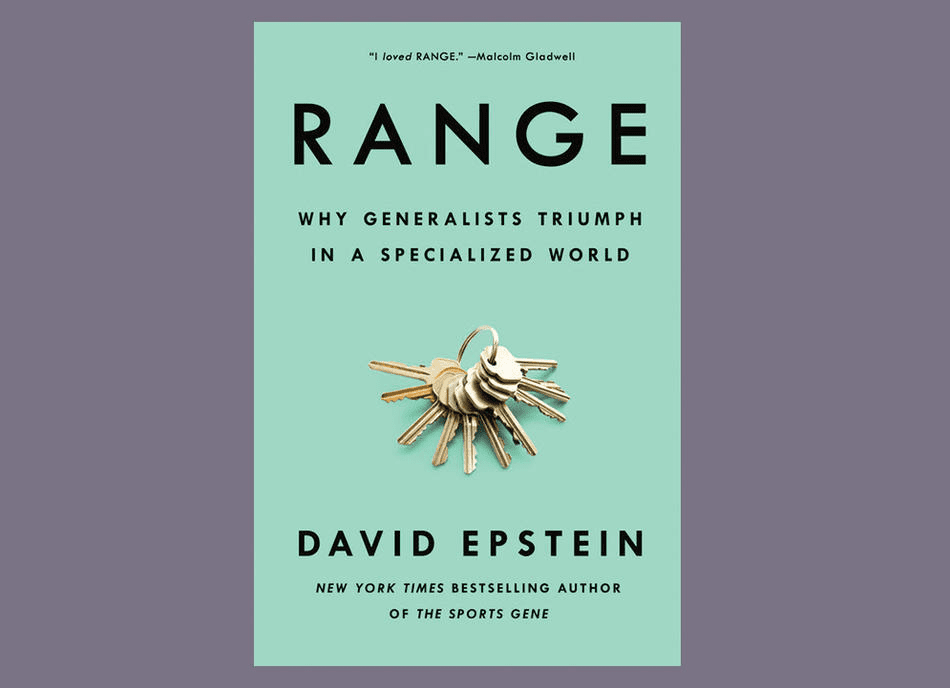

Range: Why Generalists Triumph in a Specialized World
In Range, David Epstein challenges the pervasive societal belief that early specialization and relentless, focused practice are the sole paths to success. He introduces the contrasting figures of Roger Federer and Tiger Woods to illustrate his core thesis: while Woods’s early, intense specialization in golf is often celebrated as the blueprint for excellence, Federer’s diverse athletic background and delayed focus on tennis reveal an equally, if not more, potent formula. Epstein argues that in an increasingly complex and unpredictable world—what he terms a “wicked” learning environment—breadth of experience, interdisciplinary thinking, and delayed specialization are often more advantageous than narrow expertise. This book is a deep dive into research and compelling stories that reveal why generalists, those who cultivate a wide array of skills and experiences, are better equipped to navigate the modern landscape, fostering creativity, adaptability, and long-term fulfillment. Epstein promises to break down every important idea, example, and insight, highlighting why embracing a broader path is crucial in a world obsessed with narrow focus.
INTRODUCTION: Roger vs. Tiger
The book opens with two compelling origin stories from the world of sports, setting the stage for Epstein’s central argument about specialization. Tiger Woods is presented as the quintessential early specialist: at six months balancing on his father’s palm, a putter in hand at seven months, winning a ten-and-under division tournament at age two, and meticulously prepped by his father for golf stardom. His father, Earl Woods, saw his son as “The Chosen One,” destined for greatness through singular focus and deliberate practice. This narrative aligns with the popular “10,000-hours rule,” which suggests that accumulated hours of highly specialized training are the sole factor in skill development.
In stark contrast, Roger Federer’s early athletic journey was characterized by diversity and a playful, unstructured approach. His mother, a tennis coach, never coached him, instead encouraging him to dabble in a wide range of sports including skiing, wrestling, swimming, skateboarding, basketball, handball, tennis, table tennis, badminton, and soccer. Federer credited this broad exposure for developing his athleticism and hand-eye coordination. His parents were “pully” rather than pushy, even nudging him to take tennis less seriously. He only gravitated toward tennis later in his teens, by which time other aspiring elites had already been in specialized training for years. Despite this “late start,” he became arguably the greatest tennis player of all time.
Epstein highlights that while elite athletes at their peak do engage in intense, deliberate practice, their developmental path often includes a “sampling period.” They play various sports in unstructured or lightly structured environments, gaining a range of physical proficiencies and learning about their own abilities before focusing on one area. Studies confirm this pattern, with titles like “Late Specialization” as “the Key to Success” in individual sports, and “Start Later, Intensify, and Be Determined” in team sports. Even in soccer, German World Cup winners were typically late specializers who played more non-organized soccer and other sports in childhood. These findings challenge the pervasive belief that early, narrow focus is necessary for success, a belief often fueled by marketing machines and the desire for quick, visible progress.
CHAPTER 1: The Cult of the Head Start
This chapter delves into the origins and limitations of the “cult of the head start” mentality, particularly in the context of skill acquisition. The story of the Polgar sisters—Susan, Sofia, and Judit—serves as a primary example. Their father, Laszlo Polgar, meticulously engineered their chess careers from an early age, believing any child could be molded into a genius with the right head start. From “pawn wars” at age three to extensive study of chess sequences, the sisters achieved immense success, with Judit becoming the youngest grandmaster ever at fifteen. Their story, like Tiger Woods’s, became a popular symbol of early specialization’s power.
Epstein then introduces the crucial distinction between “kind” and “wicked” learning environments, a framework developed by psychologists Gary Klein and Daniel Kahneman.
- Kind learning environments have clear rules, repetitive patterns, and immediate, accurate feedback. Examples include chess, golf, and firefighting, where intuitive pattern recognition works powerfully. Experts in these domains develop skill through extensive, repetitive practice, enabling them to make instinctive decisions. Garry Kasparov, for instance, makes moves almost instantly based on recognized patterns.
- Wicked learning environments, conversely, have unclear or incomplete rules, patterns may not be obvious or repetitive, and feedback is often delayed, inaccurate, or both. In these environments, experience can even reinforce wrong lessons, as seen with a physician whose unique diagnostic method for typhoid fever, while seemingly successful, was based on being a carrier himself.
The victory of IBM’s Deep Blue over Garry Kasparov in chess in 1997, and the subsequent rise of “advanced chess” and “freestyle chess” (human-computer teams, or “centaurs”), highlights a key insight: when machines excel at the tactical, pattern-based aspects of a domain, human contributions shift to big-picture strategy. In freestyle chess, amateurs using multiple computers beat grandmaster teams, demonstrating that human creativity and integration of information become paramount when tactical expertise is outsourced.
Epstein explains the concept of “chunking” through Susan Polgar’s memory test. When shown real game positions, grandmasters could perfectly re-create boards due to their ability to group pieces into meaningful “chunks” based on familiar patterns. However, when shown random arrangements, their “photographic memory” vanished. This demonstrates that expertise, even in kind domains, relies on learned structures, not innate perfect memory. Savants, often cited as examples of raw talent, similarly rely on repetitive structures rather than mere regurgitation.
The chapter concludes by arguing that narrow experience can lead to “cognitive entrenchment” in wicked domains, where experts become inflexible and struggle to adapt to new rules or situations. In contrast, Nobel laureates and creative achievers often have avocations and broad interests outside their specialties. Steve Jobs’s calligraphy class and Claude Shannon’s philosophy course inspiring fundamental insights in computer design and information theory are examples. This breadth of training allows for “circuit breakers”—drawing on outside experiences and analogies to interrupt inclinations toward old, potentially ineffective solutions. The modern world, increasingly “wicked,” demands range and the ability to think beyond narrow specialization, rather than adhering to the limited model of golf and chess.
CHAPTER 2: How the Wicked World Was Made
This chapter explores how the human mind has fundamentally changed over the past century, becoming better suited for the complexity of the modern world, yet society’s educational and professional structures often fail to capitalize on this evolution. Professor James Flynn ignited a psychological firestorm by discovering the “Flynn effect”: a consistent, significant increase in IQ test scores across generations throughout the 20th century. Gains were particularly dramatic on abstract reasoning tasks like Raven’s Progressive Matrices (which test the ability to derive rules and patterns without prior instruction) and “similarities” tests (identifying higher-level connections between concepts). These gains were not simply due to better nutrition or more schooling, as scores on general knowledge or arithmetic tests barely budged.
Epstein introduces Alexander Luria’s ethnographic studies in remote, pre-modern Soviet Central Asia in the 1930s, providing a stark contrast to modern cognition. Luria observed villagers who were “severely constrained by the concrete world before them.” When asked to group objects, remote villagers relied on practical narratives based on direct experience (e.g., hammer, saw, hatchet, log: they’re all useless without the log, so why group them?). They struggled with abstract conceptualization and “eduction”—the ability to work out guiding principles from facts, even in absence of instructions. Farmers exposed to modern collective farming, even with little literacy, showed nascent abstract thinking. Modern people, conversely, see the world through “scientific spectacles,” making sense of reality through abstract classification schemes and layers of concepts (e.g., animals as mammals). This cognitive shift allows for knowledge transfer—applying knowledge to new situations and different domains—a critical skill for modern work.
Despite this increased capacity for abstract thought and flexibility, Flynn expresses disappointment with modern higher education, arguing it pushes specialization rather than cultivating broad critical intelligence. His study of a top state university’s seniors found nearly zero correlation between GPA and performance on a test of broad conceptual critical thinking. Students learned facts within their disciplines but failed to apply scientific reasoning or methods of evaluating truth to other areas. They became “narrow critical competence” experts, adept within their silo but unable to “dance across disciplines.”
Epstein highlights the importance of “Fermi problems,” like estimating the number of piano tuners in NYC. These problems require breaking down a complex unknown into smaller, estimable parts, leveraging what little is known to approximate what isn’t. Such broad thinking strategies, easily teachable, offer a valuable “conceptual Swiss Army knife.” However, colleges often prioritize detailed vocational training over these broadly applicable reasoning tools.
The chapter concludes by emphasizing that the modern world, characterized by increasing complexity and the need to derive new patterns, demands range and conceptual reasoning skills. Tasks that can be solved by relying solely on familiar patterns are increasingly automated. The ability to apply knowledge broadly, to learn without direct prior experience, is what a rapidly changing, “wicked” world demands.
CHAPTER 3: When Less of the Same Is More
This chapter explores the counterintuitive idea that early specialization is often not the ideal path, even in domains typically associated with it, like music. Epstein introduces the Figlie del Coro (“daughters of the choir”) of Venice in the 17th and 18th centuries. These all-female orphan musicians, raised in charitable institutions (ospedali), became European celebrities, captivating audiences with their virtuosity. What was their secret? They were trained in a massively multi-instrument approach, learning to play virtually every instrument their institution owned, from violins to bassoons, and even obscure instruments like the “violoncello all’inglese.” This versatility, combined with their relentless practice, fostered deep musical experimentation and laid the foundation for the modern orchestra, influencing composers like Vivaldi, Bach, and Mozart. Their breadth enabled profound musical innovation, yet their stories are largely forgotten, perhaps because they defied societal norms for women.
Epstein contrasts the Figlie’s approach with the modern “Tiger Mother” philosophy, exemplified by Amy Chua, who strictly limited her daughters to piano or violin and enforced hours of daily practice. This common parental anxiety, fueled by the “10,000-hours rule,” pushes for early, narrow focus. However, John Sloboda’s research on music students revealed surprising findings:
- Exceptional students did not start playing at a younger age or practice more overall before entering competitive music schools.
- They started practicing much more only after identifying an instrument they loved or were good at, suggesting the instrument drove the practitioner.
- Too many structured lessons at a young age were not helpful, with all students receiving extensive early structured training falling into the “average” skill category.
- The most significant finding: exceptional students distributed their effort more evenly across three instruments, suggesting that “modest investment in a third instrument paid off handsomely.” This indicates that a sampling period and breadth of experience are integral, not incidental, to developing musical expertise, even in classical music.
The chapter then spotlights jazz musicians as exemplars of range and “late” development.
- Jack Cecchini, world-class in both jazz and classical guitar, was largely self-taught, starting guitar at thirteen and classical guitar at twenty-three. His multi-instrumental background allowed him to “experiment every night.”
- Duke Ellington lost interest in formal lessons, quit music for seven years to focus on baseball and art, and only later taught himself piano by ear, preferring to “figure it out for myself.”
- Johnny Smith learned multiple instruments for local grocery competitions, and his wide-ranging experience prepared him for post-WWII work as NBC’s musical arranger, enabling him to master an atonal Schoenberg composition in four days.
- Dave Brubeck couldn’t read music for much of his college career, instead improvising his way through exercises.
- Django Reinhardt, born in a Romani caravan, never learned to read music or words. After a severe hand injury, he re-taught himself guitar with two fingers, leading to the invention of “Gypsy jazz” and revolutionizing guitar solos.
These improvisational masters learned like babies: dive in and imitate first, learn the formal rules later. “Not enough to hurt my playing,” was a common joke among jazz musicians who found formal training could stifle creativity. Epstein argues that this reflects a classic research finding: breadth of training predicts breadth of transfer. Learning in more contexts creates abstract models, making knowledge more applicable to novel situations—the essence of creativity. He concludes that creativity can be fostered by low prior restraint, allowing children to explore interests widely rather than rigidly prescribing narrow paths.
CHAPTER 4: Learning, Fast and Slow
This chapter critically examines the prevalent educational approach that prioritizes quick, visible progress over deep, flexible learning, arguing that this focus on efficiency often backfires. Epstein illustrates this with an eighth-grade math class video, where a charismatic teacher attempts to introduce algebraic expressions using relatable scenarios (hot dogs at an Eagles game). However, the students’ repeated questions and their tendency to engage in “platoon multiple choice” (guessing until a correct answer is given) reveal a fundamental misunderstanding. They are not grasping the abstract concept of a variable; they are merely seeking rules to execute procedures, turning a “making connections” problem into a “using procedures” problem.
Lindsey Richland’s research on math teaching, which analyzed hundreds of classrooms globally, confirmed this pattern. In the U.S., virtually zero “making connections” problems survived teacher-student interactions to remain conceptual; hints transformed them into procedural tasks. This creates students who view math as “just a set of procedures,” rather than a system, leading to a reliance on memorized algorithms even when a broad, conceptual understanding would be more effective. Parents often exacerbate this by seeking “faster, easier ways” for their children to learn.
Epstein introduces “desirable difficulties,” a concept championed by cognitive psychologist Robert Bjork. These are obstacles that make learning more challenging, slower, and frustrating in the short term, but significantly better in the long term.
- Generation Effect: Struggling to generate an answer oneself, even a wrong one, enhances subsequent learning. Studies with sixth graders and monkeys showed that training without hints, while leading to poorer initial performance, resulted in significantly better long-term retention. “The struggle is real, and really useful.”
- Spacing (Distributed Practice): Leaving time between practice sessions for the same material (e.g., studying vocabulary a month later rather than immediately) leads to dramatically better long-term retention. Immediate rehearsal provides only short-term benefits.
- Interleaving (Mixed Practice): Mixing different types of problems during practice (e.g., different math problem types or different artists’ paintings) leads to better long-term performance and the ability to differentiate problem types, even though it feels harder and less productive in the short term. Learners tend to misjudge their own progress, believing blocked practice is better.
A groundbreaking study at the U.S. Air Force Academy provided compelling evidence for desirable difficulties in higher education. Professors who were best at boosting students’ immediate Calculus I exam scores and received sterling student evaluations actually harmed their students’ subsequent performance in more advanced math and engineering courses. Conversely, professors whose students struggled more in Calculus I but performed better later were making connections and promoting “deep learning.” Students, however, “selectively punishing the teachers who provided them the most long-term benefit.”
The chapter concludes by noting that while basic skill mastery has improved over time, the goals of education have become loftier, shifting from routine procedural tasks to solving unexpected problems and working in groups. This demands flexible knowledge capable of “far transfer”—applying concepts to new situations. The “fadeout” effect in early childhood education programs, where early academic advantages quickly diminish, is attributed to teaching “closed” skills that everyone eventually acquires, rather than “open” skills that scaffold later, more complex knowledge. Ultimately, the cult of the head start, by prioritizing rapid, visible progress, undermines the slow, difficult process of deep, flexible learning.
CHAPTER 5: Thinking Outside Experience
This chapter highlights the power of analogical thinking—recognizing conceptual similarities in seemingly disparate domains—as a crucial tool for solving “wicked problems.” It begins with Johannes Kepler’s arduous journey to understand planetary motion in the 17th century. Faced with a universe where planets were thought to be moved by spirits on crystalline spheres, Kepler was stuck. To break through, he unleashed a “fusillade of analogies”: scents, heat, light, magnets, currents, and boatmen. By meticulously interrogating each analogy, he refined his understanding, moving from “moving souls” to “power” or “force,” eventually leading to the laws of planetary motion and the invention of astrophysics. His process was a testament to the power of thinking entirely outside the domain when stuck.
Psychologist Dedre Gentner, a leading authority on analogical thinking, emphasizes its importance: “Our ability to think relationally is one of the reasons we’re running the planet.” Analogical thinking makes the new familiar or familiar new, allowing humans to reason through novel problems. While “surface analogies” (similar on the surface) work in “kind worlds” with repeating patterns, “distant analogies” (conceptually similar but superficially different) are crucial for creative problem-solving in wicked worlds.
The famous Duncker’s Radiation Problem demonstrates this: a patient has an inoperable tumor, and a ray can destroy it, but only at an intensity that also destroys healthy tissue. How to destroy the tumor without harming healthy tissue? Very few people solve this initially. However, when given seemingly unrelated stories—a general capturing a fortress by dividing his army, or a fire chief extinguishing a woodshed fire by having neighbors converge with buckets—and prompted to use them, the number of solvers dramatically increases. The solution: direct multiple low-intensity rays from different directions to converge at the tumor. This reveals that human intuition often struggles to spontaneously apply distant analogies to “ill-defined” problems.
Epstein introduces Kahneman and Tversky’s “inside view” concept: the human tendency to make judgments based narrowly on the immediate details of a problem, leading to over-optimism. This can be countered by taking an “outside view,” which involves probing for deep structural similarities in different, unrelated problems. Private equity investors, when forced to compare their projects to conceptually similar outside projects, slashed their initially over-optimistic return estimates. Similarly, Netflix’s recommendation algorithm improved by analogizing customers, not just decoding movie traits. Studies show that using a “full reference class” of analogies is immensely more accurate than relying on a single, superficially similar one. For idea generation in business, more analogies, especially distant ones (e.g., Nike and McDonald’s for a computer company), yield more strategic options.
Gentner’s “Ambiguous Sorting Task” showed that while most students can group phenomena by domain (economics, biology), fewer can group them by deep structural similarities (e.g., positive-feedback loops). Students in Northwestern’s Integrated Science Program, with their broad, interdisciplinary training, were particularly adept at recognizing these deep structures. This ability to determine the deep structure of a problem before matching a strategy is a hallmark of expert problem-solving.
Finally, Epstein notes that Kepler’s own breakthrough came after five years of confusion trying to make Mars’s orbit fit existing models. He documented his “subterfuges and lucky hazards,” highlighting the value of embracing confusion and relentlessly trying new analogies. Kevin Dunbar’s studies of molecular biology labs confirmed that the most productive labs, especially when faced with unexpected findings, were those with diverse professional backgrounds that facilitated the use of numerous, varied analogies from outside their immediate discipline. When all members share the same narrow knowledge, breakthrough is stifled.
CHAPTER 6: The Trouble with Too Much Grit
This chapter challenges the popular, almost dogmatic, embrace of “grit” as the ultimate predictor of success, suggesting that while perseverance is important, the ability to “quit fast and often” when a path is a poor fit is often a strategic advantage. Epstein uses the fascinating, tumultuous life of Vincent van Gogh as a prime example. Van Gogh failed spectacularly in multiple careers—art dealer, teacher, bookseller, prospective pastor, and itinerant catechist—before turning to art at age 27. Even then, he constantly experimented with styles, mediums, and artistic philosophies, abandoning one for another, only to find his unique voice and erupt creatively in the final two years of his life. His artistic breakthroughs emerged from a succession of perceived failures and pivots, a process of “match quality optimization.”
Epstein introduces “match quality” as an economic term describing the fit between a person and their work.
- Ofer Malamud’s study of British and Scottish university systems revealed that earlier specialization (England/Wales) led to more career switching after college, as students discovered a poor fit. In contrast, later specialization (Scotland), with its broader initial curriculum, led to better match quality and less career switching, despite initial income lag. This suggests that exploration is a central benefit of education.
- Steven Levitt’s “Freakonomics Experiments” showed that people considering major life changes (including job changes) who randomly chose to make the change were “substantially happier” six months later. This challenges the adage “winners never quit and quitters never win,” suggesting that knowing when to quit can be a strategic advantage.
- Teacher turnover, often seen as a negative, can actually lead to a better allocation of teaching talent, improving match quality for teachers.
The discussion then turns to Angela Duckworth’s influential research on grit, defined as “perseverance and passion for long-term goals.” Her study at West Point’s “Beast Barracks” found that grit predicted who would drop out, better than traditional academic or physical fitness scores. However, Epstein points out that these studies often involve “restriction of range” (highly pre-selected groups), which may exaggerate grit’s predictive power for the general population. He argues that quitting can be a good decision, particularly in response to “match quality information”—realizing a path isn’t a good fit. This is akin to Robert Miller’s “multi-armed bandit process,” where individuals test various paths to gain information and refine their choices.
The chapter then explores the West Point officer retention problem, where about half of graduates leave after five years despite significant taxpayer investment. This is not a lack of grit, but a “match quality conundrum.” Talented, high-achieving officers, having developed broad skills, realize they have many desirable career options outside the military. The Army’s rigid “industrial era” structure failed to adapt to the “knowledge economy” where individuals control their career trajectories.
Epstein introduces the “context principle” from psychologist Walter Mischel and Yuichi Shoda: personality traits are not static but manifest differently in various situations. “If you get someone into a context that suits them,” Epstein notes, “they’ll more likely work hard and it will look like grit from the outside.” This applies to Van Gogh, whose artistic “grit” only emerged once he found his match.
Finally, Epstein discusses Herminia Ibarra’s research on mid-career professionals who successfully change careers. Her central premise: “We learn who we are only by living, and not before.” This challenges the notion that introspection alone reveals one’s ideal path. Ibarra advocates a “test-and-learn” model over “plan-and-implement,” encouraging individuals to flirt with “possible selves” through short-term experiments. This iterative process, exemplified by Frances Hesselbein (who started her CEO career in her mid-50s after a winding path of volunteering and temporary roles) and Michelangelo (who constantly changed his sculptural plans, leaving most unfinished), allows for the discovery of better match quality and long-term fulfillment. The “Dark Horse Project” by Todd Rose and Ogi Ogas found that highly fulfilled individuals often follow circuitous, “short-term planning” paths, constantly seeking the best fit at the moment rather than adhering to rigid, long-term goals.
CHAPTER 8: The Outsider Advantage
This chapter champions the “outsider advantage” in innovation and problem-solving, arguing that fresh perspectives from individuals outside a specialized domain can often lead to breakthroughs that elude experts. Alph Bingham, a chemist at Eli Lilly, noticed that the most clever solutions to molecular synthesis problems came from “a piece of knowledge that was not a part of the normal curriculum.” He hypothesized that “outside-in” thinking—leveraging knowledge from seemingly unrelated fields—was key. Despite skepticism from specialists, Bingham’s InnoCentive platform, which posts scientific challenges for outside “solvers,” proved him right. Solutions came from unexpected sources, including a lawyer whose knowledge of chemical patents helped solve a molecular synthesis problem by analogizing it to tear gas. InnoCentive demonstrated that the further a problem was from a solver’s expertise, the more likely they were to solve it.
Historical examples abound: Nicolas Appert, a “jack of all trades” confectioner and chef, revolutionized food preservation with canned goods, a breakthrough that eluded top scientists. His broad culinary background gave him insights that specialists lacked. Similarly, Bruce Cragin, a retired engineer, solved NASA’s thirty-year-old solar particle storm prediction problem using radio waves, a method outside the typical approach of solar physicists. John Davis, a chemist, solved an oil spill remediation challenge by analogizing it to drinking a slushy and using knowledge from a brief construction job (concrete vibrators). These cases illustrate functional fixedness, the tendency to consider only familiar uses for objects or familiar methods for problems, and how outsiders can overcome it by seeing things anew.
Karim Lakhani’s research on InnoCentive and Kaggle (a platform for machine learning challenges) reinforces that “big innovation most often happens when an outsider… reframes the problem.” He notes that “knowledge is a double-edged sword”: it enables certain things but blinds to others. This highlights the value of Don Swanson’s concept of “undiscovered public knowledge”—connecting information from scientific articles in subspecialty domains that rarely cite one another. Swanson’s computer system, Arrowsmith, proved that interdisciplinary treasures await discovery where specialties drift apart.
Epstein then presents Andy Ouderkirk’s work at 3M, where he challenged a 200-year-old physics principle to create multilayer optical film, a multi-billion dollar invention with applications from cell phones to solar panels. Ouderkirk, a physical chemist, was successful because he looked at everyday phenomena (like water bottle plastic) differently and applied his knowledge laterally. His research on 3M inventors identified three types:
- Specialists: Deep in one area, good for well-defined problems.
- Generalists: Broad across many domains, good at integrating.
- Polymaths: Broad with at least one area of depth. These were the most likely to make significant commercial impact and win the company’s highest awards. Polymaths like Ouderkirk himself, and Jayshree Seth (a “T-shaped person” who builds “mosaics” by consulting “I-people”), constantly learned across domains, repurposing knowledge. Ouderkirk’s data even suggests that specialists’ contributions to innovation peaked around 1985 and have been declining, as information becomes more widely disseminated and the need shifts from just advancing a field to cleverly applying it.
Research on comic book creators by Eduardo Melero and Neus Palomeras further supports the outsider advantage. They found that breadth of genre experience (from comedy to sci-fi) made creators better on average and more innovative. Individual creators with broad experience even surpassed teams in innovation. This suggests that “specialization can be costly” in knowledge-based industries.
The chapter concludes by emphasizing that while specialized teams excel in “kind environments” with clear, repetitive tasks (like surgery or airline crews), ambiguity and uncertainty demand breadth. Abbie Griffin’s study of “serial innovators” found them to be “systems thinkers” with “high tolerance for ambiguity,” “additional technical knowledge from peripheral domains,” and an “ability to connect disparate pieces of information in new ways.” Charles Darwin is presented as a “professional outsider” who leveraged a broad network of correspondents to compile and interpret facts across diverse fields. Ultimately, nurturing range—by looking for wide-ranging interests and diverse hobbies in hiring—is crucial for fostering innovation, even in technical fields.
CHAPTER 9: Lateral Thinking with Withered Technology
This chapter explores a specific type of outsider advantage: “lateral thinking with withered technology,” a philosophy pioneered by Gunpei Yokoi at Nintendo. Yokoi, an electronics graduate with no specific career dream, was hired by Nintendo in 1965 when it was a struggling hanafuda (flower card) company. His job was to service card-making machines, but his passion was “monozukuri” (thing making) – tinkering.
Yokoi’s first hit toy, the Ultra Hand, was born from observing him goofing around with a simple extendable arm he made from wood. This early success profoundly influenced his creative philosophy. A later flop, the Drive Game, which used advanced but fragile technology, taught him to avoid the cutting edge. Yokoi decided he couldn’t compete with electronics giants on new technology, nor with traditional toymakers on their turf. His solution: “lateral thinking with withered technology.” This meant using old, cheap, and extremely well-understood technology in novel, unexpected ways.
Examples of Yokoi’s withered tech innovations:
- The Love Tester (1969): Connected a transistor to a cheap galvanometer to measure electrical current between two people holding hands. It was a simple, risqué hit for teenagers.
- Lefty RX (early 1970s): A single-channel radio-controlled car that could only turn left, a radical simplification of expensive multi-channel RC toys. It was cheap and still fun for counter-clockwise races.
- Game & Watch (1980): Inspired by seeing a salaryman playing with a calculator on a train, Yokoi envisioned a tiny, discreet handheld game using readily available LCD screens (from calculator wars). He innovated by adding hundreds of embossed dots to solve a screen distortion problem and a clock function, giving adults an excuse to buy it. It sold millions and featured the invention of the directional pad (D-pad), which became standard on future consoles.
- Game Boy (1989): Technologically inferior (1970s processor, four grayscale shades) to competitors like Sega and Atari, but cheap, portable, indestructible, and had long battery life. Its withered tech meant developers were unencumbered by learning new hardware, leading to a flood of hit games. It became “the Sony Walkman of video gaming” and an “empowering innovation,” bringing video games to a new, broader (often older) audience.
Yokoi’s philosophy countered functional fixedness (the tendency to consider only familiar uses for objects), akin to the “tacks outside the box” solution to the candle problem. He admitted not having specialist skills, preferring to be a “producer” who understood enough to connect ideas. He encouraged his team to embrace “crazy ideas” and blurting out concepts to avoid the “shortcut” of simply competing on computing power.
Epstein connects Yokoi’s philosophy to Freeman Dyson’s “frogs and birds” analogy: “Frogs live in the mud below and see only the flowers that grow nearby. They delight in the details of particular objects, and they solve problems one at a time.” “Birds fly high in the air and survey broad vistas… They delight in concepts that unify our thinking and bring together diverse problems.” Yokoi was a bird, while his collaborators like Satoru Okada were frogs, handling the deep technical systems. Dyson warned that science is increasingly overflowing with frogs, stifling innovation.
The chapter reinforces this with Andy Ouderkirk at 3M, who also exhibited polymathic tendencies. His development of multilayer optical film came from challenging established optics principles and seeing “the adjacent stuff” that specialists missed. His research on 3M inventors found polymaths (broad with one area of depth) were the most successful, constantly applying expertise from one domain to new ones, despite losing a modicum of depth. His data suggests specialist contributions to patents peaked around 1985, as information became more widely disseminated, increasing opportunities for broader, connective thinkers.
Finally, Epstein reiterates that in high-uncertainty domains, breadth of experience is crucial, whether within individuals (like Jayshree Seth, a “T-shaped person” building mosaics of knowledge) or teams. Research on comic book creators further showed that breadth of genre experience, not just years in the industry, correlated with higher average product value and innovation. The conclusion is clear: “Specialization can be costly” when facing uncertain, wicked problems. Organizations need to cultivate environments where both focused frogs and visionary birds can thrive.
CHAPTER 10: Fooled by Expertise
This chapter explores the dangers of relying on expertise in wicked learning environments, particularly when experts become “hedgehogs”—those who “know one big thing” and fit all information into a single, often rigid, worldview. Epstein opens with the famous Ehrlich-Simon bet between biologist Paul Ehrlich (prognosticator of an overpopulation-induced apocalypse) and economist Julian Simon (optimistic about human ingenuity and resource abundance). Ehrlich, a butterfly specialist, used a biologist’s model of population explosions exceeding resources to predict mass starvation. Simon, focusing on economic principles, bet that human innovation would make resources cheaper. Simon won the bet, but economists later showed that commodity prices were a poor proxy for their core arguments, influenced more by macroeconomic cycles than population or innovation. Both men, entrenched in their single ideas, missed the nuances of the other’s perspective.
This leads to the groundbreaking work of psychologist and political scientist Philip Tetlock, who conducted a 20-year study of expert predictions in international politics and economics. His shocking findings:
- The average expert was a horrific forecaster, barely better than a “dart-throwing chimpanzee,” regardless of their specialty, experience, or access to classified information.
- Fame correlated with inaccuracy: The more public and confident an expert’s predictions, the more likely they were wrong.
- Experts rarely admitted flaws: Successes were attributed to their brilliance, failures to “near misses” or bad luck, allowing them to remain “undefeated while losing constantly.”
Tetlock famously categorized experts into “hedgehogs” and “foxes” (borrowing from Isaiah Berlin):
- Hedgehogs: Deep but narrow, they “know one big thing,” use formulaic solutions for ill-defined problems, and bend every event to fit their tidy theories. They are great at explaining the past but terrible at predicting the future, often getting worse as they accumulate more information because it allows them to rationalize their worldview. They make compelling TV.
- Foxes: “Know many little things,” draw from eclectic traditions, accept ambiguity and contradiction. They integrate diverse perspectives and outperform hedgehogs, especially on long-term predictions.
Tetlock and his wife, Barbara Mellers, demonstrated the power of foxes in the Good Judgment Project, an IARPA-sponsored prediction tournament. They recruited “superforecasters” from the general public—bright people with wide-ranging interests and reading habits but no specific expertise. These foxes, especially when organized into teams to share information and ideas, decimated the competition, outperforming even experienced intelligence analysts with classified data.
Qualities of the best superforecasters:
- Breadth of interest and reading habits: They are “genuinely curious about, well, really everything.”
- Active open-mindedness: They view their own ideas as hypotheses to be tested, actively seeking out contrary evidence and encouraging teammates to challenge their notions. This contrasts with the natural human tendency to seek “myside” ideas and avoid counterarguments.
- Science curiosity: Not just science knowledge, but a proactive desire to explore new evidence regardless of whether it confirms existing beliefs.
Charles Darwin is highlighted as a model of active open-mindedness, constantly attacking his own theories and seeking out contradictory facts. Einstein, conversely, became a hedgehog in his later years, rigidly pursuing a single theory despite conflicting evidence.
The chapter concludes by emphasizing that in wicked domains without automatic feedback, experience alone does not improve performance. Effective habits of mind, like those of foxes, are crucial and can be trained. Key strategies include:
- Generating a list of separate events with deep structural similarities (the “outside view”), rather than focusing only on the current problem’s minutiae.
- Ferociously dissecting prediction results, especially bad ones, to update beliefs. Foxes adjust their ideas after surprises; hedgehogs barely budge.
- Cultivating a culture of active open-mindedness that values disagreement and diverse perspectives.
CHAPTER 11: Learning to Drop Your Familiar Tools
This chapter delves into the critical challenge of “dropping familiar tools”—the ingrained methods, routines, and even cultural norms that can hinder adaptation and problem-solving in unfamiliar or wicked situations. Epstein vividly illustrates this with the Carter Racing case study, a simulation used at Harvard Business School. Students, acting as a racing team, must decide whether to race, given engine failure data. Most groups, like Jake’s, focus on the financial upside, rationalizing away ambiguous temperature data (which mechanic Robin had plotted) and favoring racing based on probability. They fail to ask for the missing data: races where the engine didn’t fail.
The big reveal: the Carter Racing data is an analog for the Challenger disaster (1986). The engine failures represent O-ring damage in the space shuttle’s rocket boosters, and the temperature data shows a clear correlation between cold temperatures and O-ring problems when all data (failures and non-failures) are plotted. The initial Harvard Business School lesson is that the Challenger accident was a failure of quantitative analysis—NASA engineers failed to look at all the data.
However, Epstein argues that this too is a simplification, and largely wrong. The true story is more nuanced:
- The relevant data points for O-ring failure were only the seven flights where burning gas actually reached the O-rings (because insulating putty failed). Of these, only two had “blow-by”—the life-threatening condition—both at cooler temperatures.
- Engineer Roger Boisjoly and others at Morton Thiokol (the contractor) did present qualitative concerns and photographs, noting that the problem was “away from goodness” at cold temperatures. But they were unable to quantify these concerns.
- NASA’s “can-do” culture, with its rigorous “flight readiness reviews” and motto “In God We Trust, All Others Bring Data,” prioritized quantitative data above all. Qualitative arguments were deemed inadmissible, leading to the decision to launch. The very tool that had made NASA successful—its reliance on data—became a detriment when faced with an unprecedented, ambiguous problem.
Psychologist Karl Weick’s research on wildland firefighters further elucidates the “drop your tools” phenomenon. In the Mann Gulch fire (1949) and Storm King Mountain fire (1994), firefighters died because they clung to their heavy tools, even when ordered to drop them and run. Weick saw this as emblematic of how experienced groups, under pressure, “regress to what they know best” rather than adapting. Tools, in this sense, represent identity and ingrained procedures. Dropping them creates an “existential crisis”. The Columbia disaster (2003) mirrored Challenger’s cultural failures: a rigid, hierarchical process that suppressed dissenting qualitative concerns from engineers who lacked quantitative proof.
Epstein introduces Rex Geveden, a NASA program manager who, after observing NASA’s “conformance culture” and the lessons of Challenger/Columbia, made a crucial decision regarding the Gravity Probe B project. Despite immense pressure to launch and experts advocating against it, Geveden had a “hunch held lightly” about an electronics box. He chose to “go prospecting for doubts” through informal, individual meetings, overriding the formal chain of command. This led to discovering hidden design flaws, avoiding another high-profile failure. Geveden embodies a “make do” culture that improvises and encourages dissent, balancing the formal with the informal.
The chapter concludes by highlighting the importance of “cultural incongruence” in organizations—balancing seemingly opposing forces like process conformity and individual autonomy, or hierarchy and open communication. Research by Shefali Patil and Tetlock showed that cultures which built in cross-pressures (e.g., valuing both conformity and dissent) learned more effectively. Gene Kranz and Wernher von Braun fostered such incongruence at NASA through informal channels like “Monday Notes,” which later devolved into rigid formality under Lucas, contributing to the Columbia disaster. Ultimately, the willingness to drop familiar tools—whether a chainsaw for a firefighter, a quantitative requirement for a manager, or a hierarchical communication style for a leader—is crucial for navigating wicked problems and fostering true learning in organizations.
CHAPTER 12: Deliberate Amateurs
This final chapter celebrates the power of the “deliberate amateur” and advocates for preserving breadth and even inefficiency in pursuit of groundbreaking discovery. It starts with Oliver Smithies, a Nobel laureate molecular biochemist who, as a child, observed his mother starching shirts. Years later, this seemingly unrelated memory led him to invent gel electrophoresis, a technique that revolutionized biology by separating molecules. Smithies was a “late specializer” and a “bold hybrid” for his time, bridging chemistry and biology when they were distinct fields. He continued his “Saturday morning experiments”—unstructured, playful explorations outside his primary work—throughout his career, leading to his Nobel-winning work in genetics at age seventy-six. He embodied his advice: “Take your skills and apply them to a new problem, or take your problem and try completely new skills.”
Epstein highlights other “deliberate amateurs” and their contributions:
- Edwin Southern’s “Southern blot” was inspired by a childhood memory of a document-copying device.
- Tu Youyou, “the professor of the three no’s” (no membership in Chinese Academy, no research outside China, no postgraduate degree), won a Nobel for discovering a malaria cure based on a 4th-century Chinese alchemist’s recipe. Her outsider advantage allowed her to look where others wouldn’t.
- Physicist Andre Geim (who won both an Ig Nobel and a Nobel Prize) employs “Friday night experiments” (unfunded, playful explorations) which led to discoveries like levitating a frog, “gecko tape,” and ultimately graphene. He calls his approach “grazing shallow” and “search, not re-search,” questioning things specialists take for granted. His student and fellow Nobel laureate, Konstantin Novoselov, also embraced this broad, flexible approach. This highlights the “principle of limited sloppiness”: being too careful can limit exploration.
Epstein argues that scientific research is in crisis due to over-specialization, which inhibits integration and slows progress. Arturo Casadevall, a Johns Hopkins chair, warns that young scientists are rushed into narrow specialties, unable to connect disparate information. His R3 Initiative (Rigor, Responsibility, Reproducibility) aims to despecialize training by including interdisciplinary courses in philosophy, history, and ethics, teaching students “how to think” rather than just accumulating facts. He criticizes the “system of parallel trenches” in science, where specialists rarely look beyond their narrow focus, even when solutions might lie in adjacent fields.
The chapter details how this specialization leads to:
- Lack of integration: Specialists in hematology and immunology, for instance, may miss the integrated nature of the immune system.
- Missed systemic issues: Financial regulators specializing in narrow markets missed the systemic risks of the 2008 crisis.
- Slowed discovery: Despite exponential increases in biomedical funding, discovery has slowed.
- Atypical combinations ignored: Research bridging disparate knowledge is less likely to be funded or published in prestigious journals, and initially ignored, but is far more likely to become a “smash hit” in the long run.
Casadevall, who embodies range (from McDonald’s and pest control to immunology and history), passionately advocates for preserving “inefficiency” and “free play” in the innovation ecosystem, drawing parallels to Vannevar Bush’s “Science, the Endless Frontier.” He argues that today’s pressure for “immediate and tangible applications” stifles the unpredictable, serendipitous discoveries born from curiosity-driven exploration.
The chapter concludes by highlighting the “universal” setup for creative triumph: porous boundaries between teams and easy movement of individuals among them. This “import/export business of ideas” allows for novel combinations. Ultimately, Casadevall’s message is that the innovation ecosystem needs to intentionally preserve range and what looks like inefficiency from a narrow, specialized viewpoint.
CONCLUSION: Expanding Your Range
In the conclusion, David Epstein synthesizes the book’s core message: that breadth, diverse experience, and interdisciplinary exploration are powerful assets in a world that increasingly demands hyperspecialization. He debunks the “tidy prescription” of the “Tiger path,” emphasizing that stories of innovation and self-discovery are often messy and non-linear, full of detours and experimentation.
Key takeaways from the book:
- Breakthroughs are high variance: Eminent creators, from Thomas Edison to Rachel Whiteread, produced many failures alongside their successes. Innovation is “hard and inconsistent,” often involving “striking out a lot” before hitting a “mega grand slam.” This is the “disorderly path of experimentation,” where “breakthrough and fallacy look a lot alike initially.”
- Early specialization is overrated for most domains: While it can be efficient in “kind” learning environments (like golf or chess), it’s often not necessary for elite performance, even in fields like athletics (Roger Federer, Steve Nash) or classical music (Sviatoslav Richter). In fact, broad early experience is the norm for many elites, fostering adaptability.
- Embrace “Martian Tennis”: The modern world is “wicked”—rules are unclear, feedback is delayed, and patterns don’t consistently repeat. In such an environment, the inflexibility of narrow specialization (the “Einstellung effect,” “dropping familiar tools”) is a liability.
- Cultivate “Scientific Spectacles” and “Outside View”: Develop abstract thinking and the ability to find deep structural similarities between disparate problems, as Johannes Kepler did. Consciously seek analogies from outside your domain to combat the “inside view” and make better predictions and decisions.
- Learning is slow and requires “desirable difficulties”: Prioritizing immediate performance (fast, easy learning) undermines long-term retention and flexible knowledge transfer. Embrace struggling, spaced practice, and interleaving (mixing different types of problems) to build durable and adaptable understanding.
- Optimize for “Match Quality” through “Short-Term Planning”: Personal growth and evolving interests mean that predicting your ideal, long-term career path early on is often futile. Instead, be a “scientist of yourself,” engaging in short-term experiments and “flirting with your possible selves” (Herminia Ibarra). Like Van Gogh or Frances Hesselbein, learn who you are by doing, not just by introspection.
- Leverage the “Outsider Advantage”: Hyperspecialization creates opportunities for those with breadth. People outside a domain often see simpler, more elegant solutions to complex problems that have stumped insiders (InnoCentive, Gunpei Yokoi’s “lateral thinking with withered technology”). Interdisciplinary thinking, exemplified by Don Swanson’s “undiscovered public knowledge” and polymaths at 3M, is crucial for novel contributions.
- Foster “Cultural Incongruence”: Organizations thrive not on rigid consistency but on a healthy balance of opposing forces—e.g., process conformity with individual autonomy, or hierarchy with open communication. This cultivates “ambidextrous thought” and allows for critical dissent and learning, preventing disasters like the Challenger.
The core lessons:
- Range is powerful: In a complex, unpredictable world, breadth of experience, interdisciplinary thinking, and adaptability are highly valuable.
- Specialization has limits: While essential for specific tasks, narrow expertise can lead to cognitive entrenchment, tunnel vision, and a failure to adapt to novel challenges.
- Learning is a journey of discovery: It’s often slow, involves struggle, and requires embracing the unknown and the unexpected.
Next actions for readers:
- Stop feeling behind: Recognize that everyone progresses at their own rate, and the “ideal” path is rarely linear. Compare yourself to your past self, not to others.
- Experiment relentlessly: Approach your life and career like a scientist. Plan small experiments, test them, learn, and be willing to pivot or abandon goals entirely.
- Seek diverse experiences: Read widely, engage with different fields, and connect with people from varied backgrounds. Broaden your network and interests.
- Embrace inefficiency: Understand that deep learning and breakthrough innovation often require periods of seemingly unproductive exploration and “dabble time.”
Reflection prompts:
- In what areas of your life or work might you be clinging to a familiar tool or approach that is no longer serving you in a “wicked” environment?
- What small, low-stakes “experiments” could you design to explore a “possible self” or a new area of interest, without committing to a full career pivot right away?
- How can you actively cultivate “cultural incongruence” or open-mindedness in your own team or organization to encourage broader thinking and better decision-making?
Epstein concludes by reaffirming that “all life is an experiment.” The book serves as an invitation to embrace the rich, messy, and rewarding journey of expanding one’s range.




Leave a Reply