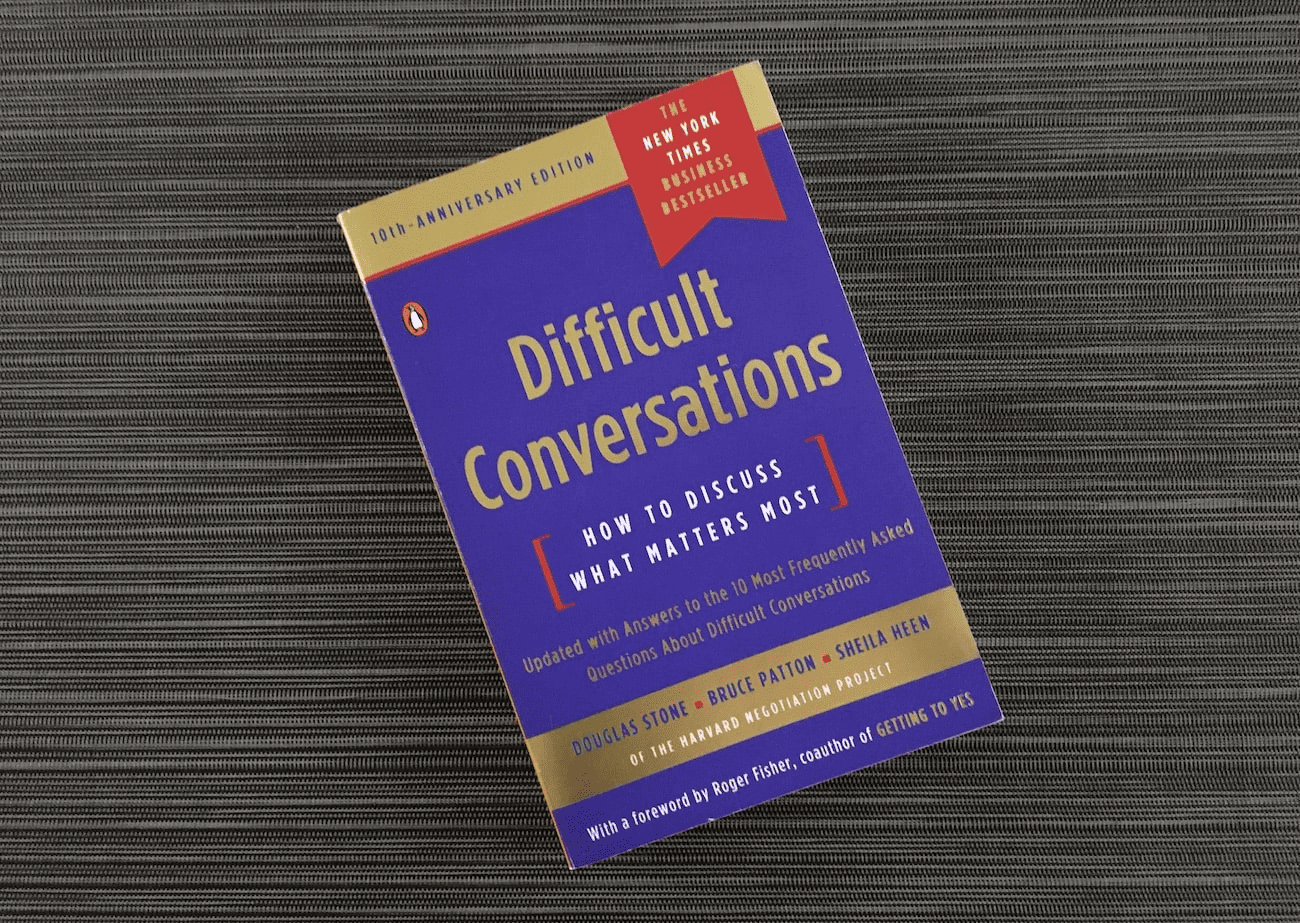

Mastering the Unspoken: A Comprehensive Summary of “Difficult Conversations: How to Discuss What Matters Most” Third Edition
This summary of “Difficult Conversations: How to Discuss What Matters Most,” Third Edition, by Douglas Stone, Bruce Patton, and Sheila Heen, offers a user-friendly guide to navigating the most challenging interactions in life. Drawing on decades of research from the Harvard Negotiation Project, the authors reveal that difficult conversations aren’t just about what’s said, but about what remains unspoken. This book provides a revolutionary framework that transforms conflict from a battle of messages into a productive learning conversation, making these dreaded talks less stressful, more effective, and ultimately, more rewarding for all involved. You’ll discover how to decode the hidden dynamics of conflict, manage your own emotions, and approach even the most intimidating discussions with newfound clarity and confidence. This summary meticulously breaks down every important idea, example, and insight, ensuring you gain a complete understanding of the book’s transformative wisdom.
Quick Orientation
“Difficult Conversations: How to Discuss What Matters Most,” Third Edition, authored by Douglas Stone, Bruce Patton, and Sheila Heen, stands as a seminal work in the field of communication and conflict resolution. Stemming from the extensive research and practical application at the Harvard Negotiation Project, this book aims to demystify why certain conversations feel so daunting and how to approach them with greater skill and less anxiety. The authors argue that the common pitfalls in these exchanges are predictable and, more importantly, avoidable, by shifting one’s internal stance and understanding the underlying structure of conflict.
This revised edition updates its timeless insights for a rapidly changing world, addressing new challenges posed by social media, political polarization, and heightened awareness of systemic injustices. It empowers readers to transform potentially damaging confrontations into constructive learning opportunities, fostering deeper understanding and stronger relationships. We will explore every core concept, illustrative example, and actionable strategy presented in the book, ensuring that you gain a comprehensive grasp of its powerful methodology for navigating life’s toughest talks.
The Problem: Sort Out the Three Conversations
This foundational chapter introduces the core concept that all difficult conversations, regardless of their specific subject, are actually composed of three underlying conversations. Understanding these three conversations is the crucial first step to effectively navigating conflict and transforming it from a dreaded interaction into a productive dialogue. The authors explain that the stress and anxiety associated with difficult conversations stem from the fear of their potential negative consequences, whether we engage or avoid them. However, trying to avoid these conversations or handle them with mere tact is often ineffective, akin to throwing a “diplomatic hand grenade” that still causes damage. The book promises to move readers beyond this dilemma by teaching them to shift from a “message delivery stance” to a more constructive “learning conversation.”
The “What Happened?” Conversation
The first of the three conversations is the “What Happened?” Conversation, where individuals typically disagree about facts, intentions, and blame. This is where most of our energy is spent in conflict, as we try to determine who said what, who did what, and who is at fault. The authors highlight three predictable errors we make in this domain. First, the Truth Assumption leads us to believe that “I am right, and you are wrong,” which quickly results in arguments. Difficult conversations are rarely about objective facts, but rather about conflicting perceptions, interpretations, and values. Second, the Intention Invention causes us to assume we know others’ intentions (often negatively) without concrete evidence. We often attribute bad intentions based on the negative impact of their actions on us, and then we are surprised when explaining our own good intentions doesn’t resolve the issue. Finally, the Blame Frame focuses on who is at fault and who should be punished, leading to defensiveness, denial, and a lack of learning. Instead of asking “Whose fault is it?”, the authors advocate for understanding the Contribution System, which explores how everyone’s actions contributed to the problem without assigning moral judgment. This shift from blame to contribution helps identify the various inputs that led to the situation and opens the door for corrective action moving forward.
The Feelings Conversation
The second critical component is the Feelings Conversation, which deals with the emotional dimension of difficult interactions. Every difficult conversation inherently involves emotions, and the key challenge is not if strong feelings will arise, but how they will be handled. Many people try to suppress or ignore feelings, believing they are irrelevant, messy, or inappropriate, especially in professional settings. This often involves framing the problem solely as a “substantive disagreement.” However, the authors argue that when feelings are at the heart of an issue, ignoring them is like “staging an opera without the music”—you miss the point. Unexpressed feelings don’t disappear; they either leak into the conversation through tone, body language, or sarcasm, or burst out in uncontrolled anger or tears. Suppressing feelings can also block the ability to listen effectively, as internal emotional turmoil consumes attention. Furthermore, avoiding feelings takes a toll on relationships and self-esteem. While not all feelings need to be shared, and timing matters, learning to acknowledge, understand, and appropriately express emotions is crucial for productive dialogue and healthy relationships.
The Identity Conversation
The third and often most subtle conversation is the Identity Conversation, which is an internal dialogue we have with ourselves about what the situation means for our self-image and self-worth. This conversation asks: “What does this situation say about me?” Common underlying identity issues include questions like: “Am I a good person?” “Am I competent?” or “Am I worthy of love?” When our self-image is threatened, we can experience an Identity Quake, leading to anxiety, panic, or a complete loss of composure. The authors emphasize that this internal threat, more than the external conflict, often makes conversations overwhelmingly difficult. There is no “quick fix” to “quake-proof” one’s identity, as grappling with these issues is a part of life and growth. However, improving one’s ability to manage this conversation is key to reducing anxiety and strengthening one’s foundation.
Decoding the Three Conversations: Summary and Shift
The authors provide a helpful table that summarizes the common assumptions and goals in a “Battle of Messages” versus a “Learning Conversation” for each of the Three Conversations. This table highlights how shifting from a stance of certainty and message delivery to one of curiosity and mutual understanding is fundamental. For instance, in the “What Happened?” conversation, the shift is from “I know all I need to know” and “persuade them I’m right” to “each of us has different information” and “explore each other’s stories.” In the “Feelings” conversation, it moves from “feelings are irrelevant” to “feelings are at the heart of the matter and need to be acknowledged.” In the “Identity” conversation, it changes from “I’m either perfect or incompetent” to “both of us are complex and imperfect.” This framework helps us recognize that the goal is not to win an argument, but to foster learning and collaborative problem-solving, even if it feels awkward at first.
The “What Happened?” Conversation: Stop Arguing About Who’s Right
This chapter delves deeper into the “What Happened?” Conversation, which is typically dominated by disagreements about what happened, who is right, and who is to blame. The authors argue that our natural tendency to argue is unproductive because it stems from a fundamental misunderstanding: we each believe “they are the problem,” while simultaneously feeling that “we make sense in our own story.” This leads to a cycle where both parties talk past each other, defending their own conclusions without understanding the underlying perspectives of the other. The key insight is that we each make sense in our own story of what happened, because our stories are built on different information and different interpretations.
Why We Each See the World Differently
Our differing stories originate from two primary sources: different information and different interpretations. First, we have different information because we inevitably notice different things based on our experiences, interests, and what we care about (like Andrew the child only noticing trucks at a parade, while his uncle focused elsewhere). Additionally, we each have access to unique information about ourselves that others don’t, such as our internal struggles, hopes, and constraints. For example, Jack knew the personal sacrifices he made to complete Michael’s project, while Michael was unaware. Second, even with the same information, we arrive at different interpretations because of our past experiences (like Carolina’s reaction to restaurant prices shaped by her immigrant childhood) and the implicit rules we’ve learned about how things should be (like Thelma’s rule about punctuality versus Ollie’s about not sweating small stuff). Finally, our conclusions are often self-serving, as we unconsciously filter information to support what we want to believe. This natural bias makes us feel even more certain that our view is right.
From Certainty to Curiosity: The “And Stance”
To move beyond unproductive arguments, the authors advocate for a shift from certainty to curiosity. Instead of assuming we know everything, we should actively wonder what information or experiences the other person has that we don’t. Curiosity is the pathway into understanding their story. This doesn’t mean abandoning our own perspective, but rather embracing the “And Stance”: recognizing that both our story and their story can make sense simultaneously. The “And Stance” allows us to assert our views and feelings without diminishing theirs, acknowledging that the world is complex and multiple realities can coexist. This approach shifts the goal from proving who is “right” to understanding how each person makes sense of the situation, laying the groundwork for collaborative problem-solving.
Two Exceptions That Aren’t: Absolute Truth and Bad News
The book addresses two common objections to this approach. First, when we are “I Really Am Right” about something (e.g., smoking is bad for health). The authors argue that while the factual assertion may be true, the conversation is usually about more complex issues like feelings, choices, and differing priorities (e.g., fear of sickness vs. the pleasure of smoking). Simply asserting the truth doesn’t resolve these deeper conflicts. Second, when Giving Bad News (like firing someone). Even when one has the unilateral power to impose an outcome, understanding the other person’s story, feelings, and identity concerns is crucial for navigating the conversation with decency and minimizing collateral damage, without invalidating the decision itself. The “And Stance” applies here too, allowing one to be clear about the decision and empathetic to the other’s reaction. The chapter concludes by reiterating that understanding, not agreement, is the essential first step to moving forward in any difficult conversation.
The “What Happened?” Conversation: Don’t Assume They Meant It
This chapter unpacks the critical distinction between intent and impact in difficult conversations. Our assumptions about others’ intentions heavily influence our judgments and reactions. If we believe someone intended to hurt us, we judge them more harshly. The core problem is that intentions are invisible; we invent them based on the impact of their actions on us. This chapter highlights two key mistakes: assuming we know their intentions (the first mistake) and assuming good intentions erase bad impact (the second mistake).
The First Mistake: Assuming We Know Their Intentions
We automatically leap to conclusions about others’ intentions based on the impact their actions have on us. If we feel hurt, we assume they intended to hurt us. This often leads us to assume the worst, especially when we are frustrated or the relationship is strained. This is a common cognitive bias; for instance, Margaret assumed her surgeon was selfish for extending her vacation, only to learn she was doing humanitarian work. This mistake is amplified by technology, as emails and texts lack non-verbal cues, making it harder to discern true intent. Paradoxically, we tend to treat ourselves more charitably, assuming good intentions for our own actions even when they have negative impacts on others.
Getting others’ intentions wrong is costly. Accusing them of bad intentions creates defensiveness, as they feel falsely accused and respond by defending themselves or attacking back. This derails the conversation. Assuming bad intentions can also make the impact worse on us, as our anger and frustration are fueled by the belief of malice. Furthermore, these attributions can become self-fulfilling prophecies, leading us to behave in ways that elicit the negative reactions we initially assumed. It also makes it harder to turn things around in a relationship and can aggravate hostility, especially between groups, by promoting monolithic views of others’ intentions. Finally, it distracts from the heart of our message: the impact. Instead of discussing the actual hurt, we argue about their intentions.
Avoiding the First Mistake: Disentangle Impact and Intent
To avoid the first mistake, we must actively disentangle impact and intent. This involves asking three questions: What did the other person actually say or do? What was the impact on me? What assumption am I making about their intentions based on this impact? The crucial step is to hold your assumption about their intentions as a hypothesis, not a truth. We should then speak to the impact we experienced and inquire about their intentions, rather than making accusations. This means saying, “When you did X, I felt Y,” and then asking, “What were you trying to do?” or “What was your thinking?” This approach acknowledges your feelings while inviting clarification from them. It’s important not to pretend away your assumptions but to state them as hypotheses that you are checking.
The Second Mistake: Assuming Good Intentions Erase Bad Impact
Trey’s mistake in the opening example was assuming that his good intentions (“I was just trying to help”) should erase Leo’s upset. This logic is flawed because well-intentioned people can still have negative impacts. When we rush to protest our good intentions, we make matters worse. First, we change the topic of the conversation from their hurt to our character. Second, we leave them feeling dismissed and unheard, as if their feelings are invalid simply because our intentions were pure. This is particularly damaging in discussions about power or inequality. Third, we ignore the complexity of human motivations; our intentions are often mixed, and we may not even be fully aware of all our underlying drivers. Taking time to reflect on the complexity of our own intentions sends a positive message about our willingness to learn and care for the relationship. The chapter stresses that sometimes, intentions simply don’t matter as much as the actual impact. For example, an inaccessible building’s impact on wheelchair users is paramount, regardless of the architect’s non-malicious intent.
Avoiding the Second Mistake: Listen for Feelings, and Reflect on Your Intentions
To avoid the second mistake, when accused of bad intentions, we must first listen past the accusation for the impact and feelings. Recognize that their accusation contains both an assumption about your intent and a statement about their emotional experience or a problem needing attention. Prioritize hearing and acknowledging their hurt or anger. Only after they feel heard should you be open to reflecting on the complexity of your own intentions. This allows for a more nuanced conversation where you can clarify what you intended while also acknowledging any negative impact. The example of Trey and Leo demonstrates how this approach can transform a circular argument into a productive dialogue, leading to understanding and apologies rather than frustration.
The “What Happened?” Conversation: Abandon Blame
This chapter addresses the pervasive and destructive tendency to focus on blame in difficult conversations. The authors argue that focusing on blame is a bad idea not just because it’s hard to talk about or causes pain, but because it actively inhibits our ability to learn what truly caused the problem and to effectively correct it. Blame is fundamentally about judging and looking backward (“Who caused this? How should they be judged? How should they be punished?”). It assumes an either-or scenario where one person is solely at fault, leading to defensiveness and arguments. In contrast, contribution is about understanding and looking forward, asking “How did we each contribute to this situation?” and “How can we change it going forward?” This distinction is critical for productive problem-solving.
The Costs of the Blame Frame
Focusing on blame, such as in the example of the ExtremeSport presentation, has several costs. It hinders problem-solving by diverting energy from understanding why things went wrong to assigning fault. When the goal is to fix a problem, like finding a lost dog or fixing a ceiling, blaming is unproductive. Blame also leaves a bad system undiscovered. Firing one person (the “bad apple” approach) might feel like a solution, but it often fails to address the underlying systemic issues that contributed to the problem in the first place, leading to recurring issues. For example, a company might fire a VP for a bad decision instead of examining the culture that silenced dissenting opinions. Historically, even contexts where blame is central, like legal systems, often face a trade-off between assigning blame and truly understanding the truth, leading to the creation of “truth commissions” that prioritize understanding over punishment.
The Benefits of Understanding Contribution
Shifting to a contribution framework offers significant benefits. It makes conversations easier to raise because it removes the pressure of having to prove someone else is entirely at fault. When Johannes realizes his own contribution to communication problems with headquarters, he is more willing to engage. Contribution also encourages learning and change. By understanding the interactive system of how both parties contributed to a problem (like marital infidelity), they can identify patterns and behaviors that need to change, fostering a more durable resolution. Without this understanding, problems are likely to resurface.
Three Misconceptions About Contribution
The authors address three common misunderstandings that prevent people from embracing contribution. Misconception #1: I Should Focus Only on My Contribution. This is incorrect; the goal is to understand joint contribution. Recognizing your part doesn’t negate the other’s, and both are usually involved. Misconception #2: Putting Aside Blame Means Putting Aside My Feelings. This is false. The impulse to blame often arises from unexpressed strong emotions. Directly sharing feelings (“I feel devastated”) actually reduces the need to blame and frees the conversation to move towards contribution. What people often truly seek is understanding and acknowledgment, not just an admission of fault. Misconception #3: Exploring Contribution Means “Blaming the Victim.” This is a crucial and difficult distinction. The authors emphasize that contribution is not about blaming victims, which is never acceptable. Contribution asks “What did I do that contributed to this or made it more likely to happen?” even in situations where one is entirely blameless, such as being hit by a bicyclist while crossing the street legally. It’s about empowering oneself to find ways to protect oneself in the future. However, the authors caution that discussing “contribution” can be problematic and exacerbate harm in contexts involving trauma or deeply ingrained systemic injustices where power imbalances and societal narratives already unfairly assign blame to the marginalized. In such cases, the focus should be on support and addressing the larger systemic “fire.”
Finding Your Fair Share: Four Hard-to-Spot Contributions
Even when willing, it can be hard to spot one’s own contribution. The book identifies four common, often overlooked contributions:
- Avoiding Until Now: Not addressing an issue earlier, allowing it to fester. This includes complaining to third parties instead of direct communication.
- Being Unapproachable: Having an interpersonal style (e.g., short-tempered, judgmental) that deters others from raising concerns.
- Intersections: Differences in background, preferences, communication styles, or relationship assumptions that clash (like Toby’s need for immediate discussion versus Eng-An’s need for space).
- Problematic Role Assumptions: Unconsciously adhering to roles that perpetuate unhelpful dynamics within a family or organization (e.g., always being the “rational one” or the “problem-solver”).
The chapter offers two tools for spotting contribution: Role Reversal (imagining what the other person would say you contributed) and The Observer’s Insight (stepping back as a neutral third party). It concludes by emphasizing that moving from blame to contribution requires persistence and a willingness to understand oneself (as a “shifter” or “absorber” of blame). Taking responsibility for your own contribution early on in a conversation can signal your intent and make it easier for others to acknowledge theirs. This shift is a powerful way to foster learning, meaningful change, and ultimately, a more balanced and effective approach to difficult conversations.
The Feelings Conversation: Have Your Feelings (Or They Will Have You)
This chapter underscores the fundamental role of feelings in difficult conversations, asserting that “Feelings Matter: They Are Often at the Heart of Difficult Conversations.” The authors contend that attempting to exclude emotions from these discussions is futile and detrimental, akin to “staging an opera without the music.” When feelings are the core issue, ignoring them prevents true resolution. Unexpressed emotions, they explain, will inevitably find a way to manifest, either leaking into the conversation through tone or body language, or bursting forth in uncontrolled outbursts. Furthermore, unresolved feelings can block our ability to listen to others and ultimately take a toll on our relationships and self-esteem. While not every feeling needs to be shared, learning to handle them productively is crucial.
A Way Out of the Feelings Bind
To navigate the “Feelings Conversation” effectively, the book proposes three key guidelines:
- Finding Your Feelings: Learn Where Feelings Hide: Many of us struggle to identify our true emotions because feelings are complex and often disguised. They influence how we think and remember, shaping our perceptions of events. Each person develops a unique “emotional footprint” based on family and cultural norms about which feelings are acceptable to have and express. We often deny feelings because we believe there’s something “wrong” with having them, or because we assume “good people” don’t feel certain emotions (like anger or shame). We may also prioritize others’ feelings over our own. The chapter encourages exploring the bundle of feelings behind simple labels (e.g., anger might mask hurt, confusion, or fear) and identifying feelings lurking beneath attributions, judgments, and accusations (e.g., “You are self-absorbed” is a judgment, not a feeling like “I feel hurt and rejected”). The urge to blame often signals unexpressed emotions.
- Don’t Treat Feelings as Gospel: Negotiate with Them: This seemingly paradoxical advice means that while our feelings are authentic, they are also influenced by our thoughts and interpretations. We can negotiate with our feelings by examining the story we tell ourselves that gives rise to them. By exploring the other person’s story, checking assumptions about intentions, and considering joint contribution, our feelings can shift and become more nuanced. The example of Jamila, who needed to acknowledge her buried anger before expressing love, illustrates this process.
- Don’t Vent: Describe Feelings Clearly: Expressing feelings effectively is different from simply being emotional. When sharing feelings, it’s crucial to frame them back into the problem (acknowledge their importance to the issue at hand). It’s also vital to express the full spectrum of your feelings, as Brad did with his mother, bringing depth and complexity beyond just anger. Finally, don’t evaluate or problem-solve—just share. This means using pure feelings (avoiding judgments, attributions, or blame) and resisting the urge to offer solutions immediately. It also means not monopolizing the emotional space, recognizing that both sides can have strong feelings simultaneously. A helpful reminder is to simply say, “I feel…” (followed by a pure emotion, not a judgment), which keeps the focus on your perspective and is less likely to provoke defensiveness.
The Importance of Acknowledgment
Even after clearly describing your feelings, acknowledgment from the other person is a critical, non-skippable step. Acknowledgment means letting the other person know you’ve heard them, that their feelings matter, and that you’re working to understand. It answers invisible questions like: “Are my feelings okay? Do you understand them? Do you care about them? Do you care about me?” It is tempting to jump to “fixing” their feelings or offering solutions, but this is premature problem-solving. Acknowledging their feelings first, by paraphrasing or validating, creates the space for them to feel heard and opens the door for further conversation. It is crucial to remember that acknowledging is not agreeing with their perspective, but simply validating their emotional experience. The chapter emphasizes that listening for and acknowledging others’ feelings, especially when you hold more power, is a powerful act of care that can transform difficult conversations.
The Identity Conversation: Ground Your Identity
This chapter highlights the Identity Conversation as a profound source of difficulty and anxiety in tough discussions. It’s the internal debate about “who we are and how we see ourselves,” often involving questions about our competence, goodness, or worthiness of love. When a conversation threatens our self-image, it can trigger an Identity Quake, leading to intense anxiety and making effective communication nearly impossible. The authors acknowledge that completely “quake-proofing” one’s identity is impossible, as personal growth involves confronting hard truths. However, by understanding these dynamics, we can learn to manage our reactions and strengthen our sense of self.
Vulnerable Identities: The All-or-Nothing Syndrome
A primary factor contributing to a vulnerable identity is “all-or-nothing” thinking: seeing ourselves as either entirely competent or completely incompetent, purely good or wholly bad. This rigid self-perception makes us hypersensitive to feedback. When faced with negative information, all-or-nothing thinking forces two problematic responses:
- Denial: We cling to a purely positive self-image, denying any feedback that is inconsistent with it. This requires immense psychic energy and prevents growth, as seen in the chemist who rejected feedback about her performance to maintain her self-perception as “super-competent.”
- Exaggeration: Conversely, negative feedback can cause us to flip our self-image entirely, concluding we are “completely incompetent” or “worthless.” We let one piece of information define our entire identity, reinforcing existing self-doubts and leading to debilitating reactions.
Ground Your Identity: Steps to Self-Acceptance
Improving identity management involves two steps. First, become aware of your identity issues. This means observing patterns in what triggers you and asking yourself what aspect of your identity feels at risk. This often requires deep introspection, as illustrated by Jimmy, who realized his fear of expressing emotion stemmed from a deeper fear of rejection and losing his identity as the “unflappable” one. Second, complexify your identity by adopting the And Stance. Move away from the false dichotomy of “perfect or worthless” and embrace the reality that you are a mix of good and bad behaviors, noble and less noble intentions, and wise and unwise choices. Ben’s struggle with loyalty versus providing for his family demonstrates how multiple, sometimes conflicting, identities can coexist.
The chapter emphasizes three key characteristics to accept about yourself for a more grounded identity:
- You Will Make Mistakes: Accepting that you sometimes make mistakes, even “stupid” ones, is crucial for engaging in learning conversations and for preventing the need for denial or exaggeration. Admitting mistakes is often seen as a sign of confidence, not weakness.
- Your Intentions Are Complex: Acknowledge that your motivations are rarely purely good or bad, but often mixed. Being honest about this complexity, as Jade was about her reasons for breaking up with Evan, allows for more authentic and resilient responses to accusations.
- You Have Contributed to the Problem: Recognizing your contribution to problems, even when you are blameless in the moral sense, is empowering. It shows where you have leverage to change the system. Walker’s realization of his contribution to his daughter’s struggles, for instance, allowed him to approach her with compassion instead of fear.
During the Conversation: Learn to Regain Your Balance
Even with preparation, Identity Quakes can occur mid-conversation. The goal is not to avoid them, but to regain balance. Four strategies are offered:
- Let Go of Trying to Control Their Reaction: You cannot control how others react to bad news or difficult truths. Trying to smooth over their upset often makes things worse. Instead, adopt the And Stance: be clear about your message and give them space to react as they need to, validating their feelings without trying to fix them.
- Prepare for Their Response: Mentally rehearse possible negative reactions and their identity implications for you. This reduces surprise and allows you to consider your counter-responses in advance.
- Imagine That It’s Three Months or Ten Years from Now: Gaining perspective by projecting yourself into the future can help you recognize that the current intensity of the situation will likely diminish over time, and provide clarity on what truly matters.
- Take a Break: If overwhelmed, ask for time to think and regain composure. This is not embarrassment but a strategic move to prevent further deterioration of the conversation.
Finally, the chapter reminds us that their identity is also implicated. Understanding what might be at stake for the other person (e.g., Annie Mae’s fear of being a disappointment) can foster empathy and guide your approach. Explicitly raising identity issues, when appropriate, can get directly to the heart of the matter. The chapter concludes by encouraging readers to find the courage to ask for help when facing overwhelming blows to identity, emphasizing that vulnerability is not weakness but a path to connection and support.
Create a Learning Conversation: What’s Your Purpose? When to Raise It and When to Let Go
This chapter tackles the critical question of when to engage in a difficult conversation and when to let go. It emphasizes that we cannot, and should not, have every difficult conversation. The decision isn’t about finding a “right choice,” as there’s no way to know outcomes in advance. Instead, the goal is to make a considered choice by weighing the potential costs of engaging (often immediate and obvious) against the potential costs of not engaging (which accumulate incrementally over time, like festering resentment). Working through the Three Conversations (What Happened, Feelings, Identity) is crucial for making this informed decision, as it clarifies your own stance and potential distortions, reducing anxiety and making a productive conversation more likely.
Three Kinds of Conversations That Don’t Make Sense
The book identifies three scenarios where initiating a conversation might not be sensible, at least initially:
- Is the Real Conflict Inside You? Sometimes the difficulty stems more from internal struggles (e.g., a leader’s ambivalence about work-life balance influencing resentment over delegating childcare) than from the external interaction. In such cases, an internal conversation with oneself is needed first.
- Is There a Better Way to Address the Issue Than Talking About It? Sometimes, actions speak louder than words. Changing your own behavior, rather than initiating a conversation about the other person’s behavior, might be more effective. Walter’s decision to increase contact with his mother, rather than confronting her about asking him to move home, exemplifies this. Creative solutions, like developing traffic-stop cards for deaf drivers, can also address issues without traditional conversation.
- Do You Have Purposes That Make Sense? If your true purpose is to change other people, vent, or tell them off, the conversation is likely to be unproductive and damaging. We cannot force others to change their minds or behavior; mutual learning is more likely to induce change than one-sided persuasion. “Hit-and-run” comments (quick, judgmental remarks without follow-up) are also ineffective, as they provoke defensiveness without fostering understanding. A productive purpose focuses on understanding the other person’s story, expressing your own views and feelings to your satisfaction, and collaboratively problem-solving. This requires a learning stance, where the goal is mutual understanding and exploration, not just persuasion.
Letting Go: When to Relinquish the Struggle
Even after careful consideration and skillful engagement, some situations may remain unresolved. The book acknowledges that letting go is sometimes the wisest choice. This isn’t always easy, especially when emotional investment runs deep. It’s not about forgetting or not caring, but about finding a place of peace and relinquishing the emotional burden.
The authors propose adopting liberating assumptions to facilitate letting go:
- It’s Not My Responsibility to Make Things Better; It’s My Responsibility to Do My Best: Karenna’s struggle to salvage a failing relationship highlights the burden of feeling solely responsible for its success. Accepting limits and recognizing that you can only do your best can bring closure. Sewit’s choice to not address every casual slight related to her race and gender, recognizing the impossible burden, is another example.
- They Have Limitations Too: People may lack the capacity to change, even after understanding your feelings. Accepting their imperfections, like a perpetually opinionated brother, can shift the burden from endless struggle to finding ways to love them as they are.
- This Conflict Is Not Who I Am: When conflict becomes central to one’s identity (e.g., defining oneself as the “long-suffering wife” or the “opposition faction”), it’s hard to let go. Shifting focus back to one’s core values and identity beyond the conflict is crucial for moving forward.
- Letting Go Doesn’t Mean I No Longer Care: David’s journey of forgiving his brother’s murderer illustrates that releasing anger and indignation does not equate to forgetting or losing love. It allows for a more peaceful way to remember and grieve, freeing up emotional space.
Ultimately, the chapter argues that the decision to engage or let go should be a conscious, well-reasoned one. If you choose to engage, adopting the purposes of learning their story, expressing your views and feelings, and problem-solving together transforms the conversation from a battle to a mutual exploration. These purposes, combined with a learning stance, lay the groundwork for effective communication, which is detailed in the subsequent chapters on listening, expression, and problem-solving.
Create a Learning Conversation: Getting Started: Begin from the Third Story
This chapter focuses on the crucial opening moments of a difficult conversation, arguing that the beginning is where you have the greatest leverage to influence the entire direction. Our typical approach, which is to begin inside our own story, inadvertently triggers defensiveness and immediate counterattack from the other person. By describing the problem from our perspective, we often implicitly judge them and present them as “the problem,” immediately activating their Identity Conversation and setting up an “either-or” dynamic. The key to a more productive start lies in two powerful guidelines: (1) Begin from the “Third Story” and (2) Offer an Invitation to Explore the Issues Jointly.
Step One: Begin from the Third Story
The Third Story is defined as the neutral, objective perspective a keen observer or mediator would tell, one that rings true for both sides without taking sides. It describes the gap or difference between your story and the other person’s. For example, instead of Jason blaming Jill for leaving dishes (“You’re a health risk”), the Third Story notes that they “have different preferences around when the dishes are done.” This neutral framing allows both parties to acknowledge the problem as a shared phenomenon, not one person’s fault. To do this, you don’t need to know the other person’s full story; you just need to acknowledge that there’s likely more to learn from their perspective. Examples demonstrate how common accusatory openings can be reframed into a Third Story invitation, such as “You and I obviously have different understandings of what Dad intended…” or “I was upset by something you said… I wanted to explain what was bothering me, and also hear your perspective.” This shift is crucial because it transforms the conversation from an argument to a joint exploration, allowing both parties’ views to be acknowledged as legitimate parts of the discussion. Even if the other person starts from their own story, you can still step to the Third Story by framing their opening as their half of a neutral description, redirecting the conversation.
Step Two: Extend an Invitation
Once the problem is described from the Third Story, the second step is to offer a simple invitation for joint engagement. This involves clearly describing your purposes for the conversation, which should be mutual understanding and problem-solving. Letting them know your goal is to learn their perspective, share yours, and work together makes the conversation less threatening and more likely to be accepted. It’s essential to invite, don’t impose; the other person must feel they have a choice to participate. An effective invitation also seeks to make them your partner in figuring it out, offering them an appealing role (e.g., advisor, collaborator) rather than casting them as “the problem.” This genuine offer of partnership, even if it requires reframing your initial perceptions of them, increases their willingness to engage. Finally, you must be persistent in extending this invitation, as the other person may not immediately grasp the new conversational dynamic, requiring you to gently redirect them back to the collaborative frame, as Ruth did with her ex-husband Brian about childcare arrangements.
Some Specific Kinds of Conversations
The chapter also offers tailored advice for specific types of difficult conversations:
- Delivering Bad News: It’s best to put the bad news up front, clearly and empathetically. Then, invite the other person into a Third Story frame: “Here’s the news; you have your views and reactions; I have mine; let’s make room to discuss each of these.” Don’t try to trick them or make them guess the news.
- Making Requests: Frame requests as invitations for exploration rather than demands. For example, instead of “I deserve a raise,” say “I’d like to explore whether a raise for me might make sense. From the information I have, I think I deserve one. [Here’s my reasoning.] I wonder how you see it?” This acknowledges their perspective and invites their input.
- Revisiting Conversations Gone Wrong: If past attempts have failed, begin by talking about how to talk about it. Describe the usual problematic dynamic from the Third Story (“I know that in the past when I’ve raised X, people have felt Y”) and then invite a discussion on how to address it more effectively in the future (“I’m wondering whether we could talk about how we each react… and whether there’s a better way”).
The chapter concludes by offering a roadmap for moving forward once the conversation is initiated from the Third Story. The subsequent chapters will delve deeper into the “how to” of exploring each person’s story, listening effectively, expressing your own views, and collaboratively problem-solving. The fundamental idea is that by shifting your internal stance and mastering these opening moves, you can transform the entire trajectory of difficult conversations.
Create a Learning Conversation: Learning: Listen from the Inside Out
This chapter emphasizes that listening is perhaps the most powerful skill in difficult conversations, transforming interactions and fostering deeper understanding. It goes beyond mere technique, arguing that authentic listening stems from an internal stance of genuine curiosity and care. The anecdote about Andrew and his uncle Doug highlights our universal need to feel heard and understood. The chapter demonstrates that listening is crucial not only for understanding the other person but also for helping them listen to you.
Listening Transforms the Conversation
The story of Greta and her mother illustrates the profound impact of listening. Initially, Greta’s attempts to persuade her mother to follow a diabetes regimen were met with frustration and shutdown because Greta was trying to “fix” her mother’s behavior without understanding the deeper emotional issues. When Greta shifted to a stance of pure curiosity—asking questions, paraphrasing, and acknowledging her mother’s feelings—she uncovered layers of grief, loneliness, and fear related to her father’s absence and a family history of diabetes. This deep listening allowed her mother to feel truly heard, leading to an open dialogue and a willingness to accept help.
Listening to Them Helps Them Listen to You
Paradoxically, when you genuinely listen to others, they become more receptive to listening to you. The reason someone isn’t listening is often because they don’t feel heard themselves. By actively listening and demonstrating understanding, you remove this block, freeing up their attention to absorb your perspective. Moreover, listening enhances your ability to influence them because it helps you uncover their underlying interests, concerns, and motivations, allowing you to tailor your message more effectively. Research on “conversational receptiveness” shows that people are more open to persuasion when they feel you are genuinely receptive to their views.
The Stance of Curiosity: How to Listen from the Inside Out
Effective listening starts “from the inside out,” meaning it begins with managing your own internal state. The biggest barrier to authentic listening is our internal commentator—the constant stream of thoughts, feelings, and judgments. Instead of trying to “turn it off” (which is impossible), the advice is to “turn it up” and become fully aware of its contents. This allows you to negotiate your way to curiosity, reminding yourself that there’s always more to learn and that your purpose is to understand, not to persuade. If your internal voice is too strong to manage (e.g., you’re overwhelmed by anger or pain), it’s sometimes necessary to talk first to express your own feelings briefly before attempting to listen, or to take a break. This preserves authenticity.
Three Skills: Inquiry, Paraphrasing, and Acknowledgment
Beyond the internal stance, three primary skills support good listening:
- Inquiry to Learn: Ask questions only to learn more, not to make statements disguised as questions (e.g., “Are you going to leave the refrigerator door open like that?” is an assertion, not a question) or to cross-examine (e.g., “Surely you’d agree that you made more mistakes, wouldn’t you?”). Instead, use open-ended questions (“Tell me more,” “Help me understand better”) and ask for more concrete information (“What leads you to say that?”). Focus on questions about the Three Conversations (e.g., “What impact has this had on you?”). Crucially, make it safe for them not to answer, emphasizing that your question is an invitation, not a demand.
- Paraphrase for Clarity: Expressing in your own words what you understand the other person to be saying has two benefits: it checks your understanding and shows that you’ve heard them. If someone keeps repeating themselves, it’s a sign you need to paraphrase more. The example of Rachel and Ron arguing about Shabbat demonstrates how paraphrasing can shift a circular argument into a productive dialogue by helping each feel heard.
- Acknowledge Their Feelings: Feelings “crave acknowledgment.” This means letting the other person know their feelings matter and you’re trying to understand them. Acknowledgment answers invisible questions like “Are my feelings okay?” or “Do you care about me?” It is crucial to acknowledge before problem-solving; trying to “fix” feelings prematurely leaves the other person feeling dismissed. It’s vital to remember that acknowledging is not agreeing with their perspective, but simply validating their emotional experience (e.g., “It sounds like you’re really upset about this” does not mean “I agree this is unfair”).
Deciding to Listen—or Not
While listening is powerful, it has costs and risks: it requires time and emotional energy, carries the risk of losing touch with our own perspective (especially for those prone to empathy), and might diminish our will to fight for our own side in larger group conflicts. There are also concerns about fairness, as the burden of listening is often unevenly distributed, particularly for marginalized groups. The authors emphasize that these concerns are real and must be weighed. However, they argue that the benefits—increased understanding, enhanced influence, and stronger relationships—often outweigh the costs. Empathy is presented as a journey, not a destination, where the willingness to struggle to understand is more important than achieving perfect comprehension.
Create a Learning Conversation: Expression: Speak for Yourself with Clarity and Power
This chapter shifts focus from listening to effective self-expression in difficult conversations. It asserts that powerful expression has little to do with eloquence or quick wit; instead, it’s about clarity, self-knowledge, and a belief that what you want to share is important. The primary task is not to persuade or win, but to clearly convey your perspective, feelings, and identity. The chapter introduces the concept of entitlement as a foundational element for speaking with impact, and then delves into practical guidelines for effective expression.
You’re Entitled (Yes, You)
To express yourself clearly and with impact, you must first believe that what you want to say is worthy of expression. This means recognizing that “My views and feelings are as legitimate, valuable, and important as yours—no more, but no less.” This conviction is crucial, especially when feeling intimidated or powerless. The quote from poet Audre Lorde emphasizes that “Your silence will not protect you,” highlighting the greater costs of withholding important truths. The authors caution against self-sabotage, where unconscious ambivalence leads us to express ourselves incompetently, confirming our hidden belief that we don’t deserve to be heard. They also stress that failure to express yourself keeps you out of the relationship, as seen in Angela’s fiancé who was “too nice” but emotionally absent. Meaningful relationships are built on shared vulnerability and authentic self-expression, which also helps keep problems hidden in organizations if those with unique perspectives (like Ahmed, a first-generation college student) don’t speak up. The chapter concludes by noting that while you are entitled to express yourself, you are not obligated to do so, and that those in positions of influence should work to create environments where everyone feels encouraged to share.
Speak the Heart of the Matter
The next step is to pinpoint what matters most to you and express it directly. We often make the mistake of saying the least important things, while the “heart of the matter” remains unsaid. Charlie’s relationship with his dyslexic brother Gage illustrates this: Charlie’s advice (“You should do debate team”) was superficial, while his deeper feelings of admiration, regret, and desire to be a “good brother” were hidden. When Charlie shared his true feelings, it transformed their relationship.
The authors advise: “Say What You Mean: Don’t Make Them Guess.” We often resort to indirect communication (subtext, jokes, veiled hints) to avoid conflict, thinking it’s a “happy medium.” However, this approach triggers all the problems of direct confrontation without the benefit of clarity. For instance, “Honey, there’s a lot to do around the house” fails to convey “I want to spend more time with you.” To avoid this, figure out your true thoughts and feelings and state them directly. Finally, don’t make your story simplistic; use the “Me-Me” And. Our internal experiences are complex, often containing contradictory thoughts and feelings. The “Me-Me And” allows you to express this complexity accurately (e.g., “I’m grateful you arrived quickly, and I’m confused by the invoice”). This approach also helps overcome the fear of being misunderstood or sounding self-serving.
Telling Your Story with Clarity: Three Guidelines
Clarity in expression is paramount for productive conversations. Three guidelines ensure this:
- Don’t Present Your Conclusions as The Truth: While our beliefs feel like facts, they are often opinions, judgments, or interpretations. Stating “Spanking children is just wrong” as a truth alienates; prefacing it with “I believe…” or “I feel strongly…” is more effective. Even memories can be unreliable. Distinguishing between facts and opinions allows for a more constructive discussion.
- Share Where Your Conclusions Come From: Explain the information you have and how you interpreted it. This means sharing the underlying experiences, implicit rules, and values that shaped your views. Telling the story of your private school experience, including your guilt about tuition, makes your concerns about your stepdaughter’s schooling understandable to your wife. The more specific you are, the clearer your message.
- Don’t Exaggerate with “Always” and “Never”: Give Them Room to Change: Exaggerations like “You always criticize how I dress” invite arguments about frequency and imply the other person is incapable of change. Instead, share the specific impact of their behavior and what you would prefer them to do differently (“When you tell me my suit reminds you of wrinkled old curtains, it stings… I wish I could feel more often like you believed in me”). This invites positive behavioral shifts.
Help Them Understand You
Just as you need to understand them, they need to understand you. This may involve using metaphors or analogies they can relate to (e.g., likening anxiety to a fear of flying). It’s also crucial to adapt your communication style to their preferences (e.g., some prefer visual data, others step-by-step details). Finally, ask them to paraphrase back what they’ve heard to check for understanding, and ask how they see it differently—and why. This invites true dialogue and uncovers potential misunderstandings, fostering a real conversation rather than a simple exchange of views. The chapter concludes by reaffirming that the ultimate authority on your own thoughts, feelings, and experiences is you, and speaking for yourself, with clarity, lends power.
Create a Learning Conversation: Problem-Solving: Take the Lead
This chapter focuses on the crucial stage of problem-solving after mutual understanding has been established. It acknowledges that even after a learning conversation, disagreements can persist. The key message is that you must take the lead in keeping the conversation productive, especially if the other person is uncooperative. This involves a set of powerful “moves”: reframing, persistent listening, and naming the dynamic.
Skills for Leading the Conversation
- Reframe, Reframe, Reframe: This involves taking the essence of what the other person says and translating it into concepts from the Three Conversations framework. For example, if they say “I’m right, and there are no two ways about it!” you reframe to “I want to make sure I understand your perspective. You obviously feel very strongly about it. I’d also like to share my perspective.” This redirects the conversation from judgment to exploration. Manuel’s interaction with Omar (the FabTools contact) demonstrates persistent reframing from blame to contribution, guiding Omar towards a collaborative problem-solving mindset. The chapter provides a table illustrating how to reframe accusations (into intent/impact), blame (into joint contribution), and judgments (into feelings).
- The “You-Me” And: This reframing move helps shift from an “either-or” dynamic to the “and” stance between two people. It allows you to say, “I can understand what you have to say, and I can share what I have to say.” Stacy’s conversation with her adoptive mother about finding her birth mother effectively uses the “You-Me And” to validate her mother’s feelings while asserting her own needs and intentions.
- It’s Always the Right Time to Listen: This is the most crucial rule for managing interaction. No matter how challenging the other person becomes (emotional, defensive, accusatory), listening and acknowledging their perspective is the single most powerful move. It’s about being persistently interested in hearing their views, even when they’re attacking yours. Harpreet’s persistent listening to Monisha about her reluctance to say “I love you” demonstrates how hearing the underlying feelings and stories can break a dysfunctional pattern.
- Name the Dynamic: Make the Trouble Explicit: When reframing and listening aren’t enough, and the conversation is stuck in unproductive patterns (interruptions, dismissals, hidden emotions), naming the dynamic can help. This means bringing the problematic conversational pattern itself to the table as a topic of discussion. For example, “I’ve noticed that we keep running out of time whenever we start talking about this.” This can clear the air, as the other person may be unaware of their behavior, but it’s a powerful move best used when other strategies have failed.
Now What? Begin to Problem-Solve
Once understanding is established, the focus shifts to collaborative problem-solving.
- It Takes Two to Agree: Recognize that you don’t have to agree unless both parties are persuaded. This liberates you from feeling responsible for getting the other person to say “yes.”
- Gather Information and Test Your Perceptions: Understand why you disagree by exploring different assumptions, past experiences, and information. Propose crafting a test (like Henry and Rosario calling the supplier) to gain new, shared data. Be explicit about what is still missing in their story and what would persuade you to change your view. Also, ask what (if anything) would persuade them.
- Invent Options: Brainstorm creative solutions that meet both sides’ most important needs. The example of the barking dog illustrates how creative options can satisfy seemingly conflicting interests.
- Ask What Standards Should Apply: If creative solutions are elusive, propose external standards or fair principles to guide the resolution (e.g., industry norms, ethical principles). The Principle of Mutual Caretaking emphasizes that good resolutions usually require each party to accommodate the other’s differences, rather than one side always dominating.
- If You Still Can’t Agree, Consider Your Alternatives: Not every conflict can be resolved by mutual agreement. Sometimes, even after skillful communication, you must decide whether to accept a less-than-ideal outcome or walk away. This involves clearly explaining why you are walking away and being willing to accept the consequences.
Finally, the chapter emphasizes that problem-solving, and difficult conversations themselves, often take time. They are not single events but a series of exchanges over time, requiring patience and persistence.
Ten Questions People Ask About Difficult Conversations
This section provides nuanced answers to common questions about the book’s core principles, offering additional insights and addressing potential misunderstandings.
1. It sounds like you’re saying everything is relative. Aren’t some things just true, and can’t someone simply be wrong?
The authors clarify that they are not saying everything is relative or that facts are irrelevant. Facts exist and people can be right or wrong about them, but differentiating facts from opinions, assumptions, values, and judgments is crucial, especially in emotionally charged discussions. Memories, for instance, are often fluid and unreliable. When discussing “truth,” it’s also important to consider whose assertion of facts we trust, as this is often influenced by pre-existing trust and bias (e.g., believing a preferred news outlet). The rise of misinformation and disinformation makes this distinction even more urgent. To navigate this:
- Examine your own beliefs: Understand why you believe what you believe.
- Shift purposes: Focus on mutual understanding rather than changing minds.
- Explore their story: Ask what they are seeing, how they make sense of it, and where the disagreement lies.
- Acknowledge differing interpretations: Even if not all stories are “equal,” a learning conversation is needed to find out why. Some interpretations are more reasonable based on more complete information or fewer extreme assumptions.
- Acknowledge limits of human perception: Even for “absolute truths” (religious or scientific), human ability to perceive them is limited. Humility and respect are key, even when arguing with conviction. The challenge isn’t whether truth exists, but how we collaboratively seek and apply it amidst differing perspectives and biases.
2. What if the other person really does have bad intentions—lying, bullying, or intentionally derailing the conversation to get what they want?
While we often misattribute bad intentions, the authors acknowledge that people do sometimes have bad intentions, lie, bully, or manipulate. In such cases:
- Be careful about rewarding bad behavior: Giving in teaches them that bad behavior pays off.
- Beware of reacting in kind: “Playing their game” (e.g., lying back) can damage your reputation.
- Seek to understand their justification: Even manipulative behavior often stems from a perceived justification (e.g., they feel victimized, or it’s the “only way” to get what they want). Understanding their logic opens a slim possibility for persuasion.
- Strategies for difficult behaviors:
- Name the Dynamic: Make explicit what you see happening in the conversation (e.g., “When you get upset, you get your way”). This neutralizes the tactic without accusing intent.
- Clarify Consequences: Resolve in your own mind what your boundaries are and what you will do if their behavior continues. Communicate these consequences clearly, focusing on your choices, not trying to control them. This avoids “enough is enough” speeches which are often ineffective.
The aim is to maintain your integrity and pursue your objectives effectively, rather than just reacting to their tactics.
3. What if the other person is genuinely difficult, perhaps even struggling with mental health issues?
The book acknowledges that some individuals are genuinely more difficult due to mental health issues (depression, anxiety, narcissism, etc.) or deeply ingrained personality traits. Good communication skills can help, but they are not a cure. Key advice:
- Distinguish helping from fixing: You cannot force someone to change; your role is to help, not to “fix” them like “wild things.”
- Understand their internal logic: Even seemingly “irrational” behaviors (like OCD rituals or addiction) have an internal logic for the person struggling; understanding this can provide insight and dampen the impact on you.
- Recognize “blind spots”: Difficult people often have no awareness of how their non-verbal cues (tone, facial expressions) impact others. Providing concrete, observable data (e.g., showing a video) can help them see their own behavior.
- Address implications of alternate views: Ask “What if your problematic behavior were true? What would it mean?” This can help them explore the issue without feeling directly accused.
- Aggression from fear: Sometimes aggression or rigidity stems from deep fear (e.g., a new boss’s rigidity due to fear of failure). Clarifying and validating their underlying concern can help.
- Remember joint contribution: Even with difficult people, consider how your own actions might be inadvertently sustaining or compounding the dynamic.
- Patience and persistence: Change is often slow and halting.
The goal is to do your best to fuel productive interchange, without letting yourself be a punching bag, and recognize that some people are simply beyond your ability to change.
4. What if the other side has more power, or the game is stacked against me?
Feeling powerless or facing someone with significant power (due to resources, role, or strong walkaway alternatives) is deeply uncomfortable. The book clarifies that “power” isn’t just command and control; it also includes persuasive power (influence). The more useful question is not “Who has more power?” but “How can I maximize my ability to influence?”
- Power is context-specific and fluid: A CEO’s power in the boardroom may not extend to their anxious child. Power shifts during interactions.
- Power is not zero-sum: Increasing your persuasive power doesn’t necessarily diminish theirs.
- Persuasive power is often required: Even those with unilateral power need persuasion to achieve goals (e.g., a union’s strike aiming to persuade management).
To enhance persuasive power: - Build relationships: Reach out to colleagues, build allies, and test your perceptions.
- Frame from the Third Story: Approach the powerful person as a partner in solving a shared problem.
- Acknowledge their decision-making power: Counterintuitively, explicitly stating their authority can make them more receptive.
- Say what’s in it for them: Explain how your proposed approach benefits them or their objectives.
- Say why it matters to you: Clearly articulate your interests and feelings.
- Listen! Understand their interests, constraints, and priorities; this enables you to craft better solutions and makes them more likely to listen to you.
- Find creative, pie-expanding options: Seek solutions that meet more needs for everyone.
- Leverage legitimacy: Appeal to fair principles, industry norms, or shared values to justify your position.
- Invest in personal persuasive power over time: Build a reputation for trustworthiness, fairness, and competence.
Don’t disempower yourself: Recognize and use your own unilateral power, particularly your walkaway alternatives (e.g., leaving a bad job, setting boundaries in a relationship). While risking the relationship, this can prevent resentment and, ironically, sometimes lead to a better outcome by forcing the other side to take you seriously. The chapter also addresses abusive bosses (recommending not rewarding bad behavior, recognizing blind spots, and using formal channels or exit options) and broader systemic injustice (emphasizing that while communication helps, direct action like protesting or litigation may be necessary to address root causes).
5. If I’m the boss/parent, can’t I just tell my subordinates/children what to do?
Yes, you can issue commands, but the book argues that this isn’t always effective for achieving desired results. The limits of “telling” stem from the fact that:
- One-way commands often fail: Just like a stalled car won’t move by repeatedly pressing the pedal, people don’t always comply with commands. This often points to joint contribution to the problem; if you’ve contributed, unilateral commands are unlikely to solve it.
- Two-way communication is crucial for implementation: Even when rules are non-negotiable (e.g., no drinking and driving for a teenager), you still need to discuss their feelings, the pressures they face, and how the rule will be implemented to ensure effectiveness and mutual understanding.
- “Deciding” doesn’t end the conversation: After a thorough learning conversation, if you are the decision-maker, you should make the decision. However, this conversation provides critical information for a wise decision and helps foster buy-in, even if the outcome isn’t what everyone wanted.
The paradoxes of unilateral power for leaders: - Your power is always part of the picture: Even if you don’t feel powerful, your position carries weight that others are aware of.
- You will attract criticism: Leaders are lightning rods for problems and are often perceived as having more power than they actually do.
- You will (unintentionally) repel candor: People are less direct with those higher in the hierarchy, so leaders must work harder to signal receptiveness and welcome difficult conversations.
- Risk of perpetuating injustice: Those in power are prone to unconscious biases and may struggle to see systemic injustices within the very system that elevated them. It’s incumbent on leaders to invite critical feedback from those below them and champion fairness.
- Unilateral power isn’t always the best match for relationships: While tempting, using coercive power can damage trust and lead to suboptimal long-term outcomes. The goal is “power with,” fostering mutual understanding and problem-solving to create value, not just dominate.
6. Isn’t this a very American approach? How does it work in other cultures?
The authors acknowledge that the specific language in the book’s examples is stylized for clarity, not a realistic portrayal of any culture. They assert that the underlying structure of difficult conversations (the Three Conversations and the internal voice) is universal and fundamental to being human, applying to people across diverse cultures globally.
Cultural differences lie in how, when, and whether the internal voice is expressed. For example:
- Directness vs. Indirectness: American directness contrasts with cultures (like Japanese) where signals might be more subtle, non-verbal, or conveyed in informal settings. Misinterpretations occur when one assumes the other is silent when they are simply communicating differently.
- Relationship Protection: Some cultures prioritize preserving relationships through indirectness, while others embrace heated debate as a sign of a healthy relationship.
- Individual vs. Group Norms: Communication styles vary widely within any country, even within families or organizations.
The core argument remains: genuine listening, empathy, and openness to persuasion are what preserve and strengthen relationships, regardless of cultural norms. The “And Stance” (recognizing both perspectives can be valid) applies. When shifting your internal thinking (from certainty to curiosity, blame to contribution), it becomes easier to navigate cross-cultural differences more effectively, as you understand why others might communicate differently and what unintended impacts your style might have. The authors have found these skills crucial in multinational contexts, helping virtual teams address misunderstandings and find common ground.
7. What about conversations that aren’t face-to-face? What should I do differently if I’m on the phone, text, email, video call, or social media?
Digital communication channels (email, text, video calls, social media) offer efficiency but also tend to escalate conflict because they lack the richness of in-person interaction, making nuanced communication difficult.
Email, Texting, and Messaging Apps:
- Benefits: Efficient, allows reflection, provides a record.
- Drawbacks: No non-verbal cues (tone, body language), increasing ambiguity and misunderstanding. Emotions often “suffuse the text” and trigger negative reactions. They are often audience-driven, raising stakes.
When Reading (digital messages):
- Question Your Attributions: Assume your initial negative interpretation of intent is likely off-target.
- Hit Pause: If a message triggers strong negative emotion, wait before responding (ideally overnight).
- Pick up the Phone, Schedule a Video Call, or Talk in Person: For any emotional or complicated issue, switch to a richer communication mode. Email/text are poor for conflict resolution.
When Writing (digital messages): - Be Extra Explicit: Clearly state your intentions, reasoning, and emotions (if appropriate).
- Let Them Know If There Will Be a Delay: Avoid silent gaps that trigger negative interpretations; explain why you’re not responding immediately.
- Take It Step-By-Step: If unsure of their tone, clarify before escalating.
- Ask for Reactions, Thoughts, and What You’re Missing: Actively invite dialogue to counteract the monologue nature of digital messages.
Choosing Your Forum (Phone, Video, In-Person):
- In-person: Richest for connection, non-verbal cues, empathy.
- Video calls: Allow dialogue, facial expressions, but can distract with self-monitoring.
- Phone calls: Good for tone, uninterrupted dialogue, less visual distraction.
Choose the channel that best matches the complexity and emotional sensitivity of the conversation.
Social Media: - Fraught: Difficult to implement learning conversation principles. Nuance is lost, conflict escalates rapidly due to anonymity, bots, and the public nature.
- When Reading: Remember you don’t know the sender’s purpose; comments can be from well-intentioned people, trolls, or bots. Don’t assume comments represent views of an entire group.
- When Commenting: Ask about your purpose. Avoid venting or inflammatory language. Write as if you’re signing it. Outrageous comments escalate conflict and mistrust. Social media is not a video game; be thoughtful.
8. Why do you advise people to “bring feelings into the workplace”? I’m not a therapist, and shouldn’t business decisions be made on the merits?
The authors contend that feelings are already present in the workplace (e.g., pride, stress, frustration, disappointment) and cannot simply be checked at the door. Trying to exclude them is a “bad thing” because:
- Feelings drive productivity and creativity: Determination, commitment, and even anxiety can fuel persistence and problem-solving.
- Ignoring feelings hinders work: When feelings are not acknowledged directly, they surface as arguments, accusations, or withdrawal, straining relationships, lowering morale, and impeding work.
- Feelings are necessary for decision-making: Emotions help identify risks, prioritize, and make sound decisions.
The question is how to deal with feelings effectively. The goal is to deal directly with feelings rather than translating them into unproductive behaviors.
Is it risky to share feelings at work? Yes, depending on the culture, timing, and how they are expressed. - Cultural Context: Adapt language to be acceptable in your workplace (e.g., “I’m frustrated” instead of “I feel hurt”).
- Timing and Location: Choose appropriate times and settings.
- How you share: Describe feelings clearly and without being overly emotional (e.g., avoid screaming or pouting).
- Lower-risk feelings: Expressing appreciation, enthusiasm, confusion, or anxiety about a task is often well-received.
By modeling healthy emotional expression, you can influence your team’s culture.
Shouldn’t business decisions be made “rationally,” on the merits? - Feelings can lead to poor decisions: As in the Challenger disaster, emotions can distort data interpretation.
- Ignoring feelings also leads to poor decisions: If employees feel ignored, engagement drops, and attrition rises. Leaders miss crucial information about morale, relationships, and potential issues.
- Acknowledge before deciding: Separate acknowledging feelings from making the decision. Listen to and understand their disappointment, anger, or concerns. This helps them recenter and be more receptive to your reasoning, even if your decision doesn’t change.
- Clarify intentions: Be explicit that you’re discussing feelings to gain information for a better decision, not to be swayed solely by emotion.
The key is to use feelings as data for a more informed and nuanced decision-making process, rather than letting them hijack it.
9. Who has time for all this in the real world?
The authors acknowledge that people perceive difficult conversations as time-consuming and exhausting, leading to avoidance. However, they argue this is a false choice:
- You’re already spending time dwelling: Unresolved conflict consumes mental and emotional energy through rumination, venting to others, and worry. This time is often spent in unproductive ways.
- Current coping mechanisms make it worse: Venting to third parties, for instance, often reinforces one-sided stories and alienates allies.
- Redirect energy efficiently: Instead of dwelling destructively, use that time for productive preparation (e.g., mentally walking through the Three Conversations). This is faster and more efficient than it seems.
Spend seven minutes now and save seven hours later: Addressing issues early and skillfully prevents them from festering and escalating into much larger, more time-consuming problems. Skilled, direct communication is more efficient. The perceived “forever” phone calls often turn out to be much shorter than they feel. The chapter concludes by acknowledging that while the work is hard and slow, subtle shifts can sustain momentum. Ultimately, if consistent efforts yield no progress, it’s “okay to give up” on changing the other person, taking a hard look at yourself, and deciding whether to preserve your well-being by disengaging.
10. My Identity Conversation keeps getting stuck in either-or: I’m perfect or I’m horrible. I can’t seem to get past that. What can I do?
This question addresses the common struggle with all-or-nothing identity and the difficulty of changing ingrained behaviors like defensiveness when criticized. Antonio’s story illustrates this: he reacts to criticism by lashing out, driven by an unconscious belief that any imperfection leads to rejection. Intellectually, he knows he’s not perfect, but emotionally, he feels unable to be less than perfect.
Why it’s hard to change: Our tendencies around feedback are shaped by hard-wiring, life experiences, and the stories we tell ourselves about those experiences. As children, we internalize beliefs about our worth based on how we’re treated. These “images” of ourselves (e.g., “the peacemaker,” “the smart one”) become deeply embedded and unconscious. When feedback threatens these core images, it triggers fear and desperation, leading to ingrained defensive reactions. The perceived alternatives (denial or self-loathing) are equally unappealing.
What Helps?
- Explore the Roots of the Theme, and Reevaluate Them: Reflect on formative childhood experiences and how they shaped your identity. Antonio’s re-evaluation of his parents’ reactions to his brother’s grades and his own award helped him see that love wasn’t as contingent as he thought. This involves actively reinterpreting old memories and letting go of simplistic narratives.
- Create Positive Experiences: Act as if something is true, even if you don’t fully believe it yet (e.g., act as “someone who is great at learning from feedback”). Each positive experience can reinforce new behaviors and self-perceptions.
- Enlist Help to Reinforce New Behaviors: Old neural pathways are strong under stress. Ask trusted friends or colleagues to coach you in the moment, pointing out when you fall back into old patterns. Give them explicit permission and ask for patience.
- Give Yourself Some Empathy: Acknowledge that life is hard, and you’ve made sense of experiences and choices as best you could. Practice self-compassion and forgive yourself for mistakes, weaknesses, and imperfections. This acceptance is crucial for finding balance and growth.
The chapter concludes by emphasizing that true change is a lifelong project of small adjustments and daily reminders. It’s about accepting your whole self, with all its complexities, and recognizing that you’re allowed to set boundaries or even “give up” on trying to change others if they are unwilling to engage. Ultimately, you can only change yourself and extend an invitation to others; it’s up to them whether to RSVP.
Key Takeaways
“Difficult Conversations” fundamentally redefines how we approach conflict, shifting the paradigm from a battle to a learning opportunity. The core lessons emphasize that understanding, rather than agreement, is the true purpose of these interactions. By recognizing the three underlying conversations (What Happened, Feelings, Identity), we gain invaluable tools to manage our own internal responses and engage others constructively. The book champions a stance of curiosity and humility, encouraging us to explore differing perspectives rather than clinging to certainty, and to take responsibility for our contributions rather than assigning blame.
The core lessons:
- All difficult conversations are composed of three hidden conversations: What Happened (truth, intentions, blame), Feelings, and Identity.
- Our perceptions, interpretations, and self-serving biases create different “stories” of what happened.
- Effective communication requires shifting from a “message delivery” stance to a “learning conversation.”
- Do not assume others’ intentions; inquire about them.
- Acknowledge the impact of actions, regardless of intent.
- Move from blame to understanding joint contribution.
- Feelings are central to conflict and must be acknowledged and expressed (without judgment).
- Our self-image (identity) is highly vulnerable in difficult conversations; accepting imperfection and complexity grounds us.
- Start conversations from a “Third Story” (neutral description of differences) and extend an invitation for joint exploration.
- Listening is a powerful act that helps others feel heard and makes them more receptive to your views.
- Express yourself clearly and authentically, stating your perceptions, feelings, and intentions directly, using the “And Stance” to convey complexity.
- Problem-solving should be a collaborative effort, and if agreement isn’t possible, understanding alternatives is crucial.
- Effective communication is a skill that takes practice and persistence, with rewards of less anxiety and stronger relationships.
Next actions:
- Prepare for your next difficult conversation: Before engaging, take time to walk through the “Three Conversations Checklist” (page 261). Reflect on your story, feelings, and identity vulnerabilities, and consider the other person’s likely perspective.
- Prioritize listening over persuading: In interactions, especially when tension rises, consciously shift your internal stance to curiosity and make it your primary goal to understand the other person’s story, feelings, and underlying motivations. Practice paraphrasing and acknowledging.
- Be explicit and vulnerable (when appropriate): When sharing your own perspective, articulate your feelings directly (“I feel…”) and explain where your conclusions come from (your experiences, implicit rules). Be willing to share your own contribution to the problem and acknowledge any identity issues you’re grappling with.
- Reframe unhelpful statements: When the conversation veers off course, practice mentally (and then verbally) reframing judgmental or blaming statements into inquiries about perceptions, intentions, or contributions.
- Choose your communication channel wisely: For emotionally charged or complex issues, opt for phone calls, video chats, or in-person conversations over email or text.
- Recognize and use your power: Understand both your persuasive power (ability to influence) and your unilateral power (ability to act independently, including walkaway alternatives). Don’t disempower yourself by avoiding necessary boundaries.
Reflection prompts:
- Think about a recent difficult conversation you had. How might it have unfolded differently if you had focused on the “Three Conversations” framework during preparation and engagement?
- What is one deeply held belief about yourself that makes you particularly vulnerable to “all-or-nothing” thinking when you receive criticism? How might you begin to “complexify” that belief?
- Identify a recurring conflict in one of your relationships. What is your own contribution to this dynamic, and what is one specific change you could make in your behavior to shift the pattern?




Leave a Reply