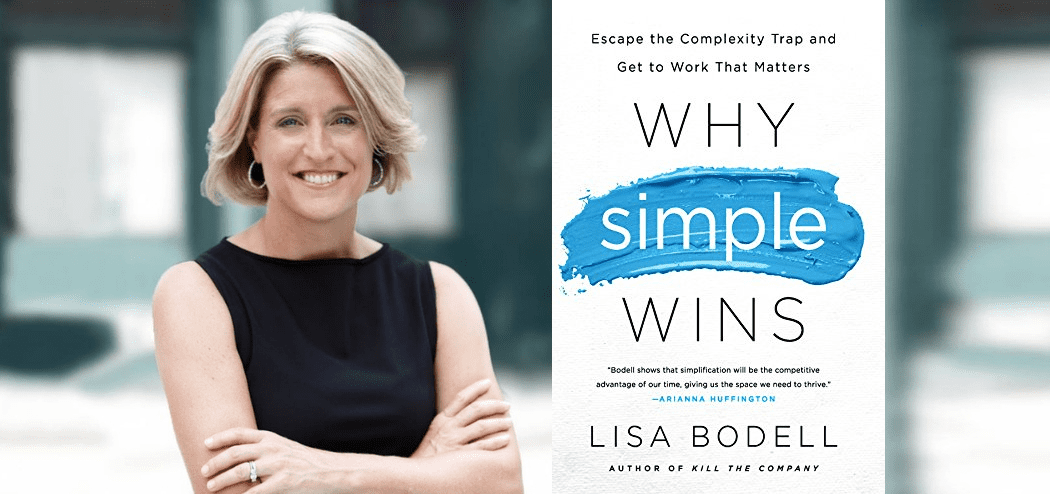

Why Simple Wins: Escape the Complexity Trap and Get to Work That Matters (Lisa Bodell)
In “Why Simple Wins,” Lisa Bodell, founder and CEO of futurethink, confronts the pervasive modern problem of complexity in our professional and personal lives. Bodell’s core mission is to show individuals and organizations how to dismantle this self-created monster of complication, freeing up valuable time and energy to focus on what truly matters. This book serves as a vital guide for anyone feeling overwhelmed by endless busywork, unproductive meetings, and a ceaseless deluge of emails. Bodell argues that simplification isn’t just a series of actions; it’s a fundamental mindset and a powerful competitive advantage in today’s fast-paced, hyper-competitive world. She promises to unpack every significant idea, example, and insight from her book, offering clear, accessible language to help readers recognize, address, and ultimately escape the complexity trap, transforming their work into something more meaningful and impactful.
Chapter 1: Creating the Monster
This chapter dives deep into the insidious nature of complexity, highlighting how it has become a pervasive “monster” in modern workplaces and consumes our most precious resource: time. Bodell vividly illustrates how despite working long hours, many professionals feel a constant sense of futility and disengagement.
The Tyranny of Busywork
Bodell introduces the concept of “busywork,” which she describes as the tedious, thankless, and often urgent tasks that consume our valuable time, preventing us from engaging in truly meaningful work. She cites a 2013 Gallup global survey revealing that a significant majority of employees lack time for creative thinking or enjoyable activities, failing to find “a level of meaning and significance” in their jobs. This pervasive busywork is directly attributed to the scourge of complexity.
Technology: A Double-Edged Sword
While technology promised efficiency, it has ironically fueled complexity. Bodell points out how we’ve become “email machines,” feeling obligated to respond immediately, leading to a vicious cycle of messages. The McKinsey Global Institute found that people spend over a quarter of their time—thirteen hours weekly—dealing with emails. Companies like Life is Good experienced overwhelming email inundation, leading their founders to radically abandon email communication. Furthermore, the constant connectivity afforded by smartphones and tablets means work is always accessible, blurring boundaries and invading personal downtime, transforming life into a “stress-inducing stew of complexity.” Bodell emphasizes that multitasking, while making us feel productive, actually makes us less effective than focusing on one task at a time.
Calendar Requests Galore
Meetings are another significant source of unintentional complexity. Bodell notes that “Let’s schedule a meeting” has become the default response to most business issues, regardless of necessity. Studies by VoloMetrix and Bain & Company found that some employees lose up to twenty hours per week to meetings, with mid-level managers having less than six and a half hours of uninterrupted work time weekly. The problem is escalating, with managers’ time spent in meetings growing by 15% annually. A striking example from Bain illustrates how a single weekly executive committee meeting cascaded into over 130 meetings across a large company, costing 300,000 hours and $15 million annually, demonstrating how excessive collaboration can lead to significant waste.
Death by Accounting (and Other Well-Intentioned Rules)
Bodell explains how the desire to solve problems often leads to inadvertent complexity. She shares “The Laundry Decree” story, where a financial firm instituted a strict policy on hotel laundry due to a tiny percentage of consultants abusing the privilege. This well-intentioned rule created unnecessary complexity for the vast majority of honest employees, where the unintended costs far outweighed the benefits. Similarly, performance evaluations, originally serving a good purpose, have become overly complex, data-laden, and often ineffective. Research shows that 90% of performance reviews are unsuccessful, and some even diminish employee performance, leading to confusion and demoralization. These examples illustrate how an impulse to improve can inadvertently create a “monster” of bureaucracy and rules.
The Iron Curtain and Globalized Drift
Bodell highlights that it’s often easier to build on existing structures than to simplify or eliminate them, leading to an ever-growing web of complexity. This reluctance to “sweep away what’s no longer useful” is exacerbated by the perpetual disruption of modern markets. Furthermore, the global nature of business adds unavoidable complexity. With teams spread across multiple time zones, aligning people becomes a monumental task, leading to convoluted reporting structures and a consensus-driven culture where decisions are delayed or stifled by the fear of stepping on toes.
Bad and Getting Worse: The Toll of Complexity
The problem is dire. Bodell states that over a hundred billion emails are sent daily, with only a seventh being important. The Boston Consulting Group’s research shows that the amount of procedures, layers, and approvals has increased by 50% to 350% over the last decade and a half, with an average annual increase of 6.7% over the past five decades. This complexity costs companies significantly; SAP’s Global Simplicity Index found it destroys a full tenth of company profits annually—a combined $237 billion for the top two hundred firms worldwide. Beyond financial costs, complexity leads to employee frustration, burnout, disengagement, and higher turnover rates, costing billions in lost productivity and recruitment. Organizations often respond by increasing performance expectations and metrics, paradoxically making things worse by adding more stress and complexity.
The Simplicity Imperative
Despite the widespread recognition of complexity as a challenge (over 70% of organizations consider it important), few companies are actively addressing it. As of 2015, only one in ten corporations had a major work simplification program. Bodell argues that eliminating complexity is a strategic imperative, essential for agility, innovation, and profitability in hypercompetitive markets. Companies like GE and Siemens are racing to combat complexity, and a Bain study showed that simply halving meeting lengths and limiting attendees could yield productivity savings equivalent to cutting two hundred jobs. Simplicity, Bodell concludes, allows companies to bring products to market faster, amp up customer and employee satisfaction, achieve greater operational efficiency, and increase profitability.
That Was Easy: Staples and the Power of Simplicity
Bodell uses the example of Staples’ “That Was Easy” campaign to illustrate the power of simplicity. Staples, founded to solve the inconvenience of buying office supplies, tapped into a basic customer desire: ease. For small businesses, simplifying the decision-making process made consumers 86% more likely to purchase and 115% more likely to recommend. This demonstrated that consumers are willing to pay a premium for simplicity. Bodell argues that “That Was Easy” shouldn’t just apply to office supplies; it should be the guiding principle for all work. The chapter concludes by emphasizing that simplification is critical for breaking free from the complexity trap, reclaiming time, and making work meaningful again.
Chapter 2: The “What” and “Why” of Complexity
This chapter delves into a more nuanced understanding of complexity, arguing that it’s often an insidious byproduct of our own ingrained behaviors and emotional needs, not just external factors. Bodell starts with a relatable anecdote about navigating a bank’s vendor approval process for a small project, which turned into an absurd, over-complicated ordeal, costing the potential collaboration due to unbending bureaucratic rules.
Shake It Off: The Stockholm Syndrome of Complexity
Bodell introduces the idea that professionals often become “captives to complexity,” akin to the Stockholm syndrome, where they unwittingly participate in their own victimization. She explains that complexity isn’t just an external imposition; it originates within us, driven by cognitive biases and primal emotional needs. The first step to breaking free is recognizing this truth.
Simple Definitions: Minimal, Understandable, Repeatable, Accessible (MURA)
To combat the vagueness surrounding “simplicity,” Bodell provides a clear, four-pronged definition for properly simplified elements:
- As minimal as possible: Reduces steps, features, functions, sign-offs, and hurdles, having just enough to get the job done. Uber is cited as an example, simplifying the process of getting a ride.
- As understandable as possible: Defined by clear, straightforward language, comprehensible even to novices. IEX, the financial firm, deliberately simplifies complex financial concepts for trust.
- As repeatable as possible: Can be scaled or replicated easily, not one-offs. Pilots’ consistent cockpit layouts demonstrate this.
- As accessible as possible: Information or services are transparent and available with minimal gatekeepers. Progressive Insurance sharing competitor prices exemplifies this by making information accessible.
Conversely, complexity is the lack of these four elements.
The Simplicity Sweet Spot
Bodell emphasizes the importance of the qualifier “as possible,” introducing the concept of the “simplicity sweet spot.” This means that while complexity is bad, oversimplification can also be detrimental. The IKEA furniture assembly experience serves as a humorous example: directions are too simple, leading to confusion and wasted time. She cites Albert Einstein’s famous quote: “Everything should be made as simple as possible, but no simpler.” The trick is finding the right balance between detail and simplicity, ensuring that removing too much information doesn’t render what remains useless.
Intentional Complexity: The Dark Side
Bodell explores “intentional complexity,” where companies or individuals purposefully create complication to gain an advantage, often for profit or to hide information. The financial trading firm IEX, featured in Michael Lewis’s “Flash Boys,” was founded to combat practices where high-frequency traders exploited milliseconds-long data lags and opaque systems to “front-run” ordinary investors, essentially profiting from complexity. She also points to the difficulty of unsubscribing from email newsletters and the ubiquitous “fine print” in contracts and privacy policies as examples where complexity is designed to confuse or obscure, benefiting the company at the stakeholder’s expense.
The Endless Look Inside: Cognitive Biases at Play
Most complexity, however, arises unwittingly due to cognitive biases.
- Insider Mindset: Organizations often focus too narrowly on internal efficiency (e.g., separating tasks within an airline like booking and seating assignments) rather than the customer experience. This leads to fragmented processes that are efficient for internal departments but create frustrating, multi-step hurdles for customers. This bias also applies internally, where departments design processes for their own ease, not for their internal “customers” (other departments).
- The Pursuit of More: A strong demand for reporting and accountability, often driven by executive disconnect, leads to a relentless pursuit of “more” data. Leaders, pressured by boards, demand more real-time tracking, compliance reports, and metrics. This forces frontline employees to spend excessive time “feeding the beast of accountability,” leaving less time for meaningful work and contributing to “decision fatigue.” Reports become so voluminous and filled with conflicting indicators that they are nearly useless, yet employees continue producing them because “more” is rewarded (more revenue, more people managed, more units controlled). This “mindset of more” stifles incentives to cull waste or redundancy.
The Enemy Is Us: Emotional Needs Driving Complexity
Beyond cognitive biases, complexity is driven by fundamental emotional needs:
- Fear and Self-Protection: People schedule endless meetings to “cover their behinds,” inviting unnecessary stakeholders to avoid consequences of mistakes. They attend meetings to protect their turf. Individuals create overly complex presentations or use jargon to make themselves seem indispensable, fearing expendability. Managers delay decisions by demanding more information, driven by a fear of looking bad. This leads to a “mindset of more”—more power, control, income, responsibility—which in turn invites more complication.
- Distrust of Simplicity: There’s a pervasive suspicion of anything too simple. If a solution is quick or easy, it’s often doubted or devalued. Jack Welch is quoted: “You can’t believe how hard it is for people to be simple, how much they fear being simple.” This leads professionals to add unnecessary steps to make their work seem more valuable.
Bombs Away on Complexity: The B-52 Saga
Bodell uses the compelling story of the U.S. government’s decades-long, fruitless quest to replace the B-52 bomber as a metaphor for crippling complexity. Despite numerous attempts, each new design proved too complicated, fragile, or expensive to maintain, leaving the antiquated B-52 (still in service from the 1950s) as the most reliable option. This serves as a stark reminder that making anything too complicated prevents it from getting the job done, and a consistent failure to simplify leads to immense waste and operational paralysis.
The chapter concludes by urging readers to recognize that complexity is largely self-inflicted and driven by internal factors. It’s time to act, starting with self-reflection.
Chapter 3: Gauging Your Complexity Problem
This chapter challenges readers to objectively assess the presence and severity of complexity within their own organizations and personal work lives. Bodell emphasizes that simply “knowing” about complexity isn’t enough; one must identify its specific manifestations to address it effectively.
Warning Signs of Complexity
Bodell outlines several tell-tale signs that an organization might have a complexity problem:
- Status Quo Thinking: A resistance to new ideas, characterized by phrases like “It’ll never work” or “We’ve always done it a different way.” This indicates an entrenched traditionalism that impedes simplification.
- Fruitless Initiatives: Projects that sound promising but deliver paltry results, often due to overly complex implementation or lack of crucial elements like training and marketing.
- Too Many (or Too Lengthy) Approval Processes: Decisions taking weeks or months, and a lack of clarity on who to approach for approval.
- Frustrated Customers: Constant complaints about difficulty working with the company, even if the end product is good. Colleagues rolling their eyes at “customer-centric” suggestions.
- Coordination Overload: Performing tasks in multiple ways due to incompatible systems, or one person’s system making their job easier but others’ harder.
- Too Many Rule Changes: Frequent memos on new internal policies, legal tweaks, or employees feeling over-managed and treated like children.
- The End of Easy: Requiring twenty-page reports for basic requests, pervasive self-important jargon, or excessively long legal contracts.
- Mystery Rules: People being unable to explain why certain rules or procedures exist, suggesting they might be obsolete.
- An Acronym “Zoo”: Workplaces littered with acronyms and jargon, indicating a lack of clarity.
The Complexity Diagnostic: A Self-Assessment Tool
To facilitate a deeper, methodical assessment, Bodell introduces her Complexity Diagnostic. This survey distinguishes between two types of complexity:
- Organizational Complexity: Structural complications mandated by policy or regulation, or involving multiple parts of the organization (e.g., corporate structure, HR, IT, regulatory issues).
- Individual Complexity: Complications generally created by a single person or contained within a single business unit (e.g., unproductive meetings, unnecessary emails).
The diagnostic uses a four-point scale (0 = consistently simple; 1 = sometimes; 2 = rarely; 3 = never) to capture nuances beyond a simple true/false. Bodell provides a clear, step-by-step guide for using the diagnostic:
- Step 1: Complete Diagnostic (20 minutes): Participants answer statements honestly, focusing on their daily work environment.
- Step 2: Tally Points/Receive Diagnosis (10 minutes): Scores are tallied for each category and an overall score determines the severity of complexity:
- 0 points = STRONGLY SIMPLIFIED
- 1–20 points = OPPORTUNITIES FOR SIMPLIFICATION
- 21–50 points = COMPLEX
- 51–70 points = SERIOUS COMPLEXITY
- 71+ points = CRIPPLING COMPLEXITY
- Step 3: Identify High-Scoring Categories and Discuss (20 minutes): Teams list and discuss their top three highest-scoring categories to pinpoint crucial areas.
- Step 4: Articulate Core Problems and Discuss (60-90 minutes): For each “NEVER” or “RARELY” answer in high-scoring categories, participants specify the issue and discuss the driving complexity.
- Step 5: Brainstorm Solutions and Discuss (60-90 minutes): Teams brainstorm solutions to turn “NEVER” or “RARELY” answers into “CONSISTENTLY” simple ones, focusing on stopping, minimizing, outsourcing, or streamlining.
Field Testing the Diagnostic
Bodell shares insights from field-testing the diagnostic:
- Multinational Company (Regulated Industry): Revealed pervasive organizational complications (corporate structure, HR, IT, regulatory). Employees felt changes were like “rolling a boulder uphill” and feared punishment for trying to simplify. However, individual complexities (too many meetings, excessive emails, redundant reports, confusing presentations) caused the most “visceral response,” discussion, and diminished morale. The greatest source of frustration was other people’s behaviors.
- Small Business (Growing): Showed less “N/A” for some questions but still revealed both individual and organizational complexities, primarily driven by rapid growth. Operational processes spiraled, and employees became fearful and controlling, leading to a serious case of “CYA” (cover your ass) through excessive consensus-seeking, communication, risk management, and reporting.
- Futurethink (Bodell’s own company): Even Bodell’s team, attuned to complexity, found they suffered from some. They had too many processes, sign-offs, and meetings. They realized they hadn’t taken enough time to assess if their own behaviors were burdening peers, often continuing client’s overly complex rules even after engagements ended.
General patterns emerged: larger, multi-geography organizations tend to have more organizational complexity due to HR policies, regulations, and reporting. Individual complexity can be high in both, but larger firms often show more risk aversion and CYA behavior. Cultural factors also play a role.
The Perpetual Diagnosis
Bodell recommends using the diagnostic every twelve months for “simplicity maintenance,” as complexity is an ongoing challenge. She also suggests using it during significant organizational changes (C-suite turnover, new teams, mergers, procedural overhauls) to proactively identify and address emerging complications. The diagnostic’s results can serve as a valuable “proof point” to convince management of a complexity problem’s existence and specific location, fostering a common language for discussion.
Chapter 4: Work That Matters
This chapter centers on the profound impact of complexity on “work that matters”—the meaningful, engaging, and purposeful tasks that truly fulfill employees and drive organizational success. Bodell opens with her personal experience at Leo Burnett, where her initial enthusiasm for challenging, meaningful work on the Allstate account was eventually extinguished by a promotion to a larger account filled with “mindless tasks,” disorganized meetings, and endless, inconsequential “urgent” demands, leading her to quit.
Meaning Is the New Black
Bodell argues that for today’s workforce, especially millennials, a paycheck isn’t enough; they seek meaningful work and the chance to feel like their efforts count. Over 50% of millennials would take a pay cut for work matching their values, and 90% want to use their skills for good. However, many are disappointed, leading to high job turnover. Bodell clarifies that meaningful work isn’t about lofty titles; it’s about employees at all levels feeling that their hard work makes a difference, contributing to a greater purpose. This contrasts sharply with the “stress without reward” generated by complexity.
Get the Work Right, You Get the Culture Right
Bodell asserts a crucial principle: “If you get the work right, you get the culture right.” Organizations often talk about mission and values but fail to deliver when excessive rules and bureaucracy get in the way. Complexity “sucks the life out of your career” by forcing effort without meaningful return. When simplification is achieved, however, it brings numerous benefits to individuals:
- Increased personal fulfillment and engagement.
- Better health (complexity is draining and stressful).
- Freedom to focus on higher-level thinking, skill-building, and personal life.
These individual benefits cycle upward, transforming team and organizational culture organically, leading to dynamic, innovative, and successful outcomes.
A Thought Experiment: Reclaiming Your Time
Bodell invites readers to a thought experiment: divide a piece of paper into two columns.
- Left-hand column: List activities you would do if you could rework your role to be more effective and meaningful (e.g., strategic thinking, customer engagement, skill development).
- Right-hand column: List tasks that currently occupy most of your time (e.g., endless meetings, emails, bureaucratic forms).
Then, circle items in the right column that add value. The uncircled items are the “low-value” tasks. This exercise is designed to reveal the “enormous, untapped opportunity” that simplicity represents, freeing time for the “most daring act of all in the modern workplace: thinking.”
Simplicity Is the Solution: Organizational Benefits
Bodell highlights the many benefits of simplicity for organizations:
- Increased Productivity: The CVS example illustrates this perfectly. By simply moving the “insurance check” to the beginning of the prescription process, CVS reduced delays, improved customer satisfaction from 86% to 91%, and spread this efficient process to thousands of pharmacies within a year.
- Enhanced Performance: The Cleveland Clinic case study shows how adopting a simplified, rapid-cycling Agile Scrum methodology for software development (boiling it down to essential elements) led to significant gains. By collaborating closely with frontline users during “sprints,” the BI team developed software that was precisely what clients needed, shaving 20-25% off project time and saving over six hundred hours ($100,000+). This exemplifies how simplicity can drive better performance by eliminating unnecessary bells and whistles and focusing on critical discoveries.
Unlock Creativity and Innovation
Simplicity doesn’t just increase efficiency; it fosters creativity and innovation. Bodell references research showing that people often get creative ideas in solitary, non-judgmental environments like showers, suggesting that simplifying one’s environment encourages free-ranging thought. In the workplace, complexity often bogs down employees, preventing them from spanning “structural holes” (connecting different departments) and hindering insight. She argues that traditional innovation efforts often “constrict it” with more meetings and reports. The best approach is to “do less” – get rid of things that aren’t working to make space for new, innovative ideas. Julian Richer’s “cut the crap committee” at Richer Sounds (which achieved Guinness World Records for sales per square foot) is a prime example of how eliminating complexity unlocks innovation. Simpler environments also foster greater transparency, empowering frontline employees to propose and refine ideas.
More Engagement, Less Stress
Complexity leads to disengagement and stress. Bodell humorously points to the “Parks and Recreation” sitcom, where government bureaucracy fosters cynicism and prompts characters to seek escapism (“Treat. Yo. Self”). She argues that a simplified environment leads to higher engagement because employees know their efforts will yield real returns, feel more focused, and have the confidence to act. This also reduces stress-related health conditions, which cost businesses billions annually in lost productivity and healthcare spending. Moreover, multitasking, a byproduct of complexity, increases cortisol, which can impair memory.
Business Results That Matter
Ultimately, simplicity drives better financial performance and competitive advantage.
- Agility and Efficiency: Southwest Airlines’ strategy of using a single aircraft model (Boeing 737) simplified maintenance, training, and operations, making them more flexible and efficient than competitors who used diverse fleets. This “simplicity” contributed to their consistent leadership in customer satisfaction.
- Brand Streamlining: General Motors simplified its brand lineup (dropping Pontiac, Saturn, Hummer), a tough decision that helped save 1.2 million jobs and contributed to its comeback.
- Customer Experience: LinkedIn reduced outgoing emails by 40% (and complaints by half) by implementing weekly digests instead of constant pings, leading to 35% revenue growth. Google consistently ranks high on the Global Brand Simplicity Index because its user experience is incredibly simple despite complex underlying technology.
- Disruption: Simplicity enables companies to become disruptors. Netflix displaced Blockbuster by simplifying video rental. Capital One disrupted credit cards by eliminating “blackout” dates. Wireless carriers were forced to simplify by allowing customers to keep phone numbers when switching, fostering competition.
Bodell introduces the “simplicity premium,” noting that consumers are willing to pay up to 6% more for a simpler product and are much more likely to recommend simpler products/services. Companies in the top ten of Siegel+Gale’s Global Brand Simplicity Index outperformed average global stock indexes by 214%. She shares a story of a client whose online licensing tools weren’t growing because customers were overwhelmed by “so many resources,” demonstrating how choice overload can deter interest. The chapter concludes by reiterating that simplicity is a powerful, accessible approach that can dramatically improve results and energize the workforce, making the “impossible seem possible.”
Chapter 5: The Simplicity Mindset
This chapter argues that true, lasting simplification is not just about tools and processes but about cultivating a fundamental “simplicity mindset”—a set of beliefs, traits, and qualities that compel leaders to champion and sustain simplification efforts. Bodell opens with the compelling story of Fidelity Investment, whose leaders, particularly Ned Johnson and Bob Gould, pushed against internal resistance and industry norms to simplify money market fund redemptions, allowing individuals to write checks directly from their accounts. This seemingly simple change led to an immediate $800 million influx (in 1974 dollars) and cemented customer loyalty, demonstrating that “simplicity sells itself” when leaders are willing to take calculated risks and see it through.
How Well Do You Really Know Your Organization? The Executive Disconnect
Bodell points out that achieving simplicity is both harder and more critical for top executives. They often suffer from “executive disconnect,” being too focused on the big picture to experience the daily operational minutiae that burden employees. Assistants and chiefs of staff inadvertently shield leaders from these realities. This disconnect can lead leaders to unintentionally worsen complexity, such as requesting “just in case” reports that demand painstaking work but then sit unread on their desks, making employees feel their efforts are meaningless. While “empowering” employees is good, it has also distanced leaders from the actual processes of how work gets done, making it harder for them to gauge the true burden of their requests.
Simplicity: An Ethical Imperative
Bodell elevates simplicity beyond a mere business advantage, arguing it’s an “ethical imperative.” Leaders have a duty to simplify for:
- Customers: Simpler experiences, more focused customer service, and fewer forms.
- Employees: Richer, more meaningful work, increased happiness, and improved health by freeing them from unnecessary assignments.
- Peers: Reducing the burden on colleagues, as exemplified by an executive who freed up the equivalent of “10 people working full-time every week” for his peers.
By driving simplicity from the top, leaders affirm that time invested matters as much as money, and they set a norm of collegiality, respecting others’ time.
How Have You Contributed to Complexity?
Bodell includes a self-assessment questionnaire to help leaders identify their own contributions to complexity. Questions cover:
- Email habits: Length, number of CCs/BCCs, expectation of immediate replies.
- Communication style: Use of jargon/buzzwords.
- Decision-making: Requiring involvement in all decisions, making decisions always a group effort, assigning projects without clear objectives.
- Process adherence: Expecting strict adherence to formal steps without exception.
- Workload management: Consistently adding to projects without eliminating, requiring personal sign-offs on everything.
- Meeting habits: Holding multiple recurring meetings, meetings without agendas, lengthy presentations.
- Reporting: Not providing feedback on assigned reports, requiring multiple recurring reports.
Answering “yes” to any of these indicates a likely contribution to complexity.
Six Characteristics of a Simplifier: The Simplicity Mindset
Based on interviews with over 100 senior leaders, Bodell identifies six primary leadership characteristics that define a simplicity mindset:
- Courage: The willingness to challenge the status quo, embrace change, and call out needless complexity. Dave Lewis, CEO of Tesco, demonstrated this by drastically cutting the variety of products on offer despite anticipated backlash, ultimately improving the business.
- Minimalist Sensibility: An intuitive appreciation for “less,” understanding how paring back leads to greater efficiency, productivity, and profitability. John and Bert Jacobs of Life is Good exemplify this by abandoning internal email to focus on high-level questions and creativity.
- Results Orientation: Viewing simplification as a means to make the organization and its people more effective, not just a cost-cutting measure. Jeff Spencer at Merck Canada shifted focus from fixing “the system” to engaging employees in simplifying their own work, leading to immediate, valuable improvements like a “fast response system” for field feedback.
- Focus: The ability to keep complexity eradication at the top of the agenda despite distractions and resistance from doubters whose authority is rooted in outdated systems. Mike Dubin and Mark Levine at Dollar Shave Club maintained focus on a simple, core offering despite temptations to expand, building strong customer relationships.
- Personal Engagement: “Walking the walk” by actively simplifying one’s own work environment and demonstrating success, inspiring others. Bodell shares an anecdote where an HR leader talked about simplifying but failed to address his own department’s wasteful monthly operating reports, undermining credibility. Leaders must exemplify, empower, and reinforce simplification behaviors.
- Decisiveness: The ability to make quick, clean decisions and empower others to do the same, without falling into consensus-driven paralysis. Steve Jobs, a master simplifier, constantly pushed Jony Ive and others to make decisions by asking, “How many times did you say no today?” This fostered control and a willingness to “throw a wrench in the works.”
A Cautionary Tale
Bodell concludes with a cautionary tale of an American insurance company where engaged employees, excited about simplification, were ultimately stymied by middle managers who believed top leadership wasn’t truly bought in to the initiative. These leaders, while “believers” in theory, perceived complexity as the “status quo” and unlikely to change, fostering cynicism among their subordinates. This highlights that while grassroots efforts are valuable, genuine buy-in and action from the very top are crucial for simplification to take hold and become a sustained competitive advantage.
Chapter 6: The Simplicity Toolkit
This chapter transitions from understanding complexity to actively tackling it, providing concrete, actionable tools. Bodell emphasizes that many simplification initiatives fail because well-intentioned employees lack the tools and frameworks to guide intention to action, often getting “bogged down in ambiguity.” She recounts a client example where a promising simplification initiative by a consumer goods company failed due to a lack of clear definitions, vague solutions, and a failure to address the core problem of unproductive daily work, rather than focusing on “individual motivation.”
Simplification: Some Common Misconceptions
Bodell identifies common misconceptions that hinder simplification efforts:
- Lack of Problem Recognition: If colleagues don’t recognize a complexity problem, it won’t be solved.
- Tackling Too Big: Would-be simplifiers try to tackle problems that are too large; efforts must break tasks into the smallest, most manageable parts.
- Organizing vs. Simplifying: Many complicated things are highly organized, but that doesn’t make them simple or valuable (e.g., overly organized but inefficient carpools).
- Improvement vs. Simplification: Simplification is subtraction, while improvement can involve addition or subtraction. Bodell prefers “streamlining” or “eliminating” to “improving” because it forces a mindset of reduction.
- Project vs. Operating Principle: Simplification is not a one-time “spring cleaning”; it’s an ongoing operating principle and a habit that needs to be continuously cultivated.
Five Steps to Simplicity
To overcome these misconceptions and facilitate effective simplification, Bodell outlines five discrete steps:
- Awareness: Recognizing the personal and organizational toll of complexity, and one’s own contribution to it.
- Identification: Uncovering specific tasks or areas that create frustrating obstacles due to lack of value or wasted time, and understanding the behaviors that create them.
- Prioritization: Evaluating identified opportunities using a “time versus value” equation to determine which problems are most impactful and easiest to eradicate (“bang for your buck”).
- Execution: Piloting new ways of doing things, making real-time adjustments, requiring effort, courage, and commitment.
- Habit Formation: Ensuring simplicity becomes an ingrained part of the culture and daily operations, not a one-off event.
Bodell’s team developed a toolkit of exercises, designed for business units, teams, or individuals, that are modular, require minimal training, and are meant to drive immediate action.
TOOL: 50 Questions for Simplifying
This tool aids Step 2 (Identification) and can be used alone or after the Complexity Diagnostic. It serves as a litmus test for existing or new processes/procedures. Questions are categorized around Bodell’s four-pronged definition of simplicity (Minimal, Understandable, Repeatable, Accessible) plus a “Valuable” category to ensure relevance.
- Is it Valuable? (e.g., “If the company burned down overnight…, what’s the most crucial item?”)
- Is it Minimal? (e.g., “If a new CEO started…, what processes would s/he immediately observe as biggest time wasters?”)
- Is it Understandable? (e.g., “Could I clearly explain this to anyone outside my business group?”)
- Is it Repeatable? (e.g., “If we automated some or all of this task/process, who would benefit?”)
- Is it Accessible? (e.g., “How could customers more easily do business with us?”)
The tool encourages users to define a specific “Simplification Challenge,” choose 1-3 areas of complexity, answer 5 relevant questions within each, and then generate 3-5 solutions (eliminating, outsourcing, or streamlining). It highlights the importance of quick wins and assigning responsibility for further research.
TOOL: Simplification Worksheet
This tool offers a quicker way to identify complexity and is excellent for staff meetings or individual reflection. It asks just six questions designed to quickly uncover time-consuming, redundant, or complex tasks.
The process involves:
- Spend 5 minutes listing tasks that are most time-consuming, redundant, or complex.
- Spend 5 minutes describing them.
- Discuss as a group to identify tasks that add the least value. The goal is to eliminate or suspend at least as many tasks as there are team members.
Bodell shares her own team’s experience: within an hour, they identified dozens of ways to improve work, leading to 17 task changes (eliminated, outsourced, streamlined). The magic lies in identifying quick wins and acknowledging obvious problems.
TOOL: Killing Complexity
This tool helps identify complications and move towards prioritization. It forces participants to evaluate time-intensive tasks based on their value. It’s ideal for group settings, especially with a senior leader who has the authority to eliminate low-value tasks on the spot.
Steps:
- Complete Task Worksheet (10 minutes): Individually list key tasks/time sucks across daily, weekly, monthly, and annual frequencies.
- Identify Top Five Time-Consuming Tasks (15 minutes): Group discussion on what makes tasks time-consuming, their frequency, and duplication.
- Evaluate Top Five Time-Consuming Tasks (15 minutes): Assign a complexity number (on a 1-5 scale, avoiding “3”) to each task, discussing any discrepancies.
- Plot Two Tasks on the Simplicity Versus Value Matrix (25 minutes): Each participant picks two tasks and plots them on a matrix based on value (high/low) and complexity (simple/complex). This creates a roadmap:
- Simple & Valuable (Top Right): Leave alone.
- Complex & Low Value (Bottom Left): Kill these tasks.
- Simple & Low Value (Bottom Right): Kill if possible, but not huge burdens.
- Complex & Valuable (Top Left): Primary targets for streamlining.
- Brainstorm Solutions (25 minutes): In pairs, brainstorm solutions for the two plotted tasks, focusing on eliminating, outsourcing, or streamlining.
Bodell emphasizes that this tool helps reclaim time by forcing a critical look at which tasks are truly valuable versus useless, enabling greater focus on goals.
TOOL: Kill a Stupid Rule
For a quicker fix, this tool helps identify, prioritize, and execute simplification by focusing on rules. It can be done individually or in a group, in under an hour.
Steps:
- Identify Stupid Rules (15 minutes): List 3+ frustrating rules (green rules – changeable, not red rules – government regulated) that slow productivity. Decide whether to kill or modify, focusing on your business unit.
- Plot Two Stupid Rules on Matrix (10 minutes): Choose two rules to kill/change and plot them on a matrix based on ease of killing (easy/hard) and impact on business unit (high/low). Look for rules in the upper right quadrant (easy to change, high impact) for quick wins.
- Evaluate and Discuss As a Group (20 minutes): Share and discuss plotted rules, focusing on similarities, discrepancies, and why easy, high-impact rules haven’t been addressed.
- Kill Stupid Rule(s) (10 minutes): Take an employee vote and kill a rule on the spot (or suspend it for 30 days).
Bodell shares Liz Tinkham’s (Accenture) success using this tool: her team identified 41 rules to kill/change, many of which were misperceptions, leading to immediate elimination of unnecessary meetings and forms. This exercise empowered Tinkham’s team to question obstacles and drive change.
TOOL: Simplification Tactics
Once priorities are set, this tool helps with execution. It’s a curated list of over seventy proven tactics categorized by business area (e.g., Vision/Communication, HR, Operational, Meetings, Emails, Reports, Presentations, Value of Staff Time).
Steps:
- Choose at Least Three Business Areas (5 minutes): Identify areas of complexity from the diagnostic.
- Review and Choose Tactics (10-40 minutes): Select at least two effective tactics per chosen area, keeping big-picture goals in mind. Examples include:
- Vision/Communication: “Give it the kindergarten test,” “Stop posting everywhere.”
- Org. Structure: “1-sheet wonder,” “Empower direct reports with decision-making.”
- HR: “Reduce performance assessment criteria,” “Eliminate (or rethink) annual performance reviews,” “Shorten employee onboarding.”
- Operational: “Kill stupid rules like HBO did,” “Cut the contract clutter,” “Increase discretionary spend limits.”
- Product/Service: “Eliminate or divest like Sprint does,” “Keep it simple like Google does.”
- Meetings: “Kill stupid meetings like Sprint did,” “Institute Meeting-Free Wednesdays like Airbnb did,” “Set a timer,” “Rethink default modes.”
- Emails/Calls/Voicemail: “Institute email-free time zones,” “Limit cc recipients to 3 people,” “Eliminate voicemail like Coca-Cola.”
- Reports: “Audit your reports,” “Crowd-source the complexity.”
- Presentations: “3 core ideas only,” “No PPT meetings.”
- Value of Staff Time: “Hold simplifying sessions,” “Introduce blackout periods,” “Replace a main process with its workaround.”
- Propose Tactics and Discuss as a Group (20-40 minutes): Discuss selected tactics, ensuring alignment with goals and impact.
Smelling the Roses: Real-World Application
Bodell recounts a successful workshop where her team used these tools with an international client’s cross-functional group. Starting with an “Aircraft” exercise, participants learned how assumptions hindered their ability to find simple solutions. The “Killing Complexity” tool revealed that most significant complexity barriers were not company-wide policies but small, individual tasks like internal meetings, email overload, and redundant reports. By plotting tasks on the Simplicity vs. Value Matrix, participants realized they were spending time on low-value, complex work. The workshop generated specific simplification tactics, such as: setting rules for successful meetings, celebrating specificity, carving out “do not disturb” time, focusing on important tasks first, talking more face-to-face, empowering teams, and writing shorter, bullet-pointed emails. The workshop was a success because it gave the team control over the frustrating feeling that their efforts amounted to less than they should.
The chapter concludes by empowering readers to use these tools to delve into the nuances of their own work, cutting away what doesn’t add value and getting closer to “work that really matters,” without needing a lengthy, formal Six Sigma process.
Chapter 7: Become the Chief Simplification Officer
This chapter argues that simplification must be a sustained habit and a core ethos, driven fiercely from the top. Bodell introduces the idea that successful CEOs, like those in Steve Strelsin’s Harvard Business School study, operate as “chief simplifiers,” prioritizing the simplification of strategies, hierarchies, and communication to empower their subordinates. This indicates two crucial corollaries: simplification needs to be cultivated continuously, and it requires strong engagement from senior leadership. Bodell provides twelve strategies for leaders at all levels to embed simplicity deep into their organizational culture.
Strategy #1: Set a Vision
To gain sustained buy-in, leaders must “paint a picture” of what simplification entails and what it will achieve. A clear vision eliminates confusion, motivates better decisions, and highlights the intent to foster meaningful, valuable work. Engaging others in shaping this vision—through surveys and incorporating their insights—increases its likelihood of sticking. Brad Katsuyama’s IEX is a prime example, founded on the explicit vision of being a “fair, simple, and transparent market center,” making every decision align with this clear, conflict-free mission.
TOOL: Simplicity Vision Statement
This tool helps leaders craft their own simplification vision.
- Complete the Worksheet (30 minutes): Answer questions about what simplicity is, what it will do for the business, and how it aligns with values.
- Share Answers and Discuss (30 minutes): Compare answers with a partner or group to identify similarities, differences, and promising statements for the vision.
- Draft a Simplicity Vision Statement (30 minutes): Create a concise statement from collective insights.
- Solicit Feedback and Revise (60 minutes): Share the draft with mentors, peers, and partners for feedback, or invite the entire organization to collaborate, then distribute the finalized statement. This process aims for clarity, jargon-free language, and inspiration, ensuring buy-in and a clear definition of simplicity’s purpose.
Strategy #2: Weave Simplicity into Your Long-Term Strategy
Simplification cannot be an add-on; it must be a vital part of long-term strategic planning. This means considering what to subtract from work, not just what to add. Bodell cites P&G’s decision to sell off stagnant beauty brands to Coty, allowing them to focus on core, growing brands like Head & Shoulders and Pantene. This tough choice made P&G “much simpler businesses, easier to operate, easier to grow.” Steve Jobs famously emphasized, “Innovation is saying ‘no’ to 1,000 things,” highlighting that pruning waste yields better results, much like a master gardener. Leaders must consider whether killing or selling off parts of their portfolio will lead to greater focus and advantage.
Strategy #3: Streamline Management Layers
Bodell references a 1944 OSS manual that advocated complication as a sabotage strategy, by insisting on channels and multiplying procedures. This illustrates how excessive management layers delay decisions, insulate senior managers from reality, and add significant costs (one new manager creates 1.5 employees’ worth of work). “De-layering” (reducing management levels) is a key simplification strategy. Leaders should review their reporting structure for redundancies, compare it to industry norms, and, where appropriate, increase the range of control for roles to eliminate unnecessary sign-offs and speed up processes.
Strategy #4: Simplify Decision-Making
To accelerate decision-making, leaders must empower direct reports and frontline staff to make decisions independently, rather than constantly seeking managerial sign-off. Merck Canada’s initiative to make employees responsible for decisions they were authorized to make, and a financial ratings company manager who required his direct reports to make two decisions weekly without his sign-off, both saw significant reductions in managerial burden and increased employee ownership. Commerce Bank’s “One to say YES, two to say NO” policy empowered employees to approve customer requests without escalation, while turning down requests required manager approval. Bodell advises leaders to:
- Determine the smallest number of people needed for sign-offs.
- Define discretionary spending limits without paperwork.
- Eliminate unnecessary reports or requirements from approval processes immediately.
Strategy #5: Establish Clear Metrics
Measuring simplification progress is crucial for sustained buy-in and avoiding derailment. Metrics should be both qualitative and quantitative, focusing on eliminating complexity and encouraging positive behavioral change. Bodell suggests not always implementing new metrics but rather “ratcheting up the expectations on the current metrics” (e.g., increasing sales goals by 15% to compel new ways of doing business).
TOOL: Simplification Metrics
This tool helps leaders build effective metrics for simplification.
- Identify and Discuss Simplification Objectives (60 minutes): Discuss areas of biggest impact, key processes to simplify, short-term quick wins, long-term changes, behavioral shifts, and desired results.
- Select Simplification Metrics (30 minutes): Choose 5-7 manageable metrics (e.g., “Decrease in amount of time spent in meetings,” “Decrease in number of approval layers”). Connect metrics to overall strategy and be mindful of unintended consequences (e.g., ensuring cost-cutting doesn’t lead to eliminating valuable meetings).
- Discuss Proposed Metrics (30 minutes): Group discussion and vote on selected metrics.
- Establish Baseline, Goals, and Timing (20-60 minutes): Determine current baselines, realistic goals, and timelines for each metric.
Tips for success include testing metrics with small groups, designating data trackers, evolving metrics over time, and packaging succinct progress reports for senior leaders.
Strategy #6: Create a “Simplification Code of Conduct”
To counter the individual impulse towards complexity (driven by fear, risk aversion, ego), Bodell proposes a “Simplification Code of Conduct”—a pledge encouraging simple behaviors and making it “shameful to choose complication.” Inspired by Google’s “nine rules for e-mail,” this code establishes “permissions” for everyone to point out complexity and commit to simplification.
TOOL: Simplification Code of Conduct
This tool helps organizations develop a custom code:
- Answer Code of Conduct Questions (15 minutes): Identify desired simplification behaviors, behaviors to avoid, and obstacles to simplification.
- Draft a “Simplification Code of Conduct” (30 minutes): Create a concise, action-oriented pledge based on the answers (e.g., “Eliminate redundancies,” “Not create false urgency,” “Keep my emails, documents, meetings, and conversations short,” “Say No whenever possible”).
- Finalize and Share with the Organization (15 minutes): Distribute the code with a personal message, urging employees to sign and display it.
Strategy #7: Build a Simplification Team
While immediate buy-in at the top is crucial, making simplicity a habit requires a dedicated team. This team shouldn’t be “simplicity police” but facilitators who empower grassroots employees to take ownership. Michael Bungay-Stanier advises that the ultimate goal is for this team to rotate or fade, as their job is to “make everyone a simplifier.” A permanent, rotating team ensures continuity while spreading the simplification mindset. Their roles might include surveying business units, managing simplification inventories, and providing tools. Rochael Soper Adranly emphasizes breaking down silos to allow cross-functional teams to identify and address complexity. This team should energetically champion simplicity, “celebrate the heck out of it,” and actively seek to engage “coalitions of the willing.”
TOOL: Interview Questions for Hiring Simplifiers
To ensure simplification becomes part of the company’s DNA, hire people who embody this mindset. This tool provides interview questions categorized by Bodell’s five simplification steps:
- Awareness: “Can you name an individual who has successfully simplified a complex business or industry?”
- Identification: “What gets in the way of accomplishing your workplace goals?”
- Prioritization: “What 2 time-suck tasks would you eradicate from your previous or current job?”
- Execution: “Can you share an example of a successful workaround you created to simplify a frustrating process or system?”
- Habit Formation: “If hired, what are a few ways you might make simplification a habit within your group?”
Leaders should look for passionate, specific examples of simplification efforts and be wary of candidates who generalize or use jargon without personal anecdotes.
Strategy #8: Focus
Spreading simplification efforts too widely can backfire, making it “background noise.” To sustain momentum, prioritize and build a chain of substantive wins. Merck Canada focused solely on “simplifying meetings” for three months, developing best practices for invitations, agendas, and conflict resolution. This singular focus created necessary “personal permission” for real change. Chetan Chandavarkar at Pitney Bowes applied a “rule of three” to all communications and projects. When prioritizing, target quick wins that galvanize the organization, even if they’re not the biggest problems (e.g., eliminating annoying low-value tasks, redundant reports, or shortening presentations). Liz Tinkham at Accenture demonstrated this by tackling her own team’s perceived rules, dispelling misperceptions, and fostering a culture of openness to change.
Strategy #9: Increase Employee Engagement
To keep employees riveted on simplification, tie their accomplishments in this area to their compensation. Reward and recognize achievements like “most meetings eliminated,” “most time saved through streamlined reports,” or “number of rules killed that resulted in higher customer satisfaction.” Beyond compensation, gather feedback regularly from employees (through surveys or direct questions) on their perceptions of simplification progress, leadership support, and their ability to identify and eliminate redundancies. The goal is to align messages, incentives, and leadership examples to make simplification a sustained, year-round priority.
Strategy #10: Communicate with Clarity
Modeling simple behavior is key. Kelly Leonard from Second City emphasizes that “the best comedy is reductive” and that “when something is not working, you’ve probably done too much.” Richard Branson insists that business proposals be simple enough to “fit on the back of an envelope” for consumers to understand. Alan Siegel’s redesign of Citibank’s retail forms in 1968, boiling down a 250-word “default clause” to a few clear lines, transformed a confusing process into an intuitive one. This demonstrated the power of questioning content before rewriting and the impact of clear, concise communication on customer experience and employee efficiency. Leaders should ensure all company communication is clear, concise, and jargon-free.
Strategy #11: Train the Next Wave of Simplifiers
HR departments should equip employees with tools and behaviors to save time and reduce email/meeting volume. This includes teaching the EOS (Eliminate, Outsource, Streamline) ethos for attacking complexity. Another technique is to “Use More Extreme Criteria” (e.g., “give me an idea that would get you fired” to spur radical solutions) and “Stop Being So Nice” (challenging the tendency to avoid speaking up when colleagues perpetuate complicating habits). Training ensures that simplification becomes a widely understood competency and a self-sustaining movement.
Strategy #12: Walk the Walk
As a leader, you are in the public eye. You must practice what you preach and demonstrate the upside of simplicity in your own life and work. Bodell provides tactics for personal simplification:
- Do a Time Inventory: Log time usage to identify wasted time.
- Delete Toxic People: Remove energy-draining individuals from networks.
- Practice “Two Today”: Focus on two key tasks daily to control impulses and avoid distraction.
- Practice “What if I Didn’t?”: Question unnecessary obligations and consider the worst outcome of eliminating them.
- Automate and Systemize: Automate recurring tasks, but always prioritize elimination first.
- Throw Things Out. Now: Declutter physical and digital spaces to create mental space.
- Unsubscribe: From unread email newsletters.
- Pare Back Apps and Social Media: Eliminate unused platforms and apps.
- Delete Old Email Accounts and Email: Clear out digital clutter.
- Create a Simplicity Statement: Write down what a simpler, better life looks like to set intentions.
- Experiment with Eliminating Something: Test the impact of removing a small item, process, or commitment in your personal life.
Bodell concludes that even small, consistent efforts yield significant differences, spreading the “simplification bug” to others.
Simplification Success Story: General Electric
General Electric, a company known for complex products, has made simplification a strategic priority under CEO Jeff Immelt, aiming to reduce overhead. This involved de-layering management, reducing approvals, implementing FastWorks (integrating customer feedback into production), and changing the company culture. GE established clear and simple “GE Beliefs” (e.g., “stay lean to go fast,” “learn and adapt to win”) that are woven into leadership development and performance management. They replaced a litany of goals with “fewer things better,” putting simplicity at the center of individual work. GE’s story proves that simplification is a key strategic imperative for any company in today’s complex world to avoid disengagement, lack of innovation, and poor customer service. Leaders must take the lead to become chief simplifiers.
Chapter 8: Getting Simplification Right
This final chapter addresses the crucial question of how to successfully implement and sustain simplification efforts, especially when many fail. Bodell argues that success requires not just tools and strategies, but also leadership grit, determination, vision, and perseverance to navigate the inherent fears and political dynamics. She illustrates this by focusing on an unlikely success story: Vancity, Canada’s largest community credit union, an established, mid-sized company in a highly regulated, un-sexy industry, demonstrating that if they can do it, any organization can.
Coming Up Short on Simplicity: Vancity’s Challenge
Vancity, founded in 1946, initially prided itself on community service and balanced products. However, like many financial institutions, it gradually accumulated complexity through mergers, acquisitions, product development, and management shifts. Previous attempts at “process improvements” failed due to a lack of organizational alignment and employee engagement, leaving frontline staff struggling with increased complexity. By 2013, an expensive IT redesign proved superficial, prompting Vancity’s executives to ask deeper questions about their core purpose and how a new core system could support a simpler, more effective member experience, focusing on the connection between people, process, and technological change.
Corporate Hoarders: A New Approach
Jay-Ann Gilfoy, Vancity’s SVP for banking applications renewal, recognized that previous reform efforts had relied too heavily on external “experts” who often failed to understand the vital perspectives of employees and customers. The core problem was complexity itself, stemming from a tendency to address issues by adding policies, procedures, and forms without removing obsolete ones—a “corporate hoarding” problem. The executive leadership, with CEO and board support, made simplicity a core strategic priority, shifting the focus from mere cost-cutting to empowering employees to serve members better. This meant using technology not to replace staff, but to free them from administrative tasks so they could become “trusted advisors” to members, focusing on “meaningful things.”
Structure for Simplicity: Rapid Cycling
Gilfoy’s team developed “rapid cycling”—a process designed to make simplification an everyday behavior. Small, cross-functional groups of employees and managers who were intimately familiar with the problems would convene in two-day workshops.
- Day One: Participants brainstormed broad simplification ideas, then “acid tested” them through phone calls with other employees affected by the potential changes. This helped identify problems early and gain buy-in.
- Day Two: Groups focused on specific complexities (e.g., eliminating signatures, digitizing forms, improving scheduling). Senior leaders debriefed the groups at the end of the day and committed to immediate implementation (often within 1-2 weeks).
This methodology, “Vancityized” from Kaizen and Agile, focused on “problem solving at the root cause” and learning in real-time. Success was measured by three goals: embedding simplicity in the culture, reducing banking transactions to five steps or fewer, and fostering positive energy. Gilfoy’s team also implemented rigorous quantitative metrics (number of processes/procedures/forms/steps simplified or removed) to track progress and prove increased capacity. Crucially, the “simplicity team” itself was small, led by a rotating “director for simplicity” (Seema Dhanoa, later promoted to VP) and temporary facilitators, ensuring that ownership of simplification remained with the broader organization, not a permanent, siloed department.
Getting Simpler, One Cycle at a Time
The rapid cycling began, prioritizing processes with direct member impact and greatest company need. Early anecdotal evidence showed decreased silos, increased staff engagement, clearer processes, and employees applying simplification methods independently. The crucial shift was from employees asking “Why are we doing this?” to “How quickly can you do this with my team?”
The process also cultivated internal simplifiers and revealed that frontline employees often had the best ideas. Gilfoy discovered that the most fundamental barrier was fear—employees worried about role elimination. She explicitly linked simplifying processes to expanding the company’s capacity for more strategic, member-focused work, demonstrating that it wasn’t about pink slips but about releasing them from administrative burdens. Leaders’ presence at the end of each session was vital to overcome defensiveness (from those who created the complex processes) and ensure buy-in. Skeptics, exposed to the acid-testing process, often later volunteered to participate.
Within a year, Vancity executed 25 rapid cycles, simplifying or removing 133 processes, 134 procedures, 41 forms, 53 forms removed, 80 steps simplified, and 35 steps removed. For example, they streamlined appointment booking by allowing call center and mobile staff to access account managers’ Outlook calendars directly, eliminating phone calls and email inquiries. These changes significantly reduced processing time (nearly 50% for some transactions) and fostered a sense of empowerment among frontline workers, directing “collective mindshare into the things that everyone wanted the employees to be doing,” like taking care of their members.
Keys to Success
Vancity’s success, though hard-won, offers key lessons:
- Establish Simplicity as a Key Strategic Priority: Make it the lens for every problem.
- Clearly Define and Communicate the Process: Allay fears and provide employees with the “why, what, and how” to foster eager participation.
- Maintain a Small, Central Facilitating Team: This team drives, but does not “own,” simplification; ownership must be with those in the trenches.
- Focus on a Few Things, Not Everything: Address problems in succession; small, marginal differences build momentum.
- Mix Specialists and Generalists: Bring together big-picture thinkers and those with intimate operational knowledge to spot ripe complications.
- Coach Leaders to Become Facilitators: Develop internal capacity to keep momentum alive.
- Get Started: “Clear away the underbrush. Dive in. Do it.”
Maintaining Focus over the Long Term
Vancity continues its “innovation competency” of simplification, applying it to back-end processes like accounts payable and planning to integrate it into new product development. Gilfoy’s ambition is for employees to proactively weave simplification into their daily work without prompting, an early indication of which is already occurring in departments like finance and risk management. The “director of process simplicity” David Perri likened the task to “driving a car at sixty-five miles per hour while changing the tires,” emphasizing the continuous nature of the effort.
Bodell concludes that simplification is a powerful, cheap, and accessible approach that dramatically improves results and energizes the workforce. It’s about “simplicity through subtraction,” freeing employees from administrative tasks to focus on what truly matters, ultimately improving both the work and the culture, and by extension, the entire organization. The investment in simplifying our lives is well worth the cost.
Key Takeaways
“Why Simple Wins” delivers a compelling argument for simplifying our work and lives, asserting that in an age of overwhelming complexity, simplicity is not just a preference but a strategic imperative and an ethical obligation. Lisa Bodell systematically dissects the roots of complexity—from technological overuse and bureaucratic creep to cognitive biases and emotional needs—and provides a comprehensive framework for dismantling it. The core lesson is that simplification is a mindset of subtraction, focusing on eliminating the unnecessary to make space for work that truly matters, thereby boosting productivity, innovation, engagement, and ultimately, profitability.
The Core Lessons:
- Complexity is a self-created monster: Much of the overwhelming busywork and inefficiency we experience is a result of our own unintentional actions, fueled by a “mindset of more” and a fear of letting go.
- Simplicity is the new competitive advantage: Organizations that master simplification are more agile, efficient, innovative, and resilient, outperforming those mired in complication.
- Meaningful work is paramount: Employees, especially millennials, crave work that counts. Complexity sucks the life out of careers, while simplicity empowers individuals to focus on high-value, fulfilling tasks. “If you get the work right, you get the culture right.”
- Leaders are chief simplifiers: Sustained simplification must be driven from the top with courage, a minimalist sensibility, results orientation, unwavering focus, personal engagement, and decisiveness.
- Simplification is an ongoing habit, not a one-time project: It requires continuous effort, integration into daily routines, and a shift in organizational ethos.
Next Actions:
- Assess your complexity: Use the Complexity Diagnostic to pinpoint specific areas of complexity in your organization or personal work. Be honest about your own contributions.
- Start with the smallest wins: Don’t try to solve everything at once. Use tools like the Simplification Worksheet or “Kill a Stupid Rule” to identify quick, impactful changes you can implement immediately, building momentum.
- Embrace the EOS (Eliminate, Outsource, Streamline) ethos: For every task or process, ask if it can be eliminated entirely, outsourced, or streamlined to its most minimal, understandable, repeatable, and accessible form.
- Practice personal simplification: As a leader or individual, “walk the walk.” Conduct a time inventory, declutter your physical and digital spaces, and practice saying “no” to unnecessary obligations. Lead by example.
- Communicate with ruthless clarity: Eliminate jargon, shorten emails and meetings, and ensure all communications are concise and impactful.
- Champion simplicity from the top: If you’re a leader, set a clear Simplicity Vision, weave it into your long-term strategy, and empower your team to make decisions and simplify their own work. Measure progress and celebrate successes.
Reflection Prompts:
- Looking at your daily tasks, which three would you eliminate if you could, and what fear or unspoken rule is preventing you from doing so right now?
- How might your colleagues describe the biggest source of complexity in your shared work, and what single action could you take this week to begin addressing it?
- If your personal mission was to “simplify the lives” of those you work with, what specific changes would you make to your own behaviors and communication habits starting today?



Leave a Reply