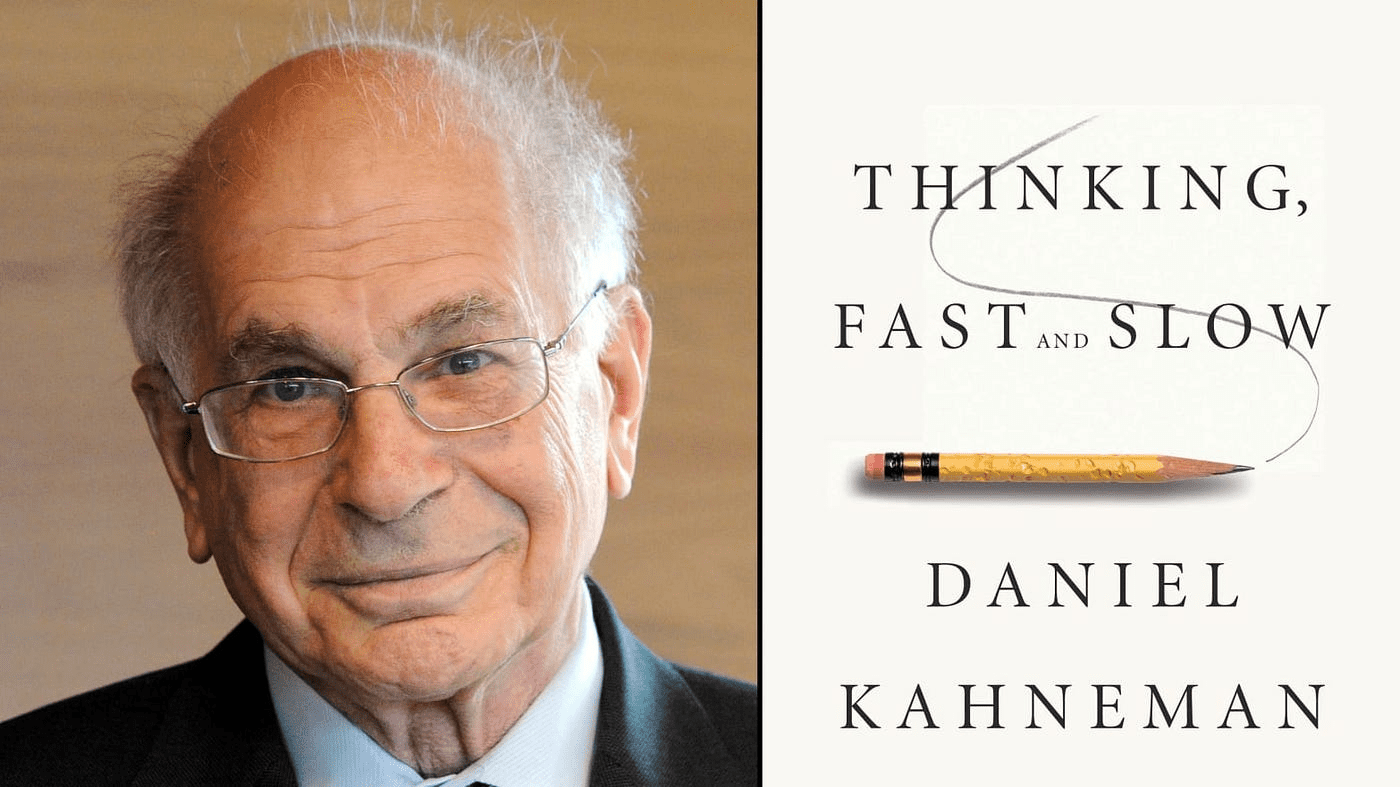

The Dynamics of Thought: A Complete Summary of Thinking, Fast and Slow by Daniel Kahneman
Daniel Kahneman’s groundbreaking book, Thinking, Fast and Slow, invites readers on an extraordinary journey into the human mind, challenging conventional notions of rationality and decision-making. Kahneman, a Nobel laureate in Economic Sciences, draws on decades of his pioneering research, often in collaboration with Amos Tversky, to illuminate the hidden mechanisms that shape our judgments, choices, and perceptions of the world. Through engaging anecdotes, vivid examples, and clear explanations, he reveals how our minds operate through two distinct systems – one intuitive and fast, the other deliberate and slow – and the profound implications this dual process has for our understanding of biases, errors, and even happiness. This summary promises to break down every important idea, example, and insight from Kahneman’s work, providing comprehensive coverage so you can grasp the full wisdom of this essential book.
Quick Orientation
Thinking, Fast and Slow is a landmark work that synthesizes decades of psychological research, primarily from the field of behavioral economics, to offer a radical new perspective on human cognition. Daniel Kahneman introduces us to the idea that our minds operate through two distinct modes: System 1, which is fast, intuitive, and emotional, and System 2, which is slower, more deliberate, and logical. The book’s main purpose is to explore how these two systems interact, the biases and errors that arise from their interplay, and how understanding these cognitive mechanisms can lead to better judgments and decisions in both our personal and professional lives.
Kahneman’s insights are particularly relevant in today’s complex world, where we are constantly bombarded with information and faced with critical choices. By revealing the systematic errors and illusions that are hardwired into our thinking, the book empowers readers to recognize these patterns in themselves and others. It challenges the traditional economic view of humans as perfectly rational beings and instead offers a more nuanced, realistic portrayal of our cognitive strengths and limitations. Get ready to have your understanding of your own mind fundamentally reshaped, as we delve into every important idea, example, and insight from this transformative work.
The Characters of the Story
This foundational chapter introduces the book’s central metaphor: two distinct “systems” of thinking that govern our minds. Kahneman emphasizes that these are not literal entities but rather useful fictions to describe different cognitive operations. Understanding these characters is crucial to grasping all the subsequent concepts in the book.
System 1: The Fast and Intuitive Thinker
System 1 operates automatically and quickly, requiring little to no effort and no sense of voluntary control. It’s responsible for the immediate, effortless impressions and feelings that guide our conscious thoughts and choices. Think of it as the mind’s automatic pilot.
Here are some examples of System 1 operations:
- Detecting that one object is more distant than another.
- Orienting to the source of a sudden sound.
- Completing familiar phrases like “bread and butter.”
- Making a “disgust face” when seeing a horrible picture.
- Recognizing hostility in a voice.
- Solving simple arithmetic like 2 + 2 = ?.
- Reading words on a billboard without conscious effort.
- Driving a car on an empty road, where actions become routine.
- For a chess master, finding a strong move almost instantly.
- Understanding simple sentences in one’s native language.
- Recognizing a person described as a “meek and tidy soul with a passion for detail” as resembling an occupational stereotype.
System 1 includes innate skills (like perceiving the world or fearing spiders) and skills developed through prolonged practice (like reading or understanding social nuances). Many of its actions are involuntary; you cannot prevent yourself from understanding a sentence or orienting to a loud sound. It effortlessly originates the impressions and feelings that System 2 often adopts.
System 2: The Slow and Effortful Controller
System 2 is responsible for effortful mental activities that demand attention, including complex computations. Its operations are associated with the subjective experience of agency, choice, and concentration. It’s the conscious, reasoning self that makes decisions and decides what to focus on.
Examples of System 2 operations include:
- Bracing for a starter gun in a race.
- Focusing attention on specific individuals in a crowded room.
- Searching memory to identify a surprising sound.
- Maintaining a faster walking speed than is natural.
- Monitoring one’s behavior in a social situation.
- Counting the occurrences of a letter in a text.
- Recalling one’s phone number.
- Parking in a narrow space.
- Comparing two washing machines for overall value.
- Filling out a tax form.
- Checking the validity of a complex logical argument.
System 2 operates within a limited budget of attention. Effortful activities interfere with each other, making multitasking difficult or impossible for complex tasks (e.g., multiplying 17 × 24 while driving in dense traffic). It can also program System 1’s automatic functions, like looking for a white-haired woman in a crowd.
The Interplay and Cognitive Blindness
The interaction between these two systems is a central theme. System 1 constantly generates suggestions (impressions, intuitions, feelings) for System 2. If System 2 endorses these, they become beliefs and voluntary actions. Most of the time, System 2 accepts System 1’s suggestions with little modification.
However, when System 1 encounters difficulty, it calls on System 2 for more detailed processing. This happens when a question arises that System 1 cannot answer immediately or when an event violates System 1’s model of the world (e.g., a lamp jumping). System 2 is also crucial for self-control, overcoming the impulses and associations of System 1.
A dramatic illustration of attention limits and System 2’s role is The Invisible Gorilla experiment. Viewers focused on counting basketball passes often fail to notice a gorilla walking across the screen, demonstrating that even obvious stimuli can be missed if attention is directed elsewhere. This highlights two critical facts: we can be blind to the obvious, and we are also blind to our blindness.
Illusions and the Difficulty of Overcoming Them
The Müller-Lyer illusion demonstrates the autonomy of System 1. Even when System 2 knows the lines are equal in length (after measuring), System 1 continues to see one as longer. Similarly, a strong attraction to a patient with a history of failed treatments (the psychopathic charm example) can be a cognitive illusion; System 2 must learn to recognize and resist such impressions.
Errors of intuitive thought are often difficult to prevent because System 1 operates automatically and cannot be turned off. Biases can only be prevented by enhanced monitoring and effortful activity of System 2. But continuous vigilance is impractical. The goal is to recognize situations where mistakes are likely and exert effort when the stakes are high.
Kahneman uses the metaphor of two agents with individual personalities to make the concepts of System 1 and System 2 easier to grasp and discuss. This “useful fiction” simplifies thinking about how the mind works, making it easier to identify and understand errors of judgment and choice in others and, eventually, in ourselves.
Attention and Effort
This chapter delves into the limited capacity of System 2 and the costs associated with its operations, emphasizing the concept of mental effort. Kahneman uses vivid examples and personal anecdotes to illustrate how taxing System 2 can be, and how it impacts our cognitive and physical states.
The Price of Mental Effort
Kahneman illustrates mental effort using tasks like Add-1 (incrementing each digit in a string by one) and Add-3. These exercises push System 2 to its limits, causing pupil dilation and increased heart rate, quantifiable physical manifestations of cognitive strain. This phenomenon, known as pupillometry, was key to Kahneman’s early research. He discovered that the size of the pupil offers a reliable index of the current rate at which mental energy is used, similar to an electricity meter.
During these “mental sprints,” people can become effectively blind to other stimuli. For example, in an Add-1 task, subjects often missed a flashing letter K, even when staring directly at it. This selective blindness demonstrates how System 2 protects its most important activity, allocating “spare capacity” to other tasks only if available.
As a task becomes more skilled, its demand for energy diminishes, with fewer brain regions involved. This adherence to the law of least effort means that if there are several ways to achieve a goal, people gravitate towards the least demanding course of action. Laziness is built deep into our nature.
Flow: Effortless Concentration
Not all cognitive work is aversive. Psychologist Mihaly Csikszentmihalyi’s concept of flow describes a state of effortless concentration so deep that individuals lose their sense of time and self. In flow, maintaining focused attention requires no exertion of self-control, freeing up resources for the task itself. This neatly separates the two forms of effort: the concentration on the task and the deliberate control of attention.
The Busy and Depleted System 2
A crucial insight is that self-control and cognitive effort draw on a shared pool of mental energy. This is demonstrated by the finding that people challenged by a demanding cognitive task (like memorizing digits) are more likely to yield to temptation (e.g., choosing chocolate cake over fruit salad). When System 2 is busy, System 1 has more influence on behavior.
This phenomenon is known as ego depletion. Exerting self-control in one task makes you less willing or able to exert it in a subsequent task. Roy Baumeister’s research shows that various voluntary efforts—cognitive, emotional, or physical—tire this shared resource. Examples include:
- Stifling emotional reactions to a film.
- Making a series of conflicting choices.
- Resisting tempting foods.
- Trying to impress others.
- Responding kindly to bad behavior.
- Interacting with someone of a different race (for prejudiced individuals).
Indications of depletion are diverse, ranging from deviating from one’s diet to performing poorly in cognitive tasks. Ego depletion is not merely cognitive busyness; it is at least partly a loss of motivation.
Surprisingly, mental energy seems to be linked to glucose levels. Studies have shown that consuming glucose can counteract ego depletion effects. Tired and hungry parole judges, for instance, tend to make more default (and often negative) decisions, demonstrating the real-world impact of depleted mental resources.
The Lazy System 2 in Action
System 2’s primary function is to monitor and control the suggestions of System 1. However, it often succumbs to its own laziness, accepting intuitive answers without sufficient scrutiny. The bat-and-ball problem (“A bat and ball cost $1.10. The bat costs one dollar more than the ball. How much does the ball cost?”) perfectly illustrates this. The intuitive answer (10¢) is wrong, yet a majority of university students, even at elite institutions, fail to check it, demonstrating their adherence to the law of least effort.
Similar errors appear in logical syllogisms (e.g., “All roses are flowers. Some flowers fade quickly. Therefore some roses fade quickly.”) where a plausible but incorrect conclusion is accepted without rigorous logical checking. Even recalling basic facts (like Detroit’s high crime rate in Michigan) can be overlooked if System 2 is lazy, leading to biased estimates.
Those who avoid intellectual sloth and are more alert, intellectually active, and skeptical of their intuitions are described as “engaged.” They align with Keith Stanovich’s concept of rationality, which he distinguishes from intelligence. Stanovich argues that while intelligence involves cognitive aptitude, rationality is about actively seeking reasons and engaging System 2.
In essence, the chapter establishes that System 2 is a crucial but inherently lazy supervisor. Its limited capacity and susceptibility to depletion mean that our intuitive System 1 often holds sway, even when its suggestions are flawed. Recognizing this inherent laziness is the first step toward improving our decision-making.
The Associative Machine
This chapter explores the fascinating workings of System 1, highlighting its role as an “associative machine” that constantly constructs a coherent interpretation of our world. It delves into the powerful phenomenon of priming and its surprising influence on our thoughts, actions, and emotions, often without our conscious awareness.
How Associations Work
When you encounter words like “Bananas Vomit,” a cascade of automatic, effortless responses occurs: unpleasant images, a slight twist of disgust in your face, and physiological reactions. This is associative activation: ideas evoke many other ideas, spreading activity through a vast network in your brain called associative memory. The key feature is coherence: memories, emotions, and physical reactions link together, forming a self-reinforcing pattern.
Ideas are nodes in this network, connected by various links:
- Causes to effects (virus → cold).
- Things to their properties (lime → green).
- Things to categories (banana → fruit).
Crucially, much of this associative thinking happens silently, hidden from our conscious selves. We have limited access to how our minds work, and our actions and emotions can be influenced by events we are not even aware of.
The Marvels of Priming
Priming effects demonstrate how exposure to a word or concept can immediately change how easily related words or concepts are evoked. Seeing “EAT” primes “SOUP”; seeing “WASH” primes “SOAP.” These effects extend beyond words to influence actions and emotions, even if the trigger is unconscious.
A classic example is John Bargh’s “Florida effect.” Students primed with words related to the elderly (e.g., “Florida,” “forgetful”) walked significantly slower down a hallway, without consciously realizing the theme of the words. This ideomotor effect shows how ideas can influence actions. The effect is often reciprocal: walking slowly can also prime thoughts of old age.
Simple physical gestures can also unconsciously influence thoughts:
- Holding a pencil in your teeth (forcing a smile) makes cartoons seem funnier.
- Frowning (by squeezing eyebrows) intensifies emotional responses to upsetting pictures.
- Nodding one’s head (a “yes” gesture) makes one more accepting of messages, while shaking it makes one more likely to reject them.
These studies suggest that even subtle environmental cues can shape our behavior. The advice to “act calm and kind regardless of how you feel” is effective because acting a certain way can induce the corresponding feeling.
Primes That Guide Us
Priming effects can reach every corner of our lives:
- Voting behavior: Voters in precincts located in schools were more likely to support school funding initiatives. Images of classrooms also had a similar effect.
- Money primes individualism: People primed with money (subtly, e.g., through a screen saver of dollar bills) became more self-reliant (persisting longer in tasks before asking for help) and more selfish (less willing to help others, taking fewer pencils that were dropped). This suggests that living in a money-centric culture can unconsciously shape behavior.
- Mortality primes authoritarianism: Reminders of death can increase the appeal of authoritarian ideas, as they offer reassurance in the face of terror.
- Cleansing rituals: Thinking about moral transgressions (e.g., lying) makes people more inclined to buy cleansing products like soap or mouthwash. This “Lady Macbeth effect” suggests a desire to physically cleanse oneself of sin, specific to the body part involved in the transgression (e.g., mouthwash for phone lying, soap for email lying).
While the effects of primes are robust but not necessarily large, their prevalence implies that we are far more suggestible than we realize. Disbelief in these findings is common because they don’t align with our subjective experience, but System 1 operates unconsciously, outside our awareness.
The British university “honesty box” experiment, where images of eyes increased contributions to a tea/coffee fund threefold compared to flower images, is a perfect demonstration of symbolic reminders influencing behavior without conscious awareness.
In summary, System 1, as an associative machine, effortlessly constructs coherent interpretations of the world, often guided by subtle primes of which we are unaware. It generates impressions, feelings, and impulses that form the basis of our beliefs and actions, even if these processes remain hidden from our conscious System 2. This automatic functioning explains many systematic errors in our intuitions, which will be explored in later chapters.
Cognitive Ease
This chapter explores the concept of cognitive ease, a fundamental indicator of how smoothly our mental operations are running. It reveals how this feeling of ease, generated by System 1, significantly influences our beliefs, judgments, and even our creativity and mood.
The Ease/Strain Dial
Our brains constantly monitor incoming information and internal states, with a “dial” measuring cognitive ease, ranging from “Easy” to “Strained.”
- Easy is a sign that things are going well: no threats, no major news, no need for extra attention or effort.
- Strained indicates a problem or unmet demand, requiring increased mobilization of System 2.
Cognitive ease is influenced by various factors:
- Fluency: A sentence printed in a clear font, repeated, or primed will be processed with ease.
- Mood: Being in a good mood (even induced by a “smile” with a pencil in your mouth) increases cognitive ease.
- Familiarity: Repeated exposure to stimuli, even subtle ones, enhances ease.
The consequences of cognitive ease and strain are profound and often symmetrical:
- Cognitive Ease: Associated with a good mood, liking what you see, believing what you hear, trusting intuitions, and feeling comfortably familiar. It leads to superficial thinking.
- Cognitive Strain: Associated with vigilance, suspicion, increased effort, less comfort, and fewer errors. It leads to less intuitive and less creative thinking.
Illusions of Remembering and Truth
Cognitive ease can create illusions in both memory and belief:
- Familiarity and Truth: Words or names seen before become easier to process. This cognitive ease gives us the impression of familiarity. Larry Jacoby’s “Becoming Famous Overnight” experiment showed that simply seeing a name once can make it feel familiar, leading people to mistake it for a celebrity’s name later. This feeling of ease is often mistaken for truth: anything that makes it easier for the associative machine to run smoothly biases beliefs.
- Illusions of Truth: Frequent repetition makes statements more believable, even if they are false (e.g., “The body temperature of a chicken is 144°”). Familiarity is hard to distinguish from truth. If you can’t remember the source or relate a statement to other knowledge, you rely on cognitive ease.
How to Write a Persuasive Message
To make your message more persuasive, even if it’s already true, enlist cognitive ease:
- Maximize legibility: Use clear fonts and high-quality paper with good contrast. Bright blue or red text is more believable than middling shades.
- Use simple language: Avoid complex vocabulary. Research by Danny Oppenheimer showed that using pretentious language for familiar ideas is seen as a sign of poor intelligence and low credibility.
- Make it memorable: Ideas in verse or rhyming aphorisms are more likely to be taken as truth (“Woes unite foes” vs. “Woes unite enemies”).
- Choose easy-to-pronounce sources: Companies with pronounceable names perform better, and reports from firms with easy names are given more weight.
These techniques work because System 2 is lazy. It often accepts suggestions from System 1 without much scrutiny. Our subjective experience does not easily reveal the source of cognitive ease, making us susceptible to these influences.
Strain and Performance
Cognitive strain, regardless of its source, mobilizes System 2. The bat-and-ball problem, when presented in a difficult-to-read font, actually led to fewer errors (35% vs. 90% in normal font). The increased strain forced System 2 to engage more effort, leading to more accurate logical reasoning and a rejection of System 1’s intuitive but incorrect answer. This demonstrates that when you feel strained, you are more likely to be vigilant and suspicious, leading to fewer errors.
The Pleasure of Cognitive Ease
Cognitive ease is inherently associated with positive feelings:
- Smiling and Liking: People show faint smiles and relaxed brows when pictures are easier to see, even if they don’t consciously recognize the pictures.
- Pronounceability and Favorability: Easily pronounced words evoke favorable attitudes. Companies with pronounceable names or trading symbols tend to do better.
- Mere Exposure Effect: Psychologist Robert Zajonc showed that repeated exposure to a stimulus (even subliminally) leads to increased liking. This is because repeated exposure without negative consequences makes a stimulus a safety signal, and safety feels good. This effect has a deep evolutionary history, guiding organisms to distinguish safe from unsafe environments.
The findings demonstrate a cluster: good mood, intuition, creativity, gullibility, and increased reliance on System 1 go together. Conversely, sadness, vigilance, suspicion, an analytic approach, and increased effort are also linked. A good mood signals a safe environment, allowing System 2 to relax its control.
Mood and Intuition: The Remote Association Test
Studies using the Remote Association Test (RAT) (e.g., “Cottage Swiss cake” → “cheese”) reveal that people can feel if a triad of words is coherent before knowing the solution. This sense of cognitive ease is a faint signal from System 1.
- Mood’s Impact: Putting participants in a good mood significantly doubled their accuracy in this intuitive task. Unhappy subjects were completely incapable of accurate performance. This reinforces that good mood increases intuition and creativity, but also reduces vigilance and makes one more prone to logical errors.
- Emotional Basis of Coherence: The brief emotional response (pleasant for coherent triads, unpleasant otherwise) is the basis of judgments of coherence. If this emotional response is explained away (e.g., by background music), the intuition of coherence disappears.
In sum, cognitive ease serves as a powerful, often unconscious, signal that influences our beliefs, judgments, and emotional states. While it enables quick and efficient processing, it also makes us susceptible to various illusions and biases, as our lazy System 2 often fails to override System 1’s smooth but sometimes flawed operations.
Norms, Surprises, and Causes
This chapter delves deeper into the fundamental operations of System 1, focusing on its role in constructing a coherent model of the world based on norms, detecting surprises, and identifying causal connections. These automatic processes shape our understanding of events, often leading to predictable biases.
Assessing Normality
System 1’s primary function is to maintain and update a model of your personal world, representing what is normal within it. This model is built through associations that link co-occurring ideas of circumstances, events, and outcomes. This continuous updating allows for the instant detection of anomalies.
Surprise is a key indicator of this model at work. There are two types:
- Active expectations: Consciously waiting for an event (e.g., a child’s voice when the door opens). You are surprised if it doesn’t happen.
- Passive expectations: Events that are normal in a situation, though not actively anticipated (e.g., meeting a familiar acquaintance). You are not surprised when they happen.
An initial surprising event can quickly make its recurrence seem less surprising. The anecdote of meeting “Jon, the psychologist who shows up when we travel abroad” illustrates how System 1 makes an unusual co-occurrence seem almost normal after just one instance. Similarly, after seeing a car on fire on a specific stretch of road, subsequent sightings make that spot “the place where cars catch fire,” even if it’s pure coincidence.
The Moses illusion (“How many animals of each kind did Moses take into the ark?”) is another example. The biblical context primes “Moses” as normal, even though “Noah” is the correct figure. System 1 unconsciously detects associative coherence and accepts the question, ignoring the factual inaccuracy.
Our shared knowledge of the world creates norms for categories. For example, when you read “large mouse” and “very small elephant,” System 1 knows that a mouse is smaller than an elephant, regardless of the adjectives, creating a coherent image. Violations of these norms (like a male voice saying “I am pregnant”) are detected with astonishing speed and subtlety, activating specific brain responses within fractions of a second.
System 1 understands language by relying on these basic assessments of what is normal. It readily computes averages for categories but struggles with sums. For instance, it can instantly assess the average length of lines in an array, but to calculate the total length requires effortful System 2 computation. This limitation means System 1 often ignores the size of a category in judgments of “sum-like variables.” The Exxon Valdez oil spill example, where people were willing to pay almost the same amount to save 2,000, 20,000, or 200,000 birds, illustrates this: they reacted to the prototype of a suffering bird, neglecting the quantity.
Seeing Causes and Intentions
System 1 is a machine for inferring causality. When you read “Fred’s parents arrived late. The caterers were expected soon. Fred was angry,” you instantly know the cause of Fred’s anger. This automatic search for causal connections is part of understanding a story.
This causal bias often leads to errors when applied to purely statistical events. Nassim Taleb’s example of stock market headlines after Saddam Hussein’s capture illustrates this: the same event was used to explain both a rise and a fall in bond prices, satisfying our need for a coherent causal story, even if it explains nothing.
The co-occurrence of ideas can also evoke causal stories. The phrase “Jane discovered that her wallet was missing” after “exploring beautiful sights in the crowded streets of New York” makes “pickpocket” a more strongly associated (and recalled) word than “sights,” even though “pickpocket” was never mentioned.
Psychologists like Albert Michotte and Fritz Heider demonstrated our innate tendency to see causality. Michotte showed that we perceive physical causality directly (e.g., one square “launching” another upon contact), a perception shared even by six-month-old infants. Heider and Mary-Ann Simmel showed the irresistible perception of intentional causality in moving geometric shapes, identifying agents, intentions, and emotions—a perception only absent in individuals with autism.
Paul Bloom argues that our inborn readiness to separate physical and intentional causality explains the near universality of religious beliefs, as it makes it natural to envision “soulless bodies and bodiless souls.”
The prominence of causal intuitions is a recurring theme because people often misapply causal thinking to situations that require statistical reasoning. System 1 excels at finding causal links but is inept with “merely statistical” facts that change probabilities without causing events.
In summary, System 1 continuously constructs a coherent model of the world by establishing norms, detecting deviations, and inferring causal connections. While these processes are crucial for making sense of our environment, they can also lead to predictable biases, especially when we apply causal reasoning to situations driven by chance or statistical regularities.
A Machine for Jumping to Conclusions
This chapter highlights a key characteristic of System 1: its propensity to jump to conclusions. This efficiency can be beneficial but also risky, leading to systematic errors when situations are unfamiliar or stakes are high.
Neglect of Ambiguity and Suppression of Doubt
System 1 operates on the principle of What You See Is All There Is (WYSIATI). It constructs the most coherent story possible from the information available, and crucial to this is its radical insensitivity to the quality and quantity of information. When information is scarce, System 1 becomes a machine for jumping to conclusions, suppressing ambiguity and doubt.
Consider the ambiguous figures (A B C / 12 13 14) or the sentence “Ann approached the bank.” You automatically interpret them based on context (letters with letters, numbers with numbers; money bank if no other context). System 1 makes a definite choice without you being aware of the ambiguity or the alternatives it rejected. Conscious doubt is not in the repertoire of System 1; it requires the effortful maintenance of incompatible interpretations by System 2.
A Bias to Believe and Confirm
Daniel Gilbert’s theory of how mental systems believe posits that understanding a statement begins with an attempt to believe it. You must first know what an idea means if it were true. Only then can System 2 decide to “unbelieve” it. This initial belief is an automatic operation of System 1.
Gilbert’s experiments showed that when System 2 is busy (e.g., trying to remember digits), it becomes difficult to “unbelieve” false statements. System 1 is gullible and biased to believe; System 2 is in charge of doubting and unbelieving, but it’s often lazy or occupied. This makes people more susceptible to persuasive messages when tired or depleted.
Associative memory contributes to a general confirmation bias. When asked “Is Sam friendly?” different evidence comes to mind than if asked “Is Sam unfriendly?” People (and scientists) tend to seek data compatible with their existing beliefs, rather than trying to refute them. This confirmatory bias, combined with WYSIATI, leads to uncritical acceptance of suggestions and an exaggeration of the likelihood of extreme events.
Exaggerated Emotional Coherence (Halo Effect)
The halo effect is the tendency to like (or dislike) everything about a person, including traits you haven’t observed, based on a first impression. It simplifies the world by exaggerating the consistency of evaluations. For example, if you like a president’s politics, you’re likely to like his voice and appearance too.
Solomon Asch’s experiment on personality descriptions (Alan: intelligent, industrious, impulsive, critical, stubborn, envious vs. Ben: envious, stubborn, critical, impulsive, industrious, intelligent) showed that the order of traits profoundly affects overall impression. “Stubborn” takes on different meanings depending on whether it follows “intelligent” or “envious.” The halo effect is an example of suppressed ambiguity.
Kahneman himself experienced this when grading essays. Grading all essays for one student consecutively led to strikingly homogeneous scores due to the halo effect; the first essay disproportionately influenced subsequent evaluations. By grading all students’ first essays, then all second essays, he reduced the bias and revealed the true inconsistency in student performance and his own grading.
The principle to combat this is to decorrelate error: obtain independent judgments from multiple sources and average them. This is why witnesses to an event are interviewed separately and why, in meetings, committee members should state their positions in writing before discussion. This reduces the influence of early, assertive speakers.
What You See Is All There Is (WYSIATI)
WYSIATI is a core principle: System 1 operates based only on the information it has access to, ignoring information it doesn’t have. It constructs the best possible coherent story from available data, regardless of quantity or quality. This allows for fast thinking but makes us susceptible to biases.
The study where participants evaluated legal scenarios provides strong evidence for WYSIATI. Participants given one-sided evidence were more confident in their judgments than those who heard both sides, even though they could have easily generated the opposing arguments. The consistency of information matters for a good story, not its completeness. Knowing little can make it easier to fit everything into a coherent pattern.
WYSIATI explains various biases:
- Overconfidence: Confidence is based on the coherence of the story one can tell, not on the amount or quality of evidence. Missing critical information is ignored.
- Framing effects: Different ways of presenting the same information evoke different emotions and responses (e.g., “90% fat-free” vs. “10% fat”). Only one frame is typically seen.
- Base-rate neglect: Vivid specific information (like Tom W’s personality description) overrides general statistical facts (like the number of farmers vs. librarians).
In conclusion, System 1’s tendency to jump to conclusions, its gullibility, and its reliance on WYSIATI are efficient for quick understanding but lead to predictable biases. These biases are rooted in the automatic construction of coherent stories, which often overlook ambiguity, unobserved information, and the true uncertainty of the world.
How Judgments Happen
This chapter explores how System 1 generates basic assessments of situations and how these assessments form the foundation for more complex judgments. It highlights System 1’s effortless evaluation of various attributes, its limitations in dealing with sums and statistical information, and its ability to match intensities across different scales.
Basic Assessments
System 1 is constantly evaluating the environment to answer fundamental survival questions: Is there a threat or opportunity? Is everything normal? This continuous assessment mechanism, inherited from our evolutionary past, evaluates situations as good or bad, requiring approach or avoidance. Good mood and cognitive ease are akin to assessments of safety.
Alex Todorov’s research on face reading provides a concrete example. In a single glance at a stranger’s face, we automatically assess their dominance (e.g., a strong chin) and trustworthiness (e.g., a smile). While imperfect, this ancient mechanism confers a survival advantage and even influences modern behavior, such as voting. Todorov found that candidates whose faces were rated higher in competence (combining strength and trustworthiness) won about 70% of elections. This demonstrates a judgment heuristic: voters substitute a quick, automatic assessment of facial features for a more complex judgment of a candidate’s actual competence. Politically uninformed, TV-prone voters are more susceptible to this bias.
System 1 also understands language, with comprehension relying on basic assessments like:
- Similarity and representativeness.
- Causal attributions.
- Availability of associations and exemplars.
These assessments occur automatically, without specific intention. However, System 1 does not assess every possible attribute. For instance, looking at a stack of blocks, you immediately know the relative height of towers, but you cannot instantly tell if the number of blocks on the left is the same as the number arrayed on the floor; that requires System 2 counting.
Sets and Prototypes
System 1 excels at dealing with averages or prototypes but struggles with sums. When shown an array of lines, it can instantly register their average length with precision, but cannot compute their total length without System 2 effort. This is an important limitation:
- Because System 1 represents categories by a prototype or typical exemplars, it handles averages well but poorly integrates quantity.
- The size of a category (number of instances) tends to be ignored in judgments of what Kahneman calls sum-like variables. The Exxon Valdez oil spill example (willingness to pay to save 2,000, 20,000, or 200,000 birds yielded similar average contributions) illustrates this, as people reacted to the prototype of a suffering bird rather than the total number.
Intensity Matching
System 1 possesses an ability to match intensities across diverse dimensions. If crimes were colors, murder would be a deeper red than theft. If crimes were music, mass murder would be fortissimo. This allows us to translate an impression from one scale to another.
For example, given “Julie read fluently when she was four years old,” you can:
- Match her reading prowess to the height of a man who is “as tall as Julie was precocious” (e.g., 6’6″).
- Match it to a level of income or a crime severity.
- Match it to a college GPA.
This intensity matching enables quick, intuitive predictions by mapping one scale onto another. While natural for System 1, Kahneman notes that this mode of prediction is often statistically wrong because it fails to account for regression to the mean.
The Mental Shotgun
System 1 performs many computations simultaneously, often more than needed. Kahneman calls this excess computation the mental shotgun, akin to a shotgun scattering pellets rather than hitting a single point.
- Rhyming words: When asked to press a key when words rhymed (e.g., VOTE-NOTE, VOTE-GOAT), people were slower if the spelling was different, even though spelling was irrelevant. System 1 automatically compared spelling as well.
- Literally false sentences: When asked to judge if sentences were literally true, “Some jobs are snakes” was judged more quickly as false than “Some roads are snakes” because the former is metaphorically true, creating a conflict.
These examples show that System 1 computes beyond System 2’s specific instructions, often causing interference. This combination of the mental shotgun and intensity matching explains how we form intuitive judgments about things we know little about, by answering easier questions than the ones asked.
In summary, System 1 constantly performs basic assessments, excelling at averages and recognizing relationships, while struggling with sums and precise statistical information. Its capacity for intensity matching and its “mental shotgun” approach allow for rapid, albeit sometimes biased, intuitive judgments. These automatic processes are foundational to the next chapter’s exploration of “substitution.”
Answering an Easier Question
This chapter introduces the core concept of substitution: when faced with a difficult question, System 1 often finds a related, easier question and answers it instead, often without conscious awareness of the substitution. This mechanism, along with intensity matching and the mental shotgun, lies at the heart of the heuristics and biases approach.
Substituting Questions
The brain’s inability to be “stumped” means we almost always have intuitive feelings and opinions about most things. If a satisfactory answer to a hard question isn’t quickly found, System 1 will propose a heuristic question—a simpler question that is answered in place of the original target question.
Substitution is an effortless, automatic process driven by the mental shotgun. While System 2 has the opportunity to reject the heuristic answer, it often takes the path of least effort and endorses it without much scrutiny. This can lead to significant errors, as the heuristic question is not always an appropriate proxy for the target question.
Kahneman provides a table of common substitutions:
- Target Question: How much would you contribute to save an endangered species?
- Heuristic Question: How much emotion do I feel when I think of dying dolphins?
- Target Question: How happy are you with your life these days?
- Heuristic Question: What is my mood right now?
- Target Question: How popular will the president be six months from now?
- Heuristic Question: How popular is the president right now?
- Target Question: How should financial advisers who prey on the elderly be punished?
- Heuristic Question: How much anger do I feel when I think of financial predators?
- Target Question: This woman is running for the primary. How far will she go in politics?
- Heuristic Question: Does this woman look like a political winner?
In each case, the answer to the heuristic question comes readily to mind, and System 1 often “fits” it to the original, more difficult question through intensity matching. For example, the intensity of emotion about dying dolphins is mapped onto a dollar contribution scale. This allows us to make quick judgments even when we don’t fully understand the complex target question.
The 3-D Heuristic
A powerful illustration of substitution is the 3-D heuristic. When viewing a two-dimensional image (like figures in a corridor), our perceptual system automatically interprets it as a three-dimensional scene. The figures in the back, appearing farther away, are also perceived as larger, even if their actual size on the page is identical.
The question “As printed on the page, is the figure on the right larger than the figure on the left?” asks about 2-D size, but the overwhelming impression of 3-D size leads to a substitution. The answer is based on the unasked question: “How tall are the three people?” This bias is deeply embedded in the perceptual system, making it impossible to consciously ignore the irrelevant cues.
The Mood Heuristic for Happiness
A classic German study exemplifies substitution in judgment:
- When students were asked “How happy are you these days?” and then “How many dates did you have last month?”, there was no correlation between dating frequency and reported happiness. Dating was not top-of-mind for general happiness.
- However, when the order was reversed (“How many dates did you have last month?” then “How happy are you these days?”), the correlation became very high.
The explanation is that the dating question evoked an emotional reaction (happiness or loneliness), which was still salient when the general happiness question was asked. Students substituted their feelings about their romantic life for their overall life satisfaction. They didn’t confuse the concepts, but System 1 provided a ready answer from an easier, related question. This illustrates the WYSIATI principle, where the present state of mind looms very large.
The Affect Heuristic
The affect heuristic, proposed by Paul Slovic, is a prominent example of substitution where emotions directly guide judgments and decisions. People let their likes and dislikes determine their beliefs about the world, often without conscious reasoning.
- Your political preference influences whether you find policy arguments compelling.
- If you like a technology (e.g., water fluoridation), you perceive its benefits as substantial and risks as negligible; if you dislike it, you see high risks and few benefits.
The “emotional tail wags the rational dog.” Information about lower risks for a disliked activity will also, without any direct evidence, improve your perception of its benefits. This heuristic simplifies our lives by creating a world that is much tidier than reality, where good things have no costs and bad things have no benefits.
The affect heuristic reveals a new side of System 2: it often acts as an apologist for System 1’s emotions, rather than a critical enforcer. System 2’s search for information and arguments is primarily constrained to information consistent with existing beliefs, not for examining them. This interplay results in an active, coherence-seeking System 1 suggesting solutions that an undemanding System 2 readily accepts.
In essence, substitution is a pervasive cognitive operation that allows us to navigate a complex world quickly, but at the cost of accuracy and consistency. By answering easier questions instead of harder ones, we often remain unaware of the logical flaws in our judgments, highlighting the deep-seated biases of intuitive thinking.
The Law of Small Numbers
This chapter exposes a fundamental flaw in human intuition: our profound misunderstanding of statistics and our preference for causal explanations over mere statistical regularities. It introduces the “law of small numbers” as a pervasive bias where people wrongly believe that small samples are highly representative of their populations.
The Fallacy of Small Samples
Kahneman begins with a puzzling observation: counties with the lowest incidence of kidney cancer are mostly rural, sparsely populated, and Republican, and so are counties with the highest incidence. The common (and flawed) intuition is to seek a causal link (e.g., rural lifestyle, diet, or lack of medical care explains both extremes).
The true explanation is purely statistical: small samples yield extreme results more often than large samples do. Rural counties have small populations, making their cancer rates more variable and thus more likely to appear at either the very high or very low ends of the spectrum purely by chance. This is an artifact of sampling, not a causal phenomenon.
Despite knowing the law of large numbers (large samples are more precise), people often fail to intuitively grasp its inverse: small samples are highly unreliable. Kahneman’s early research with Amos Tversky showed that even sophisticated researchers, including statisticians, exhibit this bias, commonly selecting sample sizes too small to reliably confirm hypotheses, leaving them at the mercy of “sampling luck.” They dubbed this “belief in the law of small numbers,” stating that people believe “the law of large numbers applies to small numbers as well.”
A Bias of Confidence Over Doubt
When presented with statistical information (e.g., “In a telephone poll of 300 seniors, 60% support the president”), System 1 focuses on the story (“elderly support president”) and largely ignores details about the source or sample size, unless the unreliability is glaringly obvious. This is due to WYSIATI (What You See Is All There Is).
System 1 is not prone to doubt; it suppresses ambiguity and constructs coherent stories. System 2 can doubt, but it’s effortful and lazy. This contributes to a general bias favoring certainty over doubt. This exaggerated faith in small samples is linked to the halo effect, where System 1 constructs a rich image from limited evidence, making reality seem simpler and more coherent than it is.
Cause and Chance
Our associative machinery constantly seeks causal explanations. This powerful bias makes it difficult for us to accept the role of chance in events. When random sequences appear (e.g., six babies born as BGBBGB vs. HHHHHH), we mistakenly judge the seemingly “random” sequence as more likely, even though all sequences of independent events are equally probable. We are pattern seekers, quick to reject the idea that a process is truly random if we detect what appears to be a rule.
This misunderstanding of randomness has significant consequences:
- World War II London bombings: People believed the non-random distribution of bomb hits implied German spies, but statistical analysis showed it was typical of a random process. “To the untrained eye,” writes William Feller, “randomness appears as regularity or tendency to cluster.”
- Israeli Air Force squadron losses: When one squadron suffered disproportionately high losses, an inquiry was launched to find a cause, despite the most likely explanation being blind luck. Kahneman advised accepting luck and stopping the investigation, as it added an unfair burden to the pilots.
- “Hot hand” in basketball: Players, coaches, and fans widely believe in the “hot hand”—a player who sinks several shots in a row is “hot.” However, statistical analysis of thousands of shots showed no such phenomenon; the sequence of successes and misses is random. This is a massive and widespread cognitive illusion, fiercely resisted by experts.
The Gates Foundation’s investment in small schools, based on the finding that the most successful schools (and ironically, the worst schools) tend to be small, is another example. The true factor is that small schools are simply more variable due to smaller sample sizes, not inherently better or worse. The causal story of personal attention in small schools is compelling but irrelevant to the statistical artifact.
In essence, the law of small numbers is a manifestation of two broader psychological tendencies: an exaggerated faith in the reliability of limited information (WYSIATI) and a strong bias towards causal explanations, even when events are purely random. Understanding this means recognizing that our minds often create a view of the world that is far simpler and more coherent than reality.
Anchors
This chapter reveals the powerful and pervasive cognitive bias known as anchoring, where people’s estimates of a quantity are significantly influenced by an initial, often irrelevant, number. Kahneman explains that anchoring arises from two distinct psychological mechanisms, one for each System.
Anchoring as Adjustment (System 2)
The initial concept of anchoring, favored by Amos Tversky, was the adjust-and-anchor heuristic. Here, people start from an initial value (the anchor), assess if it’s too high or low, and then gradually adjust their estimate by mentally “moving” away from it. However, this adjustment is typically insufficient.
Examples of insufficient adjustment include:
- Drawing a line: Estimating a 2.5-inch line starting from the bottom of the page often results in a shorter line than when starting from the top and drawing downwards.
- Driving speed: Coming off a highway onto city streets, drivers often maintain too high a speed, failing to adjust sufficiently from the high anchor of highway speed.
- Negotiations: A well-intentioned child turning down loud music may still leave it too loud because they fail to adjust sufficiently from the high anchor.
Nick Epley and Tom Gilovich provided evidence that adjustment is a deliberate, effortful operation of System 2. People adjust less (stay closer to the anchor) when their mental resources are depleted (e.g., by memory load or alcohol). Instructions to shake one’s head (rejecting the anchor) lead to greater adjustment, while nodding (accepting the anchor) enhances it. Thus, insufficient adjustment is a failure of a weak or lazy System 2.
Anchoring as Priming Effect (System 1)
Kahneman initially suspected anchoring was a form of suggestion or priming, an automatic manifestation of System 1, even if the anchor was clearly uninformative. This intuition was later confirmed.
The most compelling demonstrations by German psychologists Thomas Mussweiler and Fritz Strack showed that high or low anchors selectively activate compatible memories. For instance, a high temperature anchor (20°C) made it easier to recognize summer words, while a low anchor (5°C) facilitated winter words. Similarly, a high anchor for German car prices primed luxury brands, and a low anchor primed mass-market brands.
This means that System 1 tries its best to construct a world in which the anchor is the true number, selectively activating compatible thoughts. This is a manifestation of associative coherence. Even an absurdly high number (e.g., “Was Gandhi more or less than 144 years old?”) can prime thoughts of an ancient person, influencing the estimate.
The Anchoring Index
Anchoring is a measurable and impressively large effect. The anchoring index quantifies the extent of the bias: the ratio of the difference in estimates to the difference in anchors, expressed as a percentage. Typical anchoring indexes are around 55%.
- In the San Francisco Exploratorium, people asked if redwoods were taller than 1,200 feet or 180 feet gave average estimates of 844 feet and 282 feet, respectively, resulting in a 55% anchoring index.
- Real-estate agents, who pride themselves on objectivity, showed a 41% anchoring effect from listing prices, similar to business students (48%). Professionals denied the influence, while students conceded it.
- Judges rolling loaded dice (3 or 9) before sentencing a shoplifter showed a 50% anchoring effect, sentencing her to 5 or 8 months respectively. This demonstrates the power of obviously random anchors.
The power of random anchors highlights that they don’t work because people believe they are informative. Instead, they work through System 1’s automatic associative activation, which makes information compatible with the anchor more accessible. WYSIATI means we focus on the coherent story built from available (even biased) information, ignoring what is missing.
Uses and Abuses of Anchors
Anchoring effects make us far more suggestible than we realize, and they are widely exploited:
- Rationing: A “limit of 12 per person” sign for Campbell’s soup led shoppers to buy twice as many cans as a “no limit” sign, partly due to the anchoring effect of the number 12.
- Negotiations: Moving first by setting an initial price (e.g., for a home) provides a powerful anchor. Kahneman advises against making counteroffers to outrageous proposals; instead, one should refuse to negotiate with that number on the table.
- Countering Anchors: Focusing System 2 attention on arguments against the anchor (deliberately “thinking the opposite”) can reduce or eliminate anchoring effects.
Anchoring effects are problematic because System 2 has no control over them and no knowledge of their influence. We cannot imagine how we would have thought if the anchor had been different. Therefore, one should always assume that any number on the table has had an anchoring effect and mobilize System 2 to combat it if stakes are high.
In conclusion, anchoring is a robust cognitive bias, stemming from both System 1’s automatic priming of compatible information and System 2’s insufficient adjustment from a starting point. It makes us highly suggestible to initial numbers, even irrelevant ones, influencing a wide range of judgments and decisions.
The Science of Availability
This chapter delves into the availability heuristic, a mental shortcut where people judge the frequency or probability of an event by the ease with which instances or occurrences come to mind. While often useful, it leads to predictable biases because ease of retrieval is influenced by factors other than actual frequency.
What is the Availability Heuristic?
When estimating the frequency of a category (e.g., “divorces after age 60” or “dangerous plants”), people instinctively retrieve instances from memory. If retrieval is easy and fluent, the category is judged to be large. The availability heuristic substitutes the question of “how frequent is X?” with “how easily can I think of instances of X?”
Crucially, you don’t always need to retrieve specific instances to feel the ease of retrieval. Just the sense of ease is enough. For example, you immediately know that “TAPCERHOB” offers more words than “XUZONLCJM” without forming a single word.
Sources of bias in availability:
- Salient events: Dramatic, attention-grabbing events (Hollywood divorces, plane crashes) are easily retrieved, leading to overestimation of their frequency. Personal experiences are more available than others’ experiences or statistics.
- Effectiveness of a search set: It’s easier to think of words starting with ‘R’ than words with ‘R’ as the third letter, even if the latter is objectively more frequent. This leads to overestimation of words starting with that letter.
- Imaginability: If instances of a class are difficult to construct mentally (e.g., committees of 8 people from a group of 10), that class will be underestimated in frequency, even if it’s objectively larger than easier-to-imagine classes (committees of 2 people).
- Illusory correlation: People overestimate the co-occurrence of events that are naturally associated (e.g., suspiciousness and peculiar eyes in drawings), even if the actual correlation is weak or negative. This is due to the associative strength between the concepts.
The Psychology of Availability
A significant advance in understanding availability came from Norbert Schwarz’s research in the early 1990s. He found that the ease of retrieval often trumps the number of instances retrieved.
- Listing fewer vs. more examples: People asked to list six instances of assertive behavior rated themselves as more assertive than those asked to list twelve instances. The struggle to recall twelve instances made them conclude they were less assertive, even though they had retrieved more examples.
- Fluency’s dominance: This “paradoxical” result shows that the experience of fluent retrieval (System 1) overpowers the sheer amount of information recalled (which System 2 might count).
- Explaining away fluency: If the low fluency is given an external explanation (e.g., background music making recall difficult), the availability heuristic is disrupted, and the effect disappears. This indicates that the inference (“If it’s hard to recall, I must not be assertive”) is based on a surprise (fluency being worse than expected).
System 1 is capable of setting expectations and being surprised when they are violated. System 2 can reset System 1’s expectations on the fly.
People who are more personally involved in a judgment are more likely to consider the content (number of instances) and less likely to rely on fluency. For example, students with a family history of heart disease were less influenced by ease of recall when assessing their own risk.
Conditions where people rely more on ease of retrieval (System 1):
- Simultaneously engaged in another effortful task.
- In a good mood (e.g., after thinking happy thoughts).
- Scoring low on a depression scale.
- Knowledgeable novices (vs. true experts).
- Scoring high on a scale of faith in intuition.
- Feeling powerful.
This implies that while availability is often a quick and effective shortcut, its biases are more pronounced when System 2 is less engaged or when people are more inclined to trust their immediate intuitions.
Availability and Affect
Paul Slovic and his colleagues showed that the ease with which ideas of risks come to mind is deeply linked to emotional reactions (affect heuristic). Frightening thoughts and images are particularly accessible and intensify fear.
- Overestimated causes of death: People overestimate deaths from dramatic causes (tornadoes, botulism, accidents) and underestimate deaths from less dramatic causes (diabetes, asthma) because media coverage is biased towards novelty and poignancy.
- Affect heuristic: People make judgments by consulting their emotions (“How do I feel about it?”). Their emotional attitude towards something (e.g., nuclear power) drives their beliefs about its benefits and risks, often creating a strong negative correlation between perceived benefits and risks.
- “Emotional tail wags the rational dog”: Information about lower risks for a technology can also change beliefs about its benefits, even without new information on benefits. This creates a tidier, simplified world where good technologies have few costs and bad ones have no benefits.
The Public and the Experts: Availability Cascades
Experts and the public often diverge on risk perception. Experts may measure risks objectively (e.g., lives lost), while the public includes finer distinctions (e.g., “good deaths” vs. “bad deaths”). Paul Slovic argues that “risk” is not objective; defining risk is an “exercise in power,” as the choice of measure influences the outcome.
Availability cascades (coined by Timur Kuran and Cass Sunstein) describe a self-sustaining chain of events:
- Media reports of a minor event capture public attention, causing worry.
- This emotional reaction becomes a story, leading to more media coverage and greater concern.
- “Availability entrepreneurs” may deliberately fuel the cycle with worrying news.
- The danger is increasingly exaggerated, making the issue politically important and leading to large-scale government action (e.g., Love Canal, Alar scare).
- Scientists trying to dampen the fear are often ignored or accused of cover-ups.
This leads to probability neglect, where the amount of concern is not adequately sensitive to the probability of harm. Terrorism, for example, is effective due to vivid images repeatedly reinforced by media, leading to exaggerated fear despite minuscule actual risks.
Kahneman agrees with Sunstein that availability cascades distort public policy priorities and with Slovic that public fears, even if unreasonable, should not be ignored. Fear is painful, and policymakers must protect from fear, not just real dangers. Psychology should inform risk policies that combine expert knowledge with public emotions.
In summary, the availability heuristic, deeply intertwined with emotion and vividness, profoundly shapes our judgments of frequency and risk. While providing quick answers, it systematically biases our perceptions, often leading to overestimation of rare events and a lack of sensitivity to actual probabilities, particularly through the mechanism of availability cascades.
Tom W’s Specialty
This chapter dives into the representativeness heuristic, explaining how people often judge the probability that someone or something belongs to a certain category by how similar it is to a stereotype, while neglecting crucial statistical information like base rates.
Predicting by Representativeness
The “Tom W” problem asks readers to rank nine graduate specializations by the likelihood that Tom W, described as “shy and withdrawn, invariably helpful, but with little interest in people… a meek and tidy soul… a passion for detail,” is a student in each. The description is tailored to fit the stereotype of a computer scientist or engineer, while poorly fitting larger fields like humanities or social science.
When asked to rank by similarity to stereotypes, people consistently rank computer science and engineering high, and humanities/social science low. However, when asked to rank by probability that Tom W is a student in each field, most people (including statistically sophisticated graduate students in psychology, and even Kahneman’s colleague, Robyn Dawes) give almost identical rankings. This demonstrates substitution: people substitute a judgment of similarity (representativeness) for a judgment of probability.
This is a serious mistake because:
- Similarity and probability are not governed by the same logical rules.
- Base rates (the actual proportion of students in each field) are crucial for probability judgments but are ignored in similarity judgments.
- The reliability of the description (stated as “uncertain validity”) is also ignored.
People treat “probability” vaguely, often equating it with “likelihood,” “plausibility,” or “propensity,” allowing System 1 to generate an intuitive answer based on representativeness.
The Sins of Representativeness
While representativeness can sometimes lead to accurate predictions (e.g., friendly people are often friendly), exclusive reliance on it leads to grave sins against statistical logic:
- Excessive willingness to predict unlikely (low base-rate) events: People will bet on a “shy poetry lover” being a Chinese literature student over a business administration student, even though business administration is a much larger field, making it statistically far more likely to contain bashful poetry lovers. Base rates are neglected as soon as specific information (even if unreliable) is introduced.
- System 2 “knows” base rates are relevant but often doesn’t apply this knowledge without special effort (e.g., when forced to frown in experiments, Harvard students showed more sensitivity to base rates). This suggests laziness rather than ignorance is the primary reason for base-rate neglect in many cases.
- Insensitivity to the quality of evidence: Due to WYSIATI, System 1 processes available information as if it were true, even if explicitly told its validity is “uncertain.” Unless evidence is immediately rejected as false, its associations spread as if true. This makes it difficult to apply the principle that worthless information should be treated as a complete lack of information.
- To combat this, one should let judgments of probability stay close to the base rate when evidence is weak. This requires significant self-monitoring and self-control.
The correct approach for the Tom W problem, using Bayesian statistics, would be to:
- Anchor the judgment on a plausible base rate.
- Question the diagnosticity (informativeness) of the evidence.
- Adjust the probability from the base rate only slightly if the evidence is weak. This leads to predictions that are much closer to the base rates than intuitive judgments by representativeness.
Kahneman notes that it remains unnatural for him to apply Bayesian reasoning, highlighting the persistent power of intuitive biases.
How to Discipline Intuition
Bayesian reasoning provides the logical framework for combining prior beliefs (base rates) with new evidence. The key ideas for disciplined Bayesian reasoning are:
- Base rates matter, even with specific case information.
- Intuitive impressions of the diagnosticity of evidence are often exaggerated.
The Moneyball analogy is used to illustrate the inefficiency of prediction by representativeness in sports. Professional baseball scouts, relying on appearance and “look,” often missed valuable players who didn’t fit the stereotype. Billy Beane’s Oakland A’s, by contrast, used statistical performance data to select inexpensive players, leading to superior results.
In sum, the representativeness heuristic is a powerful shortcut that leads to good predictions when stereotypes are valid. However, it systematically biases judgments by neglecting base rates and being insensitive to the quality of evidence, especially when vivid individual information is available. This leads to an overestimation of unlikely events and an underestimation of the impact of statistical facts.
Linda: Less Is More
The “Linda Problem” is Kahneman and Tversky’s most famous and controversial experiment, designed to conclusively demonstrate how intuitive heuristics can lead to choices that are logically inconsistent. It showcases the conjunction fallacy and the “less is more” effect, revealing a fundamental conflict between intuition and logic.
The Conjunction Fallacy
The Linda Problem presents a personality sketch: “Linda is thirty-one years old, single, outspoken, and very bright. She majored in philosophy. As a student, she was deeply concerned with issues of discrimination and social justice, and also participated in antinuclear demonstrations.”
Participants are then asked to rank possible scenarios for Linda by likelihood. The crucial comparison is between:
- “Linda is a bank teller.” (T)
- “Linda is a bank teller and is active in the feminist movement.” (T & F)
Intuitively, Linda fits the “feminist bank teller” description better because the “feminist” detail makes the story more coherent and representative of her personality sketch. However, logically, the probability of two events occurring together (T & F) must be less than or equal to the probability of one of the events alone (T). The set of feminist bank tellers is a subset of all bank tellers. Therefore, P(T & F) ≤ P(T).
Despite this clear logical rule, a staggering 85% to 90% of university undergraduates, and even 85% of doctoral students in decision science, chose “feminist bank teller” as more probable. This is the conjunction fallacy: judging a conjunction of two events to be more probable than one of the events.
Explaining the Fallacy
The fallacy is an example of substitution: the difficult question about probability is replaced by an easier one about representativeness (similarity to a stereotype). The more representative and coherent story (feminist bank teller) feels more probable, even when it is logically impossible.
The “little homunculus” that Stephen Jay Gould described, “shouting at me—’but she can’t just be a bank teller; read the description,’ ” is System 1, generating an insistent intuitive judgment. Even when the logical error is pointed out, the intuition remains compelling.
Kahneman and Tversky tried various methods to eliminate the error. Presenting the two critical items in a direct comparison (e.g., “Which alternative is more probable? Linda is a bank teller OR Linda is a bank teller and is active in the feminist movement?”) significantly reduced the fallacy, especially among statistically sophisticated students. This suggests that explicit comparison can mobilize System 2, allowing logic to prevail.
However, the fallacy persists when scenarios are used for forecasting. Adding detail to scenarios makes them more plausible and persuasive, but actually makes them less likely to come true (e.g., “An earthquake in California causing a flood in which more than 1,000 people drown” is judged more probable than “A massive flood somewhere in North America next year, in which more than 1,000 people drown”). This is a trap for forecasters.
“Less Is More” and Evaluation Modes
The Linda problem also demonstrates the “less is more” effect, where adding seemingly positive information can decrease overall value.
- Christopher Hsee’s dinnerware experiment: A set of 24 intact dishes was valued higher than a set of 40 dishes that included the same 24 intact dishes plus 16 more, some of which were broken. In single evaluation (judging one set at a time), the average value of dishes dominated, making the larger set less appealing. In joint evaluation (comparing both sets), the logical superiority of the larger set was obvious.
- Probability as a sum-like variable: Probability is a sum-like variable (e.g., P(bank teller) = P(feminist bank teller) + P(non-feminist bank teller)). System 1 tends to average rather than add, leading to the “less is more” effect in single evaluation of probability.
The difference between single and joint evaluation is critical. System 1 governs single evaluation, relying on intuitive impressions (like representativeness or averaging). System 2 is more active in joint evaluation, allowing for more careful, logical comparisons.
The conjunction fallacy highlights the laziness of System 2. Even when the logical rule is available, System 2 often doesn’t exert the effort to apply it, content with System 1’s plausible but incorrect intuitive answer.
The Linda problem became a magnet for critics who argued the fallacy was due to misinterpretation or could be easily eliminated. Kahneman acknowledges these efforts but maintains that the core finding—the conflict between strong intuition and basic logic—remains robust.
In essence, the Linda problem powerfully demonstrates how intuitive judgments based on representativeness can override basic logical principles, leading to systematic errors like the conjunction fallacy. It reveals the limitations of System 2’s oversight and the profound influence of framing on our perceptions of probability.
Causes Trump Statistics
This chapter reinforces the human mind’s strong bias towards causal explanations and its struggle with statistical reasoning, particularly when it comes to base rates. It distinguishes between causal and statistical base rates and shows how our intuitive System 1 is much more receptive to the former, even when it leads to suboptimal judgments.
Causal Stereotypes
The “cab problem” illustrates this distinction:
- Version 1 (Statistical Base Rate): 85% of cabs are Green, 15% are Blue. A witness identifies the cab as Blue (80% reliable). Most people ignore the base rate and estimate 80% probability that the cab was Blue, driven solely by the witness’s reliability. The correct Bayesian answer is 41%.
- Version 2 (Causal Base Rate): The two companies have the same number of cabs, but Green cabs are involved in 85% of accidents. Same witness reliability. In this version, people give considerable weight to the base rate.
The difference lies in how System 1 processes the information. In Version 1, the base rate is a “mere statistical fact” that doesn’t fit a causal story. In Version 2, the statistic creates a causal stereotype: “Green drivers are reckless madmen!” This stereotype provides a causally relevant fact about individual drivers, making the base rate much more impactful on judgment.
Key distinction:
- Statistical base rates: Facts about a population that are generally underweighted or neglected when specific case information is available.
- Causal base rates: Information that changes your view of how an individual case came to be, readily combined with other case-specific information.
While “stereotyping” is a loaded term, Kahneman uses it neutrally: System 1 represents categories as norms and prototypical exemplars. Stereotypes, both correct and false, are how we think of groups. Neglecting valid stereotypes (like the reckless Green drivers) leads to suboptimal judgments. Society’s norm against stereotyping is morally laudable, but it has a cognitive cost in terms of predictive accuracy.
Can Psychology Be Taught?
The “helping experiment” by Richard Nisbett and Eugene Borgida highlights our resistance to learning from statistical facts that conflict with our existing beliefs, especially about ourselves.
- The experiment: Students heard about an NYU study where only 4 of 15 participants immediately helped a confederate faking a seizure, due to diffusion of responsibility. Most students expected participants to help immediately.
- The learning problem: When shown bland interviews of two participants from the study, students who knew the statistical results still predicted these specific individuals would help quickly, just like those who didn’t know the results. They “quietly exempt themselves” from general statistical conclusions.
This demonstrates a deep gap between our thinking about statistics and our thinking about individual cases.
- Willingness to infer the general from the particular: When students were surprised by individual cases (told that two “nice” people in the video did not help), they immediately generalized and inferred that helping is more difficult than they thought.
- Unwillingness to deduce the particular from the general: Presenting surprising statistical facts (like the low base rate of helping) didn’t change their beliefs about how specific individuals (or themselves) would behave.
To teach psychology effectively, you must surprise people with individual cases, not just statistics. An incongruent individual case needs to be resolved and embedded in a causal story, which forces a change in understanding. This is why Kahneman includes personal questions for the reader throughout the book.
In summary, System 1’s preference for causal explanations means that base rates are only given proper weight when they can be integrated into a coherent causal story, often in the form of a stereotype. When base rates are merely statistical, they are frequently neglected. This fundamental cognitive bias makes it difficult to learn from statistical evidence, especially when it challenges deeply held beliefs or personal impressions, highlighting the ongoing tension between intuition and formal logic.
Regression to the Mean
This chapter introduces the concept of regression to the mean, a statistical phenomenon that is ubiquitous but often misinterpreted. Kahneman demonstrates how our preference for causal explanations leads us to invent spurious reasons for predictable statistical fluctuations, thereby overlooking the role of pure chance.
Talent and Luck
Kahneman’s “eureka moment” came while teaching flight instructors. They believed that criticism improved cadet performance and praise made it worse. This observation was accurate: poor landings were typically followed by improvement, and good landings by deterioration. However, their conclusion about the efficacy of reward and punishment was wrong.
This is a classic example of regression to the mean:
- Extreme performance is likely to be followed by less extreme performance.
- A cadet praised for an exceptionally good landing was likely just lucky on that attempt and would regress to their average performance (which is less good) regardless of praise.
- A cadet criticized for a bad landing was likely unlucky and would regress to their average performance (which is better) regardless of criticism.
The instructors were caught in a perverse feedback loop: they were statistically “rewarded” for punishing (as performance improved) and “punished” for praising (as performance deteriorated). This demonstrates a significant fact about the human condition: the feedback life exposes us to is often biased by regression.
Kahneman illustrates this with golf scores: a player with an exceptionally low score on Day 1 was likely talented and lucky. Predicting their Day 2 score, we expect them to be talented but regress to average luck, so their score will likely be worse (closer to the mean). The “Sports Illustrated jinx” is another example: athletes on the cover typically had an exceptionally good season, likely due to luck, and are expected to regress. People invent causal stories (overconfidence, pressure) when a simpler statistical explanation suffices.
Understanding Regression
Regression to the mean is counterintuitive because our minds are biased towards causal explanations and struggle with “mere statistics.”
- It took Sir Francis Galton, a brilliant polymath, years to fully understand regression in the 19th century.
- The statistical fact that “highly intelligent women tend to marry men who are less intelligent than they are” sounds interesting and invites causal explanations. However, it’s algebraically equivalent to the trivial observation that “the correlation between the intelligence scores of spouses is less than perfect”—which requires no causal story.
The difficulty lies in accepting that an event (e.g., a surprisingly poor performance) doesn’t need a specific cause; it’s simply a fluctuation in a random process.
- The headline “Depressed children treated with an energy drink improve significantly over a three-month period” sounds like a causal link. However, depressed children are an extreme group, and they would regress to the mean and improve somewhat even without treatment. Proper scientific study requires a control group to isolate the treatment effect from regression.
Regression effects are a common source of trouble in research and everyday life. They lead to overestimation of the effectiveness of punishment and underestimation of reward, as well as spurious causal explanations for purely statistical phenomena.
In essence, regression to the mean is a pervasive statistical reality that our minds find hard to grasp because of our innate preference for causal narratives. This cognitive blind spot leads us to misinterpret fluctuations as meaningful effects, influencing everything from flight training to business decisions and potentially costly mistakes.
Taming Intuitive Predictions
This chapter addresses the challenge of making accurate forecasts in an uncertain world, distinguishing between skilled intuitions (based on expertise) and heuristic intuitions (prone to bias). It provides a practical, four-step method for correcting intuitive predictions to make them more accurate and less extreme, while acknowledging the inherent trade-off between bias reduction and the comfort of overconfidence.
Nonregressive Intuitions
Many predictions, like forecasting a student’s GPA from early reading ability, involve intuition. These intuitive predictions are often characterized by:
- Causal link: System 1 seeks a causal link between evidence and target (e.g., academic talent linking early reading to high GPA). It’s effectively dichotomous; information is either relevant or not, with little adjustment for quality.
- WYSIATI: The associative memory constructs the best possible story from available information, ignoring what’s missing.
- Intensity matching: The evaluation of the evidence (e.g., Julie’s precocity) is substituted for the prediction of the outcome (her GPA). If Julie is in the top 15% for reading precocity, she’s predicted to be in the top 15% for GPA.
- Nonregressive predictions: Intuitive predictions tend to be as extreme as the evidence, failing to account for regression to the mean. If a student is exceptional on one measure, they’re predicted to be exceptional on another, even if the correlation between measures is weak.
Kahneman’s army experience illustrates this: evaluators were highly confident in their predictions of cadet success based on obstacle course performance, despite knowing the overall low validity of the test. Their specific predictions were nonregressive. This is because subjective confidence is a feeling based on the coherence of the story, not a reasoned evaluation of accuracy.
A Correction for Intuitive Predictions
To make more accurate predictions, especially in low-validity environments, System 2 needs to step in and apply a corrective procedure that incorporates regression to the mean.
The four-step method for correcting intuitive predictions:
- Start with an estimate of average outcome: This is your baseline prediction if you knew nothing about the specific case (e.g., average GPA).
- Determine the outcome that matches your impression of the evidence: This is your intuitive prediction, the one System 1 offers (e.g., the GPA that matches Julie’s precocity).
- Estimate the correlation between your evidence and the outcome: This is crucial. If the correlation is perfect (1.0), your intuition is fully justified. If it’s zero, stick with the average. For many real-world phenomena, correlations are modest (e.g., 0.30 for early reading and GPA).
- Move a percentage of the distance from the average to your intuitive prediction, where the percentage is the correlation coefficient: For example, if the correlation is 0.30, move 30% of the way from the average GPA to your intuitive GPA estimate.
This procedure yields unbiased predictions that are more moderate (regressed toward the mean), meaning they are equally likely to overestimate and underestimate the true value. It ensures that extreme predictions are made only when the evidence is extremely strong.
A Defense of Extreme Predictions?
While unbiased predictions are generally desirable, they can be unsatisfying:
- You will rarely predict rare or extreme events (e.g., a student becoming a Supreme Court justice) because the evidence is rarely strong enough to justify such an extreme forecast.
- This means you won’t have the satisfying experience of correctly “calling” an extreme case.
However, in some situations, such as venture capitalism or high-stakes banking, one type of error might be worse than another. A venture capitalist might accept a lower probability of success to correctly identify the “next big thing,” accepting that many other investments will fail. This suggests that for some, the comfort of extreme (though possibly biased) predictions might outweigh the strict adherence to unbiased moderation. However, it’s crucial to remain aware of this self-indulgence.
Correcting intuitions requires System 2 effort: finding reference categories, estimating baselines, and evaluating evidence quality. It’s especially useful when stakes are high. It also forces you to think about how much you really know. For instance, when hiring, comparing a candidate with a spectacular but short track record (Kim) to one with a less flashy but longer, consistent record (Jane), a regressive approach might favor Jane, even if Kim is more intuitively impressive.
A Two-Systems View of Regression
Extreme predictions and predicting rare events from weak evidence are both System 1 manifestations:
- Intensity matching: System 1 naturally matches the extremeness of predictions to the extremeness of the evidence.
- Overconfidence: Confidence is determined by the coherence of the story, not the quality of evidence.
Regression is also a problem for System 2 because the very idea is alien and difficult to grasp. Our minds prefer causal interpretations, even for purely statistical phenomena. We often learn about regression from experience but misinterpret it with spurious causal explanations.
In conclusion, intuitive predictions, driven by System 1, are often too extreme and overconfident due to processes like intensity matching and WYSIATI. While correcting these predictions requires effortful System 2 intervention (using a regressive method), doing so leads to more accurate and unbiased forecasts. However, accepting moderate predictions can be psychologically uncomfortable, highlighting the tension between statistical rationality and the human desire for certainty and extreme outcomes.
The Illusion of Understanding
This chapter explores the human tendency to construct coherent narratives about the past, which creates an illusion of understanding and a false sense of our ability to predict the future. Kahneman argues that we systematically underestimate the role of luck and exaggerate the impact of skill and intention, especially in success stories.
The Narrative Fallacy
Nassim Taleb’s concept of the narrative fallacy describes how flawed stories of the past shape our worldview and future expectations. These compelling narratives are:
- Simple and concrete: They focus on a few striking events.
- Overemphasize skill and intention: They downplay the role of luck.
- Ignore nonevents: We focus on what happened, not what failed to happen.
We constantly fool ourselves by creating flimsy accounts of the past and believing them to be true. The halo effect contributes by exaggerating the consistency of a person’s qualities, making narratives simpler and more coherent (e.g., successful CEOs are seen as decisive, failures as rigid).
The success story of Google, for instance, emphasizes the founders’ brilliance and good decisions. However, it’s easy to overlook the myriad of events that could have led to a different outcome, and the immense role of luck (e.g., the potential buyer who rejected Google for less than $1 million). WYSIATI is at play: we build the best story from available information, and if it’s coherent, we believe it, ignoring our ignorance. It’s often easier to create a coherent story when you know little, as there are fewer pieces to fit.
The phrase “I knew well before it happened that the 2008 financial crisis was inevitable” misuses “knew.” Some predicted it, but it wasn’t knowable at the time because many intelligent people didn’t believe it was imminent. This perpetuates a pernicious illusion that the world is more predictable than it is. We also reserve words like “intuition” and “premonition” for past thoughts that turned out to be true, reinforcing the illusion.
The Social Costs of Hindsight
Our minds constantly adjust our view of the world to accommodate unpredicted events. This hindsight bias (or “I-knew-it-all-along” effect), first demonstrated by Baruch Fischhoff, means that once an event occurs, we find it difficult to reconstruct our past state of knowledge or beliefs.
- Fischhoff’s study on Nixon’s 1972 visits to China/Russia showed that after the events, people exaggerated the probability they had originally assigned to outcomes that actually happened, and underestimated the probability of events that didn’t.
- This bias leads observers to assess the quality of a decision based on its outcome, rather than the soundness of the decision process itself. A doctor whose patient dies from an unpredictable accident might be blamed in hindsight, even if the decision was prudent at the time.
Hindsight is especially unkind to agents acting for others (physicians, CEOs). They are blamed for good decisions that turn out badly and given too little credit for successful moves that only appear obvious in hindsight. This outcome bias encourages bureaucratic solutions and risk aversion, as decision makers try to avoid being second-guessed. Conversely, lucky risk-takers (e.g., a general who takes a crazy gamble and wins) are undeservedly praised for foresight, their recklessness reframed as brilliance.
Recipes for Success
Business books often exploit this need for illusory certainty, consistently exaggerating the impact of leadership style and management practices on firm outcomes.
- The correlation between a firm’s success and its CEO’s quality is often very low (e.g., 0.30), meaning the stronger CEO leads the more successful firm only about 60% of the time, just 10 percentage points better than chance.
- Phil Rosenzweig’s The Halo Effect meticulously shows how business narratives often reverse causality: a firm fails because its CEO is rigid, when in reality, the CEO appears rigid because the firm is failing. This creates an illusion of understanding.
- Books like Built to Last, which compare successful and less successful firms, largely compare firms that have been more or less lucky. The observed patterns are often mirages in the presence of randomness. The average gap in profitability between these “outstanding” firms and others tends to shrink significantly over time due to regression to the mean.
These narratives satisfy our deep psychological need for simple messages of triumph and failure, ignoring the determinative power of luck and the inevitability of regression, offering lessons of little enduring value.
The Illusions of Pundits
The illusion of predictable future is perpetuated by pundits. Philip Tetlock’s 20-year study of 284 political and economic experts making 80,000 forecasts yielded devastating results:
- Experts performed worse than simply assigning equal probability to all outcomes.
- Even in their areas of specialization, experts were only slightly better than non-specialists.
- Those with more knowledge were often less reliable, developing an enhanced illusion of skill and becoming unrealistically overconfident.
- More famous forecasters were more flamboyant and overconfident.
Tetlock categorized experts into hedgehogs (who “know one big thing,” have a coherent worldview, are confident, and resist admitting error) and foxes (complex thinkers who acknowledge many agents and forces, including luck). Foxes scored better, but were less popular on TV due to their less confident, nuanced predictions.
The main takeaway is that errors of prediction are inevitable because the world is unpredictable. High subjective confidence is not a reliable indicator of accuracy; low confidence can be more informative. We should expect little from long-term forecasts and understand that “correct” intuitions in unpredictable situations are often self-delusional, stemming from luck or lies.
In conclusion, the human mind’s innate drive to create coherent narratives about the past generates an illusion of understanding that fuels overconfidence in predicting the future. This narrative fallacy, combined with hindsight bias and the halo effect, leads us to underestimate the role of luck and skill, making it difficult to learn from experience and fostering an inflated sense of our own predictive abilities.
The Illusion of Validity
This chapter explores the powerful and persistent illusion of validity: the subjective confidence we have in our opinions is a feeling, which primarily reflects the coherence of the story we’ve constructed, not the actual quality or quantity of evidence. This illusion leads to overconfidence and costly mistakes, particularly in professional contexts like financial markets.
The Illusion of Validity in Action
Kahneman recounts his experience in the Israeli Army evaluating candidates for officer training. After observing soldiers in a “leaderless group challenge” (e.g., getting a log over a wall), he and his colleagues felt their impressions of leadership ability were “as direct and compelling as the color of the sky.” They were highly confident in their predictions.
However, the objective evidence was overwhelming: their ability to predict actual performance in officer school was negligible. Yet, this dismal truth had no effect on their confidence in individual cases. This is the illusion of validity: we feel confident in our predictions even when we know, statistically, that our predictive accuracy is poor.
- This is an instance of WYSIATI: we have compelling impressions from limited evidence, and no good way to represent our ignorance.
- It’s similar to the Nisbett and Borgida study, where students believed statistics about helping behavior but didn’t apply them to individual cases. People are reluctant to infer the particular from the general.
Subjective confidence is a feeling, generated by System 1, reflecting the coherence of information and the cognitive ease of processing it. High confidence tells you someone has constructed a coherent story, not necessarily that the story is true.
The Illusion of Stock-Picking Skill
Kahneman argues that the financial industry, particularly stock picking, is largely built on an illusion of skill. Billions of shares are traded daily because buyers think prices are too low and sellers think they are too high, both believing they know more than the market.
Research by Terrance Odean provides compelling evidence:
- Individual investors perform poorly: Analyzing 10,000 brokerage accounts, Odean found that stocks individual investors sold performed better than those they bought, by a substantial margin (3.2 percentage points annually, plus trading costs). Taking a shower and doing nothing would have been better.
- Active traders fare worse: The most active traders had the poorest results, while those who traded least earned the highest returns.
- Gender difference: Men traded more often than women and achieved worse results.
- Why they err: Individual investors tend to sell “winners” (stocks that have appreciated) and hold on to “losers.” This disposition effect is costly, as recent winners tend to continue performing well, and there are tax advantages to realizing losses. They also flock to companies in the news, while professionals are more selective.
Mutual funds also fail a basic test of skill: persistent achievement. The year-to-year correlation between mutual fund outcomes is barely above zero. Most successful funds are simply lucky in any given year. Almost all stock pickers are playing a game of chance, despite their subjective experience of making sensible, educated guesses.
Kahneman’s own analysis of 25 wealth advisers over eight years showed a year-to-year correlation of .01 (zero). The firm was effectively rewarding luck as if it were skill. This shocking news was not absorbed by executives or advisers; their personal experience of judgment was far more compelling than statistical facts. The illusion of skill is deeply ingrained in the culture of the industry, and facts that challenge these basic assumptions are simply not absorbed.
What Supports the Illusions of Skill and Validity?
Several factors perpetuate these illusions:
- Exercise of high-level skills: Stock pickers do use complex skills (economic data, balance sheets, management quality). The problem is that skill in evaluation isn’t sufficient to beat a highly efficient market, where the key is whether information is already incorporated in the price. Traders are ignorant of their ignorance.
- Subjective confidence: It’s a feeling (System 1) driven by cognitive ease and associative coherence, not objective accuracy.
- Professional culture: Faith in a proposition, however absurd, can be sustained by a community of like-minded believers. Financial professionals believe they are among the “chosen few.”
The Illusions of Pundits
The ease with which the past is explained (hindsight bias) undermines the idea that the future is unpredictable. Our tendency to create coherent narratives makes it hard to accept the limits of our forecasting ability. This fosters overconfidence in predicting the future.
Philip Tetlock’s landmark study of expert political judgment (discussed in the previous chapter) demonstrated that experts perform worse than chance in long-term forecasts. Those with more knowledge were often less reliable due to an enhanced illusion of skill. The more famous the forecaster, the more flamboyant and overconfident their predictions.
Experts often resist admitting error, offering excuses like “off on timing” or “unforeseeable events.” Tetlock distinguishes between hedgehogs (who “know one big thing,” are confident, and resist error) and foxes (complex thinkers who acknowledge multiple factors and luck, and are less confident). Foxes performed better but were less popular in media.
The World Is Difficult
The main points are:
- Errors of prediction are inevitable because the world is unpredictable.
- High subjective confidence is not a trustworthy indicator of accuracy (low confidence can be more informative).
- While short-term trends can be predicted with fair accuracy, long-term forecasts in complex, unpredictable environments are largely futile.
- Professionals are to blame not for making errors, but for believing they can succeed at impossible tasks. Intuition cannot be trusted without stable regularities in the environment.
In summary, the illusion of validity is a pervasive cognitive bias rooted in System 1’s tendency to construct coherent stories and feel confident, even when evidence is weak. This leads to widespread overconfidence, particularly in professions like finance and political punditry, where skill is often conflated with luck in unpredictable environments.
Intuitions vs. Formulas
This chapter presents a compelling argument for the superiority of simple algorithms and formulas over human intuition in making predictions, especially in low-validity environments. It highlights the inherent inconsistencies and biases of human judgment that even experienced professionals cannot overcome.
The Superiority of Formulas
Paul Meehl’s “disturbing little book,” Clinical vs. Statistical Prediction, published in 1954, reviewed 20 studies comparing clinical predictions (based on subjective impressions of trained professionals) with statistical predictions (from simple formulas).
- Meehl’s findings: In 60% of studies, algorithms were significantly more accurate. In the rest, they tied, which is a win for algorithms given their lower cost.
- No exceptions: No convincing documentation of experts outperforming algorithms.
- Wide range of applications: Algorithms outperformed human judgment in predicting diverse outcomes like grades, parole violations, success in pilot training, medical diagnoses, business success, credit risks, and even Bordeaux wine prices (Orley Ashenfelter’s formula).
Why are experts inferior to algorithms?
- Complexity reduces validity: Experts try to be clever and consider complex combinations of features, which often reduces accuracy. Simple rules are better. Humans are often inferior even when given the algorithm’s suggested score, believing they can override it with “additional information”—the broken-leg rule applies only to rare, decisive information, not everyday nuances.
- Inconsistency: Humans are “incorrigibly inconsistent” when making summary judgments of complex information. Experienced radiologists contradict themselves 20% of the time, and auditors show similar inconsistency. Unreliable judgments cannot be valid predictors. This inconsistency is due to System 1’s context dependency and fluctuations in unnoticed stimuli (e.g., a cool breeze or food breaks affecting parole judges). Formulas, by contrast, always return the same answer for the same input.
- Lack of valid cues: In low-validity environments, humans are prone to the illusion of validity. While efficient at learning valid cues when they exist, humans struggle to detect weakly valid cues and apply them consistently, where algorithms excel.
Robyn Dawes’s “The Robust Beauty of Improper Linear Models” showed that complex statistical algorithms (like multiple regression) add little value over simple, equally weighted formulas. Even “back-of-the-envelope” algorithms (like “frequency of lovemaking minus frequency of quarrels” for marital stability) can outperform expert judgment.
The Apgar score for newborns is a classic example of a simple algorithm that saved hundreds of thousands of lives by standardizing the assessment of distress, replacing varied clinical judgments.
The Hostility to Algorithms
Despite overwhelming evidence, there is deep-seated hostility and disbelief towards algorithms replacing human judgment, especially among clinicians.
- Illusion of skill: Clinicians have valid skill in short-term predictions within therapy sessions (instant feedback), but they extend this confidence to long-term predictions where feedback is sparse or absent. They don’t know the boundaries of their skill.
- Aversion to demystification: The idea that mechanical rules can outperform subtle human judgment feels wrong. This is akin to preferring an “organic” apple over a commercially grown one, even if taste and nutrition are identical. The European wine community’s “violent and hysterical” reaction to Ashenfelter’s wine-price formula illustrates this.
- Moral dimension: It’s often perceived as unethical to rely on “blind, mechanical” equations for decisions affecting humans, even if algorithms make fewer mistakes. The story of a child dying due to an algorithm’s mistake is more poignant than the same tragedy due to human error. This preference for human (even flawed) decision-making over algorithmic (even superior) decision-making is a powerful bias.
Fortunately, the expanding role of algorithms in everyday life (recommending books, setting credit limits, sports analysis) is gradually reducing this discomfort.
Learning from Meehl
Kahneman applied Meehl’s insights when he designed an interview system for the Israeli Army in 1955.
- He mandated standardized, factual questions and separate scoring of traits to combat the halo effect and inconsistency.
- Interviewers rebelled (“You are turning us into robots!”).
- A compromise: interviewers scored traits, then gave a global “close your eyes” intuitive rating.
- Result: The sum of objective trait ratings was much more accurate than previous global assessments. Surprisingly, the intuitive “close your eyes” judgment also performed just as well as the sum of the six ratings.
This taught Kahneman a crucial lesson: intuition adds value, but only after a disciplined collection of objective information and disciplined scoring of separate traits. Do not simply trust intuitive judgment, but do not dismiss it either. He advocates a similar disciplined, formulaic approach for hiring, where you rate candidates on predetermined traits, sum the scores, and hire the highest scorer, resisting the urge to override with intuition.
In sum, the evidence strongly favors the use of simple, objective formulas over intuitive expert judgment for predictions in low-validity environments. This is due to human inconsistency and the inability to apply weak cues reliably. While human intuition can be valuable, it is most effective when integrated with a disciplined process of data collection and evaluation, highlighting the need to understand the boundaries of our cognitive capabilities.
Expert Intuition: When Can We Trust It?
This chapter, the result of an “adversarial collaboration” between Kahneman and Gary Klein (a proponent of expert intuition), aims to define the conditions under which intuitive judgments can be trusted. It distinguishes between genuine expertise and the illusion of validity, emphasizing the critical role of environment and learning.
Marvels and Flaws
Kahneman and Klein agree on the difference between the “marvels” of intuition and its “flaws.”
- Marvel: Malcolm Gladwell’s story of art experts instantly sensing a kouros sculpture was a fake, without knowing why (“gut feeling”). This highlights intuition as recognition.
- Flaw: The election of President Harding, whose only qualification was “looking the part” of a leader, illustrates that intuitive predictions can arise from substituting an easy question (does he look like a leader?) for a hard one (will he be a good leader?).
Intuition as Recognition
Gary Klein’s research on fireground commanders demonstrates true expert intuition. These commanders make good decisions quickly without comparing options, by instantly recognizing familiar patterns from decades of real and virtual experience. They generate a single plausible option, mentally simulate it, and act if it seems appropriate. This recognition-primed decision (RPD) model aligns with Herbert Simon’s definition: “The situation has provided a cue; this cue has given the expert access to information stored in memory, and the information provides the answer. Intuition is nothing more and nothing less than recognition.” This reduces the “magic” of intuition to the everyday experience of memory.
Acquiring Skill
Expertise, in domains like chess or firefighting, is not a single skill but a collection of miniskills acquired through prolonged practice (e.g., 10,000 hours for chess mastery). This practice allows experts to recognize thousands of configurations, akin to a skilled reader instantly recognizing clauses rather than individual letters. Emotional learning (e.g., one bad experience making you avoid a restaurant) can be quick, but complex expertise takes time.
The Environment of Skill
The core question for Kahneman and Klein was: When can you trust a self-confident professional who claims to have an intuition? They agreed that subjective confidence is not a reliable guide to validity. (Don’t trust anyone, including yourself, to tell you how much to trust their judgment.)
Instead, two basic conditions for acquiring skill are necessary for valid intuition:
- A sufficiently regular environment to be predictable: Chess, poker, bridge, and even medicine (anesthesiologists) and firefighting offer stable regularities. The environment must provide valid cues that System 1 can learn to use.
- An opportunity to learn these regularities through prolonged practice: The expert must receive immediate and unambiguous feedback on their judgments. Surgeons, for example, get good feedback on some operations but not on others. Radiologists, by contrast, get little feedback on the accuracy of their diagnoses.
“Wicked” environments, as described by Robin Hogarth, lead professionals to learn the wrong lessons from experience (e.g., a doctor who spreads typhoid by not washing hands between patients). Stock pickers and political scientists operate in zero-validity environments where events are fundamentally unpredictable. Their failures are not due to lack of talent but to the inherent unpredictability of the domain.
Even in low-validity environments, human learning is efficient: if strong predictive cues exist, humans will usually find them. However, statistical algorithms excel because they can detect weakly valid cues that humans miss and apply them consistently.
Experts often don’t know the limits of their own expertise. A therapist might have good short-term intuition about a patient but overestimate their ability to predict long-term outcomes because the feedback for long-term outcomes is sparse or nonexistent. This unrecognized limit contributes to overconfidence.
In conclusion, for expert intuition to be trustworthy, the environment must be regular enough to be predictable, and the expert must have had ample opportunity for prolonged practice with rapid and clear feedback. In the absence of these conditions, strong intuitions are likely to be illusions of validity, leading to overconfidence and suboptimal decisions.
The Outside View
This chapter highlights a crucial bias in planning and forecasting: the tendency to adopt an inside view, focusing on specific circumstances, while neglecting the outside view, which involves consulting the statistics of similar cases. This bias, known as the planning fallacy, leads to unrealistic optimism and costly overruns.
Drawn to the Inside View
Kahneman recounts an embarrassing personal experience: his team was designing a high school curriculum. When asked to estimate completion time, everyone (including a curriculum expert, Seymour) gave optimistic estimates of two years. However, when Kahneman asked Seymour to consider the history of similar projects (the outside view):
- Seymour realized that about 40% of such projects failed to complete.
- Those that finished took seven to ten years.
- His honest assessment of their team was “below average.”
This revealed a massive discrepancy. Their inside view focused on their specific plan, progress, and capabilities, leading to an overly optimistic forecast and ignoring the “unknown unknowns.” Seymour had the relevant base-rate information but didn’t spontaneously apply it to their own project.
The team, like Nisbett and Borgida’s students learning about helping behavior, ignored the “pallid” statistical information from the outside view because it conflicted with their vivid personal experience of progress. They continued the project, which eventually took eight years and was never used. This was an instance of irrational perseverance, a failure to abandon a doomed project due to sunk costs.
The outside view provides a baseline prediction from a relevant reference class, which should then be adjusted by case-specific information. It’s often superior because it accounts for factors that individual planners cannot foresee. People, however, often resist it, emphasizing the “uniqueness” of their case.
The Planning Fallacy
The planning fallacy describes plans and forecasts that:
- Are unrealistically close to best-case scenarios.
- Could be improved by consulting statistics of similar cases.
Examples of the planning fallacy are ubiquitous:
- The Scottish Parliament building: Initial estimate £40 million, final cost £431 million.
- Rail projects: Over 90% worldwide overestimated passenger numbers (by 106%) and had cost overruns (45%).
- Home renovations: Kitchen remodels cost twice the expected amount.
The optimism of planners is not the only cause; contractors often profit from additions to original plans, knowing clients will escalate their wishes. The greatest responsibility for avoiding the fallacy lies with decision makers who approve plans without demanding an outside view.
Mitigating the Planning Fallacy
The cure for the planning fallacy is reference class forecasting, advocated by planning expert Bent Flyvbjerg:
- Identify an appropriate reference class (e.g., similar construction projects).
- Obtain statistics of the reference class (e.g., average cost overruns, time to completion). Use these to generate a baseline prediction.
- Adjust the baseline prediction using specific information about the current case, if there are particular reasons to expect biases to be more or less pronounced.
Flyvbjerg’s analyses of public projects aim to provide realistic assessments of costs and benefits. Organizations can combat the planning fallacy by rewarding precise execution and penalizing failure to anticipate difficulties, forcing planners to account for “unknown unknowns.”
Kahneman and Dan Lovallo proposed that the planning fallacy is a manifestation of delusional optimism, leading individuals and institutions to pursue risky initiatives that are unlikely to come in on budget or time, or deliver expected returns. People often take on risks because they are overly optimistic about the odds, believing they are prudent even when they are not.
In conclusion, the planning fallacy is a widespread bias rooted in our preference for the inside view and unrealistic optimism, leading to severe underestimation of costs, completion times, and failure rates. The powerful antidote is the outside view—reference class forecasting—which forces consideration of statistical realities of similar projects, although our lazy System 2 and inherent optimism make this approach unnatural to adopt.
The Engine of Capitalism
This chapter explores the pervasive optimistic bias, arguing it’s the most significant cognitive bias for decision-making. While optimism can be a blessing, fostering resilience and drive, it also drives excessive risk-taking, entrepreneurial delusions, and competition neglect, often leading to costly failures.
Optimists
Optimism is normal, but some are genetically more optimistic, leading to a general disposition for well-being.
- Benefits of optimism: Optimists are cheerful, popular, resilient in the face of failure, have reduced chances of clinical depression, stronger immune systems, and tend to live longer. Mildly biased optimists can “accentuate the positive” without losing touch with reality.
- Influence of optimists: Optimistic individuals play a disproportionate role in shaping society (inventors, entrepreneurs, leaders) because they seek challenges and take risks. Their self-confidence is reinforced by success and admiration.
Kahneman hypothesizes that people with the greatest influence are likely to be optimistic and overconfident, taking more risks than they realize.
Entrepreneurial Delusions
Optimistic bias manifests strongly in entrepreneurship:
- High personal success estimates: Most entrepreneurs drastically overestimate their personal chances of success (e.g., 81% believe their odds are 7/10 or higher; 33% say zero chance of failure), far exceeding the actual survival rate for small businesses (35% after five years).
- Costly persistence: A study of inventors found that 47% continued development efforts despite clear predictions of failure from objective evaluators, often doubling their initial losses. This persistence was more common among optimists. The overall return on private invention is low.
- Hubris hypothesis: Leaders of large businesses often make huge bets (mergers, acquisitions) based on the mistaken belief they can manage assets better than current owners. Ulrike Malmendier and Geoffrey Tate found that optimistic CEOs (identified by personal stock ownership) took excessive risks (e.g., more debt, overpaying for companies), leading to poorer stock performance for their firms. Prestigious press awards for CEOs were also found to be costly to stockholders, as awarded CEOs subsequently underperformed while increasing their compensation and outside activities.
- Blindness to failure: The story of the motel owners who bought a business after “six or seven previous owners had failed” illustrates a common thread of optimism, ignoring past failures.
The optimistic risk-taking of entrepreneurs contributes to economic dynamism, even if most fail. However, it raises policy questions about government support for ventures likely to fail and highlights the societal cost of optimism.
Competition Neglect
Entrepreneurial optimism is not just wishful thinking; cognitive biases play a role, notably WYSIATI.
- Focus on internal plans: Entrepreneurs focus on their own goals, plans, and capabilities, neglecting the plans and skills of competitors.
- Illusion of control: They overemphasize the causal role of their own skill and underestimate luck.
- Focus on knowns: They focus on what they know and ignore what they don’t know (e.g., competitors’ strategies), leading to overconfidence.
The “90% of drivers believe they are better than average” finding is reinterpreted as a cognitive bias rather than self-aggrandizement. People answer an easier question (“Am I a good driver?”) rather than genuinely assessing the average quality of drivers.
Colin Camerer and Dan Lovallo coined competition neglect. Disney Studio’s chairman, when asked why so many big-budget movies open on the same day, candidly admitted to “hubris”—they focused on their own good film and marketing, not that “everybody else is thinking the same way.” This leads to excess entry into markets, where more competitors enter than the market can profitably sustain, resulting in average losses. These “optimistic martyrs” can be good for the economy by signaling new markets but bad for their investors.
Overconfidence
A survey of chief financial officers (CFOs) revealed that:
- They had no clue about the short-term future of the stock market (correlation between their estimates and true value was slightly less than zero).
- They were grossly overconfident: their 80% confidence intervals (range they were 80% sure the market would fall within) were correct only 33% of the time, not 80%. They estimated intervals 4 times narrower than justified by their knowledge.
Overconfidence is another manifestation of WYSIATI: we rely on information that comes to mind to construct a coherent story, ignoring what we don’t know.
Social and economic pressures favor overconfidence:
- A truthful CFO admitting ignorance would be “laughed out of the room.”
- Experts who acknowledge their ignorance may be replaced by more confident competitors.
- Inadequate appreciation of uncertainty leads to excessive risk-taking.
- Financial crises have shown that competition can foster collective blindness to risk.
Overconfidence is “endemic” in medicine too; physicians who were “completely certain” of a diagnosis were wrong 40% of the time. Clients encourage this, valuing confidence over uncertainty.
While optimism can be a “mixed blessing” (leading to bad decisions), it’s a “positive” for implementation due to resilience in the face of setbacks. Optimists tend to take credit for successes but little blame for failures, a style that can be taught. Kahneman believes optimism is essential for scientists, allowing them to exaggerate the importance of their work to persist through frequent small failures.
The Premortem: A Partial Remedy
Overconfident optimism is hard to overcome. Kahneman offers Gary Klein’s premortem as a partial remedy:
- Before a decision is finalized, knowledgeable individuals imagine that the plan has failed spectacularly one year into the future.
- They then write a brief history of that disaster.
Advantages of the premortem:
- Overcomes groupthink and the suppression of doubts within a team.
- Unleashes the imagination of knowledgeable individuals in a needed direction (identifying potential threats).
- Legitimizes doubts and encourages supporters to search for new threats.
While not a panacea, the premortem helps reduce damage from plans subject to WYSIATI and uncritical optimism.
In summary, optimism, a powerful human trait, fuels entrepreneurial activity and persistence but often leads to overconfidence, competition neglect, and unrealistic risk-taking. While it can be beneficial for motivation and resilience, it systematically biases judgments by fostering an illusion of control and understanding, highlighting the critical need for structured methods like the premortem to temper its potentially costly consequences.
Choices
This section, “Choices,” shifts from judgment biases to decision-making under uncertainty, focusing on the development of prospect theory as an alternative to the prevailing expected utility theory. Kahneman details how people value outcomes and probabilities, showing systematic deviations from rational choice and the profound impact of reference points and loss aversion.
Bernoulli’s Errors
This chapter introduces the fundamental critique of expected utility theory and lays the groundwork for prospect theory. It highlights how Bernoulli’s 1738 model, while groundbreaking, suffers from a critical flaw: it evaluates outcomes based on total wealth rather than on changes in wealth (gains and losses), thus ignoring the crucial role of reference points.
The Flaw in Expected Utility Theory
Kahneman’s journey into decision making began with a challenge to expected utility theory, the dominant model in economics for nearly 300 years. This theory posits that rational agents (Econs) make choices based on the expected utility of outcomes, where utility is a logarithmic function of total wealth (meaning diminishing marginal utility for wealth). It assumes that people are risk-averse (preferring a sure thing over a gamble with equal or higher expected value).
Bernoulli’s insight was that people don’t evaluate gambles by their dollar value, but by the psychological value (utility) of those outcomes. A sure $800 is preferred over an 85% chance of $1,000, not because $800 is a higher expected value (it’s not), but because the utility of $800 is more than 80% of the utility of $1,000 due to diminishing marginal utility of wealth. This explains why people buy insurance.
However, Kahneman and Tversky identified a major flaw in Bernoulli’s theory: it ignores reference points.
- Jack and Jill example: Both have $5 million today. Jack had $1 million yesterday, Jill had $9 million. Bernoulli’s theory predicts they are equally happy because they have the same wealth. But psychologically, Jack is elated (a large gain) and Jill is despondent (a large loss). Happiness is determined by recent changes relative to a reference point, not absolute wealth.
- Anthony and Betty example: Anthony has $1 million, Betty has $4 million. Both are offered a choice: 50% chance to end up with $1 million or $4 million, OR sure $2 million. Bernoulli predicts they should make the same choice. But Anthony thinks of gains (doubling wealth vs. quadrupling/nothing) and Betty thinks of losses (losing half vs. losing three-quarters/nothing). Anthony is likely to be risk-averse, Betty risk-seeking, because their reference points are different and the outcomes are perceived as gains or losses from those points.
Bernoulli’s model is too simple because it lacks a moving part: the reference point. This oversight, which lasted over 250 years, is a case of theory-induced blindness—once a theory is accepted, its flaws become extraordinarily difficult to notice.
Foundations of Prospect Theory
Kahneman and Tversky, influenced by psychophysics (the study of subjective experience to physical stimuli), decided their new theory, prospect theory, would define outcomes as gains and losses relative to a reference point, not as states of wealth.
Prospect theory is built on three core cognitive features of System 1:
- Reference dependence: Evaluation is relative to a neutral reference point (e.g., status quo, expected outcome). Outcomes better than the reference point are gains; those below are losses.
- Diminishing sensitivity: Applies to both sensory dimensions and changes in wealth. The subjective difference between $900 and $1,000 is smaller than between $100 and $200. This applies to both gains and losses.
- Loss aversion: Losses loom larger than corresponding gains. The pain of losing $X is more intense than the pleasure of gaining $X. The “loss aversion ratio” is typically between 1.5 to 2.5 (e.g., people need to win $200 to balance a 50% chance of losing $100). This asymmetry has evolutionary roots, as threats are more urgent than opportunities.
These principles are illustrated by the S-shaped value function (steeper for losses than gains, concave for gains, convex for losses) which is the “flag” of prospect theory.
Risk Aversion vs. Risk Seeking
Prospect theory explains observed patterns of risk attitude:
- Risk aversion for gains: Due to diminishing sensitivity, people prefer a sure gain over a gamble with higher expected value (e.g., sure $900 over 90% chance of $1,000). The subjective value of $900 is more than 90% of $1,000.
- Risk seeking for losses: Due to diminishing sensitivity, people prefer a gamble over a sure loss when options are bad (e.g., 90% chance to lose $1,000 over sure loss of $900). The (negative) value of losing $900 is much more than 90% of losing $1,000, making the sure loss very aversive.
These two attitudes are contradictory to Bernoulli’s model, which assumes consistent risk aversion. Rabin’s theorem mathematically proved that explaining typical loss aversion for small stakes using only the utility of wealth (as Bernoulli did) leads to absurd levels of risk aversion for larger stakes (e.g., rejecting a 50% chance to lose $100/win $200 would imply rejecting a 50% chance to lose $200/win $20,000, which no sane person would do).
Blind Spots of Prospect Theory
Kahneman acknowledges prospect theory’s own flaws and blind spots:
- Disappointment: Prospect theory assumes the value of “winning nothing” is always zero. But failing to win a highly probable large prize (e.g., 90% chance to win $1 million and 10% chance to win nothing) is intensely disappointing and is experienced as a loss, which the theory cannot account for.
- Regret: The theory assumes options are evaluated separately. It doesn’t account for the emotion of regret, where the experience of an outcome depends on an option one could have chosen but didn’t (e.g., choosing a gamble and losing, then regretting not taking a sure $150,000).
Despite these limitations, prospect theory was widely accepted because its core concepts (reference point, loss aversion) were powerful tools that yielded new predictions (e.g., risk seeking for losses) that utility theory could not explain. Scientists accept theories based on their usefulness and predictive power, not just their “truth.”
In conclusion, prospect theory revolutionized our understanding of decision-making under uncertainty by demonstrating that choices are framed in terms of gains and losses relative to a reference point, rather than absolute wealth. The principles of diminishing sensitivity and loss aversion explain why people are typically risk-averse for gains but risk-seeking for losses, providing a more psychologically realistic account than traditional utility theory, despite its own blind spots.
The Endowment Effect
This chapter applies the concept of loss aversion to riskless choices, specifically focusing on the endowment effect: the tendency for people to value something they own more than they would value the identical item if they didn’t own it. Kahneman traces the development of this concept by Richard Thaler and his own collaborations, highlighting its implications for economic behavior and its absence in routine transactions.
The Endowment Effect Explained
The endowment effect challenges the standard economic assumption that individuals have a single, consistent value for a good.
- Professor R’s wine: Richard Thaler observed that a professor was unwilling to sell a bottle of wine for $100 but would only pay $35 to buy the same quality bottle. The significant gap ($35 vs. $100) indicates that owning the wine increased its value.
- Concert tickets: People who own a concert ticket bought for $200 might refuse to sell it for $3,000, even though they would only have been willing to pay $500 for it originally.
Prospect theory explains the endowment effect through loss aversion. When you own something, giving it up is experienced as a loss, which is more painful than the pleasure of gaining an equally good item. The value function is steeper for losses than for gains, causing the selling price to be higher than the buying price. This was a crucial application of prospect theory to an economic puzzle.
When Does the Endowment Effect Occur?
The endowment effect is not universal; it primarily applies to goods held “for use” (to be consumed or enjoyed) rather than “for exchange” (intended to be traded).
- No endowment effect:
- Routine commercial exchanges: A shoe merchant doesn’t feel loss when selling shoes; you don’t feel loss when spending money on shoes. Both are held “for exchange.”
- Money: Exchanging a $5 bill for five singles involves no loss aversion.
Kahneman, Thaler, and Jack Knetsch designed an experiment to demonstrate this:
- Mugs vs. Tokens: Participants were randomly given either a coffee mug (valued for use) or tokens (valued for exchange).
- Results:
- For tokens, half the tokens traded as predicted by economic theory.
- For mugs, the average selling price was about double the average buying price, and less than half the predicted trades occurred.
- A third group, Choosers (who could receive either a mug or money), valued the mug similarly to buyers, but much less than sellers. Sellers valued the mug at $7.12, Choosers at $3.12, Buyers at $2.87.
The large gap between Sellers and Choosers confirms that it’s the reluctance to give up an owned item (loss aversion) that drives the effect, not simply valuing the item more highly. Brain imaging studies support this, showing activation in areas associated with disgust and pain when selling goods for use or buying at too high prices.
The ratio of selling price to buying price (around 2:1) is consistent with the loss aversion coefficient observed in risky choices. This suggests the same value function applies to both riskless and risky decisions.
Thinking Like a Trader
The endowment effect can be eliminated or reduced:
- Trading experience: John List’s study of baseball card traders showed that novice traders exhibited the endowment effect, but experienced traders did not, viewing cards as “for exchange.”
- Changing reference point: Subtle manipulations can make the effect disappear (e.g., physical possession for a while seems to be necessary).
- “Thinking like a trader”: People can be induced to reduce their loss aversion by being encouraged to “think like a trader” and adopt a broader frame for decisions. This blunts emotional reactions to losses.
The poor also don’t typically exhibit the endowment effect because they are always “in the losses.” Any money received is perceived as a reduced loss, and all choices are between losses, as money spent on one good means losing the opportunity to buy another. For them, costs are losses.
Loss Aversion in the Law
Loss aversion and entitlements have significant implications for legal judgments and economic fairness:
- Fairness in pricing: A hardware store raising shovel prices after a snowstorm is seen as “Very Unfair” by 82% of respondents. The original price is an entitlement or reference point. Exploiting market power to impose losses is unacceptable.
- Wage cuts: Reducing an employee’s wage from $9/hour to $7/hour (due to increased unemployment) is seen as “Very Unfair.” However, hiring a new employee at $7/hour is “Acceptable.” The entitlement is personal to the current worker.
- Firm’s entitlement: Firms are allowed to pass on losses (e.g., cutting wages due to falling profits) without being deemed unfair, as they have an entitlement to retain current profit.
- Retaliation: Unfairly imposing losses can lead to reduced productivity from workers or lost sales from customers. Observing unfairness often triggers altruistic punishment, which is rewarding (activates pleasure centers in the brain).
- Legal distinctions: The law often distinguishes between actual losses and foregone gains, aligning with loss aversion (e.g., compensation for goods lost in transit covers costs but not lost profits).
- Taboo tradeoff: People are often unwilling to trade safety for money. Parents reject even a minute increase in risk to their child for monetary savings, viewing it as a “taboo tradeoff.” This is driven by an intense fear of regret and moral responsibility, rather than an optimal allocation of safety resources.
- Precautionary principle: This principle, common in Europe, prohibits actions that might cause harm, placing the burden of proving safety on those undertaking potentially risky actions. While well-intentioned, it can be paralyzing and economically inefficient, as it often reflects an enhanced loss aversion and a strong moral intuition against risk.
In conclusion, the endowment effect, stemming from loss aversion, highlights that our valuation of goods is highly dependent on whether we own them. This bias has broad implications for markets, negotiations, and legal principles, often leading to behaviors that deviate from the rational agent model and emphasizing the powerful, often unconscious, role of gains and losses in shaping our choices and moral intuitions.
Bad Events
This chapter explores the profound psychological asymmetry between positive and negative experiences, arguing that “bad is stronger than good.” It delves into the concept of negativity dominance and its various manifestations, from rapid brain responses to threats to its influence on daily goals, negotiations, and even professional performance.
Negativity Dominance
The human brain is hardwired to give priority to bad news and threats.
- Amygdala response: Studies show rapid and intense amygdala activity (the brain’s “threat center”) in response to threatening images (e.g., terrified eyes), even when the stimuli are unconscious or extremely brief. This suggests a superfast neural channel for threat processing.
- Emotional words: Emotionally loaded words, especially negative ones (war, crime), attract attention faster than positive words (peace, love).
- Attenuated reactions: Even symbolic reminders of bad events (like the word “vomit”) evoke attenuated physiological and emotional reactions.
- Rozin’s cockroach: A single cockroach ruins a bowl of cherries, but a cherry does nothing for a bowl of cockroaches. This illustrates the principle that the negative trumps the positive.
- “Bad Is Stronger Than Good”: Research summarized by Baumeister and colleagues shows that bad emotions, parents, feedback, and information have more impact and are processed more thoroughly than good ones. The self is more motivated to avoid bad self-definitions.
- Relationships: John Gottman’s research on marital success found that stable relationships require good interactions to outnumber bad ones by at least 5 to 1, emphasizing the importance of avoiding negativity.
- Speed of learning: Fears are acquired very quickly, often from a single experience or even verbal warning, due to their biological significance.
Goals Are Reference Points
Loss aversion means we are more strongly driven to avoid losses than to achieve gains. This applies not only to the status quo but also to future goals: failing to achieve a goal is a loss, and its aversion is stronger than the desire to exceed it.
- New York cabdrivers: They tend to have a daily target income. On rainy days (easy to hit target), they go home early; on pleasant days (hard to hit target), they work longer. Economic logic suggests the opposite (work when it’s easy to make money). This is because failing to hit the daily target is a loss, motivating them to work harder to avoid it.
- Golf putts (Pope and Schweitzer): Professional golfers putt more accurately for par (to avoid a bogey, a loss) than for a birdie (to achieve a gain). The aversion to a bogey drives extra concentration. The difference (3.6% higher success rate for par putts) is significant, demonstrating the power of loss aversion even in highly competitive contexts.
Defending the Status Quo
The asymmetric intensity of losses and gains profoundly influences negotiations, especially renegotiations of existing contracts.
- Loss aversion creates an asymmetry: Concessions you make are my gains but your losses; they cause you more pain than they give me pleasure. You value your concessions more than I do. This makes agreements difficult, especially when the “pie is shrinking.”
- Strategic communication: Negotiators often pretend intense attachment to bargaining chips to extract equally painful concessions from the other side, due to a norm of reciprocity.
- Territorial animals: Animals fight harder to prevent losses (defending territory) than to achieve gains, explaining why owners almost always win.
- Resistance to reform: Plans for reform (e.g., reorganizing companies, simplifying tax code) often produce losers. Potential losers are more active and determined than potential winners due to loss aversion, biasing the outcome in their favor and making reforms more expensive and less effective than planned. Loss aversion is a powerful conservative force that favors minimal changes from the status quo.
Loss Aversion in the Law
Kahneman and his colleagues found that public perceptions of fairness in economic transactions are strongly influenced by loss aversion and entitlements.
- Reference point as entitlement: Existing prices, wages, or rents set a reference point. It’s considered unfair for a firm to impose losses relative to this reference, unless it must do so to protect its own entitlement (e.g., reducing wages only when profits are falling).
- Hardware store example: Raising shovel prices after a snowstorm is “Very Unfair” (82% of respondents) because the original price is an entitlement.
- Wage cut example: Reducing an existing employee’s wage is “Very Unfair” (83%), but hiring a new employee at a lower market wage is “Acceptable” (73%). The entitlement is personal.
- Altruistic punishment: People often punish unfair behavior, even if it doesn’t directly affect them. This “altruistic punishment” activates pleasure centers in the brain, suggesting it’s a glue holding societies together.
- Legal distinctions: Legal decisions often distinguish between actual losses (compensated) and foregone gains (not compensated), aligning with the asymmetrical impact of losses.
- Trading risk for money: People are highly reluctant to accept even a minute increase in risk to their child for monetary gain (e.g., less safe insecticide for a discount). This “taboo tradeoff” is often driven by a selfish fear of regret rather than an optimal allocation of safety resources.
- Precautionary principle: This legal doctrine, strong in Europe, prohibits actions that might cause harm, reflecting an intensely loss-averse moral intuition, even if it can be paralyzing.
In conclusion, the pervasive negativity dominance and loss aversion shape our preferences and behaviors more profoundly than we realize. From the immediate neurological response to threats to our daily goals, negotiations, and even legal and moral judgments, the pain of losses consistently outweighs the pleasure of equivalent gains, leading to systematic biases in our choices and a strong preference for the status quo.
The Fourfold Pattern
Have you ever wondered why we eagerly buy a lottery ticket against astronomical odds but then cautiously buy insurance to protect against a tiny risk? The fourfold pattern explains these seemingly contradictory behaviors, revealing a predictable map of how our psychology handles risk for gains and losses. This framework, a central achievement of prospect theory, shows why our choices often deviate from pure logic, especially when the stakes are high in fields like finance and law.
Why We Don’t Think in Probabilities
The classic economic theory of the expectation principle—valuing a gamble by its probability-weighted outcome—is a poor description of how our minds actually work. We don’t treat probabilities linearly. Instead, our thinking is distorted by powerful psychological effects, primarily at the extremes of possibility and certainty.
Two key effects drive our choices:
- The Possibility Effect: We overweight highly unlikely outcomes. A shift from a 0% to a 5% chance of winning a prize feels monumental because it introduces hope where there was none. This explains why lotteries are so popular; people pay far more than the expected value for a ticket that offers the right to dream.
- The Certainty Effect: We underweight outcomes that are almost certain compared to those that are completely certain. A shift from a 95% to a 100% chance of winning is also disproportionately powerful. The allure of a guaranteed outcome is so strong that we will often accept a lower payout to eliminate the small risk of getting nothing.
The French economist Maurice Allais proved that even sophisticated experts fall for this. In Allais’s paradox, he presented a choice problem that led people to prefer a sure gain. He then presented a second problem where he reduced the probabilities of all outcomes, and people suddenly reversed their preference, violating the core axioms of rational choice. This demonstration was a turning point for Kahneman and Tversky, convincing them to abandon the idea of perfect rationality and instead describe how people actually choose.
How We Distort Reality: Decision Weights and Vividness
To formalize this, Kahneman and Tversky introduced the concept of decision weights, which are the psychological values we assign to probabilities. These weights are not the same as the probabilities themselves. For example, they found that a low 2% probability is given a decision weight of 8.1, meaning it’s overweighted by a factor of four. This magnifies the appeal of long shots and the fear of a small chance of disaster. Conversely, a high probability of 98% is underweighted, making us less sensitive to it than we should be.
This distortion is amplified by our emotions and how information is presented. When our attention is fixed on a threat, our worry is often disproportionate to the actual probability. Reducing a risk from 1% to 0.5% doesn’t provide much relief; what we truly crave is the complete elimination of the threat to stop the anxiety. Furthermore, vividness can completely hijack our judgment. Outcomes described with rich detail—like “money, kisses, and electric shocks” or a prize inside “a large blue cardboard envelope”—trigger affect-laden imagery that overwhelms our response to the stated probability.
A particularly potent framing effect is denominator neglect. We are less sensitive to abstract probabilities than to concrete frequencies. For example, a disease that kills “1,286 people out of every 10,000” sounds far more dangerous than one that kills “24.14% of the population,” even if the first risk is much lower. In one study, forensic psychologists were twice as likely to deny a patient’s discharge when their risk of violence was framed as “10 out of 100” rather than a “10% probability.” The mental image of 10 violent individuals is more powerful than the abstract statistic.
The Fourfold Pattern of Risk
Combining our attitudes toward gains and losses with our distorted decision weights creates a predictable framework for our choices, known as the fourfold pattern. It reveals four distinct attitudes toward risk:
- High probability of a gain: Risk Averse
- Low probability of a gain: Risk Seeking
- High probability of a loss: Risk Seeking
- Low probability of a loss: Risk Averse
In the top-left quadrant—high probability of a gain—we are risk-averse. When facing a 95% chance to win $10,000, we prefer a sure $9,400. The certainty effect makes the guaranteed win irresistible. This is the behavior of a plaintiff with a very strong legal case, who is often willing to settle for less than the expected value of a trial to lock in a sure gain.
In the bottom-left quadrant—low probability of a gain—we become risk-seeking. This is the lottery quadrant. Fueled by the possibility effect, we overweight the tiny chance of a massive prize and will gladly pay for a gamble. This describes a plaintiff with a “frivolous lawsuit,” who is essentially gambling on a long shot at a big payout rather than accepting nothing.
In the top-right quadrant—high probability of a loss—we become risk-seeking. This is the quadrant of desperate gambles. When facing a 95% chance to lose $10,000, we reject a sure loss of $9,400. Because the pain of losing $9,400 feels almost as bad as losing $10,000 (diminishing sensitivity), we prefer to gamble, hoping to avoid the loss entirely. This is the mindset of a defendant with a very weak case, who will often risk trial rather than accept a high, certain loss in a settlement.
Finally, in the bottom-right quadrant—low probability of a loss—we are risk-averse. This is the insurance quadrant. Facing a small, 5% chance of a devastating loss, we overweight that risk and willingly pay a premium—more than the expected value of the loss—to eliminate it completely and gain peace of mind. This is the defendant in a frivolous lawsuit, who often pays a settlement to avoid the small but highly aversive chance of a large judgment.
The fourfold pattern isn’t just a psychological quirk; it creates predictable, often counterintuitive, dynamics in real-world negotiations like lawsuits, where a risk-averse plaintiff might settle for too little against a risk-seeking defendant. Ultimately, while these choices feel intuitively right in the moment, consistently deviating from expected value by overweighting improbable outcomes or gambling to avoid sure losses is expensive. A large organization that systematically makes these intuitive choices will achieve inferior results over the long term.
Rare Events
This chapter explores how people make decisions involving rare events, often demonstrating that our minds are not well-equipped to handle probabilities correctly. Kahneman reveals that rare events are frequently overestimated and overweighted in decision-making due to System 1’s focus on vividness, emotion, and salience, leading to significant biases.
Overestimation and Overweighting
When asked about the probability of a rare event (e.g., a third-party president), people tend to overestimate its probability. When asked to bet on such an event, they tend to overweight its likelihood in their decision. These two phenomena are driven by shared psychological mechanisms:
- Focused attention: Thinking about a specific rare event (e.g., a third-party president) triggers System 1’s confirmatory mode, selectively retrieving evidence and images that make the statement seem true. The cognitive ease (fluency) of constructing a plausible scenario determines the probability judgment.
- Emotional arousal: Vivid images and emotions associated with an event (e.g., bus bombings, a winning lottery ticket) make it highly accessible and disproportionately weighted.
- Availability cascade: Media attention and social reinforcement can make an extremely vivid, rare event (like a terrorist attack) highly accessible, leading to exaggerated fear and disproportionate protective actions, even if the actual risk is minuscule. System 2’s knowledge of low probability doesn’t eliminate the discomfort; System 1 cannot be turned off.
Overestimation is common when the alternative is not fully specified. Craig Fox’s study on basketball fans estimating the probability of each of eight teams winning the NBA playoff found that their probability judgments for all eight teams summed up to 240%! Each team’s victory was a focal event, causing a biased focus on its potential success. When the alternative was also specific (e.g., East vs. West conference winner), judgments summed to 100%. This highlights how focus on a specific, easy-to-imagine outcome leads to overestimation, while a diffuse alternative is neglected. This also contributes to the planning fallacy: the successful execution of a plan is specific and easy to imagine, while the diffuse ways things can go wrong are overlooked.
Vivid Outcomes
Decision weights are typically less sensitive to variations in probability for emotional outcomes (e.g., “meeting a movie star” or “getting an electric shock”) than for monetary outcomes. The mere possibility of a shock can trigger a full-blown fear response, largely uncorrelated with its actual probability. This suggests that affect-laden imagery or a rich, vivid representation of an outcome reduces the role of probability in its evaluation. Adding irrelevant but vivid details (e.g., “a large blue cardboard envelope containing $59”) also makes probability less influential, as the vivid image of the outcome exists even if its probability is low.
Vivid Probabilities
The format in which probabilities are presented significantly influences decision weights:
- Denominator neglect: People are more influenced by a number of winning items (e.g., “8 red marbles in 100” vs. “1 red marble in 10”) even if the latter represents a higher probability. This happens because attention is drawn to the winning items, and the denominator (total possible outcomes) is neglected.
- Frequency format: Risks described as frequencies (“1,286 people out of every 10,000” die from a disease) are perceived as more dangerous than abstract probabilities (“24.14% of the population”). The frequency format evokes a vivid image of individual victims. This also applies to expert judgments; forensic psychologists were twice as likely to deny discharge to a violent patient if risk was framed as “10 out of 100 patients” rather than “10% probability.” This creates opportunities for manipulation.
Decisions from Global Impressions
Rare events are often underweighted or ignored in decisions based on experience, contrasting with their overweighting in decisions from description.
- Choice from experience: In experiments where people learn probabilities by observing outcomes (e.g., pressing buttons that yield rewards with specified probabilities), rare events are often underweighted. This is partly because participants may never experience the rare event, or because continuous exposure to variable outcomes leads to integrated “personalities” for choices (e.g., a “good” button overall), rather than conscious probability calculations.
- Examples: Californians rarely experience major earthquakes, and bankers hadn’t experienced a devastating financial crisis until 2008, leading to a tepid response to low-probability threats. Even when rare events are experienced, they might be integrated into a global impression unless they are extremely salient.
In conclusion, our minds struggle with rare probabilities. Rare events are often overestimated due to the confirmatory bias of memory and overweighted if they attract attention through vividness, emotion, or concrete framing (e.g., frequency formats). However, they can also be underweighted or ignored in decisions made from experience, as they might not stand out in global impressions. This suggests that our intuitive System 1 is not designed to get probabilities “quite right,” which has significant implications for how individuals and societies respond to potential disasters.
Risk Policies
This chapter builds on the understanding of prospect theory and framing effects to argue for the importance of risk policies as a means to achieve greater rationality in decision-making. It illustrates how narrow framing (considering individual decisions in isolation) leads to suboptimal and inconsistent choices, while broad framing (aggregating decisions) can mitigate biases like loss aversion.
Broad or Narrow?
Kahneman presents a pair of concurrent decisions (Decision (i) and Decision (ii)) that, when considered separately, lead to a common pattern of risk aversion for gains and risk seeking for losses:
- (i) Choose between sure gain ($240) vs. 25% chance of $1,000. Most choose sure gain (risk-averse).
- (ii) Choose between sure loss ($750) vs. 75% chance of losing $1,000. Most choose gamble (risk-seeking).
This leads to a combination of choices (sure gain A and gamble D) that is actually dominated by the alternative combination (gamble B and sure loss C), which is objectively better. When the problem is reframed as a single, comprehensive choice (Problem AD vs. BC, which is mathematically identical), people overwhelmingly choose the objectively superior option (BC).
This illustrates a fundamental limitation of human rationality:
- Narrow framing: The natural tendency to consider problems in isolation, making sequential decisions that are intuitively compelling but ultimately inconsistent.
- Broad framing: The more rational approach of aggregating concurrent decisions into a single, comprehensive choice. A rational agent would use broad framing, but Humans are by nature narrow framers.
The ideal of logical consistency is difficult for our limited minds. Due to WYSIATI and aversion to mental effort, we make decisions as problems arise, lacking the resources to enforce consistency on our preferences. This means our preferences are often not magically set to be coherent, as assumed by the rational-agent model.
Samuelson’s Problem
Paul Samuelson famously posed a problem to a friend: would he accept a gamble of losing $100 or winning $200 on a coin toss? The friend refused, saying he’d feel the loss more. But he would accept if he could make 100 such bets. Samuelson proved that, under specific conditions, a utility maximizer who rejects a single gamble should also reject many. However, Rabin and Thaler later highlighted the absurdity of this conclusion: rejecting 100 such highly favorable bets (expected return $5,000, minuscule chance of overall loss) is clearly irrational.
Kahneman uses this to explain the “costly curse” of loss aversion combined with narrow framing.
- Cost of narrow framing: If Samuelson’s friend (Sam) evaluates each bet individually, his loss aversion makes each single bet unattractive. He rejects it.
- Magic of aggregation: If he bundles two bets, the probability of losing money significantly decreases. With three bets, the expected value of the offer becomes positive, and the impact of loss aversion diminishes. By the time he is offered five gambles, the probability of losing anything is low, and the package is highly valuable.
The “mantra” for greater rationality: “You win a few, you lose a few.” This encourages broad framing for small, independent favorable gambles. It helps control the emotional response to individual losses, allowing one to see the overall long-term financial advantage. This applies to:
- Independent gambles.
- When possible losses don’t threaten total wealth.
- Not for long shots (very low probability wins).
Experienced traders in financial markets practice this, reducing loss aversion by routinely adopting a broad frame. Individual investors can benefit by reducing the frequency with which they check their investments (e.g., once a quarter), as frequent small losses cause more pain than frequent small gains, leading to increased loss aversion and useless portfolio churning.
Risk Policies
To combat narrow framing, decision makers should adopt risk policies—broad frames routinely applied to relevant problems.
- Examples: “Always take the highest possible deductible on insurance,” “Never buy extended warranties.”
- Analogy to outside view: A risk policy aggregates individual choices into a set, similar to how the outside view considers a project as one of many similar cases.
Risk policies are remedies against two biases that often oppose each other:
- Exaggerated optimism (planning fallacy).
- Exaggerated caution (loss aversion).
While these biases sometimes cancel out, an organization should strive to eliminate both. The combination of an outside view for planning and a risk policy for risky choices is ideal.
Kahneman recounts Richard Thaler asking 25 division managers if they’d accept a risky gamble (lose X, win 2X). All refused. The CEO, however, said he’d want all of them to accept their risks, adopting a broad frame across the 25 divisions, where statistical aggregation mitigates overall risk. This highlights the value of adopting a broad frame at the organizational level to overcome individual biases.
In conclusion, narrow framing leads to inconsistent and suboptimal choices, as people make decisions one by one without considering their aggregate effect. Adopting a risk policy, which is a form of broad framing, allows individuals and organizations to aggregate decisions and overcome biases like loss aversion, leading to more rational and financially advantageous long-term outcomes, especially for small, independent risks.
Keeping Score
This chapter explores how people use mental accounts to organize and evaluate their financial and emotional lives, often leading to irrational behaviors. It delves into the sunk-cost fallacy, the powerful role of regret, and the distinction between omission and commission, revealing how our desire to maintain positive “scores” in these mental accounts influences our choices and introduces conflicts of interest.
Mental Accounts
Richard Thaler’s work on mental accounting describes how we categorize and budget money and other resources in distinct mental compartments, often leading to seemingly irrational decisions.
- Categorization of money: We have separate mental accounts for spending money, general savings, and earmarked savings (e.g., for education or emergencies). This hierarchy influences how willing we are to spend.
- Self-control: Mental accounts serve self-control (e.g., daily espresso budget, exercising more), sometimes costing us money (e.g., saving money while carrying credit card debt).
- Keeping score: Mental accounts are used to keep score of gains and losses, often influencing behavior through emotional balance. Professional golfers keeping score on each hole (not just overall) put more effort into avoiding a bogey (loss) than achieving a birdie (gain).
The sunk-cost fallacy is a prime example:
- Blizzard and basketball game: The fan who paid for his ticket is more likely to drive through a blizzard to the game than the one who got a free ticket. Missing the game after paying means closing the “game account” with a negative balance, which is more painful.
- Selling winners vs. losers (disposition effect): Investors prefer selling stocks that have gained (“winners”) over those that have lost (“losers”), even though it’s often financially irrational (taxes, future performance). They want to close mental accounts with a gain. A rational investor would sell the stock least likely to do well in the future. This is a costly bias that is less prevalent among experienced investors who use System 2.
- Escalation of commitment: Companies often throw “good money after bad” in failing projects because they’ve already invested heavily. Canceling the project would mean acknowledging a “costly failure” in the mental account, which is humiliating. This is often driven by an agency problem: the executive “owning” the project tries to protect their personal record by gambling with the company’s resources. Boards often replace such CEOs not because they’re incompetent, but because they carry the “mental accounts” of past failures.
- The sunk-cost fallacy keeps people in bad jobs, unhappy marriages, or unpromising research projects. Business students, who are taught about the fallacy, are less susceptible.
Regret
Regret is a powerful self-administered punishment. The fear of regret influences many decisions. Intense regret is felt when it’s easy to imagine doing something else that would have led to a better outcome.
- Counterfactual emotions: Regret is triggered by the availability of alternatives. After a plane crash, stories of passengers who “should not” have been on the plane (due to unusual circumstances) evoke strong regret, because these abnormal events are easier to “undo” in imagination.
- Normal vs. Abnormal: Mr. Brown (who rarely picks up hitchhikers but was robbed) feels more regret than Mr. Smith (who frequently picks up hitchhikers and was robbed). Brown’s action was abnormal for him, making it easier to imagine the counterfactual.
- Action vs. Inaction: George (who switched stocks and lost) feels more regret than Paul (who considered switching but didn’t and lost the same amount). People expect stronger emotional reactions to outcomes produced by action than by inaction. This leads to a bias favoring conventional and risk-averse choices.
- Default options: Deviating from a default (e.g., selling a stock, or pressing “yes” when asked “Do you wish to stand?” in blackjack) produces more regret if the outcome is bad.
- Consequences of anticipated regret: Consumers prefer conventional options, financial managers clean up portfolios of unconventional stocks near year-end, and physicians may favor conventional treatments even if unconventional ones offer better chances, to avoid potential blame and regret.
Responsibility
Loss aversion can be significantly higher for important aspects of life than for money, especially when one is responsible for an awful outcome.
- Vaccine example: People demand much higher compensation to accept a 1/1,000 risk of a fatal disease than they are willing to pay to eliminate the same risk (50:1 ratio). This is because selling one’s health is seen as illegitimate, and accepting the risk makes one responsible for a bad outcome, increasing anticipated regret.
- Parental choices: Parents are often unwilling to trade even a minute increase in risk to their child for money (e.g., a slightly less safe pesticide). This “taboo tradeoff” is an incoherent attitude. It’s driven by a selfish fear of regret (“what if?”) rather than an optimal allocation of safety resources.
- Precautionary principle: This legal doctrine, which prohibits actions that might cause harm, reflects an intense aversion to trading increased risk for other advantages, often driven by moral intuitions and fear of regret, even if it leads to paralyzing and inefficient policies.
In conclusion, mental accounts, the sunk-cost fallacy, and the anticipation of regret (especially for actions and deviations from defaults) profoundly influence human choices, often leading to decisions that are financially suboptimal or morally inconsistent. These internal scoring mechanisms, driven by System 1, create conflicts of interest and biases that are challenging to overcome through rational deliberation alone.
Reversals
This chapter explores various types of preference reversals, demonstrating how our judgments and choices can be inconsistent depending on whether options are evaluated in single evaluation (one at a time) or joint evaluation (comparing them side-by-side). These reversals highlight the deep incoherence in human preferences, particularly when System 1’s emotional responses dominate.
Challenging Economics
The first major preference reversals that challenged economic theory were discovered by psychologists Sarah Lichtenstein and Paul Slovic, involving choices between two bets and their selling prices:
- Bet A: 11/36 to win $160, 25/36 to lose $15 (High prize, low probability of win, high probability of loss).
- Bet B: 35/36 to win $40, 1/36 to lose $10 (Low prize, high probability of win, low probability of loss).
When asked to choose between them, most people prefer Bet B (the safer bet with an almost certain win). However, when asked to state the lowest selling price for each bet individually, people set a higher price for Bet A. This is a preference reversal: they choose B over A, but value A more.
Explanation:
- Single evaluation (selling price): The large prize ($160) in Bet A is salient and acts as an anchor for the selling price, making Bet A seem more valuable.
- Joint evaluation (choice): The riskiness of Bet A (high chance of loss) becomes more apparent in direct comparison, leading to a preference for the safer Bet B.
This reversal occurs because System 1’s emotional reactions (salience of large prize, aversion to risk) dominate in single evaluation, while System 2’s more careful, effortful assessment (direct comparison of probabilities and outcomes) comes into play in joint evaluation.
Economists David Grether and Charles Plott attempted to discredit these findings but ultimately confirmed them, acknowledging that preferences depend on the context in which choices are made—a violation of the coherence (invariance) criterion of rational choice. This was a crucial moment in behavioral economics, marking the first time psychological findings successfully challenged core economic assumptions.
Categories
Judgments are coherent within categories but can be incoherent across different categories, especially in single evaluation.
- “How tall is John?”: The answer depends on his age (reference category); he’s very tall for a 6-year-old, very short for a 16-year-old.
- Comparing apples vs. peaches, steak vs. stew: Easy, coherent comparisons within a category.
- Comparing apples vs. steak: No natural substitutes, no stable answer.
This applies to more serious matters:
- Dolphins vs. Farmworkers: In single evaluation, a plea to save dolphins from pollution might evoke higher contributions than a plea to help farmworkers with skin cancer. This is because dolphins rank high within the “endangered species” category (a spontaneous comparison), and their likability is easily translated into a dollar amount via intensity matching.
- In joint evaluation, however, the “human vs. animal” dimension becomes salient. People overwhelmingly choose to contribute more to the farmworkers, recognizing that human welfare takes precedence over animal welfare when directly compared. The moral intuition is tied to the frame, not the substance.
Christopher Hsee’s evaluability hypothesis explains this: some attributes are only “evaluable” in joint evaluation. For example, in dictionaries (Dictionary A: 10,000 entries, like new; Dictionary B: 20,000 entries, cover torn), Dictionary A (better condition) is valued higher in single evaluation because “condition” is easily evaluable. But in joint evaluation, the superior number of entries in B becomes salient and clearly more important, leading to a reversal.
Unjust Reversals
The discrepancy between single and joint evaluation can lead to inconsistencies in the administration of justice:
- Punitive damages: Mock jurors awarded higher punitive damages to a bank that lost $10 million due to fraud than to a child who suffered moderate burns from faulty pajamas in single evaluation (due to anchoring on the monetary loss). But in joint evaluation, sympathy for the child prevailed, and the award to the child was increased to surpass that for the bank. The legal system, by prohibiting jurors from considering other cases, effectively forces single evaluation, which can lead to incoherent outcomes.
- Administrative penalties: Fines across government agencies (e.g., OSHA vs. Wild Bird Conservation Act) are coherent within each agency but appear absurdly inconsistent when compared globally (e.g., $7,000 for a “serious” worker safety violation vs. $25,000 for a wild bird violation). The system favors single evaluation, preventing broader coherence.
In conclusion, preference reversals expose a fundamental incoherence in human judgment. While System 1 drives intuitive, emotionally-biased responses in single evaluation, System 2 can bring more logical and coherent comparisons in joint evaluation. However, because life is often experienced in single evaluation mode, our moral intuitions and choices can be inconsistent, highlighting the fragility of rationality in the face of framing and context.
Frames and Reality
This chapter delves into framing effects, which describe how inconsequential variations in the wording or presentation of information can profoundly influence beliefs and preferences, even when the objective reality remains the same. It demonstrates that our preferences are not reality-bound because System 1 is not reality-bound; our moral intuitions, too, are often tied to frames rather than substance.
Emotional Framing
Kahneman and Tversky defined framing effects as “the unjustified influences of formulation on beliefs and preferences.”
- Gamble vs. Lottery: Identical prospects (“10% chance to win $95 and 90% chance to lose $5” vs. “pay $5 to participate in a lottery that offers a 10% chance to win $100 and 90% chance to win nothing”) evoke different responses. The second version (framed as a lottery cost) is more acceptable because losses evoke stronger negative feelings than costs.
- Cash discount vs. credit surcharge: Labeling a price difference as a “cash discount” (a forgone gain) is more acceptable than a “credit surcharge” (a loss), influencing consumer behavior.
A neuroeconomic study at University College London combining framing effects with brain imaging confirmed that:
- Choices conforming to the frame (e.g., preferring a sure option labeled “KEEP £20”) activated the amygdala (emotional arousal), suggesting System 1’s immediate emotional bias.
- Choices resisting the frame (e.g., choosing a sure option despite it being labeled “LOSE £30”) activated the anterior cingulate (conflict and self-control), indicating System 2 engagement.
- The most “rational” subjects (least susceptible to framing) showed enhanced activity in a frontal brain area that integrates emotion and reasoning, suggesting they were often reality-bound with little internal conflict.
Amos Tversky’s study with physicians comparing surgery vs. radiation for lung cancer showed a significant framing effect. Surgery was more popular when outcomes were described as “90% survival rate” (84% choice) than “10% mortality” (50% choice), even though the information is logically equivalent. Medical training provided no defense against this.
Framing effects are pervasive and robust, even among sophisticated individuals. They occur because System 1 is rarely indifferent to emotionally loaded words. Unless System 2 is explicitly engaged to reframe a problem (which is effortful and rare), people passively accept problems as presented.
Empty Intuitions
The Asian disease problem (expected to kill 600 people) is a classic example:
- Positive frame (“lives saved”): “Program A: 200 people will be saved” vs. “Program B: 1/3 chance 600 saved, 2/3 chance none saved.” Majority chose sure thing (Program A, risk-averse).
- Negative frame (“lives lost”): “Program A’: 400 people will die” vs. “Program B’: 1/3 chance nobody dies, 2/3 chance 600 will die.” Majority chose gamble (Program B’, risk-seeking).
The objective outcomes are identical, but preferences reverse based on framing. This fits prospect theory’s S-shaped value function (risk-averse for gains, risk-seeking for losses). It’s troubling that public health officials are swayed by such superficial manipulations.
When confronted with their inconsistency, people typically fall silent because System 2 has no inherent moral intuition for the problem itself, only for its framed descriptions. Our moral feelings are attached to frames, not to reality.
Thomas Schelling’s child exemptions example further highlights this:
- “Should the child exemption be larger for the rich than for the poor?” (No, favors poor).
- “Should the childless poor pay as large a surcharge as the childless rich?” (No, favors poor).
Logically, one cannot reject both, as they are two sides of the same coin (reducing tax vs. increasing tax for a baseline). System 1 delivers immediate “favor the poor” responses, but these intuitions are based on an arbitrary reference point, leading to contradictory answers. We have no compelling moral intuitions about the actual states of the world (how much tax each family pays), only about their descriptions.
Good Frames
Not all frames are equal; some are superior because they lead to more rational decisions.
- Lost theater ticket vs. lost cash: Most people who lose a $80 ticket won’t buy another, framing the cost as doubled for the same experience. Most who lose $80 cash will buy tickets, framing the loss as a general reduction in wealth. The lost cash frame is superior as it correctly treats the original cost as a sunk cost. Broader frames and inclusive accounts generally lead to more rational decisions.
- MPG Illusion: The “miles per gallon” (mpg) frame in the US is misleading. It makes improvements at the low end (e.g., 12 mpg to 14 mpg, saving 119 gallons) seem less significant than improvements at the high end (e.g., 30 mpg to 40 mpg, saving 83 gallons), even though the former saves more gas. The correct frame is “gallons per mile.” Policy makers are often misled by this frame.
- Organ Donation: “Opt-out” forms (presumed consent) lead to near 100% donation rates, while “opt-in” forms (requiring active consent) lead to very low rates (e.g., Austria 100% vs. Germany 12%). This is due to the laziness of System 2 and the power of defaults. The default option is perceived as the normal choice, and deviating requires effort and responsibility.
The organ donation example shows that formulation can profoundly determine preferences on significant problems, falsifying the rational-agent model. Behavioral economists, unlike proponents of strict rationality, are sensitive to such “inconsequential factors” and advocate for choice architectures that nudge people towards better outcomes, such as clear disclosures and advantageous defaults.
In conclusion, framing effects demonstrate that human preferences are not reality-bound; they are deeply influenced by the words and context in which problems are presented. This is due to System 1’s automatic, emotional responses and System 2’s laziness. While this can lead to inconsistent and irrational choices, understanding framing allows for the design of “good frames” and choice architectures that nudge people towards more rational decisions and socially desirable outcomes.
Two Selves
This chapter introduces the profound distinction between the experiencing self and the remembering self, two distinct “selves” within us whose interests often diverge. This duality explains why our evaluations of past experiences (memories) can be systematically biased and how these biased memories govern our decisions, sometimes leading to choices that are not optimal for our actual experienced well-being.
Experienced Utility
Kahneman distinguishes two meanings of “utility”:
- Experienced utility: Jeremy Bentham’s original concept of pleasure or pain, happiness or suffering, in the actual experience of a moment or episode.
- Decision utility: The “wantability” or desirability of an anticipated outcome, which governs our choices.
Traditionally, economics assumes these two coincide. However, Kahneman argues they often diverge. He illustrates this with the “injections puzzle”: would you pay more to reduce injections from 6 to 4 (a third) or from 20 to 18 (one-tenth)? Most people would pay more for the 6-to-4 reduction, even though both represent the same reduction of two painful injections. This suggests that the decision utility (how much you’d pay) doesn’t perfectly match the experienced utility (the actual pain reduction).
Experience and Memory
How do we measure “experienced utility”? Kahneman initially favored Edgeworth’s “hedonimeter” idea: integrating momentary pleasure/pain over time (“area under the curve”). This is a duration-weighted measure.
However, his research with Don Redelmeier on colonoscopies revealed a shocking discrepancy between actual experienced pain and retrospective assessment (memory):
- Patients rated their pain every 60 seconds.
- After the procedure, they gave a global retrospective rating.
- Peak-end rule: The global rating was predicted by the average of the worst moment of pain and the pain at the end of the procedure, completely ignoring duration.
- Duration neglect: The total duration of the procedure had no effect whatsoever on the retrospective ratings of total pain.
For Patient A (8 min, peak 8, end 7) and Patient B (24 min, peak 8, end 1), Patient A had a worse memory (peak-end 7.5) than Patient B (peak-end 4.5), despite Patient B suffering much longer. This showed that the remembering self keeps score differently than the experiencing self.
This raises a dilemma for medical practice: should one minimize peak pain, or duration? If the goal is to reduce patients’ memory of pain, lowering peak intensity and ensuring gradual relief at the end might be more important than minimizing duration.
The “scratched symphony disc” anecdote reinforces this: a bad ending “ruined the whole experience,” but only the memory was ruined; the experiencing self had an almost entirely good experience. This is a compelling cognitive illusion where memory is confused with experience. The experiencing self has no voice in this; the remembering self is the one that keeps score and governs what we learn and decide. This is the tyranny of the remembering self.
Which Self Should Count?
To demonstrate the remembering self’s power, Kahneman conducted the cold-hand experiment:
- Participants immersed hand in painfully cold water.
- Short episode: 60 seconds at 14°C.
- Long episode: 90 seconds, first 60 at 14°C, last 30 at slightly warmer 15°C (less painful, but still uncomfortable).
- Choice: Participants chose which episode to repeat.
- Result: 80% chose to repeat the long episode, despite it being objectively longer and more painful. Their decision was based on the less aversive memory (due to the peak-end rule and duration neglect), not the actual experience.
This again shows a less-is-more effect: adding 30 seconds of less painful experience made the total experience seem better in memory, overriding the objective fact that it was longer. System 1 represents sets (of moments) by averages, norms, and prototypes, not by sums. The integral of pain (duration-weighted) is neglected by the remembering self.
This pattern (duration neglect, peak-end rule) is observed in rats for both pleasure and pain, suggesting a long evolutionary history.
The discrepancy between decision utility (what we choose) and experienced utility (what we actually feel) challenges the idea of consistent preferences and rational maximization. Our tastes and decisions are shaped by potentially flawed memories. We want pain to be brief and pleasure to last, but our memory, as a System 1 function, prioritizes peaks and ends, ignoring duration, leading to choices that might not serve our preference for longer pleasure and shorter pains.
Life As a Story
This chapter extends the ideas of the experiencing self and remembering self to the evaluation of entire lives, suggesting that we think of our lives, and others’ lives, as narratives defined by significant events and endings, often neglecting duration and succumbing to the focusing illusion.
Life as a Story
Kahneman reflects on Verdi’s La Traviata: the intense concern for Violetta’s last 10 minutes of life with her lover, despite her short life overall. This highlights that a story is about significant events and memorable moments, not about time passing. Duration neglect is normal in a story, and the ending often defines its character.
We care deeply about the narrative of our own life, wanting it to be a good story with a decent hero. We feel pity for someone who died believing in his wife’s love, only to learn she had a lover (pity for the story, not his experience). This reflects how the remembering self constructs and prioritizes narratives.
Studies by Ed Diener and his students confirm that duration neglect and the peak-end rule apply to evaluations of entire lives:
- Jen’s life: Doubling the duration of a very happy life (30 to 60 years) had no effect on its desirability or total happiness judgment. Her life was represented by a prototypical slice of time, not a sum of moments.
- “Less is more” for lives: Adding 5 “slightly happy” years to a very happy life decreased the judgment of total happiness, because the average quality of the life was diluted. Even when participants made both judgments, they felt adding disappointing years made the whole life worse.
This reinforces that intuitive evaluations of episodes and lives prioritize peaks and ends, neglecting duration. While the pains of labor or benefits of long vacations seem to matter, it’s often because the quality of the end changes with duration, or because the memory of those specific events is more salient.
Amnesic Vacations
The “amnesic vacation” thought experiment reveals our strong preference for the remembering self: if all memories of a vacation were erased, many people would not bother going at all, or would spend less, showing that the value of the experience is heavily tied to its memorability. For activities involving pain (like climbing mountains), the value is often derived from the memory of overcoming the challenge.
“Odd as it may seem, I am my remembering self, and the experiencing self, who does my living, is like a stranger to me.” This provocative statement encapsulates the dominance of the remembering self in how we value our lives and make decisions, even if it leads to choices that are suboptimal for the experiencing self.
Experienced Well-Being
This chapter contrasts the remembering self’s judgment of “life satisfaction” with the experiencing self’s “experienced well-being,” which is a measure of momentary happiness. It explores how these two forms of well-being are measured and influenced by different factors, revealing the limitations of relying solely on global life evaluations.
Measuring Experienced Well-Being
Kahneman, initially skeptical of global life satisfaction measures, sought to measure the well-being of the experiencing self more directly. He proposed that “Helen was happy in March” if she spent most time in activities she’d rather continue, little in activities she’d escape, and not too much in neutral states.
Methods for measuring experienced well-being:
- Experience sampling: Participants’ phones beep at random intervals, prompting them to report current activity, company, and feelings (happiness, tension, pain, etc.). This provides a real-time snapshot of experience.
- Day Reconstruction Method (DRM): A more practical alternative. Participants relive the previous day, breaking it into episodes, and then rate activities and feelings for each episode. This method, validated against experience sampling, allows for duration-weighted measures of daily affect.
Key findings from DRM studies:
- U-index: The percentage of time an individual spends in an “unpleasant” state (negative feelings outweighing positive). American women had a U-index of 19%, higher than French (16%) or Danish (14%).
- Inequality of suffering: About half of participants reported no unpleasant episodes in a day, while a significant minority experienced considerable distress for much of the day.
- Activity U-index: Morning commute (29%), work (27%), child care (24%) had high U-indexes for American women. Sex (5%) and socializing (12%) were lowest. French women enjoyed child care more, spending less time on it.
- Situational influence on mood: Mood depends primarily on current activity and environment, not general job satisfaction or temperament (unless strong external influences like love or grief dominate). Attention is key: you must notice an activity to derive pleasure or pain from it (e.g., French women enjoying eating more as they focused on it).
- Policy implications: DRM data can inform social policy, e.g., improving commuting or child care to reduce the U-index of society.
Life Satisfaction vs. Experienced Well-Being
Gallup World Poll data allows comparison of these two aspects using the Cantril Self-Anchoring Striving Scale for life evaluation (“Where do you stand on a ladder from 0 to 10?”).
Differences in influences:
- Education: Higher education is associated with higher life evaluation, but not greater experienced well-being (more educated Americans report higher stress).
- Ill health: Has a much stronger adverse effect on experienced well-being than on life evaluation.
- Children: Living with children is associated with more stress and anger (lower experienced well-being), but smaller adverse effects on life evaluation.
- Religion: Greater positive impact on experienced positive affect and stress reduction than on life evaluation.
- Money and happiness: Severe poverty makes one miserable (amplifying other misfortunes). Higher income enhances life satisfaction (evaluating one’s life as better) well beyond the point where it has any positive effect on experienced well-being. The satiation level for experienced well-being is around $75,000 household income in high-cost areas; beyond this, more money doesn’t increase daily happiness. This might be because higher income reduces the ability to enjoy small pleasures.
The general conclusion: People’s evaluations of their lives and their actual experience are related but distinct. Life satisfaction is “something else entirely” from experienced well-being.
Thinking About Life
This chapter further explores the discrepancy between experienced well-being and life satisfaction, focusing on the focusing illusion and how it distorts our judgments about happiness, both our own and others’. It argues that our evaluations of life are often based on a small sample of highly available ideas, leading to errors in affective forecasting.
The Focusing Illusion
Kahneman argues that global evaluations of life (like life satisfaction questions) are answered using heuristics, often substituting an answer to an easier question that System 1 readily provides (e.g., current mood, salient recent events).
- Dating survey/Coin on machine: Students’ reported happiness was significantly influenced by a recent date or finding a dime on a copying machine, because these made positive thoughts highly available.
- Attention is key: Any aspect of life to which attention is directed will loom large in a global evaluation. This is the focusing illusion: “Nothing in life is as important as you think it is when you are thinking about it.”
Kahneman’s family argument about Californians’ happiness led to a study:
- Californians vs. Midwesterners: Climate preference differed (Californians loved theirs, Midwesterners hated theirs).
- Life satisfaction: There was no difference in life satisfaction between students in California and the Midwest.
- Beliefs: Students in both regions mistakenly believed Californians were happier.
- Explanation: The error was due to an exaggerated belief in the importance of climate (the focusing illusion). Californians spend little time attending to the climate; thoughts about it are salient only when contrasted (e.g., by someone moving there).
The focusing illusion explains why we exaggerate the pleasure from a new car (we think about it mainly when we think about it, not when driving it). It leads to miswanting: making bad choices due to errors of affective forecasting, by overestimating the impact of purchases or changed circumstances on future well-being.
- Paraplegics’ mood: People overestimate the proportion of time paraplegics spend in a bad mood, particularly if they don’t personally know one. Over time, attention withdraws from the condition, and their experienced well-being is near normal much of the time. The focusing illusion makes us believe paraplegics constantly dwell on their condition.
- Lottery winners: Similar pattern, with expected mood not matching actual mood over time.
- Colostomy patients: Experience sampling showed no difference in experienced happiness from healthy people, yet they would trade years of their life for a life without colostomy. Their remembering self is subject to a massive focusing illusion about their life in this condition.
The focusing illusion causes a bias favoring goods/experiences that are initially exciting but may lose their attention value. Time is neglected, leading to undervaluing activities that retain attention long-term (e.g., social interactions, hobbies).
The mind is good with stories (remembering self) but poor at processing time (experiencing self). Storytelling mode focuses on peaks and ends, neglecting duration. Prospect theory’s focus on transitions (e.g., winning a lottery as the joy of the win, neglecting adaptation) is another example of this duration neglect.
Conclusions
This final chapter synthesizes the book’s core ideas, revisiting the distinctions between the two selves, Econs and Humans, and System 1 and System 2. It reflects on the implications of these insights for improving individual judgments and organizational decision-making.
Two Selves
The conflict between the remembering self and the experiencing self is a persistent theme.
- Cold-hand study: People chose to repeat the longer, objectively worse, painful episode because it had a better “end” (less painful). This was a mistake for the experiencing self, but preferred by the remembering self.
- Duration neglect and peak-end rule: These System 1 characteristics, embedded in memory, cause distorted retrospective evaluations of experiences and lives. We believe duration is important, but memory tells us it is not.
- Tyranny of the remembering self: The remembering self ignores the reality that time is finite. This bias favors short, intense joys over long, moderate happiness, and makes us fear short intense pain more than long moderate pain. It also influences our choices (e.g., “you will regret it”) based on anticipated memory, not actual experience.
- Policy implications: The question of which self matters more has profound implications for medicine and welfare. Should investments be based on fear of a condition (remembering self’s assessment) or actual experienced suffering (experiencing self’s data)? The complexity means no easy solution. The growing interest in including indices of suffering in national statistics reflects a move towards valuing experienced well-being.
Econs and Humans
- Rationality as coherence: For economists, rationality means internal consistency of beliefs and preferences. Econs are rational by this definition; Humans, with their susceptibility to biases like priming, WYSIATI, narrow framing, inside view, and preference reversals, cannot be.
- “Irrational” vs. “not well described by rational-agent model”: Kahneman objects to branding humans as “irrational.” Our research shows that Humans are simply not Econs; they often need help to make better decisions.
- Libertarian paternalism: This approach, championed by Richard Thaler and Cass Sunstein in Nudge, allows the state and other institutions to “nudge” people towards decisions that serve their long-term interests without curtailing freedom.
- Nudges work: Default options (e.g., automatic pension plan enrollment, organ donation opt-out) work because deviating from the default is an “act of commission” that requires more effort, responsibility, and carries higher regret.
- Protection from exploitation: Humans, unlike Econs, need protection from firms that exploit their weaknesses (e.g., hiding important information in fine print). Nudge advocates for simpler, more transparent contracts.
- Save More Tomorrow: A brilliant innovation that leverages psychological principles (avoiding immediate loss, converting losses to foregone gains, automaticity) to dramatically increase savings rates.
Libertarian paternalism is appealing across the political spectrum because it acknowledges human cognitive limitations while respecting freedom. The “Nudge Unit” in the UK is an example of applying behavioral science to public policy.
Two Systems
- System 1 and System 2 as fictions: Kahneman reiterates that these are metaphors, useful for understanding automatic vs. effortful cognitive processes.
- System 2 as our conscious self: It articulates judgments and choices but often rationalizes System 1’s ideas and feelings. It also acts as an essential monitor, preventing foolish impulses. Its abilities are limited; we don’t always think straight due to limited knowledge, not just incorrect intuitions.
- System 1 as the origin of good and bad: While the source of many errors, System 1 is also the origin of most of what we do right. It maintains a rich model of the world, distinguishing normal from surprising events, generating causal interpretations, and holding a vast repertory of acquired skills.
- Skill vs. Heuristics: Skilled responses are automatic and accurate, developed in regular environments with clear feedback. When skill is absent, System 1 employs heuristics, substituting easier questions for harder ones. These heuristic answers are accessible and often approximately correct, but can be quite wrong.
- Confidence as a System 1 feeling: System 1 registers cognitive ease but doesn’t signal unreliability. Intuitive answers feel quick and confident, regardless of whether they come from skill or heuristics. System 2 is lazy and struggles to distinguish between them, leading to errors like overconfidence and nonregressive predictions.
- Improving judgments and decisions: Little can be achieved without considerable effort. System 1 is not easily educable. Improvement comes from:
- Recognizing cognitive minefields: Slow down and engage System 2.
- Learning from others’ mistakes: Observers are less cognitively busy and more open to information than actors. This is why the book is oriented to “critics and gossipers.”
- Organizational improvements: Organizations can enforce orderly procedures (checklists, reference-class forecasting, premortem), encourage a culture of vigilance, and ensure constant quality control in decision-making processes.
- Richer language: Using precise vocabulary (e.g., “anchoring effect,” “narrow framing”) helps identify and discuss biases, their causes, effects, and remedies.
The ultimate goal is to foster a culture where decision makers are more likely to imagine sophisticated and fair criticism, leading them to make better choices based on how a decision was made, not just its outcome. This requires a shift in how we think about our own minds and the minds of others.




Leave a Reply