
Quick Orientation
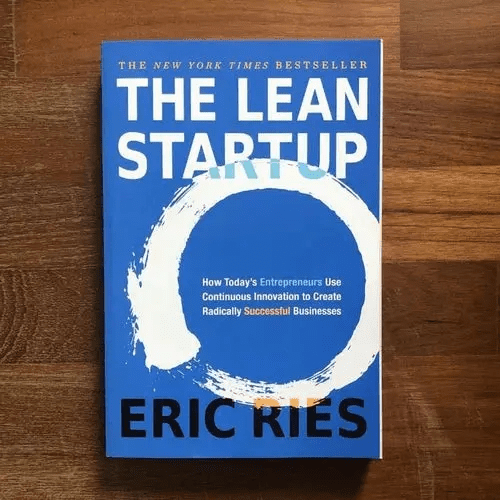
“The Lean Startup,” authored by entrepreneur Eric Ries, presents a scientific approach to creating and managing successful startups. Born from Ries’s own experiences and observations in the startup world, particularly with his company IMVU, the book aims to help new ventures navigate extreme uncertainty and avoid common pitfalls. Its core idea is to apply principles from lean manufacturing—such as rapid iteration, validated learning, and waste reduction—to the process of innovation.
This summary will guide you through the essential concepts of “The Lean Startup.” You’ll discover how to define your vision, steer your startup through experimentation and measurement, and accelerate growth sustainably. We’ll break down each key idea into simple, clear explanations, making the methodology accessible and actionable for entrepreneurs at any stage.
Introduction
The introduction sets the stage by contrasting the romanticized myth of entrepreneurship with the harsh reality of high failure rates. Eric Ries shares his personal startup failures and successes, leading to the development of the Lean Startup methodology. He argues that entrepreneurship is a form of management suited to contexts of extreme uncertainty and that its success can be engineered by following the right process.
The Problem with Traditional Approaches
Traditional business wisdom often emphasizes detailed planning, robust strategies, and comprehensive market research before launching a product. However, Ries argues this approach is ill-suited for startups.
- Uncertainty: Startups operate with too much uncertainty about who their customer is and what their product should be.
- Flawed Plans: Planning and forecasting are only accurate with a long, stable operating history, which startups lack.
- “Just Do It” Fallacy: Rejecting all management for a “just do it” approach often leads to chaos rather than success.
- Waste: The biggest waste is building something that nobody wants, even if it’s on time and on budget.
Core Principles of the Lean Startup
The Lean Startup methodology is built on five core principles designed to guide entrepreneurs through the chaos of building something new.
- Entrepreneurs are Everywhere: Anyone creating a new product or service under extreme uncertainty is an entrepreneur, regardless of company size or sector.
- Entrepreneurship is Management: Startups require a new kind of management specifically geared to their context of extreme uncertainty.
- Validated Learning: Startups exist to learn how to build a sustainable business, a process validated scientifically through frequent experiments.
- Build-Measure-Learn: The fundamental activity is to turn ideas into products, measure customer response, and then learn whether to pivot or persevere.
- Innovation Accounting: A new kind of accounting is needed to measure progress, set up milestones, and prioritize work in a startup context.
The introduction highlights that the Lean Startup isn’t just a collection of tactics but a principled approach to creating continuous innovation, adaptable to any organization aiming to build something new under uncertain conditions.
Part One: Vision
Chapter 1: Start
This chapter introduces the concept of entrepreneurial management as a necessary discipline for startups. It argues that traditional management practices are ill-suited for the high uncertainty startups face, and a “just do it” approach leads to chaos. The Lean Startup provides a framework for navigating this uncertainty.
Entrepreneurial Management
Startups are institutions that require management, but a kind different from traditional corporate management, designed to handle extreme uncertainty.
- New Discipline: Entrepreneurship needs a managerial discipline to harness opportunities effectively.
- Global Renaissance: We are in an entrepreneurial renaissance, but lack a coherent management paradigm for new ventures, leading to waste.
- Lean Roots: The Lean Startup adapts ideas from lean manufacturing (Toyota Production System), focusing on value-creating activities and eliminating waste.
- Validated Learning: Progress for a startup is measured by validated learning—discovering and eliminating sources of waste by learning what customers truly want.
The Startup as a Car
Ries uses the metaphor of a car to explain how a startup operates and is managed.
- Engine of Growth: Similar to a car’s engine, startups have an engine of growth that needs tuning through product improvements, marketing, and operations.
- Steering: Like driving, startups require constant steering (adjustments) via the Build-Measure-Learn feedback loop, rather than rigid, pre-set rocket launch plans.
- Vision, Strategy, Product:
- Vision: The startup’s overarching goal, its “true north,” which rarely changes (e.g., creating a world-changing business).
- Strategy: Includes the business model, product roadmap, and customer assumptions. Strategy may change through pivots.
- Product: The end result of the strategy, which changes constantly through optimization (tuning the engine).
- Portfolio of Activities: Startups manage a portfolio of activities: running the engine, tuning it, and steering (pivoting or persevering).
Chapter 1 establishes that startups, regardless of their nature, require a specific type of management focused on learning and adapting in uncertain environments, drawing parallels with proven systems like lean manufacturing.
Chapter 2: Define
This chapter focuses on clearly defining who an entrepreneur is and what constitutes a startup within the Lean Startup framework. It emphasizes that these definitions are broad and inclusive, extending beyond the typical garage startup stereotype.
Who is an Entrepreneur?
The Lean Startup defines an entrepreneur broadly, encompassing individuals in various settings who are building new ventures under uncertainty.
- Beyond Stereotypes: Entrepreneurs aren’t just founders in garages; they can be managers in large corporations (intrapreneurs) working on new products or initiatives.
- Example: Mark from HP: A manager in a large company tasked with innovation faces similar challenges and needs a process for converting raw innovation materials into success.
- Common Ground: Intrapreneurs share more with traditional entrepreneurs than commonly believed, facing similar uncertainties and needing similar methodologies.
- Universal Need: The principles of Lean Startup apply to this broad definition of entrepreneurs.
What is a Startup?
A startup is defined as “a human institution designed to create a new product or service under conditions of extreme uncertainty.”
- Human Institution: Emphasizes that a startup is an organization requiring structure, culture, and coordination of people.
- New Product or Service: Highlights innovation as a core component, whether it’s a scientific discovery, repurposing technology, a new business model, or serving new customers.
- Extreme Uncertainty: This is the critical differentiator. Startups operate where the customer, problem, and solution are largely unknown, unlike established businesses or clones.
- Inclusivity: The definition doesn’t restrict startups by size, sector, or industry. Non-profits, government agencies, and large enterprises can house startups.
Innovation in Established Companies
Established companies can and must foster entrepreneurship to create new sources of growth, as illustrated by Intuit.
- SnapTax Story: Intuit, a large company, successfully launched SnapTax by creating an “island of freedom” for the team to experiment like a startup, competing even with its flagship product.
- Intuit’s Transformation: Scott Cook and Brad Smith led Intuit to re-embrace its entrepreneurial roots, measuring innovation by new product adoption and revenue.
- Fast-Cycle Testing: Intuit’s TurboTax team shifted from one annual initiative to running hundreds of tests per tax season, fostering an entrepreneurial mindset.
- Leadership’s Role: Senior management is responsible for creating the culture and systems that enable teams to experiment and innovate rapidly.
This chapter broadens the understanding of “entrepreneur” and “startup,” showing that the Lean Startup methodology is relevant for anyone building something new in an uncertain environment, even within large, established organizations.
Chapter 3: Learn
This chapter tackles the crucial question of how startups should measure progress. It introduces “validated learning” as the correct unit of progress, contrasting it with traditional metrics or mere “learning” used as an excuse for failure.
The Problem with Traditional Progress
Measuring progress by traditional means (e.g., hitting deadlines, staying on budget, shipping features) can be misleading if the startup is building something customers don’t want.
- Misleading Metrics: Simply keeping busy and spending money doesn’t guarantee progress toward a sustainable business.
- “Learning” as an Excuse: Claiming to have “learned a lot” is often a rationalization for failure, lacking empirical backing.
- Need for Rigor: Startups need a rigorous method to demonstrate real progress in the face of extreme uncertainty.
Validated Learning
Validated learning is a scientific method for demonstrating that a team has discovered valuable truths about a startup’s present and future business prospects.
- Empirical Demonstration: It’s not after-the-fact storytelling but proven through empirical data from real customers.
- IMVU’s Initial Strategy: IMVU initially planned an IM add-on, believing interoperability with existing networks was key. This was a complex, feature-rich vision.
- Flawed Assumptions: After a grueling six-month development, the product launched to crickets. Customers didn’t want an add-on; they didn’t understand it and wouldn’t invite friends.
- Painful Realizations: Customer interactions revealed the core strategy was wrong. They wanted a standalone network to meet new people.
- Waste of Effort: Much of the initial engineering work (interoperability code) was thrown away. The question arose: could this learning have happened faster and with less effort?
Value vs. Waste in a Startup
The concept of value and waste from lean manufacturing needs adaptation for startups.
- Lean Definition of Value: Providing benefit to the customer; anything else is waste.
- Startup Value: For a startup, where the customer and their desires are unknown, the most valuable activity is validated learning about what creates value for them.
- Eliminating Waste: Effort not absolutely necessary for learning what customers want can be eliminated. This includes overbuilding features or testing unneeded assumptions.
- IMVU’s Learning: Could IMVU have learned its strategy was flawed by testing with only one IM network, or even by offering a download before building anything? Yes.
Achieving Validated Learning
Validated learning is demonstrated by positive improvements in a startup’s core metrics, driven by changes made based on learning.
- Empirical Proof: IMVU’s learning was validated when subsequent product versions, based on new hypotheses (e.g., standalone network for new friends), showed improved customer behavior metrics.
- Experiments: Running experiments like changing website messaging (“avatar chat” vs. “3D instant messaging”) and measuring impact on sign-ups and conversion confirmed learning.
- Productivity Redefined: Startup productivity is systematically figuring out the right things to build, measured by validated learning, not just features shipped.
- The Audacity of Zero: Startups with small, real numbers often face more skepticism than those with zero (which invites imagination). Validated learning provides a tangible way to show progress beyond small gross numbers.
This chapter establishes validated learning as the true measure of progress for a startup, emphasizing empirical evidence from customer behavior to guide development and strategy.
Chapter 4: Experiment
This chapter explains how startups should use scientific experimentation to test their strategic hypotheses. It argues that every product, feature, and marketing campaign is an experiment designed to achieve validated learning.
From Alchemy to Science
Startups need to move from intuition-based decision-making to a more scientific approach.
- Hypothesis Testing: A true experiment begins with a clear hypothesis that makes testable predictions.
- Goal of Experiments: To discover how to build a sustainable business around the startup’s vision.
- Avoiding “Just Do It”: Simply shipping a product to “see what happens” isn’t enough; without clear hypotheses, learning is not guaranteed. If you cannot fail, you cannot learn.
Think Big, Start Small
Even grand visions can be tested with small, simple experiments, as Zappos demonstrated.
- Zappos Example: Nick Swinmurn tested his hypothesis (customers would buy shoes online) by taking photos of shoes in local stores and posting them online. If sold, he’d buy them at full price.
- Learning More Than One Thing: This simple MVP tested customer demand, allowed interaction with real customers (payments, returns, support), and revealed unexpected behaviors.
- Accurate Data: Observing real customer behavior is more accurate than surveys or market research.
For Long-Term Change, Experiment Immediately
Large-scale initiatives, even within big companies, can benefit from immediate, small-scale experimentation.
- HP Volunteering Program: Caroline Barlerin’s vision to transform HP employees into a force for social good faced extreme uncertainty.
- Breaking Down the Vision: Key assumptions are the value hypothesis (do employees find volunteering valuable?) and the growth hypothesis (how will the program spread?).
- Testing with Early Adopters: Identify employees most likely to feel the need for the program.
- Concierge MVP: Provide a high-touch, ideal experience for a few participants and measure their behavior (retention, willingness to recruit colleagues).
- Rapid Learning: Such experiments can yield insights in weeks, influencing strategy much faster than traditional planning.
An Experiment is a Product
An experiment, often in the form of a Minimum Viable Product (MVP), is the first product that allows learning.
- Kodak Gallery Example: Mark Cook’s team tested an “event album” feature.
- Hypotheses: Customers would create albums; participants would upload photos.
- MVP Prototype: A simple version revealed usability issues and missing features, but confirmed user desire.
- Learning from Complaints: Complaints about missing features validated their importance. Lack of complaints about planned features suggested they might be less critical.
- Iterative Learning: Beta launch and surveys (KISSinsights) led to discoveries (e.g., users wanted to reorder photos before inviting others).
- Success Redefined: “Success is not delivering a feature; success is learning how to solve the customer’s problem.”
More Examples of Experimentation
The experimental approach is applicable across diverse sectors.
- The Village Laundry Service (India): Tested demand by mounting a washing machine on a pickup truck, then iterated to kiosks based on customer feedback on trust, ironing needs, and speed preferences.
- Lean Startup in Government (CFPB): The Consumer Financial Protection Bureau could test its call center concept with an MVP: a simple hotline for a small geographic area, using targeted ads, and offering pre-recorded info. This would validate assumptions about call volume and types of problems.
This chapter underscores that systematic experimentation is key to navigating uncertainty, allowing startups to test core assumptions quickly and learn what works before committing significant resources.
Part Two: Steer
The second part of the book, “Steer,” delves into the core Build-Measure-Learn feedback loop. This loop is central to the Lean Startup model. Ideas are turned into products (Build), customer reactions are measured (Measure), and then the startup learns whether to pivot (change strategy) or persevere (Learn). The goal is to minimize the total time through this loop. This section will detail how to identify leap-of-faith assumptions, build Minimum Viable Products (MVPs) to test them, use innovation accounting to measure progress, and make the critical pivot-or-persevere decision.
Chapter 5: Leap
This chapter focuses on identifying and understanding a startup’s “leap-of-faith assumptions”—the riskiest elements of the business plan upon which everything depends. Testing these assumptions early is critical.
Strategy is Based on Assumptions
Every business plan begins with assumptions; a startup’s early efforts should be to test these as quickly as possible.
- Facebook Example: Early investors were impressed because Facebook validated two key leaps of faith:
- Value Hypothesis: High user engagement (half of users returned daily) showed customers found it valuable.
- Growth Hypothesis: Rapid takeover of initial college campuses showed viral growth potential.
- Identifying Leaps of Faith: These are the beliefs that must be true for the startup to succeed. If false, the venture risks total failure.
- Avoiding Analogy Traps: Arguments by analogy (e.g., “our tech is like X which succeeded in market Y”) can obscure the true leap of faith and make a business seem less risky than it is.
Key Leap-of-Faith Assumptions
The two most important assumptions for any startup are the value hypothesis and the growth hypothesis.
- Value Hypothesis: Tests whether a product or service truly delivers value to customers once they are using it.
- Growth Hypothesis: Tests how new customers will discover a product or service.
- Beyond Profit: “Value” is used in an economic sense, not just profit, to include non-profits and social ventures. Value-destroying growth (e.g., fueled by continuous fundraising without a real product) must be avoided.
Understanding Customers and Their Problems
To test leaps of faith, entrepreneurs must get out of the building and engage with potential customers.
- Genchi Gembutsu (Toyota): A Japanese term meaning “go and see for yourself.” Yuji Yokoya, chief engineer for the Toyota Sienna minivan, drove 53,000 miles across North America to understand customer needs firsthand, leading to features like enhanced kid appeal and internal comfort.
- Get Out of the Building (Steve Blank): Facts about customers, markets, and channels exist only outside the office. Startups need extensive contact with potential customers.
- Scott Cook’s (Intuit) Method: Before building Quicken, Cook cold-called random people to validate his leap of faith: that people found paying bills by hand frustrating.
- Customer Archetype: Early customer contact helps create a customer archetype—a humanized profile of the target customer—to guide product development. This archetype itself is a hypothesis.
- Lean UX: A design approach that recognizes customer archetypes and designs as hypotheses to be tested and iterated upon.
Avoiding Analysis Paralysis
Entrepreneurs must strike a balance between analyzing their strategy and taking action.
- “Just Do It” Risk: Impatiently building without sufficient analysis can lead to building the wrong thing.
- Analysis Paralysis Risk: Endlessly refining plans without empirical testing is equally unhelpful, as plans are often based on incorrect facts about customer interactions.
- The Way Forward: MVP: The Minimum Viable Product (MVP) is the mechanism to break this deadlock and start testing assumptions empirically.
Chapter 5 stresses the importance of identifying the core, riskiest assumptions (leaps of faith) in a startup’s plan and emphasizes that these can only be tested through direct interaction and observation of potential customers.
Chapter 6: Test
This chapter introduces the Minimum Viable Product (MVP) as a crucial tool for testing a startup’s fundamental business hypotheses and accelerating the learning process. An MVP is not about creating a minimal product, but about maximizing learning with minimal effort.
What is a Minimum Viable Product (MVP)?
An MVP is that version of the product that enables a full turn of the Build-Measure-Learn loop with the least amount of development time and effort.
- Groupon’s MVP: Started as a simple WordPress blog skinned to say “Groupon.” Deals were posted daily, T-shirts were sold via email requests for size/color, and coupons were manually generated and emailed as PDFs. This was enough to prove the concept.
- Goal is Learning: Unlike a prototype for design/technical questions, an MVP tests fundamental business hypotheses about value and growth.
- Target Early Adopters: MVPs are for early adopters who prefer an 80% solution and value being first, rather than mainstream customers who demand perfection.
- Simplify: When in doubt about MVP features, simplify. Any work beyond what’s required to start learning is waste.
Types of MVPs
There are various ways to construct an MVP, depending on the product and the hypotheses being tested.
- Video MVP (Dropbox): Drew Houston created a simple video demonstrating Dropbox’s intended functionality. Targeted at tech early adopters and filled with in-jokes, it drove hundreds of thousands to their beta waiting list, validating the assumption that people wanted a seamless file-sync solution.
- Concierge MVP (Food on the Table): Founder Manuel Rosso personally served a single customer, manually creating weekly meal plans and grocery lists based on her preferences and local store sales, and collecting a weekly fee. This high-touch, non-scalable approach provided deep learning before building any software.
- Wizard of Oz MVP (Aardvark): Max Ventilla and Damon Horowitz tested their Q&A service by having humans manually answer questions behind the scenes, while users thought they were interacting with an automated system. This allowed them to test user engagement and value before solving complex AI problems.
Quality, Design, and the MVP
MVPs challenge traditional notions of quality and design perfection.
- Quality Redefined: “If we do not know who the customer is, we do not know what quality is.” An MVP might seem low-quality, but if it helps learn what customers value, it’s serving its purpose.
- IMVU’s Avatar Movement: Initial stationary avatars were criticized. Instead of building complex walking, IMVU shipped a simple “teleportation” feature (an MVP for movement) which customers loved, deeming it “more advanced” because it was faster.
- Courage to Test: MVPs require testing assumptions. If a poorly designed MVP fails to engage users, it confirms the need for better design. If users don’t care about design as much as assumed, that’s also valuable learning.
- Focus on Learning, Not Perfection: Set aside traditional professional standards to start validated learning quickly. Avoid defects that slow down learning.
Overcoming MVP Roadblocks
Building and releasing MVPs can face several common challenges.
- Legal Issues: Patent filing windows can be triggered by public release. Seek legal counsel.
- Fear of Competitors: Secrecy rarely helps; learning faster than competitors is the true advantage. If a competitor can out-execute once an idea is known, the startup is likely doomed anyway.
- Branding Risks: Launch MVPs under a different brand name or avoid big PR announcements until the product is validated with real customers.
- Impact on Morale: MVPs often bring bad news or reveal flaws. Commit to iteration beforehand and don’t give up. Use innovation accounting to show progress even with setbacks.
Chapter 6 champions the MVP as a tool for rapid, frugal learning. By focusing on testing core assumptions with the simplest possible offering, startups can avoid building elaborate products that nobody wants.
Chapter 7: Measure
This chapter details how startups should measure their progress using a new kind of accounting tailored for innovation. It distinguishes between vanity metrics and actionable metrics, and introduces cohort analysis as a key tool.
The Need for Startup-Specific Accounting
Traditional accounting and metrics are often insufficient or misleading for startups because they operate under extreme uncertainty.
- Measuring Real Progress: A startup’s job is to rigorously measure its current state and devise experiments to move real numbers closer to the ideal business plan.
- Avoiding “Land of the Living Dead”: Many startups have some traction but aren’t truly growing. Optimism can mask this.
- Innovation Accounting: A system to prove objectively that a startup is learning how to grow a sustainable business. It involves:
- Using an MVP to establish a baseline with real data.
- Attempting to tune the engine (improve metrics) from the baseline toward the ideal.
- Deciding to pivot or persevere based on this progress.
Innovation Accounting at IMVU
IMVU’s early days provide a clear example of innovation accounting in action.
- Baseline and Tuning: IMVU’s MVP had low sales. The team initially assumed improving quality would fix this, but metrics didn’t change despite daily improvements.
- $5/Day Learning Budget: Used Google AdWords to get 100 new potential customers daily, providing a fresh “report card” on product changes.
- Funnel Metrics: Tracked key customer behaviors: registration, download, trial, repeat usage, purchase.
- Cohort Analysis: This was the breakthrough. Instead of looking at gross numbers, IMVU analyzed the behavior of each cohort (group of new customers who joined in a specific period) independently.
- Revealed Stagnation: The cohort graph showed that while some engagement metrics improved slightly over months, the crucial conversion rate to paying customers remained flat at around 1%, despite countless product improvements.
- Forced Qualitative Inquiry: Poor quantitative results spurred deeper customer conversations, leading to the pivotal insight that users wanted to meet new friends, not just interact with existing ones in 3D.
- Successful Pivot: After the pivot, product development efforts became much more effective at improving metrics, demonstrating validated learning.
Actionable Metrics vs. Vanity Metrics
It’s crucial to focus on metrics that provide clear insights for action, not just those that look good on paper.
- Vanity Metrics: Gross numbers like total registered users or total revenue can create a false sense of progress (a “hockey stick” graph) even if the underlying business isn’t improving. IMVU’s gross metrics looked great while its cohort metrics were stagnant.
- Actionable Metrics: Provide clear cause-and-effect insights, helping teams learn from their actions.
- Grockit Example: The online test prep company Grockit initially used vanity metrics (total customers, total questions answered). This led to a feeling of progress without actual improvement.
- Shift to Cohorts and Split-Tests: Grockit switched to cohort analysis and A/B testing for new features.
- Kanban for Validated Learning: User stories weren’t considered “done” until they resulted in validated learning, often through split-test results showing a change in customer behavior.
- Lazy Registration Test: A split-test revealed that “lazy registration” (an industry best practice) had no impact on Grockit’s sign-ups, indicating it was wasted effort and that customers were deciding based on marketing, not initial product use.
The Three A’s of Good Metrics
Good metrics for a startup should be Actionable, Accessible, and Auditable.
- Actionable: Must demonstrate clear cause and effect. If X happens, we do Y. Helps avoid finger-pointing when numbers fluctuate.
- Accessible: Reports should be simple and understood by everyone. Use tangible units (e.g., “people visiting” vs. “website hits”). Cohort reports are people-based. Grockit emailed daily experiment results to all employees.
- Auditable: Data must be credible. Ensure data can be checked against reality (e.g., by talking to customers represented in the data). Keep reporting mechanisms simple to reduce errors.
Chapter 7 emphasizes that true progress in a startup is measured by validated learning, which requires rigorous, actionable metrics and a system like innovation accounting, not just impressive-looking but ultimately uninformative vanity metrics.
Chapter 8: Pivot (or Persevere)
This chapter addresses one of the most critical decisions an entrepreneur faces: whether to make a fundamental change in strategy (pivot) or continue on the current path (persevere). It explains that pivots are structured course corrections based on learning.
What is a Pivot?
A pivot is a special kind of change designed to test a new fundamental hypothesis about the product, business model, or engine of growth. It’s not just any change, but a deliberate shift in strategy while keeping one foot rooted in what has been learned.
- Human Element: The decision to pivot involves vision, intuition, and judgment; it’s not a purely formulaic process.
- Avoiding Stagnation: Companies that can’t pivot based on market feedback risk getting stuck in the “land of the living dead”—neither growing sufficiently nor dying.
Innovation Accounting and Pivots
A rigorous measurement framework like innovation accounting provides the data needed to make informed pivot decisions.
- Votizen Example (David Binetti):
- Initial MVP (Social Network for Voters): Low registration, activation, retention, referral. Optimized for 2 months, some metrics improved but retention/referral still poor.
- Zoom-in Pivot 1 (@2gov – Social Lobbying): Refocused on a single feature (contacting representatives). Drastically improved metrics (registration, activation, retention, referral), but monetization (activists paying) was very low (1%).
- Customer Segment Pivot 2 (B2B for @2gov): Kept product, targeted large organizations. Got letters of intent, but sales didn’t close. Hypothesis refuted.
- Platform Pivot 3 (Self-Serve @2gov): Created a self-serve platform (like Google AdWords) for anyone to run campaigns. Achieved strong metrics across the board, including 11% paying 20 cents/message, creating a viable (viral) growth model.
- Faster Pivots: Votizen’s MVP cycles accelerated (8 months -> 4 -> 3 -> 1) due to accumulated learning, not just reusable code.
Why Pivots are Difficult
Entrepreneurs often delay pivoting for several reasons.
- Startup Runway: Runway is better measured by the number of pivots left, not just cash/time. Getting to pivots faster extends runway.
- Vanity Metrics: Can obscure the need to pivot by creating a false sense of success.
- Unclear Hypotheses: Makes it hard to experience clear failure, which is often the impetus for radical change.
- Fear of Failure: Acknowledging failure and pivoting can be demoralizing, especially if it means admitting a cherished vision was flawed or giving up on work already done.
- Path Example: High-profile founders faced negative press for their MVP but focused on customer feedback, iterated, and secured funding, demonstrating courage to proceed despite criticism.
The Pivot or Persevere Meeting
A structured meeting can help teams make this difficult decision.
- Regular Cadence: Schedule these meetings regularly (e.g., monthly).
- Key Participants: Include product development and business leadership.
- Data-Driven: Review product optimization results over time (innovation accounting) and qualitative customer feedback.
- Wealthfront (kaChing) Example:
- Initial Product (kaChing): A “fantasy league” for amateur investors. Attracted many gamers (vanity metric) but very few qualified as real managers, and conversion to paying customers was near zero.
- Qualitative Insights: Professional managers were interested in the platform’s transparency and manager evaluation tech; consumers found the game/real money mix confusing.
- Pivot: Abandoned the game, focused on serving professional managers and providing access to their talent for retail investors. Repurposed core manager-evaluation technology.
Failure to Pivot
Even successful companies can fail to pivot when needed, as IMVU experienced.
- IMVU’s Stagnation: Early success led to complacency. The team missed the need for a customer segment pivot from early adopters to mainstream users.
- Vanity Metrics Masked Problems: Gross numbers were still growing, but the engine tuning efforts (e.g., improving activation rates) showed diminishing returns.
- Late Pivot: Eventually, IMVU pivoted by focusing on mainstream customer needs (easier UX, major redesign tested iteratively), which laid the foundation for future growth, but this success could have come sooner.
A Catalog of Pivots
Pivots can take various forms, always involving a change in strategy while retaining validated learning.
- Zoom-in Pivot: A single feature becomes the whole product (Votizen’s initial pivot).
- Zoom-out Pivot: The whole product becomes a feature of a larger product.
- Customer Segment Pivot: Product stays the same, but target customer changes (Votizen’s B2B attempt, IMVU’s mainstream shift).
- Customer Need Pivot: Discovering a more important problem for the same customer segment (Potbelly Sandwich Shop starting as an antique store).
- Platform Pivot: Changing from an application to a platform, or vice versa (Votizen’s final pivot).
- Business Architecture Pivot: Switching between high-margin/low-volume and low-margin/high-volume models.
- Value Capture Pivot: Changing how the company makes money (monetization model).
- Engine of Growth Pivot: Switching primary growth strategy (e.g., from viral to paid).
- Channel Pivot: Changing how the product reaches customers (e.g., direct sales vs. retail).
- Technology Pivot: Using a different technology to deliver the same solution (more common in established businesses).
A pivot is always a new strategic hypothesis that itself requires testing with a new MVP. It’s an integral part of the ongoing process of building a sustainable business.
Part Three: Accelerate
The third part of the book, “Accelerate,” focuses on techniques that enable Lean Startups to grow and scale rapidly without sacrificing the speed, agility, and learning orientation developed earlier. It addresses how to manage work efficiently, understand sustainable growth, build an adaptive organization, and foster continuous innovation even as the company matures. The core idea is that lethargy and bureaucracy are not inevitable outcomes of growth if the right principles are applied.
Chapter 9: Batch
This chapter explores the counterintuitive power of working in small batches to accelerate learning, improve quality, and increase efficiency in startups, drawing heavily on principles from lean manufacturing.
The Power of Small Batches
Working in small batches, or “single-piece flow,” is often faster and more efficient than processing work in large batches, even if it seems less intuitive.
- Envelope Stuffing Example: Stuffing 100 envelopes one at a time (small batch) is faster than folding all 100 letters, then sealing all 100, then stamping all 100 (large batch).
- Why Small Batches are Faster:
- Reduces time spent sorting, stacking, and moving large piles of partially completed work.
- Problems (e.g., letters don’t fit, envelopes defective) are discovered almost immediately, minimizing rework and waste.
- Finished products are produced much sooner in the process.
- Lean Manufacturing Roots (Toyota): Toyota used small batches and rapid machine changeovers (SMED) to produce diverse products efficiently, find defects sooner (andon cord), and achieve high quality.
Small Batches in Entrepreneurship
The goal for startups is not just efficient production, but rapid validated learning. Small batches help achieve this.
- Minimizing Waste: Ensures that a startup can minimize the expenditure of time, money, and effort on work that ultimately turns out to be unwanted.
- Continuous Deployment at IMVU:
- Shipped new features one at a time, sometimes multiple times a day.
- Cross-functional teams (engineers, designers) worked side-by-side on one feature.
- Released new versions to small customer groups for immediate feedback.
- “Product’s immune system”: extensive automated tests and business metric monitoring that automatically rolled back defective changes and triggered root cause analysis.
- Continuous Deployment Beyond Software: Principles apply as hardware becomes software, production becomes more flexible (lean manufacturing), and 3D printing/rapid prototyping tools advance.
Examples of Small Batches
The small-batch approach can be applied in diverse industries.
- SGW Designworks (Physical Products): Designed and delivered a complex field x-ray system for the military in 3.5 weeks through rapid cycles of 3D CAD modeling, CNC prototyping, and client feedback.
- School of One (Education): Enables teachers to experiment with curriculum changes in small batches by using personalized daily “playlists” for students and continuous assessment, allowing for rapid iteration and rollout of successful changes.
The Dangers of Large Batches
Large batches can lead to a “death spiral” in product development.
- Illusion of Efficiency: Working in large batches (e.g., a designer creating 30 drawings before handoff) seems efficient for individual specialists but creates system-level inefficiencies like interruptions, rework, and delays.
- Growing Batch Size: The overhead of moving large batches forward incentivizes even larger batches to minimize this overhead, leading to “bet the company” releases with high risk.
- Pull, Don’t Push: Startups should use a “pull” system where hypotheses about customer needs pull experiments (work) from product development, rather than “pushing” features based on forecasts. Alphabet Energy (clean tech) used this to pivot from power plants to manufacturing firms after small-batch experiments disproved initial hypotheses quickly and cheaply.
Chapter 9 argues that by reducing batch sizes, startups can significantly accelerate their Build-Measure-Learn feedback loop, identify problems earlier, reduce waste, and learn faster from customers, which is their crucial competitive advantage.
Chapter 10: Grow
This chapter discusses how startups achieve sustainable growth by understanding and optimizing their “engine of growth.” It identifies three primary engines and explains how focusing on the right one can guide product development and prioritization.
Understanding Sustainable Growth
Sustainable growth isn’t about one-time spikes from ads or PR stunts; it’s driven by the actions of past customers creating new customers.
- Simple Rule: New customers come from the actions of past customers.
- Four Drivers:
- Word of Mouth: Enthusiasm from satisfied customers.
- Side Effect of Product Usage: Inherent virality or visibility (e.g., fashion, PayPal).
- Funded Advertising: Profitable customer acquisition reinvested into more ads.
- Repeat Purchase/Use: Subscriptions or voluntary repurchases.
- Engines of Growth: These drivers power feedback loops. The faster the loop, the faster the growth. Focusing on the right engine’s metrics is key.
The Three Engines of Growth
Most sustainable growth models fall into one of three categories. Startups should focus on mastering one engine at a time.
- The Sticky Engine of Growth: Focuses on retaining customers for the long term.
- Mechanism: High customer retention is crucial. Examples: social networks aiming to be daily habits, enterprise software with high switching costs.
- Key Metric: Churn rate (or attrition rate). The product grows if the rate of new customer acquisition exceeds the churn rate.
- Speed of Growth: Determined by the “rate of compounding” (natural growth rate – churn rate).
- Focus: Improving customer engagement and reducing churn, rather than just acquiring new customers.
- The Viral Engine of Growth: Growth occurs as a side effect of normal product use, spreading from person to person.
- Mechanism: Customers automatically expose the product to others. Examples: Hotmail’s “P.S. Get your free e-mail” signature, Tupperware parties.
- Key Metric: Viral coefficient (number of new customers brought in by each existing customer).
- Speed of Growth: If coefficient > 1, growth is exponential. Tiny changes in the coefficient have dramatic impact.
- Focus: Optimizing the viral loop, often by minimizing friction (e.g., free products monetized indirectly).
- The Paid Engine of Growth: Uses paid channels to acquire customers profitably.
- Mechanism: Each customer generates revenue (Lifetime Value – LTV). A portion of this revenue is reinvested to acquire new customers (Cost Per Acquisition – CPA).
- Key Metrics: LTV and CPA. Growth if LTV > CPA.
- Speed of Growth: Determined by the marginal profit (LTV – CPA), which is reinvested.
- Focus: Increasing LTV or decreasing CPA. Requires differentiation in monetizing customers as CPAs tend to rise with competition. IMVU used this by monetizing users through virtual goods.
Engines of Growth and Product/Market Fit
The chosen engine of growth helps define and measure progress toward product/market fit.
- Product/Market Fit (Marc Andreessen): The moment a startup finds a widespread set of customers that resonate with its product. “If you are asking, you’re not there yet.”
- Quantitative Definition: Engine metrics provide a way to quantify closeness to product/market fit (e.g., viral coefficient > 0.9, specific LTV/CPA ratio, or low churn rate).
- Guiding Development: The engine’s metrics direct product development efforts (e.g., a viral engine focuses on features affecting the viral loop).
- Tracking Progress: Innovation accounting tracks if tuning efforts are improving the engine’s key metrics, indicating progress towards sustainability.
When Engines Run Out
Every engine of growth eventually exhausts its initial market.
- Limits of an Engine: Tied to specific customer sets, habits, and channels.
- The Danger of Complacency: Startups might see growth from an efficiently running engine and falsely attribute it to recent product improvements, missing the signs of diminishing returns.
- Need for New Growth Sources: Companies must anticipate this and manage a portfolio, developing new engines or targeting new markets before the current one stalls.
Chapter 10 provides a framework for understanding and measuring sustainable growth. By identifying and focusing on the correct engine of growth, startups can prioritize effectively and build a truly scalable business.
Chapter 11: Adapt
This chapter focuses on how startups can build adaptive organizations that can scale and evolve their processes without becoming slow or bureaucratic. It highlights the importance of addressing problems systemically and fostering a culture of continuous improvement.
Building an Adaptive Organization
An adaptive organization is one that automatically adjusts its processes and performance to current conditions, enabling it to handle growth and complexity.
- The Challenge of Scale: As startups grow, they need more processes, but risk becoming rigid. The goal is to find the right balance.
- IMVU’s Training Program Example: IMVU didn’t set out to build a large training program. It evolved incrementally through repeatedly addressing the root causes of problems caused by new, untrained engineers slowing down the team.
- Regulating Speed: Adaptive processes have built-in speed regulators. Working too fast can create quality problems; these processes force a slowdown to invest in prevention, then allow speed-up as issues resolve.
- Quality vs. Time: Low quality (defects) creates rework and slows down learning and overall progress. You can’t trade quality for time in the long run.
The Wisdom of the Five Whys
The Five Whys is a technique for root cause analysis that helps build an adaptive organization.
- Technique (Taiichi Ohno, Toyota): When a problem occurs, ask “Why?” five times to uncover the true root cause, which often moves from a technical fault to a human or process issue.
- Example: Machine stops -> fuse blew (Why?) -> overload (Why?) -> bearing not lubricated (Why?) -> pump not working (Why?) -> shaft worn (Why?) -> no strainer, scrap got in (human error: strainer not attached).
- Proportional Investment: At each “Why,” make a proportional investment in fixing that level of the problem. Small symptom, small investment; large symptom, larger investment. This avoids over-investing in prevention.
- Automatic Speed Regulator: The more problems, the more investment in solutions, which naturally slows things down. As prevention pays off, fewer crises occur, and the team speeds up.
Implementing the Five Whys Effectively
Successfully using the Five Whys requires careful handling to avoid common pitfalls.
- The Curse of the Five Blames: Avoid using the process to assign blame. Focus on systemic causes (bad process, not bad people).
- Mantra: “If a mistake happens, shame on us for making it so easy to make that mistake.”
- Involve Everyone: Include everyone affected by the problem in the analysis to prevent scapegoating.
- Getting Started:
- Tolerance and Prevention: Adopt simple rules: 1. Be tolerant of all mistakes the first time. 2. Never allow the same mistake to be made twice.
- Start Narrowly: Begin with a specific, less critical class of problems to let the team learn the process before tackling high-stakes issues.
- Appoint a Five Whys Master: A dedicated person to moderate meetings, ensure follow-up, and act as a change agent.
- IGN Entertainment Example:
- Initial Failure: Tried to tackle too many “baggage” issues at once, without key people present, leading to frustration.
- Success with Focus: A new Five Whys master (Tony Ford) led a successful session on a specific problem (missed deadlines), which then led to fixing blog posting errors.
- Insights Gained: Revealed multiple layers of issues from a gem incompatibility to lack of automated gem management and a policy against Friday night production changes. The process built team understanding and strengthened their “cluster immune system.”
Adapting to Smaller Batches
Shifting to smaller batches often requires significant organizational and technical adaptation, as seen with Intuit’s QuickBooks.
- QuickBooks’ Journey: Moved from a traditional annual waterfall release to a more agile, small-batch process.
- Year 1 (Achieving Failure): A major online banking feature, built to spec, failed badly with customers after launch due to late feedback.
- Year 2 (Muscle Memory): Attempts to shorten cycles (midyear release) struggled as old habits (“organizational muscle memory”) persisted.
- Year 3 (Explosion): Tossed old processes, formed small cross-functional teams, involved customers from feature inception, and invested in tech (virtualization for safe testing) to enable small batches. Led to higher satisfaction and sales.
- Leadership and Communication: Critical for driving such changes, explaining why old ways don’t work and how new ways align with market realities.
Chapter 11 demonstrates that building an adaptive organization relies on tools like the Five Whys and a commitment to small batches, enabling continuous improvement and the ability to scale effectively while maintaining agility.
Chapter 12: Innovate
This chapter addresses how companies, both growing startups and established ones, can sustain innovation. It proposes structures for nurturing internal innovation and managing a portfolio of activities that balances current operations with future growth.
Nurturing Disruptive Innovation
To succeed, internal startup teams need specific structural attributes, different from established divisions.
- Scarce but Secure Resources: Startups need less capital overall than large divisions, but this capital must be secure from arbitrary cuts or political reallocation.
- Independent Development Authority: Teams require autonomy to develop, market, and experiment with new products within their mandate, without excessive approvals, enabling rapid Build-Measure-Learn cycles. Cross-functional teams are essential.
- A Personal Stake in the Outcome: Entrepreneurs need a connection to the success or failure of their venture. This can be financial (equity, bonuses tied to long-term performance) or non-financial (public credit, ownership, like Toyota’s shusa or chief engineer).
Creating a Platform for Experimentation
Instead of hiding innovation (skunkworks), companies should create an “innovation sandbox” to empower teams openly while protecting the parent organization.
- Protecting the Parent: Established businesses have rational fears of new initiatives cannibalizing existing revenue or damaging the brand. Hiding innovation breeds distrust.
- Innovation Sandbox Rules:
- Teams can run split-test experiments affecting only sandboxed areas or customer segments.
- One cross-functional team must see the experiment through end-to-end.
- Experiments have a defined time limit.
- Experiments affect a limited, specified number of customers.
- All experiments are evaluated using a standard report of 5-10 actionable metrics.
- All teams and products in the sandbox use these same metrics.
- The team monitors experiments and aborts if catastrophic issues arise.
- Benefits: Builds company-wide literacy in actionable metrics and innovation accounting, promotes rapid iteration, and allows cheap, fast mistakes leading to learning.
Managing the Innovation Portfolio
Companies must manage different types of work simultaneously, from new innovation to optimizing established products and handling legacy systems.
- Four Phases of Work:
- R&D/New Innovation: Exploring new ideas and products.
- Growth & Commercialization: Scaling successful innovations.
- Optimization & Operational Excellence: Improving margins and efficiency for established products.
- Sustainment/Cost Reduction: Managing legacy products and infrastructure.
- “Entrepreneur” as a Job Title: Allow innovators to specialize in innovation rather than being forced to follow a product through all its lifecycle phases. Create career paths for entrepreneurial managers within the company.
- Handing Off Products: As products mature and move between phases, they can be handed off to teams specializing in that phase’s work.
- Growing the Sandbox: Successful sandbox innovations can be reintegrated, or the sandbox itself can expand in scope. This iterative process develops the organization’s “startup muscles.”
The Innovator Becoming the Status Quo
A challenge for successful innovators is adapting when their once-radical ideas become the new norm.
- The Shift: What was once a fight against the dominant culture becomes the established way of working.
- Responding to New Ideas: Leaders must subject new suggestions for process changes to the same rigorous, scientific inquiry that shaped the Lean Startup principles, using theory to predict outcomes and small-scale tests to validate.
- Theory as a Guide: When problems arise during a transition to new methods (like Lean Startup), theory helps distinguish between issues caused by the new system versus systemic flaws, and manage expectations (e.g., understanding that validated learning can feel “worse before it feels better”).
Chapter 12 provides a roadmap for embedding continuous innovation within an organization by structuring for autonomy, creating safe spaces for experimentation, and managing innovation as a distinct, ongoing portfolio activity.
Chapter 13: Epilogue: Waste Not
The epilogue reflects on the broader implications of the Lean Startup movement, placing it in historical context with scientific management and considering its potential to reduce waste and unlock human creativity on a larger scale.
Learning from Scientific Management
Frederick Winslow Taylor’s The Principles of Scientific Management (1911) revolutionized work but also had pitfalls.
- Taylor’s Impact: Introduced the idea that work can be studied and improved scientifically, leading to massive productivity gains.
- Cautionary Tale: Taylorism became associated with rigidity, de-humanizing work, and an overemphasis on planning, which later movements like lean manufacturing sought to correct by re-emphasizing worker initiative and system-wide efficiency.
- Modern Waste: Today’s primary waste is not inefficient production of things, but efficiently building the wrong things on an industrial scale. The key question is “Should it be built?”
The Lean Startup’s Mission
The Lean Startup movement aims to apply scientific rigor to innovation, reducing waste and improving success rates.
- Preventable Waste: Most waste in innovation (failed launches, ill-conceived projects) is preventable once its causes are understood.
- System Over Individual Brilliance: Like Taylor, the Lean Startup emphasizes systematic practice, but must avoid devaluing individual creativity and vision. The system should develop first-class people.
- Combating Pseudoscience: Current innovation management often relies on intuition, success theater, or using “learning” as an excuse for failure. The Lean Startup offers a path to validated learning through true experiments.
Future Directions and Challenges
To avoid the pitfalls of past movements and realize its full potential, the Lean Startup must continue to evolve.
- A New Research Program: Need for systematic research (e.g., “startup testing labs”) to understand productivity under uncertainty, test different methodologies, and refine accountability for validated learning.
- The Long-Term Stock Exchange (LTSE): A proposed new stock exchange designed for companies committed to long-term thinking. These companies would report innovation accounting metrics, tie executive compensation to long-term performance, and have governance structures supporting sustained investment in innovation.
- Avoiding Dogma: The Lean Startup is a framework, not a rigid blueprint. It must remain adaptable and avoid becoming a new pseudoscience. Science itself is a creative pursuit.
The Ultimate Goal
The overarching aim is to stop wasting people’s time and unlock vast human potential.
- Empowered Workforce: Imagine organizations where all employees can test assumptions rigorously, ally speed with quality, respond to failure with learning, and bypass work that doesn’t lead to learning.
- Sustainable Value: The goal is to create new institutions with a long-term mission to build sustainable value and make a positive impact on the world.
The epilogue positions the Lean Startup as a continuation of the quest for more effective and humane ways of working, with the potential to transform how we approach innovation and build the future.
Chapter 14: Join the Movement
This final chapter serves as a practical guide for readers who want to engage more deeply with the Lean Startup community and continue their learning journey. It highlights that the movement is global and offers numerous resources.
Engaging with the Community
The Lean Startup is not just a theory but a living community of practice.
- Local Meetups: Lean Startup meetup groups exist in over a hundred cities worldwide, providing a space for entrepreneurs to share ideas, experiences, and support. (Find via lean-startup.meetup.com).
- Online Communities:
- Lean Startup Wiki (leanstartup.pbworks.com): A volunteer-maintained list of events and resources.
- Lean Startup Circle (leanstartupcircle.com): A large mailing list for daily tips, resource sharing, and Q&A.
- Conferences: Events like the Startup Lessons Learned conference (sllconf.com) offer opportunities for in-depth learning and networking.
- Official Website (theleanstartup.com): Eric Ries’s site with additional resources, case studies, blog posts (Startup Lessons Learned), videos, and slides.
Key Readings and Blogs
The chapter recommends foundational texts and influential voices in the Lean Startup ecosystem.
- Essential Books:
- Steve Blank’s The Four Steps to the Epiphany: The original work on customer development.
- Brant Cooper & Patrick Vlaskovits’s The Entrepreneur’s Guide to Customer Development: An accessible introduction to customer development.
- Influential Blogs: Regular insights from thought leaders like:
- Steve Blank (steveblank.com)
- Dave McClure (500hats.typepad.com, blog.500startups.com) – “Startup Metrics for Pirates”
- Sean Ellis (startup-marketing.com)
- Andrew Chen (andrewchenblog.com)
- Babak Nivi (venturehacks.com)
- Ash Maurya (runningleanhq.com) – “Running Lean”
- And others like Sean Murphy, Brant Cooper, Patrick Vlaskovits, Hiten Shah.
Further Academic and Management Reading
For those wishing to explore the theoretical underpinnings and related management concepts, a list of further reading is provided.
- Innovation and Strategy: Works by Clayton Christensen (The Innovator’s Dilemma), Geoffrey Moore (Crossing the Chasm, Dealing with Darwin).
- Lean Principles: Books by Donald Reinertsen (Product Development Flow), Jeffrey Liker (The Toyota Way), James Womack & Daniel Jones (Lean Thinking), Taiichi Ohno (Toyota Production System).
- Management Classics: Writings by Frederick Winslow Taylor, W. Edwards Deming, Peter Drucker, Alfred Sloan.
- Related Concepts: Kent Beck (Extreme Programming), John Boyd (OODA Loop via Chet Richards), John Mullins & Randy Komisar (Getting to Plan B).
This chapter encourages readers to move from reading to action by connecting with the vibrant Lean Startup community and continuing to explore the rich body of knowledge that supports and expands upon the book’s principles.
Big-Picture Wrap-up
“The Lean Startup” provides a transformative framework for building new products and businesses under conditions of extreme uncertainty. Its central message is that by applying scientific principles—rigorous experimentation, validated learning, and iterative development—entrepreneurs can significantly increase their chances of success while minimizing wasted time, money, and effort. The book challenges traditional notions of planning and execution, advocating for agility, customer-centric learning, and a relentless focus on building a sustainable business.
- Core Takeaway: Startup success is not about having a perfect plan or a brilliant initial idea; it’s about systematically testing assumptions and adapting based on real customer feedback through the Build-Measure-Learn loop.
- Next Action: Identify the single biggest leap-of-faith assumption in your current project or idea. Design the smallest possible experiment (an MVP) to test it this week. This is crucial because it forces you to confront reality quickly and start the learning process.
- Reflective Question: What “waste” (activities that don’t contribute to validated learning) can you identify and eliminate from your current work processes to accelerate your learning cycle?




Leave a Reply