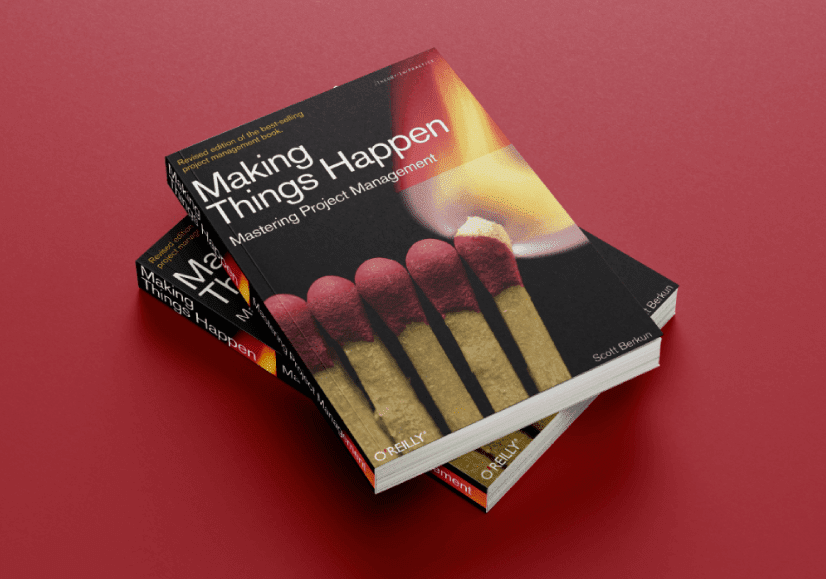

Making Things Happen: Mastering Project Management (Theory in Practice)
Scott Berkun’s “Making Things Happen” is a pragmatic guide to project management, distilling years of experience, particularly from the tech sector, into actionable advice. This book aims to equip project leaders, managers, and contributors with the essential skills to navigate the complexities of building things, leading teams, and dealing with real-world challenges. It emphasizes that successful project management relies more on human intelligence, wisdom, and adaptable tactics than on rigid theories or specific technologies.
Quick Orientation
This summary will break down each chapter of “Making Things Happen,” providing clear, concise explanations of its core concepts. Readers will discover insights into planning, decision-making, communication, and leadership, presented in a straightforward, actionable format. The goal is to offer a comprehensive yet easily digestible overview of Berkun’s practical wisdom for making projects succeed.
Chapter 1: A Brief History of Project Management (And Why You Should Care)
This introductory chapter argues that project management is an ancient practice with timeless challenges. It highlights the value of learning from both historical successes and failures, encouraging a “beginner’s mind” for continuous growth.
Using History
The book argues that historical engineering projects offer valuable lessons for modern project management. Examining ancient wonders or complex modern constructions reveals shared core challenges across eras.
- Timeless Similarities: Projects throughout history share requirements, designs, constraints, and depend on communication and decision-making.
- Beginner’s Mind: Adopting shoshin, or a beginner’s mind, fosters curiosity and openness to new ideas, essential for continuous learning.
- Simplicity vs. Ease: Project management is simple in nature – getting things done toward a goal – but it is far from easy.
- Ignoring Past Lessons: Many organizations fail to learn from historical project failures, preferring to move on rather than reflect.
- Learning from Failure: Failures force attention and re-examination of assumptions, providing powerful sources of progress if carefully analyzed.
Web Development, Kitchens, and Emergency Rooms
Berkun encourages drawing comparisons from diverse modern projects to gain new perspectives on management. This helps break down the perception that one’s own work is uniquely complex.
- Beyond Tech: Insights from busy professional kitchens or hospital emergency rooms reveal parallels in task management, coordination, and high-stress decision-making.
- Daily Intensity: Kitchens demonstrate intense daily task management and precision that often surpasses typical development team environments.
- Triage and Teamwork: Emergency rooms illustrate critical teamwork, decision-making, and the use of triage to prioritize issues, a concept widely adopted in software.
- Imperfect Science: Like medicine, software development is an imperfect science, dealing with constantly changing knowledge and fallible individuals.
The Role of Project Management
Project management is defined broadly as leadership and coordination activities, regardless of formal job titles. Its effectiveness hinges on proactive leadership rather than bureaucratic adherence.
- Broad Definition: “Project manager” or “PM” refers to anyone involved in leading planning, guiding development, and driving project completion.
- Microsoft’s Program Manager Role: Microsoft formalized a “program manager” role to bridge engineering and business, granting significant authority to lead and drive projects.
- Preventing Dysfunction: The absence of a dedicated PM can lead to individual biases derailing team direction and slowing progress.
- Beyond Scorekeeping: A PM’s role is to amplify the value of everyone around them, not just track others’ efforts.
The Balancing Act of Project Management
Effective PMs embody a balance of conflicting attitudes, known as paradoxes or dilemmas, requiring intuition, judgment, and experience.
- Ego/No-Ego: Balancing personal satisfaction with prioritizing project interests and delegating tasks.
- Autocrat/Delegator: Knowing when to take decisive control and when to foster delegation and collaboration.
- Tolerate Ambiguity/Pursue Perfection: Discerning when to embrace fluidity for ideas and when to demand precision.
- Oral/Written: Adapting communication methods based on what is most effective for a given situation.
- Acknowledge Complexity/Champion Simplicity: Understanding project intricacies while striving for simple solutions.
- Impatient/Patient: Knowing when to push for action and when to allow things to unfold.
- Courage/Fear: Feeling fear but choosing to take action, especially when facing big challenges.
- Believer/Skeptic: Maintaining confidence in the project while rigorously questioning assumptions.
Pressure and Distraction
Projects inherently involve pressure due to their goal of changing the status quo. PMs must face this pressure head-on, avoiding distractions and focusing on core project value.
- Inherent Pressure: Projects aim to change the world, implying inherent pressure on PMs to improve things.
- Avoiding Distraction: Ineffective PMs may retreat from leadership, occupying themselves with secondary tasks like excessive reporting.
- Confusing Process with Goals: A major sin is believing that data and process are the project, rather than tools to achieve goals.
- Focus on Teams: Good PMs focus on their teams, supporting them to reach goals, rather than getting lost in bureaucratic procedures.
The Right Kind of Involvement
Effective PMs leverage their unique perspective from being “off the line” to influence project success by facilitating information flow and supporting the team.
- Amplifying Value: Leaders are hired to amplify the value of their teams, not just contribute linearly.
- Wider Perspective: PMs naturally gain a wider project perspective from interacting with diverse team members.
- Information Transfer: Delivering timely information to the right people is crucial for transforming mediocre teams into great ones.
- Contagious Attitude: A PM’s attitude—positive or negative—is contagious and influences the entire team.
- Creating Unique Value: Good PMs perform feats of thinking and leadership that positively impact work quality and team morale.
This chapter sets the stage by emphasizing that successful project management is a blend of historical awareness, adaptability, balancing paradoxes, and focusing on human dynamics.
Chapter 2: The Truth About Schedules
This chapter explores the inherent unreliability of project schedules and why they are nevertheless indispensable. It delves into the purposes schedules serve, common pitfalls, and strategies for creating more realistic and useful timelines.
Schedules Have Three Purposes
Despite their reputation for being unreliable, schedules serve fundamental functions beyond just tracking time.
- Making Commitments: Schedules act as contracts, defining mutual deliverables and timelines for everyone involved.
- Encouraging Collaboration: They force teams to identify connections and dependencies, promoting a holistic view of effort.
- Tracking Progress: Schedules provide a tool to break down work into manageable chunks, aiding visibility and adjustments.
- Forcing Function: The act of drafting a schedule compels careful thought about work, revealing assumptions and potential problems early.
Silver Bullets and Methodologies
The book cautions against blindly adhering to any single software development methodology, emphasizing that underlying concepts are more crucial than rigid adherence.
- Beyond Methodologies: Success hinges on mastering core concepts applicable across methods like Waterfall, Agile, or XP.
- Adaptability is Key: Methodologies must be adjusted to fit specific teams and projects.
- Avoiding Fixation: Obsessing over process can signal leadership trouble and stifle individual contributions.
What Schedules Look Like
The “rule of thirds” is introduced as a simple estimation guideline for dividing project time, regardless of methodology.
- Rule of Thirds: Roughly divide project time into three equal parts: design, implementation, and testing.
- Deliberate Imbalances: Deviations from the rule are acceptable if justified by specific project needs.
- Zero-Sum Nature: New features require additional design and testing costs; these hidden costs lead to schedule slips.
- Piecemeal Development: Even for small, non-project tasks, the rule of thirds generally applies to individual work.
- Divide and Conquer: Larger projects benefit from breaking schedules into smaller, manageable phases (iterations or milestones).
- Volatility and Milestones: Shorter milestones are better for projects with high expected change, reducing overall risk.
Why Schedules Fail
Project schedules are often blamed for failures due to inherent difficulties in predicting the future and common oversight.
- Predicting the Future: Even skilled schedulers struggle to predict future events accurately, leading to inaccuracies.
- Early Estimation Errors: Estimates made early in a project can be off by hundreds of percent, narrowing only as more decisions are made.
- Precision vs. Accuracy: A detailed schedule (precision) isn’t necessarily realistic (accurate).
- Schedule as Probability: Schedules are predictions, a summation of estimates, each prone to oversight.
- No Magic Formula: Scheduling is a judgment call requiring continuous attention and adjustment.
Estimating is Difficult
The anxiety associated with estimation stems from the inherent uncertainty of complex work and the fear of accountability.
- Programmer Anxiety: Programmers often dislike estimating due to the mismatch between limited information and the demand for temporal precision.
- Credible Estimates: Good estimates require credible designs and requirements, along with skilled engineers.
- Asking the Right Questions: PMs should ask specific questions to help programmers overcome estimation anxiety and confront uncertainties.
- Baseline Confidence: Establish confidence intervals for estimates (e.g., 40% for a guess, 90% for thorough analysis) and allocate time accordingly.
- Lead Programmers’ Role: Leads should set a high bar for estimation quality and eliminate backpedaling.
- Trust Programmers: Pressure should only be applied to ensure honesty, not to force unrealistic timelines.
- Previous Performance: Use historical data (velocity) to inform future estimates.
- Specification Quality: Estimation quality is tied to specification quality; higher desired accuracy requires more detailed specs.
- PERT Technique: Use techniques like PERT to account for high, low, and most likely estimates, minimizing risks.
The Common Oversights
Many schedule problems arise from factors not accounted for in individual work items, such as sick days, holidays, or leadership failures.
- Unaccounted Time: Neglecting sick days, vacation, and major holidays can significantly impact schedules.
- Lack of Oversight: Without someone actively monitoring the overall schedule, problems can go unnoticed until critical.
- Feature Creep: Leaders adding more features without eliminating others or resisting new requests strains the schedule.
- Unrealistic Probabilities: Not communicating the probability of success for a timeline sets false expectations.
- Disruptive Events: Failing to factor in predictable disruptive events like blizzards or major sporting events.
- Insufficient Specifications: Poor design plans lead to inaccurate engineering estimates.
- Inexperienced Estimators: Teams lacking experience in estimation will produce less reliable schedules.
- Delaying Risks: Postponing engagement with complex or risky components until later in the schedule reduces flexibility.
- Snowball Effect: Small oversights or missed deadlines can cascade, having amplified impacts due to project interdependencies.
- Compound Probability: The likelihood of a series of events occurring is the product of their individual probabilities, meaning risks accumulate over time.
What Must Happen for Schedules to Work
Successful scheduling requires a proactive, skeptical approach that integrates design, planning, and continuous adjustment.
- Milestone Length Matches Volatility: Shorter milestones for projects with high expected change allow for easier mid-game adjustments.
- Optimism in Vision, Skepticism in Schedule: Maintain a positive project vision but approach scheduling with realistic skepticism, accounting for potential problems.
- Bet on Design: Strong design practices are the best insurance against ignorance and unexpected challenges, leading to better estimates.
- Planned Checkpoints for Adjustments: Integrate periodic reviews into the master schedule to adjust and renegotiate based on new information.
- Inform the Team: Share the scheduling philosophy and strategy with the team to foster understanding and commitment.
- Gauge Team Experience: Factor in the team’s familiarity with the problem space and their experience working together.
- Address Risks Early: Tackle the most complex or riskiest components at the beginning of the project to allow more time for resolution.
This chapter highlights that schedules are complex tools demanding careful attention to planning, estimation, and a proactive approach to risk management.
Chapter 3: How to Figure Out What to Do
This chapter delves into the crucial initial phase of project planning: figuring out what to build. It stresses the importance of integrating business, technology, and customer perspectives to avoid common pitfalls and ensure a project’s relevance and success.
Software Planning Demystified
Project planning, regardless of scale, involves answering “what to do” (requirements) and “how to do it” (design/specifying).
- Two Core Questions: Planning boils down to answering “What do we need to do?” (requirements gathering) and “How will we do it?” (designing/specifying).
- Requirement Defined: A criterion the work must satisfy, easy to understand and hard to misinterpret.
- Specification Defined: A plan for building something that satisfies the requirements.
- Benefits of Planning: Even simple projects benefit from plans by reviewing decisions, exposing assumptions, and clarifying agreements.
Different Types of Projects
The chapter identifies three project types (solo-superman, small contract team, big staff team) that differ in team size, structure, and authority, influencing planning approaches.
- Varying Complexity: Planning needs vary significantly based on team size, from a single person to hundreds.
- Authority Differences: Each project type has distinct authority structures impacting requirements, design, and budget.
How Organizations Impact Planning
Effective planning requires clarity on who holds authority for requirements, design, technical decisions, and budget, and how often reviews occur.
- Requirements Authority: Who defines and approves what the project must satisfy.
- Design Authority: Who defines how the work itself will be structured or look.
- Technical Authority: Who chooses engineering approaches, languages, and architecture.
- Budget Authority: Who controls resources and funding.
- Review Cadence: How often requirements and designs are reviewed and adjustments decided, influencing the formality of the process.
Common Planning Deliverables
Various documents serve to communicate planning information, from high-level business opportunities to detailed technical implementation plans.
- Marketing Requirements Document (MRD): Business/marketing analysis of opportunities and project exploitation.
- Vision/Scope Document: Encapsulates overall project goals, reasons, and high-level features (see Chapter 4).
- Specifications: Detailed plans for building project parts, derived from requirements.
- Work Breakdown Structure (WBS): Defines how engineers will perform work, including tasks and assignments.
Approaching Plans: The Three Perspectives
Successful project planning integrates three crucial perspectives: business, technology, and customer, recognizing that none can exist independently.
- Integration is Key: Success occurs at the intersection of business, technology, and customer viewpoints, not in isolated silos.
- Warning (Industrial Strength): The following questions apply to various project scales, aiming for long-term usefulness even if not all apply immediately.
The Business Perspective
This view focuses on profit and loss (P&L) implications, including sales, costs, competition, and long-term strategy.
- Core Questions: Why is the project needed? What unmet customer needs does it address? What are its costs and revenue potential? How does it protect assets or outflank competitors?
- Marketing is Not a Dirty Word: Marketing encompasses product, price, placement, and promotion, defining core aspects of how a product meets needs and business goals.
- Quality from Design: Business plans thrive on technological possibilities and successful design, not solely on marketing efforts.
The Technology Perspective
This view prioritizes how things are built, focusing on engineering merit, architecture, reliability, and available expertise.
- Core Questions: What needs to be built? How will it work? What technologies and processes are appropriate? What expertise gaps exist? How long will it take to build?
- Bias Towards Building: Focuses on construction and materials, sometimes at the expense of understanding business or customer impact.
- Engineering Aesthetic: Engineers may prioritize design elegance from a technical standpoint over customer or business needs.
The Customer Perspective
Often the weakest link in organizations, this perspective is crucial for understanding what customers do, their problems, and how to improve their experience.
- Most Important: Projects exist to serve customers, so understanding their needs is paramount.
- Requests vs. Research: Customers provide valuable requests, but are not always designers; research by usability engineers and product designers is essential.
- Expert Help: Usability engineers and product designers are critical for translating customer needs into effective designs.
- Key Questions: What do customers actually do? What problems do they face? What opportunities exist to make things easier, safer, faster? How can design ideas be explored?
- Resource Investment: Enough resources and seniority must be invested in the customer perspective to balance technology and business views.
The Magical Interdisciplinary View
Combining all three perspectives allows for strategic decisions that address multiple goals simultaneously, fostering collaboration rather than competition.
- Overlap and Synergy: All three views overlap, leading to smart strategic decisions at their intersections.
- Defusing Bias: Using tools like Venn diagrams helps teams see overlapping interests instead of competing ones.
- One-Dimensional Ideas: Encouraging identification of ideas that only serve one perspective.
- Collaboration Over Conflict: Resolving conflicts by working together to find mutually beneficial compromises.
- Power Distribution: Recognizing that the balance of power across perspectives (e.g., engineer-to-business analyst ratio) can influence decision-making.
- Delegating Decisions: Delegating decisions can help balance power dynamics.
Asking the Right Questions
Planning work should be framed by questions that synthesize insights from all three perspectives into a holistic project view.
- Holistic Questions: What defines this project? How does it contribute to organizational goals? What essential customer features are needed? What are competitors doing? What assumptions are being made?
- Strategic vs. Tactical: Deeper research and answers are needed for strategic projects, while tactical projects require less depth.
- Expert Contributions: Different questions are best answered by different experts (business, engineering, usability).
- Value of Unanswered Questions: Even if answers aren’t immediately available, asking critical questions can highlight a lack of necessary research and prompt investment.
Catalog of Common Bad Ways to Decide What to Do
The chapter lists common, ineffective approaches to project planning, highlighting why they fail.
- “We did it last time”: Assumes past success applies to a potentially changed world without new research.
- “What we forgot to finish last time”: Prioritizes non-essential, leftover features.
- “What our competitor is doing”: Lacks original analysis and may copy flawed strategies.
- “Whatever is hot and trendy”: Prioritizes fads over real customer problems.
- “If we build it they will come”: Ignores whether a real need exists for the product.
The Process of Planning
Defining the project involves establishing clear roles, milestones, and frequent meetings for discussion and feedback.
- Small, Productive Groups: Planning groups should be small enough for productivity, large enough for broad perspective.
- Defined Milestones: Set clear intermediary points for deliverables (reports, presentations, vision documents).
- Feedback Loops: Encourage early drafts and feedback between different planning documents.
- Visible and Accessible: Planning groups and their progress should be visible to the broader team.
- Leader’s Role: The leader sets the tone, asks important questions, and ensures the right people are involved.
Customer Research and Its Abuses
Reliance on a single research method is a common mistake, as each method has biases and limitations.
- Methodological Limitations: Each research method (focus groups, surveys, site visits, usability studies, market research) is good for certain attributes and bad for others.
- Selecting Methods: Choose methods based on the specific questions that need answering.
- Multiple Methods: Use multiple methods to counteract individual limitations and biases.
- Skepticism and Scrutiny: Question assumptions and biases in all presented data.
- Informed Hiring: Personal experience with research helps in hiring qualified experts later.
Bringing it All Together: Requirements
Requirements define the direction of a project, translating research and strategy into actionable items. Problem statements are a simple, effective method.
- Requirements as Foundation: Everything the team and client agree to be satisfied upon project completion.
- Problem Statements: One- or two-sentence descriptions of specific end-user issues, capturing the customer perspective.
- Supporting Evidence: Problem statements should be backed by research or examples, but kept distinct from solutions or technical plans.
- Problems Become Scenarios (Feature Statements): Problem statements are converted into descriptions of what a customer will be able to do as a result of the project, avoiding specific design details initially.
- Integrating Business and Technology: Customer-centric features are prioritized, with business/technology considerations evaluated within that context.
This chapter underscores that a well-defined project is a synthesis of diverse perspectives, grounded in rigorous questioning and clear communication.
Chapter 4: Writing the Good Vision
This chapter emphasizes the critical role of the vision document as the most important planning material for a project. It explains why a well-crafted vision is essential for guiding the team, fostering focus, and ensuring long-term success.
The Value of Writing Things Down
Documenting a project’s vision provides clarity, enables knowledge reuse, and facilitates communication across large organizations.
- Knowledge Preservation: Writing down decisions offloads precision and recollection from memory to paper, allowing focus on current tasks.
- Communication Scale: Essential for coordinating large teams across different time zones, ensuring everyone has the same high-level plan.
- Faster Onboarding: New team members can quickly grasp core project ideas.
- Forcing Function: Documenting forces clarity and resolves important issues early.
How Much Vision Do You Need?
The required depth and formality of a vision document depend on the project’s complexity, team size, and organizational culture.
- Context Matters: The length and detail vary based on the number of people impacted, expected feedback, and executive expectations.
- Reflection of Leadership: A vision provides evidence of a project leader’s depth of knowledge and strategic thinking.
- Personal Accountability: Even solo projects benefit from informal vision documents to guide individual work and ensure personal goals are met.
Team Goals and Individual Goals
A well-structured project vision cascades down into team and individual goals, ensuring alignment and clear responsibility.
- Three Levels of Goals: Vision (high-level project goals), Team Goals (subset of vision for specific teams), and Individual Goals (subset of team goals for employees).
- Top-Down Inheritance: Each level of goal should logically derive from the one above it.
- Synergy and Clarity: This structure promotes synergy and helps individuals understand how their work contributes to the overall project.
- Leadership Role: The overall project leader drives the high-level vision, expecting area leaders to interpret it into their team goals, and individual employees to align their responsibilities.
The Five Qualities of Good Visions
Good vision documents are simplifying, intentional (goal-driven), consolidated, inspirational, and memorable.
- Simplifying: Provides clear answers to core questions, acting as a decision-making tool.
- Intentional (Goal-Driven): Defines clear, SMART (Specific, Measurable, Action-oriented, Realistic, Timely) intentions for the team.
- Consolidated: Absorbs key thinking from research and strategic planning into a single, coherent composition.
- Inspirational: Connects with people by defining clear problems and offering a solid plan to solve them.
- Memorable: Ideas are clear, direct, honest, and resonate with readers, staying with them throughout the project.
The Key Points to Cover
A comprehensive vision document answers critical questions related to project purpose, customer needs, competitive landscape, and team structure.
- Core Definition: A single sentence defining the project’s essence (vision statement).
- Organizational Contribution: How the project supports broader company goals.
- Essential Features: Prioritized essential and desired features/scenarios for customers.
- Customer Understanding: Who are the customers, what problems are solved, and what evidence supports claims?
- Stakeholders: Identifying internal and external stakeholders and their roles.
- Competitive Analysis: How the project compares to competitors and non-technological alternatives.
- Scope Definition: Clearly stating what the project will not accomplish.
- Risk Assessment: Identifying likely failure modes and mitigation plans.
- Dependencies: External and internal dependencies.
- Team Structure: High-level division of work and leadership authority.
- Assumptions: Clarifying underlying assumptions and external dependencies.
On Writing Well
Effective vision writing prioritizes clarity, concision, and directness, avoiding pretension and committee-driven prose.
- Simplicity Over Complexity: Express sophisticated ideas simply, which requires more effort.
- Setting the Tone: A well-written vision establishes a clear communication standard for the entire project.
- Primary Writer: One person should author the vision, ensuring a single, coherent voice, even with collaborative input.
- Volume Is Not Quality: Effective leadership documents are often concise; quantity doesn’t equate to quality.
- Writing Tips: Borrow explanations, avoid jargon, write for specific readers, and use summaries.
Drafting, Reviewing, and Revising
The vision development process involves continuous iteration, feedback, and engagement with stakeholders to ensure alignment and buy-in.
- Early Start: Vision drafting should begin before the previous project ends, allowing time for input.
- Stakeholder Engagement: Coordinate with senior management and other thought leaders for input and alignment.
- Iterative Process: Prepare draft versions, solicit feedback, and revise repeatedly.
- Transparency: Make the timeline public and ensure the team is visible and accessible.
- Team Rollout: Present key ideas to the entire team, allowing them to influence and question the vision.
A Catalog of Lame Vision Statements (Which Should Be Avoided)
Common pitfalls in vision statements include being too broad, filled with jargon, spineless, or merely echoing management without substance.
- The Kitchen Sink: Too broad, serving as a mission statement rather than a project vision.
- The Mumbo Jumbo: Jargon-filled language that hides a lack of strong ideas.
- The Wimp-o-matic: Lacks conviction, failing to rally the team.
- What the VP Wants: Lacks independent justification, relying solely on authority.
Examples of Visions and Goals
Good vision statements and project goals are clear, simple, and describe the desired outcome from the customer’s perspective.
- Clear and Simple: Examples demonstrate conciseness and focus on tangible outcomes.
- Supported Claims: Any claims like “easy to use” or “top complaints” should be defined and supported by expertise.
Visions Should Be Visual
Incorporating visual elements like sketches, mock-ups, or prototypes helps crystallize ideas and makes the vision more concrete and memorable.
- Impact of Visuals: Pictures convey complex information faster and with greater clarity than words.
- Early Visualization: Rough drawings or prototypes help designers understand ideas and gather feedback without full implementation.
- Non-Visual Projects: Even non-UI projects can use before-and-after views or simulations to visualize impact.
- Designer’s Role: Designers are crucial for converting abstract ideas into visual representations.
The Vision Sanity Check: Daily Worship
To keep the vision alive, it must be continually referenced, discussed, and re-evaluated by the team and its leaders.
- Visibility: Post core goals in high-traffic areas, and review them in meetings.
- Continuous Reapplication: Leaders must constantly reapply the reasoning that led to the vision’s creation.
- Key Questions: Regularly ask if the vision reflects goals, helps decision-making, and needs adjustment.
- Rare Major Changes: While continuous adjustment is fine, radical changes to the vision should be rare after the project is in full swing.
This chapter underscores that a strong vision is the cornerstone of a well-directed project, demanding clarity, iteration, and continuous engagement.
Chapter 5: Where Ideas Come From
This chapter explores the origins of ideas, focusing on the creative process during the design phase of a project. It emphasizes that ideas come from people, and successful design involves navigating the “problem space” between requirements and solutions.
The Gap from Requirements to Solutions
Many projects struggle to bridge the gap between defining requirements and developing a solid design.
- Mystery of Design: Schedules often neglect explicit instruction on how to get from requirements to design.
- Need for Exploration: For complex problems, time is needed to evaluate different approaches before committing.
- Minimizing Dead Ends: Smart travelers (designers) seek ways to minimize dead-end paths through exploration.
- Two Ways to Fill the Gap: High-quality requirements and design exploration.
Quality Requirements and Avoiding Mistakes
Effective requirements provide a clear starting point for generating ideas and minimizing misunderstandings.
- Effective Communication: Quality requirements clearly communicate needs and goals, enabling confident work.
- Asking Questions: Designers should probe requirements to improve clarity and identify potential issues.
- Negotiation and Iteration: Plan for requirements to be dynamic, allowing for adjustments as design progresses.
- Hunting Assumptions/Missing Info: Actively seek out and clarify unspoken assumptions or overlooked details.
- Defining Priorities: Prioritize requirements to guide resource allocation and decision-making.
- Ambiguity Management: Refine ambiguous language or explicitly agree on where ambiguity is acceptable.
Design Exploration
Design exploration involves navigating the “problem space” of potential solutions, which often expands as new possibilities are discovered.
- Problem Space Expansion: Initial exploration of requirements often reveals more decisions and opportunities, expanding the problem space.
- Influence of Constraints: Time, budget, and expertise limit or define the shape and size of the problem space.
- Feedback Loop: A necessary loop exists between design and requirements to adjust as new information or impossibilities arise.
Fear of the Gap and the Idea of Progress
Many avoid the design process due to fear of visible exploration and difficulty in measuring creative progress.
- Visibility of Exploration: Designers’ iterative work is exposed to others, which can be intimidating if trust is lacking.
- Measuring Progress: Unlike concrete tasks, creative progress is subjective and hard to quantify.
- Stereotypes of Creativity: Creative work often suffers from misconceptions that hinder effective management.
There Are Bad Ideas
The common phrase “there are no bad ideas” is refuted; most ideas are not solutions, and discerning good ones requires comparison.
- Infinite Bad Ideas: The space of non-solutions for a problem is vast.
- Evaluation in Context: Ideas are only good or bad in relation to a specific problem or desired outcome.
- Need for Alternatives: Without multiple ideas for comparison, it’s difficult to properly evaluate any single idea.
- Abstract vs. Pragmatic: Ideas that seem clever in the abstract may not solve real-world problems.
Thinking In and Out of Boxes is OK
The value lies in knowing which constraints to apply or ignore, rather than blindly eliminating all “boxes.”
- Constraints Are Inherent: Physics, resources, and time impose unavoidable constraints.
- Craft of Problem Solving: The skill is in discerning useful constraints from limiting assumptions.
- Practicality Over Radicalism: Big, radical ideas are often less effective than a few solid, well-applied ideas.
- Problem-Centric: Focus on understanding the problem and directing creative energy towards its solution.
Good Questions Attract Good Ideas
Asking the right questions is crucial for guiding creative thinking and attracting relevant ideas.
- Focusing Questions: Narrow the scope of discussion, drawing attention to essential, missing elements.
- Catalyst for Thought: Good questions recombine knowledge, refine understanding, and direct energy.
- The Master Question: “What problem are you trying to solve?” is powerful for clarifying intent and aligning teams.
- Creative Questions: Point to new, unexplored directions and broaden the scope of discussion.
- Rhetorical Questions: Are insincere and judgmental, shutting down discussion and creating defensiveness.
Bad Ideas Lead to Good Ideas
Creative breakthroughs often emerge from the process of making and discarding many imperfect ideas.
- Iterative Learning: Each sketch or prototype, no matter how flawed, teaches something new about the problem.
- Learning from Failure: Mistakes and oversights are necessary steps to discover the path to success.
- Momentum of Ideas: Good ideas require momentum, emerging from continuous attempts and revisions.
Good Designs Come from Many Good Ideas
Successful projects involve solving dozens of problems, requiring numerous revisions and the integration of concepts.
- Revision and Refinement: Iteration is fundamental to creative pursuits, from engineering to art.
- Ample Time: Projects need sufficient time to explore a range of alternative ideas and integrate components.
Perspective and Improvisation
Observational skills and a willingness to improvise enhance creative thinking and problem-solving.
- Connecting Things: Creativity involves connecting diverse experiences and synthesizing new ideas.
- Broad Experience: Diverse experiences provide more “dots to connect,” leading to less linear solutions.
- Learnable Skills: Observational and awareness skills can be developed through practice, like improvisational comedy.
- Beyond Your Domain: Studying other fields can offer fresh perspectives on one’s own work.
Improvisational Rules for Idea Generation
Applying principles from improvisational comedy can foster a free-flowing, positive brainstorming environment.
- “Yes, and…”: Build on others’ ideas, fostering a positive and collaborative dynamic.
- No Half-Assing: Commit to your ideas, even if they seem imperfect, to encourage others.
- No Blocking Questions: Avoid judgmental questions that shut down exploration; focus on generating volume.
- Make the Other Guy Look Good: Prioritize amplifying others’ ideas and shared success over individual credit.
More Approaches for Generating Ideas
Beyond improvisation, various techniques and personal habits can cultivate creativity.
- Creative Thinking Books: Utilize structured exercises and frameworks from resources like “Thinkertoys” or “Six Thinking Hats.”
- Self-Awareness: Identify personal environments and conditions that foster creativity.
- Persistence: Recognize that creativity is a skill that improves with consistent practice and effort.
- Brainstorming Tools: Use card decks like “ThinkPak” to stimulate new ideas for challenges.
The Customer Experience Starts the Design
Design should begin with the customer experience, ensuring that technical solutions address real user needs.
- Top-Down Design: Start with what the customer will see, then assess how technology can support it.
- Avoiding Waste: Prototyping customer-facing aspects first prevents wasted effort on unneeded technical solutions.
- Integrated Approach: Design thinking moves in two directions: from desired customer experience down to technology, and from practical technology up to customer experience.
A Design Is a Series of Conversations
Designs evolve through iterative discussions and feedback between different experts, leading to integrated solutions.
- Collaborative Iteration: Designs are refined through ongoing discussions, questions, and introspection.
- Fluid Work: Encourage participation in the iterative process; those unwilling to engage should yield authority.
- Good-Natured Conflict: If goals are clear, disagreements remain productive and can expand perspectives.
- Trust and Collaboration: Trust allows teams to build on each other’s ideas, leading to superior results.
This chapter highlights that creativity is not magic but a process that can be managed and improved through conscious effort and collaborative exploration.
Chapter 6: What to Do with Ideas Once You Have Them
This chapter moves beyond generating ideas to managing them effectively, focusing on the crucial transition from broad exploration to definitive design decisions. It addresses how to control the “problem space” and ensure convergence toward concrete specifications.
Ideas Get Out of Control
Unmanaged ideas can lead to chaos and missed deadlines, as the transition from exploration to specification becomes challenging.
- Convergence Challenge: The shift from open exploration to definitive design decisions is inherently difficult.
- Pressure Points: Teams naturally tense up as specification deadlines approach, recognizing that not all ideas can be built.
- Hidden Conflicts: Ideas may conflict when integrated, leading to difficult choices about time, money, or resources.
- Unpredictable Behavior: Uncontrolled transitions can disorient the team and lead to rushed, half-assed work.
Managing Ideas Demands a Steady Hand
Effective idea management is decisive yet predictable, guiding the team through a gradual shift from exploration to refinement.
- Gradual Shift: The transition from idea generation to design refinement should be a gradual, controlled process.
- PM’s Role: The project manager manages this “dimmer switch,” ensuring a steady, predictable shift in focus.
- Shifting Problem Space: The space of possible alternatives is dynamic, growing and shrinking with new information.
- New Information Impact: Budgets, technology failures, usability studies, or new insights constantly shift the problem space.
- Engineer’s Plan Clarity: New implementation strategies can change estimates, impacting project timelines.
- Interrelated Decisions: Design decisions are interconnected, and a single change can have far-reaching, unpredictable consequences.
- Iteration as Core: Design is an iterative process of two steps forward, one step back, flushing out problems through decisions.
- Creative Momentum: The rate of new questions and issues can outpace resolutions, leading to schedule slips if not managed.
- First Slipping Point: The creative phase often leads to the first major schedule slip if momentum is underestimated.
Checkpoints for Design Phases
Implementing clear checkpoints throughout the design process provides structure, guides the team, and helps track progress.
- Structured Progress: Design work should have intermediary checkpoints between problem definition and specification writing.
- Early Checkpoints are Hardest: The initial checkpoints are often the most challenging to get right and secure buy-in for.
- Vision and Proof-of-Concept: A strong vision delivered with a proof-of-concept prototype gives the design effort a head start.
- Idea Groupings/Lists: Organize and consolidate ideas into manageable categories.
- Three Alternatives: Narrow down possible design directions to 3-5 distinct options.
- Two Alternatives: Further refine to 2 clear directions, representing the largest remaining decision points.
- One Design: Make a final choice and document the single chosen design.
- Specification: Conclude the design phase by documenting the chosen design for implementation.
- Guidance and Understanding: Checkpoints guide the team, break down work, and provide the PM a way to understand project status.
How to Consolidate Ideas
Affinity diagrams are a simple and effective visual tool for organizing and grouping a large volume of ideas.
- Affinity Diagram (KJ Diagram): Represent each idea as a Post-it note and group them visually on a wall.
- Focus on Relationships: Visual organization helps people focus on relationships between ideas, rather than overwhelming details.
- Collaborative Grouping: A small group can collaboratively move and organize ideas, evolving the structure.
- Volume Over Detail: In early brainstorming, the quantity of ideas is more important than the immediate quality of each.
- Simple Groupings: Aim for 4-5 distinct groups that imply different directions.
- Refine and Prioritize: After grouping, informally prioritize ideas based on the project vision and problem definitions.
Prototypes Are Your Friends
Prototypes allow for early exploration, learning from mistakes, and testing assumptions without the risks of full implementation.
- Exploration Tool: Prototypes help understand alternative solutions in the problem space.
- Minimize Risk: They fulfill the “measure twice, cut once” maxim by refining design before full commitment.
- Efficiency: They need not be elaborate; the goal is to get necessary information with minimal effort.
Where Do Prototypes Start?
Prototypes should be initiated based on promising idea groupings, focusing on understanding concepts and addressing design questions.
- From Groupings to Prototypes: Use idea groupings to inform which alternatives to prototype.
- Decision-Driven Prototyping: Build prototypes to answer the hardest or most important design questions.
- Sophistication Levels: The more sophisticated the prototype, the more complex questions it can answer.
Prototyping for Projects with User Interfaces
For UI-driven projects, prototyping should start with the user experience to ensure design addresses customer needs.
- Top-Down Approach: Begin with what users will see and how they’ll interact.
- Usability First: Involve usability and design experts early to create reasonable designs.
- Avoid Premature Back-End Work: Don’t plan databases before promising UI sketches exist.
Prototyping for Projects Without User Interfaces
Even for non-UI projects (like embedded systems or back-end databases), prototyping is valuable for technical challenges.
- Technical Prototypes: Focus on core algorithms, test cases, or performance criteria.
- Risk Mitigation: Use prototypes to confirm technical feasibility and deal with risks before full implementation.
Prototypes Support Programmers
Prototyping benefits programmers by ensuring well-considered, high-quality designs and providing lead time for technical investigation.
- Improved Design Quality: Prototypes ensure designs are well-considered and reduce wasted coding effort.
- Programmer Lead Time: While prototypes are being made, programmers can investigate engineering approaches.
- Key Programmer Questions: Programmers should assess build approaches, identify design changes to reduce costs, outline components, pinpoint technical risks, and evaluate interface complexities.
- Engineering Prototypes: Engineers should also create prototypes for complex technical questions.
- Integrated Efforts: Lead designers and engineers should collaborate to ensure design and engineering ideas align.
- Alternatives Increase Success: Prototypes allow exploration of multiple configurations, making decisions faster.
- Preventing Misinterpretation: Prototypes serve as concrete visual references, preventing differing mental models among team members.
Questions for Iterations
Iterative prototyping requires structured questions to evaluate progress, refine designs, and guide subsequent efforts.
- Early Iterations: Focus on validating requirements, assessing pros and cons, and planning next attempts.
- Late Iterations: Focus on making definitive decisions, closing open issues, and moving closer to specifications.
- Flexibility: Iterations should be flexible enough to allow for broad exploration or narrowing down, depending on the stage.
The Open-Issues List
A critical tool for the project manager is the open-issues list, which tracks unresolved questions or decisions.
- Tracking Unresolved Items: A prioritized list of issues needing resolution, encompassing potential impacts on engineering.
- Driving Resolution: The PM is responsible for assigning issues, nagging owners, and ensuring resolution.
- Prioritization: Divide issues into those needing resolution before specifications and those that can wait.
- Visibility and Collaboration: Making the list visible encourages team members to collaborate on resolving issues.
- PM’s Sanity Check: The state of the issue list reflects the project’s health and the PM’s effectiveness.
Closing the Spec Gap
“Shot-gunning” allows specifications to be considered complete on time, even with unresolved issues, by estimating their resolution.
- Strategic Risk: Introduces risk by estimating resolutions, but can be managed by understanding issues well.
- Worst-Case Design: Estimate work items based on the most expensive probable alternatives.
- Contained Issues: Prioritize issues that can be isolated or designed later during implementation.
- Forcing Confrontation: Pushing to close the gap forces teams to confront all issues proactively.
This chapter underscores that managing ideas is about creating a controlled, iterative process of exploration and refinement, ensuring that decisions are made deliberately and effectively.
Chapter 7: Writing Good Specifications
This chapter focuses on the essential role of specifications (specs) in project management, emphasizing their purpose in guiding development, enabling feedback, and serving as a key milestone. It also addresses common pitfalls and best practices for writing effective specs.
What Specifications Can and Cannot Do
Specs serve as vital communication tools for project clarity and progress, but they have limitations.
- Effective Communication: Specs describe functionality, clarify decisions, and facilitate review before implementation.
- Team Reference: They act as a central point of reference for plans and design progress.
- Schedule Milestone: Specs provide a natural and important checkpoint in the project timeline.
- Limitations: Specs cannot eliminate all discussions, prove author intelligence, convert philosophical views, or serve as a playground for technical tools.
- Setting Expectations: Teams should collaboratively define what specs are meant to achieve, reducing friction and ensuring relevance.
Deciding What to Specify
Various types of information form specifications, often combined or separated depending on project scale and team structure.
- Requirements: Outline project requests and obligations, defining end results without explaining implementation.
- Feature Specifications: Describe scenario behavior from the customer’s perspective, detailing UI and how things work.
- Technical Specs: Detail the engineering approach to fulfill feature specifications, focusing on complex components.
- Work-Item Lists (WBS): Descriptions of programming assignments, including estimates, for fulfilling feature specs.
- Test Criteria and Milestone Exit Criteria: Define quality levels and conditions for milestone completion.
- Combined Approach: On smaller teams, these types of information are often combined into a single primary specification.
Who Is Responsible for Specifications?
Responsibility for different types of specs often aligns with roles: PMs or designers for feature specs, programmers for technical specs.
- Role-Based Ownership: PMs/designers for feature specs, programmers for technical specs, business analysts/PMs for requirements, lead programmers for work-item lists.
- Collaboration: Different spec authors should work together to ensure consistency and coherence.
- Flexibility on Small Teams: Less formal structures allow PMs or lead programmers to produce hybrid documents.
Specifying Is Not Designing
It is crucial to separate the creative act of designing from the explanatory act of writing a specification.
- Distinct Mindsets: Designing involves exploration; specifying involves expressing and explaining an existing plan.
- Focus on Expression: Spec authors should primarily focus on clearly documenting decisions, not making them.
- Layered Description: Good specs often describe designs in layers: customer experience, high-level architecture, then detailed engineering.
Describing the Final Design Versus How to Build It
Specifications should clearly separate the “what” (user experience) from the “how” (technical implementation) to avoid confusion.
- Clear Separation: Avoid mixing design descriptions with technical implementation details in the same section.
- Audience Consideration: Different audiences need different levels of detail, and combining them can obscure meaning.
- Avoid Over-Documentation: Detailed diagrams can be impressive but ineffective if they don’t clarify.
Good Specs Simplify
Effective specs simplify complex information, allowing readers to quickly understand the work and make informed decisions.
- Conciseness: The goal is to minimize the effort readers need to understand the content.
- Writing Tips: Borrow explanations, avoid jargon, write for specific readers, avoid over-reliance on complex diagrams, and use pseudocode for complex algorithms.
- Feedback Integration: Actively solicit feedback from readers and use it to improve clarity and completeness.
Ensure the Right Thing Will Happen
Specs convey intentions, ensuring that the final product aligns with its descriptions and that all stakeholders understand expectations.
- Intentionality: Specs confirm that the final product will match its description if development proceeds as expected.
- Stakeholder Clarity: Testers, marketers, documentation specialists, and support teams need specific information from specs to do their jobs effectively.
- Reader-Centric: Ask readers, “Do you have what you need to do your best work?” to ensure spec utility.
Who, When, and How
Effective spec creation requires a single author, a clear timeline, and integration with the design process.
- Single Author: One primary author ensures a consistent voice and cohesive document.
- Integrated Process: Spec work should begin during design, with early drafts evolving alongside prototypes.
- Align with Work-Item Lists: Feature and technical specs must align with programming work-item lists.
Writing for One Versus Writing for Many
Balance the PM’s need for detailed tracking with the team’s need for clear, concise information.
- Separate Information: Distinguish between details for the PM (e.g., historical notes, personal issues) and information valuable to the team.
- Visibility of Issues: While PMs can track detailed issues, making the list visible to the team can encourage collaboration.
When Are Specs Complete?
Completeness is a judgment call, but it marks the official end of the planning phase and the shift to development.
- Judgment Call: No perfect standard; completeness varies based on project, team, and risk tolerance.
- Importance of Review: Quality is ensured through team leaders and spec consumers reviewing and providing feedback.
How to Manage Open Issues
Proactive management of unresolved issues during spec writing is crucial to prevent mid-project disasters.
- Diligence: Consistently track and write down every uncertainty.
- Prioritization: Divide issues into those needing resolution before specs are complete and those that can wait.
- Key Questions: Assess urgency, scope, potential resolutions, and responsible parties for each issue.
Closing the Spec Gap
“Shot-gunning” allows for timely spec completion even with unresolved issues by making calculated estimates about their resolution.
- Calculated Risk: Estimate how remaining issues will be resolved instead of waiting for full resolution.
- Worst-Case Planning: Estimate work items based on the most expensive probable alternatives.
- Issue Containment: Determine if issues can be isolated or postponed to later phases.
The Significance of Hitting Spec Complete
This milestone signifies the transition from planning to full development, requiring acknowledgment and potential team celebration.
- Transition Point: Marks the end of preliminaries and the shift to coding.
- Team Morale: Acknowledge the team’s efforts and provide a break for transition and recharge.
Reviews and Feedback
Specs should undergo continuous, informal reviews, leading up to a formal review process to ensure quality and team alignment.
- Iterative Feedback: Encourage early, informal reviews to refine the document continuously.
- Purpose of Formal Review: Confirm the spec is detailed enough to guide development and meets project goals.
- Meeting Logistics: Schedule dedicated time, distribute the document in advance, and require attendees to read it.
- Active Participation: PMs should facilitate, encouraging questions and ensuring resolution of issues.
- Clear Next Steps: Conclude meetings with documented open issues and assigned owners.
The List of Questions
A standard set of tough questions should be asked in every spec review to uncover overlooked issues and promote critical thinking.
- Comprehensive Scrutiny: Questions cover work-item alignment, potential breakage, quality levels, complexity justification, dependencies, and stakeholder concerns.
- Proactive Preparedness: Teams should be prepared for these questions before the review.
- PM’s Role: The PM leads the critical questioning, ensuring honest answers and informed decisions.
This chapter underscores that writing good specifications is a disciplined act of communication, a critical milestone, and a foundation for the project’s success.
Chapter 8: How to Make Good Decisions
This chapter explores the art and science of decision-making in project management, acknowledging that effective decisions often rely on intuition and experience due to time and information constraints. It focuses on sizing up decisions, finding and weighing options, and using information wisely.
Sizing Up a Decision (What’s at Stake)
The first step in decision-making is determining its significance, understanding its core problem, and potential impact.
- Determine Significance: Not all decisions require the same level of consideration; some have long-term, deep impacts, others are small and localized.
- Core Problem: Identify the root cause of the decision, moving beyond surface-level issues to find a more useful framing.
- Impact Assessment: Evaluate how long and deeply a decision will affect the project and related elements.
- Cost of Being Wrong: Assess the consequences if the decision proves incorrect.
- Window of Opportunity: Recognize that some decisions have limited timeframes before options disappear.
- Experience Level: Honestly assess team or personal experience with similar decisions; seek outside help if needed.
- Expert Perspective: Determine who is best equipped to make the decision or offer consultation.
- Approval and Feedback: Identify necessary approvals and desired feedback from stakeholders.
Finding and Weighing Options
Decisions are made through either singular or comparative evaluation, depending on the desired outcome and problem complexity.
- Singular Evaluation: The first reasonable option is accepted when the difference between good and great solutions is negligible (the zone of indifference).
- Comparative Evaluation: Multiple alternatives are sought and evaluated against each other for complex, high-consequence situations.
- Zone of Indifference: Recognizing when options fall within this zone can save significant project time by avoiding unnecessary optimization.
- Complex Situations: Comparative evaluation is best for problems with many variables, difficult-to-grasp consequences, or requiring high-quality outcomes.
Emotions and Clarity
Emotions are always present in decision-making, influencing thought and behavior, and can be managed through externalizing the process.
- Inherent Emotions: Fears, desires, and personal motivations always influence decisions, whether consciously or unconsciously.
- Pressure and Stress: The act of decision-making itself can create emotions unrelated to the issue.
- Externalizing Decisions: Writing or talking about decisions can help share emotional burden and increase clarity.
The Easy Way to Comparison
The pros and cons list is a simple yet powerful tool for comparative evaluation, especially when involving a team.
- Pros and Cons List: A widely understood and effective method for listing advantages and disadvantages of options.
- “Do Nothing” Option: Always include this as a valid choice to clarify what’s at stake and avoid unnecessary action.
- Challenge Assumptions: Encourage asking “How do you know what you think you know?” to scrutinize claims.
- Tough Questions: Cut to the chase about decision impacts, being direct and honest.
- Dissenting Opinions: Include unpopular but reasonable choices to ensure thorough vetting.
- Hybrid Choices: Explore combining elements from different options, but avoid over-complicating.
- Relevant Perspectives: Include business, usability, or other relevant perspectives to ensure a holistic view.
- Start on Paper: Begin with lightweight methods (whiteboard) for rapid exploration before moving to formal documents.
- Refine Until Stable: Continue refining the list until core questions and opinions stabilize.
Discuss and Evaluate
Discussions are essential for developing strong opinions and refining choices, with the list acting as a facilitator.
- Facilitating Discussion: The list helps structure conversations, allowing for arguments and refinements.
- Refining the Story: Team members articulate potential outcomes, which are then refined through group discussion.
- Eliminative Logic: “If you eliminate the impossible, whatever remains, however improbable, must be the truth.” Use this to narrow choices.
Sherlock Holmes, Occam’s Razor, and Reflection
These principles aid in narrowing down options and making clear, effective decisions.
- Eliminate the Impossible: Remove choices that do not meet minimum project standards.
- Occam’s Razor: The simplest explanation is usually the best; prioritize solutions with the simplest logic.
- Reflection: Step back from the problem to allow information to sink in, leading to fresh insights.
Information Is a Flashlight
Data illuminates situations, but it does not make decisions on its own and can be easily misinterpreted.
- Illumination: Information helps clarify details and boundaries.
- Diminishing Returns: Beyond initial illumination, more data does not necessarily improve decision quality.
- Analysis Paralysis: Excessive data analysis can stem from a desperate belief that more data will automatically resolve a decision.
- Misinterpretation: Data can be manipulated or misunderstood; be wary of omitted details or biased selection.
- Ammunition vs. Research: Distinguish between data gathered to support a pre-existing theory and genuine, unbiased research.
- Direct Communication: Talk directly to data sources to uncover nuances and details.
- Culture of Questioning: Foster an environment where challenging data and assumptions is encouraged.
- Precision vs. Accuracy: A precise number is not inherently accurate; question how data was produced.
The Courage to Decide
Decision-making is an act of courage, as leaders must often make unpopular choices that carry personal risk.
- Inherent Risk: Best decisions are often unpopular, disappoint others, and invite blame.
- Accountability: Leaders are responsible for decisions and must be willing to stand behind them.
- No Winning Choices: Sometimes all available options are bad; the goal is to choose the least detrimental.
Good Decisions Can Have Bad Results
Hindsight can be unfair; a good decision made with available information can still lead to a bad outcome.
- Unpredictable Outcomes: Complex decisions cannot account for every possibility.
- Beyond Control: Outcomes can be influenced by factors outside the PM’s control.
- Fair Accountability: Avoid blaming PMs for good decisions that result in bad outcomes due to unforeseen circumstances.
Paying Attention and Looking Back
Improving decision-making skills requires making challenging choices and learning from their outcomes through critical review.
- Learn from Experience: Reflect on past decisions, with others’ help, to identify areas for improvement.
- Debriefing: Like fighter pilots, regularly review what happened, why, and how to improve future actions.
- Avoid Blame: Focus debriefs on learning, not shaming individuals.
- Review Questions: Use structured questions to evaluate decisions, identify missing information, assess impact, and apply lessons learned.
This chapter underscores that effective decision-making is a disciplined, iterative process, balancing analytical rigor with emotional intelligence and a willingness to learn from every outcome.
Chapter 9: Communication and Relationships
This chapter emphasizes that successful project management fundamentally relies on effective communication and strong relationships. It highlights that communication problems stem from a lack of clarity and trust, and that fostering healthy interpersonal dynamics is crucial for project success.
Management Through Conversation
Effective managers actively engage in conversations to gain insights and build rapport, rather than simply issuing directives.
- Beyond Socializing: Informal chats are investments in people and information.
- Dialog Over Monolog: Conversing with team members yields better work and ideas than barking orders.
- MBWA (Management By Walking Around): Proactive engagement in informal relationships provides insight and influence.
- Accelerated Communication: Strong relationships enable more direct and efficient communication.
Relationships Enhance Communication
Positive relationships accelerate communication by building trust and reducing friction, allowing for more honest and productive interactions.
- Trust as Foundation: Relationships are built on trust, enabling genuine giving, bonding, and risk-taking.
- Reliability: People trust those who consistently do their jobs well, treat them fairly, and behave predictably.
- Commitment as Core: Trust is built by honoring commitments—willingly made, carefully considered, publicly stated, and honored even when help is needed.
- Mutual Obligation: Commitments are mutual; both parties are bound to respect the other’s interests.
- Inconsistent Behavior: Unpredictable actions and broken commitments erode trust, leading to increased stress and doubt.
A Basic Model of Communication
Communication success depends on progressing through five stages: transmitted, received, understood, agreed, and converted to useful action.
- Five Stages: Transmitted (sent), Received (acknowledged), Understood (correctly interpreted), Agreed (consensus reached), Converted to Useful Action (action taken).
- Progressive Difficulty: Each stage is harder to achieve than the last, requiring more effort and clarity.
- Understanding is Key: A message is only effective if it reaches the “understood” stage, at minimum.
- Agreement is Not Understanding: Fully comprehending a request doesn’t mean agreeing with it.
- Action is the Goal: Even with agreement, the ultimate goal is for the message to lead to meaningful action.
Common Communication Problems
Various behaviors can disrupt effective communication, often stemming from poor habits or lack of authority in addressing issues.
- Assumption: Assuming others know what you know, or what they are supposed to do.
- Lack of Clarity: Failing to make messages understandable to the recipient.
- Not Listening: Focusing on one’s own response rather than truly hearing the other person.
- Dictation: Giving orders without attempting to reach understanding.
- Problem Mismatch: Discussing a surface issue when a deeper, unresolved problem is the real source of conflict.
- Personal/Ad Hominem Attacks: Shifting focus from the issue to an individual’s character or behavior.
- Derision, Ridicule, and Blame: Undermining trust and honesty by demeaning others’ contributions or ideas.
- Leader’s Role: Managers must identify and take responsibility for resolving communication breakdowns.
Projects Depend on Relationships
A project manager’s effectiveness is directly tied to the quality of their relationships, which amplify the value of others.
- PM’s Value Amplified: A PM’s brilliance is only as valuable as their ability to apply it through others.
- Avoiding Annoyance: Building positive relationships helps avoid common sources of annoyance.
Defining Roles
Clarifying roles and responsibilities with team members, often through a simple list, is key to managing expectations and building trust.
- Clarifying Expectations: Discussing primary and shared responsibilities helps eliminate assumptions and baggage.
- Trust Builder: Defines what each person can rely on from others, fostering confidence.
- Framework for Future Issues: Provides a reference point for resolving future relationship problems.
- Addressing Disagreements: Identifies points of disagreement and allows for sensitive handling.
- Vulnerability: Requires openness to discussion, but the benefits of clarity outweigh the risk.
The Best Work Attitude
Encouraging team members to do their “best work” requires a supportive attitude and a focus on removing obstacles.
- “What Can I Do to Help?”: A simple, powerful question that empowers individuals and frames discussions around high performance.
- Establishing Support: Shows belief in team members’ potential and willingness to assist.
- Continuous Engagement: Encourages self-evaluation and mutual efforts to improve work quality.
How to Get People’s Best Work
Great leaders employ a range of tactics to motivate and empower their teams, moving beyond simple demands.
- Follow Advice: Act on team suggestions and needs, demonstrating genuine commitment.
- Challenging/Making Demands: Use demands sparingly, focusing on honesty and clear explanations when necessary.
- Inspiring: Express genuine belief in the project and its goals to foster positive emotion.
- Clearing Roadblocks: Proactively remove obstacles that impede team members’ progress.
- Reminding of Roles: Reiterate individual responsibilities to ensure focus and efficient task allocation.
- Reminding of Project Goals: Refresh understanding of why the work is important to restore focus.
- Teaching: Share skills and tips to enhance team capability and efficiency.
- Asking: Directly ask for “best work” to set a high standard and invite full effort.
The Motivation to Help Others Do Their Best
Investing in conversations and support for team members is a direct contribution to project success, beyond superficial “socializing.”
- Direct Impact: Every conversation and supportive action directly contributes to project goals, efficiency, and morale.
- Unsung Work: PMs perform unglamorous but essential work that no one else can do as effectively.
- Prioritize Energy: Focus time and relationships on actions that yield the greatest positive impact.
This chapter underscores that project success is inextricably linked to the quality of human interaction, advocating for deliberate investment in communication and relationships to build a resilient and effective team.
Chapter 10: How Not to Annoy People: Process, Email, and Meetings
This chapter addresses common sources of annoyance in project management—process, email, and meetings—and offers strategies to minimize friction and maximize efficiency. It argues that well-designed processes, clear communication, and effectively run meetings can enable, rather than impede, progress.
A Summary of Why People Get Annoyed
Annoyance often stems from a lack of trust, wasted time, and disrespectful treatment in the workplace.
- Assumption of Incompetence: Feeling treated as if incapable or needing excessive oversight.
- Lack of Trust: Constant double-checking and documentation despite good performance.
- Time Wasting: Repetitive tasks, unnecessary procedures, and inconsistent leadership.
- Disrespectful Management: Assignments without basis in reality, setting up for failure.
- Irrelevant Information: Being forced to consume or create content that lacks meaningful bearing on work.
The Effects of Good Process
Good processes can accelerate progress, prevent problems, and make actions visible, but they must be designed and implemented thoughtfully.
- Accelerate Progress: Efficient procedures streamline work, allowing people to go faster (like highway lanes).
- Prevent Problems: Proactive measures to avoid recurring issues, balanced with avoiding new stupidity.
- Visibility and Measurement: Processes make tasks trackable, revealing project status and trends.
- Adaptability: Good processes include mechanisms for change or elimination to remain relevant.
- Team Buy-In: Processes should be desirable to those impacted, ideally co-created with them.
- Process Value Formula: Quantify benefits (failures avoided) vs. costs (design, learning, execution time) to justify process.
- Long-Term Investment: Benefits often span multiple projects, justifying initial costs.
How to Create and Roll Out Processes
A systematic approach involves defining the problem, piloting the solution, and iteratively refining before broader rollout.
- Problem Definition: Clearly identify the specific problem the process aims to solve.
- Small Group Involvement: Engage a small group to generate and select proposals.
- Pilot Program: Test the new process on a low-risk, receptive segment of the project.
- Evaluation and Refinement: Periodically assess effectiveness and revise based on lessons learned.
- Rollout with Evidence: Communicate the process’s benefits using evidence and testimonials from the pilot.
Managing Process from Below
Strategies for dealing with unwanted processes imposed by higher authority, aiming to protect the team or influence change.
- Shielding the Team: Absorb bureaucratic tasks yourself to protect the team’s focus.
- Betting Against the Process: Propose to meet goals without the process, challenging its necessity.
- Ignoring the Process: Disregard distant, ambiguous processes, forcing clarification or demonstrating their irrelevance.
Non-Annoying Email
Email is a powerful communication tool, but its effectiveness depends on clarity, conciseness, and active management of bad habits.
- Volume Challenge: High volume leads to pressure and sacrifices in reading/writing quality.
- Leader’s Influence: A leader’s email habits set a standard for the team’s communication.
- Self-Perception Bias: Most people believe they write better emails than others perceive.
- Praise Good Email: Managers should reward well-written, clear emails to encourage more of them.
- Concise, Simple, Direct: Optimize for communication efficiency, considering the recipient.
- Action and Deadline: Include clear requests and deadlines to ensure timely responses.
- Prioritize: Limit emails to essential information, using other communication modes when appropriate.
- Assume Nothing: Don’t assume important emails will be read; follow up.
- Avoid Play-by-Play: Focus on impact, not narrative, placing background details at the end.
- Sequester FYIs: Create separate channels for non-critical, informational emails.
- Use the Phone: Resolve confusion and conflict faster through direct conversation.
How to Run the Non-Annoying Meeting
Meetings can be efficient and energizing if properly facilitated, with clear goals and a focus on productive interaction.
- Cost Awareness: Recognize the high cost of meetings (person-hours) and ensure value outweighs expense.
- Facilitation: Someone must actively guide the meeting, making things easier for participants.
- Host Position: The organizer sets the tone and directs the flow.
- Listen and Reflect: Help others articulate ideas and encourage collaborative refinement.
- Direct Conversation: Keep discussions on track and manage participation.
- End Conversation: Know when to delegate issues for offline resolution to prevent meetings from getting sidetracked.
- Make History: Document key decisions and next steps, distributing notes afterward.
- Three Kinds of Meetings: Match meeting type (interactive, reporting/moderate, status/project review) to goals and group size.
- Avoid Mismatch: Do not hold large group meetings for highly interactive discussions; smaller groups are more effective.
- Recurring Meeting Evil: Regularly evaluate the value of recurring meetings and cancel them if no longer needed.
- Opt-In Meetings: Provide agendas in advance; if no agenda, cancel the meeting.
- Meeting Pointers: Ensure the right people are present, consider standing meetings for brevity, prepare thoroughly, set rules for laptop use, start on time, and end with clear steps and owners.
This chapter provides practical advice for streamlining daily operations, emphasizing that effective management of processes, email, and meetings is key to team productivity and morale.
Chapter 11: What to Do When Things Go Wrong
This chapter offers a comprehensive guide for navigating difficult situations in project management, emphasizing that adversity is inevitable. It provides a “rough guide” for crisis response, outlines common problems, and discusses the psychological aspects of managing under pressure.
Apply the Rough Guide
A systematic approach to crisis management, focusing on calmness, evaluation, and decisive action.
- Calm Down: Avoid acting on fear, anger, or frustration; maintain composure.
- Evaluate the Problem: Assess the true impact and scope of the problem in relation to project goals.
- Re-Calm Down: Process emotions safely before returning to the problem.
- Right People in the Room: Identify and gather key individuals crucial for resolution.
- Explore Alternatives: Generate options for addressing the problem, delegating research as needed.
- Simplest Plan: Choose the best available option and create a straightforward action plan.
- Execute: Implement the plan, ensuring clarity and monitoring progress with checkpoints.
- Debrief: After resolution, hold a session to learn from what happened and identify preventive measures for the future.
Common Situations to Expect
Projects inevitably face challenges, and understanding these common situations is crucial for effective response.
- Definition of “Difficult”: A situation is difficult if there’s a significant gap between reality and plan, confusion about the problem, or uncertainty in resource application.
- Inherent Challenges: Many problems are unavoidable, part of the process of building something complex.
- Importance of Experience: Learning to deal with these situations requires firsthand experience and reflection.
How to Know You Are in a Difficult Situation
Identifying early warning signs is key to preventing minor issues from escalating into major disasters.
- Gap Between Reality and Plan: A clear discrepancy between current state and planned progress.
- Confusion: Uncertainty about the problem, its cause, who is responsible, or even its existence.
- Resource Uncertainty: Unclear how to apply resources without making things worse.
The List of Difficult Situations
A catalog of common project challenges, with potential responses.
- Oversight/Realization: A past decision or overlooked issue comes to light. Possible responses: change requirements, re-prioritize features, or explore new designs.
- Forced Stupidity: Being compelled to implement a bad idea. Possible responses: protect the team, negotiate for compromise, or isolate the stupidity to minimize damage.
- Failing Schedule/Resource Shortage: Likelihood of hitting the next deadline drops significantly. Possible responses: slip schedule, intensify effort (crash landing), or cut features/quality.
- Low Quality: Code is fragile, requirements aren’t met, or performance is poor. Possible responses: firm up quality goals, sacrifice features/time, or slow down progress.
- Direction Change: Management or market demands a shift. Possible responses: sequester changes, prioritize re-work, or fight to understand underlying problems.
- Team/Personnel Issues: Individuals or team dynamics negatively impacting work. Possible responses: one-on-one conversations, identify causes, or resolve conflicts.
- Disagreement/Conflict: Open disagreements preventing progress. Possible responses: apply conflict resolution techniques (see next section).
- Lack of Faith: Team loses belief in project direction. Possible responses: assess their concerns, build support, or set smaller goals.
- Threats of Mutiny: Extreme frustration leading to complaints about meta-problems and subversion. Possible responses: address publicly, list complaints, and visibly act on them.
- Context Matters: The later a problem occurs and the weaker morale is, the harder it is to resolve.
- Learning Opportunities: Use difficult situations as chances to learn and improve future responses.
Make Practice and Training Difficult
Effective training for PMs simulates difficult situations to build resilience and problem-solving skills.
- Challenge Cases: Training should focus on real-world challenges rather than idealized scenarios.
- Learning from Mistakes: Debriefing past incidents helps teams learn and adapt.
Take Responsibility
Assuming accountability for a situation, regardless of fault, helps expedite resolution and fosters growth.
- Accountability vs. Fault: Taking responsibility means committing to resolve, not admitting fault.
- Empowering Others: Relieving fear of blame encourages team members to bring problems forward.
- Growth Opportunity: Taking responsibility allows for learning and demonstrating leadership.
- Empowerment During Crisis: Reconfirm trust and offer support to others when problems arise.
Damage Control
In truly devastating situations, the top priority is to restore the project to an acceptable, stable state.
- All-Hands Meeting: Communicate the situation promptly to the team to prevent rumor and fear.
- Find Point of Agreement: In disagreements, seek common ground to unify efforts.
- Known Good State: Revert to the last stable version of the project if technical issues are severe.
- Isolate the Problem: Sequester the issue to prevent it from impacting critical project parts.
- Apply Resources: Spend money or reallocate staff if necessary to resolve the problem.
Conflict Resolution and Negotiation
Managers constantly resolve differences, and strong negotiation skills are essential, especially during crises.
- Healthy Disagreement: Diverse opinions are valuable if managed respectfully.
- Point of Unification: Start negotiations from shared interests to build positive momentum.
- Ignore Personality Conflicts: Focus on resolving the issue, not personal traits.
- Mutual Interest: Frame discussions around interests rather than adversarial positions.
- Strong but Supple: Maintain hard positions on critical points while being flexible on less important ones.
- BATNA (Best Alternative To Negotiated Agreement): Understand the cost of walking away for all parties.
- Persuasion: Use charisma, communication, logic, and psychology to convince others.
- Structured Discussion: Get the right people, set an agenda, and work through alternatives.
Roles and Clear Authority
Clear roles and decision-making authority are crucial for team effectiveness, especially under pressure.
- Trust Through Challenges: Real trust is earned by overcoming adversity together.
- Clear Roles: Individuals must understand their own and others’ roles for effective teamwork.
- Pressure Amplifies Role Issues: Under stress, immature teams may question roles and protect themselves.
- Reinforce Structure: PMs reinforce role structure and express confidence in the team.
- Support and Accountability: PMs support team members in their roles and identify incompetence to management.
- Decision-Making Authority: Establish clear lines of authority for tough decisions to ensure speed.
- PM’s Role: PMs often have the best overall perspective for cross-cutting decisions.
An Emotional Toolkit: Pressure, Feelings About Feelings, and the Hero Complex
Understanding emotional responses to stress is key to managing individuals and teams effectively.
- Pressure Definition: A compelling influence or force that imposes constraints and creates perceived threats of failure.
- Individual Responses: People react to pressure differently; leaders should support various stress relief methods.
- Natural vs. Artificial Pressure: Natural (from personal commitment) is positive; artificial (imposed by leaders) can be positive (rewards) or negative (blame/threats).
- Performance Limits: Teams have a maximum performance level under pressure; exceeding it leads to burnout.
- “Feelings About Feelings” (Satir Model): Secondary emotional responses can obscure core feelings, leading to miscommunication.
- Emotional Maturity: Healthy leaders are aware of their own and others’ emotions, enabling wider response choices.
- Hero Complex: Individuals compulsively create dangerous situations to resolve them, often hindering prevention.
- Motivations of Heroes: May stem from a belief that planning is unnecessary, self-interest, ego, or a codependent relationship with management.
- Pseudo-Hero: Cultivating a perception of heroism by exaggerating problems.
- Failure Complex: Preferring to blame rather than strive for success.
- Minimizing Hero Culture: Encourage public discussion of heroic acts, focusing on prevention and rewarding proactive behavior.
This chapter highlights that effective crisis management is a multifaceted skill, combining systematic problem-solving with emotional intelligence and a strong understanding of team dynamics.
Chapter 12: Why Leadership Is Based on Trust
This chapter argues that trust is the bedrock of effective leadership and project success. It explores how trust is built and lost, the importance of delegation, different types of power, and the critical role of self-reliance for leaders.
Building and Losing Trust
Trust is a firm reliance on a person’s integrity, ability, or character, and it is primarily built through commitments.
- Trust Defined: Firm reliance on a person’s integrity, ability, or character, independent of personal liking.
- Commitment as Foundation: Trust is built when individuals willingly make, carefully consider, publicly state, and strive to meet their commitments.
- Mutual Obligation: Commitments are a two-way street; both parties are bound to respect the other’s interests.
- Consistency: Reliability and predictability in behavior reinforce trust.
- Broken Commitments: Inconsistent behavior or failure to meet commitments erodes trust.
- Consequences of Lost Trust: Leads to wasted energy, increased stress, and doubt within the team.
Make Trust Clear (Create Green Lights)
Leaders should explicitly grant trust and authority, empowering team members to act confidently.
- Explicit Trust: Clearly communicate authority to make decisions within defined responsibilities.
- “Green Light”: A metaphor for granting a team member the authority to act independently, superseding normal rules when appropriate.
- Empowerment: Transferring trust empowers individuals to work closer to their peak performance.
- Adjustable Trust: Trust levels can be adjusted based on performance, preventing misuse.
The Different Kinds of Power
Power manifests in two main forms: granted (from hierarchy) and earned (from reputation/ability).
- Functional Power: The ability to do or accomplish something, existing in two flavors.
- Granted Power: Derived from hierarchy or job titles (e.g., coach, boss).
- Earned Power: Cultivated through performance and action, leading people to choose to listen.
- Subjective Distribution: Earned power is subjective and relative, distributed organically through individual actions and reputation.
Do Not Rely on Granted Power
Over-reliance on granted power limits relationships, hinders collaboration, and can lead to less effective outcomes.
- Limiting Relationships: Using granted power as a primary force excludes idea exchange and focuses on force over intelligence.
- Less Effective Over Time: Constant reliance on power becomes less effective; people listen to the “sword,” not the person.
- Discourages Strong Thinkers: Autocratic behavior pushes away intelligent, passionate contributors, attracting those who tolerate being told what to do.
- Organizational Poison: Such behavior patterns can be passed down, creating dysfunctional environments.
Work to Develop Earned Power
Building earned power requires demonstrating competence, reliability, and a willingness to collaborate, leading to greater influence.
- Gradual Earning: Trust and influence are built through consistent positive actions and demonstrated capabilities.
- Willingness to Collaborate: Acknowledge others’ expertise and seek their help.
- Effective Persuasion: Earned power makes it easier to convince people, as they trust your judgment.
Be Autocratic When Necessary
Granted power has its place in restoring order during crises or when fundamental problems are occurring.
- Restoring Order: Use direct power when it is the only viable path to a successful outcome.
- Limited Use: Excessive use indicates underlying organizational problems in vision, structure, or leadership.
Trusting Others
Delegation is a powerful form of trust, distributing decision-making authority and leveraging diverse expertise.
- Delegation of Decisions: Empower others to make decisions or influence them, especially in their areas of expertise.
- Leveraging Expertise: Solicit advice from those with more skill or better perspectives.
- Public Declaration: Make delegations visible to ensure everyone knows who has authority for specific tasks.
- Overcoming Delegation Challenges: Managers often struggle with delegation due to fear of losing control; clear expectations and support can help.
Trust Is Insurance Against Adversity
Cultivated trust makes a project highly resilient to problems, fostering confidence and enabling effective crisis response.
- Resilience: Teams with strong trust can weather tough or uncertain times more effectively.
- Shared Responsibility: Trust allows individuals to focus on their tasks, knowing others will support them.
- Time for Problem-Solving: Trust frees the PM to focus on issues rather than managing team panic.
- Proactive Investment: Build trust in critical relationships before crises occur.
Models, Questions, and Conflicts
Leaders model desired behaviors, and a culture of feedback is essential for continuous improvement and trust.
- Golden Rule: Leaders must embody the behaviors they expect from their teams.
- Feedback Culture: Create a safe environment for team members to give feedback to authority figures, even on their performance.
- Distinguish Ideas from People: Encourage critical evaluation of ideas without personal attacks.
- Humor: Use humor to de-escalate tension and foster an open environment.
- Intervention: Interrupt unproductive arguments and set a high bar for discussion.
Trust and Making Mistakes
Managing mistakes effectively builds trust, fostering an environment where ambition is encouraged and learning is prioritized.
- Learning Opportunity: Mistakes are crucial for learning, especially when accountability is handled constructively.
- Support During Failure: Encourage people to bring problems forward without fear of blame.
- Problem Resolution: Focus on fixing the problem, then on learning from it.
- Empowering Ambition: Give people responsibility proportional to their abilities, supporting them without shielding them entirely.
- Self-Correction: A healthy system for recognizing and learning from mistakes leads to fewer recurrences.
- Avoid Real-Time Reprimand: Address mistakes after resolution, when emotions are calm, to ensure productive learning.
Trust in Yourself (Self-Reliance)
Self-reliance is the core of leadership, allowing individuals to make decisions based on their inner compass and adapt to new information without losing identity.
- Self-Discovery: Learning one’s individuality, independent of external influences.
- Inner Compass: Make tough choices based on personal conviction, even when others disagree.
- Evolving Opinions: Trusting oneself allows for changing one’s mind based on new learning, without compromising integrity.
- Avoiding “Foolish Consistency”: Embrace growth and new ideas, even if they contradict past beliefs.
- Positive Influence: Self-reliant leaders help others develop their own self-reliance.
This chapter powerfully conveys that leadership is not merely about authority but about cultivating a deep sense of trust—both in others and in oneself—which is essential for navigating the unpredictable realities of project management.
Chapter 13: Making Things Happen
This chapter asserts that the core ability of a project manager is to “make things happen” by acting as a catalyst for progress. It emphasizes the crucial role of clear priorities, the power of saying “no,” and the importance of maintaining a realistic perspective.
Priorities Make Things Happen
Clear priorities are the backbone of progress, guiding every decision and interaction to ensure focus on the most important tasks.
- Ordered Lists: Create and continually refine prioritized lists of tasks, goals, features, and bugs.
- Backbone of Progress: Clear priorities prevent confusion and miscommunications, saving time.
- Early Debate: Priority debates should happen early in planning; later debates mean decisions weren’t effectively communicated or remembered.
- Shared Framework: Ordered lists provide a common understanding for the team, streamlining decision-making.
- Adaptability: Priorities make it easy to adjust to new time or resource constraints (adding or cutting items).
Common Ordered Lists
Three fundamental ordered lists guide project execution: project goals, features, and work items, all linked for coherence.
- Project Goals: Typically from the vision document, defining high-level objectives.
- Features: Output of the design process, detailing what will be built.
- Work Items: Specific programming assignments.
- Mapping: Every work item maps to a feature, and every feature maps to a goal, acting as a “forcing function” against random additions.
Priority 1 Versus Everything Else
Establishing a strict “Priority 1” category distinguishes essential tasks from all others, providing clear focus.
- Must-Do: Priority 1 items are those without which the project cannot succeed.
- Strict Definition: Avoid diluting Priority 1 with “nice-to-haves”; it represents the leanest path to success.
- Emotional Challenge: Prioritization is often more emotional than intellectual, requiring discipline to make tough choices.
- Clarity: Clear priorities ensure everyone knows what to do, why, and how it relates to others’ work.
Priorities Are Power
Well-defined priorities empower leaders to resolve debates, simplify discussions, and focus energy on core project goals.
- Reframing Arguments: Use priorities to shift discussions toward fundamental considerations.
- Focus on Goals: Reset conversations by emphasizing project goals, which everyone can agree on.
Be a Prioritization Machine
PMs serve as central interpreters and communicators of project priorities, ensuring the team’s efforts are always aligned.
- Interpret and Prioritize: Continuously translate new information into updated priorities.
- Support Focus: Help team members understand how their work fits into the larger project and prioritize their next steps.
- Relentless Pursuit: Maintain priorities, even when challenging superiors or team members.
Things Happen When You Say No
The ability to say “no” is fundamental to effective project management, as it reinforces priorities and focuses effort.
- Fundamental Law: If you can’t say no, you can’t manage priorities effectively.
- Leadership Role: Senior managers set the tone; leaders must exemplify saying no to out-of-scope requests.
- Momentum: Saying no to non-essential tasks frees up energy and builds momentum for critical work.
Master the Many Ways to Say No
Develop a range of diplomatic and strategic responses to out-of-scope requests.
- “Doesn’t Fit Priorities”: Explain why a request doesn’t align with current project goals.
- “Only if We Have Time”: Acknowledge good ideas that aren’t top priority.
- “Only if You Make X Happen”: Redirect the burden of the request back to the requester.
- “Next Release”: Postpone requests to a future release.
- “Never”: Firmly reject requests that are fundamentally out of line with long-term goals.
Keeping It Real
Leaders must maintain a realistic perspective, actively challenging self-deception and misrepresentations of project status.
- Truth-Telling: Prevent the team from believing “tiny lies” that lead to project failures.
- Call Bullshit: Interject to challenge inaccurate statements or assumptions, demanding honesty and clarity.
- Cultural Impact: Publicly challenging misinformation sets a standard for transparency and preparation.
Know the Critical Path
Understanding the critical path—the shortest sequence of work to complete the project—is essential for identifying bottlenecks and optimizing progress.
- Identify Bottlenecks: Understand dependencies between work items to pinpoint critical tasks.
- Prioritize Critical Path: Focus attention and resources on elements central to progress.
- Beyond Engineering: Apply critical path thinking to human relationships, decision-making processes, and organizational procedures.
- Distribute Authority: Removing processes and distributing authority can often improve critical paths.
Be Relentless
Successful PMs exhibit tenacity, refusing to give up on core project goals and actively seeking solutions even in challenging situations.
- Problem-Solving Drive: Continually push forward, finding solutions and refusing easy outs.
- Question Assumptions: Challenge unspoken assumptions, even from influential sources.
- Diligent Pursuit: Believe in solutions and explore every alternative, even when it’s difficult.
- Savvy Application: Be clever and resourceful in applying effort, seeking smart ways around problems.
- Model for Others: Demonstrate tenacity and a positive, solution-oriented attitude.
Be Savvy
Effective PMs are perceptive of their environment, adapting their approach to different social, political, and organizational contexts.
- Environmental Awareness: Understand communication styles, cultural norms, and decision-making dynamics.
- Emulate Success: Observe effective individuals and adopt their successful tactics.
- Value Alignment: Understand what values are most important to individuals and groups (intelligence, courage, speed, etc.).
Guerilla Tactics
A range of strategic maneuvers for influencing power and getting things done in complex organizational environments.
- Know Authority: Identify who truly influences decisions, regardless of formal hierarchy.
- Go to the Source: Seek direct conversations for complex information, avoiding secondhand accounts.
- Switch Communication Modes: Adapt communication methods (email, phone, in-person) for effectiveness.
- Get People Alone: Foster private conversations for frank and honest opinions.
- Hunt People Down: Proactively seek out individuals for urgent responses.
- Hide: Create uninterrupted time for focused work.
- Get Advice: Solicit insights from trusted and knowledgeable individuals.
- Call in Favors/Bribe: Leverage goodwill or offer incentives for assistance.
- Play People Off Each Other: Strategically compare opinions (e.g., on estimates) to ensure honesty.
- Stack the Deck: Prepare for meetings by understanding opinions and swaying support beforehand.
- Buy Coffee/Tasty Things: Use informal gestures to change dynamics and build rapport.
This chapter underscores that making things happen is an active, disciplined, and often relentless pursuit driven by clear priorities, a strategic “no,” and a savvy understanding of human dynamics.
Chapter 14: Middle-Game Strategy
This chapter delves into the complexities of the project’s middle phase, emphasizing the need for proactive management to maintain clarity, stability, and progress. It introduces the concept of “flying ahead of the plane” and discusses managing the coding pipeline, tracking progress, and navigating changes.
Flying Ahead of the Plane
Effective project management requires anticipating and staying ahead of the project’s momentum to prevent instability and chaotic responses.
- Inertia of Projects: Large projects, like large vehicles, have significant inertia; changes take time to propagate.
- Avoiding Panic: Novices panic and overcorrect, leading to further instability.
- Nonlinear Systems: Projects are complex, nonlinear systems where actions can have amplified or unpredictable consequences.
- Flying Behind the Plane: Failing to anticipate and stay ahead of project dynamics leads to being reactive rather than proactive.
Check Your Sanity
Regular “sanity checks” are crucial for verifying assumptions and identifying problems early, before they escalate.
- Sanity Checking: Periodically verify that core assumptions and project conditions are still true.
- Minimize Disturbance: Gain insight into project state without overly disturbing the team.
- Tactical (Daily) Questions:
- Goals and Commitments: Are goals accurate and is current work contributing to them?
- Work Item Contribution: Is every task clearly moving the project toward its goals and satisfying requirements?
- Quality of Completion: Are work items not just completed, but done in a way that meets design intent?
- Strategic (Weekly/Monthly) Questions:
- Probability of Success: Assess confidence in hitting dates and quality levels.
- Adjustments Needed: Identify necessary changes to improve project probability.
- Safe Adjustments: Determine the smallest, safest actions to resolve problems.
- Risks and Contingencies: Identify probable risks and plan responses.
- Unforeseen Changes: Regularly check for shifts in external factors (VP goals, competitors, partners).
- Recognize Being Behind: Acknowledge when the project’s probability of success is low.
- Offer Support: Help team members who are struggling and prevent panic.
- Seek Help: Don’t hesitate to ask peers or supervisors for assistance.
Taking Safe Action
Mid-game adjustments must be made carefully to avoid unintentionally disrupting project integrity or incurring unnecessary costs.
- Live Ammunition: Mid-game actions impact live work and can conflict with previous decisions.
- Minimize Damage: Aim for efficient actions that cause the least negative impact.
- Cost of Adjustment: Weigh benefits against the cost of changing existing work.
- Risk of New Problems: Consider potential new issues introduced by changes.
- Rely on Early Knowledge: Use insights from planning and design to inform current adjustments.
- Be Conservative: Act cautiously when knowledge is limited or time is short.
Breaking Commitments
When changes require breaking prior commitments (vision, requirements, schedule), maintain trust by providing advance notice and negotiating new terms.
- Respect Commitments: Acknowledge and communicate when changes invalidate prior commitments.
- Negotiate New Terms: Follow a negotiation process similar to the original commitment.
- Transparency: Inform the team why changes are necessary and involve them in deciding how they will happen.
- Embrace Change: Don’t fear making changes, but manage them with integrity and communication.
The Coding Pipeline
Effective mid-game management focuses on maintaining a smooth flow of work for programmers, ensuring they always have clear, ready-to-implement tasks.
- Efficient Work Sequence: Ensure programmers have a continuous supply of clearly defined tasks.
- PM’s Role: PMs support the pipeline by resolving blocking issues and finalizing designs ahead of development.
- Briefing the Team: Continuously provide “briefs” for upcoming work, derived from specs and including any new information.
- Four Questions for Pipeline Management:
- Active Work Items: Are programmers blocked on current tasks? Resolve immediately.
- Understanding Specs: Do programmers fully understand what’s needed for the current work item?
- Next Items Ready: Are future work items cleared of open issues?
- Last Item Complete: Is completed work truly done and integrated as expected?
Aggressive and Conservative Pipelining
The approach to pipeline management varies with project volatility and risk tolerance.
- Aggressive: Smaller buffer, relying on PM to quickly resolve issues. Higher risk but faster pace.
- Conservative: Longer pipeline mapped out in advance, with fewer adjustments. Lower risk, potentially slower.
The Coding Pipeline Becomes the Bug Fix Pipeline
Later in the project, the pipeline shifts from new work items to bug fixes, managed through triage.
Tracking Progress
Simple, visible scoreboards are essential for monitoring mid-game progress, especially the completion of work items.
- Work Item Completion: The most essential progress metric.
- Visibility: Display progress charts prominently for the entire team.
- Simple View: Prioritize core metrics, avoiding excessive complexity.
Hitting Moving Targets
Long-term plans, even if rough, make short- and mid-term changes easier by providing a stable baseline for adjustments.
- Plan as Baseline: Changes are made relative to the original plan.
- Interval Adjustments: Use milestones or phases as natural points for course corrections.
- Milestone Length and Volatility: Shorter milestones allow for faster adaptation to changing directions.
- Continuous Adjustment: Even without formal milestones, the coding pipeline enables adjustments.
- Limited Reach of Change: A given planning effort has a finite capacity to absorb radical changes.
Dealing with Mystery Management
Anticipate and prepare for unexpected management directives or market shifts by proactively sketching out potential adjustments.
- Proactive Planning: Periodically guess potential direction shifts and roughly plan responses.
- Leverage Relationships: Use political skills and relationships to gather early intelligence.
- Conservative/Aggressive Stance: Adapt strategy based on perceived strength relative to the “opponent.”
- Cost of Change: Understand that waiting to make changes increases costs.
Exploring the Impact of Change
Proactively assess the potential impact of changes on the code base and team, using a surgical approach when necessary.
- Surgical Approach: Make the smallest, most targeted action to resolve the problem.
- Risk-Weighted: Evaluate if the costs of change are worth the benefits.
Managing Changes (Change Control)
Formal processes for managing design changes (DCRs) throttle the rate of modification, especially as projects near completion.
- DCR Process: Document, review, and approve changes to avoid unforeseen impacts.
- Team Involvement: Ensure programmers and testers agree on proposed changes.
- Leadership Approval: Obtain go/no-go decisions from team leaders for DCRs.
- Costly Overhead: DCRs are often more expensive than their estimates due to collateral effects.
- Preference for Short Cycles: Favor short dev cycles with strong design to minimize DCRs.
This chapter underscores that successful mid-game management is a continuous act of adaptation, driven by proactive sanity checks, careful adjustments, and disciplined pipeline management.
Chapter 15: End-Game Strategy
This chapter extends the discussion of project management to the end-game phase, focusing on hitting deadlines, managing quality, and using specific tools and processes to drive projects to completion. It emphasizes the importance of managing team energy and ensuring a smooth “landing.”
Big Deadlines Are Just Several Small Deadlines
Recognize that interim deadlines impact team energy and overall project success; extraordinary efforts for one deadline can negatively affect the next.
- Interim Dates: All projects have multiple deadlines, not just a final one.
- Cost of Crashing: Pushing a team too hard for one deadline depletes energy for subsequent phases.
- Zero-Sum Productivity: Extraordinary efforts come at the cost of future productivity.
- Long-Term Impact: Chronic over-exertion leads to burnout and reduced long-term effectiveness.
Exit Criteria
Clearly defined exit criteria specify what state the project must be in to complete a milestone, guiding the team’s efforts and decision-making.
- Milestone Crossovers: Key dates (design/spec complete, feature complete, test/milestone complete) define shifts in focus.
- Definition of Completion: Exit criteria list what needs to be accomplished to finish a milestone.
- Early Definition: Define criteria early for better chances of on-time completion.
- Clarity and Simplicity: Criteria should be clear, simple, and used publicly to track progress.
- Types of Criteria: Work items completed, bug counts, passing test cases, performance metrics, time, or money.
- Avoid Subjectivity: Prevent debates over “good enough” by having objective criteria.
Why Hitting Dates Is Like Landing Airplanes
The approach to finishing a milestone impacts code stability and the readiness for the next phase.
- Smooth Landing: A good landing sets up an easy takeoff for the next phase, ensuring code stability and team readiness.
- Angle of Descent: The rate of progress towards the deadline; a steeper angle means higher risk of issues.
- Schedule Reality: Plans rarely align with reality; teams face choices to slip the schedule, change the angle (push harder), or meet the date by cutting scope/quality.
- Unstable Approach: A steep “angle of descent” leads to instability and reduces control.
- Asymptotic Progress: Progress naturally slows as a project nears completion, due to more complex remaining work and team fatigue.
Why It Gets Worse
Project progress tends to slow down as deadlines approach due to human psychology and the nature of remaining work.
- Procrastination: People tend to avoid doing undesirable tasks, leaving them for later.
- Difficulty of Remaining Work: Bugs found later are typically more complex and take longer to fix.
- Team Fatigue: End-of-milestone stress leads to poorer performance.
- Bug Hot Potato: Difficult bugs circulate as tired programmers avoid them.
The Rough Guide to Correct Angles of Approach
Plan for a realistic, slower rate of progress as milestones near, based on past performance and conservative estimation.
- Past Performance: Analyze previous projects’ end-game curves to inform future planning.
- Proper Estimates: Involve the team in detailed estimation, discussing risks and assumptions.
- Slow Curve: Plan for a declining rate of progress as the deadline approaches.
- Avoid “Kool-Aid”: Don’t believe overly optimistic projections; be a whistleblower if necessary.
- Black Box Data: Capture real performance data to learn from actual outcomes.
Elements of Measurement
Tracking progress is crucial for mid-game and end-game, with key metrics made visible to the entire team.
- Visibility: Project scoreboards should be visible and frequently updated.
- Daily Build: Building the project daily forces integration, reveals issues early, and provides a current snapshot.
- Build Quality: Assess build health (good, mixed, bad) with automated tests.
- Bug/Defect Management: Use a single, standardized bug-tracking system for all remaining work.
- Essential Bug Info: Priority, severity, assigned to, reproduction steps, area, opened by, status, resolved as, type, and title.
- Activity Chart: Track active, incoming, and fixed bug counts over time to visualize progress trends.
- Trend Evaluation: Understand if things are getting worse, staying the same, or getting better, and why.
- Useful Bug Measurements: Fix rate, incoming to approved ratio, active bug time, bugs per developer, and Fault Feedback Ratio (FFR).
Elements of Control
Various mechanisms are used to manage and direct the project, especially during end-game, to ensure adherence to goals and criteria.
- Review Meetings: Periodic presentations of project status to senior management/clients, forcing discussion and adjustments.
- Customer/Client Reviews: Obtain direct feedback from customers (internal or external).
- Triage: Process for prioritizing incoming issues/bugs, essential for managing the engineering pipeline.
- Sanitize: Review and refine new bugs for clarity and completeness.
- Investigate: Determine if and how bugs should be fixed.
- Prioritize: Order bugs for resolution based on project goals.
- Daily/Weekly Triage: Routine process for managing incoming and active bugs, keeping the programming pipeline healthy.
- Directed Triage: Focused efforts to meet specific goals, such as eliminating untriaged bugs or responding to changing exit criteria.
War Team
As completion nears, authority centralizes in a “war team” (small group of leaders) to make critical, rapid decisions.
- Centralized Control: A small group of senior leaders takes over project control to make critical end-game decisions.
- Decision Bar: Sets a very high standard for bug fixes and DCRs, requiring thorough preparation.
- Open Meetings: Meetings are open to the team, but efficiency is prioritized.
- Gradual Centralization: Authority shifts gradually, with public dates for these changes.
- Expedient Decisions: War teams focus on making good decisions quickly, delegating when possible.
The End of End-Game
The final stretch is a demanding waiting game, focused on minimizing new issues and confirming stability before release.
- Waiting Game: Hours spent reviewing new issues and scrutinizing stability.
- Jell-O Effect: Each bug fix can cause new, unpredictable ripples throughout the software.
- Zero Bug Bounce (ZBB): When active, approved bug count reaches zero, signaling readiness.
- Zero Resolved: When all fixed bugs are verified and closed, ensuring true completion.
The Release Candidate (RC)
The first build meeting all exit criteria, initiating a final round of verification before public release.
- First RC: The build that has met all defined exit criteria.
- RC Criteria: New criteria are set for subsequent RCs, determining what problems warrant further builds.
Rollout and Operations
The process of deploying the completed project to the world, including final testing and capacity planning.
- Post-RC Work: Final testing, server loads, and capacity issues.
- Staging: Deploying through test servers to ensure stability.
The Project Postmortem
A crucial phase for learning from the project, capturing insights, and identifying improvements for future endeavors.
- Learning Opportunity: Collect and analyze what went well and what didn’t.
- Postmortem Report: Summarize lessons learned and commit to addressing a few key issues in the next project.
- External Facilitation: Consider hiring an objective outsider to lead the postmortem.
Party Time
Celebrating project completion is essential for team morale and acknowledging the extraordinary effort.
- Acknowledge Achievement: Celebrate the rare and special accomplishment of finishing a project.
- Team Celebration: Organize events that foster camaraderie and joy.
This chapter underscores that effective end-game management is a disciplined, data-driven sprint, requiring precise execution, clear criteria, and proactive leadership to achieve a successful and sustainable conclusion.
Chapter 16: Power and Politics
This chapter argues that power and politics are inherent and unavoidable aspects of human interaction within organizations. It aims to demystify political dynamics, offering frameworks for diagnosing political landscapes, understanding sources of power, and employing ethical tactics to influence outcomes and make projects succeed.
The Day I Became Political
Organizational politics is a natural outcome of human nature and distributed authority, not inherently evil.
- Politics as Management: Politics is the art and science of governing organizations and managing internal/external affairs.
- Inherent Reality: Blaming “politics” often avoids unpleasant but unavoidable aspects of working with people.
- Leaders’ Constraints: All leaders, regardless of title, operate within political and power constraints.
- Power-Responsibility Ratio: More power often comes with increased responsibility and challenges, making things rarely “easier.”
- Problem-Solving: Organizational problems, even political ones, are simply another type of problem to solve with discipline and creativity.
- Blame is Unproductive: Pointing fingers doesn’t resolve issues; understanding constraints is key.
The Sources of Power
Power is the ability to influence or control others, manifesting in both granted (hierarchical) and earned (reputational) forms, plus other specific types.
- Power Defined: The ability to do or act; capability of doing or accomplishing something.
- Granted Power: Derived from hierarchy or job titles, bestowed by higher authority.
- Earned Power: Cultivated through performance, action, and reputation, making others choose to listen.
- Distribution: Power distribution is subjective, relative to context, individuals involved, and the specific decision.
- Types of Power:
- Reward: Ability to grant benefits (bonuses, raises, recognition).
- Coercion: Control over penalties or punitive actions (demotion, public embarrassment).
- Knowledge: Expertise or specific information relevant to a decision.
- Referent: Influence derived from association with powerful individuals (who you know).
- Influence: Ability to persuade others through communication skills, confidence, and observation.
The Misuse of Power
Power is misused when actions prioritize individual interests over the greater good of the project or organization.
- Self-Serving Actions: Actions that benefit an individual more than the project’s overall goals.
- Leadership Failure: Misuse stems from management’s failure to align individual and team goals with project goals.
- Unavoidable Gaps: Some divergence between personal motivations and work goals is natural.
- Distinguishing Disagreement: Differentiate selfish use of power from genuine disagreement about project best interests.
- Team-Level Misuse: Multiple small teams acting in their own self-interest can collectively undermine project success.
- Process Causes: Failures in organizational structure and management practices.
- Unclear Decision-Making: Hides decision processes, encouraging political maneuvering.
- Misunderstanding/Miscommunication: Leads to misaligned efforts.
- Unclear Resource Allocation: Fosters competition for resources.
- Lack of Accountability: Erodes trust, encouraging self-protection.
- Weak/Toothless Goals: Without clear project goals, anything can be debated.
- Motivational Causes: Driven by individual psychology (protecting others, self-interest, ego, dislike/revenge).
- Management’s Role: Keep ego and self-interest in check, directing energies toward project goals.
- Competitive Dynamics: Unchecked competition can corrupt organizational culture if not balanced by leadership.
Preventing Misuse of Power
Clear project goals and proactive leadership are essential for aligning interests and fostering constructive power dynamics.
- Goal Alignment: Ensure everyone’s goals derive from and align with overarching project goals.
- Open Questions: Encourage open discussion about goals, conflicts, and decision-making processes.
- Healthy Competition: Direct competitive spirit toward external competitors, not internal peers.
- Leadership Intervention: Actively refocus teams and address self-serving actions.
How to Solve Political Problems
A systematic approach to resolving political issues involves clarifying needs, understanding power dynamics, and strategically influencing outcomes.
- Clarify Needs: Be precise about what you need (resources, authority, influence, goal adjustment, advice).
- Flexibility: Be open to alternative solutions that satisfy goals without necessarily granting your initial request.
- Managing Up: Proactively discuss your needs and expected support with your manager.
- Identify Power Holders: Determine who has the authority or influence to grant your needs.
- Understand Their Perspective: See how your needs align with their goals and objectives.
- Identify Influencers: Determine who influences the decision-maker and enlist their support.
- Avoid Group Delusion: Recognize that group meetings rarely decide anything; focus on influencing individuals.
- Assessment: Evaluate the feasibility of your request, considering power structures and past success.
- Strength of Arguments: Base arguments on project needs and strong evidence.
- Right Approach/Style: Adapt communication and presentation style to the audience and organizational culture.
- Competitive Landscape: Be aware of others competing for the same resources.
- Strategic Battle: Prioritize which political battles are worth fighting.
- Unseen Layers: Recognize that complex organizations have hidden layers of politics.
Tactics for Influencing Power
Practical strategies for engaging with political power, ranging from direct requests to subtle influence.
- Direct Request: Directly ask the person with power for what you need.
- The Conversation: Collaborative variant of direct request, involving group discussion.
- Use of Influence (Flank Objective): Enlist support from influential allies to reinforce your position.
- Multistage Influence: Work backward through chains of influence to reach key decision-makers.
- Indirect Influence: Have another person make the request on your behalf, especially for sensitive situations.
- Group Meeting: Strategically use meetings to debate issues, ensuring preparedness and managing the agenda.
- “Make Them Think It’s Their Idea”: Subtly guide others toward your desired conclusion (requires skill and can backfire).
References for Other Tactics
Additional resources for deeper learning on political tactics and influence.
Know the Playing Field
Understand and adapt to the prevailing political rules and culture of the organization, and proactively shape your own team’s environment.
- Organizational Rules: Leaders define how power is obtained and distributed.
- Ethical Choice: Decide whether to adapt to or challenge unethical practices.
- Proactive Protection: Create a fair and safe “playing field” for your own team, shielding them from external dysfunction.
- Model Behavior: Exhibit the attitudes and habits you want your team to follow, even if they differ from senior management.
- Grow Your Influence: Proactive leadership in your sphere of influence increases your own power.
This chapter demystifies organizational politics, framing it as a predictable aspect of human interaction. It empowers project managers to understand and navigate these dynamics effectively, emphasizing that ethical, strategic engagement with power is essential for project success.
Big-Picture Wrap-up
“Making Things Happen” by Scott Berkun fundamentally transforms the perception of project management from a rigid, theoretical discipline into a dynamic, human-centric craft. The book champions adaptability, stressing that success hinges not on strict adherence to methodologies, but on a deep understanding of human behavior, communication, and leadership. Berkun repeatedly illustrates that the core challenges of building anything significant are timeless and universal, transcending specific industries or technologies.
The essence of effective project management, as presented, lies in cultivating trust, mastering the art of clear communication, embracing iterative problem-solving, and relentlessly pursuing goals with a pragmatic, often savvy, approach. It’s about leading people through uncertainty, making informed decisions under pressure, and understanding that mistakes are inevitable learning opportunities. The book ultimately inspires managers to be active catalysts for progress, shaping their own environment to foster high-performing teams, even within complex organizational landscapes.
Core Takeaways:
- Trust is Paramount: All effective leadership and collaboration are built on a foundation of trust, earned through consistent behavior and fulfilled commitments.
- Clarity is Power: Clear goals, priorities, and communication eliminate waste and focus effort, making it easier for teams to execute.
- Embrace Iteration: Design, planning, and problem-solving are iterative processes; mistakes are learning opportunities, not failures.
- Balance Paradoxes: Great project managers balance conflicting traits, like impatience and patience, autocracy and delegation, requiring intuition and experience.
- Humans Are Key: Projects succeed or fail based on the human element—relationships, communication, and motivation—more than any technical or theoretical framework.
- Adapt and Be Savvy: There’s no single “right” way; understand your context and adapt your tactics, using both direct and indirect influence.
Next Action:
- Identify Your Core Priorities: Immediately list your top 3-5 project goals and ensure they are clearly communicated and understood by your team. This will create a shared framework for all future decisions.
Reflective Question:
- Considering the dynamic nature of project management, what is one “paradox” you struggle with most, and how might you consciously work to balance it in your daily interactions?




Leave a Reply