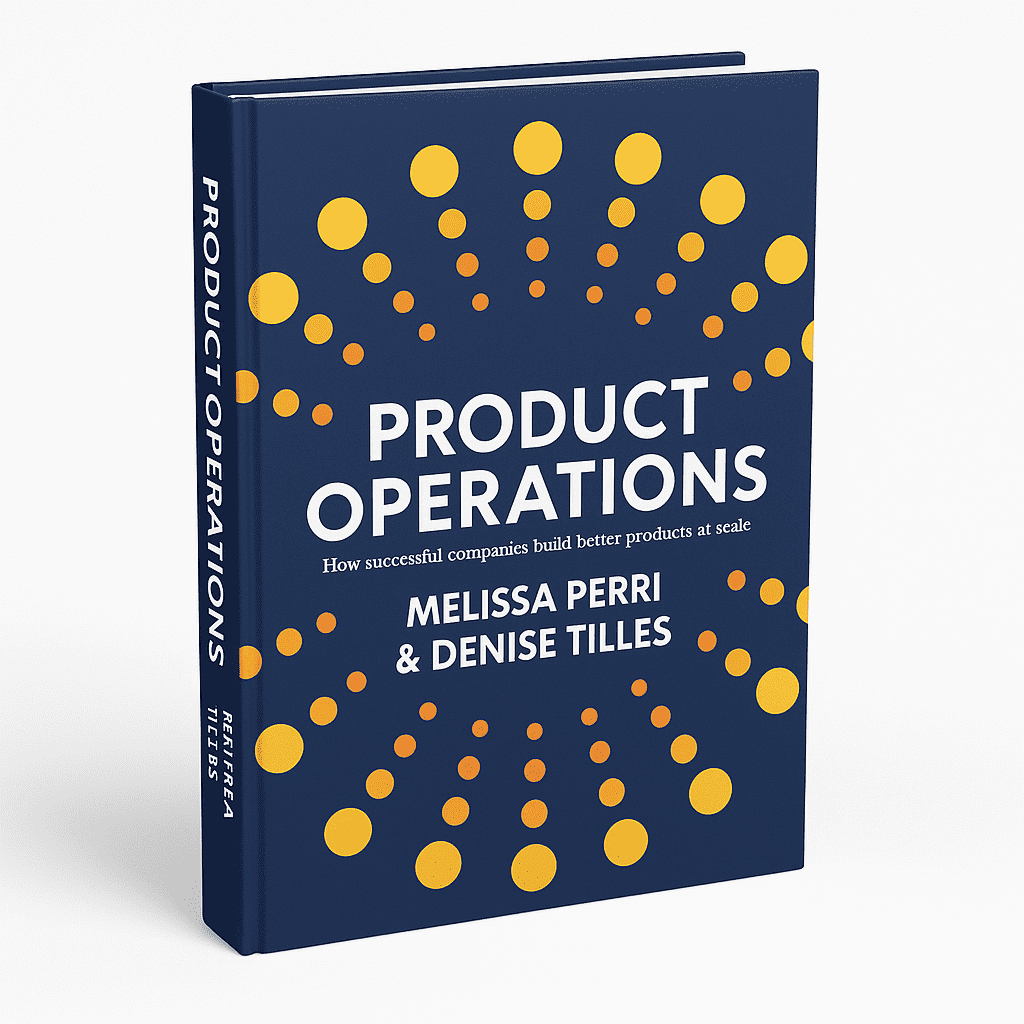

Product Operations: How Successful Companies Build Better Products at Scale – A Comprehensive Summary
Quick Orientation
Product Operations: How Successful Companies Build Better Products at Scale by Melissa Perri and Denise Tilles provides a deep dive into the emerging and critical function of Product Operations. The book argues that as companies grow and their product portfolios become more complex, Product Managers become overburdened with tasks outside of core product work. Product Operations steps in as an enablement function, providing the necessary infrastructure, data, and processes to empower Product Managers and leaders to focus on strategic decision-making and delivering customer value. This summary will cover every key concept presented, ensuring a complete and easily digestible overview for anyone looking to understand or implement Product Operations.
Why We Wrote This Book
The authors wrote this book to clarify the widespread confusion about Product Operations and to highlight its growing importance in scaling product organizations. They saw Product Managers struggling with data access, inefficient processes, and a lack of consistent frameworks, pulling them away from strategic work. Drawing on their experiences implementing Product Operations at various companies, they aim to provide practical insights and actionable steps for organizations at any stage of their Product Operations journey.
The Need for Product Operations
The increasing complexity of growing companies and expanding product portfolios creates significant challenges for traditional product management roles. Product Managers are expected to master numerous responsibilities, leading to burnout and hindering their ability to focus on core strategic activities.
- Problem: Product Managers are asked to do too much, including data analysis, process creation, market research, and stakeholder management, often in their “spare time,” which is unsustainable as companies scale.
- Solution: Product Operations emerges as a discipline to streamline systems, provide essential inputs, and enable Product Managers to concentrate on company growth, achieving business goals, creating customer value, and aligning with stakeholders.
- Benefit: Implementing Product Operations supports product managers, leads to happier and more effective teams, results in products customers love, and drives better business outcomes.
I. Introduction to Product Operations
This section introduces the concept of Product Operations, explaining why it’s necessary in modern, scaling organizations and defining its scope and core components. It highlights the pain points that lead companies to adopt this function and outlines the three foundational pillars.
1. Why Product Operations?
As companies grow, the initial “groovy” state with a single product and small team gives way to complexity, silos, and difficulty in coordinating efforts across expanding product portfolios and functional divisions. Traditional agile methods helped bridge gaps between business and technology, but scaling requires further operational support.
- Evolution: Product Operations evolved from the need to bridge gaps between modern software teams and cross-functional stakeholders, making it easier to surface information, make strategic decisions, and help departments understand their impact on the product lifecycle.
- Comparison: Like Marketing and Sales Operations, Product Operations supports its respective function and is increasingly enabling the transition from sales-led to product-led growth.
- Pain Points: Product Managers face burnout from an ever-expanding scope of responsibilities, including being data-driven, prioritizing, maintaining roadmaps, managing stakeholders, engaging with customers, ensuring discovery, and mastering delivery.
- Outcome: Product Operations empowers Product Managers to focus on core responsibilities like company growth, achieving business goals, and creating customer value by providing necessary inputs and streamlined processes.
- Enabler: Product Operations is not a replacement for skilled Product Managers but provides the infrastructure needed for them and product leaders to make effective, evidence-based decisions.
2. What is Product Operations?
Product Operations is defined as the discipline that enables the Product Management function to scale effectively. It provides the essential inputs and streamlines the ways of working necessary for setting strategy and prioritizing efforts.
- Definition: Product Operations helps the Product Management function scale well by providing essential inputs for strategy setting, prioritization, and streamlining ways of working.
- Strategy Enablement: It enables effective product strategy by ensuring access to core inputs like quantitative and qualitative data, revenue and engagement metrics, customer feedback, and segmentation information.
- Collaboration: Product Operations facilitates pulling information across the organization into a cross-functional view to help leaders and Product Managers make strategic decisions and align the company around goals.
- Obstacle Removal: It removes obstacles for skilled Product Managers and leaders, allowing them to make evidence-based decisions by providing necessary infrastructure.
- Core Pillars: Product Operations focuses on three core pillars: Business Data and Insights, Customer and Market Insights, and Process and Practices.
3. The Three Pillars of Product Operations
Product Operations is structured around three core pillars that provide the framework for a robust operating model. These pillars address different aspects of enablement necessary for a scaling product organization.
- Pillar 1: Business Data and Insights focuses on collecting and analyzing internal data to inform strategy creation and monitoring, connecting R&D spend to ROI, and contextualizing business metrics with product metrics.
- Pillar 2: Customer and Market Insights facilitates and aggregates external research, streamlining customer feedback, organizing user research, and providing tools for market analysis like competitor assessments and market sizing.
- Pillar 3: Process and Practices scales product management value through consistent cross-functional practices, frameworks, and a defined Product Operating Model that includes strategy deployment, cross-functional collaboration guidelines, and tool management.
- Implementation: Organizations don’t need to implement all pillars at once; they can start with the biggest pain point and build from there.
- Maturity: Evaluating your company’s needs and pain points is crucial for determining where to start and how to mature the function over time.
II. Pillar 1: Business Data and Insights
This pillar focuses on the critical need for accessible and contextualized internal data to inform product strategy and monitor its effectiveness. It addresses the challenges of dispersed data sources and the difficulty in connecting product metrics to business outcomes.
4. Contextualizing Data from a Product Perspective
Business and data insights are vital for product teams and leaders, providing the “why” behind the work and accelerating growth and profitability. This requires connecting financial activities to product portfolio performance and aligning with business goals.
- Value Drivers: Business and data insights help product leaders connect their work to accelerating growth and maximizing EBITDA by surfacing, acting on, and monitoring product levers.
- Financial Analysis: Revenue and cost analysis is core to Product Operations, informing product portfolio performance and alignment to business goals.
- Top-Line Growth: For organizations focused on revenue growth, Product Operations helps monitor financial performance, prioritize retention and growth investments, and provides evidence like product profitability, usage data, and market expansion opportunities.
- Bottom-Line Management: For organizations focused on increasing EBITDA, Product Operations helps manage costs by optimizing resource allocation, improving efficiency, and providing a product-centric view of costs through metrics like cost of efforts and efficiency of operations.
- Holistic View: Product Operations aggregates product-centric and cross-functional operational data into one visualization tool, accessible in real time for analysis, bringing together data from sales, customer support, finance, and engineering that is often siloed.
5. Getting to the Right Strategic Questions
To effectively inform strategy, organizations need to identify the key questions at each layer of strategy, from company vision to product options, and ensure that the necessary data is accessible to answer them.
- Strategy Layers: Referencing the layers of strategy (Company Vision, Strategic Intents, Product Initiatives, Options) helps guide the identification of necessary data and questions.
- Strategic Intents: To inform strategic intents (prioritized business challenges), Product Operations helps gather data on the current state of the business and trends, such as ARR, ASP, and ACV, segmented by criteria like customer segment, cohort, or geography.
- Focus: Segmenting data helps identify areas of focus, such as expanding growth in a specific customer segment or understanding reasons for declining growth in another.
- Product Initiatives: To inform product initiatives (outcome-oriented objectives), Product Operations ensures key financial metrics are available, sliced by product, features, or bundles, to help prioritize the highest-value work and understand revenue, retention, and usage by product.
- Options: To inform options (solutions to problems identified in product initiatives), teams need to understand product metrics and user behavior on a deeper level, segmented by customer types and cohorts, to identify opportunities and prioritize based on potential value and strategic alignment.
6. Visualizing the Data
Visualizing data is crucial for making informed decisions and monitoring strategy. This involves assessing current instrumentation, gathering data from various systems, creating manual baselines, and automating dashboards for real-time access.
- Instrumentation: The first step is to analyze the current state of product engagement data, identifying tools used, when event tags were implemented, and what metrics are currently visible to understand gaps and plan for optimal data capture.
- Key Metrics: Core engagement metrics for most SaaS/D2C products include product stickiness (DAU/WAU/MAU), frequency of use, feature adoption rates, feature retention rates, and detailed product usage data (depth and breadth).
- R&D Allocation: Understanding engineering allocation is vital for ensuring investments are paying off and aligning with strategic focus, tracking time spent on strategic work, tech debt, BAU/KLO, and bugs.
- Manual Baseline: Creating a manual baseline involves identifying questions, determining necessary metrics and data sources, pulling data manually, and mocking up dashboards to agree on required views before automation.
- Automation: Automating data and insights involves selecting a business intelligence tool, implementing rules for tagging and data capture, and creating different dashboards for various audiences (Product Team, Executive/Board) that refresh constantly for real-time decision-making.
- Good Hygiene: Best practices for dashboards include using names for accountability, ensuring all team members’ work is represented, and keeping time periods relevant to check-ins.
Case Study: Capitalization at athenahealth
athenahealth, a health tech company, faced a time-consuming manual process for software capitalization reporting required by GAAP, which was an administrative burden for R&D leaders and lacked accuracy for finance.
- Challenge: A manual, Excel-based process for software capitalization reporting took over 400 hours annually from R&D leaders and provided inaccurate data for finance, despite engineers using Jira.
- Solution: The product operations team standardized the product development lifecycle hierarchy and Jira tooling, enabling a new, automated software capitalization reporting process by ensuring consistent data adherence.
- Framework: A clear hierarchy (Initiative → Feature → Epic → Story) and formalizing a product category field in Jira allowed for accurate bucketing of work (New Feature, Foundational Tech, Reactive Trust, Experimental Development Investments).
- Education: R&D teams were educated on best practices and GAAP principles for software capitalization, linking stories, epics, and features across the portfolio.
- Result: athenahealth removed over 400 hours of administrative time, increased reporting accuracy, and gained better portfolio management, which proved valuable during company acquisitions.
Getting Started with Data and Insights
Starting with data and insights requires identifying key metrics, partnering with finance, and understanding R&D allocations to build a foundation for data-driven product decisions.
- Metrics That Matter: Identify the 3-5 most important financial and product metrics aligned with desired outcomes (revenue, adoption, retention, R&D costs, activity costs) and assess current measurement capabilities.
- Partner with Finance: Establish a regular cadence with the finance team to understand financials, reduce silos, and build commercial inputs for the product team, potentially including educating product managers on revenue metrics and fundamental concepts like leading/lagging indicators.
- R&D Allocations: Work with finance and engineering leadership to gain visibility into R&D spend, potentially through capitalization tracking or manual resource tracking by work bucket, to ensure investments align with strategic priorities.
III. Pillar 2: Customer and Market Insights
This pillar emphasizes the importance of gathering and leveraging both customer feedback and market research to inform product strategy and decisions. It addresses the challenges of accessing customers, organizing research, and making insights accessible across the organization.
7. The Research Pillar
While most Product Managers understand the need to talk to customers, logistical challenges often hinder this. The Research Pillar of Product Operations streamlines access to insights from various sources and facilitates organized user and market research.
- Importance: Accessing customer insights is crucial for understanding user needs and informing product decisions, but logistical burdens often prevent Product Managers from doing sufficient research.
- Sources: Customer insights come from various places beyond one-on-one interviews, including win/loss analysis, customer reviews, support calls, and existing user research conducted by other teams.
- Market Research: Market research is essential for understanding industry trends, competition, market sizing (TAM, SAM, SOM), and evaluating the potential value of expansion opportunities.
- Implementation: Start by evaluating existing customer insights data flow and then address gaps in user and market research practices, potentially designating someone with research expertise to lead this function if a dedicated team is lacking.
- Goal: The ultimate goal of this pillar is to create a deeper understanding of customers for all teams and make research accessible and reusable.
8. Customer Insights
Streamlining customer insights involves leveraging the data already collected by customer-facing teams, making it accessible to product teams, and designing systems for efficient feedback circulation.
- Leveraging Internal Data: Customer-facing teams like sales, account managers, and customer support collect valuable data about customers; Product Operations helps harness these insights.
- Mapping Assets: Start by surveying the company to identify where people interact with customers, what type of data they collect, in which systems it lives, and how frequently it’s collected.
- Data Quality: Inspect the quality of collected data and work with teams to standardize tagging and entry methods to ensure usefulness for product managers.
- Reporting and Cadence: Set up reporting and meeting cadences to review customer insights, automating data flow where possible and establishing deeper dives with originating teams.
- Feedback Loops: Streamlining customer insights focuses on getting internal customer data to the right people, making it easier to schedule and conduct generative/evaluative research, and making all research accessible and reusable.
9. Streamlining the User Research
Overcoming the logistical burdens of user research is key to empowering product teams. This involves creating systems for participant recruitment, organizing research findings, and collaborating with other research functions.
- Challenges: Companies face challenges like repeatedly contacting the same users (creating an echo chamber), lacking access to non-customers, isolating research findings, and difficulties in recruiting participants due to internal gatekeepers or time constraints.
- Solutions: Implement systems like a User Research Council (a database of willing participants with relevant details) and a User Research Repository (a central location for research notes and videos) to streamline recruitment and make findings accessible.
- Collaboration: Product Operations collaborates closely with Design Operations and/or Research Operations (if they exist) to ensure product managers can access and utilize available research effectively.
- Roles: User researchers own methodology and large generative projects; Product Managers consume research and conduct their own with guidance; Product Operations makes it easier by overseeing tools and implementing systems.
- Implementation Plan: Start by organizing and reporting on existing customer feedback inputs, followed by leading and organizing user research efforts by training teams, establishing systems for capturing results, and advising on tools.
10. Market Research
Market research helps quantify potential opportunities, understand expansion risks, and assess the competitive landscape, providing crucial inputs for strategic decision-making beyond individual customer feedback.
- Purpose: Market research helps understand potential market value, assess competition, and inform investment decisions, similar to how venture capitalists evaluate businesses.
- Market Sizing: Quantify opportunities using TAM (Total Addressable Market), SAM (Serviceable Addressable Market), and SOM (Serviceable Obtainable Market) to prioritize effectively based on realistic capture potential, not just overall market size.
- Challenges: Calculating market size data is time-consuming and requires understanding market dynamics, competitor contract lengths, geographical areas, and creating realistic models.
- Expertise: Hiring a Product Operations analyst with experience in competitive analysis and company validation can significantly aid in this area, often found in candidates with consulting backgrounds.
- Competitive Analysis: Product Operations can streamline competitive and market analysis by leveraging research platforms (like Gartner), managing access to competitor demos, and facilitating the collection of insights from customers and prospects about competitors.
Case Study: Democratizing User Research at Fidelity
Fidelity Investments, with hundreds of product development squads and a limited number of User Researchers, scaled its research capabilities by establishing a Research Operations function and democratizing user research for non-researchers.
- Challenge: Scaling user research to support hundreds of squads with a limited research team was challenging, especially in a highly regulated industry.
- Solution: Established a Research Operations function to accelerate learning velocity and extend research capabilities through a UX research framework, playbooks, a User Access System, a Democratization Program, and a research repository (Lighthouse).
- Framework and Playbooks: Created a research framework aligning research types to product and marketing lifecycles and developed playbooks for specific deliverables like the Usefulness Assessment to focus requests and deliver insights.
- User Access: Implemented a User Access System with multiple contact modes to streamline participant recruitment, significantly reducing recruitment time for studies.
- Democratization Program: Trained and certified over 300 associates (designers, product managers, analysts) to conduct unmoderated usability testing, increasing research capacity and accelerating results.
- Research Repository: Built Lighthouse to centralize all research findings (user, market, customer experience, marketing, third-party) making them accessible for all employees, reducing duplicative work and facilitating quick answers.
Getting Started with Customer and Market Insights
Implementing customer and market insights practices involves cataloging existing assets, getting up to speed on market trends, and assessing current research tools to identify gaps and prioritize efforts.
- Research Insights Assets: Create a table cataloging existing research insights by team, data type, system, and frequency to understand what data is already available and where the gaps lie.
- Market Trends: Determine access to professional research services (like Gartner) or obtain reports/subscriptions to quickly get up to speed on market trends and leading competitors.
- Research Tools: Assess licensed tools across teams (prototyping, surveys, user research platforms) and document existing research to understand current capabilities and identify opportunities to enhance processes with new or better-utilized tools.
IV. Pillar 3: Creating a Product Operating Model: Process and Practices
This pillar focuses on defining and implementing consistent processes and practices that codify how product strategy is translated into execution, enabling better collaboration, decision-making, and overall organizational alignment.
11. The Product Operating Model
The Product Operating Model defines how a company translates business and product strategies into actionable work, providing guidelines for how the product team interacts internally and with other departments, and standardizing key rituals like roadmapping and planning.
- Definition: The Product Operating Model codifies how strategy is translated into action, providing a blueprint for roadmapping, strategy reviews, idea management, and planning.
- Enablement: It focuses on enabling teams and removing barriers to collaboration rather than simply dictating rules, aiming to increase the speed and quality of decision-making.
- CPO’s Role: The CPO sets product principles, culture, and values, and leverages Product Operations to define and implement the process and governance pieces.
- Components: The Product Operating Model includes Roles and Responsibilities, Processes for Product Teams, Guidelines for Working with Other Teams, and Governance and Annual Planning.
- Alignment: Implementing a Product Operating Model helps align the entire company around product development and ensures consistency in key activities.
12. Creating the Process and Governance of the Product Operating Model
Establishing good governance and process is crucial for ensuring that product development aligns with strategy and that the organization can make timely and informed decisions.
- Governance: Good governance provides oversight, review mechanisms, and a link between processes, strategy, business models, and capabilities, enabling predictable planning cycles and managing innovation.
- Continuous Planning: Ideally, good governance leads to continuous product planning, allowing organizations to adjust strategies in response to market and competitive pressures, rather than relying solely on annual planning.
- Cadences: Establish regular cadences for strategic discussions (Company Kick-Off, Quarterly Business Review, Portfolio/Product Roadmap Reviews, Demo Days, Agile Processes) to provide focus and facilitate timely decision-making.
- Cross-Functional Touchpoints: Ensure that the right people are involved in strategic discussions and that there are mechanisms for collecting inputs and communicating progress to relevant stakeholders.
- Prioritization: Implement a mutually agreed-upon prioritization framework (like weighted scoring or cost of delay) to guide trade-offs and reduce reliance on the loudest voice in the room, ensuring alignment with customer feedback and product strategy.
13. Governance and Product Planning
Effective governance requires establishing clear cadences for strategic discussions and cross-functional touchpoints that facilitate timely decision-making and ensure organizational alignment.
- Purpose: Good governance provides focus for the organization by ensuring strategic discussions happen regularly with the right people in the room.
- Cadences: Examples of key strategic discussion cadences include Company Kick-Off (aligning the entire company on strategy), Quarterly Business Review (reviewing product metrics against strategic intents), Portfolio Roadmap Review (identifying interdependencies), Product Roadmap Review (discussing progress and risks), Demo Days (showcasing work and readiness), and Agile Processes (team-level planning and status).
- Continuous Improvement: These meetings and cadences should be continuously reviewed and improved based on feedback to ensure they remain effective and valuable.
- Annual Planning: While continuous planning is ideal, Product Operations can improve traditional annual planning by defining clear processes, communication channels, and providing necessary inputs to make it data-informed and efficient.
- Prioritization Frameworks: Establishing a mutually agreed-upon prioritization framework is essential for guiding trade-offs and aligning stakeholders on decisions, ensuring that work aligns with strategy and delivers value.
14. Defining Process for Product Managers
Equipping Product Managers with standardized processes, toolkits, and templates for day-to-day work streamlines their efforts, improves consistency, and facilitates onboarding and training.
- Purpose: Defining processes for Product Managers aims for “just enough process” to improve consistency and efficiency without becoming burdensome, focusing on areas that affect cross-functional areas and require consistent practices.
- Idea Management: Establish a system for collecting ideas from cross-functional partners and customers, ensuring they are submitted in a useful format (focusing on problems, not just solutions) and communicating their status back to submitters.
- Roadmapping: Product Operations helps align teams on the types of roadmaps needed for different audiences (Product Development, Sales, Leadership), creates consistent formats, and ensures they are accessible and linked back to the rationale and business value.
- Product Toolkits and Templates: Create standardized toolkits and templates for various stages of the product development lifecycle (Discovery, Strategy, Go-to-Market) to provide guidance, reduce effort, and communicate processes to stakeholders.
- Onboarding and Training: Standardized templates and toolkits aid in onboarding new product managers and can be used for training current team members, potentially with the support of a Community of Practice for ongoing professional development.
15. Tools of Enablement
Tools are enablers, not solutions, for effective product operations. Identifying, implementing, and managing the right tool stack is crucial for supporting defined processes and practices.
- Role of Tools: Tools enhance processes and practices but do not replace them; they are enablers for effective product operations.
- Tool Stack Management: Successful Product Operations teams have a roadmap for tools and designate an owner responsible for procurement, training, licensing, onboarding, and enablement.
- Assessment: Conduct an initial assessment of currently licensed tools across teams to understand what exists and identify potential redundancies or gaps.
- Selection: Contemplate different categories of tools (Roadmaps, Idea management, Product engagement, Testing, Visual analytics, Event-tagging, Adoption/In-app surveys, User research repository, OKR/Metrics) and establish a process for reviewing, vetting, and recommending new tools.
- Considerations: When selecting tools, consider the full view of users, use cases, implementation resources, training needs, how to measure utility and success, and cost/budgeting.
- Training: Provide consistent training for product managers to ensure effective use of tools, as their value is dependent on the quality of inputs and user adoption.
Case Study: Annual Planning at Oscar Health
Oscar Health, a health tech company with a large product and engineering organization, brought order to its chaotic annual planning process through the leadership of its product operations team.
- Challenge: Aligning a large product development team on annual planning was complex, with inconsistent processes and difficulty in translating company goals into tangible roadmaps.
- Solution: Product Operations designed a clear cadence for annual planning activities, including inputs, decisions, and communications, providing structure and easy-to-follow templates.
- Cadence: The annual process involved defining a company vision, long- and short-term strategies and goals, dividing initiatives into “global” (centrally managed) and “local” (pod-managed) buckets, setting measurable Key Results, creating roadmaps with varying levels of confidence, and conducting quarterly resource plans.
- Implementation: The process began in November with an initial “everything” draft of potential projects, moving to clarifying focus in December with initiative “one-pagers,” proposing the annual plan in January with OKRs and resourcing estimates, securing frontline buy-in in February, and conducting cross-functional cross-checks in March.
- Results: The structured process led to improved alignment, collaboration, and a more effective annual planning process, allowing the company to plan, predict, report, and execute with more precision.
Getting Started with Process and Practices
Implementing processes and practices starts with assessing the current operating model, creating decision-making forums, and mapping out bi-directional feedback loops.
- Current-State Assessment: Assess the existing Product Operating Model components (roles, team processes, cross-functional guidelines, governance) to identify strengths and deficits, creating a first draft of missing pieces to align with the CPO.
- Decision-Making Forums: Map current meetings to understand decision-making points and update cadences, identifying ineffective meetings and developing an ideal state for more effective forums with clear attendees, focus, and desired outputs.
- Bi-Directional Feedback: Map the flow of customer feedback from customer-facing teams to product managers and the flow of product updates from product managers to sales/marketing to identify strengths and opportunities in bi-directional communication and prioritize fixes.
V. Introducing Product Operations at Your Organization
This section guides readers on how to determine if their organization needs Product Operations, how to build a case for its implementation, and how to address common objections and build consensus among stakeholders.
16. When and Where to Start
Deciding whether and when to implement Product Operations depends on the company’s stage, product portfolio complexity, and specific pain points. Starting with the most acute need is recommended.
- Indicators: Signs that indicate a need for Product Operations include increased team size and product portfolio complexity, difficulty in keeping a pulse on various initiatives, and challenges in rapid decision-making based on comprehensive data.
- Company Stage: The need for Product Operations often becomes apparent as an organization matures from scale-up to enterprise, requiring more formal structures and communication channels.
- Starting Point: Identify your biggest pain point by assessing capabilities across the three pillars (Business Data and Insights, Customer and Market Research, Governance and Operating Model) and create a roadmap from there.
- Common Starting Points: Scale-ups often start with Data and Insights due to the need for rapid strategic decisions, while larger enterprises may begin with Governance and Operating Model for better visibility across teams.
17. Getting Buy-In
Building a business case for Product Operations requires clearly articulating the pain points, their impact, the proposed solution, and the expected value to be realized.
- Business Case: Outline the most acute pain points or frustrations in your organization that Product Operations can address.
- Impact: Quantify the impact of these pain points using concrete evidence such as lost revenue, delays in strategic initiatives, or challenges with employee retention, citing frustration from leaders and teams.
- Solution: Provide a brief explanation of Product Operations and its value, linking it to the three pillars and mentioning successful companies that have invested in this function.
- Recommendation: Propose standing up a Product Operations function, starting with one person or a dedicated percentage of a current employee’s time, and outlining how the workload will be reallocated and potential future growth.
- Expected Value: Clearly state the tangible outcomes expected from implementing Product Operations, focusing on the chosen pillar and estimating when these outcomes will be delivered.
- Memo: Consolidate these points into a concise memo for your manager, being open to discussion and prepared to answer questions.
18. Common Objections: How to Respond
Anticipating and addressing common objections is crucial for gaining buy-in for Product Operations.
- Objection 1: “Product managers should be doing this already.”
- Response: While PMs handle some of this, scaling makes it unsustainable. Product Operations is an enablement function, providing leverage so PMs can focus on core responsibilities.
- Objection 2: “We just need program managers.”
- Response: Program managers focus on project execution; Product Operations focuses on enabling product strategy and decision-making through data, insights, and standardized product processes.
- Objection 3: “It’s just more process for process’s sake.”
- Response: Product Operations implements just enough process to remove blockers, improve collaboration, and increase the speed and quality of decision-making, tailored to the organization’s needs.
- Objection 4: “It’s a cost center, not a revenue driver.”
- Response: Product Operations directly contributes to revenue and cost optimization by informing strategic decisions, improving efficiency, and accelerating the delivery of valuable products.
- Objection 5: “Our product team is too small/large for Product Operations.”
- Response: Product Operations is valuable at various scales, adapting its focus and structure to the specific needs and complexities of the organization.
19. Building Consensus
Building consensus for Product Operations involves educating the team and stakeholders on its value and how it complements existing functions.
- Educate the Team: Clarify that Product Operations enables decisions, not makes them, highlighting the distinction between Product Management and Product Operations roles.
- Internal Customer: Explain that the Product Operations team acts like a miniature product team, with product managers as their customers, using product management techniques to solve their problems.
- Stakeholder Education: Guide stakeholders and colleagues toward understanding and appreciating the value of Product Operations and how it complements other operational functions (Design Ops, Sales Ops, Marketing Ops, Engineering Ops).
- Coexistence: Explain how various functional operation departments coexist and complement one another, sharing a high-level description and highlighting points of intersection.
- Collaboration: Encourage regular touchpoints among operations leaders to share wins, challenges, and ensure no overlaps or dependencies, potentially creating a lightweight operating model for these functions.
20. How to Win Them Over
Gaining buy-in from stakeholders requires tailoring the value proposition to each major function and demonstrating how Product Operations will benefit them.
- Value Proposition: Tailor the message to resonate with the specific needs and pain points of each stakeholder group.
- UX and User Research: Explain how Product Operations can bridge the gap between research and product managers by providing tools (repositories, access systems) for self-serve research and reducing the burden on UX teams.
- Sales/Marketing: Highlight how Product Operations provides valuable customer insights, transparency into roadmaps, pre- and post-usage data, and themes/learnings to enable more effective sales and marketing efforts.
- Data Science: Showcase how Product Operations ensures that the data science team’s analyses are systematically applied to product decisions and that their work leads to tangible outcomes by providing dashboards and data repositories for decision-makers.
- Customer Support: Explain how Product Operations collaborates with customer support to improve the collection, structure, and distribution of customer feedback, ensuring that insights are addressed and contribute to building the right products.
- Engineering: Emphasize how Product Operations eases method consistency, brings engineers into roadmap planning earlier, and streamlines product processes and frameworks to reduce headaches and improve collaboration across teams.
Case Study: Finding Key Quick Wins at Amplitude
Shintaro Matsui, the first Product Operations hire at Amplitude, took an iterative approach to identify and address the organization’s biggest pain points, focusing on quick wins to prove the function’s value.
- Approach: Adopted an iterative approach, starting small and focusing on continuous improvement rather than “boiling the ocean” with large, sweeping changes.
- Discovery: Conducted a listening tour (35+ interviews) with product managers and cross-functional partners to identify pain points, clustered them, and mapped them to an impact-over-effort matrix to prioritize quick wins.
- Quick Win #1 (Visibility): Created a “super basic” monthly product newsletter for the entire company to increase transparency into the product team’s work, which was highly valued by the GTM team.
- Quick Win #2 (Trust): Instead of rolling out a new product development life-cycle process to everyone, piloted it with a single team and iterated based on their feedback, framing it as support rather than a mandate to build trust and encourage bottoms-up adoption.
- Quick Win #3 (Feedback Loop): Ensured stakeholders were informed when their pain points were addressed by Product Operations initiatives, showcasing the value being delivered and keeping communication lines open.
- Lessons: Advised starting small, identifying promoters early, learning to say no while remaining open to new scope, and continuously demonstrating impact through quick wins and clear communication of priorities and achievements.
Getting Started with Introducing Product Operations at Your Organization
Introducing Product Operations involves identifying strengths and deficits, crafting a value proposition, and pitching it to your manager.
- Strengths and Deficits: Use the 3 Pillars framework to assess where your company excels and where it needs improvement, identifying potential quick wins within the most important pillar.
- Value Prop: Write a concise description of the challenges and opportunities within the prioritized pillar and explain how Product Operations can provide leverage, focusing on tangible outcomes.
- Pitch Your Manager: Have an initial casual conversation about Product Operations, share insights from the book mirroring your organization’s challenges, and propose creating a one-pager outlining how Product Operations could add value and ultimately lead to better products.
VI. Building and Scaling a Product Operations Function
Once the decision to implement Product Operations is made, this section provides guidance on how to build and scale the team, including determining size, filling roles, and deciding on organizational structure.
21. How to Get Started
Starting Product Operations doesn’t always require a new headcount; it can begin with an existing Product Manager taking on the responsibilities. The key is to identify the most important need and build the function from there.
- Existing Staff: Product Operations can start with a current Product Manager who identifies a need and is interested in addressing it, gradually transitioning into a more dedicated role.
- Identify Needs: Conduct a capabilities map across the three pillars to identify gaps and discern a trend line pointing to the most important pillar for the first hire.
- Quick Wins: Note any gaps that could potentially be quick wins to demonstrate early value.
- Building Gradually: Gradually building the function from one person allows for proving value and making a stronger case for additional headcount as the team scales.
22. Team of One
Many Product Operations functions begin with a single person, who sets the standard and must learn to prioritize effectively while advocating for future growth.
- Impact: A team of one can make a significant difference by focusing on core problems and demonstrating value, as seen with practitioners like Christine Itwaru and Hugo Froes.
- Prioritization: Teams of one must be selective and learn to say no to requests that fall outside their defined scope, while remaining open to identifying new areas that align with their vision.
- Advocacy: A team of one is the standard for the function and must continuously demonstrate value to build momentum and advocate for future growth.
- Scaling Vision: Map out an organizational plan (18-24 months) to show how the function will grow, outlining value realized at each stage and specifying requisite roles.
- Core Problems: Focus on solving core problems like centralizing information and creating a single source of truth to provide immediate high-impact value.
23. Team of Several
When scaling Product Operations to a team of several, organizations can be more intentional about resourcing multiple areas of need and need to consider the reporting structure for the growing team.
- Intentional Resourcing: With a team of several, organizations can resource multiple areas within the three pillars simultaneously, allowing for value delivery from different angles.
- Reporting Structure: As the team grows beyond a single member reporting to the product leader, consider hiring a Director or VP of Product Operations to oversee the function, depending on the organization’s size and scope.
- Organizational Models: Explore different organizational models for the product operations team, such as embedded (dedicated to specific teams) or shared service (centralized team supporting multiple teams), or a hybrid approach.
- Example Structure: Consider a structure with a Senior Director overseeing managers focused on different pillars (Data and Insights, Process and Practices, Customer and Market Insights), potentially with embedded analysts or specialists depending on specific needs and existing capabilities.
24. Filling the Roles
Filling Product Operations roles requires identifying candidates with the right skill sets and experience for each specific area of focus, whether it’s data, process, or research.
- Varied Skill Sets: Recognize that different Product Operations roles require distinct skill sets; a person who excels at data analysis may not be the best fit for process optimization.
- Data and Insights: Look for candidates with deep data skills, consulting or data analysis backgrounds, mastery of quantitative analysis, ability to create models, and strong storytelling skills to make data come alive. Titles like “Product Operations Analyst” or “Product Data Analyst” are appropriate.
- Governance and Operating Model: Seek candidates with a background in product management or a Chief of Staff role who understand product development, excel at creating efficiencies, optimizing processes, and have a high emotional intelligence to navigate cross-functional relationships. Titles like “Product Operations Manager” are suitable.
- Customer and Market Insights: For customer insights, look for experienced user researchers or UX designers with a strong product mindset who can streamline processes and productize research efforts. For market insights, consider analysts with competitive analysis and market sizing expertise, potentially from consulting backgrounds.
- Product Operations Leader: For a Director or VP role, look for candidates with experience building and scaling teams, process-oriented, able to drive complex programs, high emotional intelligence, and a vision for the function’s evolution. Former Directors of Product or Chiefs of Staff can be good fits.
25. Embedded vs. Shared Service Model
Choosing between embedded (dedicated to specific teams) and shared service (centralized) models for Product Operations teams depends on the organization’s needs and preferences, with hybrid models also being an option.
- Decision Point: As Product Operations teams scale, organizations face the question of whether to embed Product Operations managers with product teams or have a centralized shared service model.
- Embedded Model: Dedicates Product Operations personnel to specific product teams, allowing for deep understanding of team nuances and fostering strong relationships.
- Pros: Deep team understanding, strong relationships, tailored support.
- Cons: Potential for siloed efforts, difficulty in applying learnings across the organization, limited time for centralized initiatives.
- Shared Service Model: Centralizes Product Operations personnel, who support multiple teams, allowing for consistency, application of best practices across the organization, and focused work on centralized initiatives.
- Pros: Consistency, leverage across teams, focus on centralized initiatives.
- Cons: Less deep team understanding, potential for becoming a bottleneck, may not address specific team nuances as effectively.
- Hybrid Model: Combines elements of both embedded and shared service models, with some personnel embedded and others focused on centralized functions, aiming to balance deep team support with organizational-wide consistency and leverage.
- Pros: Balances team support and centralized initiatives, can adapt to evolving needs.
- Cons: Requires careful coordination, potential for conflict between embedded and central priorities.
Case Study: Building and Scaling Product Operations with Blake Samic
Blake Samic, with experience founding and scaling Product Operations at Uber and Stripe, offers insights into the growth trajectory, the importance of quick wins, and making a compelling case for the function.
- Experience: Founded Product Operations teams at Uber (scaling to 70+ people) and Stripe (scaling to 50+ people), adapting approaches to different company contexts.
- Early Approach: Started as a team of one, focusing on identifying pain points through listening tours and categorizing opportunities for quick wins (“above the line”) and future growth (“below the line”).
- Mandate: Defined the core responsibilities of Product Operations, including surfacing business insights, ensuring global viability, and managing product rollout and support.
- Quick Wins: Implemented quick wins like a central product newsletter and a piloted launch framework to build momentum, credibility, and demonstrate value early on.
- Scaling: Experienced growth from a team of one to large teams, emphasizing the importance of proving early value and having a vision for how the function will scale.
- Making the Case: Advised “drumming up demand” by storytelling and painting a picture of Product Operations’ potential, capturing asks that cannot be met with current resources, and creating a framework to communicate priorities and the value unlocked by additional investment.
- Funding Model: Noted Stripe’s transition from a central budget to a model where product teams funded their embedded Product Operations Partners, requiring clear communication of value delivered.
- Organization: Employed a hybrid model at Stripe to balance the value of embedded personnel with the need for centralized systems and programs, finding that central initiatives could “raise the tide for all product teams.”
26. The Future of Product Operations at Pipeline 3K
The case study concludes with a reflection on the progress made at Pipeline 3K under the guidance of Product Operations, highlighting quick wins and outlining a roadmap for future growth.
- Progress: Significant improvements were made in roadmaps, planning cadences, visibility into success metrics, and consistency in product manager operations.
- Wins: Tangible wins include executives using portfolio and roadmap tools, improved cross-functional collaboration (especially with sales), and securing a dedicated data analyst resource.
- Future Roadmap: Outlined a roadmap for scaling Product Operations over the next 60-90 days, including hiring needs and continued focus on the three pillars.
- Vision: The vision includes fully established dashboards for business and data insights, a robust customer insights system leveraging internal data and user research, and standardized processes, templates, and tools within the Product Operating Model.
- Impact: Product Operations is positioned as a key accelerant for Pipeline 3K’s growth and maturity.
27. The Future of Product Operations
Product Operations is predicted to grow significantly, particularly in enterprise-level companies, with a trend towards more centralized models, automation, and the absorption of adjacent functions.
- Growth Prediction: Product Operations is expected to grow significantly in the coming years, especially in enterprise-level companies building multiple products.
- Future Landscape: The function will likely skew towards a more centralized model, focusing on setting up automated systems and providing better observability, while still enabling Product Managers to have more leverage.
- Accelerant: Product Operations will be a key accelerant for larger companies transitioning into software companies, helping them manage complex portfolios and stakeholder relationships.
- Absorption of Functions: Successful Product Operations teams may absorb adjacent functions like engineering operations and onboarding as they demonstrate operational rigor and deliver value across the organization.
- Separate Operations: There is value in separate operations teams (Product, Sales, Marketing, Engineering) as their push-pull tensions can provide checks and balances, especially with regular cross-functional touchpoints.
- Career Path: Product Operations offers a viable and growing career path for both new and seasoned product professionals, with opportunities for leadership and movement into product management roles.
- Value Proposition: Product Operations is here to stay because it provides multifaceted leverage, helping companies manage complexity and scale effectively.
Getting Started with Building & Scaling a Product Operations Function
Building and scaling Product Operations involves assessing who might be the first team member, creating a job description, and selecting success metrics.
- Assess First Member: Determine if an existing employee (perhaps a Product Manager) has the interest and aptitude for Product Operations, or if a new hire is needed, creating an “above-the-line” (current capability) and “below-the-line” (potential with dedicated resource) view to present to management.
- Job Description: Write a job description outlining the areas where you need leverage (internal/external) and the tangible outcomes expected, potentially using modifiable templates.
- Success Metrics: Select 3-5 success metrics (quantitative and qualitative) to measure the impact of the Product Operations team, linking them to business objectives and including metrics like efficiency, turnaround time, and product manager satisfaction.
VII. Lessons Learned
This section distills key lessons learned from practitioners in the field, offering valuable insights and highlighting recurring themes to guide those building or scaling Product Operations.
28. Secure Executive Support
Executive buy-in is paramount for the success and sustainability of Product Operations, ensuring it’s seen as a critical function rather than a dispensable cost center.
- Importance: Executive support is crucial for the success and long-term sustainability of Product Operations.
- Methods: Executive support can be initiated by executives themselves or by individuals within the organization building a case and demonstrating value.
- Showcasing Value: Involve Product Operations in executive meetings to demonstrate how it informs strategy, enables informed decision-making, and contributes to cross-functional collaboration.
- Advocacy: Encourage leaders to advocate for Product Operations and leverage their support when facing pushback from other stakeholders.
- Long-Term Play: Product Operations is a long-term investment; continuously demonstrate its value, especially during challenging economic times, to protect the team from being seen as a short-term efficiency measure.
- Managing Upwards: Actively manage upwards by showing the C-suite the vision and demonstrating how Product Operations solves their challenges.
29. Culture Counts
Organizational culture plays a significant role in how Product Operations is received and adopted. Fostering a culture that embraces collaboration, data, and continuous improvement is key.
- Cultural Aspect: The cultural aspect of implementing Product Operations is as important as the technical one; involve people early and keep them informed to build dedication.
- Leader Reinforcement: Ensure leaders reinforce the value of Product Operations by using the data and processes it provides in repeatable forums like QBRs and planning meetings.
- Build Relationships: Take the time to get to know as many people as possible across teams to build relationships and ensure they feel invested in Product Operations’ output.
- Address Discontent: Quickly address misunderstandings and resistance to Product Operations (e.g., turf wars, misconceptions about the role) through education and collaboration.
- Cross-Functional Collaboration: Create clear paths for cross-functional contributions and develop a consistent narrative around Product Operations’ role and value within the organization.
- Alignment: Continuously align with stakeholders and reinforce the narrative that Product Operations is a powerful tool to help the business achieve its objectives.
30. Focus on All Data
Truly impactful Product Operations connects product data and customer insights with business-impacting financials, providing a holistic view for strategic decision-making.
- Beyond Usage Data: While product engagement data provides leading indicators, it’s crucial to connect it to business data (revenue, churn, etc.) to understand the full impact of product decisions.
- Connecting the Dots: Product Operations excels at connecting product metrics to business metrics, revealing insights that may not be apparent from looking at usage data alone.
- Scaling Capabilities: Product Operations scales this analytical capability across the organization, empowering product teams and executives to make data-informed decisions.
- Context: Identifying relevant questions through Data and Insights and correlating answers with Customer and Market Insights makes the function more powerful.
- ROI Focus: Product Operations shifts the focus from emotional decisions to data-driven, ROI-based decisions about where to invest efforts.
- Transparency: Bringing together dispersed data provides full context and enables the identification of cause and effect relationships between product initiatives and business outcomes.
31. Get to Impact Quickly
Demonstrating value early and often is essential for Product Operations, which is often viewed as a cost center. Prioritizing quick wins builds momentum and justifies future investment.
- Demonstrate Value: Continuously demonstrate value in large and small ways, especially since Product Operations is often seen as a cost center.
- Prioritize Quick Wins: Focus on the most acute needs and create quick wins that have immediate impact and build momentum for the function.
- Focus: Learn to say “no” to requests that don’t align with prioritized high-impact areas.
- Identify Scope: Be open to identifying how something not initially considered might fit under your scope to provide value.
- Evangelize: You are selling the vision of Product Operations; quick wins are proof points that get people excited and advocate for further investment.
- Capture Asks: Capture asks that cannot be met with current resources to demonstrate the potential unlocked by additional headcount.
32. Balance Process with Agility
Product Operations provides ways of working and structure, but it’s crucial to strike a balance with agility, ensuring processes enable rather than hinder flexibility and continuous improvement.
- Enablement: Product Operations provides frameworks and guidance to help teams do their work efficiently, avoiding over-engineering processes.
- Principles over Mandates: Focus on establishing principles to guide teams rather than mandating rigid processes, allowing for flexibility and adaptation.
- Continuous Improvement: Proactively revisit tools and processes to ensure they remain effective and address issues before they become major problems.
- Regular Review: Implement a regular cadence (e.g., quarterly) for reviewing processes and tools with stakeholders to gather feedback, identify what’s working and what’s not, and make continuous improvements.
- Transparency: Share the results of process and tool reviews with the wider organization to ensure transparency and build trust, showing that feedback is heard and acted upon.
- Adaptability: Keep systems flexible and be prepared to adjust processes and practices based on the company’s evolving needs.
VIII. Your Roadmap to Change
This final section provides a guide for activating Product Operations, summarizing key takeaways and outlining roadmaps for both standing up and evolving the function.
33. Activating Product Operations: Four Key Takeaways
Product Operations is a force multiplier, structured around three pillars, and requires a product manager’s mindset to measure success and continuously improve.
- Force Multiplier: Product Operations empowers the product management function to scale effectively by providing essential inputs and infrastructure, leading to better decision-making and outcomes.
- Three Pillars: The framework of Business Data and Insights, Customer and Market Insights, and Process and Practices provides a clear way to understand and communicate the value of Product Operations and organize implementation efforts.
- Measure Success: Approach Product Operations with a product manager lens, viewing product managers and leaders as customers and measuring success through metrics that demonstrate value delivery, efficiency, and impact on business objectives.
- Patience and Iteration: Implementing Product Operations is an iterative process; start somewhere, focus on quick wins, continuously improve, and build buy-in across cross-functional stakeholders.
34. Your Roadmap to Standing Up Product Operations
This section provides high-level roadmaps for organizations starting Product Operations from scratch or those looking to evolve an existing function.
- Standing Up: A roadmap for starting from scratch includes:
- Identifying the biggest pain point and prioritizing a pillar to focus on.
- Building a business case for Product Operations and securing executive buy-in.
- Determining the initial staffing model (team of one or several).
- Hiring or allocating resources for the initial role(s).
- Focusing on quick wins within the chosen pillar to demonstrate value.
- Establishing core processes and tools related to the prioritized pillar.
- Continuously iterating and expanding capabilities to other pillars over time.
- Evolving: A roadmap for evolving an existing function includes:
- Assessing the current maturity of Product Operations across all three pillars.
- Identifying gaps and prioritizing areas for further investment and growth.
- Developing a scaling plan for the team, potentially considering different organizational models (embedded, shared service, hybrid).
- Hiring or reallocating resources to fill roles aligned with prioritized areas.
- Standardizing processes, tools, and governance across the organization.
- Continuously measuring success and demonstrating value to stakeholders.
- Fostering a culture that embraces Product Operations and continuous improvement.




Leave a Reply