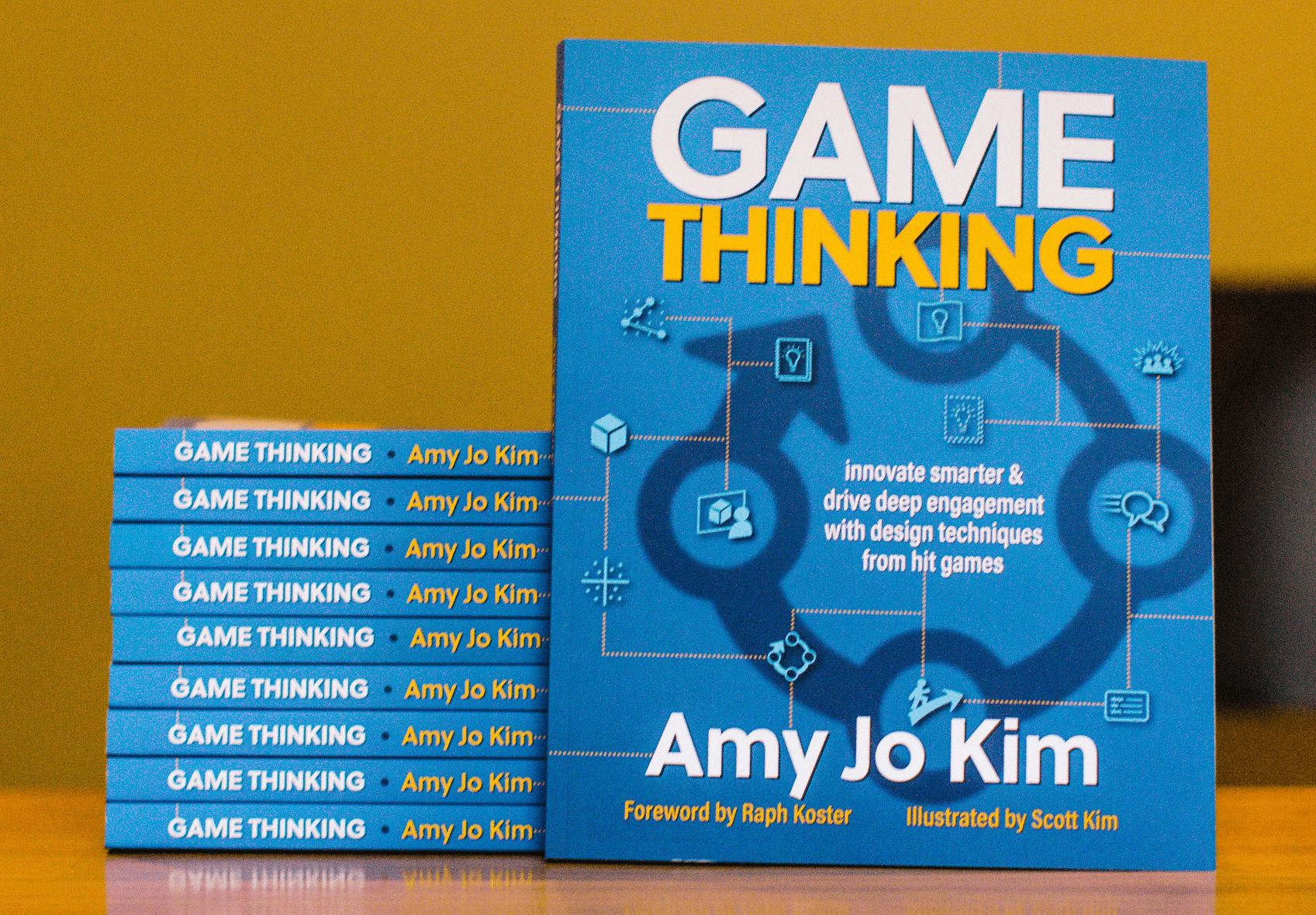

Mastering Engagement: A Comprehensive Summary of Game Thinking
Introduction
Game Thinking by Amy Jo Kim is a groundbreaking guide that blends the principles of game design, lean startup methodologies, and design thinking to create products that deeply engage users over time. Drawing on her extensive experience in launching massively successful games like Rock Band and The Sims, as well as innovative products like Happify and Covet Fashion, Kim presents a five-step framework designed to help entrepreneurs and product leaders build engagement from the ground up. The book’s purpose is to equip readers with a proven system for finding passionate early customers, understanding their core needs, and designing experiences that foster skill-building and long-term connection. This summary will cover every key concept, argument, and practical tool presented in Game Thinking, offering a thorough understanding of how to apply game-like thinking to product development for increased innovation and success.
What Is Game Thinking?
This introductory section sets the stage for the Game Thinking methodology by exploring what drives success in hit products and how lessons from game design can be applied to build compelling user experiences. It highlights the importance of understanding what makes people return to a product and how intrinsic motivation plays a crucial role.
Lessons from Gaming
- Successful games share the intrinsic joy of skill-building: Learning, practicing, and making progress towards mastery feels good and creates conditions for flow, which is the ultimate goal for designers.
- Flow requires effort: Achieving a state of flow, where challenge matches evolving skill, isn’t about making things easy; it demands learning, practice, and overcoming challenges.
- Character transformation is the backbone of great gameplay: Just as in drama, the most compelling aspect of a game (or a product) is the user’s transformation into a more powerful, skilled, or connected version of themselves.
- Progress metrics are icing on the cake: Points, badges, levels, and leaderboards are scaffolding that supports the core activity of mastery, but they are meaningless without something meaningful to master.
- Well-crafted games blend intrinsic pleasure with extrinsic scaffolding: Games create a “magic circle” where ordinary activities gain special meaning, inviting users into an alternate reality where pleasurable activities are amplified by progress markers.
- Compelling experiences tap into the Trinity of Intrinsic Motivation: Self-determination theory identifies Autonomy (meaningful choice), Mastery (skill-building and feedback), and Purpose (connection to something greater) as universal drives for engagement.
Game Design ≠ Loyalty Marketing
- Extrinsic motivators alone are a fool’s errand for long-term engagement: While points, levels, and status are staples of loyalty programs, they are surface-level mechanics that lack the depth of intrinsic motivation.
- Extrinsic rewards can devalue pleasurable activities: Research shows that external rewards, effective for simple tasks, can actually decrease creativity and enthusiasm for tasks people enjoy doing for their own sake.
- Unintended side-effects of extrinsic rewards can be brutal: Using external rewards can kill off intrinsic motivation, as seen in studies where children stopped reading for pleasure once rewarded for it.
From Game Design to Product Design
- The principles of successful games can also make products successful: The core idea that people want to get better at something they care about applies equally to games and products.
- Game thinking puts skill-building into the hands of product leaders: It’s a framework for building products that make users more powerful, knowledgeable, and connected.
- Game thinking embraces and extends existing methods: It builds upon the testing assumptions of Lean Startup and the customer empathy of Design Thinking.
- Game thinking provides an innovation framework: It helps find early hot-core customers and guides them on a journey toward mastery.
- The best products empower users: They don’t just fill a need; they help people improve at something meaningful to them.
The introduction establishes that Game Thinking offers a structured, proven approach to building products that deeply engage users by focusing on intrinsic motivation and skill-building, rather than relying on superficial gamification.
Section I: HYPOTHESIZE
This section introduces the crucial first step of Game Thinking: forming clear, testable hypotheses about your product, customers, and market. It emphasizes the need to combine a strong vision with a relentless search for truth through experimentation.
Chapter 1: Clarify Your Product Strategy
This chapter focuses on the initial phase of defining your product idea, identifying your target early customers, and articulating the core assumptions that need to be tested. It introduces the MVP Canvas as a tool for structuring these hypotheses.
Meet the MVP Canvas
- Start with clear, testable hypotheses: To turn an idea into a successful product, ground your initial efforts in specific assumptions that can be validated.
- The MVP Canvas helps frame ideas as hypotheses: This stripped-down, one-page tool helps in developing strong, testable hypotheses and prioritizing which assumptions to test first.
- Focus on early customers and unmet needs: Breakthrough innovations often start by delighting a small group of people who have a pressing problem, not by targeting the mainstream market immediately.
- Innovation Diffusion Theory describes how people adopt innovations: Everett Rogers identified five groups: Innovators, Early Adopters, Early Majority, Late Majority, and Laggards, who engage with new ideas over time.
- Crossing the Chasm highlights the shift from early adopters to the early majority: Geoffrey Moore emphasized the importance of finding and delighting a small early market before targeting a larger segment.
- Find high-need, high-value early customers: These are people who need what you’re offering, are willing to take risks for it, and are articulate and motivated enough to provide valuable feedback.
- Develop loyal customers by fulfilling needs pleasurably: Understand your target customers’ current needs, how they meet them now, and why those methods are unsatisfying.
- Don’t worry about getting it right initially: The goal is to make educated guesses and turn them into testable hypotheses about your early customers and their unmet needs.
Developing a New Product
- Form hypotheses about potential early customer groups and their unmet needs: For Happify, initial hypotheses included hard-driving entrepreneurs, professionals with depression, and people going through major life changes.
- Run early experiments to focus on a specific group: Testing initial hypotheses helps determine which customer segment is the most promising target for the product.
Developing a Major New Feature or Product Extension
- Apply the MVP Canvas to validate new features: Even for existing products, hypotheses are needed for major extensions.
- Identify promising early customers by analyzing existing data: Pley identified potential community members by data-mining subscribers who uploaded photos of their kids’ Lego creations.
- Sometimes, a single strong hypothesis is enough to start: If existing data points to a clear high-need group, multiple hypotheses might not be necessary initially.
Connect Your Solution to Customer Value
- Avoid getting too attached to your solution early on: People care about meeting their needs efficiently, not about your specific solution in isolation.
- Your solution is a hypothesis: Recognize that there may be many ways to solve your customer’s problem.
- Connect your solution to your Value Proposition: Describe your solution and explain how it addresses your customer’s unmet needs from their perspective.
- Differentiate your offering: Articulate what makes your solution unique compared to existing alternatives.
- Customer Value Proposition is the connective tissue between your solution and needs: Unmet needs exist independently in the problem space, while the value proposition bridges your solution to those needs.
Define Your Unfair Advantage and Early Metrics
- Write down your unfair advantage: Identify the special skills, resources, connections, and knowledge that make you and your team uniquely suited to bring the idea to life.
- Get inspired by the “hedgehog concept”: Ask what you are passionate about, what you are best at, and why someone should believe in your team and project.
- Choose subjective early metrics: Since there isn’t enough data for A/B tests early on, select one or two measurable factors tied to product goals, such as preference, uptake, value, or NPS score.
- Your unfair advantage helps you stay focused amidst feedback: Keeping your core strengths in mind provides grounding as you gather customer input.
Prioritize Your Assumptions
- Articulate and prioritize your assumptions: Look through your MVP Canvas and identify the assumptions you are least sure about and those that would be most devastating if proven false.
- Focus on high-risk assumptions: These are the central hypotheses that need to be tested, particularly concerning early customers, unmet needs, solution, and value proposition.
- Make assumptions concrete and testable: Write down specific statements that require confirmation through research.
- Identify the most crucial, bet-the-company assumptions: Pinpoint the hypotheses that could sink your entire project and feel nervous about.
Get Ready to Run Your High-Learning Experiments
- Understand how to fill out the MVP Canvas and prioritize assumptions: This prepares you to run high-learning experiments effectively.
- Emulate successful innovators: Create testable hypotheses and gather data to refine your thinking.
This chapter establishes the importance of hypothesis-driven development and provides the MVP Canvas as a foundational tool for structuring initial ideas and identifying key assumptions to test.
Chapter 2: Draft Your Product Brief
Building on the initial hypotheses, this chapter guides the reader in creating a draft Product Brief – a dynamic document that outlines the product vision, research plans, and next steps. It emphasizes working backward from the desired outcome and embracing an iterative approach to validation.
What Is a Product Brief?
- Create a draft product brief early on: This document helps refine current thinking and formulate a smart, efficient testing plan before all the answers are known.
- The brief is updated as you learn: It’s a living document that reflects research findings and outlines next steps.
- A product brief tells the story of your product: It covers what the product is, who it’s for, and how ideas will be tested.
- The brief has three sections: Product Strategy (What We’re Building), Customer Insights (What We’re Learning), and Pivot or Persevere (What to Build Next).
Product Strategy: What We’re Building
- Outline your current product strategy: This section captures your initial vision, which will be updated later.
- Craft an elevator pitch: Create a clear, concise statement of your offering, target audience, and value proposition.
- Use the Elevator Pitch Template: This template helps structure the pitch around what you’re developing, for whom, and what problem it solves.
- View the elevator pitch as testable assumptions: Recognize that your pitch is a set of hypotheses about your product and market.
- Include your “Before” MVP Canvas: Add your initial MVP canvas to this section to provide more detail on your product and customer hypotheses and prioritized assumptions.
- Update the canvas and pitch after testing: Reflect what has changed and what you’ve learned through research.
Customer Insights: What We’re Learning
- Summarize your hypothesis testing approach: This section details how you will test your assumptions and the types of insights you expect to gather.
- Meet the Superfan Funnel: Game thinking uses a three-stage process (screener, speed interviews, playtests) to accelerate product/market fit by focusing on early hot-core customers.
- Sketch out a research plan: Outline who you will test with, what assumptions you’ll test first, when testing will happen, and where (online, phone, in-person).
- Connect your research plan to your MVP Canvas: Ensure your testing activities are designed to validate your hypotheses about early customers, unmet needs, and high-risk assumptions.
- Imagine some key results and observed patterns: Even before research, anticipate the types of habits, needs, and ideas you might hear about based on your assumptions.
- Use pattern templates to brainstorm: Frame potential findings in structured ways like “Many of our subjects like to <daily habit>” or “The men we spoke with wish they could <unmet need>.”
- Document assumption-based hypotheses about patterns: Record what you expect to learn about customer behavior and motivations.
Pivot or Persevere: What to Build Next
- Outline your planned next steps based on what you learn: This section anticipates the decision of whether to continue in the current direction or make a significant change.
- Introduce the alpha test: This is an early, incomplete version of your product tested with a small group of early customers over several weeks.
- Understand software release cycles: Recognize the typical stages of development: Pre-alpha, Alpha, Beta, and Release.
- Alpha tests are valuable for building meaningful products: A private test with hot-core customers can accelerate progress more effectively than rushing to a public release.
- Sketch out your alpha test plan: Imagine what the earliest testable version of your product looks like, who the ideal testers are, where to find them, and which assumptions will be tested.
- Working backward from the alpha goal helps focus design efforts: Planning the test up-front streamlines design and development activities.
- There’s no one-size-fits-all alpha format: Tailor the test plan to the specific project’s needs and goals, whether testing a working product or an online community idea.
This chapter provides a structured framework for documenting the initial product vision and planning research activities by working backward from the desired outcome of testing and validation.
Section II: EMPATHIZE
This section delves into the critical phase of understanding your target customers deeply. It provides practical techniques for identifying and connecting with the specific individuals who can provide the most valuable insights for validating and shaping your product.
Chapter 3: Find Your Hot-Core Superfans
This chapter provides a step-by-step guide to identifying and recruiting the most valuable early customers – those with high needs and high value – who are crucial for testing innovative ideas.
Why Focus on Your Early Market?
- Finding the right early customers is crucial but difficult: Many entrepreneurs stumble at this step by casting too broad a net and receiving misleading feedback.
- Broad feedback is often muddled: Opinions from friends, family, and investors can be biased and not representative of the target early market.
- Early adopters are pre-chasm customers: They are willing to try new things without social proof because their need or desire is strong.
- Early adopters actively feel the pain of not having your solution: They are the ones who are actively seeking a better way to meet their needs.
How to Find Your Superfans
- Seek feedback from specific types of customers: Focus on individuals who are high-need, high-value, articulate, observant, and motivated.
- Superfans are shorthand for high-need, high-value early customers: They have a burning desire for what you’re creating and the ability and willingness to help you develop it.
- Superfans are excellent alpha testers: Their motivation and insight make them ideal candidates for testing early versions of your product.
- You only need a few superfans to be on the right track: Research suggests five testers can be enough, if they are the right ones.
- More value comes from five superfans than dozens of “target customers”: Superfans provide energetic human feedback that is essential for crossing the chasm.
- Build a superfan screener: This short survey (Stage 1 of the superfan funnel) is designed to attract and identify potential early customers.
- Choose your recruiting channels strategically: Go where potential superfans already spend their time, whether through direct email, social media, ads, interest groups, meetups, conferences, or paid services.
- Pursue several channels in parallel: This increases the chances of finding suitable candidates even if some channels are slow or ineffective.
- Write a clear recruiting message: Describe who you are looking for and what you are offering (often participation in paid research or early access).
- Use the Recruiting Message Template: Structure your message to clearly state the target audience and the purpose of the outreach.
Write Your Screener Questions
- Design a short screening survey: Aim for around six questions initially (three multiple choice, three open-ended) to identify early customers.
- Keep your survey short for better response rates: Focus only on questions that help sort responses and identify potential superfans.
- Behavior is a stronger signal than belief: Ask about specific actions that indicate someone might be a superfan.
- Include open-ended questions to identify high-need customers: Ask what they are currently doing to solve their problem or meet their need.
- Superfans have opinions on how things could be better: Include questions that invite self-reflection and ideas for improvement.
- Use multiple-choice questions to surface patterns: These questions help filter responses based on specific criteria related to your customer hypothesis.
- Use open-ended questions to reveal motivation: The answers to these questions provide clues for identifying enthusiastic early adopters and understanding their underlying drivers.
Run Your Survey With a Time Limit
- Choose a survey platform and collect data: Tools like Google Forms or Survey Monkey can be used.
- Give respondents a deadline: This encourages immediate responses and helps manage the data collection process.
- Post your survey when your target audience is likely available: Consider their typical daily routines.
Filter Subjects and Identify Patterns
- Filter survey responses using the stoplight method: Categorize respondents into Green (definitely interview), Yellow (maybe, backup), and Red (no).
- Color-code rows in your spreadsheet: This provides a quick visual overview of the filtered responses.
- Focus on green-lighting the best candidates first: Prioritize follow-up with the most promising respondents.
- Document three to five key response patterns: Sit down with your team to look for emergent themes in the data related to your area of interest.
- Watch out for researcher bias: Be aware of the tendency to see only what you are hoping to find in the data.
- Look for patterns across several responses: Don’t rely on isolated comments; focus on themes that appear repeatedly.
- Document surprising findings: Pay attention to insights that were unexpected, as these can be particularly valuable.
Green-Light 10–15 Early Adopters
- Create a green-light list of the most promising respondents: Select individuals who provided relevant, thoughtful responses and who you are eager to hear more from.
- Your green-light list is a filtered list of potential hot-core early adopters: These are the individuals who will be invited to the next stage of the superfan funnel.
This chapter provides practical steps and tools for the crucial task of identifying the specific individuals who can provide the most valuable input during the early stages of product development.
Chapter 4: Surface Relevant Habits and Needs
This chapter focuses on conducting targeted interviews with potential early customers to uncover their existing habits, unmet needs, and pain points. It introduces “speed interviews” as an efficient technique for gathering actionable insights and identifying the best candidates for playtesting.
Surface Customer Insights with Speed Interviews
- Interviewing potential customers is the best way to get feedback before building: Discovery interviews, in various forms, provide valuable insights into user habits and needs.
- Focus on your pre-chasm early market: Innovation diffusion theory guides the selection of who to interview – those who are eager to try something new without needing social proof.
- Differentiate early adopters from the early majority: Early adopters try things because they have a strong need, while the early majority wait for social proof.
- Use speed interviews to surface customer insights: These short, focused conversations (Stage 2 of the superfan funnel) help identify enthusiastic testers and reveal relevant patterns.
- Speed interviews are short and revealing: They are 5-10 minute conversations designed to identify articulate testers and uncover insights about habits, beliefs, pain points, and unmet needs.
Reach Out to Your Green-Light Screener Candidates
- Contact the individuals on your green-light list: Invite them to participate in follow-up screening questions.
- Screen out “professional research subjects”: Individuals seeking paid research opportunities may not be true early adopters and can be filtered out by requiring a follow-up interview.
- True early adopters are eager to share their opinions: Their motivation is a chance to be heard, not just the payment.
- Use an email template to reach out: Customize the message to fit your context and customers.
5–10 Minutes, 2–3 Questions
- Ask a few revealing questions: Follow up on themes from the screener that were surprising or intriguing.
- Focus on questions that reveal emergent patterns: Design questions that can either support or challenge your product assumptions.
- Setup half-hour time slots for interviews: This allows flexibility for technical issues and debriefing, even though the interview itself is shorter.
- Keep it short and professional: This leads to better, more actionable data and leaves the interviewer wanting to hear more from the best subjects.
- Avoid running long, even if the conversation is going well: Respect the scheduled time to maintain trust.
Tweak Your Questions to Maximize Learning
- Practice lightweight, iterative learning: Adjust your interview script after the first few interviews to focus on the most revealing questions.
- Embrace flexibility in data gathering: You are looking for emergent patterns and insights, not just validating pre-determined questions.
Screening Questions for Finding Superfans
- Use screening questions to get quick, actionable data: These questions help test assumptions and design the right MVP.
- “Walk us through your typical day”: This assesses if there is a top-of-mind pain point and reveals relevant context and behaviors.
- “What solutions have you tried to solve this problem?”: This separates true early adopters (who have tried to solve the problem) from others.
- “Are your solutions working? How would life be different if this worked better?”: This assesses the strength and urgency of the unmet need or desire.
- “How could [relevant activity] be better or easier? What’s missing?”: This reveals their appetite for improvement and identifies individuals who are eager to contribute ideas.
Run Interviews with a Partner
- Conduct interviews with a team member: One person asks questions while the other takes notes and identifies patterns.
- Switch roles for better results: This provides multiple perspectives on the data and trains the team in these skills.
Analyze Your data and Choose Your Testers
- Look for relevant emergent patterns across the data: Synthesize the findings from all interviews.
- Use the red/yellow/green method to mark up data: Quickly identify the best candidates for playtesting.
- Green-light articulate individuals with thoughtful answers: Choose people who represent an important segment of your early market and who you are eager to hear more from.
Speed Interviews for Pley
- Pley’s speed interviews focused on families with Lego-addicted kids: They followed up on patterns from the screener and interviewed families via Skype to observe interactions.
- Interview questions were tailored to the context: They asked about daily routines, Lego-related activities, use of related sites/apps , and pain points.
- The research revealed unexpected insights: Parents lacked time for another hobbyist community but needed creative instructional videos to keep kids engaged and address concerns about online content.
- These customer insights became the centerpiece of the MVP strategy: The findings prompted a pivot to a video-based community idea.
This chapter provides a practical method for conducting focused interviews that uncover valuable insights about user habits and needs, while also identifying the most promising candidates for later playtesting.
Chapter 5: Distill Customer Insights into Job Stories
This chapter bridges the gap between customer research and product design by introducing job stories as a powerful tool for synthesizing insights into an actionable format. It emphasizes capturing motivation, context, and emotion to drive design decisions.
Job Stories Turn Insights into Action
- Synthesize research insights into a form that drives design: Customer data needs to be translated into actionable formats for the product team.
- User stories can be problematic: They often focus on features rather than core customer needs and can become expressions of what engineers want to build.
- Job stories map key insights into a design-ready form: This special type of customer story, based on the “Jobs to Be Done” theory, focuses on motivation and context.
- A job story follows a specific format: “When [trigger], I want to [purposeful activity], so I can [desired outcome].”
- Job stories are action-oriented: Unlike personas, they capture what the user wants to accomplish and the context surrounding that desire.
Surface Patterns in the Data
- Scan research data for relevant patterns: Look specifically for existing habits, unmet needs, pain points, and ideas or suggestions.
- Watch out for researcher bias: It’s difficult to manage the tendency to look for specific outcomes, especially when passionate about the product idea.
- Notice patterns that are actually there, even if unexpected: Be open-minded and honest about what the data is telling you.
- Involve multiple team members in data analysis: Having people with differing emotional investment look at the data helps combat bias and validate findings.
Capture Key Insights with Job Stories
- Create job stories that capture actionable insights: Translate the surfaced patterns into the job story format.
- Example job stories from Happify, Pley, and Covet Fashion: Illustrate how to capture insights like browsing after drop-off, wanting a break after work, or collaborating with a friend.
Pay Attention to Emotions
- Job stories have an emotional arc: There is often an implicit emotion in the trigger and an emotional component to the desired outcome.
- Emotional arcs drive the customer’s experience: Understanding and addressing these emotions is key to creating a delightful experience.
Piggyback on Existing Habits
- Don’t assume your offering will create brand-new habits: Driving adoption and retention is easier by leveraging existing habits.
- Piggybacking on existing habits makes your product easier to remember: Like flossing when you brush, connecting to an existing routine aids recall.
- Pay special attention to existing habits in research: Identify daily, weekly, monthly, or even seasonal habits relevant to your offering.
- Habit stories are a special type of job story: They are built around an existing habit and an unmet need, highlighting opportunities for value delivery.
- Habit stories start with situational triggers: These are transitions, rituals, and events that structure daily life.
Pair Your Job Stories with Customer Quotes
- Communicate key insights with story-quote pairs: Select a job story and illustrate it with a quote (or paraphrase) from a subject.
- Story-quote pairs provide a clear and concise way to communicate learnings: They make the insights relatable and grounded in real customer voices.
Job Stories Are a Bridge from Problem Space to Solution Space
- Job stories express the problem and desired outcome without specifying the solution: This allows for flexibility in designing the best solution.
- Research-based job stories should be in the problem space: Capture the customer’s existing world, not the solution you envision.
- Use job stories to build the bridge from problem space to solution space: They provide a clear articulation of the need that can guide the design process.
This chapter provides the Job Story framework as a powerful tool for translating raw customer data into actionable insights that can directly inform the design of a product that truly meets user needs and fits into their lives.
Section III: DESIGN
Moving from understanding the problem space to creating the solution, this section provides frameworks for designing engaging product experiences. It emphasizes building experiences that foster skill-building, leverage existing habits, and evolve over time.
Chapter 6: Sketch Your Mastery Path
This chapter focuses on designing a product experience that evolves as the user becomes more skilled, transforming them from a newcomer to an expert. It introduces the mastery path as a tool for mapping this journey.
From Customer to Hero
- Harness the drive towards progress and mastery: Design your product to tap into the innate human desire to improve.
- The mastery path maps the four stages of a long-lasting customer experience: It sketches out how the product experience helps users get better over time.
- Take customers on a learning journey: View the product experience as a process that transforms the user.
- Your customer is the hero of their own story: The narrative unfolding in their head is about who they will become by using your product.
- The mastery path answers how this transformation unfolds: It provides a framework for mapping the user’s growth.
A Coherent and Satisfying Whole
- Each stage of the experience should be connected: Individual elements should coalesce into a cohesive and satisfying journey.
- Meaningful progression adds up to a coherent whole: Like the game Journey, the experience should unfold in a way that is deeply satisfying.
Skills, Knowledge, and Relationships
- Identify the skills, knowledge, and relationships users develop: These are potential sources of personal transformation and long-term engagement.
- Ask questions about user improvement: What do they get better at? What skills do they develop? What metrics are meaningful to them? What new powers or access will they gain?
- For Happify, the goal was skill-building in happiness habits: Users wanted to feel better, both immediately and over time, by forming and sticking to proven activities.
Discovery Is for “Visitors”
- Discovery is the first impression: This is when potential users first hear about your product and form initial expectations.
- Effective discovery attracts the right people and filters out others: Clear messaging is crucial for setting accurate expectations and attracting the target audience.
- Targeted messaging is vital for effective discovery: The better you know your audience, the more precise your messaging and acquisition funnel will be.
- Word-of-mouth can drive discovery: If your product delivers value, users will share their positive experiences.
Write Your Discovery Story
- Capture your hypothesis about how early users discover your product: Write a story from the visitor’s point of view.
- Use the Discovery Story Template: Frame the story around the user hearing about the product, quickly understanding its value, and deciding if it’s worth exploring.
- Write down multiple discovery story hypotheses if needed: Articulate your assumptions to test and refine them later.
Onboarding Is for Newcomers
- Onboarding transforms visitors into newcomers: These are people who have signed up and are ready to get value.
- Good onboarding invites engagement and helps users learn: It guides them through the initial experience and sets expectations.
- The form of onboarding depends on your product: It can be brief and quick like Duolingo or more in-depth like Lumosity.
Write Your Onboarding Story
- Answer newcomers’ questions: Address how things work, how to learn the ropes, and why they should invest their time.
- Use the Onboarding Story Template: Frame the story around joining the service, feeling welcome, learning how to use it, and quickly getting value.
- Sketch out a story based on your best guess if unsure: This creates a hypothesis to test and refine with real customers.
Habit-Building Is for Regulars
- Habitual use happens when products fit opportunity, need-fulfillment, and social context: What drives habit varies from person to person.
- Turn newcomers into regulars by building a compelling habit: This might involve engaging activities, new challenges, or deepening connections.
- Write a product-based habit story: Describe the ritual of using your product and the satisfaction that keeps users coming back.
- Identify promising habit stories from research: Focus on existing needs and habits that your product can leverage.
- Connect your product to a skill or competency the user will build: This reinforces the habit-building process.
- Consider uncertainty or anxiety related to not having that skill: This can provide a strong hook for engagement.
- Use habit story templates: Structure stories around returning regularly for fresh content, activities, or challenges to get a quick hit of satisfaction.
Mastery Is for “Experts”
- Mastery unlocks new opportunities for leadership and impact: Users who go deep and master the system can take on new roles.
- Mastery is intrinsically motivating: Competence and getting better are deeply rewarding, even if they require effort.
- Games can make us feel smart and competent: They provide a simplified reality where focused effort is reliably rewarded.
- Mastery is better than progress metrics alone: Points and levels are scaffolding; the real power comes from character transformation, skills, and relationships.
- An elder game keeps advanced players engaged: This is a new type of challenge or activity available only at higher levels of mastery.
- Create roles that leverage earned skills and knowledge: Experts want to show off their skills and contribute to the community.
- Consider roles like Champions, Teachers, Greeters, Mentors, Game Masters, and Curators: These roles provide opportunities for experts to have impact.
- Figure out how to empower passionate customers: Give them a meaningful role in the system to transform their emotional state from “over it” to “into it.”
- Create a “Forever Loop” for advanced players: Design a mastery-level learning loop that can keep them engaged indefinitely.
Write a Compelling Mastery Job Story
- Imagine the types of experiences talented, dedicated customers want: Consider impact, rewards, status, access, or new roles.
- Use the Mastery Story Template: Frame the story around mastering the system, gaining earned unlocks or roles, and staying engaged or having impact.
- Sketch out a hypothesis for mastery systems initially: Focus on the core learning loop first, then co-create mastery systems with superfans later.
This chapter provides a comprehensive framework for designing a product experience that evolves over time, guiding users from their initial discovery to becoming experts and contributing members, thereby fostering long-term engagement.
Chapter 7: Design Your Learning Loop
This chapter focuses on the core of the Game Thinking design process: creating a compelling activity loop that users want to repeat and improve at. It distinguishes the learning loop from simpler habit loops and emphasizes the role of feedback, progress, and investment.
Finding the Fun in Hit Games
- Breakout hits start with prototyping and tuning core activities: Teams focus on iterating the central gameplay or user experience.
- Great games and products are prototyped into existence: They are brought to life through iterative testing and tuning, not fully designed up-front.
- “Finding the fun” and “scoping” are gaming terms for testing and tuning ideas: In Lean/Agile, this is customer development and validating assumptions.
- Choose a specific part of the user journey to prototype and test: Focus your efforts on the most crucial elements first.
What’s a Learning Loop?
- Kick off a new project by building and tuning the core activity chain: This is the foundation for building engagement from the ground up.
- The core learning loop is a repeatable, pleasurable activity that drives engagement: Once this is working, other features can be added.
- An MVP is a liquid, not a solid: The goal of the MVP is to test the core value and habit-building potential.
Is It a Landing Page?
- A landing page tests marketing message, not product experience: While useful for testing discovery, it doesn’t provide insight into the core product interaction.
- When building an engaging idea, test habit-building and core value: Focus on the repeatable, pleasurable activity at the heart of the product.
Is It a Habit Loop?
- A habit loop is based on operant conditioning (cues, routines, rewards): While it can provide a short-term boost, it doesn’t lead to deep learning or long-term engagement.
- Skill-building is missing from a habit loop: This is the key element that distinguishes a learning loop.
Skill-Building Drives Reengagement
- A learning loop focuses on empowerment: It helps users get better at something they care about.
- A learning loop includes: A repeatable, pleasurable activity with internal triggers; feedback that drives learning; and progression/investment with reengagement triggers.
- Examples of learning loops in games and apps: Rock Band, Clash of Clans, Bejeweled, SnapChat all demonstrate different loop structures.
Repeatable, Pleasurable Activities Fuel the Loop
- Activities are the atomic units of engagement: Without engaging activities, users won’t return consistently.
- A simple learning loop starts with a repeatable, pleasurable activity: This activity is connected to internal and/or situational triggers.
- The pleasure in activities is amplified by context: The underlying systems and visible environment contribute to the overall experience.
- Identify the pleasurable, repeatable activity at your product’s heart: This activity is essential for even the earliest prototypes.
Feedback Makes Learning More Fun
- “Finding the fun” often involves delivering simple feedback: Feedback is fundamental to engaging experiences in both games and apps.
- Feedback can induce a flow state: The right feedback at the right time helps users learn and improve.
- Effective feedback is like a great coach: It helps users learn from mistakes and try again.
- Real-time feedback can be powerful: Examples like speed display signs demonstrate its impact on behavior.
- Include feedback that tells users they’re on the right track: Like Slack’s charming visuals confirming messages read, positive feedback reinforces engagement.
Progress and Investment Pull People Back
- Structured progression enhances learning and motivation: Systems in sports, martial arts, and education demonstrate this principle.
- Progress markers can drive reengagement: They make the experience more fun and rewarding over time.
- Activities and feedback engage users and show they’re on the right track: Investment and triggers complete the loop by pulling them back.
Investment Makes It Harder to Leave
- Anytime users create, refine, earn, customize, or connect, they deepen investment: This makes them more likely to return.
- Stats worth checking drive investment: Seeing personal progress is inherently motivating.
- Stories create investment: Sharing experiences deepens engagement.
- Enhancing self-image through customization increases investment: Personal expression makes users more invested in the system.
- Connecting with people drives investment: Social motivation and accountability encourage return visits.
- Spendable currency drives investment: This is most effective when layered onto other systems.
Triggers Remind You to Do Something
- Triggers are internal or external events that prompt action: They come in four flavors.
- Customer-centric triggers already exist: Internal triggers are emotions/urges, and situational triggers are regular transitions/events.
- Product-centric triggers are designed into the experience: External triggers are environmental cues, and engaged triggers kick in once users are already engaged.
- Example triggers for exercise: Internal (urge), situational (commute), external (clothes visible), engaged (checking group progress).
How to Design Your Core Learning Loop
- Leverage your job stories: Start with relevant stories that combine existing habits and unmet needs.
- Translate habit stories into learning loop elements: Identify the internal trigger, repeatable activity, feedback mechanisms, and progression/investment/triggers.
- Look for emotional and situational triggers: Understand the context and feelings that prime users for your product.
- Design a product that hooks into customer context and internal state: This is a strong starting point for adoption and engagement.
- Build your prototype around engaging activities: Focus on creating a simple, stripped-down loop around the key activity.
- Find the pleasure and repeatability in the core activity: This is essential for habit-building.
- Motivate skill-building with simple, compelling feedback: Design feedback that helps users perform the core activity better.
- Feedback is more fundamental than progress: It lets users know they are on the right track.
- Design progression systems to show personal and social progress: Make it compelling and meaningful to the user.
- Consider what features, content, or access users unlock as they progress: Differentiate the experience for users at different stages.
This chapter provides a detailed guide to designing the core engagement engine of a product by focusing on creating repeatable, pleasurable activities supported by feedback, progress, and investment, thereby fostering skill-building and long-term use.
Chapter 8: Map Out Your Social Actions
This chapter introduces a tool for understanding and designing the social interactions within a product, focusing on actionable verbs rather than abstract player types. It helps teams prioritize which social activities are most relevant to their users and product.
Systems Explain the World in Simplified Form
- Humans love creating systems to explain the world: Categorization systems, like ancient temperaments or modern personality models, help simplify complex human behavior.
- Player types in social gaming offer a framework: Bartle’s player types (achiever, explorer, socializer, killer) describe social patterns in online games.
The Problem with Player Types
- Models developed for one context may not fit another: Bartle’s player types may not be suitable for all types of games or social experiences.
- It’s tricky to discern if a model offers valuable insight or leads astray: Consider the model’s original purpose and context.
- Ask clarifying questions about any model: What is its purpose? How does it match your system’s activities? Does it explain observed emergent behavior?
Kim’s Social Action Matrix
- Kim’s Social Action Matrix identifies four actions in online environments: Compete, Collaborate, Explore, and Express.
- Compete: The urge to test skills and compare oneself to others, finding ranking systems appealing.
- Collaborate: The urge to work together towards a shared goal, enjoying “winning together.”
- Explore: The urge to gain knowledge and understand boundaries, finding satisfaction in discovering the system’s intricacies.
- Express: The urge towards self-expression and personalization, using tools to make a mark and showcase uniqueness.
Social Actions vs Player Types
- Building a social action matrix leads to better outcomes: It focuses teams on actions and motivations, leading to actionable output.
- The matrix allows for unique clusters of actions: It’s more flexible than archetypes and describes the particular motivation of your players.
- Focus on actions and motivation: This makes it easier to translate unmet needs into features and UI.
- The matrix helps prioritize bug fixes and new features: Teams can effectively triage based on the most important social actions.
- Visualize and identify core social actions: This equips teams to focus on core social and progression systems.
Who Are Your Customers? What’s Their Social Engagement Style?
- Use the social action matrix as an analytic tool: Understand what motivates your audience and their social engagement style.
- Map the actions your product enables onto the matrix: This reveals your product’s social engagement style.
- Examples of social actions in Kickstarter, Happify, and HQ Trivia: Illustrate how different products cluster in different quadrants.
- Focus on the quadrants that best match customer motivation: This is especially helpful when building a stripped-down MVP.
How to Create Your Own Social Action Matrix
- Start with a blank matrix: This is your starting point for mapping social actions.
- In Color 1, write the social actions your product enables: Place them on the matrix based on alignment.
- In Color 2, write the social actions representing customer needs/motivations: Place these on the matrix as well.
- Assess the alignment between product and customer actions: Double down if they align; rethink design or targeting if they don’t.
- The matrix is a starting point for understanding player motivation: Use it to focus on the most important social actions for your MVP or alpha test.
- Tweak the matrix to match your audience and application: Don’t be afraid to adapt the model.
This chapter provides a practical tool for understanding and designing the social layer of a product by focusing on the actions users take and their underlying motivations, enabling teams to prioritize and build the most relevant social features.
Section IV: PLAYTEST
This section moves into the crucial stage of testing your product ideas with real users. It emphasizes the importance of early prototyping and testing with the right people to get actionable feedback and validate your hypotheses.
Chapter 9: Prototype Your Core Activity
This chapter focuses on creating the right artifact or prototype to test your high-risk assumptions with early customers. It emphasizes prototyping the core activity rather than focusing on superficial elements.
Get Actionable Feedback on Your High-Risk Assumptions
- Test your assumptions up front to avoid costly mistakes: Building based on assumptions without validation can lead to time-consuming and expensive fixes later.
- Develop a habit of testing early and often with the right people: This saves time and increases the likelihood of success.
- Create the right artifact to test: The prototype should be designed to get as much actionable feedback on your high-risk assumptions as possible.
- Prototype your core activity, not your marketing message: A landing page tests marketing, but doesn’t provide insight into the product experience.
- Embrace a “good enough” visual aesthetic: Focus on functionality and learn quickly; early adopters don’t need fancy visuals for useful feedback.
- Use prototyping tools for rapid iteration: Leverage tools and rough mock-ups to visualize and test ideas quickly with minimal engineering investment.
- Choose the right artifact to test: The best prototype format depends on your product complexity, development stage, and skill set.
Sketches and Scenarios
- Test low-fidelity visuals for early feedback: Sketches, wireframes, or mock-ups can be instructive early in the design process.
- Bring visuals to life with a narrative: Explain how the product might work to help testers envision the experience.
- Test scenarios when you want feedback on flow or progression: This can save time and headaches down the road.
- Ensure you have the right testers and setup for useful feedback: Select early adopters and follow proper testing protocols.
- Don’t test scenarios if your core experience requires polished visuals: Or if your team/stakeholders don’t trust insights from rough scenarios.
Clickable Mock-Ups
- Visualize and test your core learning loop with clickable mock-ups: Use key pages and flows to simulate the interaction.
- Prototyping tools help iterate quickly: Tools like Keynote, Invision, or Balsamiq allow for testing different versions with little engineering.
- Test clickable mock-ups for UX flow, screen design, and details: Get feedback on navigation, naming, and layout.
- Keep graphics simple and focus attention on elements needing feedback: Testers will react strongly to specifics.
- Don’t use clickable mock-ups if you lack product focus: They won’t solve fundamental idea problems and might send you in the wrong direction.
Working Prototype, Game, or App
- Testing a working prototype of core functionality is valuable: This provides realistic feedback on the product in action.
- Use these techniques to collect insights on a working product: Plan effective pilot or beta tests.
- For games, focus on a rough, playable prototype: Test rules and core activities to “find the fun.”
Wizard of Oz/Concierge Test
- Create a high-learning prototype with little engineering: Use humans to simulate automated components.
- Wizard of Oz (humans hidden) or Concierge (humans visible) tests validate business hypotheses: This is effective for service-based applications and marketplaces.
- This approach isn’t for everyone: Many digital games are not amenable to manual-first testing.
Hardware Prototype
- If developing hardware, build something tangible to test: Manual-first tests won’t suffice.
- Start with cobbled-together prototypes for quick iteration: Build and test progressively more developed versions.
Competitive Products Are Your Secret Weapon
- Test using a competitor’s product if yours isn’t ready: Recruit users to engage with a similar product and debrief their experience.
- Learn how customers think and talk about your market space: This sharpens your testing skills and provides valuable insights.
This chapter provides practical guidance on selecting or creating the appropriate prototype for testing, emphasizing the importance of focusing on the core activity and getting actionable feedback on key assumptions early in the development process.
Chapter 10: Test Your Idea with Hot-core Customers
This chapter details how to set up and conduct short, high-value testing sessions with your identified hot-core early adopters. It provides practical tips for scheduling, running the sessions, and extracting valuable insights.
Plan Your High-Learning Playtest
- Choose the right people for testing low-fidelity versions: Use your filtered list of potential MVP testers.
- Schedule one-hour testing sessions: This allows enough time for interview, prototype testing, and debriefing.
- Adjust session length based on prototype simplicity and stage: Half-hour sessions can also provide value.
Paid or Unpaid?
- Consider paying consumer-focused test subjects: A typical rate is $50/hour, but adjust based on demographics and expertise.
- Offer gift certificates as payment: This is a simple way to compensate participants.
- For enterprise customers, payment may not be appropriate: Offer “informational interviews” and provide value other than payment.
Solo or Pairs?
- Solo testing is appropriate for products used individually: It reproduces the core use case.
- Pair testing is valuable for social or family products: It provides more actionable data by reproducing the social setting.
- Pair testing reveals thought processes and social dynamics: Users naturally talk to each other while interacting.
- Experiment with both solo and pair testing: Evaluate which approach yields better results and do more of that.
Local or Remote?
- Local, face-to-face testing allows for reading body language: This provides richer information.
- Set up a simple “testing lab” or meet in public places: These provide options for in-person testing.
- Remote testing using video conferencing can be useful: It allows testing in the user’s natural environment.
- Use video during interviews and debriefs: Seeing body language and facial expressions provides better information.
- Watch interactions between multiple participants: This is a gold mine of useful insights.
Write Your Three-Part Playtest Guide
- Use a three-part structure for testing sessions: Warm-Up, Test, and Debrief.
Part 1: Warm-Up
- Get to know your customer and set them at ease: Start with questions that follow up on previous interactions.
- Follow up on fruitful questions from speed interviews: Dig deeper into relevant issues, emotions, and habits.
- Conduct an introductory interview if needed: Use templates from Chapter 3 if the tester didn’t go through the screening process.
- Transition clearly to the show-and-tell phase: Explain that you are shifting gears to get reactions to a product concept.
Part 2: Test
- Show them your prototype or product: Let them interact with it in whatever form it exists.
- Give them tasks and ask them to “think aloud”: Design tasks that test your assumptions and observe how they figure things out.
- Listen carefully to the language they use: This reveals their mental model of the task.
- Instruct them to “think aloud” before testing: Encourage them to voice their thoughts, good or bad.
Part 3: Debrief
- Spend a few minutes debriefing after they interact with the prototype: Capture their reactions and feelings.
- Start with a neutral question about fitting the product into their life: This eases them into the debrief period and encourages honesty.
- Ask questions about habits and triggers: Understand when, where, and how they would use the product in their daily life.
- Inquire about likes and dislikes: Get specific details and understand why they feel the way they do.
- Ask what they would improve: Note any comparisons they make to other products and services.
Run Your Playtest
- Run sessions with a colleague: One interviews, the other takes notes and identifies patterns.
- Switch roles for better results and data: Gain multiple perspectives.
- Dress to put your customers at ease: Match their style to build empathy, especially in person.
Summarize Your Results
- Get together with your team and summarize findings: Distill 3-5 actionable findings or patterns tied to your MVP canvas.
- Note top patterns and match them with quotes: Highlight recurring themes from the sessions.
- Validate or invalidate your hypotheses: Determine which assumptions were supported or contradicted by the feedback.
- Dig into the details of invalidated hypotheses: Understand why the playtesters had a different take.
- Note surprising things you learned: Unexpected insights are valuable learning opportunities.
After Playtesting, Reflect and Validate
- Use synthesized results to update product strategy and design: This is the convergence phase where research informs decisions.
- Decide whether to pivot or persevere: This is a tricky juncture that requires translating results into product decisions.
This chapter provides a detailed, practical guide to conducting effective playtests with hot-core customers, ensuring that the testing process yields valuable, actionable insights for shaping the product.
Section V: VALIDATE
The final section of Game Thinking focuses on using the insights gained from playtesting to validate or invalidate hypotheses, update the product strategy and design, and plan the future development roadmap. It emphasizes the iterative nature of the validation process and how to translate research into concrete product decisions.
Chapter 11: Update Your Product Strategy
This chapter guides the reader in reflecting on playtest results, prioritizing insights based on the target audience, and updating the initial product strategy and MVP canvas to reflect newfound clarity.
Distill and Prioritize Your Research Results
- Reflect on what you learned from playtesting: Use the results to validate assumptions and plan new experiments.
- Prioritize feedback based on Innovation Diffusion Theory: Focus on insights from early adopters and filter feedback from other segments.
- Ignore naysayers from the early majority: Don’t let them derail your focus on your target early market.
- Delight your early market, not the mainstream: This is crucial for innovative products.
Product Strategy: What We’re Building
- Update your elevator pitch and MVP canvas: Incorporate the learning from your playtests.
- Perform a product strategy “makeover”: Improve your initial assumptions based on research.
- Follow four steps for the makeover: Update knowledge about early customers and needs, update ideas about the solution and value proposition, check consistency with unfair advantage and metrics, and update key assumptions.
Customer Insights: What We’re Learning
- Update your initial research plan: Summarize your research process and key findings from the playtests.
- Document key findings and observed patterns: Highlight the most relevant and actionable results.
- Match patterns with customer quotes: Illustrate your findings with real (or paraphrased) customer voices.
Pivot or Persevere: What to Build Next
- Update your team and stakeholders on planned next steps: Communicate whether you will double-down or make substantial changes.
- Decide based on hypothesis validation: Determine if your testing proved or disproved your assumptions.
- Plan your alpha test (or other next test): If proceeding, sketch out who to recruit, the test duration, and learning goals.
- Focus on tuning the learning loop in early tests: This is a key priority for initial testing.
Turning Research Results into Product Concepts
- Use the MVP canvas makeover to translate research: Update hypotheses and design ideas based on playtest outcomes.
- Covet Fashion MVP canvas makeover example: Illustrates how testing validated the core concept but led to tweaks in target audience and mechanics.
- Illustrate how patterns translate into product concepts: Show how insights like “The Fashion Browser” or “The Co-Creator” informed design decisions like a Fashion Feed or Shared Closet.
- Focus on delivering what customers care about: Design systems that meet their needs and desires in a fun and entertaining way.
- Translate patterns into concrete product concepts: Show how insights about user behavior lead to specific features or systems.
Steve Portigal on Checking your World View
- Put your own biases aside during customer interviews: This helps you truly understand the user’s perspective.
- Focus on what is going on in the user’s environment: Don’t let your own thoughts or assumptions get in the way.
- Be ready to pick up on whatever is happening: Be open and objective to absorb what the data is telling you.
This chapter demonstrates how to leverage the results of playtesting to refine the product strategy, update key assumptions, and translate customer insights into concrete product concepts, thereby validating the direction and preparing for the next stage of development.
Chapter 12: Plan Your Product Road Map
This final chapter synthesizes the Game Thinking framework and provides a roadmap for ongoing product development, from MVP through launch and beyond. It emphasizes tuning the learning loop first and strategically developing different stages of the customer journey.
Get Moving
- You’ve unlocked the secrets of driving engagement: You’ve learned how to use iterative, user-centered design anchored by experimentation.
- The five steps of game thinking provide an innovation tool kit: Emulate success and build a compelling product.
- Remember basic principles: Find superfans, build from the inside out with learning loops, tinker, prototype, and assume your first idea might be wrong.
- Don’t be afraid to make mistakes: The best designers learn from mistakes and iterate towards success.
- Celebrate learning about what’s wrong as much as what’s right: This helps you zoom past blind spots.
Plan What’s Next with the Game Thinking Road Map
- Translate Game Thinking into product management: Determine which stage of the customer experience to focus on during development.
- The Game Thinking road map guides development: It shows which mastery path stage to focus on from MVP through launch and beyond.
- The X axis represents the mastery path: Discovery, onboarding, habit-building, and mastery.
- The Y axis represents the product creator’s journey: MVP/Prototype, Alpha, Beta, Launch, and Expansion.
Start by Iterating and Tuning Your Learning Loop
- The purpose of an MVP is to test high-risk assumptions and understand the early market: MVP is a liquid, not a solid.
- The sooner you start, the more iterations you’ll complete: Move through the build-measure-learn cycle quickly.
- Don’t start by developing a slick onboarding experience: Early adopters don’t need extensive hand-holding.
- Find the “hook” that brings people back regularly: Focus on the nascent form of the core learning loop.
- Iterate and refine your core learning loop first: This is how successful teams build engagement from the ground up.
As You Grow and Scale, Refine Onboarding
- Develop onboarding and discovery once you have a strong learning loop: This supports growth and scaling.
- Begin with simple, low-fidelity experiments for scaling: Learning is the primary goal at this stage.
- Design an effective onboarding system to scale to a larger audience: This allows you to reach less “insider” users.
- Develop, test, and tweak onboarding mechanics for Beta: Refine the system for a wider testing phase.
Optimize Discovery at Launch
- Develop discovery materials during the growth period: Use outreach, advertising, and word of mouth.
- Run high-learning discovery experiments: Fine-tune your targeting to attract the desired customers.
- Discovery experiments pay off at launch: Use the knowledge gained to craft a compelling message that reaches the right people.
Co-Develop Your Mastery Systems with Experts
- Mastery is an oft-misunderstood piece of the puzzle: Focus on the skill users are building and how progress is communicated.
- Identify the skills players will master if building a game-like system: This is woven into the development process.
- Ask what skilled and passionate players can contribute: What enhanced role or powers can they earn?
- Take cues from the habits and desires of your experts: Design systems that tap into the deep needs and motivations of your most passionate users.
Erin Hoffman-John on Changing Education
- Traditional education is a factory system focused on the system: It puts many kids in a classroom and attention is on the system, not the individual learner.
- A game is one-on-one and focuses on the individual: It can respond to the player’s actions and offer challenges just outside their comfort zone.
- Games have untapped potential to change how we learn: They can provide personalized and engaging learning experiences.
This chapter provides a strategic roadmap for applying the Game Thinking framework throughout the product lifecycle, emphasizing the importance of prioritizing the core learning loop and evolving the product based on ongoing learning and user engagement.
Conclusion
Game Thinking provides a powerful, proven framework for building products that capture user attention and foster long-term engagement. By combining the lessons of hit game design with the iterative principles of Lean Startup and the customer focus of Design Thinking, the methodology offers a clear path from initial idea to successful product. The core of Game Thinking lies in identifying and delighting “hot-core” superfans—high-need, high-value early adopters—and designing experiences that leverage their existing habits to facilitate skill-building and personal transformation. The MVP Canvas helps structure initial hypotheses, the Superfan Funnel provides a system for finding and understanding the target audience, Job Stories translate insights into actionable design requirements, the Mastery Path maps the user’s journey of growth, the Learning Loop defines the repeatable, engaging core activity, and the Social Action Matrix helps design meaningful interactions.
- Focus on superfans first: These are the crucial early customers who provide essential feedback and help tune the core systems, laying the foundation for broader adoption.
- Build and test the core learning loop: Prioritize creating a repeatable, pleasurable activity supported by feedback, progress, and investment, as this is the engine of long-term engagement.




Leave a Reply