
Introduction
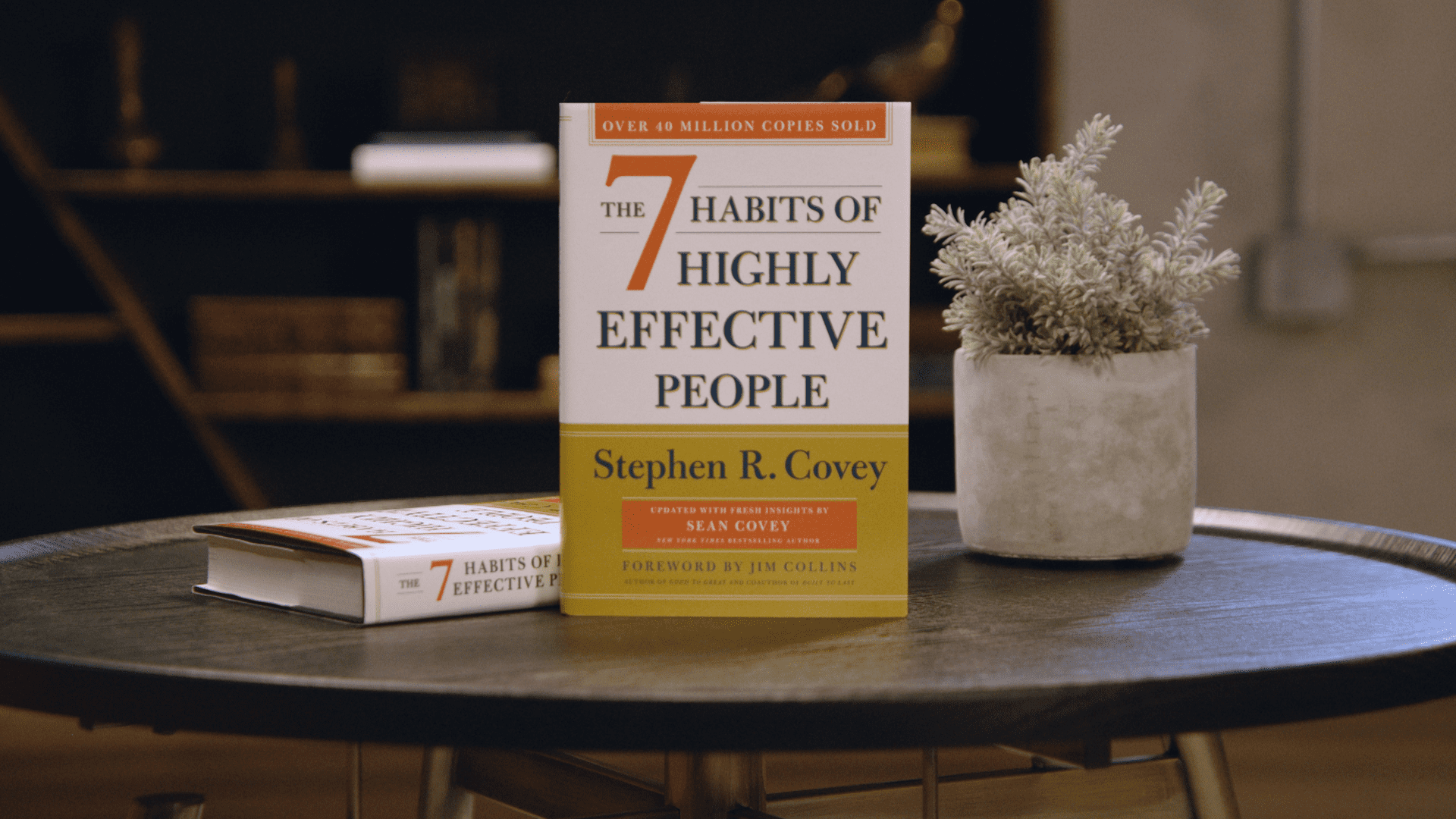
In his groundbreaking work, The Seven Habits of Highly Effective People, Stephen R. Covey presents a paradigm shift for personal and professional success. This comprehensive framework empowers individuals to manage their lives and interactions with others in a way that leads to fulfillment and lasting results. By embracing these habits, individuals can achieve greater productivity, build stronger relationships, and navigate life’s challenges with resilience and purpose.
Habit 1: Be Proactive
Take responsibility for your choices and actions.
Proactive individuals take ownership of their lives and choices, recognizing that they are ultimately responsible for their outcomes. They focus on the Circle of Influence – those areas of life that they can directly control – and avoid blaming external factors for their circumstances.
Control your language.
The language we use reflects our mindset and influences our behavior. Reactive language, such as “I can’t” or “I have to,” conveys a sense of helplessness and lack of control. Proactive language, on the other hand, empowers us to take ownership of our choices and make positive change.
Cultivate a circle of influence.
Surround yourself with supportive and like-minded people who encourage personal growth and progress. Join groups, attend workshops, and engage in activities that align with your values and goals.
More:
- Be responsible. Take ownership of your mistakes and learn from them.
- Be accountable. Keep your commitments and promises.
- Focus on solutions. Instead of dwelling on problems, concentrate on finding constructive solutions.
- Take initiative. Don’t wait for others to tell you what to do. Be proactive and take the initiative to make things happen.
Habit 2: Begin with the End in Mind
Define your personal mission and vision.
Establish a clear understanding of your values and goals to guide your decision-making and actions. Your personal mission statement should reflect your core beliefs, values, and aspirations.
Prioritize tasks based on importance and urgency.
Not all tasks are created equal. Quadrants II and III activities, such as planning, goal-setting, and building relationships, are essential for long-term success but often get neglected in favor of more urgent tasks.
Plan your week.
Organize your schedule around your priorities and goals to ensure effective use of time and energy. Break down large projects into smaller, manageable steps and allocate time in your schedule to work on them.
More:
- Create a personal mission statement. Write down your core values and goals to provide a roadmap for your life.
- Identify your roles. Define the different roles you play in life (e.g., parent, employee, friend) and establish goals for each role.
- Set goals. Establish specific, measurable, achievable, relevant, and time-bound goals to guide your actions.
- Develop a weekly plan. Plan your week in advance to ensure that important tasks are not neglected.
Habit 3: Put First Things First
Exercise Quadrant II time management.
Quadrant II activities, such as planning, goal-setting, and building relationships, are essential for long-term success but often get neglected in favor of more urgent tasks. Practice Quadrant II time management to ensure that these important activities receive the time and attention they deserve.
Delegate tasks to others when possible.
Delegating tasks to others can free up your time to focus on more important activities. Identify tasks that can be assigned to others and provide clear instructions and expectations.
Maintain integrity.
Adhere to your values and commitments, even when it’s difficult. Integrity is the foundation of trust and respect, and it is essential for building strong and lasting relationships.
More:
- Identify tasks that can be delegated. Determine which tasks can be assigned to others without compromising quality or results.
- Communicate clear expectations. Provide clear instructions and expectations to those you delegate to ensure they understand what is expected of them.
- Monitor progress. Regularly check in on the progress of delegated tasks to ensure they are being completed satisfactorily.
- Provide feedback. Offer constructive feedback and support to help others improve their performance.
Habit 4: Think Win-Win
Seek mutually beneficial solutions.
Focus on creating outcomes that benefit all parties involved in a negotiation or conflict. Win-win solutions are built on a foundation of mutual respect and understanding.
Practice win-win agreements.
Establish clear expectations and consequences to promote accountability and build trust. Win-win agreements ensure that all parties involved are satisfied with the outcome.
Develop empathy.
Understand the perspectives and needs of others to foster collaboration and cooperation. Empathy allows us to see the world through the eyes of others and find common ground.
More:
- Identify shared interests. Look for areas of agreement or shared interests to establish a foundation for collaboration.
- Explore creative solutions. Brainstorm and generate multiple options to find mutually beneficial solutions that meet the needs of all parties.
- Seek feedback. Regularly solicit feedback from others to ensure that you are on track and meeting their expectations.
Habit 5: Seek First to Understand, Then to Be Understood
Listen actively.
Pay attention to both verbal and nonverbal cues to fully comprehend the other person’s perspective. Active listening demonstrates that you value their thoughts and feelings and are genuinely interested in understanding their point of view.
Reflect and paraphrase.
Repeat and rephrase what you hear to demonstrate understanding and encourage further clarification. Reflecting and paraphrasing shows that you are paying attention and that you are trying to see the situation from their perspective.
Diagnose before prescribing.
Seek to understand the underlying causes of problems before offering solutions. Diagnose before prescribing to ensure that the solutions you offer are tailored to the specific needs of the situation.
More:
- Ask clarifying questions. Seek clarification on points that you do not understand to avoid misunderstandings and ensure accurate comprehension.
- Summarize the other person’s perspective. Restate what you have heard to demonstrate your understanding and provide an opportunity for correction or elaboration.
- Validate the other person’s feelings. Acknowledge and empathize with the other person’s emotions, even if you do not agree with their perspective.
Habit 6: Synergize
Value diversity.
Embrace the unique perspectives of others as a source of creativity and innovation. Diversity of thought and experience can lead to more innovative and effective solutions.
Seek Third Alternatives.
Explore creative solutions that combine the best elements of different viewpoints. Third Alternatives often lead to outcomes that are superior to the original proposals.
Foster trust.
Build a foundation of mutual respect and understanding to create a safe and supportive environment for collaboration. Trust is essential for effective teamwork and innovation.
More:
- Encourage brainstorming. Create a safe and supportive environment where all ideas are welcome and valued.
- Seek consensus. Work together to find solutions that everyone can agree on, taking into account the perspectives and needs of all parties involved.
- Celebrate successes. Recognize and celebrate the achievements of the team to build morale and foster a sense of accomplishment.
Habit 7: Sharpen the Saw
Renew physically.
Engage in regular exercise, proper nutrition, and sufficient rest to maintain physical well-being. A healthy body and mind are essential for effective performance and long-term success.
Renew spiritually.
Connect with your core values and principles through meditation, reflection, and time spent in nature. Spiritual renewal helps to develop a sense of purpose and meaning in life.
Renew mentally.
Expand your knowledge and skills through reading, writing, and continuous learning. Mental renewal keeps your mind sharp and adaptable in a rapidly changing world.
Renew socially/emotionally.
Nurture relationships, build strong networks, and engage in activities that provide emotional support and fulfillment. Strong relationships and a positive social and emotional life contribute to overall well-being and happiness.
More:
- Schedule time for self-care. Make time in your day for activities that nourish your physical, mental, and emotional well-being.
- Invest in personal development. Attend workshops, read books, and engage in activities that expand your knowledge and skills.
- Build a support system. Surround yourself with positive and supportive people who encourage your personal and professional growth.
Conclusions
The Seven Habits of Highly Effective People provides a comprehensive framework for personal and professional success. By embracing these habits, individuals can achieve greater productivity, build stronger relationships, and navigate life’s challenges with resilience and purpose.
Ultimately, the power of the Seven Habits lies in their ability to transform individuals from the inside out. By focusing on character and principles, rather than quick fixes or short-term gains, the Seven Habits help individuals develop the skills and mindset necessary to achieve true effectiveness and fulfillment in all areas of life. As individuals embrace these habits and make them a part of their daily routines, they can create positive change in their own lives and inspire others to do the same, leading to a more effective and harmonious world.




Leave a Reply