
Chapter 1: Introduction to Design Thinking
Definition of Design Thinking
Design thinking is an iterative human-centered problem-solving process that focuses on developing solutions that are desirable, feasible, and economically viable. It combines empathy, creativity, and critical thinking to understand the needs of users and create innovative solutions.
Design thinking is not a linear process, but rather an iterative one that involves multiple phases of understanding, observing, defining the point of view, ideating, prototyping, and testing. This iterative nature allows designers to continuously refine and improve their solutions based on feedback and insights from users.
Design Thinking Process
The design thinking process consists of six phases:
- 1. Understand: Explore the problem space, gather insights, and define the point of view.
- 2. Observe: Empathize with users and gain deep understanding through research methods (e.g., interviews, observations).
- 3. Define Point of View: Formulate a clear problem statement that reflects the needs of users and the context.
- 4. Ideate: Generate a wide range of creative solutions through brainstorming, sketching, and prototyping.
- 5. Prototype: Develop rough physical or digital models to test the feasibility and usability of the solutions.
- 6. Test: Gather feedback from users, evaluate the prototype, and iterate based on results.
Chapter 2: The Design Thinking Toolbox
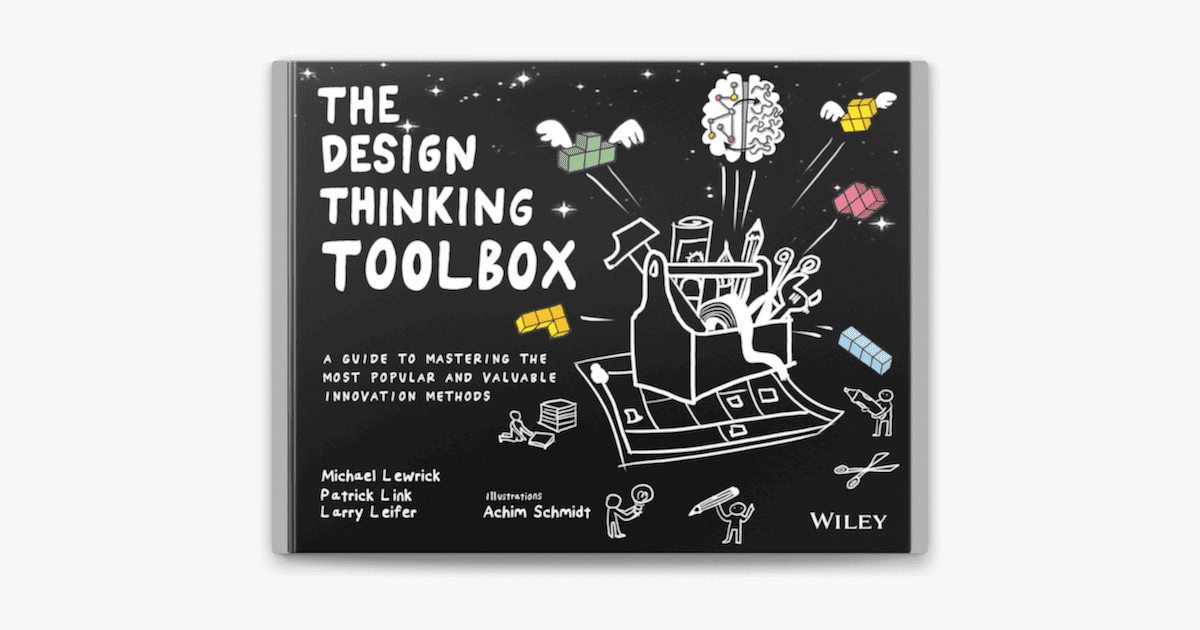
The Design Thinking Toolbox is a collection of methods and tools that support the design thinking process. These tools facilitate problem-solving, idea generation, prototyping, and user testing.
Phase 1: Understand
Interview for Empathy
Interviews for empathy allow designers to deeply understand user needs and motivations through guided interviews. These interviews involve asking open-ended questions and actively listening to the user’s responses. Designers may also use techniques such as “asking why” to explore underlying causes and motivations.
AEIOU Framework
The AEIOU Framework is a structured observation tool that helps designers capture key aspects of the user experience. The framework consists of nine dimensions: space, actors, activities, objects, acts, events, time, goals, and feelings. By observing users in their natural environment and capturing data in each of these dimensions, designers can gain a comprehensive understanding of the user’s experience.
Stakeholder Map
A stakeholder map is a visual representation of the interests, power structures, and relationships among stakeholders involved in a problem or solution. Stakeholders can include users, customers, employees, partners, and competitors. By understanding the different perspectives and interests of stakeholders, designers can develop solutions that are aligned with their needs.
Phase 2: Observe
Emotional Response Cards
Emotional response cards are a qualitative tool that elicits emotional responses from users. These cards typically contain a range of emotions, such as happy, sad, frustrated, and excited. By asking users to select cards that represent their emotional reactions to a product or service, designers can gain insights into the user’s subjective experience.
Empathy Map
An empathy map is a powerful tool that synthesizes user research and empathy insights into a visual representation of the user’s perspective. The empathy map consists of four quadrants: what the user says, what the user does, what the user thinks and feels, and what the user’s pain points are. By capturing insights in each of these quadrants, designers can develop a deep understanding of the user’s needs, motivations, and frustrations.
Persona
A persona is a fictional character that represents a typical user. Personas are developed based on user research and help designers stay focused on the user’s needs throughout the design process. By creating a persona, designers can better understand the user’s background, goals, motivations, and pain points.
Phase 3: Define Point of View
HMW Questions
HMW (How might we…) questions are a structured approach to formulating a problem statement that focuses on “How might we…” achieve a desired outcome. By phrasing the problem statement in this way, designers can generate a wide range of creative solutions that address the underlying need.
Trend Analysis
Trend analysis is a method for identifying and analyzing trends that may influence the problem or solution. By understanding emerging trends, designers can develop solutions that are relevant and aligned with the future needs of users.
Chapter 3: Reflection, Improvement, and Implementation
Retrospective Sailboat
A retrospective sailboat is a collaborative reflection tool that encourages teams to identify strengths, weaknesses, and areas for improvement. The sailboat template consists of three sections: what went well, what could be improved, and what we learned. By reflecting on the design thinking process and identifying areas for improvement, teams can continuously improve their approach and outcomes.
Elevator Pitch
An elevator pitch is a brief and impactful presentation that summarizes the problem, solution, and value proposition of a project. Elevator pitches are typically used to quickly and effectively communicate the key elements of a project to stakeholders or potential investors.
Lean Canvas
A lean canvas is a business model template that helps teams visualize and iterate on their ideas. The lean canvas consists of nine building blocks: problem, solution, key metrics, unique value proposition, unfair advantage, channels, customer segments, cost structure, and revenue streams. By filling out the lean canvas, teams can quickly develop a clear and concise overview of their business idea.
Road Map for Implementation
A road map for implementation is a plan that outlines the steps and timelines for implementing a solution. The road map should include key milestones, deliverables, and dependencies. By creating a detailed road map, teams can ensure that the implementation process is smooth and efficient.
Chapter 4: Applications of Design Thinking
Intrapreneurship
Intrapreneurship is the use of design thinking within an organization to promote innovation and solve internal problems or create new products or services. Intrapreneurs are employees who are empowered to think and act like entrepreneurs within a corporate environment.
Young Talent Promotion
The involvement of young people in design thinking projects can help develop their problem-solving skills and prepare them for the future workforce. By working on real-world problems and developing innovative solutions, young people can gain valuable experience and skills that will benefit them in their future careers.
Chapter 5: Conclusion
Benefits of Design Thinking
Design thinking offers numerous benefits, including:
- Encouraging collaboration and interdisciplinary teamwork
- Promoting empathy and a deep understanding of user needs
- Fostering creativity and leading to innovative solutions
- Enabling rapid prototyping and testing, reducing risks and improving the quality of solutions
- Supporting iterative design and continuous improvement
Chapter 6: Case Studies
Case Study 1: Swisscom’s “Kickbox” Program
Swisscom, a leading telecommunications company in Switzerland, implemented a design thinking program called “Kickbox” to encourage employees to develop and pitch innovative ideas. The program provides employees with the tools and resources to transform their ideas into real-world solutions.
Through the Kickbox program, Swisscom has generated over 1,000 ideas and implemented over 100 new products and services. The program has also helped to foster a culture of innovation and entrepreneurship within the company.
Case Study 2: Superloop Innovation’s Collaboration with “Young Innovators”
Superloop Innovation, a non-profit organization, partnered with “Young Innovators” to address social challenges through design thinking. Young Innovators are young adults who are trained in design thinking and other innovation methodologies.
Through this collaboration, Superloop Innovation and Young Innovators have developed innovative solutions to social problems such as food waste, homelessness, and access to education. The collaboration has also helped to empower young people and prepare them for the future workforce.
Chapter 7: Conclusion
Design thinking is a powerful problem-solving approach that can be applied to a wide range of challenges. By combining empathy, creativity, and critical thinking, design thinking can help us develop innovative solutions that meet the needs of users and create positive change in the world.
The Design Thinking Toolbox provides a comprehensive set of methods and tools that can support the design thinking process. By using the tools and techniques described in this book, you can effectively understand problems, generate creative solutions, and develop innovative products and services.
Whether you are a designer, an entrepreneur, a business leader, or simply someone who wants to make a difference in the world, design thinking can help you achieve your goals.




Leave a Reply