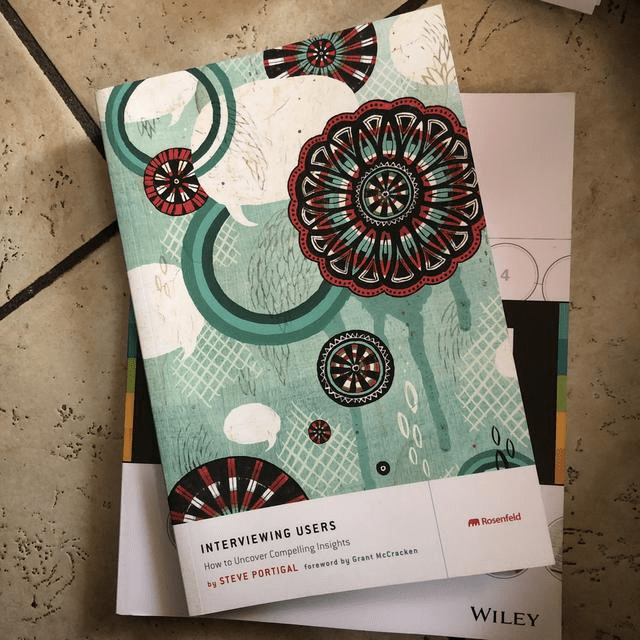

Interviewing Users: Complete Summary of Steve Portigal’s Approach to Uncovering Compelling Insights
Introduction: What This Book Is About
“Interviewing Users: How to Uncover Compelling Insights” by Steve Portigal is a practical guide for anyone who talks to customers to improve their products and services. Portigal, a renowned user researcher and founder of Portigal Consulting, shares his extensive experience to help readers gather more accurate and nuanced information from users. The book emphasizes that effective interviewing is a skill that goes far beyond casual conversation, requiring deliberate choices and specific techniques to uncover truly valuable insights.
This book is designed for a wide audience, including designers, engineers, strategists, and marketers—essentially anyone who needs to connect with “real people” to inform their work. It provides detailed best practices for planning and executing successful user research studies, encouraging readers to reflect on their own biases and points of view. By following Portigal’s guidance, readers will learn to move beyond superficial interactions and gather the deep understanding necessary to drive design, innovation, and business growth.
Portigal dedicates the book to his mother, Sharna Portigal, who taught him to ask questions, highlighting the foundational nature of inquiry in his approach. The book promises to equip readers with the tools to conduct impactful interviews that not only inform design but also inspire it, fostering a more user-centered approach within organizations.
Chapter 1: The Importance of Interviewing in Design
User Insight in the Design Process: Beyond Scooping for Needs
This chapter establishes the critical role of user insight in the design and development process. User research, often called site visits, contextual research, design research, or ethnography, has become a norm in many organizations. The core objective is to gather information about users to support the organization in creating better products, services, and experiences. This involves deeply studying people, understanding both their behaviors and the meaning behind them, making sense of the data through inference and analysis, and using these insights to inform solutions. The book challenges the simplistic “scooping model” of user research, where needs are merely collected.
The Problem with the Scooping Model: Understanding Satisficing
Portigal argues that the idea of simply “scooping” user needs is a semi-mythical model. He explains that users don’t always articulate their needs directly, and insights don’t just “leap out.” A significant concept introduced is satisficing, coined by Herbert Simon. This refers to people’s tolerance for “good enough” solutions, meaning they often find the effort to solve a problem to be greater than the annoyance of the problem itself. Designers might observe a “pain point” that isn’t actually painful enough for users to actively seek a solution, leading to misinterpretations if researchers only look for explicit requests.
Interviewing for Reframes: Shifting Perspectives for Innovation
Beyond just gathering data, interviewing is powerful for driving reframes. These are crucial shifts in perspective that turn an initial problem on its head, leading to significant, previously unrealized possibilities for design and innovation. For example, a study on iPod usage found that while users had minor “in-environment” needs, the real challenge was moving between environments (e.g., from alone to social, stationary to mobile), reframing the problem from discrete features to seamless transitions. Such reframes help understand where solutions might succeed or fail.
When Interviewing Adds Value: Different Stages of Development
User interviewing is valuable at various points in the development process, not just at the beginning. It can be used:
- To identify new opportunities before design concepts are formed.
- To refine design hypotheses when initial ideas for what to design exist.
- To redesign and relaunch existing products and services by leveraging market history.
Interviewing excels at depth over sample size, making it unsuitable for statistically significant data, but ideal for qualitative understanding. It can be combined with other techniques like quantitative studies to build a comprehensive understanding.
Interviewing as a Learnable Skill: Beyond Casual Conversation
Portigal emphasizes that interviewing is a special skill that takes work to develop, unlike casual conversation. In everyday talk, people often strive to talk at least 50% of the time and about themselves. However, great interviewers make deliberate, specific choices about what to say, when to say it, how to say it, and when to say nothing. This is fundamentally different from normal conversation and can be challenging to learn precisely because it resembles an everyday act. Mastering this skill involves overriding social defaults.
The Impact of Interviewing: Fostering Empathy and Organizational Shifts
Interviewing creates a shared, often galvanizing experience for the product development team, including researchers, designers, engineers, marketers, and product management. Beyond collecting information, it leads to transformations, primarily an increase in empathy. Team members begin to see “the user” as a real, complex person, leading to a deeper understanding of customer experiences and emotions. This increased capacity for empathy is necessary for changing organizational culture and helps team members become better advocates for customers and research findings. These benefits, which are crucial for long-term organizational success, often come “for free” (or nearly so).
Chapter 2: A Framework for Interviewing
Checking Your Worldview at the Door: Cultivating Bland Curiosity
Portigal’s core operating principle for interviewing is to check your worldview at the door. As a researcher, the responsibility is to find out what’s truly happening, without being invested in a particular outcome or a specific set of answers. He describes this mindset as “bland curiosity,” a broad hunger to learn from the participant without pre-existing strong expectations. While clients and colleagues may have deeply held beliefs, the interviewer must set these aside to genuinely absorb new insights.
The Brain Dump: Externalizing Implicit Assumptions
To effectively set aside personal biases, Portigal recommends convening a brain dump at the project’s beginning. This involves getting everyone’s assumptions, expectations, closely-held beliefs, perspectives, and hypotheses out on the table. This process can be done in real-time with a whiteboard or asynchronously on a wiki. The goal is not consensus, but to surface what is implicit and allow contradictions to emerge. By externalizing these internal viewpoints, they can be set aside, freeing the team to see new things in the field. Anonymizing input can help participants feel comfortable expressing themselves without fear of being “wrong.”
Making the Interview About the Interview: Immediate Objectives
Another transitional ritual is to make a small declaration to yourself and your fellow fieldworkers just before an interview begins. This means setting aside the larger corporate initiative goals (e.g., “identify next-gen opportunities for Q3 roadmap”) and focusing on the immediate objective for that specific session. This could be as simple as “learning about Paul and how he uses his smartphone.” This tangible confirmation of the immediate goal helps the interviewer stay present and focused during the session.
Embracing How Other People See the World: Being a Hollow Vessel
Once personal worldviews are purged, the interviewer becomes a “hollow vessel waiting to be filled with insights.” This isn’t passive; it’s an active, deliberate state of willingness and hunger to hear the participant’s perspective. To truly embrace their world, the interviewer must physically be in their world. This means going where the people are – their homes, offices, cars, or parks – rather than asking them to come to a neutral facility. The goal is to learn from their environment, where the relevant artifacts and behaviors are rooted.
Avoiding Personal Affiliation: Leaving Company Logos at Home
To minimize the interviewer’s influence on the participant, it’s crucial to avoid bringing your world into theirs. This includes leaving company-logo clothing and accessories at home. Displaying affiliation, while appropriate in some social settings, can shift the dynamic of the interview, making participants less open or feeling tested. The goal is to appear as neutral as possible to foster a more natural and candid interaction.
Asking Questions You Think You Know the Answer To: Uncovering Nuance
An important aspect of embracing the participant’s worldview is to be ready to ask questions for which you think you know the answer. Even if you have a strong suspicion based on screening or earlier comments, asking for details anyway can uncover interesting tidbits or nuanced perspectives. This approach also reinforces the idea that the participant is the expert and the interviewer is the novice, which serves as a powerful invitation for the participant to share more deeply. The discomfort of asking seemingly obvious questions should be swallowed for the sake of potential discoveries.
Nip Distractions in the Bud: Full Engagement in the Moment
Tactically, it’s essential for interviewers to eliminate personal distractions before arriving. This means taking care of food, drink, and restroom needs in advance. Prioritizing a pre-interview briefing with colleagues at a nearby location (like a Starbucks) allows time to acclimate, review the participant’s profile, and address personal needs. Crucially, mobile phones should be silenced, and no calls, texts, or emails should be checked during the interview. Full engagement with the participant is paramount, as multitasking during an interview is detrimental to building rapport and capturing insights.
Building Rapport: The Foundation for Great Interviews
Building rapport is critical for successful interviews. Portigal describes leaving interviews feeling “energized and exhausted,” having made an intense connection. This connection is what makes interviews “great.” It’s the interviewer’s job to develop this rapport, even with participants who are initially visibly uncomfortable or disinterested. While recruiting articulate participants helps, the responsibility for creating connection lies with the interviewer, requiring patience and effort.
Strategic Social Graces and Self-Disclosure: Navigating the Interaction
Interviewers should be selective about social graces. Participants often map the interview experience onto familiar social scenarios like “having company.” Accepting offers of drinks, for example, can be essential in acknowledging their social expectations and thawing any initial hostility. While small talk is acceptable initially to settle in, it shouldn’t dwell or transition into interview content prematurely. Similarly, be selective when talking about yourself. While connecting with participants is important, avoid sharing common interests (e.g., “me too!”) unless it actively gives the other person permission to share something they might otherwise hold back. The interview is about the participant, not the interviewer.
Working Toward the Tipping Point: From Questions to Stories
There’s often a visceral “tipping point” in an interview where the exchange shifts from a question-and-answer format to a question-story setup. Stories are where the richest insights lie, and the objective is to reach this point in every interview. This shift is tangible, and while its timing is unpredictable, interviewers must be patient during the initial Q&A phase, trusting that their rapport-building efforts will lead to participants opening up and sharing more narrative content.
Acknowledging the Unusual: Leveraging the Constructed Nature
It’s important to acknowledge that the interview is inherently “something unusual” for the participant. While participants might frame it as a “social call” or “vendor meeting,” it’s not a truly naturalistic observation. Interviewers should leverage this constructed nature by framing questions with phrases like “What I want to learn today is…” This explicitly reminds both parties of their different roles in this uncommon interaction, empowering the interviewer to ask detailed questions about mundane topics without it feeling out of place.
Listening by Asking Questions: Demonstrating Engagement
Listening is the most effective way to build rapport. It tangibly demonstrates to participants that what they say is important. Beyond simply not interrupting, interviewers demonstrate listening through the questions they ask. Each question should ideally be a follow-up to a previous answer. If changing topics, the interviewer should signal transitions clearly (e.g., “Earlier, you told us that…” or “Now I’d like to move on to a totally different topic.”). This shows the participant that the interviewer is paying attention, remembering details, and genuinely interested.
Chapter 3: Getting Ready to Conduct Your Interviews
Establishing Your Objectives: The Challenging First Step
Clarifying the objectives is an extremely challenging but crucial aspect of any research project. Objectives often evolve throughout the project lifecycle, from initial conversations to the delivery of results. It’s essential to clarify early on if proposed objectives (e.g., “how much would participants pay for a product that doesn’t exist yet?”) are a good fit for contextual research methods, and to communicate the limitations of the methodology to stakeholders.
Stakeholder Interviews: Uncovering Beliefs and Concerns
To establish objectives, the first interviews should be with stakeholders – typically the consumers of the research findings. Portigal recommends interviewing 6–8 stakeholders individually for 30 to 60 minutes. These conversations aim to:
- Understand their history with the organization and the research topic.
- Ascertain their current beliefs about the customer, user, and proposed solutions.
- Identify any organizational barriers to be mindful of.
- Pinpoint business objectives and specific questions the research should answer.
- Address concerns or uncertainty around the methodology.
Reviewing existing materials like previous reports or prototypes is also important to inform the research goals.
Identifying Participants: Who to Interview and Why It Matters
Finding participants (recruiting) is a crucial preparatory step that should not be treated casually. The first step is to identify key characteristics for your sample. This involves defining criteria based more on behavior (e.g., “active users of blogging software”) than attitude, and considering different parts of a transaction (e.g., both blog writers and readers). This process can surface disconnects among stakeholders, highlighting areas where hypotheses masquerade as facts. Recruiting itself can be data, revealing important insights if it proves unexpectedly challenging to find certain types of users.
The Screener Document: Qualifying Potential Participants
Based on the identified criteria, a screener document is created. This is a survey-like tool used to qualify potential participants, including a mix of question types (yes/no, multiple choice, open-ended) to direct the flow. Once finalized, participants can be found through existing customer lists, sales staff introductions, or, most commonly for consumer research, an external market research recruiting agency. This process is time-consuming, often requiring a week or more for screener alignment and about two weeks for agency recruitment.
Working with a Recruiting Agency: Best Practices for Success
When working with a recruiting agency, Portigal recommends using full-service market research agencies that have their own focus group facilities. Ideal agencies provide:
- A close reading of the screener to identify missing elements or unclear points.
- Daily updates on recruiting progress.
- Identification of criteria that are commonly eliminating good participants, allowing for adjustments.
- Establishment of initial rapport with participants, making them comfortable and enthusiastic.
- Support in creating a comfortable schedule, accounting for travel time.
For U.S. consumers, agencies typically charge150–150–150–225 per participant (separate from the incentive paid to the participant).
Creating the Field Guide: A Blueprint for Flexibility
The field guide (also called an interview guide or protocol) is a detailed document outlining what will happen in the interview. This preparatory step is essential because it prepares interviewers to be flexible even though interviews rarely unfold exactly as planned. It also ensures alignment across the team, especially when multiple interviewers are in the field. The guide translates research goals into specific questions and outlines activities, tasks, and logistics.
Structure of a Field Guide: From Introduction to Wrap-Up
A typical field guide flows through several sections:
- Introduction and Participant Background: A few minutes for logistics, setting expectations (e.g., confirming timing like 90 minutes), getting releases signed, and ice-breaking questions about the participant’s family or job.
- The Main Body: The bulk of the interview, with subsections for different topics, exercises, and activities (e.g., mapping, concept reactions, demonstrations).
- Projection/Dream Questions: Audacious questions near the end, asking participants to envision the future (e.g., “If we came back in five years, what would be different?”).
- Wrap Up: Basic questions (e.g., “Did we miss anything?”), thanking the participant, and giving the incentive.
It’s crucial to assign durations to sections to ensure everything can be covered and to write most questions as they might be asked for a more realistic plan.
Shot List and Sharing the Field Guide: Visual Planning and Team Alignment
An appendix to the field guide should include a shot list outlining desired photographs (e.g., head shot of participant, close-up of equipment, establishing shots). This helps capture visual documentation. When sharing the field guide with the team, it’s important to clarify that it’s “not a script” but a tool for preparation, empowering flexibility in the field. Reviewers should focus on identifying missing topic areas or major inaccuracies, not proofreading exact language, as the guide is a living document.
Scheduling and Travel: Prioritizing Quality Over Quantity
When scheduling interviews, avoid being overly ambitious. Unlike back-to-back focus groups, field interviews require time for reflection, adjustments, travel between locations, and personal breaks. Two interviews per day is often reasonable, depending on location and interview length. For travel, schedule interviews geographically close if local, and allow ample time for travel delays (e.g., late planes) or international time zone adjustments (at least a day) to ensure the interviewer can be fully present and focused.
Participant Releases and NDAs: Legal and Ethical Considerations
A release form is a crucial legal document that participants sign, clarifying rights for both the interviewee and the organization. It typically covers:
- Consent: Voluntary participation and the right to stop at any time.
- Incentive: Acknowledging payment without implying employment.
- Model release: Permission for images and video to be used without approval rights.
- Non-disclosure (NDA): Obligation not to reveal confidential concepts seen during the study.
It’s vital to work with legal departments to balance legal efficacy with clear, “regular-folks lingo.” Hand the forms over calmly at the beginning, stating “Before we get started, we’ve just got some paperwork for you,” and allow the participant to read it quietly without excessive explanation or small talk that delves into interview content before consent is signed and recording begins.
Incentives: Demonstrating Sincere Appreciation
The incentive is given as an “enthusiastically demonstrative thank you,” not compensation. The amount varies by location and participant type. Recruiting agencies can advise on rates and handle payments. Portigal prefers immediate cash in an envelope for its directness and warmth, although this requires careful consideration of the amount of cash carried. For professionals, monetary incentives may be inappropriate, so alternatives like gift cards, charitable donations, or small, high-quality branded items (e.g., a reusable grocery bag with a water bottle) can be used. Always ensure participants know the incentive details upfront.
Chapter 4: More Than Just Asking Questions
Beyond Verbal Summaries: Showing and Telling for Deeper Insights
While the book’s title emphasizes interviewing, successful research extends “more than just interviewing.” Interviewing is the core, but it acts as a platform for integrating a broader set of techniques. Instead of just asking participants to verbally summarize a behavior (e.g., “What is your process for updating your playlists?”), which might reveal feelings or memorable steps, asking them to “show me how you update your playlists” stages an activity. This allows direct observation of specific steps, revealing crucial contextual and emotional details that verbal descriptions alone cannot capture.
Observing and Participating: Unpacking Real-World Behavior
Asking participants to “show me” directly reveals their process in context, offering more accurate information than recall. A variation involves participant observation, where the interviewer actively participates in the activity (e.g., “Can you show me how I should prepare coffee?”). This positions the participant as the “teacher” or expert, making it easier for them to articulate details. Sometimes, arranging to be present when an activity naturally occurs (e.g., morning coffee prep) provides a rich view of the broader context, including other devices, people, and preceding/succeeding actions.
Role-Playing and Participatory Design: Uncovering Implicit Needs
For interactions between people or to envision future solutions, role-playing can be highly effective. Asking a participant to act out how an interaction “should” work (e.g., a customer service call) can uncover implicit desires and desired behaviors that are difficult to articulate directly. Participatory design takes this further by giving participants tools (e.g., blank mobile screens for drawing UI, physical objects as proxies for form factors) to visually demonstrate their ideal solutions. This helps to elicit needs through the proxy of solutions, reassuring designers that users aren’t dictating specific designs but rather expressing underlying requirements (e.g., a “handle” on a product means it needs to be easily movable).
Bringing the Tools: Facilitating Deeper Discussion with Prepared Materials
To enhance interviews, interviewers should bring prepared physical materials. These tools serve as interactive and tangible focal points for discussions. They shift abstract concepts into concrete artifacts, enabling more detailed conversations and providing documentation that can be taken away for analysis.
Mapping: Visualizing Abstract Concepts and Relationships
Mapping is a powerful technique that transforms abstract concepts (like workflows, relationships, or physical spaces) into tangible representations. For example, architects might map their workflow using sticky notes on butcher paper, or tech-savvy consumers might draw maps of their homes showing where technology is located and how it’s connected. The interviewer facilitates this process, probing and prompting. The map becomes a shared understanding during the interview and a crucial element for post-fieldwork analysis and synthesis, helping to relate pertinent details to colleagues.
Reacting to Concepts: Beyond Simple “Testing” to Uncover Design Criteria
When presenting concepts, the goal is not merely “concept testing” but rather to uncover design criteria for future solutions. Concepts don’t need to be viable solutions; they can be “provocative” stimuli (e.g., a ridiculously tiny mobile phone mock-up) used to explore the edges of factors influencing desirability or usefulness. The interviewer should present concepts neutrally (e.g., “Here’s a whole bunch of early ideas that I was asked to show you”), avoiding language that implies personal ownership or seeks affirmation. The focus is on open-ended questions like “What do you think?” to elicit natural reactions and prioritize participant feedback.
Handling Participant Questions About Concepts: The Interviewer Sidestep
When participants ask direct questions about concepts (e.g., “Will this be backward-compatible?” or “How much will it cost?”), interviewers must not answer them. This is a critical point, as clients often struggle with this. Instead, use the “Interviewer Sidestep” by turning the question back to the participant (e.g., “Is that important to you?” or “What would you expect it to be?”). Answering these questions shifts the dynamic, turning the interviewer into an expert and the session into an expensive tech support call.
Concept Formats: Aligning Fidelity with Research Questions
There’s no limit to concept formats, but they should always be created for the purpose of showing to users. Portigal urges clients to use lower, rather than higher, fidelity prototypes earlier in the process (for idea appeal) and higher fidelity later (for specific implementation verification). Different dimensions of fidelity exist (e.g., “looks like” vs. “works like”). Examples include:
- Storyboards: Multi-panel illustrations depicting scenarios.
- Physical mock-ups: Tangible representations of products (e.g., foam core models, early manufacturing prototypes).
- Wireframes: Simplified on-screen interfaces (printed, sketched, or interactive simulations).
The key is to align the concept representation with the research question to elicit the most relevant insights.
Reactions to Other Stimuli: Probing Underlying Beliefs
Beyond concepts, other stimuli can help probe people’s underlying belief structures, expectations, or motivations. These tools provide interactive, tangible ways for participants to express themselves:
- Casual card sort: Unlike rigorous information architecture card sorts, this prompts discussion about a large set of items (e.g., online services, purchased items). Participants talk about relevant items, prompting stories, and cards can be used to confirm mental models.
- Images that resonate: A diverse set of images (stock photos, glamour shots, nature) used to evoke emotional reactions. Participants select images that represent ideal experiences or aspirations, and the interviewer asks why those images were chosen, uncovering surprising insights.
Homework for Participants: Priming and Documenting Over Time
Often, the most interesting behaviors happen over days or weeks. For these, assign homework assignments to participants. This can involve:
- Saving artifacts: Asking participants to save postal mail or empty wine bottles to discuss during the interview, providing real-world context.
- Priming participants: Asking them to log mobile phone usage, take screenshots, or document banking activities. This helps them become more introspective about topics they might not usually pay attention to, leading to better follow-up conversations. This self-documentation (journaling or diary study) produces curious instances and weak signals about behavior patterns.
- Accelerating product usage: Providing a product with a workbook of assignments to guide participants through different features or use cases over a period (e.g., two weeks) before a follow-up interview. This creates structure and motivation for thorough exploration.
Chapter 5: Key Stages of the Interview
Interview Stages: A Model Between Descriptive and Predictive
Portigal presents a model of interview stages that is somewhere between descriptive and predictive, similar to the Kübler-Ross model for grief or a screenwriter’s beat sheet. While interviews are wonderfully unique, they tend to follow a consistent pattern. Interviewers won’t know the exact timing of each stage but should be familiar with them to prepare specific tactical responses. These stages become second nature with experience.
Roles for the Field Team: The Ideal Size and Managing Participation
The ideal size for a field team is two people: one lead interviewer and one backup. More than two can significantly shift the power dynamic and make participants awkward, especially in a home environment. Portigal is resistant to teams larger than three. For colleagues joining fieldwork, it’s crucial they understand their roles and act in concert. A “guide to participating in fieldwork” (see pages 70-71) is shared, emphasizing that one person is the lead interviewer, active listening, note-taking, holding questions, and respecting the participant as the expert.
Managing a Less-Experienced Second Interviewer: Maintaining Flow
When interviewing with a less-experienced colleague, the lead interviewer’s job is to maintain control over the flow of the interview while facilitating a successful experience for the attendee. Techniques include:
- Providing sticky notes for the attendee to write down questions they think of.
- Setting aside time at the end of the interview, or within each topic area, for their questions.
- Allowing the attendee to suggest a topic to the lead interviewer, rather than formulating the question directly, giving the lead control to integrate or defer.
- With a peer, the goal is fluidity, with eye contact signaling when the colleague wants to ask a question after the current thread is complete.
Crossing the Threshold: The First Moments On-Site
The initial moments of an on-site interview are often marked by mild confusion for participants. The interviewer should have a clear opening statement, like “Hi, I’m Steve. I’m here for the interview.” Identify yourself in a way they recognize (e.g., the recruiting firm’s name). Introduce the team and offer to take off shoes if in a home. Gently take charge by asking where to start the session and arranging seating for optimal engagement, ensuring all interviewers can maintain eye contact with the participant. Silence mobile phones and resist small talk that turns into interview content before consent forms are signed and recording begins.
Restating Objectives: Setting the Interview’s Purpose and Tone
This is where the interview truly begins. Thank the participant and state the purpose at a high level, using their terminology. For example, “We’re working for a technology company, and we’re talking to people about how they use their laptops.” Acknowledge the recruiting process and give a thumbnail outline of the session (e.g., “We’ll take about 90 minutes… Let’s start with some discussion, then we’ve got something to show you.”). This sets expectations and helps manage the flow. Politely defer participant questions about the study until the end if they would sidetrack the beginning.
The Kick-Off Question: Starting the Conversation Naturally
The kick-off question is a transitional moment into the body of the interview. It should be a simple, broad question to establish context, like “Maybe introduce yourself and tell us about what your job is here?” The key is to start generally, not too specifically, and to signal the shift into active questioning mode with phrases like “So, to start…” This allows for a natural flow as the interviewer will follow up with more specific probes.
Accepting the Awkwardness: Patience in Participant Discomfort
Interviewers will encounter uncomfortable participants who are reticent or give clipped responses. This discomfort might manifest as stiff posture or vague answers like “you know, just regular.” The interviewer’s job is to accept this awkwardness as a feeling, not a signal to stop. Instead, be patient and provide plenty of ways for the participant to succeed by asking easy, factual, straightforward questions. Avoid challenging questions or props at this stage. Your own comfort (or discomfort) will influence the tone, so remain calm and focused on active listening and appreciation.
The Tipping Point: When Answers Become Stories
Often, there’s a “tipping point” in the interview where the participant shifts from giving short, direct answers to telling stories. This indicates a high level of rapport has been achieved, and the tenor of the exchange deepens. Stories are where the richest insights lie. While the timing is unpredictable, the interviewer should continue with their established methods to build rapport, as the shift from short answers to narratives may occur gradually.
Reflection and Projection: Deepening Insights at the Interview’s End
As the interview progresses and rapport deepens, the participant often reaches a stage of reflection and projection. Having spent time immersed in the topic, they begin to think about the big picture, offering sweeping statements about themselves, their goals, dreams, past, and future. This section often generates the most inspiring insights and phrases that the field team will use in analysis. While these projections aren’t always accurate predictions, they reveal the participant’s underlying desires and frameworks.
The Soft Close: Capturing Insights Even as You Depart
The end of the interview can be a “soft close.” Even after thanking the participant, handing over the incentive, and packing up, the “doorknob phenomenon” may occur, where crucial information is revealed just as the patient/participant is about to leave. It’s vital to keep recording devices on until fully departed. Interviewers should maintain “interview mode” – eyes and brain active – to catch any last-minute insights or opportunities to ask about something new in the environment. Resist the urge to mentally check out, as these final moments can yield invaluable data.
Chapter 6: How to Ask Questions
Letting Go of the Guide: Embracing Flexibility Over Script
Upon entering the field, interviewers should set aside the printed field guide. It’s not a script but a reference. Leading an interview successfully means relying on intuition and adaptability, referring to the guide only when stuck. The interview rarely unfolds as anticipated, and relying too heavily on the guide can prevent leveraging new opportunities. Novice interviewers might lean more on the guide initially, but the goal is to improvise while maintaining the ability to return to specific topics.
Silence Defeats Awkwardness: The Power of Pauses
After asking a question, be silent. This is tricky for novice interviewers who tend to fill silence due to nervousness, often by stretching questions or suggesting answers. Instead, ask a concise question and let it stand. Use silence as a mantra to calm and clear your mind. After the participant answers, continue to be silent for another beat. People often speak in paragraphs and need permission to continue to the next thought. This “active silence” allows them to flesh out their answers and reveal deeper insights, as seen in Werner Herzog’s “Grizzly Man” example.
The Skype Effect: Aligning Pacing and Rhythm
Interviewers are susceptible to the “Skype effect,” where small delays in conversation (real or perceived) lead to out-of-sync interruptions. This also happens in person due to different natural rhythms. There’s no magic fix, but being mindful of the out-of-sync phenomenon and deliberately slowing down can help. The goal is to align the interviewer’s pacing with the participant’s to ensure smooth conversational flow and avoid inadvertently cutting off valuable responses.
Managing the Flow: Signalling Transitions
While most of an interview can unfold naturally from the kick-off question, interviewers need to deliberately manage the flow. When a topic runs out of steam or a new area of interest needs to be explored, signal your lane changes explicitly. Instead of abruptly jumping to a new question, preface it with transitional words like “Okay, this is great. I’m just going to shift direction here,” or “Let’s go back to something else you said…” This acknowledges the previous discussion and smoothly guides the conversation to the next topic, making the interaction feel more conversational than interrogatory.
Getting to Even More of the Answer: Probing Beyond Initial Responses
Interviewers rarely get the full answer to a question with a single utterance. It requires a series of questions to deeply probe the topic. Participants interpret questions in their own way, and it’s the interviewer’s role to help them provide the specific information needed. Interviewers must be vigilant to discern if the participant understood the intended meaning of the question. If the participant’s interpretation leads to new, valuable insights, follow that path. Otherwise, gently redirect when appropriate.
A Palette of Question Types: Tools for Deeper Inquiry
Interviewers need a broad set of question types to encourage participants to share deeply. These include:
- Questions that gather context and collect details: “Describe a typical workday,” “How many files…?”, “What was the last movie…?”, “Tell me about a time when…”, “What are all the different apps…?”, “How do you work with new vendors?”, “Who do the people in that department report to?”
- Questions that probe what’s been unsaid: “When you refer to ‘that,’…”, “Why do you call it the bat cave?”, “Why do you laugh when you mention Best Buy?”, “Why do you think she hasn’t?”, “Can you tell me what that situation was?”, “Some people have very negative feelings… What is your take?”, “How would you explain…to me…?”, “If you had to ask your daughter…how would you explain it to her?”
- Questions that create contrasts: “What’s the difference between…?”, “Do the other coaches also do it that way?”, “How have your family photo activities changed in the past five years? How do you think they will be different five years from now?” (The last helps envision possibilities beyond incremental change).
Managing the Exploding Questions Tree: Prioritization and Focus
During an interview, the interviewer’s brain manages an “exploding questions tree,” where each participant response generates multiple new potential follow-up questions. Since time is linear, interviewers must cope with this complexity by:
- Waiting patiently for threads to reappear organically.
- Jotting quick notes on the field guide to remember topics to return to.
- Prioritizing based on research objectives, choosing topics most likely to yield insights.
- Triaging based on what makes the best follow-up to demonstrate listening and build rapport.
- Returning to a topic later by referencing a previous statement to establish continuity. This intensive mental state can lead to “flow,” a feeling of energized focus where the interviewer feels calmly in control despite the complexity.
Embracing Your Participant’s Worldview: Using Their Language
A key principle is to embrace how participants see their world, which extends to using their language and terminology, even if it’s “incorrect” from a technical standpoint. Portigal recalls a client correcting a participant’s pronunciation of “TiVo” as “Tye-vo,” which immediately lowered the participant’s status and shifted the power dynamic. The interviewer’s role is not to be “right” or to correct, but to defer to the participant’s way of speaking. When a participant uses idiosyncratic language (e.g., “aggravator” for “aggregator”), the interviewer can gently acknowledge it meta-cognitively (e.g., “I want to ask about what you like to call the aggravator”) to maintain authenticity without appearing flippant.
Assuming Your Participant Makes Sense: Probing Contradictions
Interviewers may encounter apparent contradictions (e.g., valuing cleanliness but having messy rooms, expressing a preference then rejecting an example). Instead of frustration, view these as opportunities to explore further. These disconnects indicate a need to probe deeper to understand the participant’s framework or the difference between stated values and actual behavior. This isn’t about calling out hypocrisy but about seeking a richer understanding.
Avoiding Pass/Fail Questions and Presuming Worldviews
Interviewers should avoid making questions “pass/fail” tests (e.g., “Do you know what a USB cable is?”). This can make participants feel tested, leading to discomfort and less authentic responses. Similarly, do not presume participants accept your worldview or frameworks. Portigal recounts a client imposing a “Old Keith” versus “New Keith” framework on a participant who had not articulated it himself, and the participant agreeing only to later deny the distinction when given an open opportunity. Agreement does not always mean accuracy; it’s often social compliance.
Not Entering Lecture Mode: Focus on Listening, Not Telling
Interviewers should resist the urge to enter “lecture mode” or voice every thought that comes to mind. This means “sitting on your hands” and focusing on listening rather than sharing personal beliefs or making declarative summary statements. An example is a client who kept thinking aloud with complex, abstract thoughts about factors informing a purchase, rather than asking a clear question. The interviewer’s role is to gather information, not to demonstrate their own insights or knowledge during the interview itself.
Fixing Something: Timing Corrections for Impact
If you observe a participant struggling with your product (e.g., incorrect settings, unaware of a feature), it’s tempting to jump in and correct or instruct them. However, this can derail the interview, transforming it into a tech support session and undermining the interviewer’s role as a learner. It’s best to wait until the very end of the interview, as you are packing up and providing the incentive, to offer assistance. This ensures the learning objective of the interview is met first, and any help provided comes as a genuine thank you, rather than an implicit criticism of their product use.
Chapter 7: Documenting the Interview
The Dual Purpose of Documentation: Capture and Cognition
Documentation serves a dual purpose in user interviewing. On one level, it’s about capturing a definitive, fully detailed record of the interview—the “data.” On another, it’s how the interviewer makes the “ah-has” and other important takeaways stick and processes what is being discussed. This process must occur while staying engaged with the participant. Documentation also seamlessly transitions into the sense-making and storytelling phases that follow fieldwork.
Limitations of Note-Taking: The Need for Recording
While interviewers might be tempted to rely solely on note-taking, it’s impossible to capture everything. Typical handwriting speed (around 30 words per minute) and even fast typing (around 60 words per minute) cannot keep pace with conversational speech (easily 100–150 words per minute). The high cognitive load of leading an interview further limits comprehensive note-taking. Therefore, recording interviews (audio or video) is essential for an accurate record to return to later, as details will inevitably be missed, misconstrued, or misheard in the moment.
Note-Taking Styles: Processing Information While Engaged
Some interviewers find that taking notes helps them filter, synthesize, and remember what’s discussed, acting as a cognitive processing aid. If taking notes, it’s crucial to maintain eye contact and avoid making the participant wait. Also, avoid overly signaling interest by scribbling furiously at certain points, which can bias responses. If note-taking isn’t a personal benefit, assign the task to a supporting researcher or a third party to manage the documentation load. Notes can also serve as quick reminders for topics to revisit or expanding interview threads.
Typing vs. Writing Notes: Balancing Efficiency and Engagement
The choice between typing and handwriting notes involves trade-offs. Typing is faster and allows for easy electronic sharing, but it introduces challenges like battery power, keyboard noise, and potential distractions from the screen. Handwriting might be slower but offers a more direct kinesthetic learning experience for some. The visual barrier of a laptop screen can also appear ruder than handwriting, as participants might wonder if the interviewer is checking email. Ultimately, regardless of the method, the entire interview must be recorded with audio or video to ensure full capture.
The Notetaker’s Voice: Description vs. Interpretation
When taking notes, the golden rule is to be descriptive, not interpretive. For example, if a participant states they “worked 14 hours/day for 10 years,” the note should reflect this verbatim observation, not an interpretation like “Larry is a workaholic.” If interpretations are deemed crucial, they must be clearly separated from observations using visual cues like capitalization (e.g., “IS LARRY A WORKAHOLIC?”). This separation is vital to prevent losing track of what was directly observed versus what were personal conclusions during later analysis.
Audio Recording the Interview: Capturing Verbal Interactions
An audio recording captures all verbal interactions between the interviewer and participants. While it misses visual cues and demonstrations, careful narration by the interviewer (e.g., “So you would put the blue prototype in the same group as the orange prototype?”) can mitigate this. A simple digital audio recorder is usually sufficient, but testing for background noise and volume is important. External mics can improve quality but consider mobility and the number of speakers. Body microphones are generally not recommended due to their intimate and potentially awkward setup.
Transcribing Audio Files: Clean Verbatim vs. Raw Detail
Transcription services can convert audio files into text. Portigal prefers “clean verbatim” transcripts, which include “ummm…” and other hesitations or repeated words. While many services remove these for “cleaner” text, Portigal argues that their inclusion makes the transcription “come alive,” revealing personality and thought processes, serving as valuable human metadata for interpretation and analysis. Transcription costs typically range from $1.50 to $2.00 per minute, depending on factors like the number of voices and turnaround time.
Video Recording the Interview: Capturing Visuals and Nuance
Video cameras are small, unobtrusive, and serve as a viable default recording device, with audio recorders as backup. Video allows capture of specific demonstrations, body language, and nuanced elements not possible with audio alone. An inexpensive mini (or tabletop) tripod makes setup easy for stationary parts of the interview. Interviewers should be mindful of microphone placement when holding the camera, as their interjections can be disproportionately loud. It’s crucial to ensure adequate battery power and manage large file sizes that video generates (20GB for a small study is common).
Photographing the Interview: Building the Participant’s Story
Even with video, still pictures are essential for documenting the interview. Photographers make a deliberate choice to capture specific moments, building the participant’s story. Unlike video frames, still photos are easily extracted and shared for impromptu narratives, often revealing details not consciously perceived during the interview. It’s important to let the interview settle in before taking pictures, verbally confirming it’s okay, and avoiding flash. A shot list in the field guide helps ensure key visuals are captured.
Sketching the Interview: Visual Reflection and Engagement
Sketching is an appropriate medium when photos are not possible (e.g., sensitive online banking screens). It allows capturing interface regions and callouts for comments. Caroline James uses sketching as an active method to reflect what she hears back to participants, engaging them in creating a visual document and drawing them out further. This includes techniques like visual recording, mind mapping, and sketch noting, and it can be done in front of (or even with) participants to clarify and correct notes. Some researchers, like Jorge Gordon, combine visual and textual elements in their notes for a unique flow.
Debriefing After the Interview: Immediate Sense-Making
After each interview, it’s absolutely critical to allow time for debriefing. The longer the wait, the less will be remembered, and interviews will become jumbled. Debriefs can be open-ended conversations (with notes taken) or structured using a debrief worksheet (see pages 115-116). Key aspects to capture include initial thoughts, surprises, and changes for subsequent interviews. A provocative question to ask is, “What would we design for this user?” This is a hypothetical exercise to kickstart sense-making, not to make final design decisions.
Field Notes and Field Highlights: Varying Levels of Post-Interview Documentation
Many researchers write detailed field notes shortly after an interview, using their notes, memory, and recordings. These can be several pages long, emphasizing narrative and description over conclusions. While valuable, this is time-consuming. Alternatively, field highlights (affectionately called “quickies”) are rapid, top-of-mind summaries written and emailed soon after the interview. These focus on capturing the flavor of the fieldwork and shareable stories, prioritizing broad team awareness over capturing every detail.
Chapter 8: Optimizing the Interview
Troubleshooting Common Interview Problems: Proactive Prevention
Interviews are unpredictable interactions with humans, and challenges are inevitable. Many common problems stem from pre-interview activities like participant recruitment. The best troubleshooting involves preventing these problems through proper screening and clear setting of expectations. However, some issues will still arise, requiring adaptive responses in the field.
When the Participant Is Reticent: Identifying and Addressing Discomfort
If a participant is reticent, first confirm it’s not just a difference in speaking rhythm. If discomfort is suspected, try to identify the cause. It could be general awkwardness, personal insecurity, or an unexpected interview dynamic (e.g., a manager present). Strategies include:
- Accepting the awkwardness and being patient.
- Asking a colleague to lead if they connect better.
- Reducing the number of interviewers.
- Slowing down to give the participant more space.
- Shifting to straightforward, direct questions for more structure.
- Changing the topic or sharing enthusiasm for their talents.
- As a last resort, asking directly about their discomfort and what would make them more comfortable (e.g., different time/location).
When the Participant Isn’t the Right Kind of User: Adapting in the Moment
Even with screening, a participant might not be the “right” fit. If this happens, complete the interview. Dismissing them early wastes time and loses potential insights. Instead, reset expectations and see what can be learned from their unique experience or perspective. After the interview, revisit screening criteria (e.g., if “late-model car” was interpreted differently) and consider re-screening other participants if new factors are identified. For example, ensuring the device in question is physically present and used in their primary residence.
When the Participant Won’t Stop Talking: Redirecting Effectively
If a participant talks extensively without prompting, first assess if it’s genuinely a problem or if valuable information is still being gained. If they are not answering the questions or are straying too far, the interviewer needs to redirect them. Allow them space to tell their chosen story, then gently bring them back: “So how does that experience as a child impact the decisions you make now for your family?” Interrupting is a last resort, to be done with an apology and a reminder of time constraints (e.g., “I’m so sorry to interrupt, but I know we have a limited amount of time…”).
Feeling Uncomfortable or Unsafe: Prioritizing Safety
Interviews with strangers can sometimes evoke feelings of discomfort or unsafety. The critical distinction is to recognize the difference between feeling uncomfortable and feeling unsafe. If unsafe, do not go in or leave immediately. If merely uncomfortable, try to set the feeling aside and proceed, viewing it as an opportunity for growth. Portigal advises against solo interviews in unfamiliar or public locations. If discomfort arises due to participant behavior, pause, identify the issue, and consider taking a break or restating objectives to refocus the interaction. Prioritize your safety above all else.
Interview Variations and Special Cases: Adapting the Approach
Different contexts require adapting the interviewing approach:
- Phone interviews: Compensate for lack of visual context by asking for photos beforehand, establishing their expected location, and being mindful of slower pacing to allow for silence.
- Market research facilities: Recognize these are not “neutral” spaces; the interviewer is the host. Ask participants to bring their own artifacts to inject some of their context.
- Very short interviews: Prime participants beforehand by emailing key questions for them to reflect on. Stick to the agreed-upon time and propose a follow-up if more time is needed.
- Professionals vs. Consumers: Professionals may be interviewed in diverse workplaces, intermittently performing tasks. Consumers may treat the interview like a social visit. Adapt expectations accordingly.
- Multiple participants: Ideal when power dynamics aren’t an issue. Encourage extemporaneous conversation among participants rather than parallel interrogations. Use eye contact and specific probes to direct the flow.
Improving as an Interviewer: Continuous Skill Development
Interviewing is a skill that improves with practice. Interviewers can continuously hone their abilities through:
- Practice: Generate or find opportunities in everyday encounters (e.g., a taxi driver), deliberately trying new techniques (e.g., using the guide back-to-front, counting to five before speaking).
- Reflection: Reviewing past interviews (audio, video, transcripts) to identify strengths and areas for improvement, without self-criticism. Seek opportunities to be interviewed to understand the participant’s experience.
- Critique: Reviewing others’ interviews, teaching the skill to others, or asking colleagues for feedback on your own interviews. Observing journalists like Terry Gross or Marc Maron can offer new techniques.
- Collecting and Sharing War Stories: Exchanging funny or challenging fieldwork experiences provides learning opportunities and builds a supportive community.
- Taking improv classes: Helps develop skills in being present, holding back judgment, and listening.
- Connecting with other interviewers: Online groups and conferences provide mentorship and peer support. Reading relevant books and articles also contributes to continuous learning and personal style identification.
Chapter 9: Making an Impact with Your Research
Beyond Data: From Insights to Opportunities
The ultimate goal of conducting interviews is not just to gather data but to turn that data into actionable insights and opportunities. This includes opportunities for new products, features, services, and designs, as well as fostering a user-centered approach within the organization. This chapter focuses on transforming data into findings that drive change.
Analyzing and Synthesizing Your Interview Data: An Iterative Process
Working with research data is an iterative process of analysis (breaking down) and synthesis (combining into something new). The most crucial steps are:
- Informal processing: Initial thoughts and experiential data from fieldwork.
- Rigorous processing: Diving into documented data (notes, videos, transcripts).
Begin by compiling 5 to 15 thematic areas based on debriefs and field highlights, noting patterns and “weak signals” (terms adopted by futurists from electrical engineering).
Creating a Topline Report: Early Impressions and Expectations
The initial set of emerging themes and early findings forms a topline report. This report, presented as early impressions rather than formal analysis, helps gauge client interest and potential skepticism. It includes key milestones from the overall project calendar, setting expectations for future, more conclusive deliverables. Portigal typically uses Microsoft Word for topline reports, balancing formality (more than an email) with looseness (less formal than PowerPoint) to encourage dialogue without implying final conclusions.
Deeply Processing Your Data: From Transcripts to Case Studies
After the topline, a more formal data processing stage uncovers significant new insights. This involves:
- Dividing transcripts among the team (each member with at least 2-3 interviews).
- Quickly reviewing transcripts, making short marginal notes on patterns, key quotes, or interesting points.
- Reconvening as a group to present each interview as a case study (approx. 1 hour per interview).
- Summarizing key points on sticky notes.
- Creating groupings of sticky notes, starting with topline categories and adding new ones.
This collective process builds a new, shared point of view that goes beyond individual findings, culminating in the Presentation of Findings, the main research deliverable, which articulates business and design implications.
Research as a Leadership Activity: Championing User-Centered Approaches
Researchers must position themselves as integral to the organization’s user-centered approach. If not already embedded, it requires evolving their professional brand and potentially seeking new roles if organizational values are misaligned. It’s crucial to:
- Understand the organization’s design maturity (e.g., using Jess McMullin’s Design Maturity Model on page 142) to tailor advocacy.
- Identify allies (new leaders, isolated designers, managers seeking better ways to reach users).
- Proactively address pushback by understanding underlying objections (e.g., “We already know what to design”) and proposing solutions rooted in context.
- Manage expectations about resources by clearly outlining typical timelines (e.g., 6-week project on page 143) and trade-offs for tighter deadlines.
- Position user interviewing as a special skill, advocating for training (internal or external).
- Identify strategic opportunities for user research that serve multiple teams and initiatives, moving beyond tactical requests.
Maximizing Research Impact: Engagement, Visibility, and Actionability
To maximize research impact, engage the organization throughout the entire process:
- Setting the research agenda: Involve stakeholders from the start.
- Detailed planning: Collaborate on the field guide and logistics.
- Joining in the field: Even a single interview can powerfully demonstrate incomplete understandings of user needs. This engagement can be more impactful than traditional outputs.
- Involving in analysis and synthesis: From topline reports to reading transcripts and identifying patterns.
- Making the process visible: Use kitchen areas for debriefs, intriguing coworkers.
- Articulating findings relevantly: Deliver stories, needs, requirements, or prototypes (even high-fidelity ones for developers) that are directly actionable by internal customers (e.g., “Surfaces should be made from elastomeric materials and all joining pieces should have no more than a 1mm gap” instead of “Users need it to be easy to clean”).
- Increasing visibility of outputs: Present findings widely (e.g., 30 presentations), create user profile posters in workspaces (as shown on page 146), or build “museums” of research artifacts to prompt ongoing conversations.
- Maintaining face time with user teams: Sit in on their meetings, share insights, and look for new research opportunities. The more deep, revealing interviews conducted, the greater the impact on the organization’s thinking and product development.




Leave a Reply