
Chapter 1: The Innovation Imperative
- Embrace Originality: Avoid copying existing models and strive for genuine innovation that creates something entirely new. Copying successful businesses may provide short-term gains, but it limits your potential for long-term growth and impact. True innovation involves creating something that has never existed before, offering unique value to customers and disrupting established markets.
- Target Small Markets: Start with a niche market where you can dominate and gradually expand as you gain traction. Focusing on a small market allows you to deeply understand your customers’ needs, build a strong brand presence, and establish a loyal customer base. As your company grows and matures, you can then expand into adjacent markets and leverage your initial success to achieve broader reach.
- Disregard Status Quo: Don’t let industry norms or conventional wisdom hinder your vision. Focus on building a monopoly in your chosen space. Questioning the status quo and challenging accepted beliefs can lead to groundbreaking innovations and the creation of new markets. Monopolies, when achieved through innovation and differentiation, can drive progress and create immense value for both the company and its customers.
Chapter 2: The Value of Long-Term Planning
- Think Decades Ahead: Plan for the future by envisioning what your company could achieve decades from now. Long-term planning provides a roadmap for your company’s growth and evolution, ensuring that you are always working towards a clear and ambitious goal. By thinking decades ahead, you can anticipate future trends, identify potential opportunities, and make strategic decisions that will position your company for long-term success.
- Cultivate Visionary Leadership: As the founder, your vision is essential for guiding the company toward its long-term goals. Visionary leaders are able to articulate a compelling future state for their company and inspire others to work towards it. They possess a deep understanding of the market, the technology, and the competitive landscape, and they are able to communicate their vision effectively to employees, investors, and customers.
- Ignore Conventional Valuations: Don’t focus solely on short-term financial metrics. True value lies in the company’s future potential for growth. Conventional valuation methods often fail to capture the long-term potential of innovative companies. By focusing on metrics such as customer acquisition cost, lifetime value, and market share, you can better assess the true value of your company and make decisions that will drive long-term growth.
Chapter 3: The Power of Monopolies
- Monopolies Drive Progress: Dominant companies provide a strong incentive for innovation and risk-taking. Monopolies, when achieved through innovation and differentiation, can create significant value for both the company and its customers. They have the resources to invest in research and development, take risks on new products and services, and drive down costs through economies of scale. This leads to a virtuous cycle of innovation and progress.
- Focus on Differentiation: Create a product or service that is markedly different from competitors and offers unique value. Differentiation is key to creating a monopoly. By offering something that is truly unique and valuable, you can attract and retain customers, build barriers to entry for competitors, and establish a strong brand presence. Differentiation can come from superior technology, innovative design, exceptional customer service, or a combination of factors.
- Leverage Proprietary Technology: Develop proprietary technology that gives your company an edge and protects it from competition. Proprietary technology can be a powerful moat that protects your company from competitors and ensures your long-term success. By developing unique and innovative technology, you can create a defensible position in the market and make it difficult for others to replicate your products or services.
Chapter 4: The Importance of Definite Thinking
- Embrace Definite Optimism: Believe in the future and pursue specific, measurable goals. Definite optimism is a mindset that combines a belief in the future with a clear and actionable plan to achieve your goals. It involves setting specific, measurable goals, developing a strategy to achieve them, and executing on that strategy with determination and persistence. Definite optimists are able to overcome obstacles, adapt to changing circumstances, and achieve their desired outcomes.
- Reject Indefinite Optimism: Avoid vague hopes and aspirations. Clarity and direction are crucial for success. Indefinite optimism is a mindset that lacks specificity and direction. It involves hoping for a better future without having a clear plan to achieve it. Indefinite optimists often rely on luck or chance, and they are less likely to take concrete steps towards their goals.
- Plan for the Long Term: Create a concrete plan for your company’s future growth and evolution. Long-term planning provides a roadmap for your company’s success and helps you stay focused on your goals. It involves setting clear objectives, identifying potential obstacles, and developing strategies to overcome them. By planning for the long term, you can anticipate future trends, make informed decisions, and position your company for sustainable growth.
Chapter 5: The Search for Secrets
- Embrace Secrets: Hidden opportunities lie in areas overlooked by others. Seek them out and leverage them to create a competitive advantage. Secrets can be found in overlooked markets, emerging technologies, or unique insights into customer behavior. By uncovering secrets and exploiting them effectively, you can gain a significant advantage over your competitors and create a successful business.
- Think Unconventionally: Question accepted beliefs and explore alternative perspectives to uncover hidden potential. Unconventional thinking involves challenging the status quo, questioning assumptions, and seeking out new and innovative approaches to problems. By thinking unconventionally, you can identify opportunities that others have missed and develop creative solutions to complex challenges.
- Focus on People: Secrets often lie in the talents and insights of individuals. Identify and cultivate the right people for your team. The people you hire are critical to the success of your company. By identifying and cultivating talented individuals who share your vision and values, you can build a strong team that will help you achieve your goals. Look for people with unique skills, experiences, and perspectives, and create a culture that encourages innovation and collaboration.
Chapter 6: The Building Blocks of a Great Team
- Hire the Best: Surround yourself with exceptional individuals who share your vision and values. The people you hire are the foundation of your company’s success. Invest time and effort in finding the best talent available, and don’t settle for mediocrity. Look for individuals who are passionate about your mission, share your values, and possess the skills and experience necessary to contribute to your company’s growth.
- Foster Alignment: Create a clear and compelling mission that unites your team and aligns their efforts. A clear and compelling mission is essential for aligning your team and motivating them to work towards a common goal. Articulate a mission that is specific, measurable, achievable, relevant, and time-bound (SMART). Communicate the mission to your team regularly and ensure that everyone understands their role in achieving it.
- Avoid Compensation Pitfalls: Pay your employees fairly, but avoid excessive salaries that promote short-term thinking. Excessive salaries can create a culture of short-term thinking and hinder your company’s long-term growth. While it’s important to pay your employees fairly and competitively, avoid creating a situation where they are more focused on maximizing their own compensation than on the success of the company. Focus on creating a culture that rewards long-term performance and aligns individual incentives with the company’s goals.
Chapter 7: The Art of Sales and Distribution
- Understand Distribution: Recognize the critical importance of effectively distributing your product or service. Distribution is crucial for getting your product or service into the hands of your customers. Understand the different distribution channels available to you and choose the ones that are most effective for your target market. Develop a comprehensive distribution strategy that outlines how you will reach your customers and build a strong brand presence.
- Cultivate Personal Sales Skills: Even in a digital age, personal salesmanship is essential for building relationships and driving growth. Personal sales skills are essential for building relationships with customers, understanding their needs, and closing deals. Invest time and effort in developing your sales skills and creating a sales process that is effective and scalable. Leverage technology to enhance your sales efforts, but don’t neglect the importance of face-to-face interactions.
- Leverage Media Exposure: Utilize the media to promote your company and generate awareness among potential customers. Media exposure can be a powerful tool for generating awareness, building credibility, and driving sales. Identify the media outlets that are most relevant to your target market and develop a media relations strategy to get your company featured in articles, interviews, and other forms of media coverage.
Chapter 8: The Power of Technology
- Complementarity over Replacement: Embrace how technology complements human abilities rather than replacing them. Technology can be a powerful tool for complementing human abilities and enhancing productivity. Focus on developing technology solutions that augment human capabilities rather than replacing them. By leveraging the strengths of both humans and technology, you can create innovative solutions that address complex challenges.
- Focus on Efficiency: Design technology solutions that improve efficiency and productivity without sacrificing human judgment. Technology can be used to streamline processes, automate tasks, and improve efficiency. Focus on developing technology solutions that make people more productive and effective, but don’t sacrifice human judgment and decision-making in the process. Technology should enhance human capabilities, not replace them.
- Avoid Luddite Thinking: Don’t fear technology. Recognize its potential to empower people and create new opportunities. Luddite thinking involves a fear of technology and a belief that it will lead to negative consequences. Embrace technology and its potential to improve lives, create new opportunities, and solve complex challenges. Focus on using technology responsibly and ethically to create a better future for all.
Chapter 9: The Cleantech Bubble and the Importance of Timing
- Avoid Bubbles: Learn from the failures of the cleantech industry to avoid investing in overhyped markets. Bubbles occur when the price of an asset rises rapidly due to speculation and hype, often without a corresponding increase in its underlying value. Avoid investing in overhyped markets and focus on companies with solid fundamentals and a clear path to profitability.
- Master Timing: Enter a market when the timing is right. Avoid entering too early or too late. Timing is crucial for the success of any business venture. Enter a market when the conditions are ripe for growth and there is a clear need for your product or service. Avoid entering a market too early when the technology is immature or the market is not yet ready. Similarly, avoid entering a market too late when the competition is well-established and it is difficult to gain market share.
- Focus on Niche Markets: Start with a small, underserved market and gradually expand as you grow. Niche markets are often overlooked by larger companies and can provide an opportunity to establish a strong foothold and build a loyal customer base. Focus on a specific market segment with unique needs and tailor your product or service to meet those needs. As you gain traction in the niche market, you can gradually expand into adjacent markets and leverage your initial success to achieve broader reach.
Chapter 10: The Paradox of Social Entrepreneurship
- Distinguish Between Mission and Profit: Recognize that social and financial goals can align but should remain distinct. Social entrepreneurship involves using business principles to address social or environmental problems. It is important to distinguish between your social mission and your financial goals. While the two can align, they should not be conflated. Focus on creating a sustainable business model that allows you to achieve your social mission while also generating revenue and profit.
- Prioritize Innovation and Differentiation: Don’t settle for incremental improvements. Focus on creating truly innovative solutions to social problems. Social entrepreneurship is not about making small, incremental changes. It is about creating truly innovative solutions that address the root causes of social problems. Focus on developing new and innovative approaches to solving social challenges and don’t be afraid to challenge the status quo.
- Embrace Business Principles: Incorporate sound business practices into your social enterprise to ensure its sustainability and impact. While social entrepreneurship is about using business principles to address social or environmental problems, it is still essential to operate as a sustainable business. Incorporate sound business practices into your organization, such as financial planning, marketing, and operations management. This will ensure that your social enterprise is financially viable and able to achieve its long-term goals.
Chapter 11: The Importance of Founder Traits
- Embrace Extreme Traits: Founders often possess distinctive and sometimes eccentric traits that contribute to their success. Founders of successful companies often possess distinctive and sometimes eccentric traits. These traits can include a high tolerance for risk, a strong belief in their own abilities, and a willingness to challenge the status quo. While not all founders exhibit extreme traits, it is important to recognize that these traits can be beneficial in the early stages of a company’s development.
- Cultivate a Visionary Mindset: Founders are driven by a clear and compelling vision of the future. Founders are often driven by a clear and compelling vision of the future. This vision is what motivates them to start a company and work tirelessly to achieve their goals. Cultivate a visionary mindset and develop a clear understanding of your company’s mission, values, and long-term goals. Communicate this vision to your team and stakeholders, and inspire them to work towards a common purpose.
- Seek Input but Trust Your Instincts: Listen to feedback, but ultimately trust your own judgment and stay true to your vision. As a founder, it is important to seek input from others, including your team, advisors, and investors. However, it is equally important to trust your own judgment and stay true to your vision. Ultimately, the success of your company will depend on your ability to make decisions and take risks based on your own beliefs and convictions.
Chapter 12: The Four Futures of Humanity
- Avoid Extremes: Consider the full spectrum of possible futures from collapse to infinite progress. It is important to avoid extremes when thinking about the future. While it is possible that humanity could face collapse or achieve infinite progress, it is more likely that the future will be somewhere in between. Consider the full spectrum of possible futures and develop a strategy that is resilient to a range of outcomes.
- Embrace the Singularity: While uncertain, the idea of a technological singularity where artificial intelligence surpasses human intelligence holds potential for both progress and peril. The idea of a technological singularity is a hypothetical point in time when artificial intelligence surpasses human intelligence. While it is uncertain whether or not the singularity will occur, it is important to be aware of its potential implications. Embrace the potential benefits of the singularity, such as the development of new technologies and the solution to complex problems. However, also be aware of the potential risks, such as the loss of human jobs and the erosion of human autonomy.
- Focus on the Present: While planning for the future is important, don’t neglect taking action and making a difference in the present. It is important to plan for the future and consider the potential implications of different scenarios. However, it is equally important to focus on the present and take action to make a difference in the world today. Don’t get so caught up in planning for the future that you neglect the opportunities and challenges of the present.
Conclusion
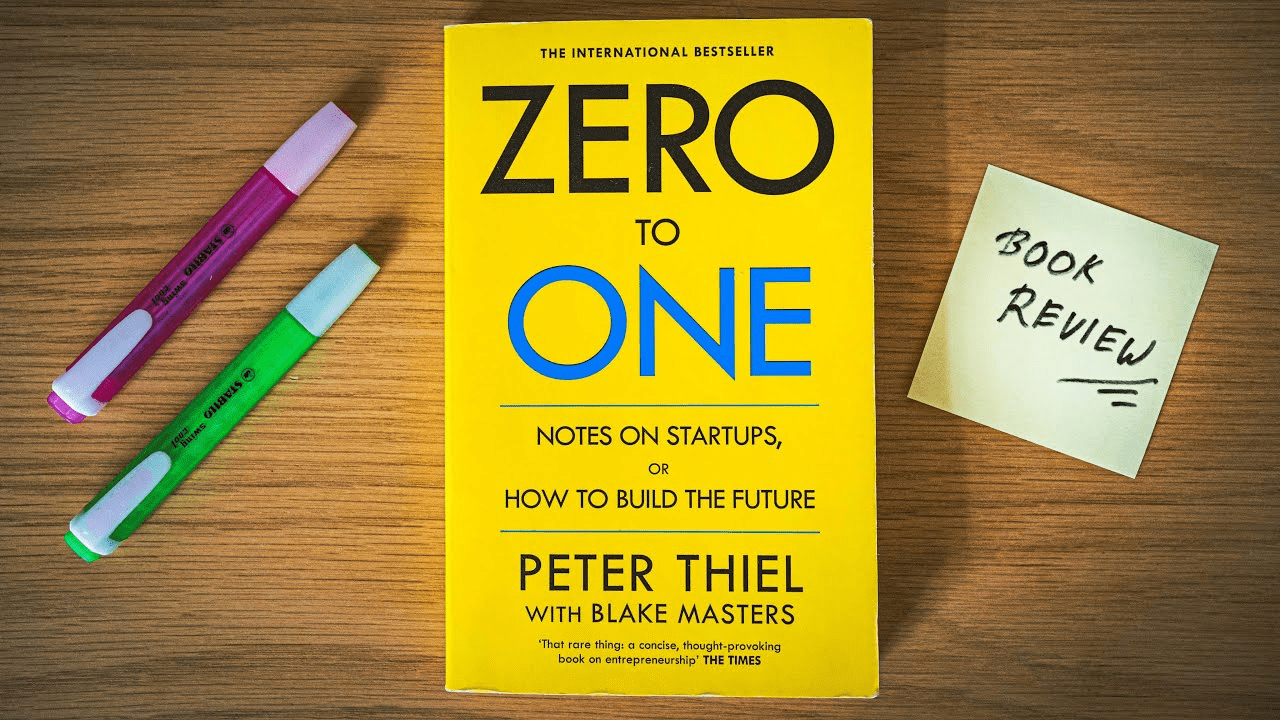
“Zero to One” is a transformative guide for entrepreneurs and business leaders seeking to create groundbreaking companies and shape the future. By embracing innovation, long-term planning, and a visionary mindset, individuals can forge their own paths and leave lasting legacies in the world of business and technology.
Key Takeaways
- Embrace Innovation: Create something entirely new that offers unique value to customers.
- Target Niche Markets: Start with a small, underserved market and gradually expand.
- Build Monopolies: Focus on differentiation and leverage proprietary technology to create a dominant position in your market.
- Think Long-Term: Plan for the future and envision what your company could achieve decades from now.
- Cultivate a Visionary Mindset: Articulate a compelling future state for your company and inspire others to work towards it.
- Hire the Best: Surround yourself with exceptional individuals who share your vision and values.
- Foster Alignment: Create a clear and compelling mission that unites your team and aligns their efforts.
- Understand Distribution: Recognize the importance of effectively distributing your product or service.
- Cultivate Personal Sales Skills: Build relationships with customers and close deals.
- Leverage Media Exposure: Utilize the media to promote your company and generate awareness.
- Embrace Technology: Focus on complementing human abilities rather than replacing them.
- Avoid Bubbles: Invest in companies with solid fundamentals and a clear path to profitability.
- Master Timing: Enter a market when the conditions are ripe for growth.
- Prioritize Innovation: Don’t settle for incremental improvements. Focus on creating truly innovative solutions.
- Embrace Business Principles: Incorporate sound business practices into your social enterprise to ensure its sustainability and impact.
- Cultivate a Visionary Mindset: Develop a clear understanding of your company’s mission, values, and long-term goals.
- Seek Input but Trust Your Instincts: Listen to feedback, but ultimately trust your own judgment and stay true to your vision.
- Consider the Four Futures of Humanity: Avoid extremes and develop a strategy that is resilient to a range of outcomes.
- Focus on the Present: Take action and make a difference in the world today.
By applying these principles, entrepreneurs and business leaders can create successful companies that drive progress, solve complex challenges, and shape the future for the better.




Leave a Reply