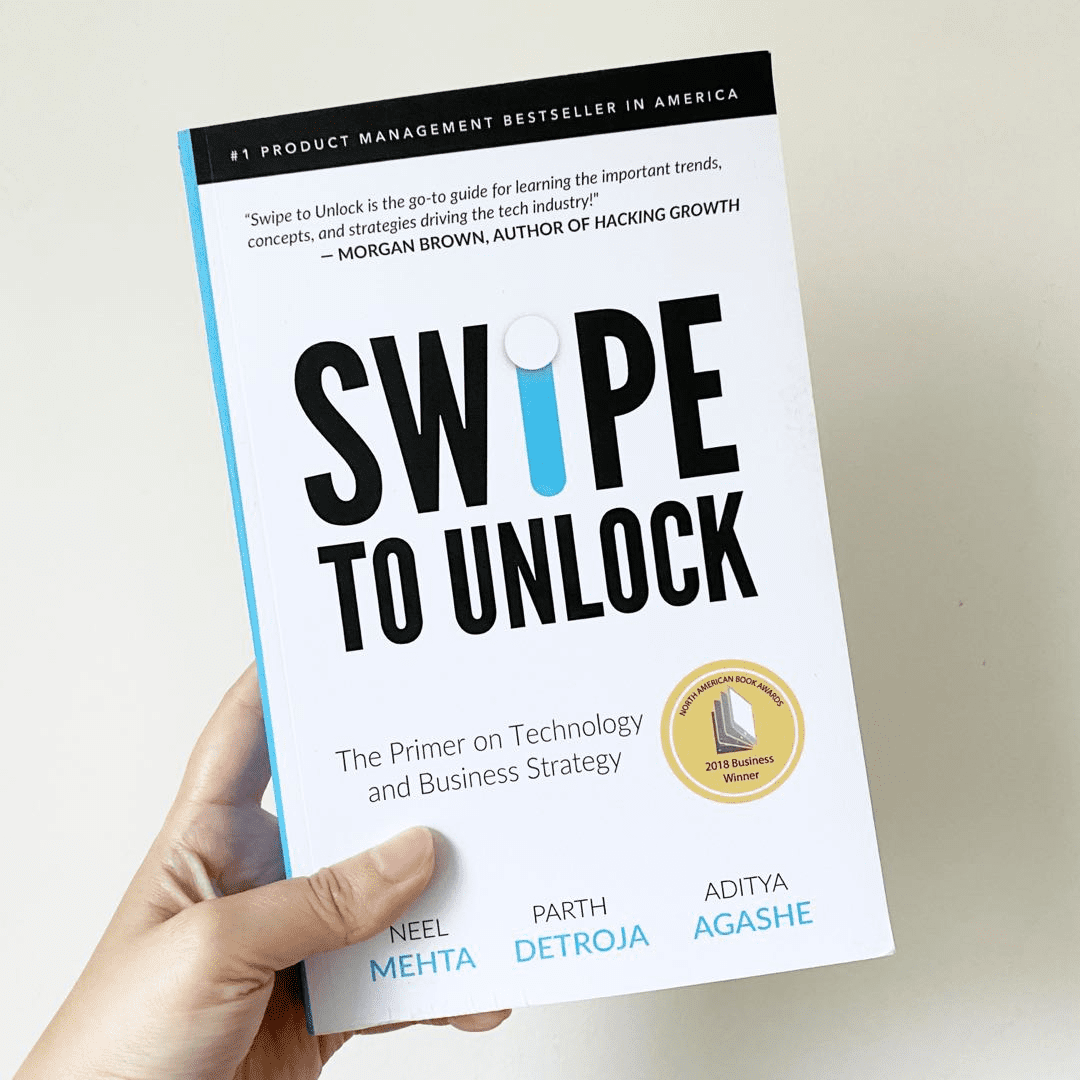
Swipe to Unlock: Navigating the World of Tech and Business Strategy
Introduction
“Swipe to Unlock: The Non-Coder’s Guide to Technology and the Business Strategy Behind It” by Neel Mehta, Aditya Agashe, and Parth Detroja is a comprehensive guide designed for anyone looking to understand the complex world of technology, regardless of their coding background. The authors, having worked at major tech companies like Microsoft, Facebook, and Amazon, aim to demystify key technical concepts and the business strategies that drive the tech industry. This book breaks down everything from how operating systems work and the economics of apps to the intricacies of the internet, big data, hacking, hardware, business motives, and technology policy. The goal is to equip readers with the knowledge to think and speak like a technologist, understand the “why” behind technological decisions, and apply these insights in their careers and daily lives. This summary will walk you through the core ideas presented in each chapter, ensuring you grasp every essential concept in plain language.
Operating Systems
This chapter explores the fundamental role of operating systems (OSes) on computing devices, using analogies and real-world examples to explain their function and business implications. It delves into the dynamics of mobile and desktop OSes, highlighting how companies make money and why some fail.
How are smartphone apps like Toyota cars?
Smartphone apps face a challenge similar to car manufacturers like Toyota when selling in different countries.
- Incompatible Platforms: Just as cars built for right-hand driving countries won’t work in left-hand driving countries, apps built for Android won’t run on iOS and vice versa.
- Multiple Versions Required: To reach the largest market, app makers, like Toyota making both left-hand and right-hand drive cars, must develop slightly different versions of their app for each major mobile platform (Android and iOS).
- Shared Core Functionality: While the user interface might differ between platforms to match OS design guidelines, the core functionality of the app, like accessing databases, remains the same, similar to how the engine might be the same for both versions of a car.
This comparison highlights the need for cross-platform development to maximize market reach in the tech industry.
Why did Google make Android free to phone manufacturers?
Google’s decision to offer the Android mobile operating system for free to phone manufacturers is a strategic move that generates billions in revenue indirectly.
- Maximizing Market Share: Making Android free encourages manufacturers like Samsung and HTC to adopt it, leading to a dominant market share (over 80% of newly sold phones in 2016).
- Forced App Pre-installation: Google requires manufacturers using Android to pre-install core Google apps (like YouTube, Maps, Search) and place the search bar prominently, driving user engagement with Google services.
- App Store Commissions: Phone manufacturers are pushed to feature Google Play prominently. Google takes a 30% cut of app purchases and in-app purchases made through the Google Play Store.
- Retaining Ad Revenue: By having users perform searches on Android devices rather than iPhones, Google avoids paying Apple a significant portion of ad revenue and large sums to be the default search engine on iOS.
Offering Android for free is a powerful strategy to increase the user base across Google’s ecosystem, ultimately boosting ad revenue and app store commissions. The open-source nature of Android also fosters customization and draws more developers and users into its sphere.
Why do Android phones come pre-installed with so many junk apps?
The abundance of pre-installed, often unremovable apps on Android phones, known as “bloatware,” is a significant revenue stream for mobile carriers and phone manufacturers.
- Saturated Market: With the smartphone and data plan market maturing, carriers and manufacturers seek new revenue sources.
- Payment for Pre-installation: App developers pay carriers and phone makers to have their apps pre-installed, guaranteeing visibility and potential user acquisition in a crowded app market.
- Promoting Proprietary Apps: Carriers and manufacturers pre-install their own apps, often paid knockoffs of popular free services, hoping users will default to using these, generating subscriptions or fees.
- Overcoming User Inertia: Defaults are powerful, and users may stick with pre-installed apps rather than seeking alternatives, even if they are inferior or costly.
While bloatware can frustrate users by consuming storage, battery, and slowing down performance, it’s a lucrative business model that exploits consumer habits and lack of alternatives. iPhones, made by Apple who earns primarily from hardware sales, avoid this issue as Apple prohibits carriers from installing bloatware.
Why did BlackBerry fail?
BlackBerry, once a dominant force in the smartphone market, failed due to complacency and a misunderstanding of evolving consumer trends and the burgeoning app economy.
- Underestimating Competition: BlackBerry executives dismissed the iPhone as a “flashy toy” focused on consumers, failing to recognize its appeal and the trend of “consumerization of the enterprise,” where employees wanted to use personal devices for work.
- Ignoring Consumer Demand: BlackBerry remained focused on business productivity and overlooked the growing consumer desire for versatile devices with apps, games, and instant messaging.
- Lack of App Ecosystem: BlackBerry did not adequately encourage developers to build apps for its platform, lagging significantly behind Apple’s App Store in app availability, which drove users to competitor devices.
- Failed Comeback Attempts: When BlackBerry finally attempted a consumer-focused touchscreen phone (the Storm), it was rushed, received negative reviews, and failed to compete with the iPhone, trapping them in a “chicken-and-egg problem” where lack of users deterred developers and vice versa.
BlackBerry’s failure serves as a cautionary tale about the importance of adapting to market shifts and understanding the evolving needs and preferences of everyday users, who ultimately dictate success in the mobile landscape.
Can Macs get viruses?
The long-standing claim that Macs are immune to viruses is a myth, though they face different and fewer threats than Windows PCs.
- Platform Incompatibility: Macs cannot run viruses designed for Windows due to fundamental differences in their operating systems, similar to how a car part for one model won’t fit another.
- Mac-Specific Viruses Exist: Viruses specifically built to target the macOS platform can and do infect Macs, debunking the idea of complete immunity.
- Lower Market Share as a Deterrent: One reason Macs experience fewer virus attacks is their smaller market share compared to Windows, making them less appealing targets for hackers aiming for widespread impact, although Mac users’ higher average income might still attract some attackers.
- Built-in Security Features: macOS includes features like sandboxing, password requirements for system changes, and built-in malware scanners that make them inherently more secure than Windows, but not impenetrable.
Despite security features and lower market share, Macs are not virus-proof. Users should still practice safe browsing habits, be wary of phishing attempts (which affect any OS), and consider using reputable antivirus software, as security vulnerabilities have been found in macOS.
The chapter effectively uses relatable analogies to explain complex technical concepts and business strategies, illustrating how operating systems are foundational to the tech world and how companies leverage them for profit and market dominance.
Software Development
This chapter explores the building blocks of software development, demystifying concepts like algorithms, APIs, and A/B testing that power the applications and websites we use daily.
How does Google search work?
Google Search is a complex system that doesn’t search the live internet every time but instead relies on massive databases and sophisticated algorithms to provide fast and relevant results.
- Web Crawling: Google uses programs called “spiders” to constantly crawl the internet, discovering and adding new webpages to its vast index (a list of all known webpages).
- PageRank Algorithm: Google’s core innovation, PageRank, ranks webpages based on the number and importance of other pages that link to them, considering links from high-ranking pages more valuable.
- Ranking Criteria: Beyond PageRank, Google uses hundreds of factors to rank search results, including keyword density, recency of updates, website spamminess, user location, and query rewriting (identifying synonyms).
- Gaming the System: Techniques like “link farms” and Search Engine Optimization (SEO) attempt to manipulate search rankings, but Google constantly updates its algorithms to combat such practices.
Google’s search engine is a continuously evolving system that leverages massive data and complex algorithms to deliver relevant information quickly, making it an essential tool for users worldwide.
How does Spotify recommend songs to you?
Spotify’s ability to magically recommend songs tailored to individual tastes, as seen in features like Discover Weekly, is driven by a sophisticated computer algorithm.
- User Listening Data: The algorithm analyzes the songs a user listens to, likes, and adds to their library or playlists, even considering skipped songs as a negative signal.
- Collaborative Filtering: Spotify compares a user’s listening patterns with those of millions of other users to identify similar tastes and recommend songs liked by users with comparable musical preferences (similar to Amazon’s product recommendations).
- Taste Profile: The algorithm builds a “taste profile” for each user, identifying preferred genres and micro-genres based on listening history and recommending songs from those categories.
- Leveraging Public Playlists: Spotify analyzes public playlists created by users, assuming a thematic connection between songs on a playlist, to discover related music and improve recommendations.
Spotify’s recommendation system, powered by algorithms like collaborative filtering and taste profiling, is a key feature that keeps users engaged by constantly introducing them to music they are likely to enjoy.
How does Facebook decide what shows up in your news feed?
Facebook’s news feed algorithm is a powerful tool that curates the content users see from the vast amount of updates they receive daily, aiming to maximize engagement.
- Personalized Factors: The algorithm considers around 100,000 personalized factors for each user to determine which stories are most relevant.
- Who Posted It: Posts from individuals or pages a user interacts with frequently (messaging, tagging) are prioritized, assuming higher likelihood of engagement.
- Post’s Quality: Posts that have already received high engagement (likes, comments, shares) are ranked higher, as they are perceived as more interesting to a wider audience.
- Type of Post: The algorithm learns what types of content (videos, articles, photos) a user interacts with most and shows them more of those formats.
- Recency: Newer stories are generally given higher priority, though engagement can still keep older posts near the top.
Facebook’s news feed algorithm is designed to keep users scrolling and engaging with content, which in turn increases the likelihood of them seeing and clicking on ads, Facebook’s primary source of revenue. The algorithm’s power can have significant impacts, including contributing to the spread of fake news by prioritizing engaging but untrue content, prompting Facebook to implement human oversight and flagging features.
What technologies do Uber, Yelp, and Pokémon Go all have in common?
Uber, Yelp, and Pokémon Go, despite their different purposes, all heavily rely on Application Programming Interfaces (APIs) to function, allowing them to utilize the functionalities and data of other applications without having to build them from scratch.
- Borrowing Functionality: APIs allow one app to request specialized tasks from another, such as Uber using Google Maps API to calculate driving directions and display maps or Yelp using a mapping API to show restaurant locations.
- Accessing Data: APIs enable apps to retrieve specific information from other services, like a weather app using a National Weather Service API to get forecast data or Yelp using a government API for restaurant inspection scores.
- Device Features: Apps use APIs to access hardware functionalities of the device itself, such as Snapchat using the Camera API or Pokémon Go using the Geolocation API.
- Efficiency and Cost Savings: Utilizing existing APIs saves developers significant time, effort, and resources compared to building complex functionalities from scratch, making app development faster and cheaper.
APIs are a fundamental building block of modern software, facilitating the interconnectedness of applications and enabling developers to leverage specialized services and data, ultimately enhancing the user experience.
Why does Tinder make you log in with Facebook?
Tinder’s requirement for users to log in with their Facebook account is a strategic decision that benefits both Tinder and Facebook through the use of Facebook’s login API.
- Profile Information Import: Connecting a Facebook account allows Tinder to automatically import profile pictures, age, friends list, and interests, streamlining profile creation and ensuring profiles aren’t empty.
- Bot Prevention: Requiring Facebook login helps deter fake accounts and bots, as they are less likely to have legitimate Facebook profiles.
- Improved Matching: By accessing a user’s friends list, Tinder can show mutual friends with potential matches, adding a layer of social connection that encourages engagement.
- User Data for Tinder: Tinder gains valuable demographic and interest data about its users from their Facebook profiles, which can inform product design and user experience improvements.
- User Convenience: Logging in with Facebook simplifies the signup process and eliminates the need to remember another username and password.
- User Data for Facebook: When users log into Tinder (or other apps) with their Facebook account, Facebook knows they are using that app, providing data that can be used for more effective ad targeting.
Using Facebook’s login API is a win-win strategy that enhances user experience, improves Tinder’s data, and provides Facebook with valuable information for targeted advertising.
Why does Uber let other apps use Ubers to deliver their products?
Uber’s decision to open its platform through the UberRUSH API, allowing other apps to use Uber drivers for short-distance deliveries, is a strategic move to expand its market, increase usage, and gather data.
- New Revenue Stream: Uber earns money by charging companies to use the UberRUSH API for deliveries.
- Market Expansion: Uber enters the on-demand object delivery market, competing with traditional shipping companies and other delivery services like Postmates.
- Increased Platform Usage: UberRUSH attracts new customers and provides more work for drivers, strengthening Uber’s core business of managing a large driver network.
- Gathering Data: More trips generate more data, which Uber can use to optimize its logistics, pricing, and driver placement.
- Avoiding Infrastructure Costs: Companies using UberRUSH avoid the significant expense and complexity of building and managing their own delivery fleet.
By offering the UberRUSH API, Uber strategically leverages its existing driver network to expand into new markets, generate revenue, and reinforce its position as a dominant logistics platform, while providing value to other businesses needing delivery services.
How does your weather app work?
A typical weather app functions by combining data from various sources and utilizing algorithms, often accessed through APIs, to provide localized forecasts and information.
- Geolocation API: The app uses the phone’s Geolocation API to determine the user’s current location via GPS.
- Mapping API: Many weather apps embed maps using APIs like Google Maps API to display weather patterns, temperatures, or the user’s location.
- Zip Code API: If the user enters a zip code, a zip code API is used to identify the corresponding city.
- Weather Data API: The app fetches raw weather data (temperature, probability of rain, etc.) from weather services, often government agencies like the National Weather Service in the US, through their public APIs.
- Weather Forecasting Algorithms: Weather services and companies use complex algorithms (like the Weather Forecasting Model) that simulate atmospheric physics and analyze historical data to predict future weather conditions.
Weather apps are a prime example of how applications leverage multiple APIs and sophisticated algorithms to deliver relevant, real-time information by combining user location, mapping services, and external data sources.
Why does every Washington Post article have two versions of the headline?
The Washington Post, like many online news outlets, uses A/B testing to optimize the performance of its articles, specifically by testing different versions of headlines to see which generates more clicks.
- A/B Testing Explained: A/B testing involves showing two (or more) variations of a feature to different, randomly selected groups of users and measuring which version performs better against a specific metric (like click-through rate).
- Optimizing Headlines: The Washington Post uses a tool called Bandito to automatically test different headlines for the same article, showing each to a segment of visitors.
- Measuring Click-Through Rate: The system tracks how often each headline is clicked, identifying the “winning” headline that attracts the most clicks.
- Increasing Engagement: By using the most effective headline, the Washington Post increases the likelihood of readers clicking on and reading their articles, boosting traffic and potential ad revenue.
- Beyond Headlines: A/B testing is used across many online products to optimize various elements, from button colors to profile picture selection, to improve user engagement and achieve business goals.
- Statistical Significance: Experimenters use statistical analysis (like p-values) to determine if the observed difference in performance between variations is meaningful or merely due to chance.
The practice of A/B testing headlines, while potentially leading to “clickbait,” is a data-driven strategy employed by news organizations to maximize the visibility and readership of their content in the competitive online media landscape.
The chapter effectively introduces fundamental software development concepts—algorithms for computation and ranking, APIs for interoperability, and A/B testing for data-driven optimization—showing how these tools are combined to create the applications and online experiences we use every day.
App Economics
This chapter delves into the diverse and often counterintuitive business models employed by companies in the “app economy,” explaining how many free-to-download applications manage to generate significant revenue.
Why is almost every app free to download?
The prevalence of free-to-download apps in the market is largely driven by the “freemium” business model and the power of targeted advertising.
- Lower Barrier to Entry: Offering apps for free encourages widespread adoption and downloads, making them easily accessible to a large user base.
- Freemium Model: Many free apps employ a freemium strategy, providing basic functionality for free but charging for premium features, extra content, or virtual goods through in-app purchases or subscriptions.
- In-App Purchases: Popular in mobile games, this model allows users to spend real money on items like extra lives, virtual currency, or cosmetic upgrades.
- Paid Subscriptions: Non-game apps often offer monthly or annual subscriptions to unlock advanced features, remove ads, or gain access to exclusive content (e.g., Spotify Premium, LinkedIn Premium).
- Targeted Advertising: Apps with large user bases can generate significant revenue by showing targeted ads to users based on their data, as seen with Facebook and Google.
- Focus on “Whales”: Freemium models often rely on a small percentage of highly engaged users (“whales”) who are willing to spend substantial amounts on in-app purchases or subscriptions.
While apps may be free to download, they generate revenue through a variety of monetization strategies that capitalize on user engagement, data, and the willingness of a subset of users to pay for enhanced experiences.
How does Facebook make billions without charging users a penny?
Facebook’s massive revenue, despite offering its services for free, is primarily generated through targeted advertising facilitated by the vast amount of user data it collects.
- Ad Auctions: Facebook hosts instant auctions where advertisers bid to show their ads to specific users. Advertisers can bid based on impressions (CPM) or clicks (PPC).
- Targeting Capabilities: Facebook’s strength lies in its ability to precisely target ads based on users’ demographics, interests, behaviors, and activities across its platforms (Facebook, Instagram, WhatsApp).
- Data Collection: By tracking user activity (likes, comments, shares, pages visited, ads clicked, etc.), Facebook builds detailed profiles that allow for highly effective ad targeting.
- Increased Click-Through Rates: Targeted ads are more relevant to users, leading to higher click-through rates and making Facebook’s ad space more valuable to advertisers.
- Privacy Concerns: This model raises privacy concerns as Facebook collects and analyzes extensive personal data, though it doesn’t sell individual user data directly to advertisers.
Facebook’s business model is centered on leveraging user data to provide highly targeted advertising, which allows them to generate billions in revenue from advertisers while offering their services to users for free.
Why do online news platforms have so much “sponsored content?”
Online news platforms increasingly rely on “sponsored content,” or native advertising, as a significant revenue stream due to declining effectiveness of traditional banner ads.
- Ineffectiveness of Banner Ads: Users often ignore or actively block traditional banner ads, which have low click-through rates and are less profitable.
- Blending with Content: Sponsored content is designed to resemble the platform’s editorial content (articles, posts), making it less intrusive and more likely to be engaged with by readers.
- Higher Engagement: Native ads have significantly higher click-through rates compared to banner ads because they blend in and are perceived as more relevant or interesting.
- Lucrative Revenue Stream: Sponsored content has become a major source of digital advertising revenue for news organizations, including established publications and newer media companies like BuzzFeed.
- Blurred Lines: Native advertising raises ethical concerns as it blurs the line between editorial content and paid promotions, potentially compromising journalistic integrity and deceiving readers.
Sponsored content is a commercially successful strategy for online news platforms to monetize their content in a way that is less disruptive than traditional ads but presents challenges regarding transparency and journalistic standards.
How does Airbnb make money?
Airbnb, a marketplace connecting people who want to rent out their properties with those looking for accommodations, primarily generates revenue through commissions charged to both hosts and guests.
- Commission-Based Model: Like other marketplace platforms (e.g., Uber, Amazon’s third-party sellers), Airbnb takes a percentage of each transaction.
- Host Service Fee: Hosts are charged a small service fee (typically 3%) on each booking.
- Guest Service Fee: Guests are charged a service fee (ranging from 6% to 12%) on top of the host’s price for each reservation.
- Facilitating Transactions: Airbnb’s value lies in providing the platform, tools, and trust mechanisms that enable individuals to easily find and book accommodations or list their properties.
Airbnb’s business model is based on facilitating transactions between users and taking a commission on each booking, a common and effective strategy for online marketplaces.
How does the app Robinhood let you trade stocks with zero commission?
Robinhood stands out by offering commission-free stock trading, a model that generates revenue through alternative methods beyond traditional transaction fees.
- Freemium Model: Robinhood offers a premium service called Robinhood Gold, which provides advanced features like after-hours trading and margin trading (borrowing money to invest) for a monthly fee.
- Interest on Unused Funds: Robinhood earns interest on the uninvested cash balances held in users’ accounts, similar to how banks profit from deposits.
- Selling Order Flow: Robinhood earns revenue by selling order flow to high-frequency trading firms. These firms pay Robinhood for the privilege of executing trades because they can profit from tiny price differences.
Robinhood’s business model leverages a combination of premium subscriptions and generating income from the money held on the platform and the flow of trade orders, allowing them to offer commission-free trading to a broad user base.
How can apps make money without ads or charging users?
While ads and direct user charges (freemium) are common monetization strategies, some apps employ alternative, less obvious methods to generate revenue.
- Charging Third Parties: Apps can charge businesses or service providers for connecting them with customers or providing access to their platform (e.g., Wanderu earning commissions from bus lines for referring ticket buyers).
- “Grow First, Monetize Later” Strategy: Some startups offer services for free to rapidly acquire a large user base, with a plan to introduce monetization strategies later, once they have achieved significant market penetration (e.g., Venmo’s long-term plan to monetize in-store payments).
- Acquisition Strategy: Some apps operate without a clear revenue model, aiming to grow rapidly and build a valuable user base or technology to be acquired by a larger company (e.g., Mailbox being acquired by Dropbox).
- Data Monetization (Indirect): While direct selling of user data is rare for smaller companies, having a large user base can make a company attractive for acquisition by companies that monetize data through targeted advertising.
These alternative strategies highlight the dynamic nature of the app economy, where value can be created and captured through network effects, strategic positioning for future monetization, or as an attractive asset for acquisition.
This chapter effectively illustrates that the success of applications in the digital age is not solely dependent on direct sales to consumers but on creative and often indirect business models that leverage scale, data, and platform dynamics.
Cloud Computing
This chapter explains the concept of “the cloud” and its transformative impact on both consumer and enterprise technology, highlighting how data storage and application execution are shifting online.
How is Google Drive like Uber?
Google Drive and Uber both represent a shift from ownership to on-demand access, offering users flexibility and cost savings by providing services as needed rather than requiring personal investment in physical assets.
- On-Demand Access: Just as Uber provides transportation on demand without requiring car ownership, Google Drive offers digital storage and access to applications on demand without requiring ownership of physical hard drives or software licenses.
- Reduced Ownership Costs: Users avoid the costs associated with owning and maintaining a car (insurance, repairs, gas) or a computer (hardware maintenance, software purchases).
- Flexibility and Portability: Both services offer the ability to access resources from anywhere with an internet connection, whether it’s getting a ride or accessing files and applications.
- Pay-as-You-Go or Subscription Models: Users pay for the service based on usage or through subscriptions, rather than a large upfront investment.
Google Drive and Uber are analogies for the broader trend of cloud computing, where resources (storage, computing power, software) are accessed as a service over the internet, offering benefits in terms of cost, flexibility, and maintenance.
Where do things in “the cloud” live?
Despite the ethereal name, data and applications “in the cloud” are not stored or run in the sky but on powerful computers called servers, typically located in massive data centers.
- “Someone Else’s Computer”: The cloud fundamentally means that your data and applications reside on and are processed by servers owned and operated by a cloud service provider (like Google, Amazon, Microsoft) rather than your personal device.
- Servers: These are specialized, high-performance computers optimized for storing data and running applications and websites, often lacking typical user interfaces like monitors and keyboards.
- Data Centers: Servers are housed in secure, climate-controlled buildings with robust infrastructure, including powerful cooling systems and backup power, to ensure continuous operation.
- Frontend and Backend: When using a cloud-based application (like Gmail), the user interface on your device is the “frontend,” while the data storage and processing logic run on the cloud provider’s servers (the “backend”).
- Data Security and Privacy: While cloud providers invest heavily in security, storing data on external servers raises concerns about potential data breaches and the provider’s ability to access or be compelled to share user data.
Understanding that the cloud is based on physical infrastructure (servers in data centers) is crucial to grasping how it works and the potential implications for data security and privacy.
Why can’t you own Photoshop anymore?
Adobe’s shift to a subscription-based model for Photoshop and its Creative Suite, known as Software-as-a-Service (SaaS), means users “rent” the software instead of owning a perpetual license, driven by business benefits for Adobe.
- Software-as-a-Service (SaaS): This is a business model where software is licensed on a subscription basis and delivered over the internet, rather than being purchased outright.
- Consistent Revenue: Subscriptions provide Adobe with a predictable and consistent stream of revenue compared to periodic large releases.
- Piracy Reduction: The need for regular online license checks makes it harder for users to use pirated versions of the software.
- Continuous Updates: Adobe can deliver regular updates, bug fixes, and new features to subscribers, improving the software and user experience without waiting for major version releases.
- Initial Customer Pushback: The move was met with anger from some users who preferred owning the software, but the benefits of continuous updates and lower initial cost ultimately led to widespread adoption.
- Increased Accessibility: The subscription model can make the software more accessible to new users or those who only need it for a limited time, with lower upfront costs and free trials.
Adobe’s transition to SaaS was a strategic business decision that improved its financial stability, security, and ability to deliver updates, ultimately proving successful despite initial customer resistance. The widespread adoption of internet access facilitated this shift.
Why does Microsoft offer both buy-once and subscription-based versions of Office?
Microsoft offers both traditional “buy-once” versions of Office (like Office 2016) and subscription-based Office 365 (a SaaS model) to cater to different customer preferences and facilitate a gradual transition to the cloud.
- Office 365 Advantages: The subscription model offers continuous updates, free upgrades to new major versions, cloud storage (OneDrive), and the ability to use Office apps on multiple devices.
- Office 2016 Advantages: The buy-once model can be cheaper in the long run for users who don’t need the latest features and are content with a static version of the software.
- Phased Transition: By offering both options, Microsoft allows users who are resistant to subscription models to continue using a traditional version while encouraging adoption of Office 365 through its added benefits and the eventual phasing out of perpetual licenses.
- Avoiding Customer Backlash: This approach helps Microsoft avoid the significant customer dissatisfaction experienced by companies like Adobe when they abruptly shifted to subscription-only models.
Microsoft’s dual-offering strategy allows them to capitalize on the benefits of the SaaS model (consistent revenue, ongoing engagement) while accommodating users who prefer the traditional ownership model, facilitating a smoother market transition.
How does Amazon Web Services work?
Amazon Web Services (AWS) is a leading cloud computing platform (Infrastructure-as-a-Service or IaaS) that allows businesses and developers to rent computing resources like servers and storage from Amazon instead of building and maintaining their own infrastructure.
- Renting Infrastructure: AWS provides access to Amazon’s vast network of servers and data centers, allowing users to run their applications and store their data without the significant upfront investment and ongoing maintenance costs of owning physical servers.
- Elasticity: AWS can automatically scale computing resources up or down based on an application’s demand, ensuring consistent performance during traffic spikes and allowing users to pay only for what they use.
- Scalability: The platform allows applications to easily grow and handle increasing numbers of users and data over time without the need for manual hardware installation or configuration.
- Reliability: AWS invests heavily in redundant infrastructure across multiple data centers, ensuring high uptime and preventing service disruptions even in case of hardware failures or natural disasters.
- Cost Savings: By sharing resources and leveraging Amazon’s economies of scale, AWS offers significant cost advantages compared to building and maintaining private data centers.
- Security: AWS provides robust security features and expertise that often surpass the capabilities of individual companies, though security in the cloud is a shared responsibility.
AWS is a prime example of IaaS, offering businesses a flexible, scalable, reliable, and cost-effective alternative to traditional IT infrastructure, enabling them to focus on their core business rather than managing servers.
How does Netflix handle sudden spikes in viewership when a new show launches?
Netflix, which primarily runs on Amazon Web Services (AWS), effectively manages sudden increases in viewership, such as those occurring with the launch of a popular new show, by leveraging the elasticity and scalability of cloud computing.
- Cloud Hosting: By migrating its infrastructure to AWS, Netflix benefits from a vast pool of computing resources.
- Elasticity: AWS automatically allocates more computing power and bandwidth to Netflix during peak usage times, like when a popular show is released, and scales back down during off-peak hours. This ensures smooth streaming and prevents buffering or service disruptions without requiring Netflix to own enough servers for the absolute highest traffic.
- Scalability: AWS allows Netflix to easily handle the long-term growth in its user base and streaming volume, providing more resources as needed without physical infrastructure expansions.
- Reliability: The distributed nature of AWS across multiple data centers ensures that even if one facility experiences issues, Netflix’s service remains operational, minimizing downtime.
Netflix’s reliance on cloud computing platforms like AWS enables it to efficiently manage dynamic and unpredictable demands on its service, ensuring a consistent and high-quality streaming experience for its millions of users.
How did a single typo take down 20% of the internet?
A single mistyped command by an Amazon engineer in 2017 caused a significant outage in Amazon Web Services (AWS) Simple Storage Service (S3), demonstrating the interconnectedness of the internet and the risks associated with centralized cloud infrastructure.
- Centralized Cloud Infrastructure: A large portion of websites, apps, and services rely on cloud providers like AWS for hosting and data storage.
- AWS S3 Outage: The typo led to an unintended restart of S3, a critical service for storing files, which disrupted many dependent websites and applications.
- Chain Reaction: Because numerous internet services rely on AWS S3, the outage created a ripple effect, making those services unavailable.
- Vulnerability of Centralization: This incident highlighted a major drawback of relying on a single cloud provider: a failure in that provider’s infrastructure can affect a vast number of online services simultaneously.
- Improved Protocols: Following the outage, AWS implemented new security measures and protocols to prevent similar human errors from causing widespread disruptions in the future.
The AWS outage, triggered by a human error, underscored the potential fragility of an internet increasingly reliant on centralized cloud infrastructure and prompted service providers to enhance their internal safeguards.
The chapter successfully unpacks the concept of cloud computing, explaining its underlying infrastructure, various service models (SaaS, IaaS, PaaS), and the significant benefits and risks it presents for both consumers and businesses.
The Internet
This chapter explores the fundamental mechanics of the internet, explaining how information travels between computers, the role of addresses and protocols, and the physical infrastructure that underpins online communication.
What happens when you type “google.com” and hit enter?
When you type “google.com” into your web browser and hit enter, a series of steps occur to translate that human-readable address into a numerical address computers understand and retrieve the corresponding webpage.
- URL Interpretation: The browser interprets the typed text as a Uniform Resource Locator (URL), filling in missing parts like “https://” and “www.” if necessary.
- Domain Name System (DNS) Lookup: The browser uses the Domain Name System (DNS) to translate the human-readable domain name (“google.com”) into its corresponding numerical IP address (e.g., 216.58.219.206), acting like a phone book for the internet.
- Sending a Request: The browser creates an HTTP or HTTPS request asking the server at the obtained IP address for the webpage associated with the specified path ( “/” for the homepage).
- Server Processing: Google’s servers receive the request, process it (e.g., checking for a Google Doodle), and prepare the necessary code (HTML, CSS, JavaScript) to render the webpage.
- Sending a Response: The server sends the code back to your browser as a response.
- Browser Rendering: Your browser interprets the code and renders the webpage on your screen, making it visually appealing and interactive.
This process, which happens in a fraction of a second, involves a complex interaction between your browser, DNS servers, and the website’s servers to retrieve and display the requested content.
How does information travel between computers over the internet?
Information travels across the internet between computers through a process of breaking down data into small packets and routing them independently to their destination, orchestrated by protocols like TCP and IP.
- Packetization (TCP): The Transmission Control Protocol (TCP) breaks down large pieces of information (like webpages or videos) into smaller, manageable units called packets and adds labels to each packet (e.g., sequence numbers).
- IP Addressing: Each packet includes the destination IP address (obtained via DNS), which guides its journey across the network.
- Independent Routing (IP): The Internet Protocol (IP) routes each packet independently across the internet, potentially sending different packets of the same information along different paths through various intermediate computers (“hops”).
- Reassembly (TCP): Upon reaching the destination, TCP reassembles the packets in the correct order based on their labels.
- Error Checking and Retransmission (TCP): TCP checks for missing or corrupted packets and requests that the sender retransmit any that didn’t arrive correctly.
This packet-based approach, managed by TCP and IP, makes internet communication efficient and resilient, as data can still reach its destination even if some parts of the network experience congestion or failure. HTTP and HTTPS operate on top of TCP/IP, requesting and securing the data transmission.
What path does information take to get from one computer to another?
Information packets traveling across the internet take a physical path through interconnected computers and networks, often involving multiple intermediate steps rather than a direct connection.
- Physical Infrastructure: Internet communication relies on physical cables (like fiber-optic cables) and routers that connect computers and networks around the world.
- Hops: A packet’s journey from source to destination involves a series of “hops” between different computers or routers along the network path.
- Traceroute Tool: Tools like
traceroutecan be used to trace the specific path and intermediate points (IP addresses) that a packet takes to reach a destination. - Dynamic Routing: The path a packet takes can vary depending on network conditions, congestion, and routing decisions made by intermediate routers; different packets from the same source to the same destination might take different routes.
- Geographical Traversal: The physical path often reflects geographical distances, with packets traveling through intermediate locations closer to the destination.
Understanding the physical path and the concept of hops is essential to grasping how data traverses the globe and why factors like distance and network infrastructure influence internet speed and reliability.
Why did a Wall Street trader drill through the Allegheny Mountains to build a straight fiber-optic cable?
A Wall Street trader invested significantly in building a near-straight fiber-optic cable through challenging terrain like the Allegheny Mountains to gain a minuscule speed advantage for high-frequency trading (HFT).
- Physical Speed Limit: Information travels through fiber-optic cables as light pulses, and the speed of light in glass is a physical limit on how fast data can move.
- Importance of Distance: The shortest distance between two points is a straight line, so a straighter cable allows data to travel between two locations faster.
- High-Frequency Trading (HFT): HFT involves using powerful computers to make rapid trades based on tiny price differences across different exchanges.
- Microsecond Advantage: In HFT, even a difference of milliseconds or microseconds in data transmission time can provide a significant competitive edge, allowing traders to execute profitable trades before others.
- Monetary Incentive: The potential profits from being faster than competitors in HFT provide a strong financial incentive for investing in infrastructure like straight, high-speed cables.
The construction of extremely straight fiber-optic cables for HFT illustrates the extreme value placed on speed and low latency in certain data-intensive industries and highlights how physical infrastructure directly impacts the performance of online activities.
This chapter provides a clear and accessible explanation of the internet’s underlying architecture, from how domain names are translated into IP addresses to the packet-based transmission of data and the physical infrastructure of cables, revealing the mechanics behind seemingly instantaneous online interactions.
Big Data
This chapter explores the concept of “big data” – the immense volume of information generated and collected – and how companies leverage it for insights, predictions, and business advantages, while also discussing the ethical and societal implications.
How did Target know that a teenager was pregnant before her own father did?
Target was able to predict a teenager’s pregnancy before her father knew by analyzing her purchasing habits and identifying correlations with pregnancy, demonstrating the power of big data and predictive analytics.
- Tracking Purchasing Habits: Target tracks customers’ buying behavior through their loyalty cards or by assigning unique IDs to credit cards used in stores.
- Identifying Correlated Purchases: By analyzing vast amounts of data, Target discovered correlations between purchases of certain items (like unscented lotion, specific vitamins) and the stages of pregnancy.
- “Pregnancy Prediction” Score: Target developed an algorithm that assigns each shopper a score indicating their likelihood of being pregnant based on their purchasing patterns.
- Targeted Marketing: Companies like Target are eager to identify major life events like pregnancy early to target customers with relevant coupons and promotions before competitors.
- Predictive Analytics: This case is a famous example of predictive analytics, where companies use data to predict future behavior and trends.
- Subtlety in Marketing: After the incident with the father, Target learned to make its targeted pregnancy coupons less obvious by mixing them with unrelated promotions to avoid appearing “creepy.”
The Target pregnancy prediction story highlights the remarkable ability of companies to infer highly personal information from seemingly innocuous data and the ethical considerations surrounding the use of such insights.
How do you analyze big data?
Analyzing big data requires specialized tools and techniques because the volume of information is too large to be processed on a single computer, necessitating distributed computing approaches.
- Distributed Computing: Instead of using a single supercomputer, big data analysis involves breaking down the data and computational tasks into smaller chunks that can be processed simultaneously by an army of normal-sized computers working in parallel.
- MapReduce Algorithm: A common technique like Google’s MapReduce splits data processing into two phases: the “Map” phase distributes the data to multiple computers for parallel processing, and the “Reduce” phase aggregates the results from each computer to produce a final output.
- Hadoop Framework: Hadoop is a popular open-source framework that implements the MapReduce algorithm, allowing organizations to store and process vast datasets across clusters of commodity hardware.
- Scalability: Distributed computing frameworks like Hadoop are highly scalable, making it easy to add more computers to handle growing datasets.
- Data Science: The analysis of big data has led to the emergence of data science as a field, which combines statistical analysis, computer science, and domain expertise to extract insights from large datasets.
Analyzing big data is a complex undertaking that relies on distributed computing techniques and specialized software like Hadoop to process information across multiple machines efficiently.
Why do prices on Amazon change every 10 minutes?
Amazon employs dynamic pricing, changing the prices of its products millions of times a day, by using complex algorithms that analyze vast amounts of data to optimize sales and profits.
- Vast Data Collection: Amazon collects extensive data on its items, users, competitors’ prices, sales patterns, inventory levels, and other factors.
- Algorithmic Pricing: Algorithms constantly analyze this data to determine the optimal price for each product at any given moment.
- Competitive Pricing: Amazon aims to remain competitive by adjusting prices in response to competitors’ pricing strategies, often undercutting them on popular items.
- Profit Optimization: The dynamic pricing strategy is designed to maximize profits by adjusting prices based on demand, inventory, and other factors.
- Undercutting on Popular Items: Amazon may strategically offer lower prices on frequently searched or popular items to attract customers, assuming they will then purchase less common, higher-priced items from Amazon as well.
- Predictive Analytics: Amazon uses data and algorithms to predict what customers are likely to buy, sometimes even shipping items to warehouses near customers before they order (anticipatory shipping) to speed up delivery.
Amazon’s dynamic pricing is a sophisticated application of big data analysis that allows the company to constantly adjust prices in response to market conditions and customer behavior, contributing significantly to its profitability.
Is it good or bad that companies have so much data?
The extensive collection and analysis of personal data by companies present a complex issue with both significant benefits and notable drawbacks for individuals and society.
- Benefits of Data Analysis: Companies use data to improve efficiency, optimize operations (e.g., UPS optimizing delivery routes), create personalized recommendations (e.g., Netflix), and offer targeted advertising and promotions, which can be useful for consumers.
- Enhanced User Experience: Personalized recommendations and targeted offers can make products and services more relevant and convenient for users.
- Privacy Concerns: Companies collecting vast amounts of personal information (demographics, interests, location, purchasing history) raises significant privacy issues, as they can know highly intimate details about individuals.
- Risk of Data Breaches: Centralized storage of large datasets makes companies attractive targets for hackers, and data breaches can lead to identity theft and other harms for affected individuals.
- “Reidentification” Risks: Even anonymized data can potentially be combined with other information to identify individuals, undermining privacy protections.
- Power Imbalance: The concentration of vast amounts of data in the hands of a few large companies creates a power imbalance between corporations and individuals.
The accumulation of large datasets by companies is a double-edged sword, driving innovation and efficiency while simultaneously raising serious concerns about individual privacy and security. The debate over how to balance these competing interests is ongoing.
This chapter effectively demonstrates the immense value of data in the modern economy, showing how companies like Target and Amazon leverage big data and predictive analytics to gain competitive advantages, while also sparking important discussions about privacy and the ethical implications of pervasive data collection.
Hacking & Security
This chapter explores the evolving landscape of online threats, from ransomware to phony Wi-Fi networks, and examines the technologies and strategies used to combat cybercrime and protect digital information.
How can criminals hold your computer for “ransom”?
Criminals can hold computers for “ransom” using malicious software called ransomware, which encrypts the victim’s files and demands payment, typically in Bitcoin, for the decryption key.
- Ransomware Infection: The ransomware software gains access to a computer, often through malicious email attachments, compromised websites, or exploiting software vulnerabilities.
- File Encryption: Once on the computer, the ransomware encrypts the victim’s personal files, making them inaccessible without a decryption key.
- Ransom Demand: The criminals display a message demanding payment (the ransom) in an anonymous cryptocurrency like Bitcoin in exchange for the decryption key and a program to restore the files.
- Bitcoin for Anonymity: Bitcoin is used because it offers a degree of anonymity for transactions, making it difficult for law enforcement to trace the criminals.
- Customer Support (Strangely): Some ransomware operators provide surprisingly responsive customer support to victims, as maintaining a reputation for providing the decryption key encourages future victims to pay.
- Exploiting Vulnerabilities: Ransomware often exploits known security flaws in operating systems or software, highlighting the importance of keeping systems updated.
Ransomware is a sophisticated form of cybercrime that leverages encryption and anonymous payment methods to extort money from victims whose digital files are held hostage.
How do people sell drugs and stolen credit card numbers online?
People sell illegal goods and stolen data online using “dark web” marketplaces, which utilize technologies like Tor to ensure anonymity and evade law enforcement.
- Deep Web vs. Dark Web: The deep web is the part of the internet not indexed by standard search engines. The dark web is a smaller subset of the deep web requiring specialized software to access, specifically designed for anonymity.
- Tor Network: The Tor (The Onion Router) network is software that encrypts internet traffic and routes it through a series of relays, making it extremely difficult to trace the origin and destination of online communications.
- Anonymous Marketplaces: Websites hosted on the dark web (with “.onion” addresses) function as online marketplaces for illegal goods and services, resembling standard e-commerce sites but with an emphasis on anonymity.
- Cryptocurrency Transactions: Transactions on dark web marketplaces are conducted using anonymous cryptocurrencies like Bitcoin to prevent financial trails that could lead to identification.
- Escrow Services: Some marketplaces use a centralized escrow system to hold funds until the buyer confirms receipt of the goods, mitigating fraud risk between anonymous parties.
- Law Enforcement Challenges: The anonymity provided by the dark web and cryptocurrencies makes it challenging for authorities to identify and apprehend users, though programming errors or operational security failures can sometimes lead to takedowns.
The dark web and technologies like Tor provide a platform for illegal online markets by enabling anonymity and evading traditional surveillance methods, presenting ongoing challenges for law enforcement. However, these tools also have legitimate uses for privacy and free expression.
How does WhatsApp encrypt your messages so thoroughly that even WhatsApp can’t read them?
WhatsApp employs end-to-end encryption (specifically, asymmetric encryption or public key cryptography) for its messages, a method that ensures only the sender and intended recipient can read the content, making it inaccessible to WhatsApp or other intermediaries.
- Asymmetric Encryption: Each user has a pair of unique cryptographic keys: a public key (shared with others) and a private key (kept secret).
- Encryption with Public Key: When you send a message, it is encrypted using the recipient’s public key, which is freely available.
- Decryption with Private Key: The encrypted message can only be decrypted by the recipient using their unique private key.
- Inaccessible to WhatsApp: The encryption and decryption processes happen on the users’ devices, meaning WhatsApp’s servers only handle the encrypted messages and do not possess the private keys needed to decrypt them.
- Enhanced Privacy: This method ensures that the content of messages remains private between the communicating parties, even from the service provider.
End-to-end encryption using asymmetric cryptography provides a high level of privacy for online communications by ensuring that only the sender and recipient have the means to read the messages, effectively locking out third parties, including the platform itself.
Why did the FBI sue Apple to hack the iPhone?
The FBI sued Apple in 2016 to compel the company to create a backdoor into an iPhone used by a San Bernardino shooter because Apple had implemented strong encryption features in newer iOS versions that prevented even Apple from accessing the phone’s data without the passcode.
- Stronger Encryption in iOS: In iOS 8 and later, Apple introduced encryption that tightly links the passcode to a unique hardware key (UID), making it impossible to access data without the correct passcode and the phone’s specific hardware.
- Anti-Brute Force Measures: iPhones are designed to wipe their data after a limited number of failed passcode attempts (typically 10), preventing brute-force attacks (systematically trying every possible passcode).
- FBI’s Request for a Backdoor: The FBI wanted Apple to create a modified version of iOS that would disable the auto-wipe feature and allow for rapid digital passcode attempts, effectively creating a backdoor into the device.
- Apple’s Refusal: Apple refused, arguing that creating such a tool would compromise the security of all iPhones and set a dangerous precedent for government access to encrypted data.
- Balancing Privacy and Security: The case highlighted the complex legal and ethical debate over balancing individual privacy and data security with the needs of law enforcement and national security investigations.
- FBI Bypassed Apple: Ultimately, the FBI found an alternative method to unlock the shooter’s iPhone without Apple’s assistance, ending the specific legal battle but not the broader debate over encryption backdoors.
The FBI’s lawsuit against Apple stemmed from the inability to access encrypted data on a newer iPhone due to Apple’s enhanced security features, igniting a major public debate about the balance between user privacy and government access to information.
How can a phony Wi-Fi networks help someone steal your identity?
Phony Wi-Fi networks, often set up by hackers to mimic legitimate public hotspots, can be used to intercept users’ online communications and steal sensitive information through “man-in-the-middle” attacks.
- Mimicking Legitimate Networks: Hackers create Wi-Fi networks with names similar to popular public hotspots (e.g., “Free Starbucks Wi-Fi”) to trick users into connecting.
- Automatic Connection: Some sophisticated attacks exploit devices’ tendency to automatically connect to known network names, even if a phony network is broadcasting that name.
- Man-in-the-Middle Attack: Once a user is connected to the hacker’s network, the hacker can position themselves between the user’s device and the internet, intercepting all incoming and outgoing traffic.
- Bypassing HTTPS (SSLStrip): Tools like SSLStrip can trick the user’s browser into connecting to websites using the less secure HTTP protocol instead of HTTPS, even if the website supports HTTPS.
- Accessing Unencrypted Data: If a website is accessed via HTTP, the user’s communication (including usernames, passwords, and credit card numbers) is sent in plain text and can be easily read by the hacker.
- Identity Theft: By intercepting unencrypted sensitive information, hackers can gain access to online accounts and potentially steal the user’s identity.
- Protecting Yourself (VPN): Using a Virtual Private Network (VPN) encrypts your internet traffic between your device and a secure server, making it unreadable to anyone on the local Wi-Fi network, even a hacker.
Phony Wi-Fi networks enable man-in-the-middle attacks that can compromise user privacy and security by intercepting unencrypted communications, highlighting the importance of caution when using public Wi-Fi and the benefits of using a VPN.
This chapter provides a crucial understanding of common cyber threats and the technologies used to protect digital information, emphasizing the importance of security measures like encryption and user awareness in navigating the online world.
Hardware & Robots
This chapter moves beyond software to explore the physical components of computing devices and the fascinating world of robots, explaining technical specifications and examining how hardware innovation is shaping new applications and industries.
What are bytes, KB, MB, and GB?
Bytes, kilobytes (KB), megabytes (MB), and gigabytes (GB) are units of measurement for digital information and storage capacity, built upon the fundamental concept of bits.
- Bit: The smallest unit of digital information, representing either a 0 or a 1.
- Byte: A group of 8 bits, considered the basic unit of data storage. A single character of text typically takes 1 or 2 bytes.
- Kilobyte (KB): Approximately one thousand bytes (1024 bytes).
- Megabyte (MB): Approximately one million bytes (1024 KB).
- Gigabyte (GB): Approximately one billion bytes (1024 MB).
- Larger Units: Larger units include terabytes (trillion bytes), petabytes (quadrillion bytes), and exabytes (quintillion bytes), used to measure massive datasets.
These units provide a standardized way to quantify the size of digital files, the capacity of storage devices, and the amount of data being processed or transmitted.
What do CPU, RAM, and other computer and phone specs mean?
Computer and phone specifications like CPU, RAM, and storage describe the key components that determine a device’s processing power, memory, and storage capacity.
- CPU (Central Processing Unit): The “brain” of the device, responsible for executing instructions and performing calculations. CPU speed is often measured in gigahertz (GHz), and modern CPUs have multiple “cores” that can perform tasks simultaneously. A more powerful CPU can handle more complex tasks and run applications faster.
- RAM (Random Access Memory): The device’s “short-term” memory, used to store temporary information and actively running applications. More RAM allows the device to handle more tasks and applications concurrently without slowing down. RAM is volatile, meaning data is lost when the device is powered off.
- Storage (Hard Drive or SSD): The device’s “long-term” memory, used to permanently store files, applications, and the operating system. Traditional Hard Disk Drives (HDDs) use spinning magnetic plates, while Solid-State Drives (SSDs) use flash memory. SSDs are generally faster, more durable, and more energy-efficient than HDDs due to the absence of moving parts.
- GPU (Graphics Processing Unit): A specialized processor optimized for rendering graphics and visual content, crucial for gaming, video editing, and graphical interfaces.
- Tradeoffs: Hardware manufacturers make tradeoffs when designing devices, balancing factors like performance, cost, battery life, and storage type to meet specific use cases.
Understanding these specifications helps in evaluating the capabilities of different devices and choosing one that meets specific performance and storage needs.
Why does your phone always seem to slow to a crawl after a few years?
Phones tend to slow down over time due to a combination of hardware degradation, battery wear, and increasing demands from newer software and apps.
- Wear and Tear: Physical components and circuits can degrade over time due to moisture, heat, and physical stress.
- Battery Degradation: Lithium-ion batteries in phones have a limited number of charge cycles and lose their capacity over time, leading to shorter battery life and potentially impacting performance as the phone tries to manage power.
- Software Updates and App Demands: Newer versions of operating systems and apps are often designed for more powerful, newer hardware and require more processing power and RAM, causing older phones to struggle.
- Planned Obsolescence Debate: While companies deny it, some argue that manufacturers intentionally design products with components that degrade quickly or make it difficult/expensive to replace aging parts, encouraging users to upgrade.
- Sealed Components: Modern phones often have sealed batteries and non-replaceable storage, making it difficult and costly for users to replace aging components to improve performance.
The perceived slowdown of older phones is a combination of natural aging processes in hardware, particularly batteries, and the increasing performance demands of contemporary software, sometimes exacerbated by design choices that make repairs challenging.
How can you unlock your phone using your fingerprint?
Fingerprint scanning technology, like Apple’s Touch ID or Samsung’s scanners, allows users to unlock their phones by recognizing the unique patterns of their fingerprints, relying on either optical or capacitive scanning methods.
- Optical Scanning (Older): This method uses a camera to take an image of the fingerprint and compares it to a stored database. However, it can be fooled by high-resolution images or molds of fingerprints.
- Capacitive Scanning (More Secure): This method uses a grid of tiny capacitors to measure the electrical charge differences between the ridges and valleys of a fingerprint, creating a detailed image based on capacitance. This method is generally harder to fool with simple images.
- Database Comparison: The scanned fingerprint pattern is compared to a stored database of registered fingerprints on the device to authenticate the user.
- Not Entirely Impenetrable: While capacitive scanning is more secure, researchers have demonstrated methods to bypass them using molds created from high-resolution fingerprint images.
- Evolving Biometrics: Newer biometric authentication methods like iris scanning and facial recognition are being developed and implemented in phones to enhance security further.
Fingerprint scanning provides a convenient and relatively secure method of phone authentication by electronically reading and comparing fingerprint patterns, though like any security system, it is not completely impervious to sophisticated bypass techniques.
How does Apple Pay work?
Apple Pay, and similar mobile payment systems like Android Pay, allow users to make secure payments in stores by tapping their phone to a payment terminal, utilizing Near-Field Communication (NFC) technology.
- NFC Technology: NFC enables two devices with NFC chips to exchange small amounts of data wirelessly when brought into close proximity (typically within a few centimeters).
- Secure Element: iPhones contain a secure element, a dedicated chip that stores encrypted payment information.
- Tokenization: When setting up Apple Pay, the credit card vendor replaces the actual credit card number with a unique, encrypted digital token associated with the specific device.
- Tap and Pay: When making a payment, the phone’s NFC chip transmits the encrypted token to the payment terminal’s NFC reader.
- Authorization: The payment terminal sends the token to the credit card vendor, who validates it and authorizes the transaction without the store receiving the actual credit card number.
- Biometric Authentication: On iPhones with Touch ID, users must authenticate the payment with their fingerprint for added security.
- Increased Security: Tokenization and biometric authentication make mobile payment systems generally more secure than traditional magnetic-stripe credit cards.
Apple Pay leverages NFC and tokenization to facilitate secure wireless payments, offering a convenient and often more secure alternative to carrying and swiping physical credit cards.
How does Pokémon Go work?
Pokémon Go uses augmented reality (AR) and location-based technologies to overlay virtual Pokémon monsters onto the real world, allowing players to find and capture them by physically moving around.
- Augmented Reality (AR): The app uses the phone’s camera and sensors to superimpose virtual graphics (Pokémon) onto the user’s real-world view, creating an interactive blended experience.
- Geolocation (GPS): The app uses the phone’s GPS to determine the player’s physical location in the real world.
- Mapping Data: Pokémon Go integrates with mapping data to place virtual elements like PokéStops (supply points) and Gyms (battle locations) at real-world landmarks and points of interest.
- Spawning Algorithms: Algorithms determine where and when different types of Pokémon appear based on factors like location (e.g., water-type Pokémon near bodies of water), time of day, and potentially other environmental data.
- Device Sensors: The app uses the phone’s accelerometer and gyroscope to track movement and orientation, allowing the game to adjust the AR view and gameplay as the player moves.
Pokémon Go combines AR, GPS, and other device sensors with mapping and algorithmic data to create an immersive location-based gaming experience that encourages players to explore their physical surroundings.
How does Amazon manage to offer 1-hour delivery?
Amazon achieves its 1-hour delivery service, Prime Now, through a sophisticated logistical system that integrates software, robotics, strategically located warehouses, and human couriers.
- Strategically Located Warehouses: Amazon establishes fulfillment centers near major metropolitan areas to minimize delivery distances and times.
- Software Optimization: Software analyzes data on customer demand to determine which items to stock in specific local warehouses for faster fulfillment.
- Robotics in Warehouses: Robots within the fulfillment centers quickly retrieve shelves containing ordered items and transport them to human workers.
- Optimized Picking Process: Algorithms guide human “pickers” to efficiently grab items from shelves brought by robots and pack them for delivery.
- Decentralized Item Placement: Items in the warehouses are often placed randomly rather than by category to ensure robots are never too far from any given product.
- Rapid Dispatch: Once items are packed, they are quickly handed off to a network of local couriers.
- Variety of Delivery Methods: Couriers use various transportation methods (cars, bikes, on foot) to deliver packages within the 1-hour timeframe.
Amazon’s 1-hour delivery is a testament to its advanced logistics and automation, combining technology and human labor in strategically positioned facilities to achieve extremely rapid fulfillment and delivery times.
How could Amazon deliver items in half an hour?
Amazon’s vision for half-hour delivery, outlined in its Amazon Prime Air initiative, relies on the future widespread adoption of autonomous delivery drones.
- Autonomous Drones: The core of the plan involves using unmanned aerial vehicles (drones) to transport packages from fulfillment centers directly to customers’ homes.
- Automated Packaging and Loading: Packages would be prepared and loaded onto drones at the warehouse.
- Automated Flight and Delivery: Drones would navigate autonomously to the delivery location and deliver the package (either by parachute or landing on a designated pad).
- Technological Challenges: Significant technological hurdles remain, including developing drones capable of navigating complex environments, managing variable weather conditions, and avoiding obstacles.
- Regulatory Obstacles: Government regulations, particularly from aviation authorities, pose major challenges regarding drone flight paths, autonomous operation beyond line of sight, and safety standards.
- Testing and Development: Amazon is actively testing and developing drone technology, including building dedicated test facilities, sometimes in countries with more favorable regulations.
Amazon’s aspiration for half-hour drone delivery represents a futuristic application of robotics and automation, facing substantial technological development requirements and significant regulatory hurdles before it can become a mainstream service.
This chapter provides valuable insights into the physical components of technology, from the fundamental units of data to the intricate workings of processors and memory, and explores the exciting and sometimes challenging applications of advanced hardware in areas like biometrics, mobile payments, augmented reality, and automated logistics.
Business Motives
This chapter examines the underlying business strategies and motivations that drive decisions at tech companies and how traditionally non-tech businesses are integrating technology to stay competitive.
Why does Nordstrom offer free Wi-Fi?
Retailers like Nordstrom offer free in-store Wi-Fi not just as a customer amenity but primarily to track shopper behavior and gather data that can inform business strategies and improve efficiency.
- Wi-Fi Tracking: By offering Wi-Fi, stores encourage customers to turn on their devices’ Wi-Fi, which broadcasts a unique identifier (MAC address).
- Triangulation: Using multiple Wi-Fi hotspots in the store, retailers can use triangulation to pinpoint the precise location of a customer’s device.
- Tracking Movement Patterns: This allows stores to monitor how customers move through the store, which departments they visit, how long they linger, and their overall flow.
- Informing Store Layout and Inventory: Data on customer movement can reveal popular routes, underperforming sections, and areas where customers spend the most time, helping optimize store layout and inventory placement.
- Personalized Marketing Potential: By linking a customer’s MAC address to other data (e.g., email address from Wi-Fi login, online purchase history), stores can potentially send targeted coupons or promotions based on their in-store behavior.
- Increased Sales: Optimizing the in-store experience based on data and potentially offering personalized promotions can lead to increased sales.
Offering free Wi-Fi is a strategic data-gathering tool for retailers, enabling them to track customer movements and gain valuable insights into shopping behavior to improve operations and boost sales.
Why does Amazon offer free shipping with Prime membership even though it loses them money?
Amazon’s Prime membership, which includes free shipping and other benefits, is a strategic investment designed to increase customer loyalty, drive overall sales, and create a competitive advantage, even if the shipping itself is a loss leader.
- Focus on Revenue Growth: Amazon’s primary focus is on maximizing long-term revenue growth and market share rather than immediate profitability, often reinvesting profits back into the business.
- Customer Loyalty: Prime is a powerful loyalty program that encourages subscribers to do a larger proportion of their shopping on Amazon and spend significantly more overall than non-Prime members.
- Increased Spending: Prime members tend to spend several times more on Amazon annually, partly due to the perceived value of free shipping and the psychological commitment of the annual fee.
- Competitive Advantage: Prime sets a high standard for fast, free shipping that many competitors struggle to match, pressuring other retailers and driving more customers to Amazon.
- Ecosystem Building: Prime is a bundle of services (shipping, streaming, music, etc.) that locks customers into the Amazon ecosystem, making them less likely to shop elsewhere.
- Data Collection: Increased Prime usage provides Amazon with more data on customer behavior, which it can use to improve services, personalize recommendations, and optimize logistics.
Amazon views Prime’s shipping losses as a cost of acquiring and retaining highly valuable, high-spending customers who contribute significantly to overall revenue and strengthen Amazon’s market position.
Why does Uber need self-driving cars?
Uber sees the development of self-driving cars as an existential necessity for its long-term profitability, market dominance, and ability to compete in the evolving transportation landscape.
- Cost Reduction: The biggest expense for Uber is paying drivers. Self-driving cars would eliminate this cost, significantly reducing operating expenses and making rides much cheaper.
- Moving Towards Profitability: By drastically lowering operating costs, self-driving cars are seen as a key to making Uber’s ride-sharing business profitable after years of losses.
- Increased Demand: Cheaper rides facilitated by self-driving cars are expected to attract more customers and increase demand for Uber’s services.
- Competitive Landscape: Many other companies (Google/Waymo, Ford, Tesla) are heavily investing in self-driving technology. Uber wants to develop its own autonomous fleet to avoid being dependent on rivals for the technology and to potentially license its own software.
- Securing Future Market: Mastering self-driving technology is crucial for Uber to maintain its position as a leader in on-demand transportation as the industry shifts towards autonomous vehicles.
Uber’s pursuit of self-driving cars is driven by the urgent need to reduce operational costs, achieve profitability, enhance its competitive position, and secure its future in a transportation market that is rapidly moving towards automation.
Why did Microsoft acquire LinkedIn?
Microsoft’s acquisition of LinkedIn for $26.2 billion was a strategic move aimed at strengthening its position in the enterprise software market, acquiring valuable professional data, and fending off competitors.
- Dominance in Enterprise: Microsoft’s core business strength lies in enterprise software (Office 365, Azure), and LinkedIn complements this by providing a professional social network.
- Acquiring Professional Data: LinkedIn’s vast database of professional profiles and relationships (the “social graph”) provides Microsoft with unique data to integrate into its existing products, such as showing LinkedIn profiles in Outlook or leveraging data in Dynamics CRM.
- Creating the “Economic Graph”: Microsoft envisions combining its data on business activities (emails, documents, calendars) with LinkedIn’s professional data to create a comprehensive “Economic Graph” that provides deep insights for users and businesses.
- Combating Competition: Acquiring LinkedIn keeps its valuable data and user base out of the hands of rivals like Google and Salesforce, who are also vying for market share in the enterprise space.
- New Revenue Streams: LinkedIn’s existing profitable revenue streams (premium subscriptions, advertising, recruiter tools) contribute to Microsoft’s overall earnings.
- Silicon Valley Connections: LinkedIn’s leadership, particularly Reid Hoffman, brings valuable connections and influence within the Silicon Valley tech community, which could benefit Microsoft.
Microsoft’s acquisition of LinkedIn was a multifaceted strategy to bolster its enterprise dominance, gain access to crucial professional data, and enhance its competitive standing in the business software market.
Why did Facebook acquire Instagram?
Facebook acquired the photo-sharing social network Instagram for $1 billion in 2012 primarily to strengthen its position in the rapidly growing mobile and photo-sharing spaces, which were becoming increasingly important for Facebook’s future.
- Mobile Dominance: Facebook was struggling to adapt to the shift from desktop to mobile and recognized Instagram’s success as a mobile-first social network.
- Photo-Sharing Focus: Photos were (and remain) a core part of the Facebook experience. Instagram offered a cleaner, more photo-centric platform that was gaining popularity, posing a potential threat to Facebook’s dominance in photo sharing.
- Preventing Competition: Acquiring Instagram prevented a rising competitor from potentially siphoning off users and engagement, particularly among younger demographics and mobile users.
- Access to User Base and Data: Instagram provided Facebook with access to a growing user base and valuable data on mobile photo-sharing trends.
- Future Monetization Potential: Although Instagram had no revenue at the time of acquisition, Facebook saw the potential to monetize its large and engaged user base through targeted advertising, which later proved highly successful.
Facebook’s acquisition of Instagram was a strategic move to acquire a fast-growing competitor and secure its position in the crucial mobile and photo-sharing markets, leveraging its expertise in monetization to turn Instagram into a significant revenue generator.
Why did Facebook acquire WhatsApp?
Facebook acquired the popular messaging app WhatsApp for $19 billion in 2014 to expand its global reach, particularly in developing markets, gain access to more user data, and preempt competition in the mobile messaging space.
- International Expansion: WhatsApp had a strong user base in many international markets where Facebook’s Messenger app was less dominant, providing Facebook with immediate access to new users.
- Preempting Competition: Acquiring WhatsApp eliminated a major competitor in the mobile messaging space, ensuring that users on WhatsApp were effectively part of the Facebook ecosystem.
- Access to User Data: WhatsApp provided Facebook with a wealth of data on user communication patterns and demographics, particularly in international markets, which could be used for targeted advertising and service improvements.
- Mobile Strategy: As mobile became increasingly important for Facebook’s revenue, acquiring popular mobile-first applications like WhatsApp was crucial for maintaining its relevance and capturing user attention.
- Photo Sharing: WhatsApp’s high volume of photo sharing further reinforced Facebook’s strategic interest in dominating the photo-sharing landscape across different platforms.
Facebook’s acquisition of WhatsApp was a strategic play to consolidate its power in the mobile messaging market, expand its international footprint, and acquire valuable user data, despite the high acquisition cost.
Why did Facebook buy a company that makes virtual reality headsets?
Facebook’s acquisition of Oculus, a virtual reality (VR) headset company, was a long-term strategic investment driven by Mark Zuckerberg’s belief that VR will be the next major computing platform and a future medium for communication and social interaction.
- Future of Computing and Communication: Zuckerberg envisions VR as a platform that will enable immersive experiences for communication, entertainment, work, and more, potentially replacing or complementing current computing interfaces like smartphones.
- Strategic Positioning: By acquiring a leading VR hardware company early, Facebook aims to position itself at the forefront of this emerging technology and influence its development as a social platform.
- Potential for Social Interaction: Facebook sees VR as a medium that can enable new forms of social interaction and presence, moving beyond text, images, and videos to shared virtual experiences.
- Future Monetization: While VR monetization is still nascent, Facebook anticipates opportunities to integrate advertising and other revenue streams into virtual environments as the technology matures and gains mass adoption.
- Building an Ecosystem: Acquiring Oculus allows Facebook to invest in and influence the development of the VR ecosystem, including content creation and developer tools.
Facebook’s purchase of Oculus is a speculative, forward-looking investment aimed at securing a leadership position in what the company believes will be a transformative computing and communication platform, with the expectation of future social and economic returns.
This chapter provides insightful case studies into the strategic thinking behind major business decisions in the tech industry, highlighting the importance of market positioning, data acquisition, competitive dynamics, and anticipating future technology trends in driving growth and value.
Technology Policy
This chapter delves into the intersection of technology and policy, exploring how governments and regulatory bodies are grappling with issues related to privacy, competition, censorship, and data governance in the digital age.
How can Comcast sell your browsing history?
Internet Service Providers (ISPs) like Comcast can potentially sell their customers’ browsing history and other data to advertisers due to recent changes in US regulations, sparking debates about broadband privacy.
- ISP Position: ISPs act as gateways to the internet, giving them visibility into all of their customers’ online activity, including the websites they visit.
- Regulatory Changes: Recent changes in US law (overturning FCC broadband privacy rules) removed requirements for ISPs to obtain explicit customer consent before selling browsing data to advertisers.
- Data Value: Browsing history, combined with other customer data (location, demographics), is highly valuable to advertisers for targeted advertising.
- Lack of Competition: In many areas, ISPs operate as monopolies or duopolies, giving consumers limited alternatives if they are uncomfortable with their data practices.
- Comparison to Tech Companies: Supporters of allowing ISPs to sell data argue it levels the playing field with tech companies like Google and Facebook, who also monetize user data for advertising. Critics argue ISPs are different because users pay for the internet connection itself, and ISPs see all online activity, not just within their specific services.
The ability of ISPs to sell browsing history highlights the ongoing tension between data monetization for business profit and individual privacy rights in the digital infrastructure layer of the internet.
Why does Comcast need to be regulated like FedEx?
The argument for regulating ISPs like Comcast similarly to common carriers like FedEx (a concept known as net neutrality) is based on the principle that they should not discriminate against different types of internet traffic.
- Common Carrier Principle: Traditionally, common carriers (like postal services, telephone companies, and even amusement parks) are prohibited from discriminating against customers or content, ensuring equal access and service quality.
- ISP as Gateway: ISPs control the flow of internet traffic to and from users, giving them the technical ability to prioritize, slow down (“throttle”), or block certain websites or online services.
- Net Neutrality: The principle of net neutrality argues that ISPs should treat all internet traffic equally, without favoring some websites or services over others.
- Potential for Discrimination: Without net neutrality regulations, ISPs could potentially charge websites for faster delivery (“paid prioritization”), slow down competitors’ services, or block content they dislike.
- Impact on Competition and Innovation: Discriminatory practices by ISPs could stifle innovation by making it harder for new online services to compete with established players who can afford faster lanes.
- Regulatory Debate: The classification of ISPs under US law (Title I as “information services” or Title II as “common carriers”) has been a contentious political and legal battleground, with shifting regulations over time.
Regulating ISPs like common carriers under net neutrality principles aims to ensure an open and non-discriminatory internet, preventing broadband providers from using their control over the network to favor certain online content or services.
How did a British doctor make Google take down search results about his malpractice?
A British doctor was able to request that Google remove search results linking to articles about his past malpractice under Europe’s “right to be forgotten” law, highlighting the conflict between privacy rights and the public’s right to information.
- Right to Be Forgotten: This European legal principle allows individuals to request the removal of search results that are “inadequate, irrelevant or no longer relevant” about them, particularly concerning their name.
- Balancing Public Interest and Privacy: Google is required to evaluate each takedown request, weighing the individual’s right to privacy against the public’s interest in accessing the information.
- Impact on Information Access: The law can lead to the removal of links to truthful and publicly available information from search results, potentially hindering public access to relevant information (e.g., about a professional’s past misconduct).
- Geographical Limitations: Initially, the takedown requests only applied to Google’s European search engine domains (like google.de), but some authorities have pushed for worldwide removal.
- Free Speech Concerns: Critics of the law argue that it amounts to censorship and infringes upon freedom of speech and the press by allowing individuals to hide negative but truthful information.
- Google’s Role: The law places Google in the position of arbitrating between privacy claims and public interest, a role typically associated with courts.
The “right to be forgotten” law empowers individuals to request the removal of certain search results about themselves, leading to complex decisions about balancing privacy and the public’s right to access information, and sparking international debate over online censorship.
How did the American government create the multi-billion dollar weather industry out of thin air?
The American government indirectly created a multi-billion dollar private-sector weather industry by making the data collected by the National Weather Service publicly available through open data initiatives.
- Government Data Collection: The National Weather Service collects vast amounts of weather data through satellites, radar, and other infrastructure, a task difficult for private companies to replicate at the same scale.
- Open Data Release: In 1983, the NWS began making its collected weather data publicly available to third parties, often for free or a minimal fee.
- Private Sector Innovation: Private companies utilized this raw government data to develop their own weather forecasting models, create weather apps, and provide specialized weather services to businesses and individuals.
- Value Creation: By providing the foundational data, the government enabled the creation of a new industry that adds value by analyzing, interpreting, and presenting the data in user-friendly formats or for specific applications (e.g., providing precise forecasts for railroads).
- Economic Impact: The private weather industry grew into a multi-billion dollar market, demonstrating the significant economic potential of making government data publicly accessible.
- Broader Open Data Movement: This success story is an example of the broader open data movement, which advocates for governments releasing various datasets (e.g., GPS, census data) to spur innovation, transparency, and economic activity.
By releasing its collected weather data as open data, the US government acted as a catalyst for the creation and growth of a thriving private weather industry, highlighting the power of public data as a resource for innovation and economic development.
How could companies be held liable for data breaches?
Holding companies liable for data breaches involves establishing legal frameworks and implementing policies that impose penalties and compensation requirements when companies fail to adequately protect user data.
- Lack of Accountability: Historically, companies experiencing data breaches have faced limited legal consequences and have not been significantly compelled to compensate affected individuals for damages.
- Growing Breach Impacts: Data breaches, particularly those involving sensitive information like Social Security numbers or credit card data, can have severe and long-lasting consequences for victims, including identity theft and financial loss.
- EU’s GDPR: The European Union’s General Data Protection Regulation (GDPR) is a landmark law that imposes significant penalties (up to 4% of global annual revenue or €20 million) on companies for data breaches and requires prompt notification of affected individuals and authorities.
- US Regulations: The US has a more fragmented approach to data protection laws compared to the EU, with varying state-level regulations and limited federal requirements for data breach notification and liability.
- Calls for Stronger Laws: Consumer advocates and security experts are calling for stronger federal data protection laws in the US that would hold companies more accountable for breaches, mandate robust security measures, and ensure compensation for victims.
- Data Breach Insurance: In response to increasing risks and potential liability, some companies are purchasing data breach insurance to cover the costs associated with a breach.
Holding companies liable for data breaches involves implementing stricter regulations that mandate data security measures, impose financial penalties for failures, require notification of affected parties, and establish mechanisms for compensating victims, following the lead of regions like the European Union.
This chapter highlights the critical policy challenges presented by technological advancements, from regulating the power of internet service providers and balancing privacy with free speech to leveraging open data and addressing accountability for data security failures.
Trends Going Forward
This final chapter looks ahead, exploring cutting-edge technologies like self-driving cars, artificial intelligence, and generative adversarial networks, and discussing their potential impact on society, the job market, and the future dominance of tech giants like Amazon.
How do self-driving cars work?
Self-driving cars combine sophisticated hardware sensors, detailed mapping data, and advanced algorithms, including machine learning, to perceive their surroundings, make driving decisions, and navigate without human intervention.
- Sensors: Cars are equipped with various sensors like LIDAR (spinning lasers for 3D mapping), radar (for distance sensing), and cameras (for object identification and color detection) to gather information about their environment.
- High-Precision Mapping: Detailed, inch-accurate maps provide contextual information about the roadway, including lane markers, curbs, and traffic signs.
- Data Fusion: The car’s onboard computer processes and combines data from all the sensors and maps to create a real-time 3D model of its surroundings, identifying other vehicles, pedestrians, and obstacles.
- Prediction Algorithms: Algorithms predict the future movements of other objects based on their current state and historical data.
- Machine Learning: The car’s algorithms, often incorporating machine learning, learn to make better driving decisions by observing patterns and outcomes in vast amounts of driving data (both real-world and simulated).
- Driving Strategy: Based on the environmental model and predictions, the car’s software generates potential driving actions and selects the optimal plan (e.g., accelerate, brake, change lanes) to safely reach its destination.
- Actuation: The chosen driving instructions are sent to the car’s control systems (steering, brakes, accelerator) to execute the maneuvers.
Self-driving cars are complex systems that continuously perceive, interpret, predict, and act based on a constant stream of data from sensors and maps, powered by sophisticated algorithms that enable autonomous navigation.
Are robots going to take our jobs?
The potential impact of automation on the job market is a complex and debated topic, with robots and AI both eliminating and creating jobs, and the outcome likely depending on factors like skill levels and policy responses.
- Labor-Replacing Technologies: Automation technologies, like manufacturing robots and self-driving cars, can directly replace human workers in certain tasks and industries.
- Labor-Enabling Technologies: Other technologies, like personal computers and the internet, can enhance human productivity and create new job opportunities.
- Historical Precedent (ATMs): Historically, technological advancements haven’t always led to net job losses. The ATM, for example, reduced the need for tellers per branch but made branches cheaper to operate, leading to more branches and an overall increase in teller jobs.
- Skill Gap: Automation is expected to disproportionately affect lower-skilled jobs, while creating a demand for higher-skilled roles in areas like technology development, maintenance, and management.
- Creation of New Industries: Technology has historically created entirely new industries and job categories that didn’t exist before.
- Policy Responses: Education and training programs are crucial for equipping workers with the skills needed for the jobs of the future. More radical proposals include universal basic income or taxing robots to fund social programs.
While automation will likely eliminate some jobs and require significant workforce adaptation, the extent of job displacement and the potential for job creation in new sectors remain uncertain, highlighting the importance of education and policy in shaping the future of work.
How does Siri work?
Intelligent personal assistants like Siri utilize natural language processing (NLP) and cloud computing to understand spoken commands, interpret their meaning, and provide relevant responses or perform actions.
- Speech-to-Text: When you speak to Siri, your device records your voice and sends the audio file to Apple’s powerful servers for processing.
- Voice Recognition: Servers use complex algorithms and databases to convert the audio into text, identifying the words spoken.
- Natural Language Processing (NLP): NLP algorithms analyze the text to understand the meaning and intent behind the user’s command or question.
- Action or Search: Based on the interpreted meaning, Siri can trigger actions on your device (like opening an app), access information from external services (like weather data), or perform a web search.
- Text-to-Speech: If Siri needs to speak a response, servers convert the text back into synthesized speech using pronunciation databases.
- Cloud Dependency: Much of Siri’s processing happens on remote servers, requiring an internet connection to function.
- “Weak” AI: Siri is considered an example of “weak” artificial intelligence, excelling at specific tasks but lacking true human-like consciousness or general intelligence.
Siri works by leveraging cloud-based natural language processing to understand spoken language, translate it into commands or queries, and provide responses by accessing information or triggering actions through connected services.
How could you make video and audio “fake news”?
The ability to create convincing “fake news” in video and audio formats is becoming increasingly possible through advanced artificial intelligence techniques, particularly generative adversarial networks (GANs).
- Neural Networks: AI systems, including those for generating fake media, are often built on artificial neural networks, which are designed to learn patterns and make adjustments based on feedback, similar to how the human brain learns.
- Generative Adversarial Networks (GANs): GANs consist of two competing neural networks: a “generator” that attempts to create fake content and a “discriminator” that tries to distinguish between real and fake content.
- Adversarial Training: The generator and discriminator are trained in an adversarial process, where the generator improves its ability to create convincing fakes, and the discriminator improves its ability to detect them. This continuous improvement leads to the generation of highly realistic fake content.
- Creating Fake Media: By training GANs on large datasets of real video and audio, researchers can generate synthetic media that appears authentic, such as videos of people speaking words they never actually said.
- Undermining Trust: The ability to create realistic fake video and audio raises concerns about the future of media authenticity and the potential to undermine trust in visual and auditory evidence.
Generative adversarial networks are a powerful AI technique that enables the creation of highly realistic fake video and audio content through an adversarial training process, posing a significant challenge to the ability to discern authentic media from fabricated “fake news.”
Could Amazon be the first trillion-dollar company?
Amazon is seen by many analysts as a strong contender to become the world’s first trillion-dollar company, driven by its dominance in multiple massive and growing markets, strategic acquisitions, and relentless focus on growth.
- Retail Dominance: Amazon is the undisputed leader in online retail and is increasingly gaining market share from traditional brick-and-mortar stores, benefiting from scalability and low operating costs.
- Cloud Computing Leadership: Amazon Web Services (AWS) is the leading cloud computing platform (IaaS), providing a highly profitable and fast-growing revenue stream.
- Entry into New Markets: Amazon has strategically entered and is rapidly gaining traction in other large markets like grocery (via Whole Foods acquisition) and business-to-business (B2B) sales.
- Strategic Acquisitions: Amazon has a history of acquiring promising companies (like Zappos, Whole Foods) to eliminate potential competitors and gain market share and capabilities.
- Growth Focus: Amazon prioritizes revenue growth and market expansion over short-term profitability, allowing it to invest aggressively in new initiatives and undercut competitors.
- Antitrust Concerns: Amazon’s increasing dominance across various sectors has raised concerns about potential monopolistic practices and the possibility of future antitrust regulatory action.
Amazon’s strong position in e-commerce and cloud computing, coupled with its strategic expansion into other large markets and aggressive growth strategy, make it a strong candidate for reaching a trillion-dollar valuation, although potential antitrust challenges could impact its trajectory.
This chapter offers a glimpse into the future of technology, exploring exciting advancements in autonomous systems and artificial intelligence while also confronting the potential societal impacts, ethical dilemmas, and the evolving dynamics of power within the tech industry.
Conclusion
“Swipe to Unlock” provides a comprehensive and accessible overview of the technologies shaping our world and the business strategies that drive the companies behind them. By demystifying complex concepts in plain language, the book empowers readers to understand the “why” and “how” of modern tech. From the fundamental workings of operating systems and the internet to the intricate economics of apps, the power of big data, the challenges of cybersecurity, the advancements in hardware and robotics, and the crucial intersection of technology and policy, the authors equip readers with a strong foundation for navigating the digital landscape. Understanding these concepts allows for more informed decisions, more intelligent conversations with tech professionals, and a better grasp of the trends shaping our future.
- Bold Lesson: Technology is built upon a set of fundamental, often simple, concepts like algorithms, APIs, and structured data, which are combined in complex ways to create sophisticated applications and systems.
- Bold Lesson: The economics of the tech industry are often unconventional, with free services generating billions in revenue through indirect monetization strategies like targeted advertising and platform commissions.
- Bold Lesson: Data is a powerful resource that drives innovation, personalization, and profitability but also raises significant ethical and privacy concerns that are at the forefront of policy debates.
- Bold Lesson: The increasing sophistication of technology, particularly in areas like artificial intelligence and automation, presents both immense opportunities and challenges for society, including potential impacts on the job market and the need for adaptive policy.
- Bold Action: Continue learning about emerging technologies and their implications by following reliable tech news sources and engaging in discussions with those in the industry to stay informed and adaptable in a constantly evolving world.



Leave a Reply