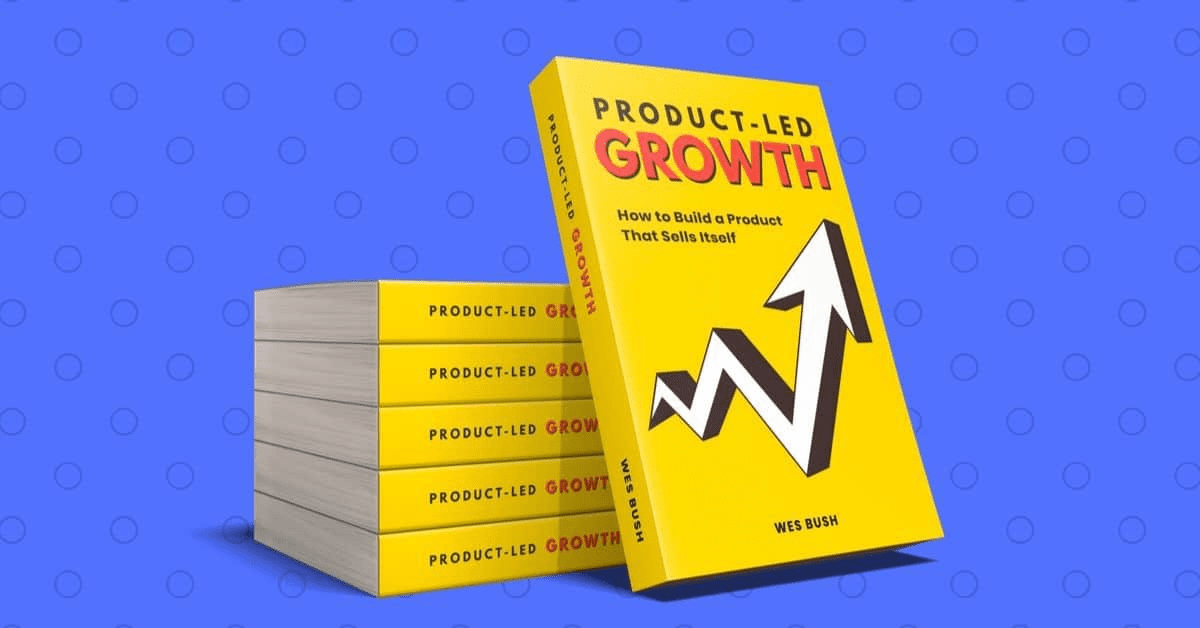

Product-Led Growth: How to Build a Product That Sells Itself
Quick Orientation
Wes Bush, founder and president of the Product-Led Institute, is a consultant and author who challenges traditional SaaS growth models. His background, including building a remote business and disrupting his own career path, fuels his perspective on the changing landscape of customer acquisition. Bush believes that the traditional sales-led playbook is becoming outdated and inefficient, and that the future of SaaS growth lies in leveraging the product itself as the primary acquisition, activation, and retention engine.
This book’s purpose is to provide a clear, executable strategy for implementing Product-Led Growth (PLG). It serves as a battle-tested playbook to help SaaS businesses navigate the challenges of rising customer acquisition costs and changing buyer preferences. By adopting a PLG model, companies can build a more sustainable and capital-efficient growth engine. This summary covers every key idea of the book in straightforward, easily understandable language.
Why Is Product-Led Growth of Rising Importance?
This chapter argues that the traditional sales-led growth model is facing significant challenges due to three major market shifts, necessitating a move towards Product-Led Growth for survival and success. It defines PLG as a go-to-market strategy where the product is the main vehicle for acquiring, activating, and retaining customers.
The Three Tidal Waves Disrupting SaaS Businesses
The landscape for SaaS companies is changing rapidly, making old methods less effective. Understanding these shifts is crucial for adapting and thriving in the current market. Companies relying solely on traditional sales and marketing methods are increasingly at risk.
- Rising Customer Acquisition Costs (CAC): While building a SaaS product is cheaper, acquiring customers has become significantly more expensive across various marketing channels. According to ProfitWell, CACs have increased by over 55% in the last five years.
- Buyer Preference for Self-Education: Modern buyers, both B2C and B2B, prefer to research and evaluate products on their own rather than interacting with a sales representative. Forrester reports that three out of four B2B buyers would rather self-educate.
- Product Experiences as an Essential Part of Buying: Customers expect to try and use software before making a purchase decision. The product itself is becoming a primary tool for customer onboarding and value demonstration, often requiring no human intervention for initial use and even upgrades.
- Impact on Profitability: The combination of increasing acquisition costs and decreasing customer willingness to pay for features puts significant pressure on profitability. This trend is particularly dangerous for businesses with high customer churn rates.
Comparing Sales-Led and Product-Led Growth Strategies
Choosing the right go-to-market strategy is critical for placing a SaaS business on high ground amidst market shifts. Understanding the pros and cons of traditional sales-led approaches versus the emerging product-led approach is essential for informed decision-making. Each strategy has distinct implications for cost, scale, and customer experience.
- Sales-Led Strategy Risks: This model relies heavily on a sales team to close every deal, creating significant friction in the buying process and keeping CAC high. It is particularly vulnerable to the three market tidal waves described earlier.
- Pros of Sales-Led: It can be effective for closing high Lifetime Value (LTV) enterprise customers, is suitable for hyper-niche solutions with small Total Addressable Markets (TAM), and works well for launching new categories that require extensive education and hand-holding.
- Cons of Sales-Led: Leads to high CAC and long sales cycles. The customer acquisition model is often leaky, with a low percentage of marketing-qualified leads (MQLs) converting. Organizational structures can often make the product an afterthought, pulled by the demands of large customers.
- Product-Led Strategy Benefits: Uses the product as the main vehicle for growth, leading to shorter sales cycles, lower CAC, and higher Revenue Per Employee (RPE). All teams within the company influence and leverage the product to achieve their goals.
- Pros of Product-Led: Creates a dominant growth engine with a wider top-of-funnel (free trials/freemium) and rapid global scale. Significantly lowers CAC due to reduced reliance on sales. Offers a better user experience by being built for self-onboarding.
- Higher Valuation for Product-Led Companies: OpenView notes that product-led businesses are valued over 30% higher than the public-market SaaS Index Fund. This demonstrates the market’s recognition of the efficiency and scalability of this model.
- Product-Led Challenges: While advantageous, implementing a successful Product-Led Growth strategy is difficult. It requires a fundamental shift in organizational approach and is not suitable for all businesses, as highlighted by the warning that freemium is a “Samurai sword” that can harm inexperienced users.
Mini-Recap: The increasing cost of customer acquisition, changing buyer preferences for self-education, and the expectation of product experience are major forces pushing SaaS companies towards Product-Led Growth. While sales-led has advantages in specific scenarios, product-led offers a more efficient and scalable alternative better suited to the modern market, provided the company is ready to commit to this fundamental shift in strategy and execution.
Choose Your Weapon—Free Trial, Freemium, or Demo?
This chapter presents the MOAT framework as a crucial tool for deciding the optimal go-to-market strategy: Free Trial, Freemium, or Demo. It emphasizes that selecting the wrong model can be detrimental to a business, and the choice depends on specific business characteristics rather than simply following others. The framework helps evaluate market conditions, competitive positioning, target audience, and time-to-value.
Understanding the Core Options and the MOAT Framework
Choosing between offering a demo, a free trial, or a freemium model is a critical decision that impacts every aspect of a go-to-market strategy. The MOAT framework provides a structured way to analyze which option is the best fit for a specific business context. Making an informed choice requires careful consideration of internal and external factors.
- Free Trial: Offers prospects full or partial access to the product for a limited time. This model allows users to experience the product’s full capabilities within a defined period.
- Freemium Model: Provides access to a limited version or set of features of the product indefinitely, without a time limit. The goal is to attract a large user base with a free offering.
- Demo Model: The traditional sales-led approach where a sales representative walks a prospect through the product’s features and benefits, typically requiring a request and scheduling. This is a high-touch approach.
- MOAT Framework Elements: The framework consists of Market Strategy (dominant, disruptive, or differentiated), Ocean Conditions (red or blue ocean), Audience (top-down or bottom-up selling), and Time-to-Value (how quickly value can be showcased). Each element influences the suitability of free trial, freemium, or demo.
Analyzing Market Strategy and its Impact
The type of growth strategy a company pursues significantly influences the effectiveness of different go-to-market models. Aligning the product offering and pricing with the competitive landscape is crucial for success. Different market strategies require different approaches to customer acquisition and value demonstration.
- Dominant SaaS Growth Strategy: Aiming to be significantly better and significantly cheaper than competitors. This strategy works best with a large Total Addressable Market (TAM) where a large volume of users can make the economics of a low-cost model work.
- Dominant Strategy and PLG: Both freemium and free trial models are effective in a dominant strategy. They help keep costs low and prevent competitors from gaining market share based on price. This model relies on providing exceptional value at a low cost.
- Differentiated SaaS Growth Strategy: Focusing on doing a specific job better than the competition and charging significantly more. This strategy involves specialization for underserved niches and often implies a higher Annual Contract Value (ACV).
- Differentiated Strategy and PLG: Free trials and demos work well with this approach due to the specialization and potential complexity of the product. A freemium model is often less suitable due to market size limitations and the difficulty of providing quick time-to-value with complex, specialized features.
- Disruptive SaaS Growth Strategy: Offering a simpler, often “inferior” product for a significantly lower price than existing solutions, targeting over-served customers. This approach thrives in hyper-competitive markets where existing solutions are overly complex or expensive for a segment of the market.
- Disruptive Strategy and PLG: The freemium model is ideal for a disruptive strategy. Keeping costs low is a competitive advantage, and the product must be easy to use to attract users from more complex alternatives. A free trial can work but is less magnetic than a permanent free option.
Determining Ocean Conditions and their Role
The competitive intensity of the market, or “ocean conditions,” impacts the most effective go-to-market approach. Operating in a crowded, competitive space requires a different strategy than being in a relatively new or underserved market. Understanding whether you are creating or harvesting demand is key.
- Red Ocean Companies: Competing in existing market space to exploit existing demand. This is a crowded environment where companies fight fiercely for market share, often leading to commoditization and price wars.
- Red Ocean and PLG: A product-led model is advantageous in a red ocean. It helps widen the funnel, decrease CAC, and enable rapid global expansion. Users in red oceans already understand the product category and its value proposition, making self-service models effective.
- Blue Ocean Companies: Creating new market space and generating new demand. Competition is less relevant in blue oceans, offering potential for highly profitable growth. Products in blue oceans often involve new approaches or require educating the market.
- Blue Ocean and PLG: If a product in a blue ocean has a quick time-to-value, a product-led model can still work. However, if the product is complex and requires significant education to understand its value and use case, a sales-led or marketing-led approach is often necessary initially to educate the market and create demand.
Mini-Recap: The choice between free trial, freemium, and demo is a strategic decision guided by the MOAT framework, considering market strategy and ocean conditions. Dominant and disruptive strategies often favor product-led models (freemium/free trial), especially in red oceans. Differentiated and complex blue ocean products may initially require sales-led approaches (demos/free trials), but transitioning to product-led arms is often a future goal for sustainable growth.
Audience: Do You Have a Top-Down or Bottom-Up Selling Strategy?
This chapter explores the shift in B2B purchasing power from executives to front-line employees and how this influences the choice of a top-down or bottom-up selling strategy. It highlights how Product-Led Growth aligns particularly well with a bottom-up approach, where the product drives adoption and eventual purchase.
Understanding Selling Strategies in SaaS
The traditional model of selling to top executives is evolving as products become more accessible and user-friendly. Deciding whether to target decision-makers at the top or empower users at the bottom impacts everything from sales processes to product design. The most effective selling strategy is often tied to the complexity and price point of the product.
- Top-Down Selling Strategy: Targets key decision-makers and executives for large product rollouts across an entire organization. This is the traditional approach for enterprise software, where uniformity and centralized purchasing are common.
- Characteristics of Top-Down: Involves high Annual Contract Value (ACV) deals and often includes additional services like training and implementation. Customer churn is typically lower due to the significant investment and time involved in implementation.
- Disadvantages of Top-Down: Can lead to poor revenue distribution, making the business vulnerable if a large customer churns. Involves high CAC due to extensive sales efforts and long sales cycles. Requires convincing internal teams to adopt the software after the sale is made.
- Bottom-Up Selling Strategy: Products are adopted initially by individual users or small teams, spreading organically throughout the organization based on value and ease of use. This strategy is common in the consumer market but is increasingly prevalent in B2B SaaS.
- Characteristics of Bottom-Up: Relies on the product as the primary growth engine for onboarding, showcasing value, and even upgrading users. Often employs free trial or freemium models to facilitate easy adoption.
- Benefits of Bottom-Up: Creates a wider top-of-funnel by allowing individuals to try the product. Results in significantly lower CAC due to reduced reliance on sales interactions. Offers more predictable sales figures based on user activity. Provides greater revenue diversity by attracting a broader market with smaller deal sizes. Enables rapid global scaling by focusing on product-led onboarding.
- Disadvantages of Bottom-Up: Involves smaller contract sizes, requiring a higher volume of sales. Risks accumulating a large base of non-paying customers if the freemium model is not designed effectively. Requires significant investment in product-led infrastructure and expertise. Can be challenging to find experienced professionals in launching and optimizing product-led models.
Aligning Selling Strategy with Product-Led Growth
The selling strategy must align with the go-to-market model to create synergy and avoid conflict. Combining incompatible strategies can lead to inefficiency and hinder growth. The natural fit for a product-led approach is a bottom-up selling strategy.
- Freemium and Top-Down: This combination rarely works. Decision-makers at the top are typically not everyday users and do not need to be onboarded via a freemium product. The value proposition and user experience do not align with the target audience for large enterprise deals.
- Freemium/Free Trial and Bottom-Up: This is a highly synergistic combination. It empowers individual users and teams to experience product value, champion the solution internally, and build a case for broader adoption and purchase within the organization. The product itself drives the initial engagement and adoption.
- Free Trial and Top-Down: This is a grey area and can be challenging. Companies with existing sales-led structures and processes may struggle to support a free trial that is not simply a “pseudo demo request.” Internal teams focused on MQL goals may see free trials as cannibalizing their efforts, hindering proper support and optimization. Success requires strong executive buy-in and a willingness to shift resources and mindset.
Mini-Recap: The shift in B2B purchasing power favors bottom-up selling strategies, which align naturally with Product-Led Growth models like freemium and free trials. While top-down selling remains relevant for complex enterprise deals, the efficiency and scalability of the bottom-up, product-led approach make it increasingly crucial for sustainable growth in the modern SaaS landscape. Aligning selling strategy with the product-led model is essential for maximizing synergy and avoiding internal conflict.
Time-to-Value: How Fast Can You Showcase Value?
This chapter highlights the critical importance of enabling users to experience the core value of a product quickly and without assistance in a product-led model. It introduces the concept of the “value gap” – the difference between perceived and experienced value – and identifies common reasons why users fail to reach their “Aha!” moment, emphasizing that reducing friction is key to successful onboarding and conversion.
The Importance of Rapid Time-to-Value
In a product-led world, the speed at which a new user experiences the core benefit of the product is paramount. Without quick access to value, users are likely to abandon the product, regardless of its potential. Optimizing the initial user experience to deliver value rapidly is a primary driver of activation and conversion.
- Core Principle: A quick time-to-value means new users can accomplish a key outcome in the product rapidly and independently. This outcome is the specific problem the user signed up to solve.
- Consequence of Slow Time-to-Value: If users require extensive help or navigate a complex setup process to see value, a large percentage will churn before ever realizing the product’s potential. Intercom notes that 40–60% of new users never return after signing up.
- The “Aha!” Moment: This is the point where the user truly understands the core value of the product and sees how it solves their problem. Enabling users to reach this moment quickly is the goal of effective onboarding.
- Identifying User Types Based on Motivation and Ease of Use: Users can be categorized by their motivation to use the product and how easy they find it to use. Optimizing for “Spoiled Users” (high motivation, easy to use) helps the largest segment of the TAM, but understanding other types (Mission Impossible, Rookie, Veteran) helps identify areas for improvement.
- Improving Time-to-Value: This involves enhancing both user motivation (e.g., through clear copywriting) and reducing friction in the user experience (e.g., by eliminating unnecessary onboarding steps). The key is to remove barriers to achieving the desired outcome.
- Controllable Factor: Unlike external market conditions (ocean), time-to-value is largely controllable by the company. Significant effort should be directed towards optimizing the product experience for speed to value.
The Value Gap: Perceived vs. Experienced Value
The difference between what a user expects from a product based on marketing and sales (perceived value) and what they actually experience when using the product (experienced value) is the value gap. Minimizing this gap is crucial for building trust and converting users. A large value gap leads to user disappointment and churn.
- Defining the Value Gap: The value gap is the disconnect between the promise made in marketing and the reality of using the product. A positive value gap occurs when experienced value exceeds perceived value; a negative gap is the opposite.
- Consequences of a Large Value Gap: A large negative value gap results in users signing up but never returning, creating a leaky funnel. It erodes trust and makes it difficult to convert users into paying customers.
- Common Causes of Value Gaps: Products with significant “ability debt” (difficult to use), companies that don’t truly understand why customers buy their product, and overpromising the product’s capabilities in marketing are primary drivers of value gaps.
- Ability Debt: Refers to the difficulty users face in accomplishing key outcomes within the product. It’s like a restaurant providing ingredients and tools instead of a finished meal. Reducing friction and complexity is key to paying down ability debt.
- Misunderstanding Customer Motivation: If a company doesn’t know the specific outcome a user is trying to achieve, they cannot effectively guide them to the right features or workflow, leading to frustration and abandonment.
- Poor Value Communication: Even with a great product, misinforming users about the product’s true function or the time it takes to achieve results creates a negative value gap. Clear and accurate communication is essential.
Mini-Recap: A quick time-to-value, where users experience the core value proposition rapidly and independently, is essential for Product-Led Growth. The “value gap,” the difference between perceived and experienced value, is a major barrier to conversion. Companies must understand the true motivations of their users, set realistic expectations, and ruthlessly eliminate friction and ability debt within the product to ensure users quickly reach their “Aha!” moment and realize the promised value.
Choose Your Product-Led Growth Model with the MOAT Framework
This chapter guides businesses in choosing the most suitable Product-Led Growth (PLG) model—Free Trial, Freemium, or a Hybrid—by leveraging the insights gained from the MOAT framework. It emphasizes that while the framework provides a strong indication, testing and adaptation are crucial.
Selecting the Ideal Product-Led Growth Model
After analyzing market strategy, ocean conditions, audience, and time-to-value using the MOAT framework, businesses are equipped to make an informed decision about their PLG model. The MOAT framework helps predict which model is likely to be most successful based on the specific context of the business and its product. The goal is to find the model that best facilitates user acquisition, activation, and conversion.
- MOAT Framework as a Decision Tool: The framework helps synthesize the analysis of Market Strategy (Dominant, Differentiated, Disruptive), Ocean Conditions (Red, Blue), Audience (Top-Down, Bottom-Up), and Time-to-Value (Fast, Slow) to point towards the most appropriate PLG model.
- Free Trial vs. Freemium Considerations: While seemingly similar, the go-to-market strategies for free trial and freemium are distinct. The MOAT analysis clarifies which set of strategies is more aligned with the business’s characteristics and goals.
- Using a Quiz for Guidance: The author recommends a quiz at productled.com/quiz as a practical application of the MOAT framework to help determine the best model. This tool provides a structured way to apply the framework’s logic to a specific business.
- Dynamic Nature of the Framework: The MOAT framework and its recommendations can change as the business and market mature. What works at an early stage might not be optimal later, requiring periodic re-evaluation.
Exploring Hybrid Product-Led Growth Models
For many businesses, a pure free trial or freemium model might not be the perfect fit, or a staged approach might be preferable. Hybrid models allow companies to combine elements of different strategies or introduce PLG gradually to de-risk the transition. These models offer flexibility and allow for experimentation.
- Hybrid Model 1: Launch a New Product: Established businesses can introduce a product-led model by launching a new, separate product with a free trial or freemium offering. This allows for experimentation, building internal expertise, and validating the PLG model without disrupting existing revenue streams or sales processes for core products. Vidyard’s launch of GoVideo is cited as an example.
- Hybrid Model 2: Go Freemium, with a Trial: A freemium model can incorporate free trials for premium features. This strategy is effective for products with many features, where the core offering is valuable for free, but advanced functionalities are offered on a limited-time trial basis within the free product. HubSpot uses this approach to upsell users from their free tools to paid features.
- Hybrid Model 3: Go Free Trial, Follow with Freemium: If a user does not convert at the end of a free trial, they are transitioned to a limited freemium version of the product. This keeps the user engaged with a basic version of the product and maintains brand awareness, offering a less intrusive alternative to full feature lockout. Nudge.ai’s free Gmail tool is an example of this post-trial freemium offering.
- Other Hybrid Possibilities: Businesses can creatively combine aspects of different models to suit their unique needs and target audience. The three outlined are the most common, but the framework encourages innovation in how value is delivered and monetized.
Mini-Recap: The MOAT framework provides a robust method for determining whether a free trial, freemium, or demo model is best suited for a business, taking into account market strategy, ocean conditions, audience, and time-to-value. Hybrid models offer flexible ways to implement PLG, whether through launching new products, layering trials within freemium, or offering a freemium option after a trial, allowing for de-risking and phased adoption.
Build a Product-Led Foundation
This chapter introduces the UCD framework—Understand, Communicate, Deliver—as the essential three-step process for building a strong foundation for a product-led business. It emphasizes that successful PLG is not just about offering a free option but requires a fundamental shift in how a company operates, ensuring the product consistently delivers on its promises.
The UCD Framework: Pillars of a Product-Led Business
Building a product-led business involves transforming the core operations to center around the product experience. The UCD framework provides a structured approach to ensure that the product effectively attracts, engages, and converts users. Each step builds upon the previous one, creating a cohesive and effective growth engine.
- Understand Your Value: This initial step focuses on deeply understanding the outcomes customers seek when using the product. It goes beyond functional tasks to include emotional and social outcomes.
- Communicate the Perceived Value: This step involves clearly and effectively articulating the product’s value proposition to potential customers, particularly on the pricing page and throughout marketing. This sets expectations for what the user will experience.
- Deliver on Your Value: This final and arguably most critical step ensures that the actual user experience in the product meets or exceeds the perceived value communicated in marketing. It involves optimizing the product to enable users to quickly achieve their desired outcomes.
- Applicability of the Framework: The UCD framework is applicable to various scenarios, including launching a new product-led business, creating a product-led arm within an existing company, transitioning from sales-led to product-led, or re-optimizing an underperforming product-led model.
Understanding Your Value: Beyond Features to Outcomes
Many companies focus on selling features, but customers buy outcomes. Identifying the specific functional, emotional, and social outcomes that motivate purchase is fundamental to building a product that truly resonates and sells itself. This deep understanding informs pricing, messaging, and product development.
- Functional Outcome: The core tasks the product helps users complete. For example, for live-chat software, the functional outcome is enabling real-time communication with website visitors.
- Emotional Outcome: How users want to feel (or avoid feeling) as a result of achieving the functional outcome. For instance, a user of live-chat software might want to feel proactive and responsive to customer needs, avoiding the frustration of missed opportunities.
- Social Outcome: How users want to be perceived by others as a result of using the product. Using a sleek, efficient live-chat tool might lead a support agent to be seen as professional and highly effective by colleagues or management.
- Identifying Outcomes: Requires dedicated customer research and analyzing product usage patterns. Companies must actively seek to understand the deeper motivations behind why people use their product.
- Value Metrics: These are quantitative measures that track the value exchange within the product, indicating whether users are achieving meaningful outcomes. Value metrics should align directly with the core value proposition.
- Functional vs. Outcome-Based Value Metrics: Functional metrics measure usage (e.g., videos uploaded), while outcome-based metrics measure the result of usage (e.g., revenue generated or time saved). Outcome-based metrics are generally more strongly correlated with customer success and retention.
- Characteristics of a Good Value Metric: Should be easy for the customer to understand, aligned with the value they receive, and grow with the customer’s usage of that value. This ensures that pricing scales fairly and predictably with customer success.
Defining and Measuring Value Metrics
Identifying and tracking value metrics is crucial for understanding product engagement and customer success. These metrics serve as indicators of whether users are progressing towards their desired outcomes. They also play a significant role in refining pricing strategies and internal operations.
- Purpose of Value Metrics: To monitor whether users are achieving meaningful outcomes in the product and to serve as a basis for pricing and packaging. They align the company’s success with the customer’s success.
- Mistake of User-Based Pricing: For many products (except those with strong network effects like Slack), charging purely based on the number of users does not align with the value users receive and can hinder adoption and growth within organizations. It’s often easier for users to limit usage than to prove the value of additional seats.
- Finding Your Value Metric (Subjective Analysis): Start by brainstorming potential value metrics based on your understanding of customer outcomes and run them through a “Value Metric Scratch Pad” checklist that evaluates clarity, alignment with value, and potential for growth with the customer.
- Finding Your Value Metric (Data-Driven Approach): Analyze product usage data, segmenting by best and worst customers, to identify patterns of activity correlated with success and churn. Look for the specific actions that lead to users achieving meaningful outcomes.
- Stress Testing Value Metrics: Use methods like the Van Westendorp Price Sensitivity Meter or relative preference analysis to gather direct feedback from customers on how they perceive the value of different potential metrics and their willingness to pay.
Mini-Recap: The Product-Led Growth foundation rests on understanding, communicating, and delivering value. Understanding value means identifying the functional, emotional, and social outcomes customers seek. This informs the selection and measurement of value metrics, which are quantitative indicators of value exchange in the product. Choosing the right value metric, aligned with customer success, is crucial for effective pricing and monitoring product-led growth.
Communicate Your Value
This chapter focuses on effectively communicating the product’s value, particularly through the pricing page, which is a critical touchpoint in a product-led business. It discusses common mistakes in pricing, explores different pricing strategies, and provides methods for determining the optimal price point and structuring pricing tiers to resonate with target audiences and encourage conversion.
The Critical Role of the Pricing Page
In a product-led model, the pricing page is not just a list of costs; it’s a key part of the customer acquisition funnel. Unlike sales-led businesses that hide pricing, product-led companies embrace transparency, making it easy for users to understand the value and cost upfront. A well-designed pricing page facilitates self-service conversion.
- Transparency and Friction Reduction: Product-led businesses remove the friction of requiring prospects to request pricing or demos by providing clear, upfront pricing information for most plans. This aligns with the modern buyer’s preference for self-education and ease of access.
- Pricing Page as an Acquisition Tool: A confusing or poorly structured pricing page can deter potential users from signing up for free trials or freemium options. It must clearly convey the value proposition and guide users to the appropriate plan.
- Marriage of Revenue and Acquisition Models: In product-led businesses, the pricing model is tightly integrated with the customer acquisition model. Flaws in pricing directly impact the effectiveness of the free trial or freemium funnel.
- Common Pricing Mistakes: Overcomplicating the pricing page, creating a free plan with no clear incentive to upgrade, and structuring pricing so that a majority of paying customers can easily downgrade to a free plan are frequent pitfalls.
Understanding Pricing Strategies
The approach a company takes to setting prices significantly impacts its profitability and market position. Moving beyond guesswork or simply copying competitors towards a value-based approach is crucial for sustainable growth and ensuring that pricing reflects the true benefit provided to the customer.
- Best-Judgement Pricing: Setting prices based on intuition or perceived value without formal data or customer research. This is the least effective method and can lead to underpricing or overpricing relative to customer willingness to pay.
- Cost-Plus Pricing: Calculating the cost of delivering the product and adding a profit margin. While ensuring profitability per customer, it often leaves significant potential revenue on the table by not accounting for the value received by the customer.
- Competitor-Based Pricing: Setting prices based on what competitors are charging. This approach assumes competitors have optimized their pricing based on customer value and that your product and target market are identical, which is rarely the case. It’s a reactive rather than proactive strategy.
- Value-Based Pricing: Basing the price on the perceived and experienced value the customer receives from the product. This approach requires deep customer understanding and research and allows companies to capture a greater share of the value they create for their customers. It also informs product development by highlighting which features are most valued.
Determining and Communicating Price
Finding the right price point is a balance between maximizing revenue and ensuring broad accessibility. Value-based pricing, supported by customer research, is the recommended approach. Translating this understanding into a clear and compelling pricing page is the final step in effectively communicating value.
- Value Economic Analysis (Option 1): A method for estimating the value a customer receives by quantifying the functional outcome (e.g., cost savings, revenue increase) and qualitatively considering emotional and social outcomes. This analysis helps determine a price based on a fraction of the total value delivered (e.g., the 10x Rule).
- Market and Customer Research (Option 2): Using structured research methods, like the Van Westendorp Price Sensitivity Meter, to directly measure customer willingness to pay at different price points. This identifies an acceptable price range, avoiding pricing too high (losing sales) or too low (losing profits and perceived quality).
- Implementing Market Research: Involves asking specific questions about what prices are perceived as too expensive, expensive, a bargain, or too cheap. This can be done through surveys or interviews, ideally with existing customers and Product Qualified Leads (PQLs). Analyzing the intersection of responses reveals acceptable price ranges.
- What to Include on Your Pricing Page: Key elements include clearly stating the Value Metric used for pricing, showcasing the willingness to pay data (implicitly or explicitly), highlighting the most Valued Features within each tier (using categories like Leaders, Fillers, and Bundle Killers), and potentially using Demographic Information (naming tiers after personas) to aid self-segmentation.
- Structuring Pricing Tiers: Limit the number of options (ideally three) to avoid the Paradox of Choice. Clearly differentiate tiers based on value metrics and included features that are most relevant to the target audience for each tier. Highlight a recommended or most popular plan to guide decisions.
Mini-Recap: Effectively communicating value is central to Product-Led Growth, with the pricing page serving as a crucial touchpoint. Moving to a value-based pricing strategy, informed by a deep understanding of customer outcomes and supported by quantitative research, is essential for setting prices that align with value and encourage conversion. Structuring a clear, concise pricing page that highlights value metrics and relevant features is key to minimizing friction and maximizing customer acquisition within a product-led model.
Deliver on Your Value
This chapter delves into the critical third step of the UCD framework: delivering on the value promised to customers. It emphasizes the importance of minimizing the “value gap” by ensuring the experienced value in the product meets or exceeds the perceived value from marketing. Tackling “ability debt” and ensuring users can quickly achieve desired outcomes within the product are highlighted as key strategies.
Closing the Value Gap
The success of a product-led business hinges on its ability to consistently deliver the value it promises. A significant value gap leads to user churn and a failure to convert free users into paying customers. Addressing the reasons behind this gap is paramount for improving user activation and retention.
- Value Gap Defined: The difference between what customers expect the product to do (perceived value) and what they actually experience when using it (experienced value). In an ideal scenario, perceived value equals or is slightly less than experienced value.
- Impact of a Negative Value Gap: Users sign up but fail to achieve their desired outcomes, leading to disappointment and abandonment. This results in a leaky funnel and wasted acquisition efforts.
- Reasons for Value Gaps: Common causes include significant “ability debt” (the product is hard to use), a lack of understanding of users’ true motivations and desired outcomes, and overpromising the product’s capabilities in marketing.
- Focus on Delivering Value: The primary goal is to help users successfully accomplish the key outcome they signed up for as quickly and easily as possible within the product. This builds trust and makes upgrading a logical next step.
Conquering Ability Debt
Ability debt is the friction and complexity users face in using the product to achieve their goals. Reducing this debt is crucial for improving the user experience and enabling rapid time-to-value. This involves simplifying workflows, providing clear guidance, and removing unnecessary barriers.
- Ability Debt as a Barrier: It’s the cost incurred when users struggle to complete essential tasks or reach key outcomes. Like providing ingredients instead of a finished meal, it puts the burden on the user to figure things out.
- Ruthless Friction Reduction: Identifying and eliminating unnecessary steps, complex configurations, and confusing interfaces in the user onboarding and core workflows. Even small points of friction can significantly impact conversion rates.
- Example of Friction Reduction: Snappa’s experience of removing the email activation step from their sign-up flow, which significantly increased login rates and MRR. Challenging every required step in the onboarding process is essential.
- Assessing Ability Debt: Ask critical questions about the first product experience: Does it lead to a quick win? Are tooltips and cues helpful? Are unnecessary steps removed? Regularly auditing the user journey from a first-time perspective is crucial.
Understanding User Motivation and Intent
Knowing why users sign up for your product is fundamental to guiding them towards success. Failing to understand their desired outcomes means you cannot effectively streamline their path or provide relevant support, increasing the likelihood of them getting lost or giving up.
- The “Why” Behind Signups: Users come to the product with a specific problem to solve or outcome to achieve. Identifying this core motivation is the starting point for designing an effective onboarding experience.
- Catapulting Users to Value: Once the desired outcome is known, the onboarding process should be designed to get users to the part of the product where they can achieve that outcome as quickly as possible. Canva’s approach of directing users directly to poster creation after searching for “how to make a poster” is a prime example.
- Avoiding Irrelevant Onboarding: Traditional onboarding often walks users through every feature, regardless of their specific needs or motivations. This is inefficient and distracts from the user’s primary goal, increasing the value gap.
- Importance of Outcome-Focused Onboarding: Every step in the onboarding process should be designed to move the user closer to experiencing the value they expected. Unnecessary steps, even if they showcase features, should be removed if they don’t directly contribute to achieving the desired outcome.
Communicating Value Clearly and Setting Expectations
Beyond the pricing page, clear and consistent communication of the product’s value and what users can realistically expect is vital throughout the entire user journey. Misleading users, even unintentionally, creates a negative value gap that is hard to overcome.
- Avoiding Misinformation: Ensure marketing and onboarding accurately reflect what the product does, how long it takes to achieve results, and the effort required from the user. Avoid hyping features or outcomes beyond what the product can realistically deliver.
- Impact on Brand and Retention: Failing to deliver on promised value damages brand reputation and directly leads to higher churn rates. Trust is built by consistently meeting or exceeding expectations.
- Internal Alignment: Delivering on value requires alignment across all teams, including product, engineering, marketing, and sales. Everyone must understand the core value proposition and work together to ensure the product delivers it effectively.
Mini-Recap: Delivering on the value promised is the cornerstone of a successful product-led business. This involves minimizing the value gap by ensuring the experienced value in the product matches the perceived value from marketing. Key strategies include conquering “ability debt” by ruthlessly removing friction in the user experience, deeply understanding user motivations to guide them towards desired outcomes, and consistently communicating value clearly and accurately throughout the user journey.
The Most Common Mistake that New Product-Led Businesses Make
This chapter highlights a critical pitfall for companies adopting Product-Led Growth: launching the model without establishing clear ownership and a continuous optimization process. It stresses that a product-led engine requires dedicated resources and a team accountable for its performance, much like a plant needs consistent care to thrive.
The Pitfall of Lack of Ownership
Launching a free trial or freemium model is not a one-time project; it’s the beginning of a continuous process of optimization. Failing to assign clear ownership for this process means the product-led engine will likely stagnate and fail to deliver its full potential, leading to disappointment and a potential return to older, less efficient models.
- The “Watering the Plant” Analogy: Like a plant that withers without consistent care, a product-led model requires ongoing attention, analysis, and improvement. Without someone specifically responsible for its health, it will not grow effectively.
- Ambiguity in Responsibility: In many companies, it’s unclear which team (marketing, sales, customer success, product) is responsible for optimizing the performance of the free trial or freemium model. When everyone is responsible, often no one takes full ownership.
- Resistance from Existing Teams: Launching a product-led model can sometimes face internal resistance, particularly from sales teams concerned about cannibalizing demo requests or product teams focused on existing roadmaps. Without clear executive buy-in and a dedicated owner, these internal hurdles can prevent optimization efforts.
- Need for a Dedicated Team or Owner: To ensure the product-led engine thrives, a specific individual or team must be assigned ownership and accountability for its performance metrics. This team needs the authority and resources to make necessary changes.
Building the Right Team for Product-Led Growth Optimization
Establishing a dedicated team or assigning ownership requires careful consideration of skill sets and internal influence. A cross-functional “tiger team” with representation from key departments is often the most effective way to ensure a holistic approach to optimizing the product-led user journey.
- Options for Team Structure: Companies can opt for trial and error (risky and slow), hiring a dream team (expensive and time-consuming recruitment), or training their existing team (often the fastest way to leverage existing product and customer knowledge).
- The Cross-Functional “Tiger Team”: A recommended approach is to create a small team with representatives from Development, User Experience, Product Management, Customer Success, Digital Marketing/Inside Sales, the CEO, and the CPO or CTO. This ensures diverse perspectives and facilitates buy-in.
- Importance of Influence: Members of the tiger team should be influential within their respective departments to champion the product-led initiative and secure cooperation from other teams.
- Empowering the Team: The tiger team needs the autonomy to experiment and implement changes focused on helping users succeed with the product, even if it involves unconventional or non-scalable initial efforts.
- Starting Small: Begin by collecting ideas from the entire company on how to improve the product-led model. This low-effort initial step can yield valuable insights and foster a culture of ownership and contribution.
Establishing a Continuous Optimization Process
Beyond having a dedicated team, a structured process for continuous improvement is essential for the long-term success of a product-led model. A systematic approach to analyzing performance, gathering feedback, and implementing changes ensures that optimization is ongoing and data-driven.
- The Need for a Process: Optimization is not a one-time fix; it requires a repeatable process to consistently identify areas for improvement and implement solutions.
- Focus on Bottlenecks: The biggest hurdles to optimizing a product-led model are often not product limitations but rather the absence of a clear owner, a dedicated team, and a defined optimization process.
- Moving Beyond Launch: Simply launching a free trial or freemium is insufficient. The real work and opportunity lie in the continuous process of iterating and improving the user experience based on data and feedback.
Mini-Recap: A critical mistake for new product-led businesses is failing to establish clear ownership and a continuous optimization process after launch. Without a dedicated team or individual responsible for nurturing the product-led engine, and a systematic approach to improvement, the model is likely to underperform. Building a cross-functional “tiger team” and empowering them with a structured optimization process is essential for long-term success.
Ignite Your Growth Engine
This chapter shifts focus from building the foundation to actively optimizing and scaling the product-led growth engine. It introduces the “Triple A” sprint framework—Analyze, Ask, Act—as a repeatable process for driving continuous improvement. The chapter sets the stage for the following sections, which will delve into specific levers for growth: increasing customer numbers, boosting Average Revenue Per User (ARPU), and reducing churn.
The Triple A Sprint: A Framework for Continuous Optimization
To achieve sustainable growth with a product-led model, companies need a consistent process for identifying opportunities, developing solutions, and measuring their impact. The “Triple A” sprint provides a structured, monthly cycle for driving this optimization. This framework ensures that teams are regularly focused on improving the product-led funnel.
- Purpose of the Framework: To establish a sustainable process for rapidly identifying problems, building solutions, and measuring the impact of changes within the product-led model. It ensures that optimization is an ongoing activity rather than a one-off effort.
- Structure: The framework consists of three phases: Analyze (reviewing performance data), Ask (gathering insights and identifying levers for improvement), and Act (implementing changes and measuring results).
- Sprint Cycle: The Triple A process is designed to be completed within a monthly sprint, allowing for rapid iteration and continuous learning. This cadence keeps the team focused and agile.
- Requirement for a Good Product: The framework is most effective when applied to a product that users already find valuable. No amount of optimization can fix a fundamentally bad product.
- Potential for Significant Growth: Companies that consistently apply this framework can see substantial increases in key metrics like ARR, demonstrating its effectiveness in driving growth.
The First “A”: Analyze Your Business
Data is the starting point for optimization. Regularly analyzing key outputs provides insight into where the product-led engine is performing well and where it is struggling. Focusing on the right metrics is crucial for identifying areas that require attention.
- Importance of Analysis: Understanding inputs (marketing channels, product features) and their impact on outputs (revenue, customers) is essential for building a predictable growth machine.
- Recurring Analysis: Scheduling regular time (e.g., the first workday of each month) for analyzing performance data ensures that it becomes a consistent practice.
- Focusing on Outputs: Instead of getting lost in vanity metrics or micro-conversions, concentrate on macro outputs that directly indicate business health and performance.
- Key Macro Outputs for Product-Led Businesses: Tracking metrics such as the number of signups, upgrades, ARPU, customer churn, ARR, and MRR provides a clear picture of the product-led engine’s performance.
- Identifying Areas for Improvement: Comparing these outputs over time helps pinpoint which areas of the business are underperforming and require focused optimization efforts.
The Second “A”: Ask the Right Questions
Analysis reveals what is happening, but asking the right questions helps understand why and how to improve. This involves defining goals, identifying the levers that drive those goals, and brainstorming inputs that can influence those levers. Strategic questioning leads to actionable insights.
- Where Do You Want to Go?: Clearly defining the business’s goals, whether through a North Star Metric, revenue targets, or OKRs. Having a clear target provides direction for optimization efforts.
- Which Levers Can You Pull?: Identifying the main drivers of growth. In a SaaS business, these are primarily Churn (reducing customer loss), Average Revenue Per User (ARPU) (increasing revenue per customer), and Number of Customers (acquiring new customers).
- Multiplier Effect: Focusing on reducing churn and increasing ARPU often has a more significant multiplier effect on overall revenue growth than solely focusing on acquiring new customers, especially for established businesses.
- Prioritizing Levers: Analyzing the current performance of each lever helps determine which one, if optimized, would have the biggest impact on achieving the business’s goals.
- Which Inputs Should We Invest In?: Brainstorming potential actions or experiments (inputs) that could influence the chosen growth lever. This links the analysis of outputs to potential solutions.
- Identifying Areas of Underperformance: Recall the UCD framework issues (not understanding value, poor communication, failing to deliver) to pinpoint likely areas where inputs are needed.
- Prioritization System: Using a framework like ICE (Impact, Confidence, Ease) helps filter brainstormed ideas and prioritize the experiments most likely to have a significant impact with reasonable effort and confidence.
- Compiling Ideas: Create an Input Log to track and prioritize potential optimization experiments, ensuring valuable ideas are not lost and are evaluated systematically.
The Third “A”: Act and Implement Changes
Ideas are only valuable when put into action. The final phase of the Triple A sprint involves implementing the highest-priority inputs identified in the analysis and questioning phases. This requires execution and the ability to measure the results of the implemented changes.
- Execution is Key: The success of the Triple A sprint relies on the team’s ability to implement the chosen inputs efficiently.
- Starting Small for Quick Wins: When first implementing the framework, prioritize inputs that are easy to implement and have a moderate to high estimated impact. This builds momentum and demonstrates the value of the optimization process.
- Taking Bigger Swings: As the team gains experience and trust, they can tackle more complex and potentially higher-impact experiments that require more resources and time.
- HubSpot’s Experimentation Approach: HubSpot’s transition to a freemium model involved a similar process of starting with quick wins to build trust, then moving to more complex experiments, including testing pricing changes.
- Measuring Results: After implementing an input, it’s crucial to track its impact on the target output metric to determine its effectiveness and inform future optimization efforts.
Mini-Recap: The Triple A sprint (Analyze, Ask, Act) provides a repeatable, monthly framework for continuous optimization of the product-led growth engine. It starts by analyzing key outputs to identify areas of struggle, asks questions to pinpoint the most impactful growth levers (Churn, ARPU, Customers) and potential inputs, and concludes with acting by implementing prioritized experiments. This process, supported by a dedicated team and a prioritization system like ICE, is essential for driving sustainable product-led growth.
The Bowling Alley Framework
This chapter introduces the Bowling Alley Framework as a powerful system for optimizing user onboarding to increase customer conversion. It uses the analogy of bowling with bumpers to illustrate how to guide users along a “straight line” to their desired outcome within the product, preventing them from getting lost or abandoning the process.
Guiding Users to Success
Just as bowling bumpers prevent the ball from falling into the gutter, effective onboarding bumpers guide users through the initial product experience. The goal is to ensure users quickly reach their “Aha!” moment and understand the product’s value, increasing the likelihood of conversion. This framework combines both product and conversational elements.
- The Bowling Analogy: Users are like the bowling ball, aiming to knock down the pins (achieve their desired outcome). Without guidance (bumpers), they can easily fall into the gutter (get lost or leave the product) and fail to reach their goal.
- Purpose of Bumpers: To keep users on the “straight line” – the most direct path to experiencing the core value of the product. They prevent sidetracking and encourage users to return.
- Components of the Framework: Developing a “straight line” (the essential steps to value), creating “product bumpers” (in-app guidance), and building “conversational bumpers” (out-of-app communication).
Developing Your Straight Line
The “straight line” is the most efficient sequence of steps a user must take to achieve their desired outcome in the product. Identifying and streamlining this path by removing unnecessary steps is the foundational step in optimizing onboarding. This requires a critical assessment of the current user journey.
- Shortest Distance to Value: The straight line represents the minimal number of steps required for a user to experience the core value proposition. It contrasts with lengthy, feature-heavy onboarding processes.
- Identifying Unnecessary Steps: Many onboarding processes include redundant form fields, non-essential setup steps, or features introduced too early. These create friction and lengthen the time-to-value.
- Mapping Out the Path: Document every step a user takes from signing up to achieving a meaningful outcome. Screenshots or process mapping tools can be helpful here.
- Labeling Steps: Categorize each step as Green (absolutely necessary), Yellow (advanced, can be delayed), or Red (can be removed). Be ruthless in identifying and removing red steps and pushing yellow steps later in the user journey.
- Creating a Superhighway: By removing red steps and delaying yellow ones, you create a faster, less obstructed path for users to reach their desired outcome, like adding green lights to a busy road.
Creating Product Bumpers (In-App Guidance)
Product bumpers are elements within the application itself that guide users and facilitate their journey along the straight line. They provide context, instructions, and encouragement at key points, helping users navigate the product and complete necessary tasks.
- Mission Critical: Product bumpers are essential because they directly impact the user’s experience within the product, where they either find value or get stuck.
- Examples of Product Bumpers: Welcome Messages, Product Tours, Progress Bars, Checklists, Onboarding Tooltips, and Empty States.
- Welcome Messages: Greet new users, restate the value proposition, and set expectations. They make users feel invited and increase motivation.
- Product Tours: Guide users through crucial initial steps, often focusing on the most important green-light items in the straight line. They are most effective when limited to a few steps and using “focus mode” to minimize distractions.
- Progress Bars: Visually show users how far they’ve come and how much is left to complete a task or setup process. They leverage our addiction to progress and are more motivating when starting with a partially filled bar.
- Onboarding Checklists: Break down complex tasks into smaller, manageable steps. They leverage the “endowed progress effect” (starting with some items checked) and the “Zeigarnik effect” (the psychological need to complete unfinished tasks).
- Onboarding Tooltips: Provide context or instruction on specific features or actions. They should guide users towards valuable outcomes, not just point out buttons.
- Empty States: Appear when a user first lands on a product page with no data. They can guide users on the necessary steps to populate the page and experience value, serving as less intrusive guides than full product tours.
- Strategic Use: Product bumpers should be used judiciously where there is a clear need to guide or inform, based on identifying points of friction in the user journey.
Building Conversational Bumpers (Out-of-App Communication)
Conversational bumpers are communications sent outside the product to educate users, remind them to return, encourage upgrades, or announce new features. They serve as nudges that complement the in-app guidance, helping to pull users back to the straight line if they get sidetracked.
- Purpose of Conversational Bumpers: To re-engage inactive users, educate them on how to achieve value, set expectations, and motivate them to use and eventually purchase the product.
- Communication Mediums: Can include email, push notifications, explainer videos, direct mail, or SMS. Email is a common and effective medium.
- User Onboarding Emails: A sequence of emails designed to guide users through the onboarding process and move them towards becoming paying customers. They act as connective tissue between key activities in the user journey.
- Types of User Onboarding Emails: Welcome Emails, Usage Tips, Sales Touches, Usage Reviews, Case Study, Better Life, Post-Trial Survey, Expiry Warning/Trial Extension, and Customer Welcome Emails.
- Welcome Emails: Sent immediately upon signup to greet the user, restate the value proposition, and set expectations. They have high open rates and should train users to engage with future emails.
- Usage-Tip Emails: Provide helpful guidance on how to complete specific steps in the product that are part of the straight line to value. They are best when triggered by user actions (or inactions).
- Sales-Touch Emails: Emails specifically aimed at encouraging an upgrade. The best timing is when a user has already experienced meaningful value. They should be framed as helpful offers to get more value.
- Case-Study Emails: Share stories of how other customers have achieved success with the product. They are effective at addressing potential objections and demonstrating the tangible benefits of upgrading.
- Better-Life Emails: Highlight the benefits and positive outcomes users will experience by using the paid version of the product. They focus on the functional, emotional, and social results.
- Expiry-Warning Emails: Sent for free trials to notify users before their trial ends. They must clearly state the deadline, what happens after expiration, and provide clear calls to action for upgrading or canceling (if a credit card is required).
- Customer-Welcome Emails: Sent immediately after a user upgrades to a paid plan. They reassure the customer they made the right decision, remind them of the new capabilities they have access to, and set expectations for future support.
- Post-Trial Survey Emails: Sent to users who did not convert after a free trial to understand why. The responses can trigger targeted follow-up actions, such as trial extensions or customer success calls, to win back potential customers.
- Smart Conversational Bumpers: Building a system where emails or other communications are triggered based on user actions or progress within the product (signals like Signup, Quick Win, Desired Outcome, Customer) rather than being time-based only. This creates a more personalized and relevant onboarding experience.
Mini-Recap: The Bowling Alley Framework provides a comprehensive approach to optimizing user onboarding by developing a “straight line” to value and using both product and conversational “bumpers” to guide users. Identifying and eliminating unnecessary steps, leveraging in-app elements like product tours and checklists, and implementing triggered communication sequences based on user behavior are key to ensuring users successfully reach their desired outcomes and convert into paying customers.
Increase Your Average Revenue Per User (ARPU)
This chapter focuses on optimizing the Average Revenue Per User (ARPU) as a critical lever for capital-efficient growth in a product-led business. It explains how ARPU is calculated, why it’s important beyond simply acquiring more customers, and outlines strategies for increasing it, including using value metrics in pricing, optimizing pricing tiers, and improving customer success and upselling efforts.
Understanding and Calculating ARPU
ARPU is a key metric that indicates how effectively a business is monetizing its user base. While the definition of “user” can vary, consistently calculating and tracking ARPU provides valuable insights into the financial health and growth potential of the business. Focusing on ARPU complements customer acquisition efforts.
- Definition of ARPU: Average Revenue Per User (or sometimes ARPPU, ARPS, ARPA, ARPC) measures the average revenue generated by each user or account over a specific period, typically a month or year.
- Calculation: The most common formula is Total MRR (Monthly Recurring Revenue) divided by the total number of users (or paying users/accounts) in that period.
- Consistency in Definition: Regardless of the specific term used (ARPU, ARPPU, etc.), it’s crucial that everyone in the company uses the same definition and calculation method for consistency and accurate analysis.
- Importance Beyond Acquisition: While acquiring new customers is vital, increasing the revenue generated from existing customers is often a more profitable and sustainable path to growth. Repeat customers tend to spend more than new ones.
Why ARPU Matters for Business Strategy
Knowing and understanding ARPU has significant implications for marketing, sales, and identifying profitable customer segments. It helps businesses make informed decisions about which acquisition channels are economically viable and which types of customers are most valuable in the long term.
- Informing Marketing Strategy: ARPU helps determine how much a business can afford to spend to acquire a new customer (CAC). A low ARPU might limit the use of expensive channels like paid marketing or direct enterprise sales, while a high ARPU allows for investment in these areas.
- Evaluating Sales Viability: For businesses considering a sales team, ARPU is a critical factor in determining if the potential revenue from customers acquired through sales justifies the high cost of a sales force and long sales cycles.
- Identifying Profitable Customers: By analyzing ARPU across different customer segments, businesses can identify their most valuable customers. This insight can inform ideal customer profiles and focus acquisition and retention efforts on segments that contribute most to revenue.
- Avoiding “Bad Revenue”: Pursuing rapid growth without considering ARPU can lead to acquiring low-value, distracting customers who consume resources disproportionately to the revenue they generate. Focusing on ARPU encourages prioritizing profitable customer segments.
Strategies for Optimizing ARPU
Increasing ARPU involves a combination of strategic pricing, product packaging, and customer success initiatives aimed at encouraging users to gain more value from the product and, in turn, pay more. It’s about growing with the customer rather than simply charging them more arbitrarily.
- Using Value Metrics: Pricing based on a value metric ensures that as customers derive more value from the product (which can be measured by the value metric), their cost increases proportionally. This aligns the revenue model with customer success.
- Aligning Revenue and Acquisition Models: The pricing structure must support the product-led acquisition model. Arbitrarily increasing prices without adding proportional value can hurt conversion rates, while giving away too much for free can lead to low ARPU and unsustainable economics.
- Improving Pricing Tiers: Optimize pricing tiers by reducing the number of options (ideally three or fewer) to combat the Paradox of Choice and guide users towards suitable plans. Clearly differentiate tiers based on value metrics and features relevant to different customer segments.
- Raising Prices: Periodically increasing prices, even for inflation, can have a significant cumulative impact on ARPU over time. Businesses often undercharge for the value they provide, leaving potential revenue on the table.
- Treating Best Users Well: Recognize that not all users or accounts contribute equally to revenue. Focus on identifying and providing an exceptional experience for high-ARPU users or accounts, as they represent a disproportionate amount of total revenue. Avoid creating operational friction for your best leads.
- Upselling and Cross-selling: Actively offer additional features, add-ons, or services (upselling) or entirely different but complementary products (cross-selling) to existing customers. Using value metrics facilitates natural upselling as usage increases. HubSpot’s expansion from marketing automation to sales and service hubs is an example of effective cross-selling.
- Customer Success Role: A strong customer success function is crucial for identifying expansion opportunities and helping customers gain more value from the product, which can lead to increased usage of value metrics and, subsequently, higher ARPU.
Mini-Recap: Optimizing Average Revenue Per User (ARPU) is a vital strategy for driving capital-efficient growth in a product-led business. Understanding its impact on marketing, sales, and profitability helps prioritize efforts. Strategies for increasing ARPU include basing pricing on value metrics, streamlining pricing tiers, periodically raising prices, focusing on providing exceptional value to high-potential users, and actively pursuing upselling and cross-selling opportunities with existing customers.
Slay Your Churn Beast
This chapter addresses churn as a critical challenge for any SaaS business, emphasizing that neglecting it can severely hinder growth and profitability. It defines different types of churn, explains how to measure them, and provides actionable strategies for reducing customer loss and improving long-term retention. Prioritizing retention alongside acquisition is highlighted as essential.
Understanding and Measuring Churn
Churn is the rate at which customers stop using a product or service. While often simplified to just the number of customers lost, a comprehensive understanding requires looking at different dimensions of churn. Measuring churn accurately is the first step towards effectively managing and reducing it.
- Churn as a “Silent Killer”: High churn rates can make it difficult to achieve sustainable growth, as new customer acquisition must constantly outpace the loss of existing customers. Focusing solely on acquisition without addressing churn is inefficient.
- Importance of Retention: Increasing customer retention rates can significantly boost profitability. It’s often more cost-effective to retain an existing customer than to acquire a new one.
- Defining Churn: Customer churn is the percentage of customers who cancel or don’t renew within a period. However, not all customer churn is equal in terms of its impact on revenue.
- Three Dimensions of Churn: Customer Churn (number of customers lost), Revenue Churn (amount of revenue lost), and Activity Churn (identifying users at risk based on product usage patterns).
- Calculating Customer Churn: Divide the number of customers who churned in a period by the total number of customers at the start of that period, then multiply by 100 for a percentage.
- Industry Benchmarks: Customer churn rates vary significantly by target audience (SMB vs. Enterprise), with SMBs typically having higher churn due to factors like business failure. However, comparing against internal goals for incremental improvement is often more productive than solely focusing on industry averages.
- Calculating Revenue Churn: Divide the MRR lost from churned customers in a period by the total MRR at the start of that period, then multiply by 100. This gives a clearer picture of the financial impact of churn.
- Activity Churn (Looking Ahead): Identifies users who show signs of disengagement (e.g., infrequent logins, exporting data) before they formally cancel. This allows for proactive intervention to prevent churn.
- Measuring Activity Churn: Requires defining “engagement” for the specific product (identifying key user actions), tracking these events, weighing the importance of different activities, normalizing scores to create a quantifiable engagement score, and applying these scores to rank users and accounts by engagement level.
Strategies for Slaying the Churn Beast
Reducing churn requires a multi-faceted approach involving ownership, proactive customer success, product usability improvements, and targeted communication. It’s an ongoing effort that involves identifying the root causes of churn and implementing strategies to address them.
- Measure Your Churn: Assign clear ownership for measuring and reporting all dimensions of churn (customer, revenue, activity). If churn is everyone’s job, it becomes nobody’s job.
- Start Customers on the Right Foot: A robust customer onboarding process after the sale is crucial. This involves welcoming new customers, ensuring they get value from the product, and setting expectations for their ongoing journey. This goes beyond the initial free trial/freemium onboarding.
- Conquer Your Ability Debt: Products that are difficult to use contribute significantly to churn. Continuously work to reduce friction and simplify workflows so users can easily achieve their desired outcomes without needing constant support.
- Send Usage-Review Emails: Proactively showcase the value users are getting from the product by sending emails summarizing their activity and accomplishments (e.g., emails sent, videos watched). This reinforces the product’s value and reminds inactive users what they’re missing.
- Restate Value When Invoicing: Use invoices as an opportunity to remind customers of the value they are receiving from the product. This can help justify the cost, especially for inactive users.
- Create Churn-Prevention Campaigns: Implement targeted outreach to users or accounts identified as being at risk of churning based on their activity churn score. This could involve personalized emails, in-app messages, or proactive calls from customer success.
- Robust Cancellation Process: Implement a structured process for users who are canceling, including a mandatory survey to understand their reasons. This data is invaluable for identifying common pain points and implementing improvements.
- Tackle Delinquent Churn: Implement a system to recover customers who churn due to failed credit card payments. Automated dunning sequences and proactive communication can recoup a significant amount of lost revenue.
- Invest in Customer Success: Move beyond reactive customer support to a proactive customer success function that focuses on helping customers achieve their goals and gain maximum value from the product. Customer success teams can identify at-risk accounts and proactively intervene.
- Fix Your Pricing: If pricing is not aligned with the value customers receive (e.g., using arbitrary user-based pricing), it can lead to churn, especially for users who aren’t fully utilizing their paid plan. Revisiting pricing based on value metrics can improve retention.
Mini-Recap: Churn is a serious threat to sustainable growth and requires proactive management. Businesses must measure customer, revenue, and activity churn to understand the problem comprehensively. Strategies for slaying the churn beast involve assigning ownership, improving customer onboarding, reducing ability debt, proactively communicating value, implementing churn prevention campaigns, optimizing the cancellation process, addressing delinquent churn, investing in customer success, and ensuring pricing aligns with the value delivered. Prioritizing retention alongside acquisition is key to long-term success.
Why Truly Great Companies Are Built to Be Product-Led
This chapter concludes by reiterating the fundamental shift in the market and the necessity of adopting a Product-Led Growth approach to remain competitive and thrive. It highlights how leading companies in various industries have achieved massive success by making it easy for users to experience their product’s value and that this approach aligns with undeniable consumer trends.
The New Norm: Product Experience First
The expectation of trying a product before buying is no longer limited to consumer goods; it’s the standard for software as well. Companies that embrace this reality and center their growth strategy around the product experience are best positioned to succeed in the modern market. The product itself has become the most powerful sales tool.
- Consumer Expectation: Users expect frictionless access and the ability to experience the value of a product firsthand before committing to a purchase. This applies to everything from physical goods like perfume to digital services like streaming and software.
- Shifting Power to the Buyer: The abundance of choice in today’s market gives buyers significant control. They are less willing to tolerate lengthy sales processes or gated access to product value.
- Examples of Product-Led Giants: Companies like Google, Uber, and Slack have achieved massive scale and success by making their products easily accessible and allowing users to experience value upfront, often through free tiers or seamless initial experiences.
- Disruption of Traditional Models: Traditional sales-led models, like Blockbuster’s physical stores compared to Netflix’s streaming service, are vulnerable to disruption by companies that innovate on how they deliver and sell their offering, even if the core content is similar.
The Product as the Primary Growth Engine
Product-Led Growth fundamentally flips the traditional sales playbook. Instead of focusing on guiding buyers through a sales cycle, it focuses on guiding them to experience and improve their lives through the product. Upgrading becomes a natural consequence of realizing value.
- Flipping the Sales Model: Product-led companies empower buyers by giving them direct access to the product (“the keys”) rather than gating it behind sales interactions.
- Focus on Customer Life Improvement: The primary goal is to help the user achieve a desired outcome or improve their situation using the product. The product is designed to deliver this value independently.
- Upgrading as a Natural Step: When users experience significant value and see how the product benefits them, the decision to upgrade to a paid plan to unlock more value or remove limitations becomes a logical and easy choice.
- Building Trust Through Experience: Allowing users to try before they buy builds trust more effectively than relying solely on brand reputation or social proof. The product’s performance is the most convincing evidence of its value.
The Choice: Product-Led or Disrupted
The market trends indicate a clear direction: Product-Led Growth is becoming the dominant go-to-market strategy for SaaS. Companies that fail to adapt risk being outmaneuvered by competitors who offer a more seamless, valuable, and accessible product experience.
- History Repeats Itself: Just as companies had to adapt to previous shifts in selling and distribution (e.g., the rise of e-commerce), SaaS companies must adapt to the rise of product-led expectations.
- Competitive Advantage: Embracing Product-Led Growth provides a significant competitive advantage in acquiring customers, scaling globally, and building a sustainable business.
- The Future of SaaS: Product-Led Growth is not just a trend; it’s becoming the expected standard for how software is bought and sold. It will soon be “table stakes” for companies that want to win in their markets.
- The Decisive Question: The core challenge for SaaS businesses today is to decide whether to proactively adopt a product-led approach or risk being disrupted by those who do.
Mini-Recap: Truly great companies are increasingly built on a Product-Led Growth foundation because it aligns with the modern buyer’s expectation of trying before buying and experiencing value upfront. This model uses the product as the primary engine for acquisition, activation, and retention, flipping the traditional sales playbook and making upgrading a natural step for users who have realized value. Failing to embrace Product-Led Growth puts businesses at risk of disruption in today’s competitive landscape.
Big-Picture Wrap-Up
“Product-Led Growth: How to Build a Product That Sells Itself” argues that the SaaS industry is undergoing a fundamental transformation, driven by changing buyer preferences and increasing acquisition costs. The book presents Product-Led Growth (PLG) as the essential go-to-market strategy for navigating this shift, advocating for centering the business around the product experience rather than traditional sales processes. By understanding customer needs, clearly communicating value, and ensuring the product delivers on its promises, companies can build a self-sustaining growth engine.
- Core lesson: The future of SaaS growth lies in leveraging the product itself as the primary vehicle for customer acquisition, activation, and retention, moving away from reliance on high-touch sales models.
- Next action: Evaluate your current go-to-market strategy using the MOAT framework and assess your time-to-value to determine the best fit for a Free Trial, Freemium, or Hybrid model.
- Core lesson: Building a strong product-led foundation requires deeply understanding customer outcomes, effectively communicating perceived value, and consistently delivering experienced value within the product, minimizing the value gap.
- Next action: Map out your user’s “straight line” to value, identify and remove unnecessary steps, and plan for both product and conversational bumpers to guide users through the onboarding journey.
- Core lesson: Continuous optimization of the product-led engine is crucial for long-term success, requiring clear ownership, a dedicated team, and a repeatable process like the Triple A sprint (Analyze, Ask, Act).
- Next action: Establish a cross-functional team responsible for product-led growth metrics and implement a monthly optimization sprint cycle.
- Core lesson: Sustainable growth is achieved by optimizing all three levers: acquiring more customers efficiently, increasing Average Revenue Per User (ARPU), and, critically, reducing customer churn.
- Next action: Analyze your churn metrics (customer, revenue, activity), identify the biggest areas for improvement, and implement strategies to reduce churn and increase ARPU.
- Reflective question: How can your company shift its mindset and operations to truly prioritize the product experience as the core driver of growth and customer success?




Leave a Reply